




Abstract
The aim of this research is to analyse the performance of the extended producer responsibility model for the management of end-of-life tires (ELTs) in Ecuador that has been implemented since 2013. For this research, we conducted case studies of, and subsequently, a comparative analysis between, the ELT management system in Ecuador with respect to the ELT management models in Colombia and Brazil. Our findings show that although the programme implementation represented a significant advance in Ecuador’s waste management system there are important challenges that should be considered in future adaptations of the programme. Among the measures that can be adopted to improve the ELT management system are the consolidation and stimulation of the market for products made from ELT waste; promotion of other productive sectors linked to the creation of new products and sectors that generate complementary products; enhancement of the generation, socialization and access to knowledge of the waste by-products for micro-, small- and medium-sized enterprises; increase the tire consumer fee, known as ‘Ecovalor’ and improvement of the quality and availability of information and indicators regarding ELT management. In this sense, the experiences of Colombia and Brazil show important lessons for the Ecuadorian case.
Keywords
Introduction
Several studies agree that the planet is currently undergoing an environmental crisis as a result of the overexploitation of resources in the production system (Iyengar, 2017; Moore, 2011; Singh and Singh, 2017; Yu et al., 2023). Therefore, it is essential to move towards a sustainable economic system in which the production of goods and services is aligned with the conservation of natural resources (Seuring and Müller, 2008; Singh et al., 2012). In this context, industrial production based on the circular economy (CE), unlike linear production models, is a feasible alternative to achieve productive and environmental sustainability. Germany adopted the law on ‘Kreislaufwirtschaft’ (CE) in 1996 (Ogunmakinde, 2019). China adopted a law for the implementation of the CE in 2008, and the European Union developed a CE package in 2015 by extending the waste directive (Antoniou and Zabaniotou, 2015).
One of the main types of solid waste that has been widely studied due to its negative impact on the environment is end-of-life tires (ELTs). Tires are considered ELTs when they are no longer used for circulation or reuse. According to recent data, every year, the global production exceeds 2 billion tires (Zheng et al., 2022), and approximately 20 million tonnes of ELTs are generated which are deemed unsafe for further use (Dabic-Miletic et al., 2021). Tires are made of non-biodegradable material, 1 so concern among developed economies has increased the need to prevent the harmful environmental effects associated with ELTs (Oliveira Neto et al., 2019). More precisely, ELTs are a global problem due to their slow decomposition, the high costs of handling this waste, reverse logistics (RL) and the environmental impacts generated by different disposal methods (Cecchin et al., 2019; Torretta et al., 2015). Other drawbacks of tire waste are the large volume it requires in landfills; water retention leading to the proliferation of mosquitoes and the spread of diseases transmitted by these insects, such as dengue fever (also known as breakbone fever), which is a recurrent problem in developing countries; soil contamination and surface and groundwater problems (Derakhshan et al., 2017a, 2017b). Furthermore, as a result of inappropriate treatment, ELTs can cause negative environmental impacts through gasification, primarily due to their chemical and biological resistance to degradation (Oboirien and North, 2017).
On the other hand, the three main models of ELT management are the Tax System (TS), the Free Market System (FMS) and the extended producer responsibility (EPR) (Sienkiewicz et al., 2012). In the TS, the producers and/or sellers incorporate a tax on the cost of a new tire and transfer it to the national budget. ELTs are collected by collection and recycling organizations that are financed by the state with funds obtained from tax collection. In the FMS, ELTs are a primary resource, and firms believe that the collection and recycling of ELTs can bring benefits. Finally, in the EPR system, the management of tire waste is the responsibility of producers and importers, and the EPR is defined by the regulatory authority. In addition, the EPR refers to the legal framework that determines that the responsibility of the producer (or importer) extends to the post-consumption stage of a product’s life cycle (Wilts et al., 2016). The actors who constitute the EPR system are local distributors, out-of-use product collection centres, waste processing plants, final disposals and the market. Nevertheless, an important difference between financing and accountability is that solid waste management is conducted by government authorities, whereas the RL network (or EPR) is conducted by the private sector (Banguera et al., 2018).
In recent years, several countries, mainly developed ones, have adopted initiatives to manage ELTs, although most countries still do not have specific legislation on the recovery of waste tires, and those that do they are still investigating how to extend their life cycle (Oliveira Neto et al., 2019). Within the developing countries, the European Union is the bloc that has made the greatest progress in managing ELTs. Most European countries have adopted the ERP system for the management of ELTs, including the definition of the responsibilities of the interested parties (Sienkiewicz et al., 2012). Since 2009, the European Union prohibits the disposal of ELTs in landfills and the recycling rate is 95%; 39% is reused in retreading and 37% recovered through energy cogeneration (Bouzon et al., 2014).
Emerging economies, including Latin American (LAM) countries, have also mainly adopted the EPR environmental policy principle for the treatment of ELT waste through the use of management plans and incentives for the creation of a production cycle (Park et al., 2018). However, in developing countries, EPR policies tend to be adaptations of models designed for industrialized countries, where social, economic, technological, infrastructure, environmental conditions and policy formulation are different (Akenji et al., 2011). Although disposal in landfills is prohibited in some LAM countries (such as Argentina, Brazil, Colombia, Chile, Mexico and Uruguay), most of the ELTs generated end up in illegal sites that endanger society and the environment (Martínez, 2021). Therefore, ELTs disposal in Latin America has become harder to manage. In the case of Ecuador, in 2013, the country adopted an EPR policy for ELTs to reduce the negative effects that this waste causes to the environment. In this research, we analyse the system of ELTs management in Ecuador, comparing it with two of the most representative cases of the LAM region (Colombia and Brazil). In addition, we analyse compliance with the national plan prepared for the management of this waste in Ecuador, focusing on its characteristics and we make proposals for improvements to the ELT management system. The structure of this document is as follows. Firstly, we detail the research approach used in our investigation. Then, we detail the main characteristics of the ELT management system in Colombia and Brazil. After this, we evaluate the model for the management of ELTs in Ecuador through a review of the available literature. Subsequently, we make a comparison between the different systems and discuss the main findings and results of the research. Finally, the main conclusions of the study are presented.
Research approach
The objective of this research is to evaluate the ELT management system in Ecuador and, thus, identify possible solutions that can contribute to improving the results of the system and its sustainability. To achieve this goal, this work integrates a three-step research approach. In the first step, we carried out two case studies on the management systems of ELTs in Brazil and Colombia. In the second step, we carry out a review of the ELT management system in Ecuador. An important constraint is that research on tire waste management in Ecuador is limited and there is a lack of available information. This was addressed through an exhaustive review of specialized reports and academic research. The third and final step was to carry out a comparative analysis between the three ELT management models. The objective of this step was to synthesize the main characteristics, emphasizing the strengths of the Brazilian and Colombian models and, with these inputs, make improvement proposals for the ELT management system in Ecuador in terms of collection, logistics, storage and processing of these residues.
Management of ELTs in LA: The case of Colombia and Brazil
The Colombian case
Colombia has adopted international legislative guidelines on the recovery and final disposal of products in their post-consumer stage. Although in Colombia ELTs are not considered hazardous waste, according to the regulations established by the Ministry of the Environment and Sustainable Development of Colombia (MESDC), ELT waste must be returned to producers to promote recycling or their use as asphalt aggregate or retreading, as well as to avoid ELT burning in open spaces or their use as a fuel in informal activities. Since the adoption of Resolution 1457 in 2010 in Colombia, producers and importers of tires and vehicles must collect a target percentage of used tires from the total sold in 2 years (Oyola and Amaya-Mier, 2019). In 2012, the recovery target was set at 20%. Subsequently, the recollection rate objective has been incrementally raised by 5% annually and will reach a rate of 65% by the year 2028 (MESDC, 2017). According Park et al. (2018), the ELTs’ recovery level is 45%.
According to Oyola and Amaya-Mier (2019), the problem with the management of ELTs in Colombia is that an extensive use of RL is required to have a network that allows for environmentally friendly processing of these wastes. The logistical difficulties in transporting ELTs from remote places to any place within Colombia is exacerbated by the territory’s large size. Generally, Colombian consumers keep the used tires in case there is any failure in the new ones, and eventually the old tires are abandoned along with other solid waste (Oyola and Amaya-Mier, 2019). Park et al (2018) found that the Colombian EPR governance model imposes financial and operational responsibilities on tire producers and importers while not incentivizing other actors in the product chain to fulfil their responsibilities. In addition, although tire recovery has increased, one of the drawbacks of the EPR system in developing countries is that it does not promote recycling and energy recovery of ELTs (Park et al., 2018). In the case of Colombia in 2016, most of the ELTs collected were processed (around 75%), retreaded/reused (approximately 7%, and with a declining trend) and burned as a fuel (17%) (Park et al., 2018). Of the ELTs that were recycled to produce new products, between 50% and 60% of these, on average, were sold (Suárez, 2016).
On the other hand, one of the most significant advances within the ELTs management system in Colombia is the diversity of companies dedicated to the production of different products derived from used tires. Examples of these products include the manufacture of synthetic grass and floors and the production of wires and nails from the metallic waste extracted from tires (Ortíz-Rodríguez et al., 2017). Moreover, recovered ETLs have been used for a variety of industrial and commercial purposes, most notably their applications in civil engineering and as a fuel (Fiksel et al., 2011). Another use within civil engineering is to add ELT rubber to asphalt mixtures to increase the road’s collision-absorbing capacity, reduce its maintenance cost and increase the useful life of this material (Lo Presti, 2013).
However, according to different studies, most of ELTs are still eliminated through traditional methods that are generally harmful to human health and the environment. For example, in cities such as Bogotá D.C, 71.9% of the final disposal processes applied to ELTs consist of open-air incineration, producing environmental pollution due to the emission of CO2, NOx, SOx and particulate material (Ortíz-Rodríguez et al., 2017). Another problem in the EPR system of ELTs in Colombia is the absence of an adequate information management system; lack of necessary data (such as final applications of recycled products, costs and payments) and difficulties in public access to relevant information (such as number of imported tires or collection of ELTs) (Park et al., 2018).
The Brazilian case
According the National Association of Tire Manufacturers (ANIP), in 2020, the total Brazilian sales (replacement + automakers + exports) of tires reached 67.9 million units, associated with a surplus trade balance of 220.06 millions of USD (ANIP, 2021a, 2021b). However, although Brazil is the most important manufacturer in LAM, the amount of new tires entering the economy is greater than the local demand because manufacturing companies (members of the ANIP) have chosen to import new tires from China instead of sourcing them locally, mainly due to the instability of synthetic rubber prices (Bittencourt et al., 2020).
On the other hand, despite the fact that Brazil has low environmental standards in general, the RL has gained importance due to the implementation of environmental policies, economic issues (such as the recovery of the value of used products), ecological marketing and the improvement of social conditions (Bouzon et al., 2014). In 2010, a National Solid Waste Policy law was issued that incorporated innovations to the principle of Extended Product Responsibility. The EPR system, for the management of ELTs, is controlled by the Brazilian Institute of Environment and Renewable Natural Resources (IBAMA) and determines the ELT recovery objectives. The RECICLANIP company, a non-governmental organization, brings together 12 tire manufacturers and handles all technical and operational aspects of tire recovery and monitoring for these manufacturers.
The Normative Instruction N001/2010, of the National Environment Council of Brazil, establishes the recovery goals that manufacturers and importers must meet. This law stipulates that 100% of the tires in circulation must be recycled and that tire manufacturing and importing companies are responsible for the management and final destination of the ELTs (CONAMA, 2009). The regulations have resulted in changes in corporate behaviour regarding product return, encouraging RL practice and, consequently, RL research in Brazil (Bouzon et al., 2014). Specifically, tire manufacturers and importers must prepare a management plan for the recovery, storage and disposal of waste tire. In this sense, one of the strengths of the Brazilian ELT Management System is that it is well established and organized with significant national coverage (RECICLANIP) (https://www.reciclanip.org.br/); the system incorporates the recycling and recovery of waste tires for more than 80% of ELT generated nationally. According to IBAMA, compliance with the national destination target reached a rate of 98.52% (IBAMA, 2022), as seen in Figure 1. Furthermore, the technologies used to dispose the ELTs in 2020 were: co-processing (62.10%), granulated (22.96%), Laminate (13.97%) and other technologies (0.98%) (IBAMA, 2022). In the same vein, the World Business Council for Sustainable Development (WBCSD) points out that the main ELT recovery routes (expressed as a percentage of total ELT generated) in Brazil were: Cement kilns (61%), Granules for playgrounds, athletics and artificial turf fill (10%), Laminate (8%) and Steel (6%) (WBCSD, 2018). However, almost 70% is destined for co-processing, and the other 30% is destined for rubber goods, asphalt-rubber and laminate artifacts (RECICLANIP, 2024).
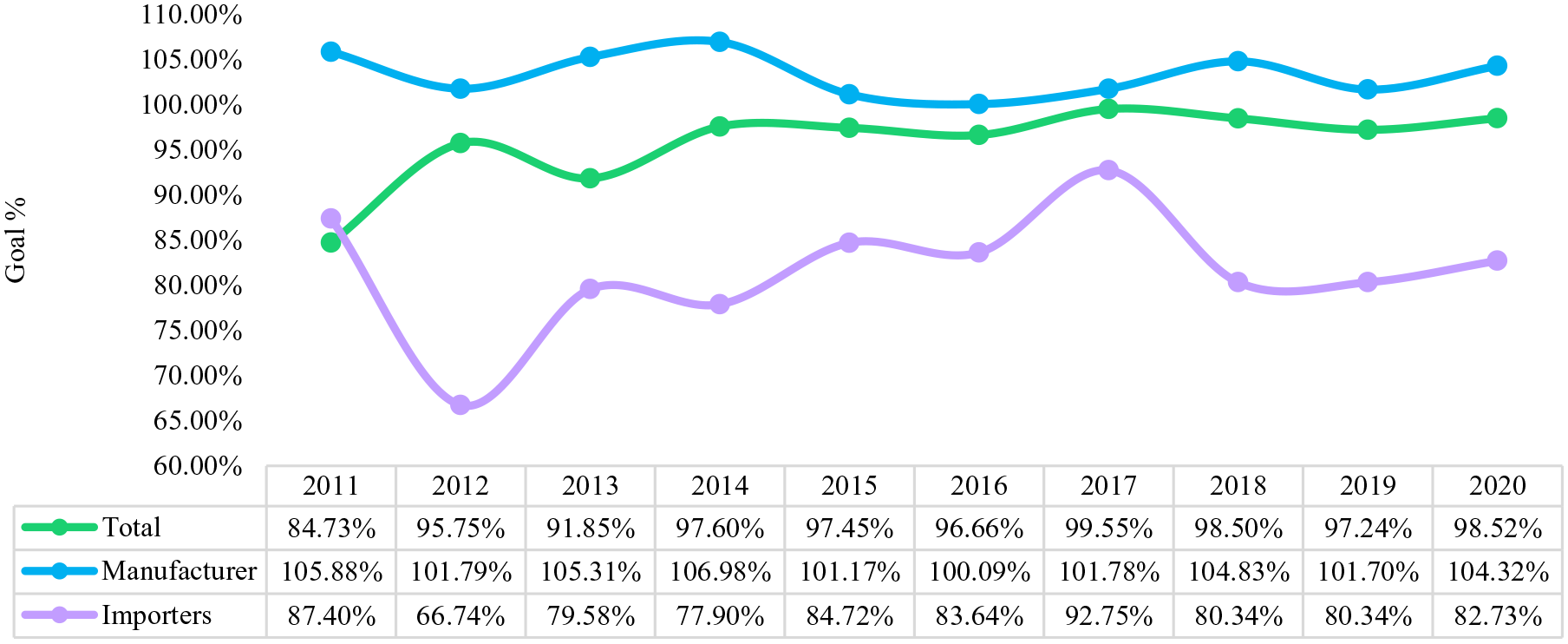
Compliance with the national destination target by tire manufacturers and importers in Brazil (2009–2020).
Nevertheless, despite the issuance of rules and regulations that constitute a step forward to improve the management of ELTs, compliance with the rules is still very weak. As in other countries, Brazil does not have an adequate information system on the volume of tires discarded in landfills (Lagarinhos and Tenório, 2012). In addition, studies on the efficiency of the EPR programme of the ELTs found that one of the main deficiencies of the Brazilian system is that state or local governments were not involved in the debate on EPR policies (Park et al., 2018). Finally, one of the main barriers to the ELT management system is the limited investment in the powder and granulate industry as well as a counterproductive tax on recycled materials (WBCSD, 2018).
Management of ELTs in Ecuador
The logistics for the management of ELTs were linear with some links being more powerful than others. The model for the management of ELTs in Ecuador was a sequential and linear model in which most of the pneumatic waste was generated mainly by imported tires. As shown in Figure 2, the only option to reuse used tires was through retreading (or remanufacturing) techniques, whereas most ELTs were incinerated or disposed of in open air landfills.
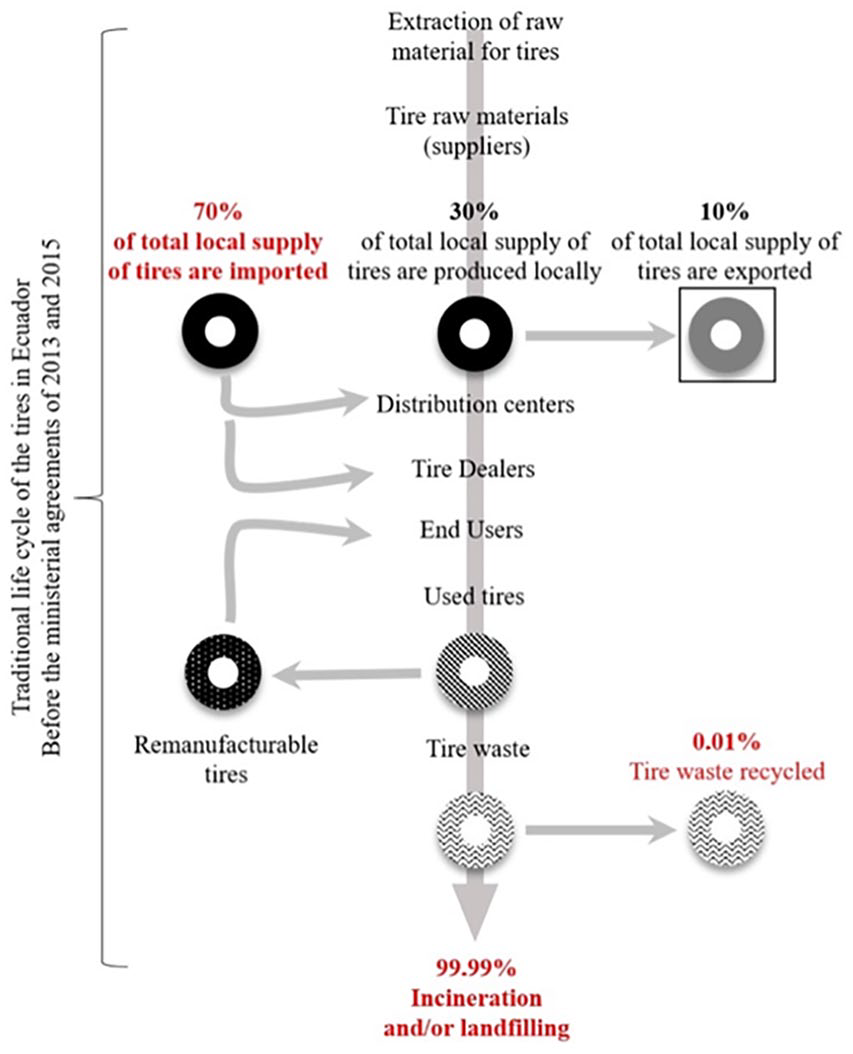
Graphic representation of the traditional life cycle of the tires in Ecuador until 2013.
By 2013, Ecuador adopted an EPR policy for ELTs to reduce the negative effects that this waste has on the environment. In 2015, through the National Programme for the Integral Management of Solid Waste and under Ministerial Agreement 98 (Instructions for the Integral Management of Used Tires), the Ministry of Environment of Ecuador (MAE) 2 established that importers and/or producers as the main actors responsible for the recovery of ELTs and progressive and incremental goals for the recovery of scrap tires in Ecuador (Ministerio del Ambiente, 2015). The purpose of Ministerial Agreement 98 was to establish the requirements, procedures and environmental specifications for the preparation, application and control of the Plan for the Integrated Management Programme for Used Tires (PIMUT), which promotes the reduction, reuse, recycling and other forms of recovery in order to protect the environment (Ministerio del Ambiente, 2015). The guiding principles of the plan were defined as follows: preventive, precautionary principle, polluter pays, correction at the source, environmental co-responsibility, cradle to the grave, objective responsibility, extended producer and/or importer responsibility (EPR), from the best available technology, primary repair or ‘In natura’ and proximity principle (Ministerio del Ambiente, 2015).
In addition, the Management, and Integral Recycling of Tires plan (GRIN) indicates in its 2017 document – under Ministerial Agreement 98 – the Instructions for the Integrated Management of Used Tires: ‘Importers and/or manufacturers must comply with the minimum recovery goal of 30% for 2015 and 2016 and 35% for 2017’ (GRIN, 2017). As shown in Figure 3, since the issuance of the PIMUT, the model for the management of ELTs has changed dramatically. The green elements correspond to the operational phases of this plan. In this case, the tires considered waste could supply another productive cycle in which rubber powder was an input. However, the plan did not consider the market forces themselves, where the law of supply and demand can influence the plan itself, within its guidelines.
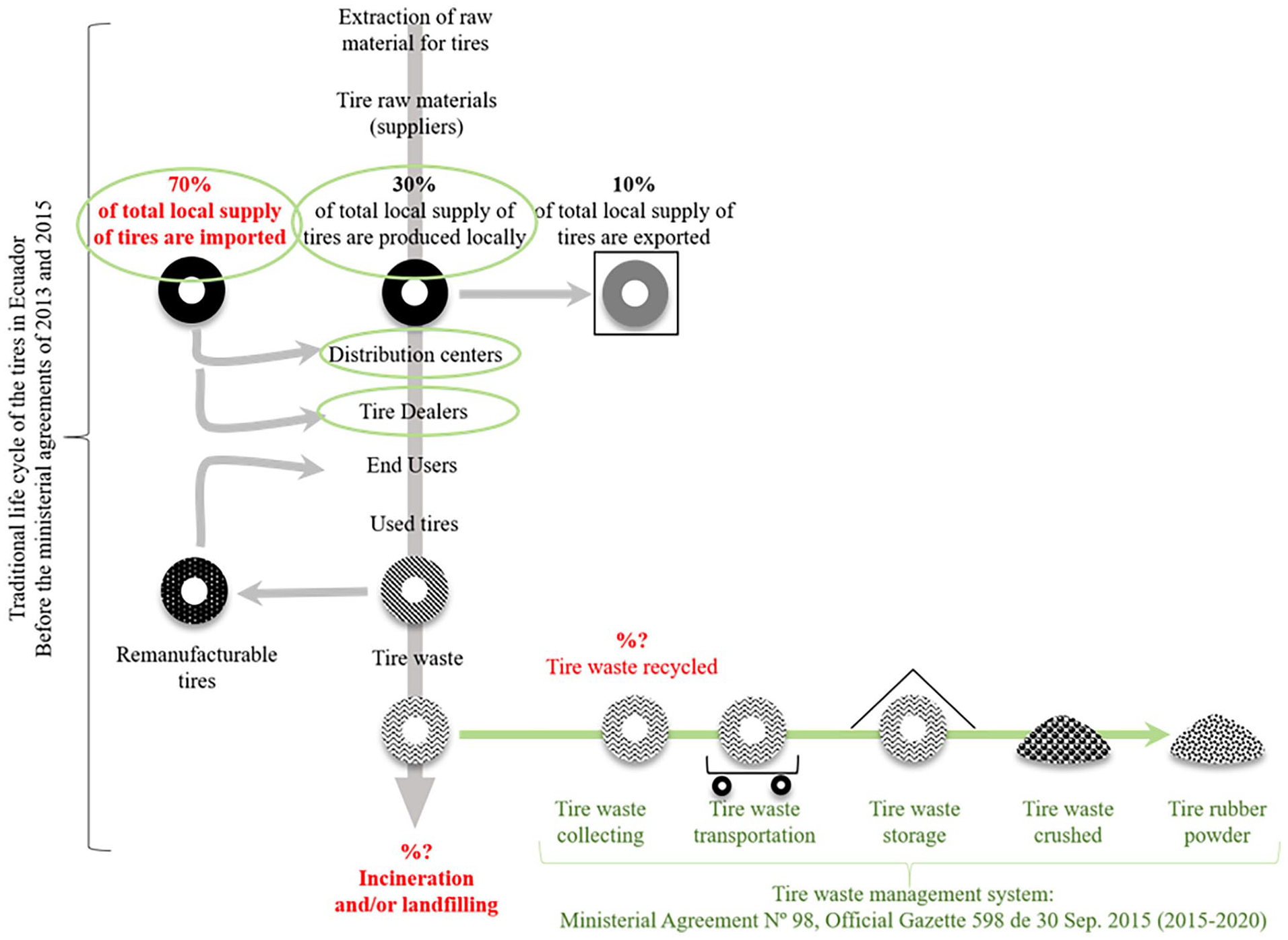
Graphic representation of the Instructive for the Integral Management of Used Tires.
Overview of the current ELT management system in Ecuador
In 2022, the motor vehicle registrations in Ecuador reached 2,881,407 units, which implies that in Ecuador there are 160 vehicles per 1000 inhabitants (AEADE, 2022). The annual average vehicle sales reached 114,724 units over 2010 and 2022 (AEADE, 2022). Although the country produces and exports tires, these represent only 30% of the total tires circulating in the country; 70% are imported (Padilla and Díaz-Márquez, 2023). Imported tire units went from 1.187 thousand in 2004 to 4.095 thousand in 2022 (AEADE, 2022). Consequently, it is estimated that 2.4 million tires are discarded annually in Ecuador (Guivar Romero, 2023; Vizuete Montero et al., 2023).
Certainly, the principal accomplishment of the system has been the attainment of the recovery goal set at 35% in 2017 by the ELT management system. A key actor contributing to this success has been the SEGINUS Corporation, established in 2015. This private initiative forged an alliance with three tire importers (CONAUTO, LLANMAXXIS and DURALLANTA) and with the local producer Continental Tire to articulate an ELTs recycling chain. In 2018, SEGINUS assumed responsibility for recycling the equivalent of 35% of the tires consumed in the country, and in 2019, this proportion increased to 45% (AEADE, 2021). Regrettably, the recovery goal for the period spanning 2020 to 2022 (45%) was not met (see Figure 4), recovery reached only 37.23%, despite notable strides made towards this objective (Ministerio del Ambiente, 2024). These outcomes are disconcerting, particularly considering that the established target for 2023 is 55%, and there is a planned annual incremental growth of 8% in recovery projected until achieving a rate of 85% (Ministerio del Ambiente, 2024).
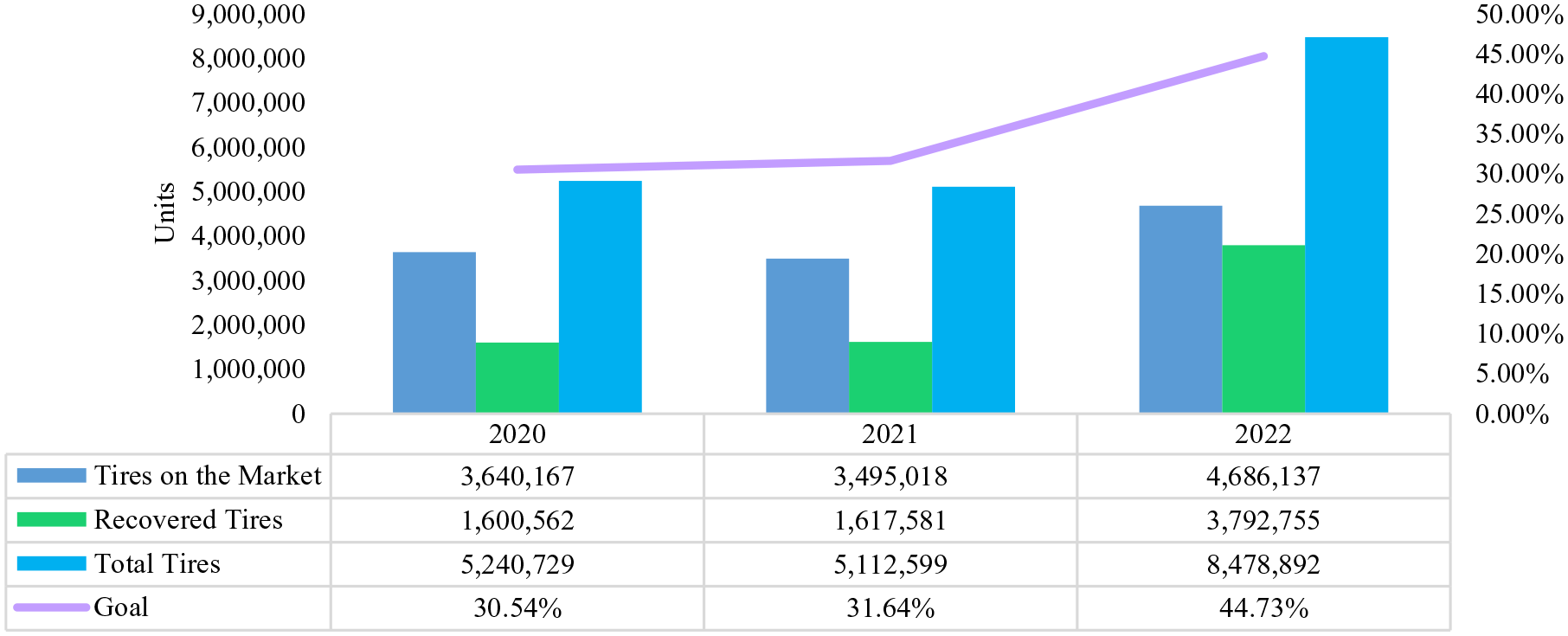
Recovery of used tires in Ecuador (2020–2022).
As reported by SEGINUS (2024b) the main ELT recovery routes were granulated (52%), pyrolysis (24%), cogeneration (23%) and artisanal recuperation (1%). Noteworthy outcomes of these recovery processes included the construction of 200 soccer fields, the production of 50,000 m2 of rubber for diverse applications, and the manufacturing of 100,000 shoe soles (SEGINUS, 2024b). Nevertheless, despite certain ELT-derived products gaining market share, the complete potential of these resources has not yet been fully realized. In this context, a considerable amount of academic research in Ecuador has focused on exploring potential applications and products derived from used tires. Cardenas and Guncay (2023) emphasized that the rubber derived from ELTs can be utilized in the production of setts, commonly known as Belgian blocks. Specifically, the optimal composition for the sett involves the replacement of 5% of the original material with shredded rubber. This formulation not only meets all regulatory requirements but also yields a cost reduction of 1% compared to traditional paving blocks. Calderón and Alvear (2023) found that the design and manufacture of concrete blocks incorporating rubber from ELTs is economically viable. Saltos et al. (2017) demonstrated that incorporating up to 10% shredded rubber (as a partial substitute for coarse aggregates) in concrete production results in favourable outcomes in terms of both quality and strength, while adhering to all Ecuadorian construction standards. Notably, ELTs have been employed in the construction of a gravity retaining wall in a low-income urban area of Quito (Llano Chico), the capital of Ecuador, as documented by Davis et al. (2023). Other alternatives for reuse of the ELTs in Ecuador include the creation of hanging figures, such as flowerpot holders, outdoor games, garden dividers and playground swings (Vizuete Montero et al., 2023). Additionally, ELTs have been repurposed for plant pots (Peñaloza and Cisneros, 2022), handcrafted furniture (Merino et al., 2020) and even in the construction of briefcases (Avellan and Ordoñez, 2019).
Asphalt mixtures incorporating crumb rubber have garnered significant attention in recent years, given their demonstrated superior performance in comparison to conventional asphalt pavements; these mixtures exhibit enhanced durability, reduced distress and can delay maintenance procedures (Borinelli et al., 2024; Nanjegowda and Biligiri, 2020, 2023; Venudharan et al., 2018). This alternative of particular interest in Ecuador, given that in 2023, 45% of the state’s road network was in poor condition or at risk of traffic disruptions. Contributing factors to this challenging situation encompass inadequate maintenance practices, insufficient control or supervision of road infrastructure construction, geographic conditions, adverse climates and the use of substandard materials (Ramírez, 2023). In a study analysing the feasibility of obtaining pavements with asphalt mixtures modified with crumb rubber in Ecuador, Campaña et al. (2015) found improved fatigue resistance properties in the ‘wet’ process-modified asphalt with 20 wt% of crumb rubber compared to bitumen. Additionally, higher modulus and dynamic creep were achieved for the ‘wet’ process-modified asphalt with 10 wt% of crumb rubber. Rubber-modified asphalt (RMA) has been successfully used in various regions such as Arizona (Emery, 1995), Sweden (Jacobson, 1997) and currently, China stands out as the major user of granulated rubber from ELT for the production of RMA (Cummins, 2019).
On the other hand, aligning with the EPR system, Ecuador introduced the ‘Ecovalor’ fee in July 2018, amounting to US$1 per car/bus/truck tire. This fee is designed to provide economic leverage for the comprehensive operational management of ELTs (SEGINUS, 2024a). This fee is directly transferred to consumers, being incorporated into the tire price. However, despite this contribution, the overall costs associated with ELT management in Ecuador, encompassing activities such as collection from generation points, sorting, temporary storage and transportation to the final user, range from approximately US$3–6 per car tire up to US$12 for bus/truck tires (Cecchin et al., 2019). Specifically ELT collection costs alone vary strongly, ranging from US$1 for car tires to US$4 for bus/truck tires (Navas and Mendizábal, 2013). Current regulations stipulate that tires, electronic waste and batteries must be collected under the same system, categorizing them as hazardous waste. This requirement escalates collection costs due to the elevated environmental standards necessary for transporting these wastes. Moreover, the regulations mandate that ELTs be stored in covered locations and on impermeable soil, resulting in additional processing costs (Ministerio del Ambiente, 2015). These regulations are evidently impeding the effectiveness of the ELT management system in Ecuador.
Discussion and policy recommendations
After an overview of the main characteristics of tire waste management systems in Colombia, Brazil and Ecuador, in this section we carry out a comparative analysis between the three models to identify the strengths and weaknesses of the management system in Ecuador and propose strategies to improve its system. Firstly, despite Ministerial Agreement 98 representing a significant step forward for the tire waste management system in Ecuador, the recovery rate (44.73% in 2022) remains relatively low compared to developed economies. For instance, in Europe, the recovery rate is more than 90%, and in the United States, it is 88% (Park et al., 2018). Ecuador reached a recovery level similar to Colombia (45%), but is still significantly below Brazil’s collection level (98.52%).
Secondly, although in the three national systems the producers and importers of tires are defined as those in charge and responsible for the management and final destination of ELT, a fundamental difference is that in Ecuador the number of products offered based on ELTs, and therefore the size of the market for these products, is extremely limited. In fact, in the Ecuadorian, market is the granulated rubber for synthetic turf sports fields, whereas in Brazil and Colombia there is a diversity of products based on ELTs. With respect to this lack of product diversification, Anzules-Falcones et al. (2021) stressed that in Quito (the Ecuadorian capital), currently there are barely 25 companies involved in the environmental management of used tires, 20 of which have environmental permits issued by MAE and only four are large companies.
The evidence indicates that even developed countries encounter challenges in adopting EPR. These challenges encompass limited knowledge of effective practices, difficulties in incentivizing and integrating essential actors into operations and the direct transposition of an integral policy tool (Milanez and Bührs, 2009; Mmereki et al., 2019; Park et al., 2018). In this sense and based on the case studies and comparative analysis of the systems of the three ELT management models, we have identified important challenges that should be integrated in future versions of the plan to the ELT management model in Ecuador. Figure 5 illustrates the primary challenges that should be integrated into the ELT management system in Ecuador. Within this figure, we categorize these challenges by sides (and colours): the market products side (light blue), ELT management side (blue), the current tire management system side (green) and potential alternatives for rubber powder (purple).
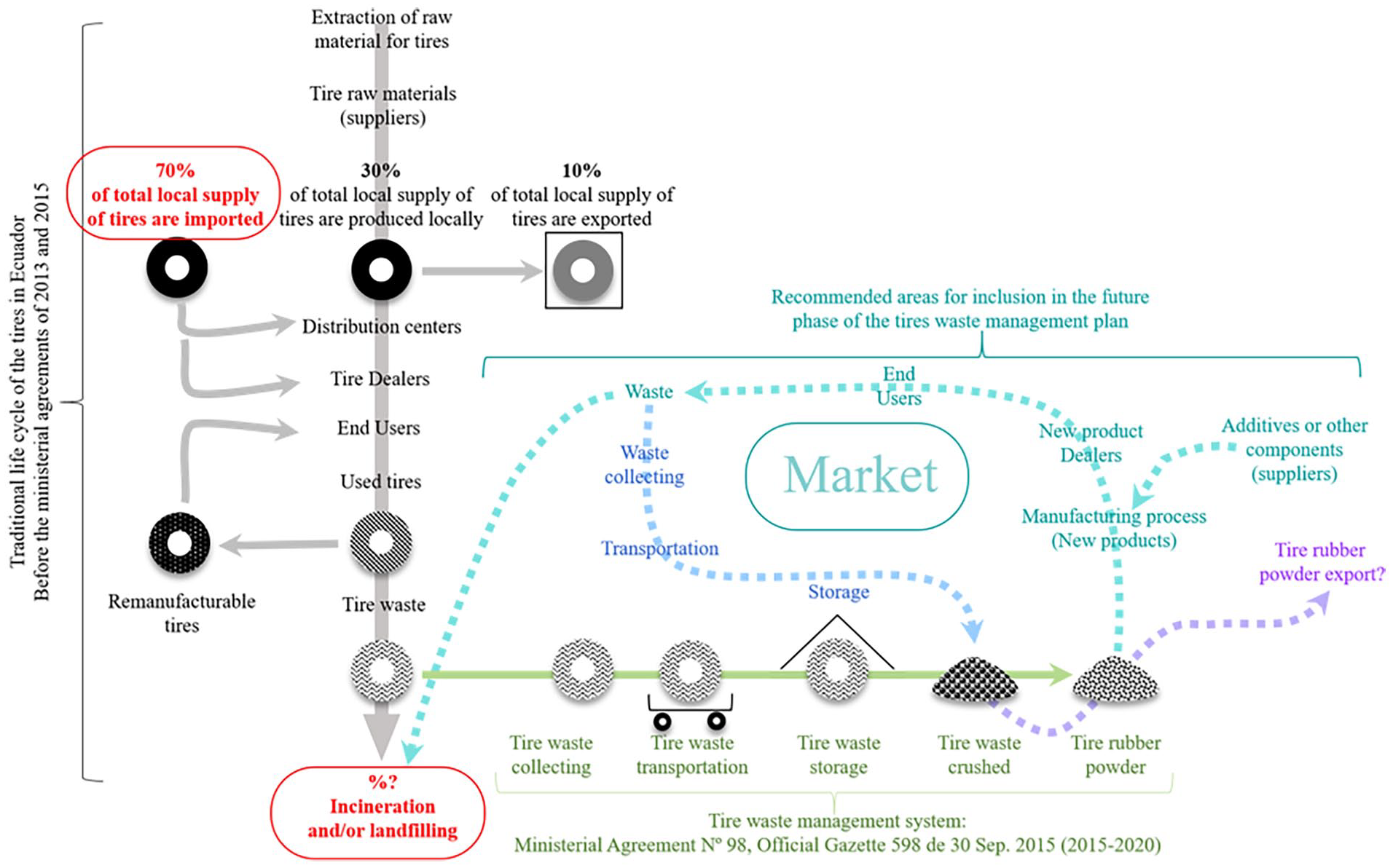
Graphic representation of the challenges for future versions of Integral Management of Used Tires.
In the market products side (light blue), it is imperative to consolidate and stimulate the market for products made from ELT waste through public policies. Specifically, government policies can play a crucial role in stimulating demand for products from ELT waste. This can be achieved through measures such as: (a) public procurement and contracting to use these products in state works, (b) tax reductions (or subsidies) on economic activities if these products are used, (c) creation of incentives for producers (such as electricity subsidies) with the aim of reducing the processing costs of ELTs and (e) creating a special certification linked to macro-objectives of urban sustainability. Govindan and Hasanagic (2018) highlighted that the government has the greatest impact on the implementation of EC in supply chains. Karaağaç et al. (2017) stressed that an alternative for the management of ELTs is government promotion and tax reduction policies to encourage retreading and recycling. In the case of Ecuador, there is great potential to influence the market for products derived from recycled ELTs for construction activities both with tax incentives for this sector and through policies that encourage the consumption of waste products or recycling ELTs. We emphasize the promulgation of policies that encourage the acquisition and public contracting of products that use crumb rubber, especially for RMA.
In the same vein as the market products side (light blue), it is necessary to promote other productive sectors linked to (a) the creation of new products (including their distribution and sale) and (b) sectors that generate complementary products necessary for the new products (i.e., additives, packaging, etc.). Among the alternative viable products for the Ecuadorian market are: sett (or Belgian block), concrete blocks, concrete yields, gravity retaining walls, hanging figures such as flowerpot holders, outdoor games, garden dividers and playground swings, plant pots and handcrafted furniture and briefcase. In addition, waste from ELTs can be used as an alternative fuel for cement production, as secondary fuel in combined-cycle recovery boilers and coal-fired boilers, in shale oil gasification plants as a secondary raw material, in shoe sole manufacturing, in multipurpose rubber seals, in rainwater pipes, in sports track flooring, in industrial flooring, in rubber goods for various uses, such as carpets and vases and in boots and accessories (Bittencourt et al., 2020).
Still on the market product side (light blue), an important aspect is the generation, socialization and access to knowledge (R + D + i) of Micro, small and medium-sized enterprises (MSMEs) with the aim of improving recycling and waste management practices from ELTs. For instance, within ETL recycling methods, the production of different sizes and types of crushed rubber is one of the most widely used (Ramarad et al., 2015). Landi et al. (2018) showed that the use of ELT fibres as an additive for bituminous conglomerates decreases the negative impact of this waste instead of disposal by incineration. Among the medium-term solutions for the management of ELTs in Ecuador, Cecchin et al. (2019) noted that it is necessary to recycle ELTs using technology; while for the long term, the authors consider that they can use ELTs within the construction sector to improve the physical resilience of vulnerable housing and settlements to natural disasters.
On the ELT management side (blue), it is imperative to increase the tire consumer fee, known as ‘Ecovalor’, until it is at least equal to the total logistics cost of ELTs. This implies raising the current rate from US$1 per tire to US$3–4 per tire. Currently, the Ecovalor fee covers only one-third of the total costs associated with ELT management. Consequently, an augmentation of this tax would offer heightened incentives for stakeholders – particularly producers, importers and public and private environmental managers – within the system. This consideration is crucial, as ELT management should not only be financially sustainable but also economically profitable (Ćetković et al., 2022; Zarei et al., 2018).
Regarding the current tire management system side (green), another aspect that must be improved is the quality, as well as the availability, of the information and indicators regarding collection and processing of ELTs, resource efficiency measures based on environmental burden, and the added value of the products derived from the CE process, among others. As mentioned above, although Agreement 98 determines that data on the recovery of ELTs will be published on the web portals of environmental entities, these data have not been available to the public before 2020. Finally, it is imperative the simplification of environmental requirements for the collection, transfer, storage and processing of tire waste.
Finally, within the alternatives for excess ELTs and rubber powder side (purple), considering the processing limitations we have analysed for collected tires, a potential solution is to export a portion of both ELTs and rubber powder. Countries like the United States, the Netherlands and the UK export some of their ELTs (primary market) and rubber powder (secondary market) to neighbouring nations (van Beukering and Hess, 2004). Specifically, United States exports about 2% of its ELTs (Lin et al., 2008). The consideration of this option cannot be dismissed, given the potential of the raw material derived from ELTs. Saltos et al. (2017) demonstrated that, on average, 2.4 kg of shredded rubber is obtained per tire in Ecuador, specifically after the separation of the wire and the supporting face from the tire tread.
Conclusion
In 2013, Ecuador adopted an EPR policy for ELTs to reduce the negative effects that this waste has on the environment. However, although the plan represents a significant advance in Ecuador’s waste management system, we have identified several weaknesses, among these, we can highlight: (a) low levels of recovery and processing of ELTs, (b) lack of incentives, taxes and subsidies, (c) high overall costs associated with ELT management, (d) poor quality of information, (e) poor socialization and integration of the stakeholders of the used tire management model, (f) a limited market for products based on ELTs and (g) high collection costs since the current regulations include tires, electronic waste, batteries, etc.
Among the measures that can be adopted to improve the ELT management system in Ecuador are the following. On the market product side: (a) consolidate and stimulate the market for products made from ELT waste through public policies, with a focus on promoting policies that encourage the acquisition and public contracting of RMA; (b) promote other productive sectors linked to the creation of new products (including their distribution and sale) and sectors that generate complementary products necessary for the new products and (c) enhance the generation, socialization, and access to knowledge (R + D + i) for MSMEs to catalyse advancements in recycling and waste management practices for ELTs. On the current tire management system side, it is imperative that there is an improvement in the quality, as well as the availability, of the information and indicators regarding collection and processing of ELTs.
On the ELT management side, we believe it is necessary to increase the tire consumer fee, known as ‘Ecovalor’ from US$1 per tire to US$3–4 per tire to ensure coverage of the total ELT management cost. Regarding the current tire management system side, there is a need to improve both the quality and availability of information and indicators related to the collection and processing of ELTs. The goal for this input is to contribute to decision-making, changes in current regulations and the promulgation of public policies. Finally, the option of exporting surpluses of both ELTs and rubber powder should be considered.
Footnotes
Appendix
Declaration of conflicting interests
The authors declared no potential conflicts of interest with respect to the research, authorship, and/or publication of this article.
Funding
The authors received no financial support for the research, authorship, and/or publication of this article.
