



Abstract
Construction and demolition waste (CDW) worldwide generation accounts 10 billion tonnes yearly. The major fraction is landfilled requiring innovative recycling methods to reduce the associated environmental impacts and to increase its circularity. Our study demonstrated the feasibility of using different CDW fines to develop recycled cements and optimized the content of CDW recycled cements with well-graded crushed stone (WGCS) for use as pavement base layer. We scaled up the study obtaining CDW cement and aggregates from a local recycling plant, as well as pilot pavement sections designed, constructed and field deflections measured. As results, the CDW cement pastes exhibited accumulated heat values of up to 111 J g−1 and achieved a compressive strength of approximately 16 MPa. The unconfined compressive strength and resilient modulus (RM) achieved using CDW cement and WGCS were 2–3 and >3000 MPa, respectively. The sections constructed using CDW cement exhibited intermediate behaviour compared to those obtained using reference materials (6% Portland cement-WGCS and a conventional granular base made using WGCS). The deflection decreased over time owing to the pozzolanic reaction.
This is a visual representation of the abstract.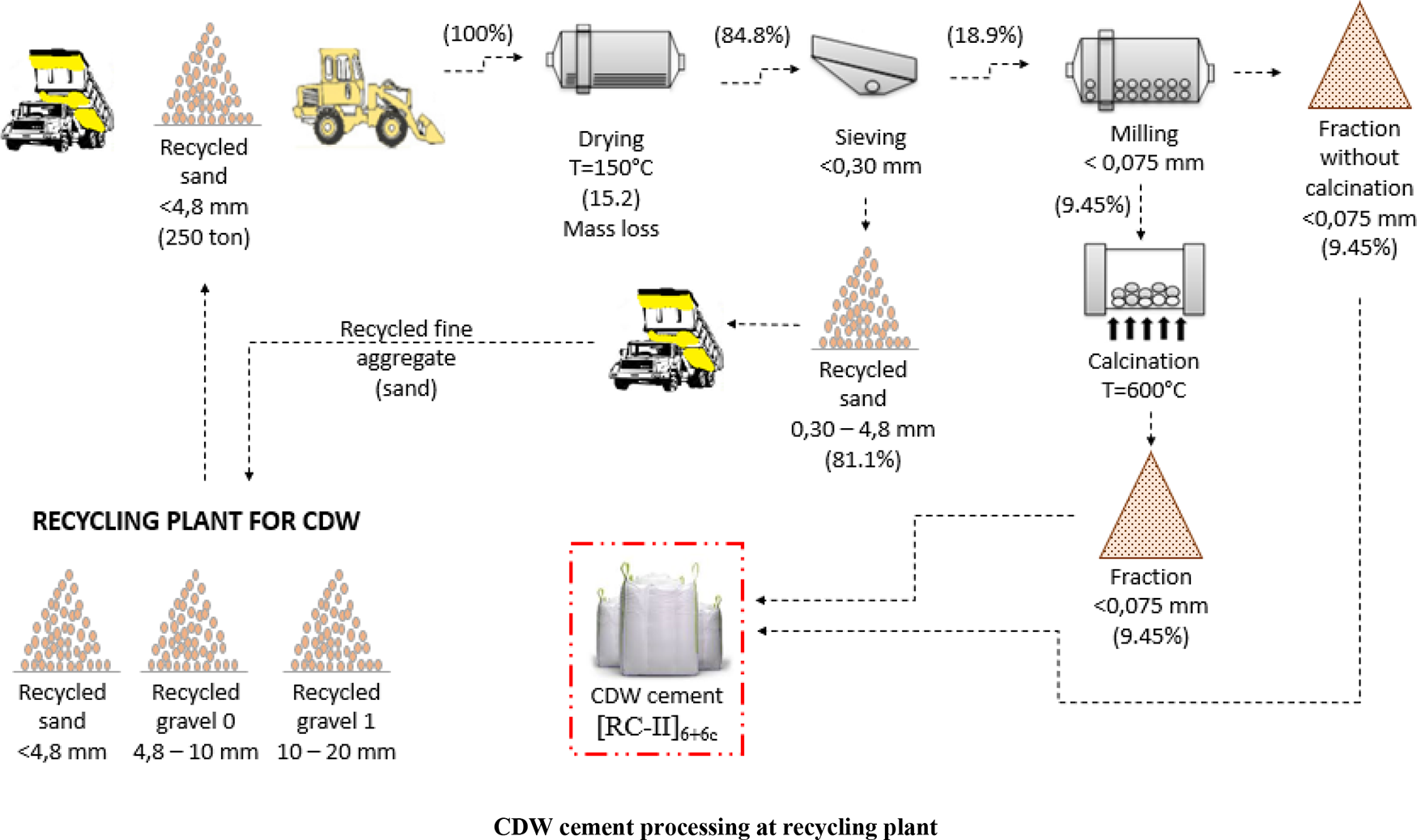
Introduction
Civil construction sector consumes half of natural resources worldwide and the reintroduction of resources as secondary raw materials (the circularity) is very low (<6%) (Haas et al., 2015). Over the last centuries, the population increased exponentially, and, due to the improvement on the living conditions, a massive need for goods and products has resulted in several environmental impacts including greenhouse gases emissions, climate change, some resources scarcity and landfill exhaustion near cities (Al-Khatib et al., 2015; Baumgartner, 2011; Krausmann et al., 2017; UNEP, 2011; 2019).
About 10 billion tonnes of construction and demolition waste (CDW) were generated worldwide in 2020 (Chen et al., 2021; Haas et al., 2015). More than half of it did not have suitable recycling destinations, and thus were disposed of in landfills (European Union, 2017; European Commission. Directorate General for Internal Market, Industry, Entrepreneurship and SMEs, 2018). Half of the CDW in the world is generated only in 38 from 195 countries; examples (in order of importance in CDW generation, respectively) are: China, India, European countries, United States, Japan, Indonesia, Pakistan, Brazil, among others (Chen et al., 2021; Wu et al., 2019). In Brazil, the CDW generation is estimated near 100 million tonnes in 2020 (Angulo et al., 2022b). There are 300 recycling plants in the country and those produced 20 million tonnes of recycled aggregates (RAs) in 2020.
Strategies for circular economy not only aims to decouple the use of natural resources (UNEP, 2011) but also includes the reduction of total solid waste generation in the large cities (Vardopoulos et al., 2021), recycling CDW (Papamichael et al., 2023) to reduce the quantity of waste landfilled and prolong the lifespan of existing landfilled sites, and remove toxic substances avoiding leaching issues. CDW recycling is a key point to improve in construction sector due the high volume of extracted raw materials, energy consumption and waste production (Luciano et al., 2022). Innovative recycling routes are desirable to expand the market and the circularity of CDW as secondary resources for civil construction.
About CDW recycling and its use as RAs as pavement layers, many research has been conducted in literature showing technical feasibility as subbase and base layers (Agrela et al., 2012; Arisha et al., 2016; Cardoso et al., 2016; Leite et al., 2011; Xuan et al., 2021), thereby reducing the consumption of natural aggregates and fossil fuels involved in transport (Zheng et al., 2017).
Other authors in literature have explored the use of CDW RAs in chemically bound (stabilized) base layers. Li et al. (2008), as an example tested the use of reclaimed concrete asphalt aggregates with 10% of fly ash as bound (stabilized) base of pavement and achieved resilient modulus (RM) of 119 MPa and compressive strength of 0.45 MPa at 7 days-age. Camargo et al. (2013) also studied the application of fly ash (14% by weight of dry aggregate) as pavement base stabilization with CDW RAs obtaining results of compressive strength and RM of 1.38 and 4334 MPa, respectively. Beja et al. (2020) evaluated the feasibility of using CDW as aggregate in pavements bounded with Portland cement (PC, 3%) and hydrated lime (3%) achieving results of 3.6 MPa and 3,500 MPa of compressive strength and RM, respectively. In Table A2 – Supplemental Material we reported a summary of the achieved properties as pavement layers.
Recently, Silva et al. (2019) reported some field application cases studies where CDW RAs has been largely used in pavement layers (unbound and bound applications) (see Table A1 – Supplemental Material). For unbound applications, recycled concrete aggregates (RCAs) have been used successfully in roadways (such as the subbase of a taxiway at Lisbon International Airport), ditches, and breakwater construction. Load-bearing capacity increased owing to the self-cementing reaction of RCA fines (remaining anhydrous cement) in the laboratory and field studies. Additionally, for bound applications, the use of PC with RCA exhibits better mechanical performance than the soil–cement base and is compatible with moderate-traffic roadways (Silva et al., 2019).
Indeed, CDW fines can increase the RM (stiffness) and strength of the pavement layers over time due to reaction with the residual anhydrous cement present in the fraction (Arm, 2001; Artuso and Lukiantchuki, 2019; Beja et al., 2020; Poon et al., 2006).
CDW fines (with size <0.15 mm) calcined at temperatures of approximately 500°C can recover binding properties hydraulically (Shui et al., 2008; Yu and Shui, 2014) without decarbonation of the raw materials (a low CO2 alternative binder) (Angulo et al., 2022a, 2022b; Zanovello et al., 2023). Previous studies demonstrated that dehydration progressively reduced the interlayer space and chemically bound water of C–S–H until 600°C (Alonso and Fernandez, 2004; Carriço et al., 2020) forming nesosilicates like belite (C2S) (Alonso and Fernandez, 2004; Carriço et al., 2020) capable of rehydrating C–S–H and other compounds (Baldusco et al., 2019).
Furthermore, the pozzolanic reaction in CDW RAs can be optimized using an mixture of fine red ceramic (size <4.8 mm, burnt in temperatures <800°C), and coarse cementitious waste (size <25 mm) RAs, with some hydrated lime in the fine fraction (Silva et al., 2022). In this study, the authors found that the chemically bound water increased, and the combined water was correlated with an increase in the unconfined compressive strength and RM.
The increase in compressive strength can be controlled by the recombination of chemically bound water in the thermally treated cement waste fines (at 500°C) (Angulo et al., 2022a, 2022b) providing evidence that the reactivity of CDW fines and their intentional mixes can be controlled and optimized for pavement layers.
So, the reactivity of these fine aggregates can be controlled, as well as the pozzolanic reaction if the portlandite content is sufficient (Silva et al., 2022). A calcium hydroxide supplement may be necessary. Thermoactivation of CDW fines can also be used (Angulo et al., 2022a, 2022b; Carriço et al., 2020; Zanovello et al., 2023) to develop stabilized base of pavement by an innovative route.
Objective
This study explored the use of thermoactivated CDW fines, blended as recycled cements, for the chemical stabilization of granular materials for application as a pavement base layer. To attend this objective, we answered the following specific research questions in the development of the manuscript:
What is the reactivity of the recycled cements regarding the various sources of CDW and how to optimize it?
What are the achievable mechanical properties (compressive strength, RM) combining the optimized CDW fines as cement and a well-graded crushed stone (WGCS)?
Can we scale up the solution? And what are the contribution of the CDW cement and the CDW aggregates in the pavement layer sections and measured deflections over time after the construction?
Therefore, the study was conducted in different methodological steps and in specific results sections: (a) optimization of the reactivity of CDW cement (later seen from item 2.1 to 2.3, and from item 3.1 to 3.2), (b) measurement of the mechanical properties of the material using a selected CDW cement and WGCS (later seen item 2.4 and 3.3, respectively) and (c) a scale-up study in which pavement sections using CDW cement with both WGCS and CDW RAs (both had similar particle size distributions) were constructed and monitored in terms of deflection over time (later seen item 2.5 and 3.4, respectively).
Research significance
In this work, we used different CDW types to produce recycled (thermoactivated) cements. We also optimized the content of CDW recycled cements with well-graded aggregates (from crushed stone or recycled CDW) for use as stabilized base layer for pavement. The several works published in the literature have used the CDW RAs in pavement layers using conventional binders; PC, lime-calcium hydroxide (Barbieri et al., 2022; Beja et al., 2020; Silva et al., 2019). In the best of our knowledge, no studies have explored the use and intentionally blend of thermoactivated CDW fines as cement combined with well-graded natural and RAs for stabilized pavement base layers.
We also presented in the manuscript how to scale-up the technology obtaining the cement and aggregates from a CDW recycling plant (see graphical abstract). The proposed route was object of a Brazilian patent request (Quarcioni et al., 2014). We claimed the obtention of the recycled cement from various sources of CDW fines and the processing used (sieving, milling thermal treatment at 500° to produce the low-carbon cement, and homogneization). For a pilot-scale study, pavement sections were designed, constructed and field deflection tests monitored.
Experimental programme, materials and methods
Firstly, different CDW fines representatively sampled were thermoactivated at 500–600°C and characterized. Secondly, the cement pastes had their reactivity and compressive strength pastes measured. Thirdly, the stabilized pavement base using CDW cements and WGCS has their mechanical properties (unconfined compressive strength and resilient modulus - RM) measured. Finally, we designed four pavement sections with different cement types (ordinary PC – OPC and CDW cement) and well-graded aggregates (natural crushed stones and CDW RAs) and constructed locally. The field RM of the base specimen and layers deflections over time were measured.
Sampling of the different CDW fines
Five types of CDW were obtained near the city of São Paulo, Brazil: concrete waste (C) collected from a ready-mix concrete company, cementitious waste (Ci) and mixed waste (M) from a CDW recycling plant, red ceramic waste (R) from a red ceramic company, and excavation soils (S) from an inert construction waste landfill located in the southern part of the São Paulo city region.
We take samples three times per week (morning and afternoon), at random times, for a total period of 8 weeks, up to obtain 1 ton sample (the adopted representative mass) per each CDW type. About the excavation soils, 20 samples were collected and subjected to X-ray diffraction (XRD) analysis to identify the group of samples that exhibited the higher count peaks of kaolinite (7 samples selected in the 20 ones). Those samples were then calcined at 600°C (the optimum condition) to obtain it as pozzolanic material. More details can be found in a under-review manuscript on the development of pozzolans by using XRD to identify high-kaolinite in the excavated soils (Pereira et al., 2024).
We dried the samples using a ventilated oven at a temperature of 105 ± 5°C. The dried samples were then sieved using a 25-mm aperture sieve, and the retained fraction crushed using a laboratory jaw crusher, to produce a CDW RA with maximum size of 25 mm and particle size distribution similar of WGCS.
The fine fraction of the CDW aggregates was taken using a 0.3-mm sieve size aperture.
Thermoactivation of the CDW fines and their characterization
The fine fractions (size <0.3 mm) from the CDW aggregates (C, Ci and M) were then thermally treated at a temperature of 500°C (heating rate of 5°C minute−1) for 2 hours using a static electric oven (Karlos brand, TE model, Rio de Janeiro, Brazil) to dehydrate old cement fraction without emitting CO2 through decarbonation (Pereira et al., 2024). The fines from selected S were calcined at a temperature of 600°C (optimum temperature) to thermally activate the kaolinite (Silva et al., 2023) and produce a reactive pozzolan without emitting CO2 due to decarbonation when calcium carbonate was almost nonexistent in the soils. Those fines were characterized by thermogravimetry (TG/DTG) and X-ray fluorescence (XRF).
Thermogravimetry
TG/DTG analyses of the CDW fines (C, Ci, M and S), before and after thermal treatment at 500–600°C were performed in an SDT 2960 equipment (TA Instruments, New Castle, USA) at a heating rate of 10°C minute−1 up to 1000°C in a nitrogen atmosphere. For data interpretation, Universal Analysis 2000 software (version 4. 1D, TA Instruments) was used. We used the technique to verify the efficiency of thermal treatment in removing the chemically bound water from the old (hydrated) cement fractions and excavation soils ones.
XRF: Ternary diagram
The chemical composition of the CDW fines was determined semi-quantitatively using XRF in pressed powder using Panalytical’s Minipal equipment and expressed in the following main oxides (silica (SiO2), calcium oxide (CaO), alumina (Al2O3) and iron oxide (Fe2O3)) (Table B2 – Supplemental Material). The loss on ignition (LOI) was measured up to 1000°C according to the Brazilian standard NBR NM 18 (ABNT – Brazilian Association of Technical Standards, 2012). The NBR NM 18 (ABNT – Brazilian Association of Technical Standards, 2012) is a specification similar to the American one: ASTM C114 (ASTM – American Society for Testing and Materials, 2018).
A ternary chemical composition diagram (Thapa and Waldmann, 2020) of those fines was constructed using the main oxides: Al2O3, SiO2 and CaO + LOI. These oxides indirectly represented the contents of red ceramics (pozzolan), natural aggregates (based on quartz or feldspars) and hydrated cement paste present in the fines (Angulo et al., 2009).
Recycled cements: Mix proportioning and characterization
Experimental mixtures of CDW fines (Table 1) were intentionally prepared to increase the quantity of old cement on those fines (Angulo et al., 2022a, 2022b; Carriço et al., 2020) and the resulting recycled cement quantity by the thermal activation. Additional hydrated lime was used to increase pozzolanic activity from the calcined excavated soils, or the contained red ceramic crushed waste fines. We named recycled cement RC-I, RC-II and RC-III in Table 1 and informed the percentages of the components (C, R, M, Ci, S and L) in the mixtures.
Experimental mixtures with CDW fines.
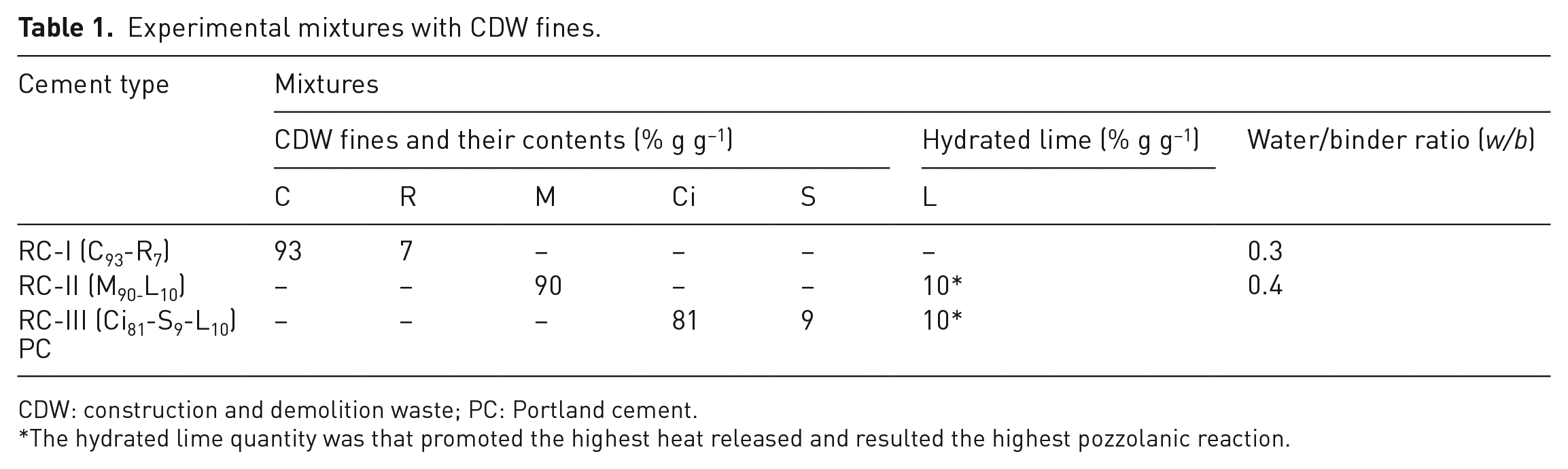
CDW: construction and demolition waste; PC: Portland cement.
The hydrated lime quantity was that promoted the highest heat released and resulted the highest pozzolanic reaction.
Reactivity: Isothermal calorimetry
The reactivity of the CDW cement types were evaluated using an isothermal conduction calorimeter (TAM TA Instuments, model TAM Air, Nem Caslte, EUA) with eight channels at a frequency of 16 seconds for each data collection at room temperature (25°C). The tests were performed for 72 hours. The calorimetry results are expressed as a relative percentage of the total accumulated heat of the reference PC.
The reactivities of the recycled cement types were compared of a reference: standard PC, CP-III Brazilian standard type, which contained up to 50% g g−1 of blast furnace slag added to clinker PC.
The chemical and physical properties of PC are shown in Table B1 – Supplemental Material. The calcium hydroxide (L) is a commercial high-purity hydrated lime (CH-I type; CaO and MgO on a non-volatile basis was 90% g g−1; free CaO and MgO < 10% g g−1) in accordance with Brazilian standards (NBR 17086-6) (ABNT – Brazilian Association of Technical Standard, 2023).
Compressive strength
Compressive strength tests were performed in cement pastes with water/binder ratios (Table 1), using reduced-sized specimens (27 mm in diameter and 54 mm high), without the use of standard sand, and evaluated at 7, 28 and 91 days-age, with four specimens for each age and cement paste type. The results of the alternative method correlated with those of the standard method (Silva, 2018). Silva (2018) shown an effective relationship between compressive strength results in pastes, using specimens with 27 × 54 mm (diameter × height) and mortars specimens with dimensions of 50 mm diameter and 100 mm height.
Pavement base stabilized with recycled cements
Mix proportioning
Table 2 lists the composition between WGCS and the different CDW cement types.
Mix proportioning of WCGS and CDW recycled cements.
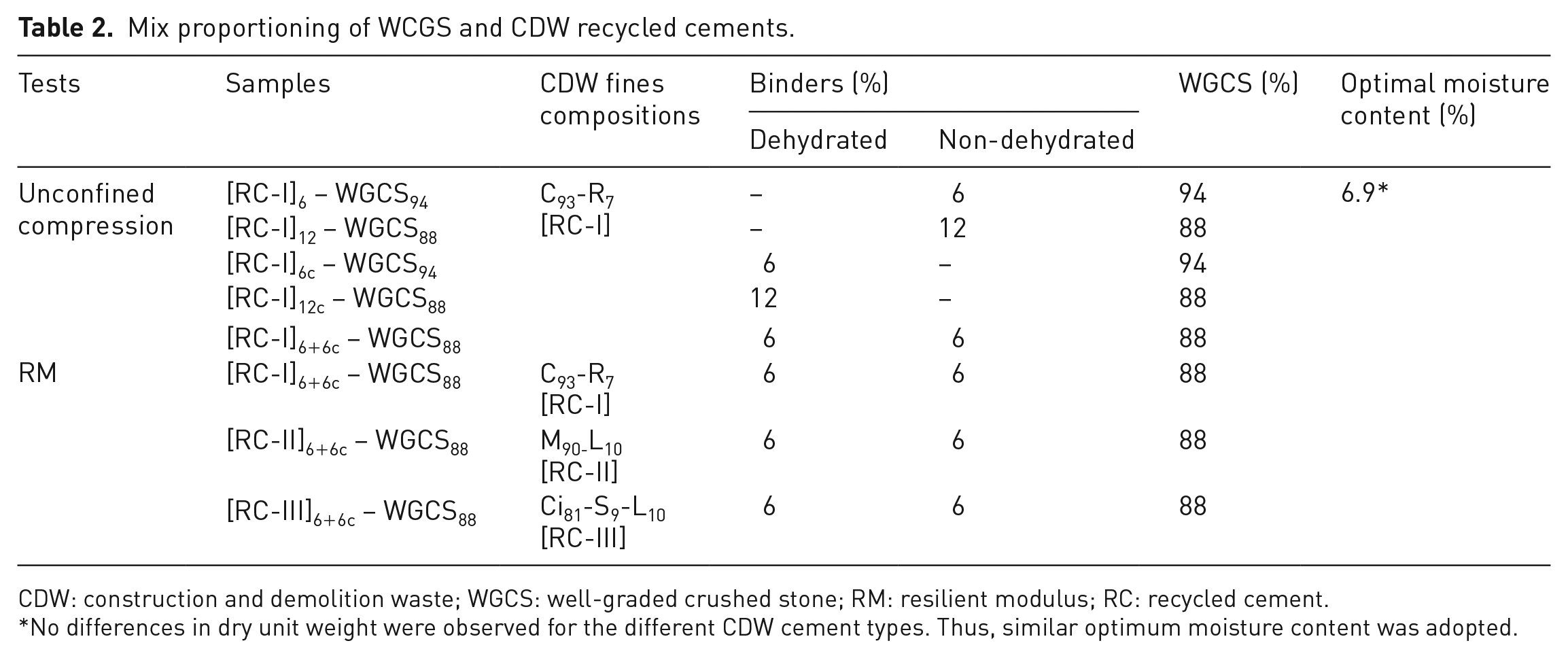
CDW: construction and demolition waste; WGCS: well-graded crushed stone; RM: resilient modulus; RC: recycled cement.
No differences in dry unit weight were observed for the different CDW cement types. Thus, similar optimum moisture content was adopted.
First, recycled cement type I (93% concrete waste fines and 7% red brick waste fines) was used to determine the quantity of cement required to provide the minimum compressive strength for a stabilized pavement base material. We assessed 6 and 12% of thermally activated CDW fines, 6 and 12% of nonthermally activated CDW fines and 6% thermally activated with 6% nonactivated fines.
Owing to the limited mechanical strengths of the various CDW cement types, up to 12 % (g g−1) of thermally activated fines was used. We assumed that the temperature of the CDW cement was half of the calcination temperature to produce clinker PC, and, therefore, emitted CO2 half of that emitted from the production of clinker PC. Thus, the content can double to maintain economic and environmental advantages.
Non-calcined CDW fines were assessed to determine the contribution of the pozzolanic reaction from red ceramic waste fines and to determine their difference from the calcined fines, which contained effects from both rehydration and pozzolanic reaction. The combination of calcined and non-calcined samples reduces the cost and environmental impact of the CDW fine-stabilized base. A higher content of non-calcined CDW fines may reduce voids in a granular packing system and facilitate achieve indirectly minimum strength requirements if the total porosity reduction governs the strength increase.
After determining the optimum content (6% calcined and 6% non-calcined) in terms of the acceptable unconfined compressive strength for a chemically stabilized granular pavement base material according to Brazilian standards (minimum of 2.1 MPa for a soil–cement base), the RM was determined using recycled cement types II (RC-II) (mixed CDW fines with calcium hydroxide) and III (RC-III) (cementitious waste fines with calcined excavated soils and calcium hydroxide) because it is one of the most relevant properties of a material in a pavement structure design. All the CDW cement types presented herein had reasonable reactivity and unconfined compressive strengths, as discussed in items 2.1 and 3.1).
To establish a reference for a stabilized pavement base, 4% OPC was added to the WGCS. According to Brazilian standards, 4.5–7% (g g–1) cement is recommended for soil–cement bases – NBR 12253 (ABNT – Brazilian Association of Technical Standard, 2012) and approximately 4% PC is recommended for cement-treated aggregate bases (mechanical strength >3.5 MPa) – Brazilian standard NBR 12262 (ABNT – Brazilian Association of Technical Standard, 2013).
Compaction tests were conducted to determine the optimum moisture content and maximum dry unit weight using NBR 7182 (ABNT – Brazilian Association of Technical Standard, 2020), similar to ASTM D698 (ASTM – American Society for Testing and Materials, 2021), with intermediate energy for compaction (compaction in three layers, each layer receiving 26 strokes). The particle size composition of the WGCS used to prepare the samples was in the range ‘B’ of NBR 11803 (ABNT – Brazilian Association of Technical Standard, 2022) (Figure C1 – Supplemental Material). Brazilian Standards for pavement follow the methods and technical specifications used in United States.
Mechanical tests
The uniaxial compressive strength (UCS) and RM were measured at 7th and 28th day using four and two specimens (100 mm in diameter and 200 mm high), respectively, per mixture. The UCS and RM results were subsequently compared with the minimum values prescribed by the Brazilian normative specification (NBR 11803) (ABNT – Brazilian Association of Technical Standard, 2022) and reported in the literature (Bernucci et al., 2022).
Field pavement tests
Design of the sections and mixture proportioning
To produce CDW cement for a pilot-scale study (see graphical abstract; for use in sections 1 and 2) (Figure 1), 250 tonnes of mixed CDW recycled sand (size fraction <4.8 mm) were taken from a CDW recycling plant that operated commercially in the southern region of the São Paulo city.
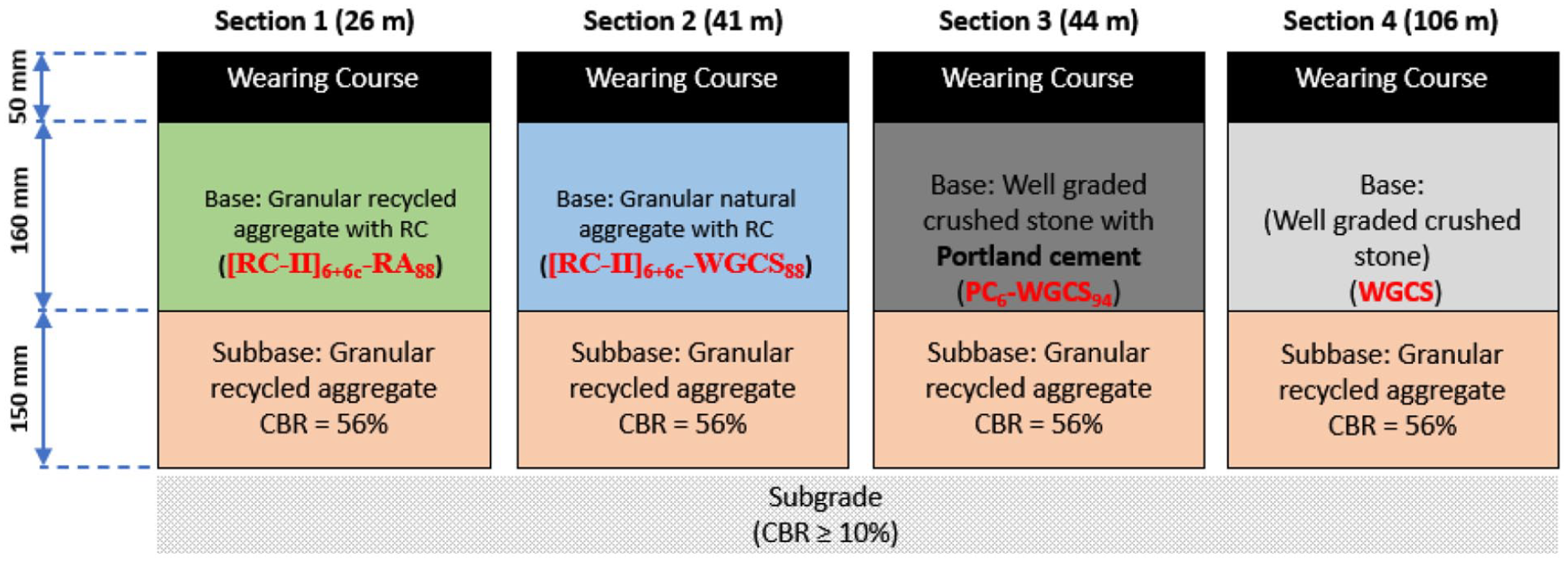
Four pavement sections constructed for the field performance pavement tests.
The sand fraction (with 15.2% g g−1 of moisture) was initially dried in a rotary dryer at a temperature of approximately 100°C using natural gas as fuel. The sample was sieved through a 0.3-mm sieve to separate the fines (<0.3 mm) (18.90%; 47 tonnes). The recycled fines were ground in a ball mill (50% load) with iron balls. Half of it (9.45%; 24 tonnes) was thermally treated in a rotary continuous kiln at a temperature of 600°C (part of those fines were recovered in the process using a filter), and the remaining 24 tonnes stored of the nonthermally treated material for subsequent dosage (6% calcined + 6% non-calcined). The best mechanical properties obtained are presented in items 2.2 and 3.2.
Four pavement sections (Figure 1) were designed using varied materials for the pavement base layer. The paving of an urban avenue with moderate traffic volume (N = 5 × 10⁵) was constructed in the city of Guarulhos, in the metropolitan region of São Paulo, Brazil. The thicknesses of the pavement layers were calculated using the specifications provided by the São Paulo city (City Hall of São Paulo, 2004). RC-II (fines obtained from mixed RAs collected from the commercially operating CDW recycling plant) was used in the field test because it is the most common RA type in Brazil.
The recycled cement type II, RC-II, was prepared using: (a) 12% of RC-II (6% calcined and 6% non-calcined) and 88% mixed CDW RAs with particle size distribution similar to that of WGCS (named as [RC-II]6+6c – RA88), and (b) 12% of RC-II (6% calcined and 6% non-calcined) with WGCS (named as [RC-II]6+6c – WGCS88).
In the first section, we explored the maximum use of CDW recycling products using the remaining fractions of the mixed RAs from a commercially operating CDW recycling plant and thermally activated fines. To obtain mixed CDW aggregates with particle size distribution similar to that of the WGCS, we mixed 30 tonnes (44.5% g g−1) of sand-mixed CDW aggregates (<4.8 mm), 35 tonnes (49.6% g g−1) of coarse-mixed CDW aggregates (4.8–10 mm) and 5 tonnes (5.9% g g−1) of coarse-mixed CDW aggregates; we obtained the granulometric fractions from the respective piles at the CDW recycling plant using a feed hooper. Both the WCGS and mixed CDW aggregates met range B established by NBR 11803 (ABNT – Brazilian Association of Technical Standard, 2022) (Figure C1 – Supplemental Material).
In the second section, we used only CDW recycled cement with a conventional WGCS to form natural aggregates. The solution used fewer recycled products but had the benefits of using recycled cement alone; thus, it may achieve the best performance for a chemically stabilized pavement base.
A chemically stabilized base (reference) was prepared using 6% PC and 94% WGCS and named as PC6-WGCS94, as well as a conventional unbounded pavement base layer with a WGCS to determine the differences when compared to the performances of the chemically stabilized layers. The WGCS was obtained directly from a mining aggregate company. In all the pavement sections, the subbases were constructed using CDW-mixed RAs (size <50 mm).
Figure C1 – Supplemental Material presents the particle-size distributions of the aggregates used in the field-performance pavement tests.
Table 3 lists the experimental mixtures used in this study. Compaction tests were performed in the laboratory using the same procedures described in item 2.2 (intermediate Proctor effort). RM tests on the mixtures prepared for the field tests were performed at the 7th and 28th days in laboratory specimens (100 mm in diameter and 200 mm high), two specimens per mixture. RM tests were performed in the laboratory using materials collected in the field.
Compositions of the mixtures used in the base layer in the pilot-scale study.
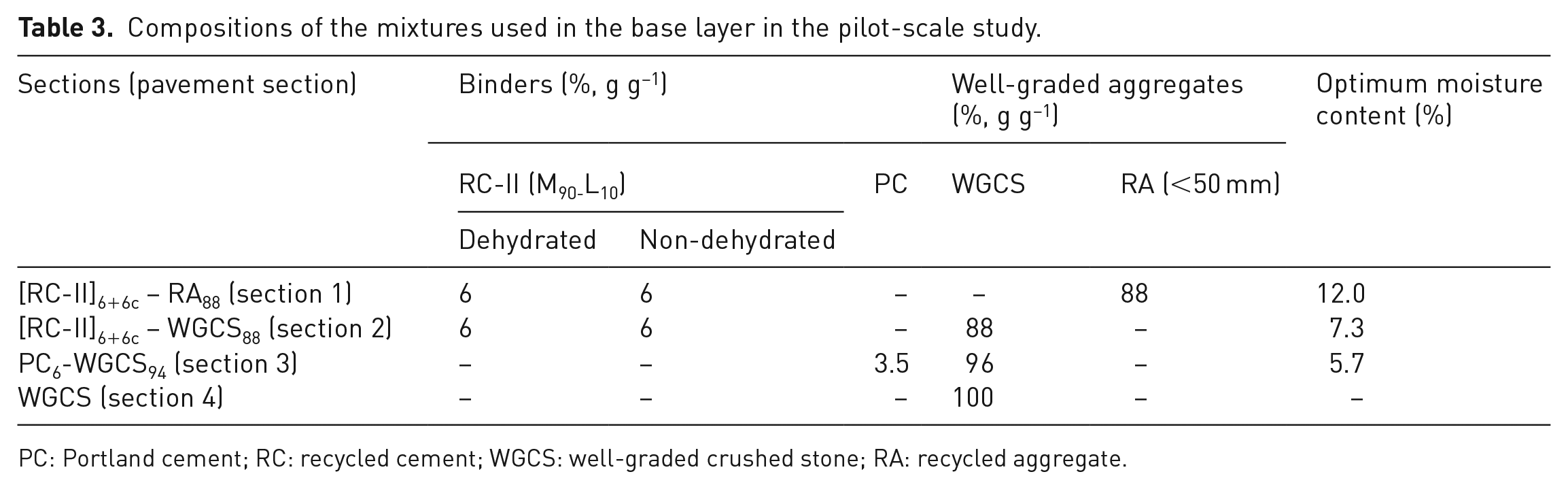
PC: Portland cement; RC: recycled cement; WGCS: well-graded crushed stone; RA: recycled aggregate.
RM and field layer-deflections
The RM of the samples collected in field were evaluated using the same methodology presented in item 2.4.2.
After the pavement sections execution were constructed, deflection tests were performed using the Benkelman beam (DNER – National Highway Department, 1994) on all layers of the pavement during construction and at the top of the pavement after 4 and 8 months. The measurements were performed using a truck with a single axle and double wheels, a load of 8200 kg on the rear axle and a tire radius of 0.108 m. The deflections were measured along the entire section of the road, on the right and left sides, and on the internal and external wheel tracks.
The maximum allowable deflections for each pavement section were estimated using the Elsym5 computational program (elastic layered system) (Kopperman et al., 1986), according to the mechanistic method. Deflections were obtained in the upper fibre of each layer, considering two loads of 2050 kgf and a contact area radius of 150 mm. The parameters used in the analyses and the maximum permissible deflections are listed in Table D1 – Supplemental Material.
Deflection measurements were performed on the pavement structure during construction and after 4 and 8 months. All the field results obtained were compared with the maximum allowable deflections expected for field performances. The maximum allowable deflections were defined using the (RMs of the mixtures applied in the field ([RC-II]6+6c – RA88 and [RC-II]6+6c – WGCS88) and those published in the literature.
Results and discussion
Characterization of thermoactivated CDW fines
TG/DTG
The mass losses of CDW fines were determined before and after thermal treatment up to 1000°C (Table E1 – Supplemental Material). Mass losses that occur between 0 and 420°C mainly represent the combined water loss of hydrated cementitious compounds (C–S–H, sulphoaluminate phases), those between 420 and 550°C are caused by the decomposition of calcium hydroxide, and those between 550 and 1000°C are caused by decarbonation (Angulo et al., 2009; Taylor, 1990).
The thermal treatment removed the combined water from C–S–H and sulphoaluminates and part of the portlandite, forming quicklime (CaO), as confirmed by other studies (Alonso and Fernandez, 2004; Angulo et al., 2022a, 2022b; Baldusco et al., 2019; Carriço et al., 2020; Shui et al., 2009; Yu and Kirkpatrick, 1999). The CDW fines (C, Ci and M) exhibited similar mass losses.
XRF: Ternary diagram
Table B2 (Supplemental Material) presents the chemical composition, in oxides, of the wastes (non-calcined and calcined fines). The main oxides are the same; SiO2, CaO and Al2O3. Discrete modifications in their contents on CDW fines occurred after the calcination. Those are caused by the reduction on LOI values.
Figure 2 shows the ternary diagram (SiO2, Al2O3 and CaO + LOI) of thermally treated CDW fines (recycled cement types: RC-I, RC-II and RC-III) which are useful for explaining the reactivity of recycled cement. The RCs (RC-I, RC-II and RC-III) were composed of SiO2 (approximately 50% of the mass) from crushed rocks and natural quartz sand (inert, nonreactive fraction). However, the C, Ci and M fines contained higher [(CaO + LOI)/SiO2] ratios owing to the increase in hydrated cement compounds in the CDW fines.
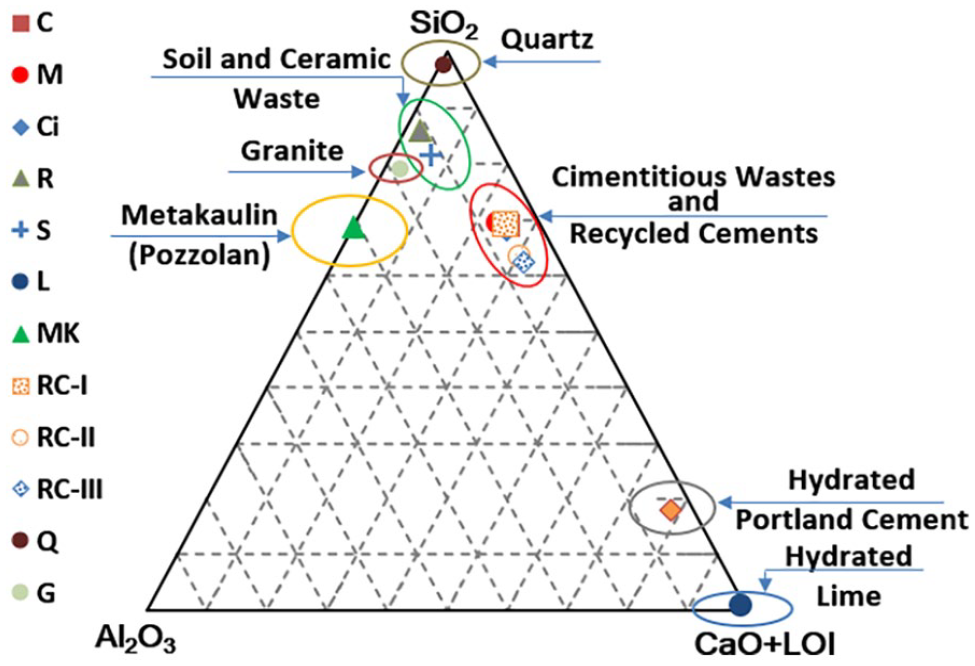
Ternary diagram (SiO2, Al2O3 and CaO + LOI) of thermally treated CDW fines, including reference materials (meta kaolinite, PC and hydrated lime).
Similar oxides contents are obtained where concrete or cementitious wastes used granitic rocks as aggregates (Angulo et al., 2009; Galderisi et al., 2022). Concretes wastes with higher content of CaO and lower content of SiO2 may come from regions where carbonate aggregates were used, for example, concrete waste with high SiO2 amount and small quantity of CaO is common at locals with granitic rocks is predominant.
The addition of the calcined S and R increased the Al2O3/SiO2 ratios of RC-I and RC-III (Table E2 – Supplemental Material). RC-II from the mixed CDW fines did not require extra pozzolan because it contained intermixed red ceramic waste fines. However, RC-II required the addition of hydrated lime (L) to increase its reaction, noted by the relationship with [(CaO + LOI)/SiO2]. After mixing, the three recycled cement types exhibited similar oxide concentrations, promoting a balance between the dehydrated cement, pozzolans and hydrated lime to increase their reactivities.
RC-I was the most reactive because it was composed of high quantities of dehydrated cement and was the most active pozzolan. The pozzolanic activity of the R fines reached 426 mg Ca (OH)2 g−1 fines, which was double that of the calcined S (249 mg Ca (OH)2 g−1 fines). The insoluble HCl residue of the RM fines contained red ceramic and consumed 372 mg Ca (OH)2 g−1 fines (intermediate pozzolanic activity).
Characterization of the recycled cements
Reactivity: Isothermal calorimetry
The heat released by the RCs confirmed their chemical reactivities and rehydration capacities (Figure 3(a)). Results were coherent of those obtained by thermoactivated recycled cements (Angulo et al., 2022a, 2022b; Carriço et al., 2020). The highest result was observed for the RC-I mixture owing to the higher content of dehydrated cement (highest CaO/SiO2 ratio) and the most active pozzolan (highest pozzolanic activity in the Chapelle method, measured through Ca(OH)2 consumption under accelerated conditions), which was 58.4% of that observed for PC (Figure 3(b)). As explained, RCs were not only composed of the reactive fraction but also contained an aggregate (inert) fraction (30–50% of mass); therefore, the best-scenario reactivity (without the need for hydrated lime addition) was achieved in this study. After the hydrated lime correction, the results of the total accumulated heat for the RC-II and RC-III samples were similar.
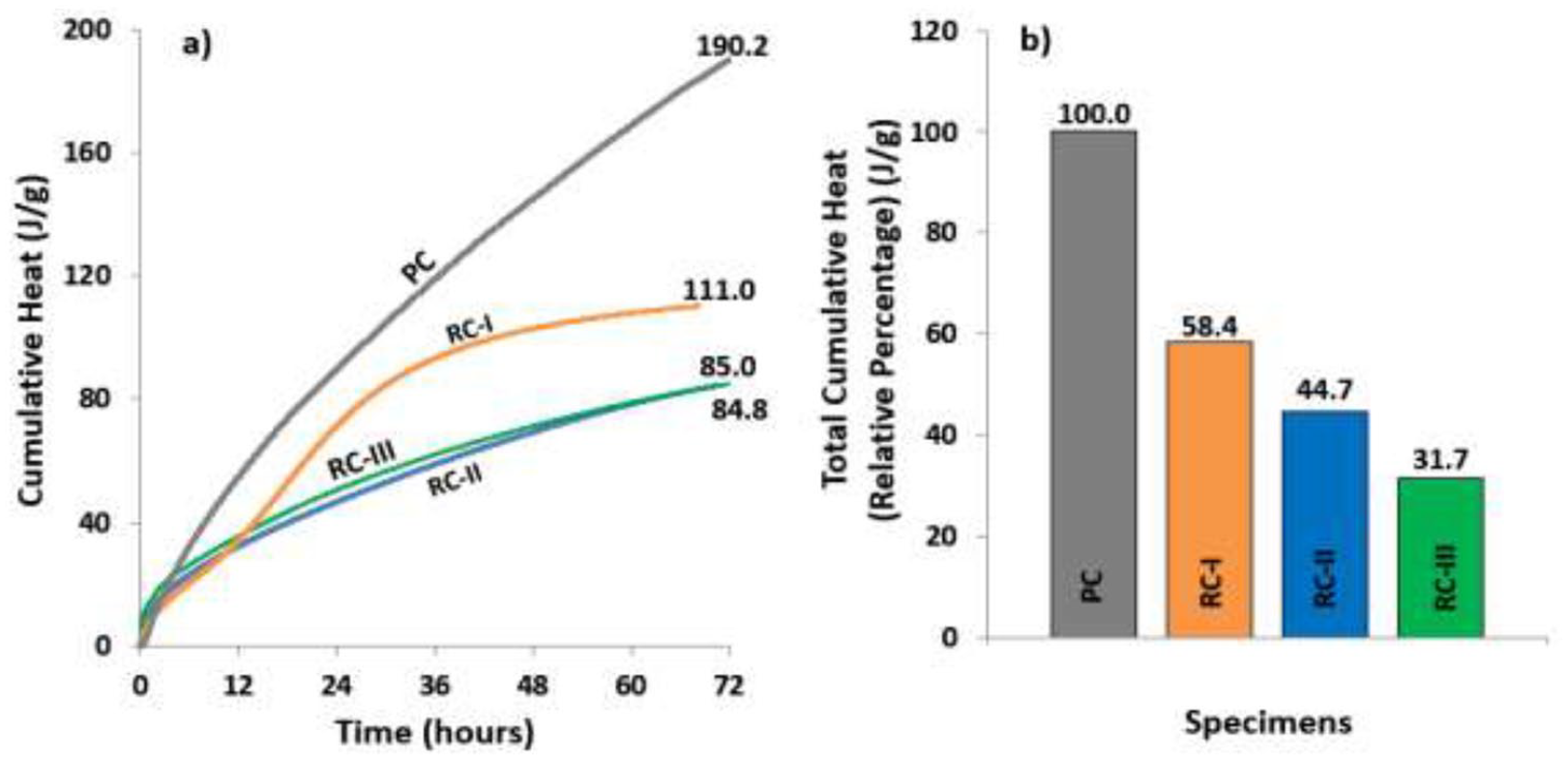
(a) Cumulative heat release from RCs, (b) relative cumulative heat release in relation to PC.
Compressive strength
As expected, RC-I achieved the highest compressive strength (Figure 4), which was consistent with the accumulated heat results. It was followed by RC-II, which also contained red brick fines and had an intermediate pozzolanic activity and a high content of dehydrated cement compared to RC-III, the least reactive blend. At the 7th day, the reactivity and strength were resulting from the rehydration of the cement compounds because it is a fast reaction (Angulo et al., 2022a, 2022b; Carriço et al., 2020). Compressive strength results were coherent with the literature, as pointed in those reported references. The strength achieved between 7 and 91 days were due to the pozzolanic reaction.
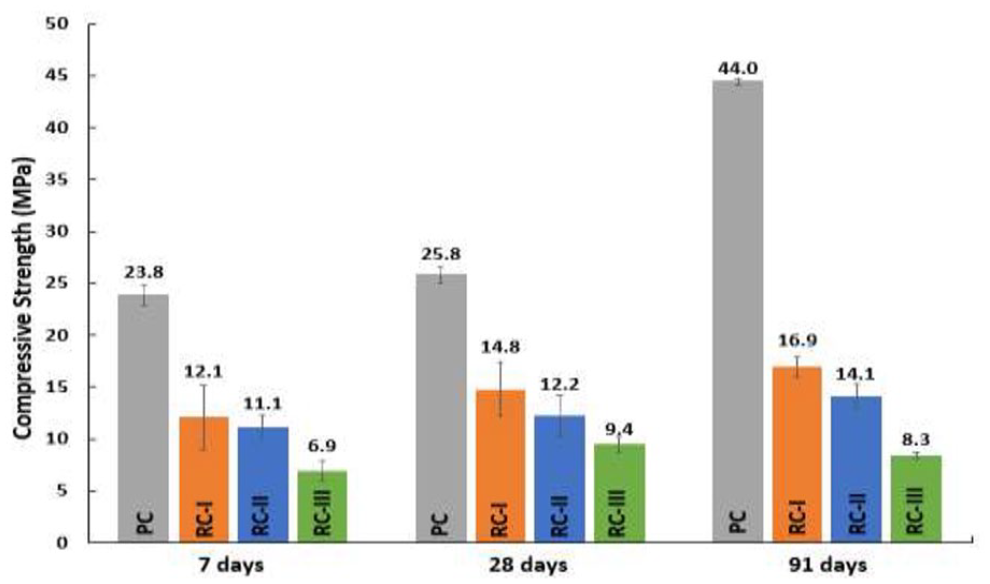
Compressive strength of PC and RCs pastes.
Mechanical tests of the pavement base stabilized with recycled cements
The calcined RCs (thermally activated) in WGCS exhibited higher compressive strengths than those without thermal activation (non-calcined) (Figure 5(a)). Despite the pozzolanic reactions, non-calcined RCs did not exhibit the minimum compressive strength required as a soil–cement base (UCS > 2.1 MPa) or PC6-WGCS94 base (UCS > 3.5 MPa).
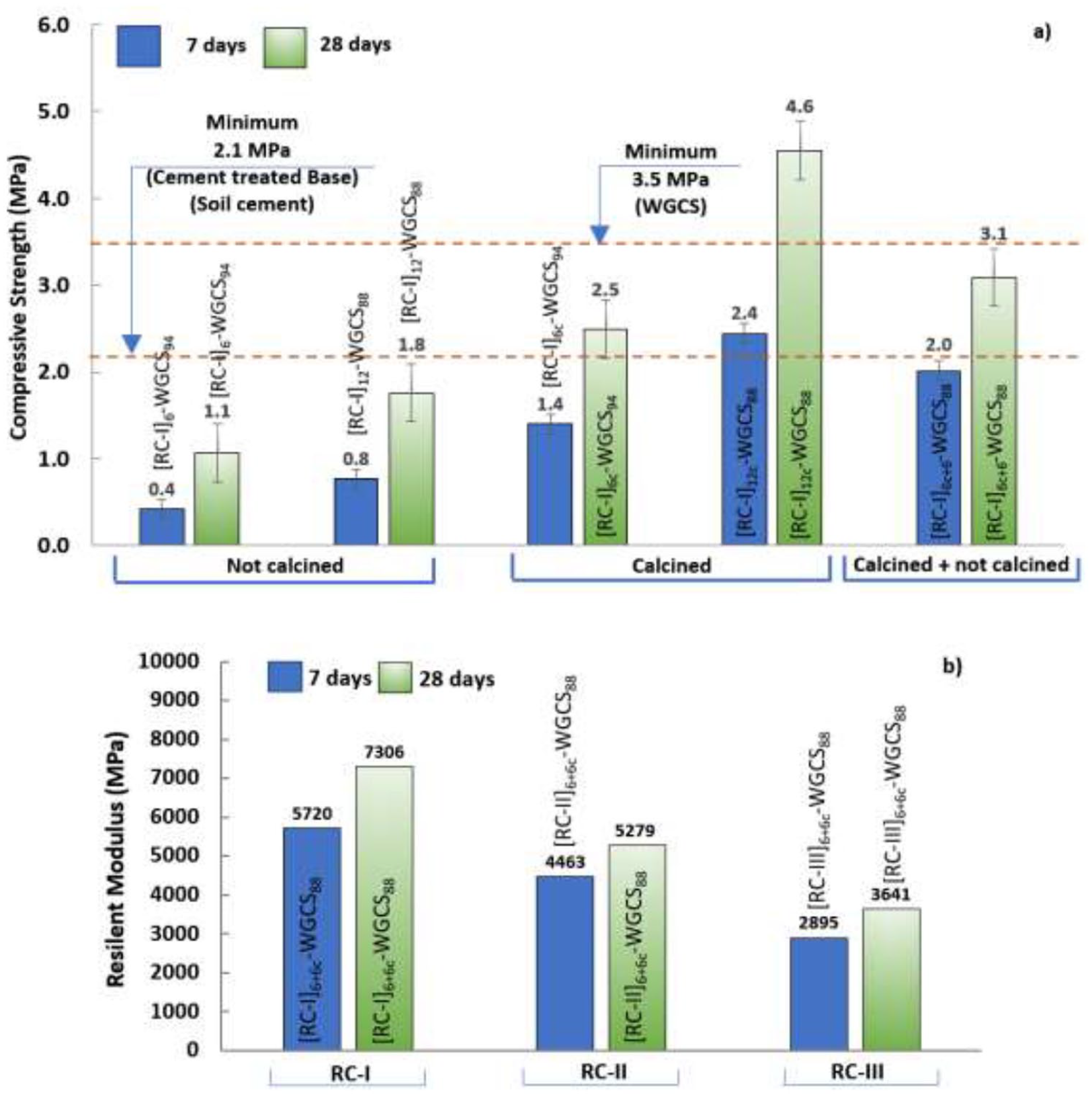
(a) UCS using WGCS stabilized with CDW cement and (b) RMs considering confining stress (σ3) = 0.1 MPa.
Twelve percent of the calcined RCs ([RC-I]12c – WGCS88) achieved the minimum UCS (2.1 MPa) at the seventh day-age for a cement-soil base. The composition of RC (6% calcined, 6% non-calcined, and [RC-I]6c+6 – WGCS94) achieved the minimum UCS at the 28th day. However, at the seventh day, the value was close to the expected limit for the cement-soil base.
The increase of compressive strength observed over the curing ages agrees with it was observed by Silva et al. (2019) and associated with the pozzolanic reaction that occurs between CDW types (concrete and red ceramic waste fines).
Figure 5(b) shows the RMs of the RCs (6% calcined + 6% non-calcined) and WGCS. The [RC-I]6+6c – WGCS88 and [RC-II]6+6c – WGCS88 mixtures exhibited higher values of the RM and acceptable values for stabilized cement bases (3000–12000 MPa, according to Bernucci et al. (2022). Camargo et al. (2013) obtained RM of 4334 MPa at 28 days-age in laboratory-mixed specimens with reclaimed concrete asphalt aggregates with 14% of fly ash.
Field pavement tests
Figure 6(a) presents the RMs of [RC-II]6+6c – RA88 and [RC-II]6+6c – WGCS88 at 7 and 28 days of age. [RC-II]6+6c – RA88 had a lower RM than [RC-II]6+6c – WGCS88). In all the samples, the RMs were associated with the use of CDW cement. RAs reduced the RM because they were more porous and had a lower elastic modulus than the natural aggregates (Silva et al., 2019).
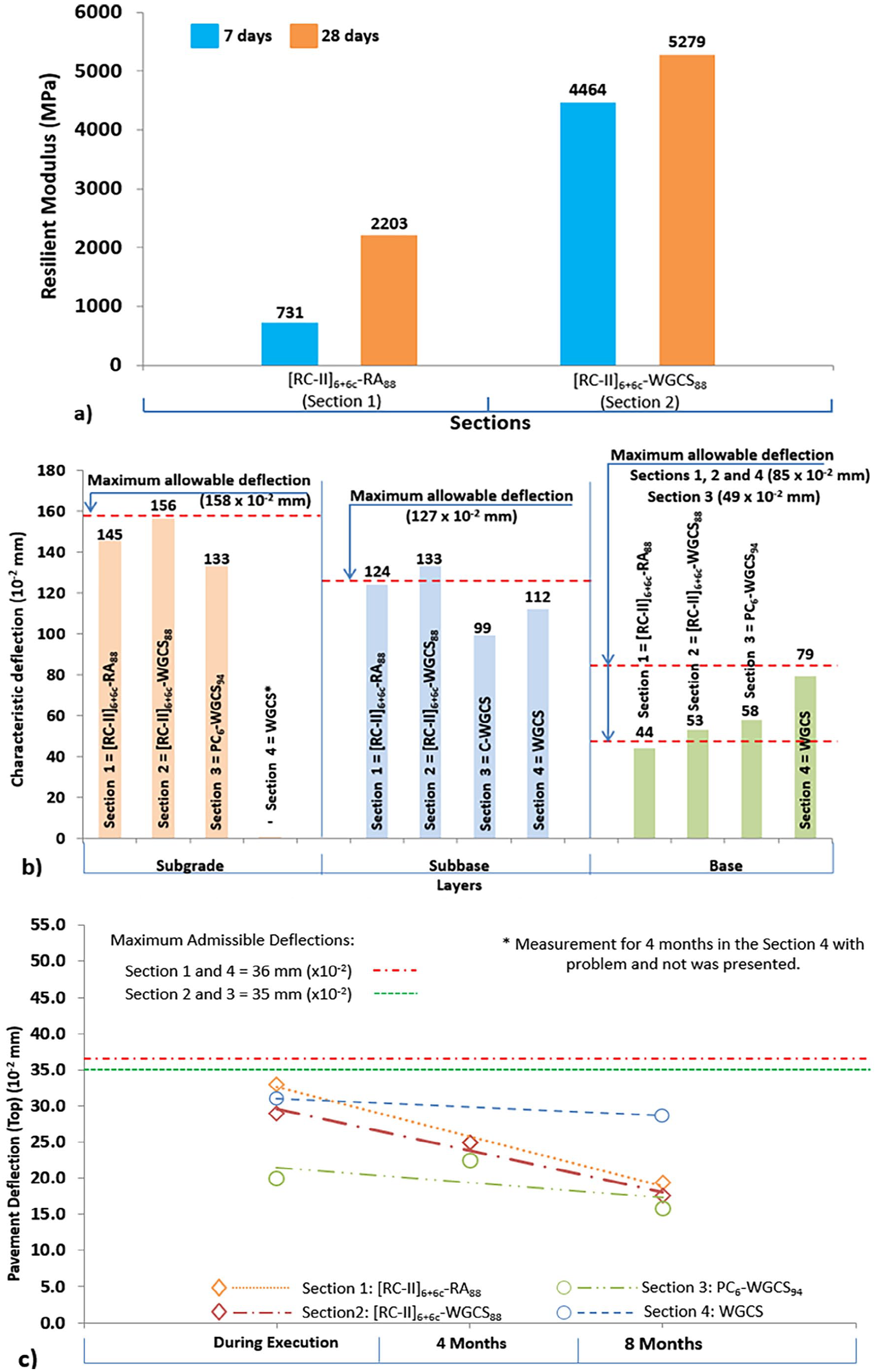
Deflections: (a) in the pavement layers during construction, (b) over time and (c) RMs of the mixtures used in the pilot-scale study.
RMs were lower to that obtained using PC (Beja et al., 2020). Using CDW with 3% of cement and 3% of lime, Beja et al. obtained results of RM of approximately 3500 MPa, like that obtained with thermoactivated (recycled) CDW cements. As a reference, for only CDW aggregates (unbound base) the RM was near 500 MPa (Beja et al., 2020).
The RM obtained at laboratory (Figure 5(a)) was higher than that obtained in the pavement field test (Figure 6(a)). Similarly, Li et al. (2008) reported the same, and the reason may be associated to the compaction efficiency between the laboratory and the machines on the field. However, the increase in the RM over time with RAs owing to the pozzolanic reaction also improved the stiffness, which continued after 28 days-age, as also observed by Beja et al. (2020) after 60 days-age.
Figure 6(b) shows the field deflections of the sections. Measurements were done on each layer of the pavement during construction in the field test. Figure 6(c) shows the deflections measured at the top of pavement layer over time. Only the base of section 2 exhibited a deflection above the maximum allowable value. However, the deflection in the base layer of this section was approximately 69% lower on average than that of the WGCS pavement (not chemically stabilized).
The deflections in the pavement sections using RCs ([RC-II]6+6c-RA88 – section 1 and [RC-II]6+6c-NA88 – section 2) were intermediate compared to those observed in section 3 (PC6-WGCS94) and section 4 (WGCS) (Figure 6(c)). These results are consistent with those observed in the field by Beja et al. (2020).
After the construction of the pavement sections, section 1 exhibited higher deflections than section 2, due to the lower stiffness of this layer owing to the higher porosity and lower density of the RAs.
The deflection decreased over time owing to the increase in the stiffness of the pavement structure, mainly because of the pozzolanic (or self-cementing) reaction, similar to that observed in the field by Beja et al. (2020) after 18 months.
In sections 1, 2 and 3, the reduction in deflections over time was due to the recycled (or Portland) cement. Section 4 exhibited similar deflection values over time because they were prepared without a binder (PC and/or recycled cement).
Conclusions
This study demonstrated the use of various CDW fines to develop recycled (thermoactivated) cements and optimized the contents of CDW recycled cements with WGCS for use as base layer for pavement. In the best or our knowledge, no other published study reported the use of recycled cement as base layer. We scaled up the study obtaining the cement and aggregates from a CDW recycling plant (see graphical abstract), and pilot pavement sections designed and constructed (Supplemental Material), and field deflection tests done.
In this work, CDW fines were selected and thermal activated to achieve the maximum reactivity for the recycled cements. The compressive strength after 7 days was due to the recycled cements and, at later time, due to the pozzolanic reaction. The pastes prepared with recycled cements reached up to 58% of the heat generated by the PC and obtained a compressive strength of 14.8 MPa after 28 days of age.
The base pavement specimens done with the recycled cements and WGCS achieved a RM of 5700 MPa at the seventh day of age. The RM increased over time and satisfied the requirements of chemically stabilized base layers for moderate-traffic urban paving.
In the field pilot-scale study, the sections constructed using RCS and well-graded aggregates (natural or recycled) exhibited intermediate behaviour compared to those obtained using 4% PC-WGCS and WGCS (a conventional granular base). Time (age) contributed to the decrease in deflection owing to the increase in the pozzolanic reaction and RM (laboratory tests).
The study demonstrated the technical feasibility of using CDW recycled cements and aggregates to construct stabilized base layer for moderate traffic pavements of Metropolitan regions expanding the recycling market and circularity of secondary resources for civil construction. The recycled cement can be obtained by sieving and small-scale rotary kiln calcination in a CDW recycling plant (see graphical abstract) emitting in the manufacture lower CO2 than the conventional binders, among other environmental benefits of the CDW recycling like less use of landfill areas, and reduction of materials transportation inside cities.
For future works, it is important to do a life cycle assessment of the recycled cement and its application in base of pavements, as well as an economic feasibility study.
Supplemental Material
sj-docx-1-wmr-10.1177_0734242X241227370 – Supplemental material for Thermoactivated cement from construction and demolition waste for pavement base stabilization: A case study in Brazil
Supplemental material, sj-docx-1-wmr-10.1177_0734242X241227370 for Thermoactivated cement from construction and demolition waste for pavement base stabilization: A case study in Brazil by Valdir M Pereira, Raphael Baldusco, Patricia B Silva, Valdecir A Quarcioni, Rosângela S Motta, Seiiti Suzuki and Sergio C Angulo in Waste Management & Research
Footnotes
Declaration of conflicting interests
The authors declared no potential conflicts of interest with respect to the research, authorship, and/or publication of this article.
Funding
The authors disclosed receipt of the following financial support for the research, authorship, and/or publication of this article: To obtain the results presented herein, a 5-year research project between 2013 and 2018 was executed by the Institute of Technological Research of the State of São Paulo (IPT), Brazil, in partnership with InterCement and National Bank of Development (BNDES). The authors also thank the following companies for the partnership in the construction of the experimental field pavement: Fiori Group and Progress and Development of Guarulhos (PROGUARU), particularly its employees, Deborah Oliveira and Claudemir Ferreira de Mello. Valdir M Pereira PhD is also grateful for the Coordination for the Improvement of Higher Education Personnel of Brazil (CAPES), postdoctoral scholarship (process: 8887.648719/2021/00). Professor Sérgio C Angulo PhD received a research scholarship grant from National Council of Research and Development of Brazil (CNPq) (process number 307458/and from CAPES, process 88887.837891/2023-00).

Supplemental material
Supplemental material for this article is available online.
References
Supplementary Material
Please find the following supplemental material available below.
For Open Access articles published under a Creative Commons License, all supplemental material carries the same license as the article it is associated with.
For non-Open Access articles published, all supplemental material carries a non-exclusive license, and permission requests for re-use of supplemental material or any part of supplemental material shall be sent directly to the copyright owner as specified in the copyright notice associated with the article.
