



Abstract
This study is a critical review of municipal solid waste (MSW) hydraulic conductivity that includes investigation of the influence of vertical stress, dry unit weight and degradation. A total of 56 studies were compiled that included laboratory-, pilot- and landfill-scale hydraulic conductivity experiments. Compacting waste and increasing vertical stress reduce MSW hydraulic conductivity via reshaping the pore networks throughout the waste matrix, reducing the void ratio and increasing tortuosity. However, the magnitude of reduction in hydraulic conductivity is dependent on stress, waste composition and decomposition. Solid waste decomposition can have opposing effects on hydraulic conductivity. Some studies have indicated that an increase in MSW decomposition results in particle size reduction and settlement that reduces the void ratio and decreases hydraulic conductivity. Conversely, some studies indicate that waste decomposition reduces the solid mass, which increases the void ratio and creates larger flow paths that increase hydraulic conductivity. The data compilation, observations and key findings from this study are beneficial for solid waste practitioners to improve design, analysis and operation of MSW landfills.
Introduction
The hydraulic conductivity of municipal solid waste (MSW) is an important engineering parameter for landfill stability, leachate distribution and collection and gas extraction (Bonaparte et al., 2020; Dixon and Jones, 2005; Hendron et al., 1999; Jain et al., 2006; Townsend et al., 2015; Wu et al., 2012). Hydraulic conductivity is controlled by interdependent physical, chemical and biological processes of MSW. Given these processes and their interdependencies, a comprehensive evaluation is needed to obtain a reliable estimate of MSW hydraulic conductivity that can be used in landfill design and in performance evaluations.
Hydraulic conductivity of MSW is a function of stress (overburden pressure), waste composition, degradation, particle size, unit weight, water content, field capacity, porosity, drainable porosity, compression and landfill operations (Beaven 2000; Breitmeyer et al., 2019; Ke et al., 2017; Landva et al., 1998; Machado et al., 2010; Miguel et al., 2018; Powrie and Beaven, 1999; Powrie et al., 2005; Zhang et al., 2018). Past research indicates that vertical stress, waste composition and waste decomposition are the most influential factors on MSW hydraulic conductivity (Bareither et al., 2020; Bleiker et al., 1993, 1995; Breitmeyer et al., 2019; Chen and Chynoweth, 1995; Durmusoglu et al., 2006; Fungaroli and Steiner, 1979; Gabr and Valero, 1995; Hossain et al., 2008; Jang et al., 2002; Jie et al., 2013; Karimi et al., 2023; Ke et al., 2017; Korfiatis et al., 1984; Landva et al., 1998; Machado et al., 2010; Miguel et al., 2018; Powrie and Beaven, 1999; Powrie et al., 2005, 2008; Reddy et al., 2009a, 2009b, 2011; Stoltz et al., 2010). Stress, waste composition and waste decomposition are interrelated and dependent on additional factors. For instance, stress is a function of unit weight, composition and landfill height, whereas degradation depends on factors such as composition, water content, particle size and landfill operations.
There are numerical models to assist with landfill design, but models require engineering parameters that are accurate and defensible to make predictions. In this study, a unique dataset was created that spans laboratory-, pilot- and field-scale hydraulic conductivity testing. This effort has not been previously done and is needed to assist landfill practitioners with design as well as provide a basis for moving research forward. This review is novel in that the large compilation data were critically assessed to generate new insight on MSW hydraulic behaviour. The objectives of this study were to (i) compile a comprehensive review of MSW hydraulic conductivity and (ii) evaluate the influence of MSW and landfill characteristics on hydraulic conductivity. This study presents a comprehensive evaluation of the impacts of vertical stress, dry unit weight and decomposition by compiling data from a total of 56 studies, which encompass laboratory-, pilot- and landfill-scale hydraulic conductivity experiments. The data compilation, observations and key findings from this study are beneficial for solid waste engineers to improve design, analysis and operation of MSW landfills.
Methodology
Study selection and screening
Fifty-six studies were collected and reviewed to assess the influence of various factors on MSW hydraulic conductivity. Studies that did not provide data on MSW or experiment characteristics (e.g. age, experiment size, test methods) were omitted from the analysis. A total of 24 studies were included as these provided sufficient information on MSW and/or landfill characteristics to infer and compare factors influencing the measured hydraulic conductivity.
Studies initially were categorized based on (i) magnitude and range of vertical stress and (ii) state of waste degradation. The impacts of stress and unit weight on MSW hydraulic conductivity were assessed in 17 studies, which were further categorized based on MSW age and/or state of decomposition, experiment scale (i.e. laboratory-, pilot- and landfill-scale), specimen size and MSW particle size. The influence of degradation on MSW hydraulic conductivity was evaluated separately in seven studies.
Data extracted from the 56 studies is compiled in three reference tables included in supplemental content (Supplemental Tables S1–S3). The influence of stress and dry unit weight on MSW hydraulic conductivity is given in Supplemental Table S1. Studies that reported hydraulic conductivity believed to be most representative of actual hydraulic behaviour of landfills are given in Supplemental Table S2; rationale for selecting these studies is discussed subsequently. A summary of studies that measured hydraulic conductivity of MSW in different decomposition states is given in Supplemental Table S3. The tables include method of experiment, waste composition, range of stress and dry unit weight, hydraulic conductivity, details of hydraulic conductivity test (e.g. depths of exhumed samples, diameter of specimen and particle size) and decomposition state of MSW (if applicable).
Impacts of stress and unit weight on hydraulic conductivity
Stress and unit weight have a positive relationship for unsaturated waste; an increase in stress is generally correlated with an increase in unit weight. Unit weight of MSW is a function of waste composition, climate, compaction energy and landfill operation (Zekkos et al., 2006). The unit weight of landfilled MSW initially increases via waste compaction at the working face of a landfill (Hanson et al., 2010; Li et al., 2013). Compaction increases the unit weight via reducing void volume, resulting in more constricted flow paths and that reduces infiltration from precipitation. After compaction, unsaturated waste compresses as additional MSW and cover materials are placed thereby increasing the vertical stress.
The rate of vertical stress increase from the surface of a landfill downward depends on unit weight of landfilled materials. In general, higher fractions of soil or soil-like materials increase unit weight. Kavazanjian (1999) reported waste:soil mass ratio of 1:1 at depth, indicated the initial unit weight of MSW ranged from 4 to 6.5 kN m−3, and with addition of daily or interim soil cover, the total unit weight of MSW with soil increased to 8–13 kN m−3. Landfills with leachate recirculation or in wetter climate also yield higher MSW unit weight (Hanson et al., 2010; Kavazanjian, 2001). The influence of stress and MSW unit weight on hydraulic conductivity were evaluated for MSW characterized as fresh, semi-decomposed and decomposed.
Fresh MSW
Relationships of hydraulic conductivity (ks) versus vertical stress and dry unit weight for fresh MSW are shown in Figure 1. Data compiled in Figure 1 are segregated into three types of experiments to compare the influence of specimen preparation and scale: (i) laboratory-scale experiments on shredded waste, (ii) laboratory-scale experiments on unshredded waste and (iii) pilot-scale experiments on unshredded waste. The ks reported for fresh MSW ranges from 10−4 to 10−7 m s−1 under zero applied stress and decrease to a range of 10−7–10−9 m s−1 for 600 kPa vertical stress (Figure 1(a)). In general, an increase in unit weight reduces porosity, which reduces the size of pore spaces (i.e. flow channels) and consequently the hydraulic conductivity (Figure 1(b)).
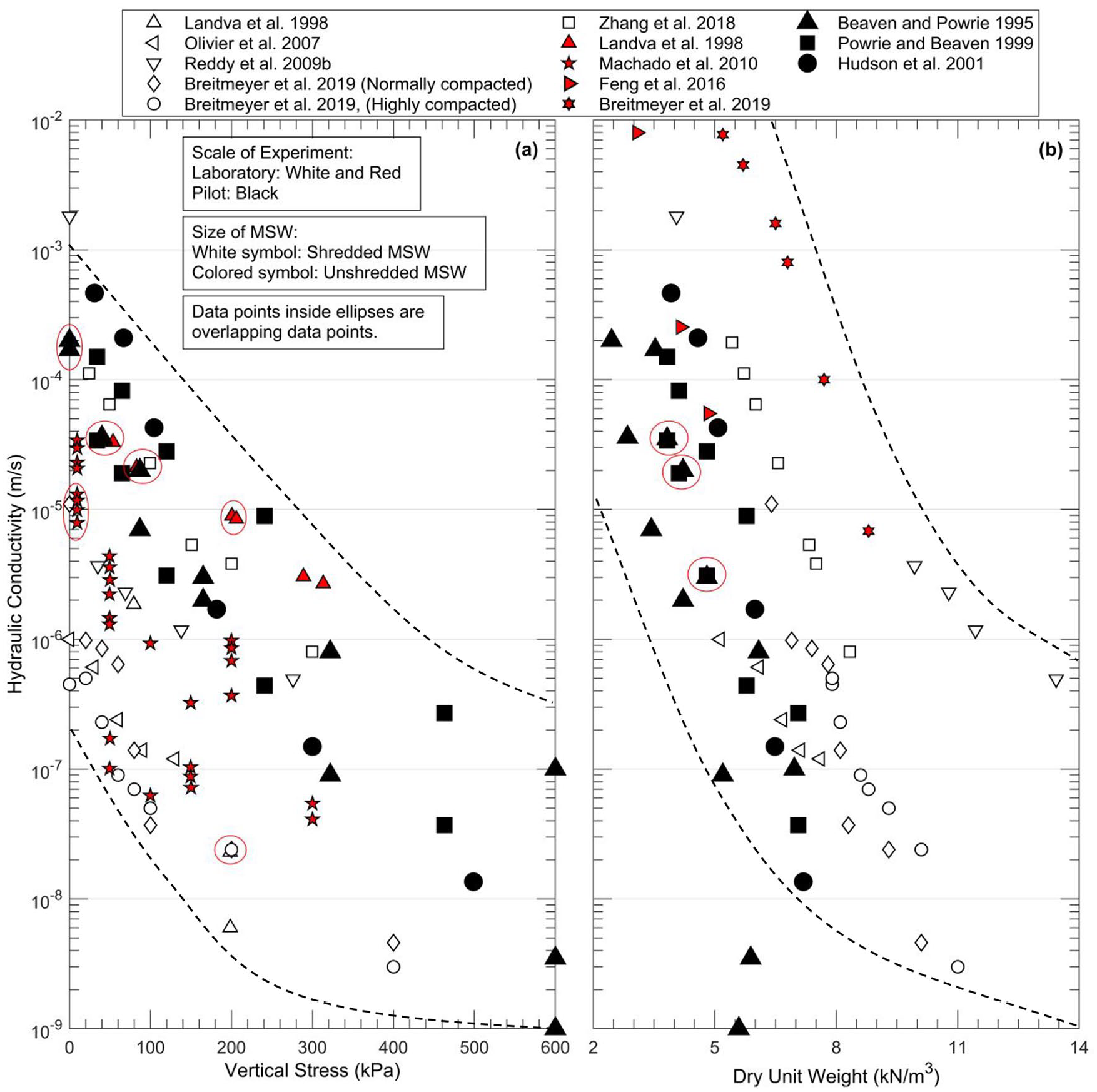
Relationships of hydraulic conductivity versus: (a) vertical stress and (b) dry unit weight for fresh municipal solid waste.
Laboratory-scale hydraulic conductivity
The measurement of MSW ks in laboratory-scale permeameters commonly requires waste shredding to adhere to particle size constraints or the use of a larger-scale (⩾300 mm diameter) permeameter that can accommodate unshredded waste particles (Breitmeyer et al., 2019; Karimi, 2022; Ke et al., 2017; Reddy et al., 2009b). ASTM D5856 specifies that the diameter of soil particles must be less than 1/6 the specimen diameter when using a compaction-mould permeameter. Considering there is no test standard for MSW ks, the 1/6 particle-to-specimen diameter ratio has been adopted by some researchers (e.g. Breitmeyer et al., 2019; Karimi et al., 2023; Reddy et al., 2009b) and not adopted by others (Ke et al., 2017; Reddy et al., 2009a, 2009b; Stoltz et al., 2010). Furthermore, methods for laboratory-scale ks testing vary throughout the world. Zhang et al. (2018) adhered to a ratio of particle-to-specimen diameter <1/8 based on Chinese practice. The subsequent discussion focuses on studies that adhered to particle-to-specimen diameter ratio ⩽1/6 as these experiments are argued to have similar scale effects between MSW particles and laboratory permeameters.
Shredding fresh MSW for laboratory testing results in smaller void spaces that reduces ks. Breitmeyer et al. (2019) reported two orders of magnitude smaller ks for specimens with similar composition and approximately similar dry unit weight, but with smaller particle sizes (ks = 7 × 10⁻⁵ m s−1 for shredded fresh MSW, dry unit weight = 5.5 kN m−3 and ks = 7.7 × 10⁻³ m s−1 for unshredded fresh MSW, dry unit weight = 5.2 kN m−3, under zero vertical stress). In general, ks tests on unshredded fresh MSW tend to yield higher ks (Figure 1). Landva et al. (1998) tested unshredded MSW exhumed from landfills, and their results plot in the upper range of ks for shredded MSW (Figure 1(a)).
Relationships between vertical stress and dry unit weight for laboratory specimens prepared with fresh MSW are shown in Figure 2. MSW includes materials such as paper, plastic, wood, rubber, metal and soil, which have different specific gravities (Wong, 2009). Variation in MSW composition influences the unit weight that can be achieved during placement in a landfill or compacted in a laboratory specimen, as well as the increase in unit weight with increasing stress. The higher dry unit weights reported by Reddy et al. (2009b) and Breitmeyer et al. (2019) are due to larger contributions of high-density materials (e.g. soil), whereas lower dry unit weights reported by Zhang et al. (2018) were attributed to MSW that contained 61.5% food waste. The high food waste fraction resulted in less compacted specimens with lower unit weight relative to MSW specimens that contained high-density materials such as soil.
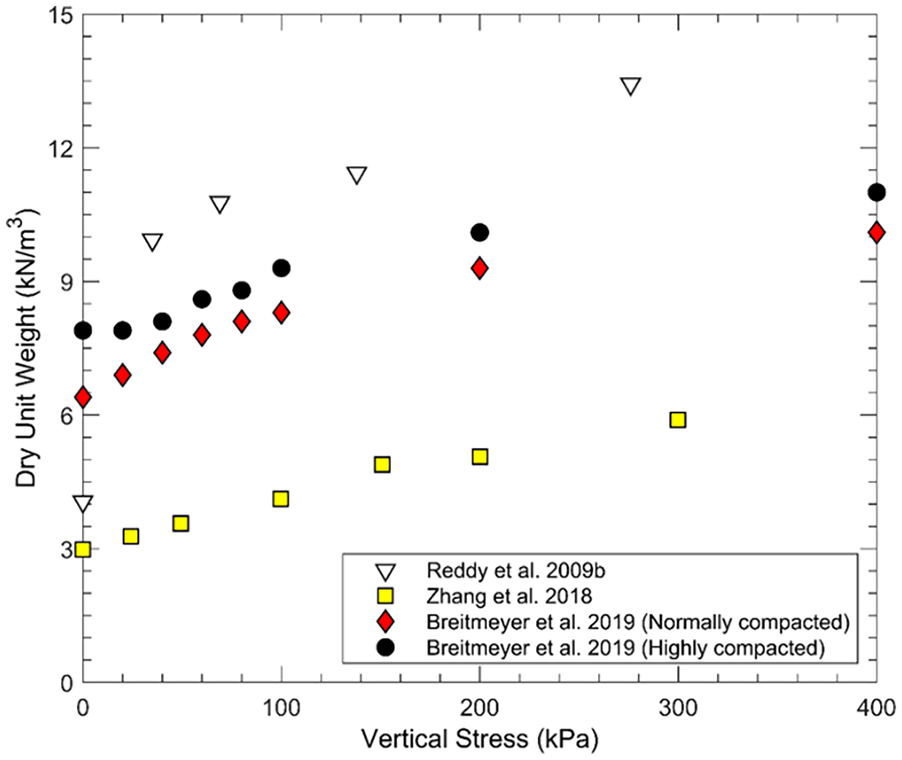
Relationships of vertical stress versus dry unit weight for fresh MSW.
Pilot-scale hydraulic conductivity
Hydraulic conductivities measured in pilot-scale tests fall within the upper boundary of the compiled ks in Figure 1(a). Beaven and Powrie (1995), Powrie and Beaven (1999) and Hudson et al. (2001) used a 2-m diameter compression cell to evaluate the effect of stress on MSW hydraulic conductivity. Applying 600 kPa stress increased the dry unit weight from 2.5 to 7.2 kN m−3 and reduced ks from 10−4 m s−1 to between 10−7 and 10−9 m s−1 (Figure 1(b)). For a given vertical stress, ks varied two orders of magnitude, which was mainly attributed to variation in waste composition. For a given ks, the MSW dry unit weight in the pilot-scale experiments were lower than laboratory-scale, which was attributed to larger, unshredded waste particles that could not be compacted and compressed similarly to shredded MSW.
The order of magnitude reduction in ks (log(ks/ksi)) with increasing dry unit weight ((γd/γdi) − 1) for the laboratory-scale ks tests on shredded and unshredded MSW and pilot-scale ks tests on unshredded MSW are shown in Figure 3. The dry unit weight (γd) and ks were normalized based on initial hydraulic conductivity (ksi) and initial dry unit weight (γdi). The x-axis represents the fractional increase in dry unit weight (e.g. 0.6 = 60% γd increase relative to initial condition) and the corresponding order of magnitude reduction in ks is identified by the slope (M) of a linear regression between log(ks/ksi) and ((γd/γdi) − 1). An M = −3, for example, indicates a three order-of-magnitude reduction in ks for 100% increase in dry unit weight. The average of the slopes for the unshredded MSW specimens in laboratory-scale tests (M = −4) was similar to the unshredded MSW specimens in pilot-scale tests (M = −4.3). This indicates that the ratio of change in ks by increasing dry unit weight is similar if the MSW is unshredded, regardless of whether the experiment is conducted at laboratory-scale or pilot-scale. The reduction in ks of fresh shredded MSW (M = −5.4 and −6.3) was higher than unshredded MSW (M = −4.1, on average), which is attributed to the smaller particle size. The comparison in Figure 3 supports that small particles of shredded waste can fill void spaces that cannot be filled with large particles, which reduces the size and increases tortuosity of flow paths.
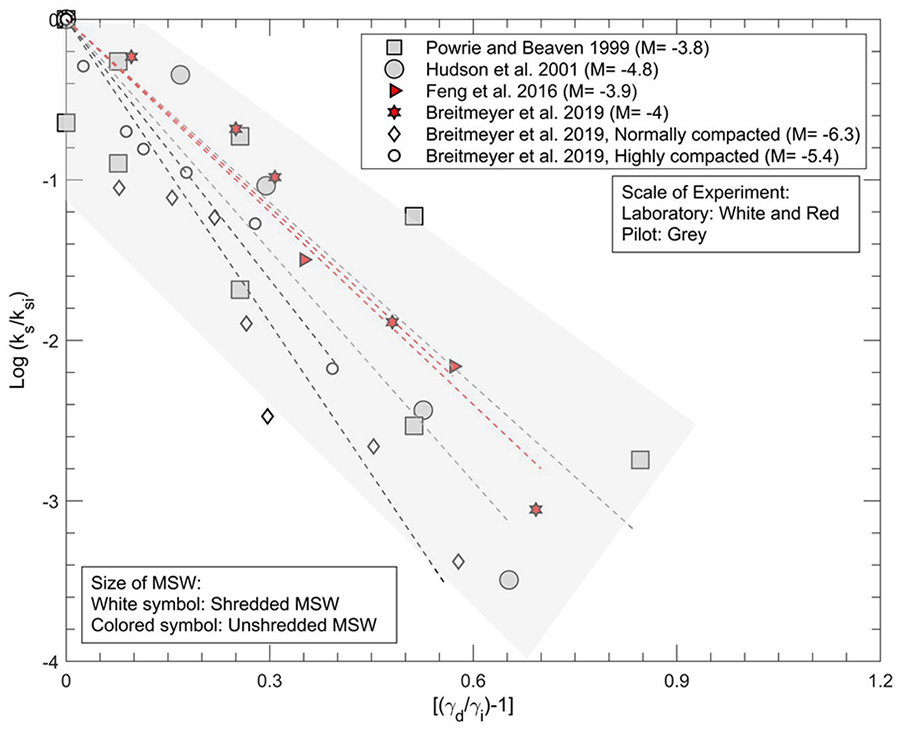
Hydraulic conductivity versus dry unit weight normalized to initial condition for the laboratory- and pilot-scale ks test on MSW.
Semi-decomposed MSW
Relationships of ks measured in laboratory- and landfill-scale experiments versus vertical stress and dry unit weight for semi-decomposed waste are shown in Figure 4. Data were categorized based on experiment scale and MSW particle size to evaluate influence on ks. The ks of semi-decomposed MSW is in the range of 10−1–10−7 m s−1 for vertical stress between 0 and 400 kPa. In general, the compilation of ks for semi-decomposed MSW indicates a two order-of-magnitude increase in ks relative to fresh MSW for a range of vertical stress from 0 to 400 kPa. However, there is less data available for the hydraulic conductivity of semi-decomposed MSW relative to fresh waste, particularly for vertical stress >200 kPa.
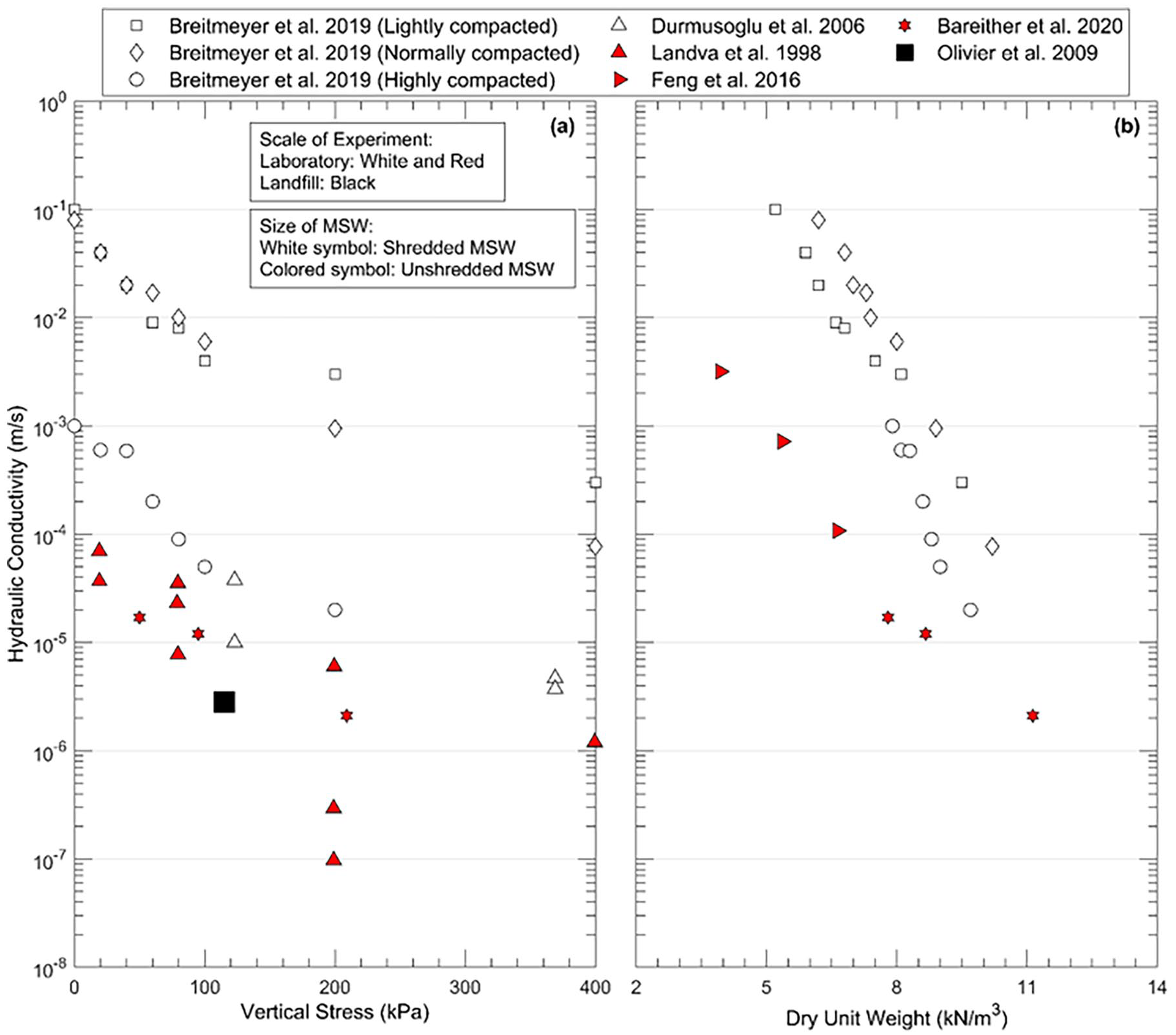
Relationships of hydraulic conductivity versus: (a) vertical stress and (b) dry unit weight for semi-decomposed MSW.
Laboratory-scale hydraulic conductivity
Hydraulic conductivity tests on shredded, semi-decomposed, MSW tend to yield higher ks compared with ks tests on unshredded MSW or pilot-scale tests, particularly in the stress range of 0–200 kPa (Figure 4). Results of ks tests on shredded MSW yielded ks ranging between 10−1 and 10−3 m s−1 under zero vertical stress, and ks decreased to as low as 10−5 m s−1 by increasing stress to 400 kPa. However, ks measured on unshredded MSW under a similar range of stress ranged between 10−5 and 10−7 m s−1.
The two datasets compiled in Figure 4 for ks measured shredded, semi-decomposed MSW in laboratory-scale experiments, Breitmeyer et al. (2019) and Durmusoglu et al. (2006). Breitmeyer et al. (2019) reported that void enlargement due to waste degradation was the main reason for the higher ks measured on semi-decomposed MSW relative to ks measured on fresh MSW (Figure 1). The three datasets compiled from Breitmeyer et al. (2019) in Figure 4 are for semi-decomposed MSW specimens prepared with reduced, standard, and modified Proctor compaction energies. Although the highly compacted (ASTM D1557) MSW specimens yielded a two-order-of-magnitude decrease in ks under zero vertical stress (Figure 4(a)), all three datasets merge to a similar trend of ks versus dry unit weight (Figure 4(b)). Thus, regardless of the variation in initial compacted dry unit weight (ranging from 5.2 to 7.9 kN m−3), the trend of ks versus dry unit weight for the three semi-decomposed MSW specimens was similar. The ks values reported by Durmusoglu et al. (2006) were in the same range as Breitmeyer et al. (2019).
Durmusoglu et al. (2006), Reddy et al. (2009b), Reddy et al. (2011), Zhan et al. (2014), Feng et al. (2016) and Ke et al. (2017) also conducted laboratory ks tests on semi-decomposed MSW. A summary of these studies is included in Supplemental Tables S1 and S3. These studies are not included in Figure 4 because the 1/6 particle-to-specimen diameter ratio was not met. In general, the smaller waste particles produced dense specimens that yielded lower ks, which was not in agreement with trends from other hydraulic conductivity data.
Landfill-scale hydraulic conductivity
Limited data are available at the landfill scale for ks. Olivier et al. (2009) measured ks in a landfill-scale test on semi-decomposed MSW. The experiment was conducted as a field pumping test in 5- to 7-year-old landfilled waste under 80 and 150 kPa, which yielded an average ks of 2.8 × 10⁻⁶ m s−1. Although the waste consisted of other non-MSW such as industrial and commercial waste (52%), sewage sludge (8%) and inert materials (8%), the ks was in a similar range with unshredded MSW laboratory-scale tests.
We were unable to find peer-reviewed literature describing field-scale hydraulic conductivity of semi-decomposed MSW for which the unit weight or overburden stress are also reported. A summary of studies reporting hydraulic conductivity of landfilled MSW is given in Supplemental Table S2. The ks for landfill-scale hydraulic conductivity tests ranged between 10−5 and 10−8 m s−1, which are similar to unshredded MSW laboratory-scale tests. The variation in reported ks is attributed to variation in waste composition, landfill operations and state of degradation.
Decomposed MSW
Relationships of ks versus vertical stress and dry unit weight for decomposed MSW from laboratory-, pilot- and landfill-scale experiments are shown in Figure 5. The relationship of ks versus vertical stress exhibits a clean distinction between laboratory experiments on shredded, decomposed MSW, a pilot-scale experiment on unshredded MSW and a landfill-scale experiment on decomposed MSW. The hydraulic conductivity measured in these three experiment scales decreases with increasing experimental scale.
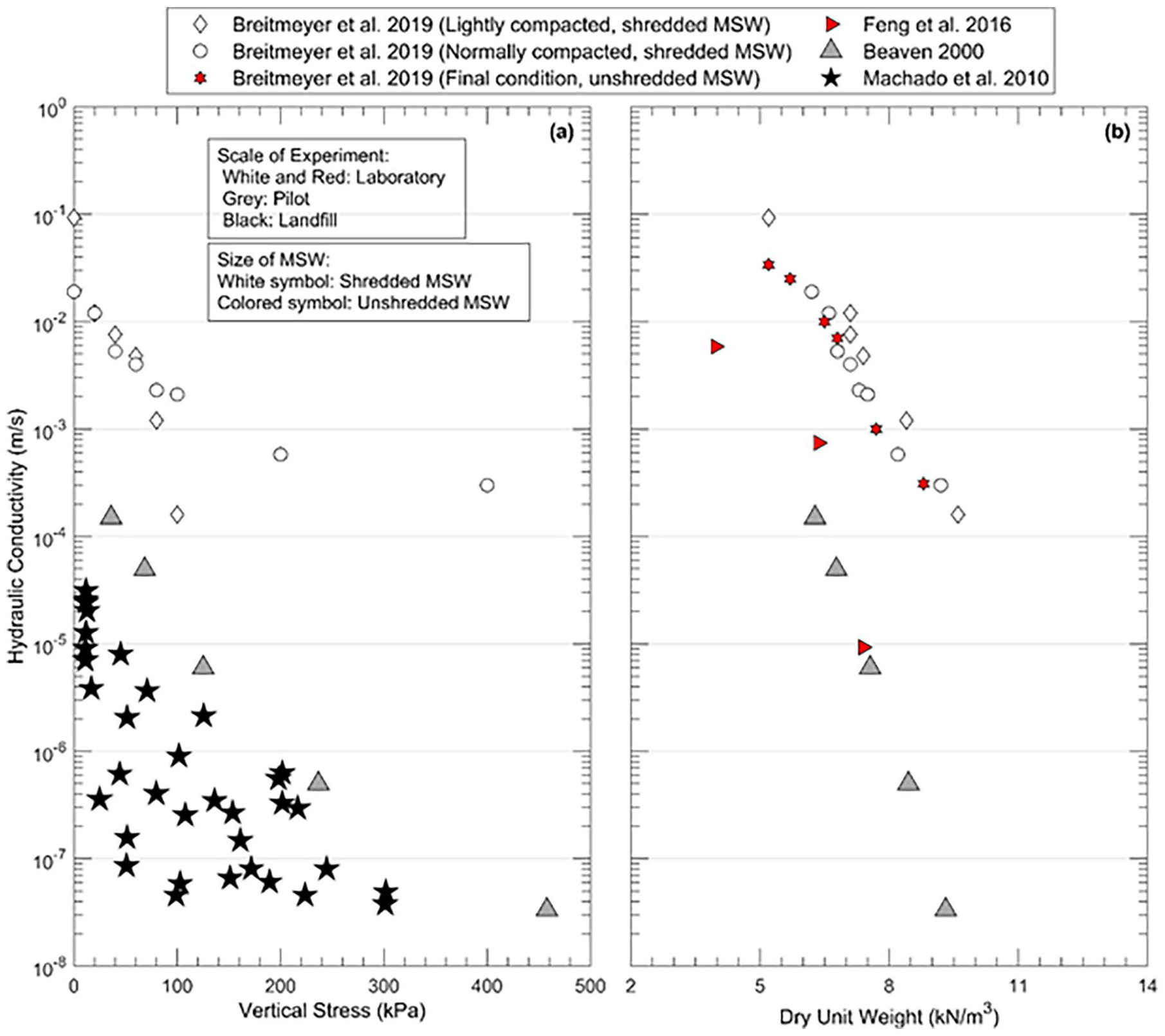
Relationships of hydraulic conductivity versus: (a) vertical stress and (b) dry unit weight for decomposed MSW.
The decrease in ks with increase in experiment scale is attributed to differences in MSW particle size and composition. The shredded, decomposed MSW tested by Breitmeyer et al. (2019) included a maximum particle diameter of 25 mm. Beaven (2000) used 20-year-old household waste that included a particle size distribution (by weight) of 18% >80 mm, 52% >40 mm and approximately 34% <10 mm. Although the maximum particle size used by Beaven (2000) was larger than that used by Breitmeyer et al. (2019), the larger fraction of smaller particles likely occupied void spaces between the larger particles and contributed to a lower ks.
The landfill-scale ks reported by Machado et al. (2010) was measured via infiltration tests. The authors reported 85% of the MSW was at least 15 years old with particles less than 30-mm diameter. The range of ks measured by Machado et al. (2010) was justified based on the presence of small MSW particles that were like soil, the presence of plastic components that obstructed flow and MSW heterogeneity. Furthermore, the landfill evaluated included soil as daily and interim cover, which introduced soil particles to the waste mass (Bogner, 1990; Burrows et al., 1997; Townsend et al., 1995) combined with an increased fraction of soil-like materials due to MSW decomposition that created vertical layers with lower ks.
Bareither et al. (2012a) determined ks of MSW under 20–67 kPa at pilot-scale using a 2.4-m diameter by 8.2-m tall lysimeter. The peak Darcy flux was 4 × 10⁻⁶ m s−1 at the end of experiment when MSW was decomposed. The Darcy flux was determined in a manner that the MSW matrix was at field capacity (outflow = inflow). For this study, Breitmeyer et al. (2019) estimated decomposed MSW dry unit weight, which on average was 8.38 kN m−3. The Darcy flux was in the upper range of the landfill-scale ks reported by Machado et al. (2020) (Figure 5(a)) and agreed with Beaven (2000) (Figure 5(b)).
An additional dataset from Breitmeyer et al. (2019) is included in the relationship of ks versus dry unit weight, which is representative of laboratory-scale hydraulic conductivity tests on unshredded, decomposed MSW. The trends of ks versus dry unit weight for the shredded and unshredded, decomposed MSW from Breitmeyer et al. (2019), overlap to form a single relationship. Although decomposition of waste changes MSW particle size and shape, the comparison from Breitmeyer et al. (2019) suggests that more advanced MSW decomposition reduced the variation of particle size between shredded and unshredded MSW.
Interestingly, the range of MSW dry unit weight for the pilot-scale experiments conducted by Beaven (2000) is similar to that of Breitmeyer et al. (2019); however, the ks is consistently two to nearly four orders of magnitude lower. The difference in ks is likely attributed to the particle size distribution of waste materials and age of the waste. Beaven (2000) used MSW that 6.3% of particles were larger than 160 mm, but 34% of particles were less than 10 mm. The MSW specimen consisted of waste particle sizes that were distributed over a wide range such that the small particles filled the major voids between large particles and created a specimen with a pronounced reduction in ks.
Impacts of decomposition
Solid waste is a dynamic material wherein hydraulic, physical, chemical and biological behaviour change as waste decomposition progresses. Several studies have evaluated the influence of decomposition on MSW unit weight, particle size, void ratio, compression and hydraulic behaviour (Beentjes, 2021; Breitmeyer et al., 2019, 2020; Fei et al., 2014; Karimi and Bareither, 2021; Ke et al., 2017; Liu et al., 2020; Machado et al., 2010; Miguel et al., 2018; Olivier et al., 2007; Reddy et al., 2011; Rohlf et al., 2021; Xu et al., 2014). A summary of studies that evaluated the influence of different degrees of degradation on MSW hydraulic conductivity is provided in Supplemental Table S3. Past studies have documented that conversion of degradable waste to gas increases settlement (e.g. Bareither et al., 2013), reduces waste particle size and eliminates void spaces, which all may contribute to a reduction in ks (Hartwell et al., 2021; Reddy et al., 2009b). However, removing solid mass via decomposition of organic matter creates void space within the waste skeleton ratio (Bareither et al., 2012b; McDougall et al., 2004), which may increase ks (Breitmeyer et al., 2019; Miguel et al., 2018).
Hydraulic conductivities measured by Breitmeyer et al. (2019) for two different laboratory scale experiments (150 and 300-mm diameter) are compiled in Figure 6. Results from the 150-mm-diameter permeameter are for shredded MSW (Figure 6(a)), whereas results from the 300-mm-diameter permeameter are for unshredded MSW (Figure 6(b)). In both datasets compiled from Breitmeyer et al. (2019), there is an increase in ks with more advanced waste degradation, which the authors attributed to an increase in void ratio due to solid conversion to gas that was more pronounced than a corresponding reduction in void ratio due to waste settlement. The influence of these mechanisms on increasing or decreasing ks depends on the waste composition, degradation rate and landfill operations.
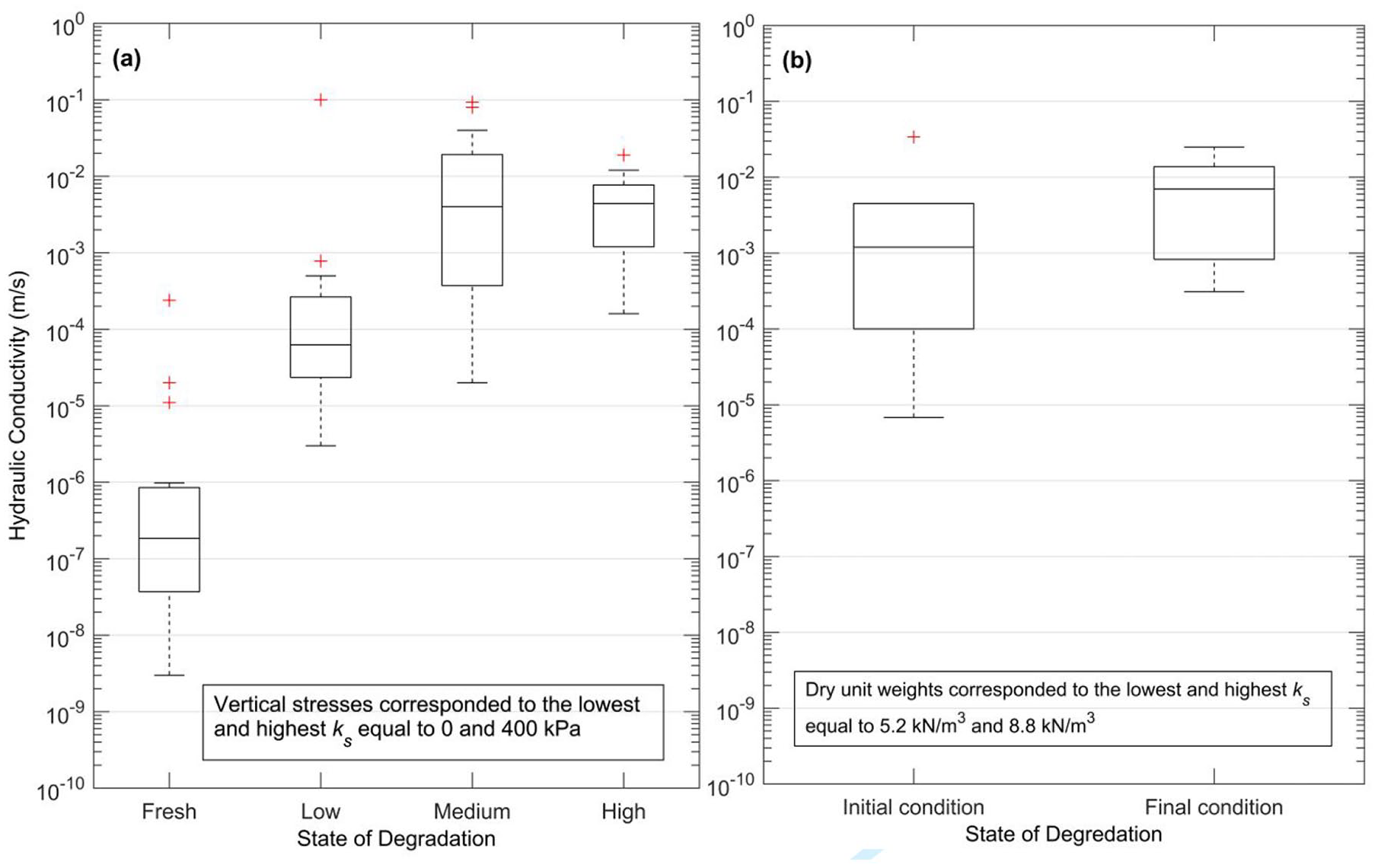
Relationships of MSW degradation and hydraulic conductivity: (a) hydraulic conductivity tests using a 150-mm-diameter permeameter and shredded MSW and (b) hydraulic conductivity tests using a 300-mm-diameter permeameter and unshredded MSW.
Particle size
Reduction in MSW particles size is a natural occurrence due to decomposition of the degradable fraction of MSW and compression of non-degradable materials, which potentially can reduce MSW ks via reducing the size of the flow paths. The decrease in MSW particle size with decomposition has been reported in numerous MSW-degradation studies (Breitmeyer et al., 2019; Fungaroli and Steiner, 1979; Hossain et al., 2008; Ke et al., 2017; Machado et al., 2010; Olivier and Gourc, 2007; Reddy et al., 2011; Xu et al., 2014). For example, Breitmeyer et al. (2019) reported that the fraction of waste materials with particle sizes <25 mm increased 20% (from 48.2 to 69.3%) after 3 years of decomposition. The decrease in MSW particle size with decomposition has also been reported for waste extracted from landfills by several researchers (e.g. Landva et al., 1998; Machado et al., 2010; Reddy et al., 2009b, 2011; Xu et al., 2014). For example, Machado et al. (2010) performed sieve analysis on 15-year-old landfilled waste and approximately 18% passed a 1-mm sieve. Reduction in particle size leads to rearrangement and geometric changes in waste particles, which lower the strength of waste skeleton and cause a collapse in waste mass (McDougall et al., 2004). Therefore, the small particles and soil-like materials can occupy the void spaces and increase the pore-tortuosity, resulting in a reduction in ks.
Void ratio
With the initiation of waste degradation, readily degradable materials (i.e. food waste, yard waste, paper) decompose and convert to biogas (Kim and Pohland, 2003). This process results in solid waste mass loss and an increase of void spaces throughout the waste matrix (Bareither et al., 2012b; Breitmeyer et al., 2019). The reduction of solid mass creates more air space and potentially a more interconnected pore network, which would yield less tortuous flow paths. These occurrences yield an increase in ks.
Settlement due to decomposition of MSW, known as biocompression (Bareither et al., 2013), also contributes to a reduction in MSW void ratio. However, the impact of biocompression on decreasing void ratio and influence of decomposition on increasing void ratio depend on the waste composition and landfill operation. Hence, the overall changes in void ratio represent the potential changes in MSW hydraulic behaviour. Bareither et al. (2012a) conducted a pilot-scale test on MSW and simultaneously observed the compression and hydraulic behaviour of landfilled waste. They reported that MSW ks increased due to decomposition.
Breitmeyer et al. (2019) also carried out a series of laboratory-scale ks tests on MSW with different degrees of degradation. They reported that for a given dry unit weight, MSW with a higher degree of decomposition had a higher void ratio and subsequently higher ks than MSW with a lower degree of decomposition.
Conceptual model of solid waste hydraulic conductivity
A schematic of stress and waste degradation influence on MSW ks is shown in Figure 7. The schematic is based on our review and analysis as reported in this study and aims to capture the state-of-knowledge for MSW ks. The relative magnitude of ks in Figure 7 (i.e. a through (i)) relates to the thickness of the blue flow lines, whereby thicker flow lines correspond to higher ks.
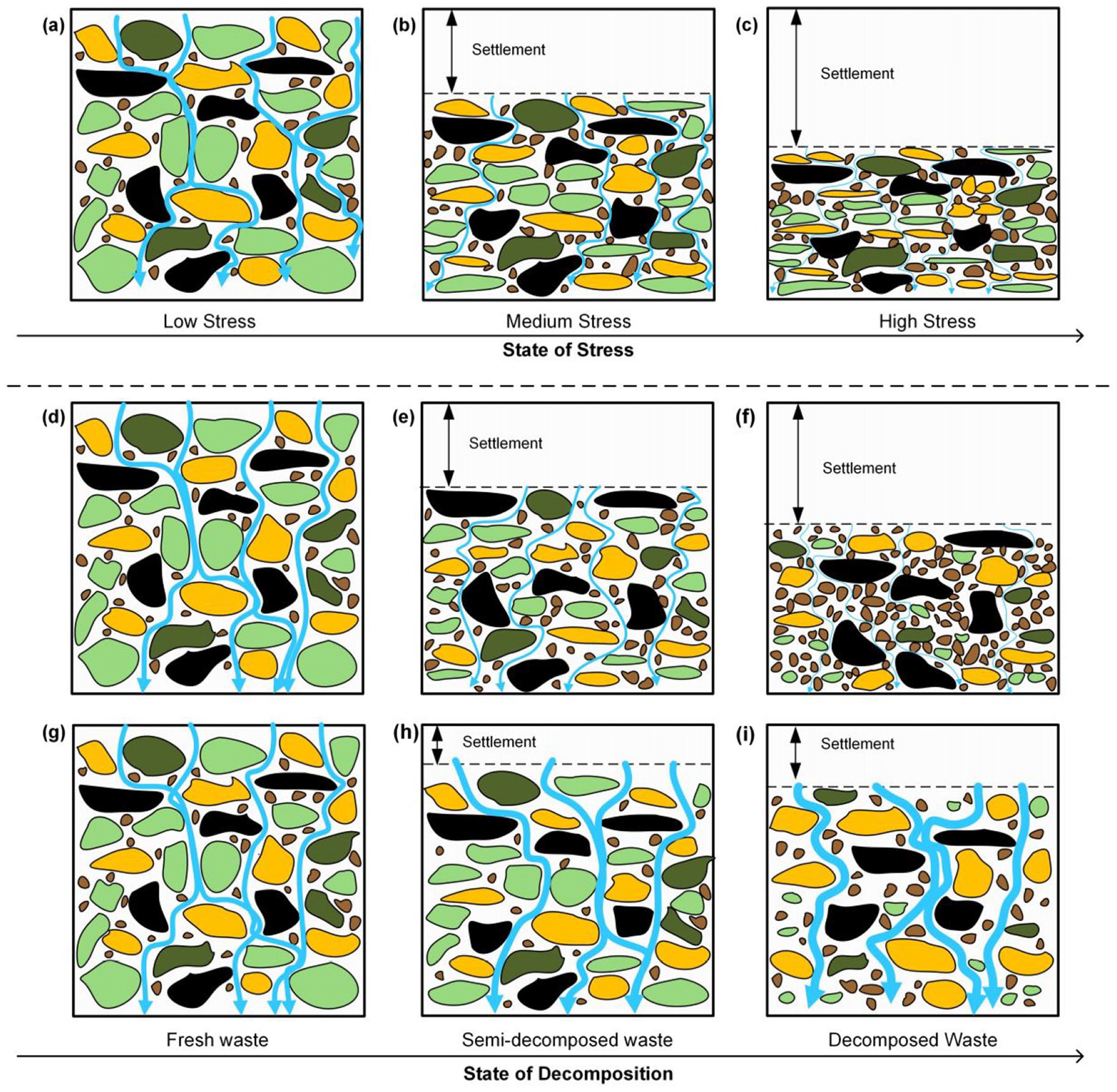
Schematics of how stress and waste degradation influence MSW hydraulic conductivity. The relative magnitude of hydraulic conductivity is related to the thickness of the blue flow lines, whereby thicker lines equate to higher hydraulic conductivity. Waste composition includes the following: light green = degradable and compressible MSW; dark green = degradable and incompressible MSW; orange = non-degradable and compressible MSW; black = non-degradable and incompressible and brown = soil and soil-like materials. The composite particle surface area of the shapes in (a), (d) and (g) is approximately representative of the average MSW composition disposed in U.S. landfills.
A summary of the average MSW composition in U.S. landfills (US EPA, 2020) and general descriptions of degradability and compressibility of each waste component is given in Supplemental Table S4. Waste components shown in Supplemental Table S4 were segregated into four groups based on similarity of degradability and compressibility, and these groups are differentiated by colour as shown in Figure 7: light green = degradable and compressible; dark green = degradable and incompressible; orange = non-degradable and compressible and black = non-degradable and incompressible. The composite particle surface area of the four waste groups in the fresh waste (Figure 7(a), (d) and (g)) is representative of the average MSW composition in U.S. landfills. The small brown particles are representative of soil introduced into MSW via daily cover or soil-like materials that exist in MSW and are not distinguishable. The particle sizes in each waste group in Figure 7(b)–(i) were modified based on anticipated changes due to stress increase or waste degradation.
Vertical stress was separated into three levels in Figure 7(a)–(c): (a) low stress = 0–50 kPa; (b) medium stress = 50–200 kPa and (c) high stress = >200 kPa. These stress levels were inferred from the literature review and represent where substantial changes were generally observed in MSW ks. However, due to variability in waste composition, the transition in hydraulic behaviour of MSW may occur under different ranges of vertical stress. The vertical overburden stress in a landfill is due to the thickness and unit weight of waste and other material placed in the landfill (e.g. daily cover). Unit weight profiles in landfills vary as a function of compaction effort and waste composition (Zekkos et al., 2006). Therefore, evaluating the ks of MSW versus stress is more universal than evaluating ks versus MSW unit weight.
The effect of increasing vertical stress on MSW ks is consistent in literature, whereby ks reduced six orders of magnitude, from 10−3 to 10−9 m s−1, by increasing vertical stress from 0 to 600 kPa. The decrease in MSW ks with increasing stress (Figure 7(b) and (c)) is attributed to decreasing the pore sizes and remoulding the pore networks. Breakage and slippage of waste particles aid in eliminating macropores and constricting flow pathways. As vertical stress increases to a high level (i.e. >200 kPa), soil-like particles tend to occupy available void spaces. Powrie et al. (2005) reported that at vertical stress >400 kPa, the impacts of particle size and waste degradation become more significant than vertical stress on ks. However, the composition, particle size and state of degradation of MSW vary among landfills. Therefore, the pronounced impacts of changing particle size and waste degradation can occur at lower stress (i.e. <200 kPa).
Waste degradation in MSW landfills commonly progresses through anaerobic processes and includes five sequential phases (Kim and Pohland, 2003): stabilization, transition, acid formation, methane fermentation and final maturation. However, waste degradation was simplified to three states in Figure 7(d)–(i) to illustrate the effects of MSW degradation on ks more concisely: (i) fresh waste = waste disposed in a landfill, (ii) semi-decomposed waste = actively degrading waste in the acidogenic and methanogenic phase and (iii) decomposed waste = fully decomposed waste that has reached organic stabilization (Barlaz et al., 1990; Kim and Pohland, 2003).
Decomposition of MSW can yield two consequences: (i) settlement of the waste matrix due to biocompression (e.g. Bareither et al., 2013) that reduces pore space and ks or (ii) conversion of solid waste to gas, which increases void ratio and pore connectivity to increase ks. Waste settlement and void ratio increase during waste degradation are competing mechanisms on MSW hydraulic behaviour that occur simultaneously; however, the more dominant mechanism will control flow. The schematics in Figure 7(d)–(f) represent a waste matrix for which waste settlement due to biocompression is dominant, and schematics in Figure 7(g)–(i) represent a condition in which void ratio increase during MSW degradation is dominant. Settlement of MSW due to biocompression can lead to smaller decomposed waste particles that compress and reduce available macropores, which leads to a decrease in ks. In contrast, MSW decomposition that leads to an increase in void space without substantial settlement can create a more porous waste medium with interconnected pores capable of transferring liquid flow at a higher rate, which means an increase in void ratio is more influential on MSW ks relative to the settlement. This mechanism is less prevalent in MSW landfills. Hence, the overall impacts of degradation on ks depend on waste composition, waste decomposition rate, overburden pressure and landfill operation.
Summary
Hydraulic conductivity of MSW varies by orders of magnitude in landfills and making a reliable prediction of hydraulic conductivity is difficult. However, the compilation of existing data presented herein synthesized from 24 research studies allows a degree of constraint in potential hydraulic conductivity ranges based on stress, composition and decomposition of MSW. Furthermore, impacts of other factors such as composition, experiment scale, particle size and specimen size on MSW hydraulic conductivity are evaluated.
In general, the effects of increasing stress and reduction in unit weight on MSW hydraulic conductivity were consistent for MSW at varying states of decomposition, both caused a reduction in hydraulic conductivity. However, the magnitude of reduction in hydraulic conductivity depends on the state of stress, amount of decomposition and MSW composition. Degradation of MSW can have two contrary effects on MSW hydraulic behaviour. Some studies indicate that an increase in MSW decomposition results in particle size reduction and settlement, which reduce the MSW hydraulic conductivity. However, there are studies that indicate waste decomposition increases flow paths and increases hydraulic conductivity. Both mechanisms are rational and have contrasting influence on MSW hydraulic conductivity. General schematics were developed that document key mechanisms of stress and degradation on liquid flow in a solid waste matrix.
Supplemental Material
sj-docx-1-wmr-10.1177_0734242X231204814 – Supplemental material for A critical review of municipal solid waste hydraulic conductivity: A mini review
Supplemental material, sj-docx-1-wmr-10.1177_0734242X231204814 for A critical review of municipal solid waste hydraulic conductivity: A mini review by Sajjad Karimi, Christopher A. Bareither and Joseph Scalia in Waste Management & Research
Footnotes
Declaration of conflicting interests
The authors declared no potential conflicts of interest with respect to the research, authorship, and/or publication of this article.
Funding
The authors received no financial support for the research, authorship, and/or publication of this article.

Supplemental material
Supplemental material for this article is available online.
References
Supplementary Material
Please find the following supplemental material available below.
For Open Access articles published under a Creative Commons License, all supplemental material carries the same license as the article it is associated with.
For non-Open Access articles published, all supplemental material carries a non-exclusive license, and permission requests for re-use of supplemental material or any part of supplemental material shall be sent directly to the copyright owner as specified in the copyright notice associated with the article.
