



Abstract
The rapid increase in quantities and the mismanagement of municipal solid waste (MSW) in developing countries are increasing the environmental impacts such as air, water and soil contamination. The present scenario of MSW management deals with numerous issues such as lack of technological resources, strategical management, social awareness, public participation, etc. Globally, numerous efforts in the form of new policies, schemes and regulatory acts have been made to develop a systematic collection and transportation (C&T) method using advanced, integrated technologies. However, very few studies have addressed this issue for low- and middle-income countries due to the lack of availability of reliable resources and data sets. This paper addresses the present challenges in C&T methods and highlights the application of information communication technology in monitoring, capturing, data management, planning, live tracking and communication. This systematic mini-review is based on the availability of technical resources, consumer acceptance and cost-effectiveness of different technologies in managing the processes. The study revealed that the C&T methods in most developed countries are designed based on their geographical stretch, climatic factors, waste characteristics and compatible technology, resulting in sustainable MSW management. However, developing countries have followed the same monotonous approach in managing their MSW, which fails in C&T process. The case study provides a valuable resource for researchers and policymakers to frame a better C&T process based on the recent technological interventions, infrastructure development, and social and economic status.
Keywords
Introduction
The economic development of a nation usually results in proportional increases in solid waste generation rate (Bhat et al., 2022). The diverse forms of solid waste are municipal solid waste (MSW), biomedical waste (BMW), hazardous waste, industrial waste and radioactive waste (Azam et al., 2020; Bhat et al., 2022; Parveen et al., 2020; Singh et al., 2021). The continuous growth rate in urban population, modernization and industrialization has caused a dramatic increase in the total MSW generation rate (Chavan et al., 2022; Wilson et al., 2015). The MSW is a mixture of organic residues, packaging products made of plastic and paper, plant-based residues, discarded textile materials, construction and demolition waste, and metals and inert matters from urban and rural areas (Nanda and Berruti, 2021). Globally, two billion metric tonnes of MSW are generated annually. The growth is projected to exceed 3.4 billion metric tonnes annually by 2050 (Singh et al., 2022a, 2020b; World Bank, 2012). Efficient MSW management is essential for sustainable development due to its association with seven major pillars: economy, environment, social acceptance, living standards, infrastructure development, health and safety. The MSW management implies a series of activities of (i) collection and transportation (C&T); (ii) sorting, processing and transformation; and (iii) disposal (Yadav et al., 2020). Of these activities, C&T is considered to be the most crucial process of MSW management as far as cost, processing, reuse, recovery and environmental implication are considered (Wilson et al., 2015).
The C&T process demands a major portion of the expenditures in MSW management. Generally, the overall expenditure on C&T process varies between 50% and 80% of its overall management budget (Yadav et al., 2016a). However, the overall budget allocation in C&T of MSW is low in developing countries compared to its MSW generation and population growth rate. This causes minimum expenditure on infrastructure developments and low wages to field operators, which eventually results in insufficient performance in C&T of MSW. Global south countries prefer manual handling and informal recycling for efficient C&T of MSW, whereas advanced mechanical sorting facilities and vehicle systems are commonly practiced in developed countries (Bhat et al., 2022; Gautam and Agrawal, 2021). This diversity in C&T practices has led to inappropriate management and unhygienic handling of MSW in urban residences of developing countries (Joshi et al., 2016). For example, the Sub-Saharan Africa and South Asian countries have an average C&T efficiency of <50%, while open dumping is practiced for >80% of the MSW (Kaza et al., 2018). At the same time, developed countries in North America and Europe have managed to create 100% C&T efficiencies and have well-managed disposal practices, that is recycling, landfilling and incineration (Kaza et al., 2018; World Bank, 2012). MSW’s typical composition and characteristics also play a vital role in strategic management and selection of appropriate methods and techniques for C&T process. However, the country’s economic status, food habits, living standards, literacy rates and rituals are the major influencing parameters for this change in MSW composition and characteristics (Bhat et al., 2022; Mohee et al., 2015). It has been found that the organic fractions in MSW from developed and developing countries vary from 15% to 26% and 26% to 56%, respectively, as shown in Table 1. It may be observed that the organic residue, that is biodegradable waste, is the major influencing factor in developing nations. At the same time, the inorganic fractions comprising plastic, paper, glass, metal, and textile materials in MSW from developed and developing countries vary from 38% to 75% and 30% to 55%, respectively. It shows that the inorganic fractions, that is recyclable matters, are predominant in developed countries. This distinctive trend in MSW composition in developed and developing nations demands different approaches for collection, processing and disposal of MSW. Therefore, it is essential to discuss recent technological advancements, management policies, shortcomings and challenges affiliated with different C&T methods.
Typical composition of MSW in developed, developing and less developed countries.
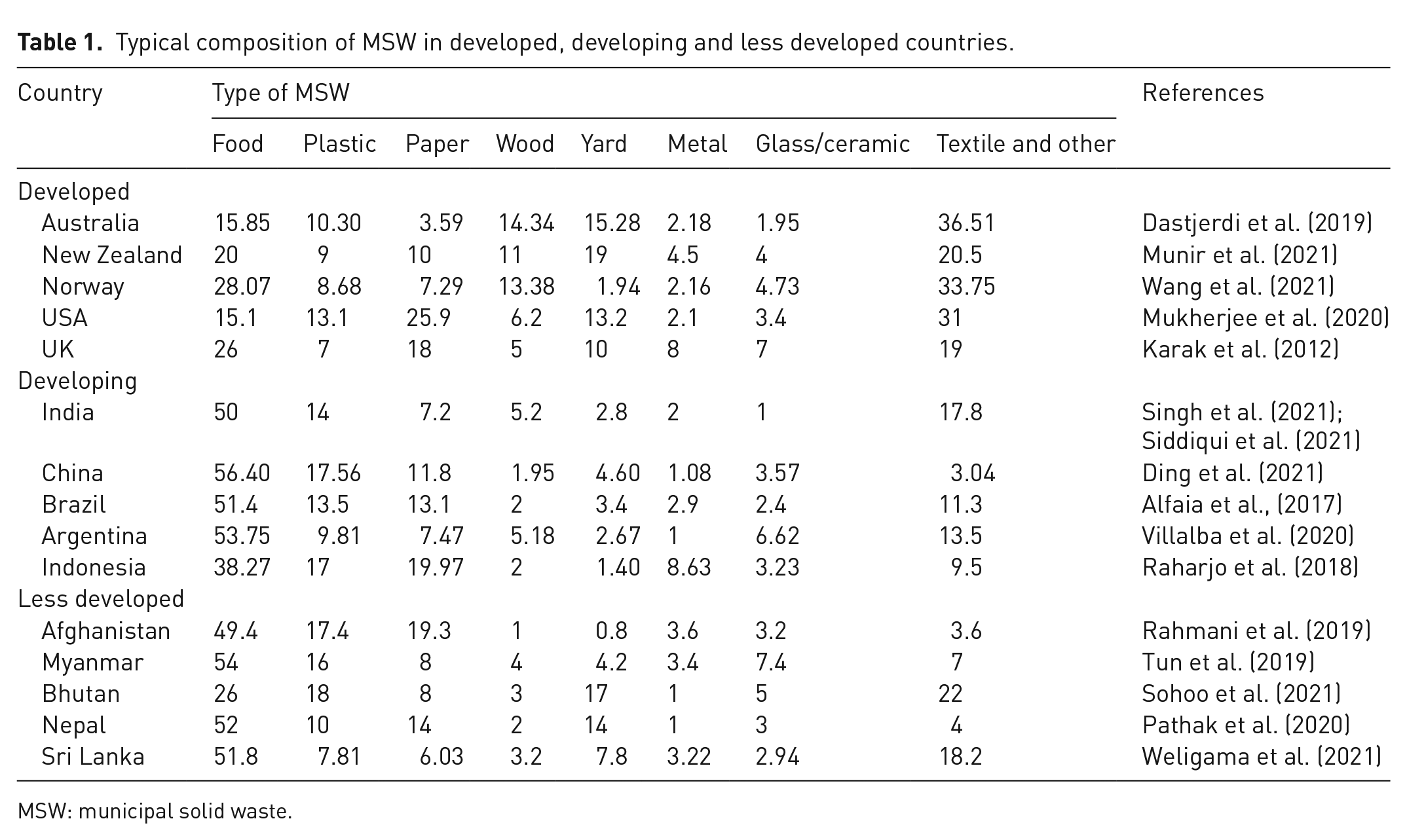
MSW: municipal solid waste.
The urban local bodies (ULBs), particularly in low- and middle-income countries, are facing major issues in developing consumer-based services in monitoring C&T activities, interconnected storage facilities, digitization and management of collected data for MSW, and optimized vehicle routing systems (Hannan et al., 2015). The major cause is due to the complicity related to MSW characteristics, inappropriate infrastructure development and resource management, and low economic budget for MSW management. To address the above problems, an information communication technology (ICT) can be the most feasible and reliable technological option as it allows the provision for automated data acquisition, identification, communication, storage and analysis in connection with swift and parallel computing (Faccio et al., 2011; Hannan et al., 2015). At the same time, it also allows remote handling of collection bins and vehicle systems based on the principles of capturing, processing and communication. However, significantly less expertise and resources are offered to ULBs in low- and middle-income countries, resulting in high C&T costs and pollutant emissions.
This article was designed to compare different C&T techniques and ICT-based technologies adopted globally. The authors also reviewed the current issues and challenges affiliated with MSW management due to the lack of appropriate policies, strategies and technologies, and related education of the citizens. Many studies have been performed to evaluate the performance efficiency for existing MSW management schemes and policies for a particular city or country but have failed to recommend appropriate technological interventions and improvements that are needed to prevent or solve the problems (Ferronato and Torretta, 2019; Pal and Bhatia, 2022). Therefore, this article was developed to expand the knowledge of the current MSW challenges and tools to solve them. It was also designed to highlight the interdependence of the existing tools, technologies and methods in MSW management. The four-step methodology (classification, literature review, interpretation and recommendations) was adopted to identify and discuss the key aspects, findings and issues in existing C&T methods. The study also highlights different applications and challenges related to C&T of MSW using ICT-based components such as data reorganization technology, spatial tools and communication technology. This article can be a valuable database for present and future research scholars to develop better C&T strategical methods and technological applications to prevent or reduce present limitations and the resulting ecological and social issues.
Study methodology
The authors have used a four-step research methodology (Esmaeilian et al., 2018) to collect and analyse the literature: (1) classification of C&T methods and technologies; (2) search for and organize the relevant papers, informative websites and other published content; (3) clarify the applications and limitations of the currently used methods and technologies; and (4) recommend ways to solve the problems of the C&T systems. The literature has been reviewed on two main topics: C&T methods and the application of ICT. At the same time, the authors have addressed the role of proper sorting, recycling and waste-to-energy systems in both developing and developed countries. The relevant literature was searched for via Google Search, Google Scholar, news articles and company websites from 2005 to 2022. These sources provided the authors to find a wide range of publications (review and research), reports, articles and company brochures. Additionally, the search tools helped the authors refine their literature search strategies based on selective keywords, publication year, company type and document type. For the literature search processes, a set of keywords and phrases including collection of MSW, waste management, smart container, Internet of Things (IoT) and sensors were used to find relevant publications. In some cases, the keywords were used with operators, such as AND/OR. The collected literature was analysed under three categories: (1) the existing system, (2) the problem statement and (3) the recent technological advancements for developed and developing countries.
Different C&T methods in urban areas
An efficient C&T system should prevent unnecessary overhead expenditure and reduce the overall budget of MSW management (Król et al., 2016; Mar-Ortiz et al., 2013; Nowakowski and Pamuła, 2020); this requires an active action plan majorly focused towards infrastructure facilities (recovery facilities, vehicle system and other technology) and social awareness among residents, as shown in Figure 1. (Dat et al., 2012; Nowakowski and Pamuła, 2020). This helps to develop flexible and reliable communication systems between waste generators and collectors.
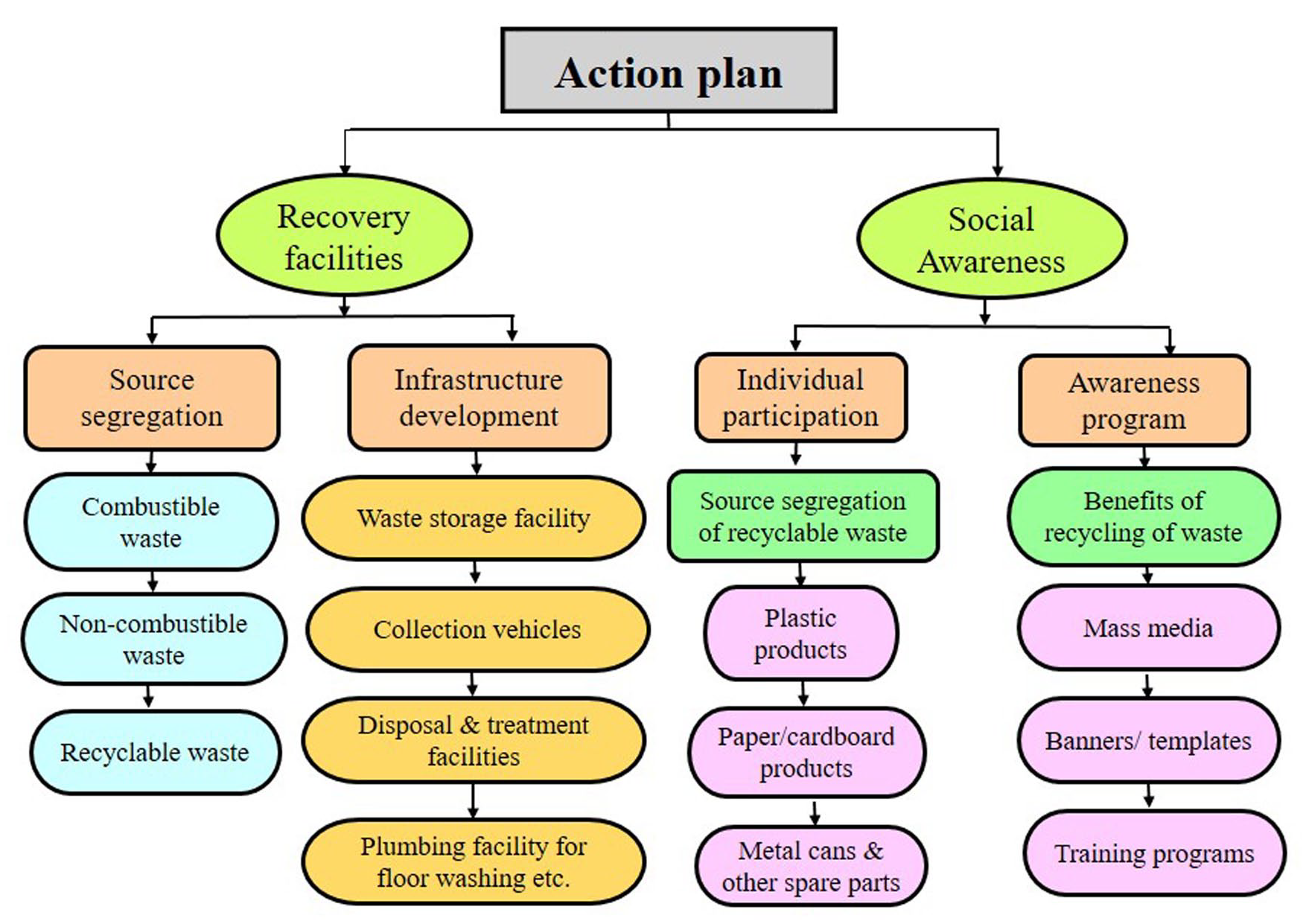
Action plan towards sustainable C&T of MSW in developed countries.
Door to door
Door-to-door collection methods demand the active participation of both MSW producers and collectors (Lou et al., 2015; Yadav et al., 2020). The MSW producer is responsible to make their wastes available to the collector at their doorsteps (Faccio et al., 2011; Yadav et al., 2020). In some countries, vehicles with unique rings, bells and musical sounds notify the MSW producer that the collector is present (Yadav et al., 2016c). This citizen-oriented technique can be hygienic, economical and nuisance-free, and it avoids problems such as uneven MSW dumping and stray animals entering the waste containers and spreading the contents. The major drawback of this technique is that it requires someone to be present at their doorstep to hand over their MSW to the collector (Yadav et al., 2016a). This technique is more viable for joint families, especially the South Asian countries such as India, Bangladesh, Pakistan, etc. (Kantor, 2018; Pires et al., 2019; Yadav et al., 2016c). Most Indian cities (Nasik and Nagpur) are practicing this traditional technique of MSW collection (Yadav et al., 2016a). However, rapid industrialization and modernization have led to residents’ migration to urban areas, transforming the concept of joint families into nuclear families. Therefore, those techniques have failed to achieve desired results in most developing countries (Yadav et al., 2016b). The application and effectiveness of this method may vary from city to city based on its population density, geographical area stretch, collection vehicle technology, staffing, etc. The significant steps involve the collection of MSW at doorsteps, temporary storage and transportation facilities, manual sorting by the informal sector to process the MSW at their respective recycling facilities, and landfilling the leftover MSW (Zheng et al., 2017).
Most developed countries with successful implementation (90–100% efficiency) of this method have established MSW sorting practices at the household level, which reduce the workload on the staff at the disposal facilities (Marshall et al., 2013; Yusoff et al., 2018). The proportion of recyclable matter (>60%) in MSW is higher in developed countries than in developing countries, and the ratio of organic fractions (60%) (half-cooked and uncooked kitchen waste) is higher, that is, >40% moisture content in fresh MSW (Tsalis et al., 2018). The wet property of MSW makes the sorting process complex and challenging for on-site pre-processing, treatment and disposal. Therefore, the application of door-to-door collection has failed in most developing countries, while it has been successful in developed countries (due to >60% dry waste). At the same time, inappropriate technological application, management practices and policies have also been the cause of concern for inefficient C&T of MSW in developing countries.
In the past decade, studies have been conducted using field surveys, mathematical models and new technological interventions to improve door-to-door collection systems, as discussed in Table 2. To understand the failure of the door-to-door collection method in developing countries, Thanh et al. (2010) performed a survey in South Vietnam to determine MSW characterization from 100 households. Most families’ MSW (0.28 kg per capita per day) comprised 80% compostable matter and 11% recyclable matter. Similarly, Ogwueleka (2013) conducted a study for 74 households to determine MSW generation (0.6 kg per person per day) for the city of Abuja, Nigeria, which comprised 64% compostable matter and 15% recyclable matter. Therefore, the door-to-door collection technique is more effective for developed countries than developing countries because the MSW fraction comprises 50–60% of recyclable matter. However, effective management, stringent policies, new technological advancements and social awareness among the residents can also transform this method into a cost-effective model for developing countries.
Literature study discussing recent advancements in door-to-door collection method.
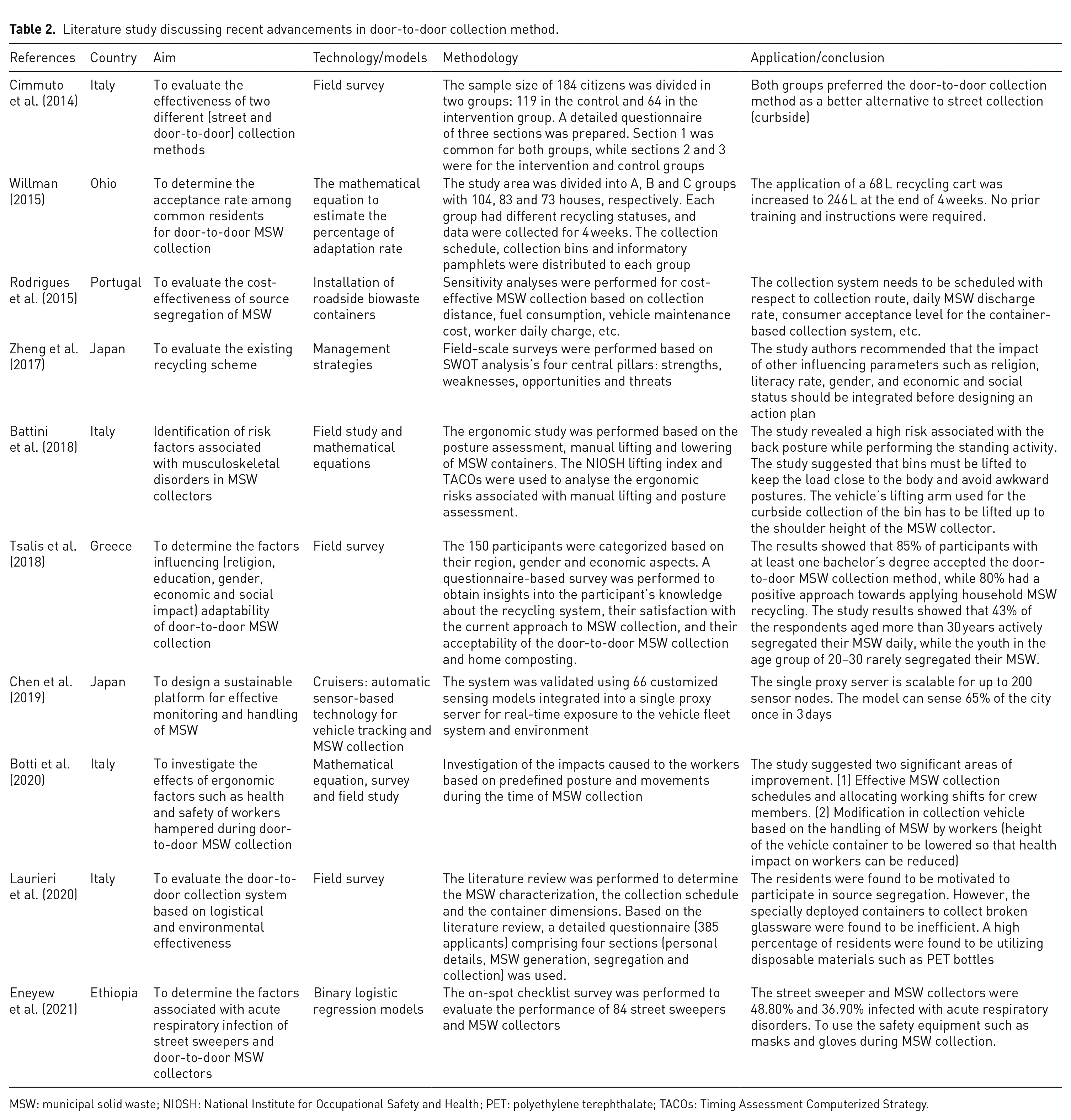
MSW: municipal solid waste; NIOSH: National Institute for Occupational Safety and Health; PET: polyethylene terephthalate; TACOs: Timing Assessment Computerized Strategy.
The add-on features such as mathematical models, optimization techniques, software applications and routing models to attain real-time scheduling, collection and transportation of MSW have increased the effectiveness of door-to-door collection (Botti et al., 2020; Yadav et al., 2020). Many other studies have identified issues, such as lower acceptance rates from residents, land shortage and high recycling costs (Cimmuto et al., 2014; Willman, 2015). The active participation of field workers with the collateral application of advanced C&T technology (such as vehicle fleet systems with built-in screw compactors) has revealed successful outcomes in the efficient collection and handling of MSW. The process demands effective scheduling of working shifts, technology modifications of the collection vehicles (appropriate container height for quick disposal of MSW) and other factors (MSW characteristics, population and living standards) (Chen et al., 2019; Tsalis et al., 2018).
Curbside
The community bins are established at the curbside for each locality to facilitate the C&T process. Based on the fixed schedule, the residents deposit their MSW into the containers near the curbside (Yadav et al., 2020), and a collector assigned for a particular bin is responsible for its transportation and handling (Yadav et al., 2020; Zbib and Wøhlk, 2019). This technique is most suitable for developed countries with sophisticated city designs (such as Europe and North America) (Tseng et al., 2018). The bins are at a short distance from the localities and can serve an optimal number of residents.
To emphasize the practice of source segregation, coloured bins are placed near the curbs and corners (Maimoun et al., 2016; Yadav et al., 2020); this avoids delays in the collection process. Researchers preferred using different scheduling models and integer programming software for effective planning and management. Researchers have also developed tools to estimate container fill time using flow distribution models (Yadav et al., 2020). Besides this, a vehicle routing mechanism has been developed based on time dependence and scheduling to avoid delays in the C&T of MSW (Longo et al., 2006). Mora et al. (2014) performed a study to optimize route configuration, vehicle fleet management and collection process for five different collection scenarios. The relative differences between conventional and curbside collection systems were compared to their fuel consumption rate, travel distance, waste characteristics and arc direction. Botti et al. (2020) and Battini et al. (2018) developed a mathematical model using mixed-integer programming and heuristic algorithms to define the optimum road network for MSW collection. In some countries, life cycle assessment (LCA) was used to study different transportation routing scenarios based on their impact on human health and road infrastructure management. For example, Mora et al. (2014) used a single score method with LCA, which concluded that vehicles used in the curbside collection method had minimum health effects and damage to road infrastructure compared to conventional collection methods.
The continuous loading of MSW at multiple collection points may cause regular vehicle halting, resulting in excess fuel consumption. Therefore, several studies were conducted to determine the best fuel-efficient, single-loaded truck (Gaines et al., 2006). It was found that the traditional vehicle system (TVS) consumes 3–24% higher fuel due to halting in front of the house for MSW loading (Nguyen et al., 2010). The researchers recommended that the TVS should be shut down during MSW loading and unloading. Besides this, common collection points were suggested for nearby localities where the vehicle can be shut down and fuel can be saved.
Increasing labour per truck can also be an efficient technique to reduce C&T time at the curb. However, rising labour costs would lead to a higher expenditure than fuel-saving. Therefore, it is unfeasible to increase the labour count. Rozgus et al. (2005) suggested using an automatic collection vehicle to reduce the overall fuel consumption and to effectively serve 200% more houses. Drozdz (2005) suggested using a hydraulic system comprising a hydraulic pump mounted on a collection truck, which resulted in a 30% reduction in fuel consumption. The study concluded that automated side loading vehicles could reduce loading duration to 8 seconds per stop, resulting in reduced collection time and lower fuel consumption. However, this technique is not feasible for developing countries as it demands higher vehicle capital and maintenance costs. Nguyen et al., (2010) developed an optimum routing algorithm using a Global Positioning System (GPS) to study the reduced fuel consumption. They found that applying Geographical Information System (GIS) to optimize the routes resulted in a 60% reduction in fuel consumption (7.5 L of fuel/truck/day).
Drop-off
It is a facility to collect recyclable material dropped at a predefined location or container by an MSW generator. The MSW is source segregated and transferred to common drop-off collection points. The drop-off collection points comprised multiple colored containers with different pictorial representations for each particular waste type (Sidiquea et al., 2010). The deposited MSW is transported to recycling centres using a vehicle’s system (Hettiarachchi et al., 2018). However, the method is only feasible for countries with low populations and area density, as it allows easy handling, collection and transportation of MSW at a shorter distance (Hettiarachchi et al., 2018). Compaction, bailing and shredding are performed for segregated MSW depending upon the physical characteristics, dramatically reducing the load on treatment facilities. In most developed countries, drop-off collection centres have on-site pre-processing facilities to reduce industrial processing and handling costs (Sidiquea et al., 2010). Most recycling industries have established collection centres for a particular MSW category, such as wooden furniture, glass wares, electrical and electronic appliances, etc. (Hettiarachchi et al., 2018). Studies across the globe have suggested that the C&T of recyclable wastes from these drop-off centres is cheaper and faster to implement than conventional material recovery facilities (Saphores et al., 2006). However, the crowded cities in most developing countries have failed to implement this process due to less space, poor infrastructure, poor management practices, higher investment costs and complexity in MSW (such as >50% moisture content) (Tsalis et al., 2018).
Pneumatic
The vehicle fleets used for house-to-house C&T of MSW have caused an increase in air pollution and are economically non-feasible due to high consumption (Miller et al., 2014). A pneumatic collection system is a centralized piping system (CPS) to collect MSW with an inlet chute installed in a residential building (each flat). The method is feasible for both high- and low-rise buildings. The inlet chute (drop box) installed in each apartment collects MSW through gravity or vacuum suction (via negative air pressure) using stationary pneumatic system (SPS) and mobile pneumatic system (MPS) (Bi et al., 2019).
Stationary pneumatic system
It is a facility with inlet chutes, elevated vertical pipes (EVPs), an inlet airstream for vacuum suction, CPS and a warehouse. The MSW is fed through gravity chutes (inlet hopper) installed inside the apartment (Miller et al., 2014). The chutes from each apartment are connected to EVP running through the building. The inlet airstream pipes connected to vertical piping are used to suck MSW from inlet chutes to avoid any blockage of MSW. The MSW is passed through the EVP and then to the CPS through gravity (Mangialardi et al., 2016). Finally, the collected MSW is passed through the cyclonic separator installed inside the warehouse. The coarse (bulky material) and fine particle (dust and impurities) size waste are segregated using a gravity chamber and a fabric filter installed inside the cyclonic separator. Additionally, pre-processing facilities, such as sorting, compaction and shredding, are performed inside the warehouse (Mangialardi et al., 2016; Miller et al., 2014). Finally, MSW is emptied into a vehicle container and transported to their respective recycling and treatment facilities.
Mobile pneumatic system
The MPS is similar to SPS, except that the warehouse processing facility is replaced by vacuum collection vehicles (VCVs). MSW collected through CPS is stored in an underground tank installed at the bottom of the building. The tank is connected to an outlet maintenance hole installed above the ground near the curbside. The specially designed VCV is used to suck MSW from the tank. A crew of one or two members is preferred to connect the vacuum pump to the outlet chamber of the tank (Bi et al., 2019). The pressure from VCV is managed using a regulator, as per the quantity of MSW and depth of the tank. The collected MSW is compacted and transported to their respective treatment or disposal facilities. The pneumatic techniques discussed above require higher capital costs, skilled labour and planned city infrastructure than other MSW systems. Most developed countries in North America and Europe have managed their cities with these factors, resulting in easy implementation of this technique (World Bank, 2012). To understand the feasibility of this method, Teerioja et al. (2012) conducted a study using LCA considering input variables such as population density, land cost, capital cost and operational costs. Their study documented that initial investment for old cities could be higher when compared with new cities (Teerioja et al., 2012). Therefore, countries with increasing populations and MSW generation may fail to benefit from this due to higher energy consumption demand. Apart from this, MSW’s non-homogeneity (wet and dry waste) might also cause pipe blockages (Mangialardi et al., 2016; Miller et al., 2014). The method is effective for developed countries as it reduces land use and overall transportation costs. Therefore, effective planning and designing of implementation of this type of system can be a futuristic approach to reduce accidents, greenhouse gas (GHG) emissions, noise pollution, air pollution, etc., in newly planned cities.
To understand the economic feasibility of a pneumatic system over conventional collection systems, Jackson (2004) studied different piping systems used in a pneumatic system to predict the durability, workability, maintenance costs and costs of the nonturbulent composite piping network. It was found that a pneumatic system requires higher capital costs than a truck-based collection system. However, the pneumatic collection system reduces 80% of the storage and fuel consumption cost used in a conventional system. Mangialardi et al. (2016) evaluated the pneumatic system for the five different ULBs located in the provinces of Lecce, Greece, to determine cost trends and economic trade-off points, which can help to compare the feasibility of the pneumatic system with other systems. The study also suggested that a pneumatic system can effectively generate waste to energy from the organic fractions present in solid waste. Besides this, Mangialardi et al. (2016) concluded that the pneumatic system has a higher recycling percentage than the conventional collection system.
Application of ICT in C&T of MSW
The application of ICT in MSW management has experienced significant improvement in the last few decades. Some developed countries have effectively transformed and integrated their traditional C&T systems through the advanced application of ICT. It allows automated data acquisition, identification, communication, and storage and analysis systems, which result in better handling, collection, transportation and management of MSW. The framed techniques and technological advancements may defer depending upon their application. Regarding C&T, the spectrum of ICT can be classified into three categories: spatial technologies, data recognition technologies (DRTs) and communication technologies (Nowakowski and Pamuła, 2020). However, most ICT-based technologies were developed using all of the above categories. As shown in Figure 2, GIS map, information processing units and GPS represent spatial technology, data recognition or data processing technology and communication technology, respectively. The application of ICT has empowered better results in route optimization, wireless sensing, software applications, etc., which also depends upon factors such as hardware availability, software development expertise, economic feasibility and social acceptance among citizens. The present section highlights and discusses different ICT tools preferred in smart management and handling MSW.
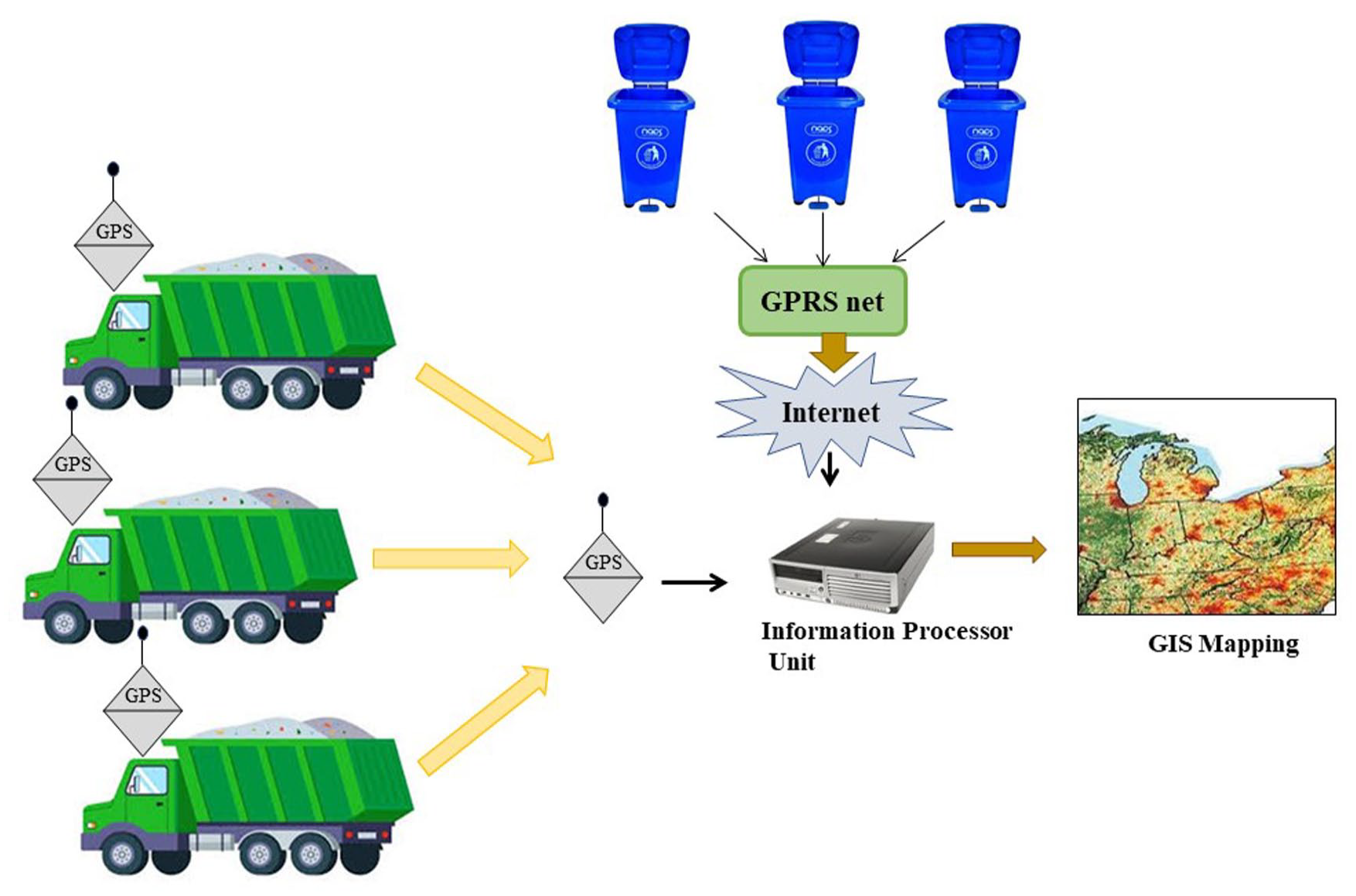
Collaborative functioning of spatial technology, data recognition, sensing, processing and communication technology in C&T of MSW (Tripathi et al. (2020); Vicentini et al. (2009)).
Spatial and communication technology
The spatial and communication technology (S&CT) is built upon General Packet Radio Service (GPRS), GIS, Global System for Mobile Communication (GSM), Message Queuing Telemetry Transport (MQTT), radio-frequency identification (RFID), a radio module, Bluetooth, a Wi-Fi module, Cloud Storage and Android application (Hannan et al., 2015). The primary aim of this technology is to monitor, collect, process, analysis, map and direct the data information to the server or portal. The collected data set comprises attribute data, spatial topology, raster, features and even network data sets. The collaborative functioning of each component results in route scheduling, vehicle fleet management, data storage and analysis. Studies have revealed that a C&T system with optimal routes will lessen the adverse effects on the environment and labour costs (Ashik-Ur-Rahman et al., 2021). At the same time, this can be an eco-friendly and cost-effective tool, as the CO2 emissions from fuel combustion can be reduced (Sulemana et al., 2018).
Based on the functioning of S&CT, it can be classified as sensing, data storage and transfer, and data processing (Hannan et al., 2015). The sensors and hardware mounted on existing container and vehicle systems allow the estimation of container fill level status (Vicentini et al., 2009). The most preferred sensors are weight, infrared, temperature, motion, etc. The sensed data set is temporarily stored at a microcontroller level, which is later transferred to a software application or Cloud Storage via a Wi-Fi module, Bluetooth, GSM, MQTT and RFID (Tripathi et al., 2020). The final data processing is carried out using an algorithm developed for GIS portals to develop a map for C&T of MSW. The live status monitoring, route optimization and rescheduling can be achieved in the collaborative functioning of each unit, as discussed in Table 3.
Detailed methodology and application of ICT in efficient C&T of MSW in urban residence.
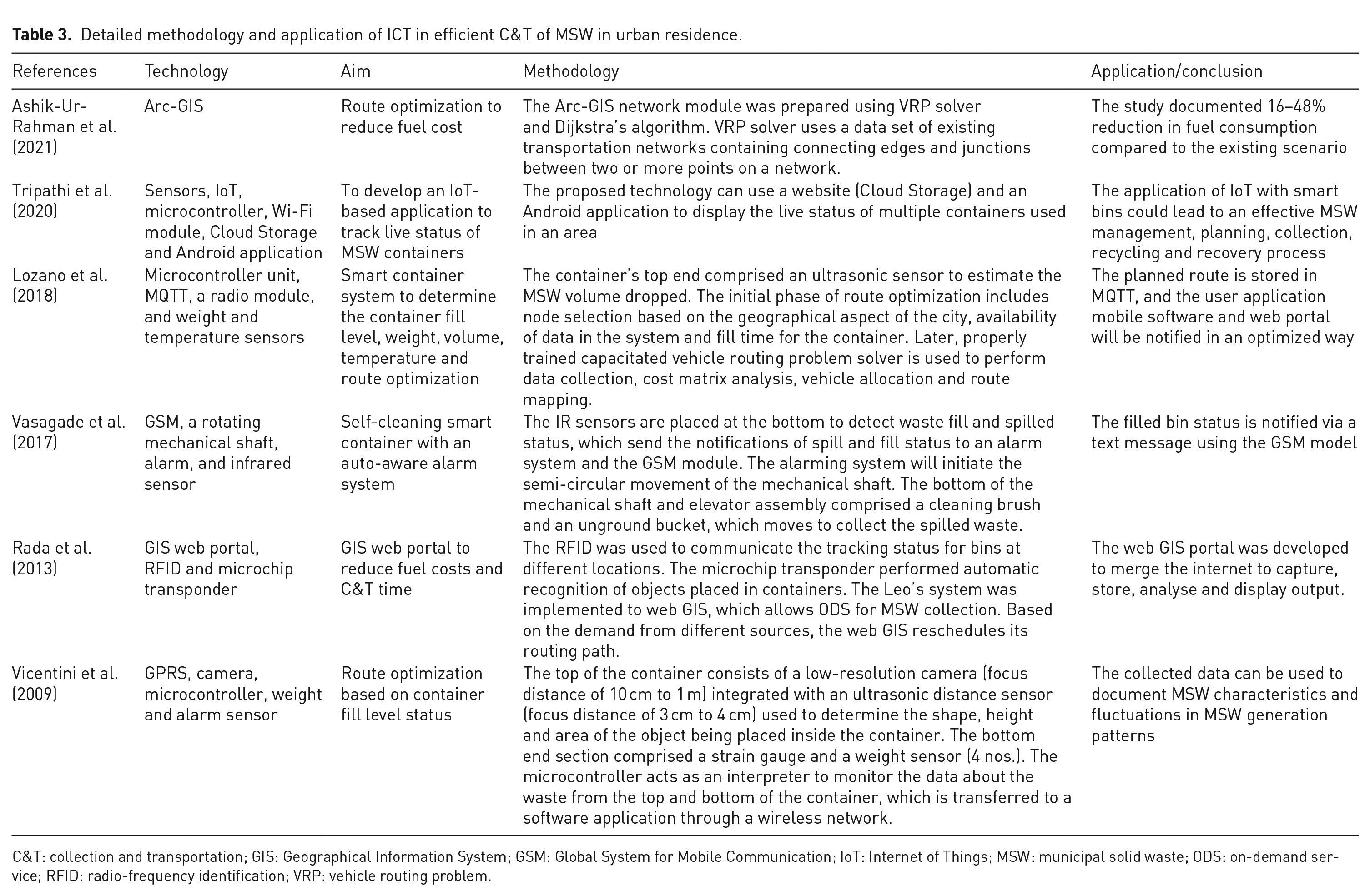
C&T: collection and transportation; GIS: Geographical Information System; GSM: Global System for Mobile Communication; IoT: Internet of Things; MSW: municipal solid waste; ODS: on-demand service; RFID: radio-frequency identification; VRP: vehicle routing problem.
Data recognition technology
The primary objective of the image recognition system is to identify and classify the types of MSW deposited into the container. The real-time photograph for each discarded MSW type is taken and then uploaded to a server running image recognition software (Nowakowski and Pamuła, 2020). DRTs are built upon artificial intelligence (AI), sensors, software applications, microcontrollers and microchip transponders. However, some researchers have preferred a convolutional neural network (CNN) for advanced training of the image recognition system where the processed image from the proximity detection module is given as an input to CNN to identify the category of MSW (Abeygunawardhana et al., 2020). The application of AI in image recognition software has reduced the task of uploading images to the server, as the AI can be trained to make its own decisions based on the existing database.
Additionally, AI can be used to identify changes in MSW generation patterns and residents’ behavior over the coming few decades (Majchrowska et al., 2022). The commercially available DRT comprises a quick response system, allowing faster recognition and segregation of MSW (Abeygunawardhana et al., 2020; Majchrowska et al., 2022). In some cases, it has a unique trained algorithm and AI-assisted system, which recognizes MSW based on its physical (weight, density and temperature) and chemical characteristics. It also has an autofill level control and data processing system connected to the mobile application (Abeygunawardhana et al., 2020). It helps optimize, manage and reduce the overall costs, time and labour requirements.
Recommendations and future areas of research
The main aim of the present study is directed towards assessing the existing status of C&T of MSW in developing countries so that the flaws in the existing schemes can be taken care through appropriate scientific and technological applications. The technological modifications should be made based on the social, cultural and geographical context to ensure the best fit of collection methods and technologies in the local environment. The compulsory training, awareness and skill development programs for MSW generators and collectors for door-to-door collection methods are essential. Each cluster and ward of the city must be provided with a decentralized treatment facility for limited MSW generation. Future research can be done to improve the existing C&T frameworks by taking a closer look at factors, such as regulations, policies, compatible product designs and business models for sustainable MSW collection. This article takes a close look at the management scheme, collection methods and technologies. However, the characteristics of MSW may differ depending upon their types and living standards, which may not be compatible with each other. Furthermore, the discussed tools need to be validated with real-world case studies to solve problems, such as reliable and efficient collection and resource recovery in the context of climate change and perhaps the 17 UN Sustainable Development Goals. Proposed future research is summarized under two major categories, that is inevitable effects of emerging technologies and enabling factors.
Inevitable effects of emerging technologies have still not been explored, that is the application of sensors, IoT and computational skills in collection bins, vehicle systems and mobile units to inculcate green behavior among consumers. However, these technologies’ long-term consequences and drawbacks are still unclear. The more focus should be on integrating and enhancing the application of ICT with new business models. Under enabling effects, extensive research is required to understand various elements of integrated solid waste management. It involves the participation of experts from multidisciplinary teams such as engineering design, product planning and development, urban planning, social science and economics. The designing and testing of particular technologies require teams of scientists, designers, city leaders, policymakers, consumers, manufacturers and recyclers, remanufacturers, and reusers (Esmaeilian et al., 2018). In addition, the emerging concepts of MSW management require a new set of environmental laws, regulations and standards that will allow the smooth functioning of the established smart infrastructure. At the same time, the future infrastructure should be interoperated with existing systems.
Conclusions
The rapid increase in MSW generation has created additional burdens on existing collection systems and policies. The traditional management schemes focus on collection efforts but fail to implement the essential concepts of recovery and circular economy. The focus should be on developing the value chain rather than the MSW collection chain and more on prevention, cleaner production and striving to be more sustainable. Besides this, the focus should be on implementing best MSW practices (in household and residential areas) and then automatizing existing processes. The application of smart containers and vehicle systems along with GIS, GPS, weight and autofill detector sensors has changed the dynamics of collection, resource recovery and recycling in most developed countries. These technologies are the centres of resource use, electronics and smart infrastructure, which should be adequately managed. It is also essential to impart education and training sessions to all the stakeholders at all levels of the evolving systems to ensure that they can effectively utilize the new evolving approaches, such as IoT, AI and robotization. The information flow and storage facilities have a vast potential to understand MSW characteristics and generation patterns, which make planning operations more effective. However, most of the South Asian countries have failed to upgrade their existing collection methods, tools and technologies, resulting in an unaesthetic environment due to littering and open dumping of MSW. In developing countries, the existing management schemes must be aligned with future collection technologies. It is essential that policymakers and governing bodies must collaborate with environmental technocrats, such as start-ups and multinationals, to develop on-site mobile collection units specifically for streets, railway tracks, public places and small water bodies. These units can be mounted on vehicle systems or can be manually handheld. Researchers and industry experts can explore the compact design for existing collection vehicles, depending on street types, areas and waste characteristics. This may help to reduce congestion within the city caused by heavy vehicle loading.
Footnotes
Acknowledgements
First author would like to acknowledge the receipt doctoral funding under the Prime Minister Research Fellowship Scheme, Govt of India, New Delhi. The authors are thankful to IIT Bombay and CSIR-NEERI Nagpur, India, for providing facilities to carry out the study.
Declaration of conflicting interests
The authors declared no potential conflicts of interest with respect to the research, authorship and/or publication of this article.
Funding
The authors received no financial support for the research, authorship and/or publication of this article.
