



Abstract
Municipal solid waste (MSW) management is getting more attention in the present scenario. Even though various technologies like incineration, gasification, pyrolysis and waste-to-energy plants have been developed, landfills are still the major disposal option for MSW management. MSW at landfill creates issues that are highlighted at a global level like the fire at Deonar dumping site in Mumbai, India was visible and captured by the space satellites, leading to environmental pollution. Detection and extinguishment of landfill fires at surface and sub-surface in their early stages are the major concern. Thermal imaging camera can be used to know solar radiation effect by identifying the hotspots during the day and the night time for understanding aerobic degradation effect on the surface fire. Sub-surface gas concentrations and its combinations affecting the temperature gradient can be studied for a better understanding of sub-surface fires in their early stages. The use of class ‘A’ foams with water, which reduces the surface tension of water, can be carried out for landfill fire extinguishment. The application of water in the form of water fog will extract a large amount of heat and block the availability of oxygen for the fire. This mini review presents the sources of fuel, heat, oxidant for landfill fire and its development process, associated pollution on air, water, land and human health due to landfill fire and methods for its extinguishment possibilities.
Introduction
Urban population is increasing at an alarming rate due to the rapid development of cities and towns. Currently, urban area consists of 54% of the world population, and by 2050, it will reach 66% (UN, 2016). The consumption of goods and services creates enormous quantities of municipal solid waste (MSW) to the extent that it developed as an environmental problem in a significant number of the world’s cities (Cointreau, 2006; Vergara and Tchobanoglous, 2012). The average annual generation of MSW in 2016 was 2.01 billion tonnes and with rapid population growth and urbanization, it is expected to increase by 70% (from 2.1 to 3.4 billion tonnes) in 2050 (The World Bank, 2019) as shown in Figure 1(a). The efficiency of waste collection, management techniques and practices needs to be improved to a large extent as nearly 33 and 75% of the wastes are disposed of in open dumps around the world and in South Asia, respectively, which is shown in Figure 1(b). Waste in landfill releases landfill gases (LFGs) like methane and carbon-di-oxide due to biological and chemical processes and creates other issues like leachate generation, fires, elevated surface temperatures, etc.
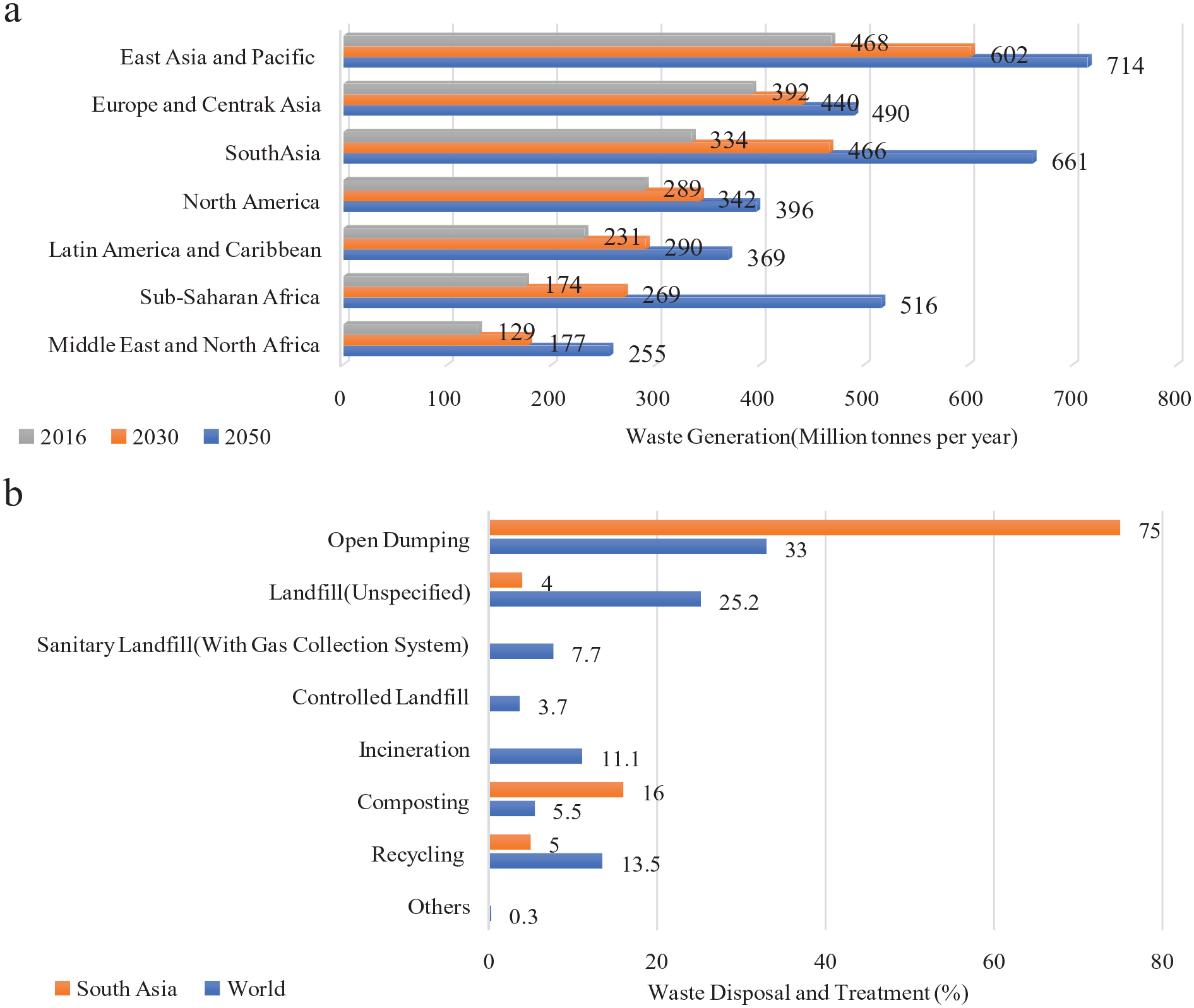
(a) Waste generation over the world, and (b) waste disposal methods in South Asia and world.
India has 59 constructed landfill sites and 376 are under planning and implementation stage (Rajkumar et al., 2016). Apart from this, 1305 sites have been identified for future use (Rajkumar et al., 2016). The uptake of waste-to-energy in India has not been successful, and the majority of plants have failed to sustain operations (Nixon et al., 2017). It indicates that MSW entering the landfill is increasing every year. Since the inception of landfills, continuous efforts have been made to improve their designs and management practices to reduce the impact of solid waste on the environment. In spite of the adaptation of these measures, developing countries are not able to manage their solid waste effectively and efficiently. The reason for the improper management of waste includes poor management (improper compaction, absence of daily cover, waste exceeded the design capacity, lack of gas and heat collection system, lack of leachate collection and treatment), lack of social responsibilities (lack of segregation at source), space requirements and other technical and administrative issues. In addition, the majority of the so-called landfills do not meet the requirements for regulated sanitary landfills (The World Bank, 2014). Due to improper maintenance and management of landfills, fire incidents occur frequently.
Landfill fire incidents
Fire incidents are common among all the landfills over the world. In the United States of America (USA), around 8400 landfill fire incidents were reported every year, out of which 25% were repeat incidents (NFIRS, 2002; USFA, 2001). In Finland, nearly 380 landfill fires were reported per year (Ruokojarvi et al., 1995). In India, the Bhalswa, Okhla and Ghazipur landfills in Delhi (India) reported 69, 35 and 27 fire incidents per year, respectively (The Times of India, 2019). On 26 November 2020, India’s tallest open landfill at Ghazipur, New Delhi (India) caught fire and the PM2.5 and PM10 concentrations recorded close to the landfill at Patparganj (3.5 km from the site) were 420 µg/m3 and 600 µg/m3, respectively (The Indian Express, 2021). Another major landfill fire incident was reported at Tagarades landfills, Greece on 15 July 2006, where 50,000 tonnes of waste were lying. A dense smoke covering an area of about 10 km2 around the landfill was observed for more than a week (Chrysikou et al., 2008). A similar fire incident at the Santa Marta landfill, Santiago, America was reported on 15 January 2016, and as a result, dense smoke of the fire extended up to 32 km from the place of the fire, which was extinguished in 8 days (Morales et al., 2018). In Poland, the annual incidences of fires in one of the largest landfills and waste storage yard have tripled from 23 in 2010 to 79 in 2018 (KG PSP, 2020). On 28 January 2016, smoke from the Deonar dumping site, Mumbai (India) was visible from Operational Land Imager on Landsat 8 and the fire continued for 4 days. The fire was so huge that more than 70 schools were closed for 4 days because of smoke (The Hindustan Times, 2016). The Sewapur dump site at Jaipur (India) caught fire on 19 April 2020 which lasted for 26 days and resulted in extreme pollution. The Central Pollution Control Board, New Delhi (India) measured Particulate Matter (PM) (and 10 µs) at Shastri Nagar area of Jaipur (15 km from the landfills site) and reported 54.54 µg/m3 of PM2.5 and 158.6 µg/m3 of PM10 (Down to Earth, 2020).
Landfill fire sources
Fire is a self-sustaining exothermic oxidation chain reaction of fuel, heat and oxidizer which releases heat in the form of elevated temperature and optical radiations in the form of visible and invisible lights (Copping et al., 2007). This chain reaction will continue till any one of the components (fuel, heat, oxidizer and chain reaction) is removed away. There are various manifestations of this chemical reaction depending on the particular circumstances. Landfill fires are different from the conventional types of fires. Every fire incident needs fuel, heat and oxidizer to initiate and sustain. In normal fire incidents, the fuel will ignite by getting the required temperature from external heating sources but in the case of landfill fire, the fuel and heating sources are present within the landfill itself.
The MSW is a heterogeneous mixture of food, paper, plastic, textile, wood, rubber, glass, metals, grass and leaves (Kumar et al., 2017; Morales et al., 2018; Ramachandran et al., 2018; Srivastava et al., 2014). The MSW components themselves turn into the sources of fuel and heat for the landfill fire. Waste components like paper, plastic, textile and wood are the fuel sources along with the combustible gases like hydrogen (H2) and methane (CH4) which are released as by-products of biological degradation of organic contents present in MSW (Hao et al., 2017). Aerobic and anaerobic degradation of organic waste releases a large quantity of heat, which plays an important role in temperature rise at landfills (El-Fadel et al., 1996; Gibbs, 2004; Lefebvre et al., 2000; Pert, 1978; Rees, 1980b; Tchobanoglous et al., 1993; Yoshida and Rowe, 2003; Zanetti et al., 1997). Nowadays, food packing materials are provided with heating mechanism for self-heating of food products till they reach the customers, which includes materials that undergo exothermic reactions (like hydration and carbonation of some chemicals such as calcium, magnesium, sodium, potassium oxides and hydroxides) and release heat (Bohra et al., 2015). The corrosion of metals is also an exothermic reaction. All these products contribute to temperature rise at the landfill. Hot waste loads may also introduce heat into the landfill (Copping et al., 2007). Solar radiations also play a crucial role in increasing the surface temperature of landfill wastes. The temperature of shallow landfills was seen to proportionally increase with respect to the atmospheric temperature (Copping et al., 2007). The cumulative accumulation of heat in pockets of waste due to biological and chemical reactions is responsible for the onset of fires within landfills. All these factors act as heat sources for the landfill fire but the ignition point of each MSW component varies. The MSW components having less ignition temperature and less Moisture Content (MC) ignite first (Moqbel, 2009). Oxidizers are substances that have the ability to oxidize other materials that are important components of the fire. The oxidizers like oxygen (O2) help in ignition when the temperature reaches the ignition point of fuel. Oxygen acts as the oxidizer for the fire in most of the cases. Fluorine gas and particulate salts, such as ammonium perchlorate, are oxidizers that are sometimes more powerful than oxygen (Valluri et al., 2019).
Once the fuel, heat and oxidizers are available in correct proportion, fire starts. During fire, smouldering and flaming fire occurs. If any material generates heat (e.g., by biochemical reactions) faster than that can be dissipated, then the temperature of that material continues to increase leading to smouldering of that material. Materials that form solid carbonaceous residue when heated (such as biomass) may undergo smouldering (Copping et al., 2007). Smouldering fires will propagate even at low oxygen concentrations (below 3%) to produce extensive amounts of carbon monoxide (CO) ranging from 1 to 10% (10,000–100,000 ppm) (Ruesch et al., 2012). Smouldering is an exothermic reaction during which the temperature rises continuously, and the volatile organic matter present in the material gradually gets released. This volatile matter ignites spontaneously when there is a correct proportion of temperature and oxygen concentration (15–21% for flaming). When the oxygen concentration is below 10%, flaming fire growth is impossible except in post-flashover fires (Ruesch et al., 2012), and this depends on the nature of fuels and the available temperature. Spontaneous ignition (also referred to as spontaneous combustion or auto-ignition) is the ignition of the fire without the use of a pilot flame. The volatiles arising from the surface of a preheated combustible solid may spontaneously ignite if the oxygen/volatile mixture is in correct proposition with sufficiently high temperature. The temperature required for spontaneous ignition is higher than that required for pilot ignition (Copping et al., 2007). For spontaneous combustion of bulk solids, the induction time is much longer than for gases. It happens because oxygen diffuses through the pores of solid materials to sustain oxidation reaction on individual particles surface or microbiological activity inside the waste which heats the surrounding waste to combustion temperature (Copping et al., 2007). Owing to the insulating properties of the waste, heat cannot dissipate quickly within the landfill (Copping et al., 2007). Self-heating of waste material occurs if the rate at which heat produces is greater than the rate at which heat can be lost to the surrounding. The pace at which the waste self-heat is crucial to the creation of hotspots within the waste. Slow smouldering of waste can occur for a longer time period when heat continues to be there even after the flames of a fire have been extinguished with no opportunities for heat dissipation.
Effect of landfill fire on human health and the environment
Landfill fire causes direct and indirect pollution of air, land and water leading to direct impact on living organisms in various ways. During landfill fire, various air pollutants like PM2.5, trioxygen (O3) and nitrogen dioxide (NO2) along with dioxins/furans, polycyclic aromatic hydrocarbons and volatile organic compounds are released as by-products (Ruokojarvi et al., 1995; Weichenthal et al., 2015). At the Iqaluit landfill in Canada, the fire occurred in September 2014, where dioxins/furans concentrations were found to be 66 times higher than air quality standards (Weichenthal et al., 2015). Pollutants like polychlorinated dibenzo-p-dioxin and dibenzofurans get released into the air due to landfill fires (Ruokojarvi et al., 1995). On 15 January 2016, a fire incident occurred at the Santa Marta landfill, Santiago, America due to which PM2.5 concentrations were found to be 1000 μg/m3 at the landfill site and 200 μg/m3 at a distance of 20 km from the landfill (Morales et al., 2018).
Even the soils around the dump sites are found to be contaminated by fire incidents as dioxins and furans such as 1,2,3,4,5,6,7,8-heptachlorodibenzo-p-dioxin (HpCDD), 1,2,3,4,5,6,7,8,-octachlorodibenzo-p-dioxin, 1,2,3,4,5,6,7,8 heptachlorodibenzofuran, tetrachlorodibenzofuran and 1,2,3,4,7,8-polychlorinated dibenzofurans were reported to be found in soil samples collected near the Tagarades landfill, Thessaloniki, Greece after a landfill fire incident (Vassiliadou et al., 2009).
Studies also revealed the contamination of groundwater due to landfill leachate (; Aderemi et al., 2011; Raju, 2012; Reyes-Lopez et al., 2008). A study conducted by Cocean et al. (2020) in Horezu, Romania revealed the effect of landfill fires on water. The rainwater on the streets near the landfill (where the fire incident was reported) was found to be dark brown in colour. To confirm the effect of fire, a Fourier Transform Infrared Spectroscopy test was conducted on the ashes of burning landfill waste materials and the dry materials collected from the rainwater which showed the presence of toxic components such as sulphonic compounds, dioxins and furans, aromatic and aliphatic nitro and nitroso compounds, imines, imides, hydrogen cyanite (HCN) and nitric acid (HNO3) in both the samples. This contaminated rainwater may affect surface and groundwater significantly. Excessive utilization of water to extinguish the landfill fire without proper knowledge and improper leachate management will also contaminate the water sources in and around the landfills area. The anaerobic decomposition of organic materials produces methane (CH4), which can cause fire and explosion and result in a strong leachate polluting surface and groundwater (Oyelola et al., 2009). It is evident from several studies that the landfill fires have significant direct and indirect impacts on the environment (Morales et al., 2018; Ruokojarvi et al., 1995; Weichenthal et al., 2015). In Poland, nearly 79 large landfill fire incidents were reported due to which almost 6.5 million people were exposed to an additional 1-hour average concentration of PM10 higher than 10 lg/m3 and over 360 thousands were exposed to a concentration higher than 100 lg/m3 (Jan et al., 2021). The organisms including human beings when exposed to these pollutants face severe health impacts. Diseases like anaemia, mental deficiency, brain damage, anorexia, vomiting and even death have been reported by people working at landfills due to their exposure to the pollutants (Bulut and Baysal, 2006; Maddock and Taylor 1980; Ogundiran and Afolabi, 2008). Toxic and hazardous waste when burns with other wastes like asbestos fibre may introduce potential carcinogenic compounds into the smoke plume. Exposure to these pollutants for long periods of time, for example, 5–10 years can cause cancers like lymphatic and haematopoietic cancers (Elliot and Taylor, 1996; Oyelola et al., 2009).
Landfill is the most common waste disposal method in most of the countries. Landfill fires create significant problems for municipalities and corporations for handling and managing the landfills which pollute the environment and affect the ecosystem. Till now, proper technologies and standard operating procedure for the early detection and extinguishment of the landfill fire are not developed. It is very important to study on early detection and extinguishment of landfill fire to prevent damage to the environment. In this study, a short review on the sources which are responsible for landfill fire, its effect on human health, the environment feasible methods for early detection of landfill fire and the extinguishment methods employed or followed at various landfills are presented in this paper.
Review methodology
Review methodology using PRISMA approach
A systematic literature review was done on the existing literature from various reported studies. This method is followed by the Preferred Reporting Items for Systematic Review and Meta-Analysis (PRISMA) 2020 Statement – the updated guidelines for reporting systematic reviews that replaced PRISMA 2009. The PRISMA 2020 checklists were used for this systematic review of detection and extinguishment approaches for MSW landfill fires.
Study eligibility criteria
Published journals, reports and articles during 1995–2021 were included but restricted to those in the English language. Studies on the landfill fire incidents, health and environmental pollution were also considered to explore the intensity of landfill fire. Studies on the sources responsible for the landfill fire are also considered. Landfill fire detection and extinguishment methods followed around the world during 1995–2021 were reviewed for the best possible methods for its early detection and extinguishment.
Information sources and search strategy
Based on the eligibility criteria of the review, electronic searches on Scopus-indexed journals, Google Scholar and ResearchGate were conducted during 1 January 2021 to 15 January 2022. Search strategy for each search engine included titles and abstracts. Each objective of this review was also searched for (i.e. detection and extinguishment approaches for MSW landfill fires) along with landfill fire incidents, its effect on health and environment and the sources responsible for the landfill fire. Online search strategy was restricted to English language.
Study selection
Following the initial screening for the duplication, the authors independently reviewed the studies by titles and abstracts and discussed the final records. Entire contents of the selected paper were then examined for the eligibility criteria by the authors. Final decision was made by discussing the independently screened studies, abstracts and eligibility criteria. Figure 1 shows 62 studies qualified for this systematic review.
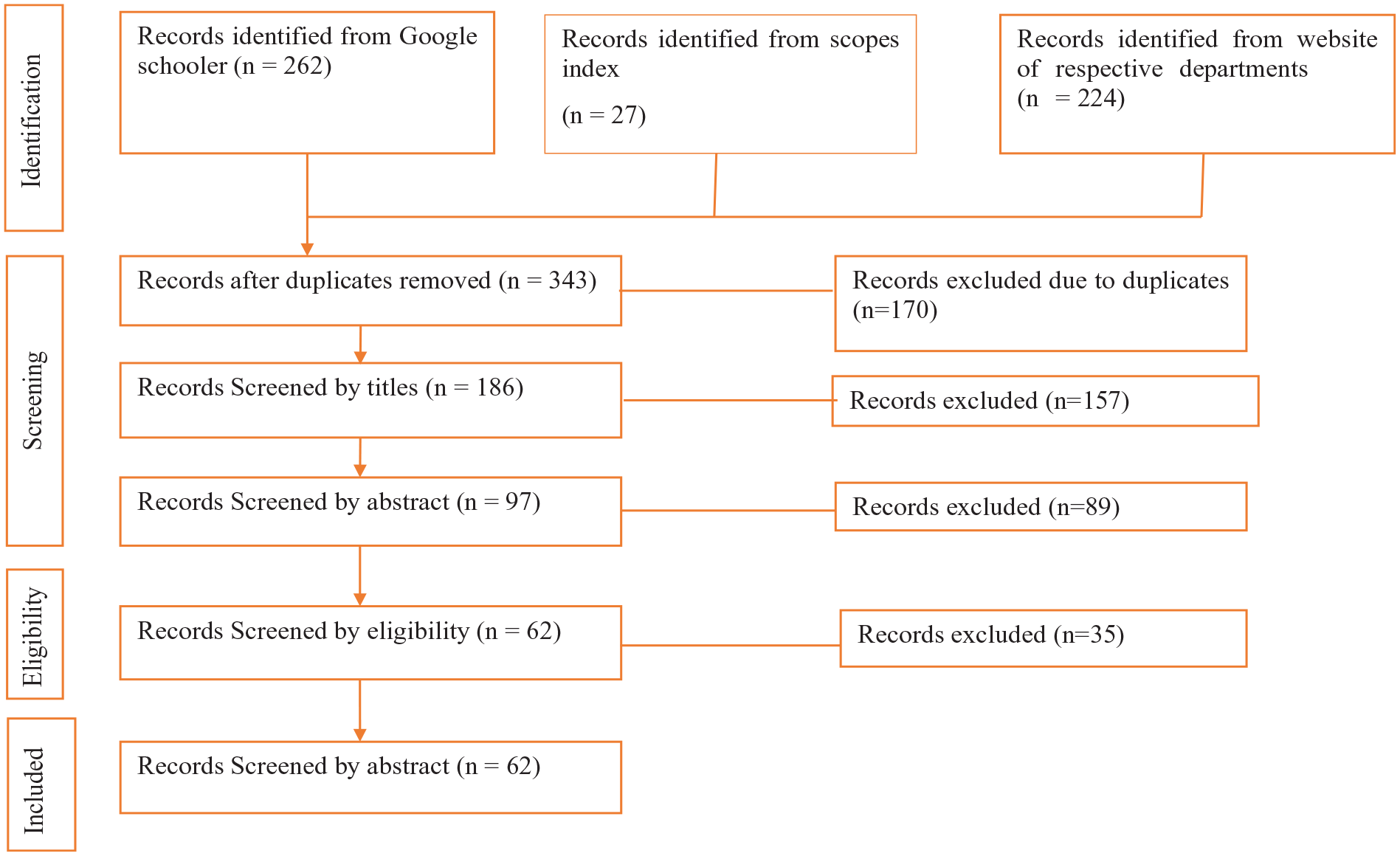
PRISMA method for the data collection and identification of records.
Data collection process
Standardized data extraction was developed to extract the study year, sample size, content details and methods used for detection and extinguishment of fire from five selected articles. Data extraction was then preferred for all the articles and the proceedings were checked for the final outcome.
Study risk of bias assessment
The risk of bias was assessed using the measurement tool to assess systematic reviews (AMSTAR 2), during which the contents of the included articles were focused upon. Then, the detailed results of this systematic review are discussed in this section.
Discussion
Landfill fire detection practices
At landfills, fire may occur at surface or sub-surface. Detection of a surface fire is easy when compared to a sub-surface fire as it is difficult to find the source of ignition and its intensity. Landfill surface fires occur within a depth of 5 m from the surface, and fire from MSW less than 2 years old are considered as surface fire. Sub-surface fires occur at a depth below 5 m from the surface. Sub-surface fires also release gases which migrate to the surface through pores and voids (Copping et al., 2007).
Surface fire detection practices
Aerobic degradation, high solar radiations and dry tropical climatic conditions are the major factors for heat generation and associated surface fires. Surface fires are very frequent due to the availability of sufficient heat as aerobic degradation releases more heat per kg of glucose than that of anaerobic degradation (Hao et al., 2017) and adequate availability of oxygen compared to the sub-surface. Prevailing wind can cause air intrusion at exposed waste flanks (Copping et al., 2007), and the introduction of air into the landfills leads to the ignition of waste (Hudgins and Harper, 1999). Wind flow also plays an important role in landfill fires and its propagation. As per USFA (2002), 22% of spontaneous fires occurred in late autumn, that is October and November as strong winds are supposed to occur during these months which result in the entry of air into the landfills. The waste may get exposed to the intense solar radiations during the summer, and dumping of hot waste loads may also result in surface fire (Copping et al., 2007; USFA, 2002). Surface fires may be caused by human errors (by operators or users/workers) and sometimes deliberately to reduce the volume of waste at the landfills. Surface fires are detectable through the visible dense smoke and flame (USFA, 2002), and thermal imaging camera can be used for the early identification of fire hotspots and can try to eliminate fire potential before it fully develops into surface fires (East Delhi Municipal Corporation, 2017; Stearns and Petoyan, 1984). Thermal imaging instruments must be used at night to avoid the solar radiation as the heat source (Stearns and Petoyan, 1984) so that hotspot creation near the surface as a result of degradation can be detected and eliminated easily.
Apart from this, several researchers have identified the waste ignition potential of different categories of landfilled waste (Chavan et al., 2019, 2022; Manjunatha et al., 2020b; Peter et al., 2019). A study carried out by Peter et al. (2019) showed that old landfilled waste has high ignition potential as compared to fresh waste due to less MC and total volatile solids. The previous study carried out by the authors for the determination of waste thermal properties also showed that old waste is most susceptible to spontaneous fires due to less smouldering temperature and ignition temperature (Chavan et al., 2019). Low thermal conductivity and high specific heat of old waste are also a major factor behind the heat accumulation and spontaneous waste ignition (Manjunatha et al., 2020b). Aged waste (age > 3 year) present at the top layer of landfill surface will ignite early as compared to fresh waste due to less MC present and high solar radiations (Chavan et al., 2022). Determination of LFG potential for different waste categories revealed that freshly dumped waste might contribute to landfill heat generation until it reaches to its maturation period (Singh et al., 2021). High carbohydrate content in landfilled waste is a significant factor for heat generation in landfill sub-surface resulting waste fires (Manjunatha et al., 2020a).
Sub-surface fire detection practices
Anaerobic degradation and chemical degradation act as the key sources of heat for the initiation of sub-surface fires. At a depth greater than 5 m, the waste is partially degraded and old which resembles an active advanced biological and chemical degradation along with mechanical compression. A badly operated active gas extraction system or a poorly-designed leachate recirculation system is likely to allow air into the waste mass (Copping et al., 2007) which promotes the fire at landfill sub-surface. Several studies (Needham et al., 2003; Sabrin et al., 2020; Stearns and Petoyan, 1984) were carried out on temperature monitoring for the Hanover landfill which was under operation during 1936–1980. It was reported that the temperature increased up to 30 m depth from landfill surface and then it decreased towards the base.
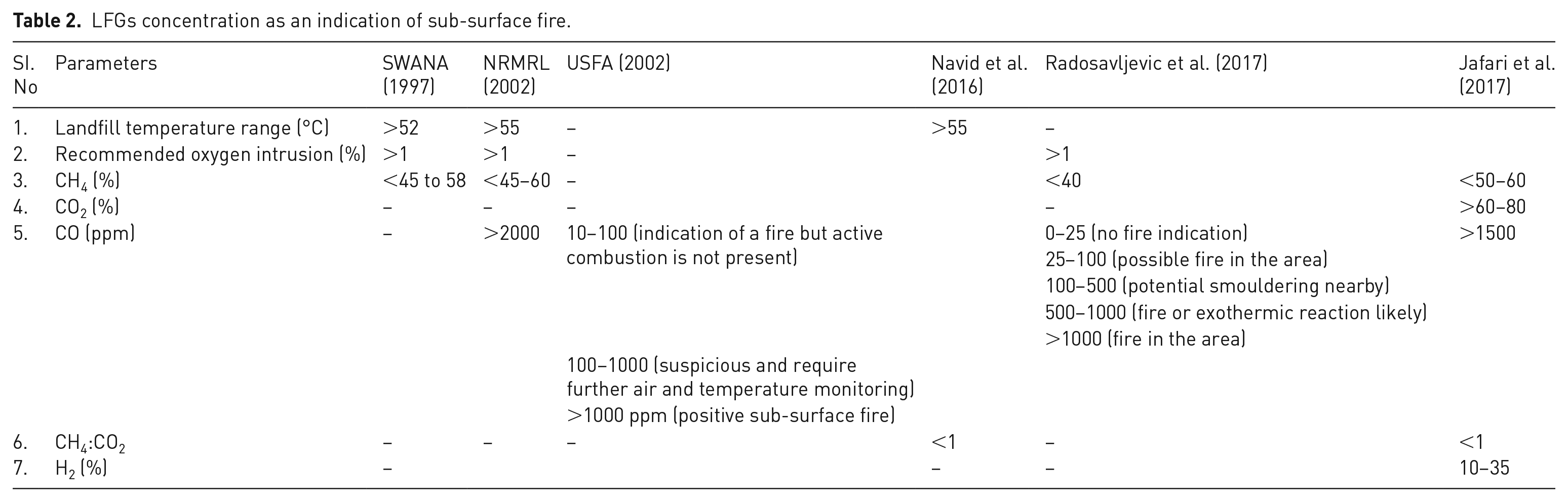
Detection of sub-surface fire is a challenging task. The location and degree of sub-surface combustion can be determined by examining fire surface for settlement caused by sub-surface void space. It may be difficult to differentiate between settlement caused by normal decomposition processes and collapse of the upper refuse layer into void space created by sub-surface combustion (Stearns and Petoyan, 1984). LFG monitoring is the crucial procedure for the detection of sub-surface landfill fires. Gases like CO, O2, CH4 and CO2 were determined by inserting steel probes around the landfills and through the gas extraction wells (Department of Environmental Management, 2008). Sabrin et al. (2020) investigated relationship between the sub-surface elevated temperature (SET) and landfill gases (i.e. CH4, CO2, CO, nitrogen (N) and oxygen). Using the decision tree approach, the significance impact level of LFGs on the SET was evaluated. With respect to the safe and unsafe states of these gases, an investigation was carried out using a naive Bayes technique for conditional probability to analyse how different gas combinations can affect different temperature ranges. The outcomes indicated that CH4 and CO2 are firmly correlated with SETs. In sixteen probable gas combinations, three were recognized as the most potential forecasters of SETs. The risk of landfill fire incidents was predicted by proposing a three-step risk assessment framework as provided in Table 1. Details of gas and temperature concentration for the indication of ongoing sub-surface fire from various studies are summarized in Table 2.
Potential risk levels for different gas combinations.
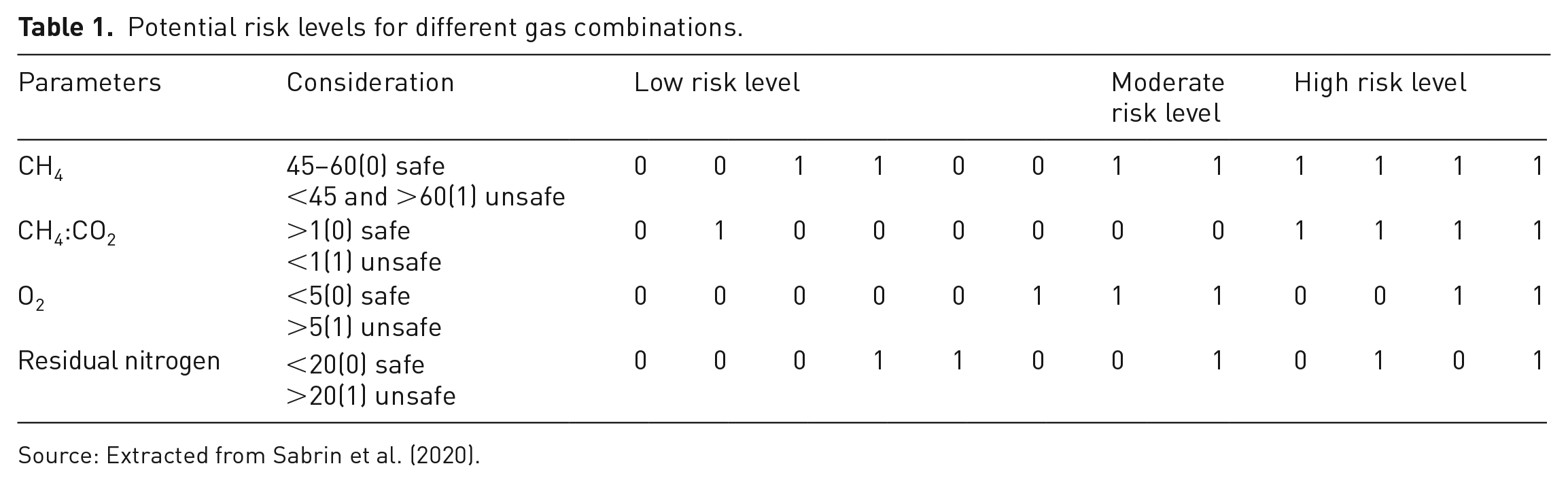
Source: Extracted from Sabrin et al. (2020).
LFGs concentration as an indication of sub-surface fire.
Landfill fire extinguishment practices
Landfill fire may be big or small. Landfill fires involving 200 m3 area, which can be extinguished within 48 hours, are called small fires, and fires involving 200–5000 m3 area, which can be extinguished within 2 weeks, are called medium fires and large or deep-seated landfill fires involve more than 5000 m3 of burning waste requiring more than 2 weeks to extinguish (International Solid Waste Association (ISWA), 2019). Extinguishment of fire will be unique for different types of fires based on the type of fuel sources such as solid, liquid or gases. Extinguishing methods like water-based, foam-based and powder-based extinguishers are available. Selection of a fire extinguishment technique at landfill depends on several factors, such as depth, composition of MSW and configuration of the landfill site; depth and size of the fire; site surface development; type and operational requirement of the LFG extraction facilities etc.
General extinguishment methods
Extinguishing a landfill fire by covering the burning masses and thereby limiting the oxygen availability for the chain reaction is reported to be less efficient (Ettala et al., 1996), even though this can limit the intensity of the waste fire (Sperling and Henderson, 2001). Landfill fire extinguishments are done by using water so that the heat availability for the chain reaction can be reduced drastically. Water can be used to extinguish visible fires at landfill surfaces (ISWA, 2019). Fire below the surface was extinguished by excavating and using water or other firefighting agents (Ettala et al., 1996; Sperling and Henderson, 2001; USFA, 2002). In most of the landfill fires, water is used as a fire extinguisher because of its economic feasibility and high boiling point (as water consumes more energy, i.e. 40.66 kJ/mol.) (Copping et al., 2007) so that a large quantity of heat can be absorbed. Nearly 0.5–1 m3 of water is required for extinguishing 1 m3 of waste fire and, if the position of the hotspot core is unknown, more amount of water will be required for fire extinguishment and this may also result in problems like leachate formation and slope instability (East Delhi Municipal Corporation, 2017; Stearns and Petoyan, 1984). In the waste mass, water travels through the pathways of least resistance, such as via poorly compacted pockets. This channelling mechanism will induce substantial short circuiting and prevent water from accessing the active burn zone at depth (ISWA, 2019). In Finland, during the study of the effect of using water as a fire extinguisher, it was found that the surrounding soil and groundwater were contaminated (USFA, 2002). On 10 March 2003, a fire incident was reported in the MSW landfill in Western Norway which was excavated and extinguished in 11 days. The area of approximately 8000 m2 (10% of the landfill’s total area) was affected by the excavation and firefight (Oygard et al., 2005). Questionnaire and experimental studies in Finland reported that excavating the burning material and cooling it with water, soil and snow is the most effective way to suppress landfill fires (East Delhi Municipal Corporation, 2017; Stearns and Petoyan, 1984), but it is not suitable for higher depth and it will lead to the entry of air into the landfill and may further lead to fire. Eliminating the availability of air will play an important role in extinguishing fire and stopping sub-surface fires. Smothering the landfill fire by applying soil will decrease the entry of oxygen to the sub-surface (East Delhi Municipal Corporation, 2017) but LFG extraction wells, surface cracks/fissures, improper compaction and capping of a surface by daily cover lead to oxygen entry into the landfills (Stearns and Petoyan, 1984). In a study of fire incidents at landfills, among 78 cases reported, fire incidents due to air entrance related to gas extraction systems were reported as 62% and fire incidents due to hot waste load and chemicals were reported as 20% (Copping et al., 2007). LFG production creates a positive pressure within landfills replacing atmospheric oxygen with LFG (Stearns and Petoyan, 1984). Injection of water at landfills without a proper gas collection system can produce a steam or gas of high temperature and pressure within the landfill by transferring heat from the burning waste materials. This high-pressure steam or gas leads to the formation of cracks and fissures within the landfill and it will make a way for the intrusion of atmospheric air into the landfill (Stearns and Petoyan, 1984). Practice of stripping the soil cover during the landfill fire should be avoided as it will accelerate the sub-surface fire by facilitating the air entry and instead of that water can be injected to the sub-surface fire points through the wells or other available injection points. Wells can be drilled using 150–300 mm diameter auger rig and well screens can be lowered into the boreholes to hold them open. Tank trucks might inject water into the wells, or water could be pumped directly from nearby water sources or fire hydrants. Nearly 5000 l of water is required to absorb the energy released by the full combustion of 1 tonne of waste (ISWA, 2019). Proper compaction of MSW also plays an important role in reducing the sub-surface fire along with smothering of waste. Few studies reported that proper compaction of landfilled waste is one of the best methods to prevent the landfill fire hazards (East Delhi Municipal Corporation, 2017; USFA, 2002).
Advanced extinguishment methods
During the fire, majority of the heat is dissipated from the combustion zone through conduction, radiation and convection. If the non-dissipated heat is in the range 8–16% (which is also the heat required for spontaneous ignition) of the initial condition, then this further aids in continuing the combustion of the waste (Rajmund, 2015). The temperature in the combustion zone is generally greater than 500°Cand this can be reduced below the auto-ignition temperature range by introducing any fire extinguishing agent which will stop the combustion process (breaking fire triangle) due to insufficient availability of heat. Water is being used as landfill fire extinguisher for a long time but optimizing the ways of using water like spraying for extinguishing should be studied and can be improved. Rajmund (2015) studied the use of water fog as a fire extinguisher which makes the use of available water in a more effective way and is non-dangerous to humans and the environment. When water fog is introduced into the combustion zone, part of the fog becomes steam and drains the heat by evaporation. Hot steam rises up from the combustion zone, gradually loses all the heat and condenses to form liquid again. In this process, the size of water particles plays a crucial role as evaporation increases by 300 times for ideally small water fog particles as compared to the normal water particles.
Authors on cooling effect reported that high-pressure water vaporization results in better cooling when compared to traditional methods like sprinkling, and at high temperatures during evaporation, the volume of water increases up to 1750 times thus squeezing out oxygen from the combustion zone (Rajmund, 2015). Only in high-temperature regions, water fog will evaporate and result in steam formation. Initially the burning material will be covered with water fog followed by the formation of steam cloud, thus entering of oxygen into the combustion zone will be blocked. The water fog extinguishing method becomes more efficient when compared to the traditional method of using water. The process of high-temperature burning is a complex phenomenon. It is a chain reaction with the primary existence of activated free ions and radicals with very short lifetime in addition to the oxidation process. Ions form water molecules as they vaporize at a high pressure. In the combustion zone, these ions will recombine with other positive and negative ions, as well as with free radicals. The chain reaction of burning can be stopped by this recombination. The mechanism is known as homogeneous inhibition in this case. A new study and practical experiments conducted by Rajmund (2015) presented that there is also a heterogeneous inhibition using water fog. This means that water particles entering the combustion zone serve as a barrier, stopping the chain reaction of burning from further continuing, allowing the fire to extinguish. The vaporization outcome determines the extinguishing effect of inhibition. This study further concluded that using the water fog technique increases the active surface of water droplets by 10 times for a reduction in water droplet size by 0.1 times as indicated in Table 3. In order to achieve greater cooling effects, the size of the water droplets in the combustion zone should be minimum which will also result in less water requirement.
Increase in surface area by decrease in size of water droplet.
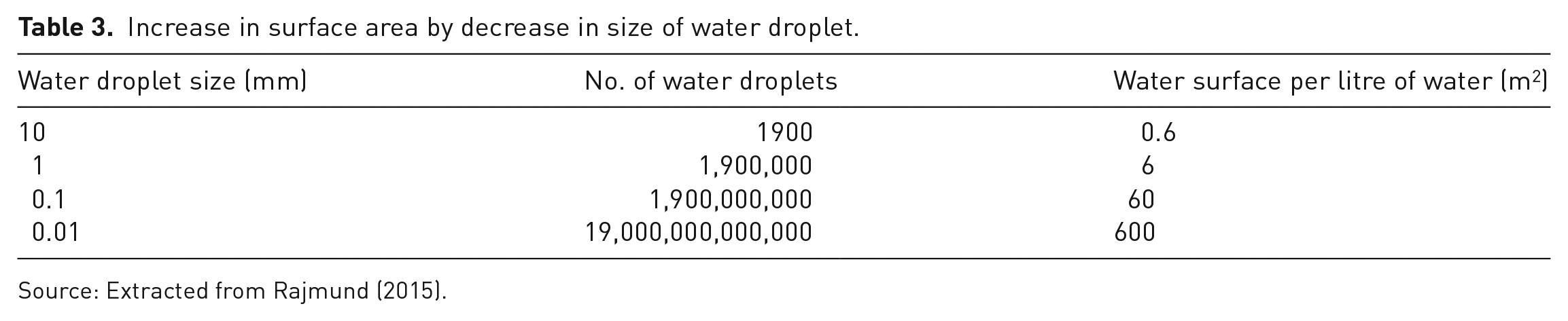
Source: Extracted from Rajmund (2015).
The use of class ‘A’ foams with water reduces the use of excess water for extinguishing the landfill fire. Use of surfactant in Class A foam with water will lead to an effective method for extinguishing fire. Class A foam is formulated to strengthen the efficiency of water for firefighting. Class A foam surfactants diminish the water surface tension and it forms a foam blanket over the fuel with a thick layer of water when it is mixed with the atmospheric air (USFA, 2002; East Delhi Municipal Corporation, 2017; ISWA, 2019). The foam comprises a biodegradable fire retardant and the foam wets and cools the area of combustion (Department of Environmental Management, 2008). Use of a surfactant agent with water is done to overcome the capillary force, which prevents the penetration of burning materials. A mixture of 0.5% class A foam by volume with water will be effective (Spering et al., 2001). ABC extinguish powder is also effective in extinguishing the class A fire (fire in wood, plastic, rubber, etc. (BIS, 2010)).The advantages of these technologies with respect to extinguishment of fires at landfills need to be studied and verified. If it can be demonstrated that control and extinguishment times are more limited, water volumes required are decreased and asset responsibility needs are lower than the utilization of added substances. Environmental and health issues must be part of the verification process.
Conclusion and future areas of research
MSW management is being streamlined day by day but the disposal of waste is still a major problem. Open disposal of MSW at landfills is creating severe damage to the environment, humans and systems involved in managing MSW as the heights of landfills are increasing. Lack of space results in several problems such as instability, fire, gas leakage, sliding, leachate formation and groundwater contamination. While some of the issues are being addressed, other issues such as landfill fires are very challenging as it is very difficult to detect and control. There is no standard procedure for the detection and extinguishment of landfill fires. Some of the major fire incidents across the world and the possible steps taken to control or prevent fires at their respective sites are illustrated which will help in identifying the best possible methods for landfill fires detection, prevention and control.
Surface fires can be avoided by proper compaction, application of proper soil cover, educating site workers and taking precautionary steps during the summer season. Surface hotspots can be detected before the formation of fire by daily monitoring the surface temperature using an Infrared (IR) thermal imaging camera. The IR thermal imaging camera is effective even during night time for detection of temperature rise of the waste mass due to aerobic degradation. Sub-surface landfill fire is invisible and difficult to detect. Various biological and chemical degradation levels produce CH4 and heat as by-products which contribute towards the spontaneous combustion of sub-surface waste mass. Sub-surface fire formation can be avoided by practising proper daily soil cover and compaction of waste which avoids the air entry to the bottom of the landfill. Installation of a proper gas extraction system will prevent the formation of cracks and development of hotspots within the landfills. Sub-surface fire detection can be done by monitoring the elevated temperature with respect to specific gas combination emitted through the gas well. Proper research should be conducted for the detection of sub-surface fires based on the gases released and the temperature rise. Gases such as CO2, CO, CH4, ammonia (NH3), CH4:CO2 ratio, H2, O2, N and dioxins/furans are released as by-products of exothermic chemical, biological reactions and burning process within MSW landfills. Elevated temperature measurement and the detection of these gases can be used as indicators of different temperature ranges inside the landfill based on specific gas combinations emitted so that the possibility of the sub-surface fire can be detected in early stages in an effective way. Landfill fire extinguishment is a challenging task in the current waste management system. Extinguishment of landfill fire using water is a traditionally followed method but the technique of applying, the effect of its extinguishment rate, its long-term effect on the fire control and its effectiveness on the sub-surface fire required to be studied in detail. Water fog systems can be adopted for the extraction of heat during landfill fires in the form of steam which leads to the flow of heat from the sub-surface (hot region) to the surface (cooler region after applying water fog) but further study needs to be carried out to ascertain the effect and efficiency of water fogs. Use of surfactants like class ‘A’ foam with water can be used to extinguish the landfill fire which acts as the heat absorbent for reducing the surface tension so that water will penetrate easily into the hot substance and remove the heat. But its use on landfill fires is yet to be carried out. A detailed study should be carried out to find its effectiveness on landfill fire. ABC extinguish powder is used for class A type fires (fire in wood, plastic, rubber, etc.) and its effectiveness on landfill fire can also be studied. Till now, the procedure for landfill fire extinguishing is not standardized. A detailed study on the economic and environmental feasibility, effectiveness in extinguishments, method of applying and the effect on sub-surface heat by using water fog, class A foam, ABC powder and leachate on the landfill fires needs to be carried out to solve the problem of landfill fires.
Footnotes
Authors’ Note
GS Manjunatha, P Lakshmikanthan and Deepak Singh Baghel are also affiliated to CSIR-Fourth Paradigm Institute (CSIR-4PI), CSIR-NAL Belur Campus, (Karnataka) Bengaluru, Karnataka, India.
Rakesh Kumar is now affiliated to Council of Scientific and Industrial Research (CSIR), 2, Rafi Marg, Sansad Marg Area, New Delhi, Delhi, India.
Declaration of conflicting interests
The authors declared no potential conflicts of interest with respect to the research, authorship, and/or publication of this article.
Funding
The authors disclosed receipt of the following financial support for the research, authorship, and/or publication of this article: This work was supported by Department of Science and Technology, Government of India, New Delhi (Contract Number: GAP-1-2378).
