



Abstract
Addressing the sustainability issues arising from construction and demolition waste management (DWM) has gained little traction due to the lack of incentives, stringent regulations, and systematic guidance. This study aims to empower systematic decision-making concerning DWM alternative selection by developing a sustainability assessment framework by coupling a modified Delphi method with the multicriteria decision analysis technique. First, the study identifies a comprehensive inventory of indicators across three dimensions of sustainability in the context of DWM. Next, the study combines a modified Delphi method with the analytic hierarchy process to validate and prioritize the selected sustainability indicators. For the first time, insights regarding the DWM sustainability indicators from China’s construction industry practitioners’ perspectives are elicited using a mixed method comprising online semistructured interviews and two rounds of questionnaire surveys. Experts participating in the research are mostly based in Guangzhou and Shenzhen, where local governments exhaust all efforts in promoting carbon-neutral and sustainable development. The findings reveal that eight sustainability indicators were regarded as the determinants for the sustainability performance of DWM, with the global warming potential (32%), energy efficiency (16.1%) and land use (13.5%) receiving the highest preference scores (weights) based on the experts’ judgment. Notably, the economic factors like the total cost (6.54%) appeared not highly prioritized by the local experts as typically did in the previous studies from developing countries.
Introduction
Construction and demolition waste (C&DW) comprises eight major waste streams, categorized as C1-masonry (e.g. bricks, concrete and cement sheeting); C2-metals (e.g. steel, aluminium and non-ferrous metals); C3-organics (e.g. garden organics and timber); C4-paper and cardboard; C5-plastics; C6-glass; C7-textiles, leather, and rubber; and C8-others (Pickin and Randell, 2020). The escalating urban population is expected to reach 70% of the world’s population by 2050 (Anastasiadou et al., 2021). In response to the rising demands for residential housing and infrastructure due to the population growth in the urban areas, massive-scale construction activities like land excavation, site clearance, roadwork, refurbishment and building demolition have produced an enormous amount of C&DW. Consequently, urban development has aroused multifarious environmental problems that deserve public attention, including global warming, land degradation and natural resource depletion (Han et al., 2021). In light of this, the United Nations (UN) has called for a concerted global effort to attain 17 sustainable development goals by 2030 (UN, 2015), in which carbon emissions and urban development activities are intricately intertwined. Liu et al. (2020) argue that an obvious room for improvement concerning the reduction of the environmental footprint of the construction industry, where 36% of the total carbon dioxide (CO2) emissions and 40% of natural resource consumption can be attributed to construction activities. Therefore, the promotion of C&DW recycling and reuse can tackle the root causes of excessive carbon emissions and resource exploitation by reducing the production of raw materials.
With over 2.4 billion tons of C&DW being produced each year and under 10% of them being reutilized (Wang et al., 2022), China has become the largest C&DW producer and carbon emitter, contributing to 27% of global greenhouse gases emissions, which exceeds those of all developed economies combined (Larsen et al., 2021). Environmental problems associated with C&DW are intertwined with every phase of the building’s lifecycle, from material production to end-of-life (EoL) treatment. Thus, circular economy (CE) was introduced as a new economic system that aims to reduce or eliminate C&DW generation by promoting the maximum reuse and recycling of materials under a “cradle-to-cradle” vision (Ghisellini et al., 2018). The concept of CE has swiftly gained recognition from the academia, government and construction industry of developed countries ever since it was proposed in the 1976 European Commission report (Ginga et al., 2020). Consequently, stringent regulations, legislation, matured supervision systems and subsidies introduced by North America and European countries have paid dividends, resulting in an over 80% recycling rate of C&DW (Li et al., 2020a). Contrary to those developed countries, whose initiatives of implementing CE have typically emerged from the private sectors, China’s efforts devoted to regulating C&DW and promoting CE are initiated by the national government at a broader scale (McDowall et al., 2017). In recent years, China has gradually switched from resource-oriented to production-oriented policies, led by proactive state actors (Zhu et al., 2019). One key initiative is the “Circular Economy Promotion Law,” which was released in 2008 and aims to promote resource conservation and environmental protection through the development of the CE. The law requires C&DW to be properly sorted, collected and transported to designated processing facilities and to be recycled or reused whenever possible. Correspondingly, another critical initiative enacted in 2013 called “Waste Classification and Resource Utilization Plan” provides practical guidance in the C&DW treatment process and sets goals for the C&DW reduction via adopting advanced technologies and best practices in C&DWM. However, during the COVID-19 pandemic period, conventional C&DWM policies and practices lost their effectiveness, which calls for adopting the Extended Producer Responsibility (EPR) policy that alleviates waste landfilling and promotes the CE strategy (Zorpas et al., 2021). Nevertheless, the additional capital cost and the time constraint remain the main impediments to promoting the EPR and CE strategy (Shooshtarian et al., 2021). Although the developed metropolitans in China, like Guangzhou and Shenzhen, with populations well over 10 million, have enacted new policies to promote prefabrication, modular construction and waste recycling, the effectiveness and prompt execution of such policies seem far-fetched because of the lack of details in the clauses and guidelines (Yuan, 2017). The statistics show that the C&DW recycling business in China is still premature; the recovery rate of C&DW in most Chinese cities is below 10%, with a few exceptions, such as Shenzhen and Shanghai, whose recycling rate exceeds 15% (Huang et al., 2018). Nevertheless, these numbers are significantly less than those of Japan and Germany (96 and 88%, respectively) (Ma et al., 2020). Taking Shenzhen as an example, between 2009 and 2016, 459 residential units were demolished as a part of the urban renewal plan, which puts the average annual C&DW generation in Shenzhen (2016–2020) over 7.7 million m3 (Li et al., 2020b). Despite demolition waste accounting for 90% of C&DW and having many residual values, China’s goal of matching up the recycling rate of demolition waste with developed countries still seems far-fetched due to the lack of recycling awareness and economic incentives as well as immature recycling technology and market (Zhang and Tan, 2020). Albeit implementing effective C&DWM can significantly mitigate environmental impacts by enhancing the utilization rate of materials through recycling. However, the economic and social implications should also be considered when appraising the C&DWM scheme, as different impact categories collectively, but unequally, contribute to the sustainability performance of C&DWM. Concerning the sustainability performance of C&DWM, previous studies have mainly compared various C&DWM scenarios, including onsite recycling, offsite recycling, incineration and landfilling (Marzouk and Azab, 2014; Ortiz et al., 2010). Generally, the results revealed that onsite recycling is the most environmental-friendly strategy, yet the implementation of onsite recycling is often constrained by the construction site capacity and project budget (Di Maria et al., 2018; Duran et al., 2006; Zhao et al., 2010). When it comes to more flexible offsite recycling options, its environmental performance fluctuates with the hauling distance (Gálvez-Martos et al., 2018; Ortiz et al., 2010; Roussat et al., 2009). Li et al. (2020a) conducted life cycle assessments (LCAs) of 15 mobile recycling cases in Shenzhen, revealing that the environmental benefits of adopting mobile recycling eclipse its environmental impacts mainly by avoiding landfill occupation in a high land value region like Shenzhen. Those studies have evaluated the aggregated impacts of major waste streams (e.g. concrete, metals and masonry) under different C&DWM scenarios. Only Kucukvar et al. (2014) compared the environmental implications of various C&DW materials under different strategies differently. Although it is challenging to cover all the impact categories, waste streams, and waste management alternatives when assessing C&DWM strategies, proposing a framework with clearly defined objectives and scope adapting to China’s C&DWM context could justify the reliability and practicability of the sustainability assessment framework.
Nevertheless, a sustainability assessment framework conducive to C&DWM remains non-existent in China. As the largest C&DW producer and the second largest economy in the world, the ongoing urban renewal projects in China impose multifarious impacts on the environment, economy and society. Shenzhen and Guangzhou, where the urban renewal is imperative due to the increasing net population inflow, are suitable for conducting the pilot studies. Therefore, this study takes a fundamental step towards the holistic assessment and execution of sustainable C&DWM schemes by identifying and prioritizing the essential sustainability indicators through the perspectives gained from experienced local construction practitioners in Shenzhen and Guangzhou. In actualizing this goal, this study proposes a methodology to identify and prioritize a comprehensive inventory of sustainability indicators related to C&DWM through the prism of a life cycle perspective. Furthermore, the methods can be easily adapted and applied to other regions in China, or other emerging economies across the globe. The results and findings can be adopted as the baseline for assessing the sustainability of C&DWM at a site-level. The selection and weights of the indicators can be fine-tuned after investigating project-specific geographical and technological contexts with the project stakeholders.
Overall, this study contributes to the existing knowledge in assisting the policy formulation by adapting the LCA criteria to the local context (specifically, Guangzhou and Shenzhen) and the specific requirements for assessing demolition waste management (DWM). In view of this, a comprehensive inventory of LCA indicators for the benchmarking of the DWM scheme is developed through an in-depth review of academic journals and international standards. Afterward, a modified Delphi method comprising semistructured interviews and two rounds of questionnaire surveys is carried out to elicit insights from the Chinese construction industry practitioners in Guangzhou and Shenzhen. This step aims to accommodate the specific needs for assessing DWM and adapt the sustainability assessment framework to the local context according to the knowledge and experience of local experts. Finally, this study integrates a multicriteria decision analysis (MCDA) method called analytic hierarchy process (AHP) into the Delphi process to prioritize the identified sustainability indicators based on their respective weights, where the experts determine the relative importance among a set of indicators using pairwise comparison via a questionnaire. In this way, this study identifies and prioritizes the most relevant indicators for developing the sustainability assessment framework designated for benchmarking C&DWM schemes based on the Chinese practitioner’s preferences, thereby facilitating the effective decision-making and implementation of DWM.
Materials and methods
Research procedures
The data collection process comprises four steps: literature survey, semistructured interviews, questionnaire surveys and multicriteria decision-making. The specific logical order of the research process is summarized in Figure 1, including the adopted research methods and their corresponding objectives.
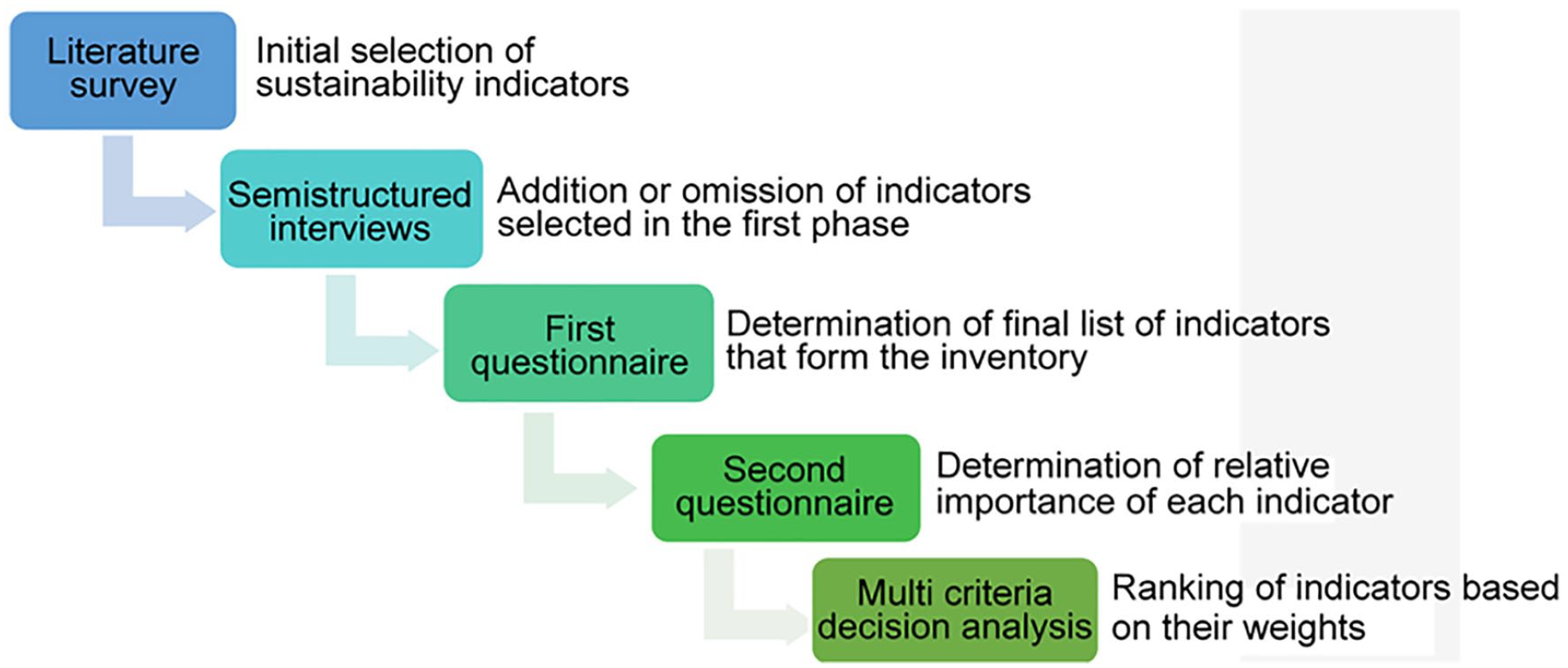
Research methods and respective objectives.
The study began with a systematic review of previous publications on Delphi and MCDA techniques and the sustainability criteria adopted in the LCA of construction materials. Scopus was selected as the search engine because it comprehensively covers journals and publications related to construction management and sustainability fields (Zhao et al., 2021). The keywords used during the search process were ‘Delphi + C&DWM’, ‘LCA + C&DWM’, ‘multicriteria decision analysis + waste management’ or ‘MCDA + C&DWM’ and ‘Sustainability assessment + C&DWM’ in all possible combinations. Journal publications and conference proceedings representing the most influential and reputable research outputs were selected and further screened by reviewing their title and abstract. Duplicate and lowly relevant articles were discarded.
Selection of research methods for data collection and analysis
The Delphi method is a systematic and interactive approach for investigating complex and multidisciplinary issues by eliciting opinions from a panel of experts (Chan and Chan, 2012; Grisham, 2009). The Delphi technique is instrumental in eliciting homogeneous group judgements on new technologies, social policies and environmental concerns through iterative questionnaire surveys, from which meaningful insights into future trends and events are derived (de Loë et al., 2016). Moreover, the Delphi process can be coherently combined with one or multiple MCDA techniques for criteria weighting and policy-making purposes. For instance, the AHP method was constantly coupled with the Delphi studies (Anastasiadou et al., 2021; Kim et al., 2013; Sultana et al., 2015) for performance benchmarking. Thus, the Delphi technique has been applied in numerous disciplines such as nursing (Keeney et al., 2001), food system (Allen et al., 2019), supply chain management (Govindan et al., 2013) and sustainable development (Anastasiadou et al., 2021; Kim et al., 2013; Olawumi and Chan, 2018a) to establish theories or a set of criteria for performance assessment. In the sustainable construction field, Olawumi et al. (2018) utilized a two-round Delphi survey to identify and prioritize the underlying barriers to implementing building information modelling (BIM) and sustainability practices in the construction procedures. In addition, 30 critical success factors in relation to amplifying the integration of BIM and sustainable practices in construction projects were identified and prioritized by using a two-stage Delphi survey (Olawumi and Chan, 2018b). Similarly, Moussavi Nadoushani et al. (2017) identified a comprehensive list of sustainability criteria and their relative importance scores concerning the selection of the most sustainable façade system for a building. In view of this, selecting and prioritizing the indicators for the sustainability assessment of DWM fall into the same category. Thus, a modified Delphi method comprising three stages was applied to identify, select and prioritize the indicators for assessing the DWM sustainability performance at a project level. A traditional Delphi survey comprises at least two rounds. The consensus is expected to be reached after two or more rounds, with the first round of the Delphi being the qualitative data collection. Afterwards, the responses collected in the first round are synthesized and given back to the respondents to reaffirm the selection using various rating systems. Typically, a consensus threshold ranging from 50 to 97% signifies the completion of a Delphi study (Diamond et al., 2014).
Thus, we propose a modified Delphi method in the first round, which entails conducting semistructured interviews with experts to validate and refine the inventory of sustainability indicators. The second-round survey solidifies the selection of indicators in the previous round. By substituting repeated questionnaires with semistructured interviews, the participants proved to be more engaged during the data collection process, thus providing more consistent responses in the following questionnaire survey (Anastasiadou et al., 2021). Consequently, time and resources devoted to the data collection process were significantly reduced compared with the traditional Delphi survey, which is regarded as a time-consuming and laborious approach to achieving consensus among multidisciplinary participants (Williams and Webb, 1994). Moreover, it is recommended that all activities involved in the Delphi-type group decision-making approaches should be held in confidence to ensure integrity during the data collection and analyses (de Loë et al., 2016). Anonymity can prevent the bandwagon effect and verbal agility or the discussion dominated by the authority, thus avoiding biased conclusions derived from their opinions (Allen et al., 2019). The following subsections describe the research instruments adopted at each stage of the modified Delphi study, illustrating the purpose of each research instrument.
Literature survey to identify potential LCA methods and indicators for assessing C&DWM sustainability performance
LCA and life cycle costing (LCC) are the most frequently adopted methodologies for assessing the environmental and economic performance of a product or system throughout its life cycle, respectively. Another methodology, social LCA, has been increasingly adopted. These three methods overarch a holistic framework for sustainability assessment from a life cycle perspective (Lehmann et al., 2013). Taelman et al. (2019) considered that a sustainability assessment framework for waste management comprises various impact categories, which are classified based on their geographical location, magnitude and origin. Thus, the overall performance is dictated by the impacts on multifaced aspects, such as the natural environment, resources, project budget, and human health (Finnveden et al., 2009). As the life cycle sustainability assessment results of C&DWM scenarios vary with the impact category or assessment criteria considered, it is a prerequisite to prudently define the goal and scope and select the appropriate assessment criteria to be evaluated (Park et al., 2020). Previous studies (Liu et al., 2020; Peng, 2016; Wang et al., 2018; Wu et al., 2015) focused on assessing the life cycle impact of C&DWM on a standalone impact category, such as the global warming potential (GWP) or energy efficiency (Chau et al., 2017). Penteado and Rosado (2016) compared the life cycle environmental impacts of six C&DWM scenarios under five impact categories, including acidification potential, GWP, eutrophication potential, photochemical oxidation, abiotic depletion potential from CML 2 baseline 2001 methodology. Several studies have conducted more holistic assessments, where the environmental impacts (Bovea and Powell, 2016; Kucukvar et al., 2014; Manfredi and Goralczyk, 2013) and economic performance (Hamidi et al., 2014; Zoghi and Kim, 2020) were evaluated separately. In addition, few studies have evaluated both aspects simultaneously (Ghisellini et al., 2018; Mah et al., 2018; Manowong, 2012; Marzouk and Azab, 2014). In a study by Khoshand et al. (2020), 16 criteria were identified and categorized into four aspects, namely environmental, economic, social and technical. Those criteria were mainly derived from previous studies and meetings with experts, leading to a vague definition of criteria. Overall, the societal impacts of C&DWM are rarely investigated in prior studies because the societal sustainability indicators are wide-ranging and mostly unquantifiable (Wu et al., 2019).
According to extant studies, a lack of coherence exists in the pool of specified sustainability indicators for benchmarking the waste-to-resource recovery process (Iacovidou et al., 2017). Especially for developing a regionally applicable framework for assessing the sustainability of C&DWM, the identification and prioritization of assessment criteria is an imperative process. Recently, machine learning techniques have been constantly linked with municipal solid waste management (MSWM) to improve decision-making by identifying the essential indicators that can adequately evaluate the sustainability performance of a particular system or process (Kannangara et al., 2018; Mukherjee, 2017). Instead of focusing on sustainability performance at the project level, studies that integrate machine learning techniques with MSWM rely on the available historical data on the output and distribution of MSW at a regional level. Nonetheless, the performance indicators that specifically attend to the sustainability of C&DWM are rarely explored. Consequently, the first step of this study entails identifying, understanding, and categorizing the sustainability indicators for assessing the life cycle impacts of C&DWM practices. An in-depth review of the extant academic papers and international LCA standards and guidelines was conducted to identify the most frequently adopted indicators for assessing the life cycle sustainability of a product or system. This study considers the environmental, economic and social impacts of building materials at their EoL stage. Therefore, the scope of this study concentrates on the life cycle of the DWM process, starting from building demolition, waste collection and sorting and transportation to the disposal site of demolition waste materials. According to prior studies, sustainability indicators often refer to the LCA impact categories; defining the LCA impact categories allows for making actionable statements about how emissions influence the environment. During the life cycle impact assessment stage, different emissions that produce the same impact are converted into one unit that translates into one impact category. For instance, greenhouse gases, such as CO2, methane and nitrous oxide, are converted into an equivalent amount of CO2 emissions and expressed in kg CO2 equivalents (kg CO2-eq), which is the metric for measuring the ‘GWP’ impact category in LCA (CML, 2001). Based on the literature review, an initial inventory containing 12 impact categories (sustainability indicators) was created. These indicators were derived from two mainstream LCA methods, namely, CML 2001 and EN15804, which are universally applied for assessing the environmental impacts associated with construction materials (Park et al., 2020). The LCA impact categories, such as GWP, energy, acidification potential, abiotic depletion potential and eutrophication, have attracted intensive research efforts in previous studies related to LCA application in the C&DWM sector (Bovea and Powell, 2016). Table 1 presents the complete inventory of sustainability indicators identified from the previous literature.
Inventory of sustainability indicators for assessing C&DWM.
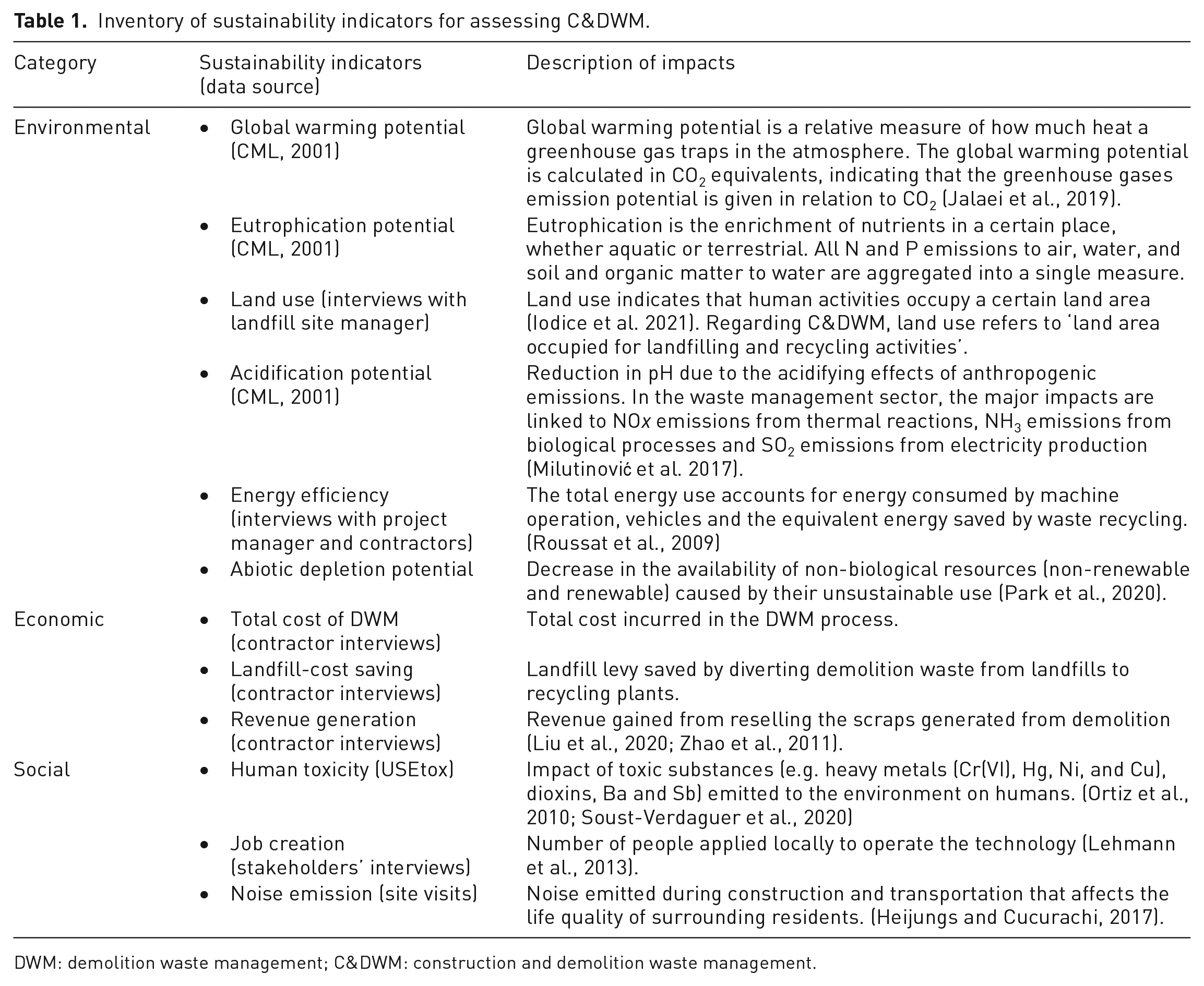
DWM: demolition waste management; C&DWM: construction and demolition waste management.
Semistructured interviews for refining the initial list of indicators
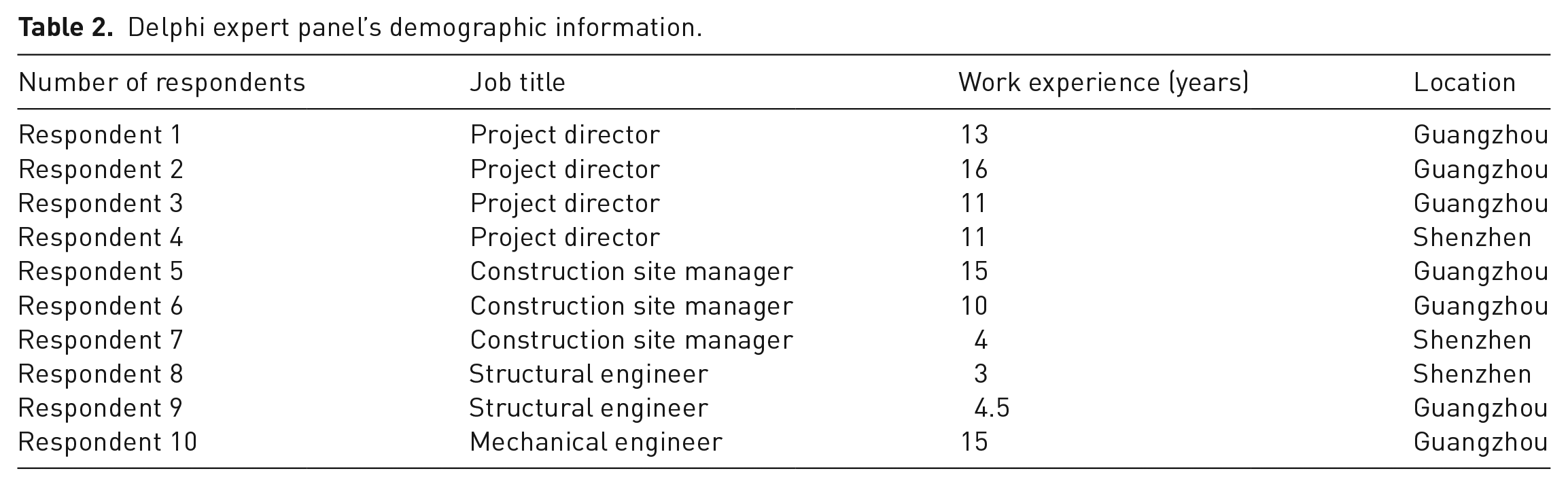
Conducting semistructured interviews with the expert panel at the initial stage of the modified Delphi validates the inventory of the sustainability indicators derived from the literature review and clarifies the research context, methodologies and definition of assessment criteria to the Delphi respondents, thus facilitating the decision-making process. Given that Delphi is a self-validating technique, the proper selection and composition of the expert panel members are crucial for ensuring valid research findings (Olawumi and Chan, 2018a). Thus, to select appropriate Delphi participants and ensure the credibility and success of the Delphi survey, a purposive sampling technique was applied in which participants were selected based on their expertise and experience on the subject matter (Olawumi and Chan, 2018b). The experts should be equipped with in-depth knowledge of sustainable materials, construction and waste recycling. Moreover, the experts need to possess extensive hands-on experience in the construction and demolition project management or sustainable design. With that in mind, a set of criteria for identifying and recruiting the experts of the Delphi panel was outlined: (1) experts with above 3 years of experience in the construction field; (2) respondents should be involved in C&DWM and sustainability practices in current or prior construction or demolition projects; (3) respondents who possess robust knowledge and in-depth understanding of the concepts of LCA and sustainability indicators; and (4) respondents who are familiar with advanced construction and waste management techniques, as well as with C&DWM policies and regulations imposed by the local governments. Moreover, the expert panel should comprise a minimum of seven participants but not more than 50 people (Olawumi and Chan, 2018a). Therefore, 10 practitioners from the Chinese construction industry were selected to form the expert panel, comprising 4 project directors, 3 construction site managers, 2 structural engineers and a mechanical engineer, all of whom have worked for large contractors and developers with at least 200 employees. Among the 10 respondents, 7 have been practitioners in the construction field for more than 10 years. The average work experience possessed by the expert panel is 10.25 years. Semistructured interviews were conducted individually via Zoom; the average duration of the interview sessions was approximately 24 minutes and 52 seconds. All semistructured interviews were held from September to October 2021. Both videos and audio of the interviews were recorded and stored on a secure cloud server. The transcripts of the interviews were derived from the audio recordings. Table 2 presents the details of the expert panel’s demographics. Moreover, Supplemental Appendix A presents the interview protocol and the initial inventory of indicators.
Delphi expert panel’s demographic information.
After the Delphi panel and the initial list of sustainability indicators were established, the respondents were asked to refine the initial list of sustainability indicators by selecting the 10 most essential indicators and adding supplemental indicators to the inventory during the semistructured interviews.
First questionnaire for validating the selection of sustainability indicators
In the first round of the questionnaire survey, the same group of participants was asked to determine the importance of each indicator measured on a five-point Likert-type scale, where five indicates that the importance of the sustainability indicator is strongly advocated by the respondent. The level of importance of the corresponding indicator denoted by the Likert-type scale decreases from 4 to 1. Given that Chinese is the native language of the respondents, the original questionnaire was drafted in Chinese. After collecting the quantitative data, we meticulously translated the questionnaire from the Chinese to English version to validate the consistency of the results. A sample question of the translated version of the questionnaire is shown in Supplemental Appendix B. After collecting the responses from the experts in the first round of the questionnaire survey, the quantitative data retrieved were subjected to reliability and normality tests using descriptive and inferential statistical tools, such as Cronbach’s alpha reliability and Shapiro–Wilk normality tests (Olawumi and Chan, 2018b). Cronbach’s alpha checks the internal consistency of the questionnaire; a value of ⩾0.7 is considered adequate for validating the reliability of the results (Kim et al., 2020). Moreover, Likert-type data are ordinal, discrete and limited in range, which disobey the assumptions of most parametric tests (de Winter and Dodou, 2010). As the expert panel comprises only 10 people, the data gathered from such a small sample size may not follow a normal distribution and are unsuitable for parametric tests. Thus, a Shapiro–Wilk normality test was applied to determine the significance level (p) of each sustainability indicator. Among the 12 indicators, only eutrophication, the revenue gained from selling C&DW scraps, and the noise emission have a significance level of >0.05, indicating that the Likert-type scale data are normally distributed. Conversely, other indicators with a significance level of <0.05 are not normally distributed and should be subjected to non-parametric tests such as Mann–Whitney analysis. Subsequently, the sustainability indicators were ranked in descending order based on their mean value derived from the Likert-type scale rating. If the mean values of several indicators are identical, these indicators should be ranked in ascending order according to their standard deviation, indicating that the indicator with the lowest standard deviation should be prioritized on the list (Olatunji et al., 2017). According to Triantaphyllou (2000), to maintain the consistency and efficiency of pairwise comparisons, the number of elements to be pairwisely compared by the human brain should not exceed 7 ± 2. With this consideration in mind, this study compiled the top eight sustainability indicators (based on their mean value rankings) as the final list.
Second questionnaire survey for prioritizing the final list of sustainability indicators
In the third phase of the Delphi survey, the second questionnaire survey containing eight pairwise comparison questions was delivered to the same expert panel. The experts decided on the relative importance of the sustainability indicators. The second questionnaire was answered by the same Delphi panel. Supplemental Appendix C outlines the rule of the pairwise comparison and a sample question of the survey.
Integration of Delphi method and AHP
AHP is a MCDA method used for calculating the relative weights of a set of criteria through pairwise comparisons, where different criteria are compared in pairs based on their significance in achieving the overall aim of a decision-making problem (Anastasiadou et al., 2021). Subsequently, various alternatives are compared with each criterion regarding their preference degree. The respondents determined how often a criterion (indicator) is more important than another based on Saaty’s AHP scale (Table 3).
Saaty’s scale for AHP pairwise comparison (Saaty, 1990).
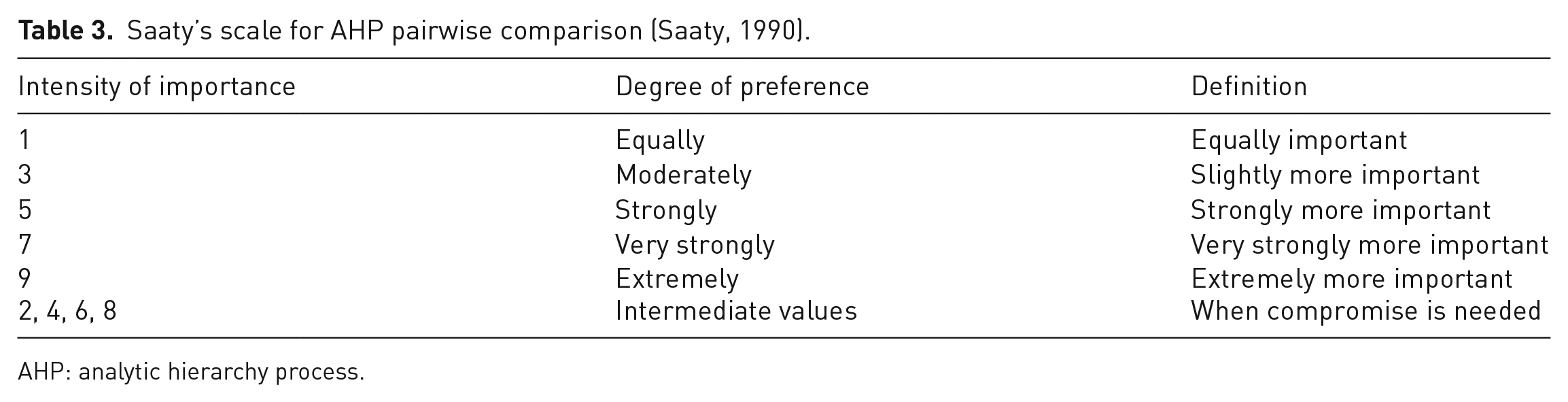
AHP: analytic hierarchy process.
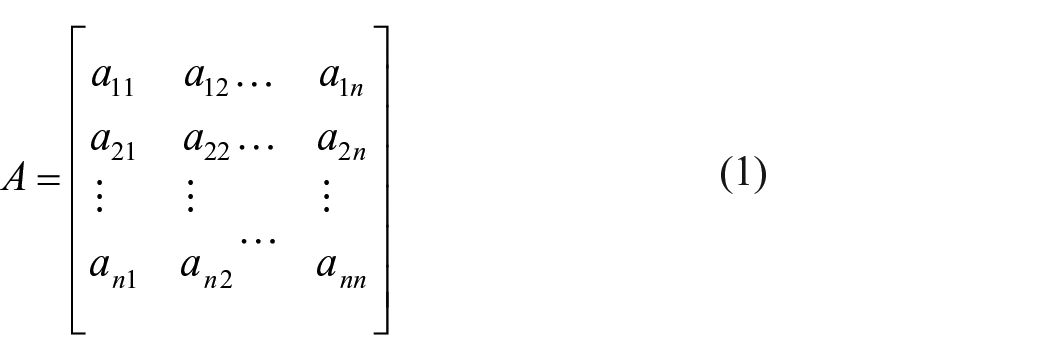
In this case, the AHP method originally proposed by (Saaty, 1990) was employed to calculate the weights of the criteria (indicators), wherein a matrix comprising the relative importance of all criteria is constructed as equation 1, where n denotes the number of criteria of the same level.
The relative importance between the elements of the same level is obtained from equation 2:

where

where RI is the random consistency index. Table 4 displays the RI values for different numbers of elements.
Random consistency index values corresponding to n elements.
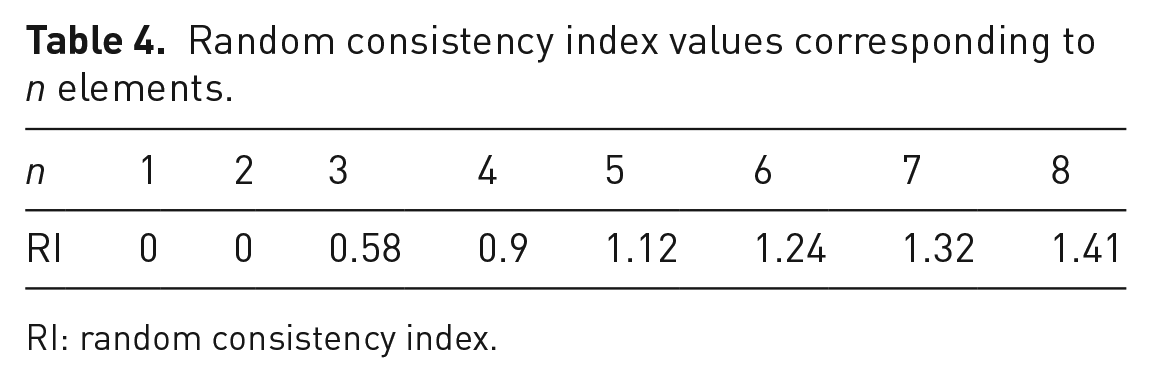
RI: random consistency index.
The consistency index (CI) can be obtained as follows:

A CR not exceeding 0.10 (CR ⩽ 0.10) is deemed coherent, whereas CR exceeds the limit. The judgement of the experts needs to be re-examined by iterating the pairwise comparison process.
Results
Overall mean value ranking of sustainability indicators
The first phase of the modified Delphi survey created an inventory of sustainability indicators in the context of C&DWM in China. According to the results derived from the first questionnaire, the final inventory of sustainability indicators is listed in Table 3. The GWP has the highest mean score (4.6) on the five-point Likert-type scale, placing it as the most important criterion for evaluating the sustainability performance of DWM. Next in line are the landfill-cost saving, human toxicity and land use, which all have the second-highest mean scores. As mentioned in the earlier section, when prioritizing the indicators with identical mean scores, the indicator with the lower standard deviation should be prioritized. Therefore, land use ranks the lowest among the three as it has the highest standard deviation value of 0.699. Based on this principle, the acidification and abiotic depletion potentials rank fifth and sixth on the list, respectively. The energy efficiency and total cost of DWM also possess the same mean scores, but different standard deviations, placing them seventh and eighth among the ranking. Triantaphyllou (2000) recommended that the number of indicators in the inventory should not exceed 7 ± 2 for the human brain to conduct pairwise comparisons consistently and efficiently. Moreover, according to the previous Delphi surveys in different domains (Phu et al., 2021; Winden et al., 2021), a mean score >4.0 can be considered significant. Therefore, the top eight sustainability indicators formed the final inventory and were conveyed to the second questionnaire. Consequently, noise emission, eutrophication potential, job creation and revenue generation are excluded from the assessment framework as they accumulated the lowest weights. Table 5 presents the overall mean value ranking of the identified sustainability indicators. Figure 2 displays the mean value ranking of those indicators.
Ranking of sustainability indicators relevant to sustainability assessment of DWM.
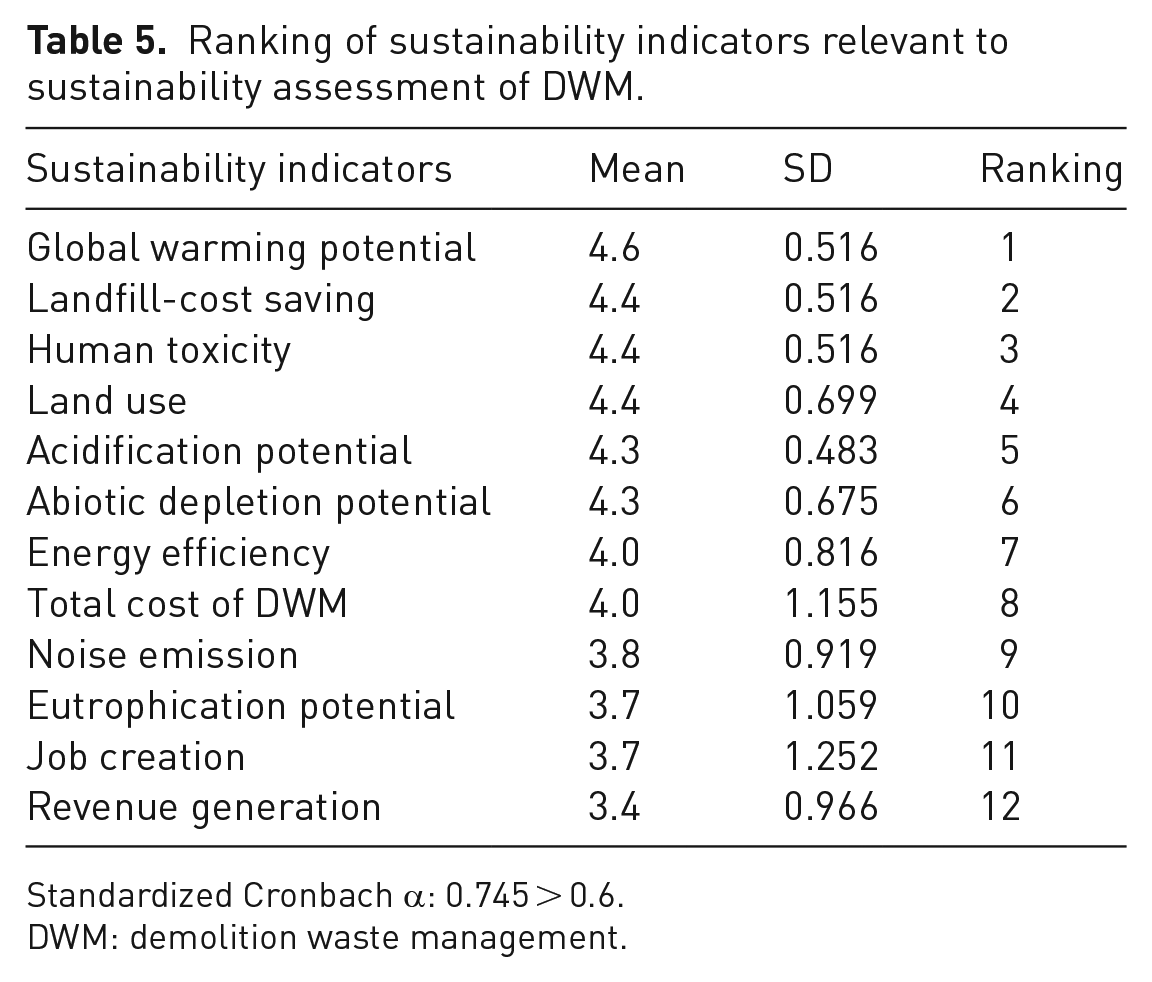
Standardized Cronbach α: 0.745 > 0.6.
DWM: demolition waste management.
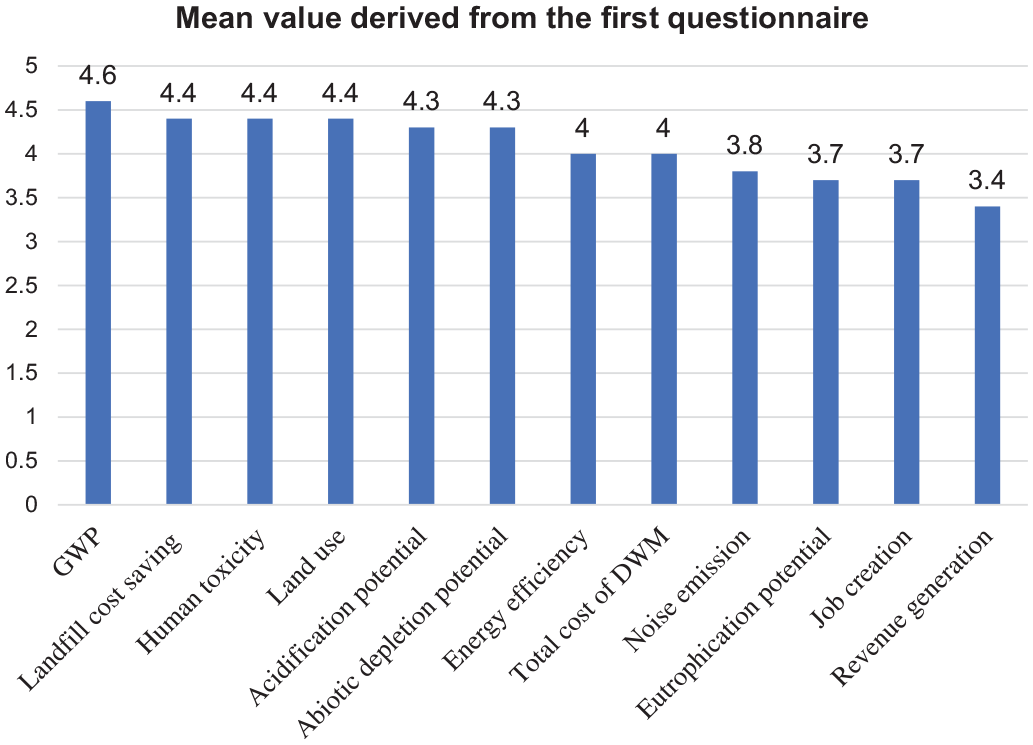
Mean value ranking of sustainability indicators.
In Supplemental Appendix D, the assessment methods, measurement units, and data sources of the indicators are wide-ranging. Therefore, to accumulate and compare the performance scores of DWM scenarios against different impact categories, each sustainability indicator should be normalized and weighted using the MCDA method.
Prioritization of sustainability indicators using the AHP method
According to the expert panel feedback obtained from the second questionnaire, GWP is the most crucial sustainability indicator affecting the overall outcomes of DWM, yielding the highest normalized principal eigenvector (weight = 32.03%). Energy efficiency, with a relative weight of 16.08%, is also highly regarded by the expert group. Next, land use and acidification potential with eigenvector values of 13.52 and 12.1% ranked third and fourth, respectively. Lower in the hierarchy, no sustainability indicator has a respective weight above 10%; thus, the total cost of DWM, landfill-cost saving and human toxicity are regarded as the least crucial factors with the lowest importance level in the AHP hierarchy. The AHP decision matrix can be referred to Supplemental Appendix E, where the calculations of normalized principal eigenvectors were performed. The ranking of sustainability indicators based on the weights calculated using the AHP method is displayed in Figure 3.
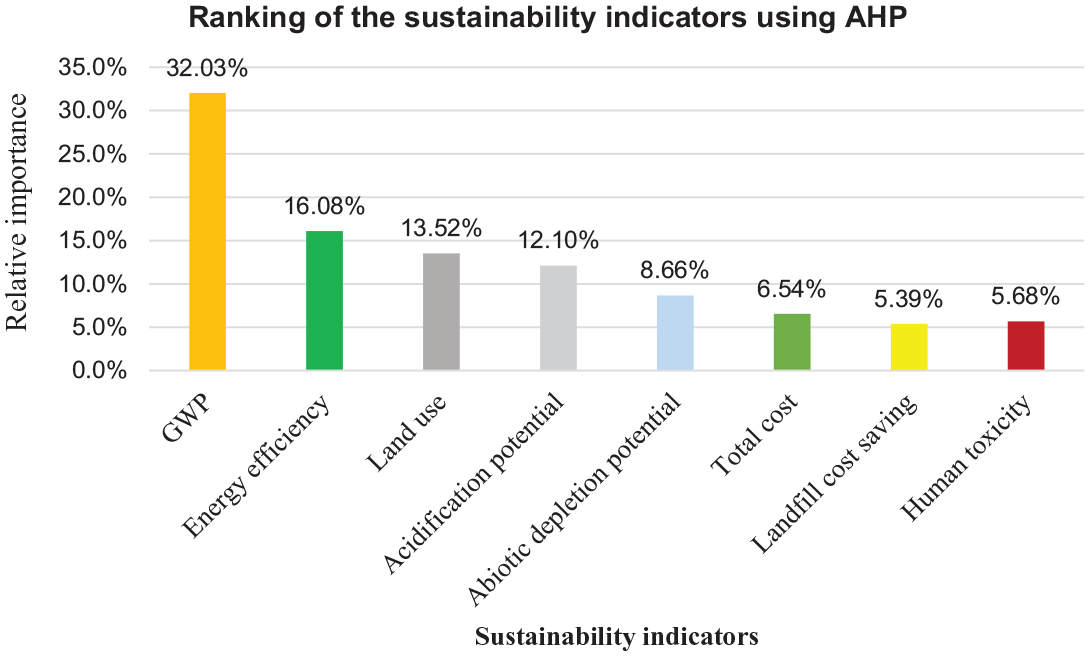
Ranking of sustainability indicators based on weights obtained from the AHP matrix.
Reliability and consistency validation
The α-values for the first and second rounds of the Delphi survey were 0.916 and 0.905, respectively, which exceeded the threshold of 0.7. Moreover, a Shapiro–Wilk normality test for both rounds of Delphi surveys shows that non-parametric tests are required for the analysis of the collected data as the data are not normally distributed (p < 0.05). Furthermore, the CR of the AHP results is 0.086 (<0.1), thus validating the consistency of the judgement of the experts in the pairwise comparison. Detailed information regarding the AHP calculation results can be seen in Supplemental Appendix F.
Discussion
This study argues that a holistic life cycle sustainability assessment of DWM should cover three dimensions of sustainability (i.e. environmental, economic and social). The impact categories (indicators) need to be derived from universally recognized LCA standards such as CML 2001, ReCipe and USEtox, complemented by the criteria adopted in the previous studies. The most prominent finding to emerge from the analysis is that the environmental sustainability of DWM is highly prioritized among the group of experts, both in interviews and questionnaire surveys. As five out of eight indicators pertaining to the environmental aspect, wherein GWP and energy efficiency are the top-ranked indicators, collectively account for over 48% of the sustainability performance of DWM. The above finding accords with the previous studies, which showed that carbon emissions and energy efficiency rank first and third in terms of significance to sustainability, respectively (Kumar and Garg, 2017). A similar finding was reported in (Ardda et al., 2018) study, in which the environmental aspect was given 58.5% of the weighting score compared to the 22.5% received by the economic aspect. However, the current study’s findings are not entirely coherent with the previous research, as (Kabirifar et al., 2020; Yuan, 2013) put more emphasis on the economic aspects over environmental sustainability. Overall, consistent with previous literature, the social aspect receives the least attention as only one indicator was selected and ranked as the lowest priority in this study.
The findings show positive signs of Chinese construction practitioners improving their environmental protection awareness and understanding of sustainable development and the CE principle. The results give theoretical implications that China’s government should manifest itself as a powerful entity to regulate the DWM by establishing a supervision system and stringent legislation. Moreover, the industry leaders should provide detailed guidelines and training for promoting the standardization of the DWM process and improving the social awareness of construction practitioners.
Albeit the proposed methodology for selecting and prioritizing the sustainability indicators being universally applicable and easily duplicable, the applicable area of this developed framework is limited to the construction and demolition projects in densely populated China cities like Guangzhou and Shenzhen. Since China’s urban renewable projects are mostly financially supported by the local government and delivered by the industry leaders, the relative importance of economic factors reported in this study may not be applied to the small-scale building demolition projects in other regions, which are typically implemented by small private contractors with a relatively limited budget. Moreover, the group of participants is confined to the construction industry practitioners with hands-on experience in the DMW field. Hence this study did not incorporate the opinions of policymakers and academia. Nevertheless, the framework can be adapted to the local context by adjusting the criteria and the corresponding weights according to the local expert’s input.
Conclusion
There has yet to be a holistic framework considering multifaced impacts designated for benchmarking the sustainability of DWM practices in China. Thus, this study develops a sustainability assessment framework that examines various impact categories relating to DWM, thereby facilitating the selection of the optimal DWM scheme. First, this study conducts an in-depth review of prior literature regarding the LCA of DWM to compile a holistic list of sustainability indicators. Subsequently, the inventory was adapted to the local context by gaining insights from the architecture, engineering and construction (AEC) practitioners from two of the most economically developed cities in China, Guangzhou and Shenzhen. Afterward, a modified Delphi–AHP approach was developed, using semistructured interviews and two rounds of questionnaire surveys, to refine and prioritize the list of sustainability indicators identified in the first phase. Subsequently, the Delphi experts in the second questionnaire compared the final-cut indicators in pairs. This methodology was newly applied to the C&DWM field. The proposed method is versatile and highly adaptable to the context of any region, regardless of its characteristics. Hence, the knowledge gathered from the international literature and the experience of local experts is synthesized, thus facilitating the selection and prioritization of essential indicators concerning the sustainability performance of DWM.
The methodology was tested by conducting a modified Delphi survey among 10 Chinese practitioners with an average experience of more than 10 years in the AEC industry, verifying its applicability and advantages in identifying and prioritizing the most suitable indicators for assessing the sustainability of DWM. The results revealed that GWP is the most critical indicator with the highest weight derived from the AHP method. A significant margin of weight exists between the first- and second-placed indicators in the AHP hierarchy, where the energy efficiency weight is only half that of GWP. The next-ranked indicators are the environmental indicators related to land degradation issues, namely, land use and acidification potential, which are considered significant factors affecting the sustainability performance of DWM. Next, the economic factors, such as project cost, are considered less important by the Delphi panel. It is an unexpected finding to some extent, given that the economic barriers had been constantly highlighted by the previous studies from other developing countries, in which the project cost is typically the pivotal factor affecting the stakeholders’ initiative and decision-making. An implication of this is the possibility that Chinese construction practitioners from industry-leading firms have improved their environmental protection awareness and understanding of sustainable development and CE while the DWM is advocated and financially supported by the local government. Additionally, the social aspect concerning the healthy living environment of the surrounding residents is regarded as the least important aspect when assessing the DWM schemes, possibly due to the lack of regulations and social awareness from the stakeholders.
The proposed methodology can be further developed to select and prioritize the most sustainable DWM scheme against the essential sustainability indicators in any given context and to integrate CE strategies into the design process by comparing the lifecycle sustainability performance of design alternatives using different materials and EoL treatment methods. With the participation of local experts and stakeholders, a set of predefined DWM alternatives can be evaluated by benchmarking their performance characteristics against various criteria and aggregating the scores to determine the optimal solution using the technique for order preference by similarity to the ideal solution. Another item on the research agenda is analysing the results obtained from various stakeholder groups (the government, practitioners, academia and the public) and investigating the patterns and rationale behind their choice. Finally, to implement the developed framework in real-world DWM practices, the multifarious data (geometric size, material composition, transportation distance and environmental parameters) regarding the DWM project need to be properly managed using BIM as the data repository. Embedding the LCA and MCDA methods into the BIM environment will streamline the data exchange process in the sustainability assessment. With the aim of incorporating DWM-related parameters required for conducting BIM-based sustainability assessments, future research should focus on expanding BIM properties, identifying missing parameters and integrating the BIM-based inventory analysis and the Excel-based life cycle impact assessment into one integrated approach. The impact assessment results can be transferred back to the BIM environment and interpreted using the embedded MCDA plugin. Ultimately, different DWM scenarios can be compared and prioritized, and different levels of environmental impacts produced by different building components can be visualized for the environmental hotspot or recycling value analysis.
Supplemental Material
sj-docx-1-wmr-10.1177_0734242X231166309 – Supplemental material for Identifying and prioritizing sustainability indicators for China’s assessing demolition waste management using modified Delphi–analytic hierarchy process method
Supplemental material, sj-docx-1-wmr-10.1177_0734242X231166309 for Identifying and prioritizing sustainability indicators for China’s assessing demolition waste management using modified Delphi–analytic hierarchy process method by Dongchen Han, Mohsen Kalantari and Abbas Rajabifard in Waste Management & Research
Footnotes
Acknowledgements
The authors thank BIMERNET and Gemdale for participating in the interviews and questionnaire surveys.
Author contributions
DH was involved in conceptualization, methodology, software, formal analysis, investigation, data curation writing (original draft preparation) and visualization. DH and MK were involved in validation. AR and MK were involved in resources and project administration. MK was involved in formal analysis. DH, AR, and MK were involved in writing (review and editing). AR was involved in Supervision. All authors have read and agreed to the published version of the manuscript. Please view the CRediT taxonomy for the term explanation. Authorship must be limited to those who have contributed substantially to the reported work.
Declaration of conflicting interests
The authors declared no potential conflicts of interest with respect to the research, authorship, and/or publication of this article.
Funding
The authors received no financial support for the research, authorship, and/or publication of this article.

Supplemental material
Supplemental material for this article is available online.
References
Supplementary Material
Please find the following supplemental material available below.
For Open Access articles published under a Creative Commons License, all supplemental material carries the same license as the article it is associated with.
For non-Open Access articles published, all supplemental material carries a non-exclusive license, and permission requests for re-use of supplemental material or any part of supplemental material shall be sent directly to the copyright owner as specified in the copyright notice associated with the article.
