



Abstract
With an increase in climate and environmental issues awareness, the use of waste of various types has gained increased visibility, acknowledging that wastes are any and all kinds of unused materials from the production process or after using the final product for its intended purpose. The use of wastes to produce alternative cement materials is an alternative to reduce the use of natural resources. Forestry residues, ash, plastic residues, LDPE/Al composites, and geopolymer materials are some of the possible residues used for the partial replacement of cement materials. The objective of this research is to establish how these materials relate to each other, based on a topic review and how they can contribute towards sustainability. The study was performed on several scientific article search engines, in which the keywords ‘Carton Packages’, ‘Wood Waste’ and ‘Geopolymers’ were inserted, and then a refinement was carried out using the term ‘Cement Materials’. Such analysis allowed the generation of information related to publication numbers, countries, research areas, as well as publication types. Co-authorship networks of organization, co-citation of references, co-occurrence of keywords, among others, were also plotted. Through this bibliometric analysis, it was possible to reveal the structure of the research, analyse the developments and predict the future directions for the research regarding the use of residues in the production of sustainable Portland cement composites.
Introduction
Population and economic growth due to urbanization tend to lead to an increase in waste generation, which is responsible for green area reduction, increased air pollution and waste accumulation of all harmful items to the environment. Therefore, sustainable management of this waste is essential in solving the environmental issue (Negash et al., 2021).
Regarding sustainability, researchers have a wide range of possibilities to work in favour of reducing environmental and socioeconomic impacts. Such possibilities include the development of new materials, which have characteristics equivalent or superior to those currently used and with a smaller environmental footprint. Therefore, according to the bibliography presented below, different types of waste have their proposed reuse.
Among the composite materials for civil engineering applications, geopolymer concrete occupies a distinguished spot; this is mainly to it being a composite material produced from inorganic aggregates (such as sand, gravel or fly ash) joined by a polymeric binder (or plastic glue), instead of a binder developed from water and cement, as is normally used in cement concrete (Martínez-López et al., 2015). One reason to this replacement is because of the environmental damage that can be associated with the concrete industry (Gaspar and Brito, 2008). Furthermore, with the depletion of natural resources that are used in the production of concrete and cement, several types of research are focused on finding alternatives or incorporating residues into concrete mixtures, as this paper intends to highlight.
Changes such as the replacement of materials that cause an environmental impact in the production of Portland cement, inclusion of replacement materials in the clinker production (material used for the initial stage of Portland cement production), technological improvements in the calcination process, technological efficiency or even the use of ash are being considered to achieve the goal of cleaner production (Sharma and Arora, 2018).
Cement production is constantly being criticized especially due to CO2 emission during its production process, a fact that contributes to a higher level of greenhouse gas emissions, and consumes a significant amount of raw material as well as energy (Hossain et al., 2018). Thus, the objective of this paper is to establish how waste materials can partially replace cement, relate to each other or individually, keeping the focus on the waste valorization sustainability context.
Literature review
The issue of reusing waste to produce alternative cement materials is quite a broad one and of significant importance when concerning sustainability matters. In 2020, the apparent consumption of more than 60 million tonnes of Portland cement is reported for Brazil (SNIC, 2021). Taking this into account, new compounds such as the nano-fibrillated cellulose polymer have been proposed, thus reducing the environmental impact caused by the production of Portland cement (Santos et al., 2021).
A polymer, like PET polymer or fly ash-based polymer, is widely used in the construction industry due to its properties, such as high resistance to corrosive agents, resistance to freezing, adequate abrasive behaviour, fast hardening and easy preparation, among others (Sosoi et al., 2018). In addition, lightweight concrete has been researched mainly for its use in civil construction, since most of these composite variations have a good strength/weight ratio, low thermal conductivity and good acoustic characteristics regarding insulation (Posi et al., 2013).
Among the solid residues used for the partial replacement of cement materials the following were mentioned: forest residues, ash, plastic residues, LDPE/Al composites and geopolymer materials. One of the ways to deal with the problem of excessive consumption of raw materials is reducing the dependence on traditional cement and creating a demand for alternative cement products (Tamanna et al., 2020). Some researchers aim to replace materials that cause an environmental impact due to cement production, either by technological improvements or by the simple addition of residual material, such as bottom ash (Sharma and Arora, 2018).
A low impact geopolymer concrete can also be produced by combining a material containing aluminosilicate such as metakaolin, clay, rice husk, and fly ash, among others, with alkaline solutions such as potassium hydroxides (KOH), sodium hydroxide (NaOH), sodium silicate (Na2SiO3) potassium silicate (K2SiO3) through a polycondensation reaction (Singh, 2018). Metakaolin by itself can also be partially replaced by other residues (a certain percentage of red ceramic together with metakaolin), producing a geopolymer material of appreciable mechanical strength, which may, after further studies, completely replace Portland cement in civil construction (Azevedo et al., 2018).
Forest residue is any material that results from the harvesting or processing of wood or another forest resource that may remain unused in the process (Nolasco, 2000). Currently, wood residue represents a large portion of waste from industrial activities, denoting great economic and environmental importance; however, the recycling potential of this type of waste is underutilized, mainly due to the lack of environmentally correct alternatives. (Berger et al., 2020). Retrieval of post-use or non-compliant panels as a raw material for the manufacture of wood-plastic composites or wood cement composites combine wood, plastic and/or cement wastes (de Carvalho Araújo et al., 2022).
Ash from burning coal has also been widely researched as supplemental material to cement. Zhuang et al. (2016) claim that fly ash can originate from coal-fired power plants and that this source of precursors will exist for much longer, as there are many countries rich in coal, and their energy structure is heavily based on this technology. However, to find more sustainable alternatives, other materials have been studied, such as ash from the biomass burning process (Stolz et al., 2019). The use of wood particles in the manufacture of light structure materials is studied in the literature, mainly for application in cement panels. Wood as an aggregate in this type of material confers lightness and interesting acoustic and thermal properties to the final product (Stolz et al., 2019).
Another waste that has shown significant growth in the cement industry is plastic waste. The reuse of this type of material in the production of concrete and mortar emerged as an ecologically correct solution for their disposal, aiming to reduce the proportion of this waste in landfills (Almeshal et al., 2020).
LDPE/Al composites are formed by a laminar composite structure, composed of paper, polyethylene, and aluminium. Many researchers have tried to improve the life cycle of carton products by improving the process of recycling their waste (Lokahita et al., 2017). The recycling of these wastes has become increasingly important, as it allows for proper disposal of solid waste instead of being disposed of in dumps and landfills (Alvarenga et al., 2016). Containers such as Tetra Pak packaging have a short shelf life, becoming waste and a significant problem for the environment. The recycling of these packages is low compared to the production of 26.4 billion packages in 2012, which were produced in 36 countries (Martínez-López et al., 2015).
Regarding alternative cement materials, research has frequently pointed to geopolymer materials. This type of material is formed by inorganic solid materials based on alkaline-activated aluminosilicates through hydroxides or silicates, whose precursors are generally derived from solid powders (Passuello et al., 2017). These materials differ themselves from fibre-based composites, mainly because the use of fibres in this type of composite material may cause problems related to porosity, lower surface quality and hydrophobicity (Saccani et al., 2021). Nevertheless, the relationship of geopolymers with waste recovery comes from the fact that precursor materials, sources of aluminosilicates and even alkaline solutions are waste from other processes as well, such as KOH obtained from washing water which comes from biodiesel production (Geraldo and Camarini, 2015).
Geopolymeric materials
As mentioned, several types of research have focused on the use of geopolymer materials due to the properties of this type of material, thus having a prominent role. The use of burnt clay granules from bricks production and granulated blast furnace slag were proposed as viable sources of aluminosilicates. Around 1391 billion units of bricks are produced annually worldwide, and their demand is expected to increase (Zawrah et al., 2016). In the same paper, it is evident that the burnt clay granules during the production of bricks in Egypt represent 3 to 7% mass of the total produced, suggesting that millions of tons of this type of waste are generated and sent to landfills in Egyptian industries each year. Blast furnace slag has been suggested as a viable alternative, due to its chemical composition which is based on aluminosilicates and calcium. Such residue, when added to geopolymers increases compressive strength, improving strength gain at low curing temperatures (Zawrah et al., 2016).
Other studies focused on enabling the reuse of waste bottles and other glass objects show that the annual disposal of this type of material, according to the authors, amounts to more than four million tons (Ibrahim and Meawad, 2018). Glass residues are rich in amorphous silica, which gives them pozzolanic properties (Luhar et al., 2019). Thus, the authors gathered several types of research about the durability, thermal, and microstructural properties of geopolymers whose precursors include glass waste.
Geopolymer materials are still not widely accepted against Portland cement-based composites (Luhar et al., 2019). As a result, the incorporation of glass waste valorization in the production of geopolymer concrete was the focus of these authors’ research. The research emphasizes the physical characteristics and durability of geopolymer concrete, promoting it as a durable and sustainable material, capable of being produced on a large scale and cost effectively for the construction industry. The authors mention that geopolymer materials produced with precursors from waste glass have great chemical resistance while keeping their mechanical properties unaltered; have better behaviour during drying shrinkage when subjected to higher curing temperatures; have better compressive strength when compared to sand-produced concrete; a better thermal conductivity and a microstructure similar to metakaolin-based geopolymers.
Demolished concrete waste that is usually deposited in landfills can cause significant environmental pollution, taking several decades to decompose. The production of geopolymeric materials can be even more ecological due to the possibility of using waste not only to obtain the precursors but also the aggregates, as is the case of material produced from fly ash of aluminosilicates and demolition waste (De Rossi et al., 2019). The effect of the grain size of the demolition waste was studied and it was found that the elaborated material presented better compressive strength than the samples that used sand as aggregate. Recycling concrete waste is a sustainable way to reduce environmental impact (Wang et al., 2018).
Sea shells are residues that accumulate quickly and cause environmental problems, one of the most attractive ways to minimize the environmental impact caused by these residues in nature is their introduction into the construction industry which is a major consumer of raw materials (Tayeh et al., 2019). It also has been shown that it is possible to obtain an alternative cementitious material from the incineration of municipal solid waste; these ashes can be treated and activated in an alkaline solution to result in a slightly porous geopolymer material (Lancellotti et al., 2015).
As the precursors for the geopolymers must be rich in silica and alumina, rice husk burning ash can be used as a source of silica since 20% of the mass weight of the total production can be described as a hardly biodegradable waste (Eliche-Quesada et al., 2020). Regarding the alumina obtention, a part can be collected in aluminium recycling facilities, and a part can be found in the use of fine residues retained in furnace filters and chip dryers, which are also currently used in the steel industry or as sealants for cracks in highways; however, most of it goes to landfills without any type of treatment.
There is the possibility of producing metakaolin-based geopolymer with red ceramic residues, an abundant material and without much reuse after its use in civil construction, usually, just a few are recycled and often sent to landfills for demolition materials (Azevedo et al., 2018). The study demonstrated that the partial substitution of ceramic for the red metakaolin is possible, since the compressive strength remained within the expected value, despite some physical properties of the geopolymer matrix having changed.
Another type of waste that can be reused is sludge from sewage treatment plants, either as aggregate or as a precursor (Santos et al., 2018). This material originated from the particles present in raw water coagulation, decant due to the reaction with aluminium sulphate. Such residue can be used in the development of ceramic materials with high mechanical strength and the geopolymer material produced can be improved and incorporated by the structural ceramic industries. Figure 1 illustrates the set of cement alternative materials contemplated in the present analysis.
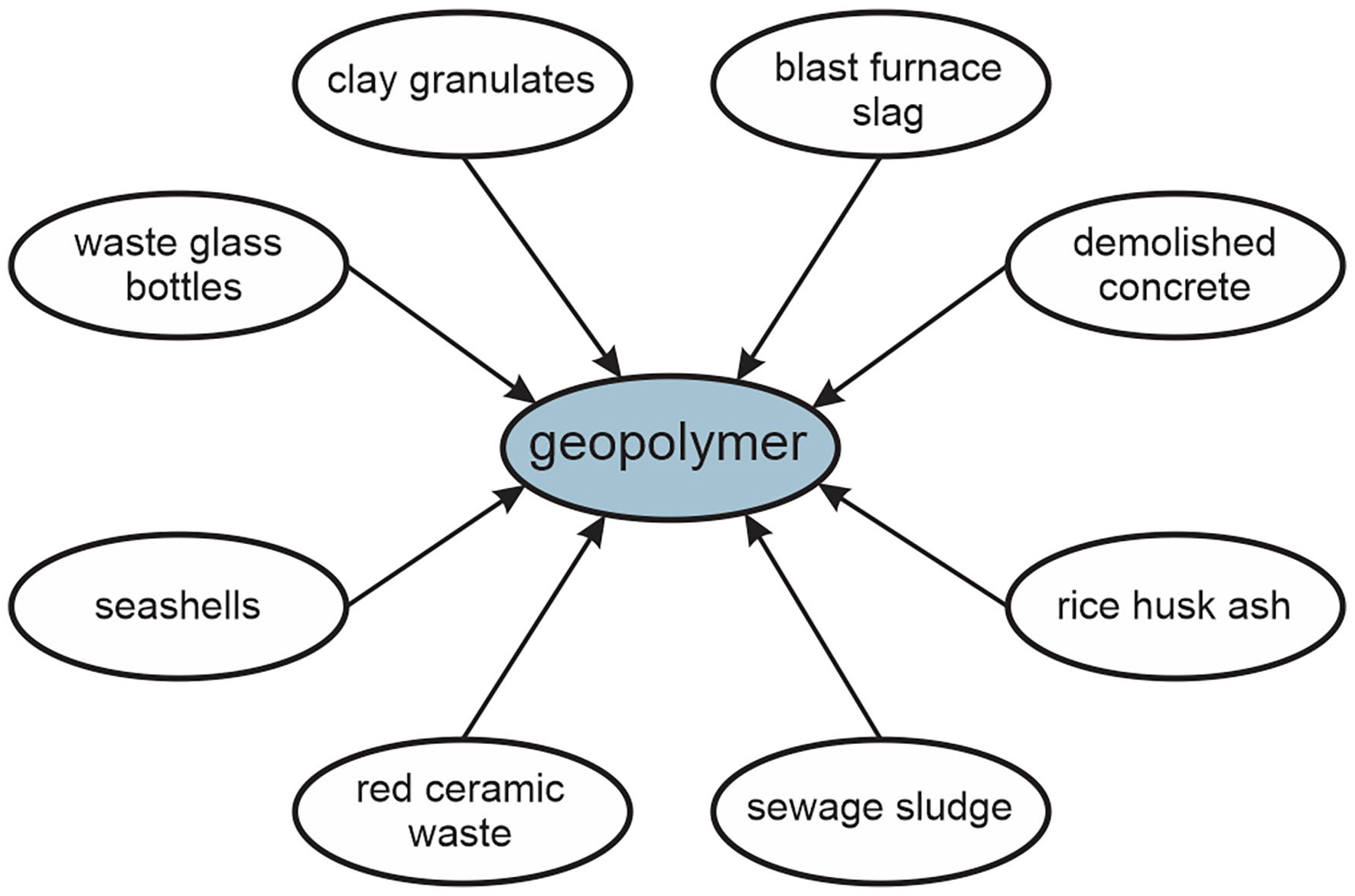
Cement alternative materials.
Finally, the benefits that alternative cement materials can bring when related to Portland cement must be confronted with the impacts that raw materials can represent on the environment, as with any new material, they must be studied since their environmental interaction does not yet exist. Faced with this, Passuello et al. (2017) evaluated the potential improvements in reducing the environmental footprint by using geopolymers as a substitute for regular Portland cement. The results of the use of alkaline activators from rice husk residues were analysed and compared with the use of traditional alkali silicate solutions, demonstrating that, compared to Portland cement, there was a reduction in global warming potential between 7 and 22% for the geopolymer based on alkali silicates, and from 41 to 47% for the geopolymer whose activator solution was based on rice husk residues. Regarding the production of basic solutions, the authors analysed the environmental impacts during the life cycle of geopolymers and found that obtaining alkali silicates and sodium hydroxide is more harmful than the process of obtaining alkaline solution based on rice husk waste.
Material and method
According to the literature review, carton packages, geopolymers and wood waste were cited as possible residues to be valorized for the replacement of raw material in the cement industry. The first two wastes were chosen as the object of such a mini-review due to their higher availability in modern societies, and wood wastes are present not only in the construction and industrial activities but also in society, with pruning tree waste as an example.
The research was carried out in several scientific article search engines on several platforms, namely, Web of Science (WOS), Scopus, and ScienceDirect. To this end, the keywords ‘Carton Packages’, ‘Wood Waste’ and ‘Geopolymers’ and their variants were inserted after appearing in several papers as Supplementary Cementitious Materials (SCMs) such as in Naqi and Jang’s (2019) research; in a subsequent analysis, a refinement was carried out using the term ‘Cement Materials’.
According to Figure 2, data collection was performed with the three keywords and their variants being selected to compose the bank of articles to be analysed. After this step, there was an article refinement to present common terms related to cement materials, and articles that were not related to the focus of the research were discarded. Finally, after this second selection, it was possible to carry out an analysis of how these interact with each other.
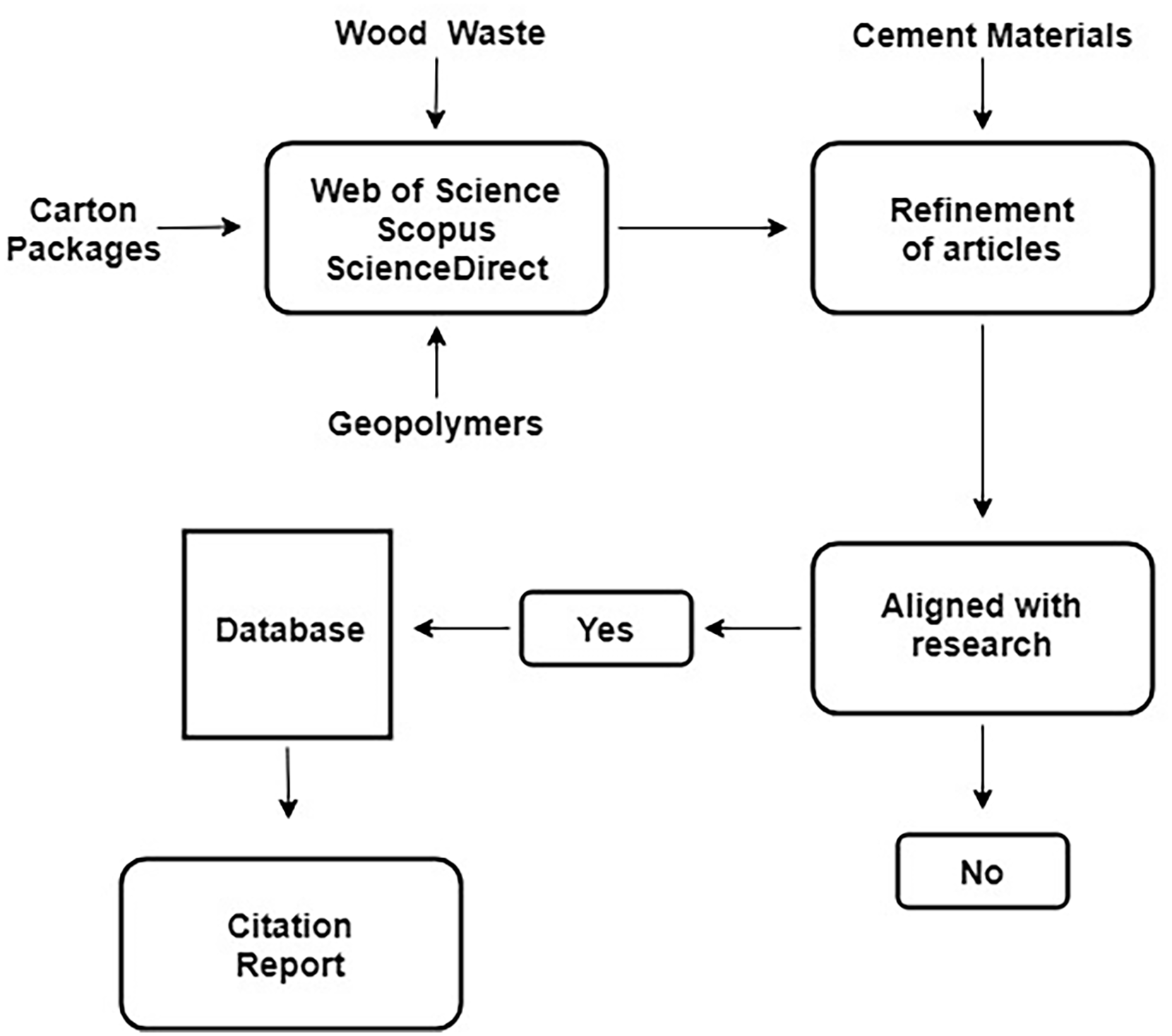
Flowchart of the article selection process.
The analysis of these articles allowed the generation of information related to the number of publications, countries, research areas, and types of publications. Then, with the help of the VOSviewer software, the co-occurrence networks of keywords, co-authorship and co-citation of authors were plotted. Through this analysis, it is possible to reveal the structure of the research, analyse developments and predict future directions in a specific research area.
Results and discussion
Clusters
Aiming to improve the understanding of the studied articles, three clusters of correlated subjects were identified. The grouping of articles is given by similarities and functionalities of the material or by the production process and end-activity, being divided into environmental concern on the waste amount (lack of resources or excessive waste), environmental concern on toxicity and material functionality.
Environmental concern on the waste amount (lack of resources or excessive waste)
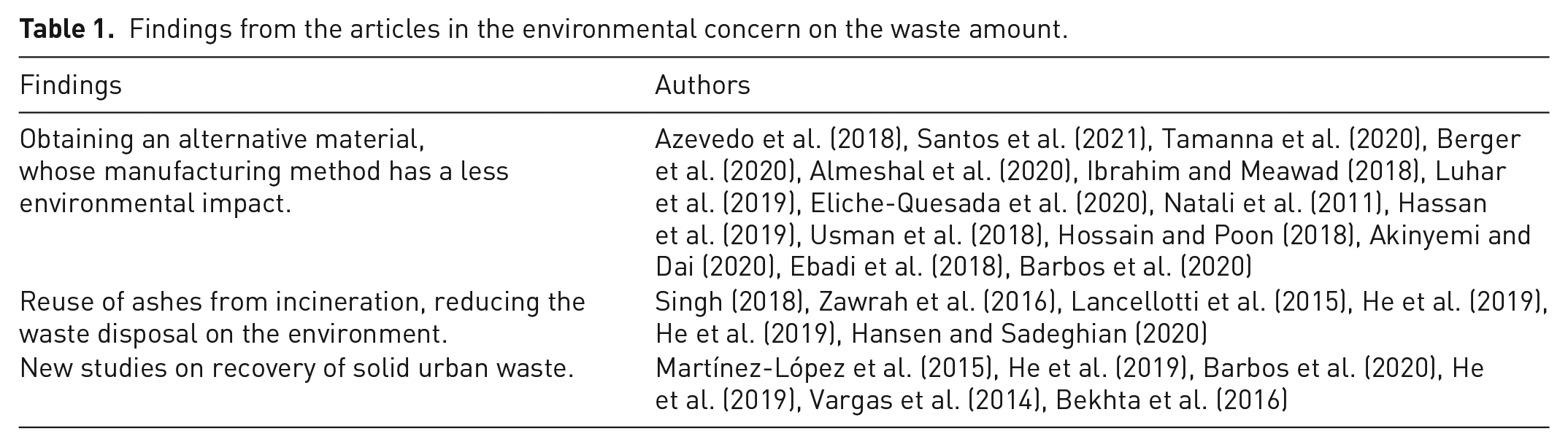
Excessive waste in the environment is a not very recent concern and much has been discussed on the topic. When untreated or when the waste does not have a defined purpose, its allocation is often an environmental problem. Not unlike the interest in the excessive amount of waste, there is also a well-founded concern with the lack of some natural resources, a topic on which the literature is also vast since the shortage of some components may harm human activity. The articles found in this group are listed in Table 1 along with the characteristics they have in common regarding the methodology in addition to their major findings:
Findings from the articles in the environmental concern on the waste amount.
Environmental concerns on toxicity
The environmental concern with the toxicity of components is a line of research that can be seen in several articles, whether it is on the final product and its possible environmental impact, or on how the product suggested in the research can somehow retain toxic components and so avoid its impact on the environment for a certain period. In some articles, processes such as material leaching analysis are suggested, to determine the real impact along the life cycle of the materials. The article information and the major findings of this cluster are shown in Table 2.
Findings from articles in the environmental concern on toxicity group.

Material functionality
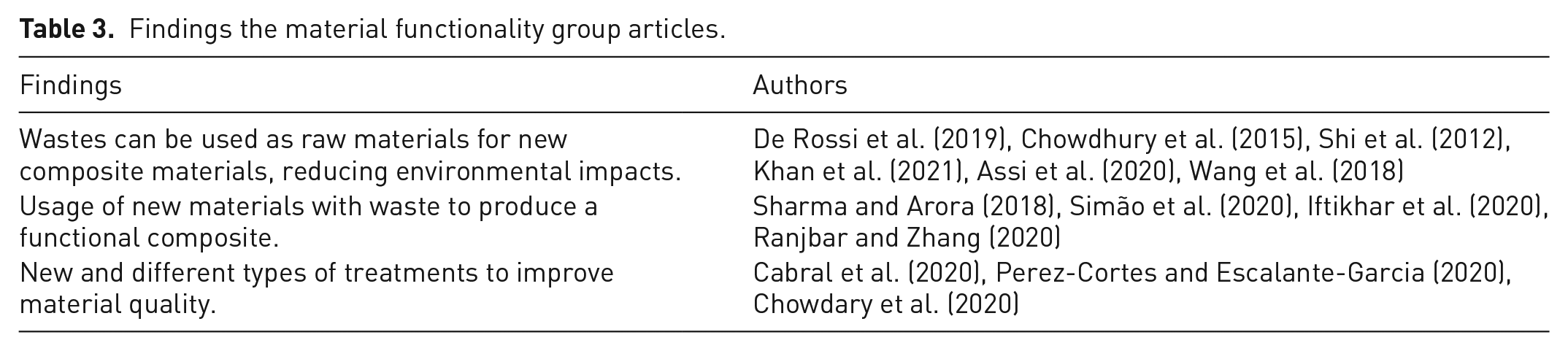
Some of the articles reviewed only point to the functionalities of the material to be developed; in some clusters, there is a concern with the functionality of the material and proposals for various tests, but in others, the concern with both toxicity and quantity is evident, whether excessive or scarce material. In this cluster, the environmental focus exists, but the functionality of the material itself is more evident. This material purpose often aims to fill some environmental gap identified by the author. However, the focus of the article is centred on the functionality of the materials presented. The major findings on this cluster are shown in Table 3.
Findings the material functionality group articles.
From the results, most of the articles chosen for this research were classified according to the concept ‘environmental concern on the waste amount’. This may be due to concerns about possible environmental impacts caused by residues from production processes, as well as economic concerns about the finite nature of raw materials.
Bibliometric analysis of publications
Table 4 shows the classification of the articles according to the number of publications by country, identifying the countries in which the research on the topic addressed is concentrated.
Classification of articles according to the number of publications by countries.
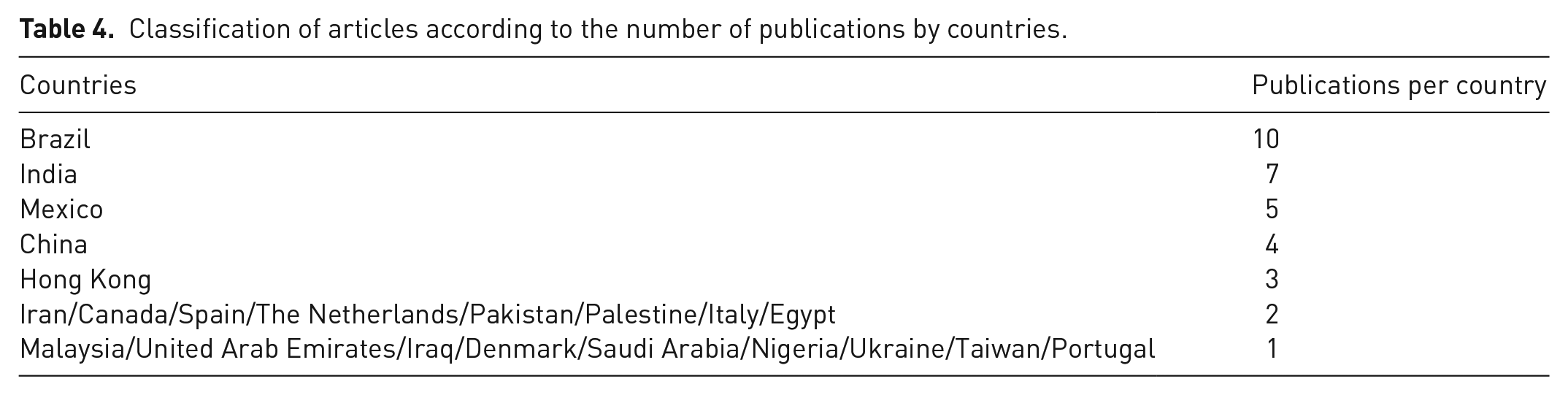
According to Table 4, the countries that published the most articles on the topic discussed are Brazil, India, Mexico, and China, respectively. This fact reveals the concern of these countries with global climate change, environmental pollution, reduction of natural resources, and the generation of solid waste, as well as being countries except for Mexico that is part of the BRICS, a grouping of emerging market countries concerning their economic development, Brazil, Russia, India, and China.
Keyword co-occurrence network analysis was performed using VOSviewer software. For the creation of the keyword co-occurrence network, 388 words were used, generating Figure 3. Each keyword was represented by a circle in which the size indicates the number of occurrences of a specific keyword (Ang et al., 2019).
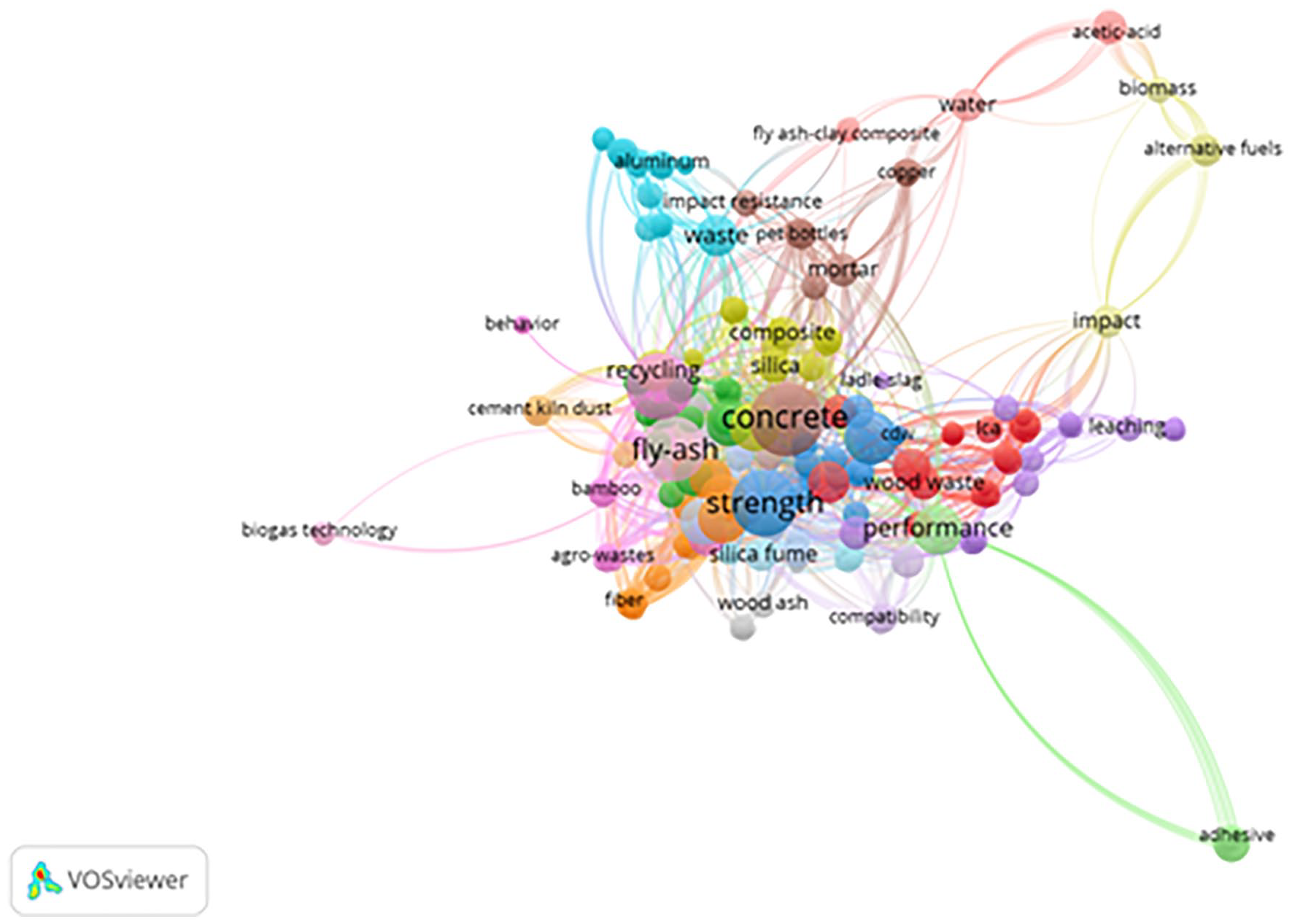
Keyword co-occurrence network.
In co-occurrence analysis, the strength of the link between the author’s keywords indicates the number of publications in which two keywords occur together (Md Khudzari et al., 2018). Figure 3 consists of 20 clusters. The main cluster is centred on the keyword ‘Concrete’, which connects to the other main keywords of the other clusters, such as ‘fly-ash’, ‘silica’, and ‘wood waste’; these were the most frequently studied terms and represent the materials most used during the cement replacement process. In addition to these, one can see the appearance of words such as ‘strength’ and ‘performance’ evidencing the researchers’ concern regarding the properties of such materials. Interactions between researchers can be cited to each other or in co-authored articles, resulting in a complex system that changes over time. With such a complex and dynamic system in hand, it’s interesting to look for any possible underlying patterns hidden in interactions between researchers and whether those interactions have any mathematical structure. This framework can be used to explain the diffusion of knowledge and the growth of research fields (Singh et al., 2020).
Figure 4 shows a co-authorship network, indicating the relationship between researchers. The co-authorship network is composed of subnetworks, indicating that the research is composed of small groups and that there is a collaboration between them.
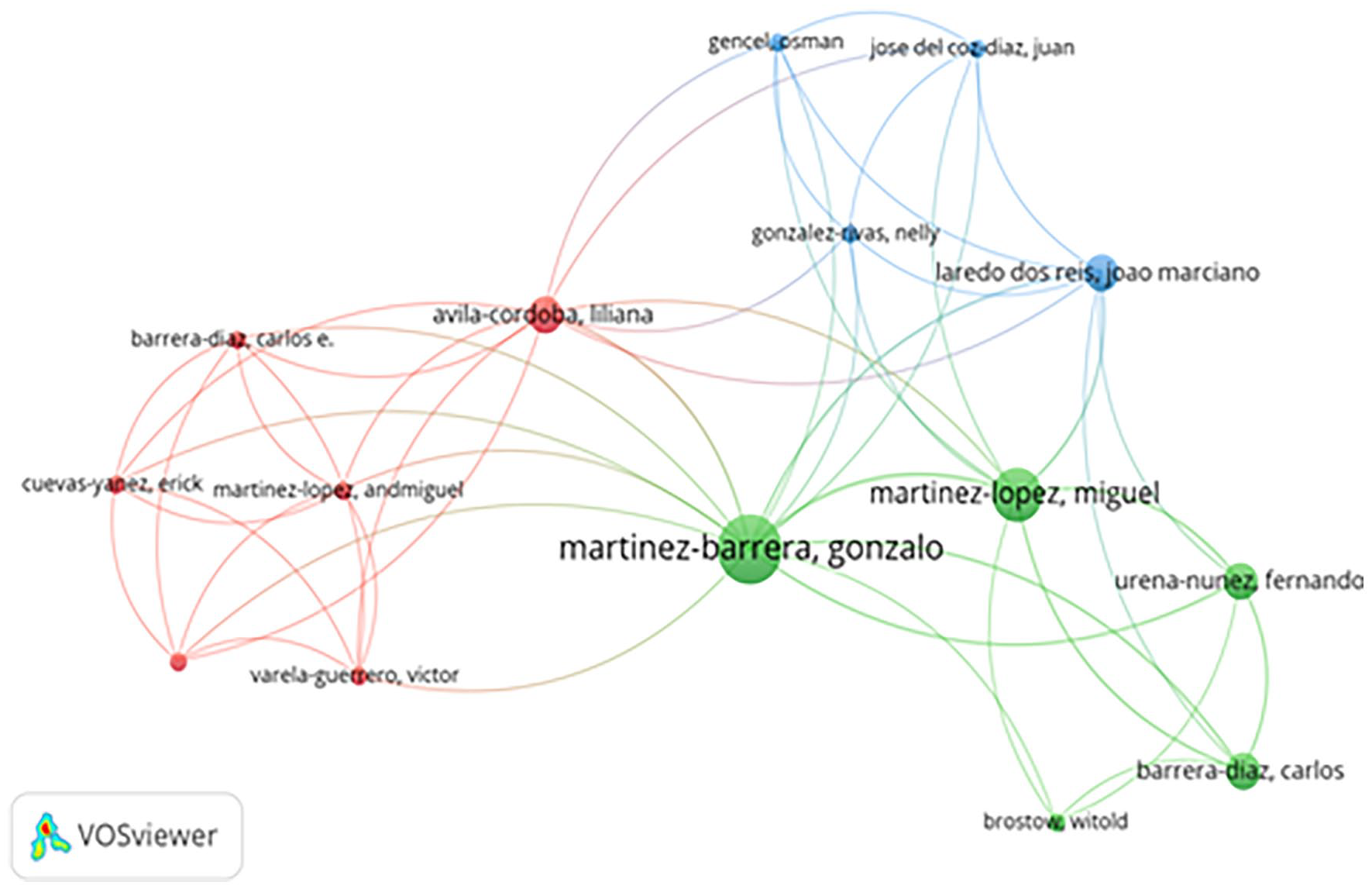
Co-authorship network.
Each node represents an author, and the lines and distances reflect the relationship between them. The distance between two nodes indicates the strength of the relationship, which means that when two nodes are closer together, they tend to have a strong relationship (Mantegazini et al., 2020). Figure 4 is divided into three clusters and highlighted by the researcher Gonzalo Martinez-Barrera, having a total of four documents used in this research. Martinez-Barrera carried out research to recover residues from Tetra Pak packaging; among these researches, we can mention ‘Waste Tetra Pak particles from beverage containers as reinforcements in polymer mortar: Effect of gamma irradiation as an interfacial coupling factor’, ‘Recycled cellulose from Tetra Pak packaging as reinforcement of polyester-based composites’, ‘Waste Cellulose from Tetra Pak Packages as Reinforcement of Cement Concrete’, ‘Waste Materials from Tetra Pak Packages as Reinforcement of Polymer Concrete’. The recovery of residues from Tetra Pak packaging is an alternative used to reduce the environmental impact resulting from the inadequate disposal of these modern residues in landfills. In addition, recycling allows the recovery of high value-added materials and reduces the amount of energy used in the extraction of aluminium from bauxite ore (Mantegazini et al., 2020).
Each type of academic network has its use and can bring a variety of perspectives to the study of research interactions and academic communications. Author co-citation analysis is used to classify and visualize the intellectual formation of a specific research area (Jeong et al., 2014).
Figure 5 presents an author co-citation network. It is divided between eight different clusters and is centred on the researcher Davidovits J, who has a total of 23 citations among the works selected for this article.
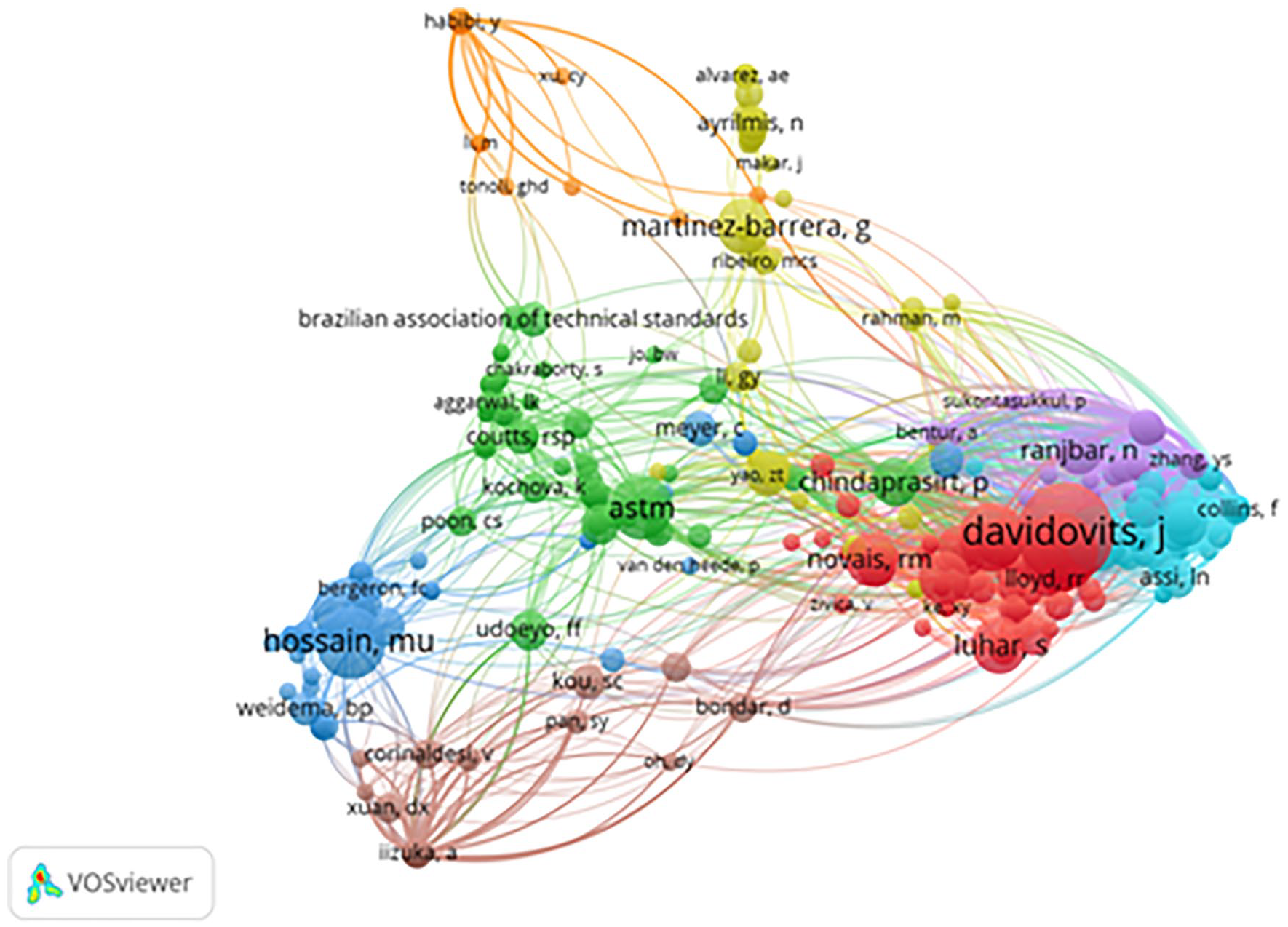
Author citation.
Evaluation of waste recovery through SWOT analysis
Performing the SWOT analysis means evaluating both internal factors (strengths and weaknesses) and external factors (opportunities and threats) during the situational analysis and execution of the strategic planning of a company, product or material. This analysis aims to reach these factors in situational analysis and strategic management of the organization’s performance (Philip Kotler, 2009). Many studies have revealed that the SWOT analysis can help organizations solve strategic challenges and make effective strategic decisions (Kapoor and Kaur, 2017).
Studies have shown that SWOT analysis helps organizations in strategic decision-making and organizational challenges (Hill and Westbrook, 1997; Kapoor and Kaur, 2017). Organizational thinking is often biased, imprecise, uninformed and unstructured, so the SWOT analysis is useful in several administration process items. Understanding that the same analysis can be used to accurately and effectively describe any situation (AlMarwani, 2020), this study makes use of this analysis (Table 5) seeking to understand the possibilities related to the implementation of sustainable cement products.
SWOT analysis.
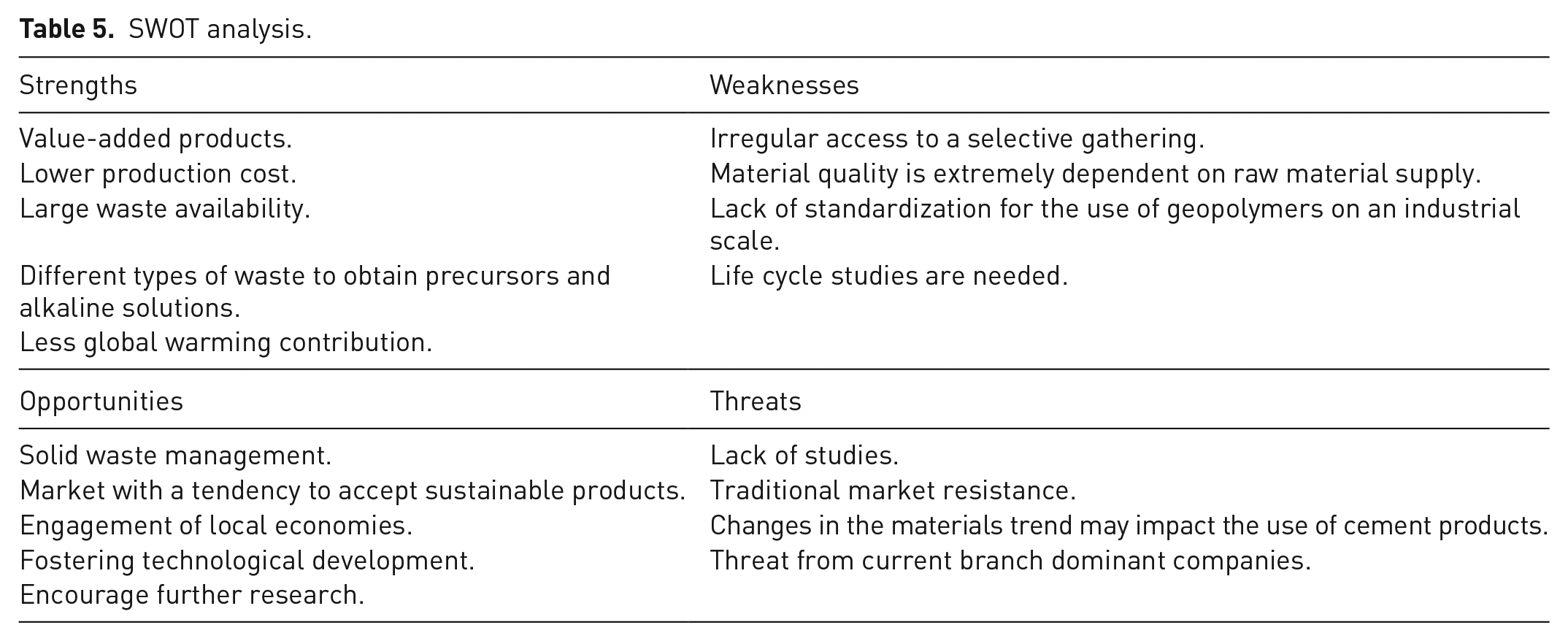
Initially, it is necessary to understand that strengths and weaknesses directly reflect the intrinsic properties of the product, and its manufacturing process, opportunities and threats are macro-environmental analyses in which society and market influences are considered.
From the identified strengths, the large availability and the great diversity of waste open opportunities for transforming them into value-added products, with social, environmental and economic advantages. Given that materials can influence microeconomies and thus support local communities ranging from waste collectors to even entrepreneurs in new economy sectors, the use of such composite materials is highly desirable (Hartmann and Trappey, 2020).
In the case of countries with a strong agricultural presence in the economy, the large availability of biomass-based wastes may be a relevant way of overcoming some of the observed weaknesses relative to the material quality and raw material supply, contributing to the desirable geopolymer standardization.
In addition, the opportunity of valorizing wastes by producing value-added products such as geopolymer cement not only is economic and environmentally correct but also benefits solid waste management in the sense that landfilling is avoided, reducing the need for new enterprises like that.
Conclusions
Among the articles reviewed, it was observed that the main common point was the motivation in favour of valuing waste to minimize the environmental impact.
Regarding the composite materials suggested for civil engineering applications, polymeric concrete has received increasing attention. Produced from inorganic aggregates (such as sand, gravel or fly ash) joined by a polymeric binder (or plastic glue), the studies aim to incorporate solid waste that was/is discarded inappropriately in its composition, reducing some of the problems that concrete production imposes on society, as do greenhouse gas emissions.
The process of inserting boiler ash into cementitious material proved to be advantageous in all analyses when compared to the mixture without ash addition. When used together with wood residue addition, the results showed positive outcomes.
Future studies are needed to analyse the mechanical and leaching properties of composites, as well as a longer life cycle analysis of possible products.
Composites can be considered more sustainable, as they were made possible through the use of potentially harmful waste that otherwise was not being discarded or used correctly.
Geopolymers have become increasingly present in literature, mainly because they can use the waste from different sources, which would imply the economic development of several microregions. In addition, its production, regardless of the waste source chosen, generates lower emissions of polluting gases and the final product has physical, chemical and mechanical characteristics equivalent or, in many cases, superior to those of concrete based on Portland cement. Therefore, the use of geopolymers must be carefully evaluated regarding general sustainability.
Footnotes
Declaration of conflicting interests
The authors declared no potential conflicts of interest with respect to the research, authorship, and/or publication of this article.
Funding
The authors disclosed receipt of the following financial support for the research, authorship, and/or publication of this article: The authors would like to thank CAPES for its financial support, this study was financed in part by the Coordenação de Aperfeiçoamento de Pessoal de Nível Superior – Brasil (CAPES) – Finance Code 001. The last author is indebted to CNPq – National Council of Technological and Scientific Development (process 301853/2018-5).
