




Abstract
This research aims to analyse and understand recycling phenomena and competition between large-scale and small-scale enterprises under different public attention. It mainly emphasizes service-providing behaviours to the consumers in the recycling industry, where recyclers are struggling to enhance their profits. The government strives to protect the environment by promoting an efficient recycling industry. As fast-growing waste products, the recyclers should achieve the advantage of number and be equipped with service capability for the consumers. Thus, this study employs an evolutionary game model to analyse the competition for waste products acquisitions between large and small recyclers. Due to a significant association between the service and acquisition waste product price for the consumers and recycling quantity, there is a strong mutual influence between the acquisition price of waste products and the price strategy-taken rate of large and small recyclers. Results also reveal that the market acquisition price and processing cost play a crucial role in recyclers’ decision-making on setting prices for acquiring waste products from consumers. Furthermore, it is also found that waste products acquisition price and recyclers’ processing cost are the key factors that affect large and small recyclers’ recycling quantity.
Introduction
Rapid industrialization and material science developments have caused a substantial increase in waste products around the globe (Tansel, 2017). The global urban waste is estimated to be around 10 billion tons per annum, including electronic waste, construction waste, domestic waste and end-of-life vehicles (Li et al., 2018). Managing such a vast quantity of waste has become a significant obstacle in achieving sustainable development because of its adverse effects on public health and the global environment (Xu et al., 2017; Yu et al., 2022). These adversities have led authorities to focus on proper waste management and the recycling industry. The problem of waste management has a higher intensity in developing countries struggling to find appropriate solutions for resource wastage. In this regard, recycling is considered one of the most effective options that significantly enhance resource efficiency and reduce waste production (Gunarathne et al., 2019).
With industrial development, China, as the most populous country, has become the largest manufacturer and consumer of waste products globally. Due to continuous industrial advancement, products’ life decreases, resulting in economic consumption and massive waste (Liu et al., 2017; Umar et al., 2021). Similarly, the demand for electronic products has also increased, thus, causing a vast quantity of electronic waste. Literature indicates that China, a major producer of electronic products, faces a severe challenge of electronic waste estimated to reach 28.4 million tons by 2030 (Zhao and Bai, 2021). In addition to domestic waste, a vast quantity of electronic waste is imported to China from other parts of the world via illegal routes. This illegal import puts an extra burden on China to efficiently manage electronic waste (Orlins and Guan, 2016). In addition to this, China is also ranked number one in terms of vehicle sales globally. It is reported that vehicle ownership and vehicle sales in China reached 205 and 28.88 million, respectively, in the year 2017. These high numbers have also caused a substantial increase in the total number of deregistered and end-of-life vehicles over time (Yu et al., 2019). Electric vehicle sales in China have also increased to 4.19 million, thus increasing the volume of end life batteries (Qiao et al., 2021).
Similarly, China is also one of the largest agricultural economies with abundant feedstocks, including organic liquid wastes from industrial and municipal wastewaters, poultry and livestock manure, energy crops and crop residues (Binod et al., 2017). Literature also reports that municipal solid waste in China has significantly increased from 31.3 million tons in 1980 to 266.4 million tons in 2016, which is further expected to reach 430 million tons by 2030 (Gu et al., 2018). Such a large-scale municipal solid waste could severely damage both environment and public health. Furthermore, the rising trend of online shopping has also caused a substantial increase in packaging waste, creating tremendous pressure on society and the environment (Hua et al., 2021). In addition, large-scale urbanization generates a vast quantity of construction waste in China (Bao and Lu, 2021). With such waste production, a perfect and efficient recycling policy has become a significant challenge that needs to be aggressively addressed by China.
Since 2000, faced with rapid urbanization and economic development at the cost of resource wastage and environmental adversities, China has been aggressively transforming its traditional economic model into a circular economy that mainly promotes the recycling industry (Li et al., 2013). The government of China has devised various strategies to enhance waste utilization and promote the recycling industry. Various laws and regulations have been issued in the last decade related to the recycling industry and waste management. The most important of these regulations include technical policies, administrative measures, rules on recycling and laws related to pollution prevention. The government’s focus has been shifted from waste disposal to resource recycling and environmental performance (Zhang et al., 2015). The ultimate purpose behind these legislations was to enhance resource utilization and promote recycling. Similarly, the government of China implemented an ‘old for new’ policy to encourage waste collection through formal channels. Under this policy, consumers were given a 10% discount on the new products while trading their waste products (Qu et al., 2013). Furthermore, various subsidies programs were also initiated to promote the development of formal recycling enterprises (Cao et al., 2016). Despite these efforts, compared with developed countries, the recycling industry in China still lacks in various aspects in terms of efficiency and performance (Xu and Chen, 2018). Notably, the number of recycled waste products that can be environmentally processed cannot be ensured (Tseng et al., 2020). Recent reports state that China, with around a 20% recycling rate, is striving to reuse its 60% of waste by 2025 (Reuters, 2021; WMW, 2021).
Presently, the recycling industry in China mainly constitutes two categories of firms: the large-scale formal sector and the small-scale informal sector (Chi et al., 2014). The formal sector consists of large-scale licensed firms that play a leading role in the recycling industry (Wang and Chen, 2012). These large-scale firms mostly follow purified processes and offer better services; therefore, these firms face various significant challenges in the market, such as higher costs and environmental regulations (Khan et al., 2022). On the other hand, small-scale informal sector firms incur lower costs and abide by fewer ecological restrictions, causing severe environmental adversities (Chi et al., 2014; Hu and Wen, 2017). This difference has caused severe competition among small-scale and large-scale recyclers (Li, 2020). Although large-scale recyclers have attractive growth potential, it is still a great challenge to develop an effective and low-cost recycling model (Chen et al., 2019). On the other hand, small recyclers do not adopt standard procedures; therefore, they incur low costs and offer higher prices to the waste sellers. Scrambling for markets between large and small recyclers cannot be ignored. Thus, many small recyclers have become significant players in the waste-recycling industry (Yu et al., 2020a, 2020b). Hence, authorities in China need to balance the competition between small-scale recyclers and big-scale recyclers for better development of the recycling industry when facing massive waste in the next few years.
Literature also indicates that large-scale or formal recyclers face difficulties operating in less-developed areas. Hence, small-scale recyclers dominate waste collection in less-developed areas (Wang and Yu, 2021). Consequently, it has become a significant challenge for the formal sector to follow environmental regulations and make good profits (Bel & Fageda, 2011). High processing costs and remanufacturing restrictions may become the main challenges for large recyclers who face more public attention (Khan et al., 2020). Literature also indicates that the number of illegal recyclers and the non-standard recycling rate is increasing in China, severely affecting both the environment and society (Yu et al., 2020a, 2020b). Considering the huge quantity of waste and limited recycling technology, it is also not wise for the government to take strict actions against illegal and non-standard recycling behaviours (Zhu and Li, 2019). In addition to the acquisition price competition and processing costs, both recyclers also compete in buying raw material, which is a crucial element in recycling operations. In short, this prevailing competition between formal and informal recycling enterprises has become a significant issue in China.
Several existing studies have investigated the role of government policies in specific recycling sectors of China. For instance, Zhu and Li (2019) reported that government subsidies positively facilitate vehicle recycling. Similarly, Wang et al. (2019) showed that a reward penalty policy positively enhances the legal recycling rate for end-of-life vehicles. Furthermore, Zhu and Li (2019) investigated various government policies in their game model and reported that the subsidy policy is more effective in developing the recycling industry. Literature also suggests that subsidy and reward policies can significantly enhance the recycling rate (Wan and Zou, 2019). On the other hand, Liu et al. (2020) highlighted that government subsidies are not enough to reduce the processing cost involved in recycling processes. Instead, it is strongly needed to develop and explore new technologies that could play a crucial role in improving waste management. Zhang et al. (2015) also argued that along with subsidies and legislative policies, the development of advanced technologies should be prioritized to enhance the waste collection and waste management in the recycling industry. Hence, it is implied that recycling efficiency and waste utilization could be improved by adopting advanced technologies.
Literature also indicates that consumer service, particularly electronic product recycling, plays a vital role in resource recovery during waste products acquisition. Any problem at any stage of the reverse supply chain could disrupt the whole process (Cao et al., 2016). With economic development, the recycling environment has changed, so correspondingly, better service matching with consumers’ working and living habits is essential for better waste recovery development (Bel and Sebő, 2020). In China, prevalent competition between large-scale recyclers and small-scale recyclers has become a significant challenge for the authorities. Yu et al. (2020a, 2020b) highlighted that this competition problem that can affect service quality for consumers is associated with recycling quantity. Hence, there is a strong necessity for the government to develop and support standard recycling processes to improve waste management.
Considering the challenges mentioned above, there is a solid need to deepen the recycling and waste industry understanding to explore the underlying phenomena and the optimal solution. Although, few existing studies have examined the recycling industry and related issues in the case of China. However, most of these studies focus on specific recycling segments such as end-of-life vehicle recycling (Yu et al., 2020a, 2020b), electronic waste recycling (Cao et al., 2016) and construction waste recycling (Liu et al., 2020). This research intends to investigate two major categories of recyclers in China to address the gap mentioned earlier. Specifically, we aim to analyse recycling phenomena and understand acquisition price competition between large-scale and small-scale recycling enterprises. This paper explores various new perspectives to improve the reverse supply chain process and waste utilization by employing an evolutionary game model. Furthermore, this research also provides implications for the authorities to devise effective strategies for promoting the standard recycling industry.
Regarding waste products recycling, many researchers are showing interest in the studies from the perspective of group behaviours. Zheng et al. (2020) applied evolutionary game theory in modelling people’s waste sorting behaviour selection. In the context of waste management, Michel (2021) used evolutionary game theory to study the problem of institutional change. Li and Lu (2020) develop a dynamic evolutionary game model on waste recycling in the construction industry to investigate the symbiotic evolution of the decision-making of recycling enterprises. Very few studies involved the recyclers’ service-providing behaviours from the perspective of a group game, though there are an increasing number of recycling enterprises.
During the literature review, the researcher could not find studies on the recycling service for the consumers during the competitive recycling market, considering the size of recyclers. Therefore, from the perspective of group competition, this paper employed an evolutionary game application model to investigate the evolution mechanism of recyclers’ behaviours of recycling service providing and the acquisition price of waste products. Furthermore, the recyclers’ size difference was considered. By analysing recyclers’ behaviours evolution mechanism, this research provides a firm foundation and development ideas to the authorities to make the recycling industry move in a favourable direction.
As illustrated in Figure 1, both formal large-scale recyclers and informal small-scale recyclers compete to buy waste products from the consumers. Then, in the next step, large-scale recyclers and small-scale recyclers sell their waste products to resource recovery enterprises. There is a significant difference in the operational procedures of both groups. For instance, under more public attention, large-scale recyclers mostly follow standard procedures adhering to strict environmental laws, whereas small recyclers follow standard processes and environmental protocols. In contrast, small-scale recyclers adhere to fewer environmental regulations and do not follow standard processes, therefore, bearing less processing costs (Yu et al., 2020a, 2020b). Though large-scale recyclers have a better scale advantage, they also need the amount advantage of waste products to balance the cost of a large number of facilities. How many waste products the recyclers can get from consumers is significantly associated with the acquisition price of waste products for the consumers and what kind of service they provide to consumers. While, in the market of processed waste products, the resource recovery enterprise’s purchasing price is associated with supply. Thus, acquisition price competition has created a significant challenge for large and small recyclers (Khan et al., 2020). Small recyclers’ role in the recycling industry cannot be ignored in developing countries (Farhana et al., 2019).
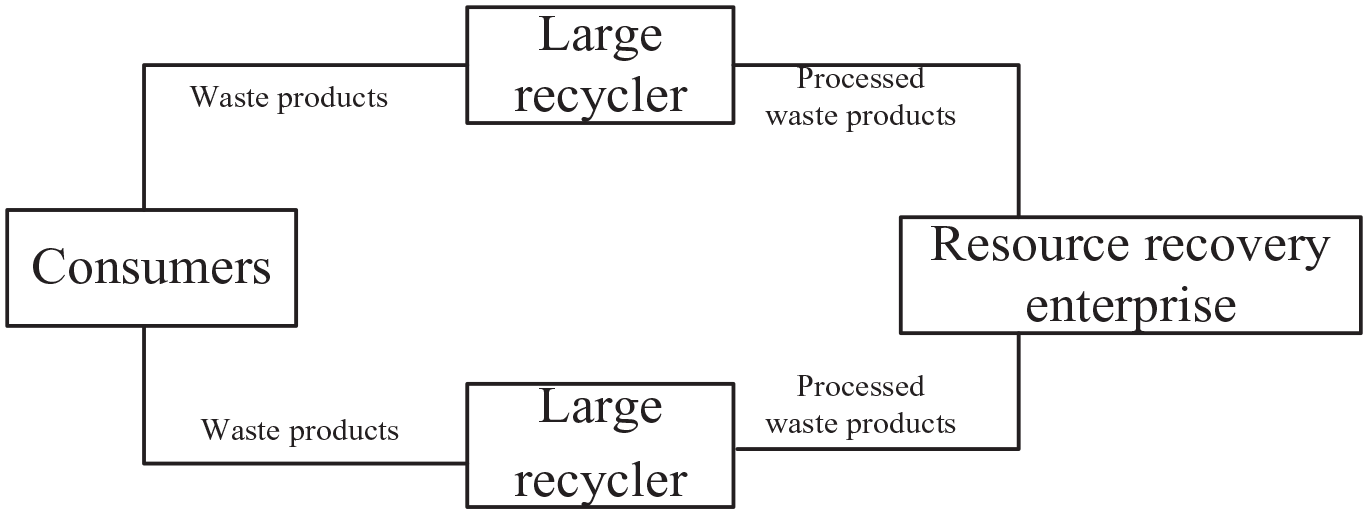
Recycling industry of waste products.
The remainder of this paper is arranged as follows. The next section briefly covers the research methodology and model adopted in this study. Then, sections ‘Results and discussion’ and ‘Numerical simulation’ present the results of this study. Furthermore, the conclusion and policy implications are discussed in the last section.
Methodology
The study model
This research explores the evolution process of the large and small recyclers making decisions on investment in recycling services during the competition of acquiring waste products. Large recyclers do better in applying environmental technologies to waste products processing, so they are relatively greener than small-scale ones.
The acquisition quantity mainly depends on the acquisition price and the convenience provided by the recyclers to consumers (such as the recycling enterprises of Ai Huishou and Green Juneng providing online recycling services). This research assumed that a high-priced strategy means providing professional services (such as time convenience and privacy protection) and promoting prices for waste products. In contrast, the normal-priced strategy means applying the traditional idea in the waste acquisition, that is, treating the waste products with less value and then providing unprofessional services to the consumers, which generates less cost for the recyclers.
Processing waste products must be environmentally friendly, which needs more cost. Indeed, due to more public attention, large-scale recyclers apply sustainable operations to reverse logistics, such as introducing environmental technologies (Francesco, 2017). While, with little public attention, the small recyclers less care about the sustainability of waste products processing, and they seek low-cost processing. Therefore, most of them do not follow green regulations relating to waste products processing. The recyclers will sell their processed waste to the waste-transforming company to make a profit. This research considers acquisition price depending on the supply of the whole market. Not all recyclers are rational enough and understand other competitors’ behaviours in the waste acquisition. However, they can see the apparent profit difference after implementing their strategies, which is the basic assumption of the evolutionary game (Friedman, 1991). Hence, this research establishes an evolutionary game model between large-scale and small-scale recyclers. The recycler’s profit is associated with their strategies and competitors’ strategies (Friedman, 1998a, 1998b). The parameters are set in Table 1.
The parameters set for evolutionary game model.
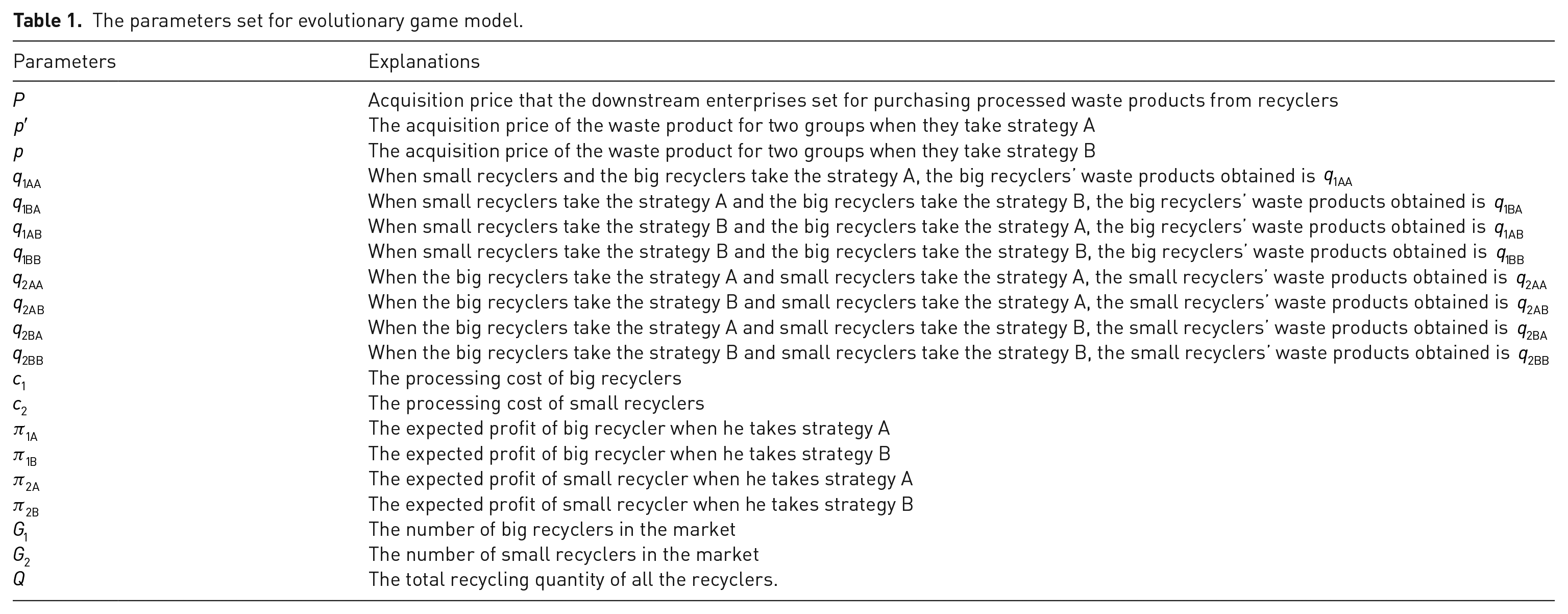
In this model, the waste products are the same, and the ‘high price’ includes the price that recyclers need to pay for the services provided to consumers before the waste products arrive at the processing sites. The processing will not change the number of waste products, and all the processed waste products will be sold to the downstream enterprises for resource transformation. We assumed that their downstream businesses transforming the classified waste resources into industrial raw materials would purchase the waste products from the recyclers against the price depending on market supply.
A: High-priced strategy
B: Normal-priced strategy
Group 1: Big recyclers (large-scale recycling enterprises)
Group 2: Small recyclers (small-scale recycling enterprises)
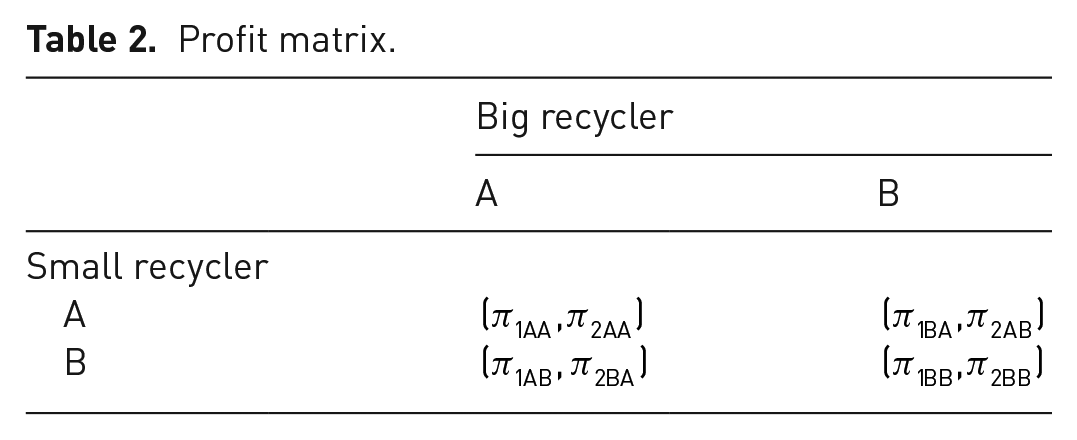
The ratio of group 1 taking strategy A is x, and (1 − x) is the ratio of group 1 taking strategy B. The ratio of group 2 taking strategy A is y, and (1 − y) is that of group 2 taking strategy B. The model was developed based on the game relationship between large and small recyclers. The group 1 is large recyclers, and group 2 is small recyclers. They have two strategies to choose from: one is setting a high price for the waste acquisition, which is strategy A (high-priced strategy), and the other is setting a normal price for the waste acquisition, which is strategy B (normal-priced strategy). The recyclers will acquire a different quantity of waste resources with different price strategies. Meanwhile, the other’s price strategy will also influence how many waste resources it will acquire due to the liquidity of price information. Hence, the ratio of group 1 taking strategy A is x, and (1 − x) is the ratio of group 1 taking strategy B. The ratio of group 2 taking strategy A is y, and (1 − y) is the ratio of group 2 taking strategy B. Table 2 shows the payoff matrix of two groups with different strategies.
Profit matrix.
Due to the scale difference between large and small recyclers, it is assumed that
The profit matrix of a big recycler and a small recycler when they take different strategies is shown in Table 2. The following functions (1–8) are the profits of a big recycler and a small recycler when they take different strategy.








With the functions (1–8), the expected profit of each recycler for different strategies in the group game is shown below.




Then, the average expected profits of two groups are given respectively.


Base on the Friedman (1991), the replicated dynamic equations of the two groups are given respectively.



Function (17) is the acquisition price of processed waste product P that the downstream enterprises set for purchasing waste products from recyclers, which is associated with market supply of waste products recycled.
The analysis of the model
To analyse the model and find the stable state, the values of


So, the evolutionary stable state (ESS) might be (0, 0), (0, 1), (1, 0), (1, 1) and
The stability of the Jacobian matrix proposed by Friedman (1991) is used to analyse the local stability of the model equilibrium point and the evolutionary stability strategy of the game players. The Jacobian matrix of this game model is given below:
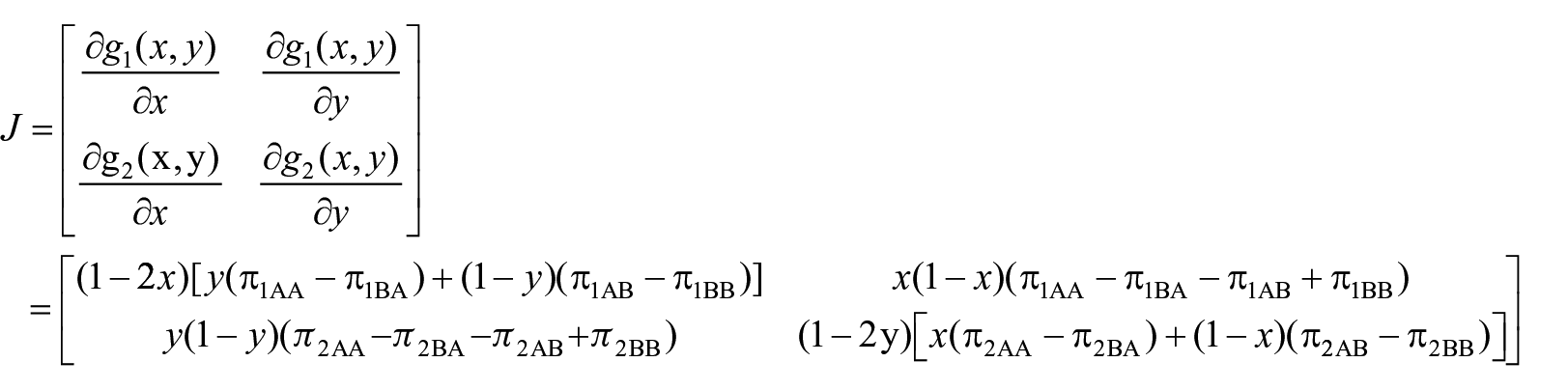
Then, the determinant and trace value of the Jacobian matrix can be obtained to find out different local stable points, which are shown in Table 3.





The det J and tr J of the local stable points.
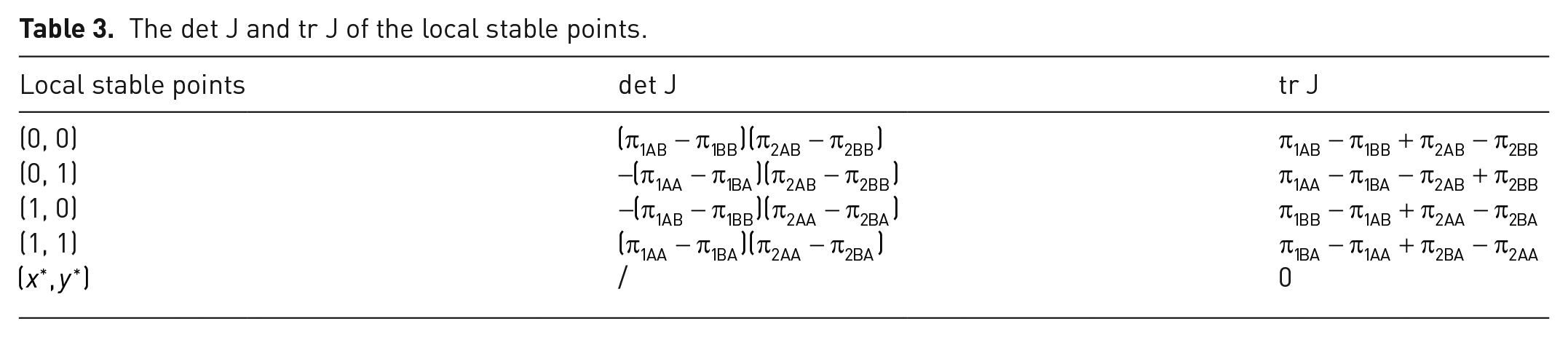
The function (19)–(22) show the two groups’ profits difference under strategy A and B, which affects the values of the
The condition of P.
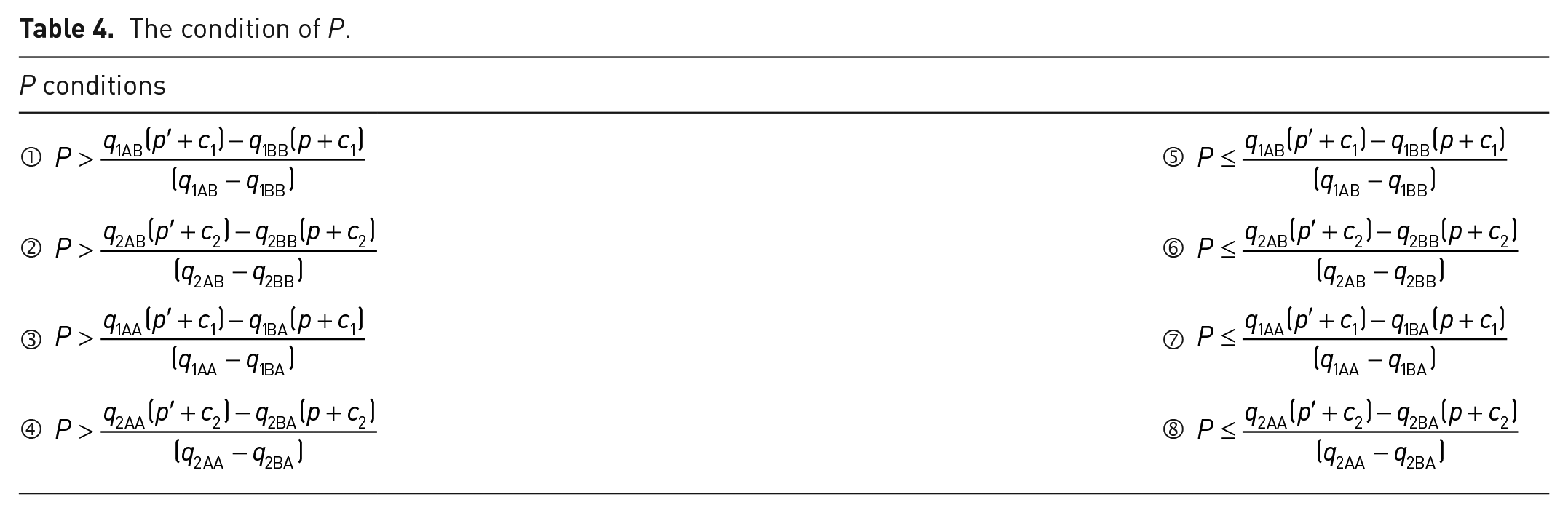
With different values of P, the values of
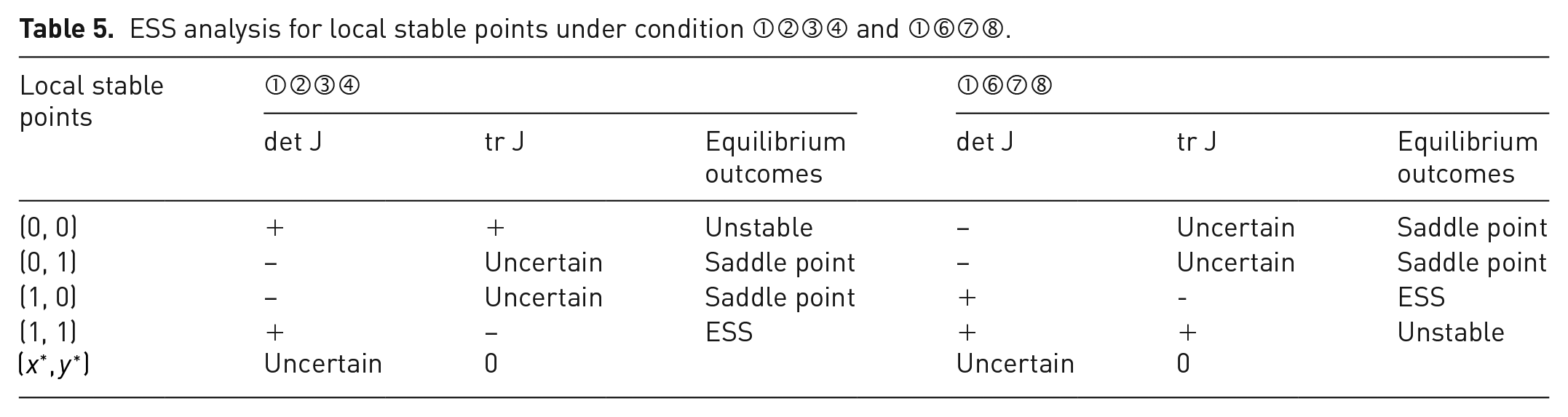
ESS analysis for local stable points under condition ①②③④ and ①⑥⑦⑧.
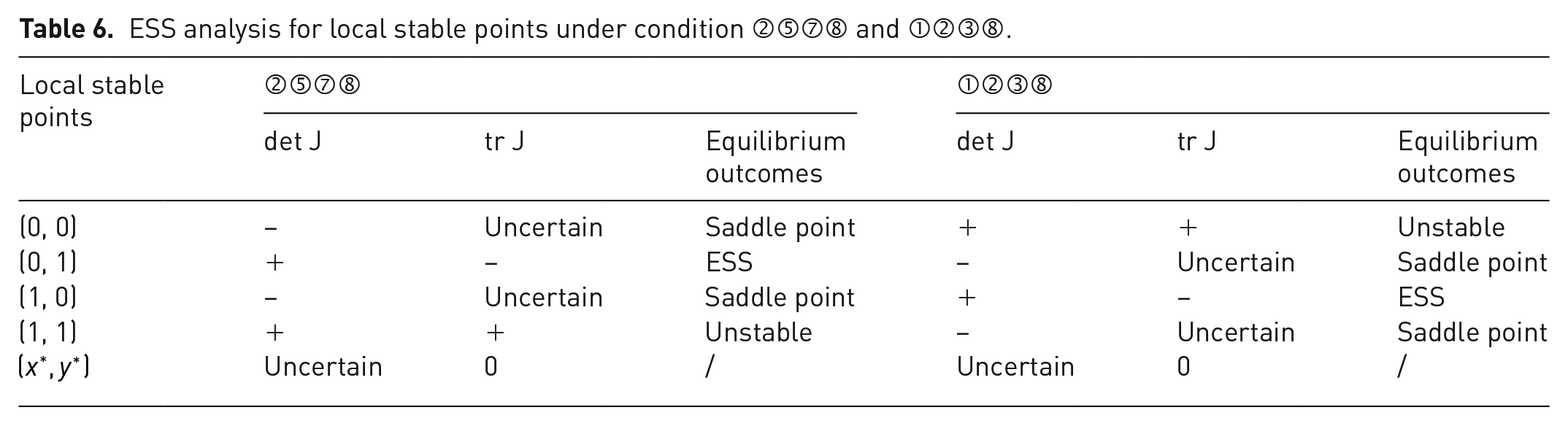
ESS analysis for local stable points under condition ②⑤⑦⑧ and ①②③⑧.
ESS analysis for local stable points under condition ②④⑤⑦ and ④⑥⑦⑧.
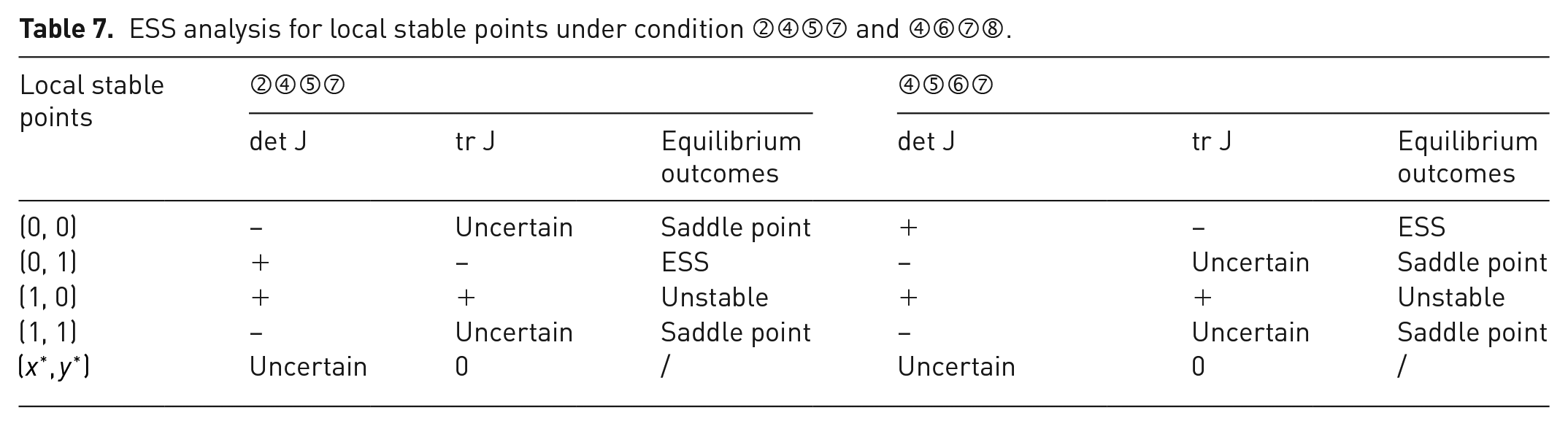
ESS analysis for local stable points under condition ⑤⑥⑦⑧ and ③④⑤⑥.
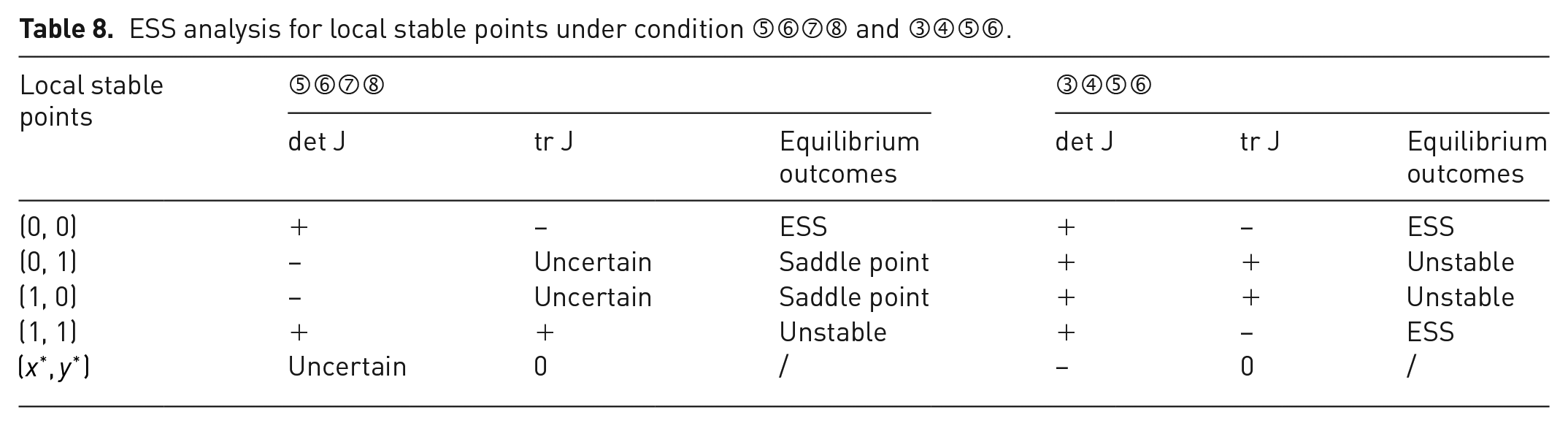
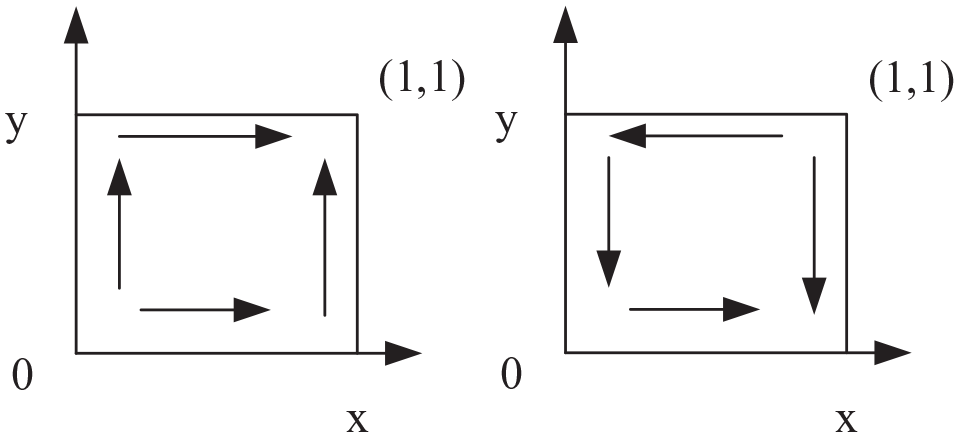
The evolution process for the analysis of Table 5.
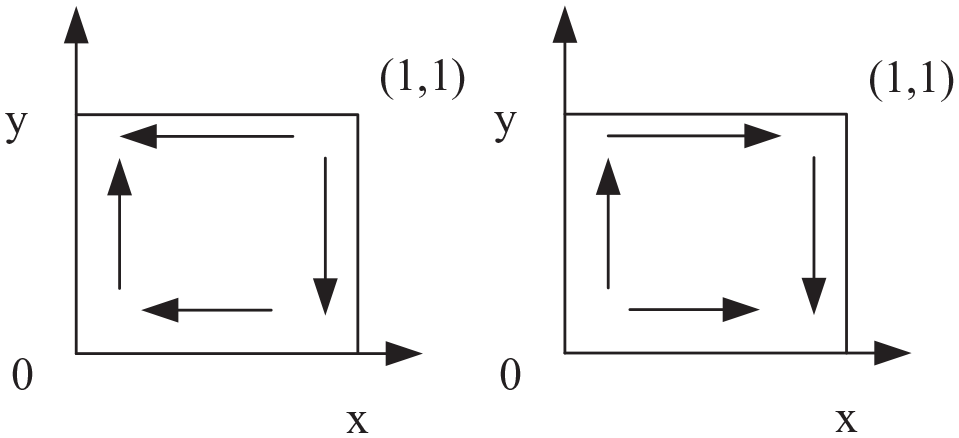
The evolution process for the analysis of Table 6.
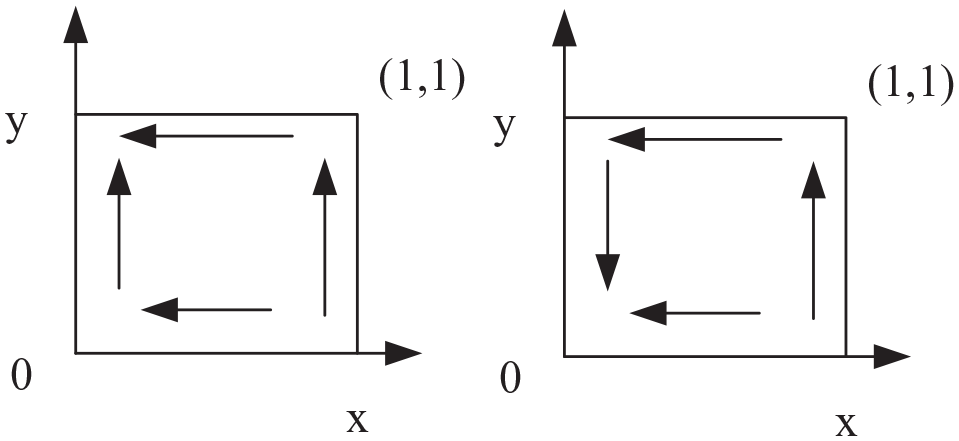
The evolution process for the analysis of Table 7.
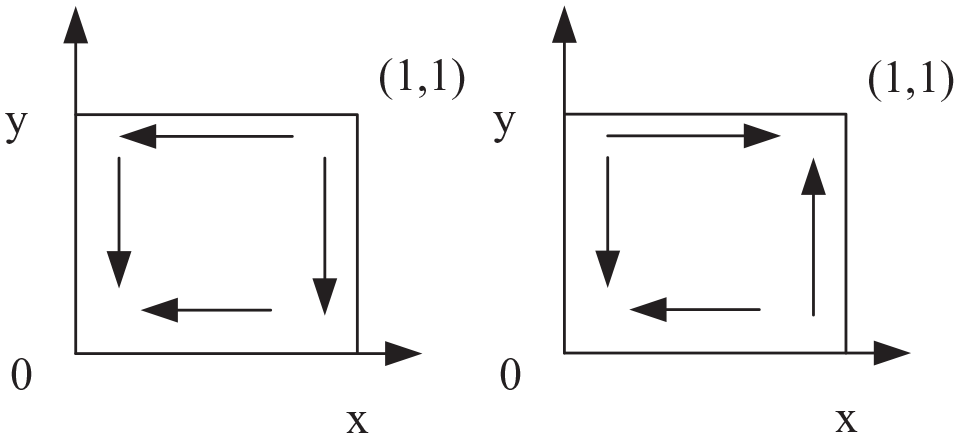
The evolution process for the analysis of Table 8.
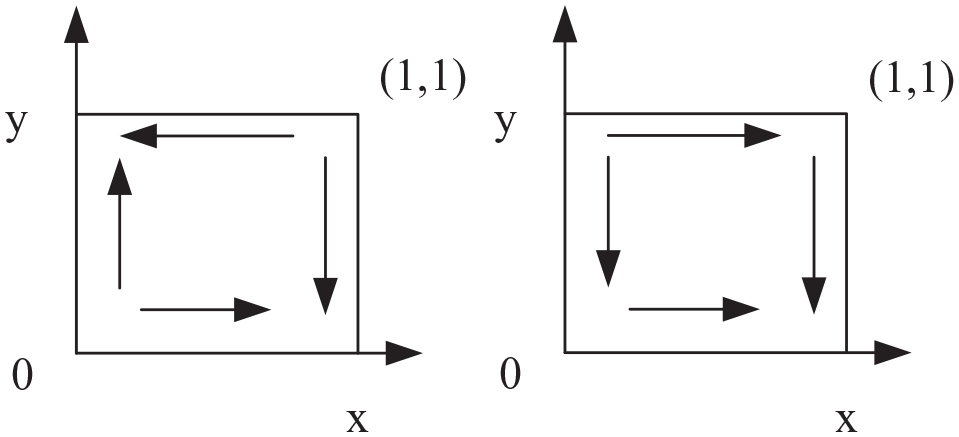
The evolution process for the analysis of Table 9.
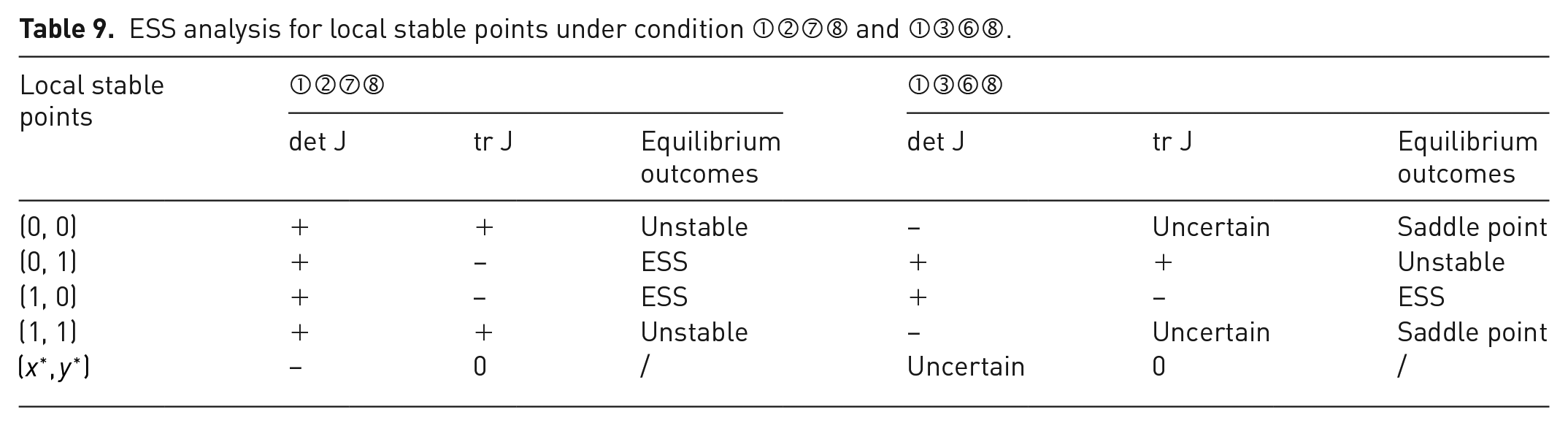
ESS analysis for local stable points under condition ①②⑦⑧ and ①③⑥⑧.
Results and discussion
Considering the conditions of small and large recyclers, the researchers built an evolutionary game model for the recycling business competition between the two parties and then conducted an in-depth analysis of ESS for this model. Table 10 presents the ESS analysis results for the different conditions of acquisition price P and the corresponding total quantity of waste acquisitions.
The analysis results of the evolutionary model for different condition of P.
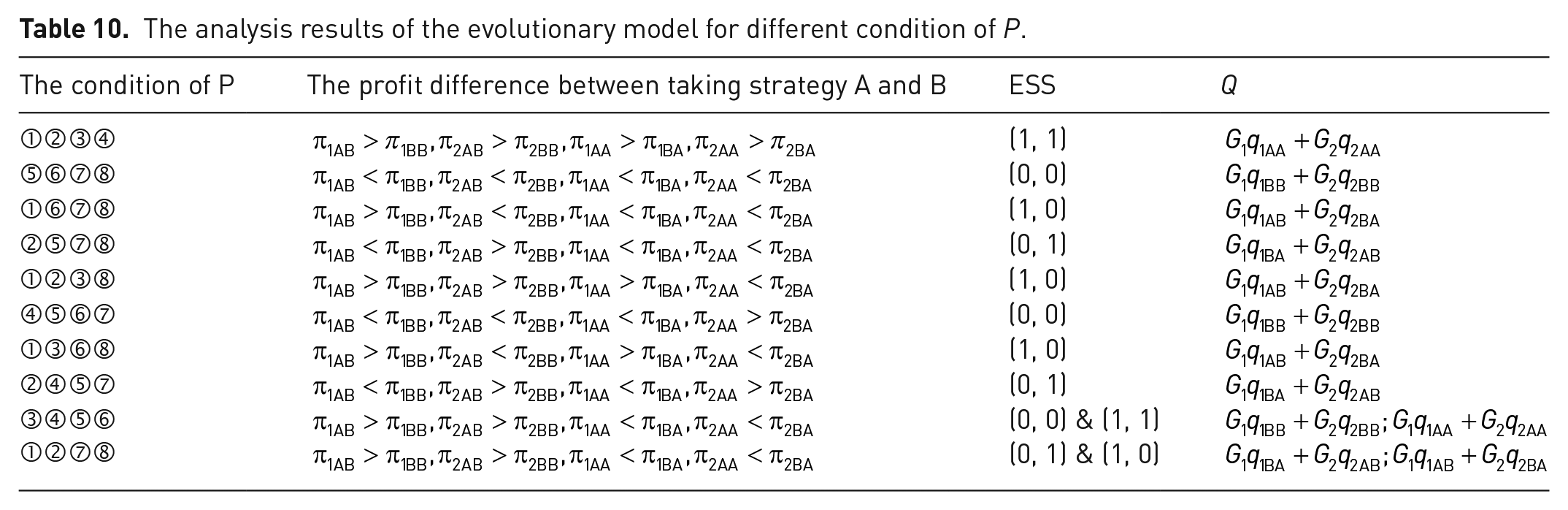
From the analysis of the evolutionary model, especially the Figures 2 to 6, the evolution process of the ratio of large and small recyclers strategy-taken rate of A can be seen. The selling price of processed waste P can indeed affect the ESS of the game between large and small recyclers. The results of the ESS analysis are shown in Table 10. With different P, the profit difference between taking strategies A and B for large and small recyclers will be different, resulting in different ESS. Thus, there will be different quantities of waste products for the downstream company to transform into resources.
In the conditions of ①②③④ and ⑤⑥⑦⑧, which P makes strategies A and B become better strategy respectively, the ESS are (1, 1) or (0, 0) respectively, which means when the game arrives stable state, both parties will take same strategy. For large recycler, the profit of choosing strategy A is higher than choosing strategy B, no matter what strategy the small recycler takes, and then, in the ESS, the strategy-taken rate of A for group of big recyclers will be 1, which can be seen in the analysis of conditions that include ① and ③. While for condition of ①⑥⑦⑧, it is shown that the profit of large recycler choosing strategy A is higher than choosing strategy B only when the other competitor choose B, and then the big recyclers’ strategy-taken rate in ESS is also 1. But the analysis result of condition ④⑤⑥⑦ shows that the profit of the small recycler choosing strategy A is higher than choosing strategy B only when the other competitor chooses A, and then the small recyclers’ strategy-taken rate in ESS is 0.
Reasonably, the ESS analysis results of condition ①③⑥⑧ and ②④⑤⑦ are (1, 0) and (0, 1), which demonstrates that no matter what strategy other player chooses, the strategy that can bring the player more profit will be fully taken by the whole group in ESS. Moreover, there are two analysis results of ESS for the condition of ③④⑤⑥ and ①②⑦⑧: (0, 0) & (1, 1) and (0, 1) & (1, 0) respectively. For the former condition, the value of P makes both players’ profits of choosing strategy A is higher than choosing strategy B when the other competitor chooses strategy A, and in the analysis of the latter, the value of P makes the both parties’ profits of choosing strategy A is higher than choosing strategy B when the other competitor choose strategy B.
In the evolutionary game model, though the relationship among the waste acquisition quantity of large and small recyclers under different strategies has been known before according to the scale difference between the large and small recyclers, the number of the large and small recyclers is also a key for total recycling quantity of waste products in the market. It should also be noted that the acquisition price of recycled waste products – P is associated with the total quantity of recycled waste products – Q. Q increasing causes P to decrease (Sarada and Sangeetha, 2021), which will influence the recycler’s profit fluctuation. The more large recyclers there are in the market, the more waste products supply for the downstream manufacturer, especially when the large recyclers try to acquire more waste products from consumers through strategy A. Thus, the purchasing price of waste products recycled from consumers by recyclers would decrease. Due to the scale effect, while the large recyclers may not get loss caused by the decreasing of P. But, the small recycler may suffer loss, especially when they take strategy B. In fact, Bel and Sebő (2021) mentioned that the size of the area where the competing recyclers target can affect the recycling service quality, which is also a factor that can affect the waste acquisitions. The logistics cost for the waste products cannot be avoided for the recyclers, and the high-price strategy means the extra cost they need to bear. Then, the profit margin will be squeezed, which is not good for the sustainable development of the large recyclers.
The market acquisition price of processed waste products P is a key to recyclers’ profit, which is not decided by recyclers. Still, they can change the strategy of the acquisition price for the consumers and provide consumers with better services to increase their recycling quantity of waste products. Thus, their profit will increase due to more waste acquisitions, which will be beneficial for environmental sustainability. Due to the influence of the total quantity of recycled waste products Q, the market purchasing price of waste products P will not stay at one point, which is one of the reasons that an unstable market of waste products for the downstream companies is unstable (http://feigang.mysteel.com). There is competition in acquiring waste products among the recyclers. Due to more constraints of corporate social responsibility, the large recyclers have sufficient facilities and a professional processing team, which is the base for greening the recycling processes and creating higher costs. In comparison, the small recyclers invest less in the recycling facilities but can process the recycled waste products at low costs, and most of the waste products that are barely noticeable can be recycled by the small recyclers at low cost. Yu et al. (2020) suggested that low-cost recyclers will be more motivated to increase their acquisition price for consumers. However, the high-cost recycler may be motivated to increase the acquisition price for consumers when they have enough scale advantage. The different conditions of large and small recyclers and their social environment play a significant role in the recycling cost and quantity. In China, in 2019, the large Internet recyclers claimed that they just took about 20% of the whole market of used phones, and small recyclers controlled almost 30%.
The optimal strategy for the recycler means that when taking this strategy, the recycler will get more profit than other strategies no matter what strategy its competitor takes. Once the purchasing price P of the waste product meets both parties’ optimal strategies, the time will bring all the recyclers to choose them. While, as mentioned before, due to their price strategy for more waste products, the acquisition price of processed waste product P will decrease in our model. Thus, when the time brings the recyclers to the optimal strategy, the optimal strategy will change. The strategy-taken ratio of large and small recyclers would cause an increase or decrease in waste acquisitions. Xi et al. (2021) suggested that the government should implement different policies in different periods to improve the waste products recycling market. While, the government is also suggested to understand the conditions of large and small recyclers. Therefore, it is not easy to facilitate the market to recycle more waste products by providing subsidies or other tax reductions to one link of the supply chain of waste transforming into a resource, which is also suggested by Ren et al. (2020). However, it will be helpful to know the recycling quantity of waste products in every ESS under different conditions of the acquisition price of processed waste products P. So that with some monetary policy, the ESS will move from the low recycling quantity of waste products.
Numerical simulation
To provide a more precise analysis of this study and verify them, the researchers investigated the recycling market and several different-sized recycling enterprises. After discussion with the managers, the parameters of this research were decided. Then, Matlab was used to run the simulation for the evolutionary game between the large and small recyclers. In the real market, the waste products are generated by the consumers. These products are recycled and processed by the recyclers (large and small) and sold to the downstream enterprises, transforming processed waste products into second-hand resources. The parameters are shown in Table 11.
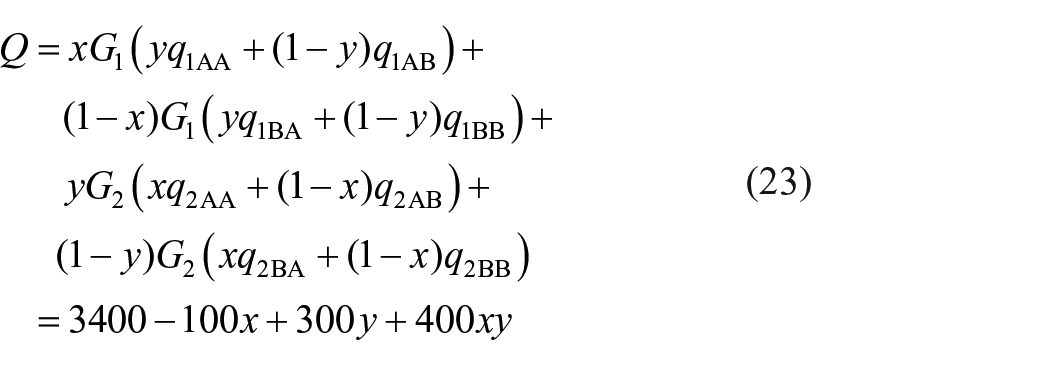



The parameters for the numerical simulation.
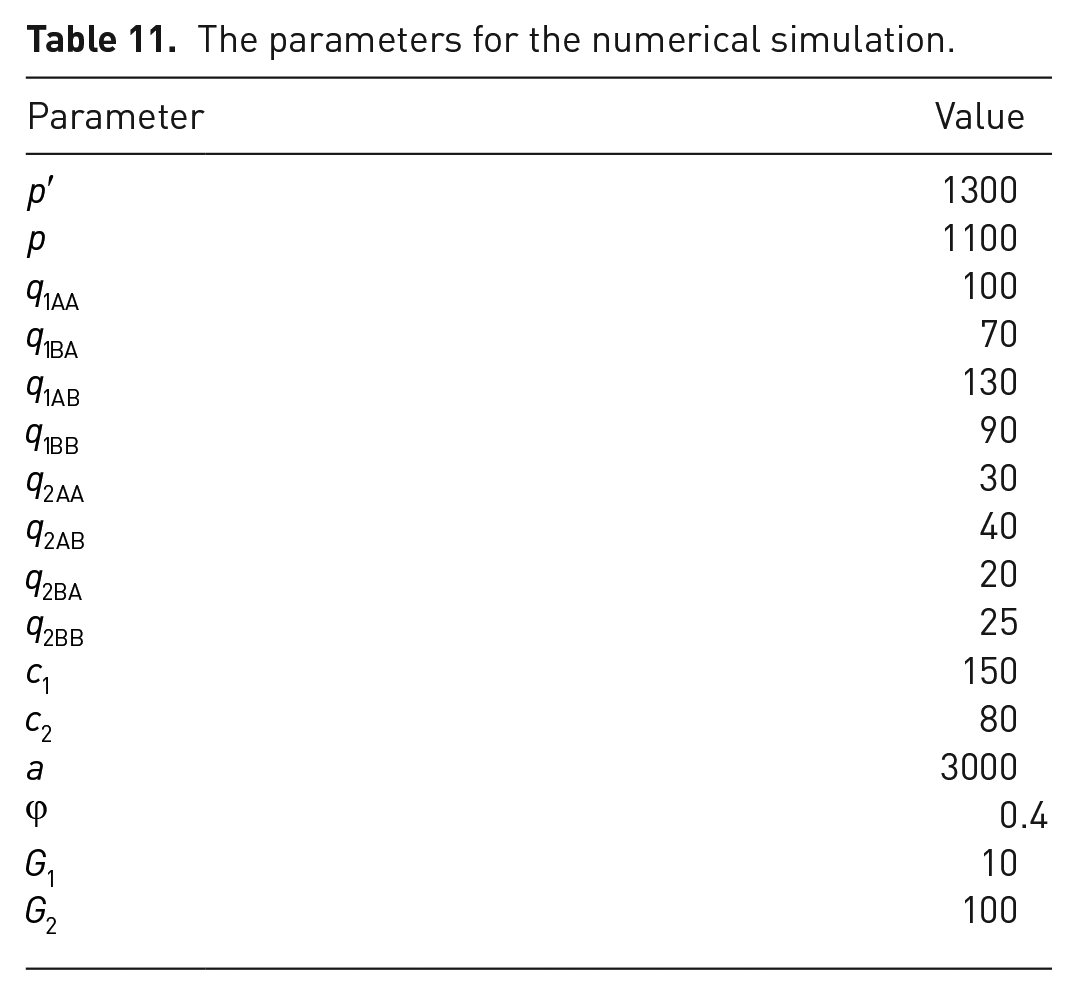
The condition of P is shown in Table 12.
The condition of P in the numerical example.
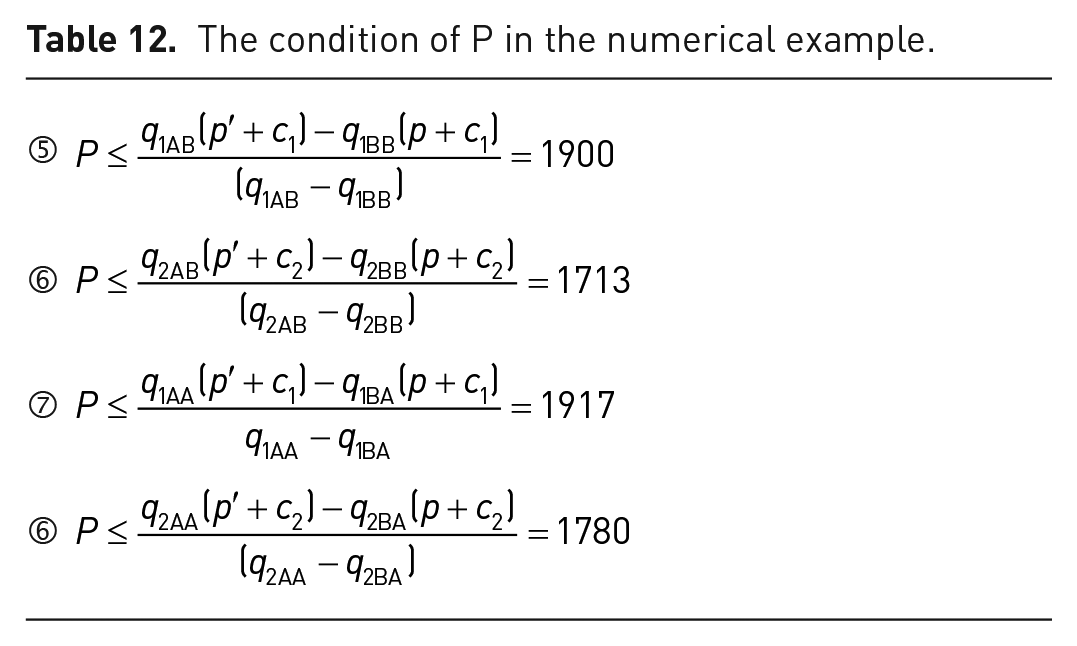
So, in the numerical example, though P is changing due to large and small recyclers’ strategy-taken rate of A (x and y), the acquisition price of processed waste products P still meets the condition of ⑤⑥⑦⑧ (P is lower than 1700).
Figure 7 shows that with the strategy-taken rate changing, the value of P changes, but it can be controlled within a specific range, like under 1700. Figures 8 and 9 show that this numerical example’s ESS result is (0, 0). Strategy A can bring them less profit than strategy B for both recycling groups no matter what strategy the other competitors take. The interaction result of waste product price decisions is that no one will take a high-price strategy. As Francesco (2017) studied, excessive competition in recycling will make less investment in environmental technologies for processing recycled waste. Similarly, the competition will also affect the choice of recycling service level, which is explored in this study. Though the acquisition price of processed waste products is fluctuating due to the changing quantity of recycled waste products in the market, the ESS can be changed by adjusting the parameters’ value in this model to the extent that the profit difference under strategy A and strategy B can be generated, such as the processing cost and acquisition price of waste products, finally reaching ideal recycling quantity.
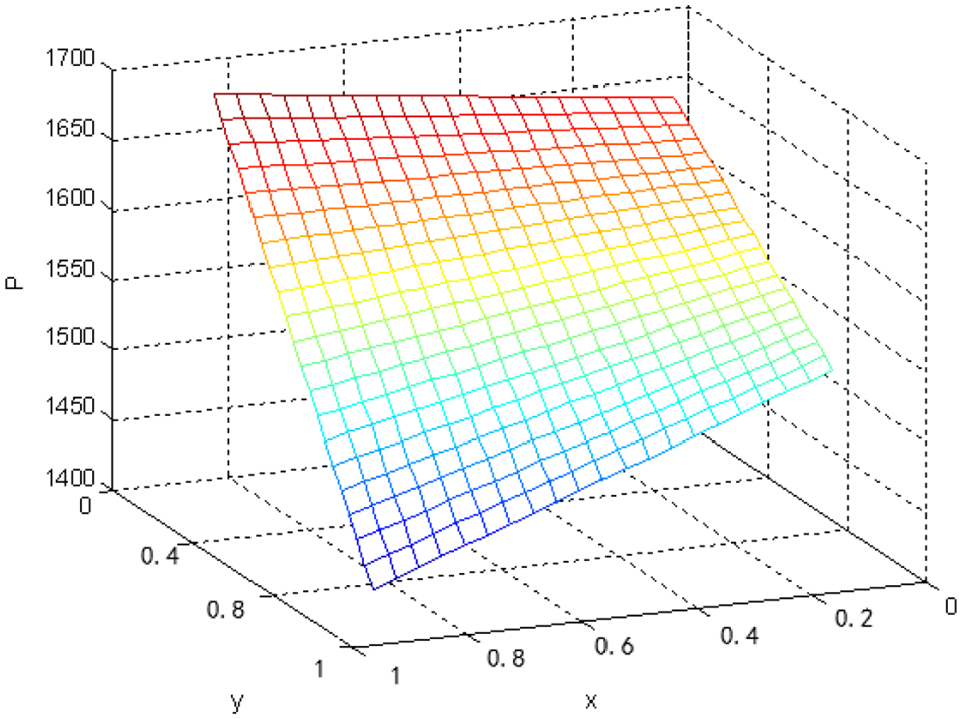
P value under the A strategy-taken rate of large and small recyclers in the numerical example.
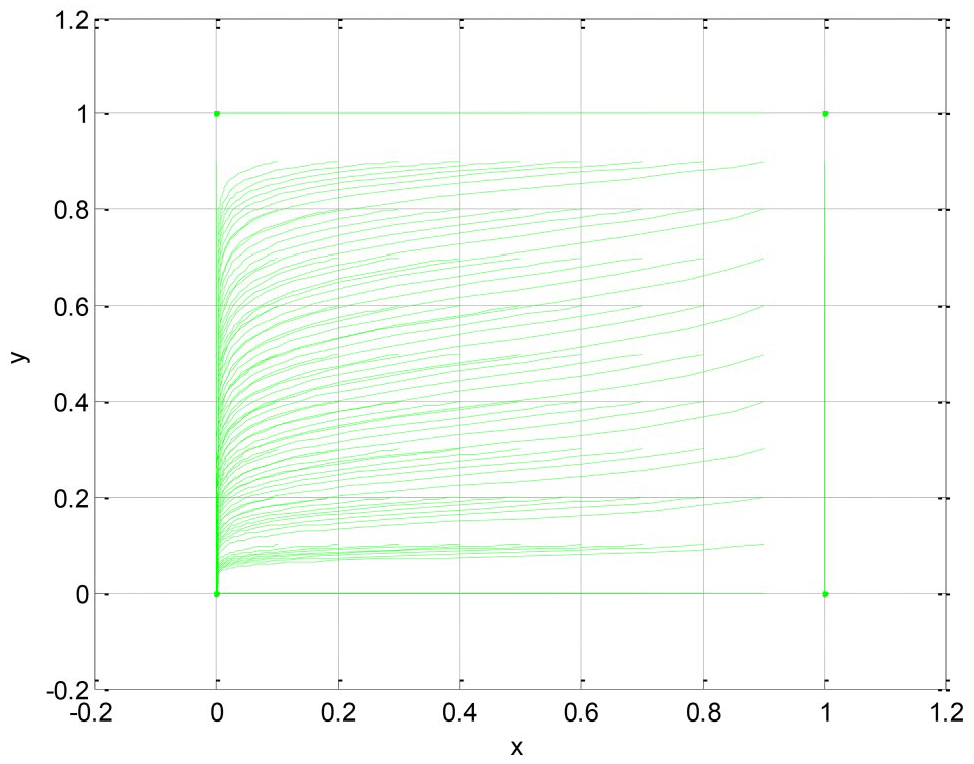
The ESS simulation result of the numerical example.
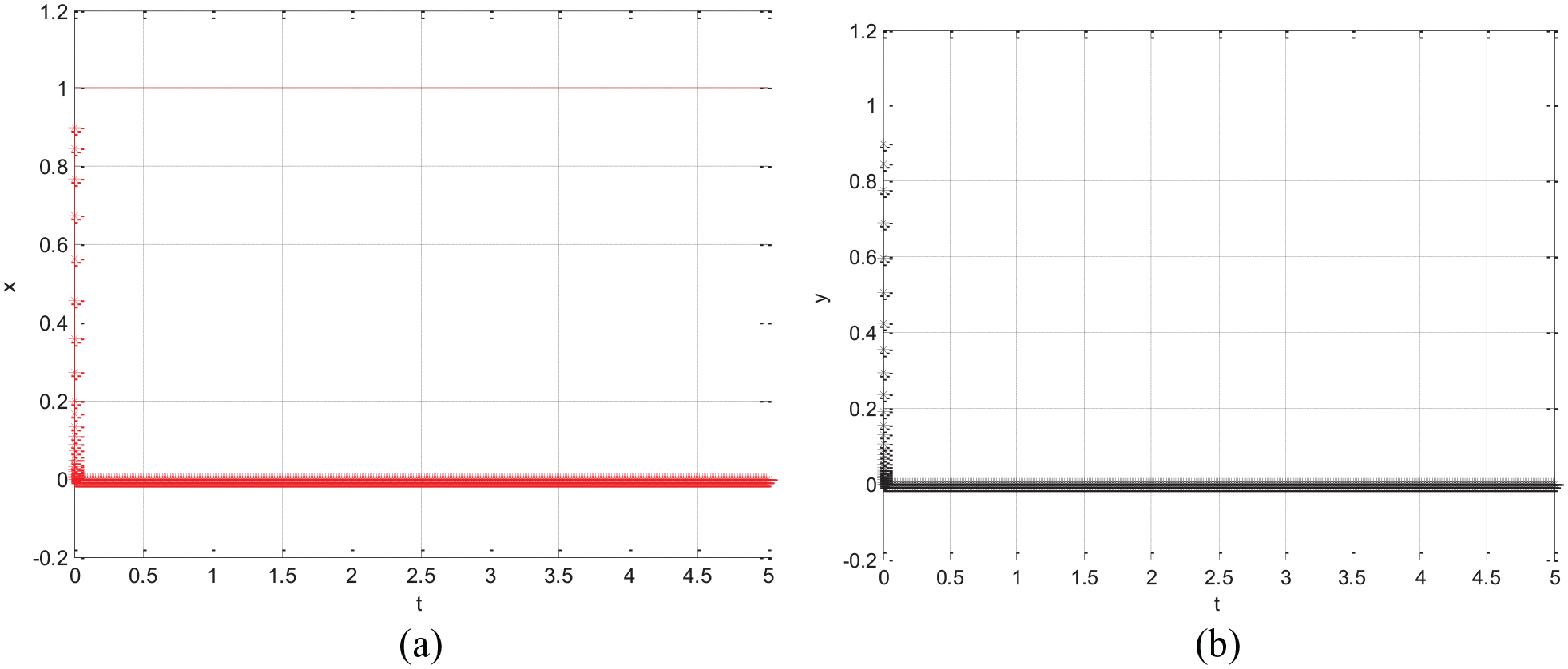
The evolution process for the (a) big recyclers and (b) small recyclers.
Conclusion and policy implications
The recycling industry is confronting various issues, particularly the varying recycling quantity due to acquisition price competition between large-scale and small-scale recyclers, which has become a significant challenge for the authorities. Mainly, this research emphasizes resolving recycling industry challenges, where recyclers are struggling to enhance their profits, and the government is striving to protect the environment by promoting standard recycling operations. This research employs an evolutionary game model to analyse competition between large-scale and small-scale recyclers. Results reveal a substantial mutual influence between the acquisition price of processed waste products and the strategy-taken ratio of the high acquisition price of waste products for consumers due to the relationship between total recycling quantity and the acquisition price of processed waste products. Similarly, results reveal that the market price of processed waste products plays a crucial role in recyclers’ decision-making on the acquisition price of waste products. This indicates the presence of intense price competition between large-scale and small-scale recyclers. It is implied that large-scale recyclers face a challenging situation in competing with small recyclers to acquire more waste products because of high processing costs and strict environmental regulations. Furthermore, this research also reports that service level for the consumers and recyclers’ processing cost are the key factors that could enhance the total recycling quantity of waste products, thus, assisting authorities to achieve a higher recycling rate.
Based on the given findings, this research provides various policy implications for the authorities to strengthen the recycling industry in China. For instance, this research implies that authorities should focus on cost and profit structure in the recycling industry to improve performance. Mainly, various components of recycling cost restrain recyclers from carrying standard quality recycling operations, resulting in environmental degradation and resource wastage. Hence, the government should devise effective subsidy strategies to enhance the recycling rate and encourage recyclers to adopt efficient recycling procedures. In addition to the prevailing subsidy policies, providing subsidized recycling technology and infrastructure to the recyclers would be an effective strategy for the authorities to achieve their targets.
Furthermore, this research also implicates that while implementing strict regulations, the government should also understand the constraints and capabilities of the recyclers. Particularly, concerns of large-scale formal sector recyclers should be resolved. Considering the acquisition price competition, this research suggests that the government should further offer price subsidies to help formal recyclers acquire more consumer waste products. Similarly, authorities should also provide cost subsidies to recyclers to reduce processing costs and promote quality recycling. On the other hand, the government should strictly regulate small-scale, informal recyclers by imposing reward and penalty strategies to control adverse environmental consequences. Moreover, this research also suggests that efficient waste transformation is another crucial factor for strengthening the recycling industry. Therefore, authorities should also concentrate on waste transforming enterprises because efficient waste transformation ultimately promotes the recycling trend and enhances the country’s recycling rate.
Footnotes
Declaration of conflicting interests
The authors declared no potential conflicts of interest with respect to the research, authorship, and/or publication of this article.
Funding
The authors disclosed receipt of the following financial support for the research, authorship, and/or publication of this article: The research is supported by the National Natural Science Foundation of China (72250410375).
