



Abstract
The generation of construction and demolition waste1 (CDW) in China has increased dramatically in recent decades due to the rapid urbanization. Yet there is a very limited utilization of this waste, meaning that there is an urgent need to address this issue in order to reduce the reliance on virgin materials and improve the lived environment in China. This problem contrasts with the EU experience where many member states already exceed an 80% utilization rate of CDW due to extensive policy measures. We argue that the supervision of CDW is an important and underestimated element in addressing this waste stream, and that China and other rapidly developing states can build on the EU experience to address this issue rapidly and efficiently. This paper took a comparative policy analytical approach to summarize advanced experiences promoting CDW utilization, highlighting 14 advanced policy measures. We then conducted a case study approach applied to a Chinese metropolitan city, Wuhan, to identify the key measures to promote CDW utilization in the local area by questionnaire. On this basis, we then proposed a whole process supervision framework for the six most important policy measures, to cover the whole process of the generation, transport and recycling of this waste. This approach provides a mode for policymakers to prioritize the most important policy measures to address CDW problem in China through a timely and data-driven process.
Keywords
Introduction
China’s rapid urban development has produced a large amount of construction and demolition waste (CDW). This heterogenous material, whilst largely inert, can cause a variety of environmental, ecological and society problems such as environmental pollution, carbon emission increase, land resource occupation and safety hazards (Li et al., 2020; Ossa et al.,2016; Wu et al.,2016). As the largest and often most immediately visible portion of waste, successfully addressing its generation and disposal sets an example and template for addressing other waste types.
Approximately 2.4 billion tons of CDW are generated in China each year, which accounts for about 40% of total municipal solid waste by weight (Duan et al., 2019; Jin et al., 2017; Umar et al.,2017). However, the utilization rate of CDW is limited and estimated at only 3–10%, although a number of pioneer Chinese cities such as Shanghai and Shenzhen have improved the CDW utilization effect (Ghisellini et al.,2018; Ma et al., 2020).
By contrast, the CDW utilization rate on average in a number of European countries has generally exceeded 80% (Nunes and Mahler, 2020). This remarkably high utilization rate has largely resulted from the complete and mature regulations, incentive policies and supervision systems based on the circular economy (Ajayi and Oyedele, 2017; Li et al., 2020; Tam et al., 2018). The recycling of CDW can bring significant environmental, economic and social benefits such as waste landfill reduction, energy conservation and emissions reduction and the development of a sustainable social image (Doan and Chinda, 2016; Marzouk and Azab, 2014; Yu et al., 2020). Therefore, it is useful for China and other states to explore effective policy measures to promote the treatment of CDW.
However, whilst there has been extensive research on CDW management, the exploration of policies to address the whole process of CDW is insufficient. The whole process concept has been put forward in the research on municipal solid waste management, referring to the process of the collection, utilization and disposal for this waste stream (Fang et al., 2022). Drawn upon the research, we propose a concept of the whole process CDW policy which supervises CDW based on the process of design, preconstruction, construction, transporting and recycling. Examining policies from this approach potentially assists the waste supervision and management process. In addition, a detailed comparison of CDW management instruments between China and Europe is rare but allows us to examine their similarities and differences. Therefore, this paper’s objective is to study the policy experiences of the European Union (EU) and selected Chinese cities to summarize policy practices promoting CDW utilization and propose a framework of CDW management policy instruments for China. We do not attempt to analyse policies based on the categories of policy instruments, but to evaluate policies from the perspective of the whole process of CDW (the whole process method). The results of this study are expected to assist Chinese and other developing states in building effective CDW utilization policies throughout its whole process stages, that is, when the CDW is generated, transported and recycled or disposed.
We began by reviewing EU and Chinese policy measures to address CDW and compare Chinese and EU policy measures throughout the whole process of CDW. Subsequently, we explained our research methodology including policy analysis, interviews and a questionnaire conducted with local government officials and associated professionals in CDW management field. We then explained our case study selection of Wuhan and interview findings, together with the results of our questionnaire survey. We also outlined the six key policy measures prioritized by questionnaire in order to effectively address CDW resource utilization in Wuhan. We finally concluded by summarizing our findings and outlining the potential for future research and studies.
Materials and methods
Comparative policy analysis
Comparative policy analysis is the systematic study of policies in different geographical and political areas including cities or nation states, which helps researchers to understand how policy is formed and the similarities and differences between different countries. By conducting this study, the reasons for adopting a specific policy, their results and achievements can be compared and analysed to understand necessary conditions and operational issues (Marmor et al., 2005, Ritter et al., 2016).
In the first instance, we used comparative policy analysis to compare CDW policy measures between China and Europe to provide a reference for other Chinese cities. Policies on European and Chinese CDW management were extensively reviewed to identify advanced national and international policy measures for CDW utilization.
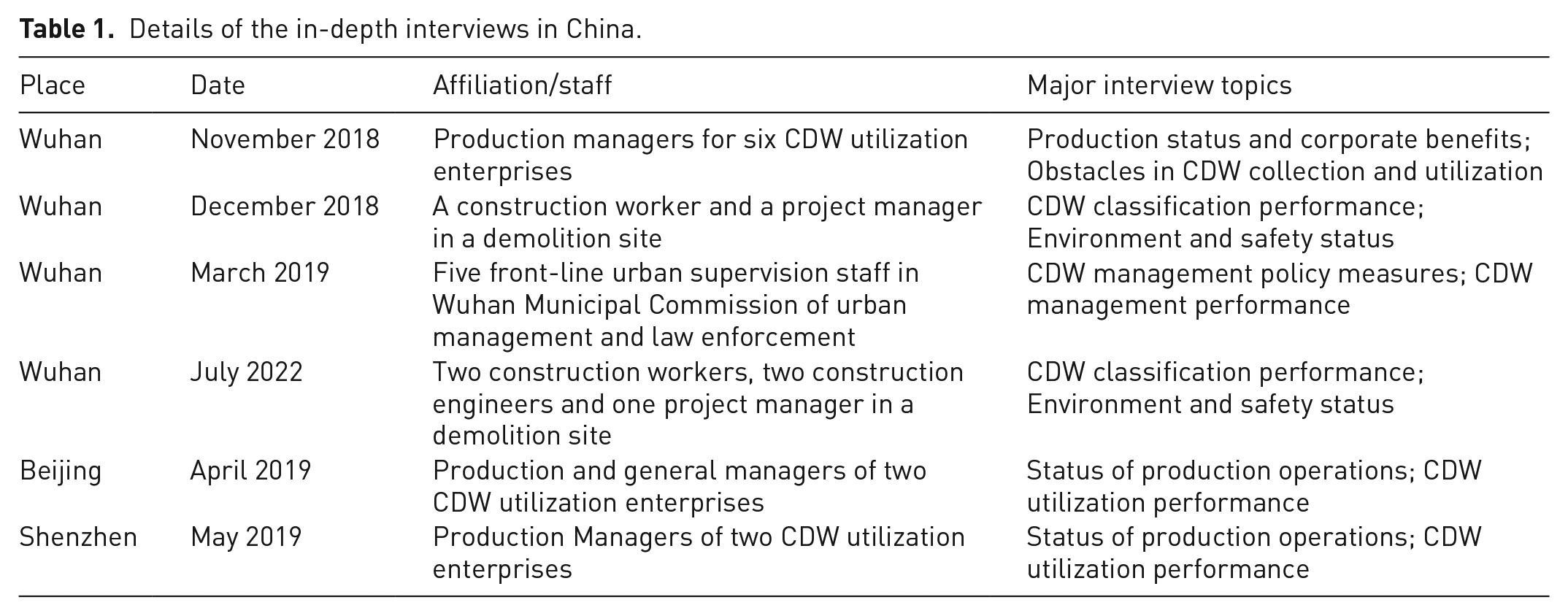
Subsequently, we took a metropolitan city in the central part of China, Wuhan, as a case study example to explore the best locally available policy measures for CDW utilization. In order to clarify the current status of CDW utilization in Wuhan, in-depth interviews were conducted with stakeholders in the local CDW value chain. Since the end of 2018, the research group had investigated six CDW utilization enterprises, two demolition sites and one government department, participating in more than 20 meetings of the Wuhan local government department in charge of CDW management. In addition, site visits were conducted in pioneer cities such as Beijing where CDW utilization policies are recognized as nationally advanced in order to gather appropriate best practice and current information around effective CDW utilization. The interviewees we chose were required to have more than 10 years of working experience in construction engineering field with rich practice experience. Interviewees’ details are presented in Table 1.
Details of the in-depth interviews in China.
Literature review
China and the EU have both aimed to promote CDW utilization through the circular economy, that is, to reduce the amount of waste generated, whilst increasing the amounts reused and recycled (Ministry of Housing and Urban-Rural Development, 2005; The Central People’s Government of the People’s Republic of China, 2008; European Commission, 2016, 2021). With a similar policy objective, the EU experiences in promoting CDW utilization can be drawn upon for Chinese cities, although some policy options such as landfill tax may not be possible at the city level (Wang et al., 2015).
Gálvez-Martos et al. (2018) summarized CDW best management practices in Europe across the entire construction value chain and proposed that reducing waste generation, minimizing transport impacts and maximizing reuse and recycling could be implemented to promote CDW utilization and reduce environmental impact. Huang et al. (2018) analysed CDW management obstacles in China based on the 3R (reduce, reuse, recycle) principle, proposing that the current situation for CDW utilization could be improved by designing effective circular economy policies, reinforcing the source management of CDW, adopting innovative technologies and market models and implementing targeted economic incentives. Duan et al. (2019) compared the current characteristics of CDW management systems in several developing and developed countries and proposed management measures such as reducing CDW generation by extending the lifespan of new and existing buildings, prohibiting the dumping of CDW in order to conserve land resources and improving the market for CDW recycled products. Having visited thirteen authorized CDW utilization factories in Andalusia, Spain, Barbudo et al. (2018) suggested that the government could promote proper recycling of CDW by introducing financial incentives for treatment plants, promoting the utilization of recycled products in new construction projects, reviewing each of the resource utilization factories and granting authorization only to those that meet agreed quality standards. Overall, previous research has extensively studied CDW policy measures, but there is limited exploration on the comparison between China and the EU and a whole process perspective for CDW policy.
Current situation of CDW utilization in EU
According to Eurostat – European Statistics (2021), CDW accounts for 30% of the total solid waste generated and is the largest waste stream in the EU, which has posed a challenge for European development. EU CDW is a varied material mainly made up of waste concrete, bricks, gypsum, wood, glass, metals, plastics, solvents and asbestos (European Commission, 2021). Although a large quantity of CDW is generated in the EU every year, most of it can theoretically be recycled (Wu et al., 2019).
Official statistics (Figure 1) show that the average utilization rate for CDW in a number of EU member states in 2018 has reached 86%, far exceeding the planned 2020 target of 70% proposed in the Waste Framework Directive in 2008 (European Commission, 2011).
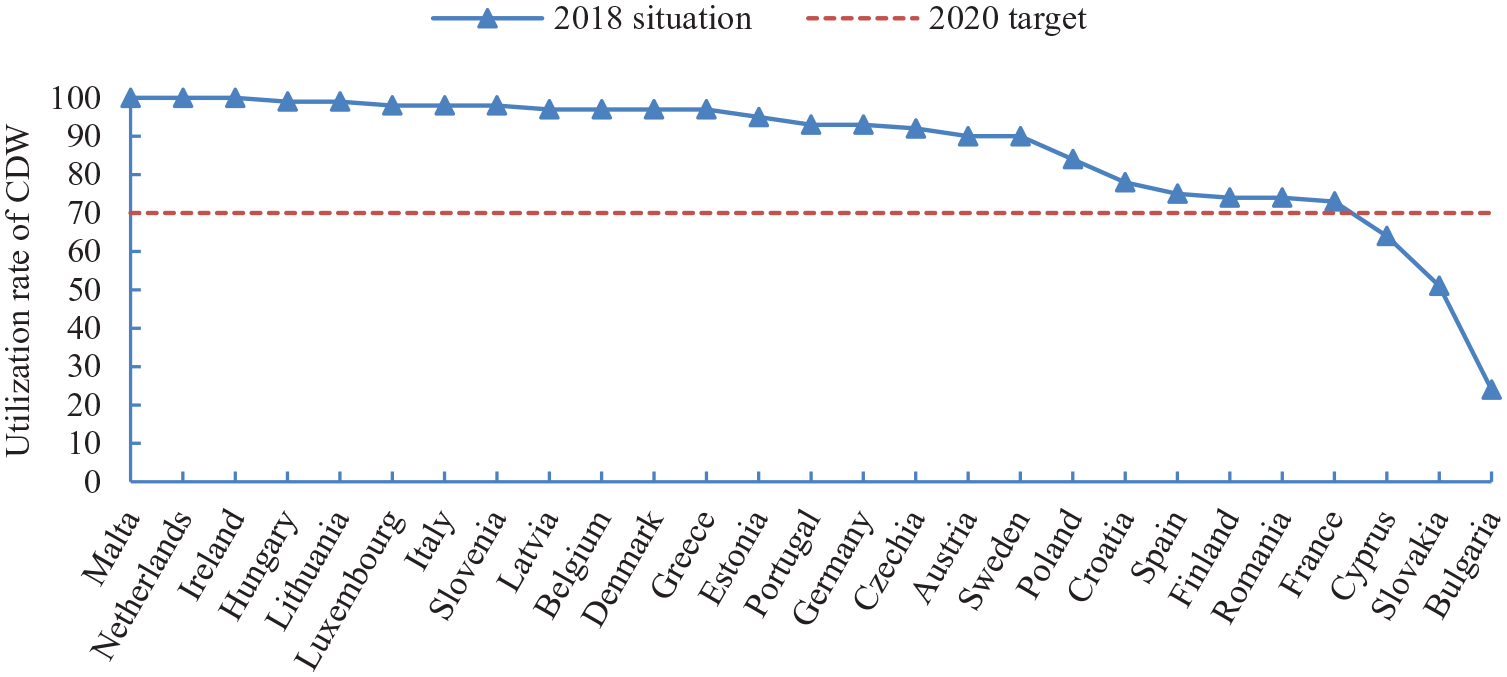
Utilization rate of CDW of a number of EU member states in 2018 (Eurostat – European Statistics, 2021).
Policy instruments in the EU
As CDW accounts for the largest proportion of total solid waste in the EU, the EU has introduced a series of policy instruments to promote CDW separation at source, and the cultivation of market trust for the recycled product so that it can be reused for future construction projects. This has the benefit of creating a market incentive to reuse materials, even if in relatively poor quality uses such as for roads, back-filling of quarries or land reconstruction and would reduce the need for further use of expensive virgin resources. Figure 2 summarizes the whole process EU policy targets and instruments for the promotion of CDW utilization.
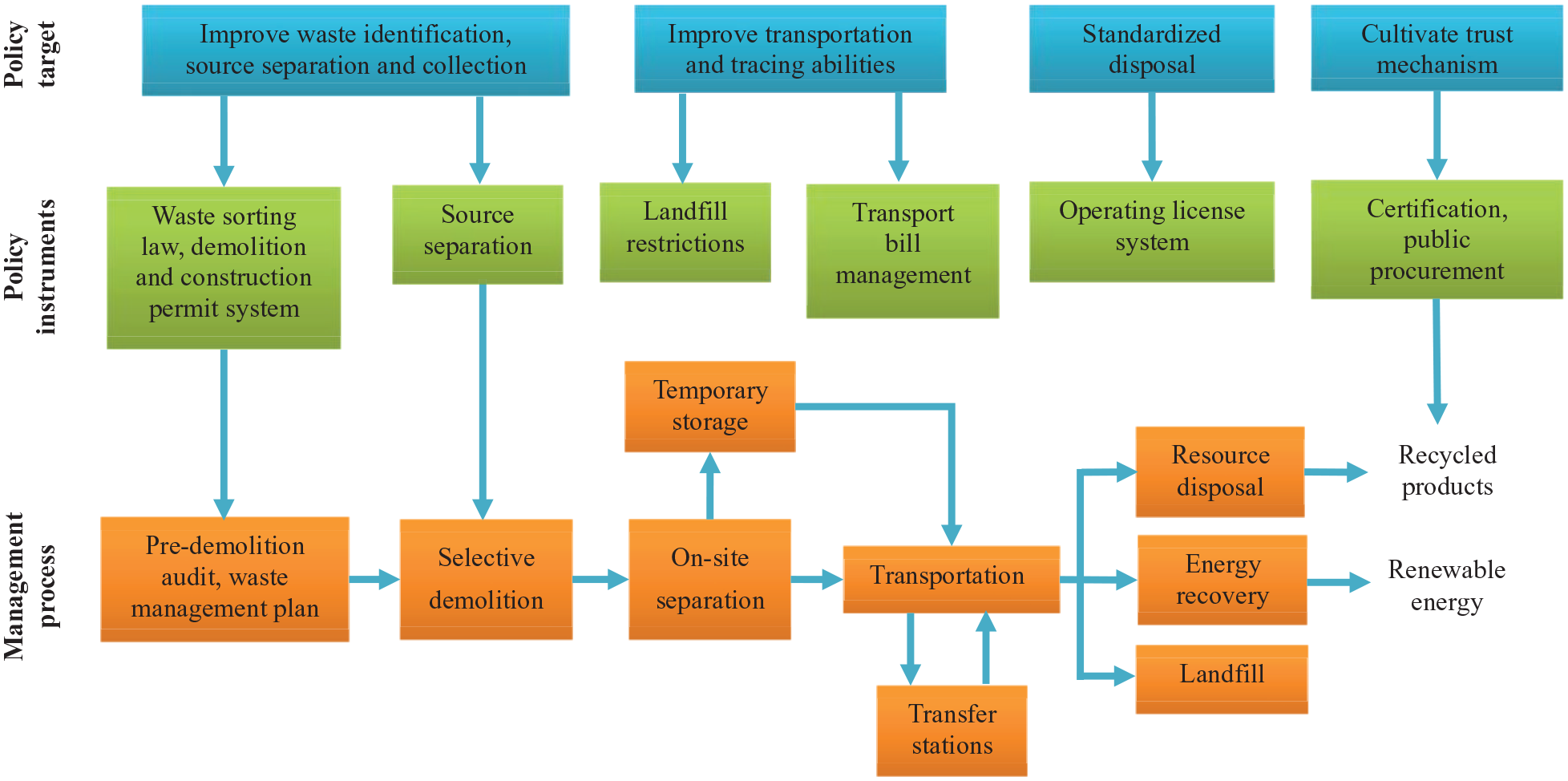
The schematic diagram of the EU’s whole process CDW policy instruments (European Commission, 2016).
These policies and measures for CDW management include a waste sorting law, a demolition and construction permit system, source separation, landfill restrictions, a transport bill management system, the encouragement of public procurement policies, an operating license system and product certification. These measures work together to promote CDW recovery and reuse in the EU (European Commission, 2015a; Li et al., 2020), and also provide a reference point for formulating policy measures to promote CDW utilization in other countries.
Domestic and foreign advanced supervision policy measures for CDW management
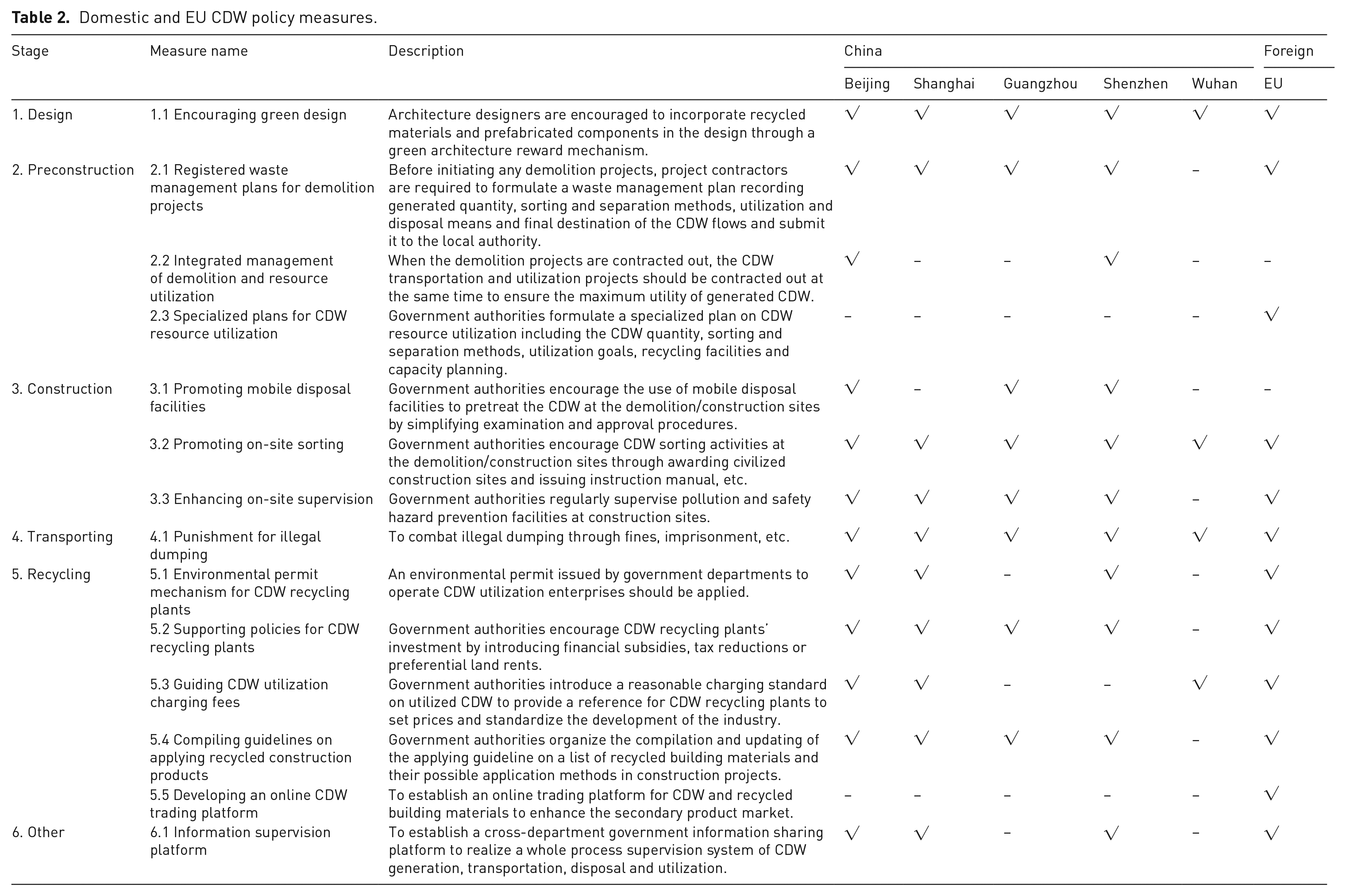
A comparison of CDW policies between the EU and China using a whole process approach to cover all stages of CDW is shown in Table 2. The table compares the EU and five major Chinese cities: Beijing, Shanghai, Guangzhou, Shenzhen and Wuhan on 14 excellent CDW policy measures which were selected on the basis of a literature review as well as in-depth interviews. According to Table 2, it is noticeable that Wuhan currently only possesses four of these policies which is insufficient to encourage the reutilization of recycled products from CDW, although Wuhan is also a major metropolis in China. This indicates that improving the policy measures of CDW management to increase the utilization rate in Wuhan is very necessary. Therefore, Wuhan is chosen as a case study to explore the route to improve its CDW policy.
Domestic and EU CDW policy measures.
A case study in Wuhan
Current status of CDW utilization in Wuhan
Wuhan is a large metropolitan city in the centre of China situated at the junction of five major rivers with a growing estimated population of 11 million. Like many Chinese cities, it is in the process of accelerated urbanization including the building of transportation networks such as new roads and metros and infrastructure to support new housing such as water, energy and sewage utilities. Consequently, Wuhan has been confronted with the challenge of a sharp increase in CDW, especially waste with a low added value such as concrete, bricks and tiles. According to our interviews and previous research (Wuhan Municipal Engineering Design and Research Institute Co., Ltd, 2019), the estimated demolition waste, construction waste and decoration waste were 16.75, 3.7 and 0.8 million tons, respectively, in 2018 and the current status of CDW utilization in Wuhan was identified as follows:
(1) The amount of CDW generated and its destination were unclear.
At present, the developers in charge of CDW disposal were only responsible for crushing and removing concrete blocks. Valuable waste steel bars and red bricks were recycled or reused by the demolition project contractors. There was no corresponding regulation requiring the developers or contractors to formulate a management plan for CDW. Therefore, both the amount of output and the destination of CDW in Wuhan were unknown.
(2) The market acceptance for recycled construction products was limited.
Due to the lack of recycling standards, recycled construction products from CDW were not well regarded or recognized by the construction material market. Most construction companies were concerned about the quality and safety of the recycled aggregates or related products and preferred to purchase natural virgin aggregates.
(3) Security and environment risks were obvious at construction sites.
There were serious potential safety issues observed on site visits such as unsafe waste stacking, which could cause injury to construction workers. Randomly stacked waste raised the potential for injury and harm and large quantities of dust impacted the air quality and citizens health. Addressing these environmental and safety factors has the potential to improve site relations for construction firms and local government and to build a wider stakeholder group of support for better management of CDW.
Better management and recycling of CDW materials therefore might not only solve the problems of waste stacking, but improve worker safety, and local air quality as well as relieving the local pressure of a shortage of raw materials (Wang et al., 2018)
The questionnaire survey and analysis of results
Based on the 14 measures listed in Table 1 and the actual situation in the local area, a questionnaire about the whole process policy instruments for CDW utilization in Wuhan was designed (see Supplemental Appendix). The surveyed respondents were local government representatives working in the urban management department in a range of supervisory roles covering construction sites, CDW transportation and plants utilizing CDW. Local government representatives were selected because of their importance in China in implementing CDW policies at the local level. The research team was able to survey this group following an invitation from the local department to deliver a training course illustrating international policy experiences on CDW utilization.
Respondents ranked each selected measure on a 5-point scale in terms of its importance for the local area to adopt. During the data analysis, the five options were quantified as scores: the option ‘not necessary at all’ was counted as 1 point; ‘not necessary’, 2 points; ‘not essential’, 3 points; ‘necessary’, 4 points and ‘very necessary’, 5 points. The research team asked 38 front-line urban management and supervision staff of the local area to fill out the questionnaires. The valid responses were 32, a response rate of 84%. The analysed results are as follows:
Table 3 shows that the standard deviations of the 14 measures are all lower than the average standard deviation, which indicates that the front-line urban management and supervision staff had little disagreement over these 14 measures. In the preconstruction stage, the average scores of measures ‘Registered waste management plans for demolition projects’ and ‘Specialized plans for CDW resource utilization’ are both higher than the average score of this stage. In the construction stage, the average score of measure ‘Enhancing on-site supervision’ is higher than the average score of the stage. In the transport stage, the score of the measure ‘Increasing the punishment for illegal dumping’ is higher than total average score (4.84). In the recycling stage, the average scores of measures ‘Environmental permit mechanism for CDW recycling plants’ and ‘Compiling guidelines on applying recycled construction products’ are higher than recycling stage average score. This suggests that these six measures above can be identified as the key measures to improve the utilization of CDW and should be introduced in Wuhan as a first priority.
Score statistics for supervisory measures from the questionnaire.
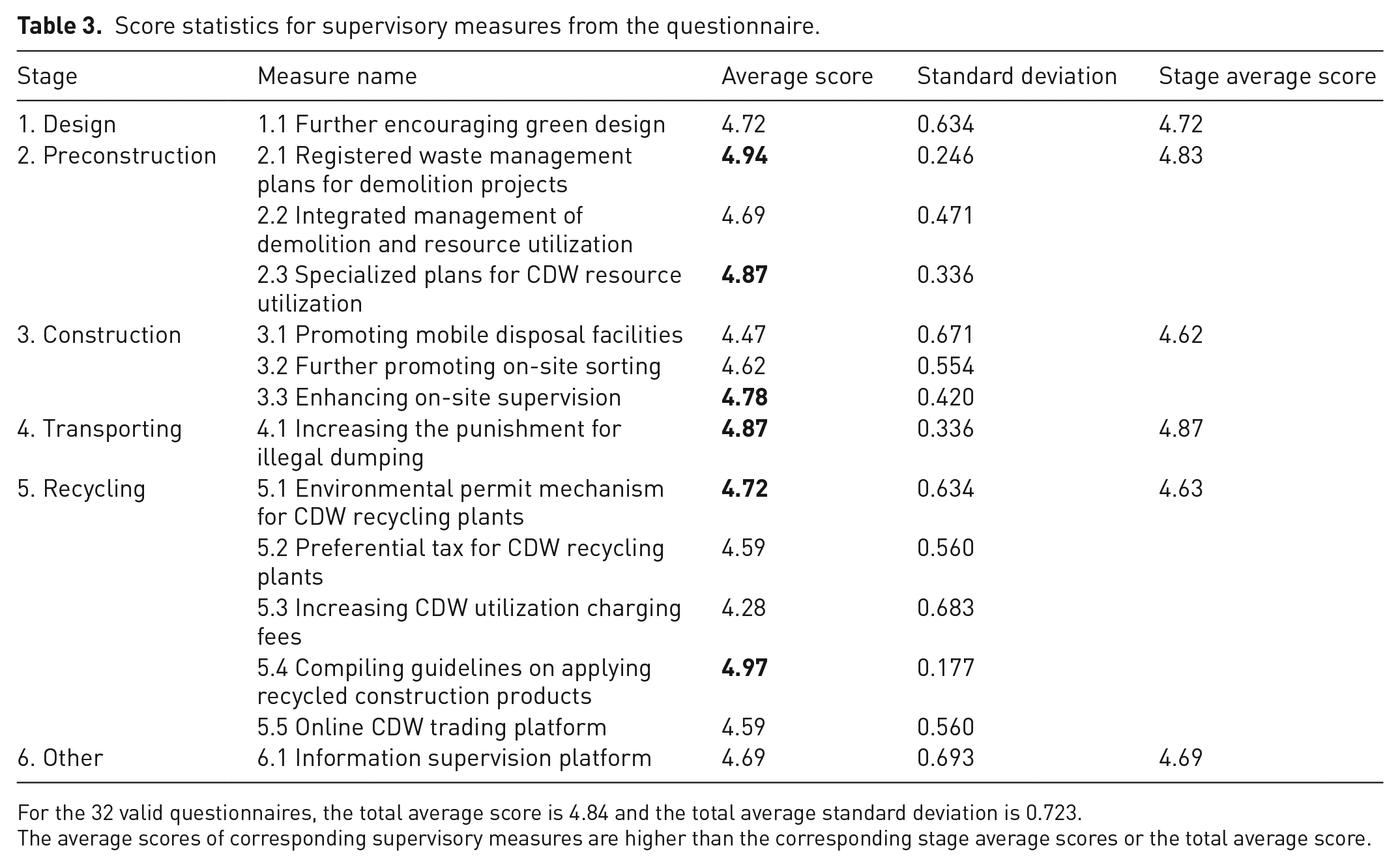
For the 32 valid questionnaires, the total average score is 4.84 and the total average standard deviation is 0.723.
The average scores of corresponding supervisory measures are higher than the corresponding stage average scores or the total average score.
Moreover, although the recycling plays an important role in promoting CDW utilization, the average score of recycling stage in the four stages is relatively low. This is because the average score of the measure ‘Increasing CDW utilization charging fees’ is low and therefore reduces the average score of this stage. The reason for the low score is attached to that the CDW utilization charging fees can be related to the characteristics of CDW affecting processing cost. It is found that high-quality CDW (e.g. road construction waste generally with concrete content more than 90%) can be processed into recycled construction products with a relatively low cost, and low-quality CDW (e.g. decoration waste mixed with hazardous substances like asbestos and paint) need spend more in waste sorting and harmless treatment in Wuhan. Therefore, it is hard for the respondents to decide whether it is necessary to increase the CDW utilization charging fee. Municipal recycling centres in Germany normally charge 150–300 euros per cubic metre based on the different types of CDW (European Commission, 2015a). A charge scheme of different price levels for different types of waste could be considered in Wuhan and further work needs to be conducted to define the waste types and corresponding price levels of CDW for differentiated management.
Results
Building a whole process supervision framework of CDW for the local area
This study argues that a whole process supervision system of CDW should be led by government departments with the goal of promoting CDW reduction and resource utilization. CDW flows and the handling of CDW need to be supervised through a whole process policy framework to cover stages of architecture design, preconstruction, construction, transportation, recycling and waste disposal. Through the questionnaire survey, six key management measures were identified and this paper proposed a policy framework for a whole process supervision of CDW utilization in Wuhan, as shown in Figure 3.
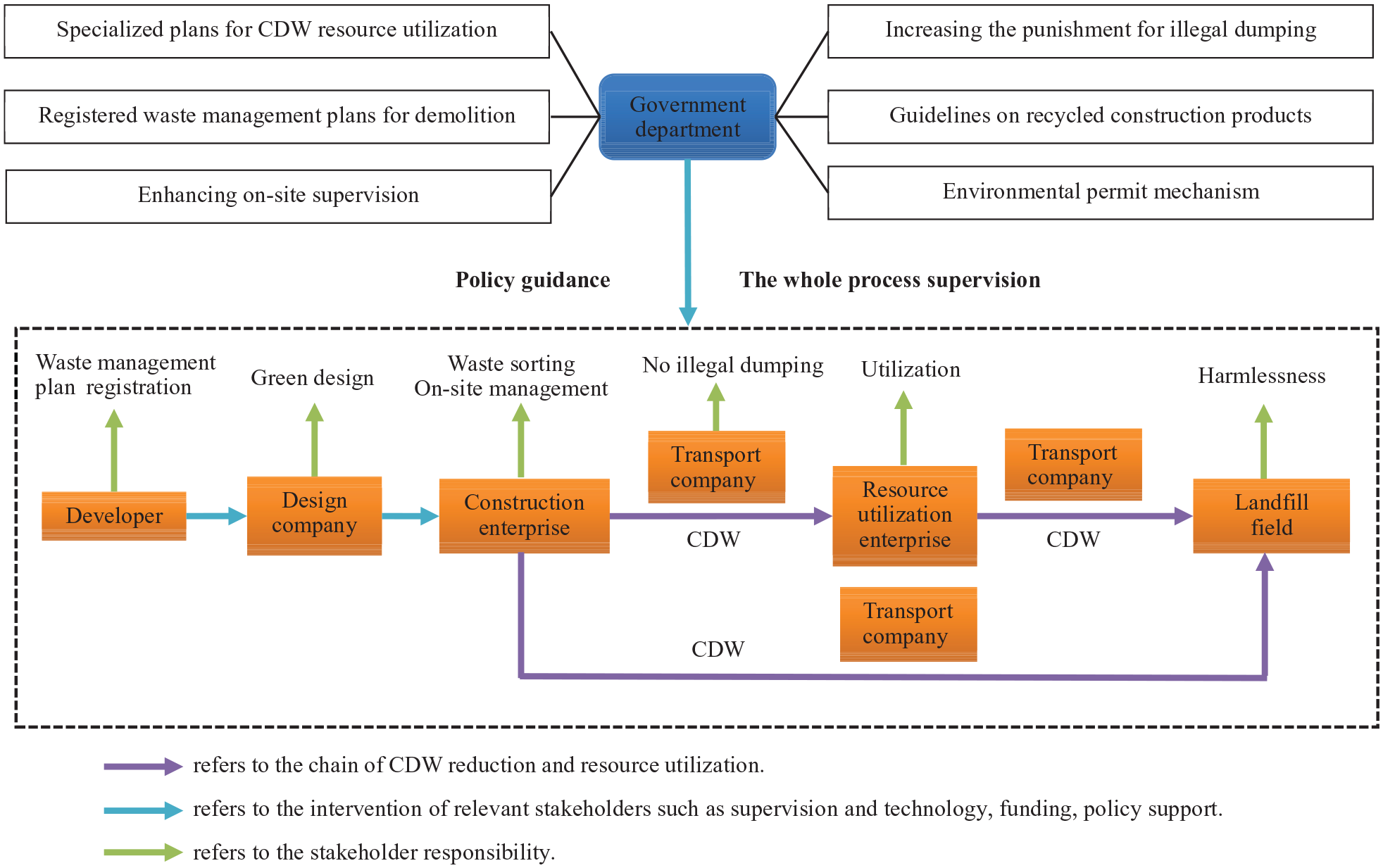
A whole process supervision policy framework of CDW in Wuhan.
In summary, the six policy measures that Wuhan should prioritize first are as follows:
(1) Specialized plans for CDW resource utilization
A specialized plan for resource utilization of CDW can include: (a) The current situation of CDW utilization in the local area; (b) The principles and goals of the planning; (c) The amount estimation of annually generated CDW; (d) Standards of CDW disposal and utilization facilities (scale, type, layout, etc.) and (e) Comprehensive utilization technical standards for all kinds of CDW.
As the top-level design of the whole process supervision system for CDW, a specialized plan for CDW utilization can not only provide guidance for the long-term development of CDW recycling, but also promote the formation of a complete resource utilization and treatment system of CDW. Many member states of EU have issued specialized plans for CDW utilization and achieved good results. For instance, Denmark published the national waste resource management plan every few years since 1992 to boost the CDW recycling, which made the utilization rate reach 86% in 2012 (European commission, 2015d; Li et al., 2020). The utilization rate in the Netherlands improved from 83% in 2006 to 85% in 2015, which was mainly owed to the implementation of the waste management plan (European Commission, 2015b).
(2) Registered waste management plans for demolition projects
The preliminary investigation found that the output and destination of CDW in Wuhan were not traced and the demolition project waste accounted for more than 70% of total CDW in Wuhan (Wuhan Municipal Engineering Design and Research Institute Co., Ltd, 2019). Promoting the registration of waste management plans can clarify key information including CDW output, sorting methods, stream direction, disposal methods and so on, effectively improving the efficiency of CDW management. A number of pioneer cities in China such as Beijing (see Figure 4) and Shenzhen have already taken this measure. Similarly, the Dutch government implemented a certification scheme for demolition processes (BRL SVMS-007), which required the execution of the demolition to be in accordance with the predetermined waste management plan encouraging a quality demolition process (European Commission, 2016).
(3) Enhanced punishment for illegal dumping
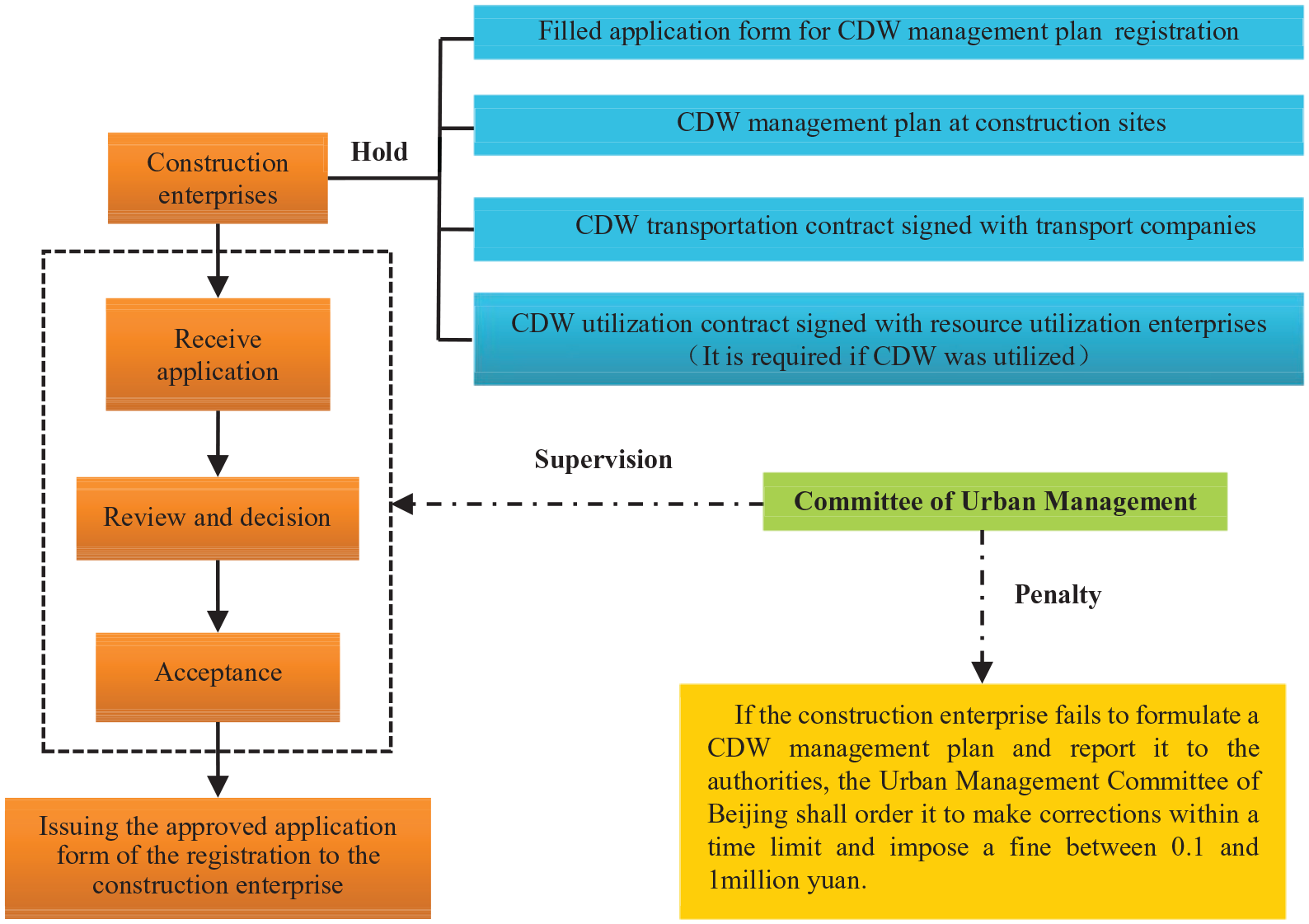
The registration process of CDW management plan in Beijing (The People’s Government of Beijing Municipality, 2020).
At present, the penalty for one illegal dumping of CDW in Wuhan when compared to other regions appears insufficient (see Table 4). Although local government had conducted spot checks on CDW transportation, the insufficient punishment and lack of consistent checking mean that it is difficult to effectively deter illegal dumping. Therefore, Wuhan city can refer to the penalties of other regions in order to justify an increase in fines for illegal dumping of CDW.
(4) The guideline on applying recycled construction products
Penalties for illegal dumping in some regions.
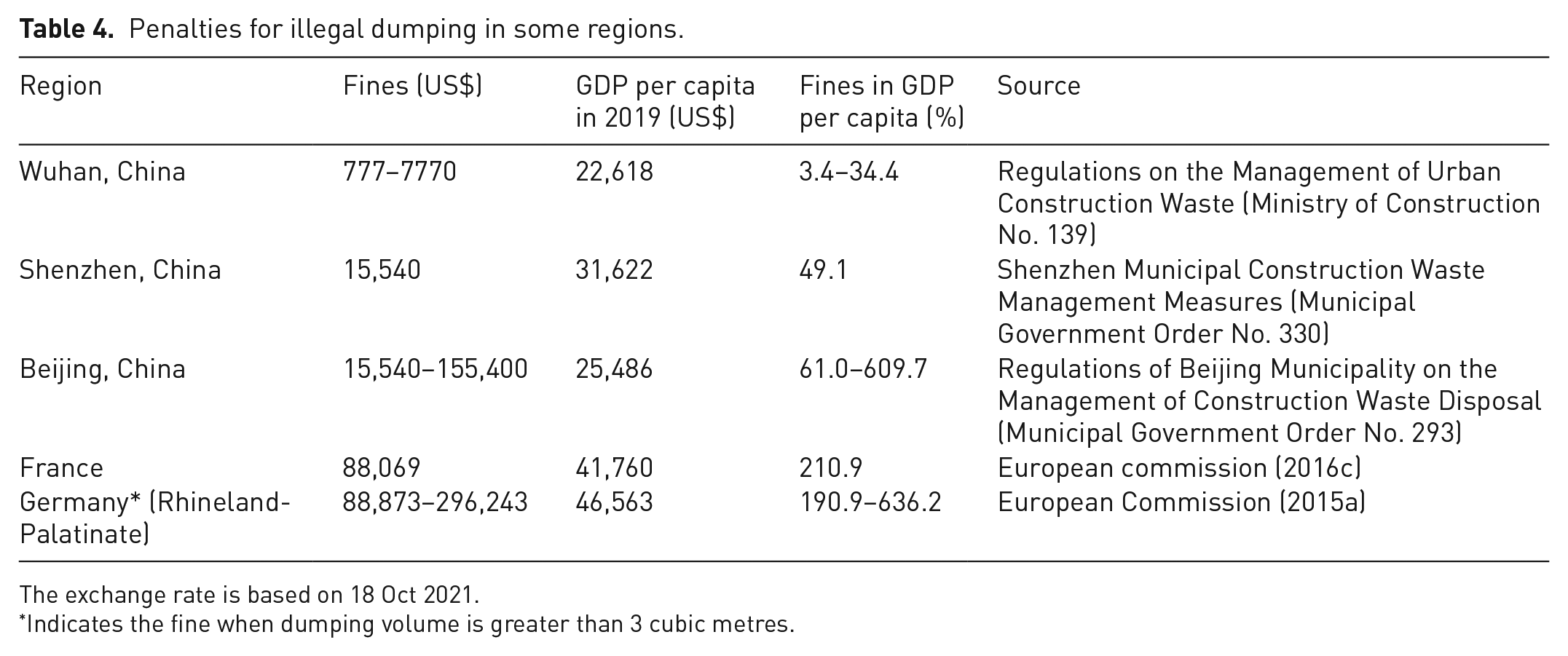
The exchange rate is based on 18 Oct 2021.
Indicates the fine when dumping volume is greater than 3 cubic metres.
The preliminary research found that due to the lack of relevant certification procedures or standards for recycled products, the local market for recycled construction products was very limited. Purchasers lacked confidence in the reliability and composition of these products. Therefore, in order to promote a healthy and sustainable development of the local CDW recycling market, Wuhan city should step up compilation on the guideline of recycled construction products to include specific types, applicable parts, suitable processing methods, etc. This would also allow government departments or government-led enterprises to confidently buy these recycled products and comply with the national green purchasing policy. In addition, the guideline should be updated and publicized regularly to encourage the development of production technology.
Shenzhen and Beijing issued such guideline in 2016 and 2018, respectively, to encourage the application of recycled products (Beijing Municipal Commission of Housing and Urban-Rural Development, 2018; Shenzhen Housing and Construction Bureau, 2016). Similarly, Austria published guidelines for processing and the use of refuse derived fuel from CDW in the cement industry to realize energy recovery (European Commission, 2016).
(5) Enhanced on-site supervision
Through our interviews and site visits, we found that in a number of demolition sites, CDW was randomly stacked and the concrete crushing process caused significant dust pollution. The environmental sanitation at sites was also worrying and there were certain hidden safety hazards. Consequently, the local government should enhance on-site supervision by introducing management regulations for costruction sites. After analysing the best practices of CDW management in Europe, Gálvez-Martos et al. (2018) also regard on-site waste management as an effective measure since it can standardize on-site management and improve the site environment.
(6) The environmental permit mechanism for CDW recycling plants
Our research found that a number of small-scale CDW recycling plants in Wuhan were limited in their disposal capacity and environment control level. Therefore, it is proposed that the local government should introduce an environmental permit mechanism. France executed the QUALIRECYCLE BTP (a management scheme developed by the French construction association) to audit the performance of waste management enterprises in five aspects and delivered a certification label for qualified enterprises (European Commission, 2016), which can provide a reference for Wuhan.
Conclusion
This paper has taken a comparative policy approach to address the issue of CDW in China. CDW will be a valuable renewable resource if it can be effectively recycled. Otherwise, it will not only cause serious pollution to the environment, but also bring about great safety risks. Although China and Europe have different economic and cultural conditions, they have similar CDW management goals to improve the CDW utilization rate through the circular economic development. This paper analysed advanced measures of CDW supervision in China and the EU, and summarized 14 policy measures. On this basis, we took Wuhan as a case study and clarified the difficulties of promoting CDW utilization through in-depth interviews. Specifically, the volume and destination of generated CDW in the local area was unclear and the market acceptance of recycled products was limited. A questionnaire survey conducted with front-line supervisors then identified the key priorities of CDW supervision in Wuhan. Finally, a whole process policy framework for promoting CDW utilization in Wuhan was proposed. Key policy measures for Wuhan include: compiling a specialized plan for utilizing CDW, implementing the registration of waste management plans for demolition projects in the preconstruction stage, enhancing on-site supervision in the construction stage, increasing the punishment for illegal dumping in the transportation stage, compiling guidelines on applying recycled construction products and introducing environmental permit mechanisms for CDW utilization enterprises in the recycling stage.
This approach of whole process analysis of CDW in the local area, and survey of relevant officials by questionnaire to prioritize the most urgent policy measures, can be replicated in other areas. Therefore, this research will enhance local government implementation of precise policies at each whole process stage of CDW, improving CDW utilization efficiency. Meanwhile, this study can potentially provide a lesson for other cities in the world to explore their own CDW management policy systems through a whole process approach.
Supplemental Material
sj-docx-1-wmr-10.1177_0734242X221126393 – Supplemental material for Building a whole process policy framework promoting construction and demolition waste utilization in China
Supplemental material, sj-docx-1-wmr-10.1177_0734242X221126393 for Building a whole process policy framework promoting construction and demolition waste utilization in China by Qiaozhi Wang, Tiancheng Jiang, Lu Liu, Shoucheng Zhang, Anne Kildunne and Zuohua Miao in Waste Management & Research
Footnotes
Acknowledgements
The authors thank professor Pauline Deutz from University of Hull for her precious advice for this article. Also, we appreciate all anonymous peer reviewers’ comments on this article and the editor’s work on the publication of this article.
Declaration of conflicting interests
The authors declared no potential conflicts of interest with respect to the research, authorship, and/or publication of this article.
Funding
The authors disclosed receipt of the following financial support for the research, authorship, and/or publication of this article: This research was supported by the Ministry of Housing and Urban-Rural Development of China (2020-K-089) and the National Natural Science Foundation of China (41701624 and 41971237).

Supplemental material
Supplemental material for this article is available online.
Notes
References
Supplementary Material
Please find the following supplemental material available below.
For Open Access articles published under a Creative Commons License, all supplemental material carries the same license as the article it is associated with.
For non-Open Access articles published, all supplemental material carries a non-exclusive license, and permission requests for re-use of supplemental material or any part of supplemental material shall be sent directly to the copyright owner as specified in the copyright notice associated with the article.
