




Abstract
The circular economy (CE) gives rise to paradigm shifts in the understanding, practice and regulation of waste, challenging a waste sector built for the linear waste paradigm of waste streams rather than value streams. We examine how a waste management company developed value streams, caught between increasing competition for waste types with high market value, and rigid regulation limiting the development of new streams. This cross-pressure necessitates new knowledge and practices to not only transform waste streams into value streams, but also to prioritize the inner circles prescribed by the CE paradigm. There is a potential for increasing reuse of products that have been collected as waste or handed in at municipal recycling stations. However, if the product value is not sufficient to be attractive for the existing market, then the value must be added, and a market must be created. There is a great deal still to learn about what it takes to create value out of waste products and what the role of municipal waste companies is in that process. Our findings indicate that unlocking the potential of waste (in this case, old bricks and waste electrical and electronic equipment) has been far from straightforward. Value must be created through several activities, requiring collaboration between a range of actors as well as new knowledge and business competencies. This contribution aims to open discussion on what it takes for waste management companies to navigate the new complexities in the transition from waste to resource management.
Keywords
Introduction
Waste is perceived as intrinsically valuable in a circular economy (CE; Perey et al., 2018). Nevertheless, over 2 billion tonnes of municipal solid waste are generated globally each year, and this shows no signs of slowing (World Bank, 2021). In the European Union (EU), municipal waste generated has increased by 7.4% from 1995 to 2019, with 502 kg of municipal waste per capita generated in the EU in 2019, of which approximately 60% was neither reused nor recycled (Eurostat, 2021). Due to fast depletion of natural and primary resources, it is highly desirable to find a way to manage waste that minimizes the environmental impact and leads to sustainable use of resources.
Nevertheless, scientific waste management literature mainly focuses on solid waste management from a traditional, ‘linear business model perspective’ (Puntillo et al., 2021, p. 968), in which waste is perceived a burden (Puntillo et al., 2021) imposing a cost on organizations (Perey et al., 2018). However, some case studies have investigated the reuse potential at recycling stations (Milios and Dalhammar, 2020; Zacho et al., 2018) and curbside collected bulky waste (Messmann et al., 2019), agreeing that there is a great potential for increasing reuse. A case study quantifying the potential for preparation for reuse (PfR) of bulky waste in the German state of Bavaria (Messmann et al., 2019) concluded that between 13% and 16% of the waste streams (furniture, leisure goods, and waste electrical and electronic equipment (WEEE)) could immediately be prepared for reuse, depending on the product type. A further 13–29% could be unlocked through changes in the model of collection, storage and overall treatment of waste. Similarly, Milios and Dalhammar (2020) identified significant potential for increasing reuse operations in private recycling centres in Sweden, particularly for building materials, furniture and electrical equipment (mainly white goods). A third case study of a PfR project in a municipal waste management company in Denmark (Zacho et al., 2018) revealed that, from the perspective of the municipal waste management authority, ‘the largest value creation potential (economic, social and environmental) lies in preparing waste for reuse’. As an example, in comparison to recycling, PfR processing employed nine contracted full-time employees and an additional six employees at the edge of the labour market, and the amount of reusable material collected out of the combustible waste stream doubled. On this basis, ‘it is fair to assume that a similar potential exists in other municipalities that do not yet provide separate collection for reuse’ (Zacho et al., 2018, p. 304).
However, as the market for reuse has increased, so has competition, affecting the prices in a downward direction (Norfors, 2019). Norfors further notes that due to the growing interest in reuse, most items of good quality and condition are being reused, but there is a large residual at reuse sites of items that could be reused but have low value and therefore are not taken by charity-run second-hand shops or saleable to the private sector. This implies that there is a large potential for increasing reuse of products that have been collected as waste or handed in at municipal reuse sites. However, where the product value is not sufficient to be attractive to the existing market, value must be added and a market for these products must be created.
Waste valorization, ‘the process of converting waste into more useful products’, is increasingly catching attention as a potential alternative to conventional solid waste disposal, including the development of environmental strategies to process solid waste (Abdel-Shafy and Mansour, 2018). The idea is not novel but has gained renewed attention due to fast depletion of natural and primary resources (Abdel-Shafy and Mansour, 2018). This has led to a growing interest in waste valorization and the potential for processing large amounts of waste to create useful materials (Kabongo, 2013). Particular attention has been paid to the field of bio-waste (Abu Yazid et al., 2017; Venkateswar Reddy et al., 2020). However, according to Kabongo (2013), there is a lack of understanding of the different ways that companies are trying to implement waste valorization practices. Important knowledge on the success of waste valorization initiatives can be hidden in the underlying social or socio-technical layers of the processes. Success can therefore not be attributed exclusively to environmental engineering progress and should be investigated more broadly. Thus, there is a need to look ‘beyond’ technology. This creates demands for new research, particularly, there is a need to understand the different ways that companies are trying to implement waste valorization practices (Kabongo, 2013).
In this contribution, we build on previous studies that have identified the potential for increasing reuse of municipal waste (Messmann et al., 2019; Milios & Dalhammar, 2020; Zacho et al., 2018). Unlike these studies, we are investigating how potentials for reuse may be realized. We examine how a municipal waste company develops innovative (entrepreneurial) value stream solutions by building and launching activities to transform waste streams into value streams, and through a series of experimental processes make the product or service meet the relevant economic, technical and regulatory requirements. We follow two different waste streams in a waste business, bricks and white goods, through the complex and uncertain transformation process, involving a long and complex series of interactions between internal and external stakeholders.
The paper is outlined as follows: a conceptual framework provides the theoretical background for understanding the transformation of waste streams and the entrepreneurial processes that underlie it. Next, the methods and materials section presents the methodology on which the analysis is based, while the following section presents the case company and the two transformation processes of waste into value streams. Results are then presented and discussed in relation to the concrete experiences as well as the existing literature and knowledge. Conclusion, limitations and suggestions for further research finalize the paper.
Conceptual framework of waste valorization beyond technology
In this section, the core concepts in the transformation of waste into value from a valuation perspective are introduced. We build on Kabongo’s argument that waste valorization goes beyond technology and focuses on the challenges to unlocking value potentials in waste, and on Yang et al.’s (2014, 2017 a, 2017b) and Zacho et al.’s (2018) analysis of uncaptured value in the product’s life cycle and revalorization of waste. Second, we combine those theories with concepts from Doganova and Karnøe (2015a, 2015b). Finally, stressing that value is a dynamic socio-material process in which value is created through waste actors’ work in developing and combining different value components (economic, social, environmental), and engaging stakeholders in collaborative value creation processes (Doganova and Karnøe, 2015a, 2015b).
Waste as value
Research into waste as value is sharpened on two key points by a number of research projects at Cambridge University (Yang et al., 2014, 2017a, 2017b), which aim to develop the understanding of waste value as part of the development of sustainable business models and methods to support this.
The first contribution is a methodology developed to identify the untapped potentials throughout the life cycle by examining which value is captured and which is not, and therefore constitutes a value-adding potential for business models.
The purpose of the method is to capture the potential that a product or material creates throughout its life cycle. Value capture depends on the dominant culture of production, use and waste management. A distinction is made between four types of uncaptured value: value surplus, value absence, value missed, and value destroyed.
The second contribution lies in the concept of value, seen in the light of sustainability (Yang et al., 2014, 2017a, 2017b), which incorporates the value potential of waste through direct and indirect social and environmental effects, for example, the creation of local employment and social enterprises. A new and broader understanding of the value potential of waste is opened up, which is important not only for companies’ and industries’ business models, but also for the development of value and business models in the waste sector.
Zacho et al. (2018) use the concept of uncaptured value to build a more detailed knowledge and understanding of the potential values that can be captured in the waste sector. The article provides an important insight into the particular challenges associated with exploiting the value potentials of waste companies’ different waste strategies: reuse, remanufacturing, recycling, and incineration. The research from Zacho et al. (2018) helps us to understand the problems associated with the location of waste in the life cycle, the challenges associated with waste companies’ opportunities to create value and earnings through various waste strategies, and the potentials and limitations of social inclusion and environmental aspects.
Figure 1 visualizes the challenges by creating value flows through waste management in waste companies. The model depicts that household waste has a negative waste value, because of the way household waste is collected, which follows the tradition of linear waste management. The waste has been through extraction, production and use processes, which are both materially and socially embedded in the waste and actors’ understanding of its value. A great deal of value has been lost in the process, but how can value be regained?
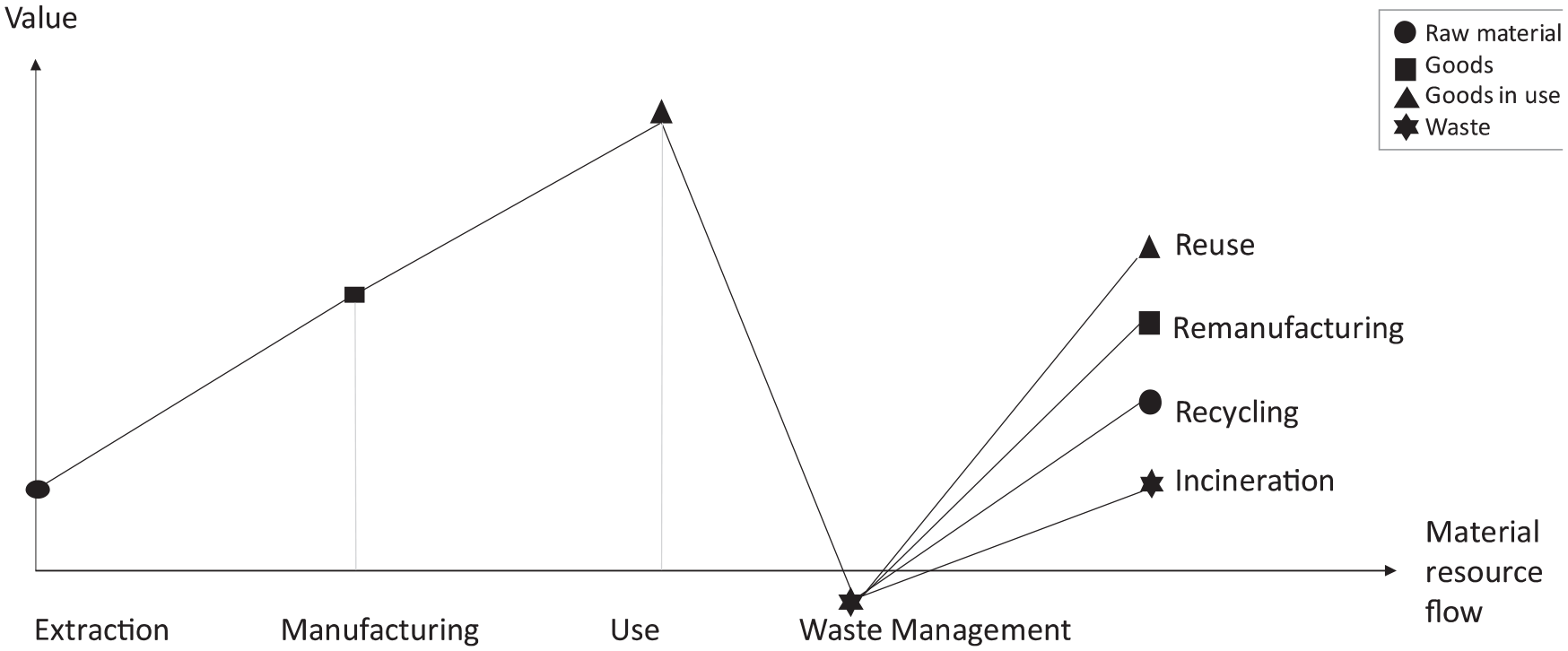
Value levels in the flow of materials. The choice of recovery route made by the waste management company creates different potentials for extracting value. Reprinted from Zacho et al. (2018). Copyright [2018] Elsevier B.V.
Zacho et al. (2018) focus on the specific challenges of waste companies in revaluing household waste through processes such as sorting, testing, cleaning, transporting and networking. For most waste streams, the opportunities for creating financial value for the waste company are limited, while it can, to some extent, succeed in creating social and environmental value. Zacho et al. (2018) point to the need to create regulatory and market mechanisms to increase the possibility of capturing value for the company, as well as to exploit the potential that lies in uniting the various forms of value (business, social and environmental), as well as creating local value.
Waste as valorization processes: From waste stream to value streams
We now apply a valorization perspective and shift focus from ‘what’ to ‘how’ value streams can be created from waste streams through entrepreneurial activities, combining different forms of value, providing knowledge and documentation, and building networks.
The valorization perspective focuses on value in making and understands waste as value not as something ‘that is’ but something ‘as becoming’. The theoretical background is actor network theory (Callon 1986; Latour, 2005,1987; Law and Hassard, 1998; Michael, 2017), action net (Corvellec and Czarniawska, 2015; Czarniawska, 2004, 2015) and valorization (Callon et al., 2002; Doganova and Karnøe, 2012, 2015a, 2015b).
The valorization approach focuses on the processes through which actors co-create technology and networks. Within the environmental area, Doganova and Karnøe (2012, 2015a, 2015b) explain how value-creating processes create the basis for transforming waste streams into value streams. Valuation is understood as concerning how actors develop solutions in networks. Solutions are constantly created and recreated through activity and interaction, and framing, development of knowledge, information, and documentation temporarily stabilize value and value flows.
The central starting point is to see the transformation process as an entrepreneurial process, where the entrepreneur, in this case the waste company, creates opportunities rather than discovering them. That is This means that there is not a pre-given environment ‘out there’ visible to the entrepreneur; the environment becomes visible ‘in the company/for the entrepreneur’ through the work of representation. The work of representation creates the business opportunity and makes it visible in the business case through a process of construction, whereby the entrepreneur enacts, collects, and arranges data (e.g., regulations, assumptions about user problems), and makes calculations (e.g., estimated price/cost structures) to form a view of the world. (Doganova and Karnøe, 2012, p. 5).
This entrepreneurial approach means that value potentials are not seen as pre-existing, but as created and assembled. It is therefore important to understand how to waste company and stakeholders may co-evolve and become assembled as a new network supporting the new product. When it comes to innovation of new products, both stakes and their holders are emergent; hence, assembling the stakes and holders is a critical job for the innovator. (Doganova and Karnøe, 2012, p. 6).
Framing, in the form of knowledge information and documentation work, plays a central role in transforming waste and waste streams into value and value streams. It is thus important that waste is framed as value and that this value concept is seen as a link between economic, environmental and social values, where ‘externalities’ are internalized and give the product extra value and create distinct products.
Our conceptual journey has provided an opportunity to develop a framework for investigating the processes through which public waste companies can create entrepreneurial activities that enable potential waste flows to transform into value and value streams. The framework is used to map and assess the processes and activities through which the waste company transforms waste streams into value streams. To visualize the complex journey of converting waste into more valuable products, we use the term ‘black box’ as a metaphor for the unknown or hidden processes involved when ‘unlocking’ potentials (Figure 2).
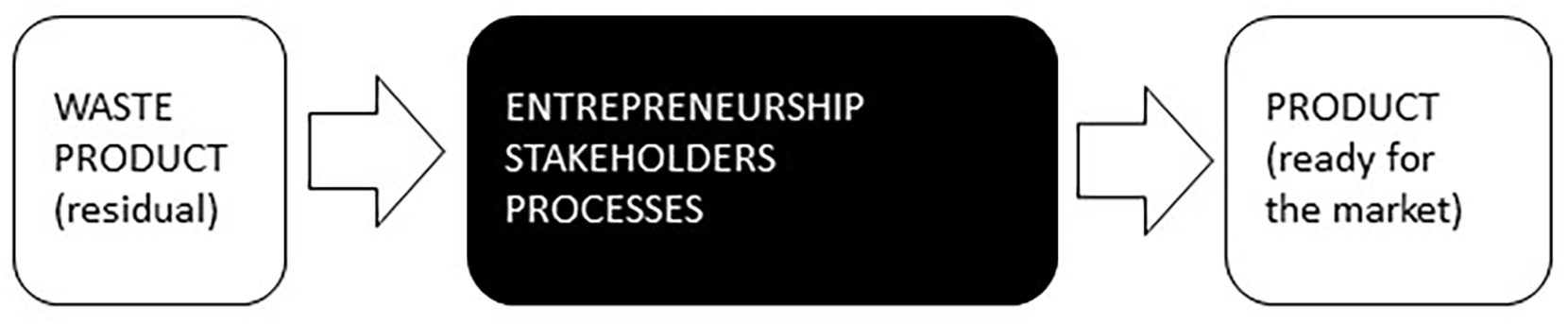
A black box metaphor for waste valorization processes (Based on Doganova and Karnøe, 2012; Kabongo, 2013).
Methods and materials
This study is based on collaborative research, which is part of a larger study (PhD) of how waste companies in Denmark can change from a linear to a circular waste and business paradigm. The study is based on a collaborative research framework (Van de Ven, 2007) and inspired by innovation and entrepreneurship research approaches (Doganova and Karnøe, 2012, 2015b, Pedersen et al., 2020; Van de Ven et al., 1999), where emphasis is placed on following processes in real time.
The study is based on an abductive research design, where theory and empiricism are developed in interaction. Initially, the research for this paper began with an understanding of the transformation of waste into value from a value framework perspective (Yang et al., 2017a, 2017b; Zacho et al., 2018) combined with an understanding of experimentation in the transition to CE (Bocken et al., 2021a, 2021b; Antikainen and Bocken, 2019) but this was challenged through the empirical work on the process. Thus, the dominant approach was changed to a valorization perspective based on Doganova and Karnø (2012, 2019) as well as staging collaborative design by Pedersen et al. (2020).
The empirical work is based on selected cases and was strongly inspired by anthropological fieldwork, which was used to follow the transformation process from waste to value through traces in the form of stories, narratives, documents, materialities and activities that transformations had deposited through the development from idea to implementation and operation.
Case study
To collect empirical evidence on waste valorization practice, this paper adopts a case study approach. This approach enables us to obtain a better understanding of fundamental elements and issues characterizing the waste valorization process, networks and the reframing of waste as an asset. Interviews, desk study research and site visits complimented the study. Case studies are especially useful in addressing ‘how’ and ‘why’ type questions, and when there is a need to perform an in-depth analysis of a complex phenomenon in its real-life context (Yin, 2003). A case study is rooted in the individual’s experiences and practice and can help to uncover complexity. Since case studies are rooted in actual practice, they can be further linked to action and thus help to change practice.
Case study research is a ‘linear, but iterative process, consisting different steps; planning, designing, preparing, collecting, analyzing, and sharing, in which each step requires the researcher to review and re-examine former decisions’ (Yin, 2003). In the context of this article, this includes planning and designing case study design and methods and preparing the collection of data by identifying niche waste valorization projects within the waste sector in Denmark. Data collection and analysis is examined through the lens of niche projects, outside the traditional split of public or private, with a focus on the key issues in delivering new value propositions within the context of the waste sector: how value is created and the type of value.
The case study is an embedded case study of two strategic entrepreneurial business developments in a public waste management company. The aim was to learn from a front-runner in experimentation with and implementation of CE-inspired solutions. For this purpose, the municipal waste management company AVV was selected as an extreme case (Flyvbjerg, 2001; Neergaard, 2007). AVV is famous in the Danish waste sector for its reuse shop and for experimentation with CE-inspired solutions and perceived a front-runner within public waste companies (Moalem et al., 2022). An extreme case exposes ideas not seen in average cases and thus provides the opportunity for us to gain new knowledge about entrepreneurial business development in waste companies (Flyvbjerg, 2006).
The selected cases provide an opportunity to follow the innovation journey of the transformation from waste to value. This journey cannot be understood in isolation from the individual company (AVV) but must be seen as a result of a longer journey over time and between actors. The first case concerns how value can be created by reprocessing brick waste from demolition and recycling stations by cleaning, sorting, and selling waste bricks for new building. By transforming waste into a product and creating a market for it in a collaboration between actors who are already active in this field, AVV was able to start up its new business. The second case concerns how value can be created based on refurbishment of white-good waste (WEEE) by collecting, sorting, refurbishing and selling prepared-for-reuse appliances, and whether it is possible to build stakeholder acceptance of this business method based on local and social value. The refurbished appliances stem from white goods disposed of at municipal reuse sites or as bulky waste (Section 4vv).
Data
The data collection aims to follow the transformation process by tracing the transformative activities over time and between actors as they are deposited in the form of stories, narratives, documents and in the form of physical traces in the form of activities and artefacts.
Desk study research
The literature and document analysis were an important part of mapping and evaluating the two transformation processes, as transformation processes had left traces in the form of documents and literature. Thus, documents played an important part in the work of transforming old bricks into value. A documentation that consisted of technical analysis of how bricks’ physical properties were affected by their product life, of their durability and quality, as well as of their environmental effects. In addition, there were articles and documents about the dismantling, production and use of old bricks, as well as marketing material (Doganova and Karnøe, 2012, 2015b).
Documents and materials were collected through a literature and document search, but also in connection with our interaction with the key actors and stakeholders, as well as in connection with our field studies.
Interviews
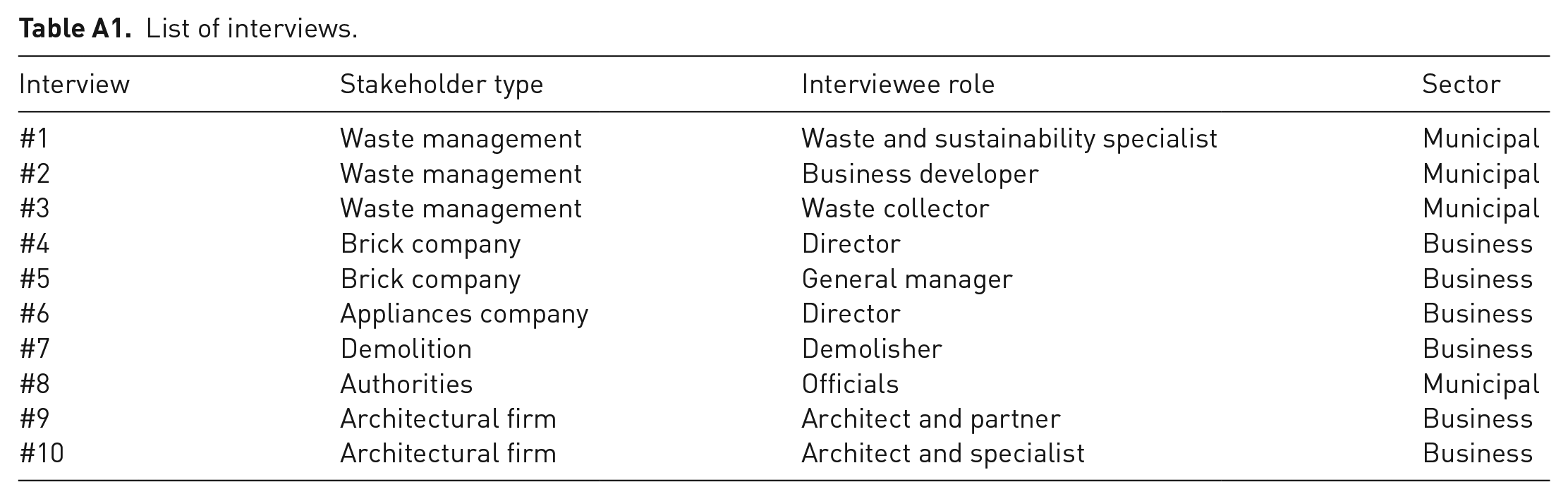
The aim of the interview was to follow the activities (Corvellec and Czarniawska, 2015; Latour, 2005), which meant that the selection of interviews took place on the basis of a mapping of the journey through which the idea of preparing old bricks for reuse had flourished. This process turned out to have taken over 15 years before AVV launched their business development project. This careful selection of stakeholder interviews was very important to understand the complex value-creating activities and processes that underpinned the success of converting waste into value. An overview of interviews is provided in Table A1.
Semi-structured interviews were chosen due to their flexibility, allowing interviewees to disclose important, yet unexpected, information (Qu and Dumay, 2011).
To bring interviews from oral to written form, interviews were transcribed, creating, as accurately as possible, a fair written version of the verbalizations generated in a research encounter with participants (Kvale and Brinkmann, 2009).
Field visits and observation
Visits to sites that had played an important role in the innovation journey were important for mapping the tracks that the transformation leaves in the specific materialities and activities in the new business areas. Observation and dialogue provided an opportunity to track the transformation processes in physical and social activities as they were practiced at the individual business units and gave us a deeper understanding of the actors in the business units. The examined field sites included the municipal waste management company, an appliances company and a brick company, located in the northern region of Denmark.
Quality assurance
The case study methodology provided a rich opportunity to gain detailed insight and understanding of the diverse and complex micro-processes that were the basis for waste to be transformed into value. It required a disciplined coding process of events, activities and actors, as well as triangulation data and information.
Interviews, documents and research field notes were coded according to the main themes; entrepreneurship, investments, value, value proposition, mobilizing stakeholders, knowledge development in applying the strategies and understanding solutions as models in which value is created.
Cases
AVV is a public waste company in North Jutland, which is known as an innovative and entrepreneurial company (Methodology section). The company consciously works to develop ‘private and public entrepreneurial’ initiatives that can benefit the company’s overall goal and to reduce waste through reuse, recycling and disposal, and contribute to the development of the local area (Interview #2).
The waste sector is facing extensive changes. Shifting to a CE has heralded a major structural change in the Danish waste sector, where the value of waste is translated into price formation, with markets and private actors as driving forces. In contrast to the dominant passive trend among public waste companies, AVV is actively trying to create new opportunities to turn waste into value through experimental measures in a political landscape that is very restrictive of public companies’ value creation in relation to markets (Moalem et al., 2020).
In this paper, we take a closer look at two selected transformation initiatives, which have some special potentials for understanding what and how transformation from waste to value can be understood as valorization processes. Such processes are often understood as simple supply and demand mechanisms, where actors, interests, markets and prices are seen as given rather than as something created through entrepreneurial processes in which actors create activities, products, value propositions, and markets through development and transformation of knowledge and information between stakeholders.
The first case examines challenges associated with transforming old bricks from demolition sites and recycling stations into a value stream.
The business idea is based on an existing patent developed by the company Gamle Mursten (meaning Old Bricks) which was initially included as co-owner of the newly established business unit. In 2018, the waste management company AVV opened a production line in the region. Today, the company has changed its name to ‘Genbrugssten’ (meaning reused bricks) and is owned by a fond. There is a potential for reusing bricks worth DKK 47.3 million per year, which at present mainly go for recycling in road filling (Miljøprojekt, 2018).
The municipally owned waste company saw a strategic and operational need in the region to transform waste into value within the construction industry in North Denmark if the region is to live up to the goals of sustainable regional development. Hence, AVV established a new business area through engagement in a company that could transform old waste bricks into reusable bricks in competition with traditionally produced bricks. By following the case from the establishment of the former company ‘Gamle Mursten Nord’ (today ‘Genbrugssten’), a unique insight is gained into how the original contractor company has enabled realization of the idea that waste bricks can be transformed into value through the development of production and product technology through collaboration with many different actors. This contrasts with what usually happens to bricks: they are crushed and used as noise barriers or as substrates for field roads, that is, backfilling, they are not reused (see Figure 3).
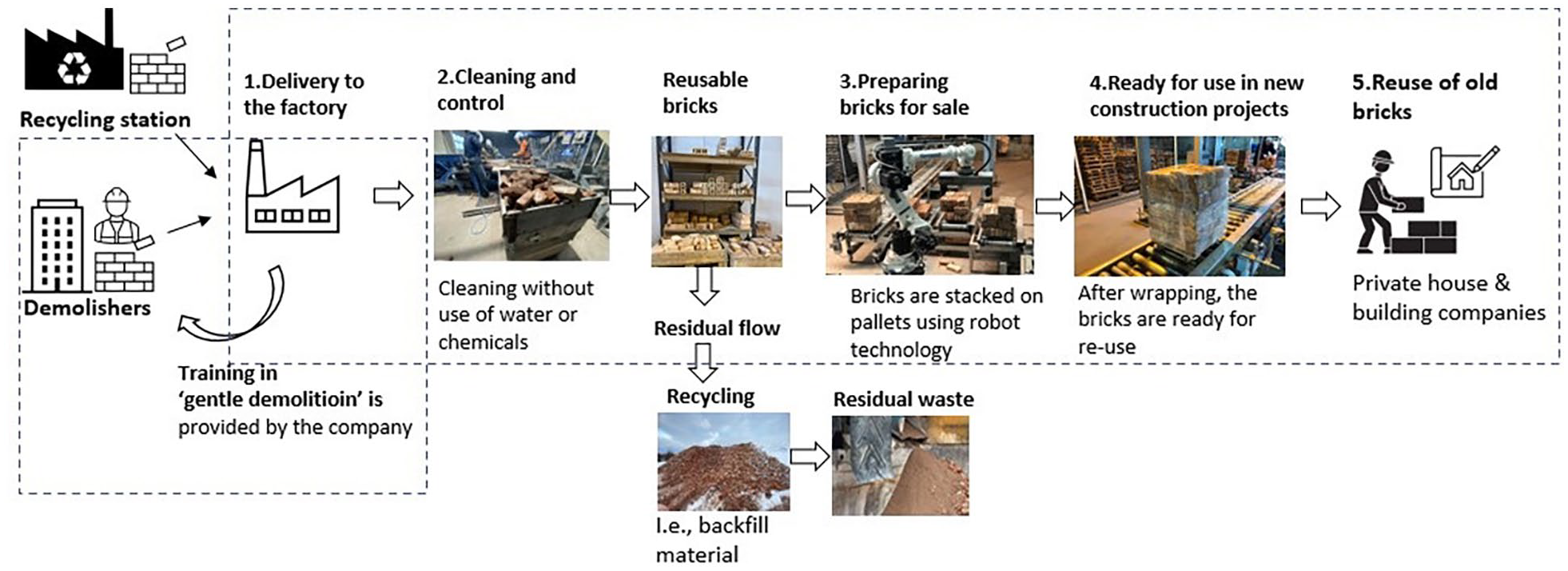
Value-adding processes (technical/material) for preparing old bricks for reuse (stipulated lines).
Knowledge and factual understanding have been crucial for creating potential value throughout the construction chain. This collaboration has been underway for 15 years and included many different controversies, actors and activities, and is still under development, but now seems favoured by the requirements for developing a CE.
The second case concerns a business based on refurbishment of white-good waste (WEEE) by collecting, sorting, refurbishing and selling prepared-for-reuse appliances. The challenge in this case is to create the market conditions for such business development under the existing regulatory regime, which limits the ability of public corporations to create value by creating goods and markets. It not only places demands on the company’s technical and business capabilities, but also on its ability to navigate both the political, legal and the market landscape.
The business idea builds on a concept originally developed by the company De Grønne Hvidevarer. The company is stationed both in the northern and central part of Denmark. Preliminary investigation to test the potential for PfR showed that 25% of discarded white goods were suitable for PfR, of about 140 thousand tonnes WEEE per year in Denmark alone. A local initiative based on that of De Grønne Hvidevarer’ concept was seen as a means to create value for AVV and at the same time contribute to the regional goals of environmental and social development.
The two entrepreneurial initiatives at AVV allow us to follow the many transformative processes that underlie AVV’s success with their initiatives, which goes beyond the individual business development process. A success that would not have been possible if they had not built on a chain of activities, actors and institutions that had been created over time, space and across stakeholders.
In the following, we investigate varying issues related to the turning of waste products into a value. What characterizes the journey from waste to product? What is the special value and how is value created so that products are able to be sold in a market? How is value created through discovering and disseminating facts to make it possible to turn waste streams into value for users?
Results
Waste valorization of old bricks
Entrepreneurship-business development
The first element that we will point out in this valorization journey is the entrepreneurial uncertainties associated with establishing a business basis so that technology that makes it possible to reuse bricks is valued by the construction sector. What does it take for old used bricks to be considered a valuable resource and not just a cheap substitute product for peripheral tasks? What does quality mean in this context, and how can quality be used to create value from waste blocks? Is there a market for reused bricks, or can a market be created for this? If there is a market, how can it be secured? It was a partial solution to these entrepreneurial uncertainties that AVV ‘bought’ by collaborating with the company Gamle Mursten and engaged in their technology and competences.
Investment
Second, the results showed that the return on investment in production facilities, technology and patents depended on investment in the ‘qualification’ of the product concerning both market and institutional requirements. Achieving the CE marking cost more than DKK 2 million initially and approximately DKK 0.5 million annually in maintenance and salary for a permanent laboratory technician. However, the CE marking was crucial to enter the market in line with construction products of other manufacturers: without it, it would be difficult to document the uniformity and parameters for engineering calculations. The CE marking refers to the manufacturer and thus gives the company a supplier responsibility.
Value propositions
Investments in quality, documentation and deliveries mean that the old bricks’ value proposition develops from documenting and certifying the existing market’s norms for quality in the form of physical properties, to incorporating the bricks’ history into the value formation process. From being a matter of physical qualities and deliveries, the value of the bricks is increasingly based on their environmental and climatic effects and their cultural and aesthetic value. This shift is made possible through the development of climate policy, as described by one architect and materials specialist, who reflects on the environmental value in the following way: Denmark has signed the Paris Agreement, and we must achieve a saving of CO2 emissions compared to the level in 1990. As architects in Denmark, we, therefore, have a great responsibility, and we must contribute to the solutions of the future. We assess our materials carefully through life cycle analyses that map their environmental impact from extraction, production, use, and disposal. When we compare new bricks with reused bricks, we see a marked difference in CO2 emissions and energy consumption. (Interviewee #10)
The increasing focus on ‘old bricks’ as unique quality materials initiated a positive development spiral, where the unique benefit gave rise to the creation of new value through the collaboration with the client and architects, multiplying the value. Diversity of value was also increased through the development of complementary services in the form of training and advice from actors in the construction chain on more gentle demolition, aesthetic cultural potentials, etc.
Mobilizing stakeholders
Stakeholder identification, selection and involvement are central in ensuring that old bricks can be developed from waste to valuable bricks in a standardized market. In the first phase, the central development collaborations were focused on documenting and certifying the bricks to meet the physical requirements of the market, which was done by collaborating with consulting firms, certification institutions, and quality and environmental experts. This collaboration was crucial for old bricks to be considered a resource in construction, but it was also a product that was pressured by competition on price, which was a dominant market requirement. Therefore, the collaboration to make the product unique by incorporating the environment and culture was crucial to developing a market that emphasized these unique qualities. These collaborations built on the work of certifying quality by focusing specifically on environmental and socio-cultural aspects that are more difficult to qualify and quantify. It requires collaboration with consultants and knowledge institutions with specific competencies and collaboration with actors throughout the chain who can identify the potential in buildings with a particular value and associated material use due for demolition.
Knowledge development
A transformation of waste into value and the creation of business opportunities for the utilization of old bricks have only been possible by the conscious effort over the 15 years since the entrepreneurial process was initiated to transform growing concerns about climate and waste into behaviour change. That includes transforming the way waste is treated: cleaning bricks and reusing the bricks as a resource in construction.
Initially, concerns were directed at whether waste was a resource that could live up to current and future requirements for construction (quality, efficiency, durability) so the original contractor opted to have the bricks CE-marked. In addition, the company also has an Environmental Product Declaration which will prove valuable as a recent Danish Building Code revision from 2021 will require Life Cycle Assessment (LCA) information in the future.
Another concern was regarding the availability and stability of the resource. There was limited knowledge about how the quality of the bricks used in construction had varied over the years. Furthermore, obtaining consistent and timely supplies through waste collection, demolition work and distribution required the development of knowledge and methods to ensure a stable market for old bricks. Therefore, it was essential to develop knowledge about the scope and methods of demolition, which is why the contractor was involved in projects and activities that could capture the necessary knowledge and established advice and training for demolition companies to develop selective demolition. Furthermore, the participation in publicly funded development projects secured official publications that resembles approval stamps.
A third and growing concern was with the environment and climate, which was further addressed through the UN Climate Conference (COP) negotiations on climate and CE requirements. In the first period, these concerns were translated into facts through projects concerning life cycle assessments of old bricks versus new ones, which showed environmental and energy improvements. These facts were essential preconditions for creating old brick as a unique product. This had only limited value to the customers in the first part of the period. However, with the challenges posed by COP agreements and CE, it was transformed into value for customers who were increasingly required to document their climate and environmental accounts. The COP agreements have thus created a situation where one has gone from old bricks as ‘nice to have’ to something that is important to have to live up to the requirements of reducing climate pressures.
National and international climate targets have provided an essential incentive for facts to be transformed into value for the end-user and are also the driving force for AVV’s interests in old bricks as a business area. The production of facts gives rise to the development of new value in the old bricks through a collaboration between stakeholders in construction. One of the end-users frames it this way: At Hennig Larsen Architects, this difference in environmental impact weighs heavily in our choice of old bricks. Another way we work with the stones is from a micro-climatic perspective. In one of our projects, we have placed the brightest bricks at the top to reflect the light and send it down to street level. Conversely, we have laid the darker bricks on the lower part of the facade. They absorb heat and make it more comfortable to stay in the outdoor areas at street level, says Peer Teglgaard Jeppesen, architect and partner (Interviewee #9)
Waste valorization of post-consumer white goods
Entrepreneurship-business development
The first element to note in this waste valorization journey is the large degree of uncertainty concerning the feasibility of the business model for remanufacturing post-consumer products.
Some of the initial barriers for developing a business and setting up a workshop for remanufacturing consisted of a range of elements spanning uncertainty concerning the local market demand, the quality of the supply as this entailed of post-consumer products collected at the recycling centre, potential resistance or cooperation from retailers, producers or other actors. Furthermore, the company was uncertain of the extent of the resources needed for developing the business: the time it would take to test and refurbish the products, and the tools, facilities, labour and skills needed. Finally, there was uncertainty how to market the post-consumer products. Due to this wide range of uncertainties about the ability to bring the refurbished products to the market, capturing value to outbalance the investments, AVV applied for funding.
Investments
Second, a shift from material recycling to preparing for reuse demanded a practice change which entailed new activities, new routines and new investments. Some of the most important costs inherent in this business model included setting up a workshop space with new inventory, tools and rents, administration, market analysis, communication with citizens and finally salaries being the largest expense. Furthermore, in the first 4 months of the project, it was found in practice that the presumed potential of collecting, refurbishing and sale of 100 items a month could not be realized solely by asking citizens to donate reusable appliances at the reuse sites.
Value propositions (beyond economy)
For the waste company, value creation takes place within the existing valuation framework, where value is created through branding and storytelling (news coverage) and guarantee schemes, as well as by expanding the value concept content by ensuring local management of local resources, improving the environment and local CO2 accounting, and upgrading the social and employable skills of citizens who lack a connection to the labour market and creating local jobs, proving that CE is relevant and sustainable.
The company thus develops a more diverse value proposition that integrates traditional externalities and that can strengthen the value of products for customers, not least the opportunities for cheapening through the use of eligible labour. How the value is converted into value for customers depends on the customer segment and its experience of products. Customer segments are people with lower income, local newcomers and holiday homeowners (niche market). Thus, the multiplication of value creates limited extra value in certain customer groups but may not translate the softer values as product value. Thus, the value structure is on the one hand a cost driven, low price value proposition, but on the other hand value-driven, focused on value creation.
Mobilizing stakeholders
Navigating the political landscape was an essential part of this case as preparation for the reuse of white goods is sensitive and concerns the division between public and private matters. Challenges to navigate included organizing the legality of marketing reused second-hand appliances. Thus, central to this case is to develop networks that create and support legitimacy for the local stakeholders, emphasizing the need for stakeholders to develop new competences.
One element entailed the dealing with resistance from the authorities and ambiguity in the regulation which posed a need for legitimization of the project. To acquire a formal seal of approval, several applications were made to the environmental protection agency funds program. A first attempt was declined, setting the workshop on hold for 2 years. A second attempt entailed a new project description and application, this time with support from two collection schemes in which one is the legal owner of the WEEE products. The agreement entailed that AVV should ensure high quality, environmental benefits, monitoring and registering of products in the WEEE system, and that the refurbished post-consumer products should be sold solely to the local market.
To ensure high-quality repair and environmental benefits, the company entered a public–private partnership with a one-man enterprise with the electrical and technical skills to refurbish large household appliances, as those skills were not present at the waste management company.
Finally, the waste company went into a dialogue with the local job centre concerning the employment of socially disadvantaged people, as activities related to reuse of products are more labour-intensive than recycling. The two parties agreed that AVV developed and completed mini courses based on the PAS141/CENELEC 50614 standards. This agreement limited the financial risk for the waste company. The negotiation process, especially the mobilization of the various stakeholders, was a key regarding the creation of local acceptance of the project.
Knowledge development
The development of factual knowledge was crucial for the company to be able to deal with concerns about transforming discarded white goods into valuable products. Concerns centred on economy and efficiency and the necessary capabilities and competencies.
To accommodate future scenarios of scaling up the business model, a key activity for the company was to develop standardized methods for separating products with reuse potential and preparing them for reuse. To ensure positive environmental effects, safety and quality, a procedure for selection, deselection and repair of appliances was conducted. The test and repair process were based on a translation of the British standard for white goods repair, PAS 141. Nevertheless, it turned out that unskilled labourers could not make repairs, even from a manual based on the standard. It required a skilled technician to perform testing and repair. Another important learning was that citizens and staff on the recycling stations lacked the skill to assess which appliances have reuse potential. This also required professionally trained experts.
Concerns about the products value for users required testing. The establishment of systematic procedures allowed for the waste company to sell the recovered products with a 6-month warranty followed by an additional 18-month right of complaint, to comply with the rules of the Purchase Act (LBK nr. 140 of 17/02/2014). To meet concerns about legitimacy in relation to regulatory pressures, the collaborative entrepreneurial company developed an electronic registration system for data handling and reporting the remanufactured post-consumer products to the WEEE system.
Translating concern into concrete facts is thus crucial for the company, users and stakeholders to develop the business concept for reusing white goods. If AVV had not been able to find and document the necessary facts, such a development would not have been possible.
New practices and future
The waste management runs a physical and an online second-hand shop which serves as a sales channel for the refurbished appliances.
In relation to upscaling and future scenarios however, it very much depends on the local context and on the company’s ability to navigate the political landscape, the division between public and private matters and the legality of marketing reused second-hand appliances, and to gather local support.
Summing up results for bricks and WEEE
Results revealed that converting waste bricks and WEEE into more valuable products is a complex process consisting of several entrepreneurial activities, beyond supply/demand mechanisms and price formation. Second, creating value out of waste requires collaboration between actors. Third, new competencies are needed, including knowledge and business competencies. A visualization of key elements in the waste valorization process of the waste streams of bricks and WEEE, in the case of Denmark, is illustrated in Figure 4 and Figures B1 and B2.

The waste valorization processes for solid waste bricks and WEEE, in the case of Denmark.
Discussion
Transitioning to a CE challenges the waste sector and its practices by requiring waste streams to be converted into value streams in the last stages of product and material life cycles. Systemic and organizational capabilities have been developed to optimize the linear waste system, focusing on the three lowest levels of the waste hierarchy: recycling, incineration and landfill.
Transformation to CE has primarily focused on developing business models where the most significant economic potentials lie and where the forms of waste are less complex and to a greater extent can be converted to integrated and ‘closed’ circuits in the value chain. However, challenges are more significant in the last stages, where waste has achieved a negative value through use, handling and disposal in many cases (Zacho et al., 2018). See Figure 1.
Circular initiatives, therefore, put the operators of waste systems and their practices under tremendous pressure to develop innovative processes and capabilities which can transform waste streams into value streams. That requires systemic and organizational entrepreneurship. We have analysed challenges associated with establishing and building waste streams as value streams based on two entrepreneurial initiatives. First, activities require an innovative shift in the way waste is reconstructed as value. That also includes activities, relationships, and competencies that are needed to establish such a transformation. Thus, the transformation requires an entirely new regenerative paradigm. Products and materials are no longer perceived as the last part of their life phase but rather as parts of a dynamic, regenerative process.
The elements of such a paradigm are already present in the form of ideas, experiments and tests. However, they have difficulty unfolding within the existing institutional mental, technological, economic and regulatory framework (Doganova and Karnøe, 2012, 2015a, 2015b). Therefore, most ideas remain ideas, dreams, desires and ‘invisible’ experiments. Only a few exceptional cases succeed in negotiating a space (Moalem et al., 2022; Pedersen et al., 2020) so that ideas can be developed, as those in this paper.
From waste streams to resource streams: Innovation processes transforming waste into value
The analysis shows how converting waste into a product/service differs from the technical material process of recycling waste, that is, making it into a resource by optimizing its technical material properties.
On the contrary, transforming waste into a product/service is an innovative, creative process. The idea of product/service forms the basis for activities and processes that enable the idea to transform into value.
This process is not so much about restoring the original value of the ‘waste’ product, for example, to achieve purity and quality that is comparable to its original value as a product or material, but rather to create a distinct value for the product.
To succeed, it requires actors to create a basis that makes the product’s life cycle an integral part of the valorization process. That includes valorizing parts of the life cycle process that have been excluded from the traditional way of assessing value in the form of externalities. For example, the transformation of ‘waste’ bricks to ‘value’ illustrates how actors succeed in co-creating a valorization process. The old bricks’ positive environmental and energy effect creates value for end-users and its ‘use history’ creates additional value. Furthermore, the unique physical properties linked to the non-standardized ‘look’ are transformed into a value that can be utilized in the way the bricks are included in buildings and thus create added value. This added value is crucial for the transformation to succeed under the given conditions as there are significant investments associated with establishing the different processes for collecting and cleaning the old bricks. In addition, work is being done to create extra value by increasingly embedding old bricks in a product-service system, where advice and training can be purchased.
In the case of white goods, the valorization process occurs primarily through the externalities associated with the social dimension of sustainability. The inclusion of people on the fringe of the labour market, creating social and local jobs, plays an essential role for the actor in negotiating acceptance for recirculating the white goods as Danish legislation is rigid concerning what products and services public companies may provide in the market. For end-users, the value is primarily related to functional products at a low price, and to a lesser extent, the circulation of products and materials as a value proposition. For AVV, however, the latter is the decisive force.
The transformation of the value concept is crucial for the waste actors to create a productive activity that transforms waste streams into value streams in both cases. Either by creating a value proposition that provides extra value for the end-users as in the case of old bricks or extra value for stakeholders, which is decisive in enabling the activity to be established.
Valuation of waste as co-creation processes
Results further reveal that the transformation of waste into value cannot be isolated to a single actor or process. Instead, it is a dynamic co-creation process where co-creation occurs throughout the journey from idea to product of value. Development paths consist of experimental processes where different possibilities are tested through the involvement of different actors during the development process. Actors who are getting involved have different ideas and interests in opportunities. Interests and ideas, however, change along the way according to who and where they are involved.
The co-creation processes in the development process of ‘old bricks’ aimed to establish value in the existing market for bricks through the engagement and involvement of stakeholders who ensure that waste bricks can be attributed a value in the market. Transactions in the market require that the buyer and seller, respectively, can mutually guarantee that the bricks have a value that makes them attractive sales and purchase objects, that have the character of a commodity and live up to the requirements of the consulting engineering companies.
Therefore, it was crucial for AVV to enter cooperation with actors who could (1) provide knowledge and documentation of techniques and processes for cleaning the bricks and (2) guarantee that the bricks had a quality and physical durability that lived up to the requirements of the Danish Building Code and processes, and thereby could be marketed. The latter was provided through development and documentation cooperation funded by the Ministry of the Environment and the EU. The main challenge was however that no harmonized standards for reused bricks existed, as do for new bricks (EN 771-1: 2010). Therefore, several activities were needed to transition from waste to the reuse of products. That included ensuring that the old bricks could comply with the Danish Building Code (BR18), of which Old Bricks had done a great deal of preparation. See Table B1. Therefore, AVV’s collaboration with Old Bricks Nord means that AVV gains access to competences and knowledge, where Old Bricks had undertaken essential preparation.
For the waste company, collaboration with the private entity Gamle Mursten meant that it was possible to gain knowledge and competencies about technology and markets, documented and tested both in production and on the market. That provided AVV access to rapid exploitation of the start-up potentials that were important in the company’s attempts to position themselves in the rapidly growing area created by the demands for circularity in the construction sector. To provide scientific knowledge and document the old bricks’ environmental and climatic effects, it was necessary to complement the collaboration with more scientifically based collaboration, as Gamle Mursten could not provide the necessary knowledge for LCA documentation. This co-creation process is vital for the waste company’s role in regional waste streams. AVV has the environment and the climate as their strategic value proposition in a changing market. The collaboration with Gamle Mursten was an integral part of the initial start-up process to ensure rapid skills building.
However, the exploitation of entrepreneurial potential has been a complex process, and to be able to provide the necessary entrepreneurial competencies, the company has had to focus more on internal capacity-building than first assumed. That demonstrates the importance of co-creation processes in transforming waste streams into value streams, which in most cases are far from the notion that waste is gold simply waiting to be collected.
In the case of white goods, co-creation processes also played an essential role concerning building the necessary capabilities to transform waste into products that have value on the market. A collaboration with a private entity (De Grønne Hvidevarer) was crucial to ensure productive and distributive capabilities that could turn waste into goods. In addition, there was a challenge in ensuring the quality of the white goods, partly solved by reorganizing the transport to ‘gentle collection’ and by guaranteeing the necessary quality and right of return. Finally, there is the importance of collaborations in ensuring that production could occur despite national regulation on return schemes. That illustrates the importance of engaging with legitimizing stakeholders as emphasized by Mitchell et al. (1997). In the co-creation process, it was important for AVV to navigate the local political landscape and to have the skills to negotiate and design a collaboration that was accepted locally.
Navigation and negotiation as key transformative capabilities
Case results reveal some of the challenges that underlie the ongoing transformation process and the extraordinary demands on the individual public waste actors and their ability to innovate and navigate the changing landscape. First, the transformation processes are more comprehensive and transformative than current analyses describe. The transformation from waste to value is perceived as a straightforward socio-material process that can be achieved with relatively simple means such as marketing in the form of privatizations, pricing and competition, or through changes in the mode of collection (Messmann et al., 2019).
Second, most analyses have focused on the cycling of waste types in the productive parts of the production cycle rather than on the waste sector’s challenges to handle end-of-life products where the value has been degraded through activities such as waste management and disposal. In regard to the latter, only a few real-life examples exist (Messmann et al., 2019; Milios & Dalhammer, 2020; Zacho et al., 2018).
For public waste companies, systemic and regulatory embedding means that the actors’ options for action are limited partly due to the regulatory framework and partly due to the lack of relevant competencies and knowledge development as those have been built for the linear system.
The analysis reveals how even entrepreneurial public waste companies such as the case company AVV have limited capabilities to navigate under the new conditions, which hamper opportunities for actors to develop experiments and practical solutions to the challenges that CE poses to the waste system.
Waste companies have limited capabilities to develop and experiment with initiatives that can promote circularity in the waste sector. Only a few pioneering companies such as AVV, which has built up unique business development competencies, may hold the competency and knowledge to oversee and initiate new circular activities supporting the inner cycles and local loops of the CE. AVV has gained insight and knowledge that has made it possible to initiate activities outside their traditional technology and knowledge base under their tradition of collaborating with knowledge institutions, participating in development projects and screening development potentials in broader terms. Others without these development capabilities have more limited ability to undertake such work.
The limited development capabilities of waste companies will be challenged by the increasing complexity and speed of development, which means that no player can solely base circular solutions on their competencies. The analysis thus shows how circular solutions that transform waste into value are based on the actors’ ability to collaborate and engage stakeholders in development processes outside the traditional waste system. Therefore, there is a need for the waste actors to have knowledge and insight that enables them to collaborate across organizational and professional boundaries. The analysis shows how the waste company AVV has the ability and competence to collaborate across economic, technical, organizational and institutional boundaries. That has made it possible for the company to carry out the complex transformative processes necessary for the ‘from idea to value’ development journey. That journey consisted of development paths that offered challenges in technical and financial values, and organization and where new problems, solutions and interactions arose throughout the process. We claim that these competencies do not exist in many waste management companies, as a linear mindset has locked in certain delimited functions and relationships. As a result, opportunities to develop and experiment with different ideas and collaborations have been limited.
The waste management companies’ limited ability to navigate is challenged in an increasingly complex world. We can assume that demands for circularity, sustainability and to identify relationships and partners will only increase. The analysis shows that it is not sufficient to identify issues and cooperate in strategic public–private partnerships as suggested by Milios and Dalhammer (2020); it is also essential to identify and navigate between the various stakeholders in the innovation process. Identifying the different stakes concerning ideas, activities and collaborations is crucial to develop and experiment in a world of constant change. Taking the example of the old bricks, the results revealed the importance for waste companies to navigate between the various stakeholders to build knowledge about the environmental effects and, through cooperation with authorities regarding planning and implementation of demolition projects, to ensure the supply not only of blocks, but also of stories and value. Concerning the development of recirculating white goods, the project’s establishment depended on the ability to navigate the waste policy landscape and create the necessary alliances and cooperation to establish a project within thresholds acceptable to national actors.
Conclusion
Turning waste streams to value streams is a key component in a circular transition. The aim of this paper was to investigate and gain an improved understanding of the underlying processes and interactions of waste valorization and how waste companies position themselves as mediating actors in these value creation processes.
Results reveal that such a transition challenges the waste system and individual actors in the system. The waste sector seems to be at a cross-road. There are growing demands for waste management companies to turn the ‘waste hierarchy’ upside down and thereby transform waste practices away from organizing and managing waste streams to activities in which value creation is central. However, companies are in an institutional grip, which maintains individual public actors and systems in the existing linear economic, technical, organizational, and institutional logics and mechanisms. That hampers actors’ opportunities to develop and experiment with new solutions and to navigate in the new landscape.
With this contribution, we wish to open a discussion and raise awareness of what it takes for waste management companies to navigate the new complexities in the transition from waste to resource management. First, results emphasize that value must be created through several activities, rather than something that awaits to be revealed. Second, creating value out of waste requires collaboration between actors. Third, new competencies are needed, including knowledge and business competencies. Throughout, there is a need for the waste actors to have knowledge and insight that enables them to collaborate across organizational and professional boundaries.
For future research, we suggest a further examination of which specific competencies are needed and how to develop them to support the transition to a CE. That applies to public and private waste companies, as both must adjust to the new situation.
Footnotes
Appendix A: List of interviews
List of interviews.
| Interview | Stakeholder type | Interviewee role | Sector |
|---|---|---|---|
| #1 | Waste management | Waste and sustainability specialist | Municipal |
| #2 | Waste management | Business developer | Municipal |
| #3 | Waste management | Waste collector | Municipal |
| #4 | Brick company | Director | Business |
| #5 | Brick company | General manager | Business |
| #6 | Appliances company | Director | Business |
| #7 | Demolition | Demolisher | Business |
| #8 | Authorities | Officials | Municipal |
| #9 | Architectural firm | Architect and partner | Business |
| #10 | Architectural firm | Architect and specialist | Business |
Appendix B: Key elements in the waste valorization processes
Transformative activities from brick waste to value.
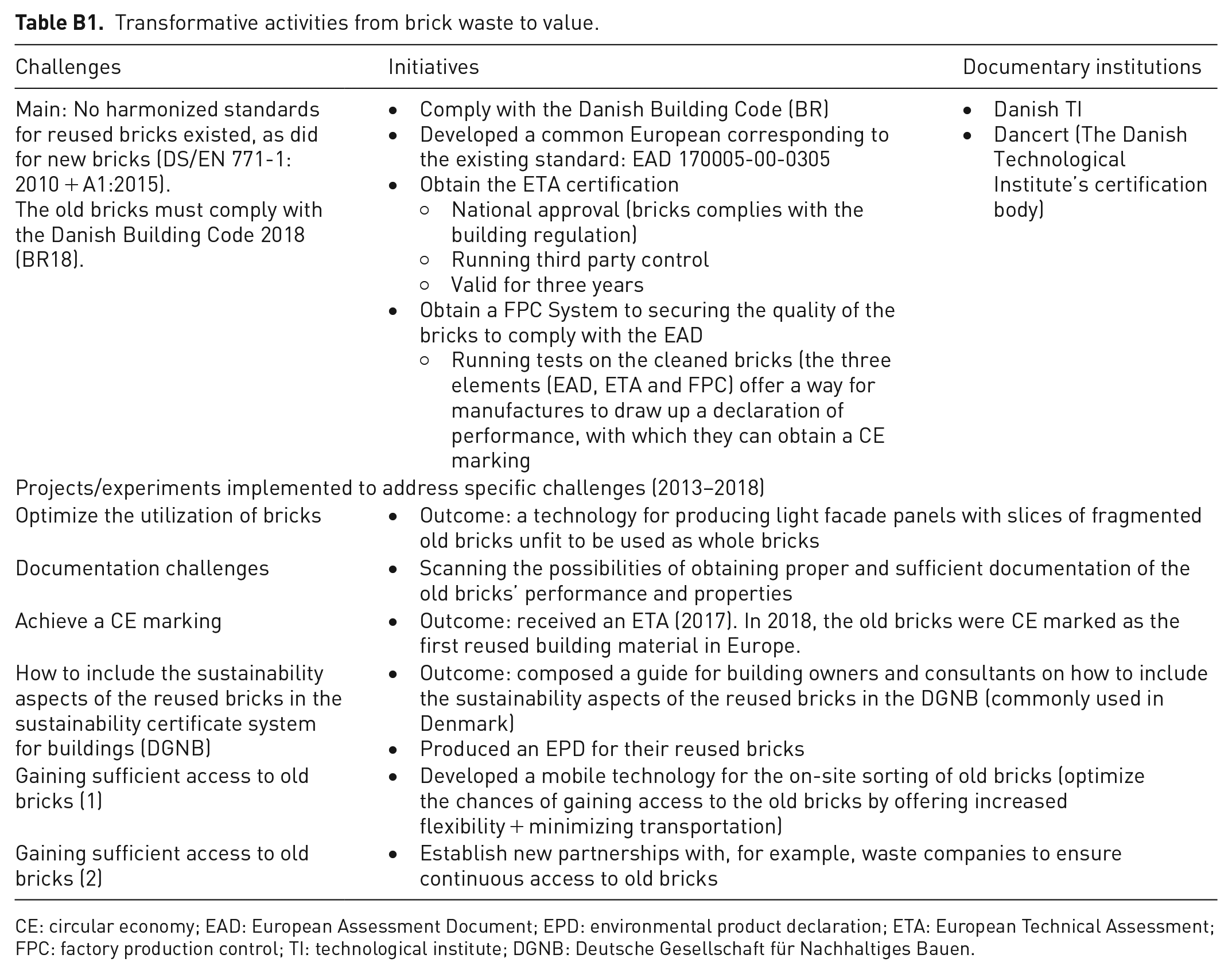
| Challenges | Initiatives | Documentary institutions |
|---|---|---|
| Main: No harmonized standards for reused bricks existed, as did for new bricks (DS/EN 771-1: 2010 + A1:2015). The old bricks must comply with the Danish Building Code 2018 (BR18). |
• Comply with the Danish Building Code (BR) • Developed a common European corresponding to the existing standard: EAD 170005-00-0305 • Obtain the ETA certification ◦ National approval (bricks complies with the building regulation) ◦ Running third party control ◦ Valid for three years • Obtain a FPC System to securing the quality of the bricks to comply with the EAD ◦ Running tests on the cleaned bricks (the three elements (EAD, ETA and FPC) offer a way for manufactures to draw up a declaration of performance, with which they can obtain a CE marking |
• Danish TI • Dancert (The Danish Technological Institute’s certification body) |
| Projects/experiments implemented to address specific challenges (2013–2018) | ||
| Optimize the utilization of bricks | • Outcome: a technology for producing light facade panels with slices of fragmented old bricks unfit to be used as whole bricks | |
| Documentation challenges | • Scanning the possibilities of obtaining proper and sufficient documentation of the old bricks’ performance and properties | |
| Achieve a CE marking | • Outcome: received an ETA (2017). In 2018, the old bricks were CE marked as the first reused building material in Europe. | |
| How to include the sustainability aspects of the reused bricks in the sustainability certificate system for buildings (DGNB) | • Outcome: composed a guide for building owners and consultants on how to include the sustainability aspects of the reused bricks in the DGNB (commonly used in Denmark) • Produced an EPD for their reused bricks |
|
| Gaining sufficient access to old bricks (1) | • Developed a mobile technology for the on-site sorting of old bricks (optimize the chances of gaining access to the old bricks by offering increased flexibility + minimizing transportation) | |
| Gaining sufficient access to old bricks (2) | • Establish new partnerships with, for example, waste companies to ensure continuous access to old bricks | |
CE: circular economy; EAD: European Assessment Document; EPD: environmental product declaration; ETA: European Technical Assessment; FPC: factory production control; TI: technological institute; DGNB: Deutsche Gesellschaft für Nachhaltiges Bauen.
Acknowledgements
The authors wish to thank the project ‘FUTURE’ members and the companies involved. Furthermore, we thank Carl Dalhammar and Henrik Riisgaard for their valuable comments and encouraging discussions on the topic of PfR.
Declaration of conflicting interests
The authors declared no potential conflicts of interest with respect to the research, authorship and/or publication of this article.
Funding
The author(s) disclosed receipt of the following financial support for the research, authorship, and/or publication of this article: The research in this paper is part ofthe project ‘Fremtidens Intelligente Energi-og Ressourcesystemer (FUTURE), funded by Interreg, The Capital Region ofDenmark, and Region Zealand (Interreg ID: NYPS 20201560).
