




Abstract
End-of-life vehicles (ELV) management is becoming a global concern in the automotive industry. However, there is still limited study on supply chain optimisation that focusses on specific ELV treatments. Therefore, this mini-review article analyses the supply chain optimisation for recycling and remanufacturing sustainable management in ELV. A total of 51 papers were reviewed from the year 2016 to 2021. The key topics in each article were assessed and classified into various themes, followed by the content analysis. The percentage breakdown for the six main themes are ELV recovery management system (37.25%), reverse logistic network design (29.41%), ELV economy analysis (15.69%), government regulation or subsidies (7.84%), ELV quantity forecast (5.88%) and ELV part design (3.92%). It can be concluded that ELV recovery management and reverse logistic network design are the top two key focusses of supply chain optimisation priorities that have been extensively applied to improve ELV development. The literature gap has shown that the study on remanufacturing in the ELV supply chain is minimal compared to recycling. The classification of ELV recycling and remanufacturing supply chain optimisation in this study will be beneficial in supporting real-life problem-solving for industrial applications. This study serves as a valuable reference guide to identifying more sustainable solutions in ELV management and promoting the critical focus area for academicians and industry players.
Keywords
Introduction
Recently, environmental issues and sustainable development challenges have emerged as major concerns. The global industries are presently confronted with the inherent problems associated with the considerable rise in demand for different natural resources and the accompanying challenges in satisfying consumers’ needs. Automotive is a fast-growing industry that contributes significantly to global economic growth and has become increasingly important in sustainable waste management. The vehicles that have met the end of their useful life or services due to age limit or are no longer used due to a severe accident are considered end-of-life vehicles (ELV). Wang and Chen (2012) revealed that recycling companies play an essential role in China’s ELV system; however, automotive manufacturers seldom engage in ELV recycling. Karagoz et al. (2020a) stressed that ELV management has become an emerging research subject and underlined the criticality of this field. Arora et al. (2019) indicated that ELV could provide an essential component of secondary raw materials sources for economic benefits. The mini-review conducted by Cucchiella et al. (2016) supported these claims concerning the environmental advantages of properly managing end-of-life (EOL) automotive electronic systems. Zhang et al. (2021) claimed that remanufacturing offers significant cost savings compared to original component manufacturing. ELV management, especially remanufacturing, has a considerable influence on sustainable development for life cycle management and waste reduction in the automobile industry. However, it is still facing complex and dynamic challenges in today’s competitive society.
Karvonen et al. (2015) stated that some automotive stakeholders recognised that ELV could bring many benefits to the three dimensions of sustainability: society, economy and environment. However, the awareness of the ELV concept and its implementation is still poor in Finland. According to Yusop et al. (2012), remanufacturing is still in the infancy in Malaysia’s automotive industry due to a severe lack of expertise and knowledge. The developing countries are still at a low level of effective ELV treatment practices and have poor adoption of advanced technology to increase the product or core (used parts) recovery rate. Raja Mamat et al. (2018) mentioned that the ELV management system deployment in Malaysia showed a mean score of 2.13, signifying a modest performance level. Furthermore, Ngu et al. (2020) indicated that the ELV quantity found in Malaysia is inaccurate. There are roughly five million automobiles between 10 and 15 years old on the road. This depicted that Malaysia faced difficulty in managing and controlling ELV effectively. Many vehicles that have exceeded or are approaching their EOL stage remain operational on the roadsides without appropriate disposal plans and protocols. This caused a severe risk to the vehicle’s owners and other road users. However, the extensive use of the ELV situation in Malaysia is understandable. Ngu et al. (2020) stated that purchasing a new vehicle is not affordable for most Malaysians, predominantly low-income families. Despite raising public awareness about the essence of the ELV circulation in environmental and economic sustainability, the country still did not establish a well-regulated policy for ELV recycling and remanufacturing. Therefore, it is essential to critically evaluate the ELV management approaches and practices by choosing the suitable methodology to extend its life cycle for sustainable development. According to Enyoghasi and Badurdeen (2021), sustainable manufacturing (SM) systems can stretch from production to supply chain. However, the previous study always neglected the discussion on the supply chain level. Rödger et al. (2016) stated that global sustainability considerations and critical manufacturing performance indicators must be paired with life cycle thinking to have a holistic perspective in manufacturing. This can help stimulate effective manufacturing strategies and make SM decisions to accelerate the growth of the ELV industry.
Many review papers have explored ELV research in various areas over the past few years. Table 1 summarises some review papers from the related literature review study on ELV based on their scope and ELV treatments involved. Numfor et al. (2021) performed the strength, weaknesses, opportunities and threats analysis to assess the challenges and opportunities for ELV recycling in emerging economies. He et al. (2020) utilised bibliometric analysis to evaluate the research on ELV reverse logistics. Karagoz et al. (2020a) performed a thorough content analysis (CA) of the ELV management study and recommended possible research paths for future advancement. Ngu et al. (2020) looked into the current issues affecting Malaysian remanufacturing businesses and their potential prospects. Nayak and Auti (2019) addressed the ELV management and the properties of automobile shredder residue. Arora et al. (2019) examined and built a business model with a stakeholder engagement structure to enhance ELV management’s sustainability in India with a shared responsibility framework. Wong et al. (2018) created a novel processing framework using ELV waste from the automotive to construction sectors, introducing a feasible solution for decreasing disposal issues and lowering reliance on secondary sources.
An overview of previous ELV review papers.
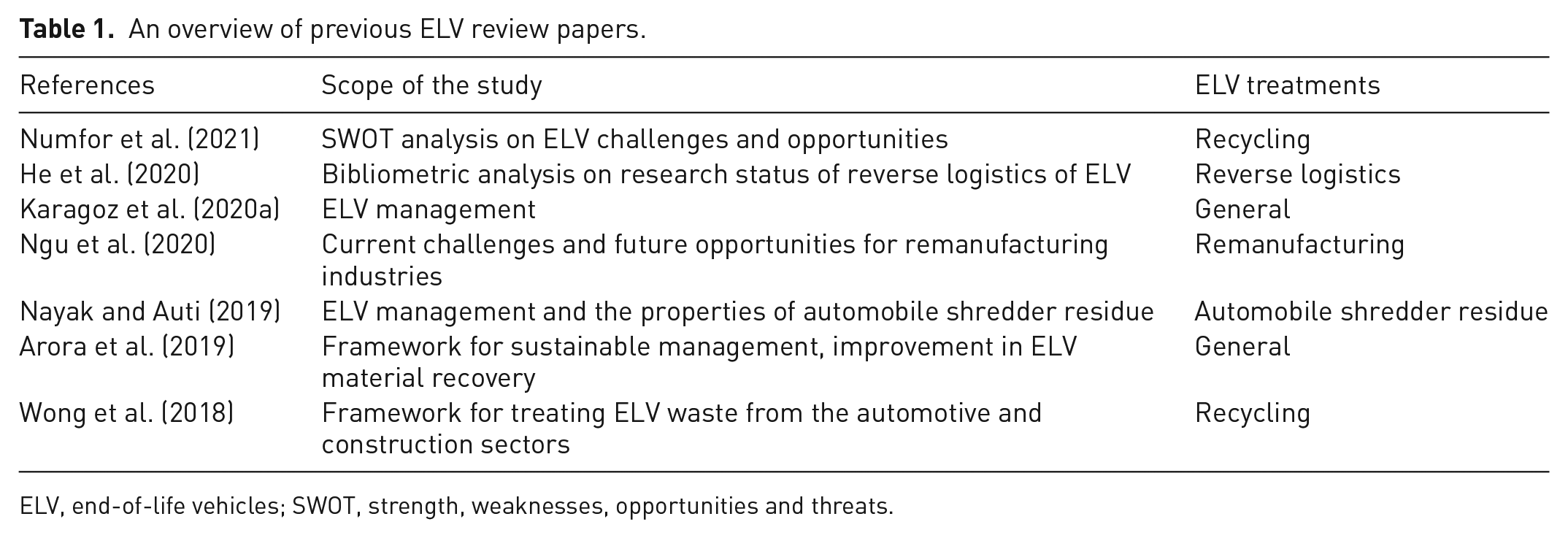
ELV, end-of-life vehicles; SWOT, strength, weaknesses, opportunities and threats.
The above-mentioned review papers are focussed on specific processes or systems in their respective ELV treatments. However, the current review lacks a detailed study concerning sustainable supply chain management, focussing on ELV recycling and remanufacturing. It is essential to require a holistic review of the ELV supply chain optimisation, explicitly emphasising the critical areas of recycling and remanufacturing to close the existing gaps. Therefore, this mini-review article aims to analyse the supply chain optimisation for recycling and remanufacturing sustainable management in ELV. All selected papers are examined and classified into different supply chain themes or topics to gain insight into the literature study. The recommendation for future research is proposed accordingly to address the identified gaps. This research can be used as a valuable guideline to assist the academicians and industry stakeholders in better grasping the specific ELV subjects highlighted for future advancement.
The following are the remaining sections of this article: Section 2 presents the literature review. The overview of the ELV supply chain in recycling and remanufacturing is described in this section. This is followed by an extensive review of the classification of supply chain optimisation for ELV recycling and remanufacturing. Section 3 specifies the research methodology used in this study. Section 4 illustrates the result analysis and discussion. The last section concludes the entire research and proposes future recommendations.
Literature review
The literature review is divided into two subsections to give a deeper understanding of the themes underpinning this study and highlights the paper’s contributions more explicitly. The first subsection presents the general processes involved in the ELV supply chain and reverse logistics. This is followed by a brief description of the ELV recycling and remanufacturing operation. The second subsection critically reviews the relevant literature on supply chain optimisation for ELV recycling and remanufacturing sustainable management.
Overview of ELV supply chain in recycling and remanufacturing
Zailani et al. (2017) stated that companies must first analyse their present supply chain procedures and determine which areas could be improved to incorporate green innovation and enhance the business operations. This will support the elimination of redundancies that can arise in the supply chain. Wang et al. (2019a) stated that instead of being directly disposed of in the remanufacturing supply chain, EOL products could be returned from consumers via reverse logistics through a succession of remanufacturing activities incorporated into the original value chain in a closed-loop life cycle. Reverse logistics is vital to recovering parts and resources from the ELV. Many high-performing companies worldwide focus on optimising reverse logistics and supply chain demand operation in the competitive business environment. Based on the comprehensive literature review conducted by Banihashemi et al. (2019), most past studies concentrated on assessing reverse logistics performance rather than explicitly on the reverse logistics process. Little attention is paid to disposition decisions in the general reverse logistics supply chain and their likelihood of influencing sustainability. Therefore, proper reverse logistics for ELV treatment like recycling and remanufacturing must be appropriately evaluated to choose the best alternative to extend the product’s life cycle for sustainable waste management.
ELV refers to a vehicle that is ready to be scrapped at the discretion of its last owner, as stated earlier. A vehicle could be sent for reuse, refurbish, remanufacture, recycle, or disposed of as it reaches the end of its lifespan. Remanufacturing aims to restore existing parts or components to ‘as good as new’ conditions by using a standardised industrial method with precise technical requirements. While recycling is known as the process of transforming waste products into new materials. Recycling and remanufacturing could improve resource utilisation efficiency, increase raw material circular consumption, and minimise environmental impacts in ELV recovery. Remanufacturing maintains the product’s (or part’s) characteristics while performing the necessary disassembly, sorting, refurbishing, and assembling activities to bring the product to an acceptable level of quality. Ijomah et al. (2007) revealed that remanufacturing includes a higher degree of work content than repair and reconditioning, and remanufactured products often contain better quality. Golinska-Dawson et al. (2015) stated that reverse supply chain management would necessitate a transition to more effective recycling recovery methods reacting to the anticipated supply and demand patterns. Therefore, proper recycling and remanufacturing classification are critical to recovering the raw materials and optimising the product’s resources in the application of the sustainable ELV supply chain.
Classification of supply chain optimisation for ELV recycling and remanufacturing
ELV study involves complex and interdisciplinary fields. Uncertainties are always a major concern in recycling and remanufacturing, especially when dealing with the complexity of ELV management systems and poor reverse logistic networks. The selected papers are grouped and assessed based on their nature and content of study. Karagoz et al. (2020a) performed a comprehensive review on ELV management and classified the publications into four categories: (1) literature survey, (2) recycling, production and planning, (3) network design and (4) regulations review. While Rashid et al. (2021) examined the five major issues in the closed-loop supply chain (CLSC) optimisation research focussing on ELV recycling: network design, inventory management, supply chain coordination, production planning and partner selection; however, these highlighted issues were adopted from Govindan et al. (2015) which is lack of novelty. Therefore, it is worthwhile for this study to analyse the ELV recycling and remanufacturing area to bridge the existing research gaps. The six main groups of this study were defined and categorised based on their related main themes as shown in Table 2. Symbol “X” indicates that the article’s content is fulfilled the corresponding theme.
Category of supply chain optimisation research articles for ELV recycling and remanufacturing.
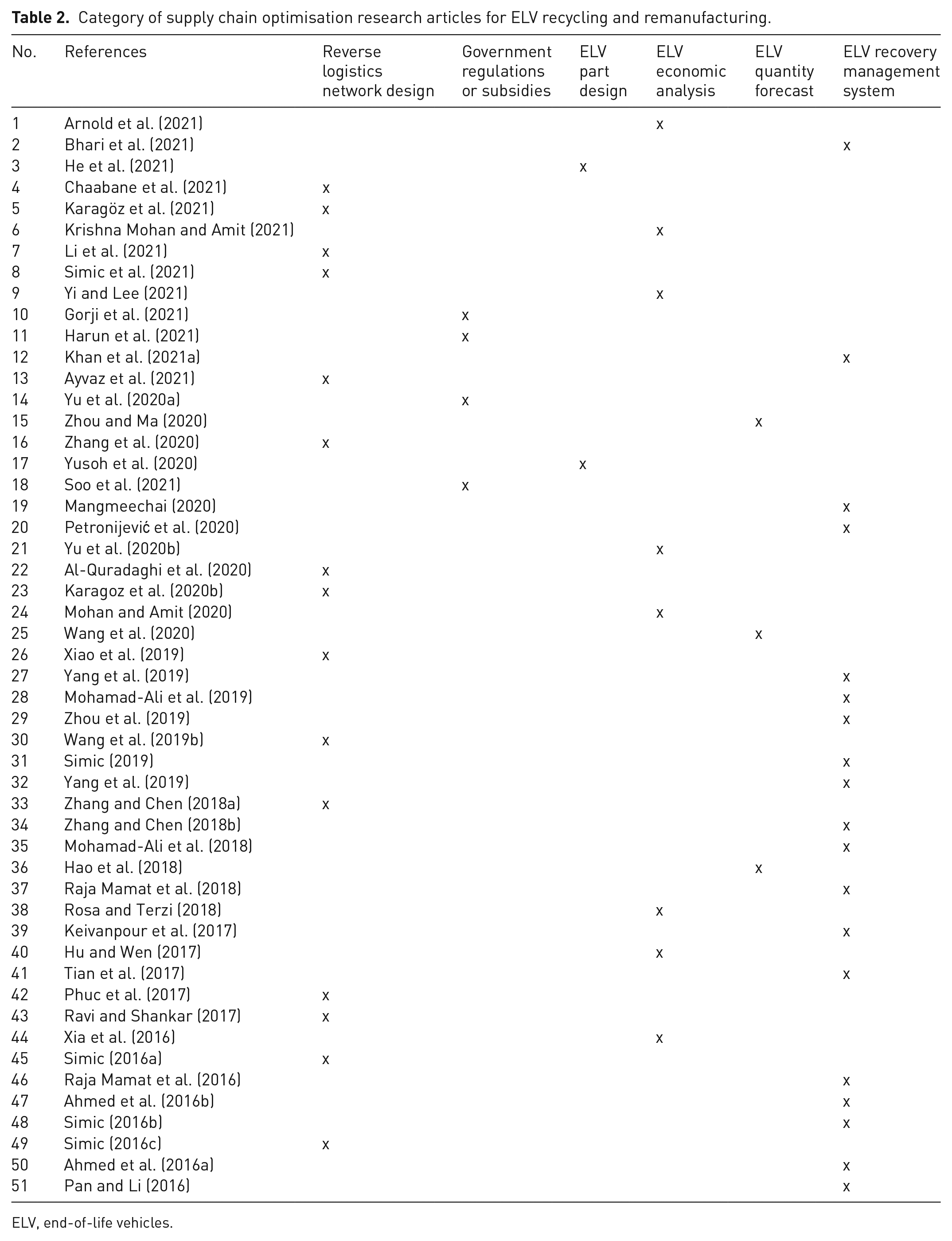
ELV, end-of-life vehicles.
Reverse logistic network design
Alshamsi and Diabat (2015) defined reverse logistics as a set of activities that begins with collecting products at the consumer stage and follows by reprocessing these products at remanufacturing factories. Chaabane et al. (2021) suggested a novel reverse logistics routing challenge for managing the ELV. However, the ELV recovery optimisation is emphasised in the collection phase without a thorough life cycle analysis of the extended supply chain in the industry. Karagöz et al. (2021) adopted the interval type-2 fuzzy additive ratio assessment method to address the multi-criteria and highly variable features of Istanbul’s ELV recycling facility location problem. However, uncertainty and other primary factors that affect ELV management were omitted in this study. Li et al. (2021) adopted the sustainable system layout design method to organise the ELV recycling and disassembly plant facility layout and logistic route for remanufacturing development in China; however, integrating validation support with advanced technological tools is needed to improve the plant layout alternatives for future growth. Simic et al. (2021) used the picture fuzzy sets COmbinative Distance-Based ASsessment (CODAS) method to investigate the problem of identifying a new vehicle shredding plant location in the Republic of Serbia. It is suggested that future studies can determine the priority ranking of evaluation sub-criteria to highlight the importance level for locating vehicle shredding facilities and improving decision-making. Ayvaz et al. (2021) created the reverse logistics network design for ELV to deal with the uncertainties in the supply chain from a sustainability perspective. A resilient network model was proposed to optimise the ELV recovery process flow among different facilities and locations in Istanbul.
Zhang et al. (2020) provided a novel method to examine quantitative and qualitative elements of the ELV plant facility layout problem by using grey correlation, and the Decision-Making Trial and Evaluation Laboratory integrated approaches. However, the literature on selecting the 10 influence factors that affect the ELV dismantling was not clearly described. Al-Quradaghi et al. (2020) presented a generalised five-step framework to design eco-industrial parks and outline the ELV management strategies to promote network synergy in solving the ELV problems. The framework was applied via the simulation model, whereby it still needs to be verified through a practical case study in the industry. Karagoz et al. (2020b) developed an intuitionistic fuzzy multi-criteria decision-making (MCDM) with a CODAS approach to evaluate several possibilities for selecting the authorised dismantling centre (ADC) location in Istanbul. However, the presented technique cannot determine the interrelations between criterion and sub-criteria for locating the ADC, as highlighted by the authors. Xiao et al. (2019) stated that the location and capacity evaluation approaches used in dismantling centres with high utilisation rates have far-reaching impacts on the entire cost of the logistics network. Further research could be conducted to construct the ELV recycling cost analysis models that consider unpredictable amounts of ELV to achieve the optimum utilisation rate in a CLSC network. Wang et al. (2019b) examined the impact of multi-attribute decision-making on the Shanghai ELV reverse logistics business efficiency in the circular economy (CE) perspective to enhance the resource utilisation rate. However, this study did not describe the criteria for selecting two input indicators (fixed assets and employees) and the output indicator (revenue).
Zhang and Chen (2018a) developed a unique ELV dismantling line by employing a flexible transition approach to overcome the complexity of automotive products and the uncertainty of disassembly operations to deal with the rising number of ELV in China. Although the simulation demonstrated a satisfactory output, this disassembly line is only designed for vehicles with similar structures based on the assumption highlighted. It is crucial to eliminate the uncertainties associated with the dismantling process to enhance actual productivity. Phuc et al. (2017) developed a model of a multi-ELV reverse supply chain system with fuzzy parameters and presented a numerical example to demonstrate the capabilities of optimisation. However, the proposed framework for the reverse supply chain of ELV is still subjected to volatility and inconsistent data to achieve feasible solutions. Ravi and Shankar (2017) applied the interpretive structural modelling (ISM) methodology to comprehend the reciprocal impacts of the selected reverse logistics variables (enablers, performance indicators and inhibitors) and their interaction effects in automobile industries. However, the selection of these 15 critical variables is still dependent on the two expert’s judgement and experiences which can influence the outcome of the ISM model. Simic (2016a) proposed a two-stage interval-parameter stochastic full-infinite programming approach for controlling ELV distribution across different degrees of uncertainty. However, the multiple uncertainties presented in this study were not clearly stated for comprehensive ELV allocation management under complex situations. Simic (2016c) suggested a model that can depict dynamics in terms of ELV allocation determinations from a multi-region waste management system to various vehicle recycling facilities. A situational analysis can accommodate the volatility of different simulation factors under multiple scenarios in the identified period.
Government regulations or subsidies
Gorji et al. (2021) stated that the government’s policy acts as a critical role in increasing the collection of ELV by providing subsidies to encourage the collection of a greater volume of ELV. Future studies can be expanded to involve the remanufacturing centre in adapting this centralised (cooperative) scenario to benefit from collecting the ELV. From the survey findings presented by Harun et al. (2021), the public knowledge and acceptability of ELV adoption are relatively poor. Although Malaysia has yet to implement acts or laws on ELV, most Malaysians are cautious about enacting ELV legislation. It was found that the survey’s sample size (58 respondents) used for this study was relatively small, and this resulted in the findings could be lack of generalisation to other states in Malaysia. Yu et al. (2020a) discovered that government subsidies on ELV owners are more effective than subsidising legal recyclers in China, as legal recyclers would receive more business with emphasis on the quality of ELV from the owners. It is suggested that future studies can use the quality of ELV as a moderator variable (or mediator) to examine the complex correlational or causal relationships between the government subsidies on ELV recycling in China. Soo et al. (2021) utilised a quantitative assessment approach to assess the impact of various ELV legislation established in Europe, Japan, Australia, and the United States on the effectiveness of product-based material circularity. This study still lacks a thorough discussion of the critical variables influencing material circularity performances. It is suggested that other indicators can be defined at the process level in future.
ELV part design
He et al. (2021) discovered that the primary strategies beneficial to recycling are raising the usage ratio of easy-to-recycle materials and considering vehicle dismantling in the early stages of product design and development. The assessment of the material selection should be well incorporated into the product design and development stage to optimise the automotive vehicle recyclability. Yusoh et al. (2020) stated that the advanced additive manufacturing (AM) technology could eliminate constraints in the manual repair and restoration of ELV cores to facilitate the automotive components’ design issue. This study adopted the industrial visit method to observe the process conducted on the automotive components; the multiple case studies method is suggested for future research to verify the effectiveness of AM technology application for reparation in the remanufacturing industry.
ELV economy analysis
Arnold et al. (2021) examined the economic viability of dismantling and the impact of multiple factors on extracting electronic components from ELV for high value-added recycling. The cost-efficiency assessment reviewed all the 18 priority components, and the effect of factors can be used to explicitly focus on the individual component for a more in-depth study. Krishna Mohan and Amit (2021) revealed that a rise in the ELV’s price would decrease the profitability of dismantlers, thus influencing the future generations’ ELV price hikes and causing informal dismantlers to exit the market. However, there is a need to examine the dynamic optimisation of plant capacity needed to achieve the equilibrium state in the cost of dismantling for economic sustainability. Yi and Lee (2021) demonstrated that dismantling constituted the vast majority of ELV recycling in Korea, emphasising the need for new policies that provide financial assistance to ELV dismantlers to increase total ELV recycling rates. Further studies should specifically explore the critical stages or steps in the dismantling process to improve the overall ELV recycling efficacy and profitability. According to the simulation results presented by Mohan and Amit (2020), the dismantlers’ dilemma (entry and exit decisions into an unregulated recycling market) limits the dismantling capacity and causes scrap supply to shift. The system dynamic model still lacks a thorough description of the interrelationship between the ELV scrap prices, dismantling cost and dismantling capacity. Yu et al. (2020b) examined the government’s different penalty and subsidy policies on illegal recycling, and legal recycling groups of ELV will be affecting its revenue in diverse situations via an evolutionary game model. The critical variables such as quality and quantity of the ELV are required to assess a penalty and financial subsidy in both groups to improve the recycling profit.
Rosa and Terzi (2018) performed an economic evaluation based on system dynamics methodology to improve the ELV management practices in the Italian context. The ELV recovery chain economic model is built from the perspective of dismantlers and shredders with less emphasis on the remanufacturer’s aspect. Hu and Wen (2017) proposed a framework to estimate the social value and social cost of three Chinese ELV treatment sectors, considering externalities at the consumption and treatment process stages. There is still a lack of integration for the remanufacturing elements into the discussion of the social value aspect of this study. The cost-benefit analysis (CBA) from Xia et al. (2016) revealed that the investment profit is positive, and the ELV recycling firm is financially advantageous and could self-finance in China. One of the most challenging aspects of conducting a CBA for ELV disassembly plant in this study is that several variances and uncertainties need to be considered, as accurate data is necessary for better prediction to increase the reliability of the result.
ELV quantity forecast
Zhou and Ma (2020) developed a strategic plan for the ELV recycling business and the renewable sector in China to improve the ELV recycling quantities prediction accuracy from the modified ‘GM (1, 1)’ forecasting model. However, the lack of sufficient sample data for the ELV recycling industry in forecasting is still the main concern in this study. Wang et al. (2020) forecasted the recyclable EOL Hybrid Vehicle (HV) numbers based on the actual vehicle deregistration rates in Japan while considering the trend of second-hand HV exportation. According to the findings, only 0.11 million waste HV would be recycled in Japan in 2030 under the base case scenario, and none of the three other scenarios will exceed 1 million. Further study would suggest investigating the critical factors causing the significant difference in waste quantity between these scenarios to verify the result. Hao et al. (2018) described a combination prediction model that includes a grey model, exponential smoothing, and an artificial neural network for Shanghai’s ELV reverse logistics industry. However, there is still a lack of detailed description of the identified multiple influencing factors that affect the fluctuation of ELV recycling volume in this prediction model.
ELV recovery management system
Bhari et al. (2021) compared the management performances of ELV flows in Japan and the European Union using material flow analysis. Both countries’ quantitative metrics and aims were not the same; thus, the direct performance comparison is not feasible. Khan et al. (2021a) created the dual-cycle ELV recycling and remanufacturing system to describe the collaborative relationship among the ELV stakeholders under the extended producer responsibility policy. The interaction effect of this dual-cycle system can be extended to explore the ELV market maturity level and the significance level of their relationship. Mangmeechai (2020) stated that there is no ELV management system in Thailand, and the number of ELV per year is not reported. Despite many ELV being discarded every year, very few ELV are transported for recycling activities. This study did not stress the critical factors that cause the ELV management issue in the value chain of ELV, and the relevant measures to mitigate the issue are neglected. Petronijević et al. (2020) developed an integrated approach to deal with the problem of the energy recovery process to improve the sustainable ELV recycling generation rates in the Republic of Serbia. It is noticeable that the ELV recycling system was not properly set up. Therefore, integrating the energy recovery process with advanced technologies into the sustainable model is highly required. Yang et al. (2019) built a group decision-making approach that employs picture hesitant fuzzy entropy and similarity measures to evaluate ELV management solutions utilising picture hesitant fuzzy information. There is still a lack of relevant literature review to justify selecting 19 criteria for creating a sustainable ELV management alternative.
Mohamad-Ali et al. (2019) performed research with key players in the aftermarket chain to investigate the issues and critical factors influencing ELV recovery in Malaysia centred on the stakeholders’ point of view. It is suggested to conduct an in-depth analysis to investigate the interrelationship between these five main factors and their sub-factors proposed in this study to improve the ELV recovery effectiveness. Zhou et al. (2019) employed the ISM approach to assessing the key drivers of Chinese ELV recycling management from the government, recycling organisations, and consumers to enhance the sustainability performance in the automotive supply chain. However, the interconnection of the influential factors among these three stakeholders is not highlighted. Simic (2019) proposed a two-stage stochastic programming model with interval parameters to manage the ELV risks and effectively deal with uncertainty. The created model could not tackle the capacity planning issue for various ELV management system facilities. Thus it is suggested to document the industry best practices or procedures to improve the ELV management’s uncertainties for future study. Yang et al. (2019) developed the framework for ELV management alternative selection to choose the best alternative to deal with the ELV issues in China. However, the highlighted 19 selecting criteria used for evaluation were not described in detail.
Zhang and Chen (2018b) prioritised four alternative ELV dismantling modes using the analytical hierarchy process (AHP) method to establish a decision-making guide to enhance the relevant disposal procedure for ELV management. There is still an insufficiently detailed description of the four criteria, and their corresponding sub-criteria used to evaluate the sustainable ELV dismantling alternatives selection. Mohamad-Ali et al. (2018) stated that it is essential to determine the challenges and variables of ELV recovery to facilitate the formulation of ELV recovery strategies from the Malaysian context. However, as illustrated in this study, the ELV recovery factors that affect the product recovery effectiveness must be integrated into the proposed ELV recovery model for enhancement. Raja Mamat et al. (2018) presented a performance evaluation tool based on the AHP method for deploying an ELV management system in Malaysia. However, the literature analysis was not thoroughly conducted on 8 key success factors and 33 underlying items. Keivanpour et al. (2017) presented a novel method for analysing automobile manufacturers’ strategic decisions to implement ELV green practices, considering the competitive advantages and the relationship between ELV players. The suggested model reflects the uncertainty of the variables and market considerations that impact the stakeholder’s profits. A viable method is provided to analyse automakers’ strategic planning in reacting to the ELV recycling dilemma.
Tian et al. (2017) developed the factors that affected the operation of the automotive components remanufacturing (ACR) industry and suggested a management framework for remanufacturing operations following China’s actual situation. Other key impact factors still need to be identified and incorporated into the presented model with a more comprehensive indexing system to assess the ACR performance metrics among these three different ACR production operation patterns. Raja Mamat et al. (2016) developed a framework for formatting the ELV management system in Malaysia and proved that all the eight success factors’ relationships were significant. However, there is a lack of discussion on the highlighted success factors, and the corresponding 33 underlying items were not thoroughly reviewed. Ahmed et al. (2016b) developed a model to choose the sustainable parameters and criteria for assessing optimal tradeoffs in ELV management alternatives. However, this study faces the limitation in a detailed description of the presented criteria and their interrelationship factors.
Simic (2016b) presented an interval-parameter chance-constraint programming model for managing ELV in the face of stringent environmental regulations. However, there is still a lack of relevant literature review supporting the chosen uncertainties as interval parameters in this study. Ahmed et al. (2016a) used the MCDM methodology to assist decision-makers in selecting the optimal compromise ELV management alternative in terms of the sustainable criteria. However, the limitation of this study is not adopting a sufficient sample size in data collection via survey from the multiple case companies in this field to generate more conclusive results. Pan and Li (2016) evaluated the efficiency and sustainability of the ELV recycling system in China using energy analysis. However, this study presented the energy flows of ELV recycling enterprises but did not emphasise the essence of supply chain elements in affecting the ELV management performances.
Research methodology
This research concentrated on recycling and remanufacturing supply chain optimisation for sustainable management in ELV. Hence, the keywords utilised to find relevant papers for this review were the combination of ‘end-of-life vehicle’ OR ‘ELV’ AND ‘remanufacturing’ AND ‘recycling’ AND ‘supply chain’ in the Web of Science (WoS) online database. Furthermore, only peer-reviewed publications in the English language were selected for review. The papers were limited to the articles (document type) with the years between 2016 and 2021. The study investigated the ELV recycling and remanufacturing supply chain literature in the past 6 years, including the most recent publications in 2021. In the initial stage of paper collection, 100 articles appeared in the search output. The article’s topic, which refers to the ‘titles, abstracts and keywords’, was read through to decide whether it suits the scope of review. Articles that are not related to the field were excluded. Furthermore, the references provided in the relevant literature were reviewed to identify other available information sources. After performing the screening process, 51 articles were finally selected. The articles were classified based on the six main themes for extensive review using the CA. CA is an observational research approach for methodically evaluating the symbolic content of all types of recorded communication and categorising the literature. Duriau et al. (2007) stated that CA is a research approach that entails assessing, and textual coding is used to convert qualitative data into quantitative data. This study adopted the CA method for critical literature review to draw the essential points of the issues raised related to the supply chain.
Results and discussion
Ropi et al. (2020) analysed the problematic areas in mitigating the different risks encountered by Malaysian automobile remanufacturers and determined the appropriate steps to resolve the interruptions and challenges in remanufacturing the supply chain system. Masoumi et al. (2019) presented a process-oriented systematic review to deal with the automotive industry’s sustainable supply chain management issues. This section discusses the review’s findings and assesses the current gaps in the existing literature. Figure 1 shows a percentage breakdown of ELV recycling and remanufacturing studies distribution in the supply chain optimisation. From the extensive literature review, it is noticed that most articles highly emphasise the recycling aspect instead of remanufacturing. This clearly shows that the research and development on ELV remanufacturing are still lagging. Therefore, it requires serious attention from the relevant researchers and academicians as remanufacturing will become a hot topic in the future. Automotive component remanufacturing is the most widespread of all remanufactured main products and become the largest remanufacturing industry across the world (Kamper et al., 2019). However, the remanufacturing terminology is still not clearly defined compared to recycling (Paterson et al., 2018). The public community and consumers perceive that remanufacturing is a kind of reuse that does not create additional value and has poor profit returns. The remanufactured automotive parts are still treated as low-quality second-hand products. The poor awareness of consumers towards ELV remanufactured products obstructs the relevant policy enforcement. It causes slow progress in improving the ELV recovery rate for the entire supply chain in the industry.
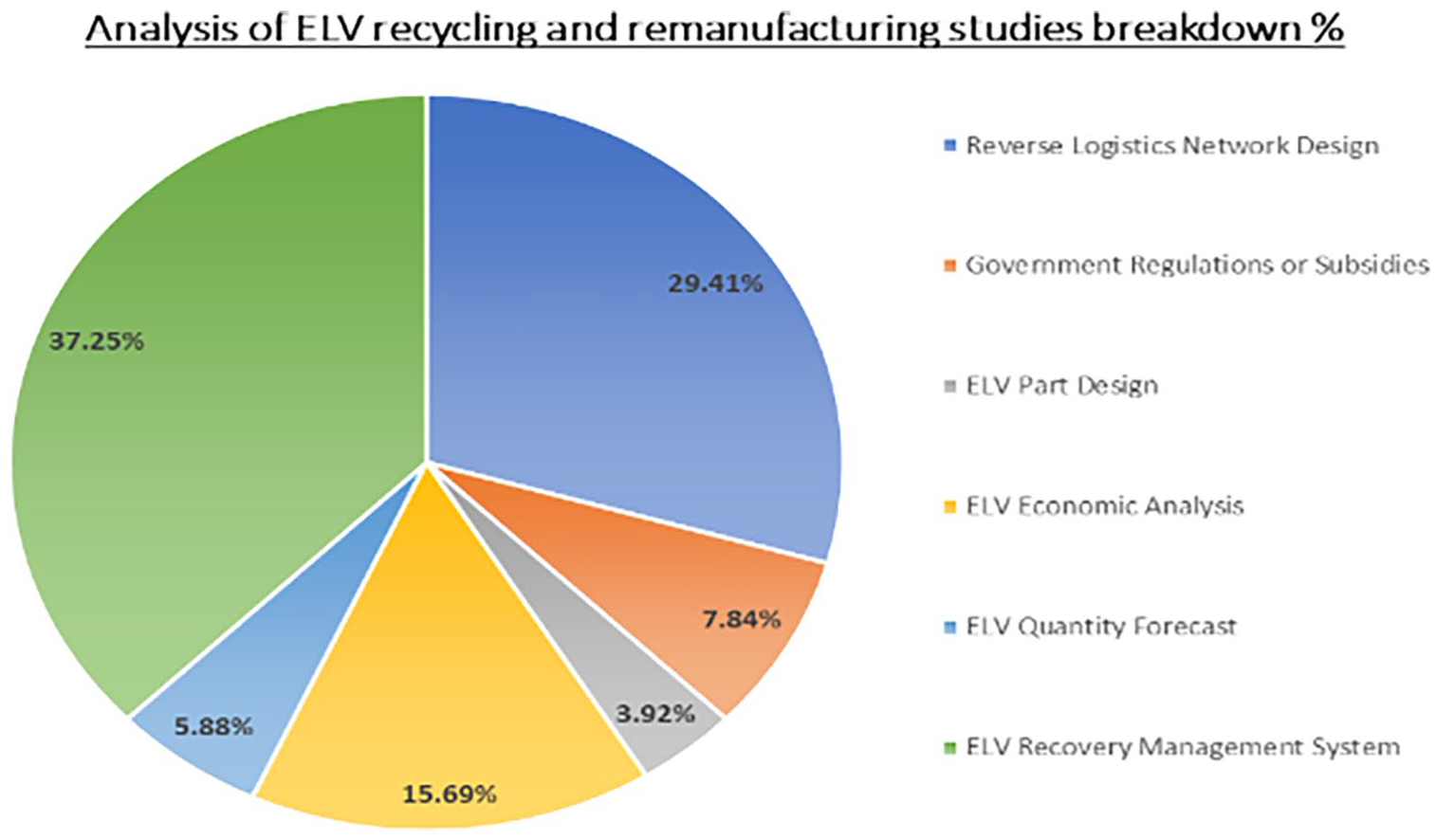
Distribution papers of ELV recycling and remanufacturing supply chain optimisation.
The analysis revealed that the ELV recovery management system and reverse logistic network design-related problems are the top two critical focusses of research areas, with 37.25 and 29.41% contributions, respectively. The literature review study shows that the vital factors that affect the ELV recovery management system and the practices used to address this issue are still not documented. Zhang et al. (2019) suggested a model using the algorithm to provide an efficient quantitative technique to find a compromise strategy to cope with the ELV recovery management problem in an unpredictable environment. The existing review of the ELV recovery management system is still lacking in supply chain management, especially in CLSC. Chai et al. (2021) discovered that the process innovation approaches applied in green product remanufacturing can greatly increase the manufacturer’s recovery rate in a CLSC. Jin et al. (2021) stated that the automotive industry is entering a new phase of technology advancements and paradigm shifts. Therefore, Industrial 4.0 enabling technologies application in ELV recycling and remanufacturing with green management concepts will be the hot topic in optimising the ELV recovery management system. Karagoz et al. (2020a) stated that limited resources and fluctuating volumes of ELV collection had created several risks to the ELV recovery management system. The current ELV remanufacturing business faces the dilemma of uncertainties in streamlining the market supply and demand. Zahraei and Teo (2018) investigated the utilisation of the production smoothing method to reduce uncertainty by creating a network model with numerical examples to optimise safety stocks. However, the strategies to address uncertainty issues differ between nations. Every approach adopted must be tailored to the specific needs of emerging countries and industry requirements to ensure a smooth implementation journey.
Merkisz-Guranowska (2020) defined the design of recycling networks as part of a broader field of study known as reverse logistics. In today’s competitive business climate, many high-performing organisations worldwide are focussing on optimising logistic and supply chain demand operations. Cruz-Rivera and Ertel (2009) stated that the misalignment between conventional and reverse supply chains for the automotive industry in Mexico makes it difficult to salvage the total value of vehicles at their EOL phase; this has caused several ramifications in various sectors. This situation is also happening in many developing countries like Malaysia, which faces a low return rate of ELV or automotive components from the consumers or ELV collectors. This causes the recycling and remanufacturing operation to become more challenging and affects the circularity in the supply chain. Logistics and transportation are critical in ELV supply chain network since ELV must be acquired from multiple areas before processing. As a result, the expenses of shipping, collecting and operating ELV keep rising. Reverse logistics network design systems and management planning are essential to optimise the entire ELV supply chain. This includes recovering waste components and disposing of ELV products under different industry standards. The effective management of valuable core from ELV is essential to developing a sustainable automotive ecosystem. Therefore, the network design to optimise the ELV routing and streamlining plant layout should be adequately developed to reduce costs and improve the value chain of ELV reverse logistics. The interconnection between the ELV recovery management system and reverse logistic network design should be highly focussed on accelerating sustainable production and consumption in ELV.
The study on economic analysis for ELV recycling and remanufacturing comprises 15.69% of the articles examined. ELV’s pricing is the primary driver in remanufacturing operations to regulate sales, profits and potential market share cannibalisation for new and remanufactured products (Liu et al., 2018). Zhang et al. (2021) stated that industrial production’s key fundamental aspect as an essential criterion for evaluating whether the product is worth going for remanufacturing is the economic evaluation. The optimal production and pricing strategy analysis for ELV recycling and remanufacturing should be adequately addressed to enable a seamless process flow. This can create high value-added processes in the entire ELV supply chain and maximise profitability. The primary goal of implementing CE principles in the supply chain is to improve environmental sustainability by decreasing various forms of waste and pollution (Khan et al., 2021b). However, it is observed that the existing review on ELV economic analysis is still lacking discussion in the CE model for sustainable value creation. The effective CBA will position the ELV players to prioritise their available resources in the right place to achieve a higher level of success under the dynamic and uncertain conditions in the automotive industry.
The government regulations or subsidies contribute 7.84% of the reviewed articles. There is not much-related research on government regulations or subsidies in the past several years. Yuan et al. (2020) stated that the remanufacturing sector in China is a fast-growing business that has achieved tremendous development thanks to government regulations. However, the allocation of subsidies would inspire the remanufacturers of the vehicle’s part, but the imposed legislation still limits it. Gorji et al. (2021) stated that the government subsidies policy is an efficient strategy to alleviate ELV in the entire supply chain. This emphasises the importance of close collaboration among various ELV stakeholders to achieve a win–win situation in business profit sharing and improve the ELV recovery. Cao et al. (2020) indicated that government regulations and policy enforcement is crucial when the remanufacturing sector is in its early stages of establishment. Government regulations should serve as guidance to enhance public awareness of ELV treatment and encourage vehicle owners to send their ELV for recycling or remanufacturing voluntarily by providing subsidies. Therefore, the implementation of the government regulations and subsidy allocation will support the stakeholders in dealing with the uncertainty or inconsistency in ELV take-back system in the supply chain. This can prevent the possibility of the ELV cores flowing into the illegal market without proper control and violating the regulations.
The papers from the ELV quantity forecast contributed 5.88% in optimising the ELV supply chain, while ELV part design consists of 3.92%. Singhal et al. (2020) perceived that remanufacturing could only be advantageous and competitive if the products are intentionally made or design for remanufacturing in the first place. Researchers have paid careful attention to the critical quality issues relating to core design and development. Due to a lack of evidence on design-related defects, thus redesigning to facilitate recycling or remanufacturing is challenging. Multiple design and material selection requirements must be implemented simultaneously while maintaining the product’s quality and reliability to fit into the recycling or remanufacturing processes. Mohamad-Ali et al. (2017) proposed a comprehensive approach to evaluate the design solutions by comparing crucial factors in ELV for better recovery efficacy via gathering feedback from various stakeholders. Singhal et al. (2020) indicated that one of the major elements influencing remanufacturing for the CE is design for remanufacturing. Therefore, the ELV part design for recycling or remanufacturing needs to be integrated with the feasible Industry 4.0 technological elements and tools application in data sharing. This can facilitate the effective connection with the downstream processes to improve the product’s quality and circularity.
Wang et al. (2019b) stated that it seems inevitable that the quantity of ELV will skyrocket in the coming decades as vehicle ownership keeps rising. Hao et al. (2018) stated that the precise forecast of ELV recycling quantity is useful in recycling management and helps in facilitating the ELV recycling business’s decision-making process. This will effectively enhance the development and implementation of appropriate ELV approaches in managing the automobile industry in the reverse supply chain. Yu et al. (2020b) stated that the price of standard recycling processing for ELV is enormous; thus, authorised recyclers could benefit from it, provided a large quantity of ELV is collected. However, the findings presented by Mangmeechai (2020) revealed that a considerable amount of ELV are dumped each year, with very few ELV being transferred to recycling facilities, demonstrating the necessity of cross-industry cooperation. Kafuku et al. (2015) stated that remanufacturing faces several limitations in operational and managerial challenges, such as unpredictability quantity of ELV return and availability of cores. Heydari et al. (2018) revealed that customers’ commitment to returning obsolete products is essential in the reverse supply chain since it delivers material or core input into the remanufacturing process. The take-back of a considerably high quantity of ELV from the upstream stakeholders can produce a consistent amount of automotive core returns to the recyclers and remanufacturers to perform the ELV treatment and maximise the output delivery for consumers in the market.
Conclusion
The study of ELV recycling and remanufacturing in the supply chain optimisation field can streamline the efficacy of core recovery management systems and extend the product’s life cycle in the automotive industry. It will assist in facilitating the decision-making process of the ELV related business, including establishing the appropriate ELV policies or regulations to control the ELV activities. This study reviewed the 51 articles targeted at supply chain optimisation for ELV recycling and remanufacturing from 2016 to 2021. The literature review shows the six main themes identified and the study’s percentage breakdown distribution as follows: ELV recovery management system (37.25%), reverse logistic network design (29.41%), ELV economic analysis (15.69%), government regulation or subsidies (7.84%), ELV quantity forecast (5.88%) and ELV part design (3.92%). Therefore, it can be concluded that the interconnection between the top two main focusses in the ELV recovery management system and reverse logistic network design would become highly explored to improve sustainable production and consumption in ELV. While other less highlighted themes also cannot be neglected and should investigate in detail for further advancement.
It is observed that the existing review on ELV economic analysis is still lacking discussion in the CE model for sustainable value creation. The implementation of the government regulations and subsidy allocation will support the stakeholders in dealing with the uncertainty or inconsistency in ELV take-back system for recycling or remanufacturing in the supply chain. ELV part design for recycling or remanufacturing needs to be integrated with the feasible Industry 4.0 technological elements and tools application in data sharing. The take-back of a considerably high quantity of ELV can produce a consistent amount of automotive core returns for ELV treatment to fulfil the market demand. However, this study’s articles chosen for review are only restricted to the WoS online database. Therefore, other similar works not in this database were disregarded for inclusion in the analysis. This study can serve as a valuable reference guide to help identify more sustainable solutions and promote a critical focus area for academicians and industry stakeholders. The classification of ELV recycling and remanufacturing supply chain optimisation in this study will be beneficial in supporting real-life problem-solving for operation management. According to the literature review result, the relevant research on remanufacturing adoption in the ELV supply chain is still limited compared to recycling, which is more commonly known. Therefore, future research is suggested to establish a more comprehensive ELV strategic implementation framework and explore the critical enablers or inhibitors in the remanufacturing supply chain to enhance sustainable development, specifically in this field.
Footnotes
Declaration of conflicting interests
The author(s) declared no potential conflicts of interest with respect to the research, authorship, and/or publication of this article.
Funding
The author(s) disclosed receipt of the following financial support for the research, authorship, and/or publication of this article: The research has been carried out under Konsortium Kecemerlangan Penyelidikan [JPT(BKPI)1000/016/018/25(72)] provided by the Ministry of Higher Education of Malaysia (UTM Vot. No. R.J130000.7809.4L943).
