




Abstract
Food loss and waste have become an issue of global significance, considering their concurrent effects on the socioeconomic and environmental facet of society. Despite this domain gaining prolific attention recently, issues hampering the effective utilization of residues from fish processing usually go unidentified in developing economies such as India. This occurs mainly owing to fragmented supply chains, inappropriate handling, discontinuous cold chains, inadequate temperature monitoring and so on, affecting quality and causing underuse. Any researcher trying to understand the prospects of utilizing these fish processing co-streams in a developing economy with the vision of improving consumption, economic sustainability, reducing discards and promoting circularity faces a lacuna. The authors address this demand in research by identifying the validity of this domain both in the global and native research community by conducting a detailed review using bibliometric analysis and content analysis. Data from Scopus with 717 documents, comprising 612 research articles from 78 countries, 1597 organizations and 2587 authors, are analysed. Results signify (i) developing a focus on hydroxyapatite production, bio-methane generation, transesterification processes, biomass and the rest raw material generated from fish processing, and (ii) reduced research on supply chain-related aspects despite their considerable importance. To comprehend this deficiency, especially in the Indian stance, barriers hindering the utilization of generated by-products are identified, and recommendations for improvements are proposed. The results will provide the struts for a circular and sustainable supply chain for processed seafood in developing economies.
Introduction
Food wastage (FW) has become an issue of global enormity, with 931 million tonnes of edible food being lost in 2019, accounting for a 17 % colossal volume of the global food production. Stresses such as the advent of Covid-19 have risen food insecurity counts to 108 million people in 48 countries (FSIN, 2020), increasing global pressures to regulate food waste/losses occurring in supply chains (Magalhães et al., 2020). The complications of FW gain further attention in a nation like India, which obliges a twofold role of serving the rising global market and its self-growing population. Posing second in occupancy figures after China with a population of 1.38 billion, India incurs an annual loss of INR 440 billion from food waste/loss, sharing 40% in its autogenous food produced (NAAS, 2019). Comprising 14% of the world’s undernourished people (India Food Banking Network, 2021), the problem of FW in India is undoubtedly a topic of concern in recent times. Despite the varied types of FW produced, this article only focuses on understanding the various utilizations possible from product co-streams generated from fish processing. The generated co-streams involve the fish head, viscera, trimmings, bone and cartilage hide tails and wash water. The co-streams are categorized into rest raw materials (RRMs) and by-products based on their usage. Both being process outputs, the former is food grade, whereas the latter is used for producing feed/fertilizers (Mozuraityte et al., 2020; Penven et al., 2013). Literature also indicates an absence of proper terminologies considering generated co-streams. Furthermore, many articles focus on these co-streams as fish wastes in general (Arvanitoyannis and Kassaveti, 2008; Caruso et al., 2020). This can be due to the subjective use of this terminology for being utilizable for some processors and its consideration as waste by others (Adler et al., 2014). Therefore, to account for the utilization of all the co-streams generated, this article considers the term ‘fish wastes’ in the entire manuscript.
Indian fisheries fetch USD 7.08 billion by exporting 11% of their catch (NFDB, 2019). These exports comprise shrimp, frozen fish, squid, dried fish, live fish, chilled fish and other forms of seafood (i.e. processed seafood, surimi etc.). As of 2018, India has an installed processing capacity of 27300 MT seafood/day with 547 registered processing plants (CATR, 2018). Consumption and seafood processing generate several underutilized co-streams that generally get discarded as wastes. India constitutes around 2 MMT of fish waste, with the global fish waste summing to 130 MMT (Binsi, 2018). Seafood wastes produced in India share >4% (Binsi, 2018) amid the worldwide share of 50 million tonnes (McCarthy, 2018). Future estimations citing increment in India’s seafood share from 4.1 to 6.7% by 2030 (ET Bureau, 2020) subsequently indicate an added rise in seafood waste generation. All these lay added stresses to understand the various causes deterring the utilization and commercialization of high-value seafood wastes in India, despite its dominance in research.
In the global context, seafood production has recorded a sharp rise of 20% compared to 148.1 MMT produced in 2010 (Statista, 2020). This has eventually accounted for an analogous increase in seafood processing to counter consumers’ growing demand. Seafood processing generates a large amount of liquid and solid waste (Arvanitoyannis and Kassaveti, 2008) that needs to be managed due to its undesirable ecological effects caused by improper disposal (Arvanitoyannis and Tserkezou, 2014). Though valorization has proved effective in handling fish wastes through the production of fish meal, fish oil, the output of silage (Islam and Peñarubia, 2021) and organic fertilizers (Ahuja et al., 2020; Arruda et al., 2007), the products produced, however, are of low value. The advent of recent technologies nevertheless enables efficient valorizing of high-value products such as collagen, gelatine and enzymes (Kumar et al., 2018).
Fish waste management
Efficient management of fish wastes necessitates the firm espousal of The United Nations Responsible Consumption and Production Goals (i.e. Sustainable Development Goal 12) by encouraging efficient resource management. Supply chain inefficiencies are a plausible reason for the ineffective utilization of fish wastes in high valued products (Jouvenot, 2015). However, significant references cite their utilization in agriculture (Islam, 2006), pet food (De Silva and Turchini, 2008), nutraceutical and pharmaceutical industries (Hayes, 2012) and animal feed (Afreen and Ucak, 2020) with varying margin levels. Arvanitoyannis and Kassaveti (2008) reviewed the treatments, environmental impacts and potential uses of fish wastes. A thorough description of the usage of fish waste was provided by Ghaly et al. (2013). They highlighted that processing fish wastes provided a rich yield of proteins, amino acids and oils. Caruso (2015) stressed the need to impart sustainability by utilizing fish wastes by valorizing them for making fish feed, thereby solving the ecological impacts caused due to the improper disposal of the generated by-products. Nevertheless, a large volume of literature was found on the utilization of fish wastes to produce bioactive compounds (Karkal and Kudre, 2020; Mohapatra et al., 2017; Ramanujam et al., 2016). This has been followed by a rise in review papers on managing fish wastes (Coppola et al., 2021; Hjellnes et al., 2020; Omar et al., 2019), aiding in clarifying the level of research existing in the last decade.
Research influences from India reveal noteworthy contributions from Mathew (2010), who focussed on the utilization of fish wastes and discussed its importance. Sasidharan and Mathew (2011) deliberated on the status of fish waste management in Kerala (India) by explaining the handling capacities of seafood processing industries and stressed a better management practices. Jayathilakan et al. (2012) reviewed the valorizing of animal by-products, including fish and provided an inclusive view of various waste management techniques. Sasidharan et al. (2013) magnified the role played by private players in the Indian waste disposal scenario and underscored the absence of authority control. Rejula and Mohanty (2018) further emphasized developing a structured fisheries waste management technique in India by initiating technification via public–private partnerships and technology commercialization via policy-level initiatives. A similar indication was delivered by Binsi (2018), who weighed the importance of the upgradation of existing valorizing technologies and suggested changes to enhance the valorization of secondary products produced from fish waste.
Among the various studies on fish waste valorization, many studies address the various valorized fish by-products produced. Despite such proficient research, it is witnessed that the existence of high demand products generated is generally meagre and localized to Scandinavian regions (Olsen et al., 2014). It is concluded that a significant gap exists between seafood waste management and other waste management techniques, with the latter having a substantial share of research done, especially in the Indian stance (Sharma et al., 2020; Vanapalli et al., 2021). Considering all the above-discussed factors, a comprehensive review is essential, further succumbing to the nonexistence of studies focusing on sustainable seafood supply chains, especially in India. All of these indicate a discontinuity in the literature on seafood waste management. Hence, the authors try to bridge this research gap using bibliometric analysis by undergoing a detailed understanding of managing fish waste and comprehending research progress in this domain.
Bibliometric analysis
Bibliometric analysis proves to be an effective review system to demonstrate the general state and trajectory of research by providing a concise perspective compared to a conventional reviewing technique (Costa et al., 2017; Qaiser et al., 2017). Introduced in 1969 by Pritchard (Pritchard, 1969), this technique statistically evaluates published literature to measure researchers’ degree of inspiration/adoption of a research topic. The added uniqueness of this technique also lies in its ability to capture the temporal evolution of multiple parameters (Zhu et al., 2019). The validity of adopting bibliometric studies as literature analysing tool is evident from recent research on food security (Xie et al., 2021), blockchain technology (Ante et al., 2021), big data analytics (Inamdar et al., 2020), manufacturing (De Oliveira et al., 2019), internet of things (Bouzembrak et al., 2019), food waste research (Zhang et al., 2018) and so on.
Research novelty
The novelty of this research lies in its twofold approach of understanding the various uses of fish by-products (globally) and highlighting factors inhibiting the effective utilization of fish wastes generated from processing (Indian perspective). To the author’s best knowledge, no study to date has focussed both quantitatively and visually on the domain of fish waste. This research explores the inherent information generally undermined in a conventional review, such as bibliographic coupling and co-occurrence network analysis, and reveals critical research hotspots. This study is additionally made comprehensive by carrying out a content analysis. The research aims to provide a geocentric outcome in the Indian seafood supply chain context by carrying out a barrier assessment.
The research findings will benefit the research fraternity by providing a coherent picture for framing a foundation to conduct valuable research on managing fish waste. The suggested implications being of its kind owing will also positively pave the way for bureaucrats, decision-makers and industry-based practitioners to implement measures for new product development, plan operations, engage in effective policymaking and develop effective marketing strategies; deliberating towards sustainable processing in the Indian context by enhancing circularity. Our research follows the stages proficiently analysed by Li et al. (2021) and aims to address the following research questions (RQs) on fish waste management:
RQ1: What is the present status of research in the global context?
RQ2: What research contexts/hotspots are being explored in literature?
RQ3: Is research in this domain domineered, or is it collaborative (w.r.t authors, countries and organizations)?
RQ4: Identify issues hampering the valorization of fish wastes in the Indian perspective?
Methods
Search strategy
This article adopts a mixed review method assuming both quantitative bibliometric analysis and qualitative content analysis (Du et al., 2021). Primarily espousing a seven-step approach, the initial three steps of the methodology deal with retrieving, sorting and screening relevant information from the selected database followed by analysing, explaining and proposing improvements in the next three steps prior to concluding the derived outcomes. The methodological procedure adopted in this research (refer Figure 1) coincides with that followed by Jia and Jiang (2018), confirming its validity.
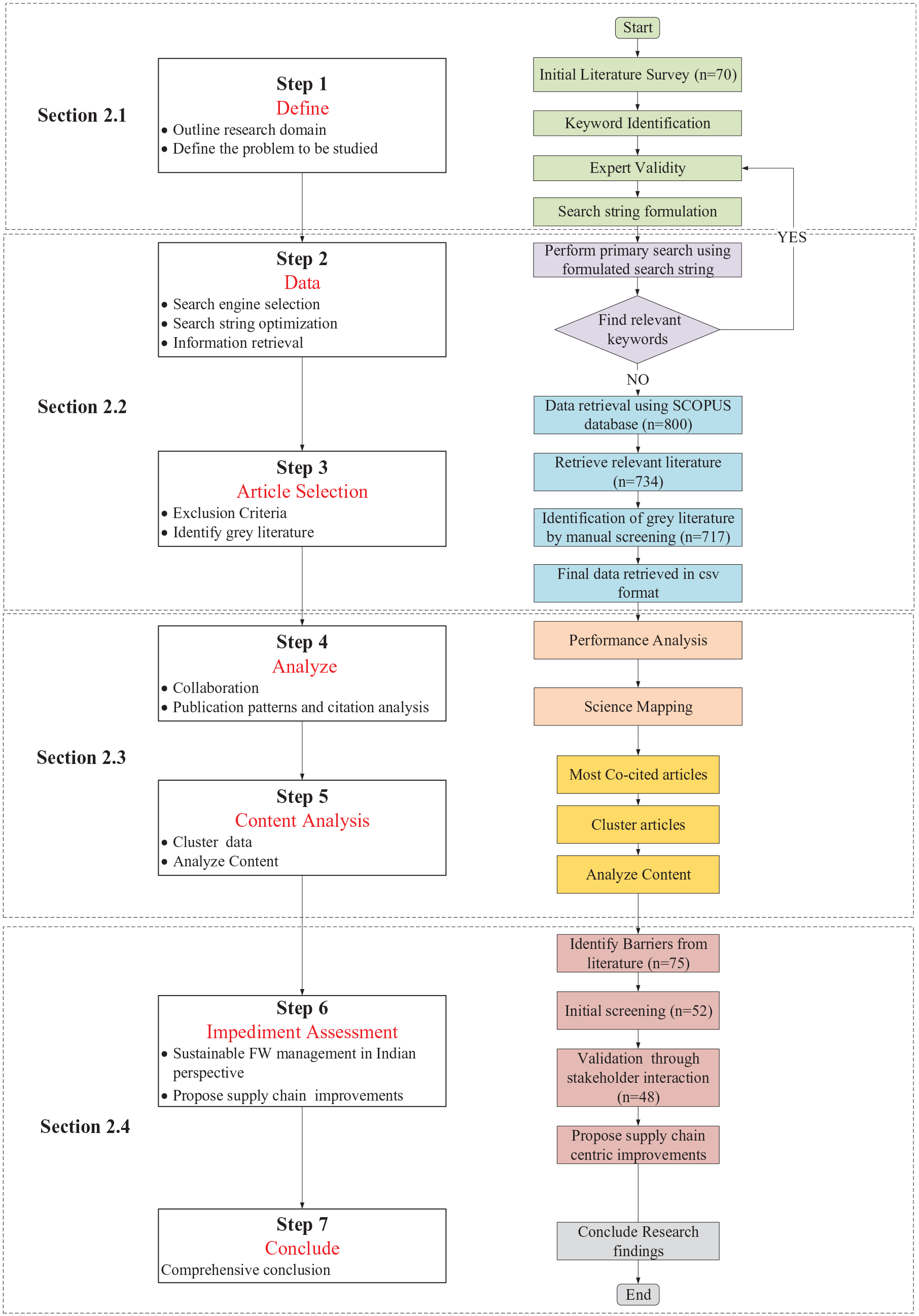
Research flow.
Data curation
Data curation is initiated using the Scopus database. The Scopus database was chosen due to the high scientific quality and coverage compared to other available databases (Mongeon et al., 2016; Pham-Duc et al., 2020). A keyword-oriented search is initially adopted, targeting literature on fish waste and associated management techniques using the keywords ‘fish waste utilization’ OR ‘fish waste management’ AND ‘supply chain management’. The top 70 articles obtained are initially reviewed to expand the keyword search string used. This further expanded the keyword search to words such as ‘fish waste(s)’ OR ‘fish waste utilization’ OR ‘rest raw material’ OR ‘fish by-product’ OR ‘fish waste management’. When searching relevant literature, the keywords mentioned above provided additional keywords such as ‘bio-economy in fisheries’ OR ‘circular economy in fisheries’. The search string revolves around ‘fish waste(s)’ OR ‘fish waste utilization’, OR ‘rest raw material’ OR ‘fish by-product’ OR ‘fish waste management’ OR ‘bio-economy in fisheries’ OR ‘circular economy in fisheries’ AND ‘supply chain management’. This derived a total of 975 documents till December 2020, including contributions as early as 1917. Selection criteria involve the inclusion criteria of published literature only in English (n = 934) and neglects books, book series and trade journals, reducing the total count to 888. An added initiative adopted in this work is the manual screening (filtering) of literature to identify and eliminate listed grey literature. This further reduced the total article count to 717 documents comprising 612 research articles, 82 conference papers and 23 review papers authored by 2587 authors from 1597 organizations and 87 countries subjected to further analysis.
Analysis
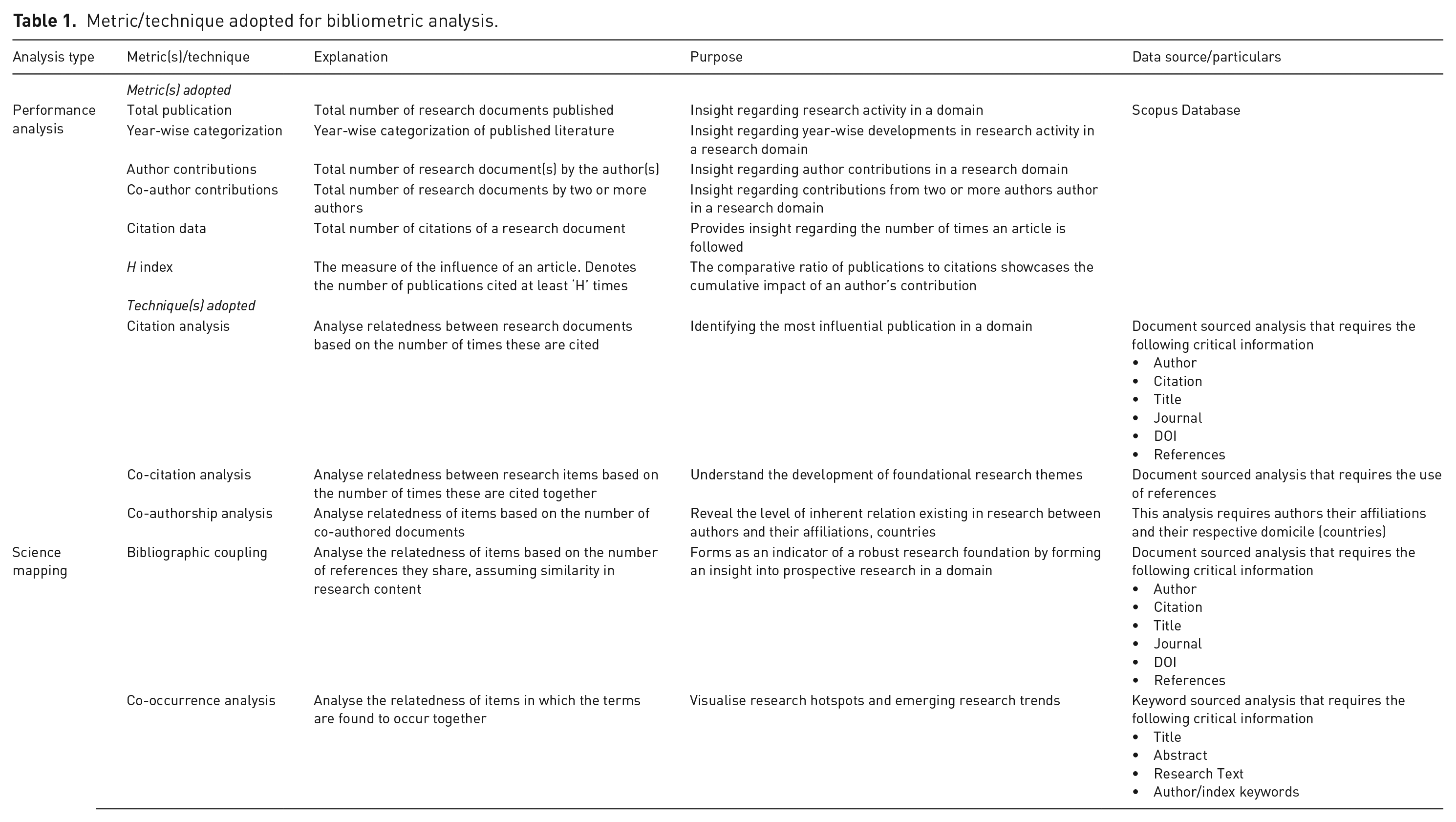
Bibliometric analysis principally comprises the application of quantitative techniques (such as citation analysis) on bibliometric data (i.e. publication and citation data). The resultant data in CSV format from the Scopus website is analysed using performance analysis and science mapping techniques. Performance analysis is a preliminary analysis used to analyse contributions by source, author, affiliation, country, document type, subject area and funding. Being qualitative, this analysis forms a base for any review undertaken (Donthu et al., 2021). Detailed outcomes are revealed using science mapping techniques showing relations between scientific literature and contributing authors w.r.t existing collaborations, analysing publication patterns (at institutional and geographical level) and aid in proposing new research directions (Li et al., 2021). This analysis capacitates understanding the exploratory perception w.r.t co-authorship, co-occurrence, citation, bibliographic coupling and co-citation links (Van Eck and Waltman, 2013). To evaluate this analysis, vital information such as author details, citation information, title, journal, DOI, references, keywords and research text is collected. All results related to the various science mapping analysis used in this research is presented by applying network analysis using VOS viewer V1.6.16 software (refer to the section ‘Network analysis’). VOS viewer is a tool used for creating and exploring maps depicting network data and functions. This is done based on a normalized term co-occurrence matrix and a similarity measure used to calculate the association strength between terms by employing an integrated approach of mutual mapping and clustering (Van Eck and Waltman, 2019). Table 1 details the various metrics/techniques used in this research for conducting the bibliometric analysis.
Metric/technique adopted for bibliometric analysis.
Network analysis
Though a general bibliometric study provides adequate information regarding document/source/author/organization/country, the relation between the mentioned factors goes un-noted. Network analysis presents this relation by circular nodes and connecting lines. Visualizations in the VOS viewer software are represented using the distance-based approach where the distance between the visualized nodes (document/source/author, etc.) indicates the relatedness (i.e. shorter the distance, more vital the relatedness) and the size of the nodes denotes article importance (i.e. citation, number of documents, etc.).
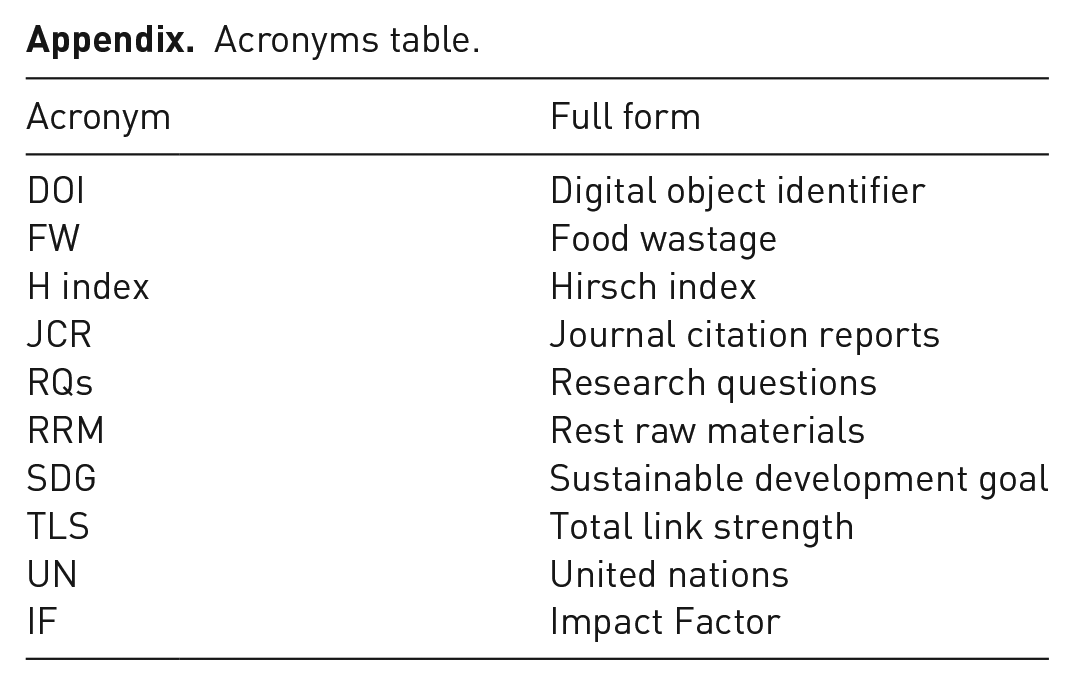
The analysis is initiated by applying the default association strength normalization (Eck and Waltman, 2009). Once normalized, the network is constructed. This is followed by the positioning of nodes using the default ‘visualization of similarities mapping technique’ (Van Eck et al., 2010). Evaluation is carried out using total link strength (TLS) and links. ‘TLS’ measures the extant links between the compared research w.r.t researcher/country/organization (Lancho-Barrantes and Cantú-Ortiz, 2019), whereas links denote the extent of the relation existing between two items. Upon completion, the assignment of nodes to clusters is carried out and represented by unique colours. The clustering operation purposes of generating thematic or social clusters that aid in understanding the development of a research field. A cluster, in general, refers to a set of items included in developed network analysis and is identified using cluster numbers. Clustering in VOS viewer is performed by default using its inherent smart local moving algorithm (Van Eck and Waltman, 2014). The final set of clusters obtained, dependent on resolution, calls for optimal resolutions during network analysis according to the clarity of the derived clusters. The various Acronyms used in this research are tabulated in the appendix section.
Content analysis
Content analysis provides information regarding the existing intellectual structure in the literature analysed (Song et al., 2021) and indicates the correlation between articles by clustering (Costa et al., 2017). This analysis focuses on understanding valuable information available in textual data in a structured and systematic manner. Content analysis is carried out in this research by selecting research articles based on the top co-cited articles, done by the procedure adopted by Du et al. (2021).
Impediment assessment of sustainable fish waste management in India
Based on the results obtained, impediments are suggested with a geo-localized perspective. This section deals with the ambiguities understood from the bibliometric and content analysis and proceeds by posing recommendations that need to be incorporated. The research team surveyed academic literature focusing on perishable foods to understand the antecedents that influence stakeholders in adopting sustainable improvements in the Indian stance. This derived 75 barriers identified from an extensive survey of the literature. A screening questionnaire is developed to filter the identified barriers to avoid discrepancies in the barriers identified. The screening questionnaire filtered the identified barriers to a total of 52 barriers. The identified barriers were further validated and screened through interactions conducted with prime stakeholders of the supply chain (fishers, aggregators, preprocessing centres and processing centres). This finally concluded to 48 finalized and categorized barriers (refer to the section ‘Impediment assessment of sustainable fish waste management in India’ and Supplementary Material for more details). The identified barriers are validated via interactions conducted with 74 stakeholders along the supply chain, with the mode of interaction primarily being offline (face to face) and through telephonic conversation with the top management of processing centres. The developed screening questionnaire is as mentioned below.
Are the barriers related to the objective discussed in this research?
Do the barriers denote sufficient information?
Are the barriers coherent in the perishable food supply chain?
Are the barriers linked with facets of sustainability?
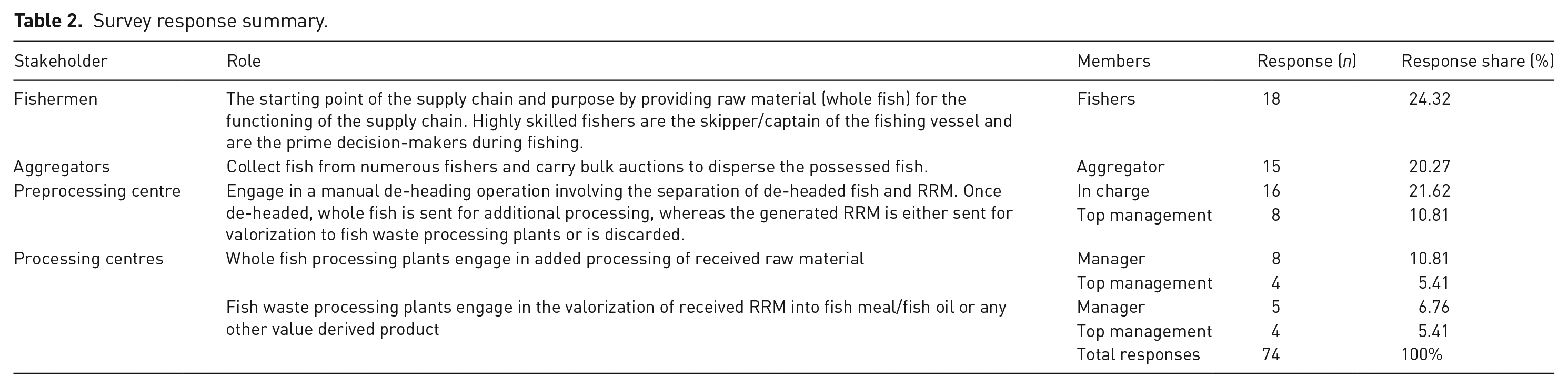
Interviews were conducted with various stakeholders such as fishermen, aggregators, preprocessing centres and processing centres along Sassoon dock in Mumbai (India). Responses were collected between September 2019 and April 2021. Respondent selection threshold was kept to a minimum experience criterion of 1 year in their respective fields throughout stakeholder validation. Table 2 summarizes the details of stakeholders who participated in the validation process. This broad perceptive study conducted throughout the supply chain helped the research team gain an adequate idea regarding the coherency of the identified barriers in the Indian stance of seafood supply chains and also aided in identifying the echelon (member) influenced by these impediments in the supply chain. This is finally concluded using the improvements derived from stakeholder interactions required for the sustainable operation of the seafood supply chain in India.
Survey response summary.
Findings
Statistical overview
An evolution centric study of published literature reveals an exponential rise in article distribution and their corresponding citations from 1917 to December 2020 (Figure 2). A scrutiny of the assessed research articles reveals distribution across 147 sources. Further, break up discloses a sharp rise of 87.58% in publications contributions from 2002 among the entire range of documents assessed. Research contributions also denote a drop/decrease at irregular intervals. This possibly occurs owing to the time in publication and adoption of new concepts/ideas/techniques in the academic fraternity, hence suitably correlating to the fact stated by Van Meeteren et al. (2016).
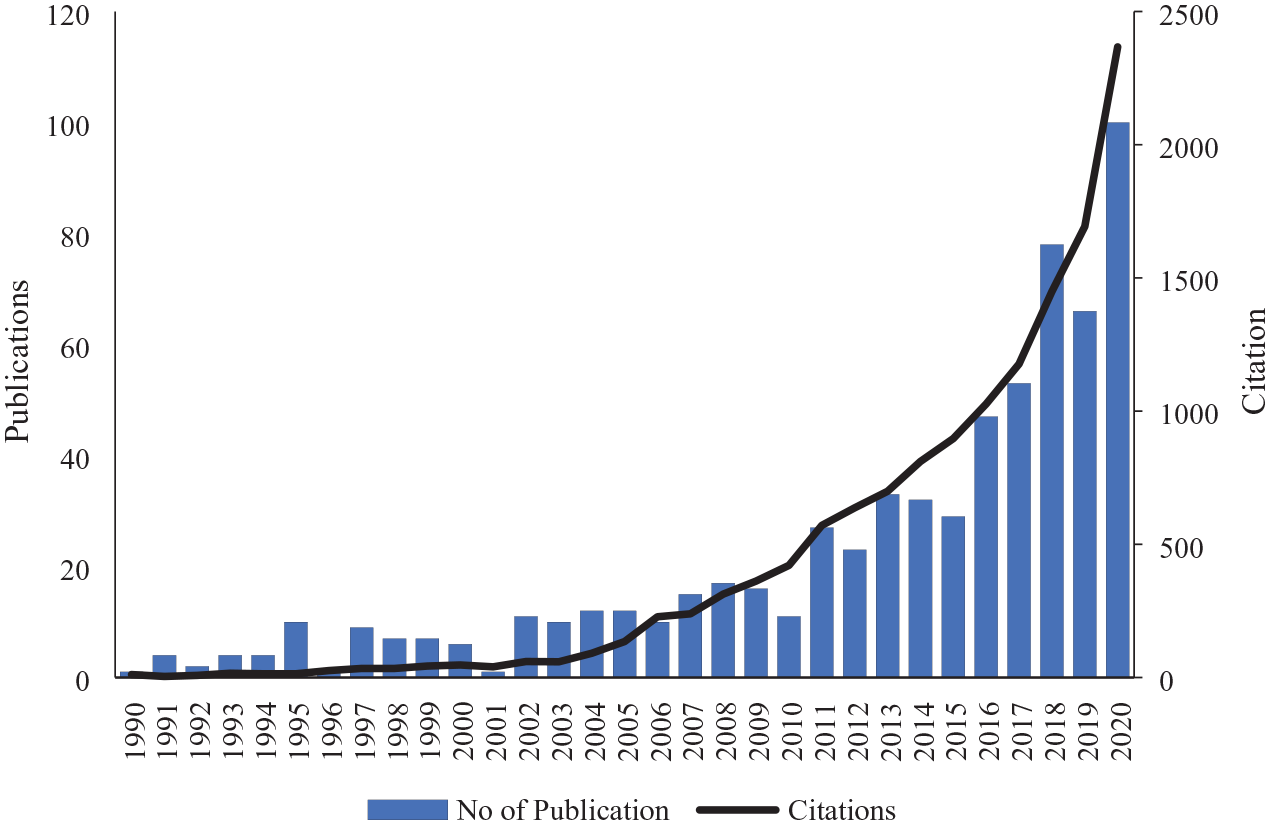
Publication citations and articles (1917–2020).
Source wise contribution
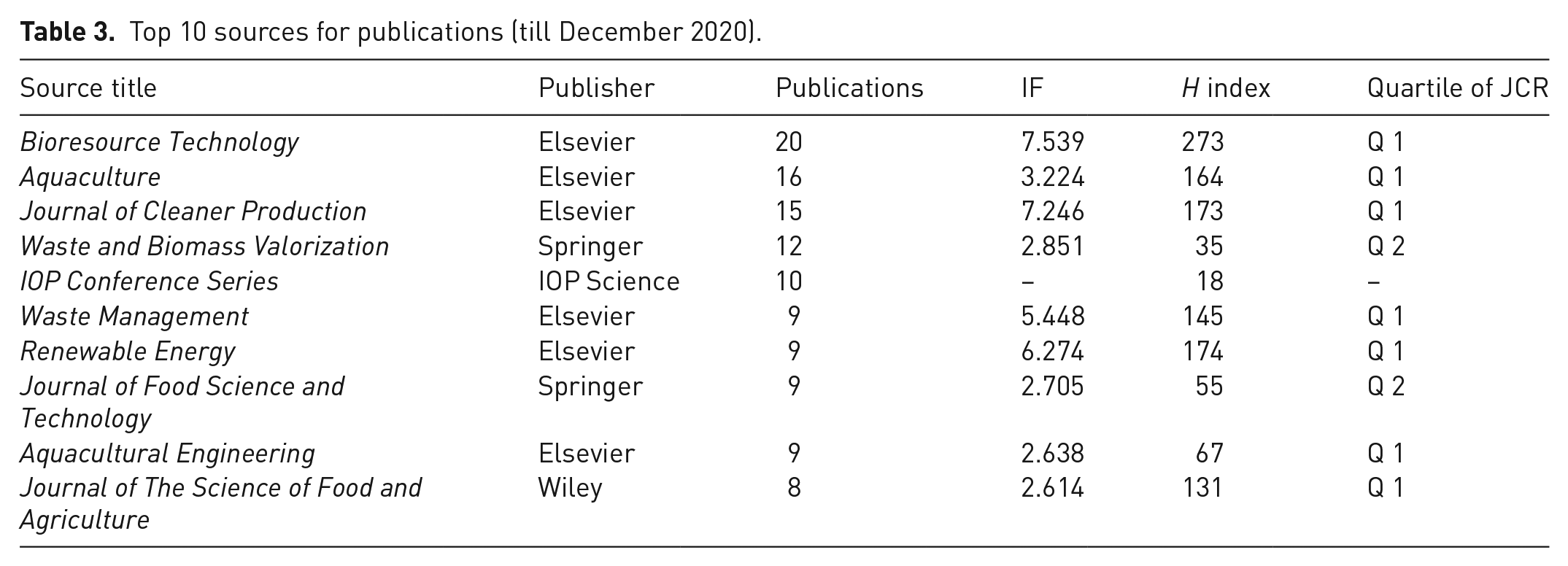
Assessment reveals significant contributions in areas of agricultural and biological sciences (27%) environmental science (15%), with minor contributions in biochemistry, genetics, microbiology and energy and so on (Figure 3). A similarity in the diversification of publications is also visible in publication sources, irrespective of the existing diversification in scopes (Refer Table 3) Scrutiny indicates an increased fondness towards journals such as Bioresource Technology (34%), Journal of Cleaner Production (18%), Aquaculture (15%), Renewable Energy (12%), Journal of The Science of Food and Agriculture (10%), Waste Management (7%) and other publishing sources (<1%), with the former three constituting around 40% among the top 10 sources. A year-wise citation assessment reveals maximum likeliness towards Bioresource Technology and Journal of Cleaner Production, with average sources of these journals exceeding their counterparts, especially in the last decade. However, in terms of total citations, Bioresource Technology, Food Chemistry and Aquacultural Engineering lead the total citation frontier together, having the lion’s share of 51.28% among the top 10 publishing sources. This makes these sources a preferable basis for modern research in fish waste.
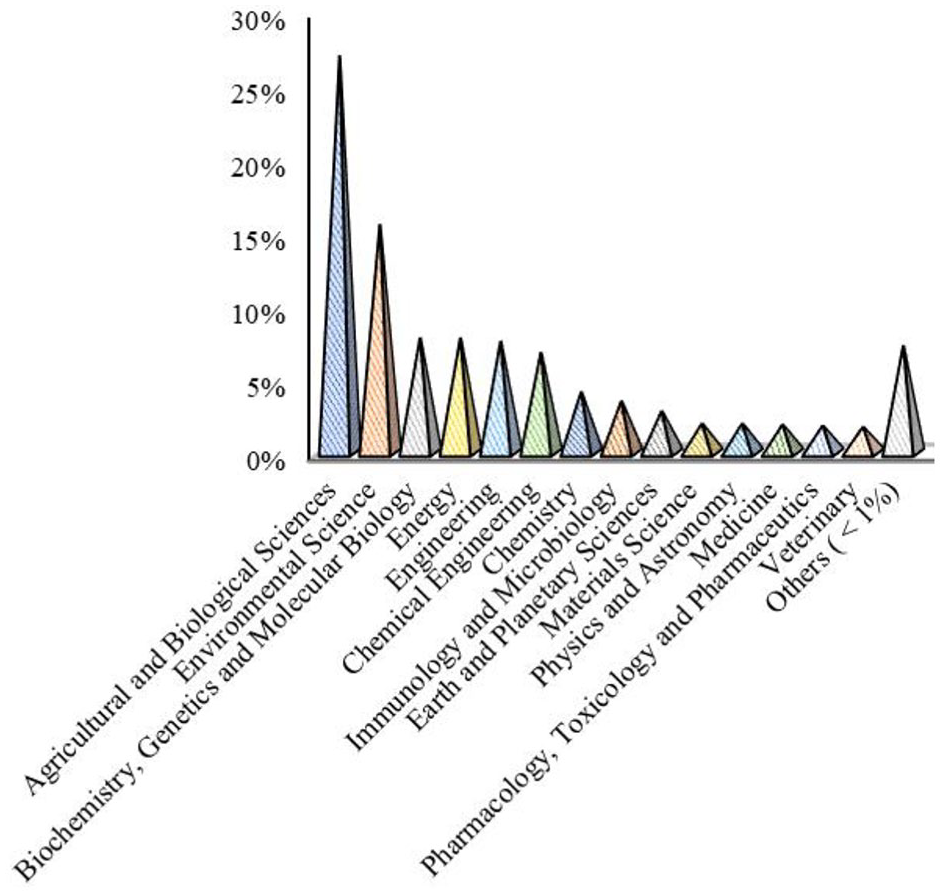
Subject focussed assessment.
Top 10 sources for publications (till December 2020).
Author and country-wise contribution
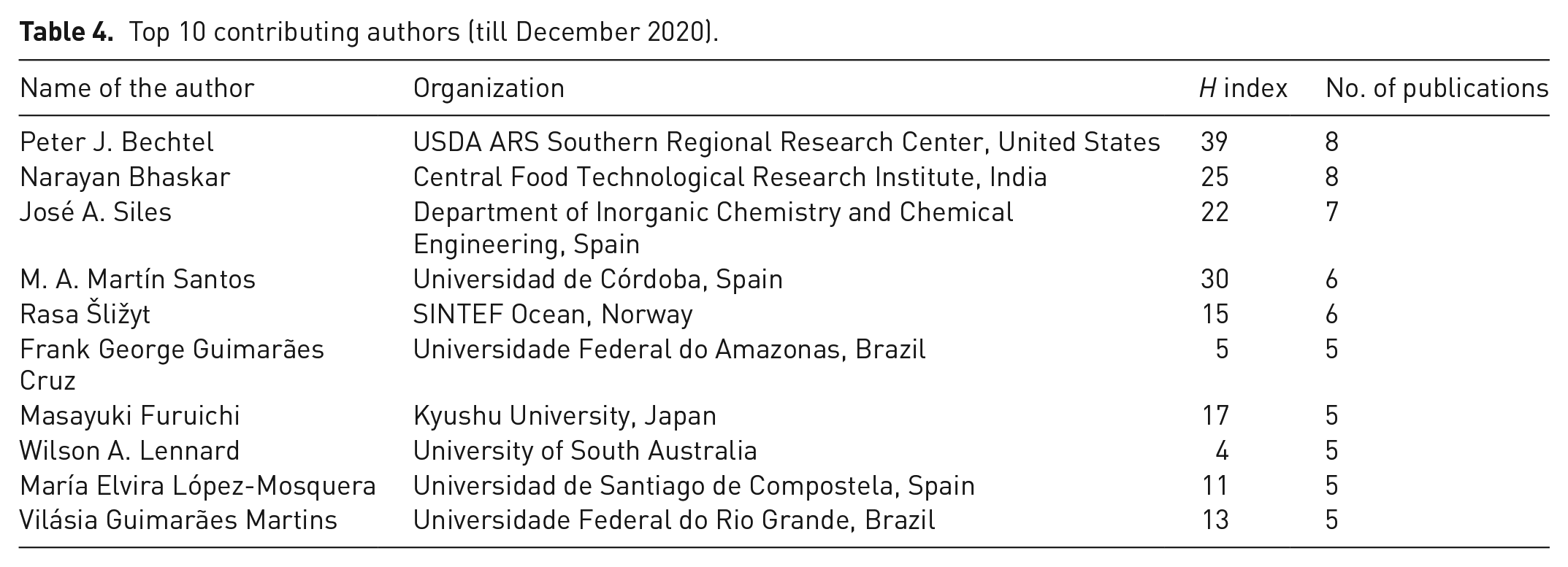
Maximum contributions were from Peter J. Bechtel and Narayan Bhaskar (eight documents each) (Table 4). Analysing the geo-local contributions reveal that India leads the list in global contributions (99 documents), followed by the United States (87 documents) and Brazil (51 documents) (Figure 4). It is worth noting that the United States spots the largest share of citations despite holding the second position in the percentage of overall publications. The adaptability of published literature (in terms of citation) seems higher for developed countries (80%), whereas the volume of publications supersedes for developing nations (53%).
Top 10 contributing authors (till December 2020).
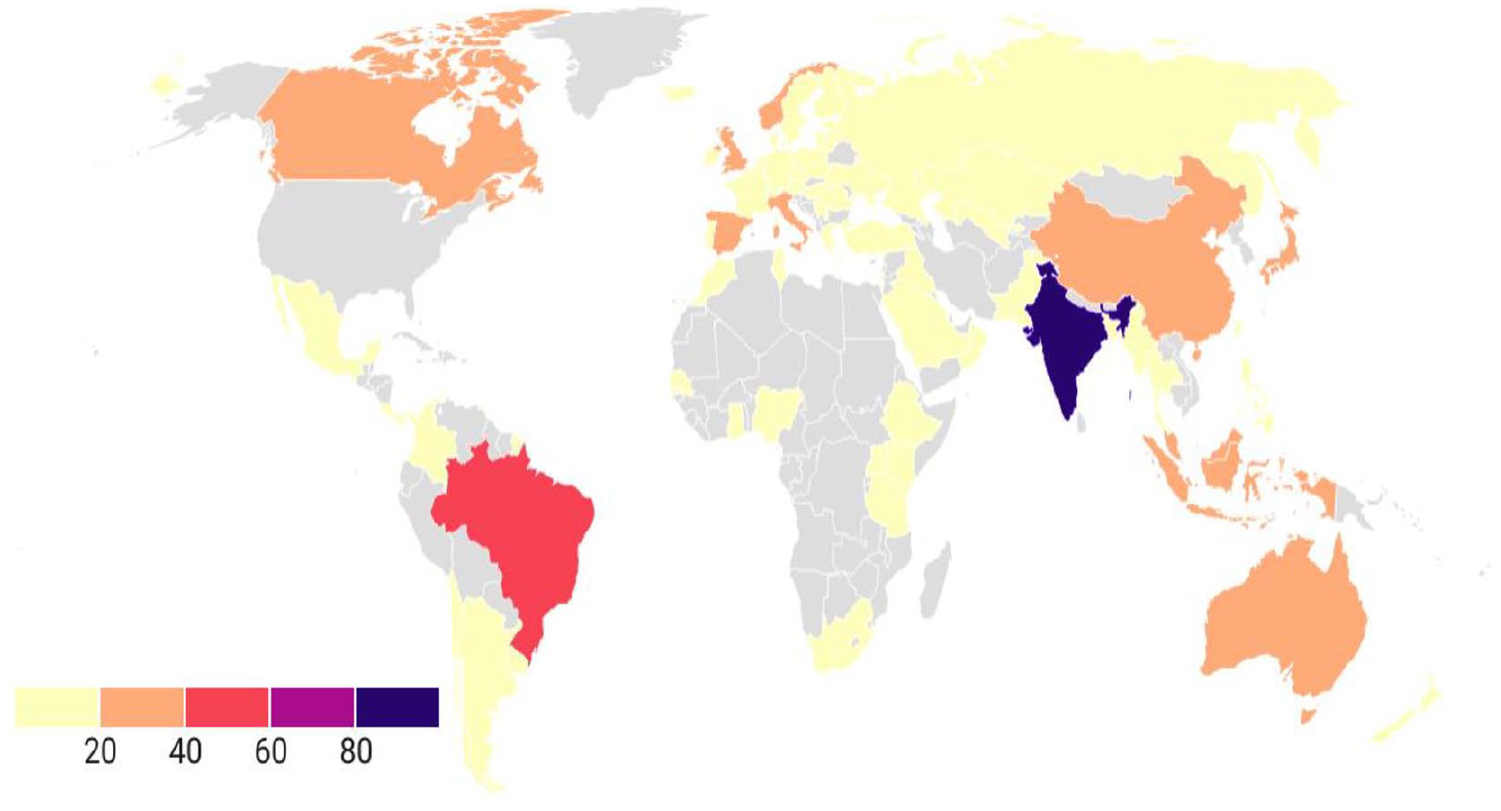
Global distribution of publication density (numbers represent publications).
Affiliation share
One hundred and sixty organizations were found to have contributed to the domain of fish wastes. The maximum contribution was cited from SINTEF Ocean, Norway, solely contributing 12 publications (1.96%). Universidad Federal do Rio Grande (Brazil), University of Alaska Fairbanks (United States) and Norges teknisk-naturvitenskapelige Universitet (Norway) each contribute 11 publications (1.79%) in the domain of fish waste management. Organizations from developing nations contribute 40% of the leading contributors, evidently showcasing maximum contributions from organizations located in developed countries. Brazil (Universidad Federal do Rio Grande – 1.79% and UNESP Universidade Estadual Paulista – 1.31%) tops the list in terms of a developing nation contributing to the domain of fish waste, followed by India (Central Food Technological Research Institute – 1.47%) and Malaysia (Universiti Sains Malaysia – 1.31%). A citation-based ranking on the organizational deliverable, however, deliberates that the University of Alaska Fairbanks and USDA REE Agricultural Research Service (both belonging to the United States) ranks as the most cited organization, followed by Central Food Technological Research Institute (India) and SINTEF Ocean (Norway). Hence, the outcomes mentioned above satisfy RQ1 by presenting the status of research on fish waste management in the global context.
Co-occurrence analysis
Co-occurrence/keyword analysis primarily reveals the core topics addressed by the research community in recent times. Figure 5(a) and (b) signifies the keyword network aiding in understanding the interlinks between research using keyword specifics and representing a keyword cloud. These interlinks/lines represent the strengths and relevance of the analysed keywords (Mishra et al., 2021). In Figure 5(c), letter sizes indicate keyword occurrence frequency among the assessed literature, representing the most popular terms.
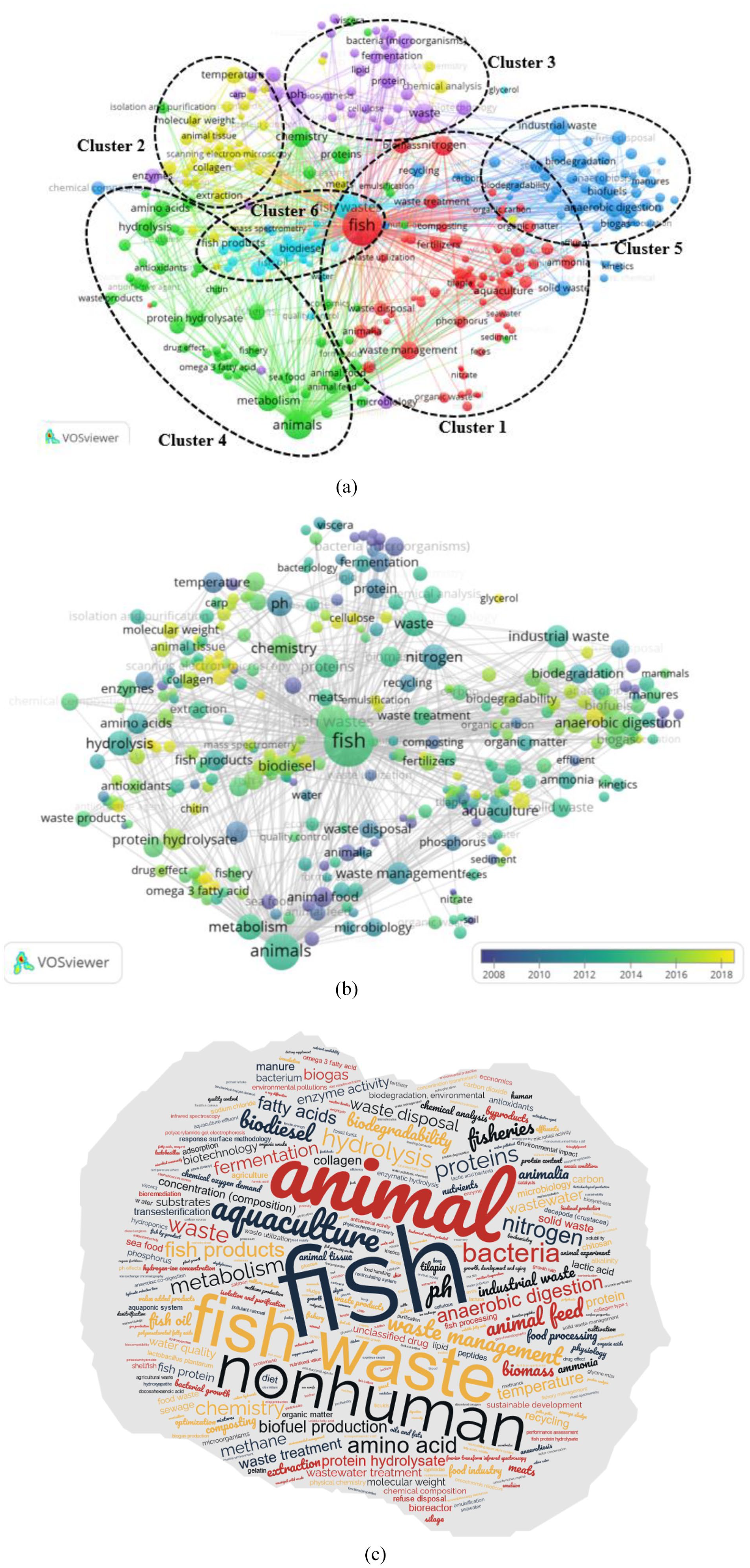
Keyword network with (a) clustered index keywords (note: threshold criteria of minimum four keywords, resolution = 0.8), (b) trends in keyword usage (note: threshold criteria of minimum four keywords, resolution = 0.8), and (c) cloud of frequency of keywords.
Keyword assessments reveal the importance of deriving biodiesel (Yahyaee et al., 2013) and biogas (Salam et al., 2009) from fish waste as an ecologically sustainable fuel alternative. Nevertheless, the generation of these value-added products using anaerobic digestion makes this digestion technique also a renowned term used by researchers (Bücker et al., 2020). Researchers have shown the ability to efficiently generate biodiesels using the transesterification process (Jung et al., 2019), improving the recovery of value-added products. Production of animal feed from fish by-products has also seen rising adoptions recently (Afreen and Ucak, 2020). This can be cited in aquaculture’s rising adoption in populous nations like India and China (Mo et al., 2018). Fish waste (such as skin and bone) generated from fish processing, being rich sources of collagen, has found increased usage via extractions and characterization, thereby expanding the scope of collagen extraction from fish waste (Mahboob, 2015). Fish wastes have also found profound usage in fish oil extraction for leather tanning and the production of hydrolysed oils (Saranya et al., 2020; Nascimento et al., 2015). Another well-renowned method is the process of fermentation, majorly used for silage production (Lindgren and Pleje, 1983) and animal feed production (Faid et al., 1997). Recent times have seen this process as a potential technique for handling environmental issues caused by fish wastes/fish by-products (Marti-Quijal et al., 2020). Other products produced involve generating high-value compounds such as bioactive peptides and antifungal compounds. Scrutiny also reveals recent trends towards recovering oils and fats using enzymatic hydrolysis (Fadhil et al., 2017). Author keyword analysis primarily reveals significant contributions and combinations existing between fish waste(s)–biodiesel, fish waste(s)–aquaculture and fish waste(s)–anaerobic digestion.
The top 10 identified keywords based on the frequency of occurrence and TLS is reported in Table 5, signifying the average year of occurrence. Keyword valuation carried out considering the last four years’ research (i.e. 2017–2020) indicates the rising emphasis on hydroxyapatite, bio-methane, waste management, biofuel, transesterification, biomass and RRM in the domain of fish waste(s). These indicate interest among researchers, encouraging the addition of prodigious work and satisfying RQ2.
Top keyword occurrence.
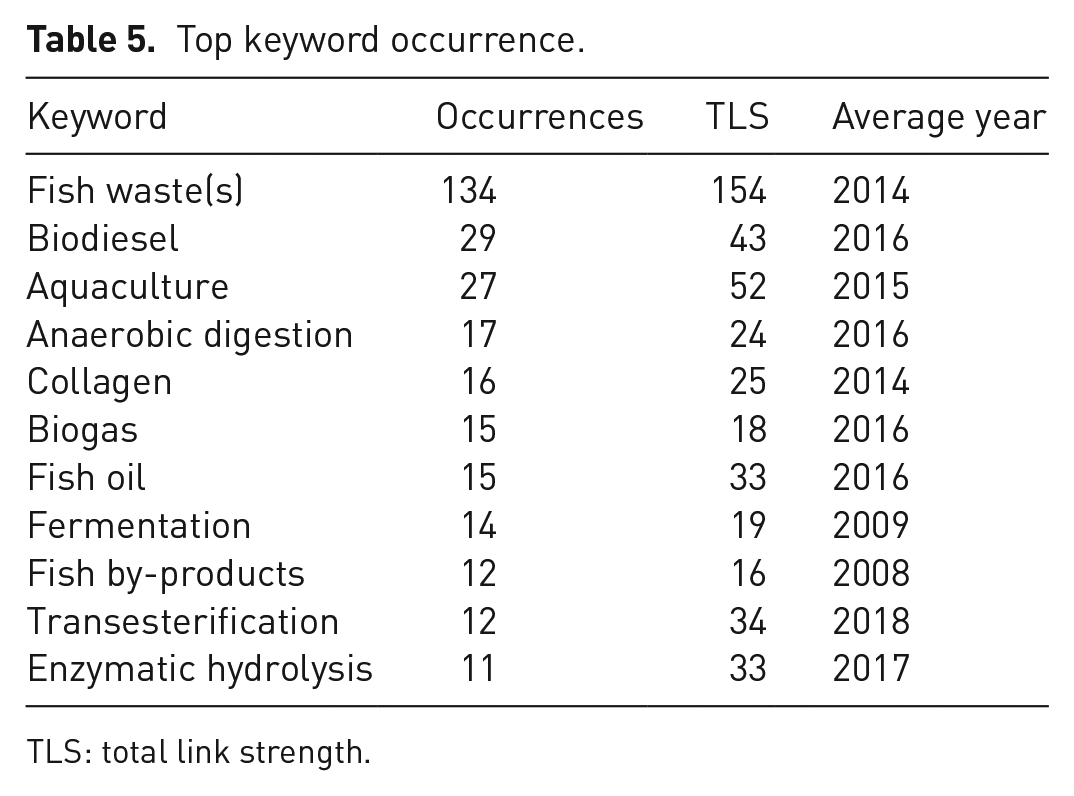
TLS: total link strength.
Hydroxyapatite has recently found increasing interest among research groups. This is evident from the synthesizing studies by Yamamura et al. (2018) from fish wastes. This extraction modus has even reached prodigious heights of having its own review work done by Omar et al. (2019), clearly citing its rich influence on the scientific community.
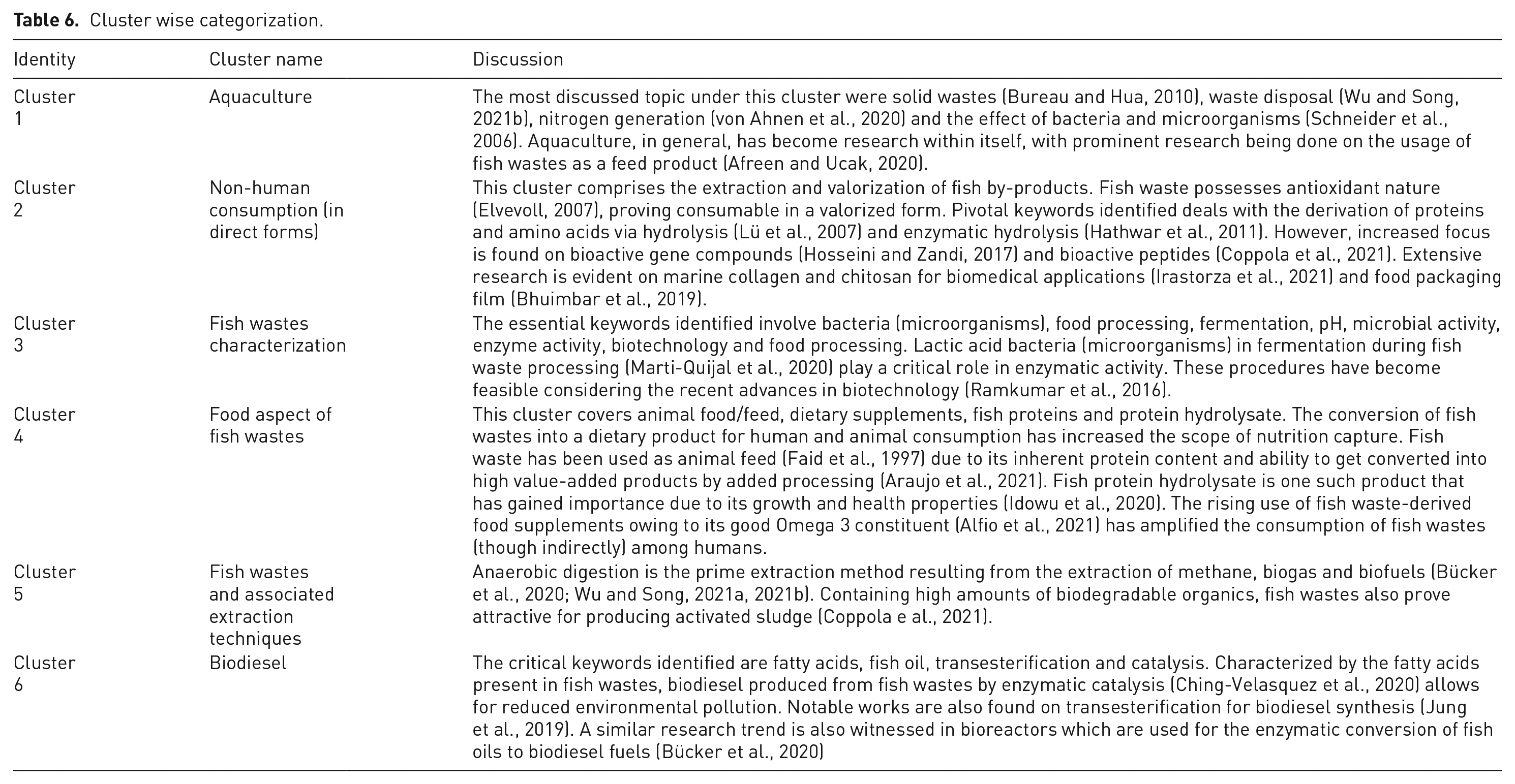
In general, both author and index keywords indicate the prima foci of research, with index keywords highlighting an increasing focus on concepts that author keywords that fail to detail. To analyse and identify the research hotspots evident via analysing index keywords, we categorize the various keywords into clusters using the innate software functionality. Cluster analysis reveals the categorization of keywords into six clusters. Despite variations among keywords between clusters, there happen to be visible coherences existing between analysed clusters. Outputs from the cluster analysis have been detailed in Table 6.
Cluster wise categorization.
Network analysis
This analysis is initiated by conducting bibliographic coupling, citation, co-citation and co-authorship analysis to understand individual interrelations between authors, countries and organizations. This will enable in understanding the undertaken research collaborations and citation dependencies across various strata hence satisfying RQ3. Representations are primarily interpreted using circular nodes and connecting lines, revealing the number of citations and co-citations achieved.
Bibliographic coupling
This analysis achieved by coupling bibliographic data aids in identifying adopted collaborations to solve a particular research problem (i.e. fish waste management in our case). Ranked using the TLS values (mentioned in parenthesis), this analysis denotes the link between two different documents that cite the same document (i.e. they share the exact references). Documents have a strong bibliographic coupling depending on the significant coexistence of references existing between publications. Bibliographic coupling is performed within top authors, top countries and top organizations. Table 7 reveals the outcomes from the bibliographic coupling. Valuable contributions are evident from developed countries despite a significant share from developing nations such as India, China, Brazil and Malaysia with India topping the list of developing nations offering substantial contributions to the domain.
Bibliographic coupling of top authors, countries and organizations.
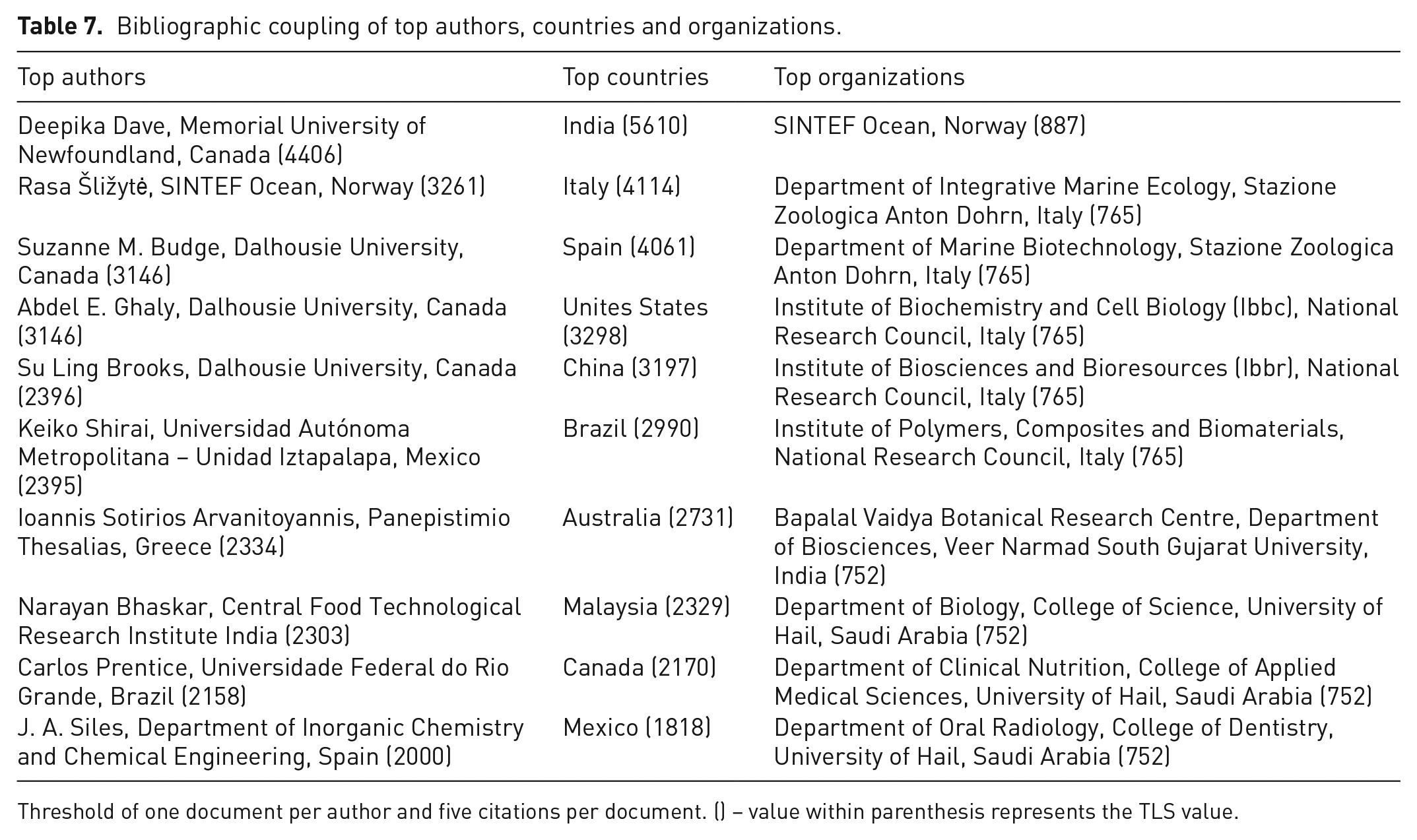
Threshold of one document per author and five citations per document. () – value within parenthesis represents the TLS value.
Citation analysis
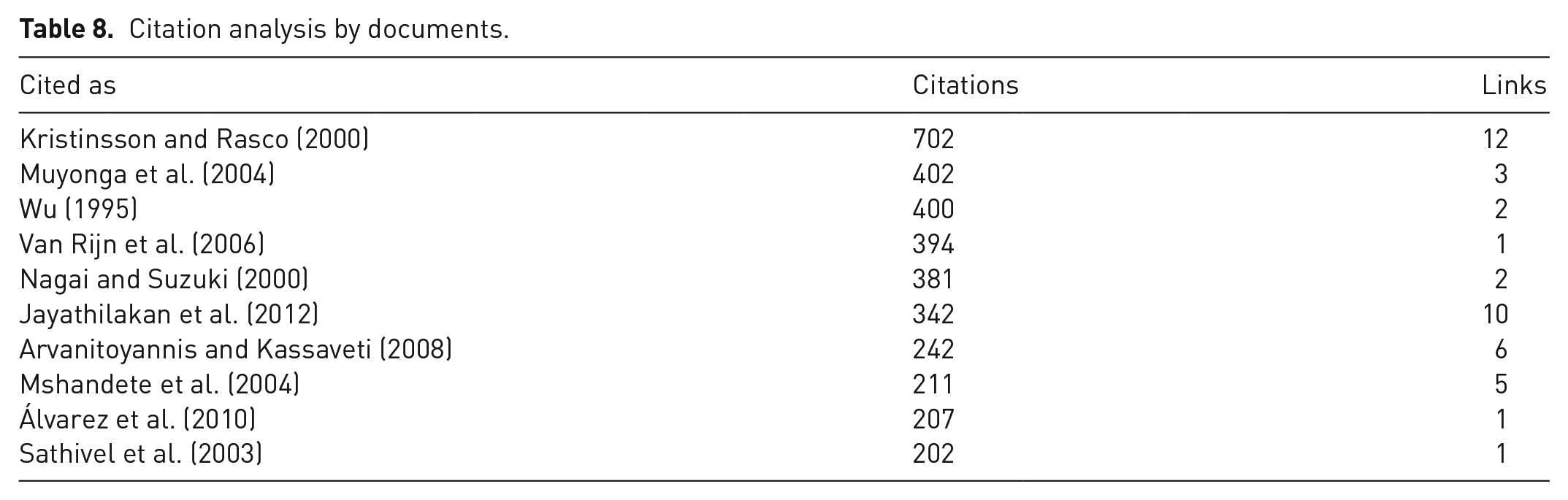
Majorly used as an indicator for measuring research influence (Bonilla et al., 2015), a citation analysis measures the scientific quality of a research/researcher/organization/country. Despite older papers gaining large citation counts compared to recent contributions (Bornmann and Williams, 2013), the likelihood of being discovered decreases due to outdated research outputs. This gets further evident from Table 8, where research by Kristinsson and Rasco (2000) has garnered higher citations than Wu (1995). To further explore the influence of research, citation analysis is adopted across documents, countries and organizations (Figure 6).
Citation analysis by documents.
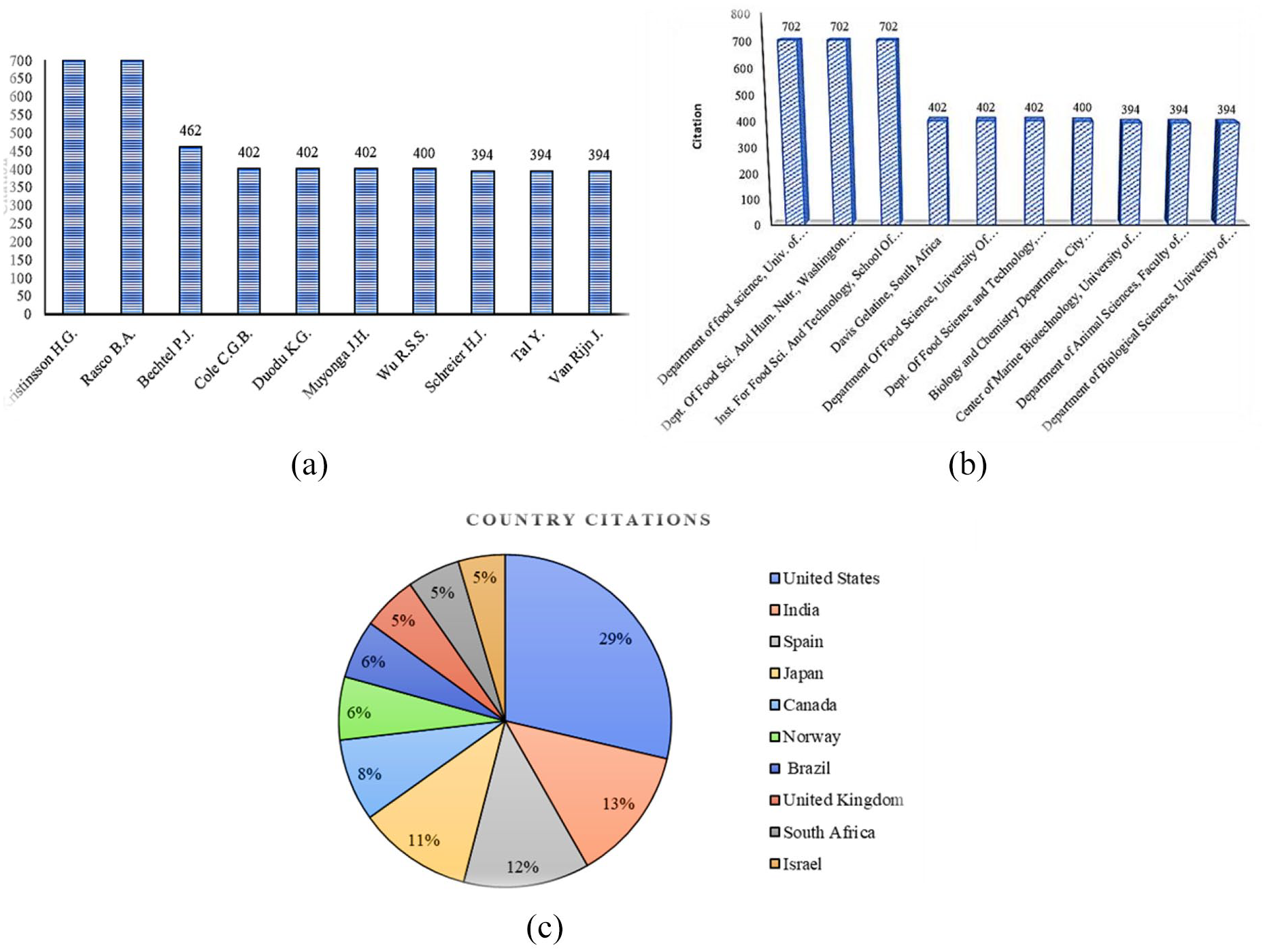
Citation analysis: (a) citation by authors, (b) citation by organization, and (c) citation by country.
A document intended citation analysis (Table 8) reveals the contributions of Kristinsson and Rasco (2000), Muyonga et al. (2004) and Wu (1995) to be the most cited documents (citation
A similar analysis focusing on countries reveals the United States to be the most cited country with 2928 citations, followed by India and Spain. Organization wise citation assessment shows that the University of Massachusetts, Washington State University and the University of Washington (all from the United States) are the most cited organization, constituting 14.34% of the mentioned documents among the top 10 highly cited organizations worldwide (Figure 6). As a reiterative technique, a bibliometric analysis of the organization’s contribution revealed similar outcomes validating the contributions achieved.
Co-citation analysis
The analysis is an indicator of the relationship existing between two documents. This analysis forms ideal for establishing thematic relevance between research fields if two recent research articles quote two other older articles. Therefore, it creates a co-citation value of two, thereby establishing scientific contributions based on demonstrated scientific knowledge (Small, 1973).
An insight into the top 10 authors by co-citation reveals that around 6 authors have a citation above 100, with 1 author exceeding 200 sources (Table 9). Network analysis further reveals a working prominence in works by Soottawat Benjakul with Fereidoon Shahidi, Asbjörn Gildberg, Hördur G. Kristinsson and Moncef Nasri. Combined works are mainly evident with Fereidoon Shahidi, who have often worked together (Benjakul et al., 2012). Soottawat Benjakul is also found to be contributing with Chantachum et al. (2000), Klomklao et al. (2009), Thiansilakul et al. (2007), Phanturat et al. (2010) and Nalinanon et al. (2011). A similar collaboration is also witnessed among Asbjörn Gildberg, Rasa Šližytė and Hördur G. Kristinsson (Thorkelsson et al., 2009). To gain a more profound directive, a reference-based co-citation is also carried out (Table 10). A large amount of co-citation was also found to exist between three prominent publishing sources, that is, Food Chemistry (867 citations), Aquaculture (792 citations) and Bioresource Technology (709 citations).
Top 10 authors by co-citation.
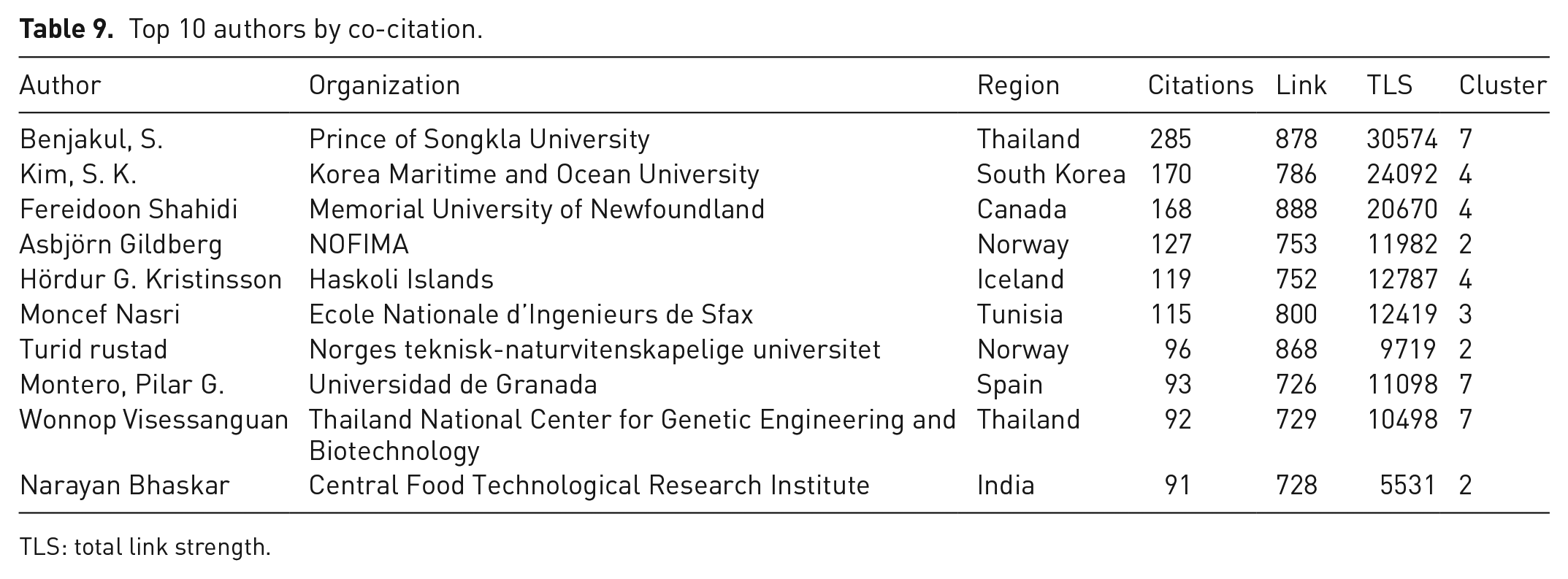
TLS: total link strength.
Top 10 references by co-citation.
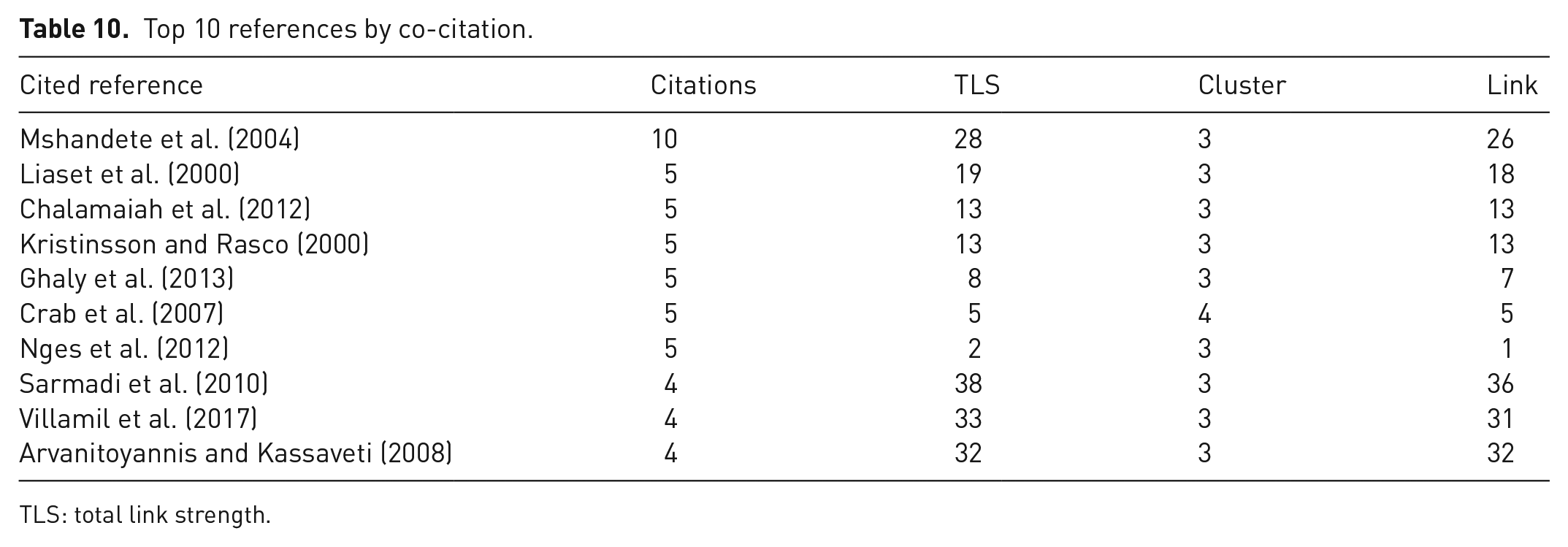
TLS: total link strength.
However, an analysis is carried out to understand the correlation between the top authors and top references (by co-citation). Results reveal augmented contributions from Benjakul, S., Shahidi, F., Gildberg, A., Kristinsson, H.G. and Visessanguan, W., who have had noted impacts in terms of contribution and referencing. Among the top 10 references (by co-citation), 4 were published by the top authors (six authors) enlisted by co-citation. Mshandete (Anthony Manoni Mshandete) is a Professor of Biotechnology at the Nelson Mandela African Institute of Science and Technology. The second most co-cited reference belongs to Bjoern Liaset, who works at the Directorate of fisheries at the Institute of Nutrition, Norway. Furthermore, the network analysis reveals that 9 references (all belonging to cluster 3) were co-cited among the 10 references found via co-citation, except Crab et al. (2007). This represents an unbroken link being progressed by the research loop that requires insight.
Co-authorship analysis
The analysis assists in revealing the scholarly collaborations given the contributing authors, countries and organizations (Uddin et al., 2012). Setting an initial threshold of one document per author with a minimum number of five citations, the contributions of 1364 authors out of the 2587 authors assessed are presented. The primary analysis of the authors shows the formation of seven clusters (Figure 7(a)), with each cluster posing its contribution. Strong collaboration is visible in the cluster among all authors in cluster 1 (seven authors) from China. Cluster 2 (six authors) emanated dominance from Liu Y. (Kochi University, Japan) and five other authors. Cluster 3 (seven authors) had maximum networking impacts from Luo G. and Tan H. from Shanghai Ocean University, China. Cluster 4 (seven authors) is one of a kind cluster focussing only on Indian contributors. Maximum productivity of Madhu D. and Sharma Y.C. belonging to the IIT, Banaras Hindu University, India, dominate their author cluster. Relatively, cluster 5 (five authors) is dominated by Liu Z., with all author collaborations from China. Comprising five authors, cluster 6 involves scholarly impacts from Fang J. (Yellow Sea Fisheries Research Institute Chinese Academy of Fishery Science, China) and Jansen H.M. (Wageningen University & Research, Wageningen, the Netherlands). Finally, cluster 7 (four authors) is led by the works of Jiang Z. University of Agder, Norway, and Li l. Universitetet i Stavanger, Norway. However, it is also witnessed that most of the authors had a geographical influence while networking making them collaborate among authors available in proximate localities.
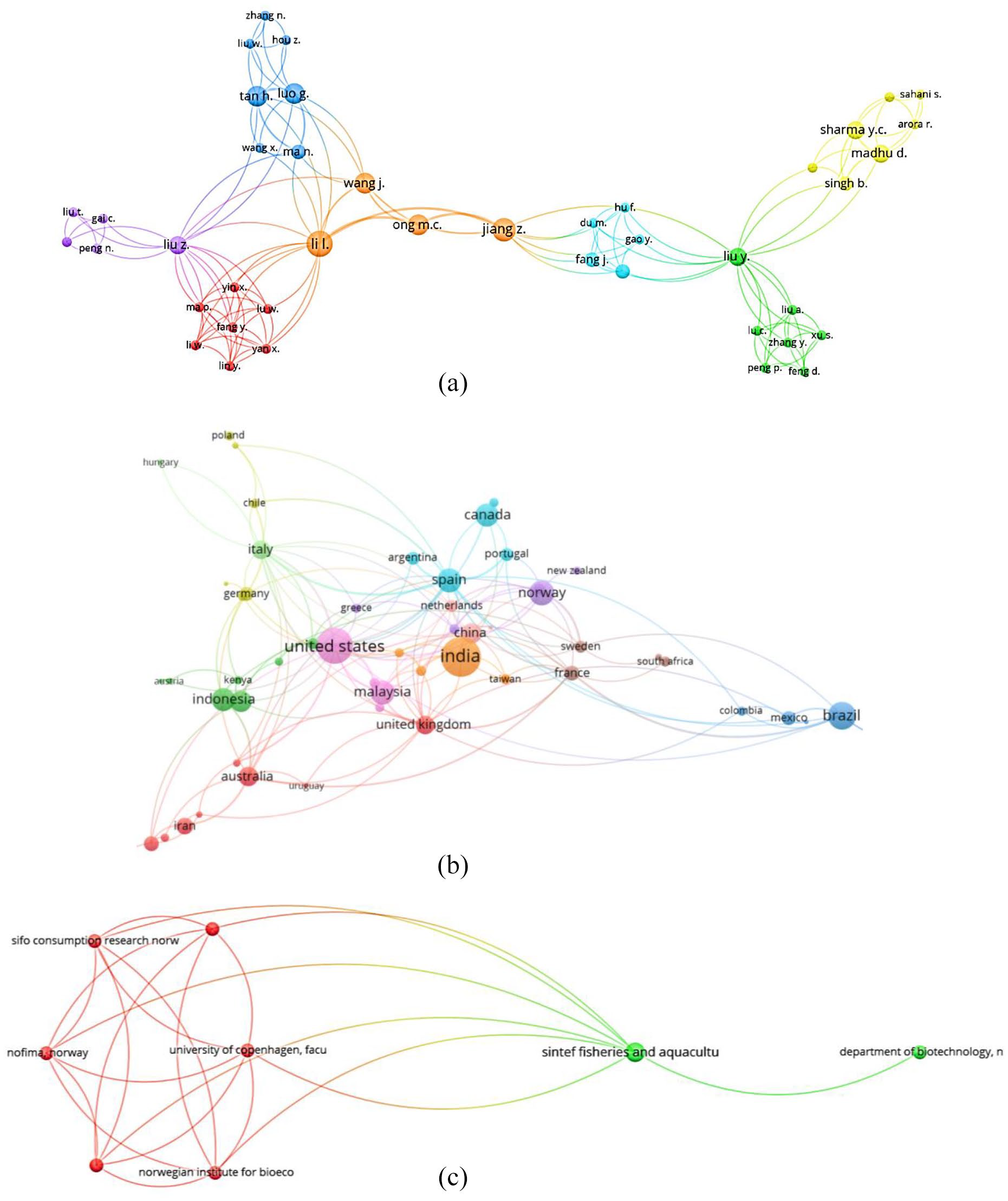
Network analysis: (a) author collaboration network (note: threshold criteria of 1, resolution = 0.8), (b) collaboration network between countries (note: threshold criteria of 1, resolution = 0.8), and (c) collaboration network between organizations (note: threshold criteria of 1, resolution = 0.8).
To further explore the level of co-authoring existing, an analysis based on countries and organizations is carried out (Figure 7(b)). Cluster wise categorization reveals classification into 11 clusters with South Korea (cluster 1 has ten countries), Indonesia (cluster 2 has seven countries), Brazil (cluster 3 has seven countries), Germany (cluster 4 has six countries), Norway (cluster 5 has five countries), Spain (cluster 6 has five countries), India (cluster 7 has five countries), France (cluster 8 has five countries), United States (cluster 9 has four countries), China (cluster 10 has three countries) and Italy (cluster 11 has three countries) leading each cluster. Analysis of node size further reveal magnified influence from the United States, India and Spain. Posing a robust well-connected network, the representations indicate more citations when the publications originate from these nations. An organization-oriented assessment (n = 1597) reveals unique collaborations between organizations in the Scandinavian region (Figure 7(c)). The outcomes derived in two clusters showcase a total of 8 organizations. The derivatives attained direct organizational research impacts, making the Nordic regions a prolific domain for fish waste-related research.
Qualitative content analysis
Results denote the clustering of research articles based on co-citation by references. Categorizing the articles into 4 clusters, as evident in Section 3.3.3, an exploratory review is proceeded to understand and uncover the research directions. Clustering reveals that 15 articles are categorized in four clusters after satisfying a threshold criterion of 4 citations (local citations). Table 11 provides a holistic view of the various clusters identified and provides a concise description of each cluster.
Results from clustering with theoretical direction.
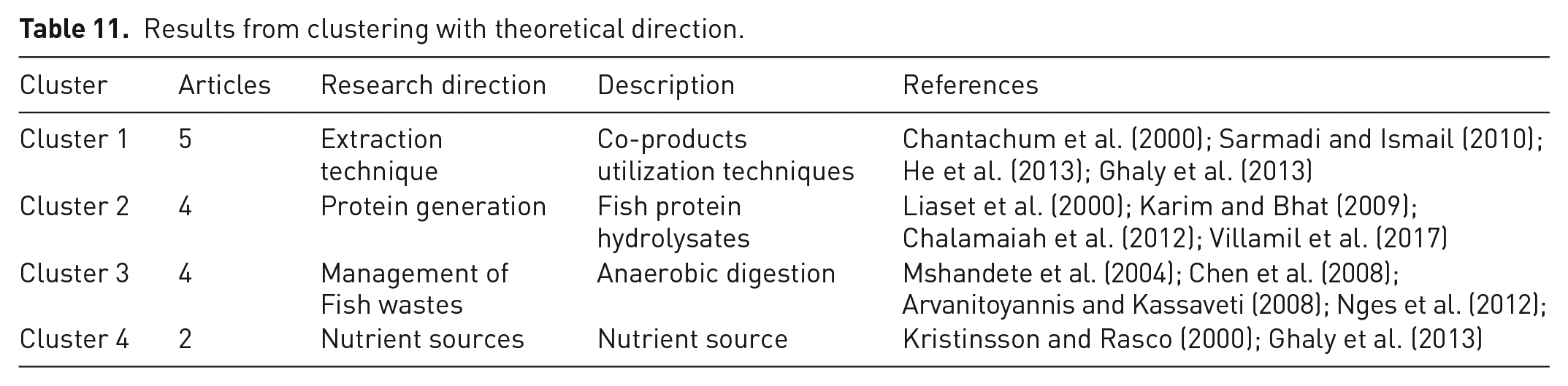
Cluster 1: Extraction technique
The direction adopted in this cluster denotes a developing pattern initiating from extraction procedures adopted throughout the analysed articles. Chantachum et al. (2000) explain the procedural extraction of fish oil from fish discards. Though this article stands alone from the other themes discussed, the reference to using the wet rendering method for extraction makes this article related to the other research outcomes discussed under this cluster. Different significances include discussing enzymatic extraction procedures correlating with the other texts discussed further. This paper’s importance is supported by the latest works on fish oil extraction using enzymatic hydrolysis (Araujo et al., 2021; Zhang et al., 2021). He et al. (2013) focused on protein extraction using protein hydrolysates. The authors also suggest the hydrolysis technique using enzymes to be a better adoption owing to the milder reactions witnessed with higher quality and functionality of the derived product. However, the authors cite high expenses in technology, confirming its effectiveness in improving RRM use in processing industries. Stressing on the characteristic of fish protein extracted, Sarmadi and Ismail (2010) highlighted the presence of anti-oxidative properties in the food proteins. Ghaly et al. (2013) elaborated analogous information and the various value-added products derivable using enzymatic hydrolysis.
Cluster 2: Protein generation
Cluster 2 relates to the generation of proteins from fish discards and encompasses review papers, indicating the positive growth of this cluster focusing on protein hydrolysates (Idowu et al., 2020). Liaset et al. (2000) focused on producing and characterizing proteins from salmon and codfish frames. Keeping the derivatives obtained as struts, Karim and Bhat (2009) understood the dire need for an alternative source for gelatin (i.e. protein form) which traditionally had a mammalian origin. The author’s prime focus was to assess the market acceptability for the new product with competitive and similar properties to existing alternatives. Chalamaiah et al. (2012) published a review highlighting the generation of fish protein hydrolysates. Apart from focusing on hydrolysates and compositions of amino acids, the authors also emphasized the dual benefit of being both anti-oxidative and a nutritious alternative for humans and aquaculture feeds. A more recent addition to this cluster is the contributions of Villamil et al. (2017) which stressed the adverse challenges such as preserving product quality and developing cheap operative procedures for recovering proteins in agricultural, cosmetic, pharma and food industries.
Cluster 3: Management of fish wastes
Cluster 3 deals with the anaerobic digestion of fish wastes and highlights the acceptance of this technique even in recent times. Recent works involve the sustainable digestion of fish wastes using anaerobic digestion by Nazurally (2018), reducing sludge production while producing biogas using anaerobic digestion (Choi, 2020). However, analysis reveals trailing literature confined to four research articles discussed in this cluster. Mshandete et al. (2004) explored the possibility of producing biogas using an anaerobic digestion process with fish waste and sisal pulp. Despite this article being a profound analysis, the intent to use an anaerobic digestion process for biogas generation makes this research article imperative to other research articles discussed under this cluster. Considering the laid focus on anaerobic digestion, Chen et al. (2008) examined the various underperforming factors that reduce the efficacy of the anaerobic digestion process. Arvanitoyannis and Kassaveti (2008) published a reputed article on treatments, impacts and issues of using fish industry wastes. Though this directly does not address the digestion process, the article touches on the concept of biogas production and a list of other renowned management methods that make this article coherent. Nges et al. (2012) anaerobically digested fish waste and fish sludge to study the properties and characteristics of the methane produced.
Cluster 4. Nutrient sources
Nutrient derivative, a commonly discussed topic under this section, has been extensively discussed, focusing on the derivation of proteins from fish wastes. Articles such as Alfio et al. (2021) emphasize the sustainable recovery of Omega 3 fatty acids from fish wastes; Coppola et al. (2021) concentrated on the various value-added products derivable from fish wastes. Radziemska et al. (2019) applied the use of fish waste for compost. Arvanitoyannis and Tserkezou (2014) focused on the generalized fish waste management techniques, found to be extensively based on articles from this cluster. Kristinsson and Rasco (2000) discuss the various features of fish protein hydrolysates, including the production, application and comparison with other food derived protein hydrolysates. The other article discussed under this cluster that extracts and expands the outcomes derived includes the article by Ghaly et al. (2013). Besides focusing on fish protein hydrolysates, the authors try to cover various value-added products. The article also deeply discusses the different methods of extractions available and the cons of each technique focusing on the biological aspect.
Impediment assessment of sustainable fish waste management in India
Outcomes from bibliometric analysis conclude the undermined focus among researchers on supply chain-related aspects in fish waste management and meagre commercialization of fish waste valorized products despite noticeable research contributions. The limited focus on supply chain aspects of fish waste management envisages gaining concentrated focus. Furthermore, the capitalization of valorized co-streams generated from fish processing has only been witnessed in published literature from nations such as Iceland and Norway (Olsen et al., 2014). This could be possible due to the integrated nature of supply chains in these countries that permit the rapid utilization of fish wastes that is prone to high-quality degradation. Literature additionally reveals dynamically reducing quality (Amos et al., 2007), high valorizing costs (Olsen et al., 2014), availability of preferable alternatives (Karim and Bhat, 2009) and reduced RRM & by-product yield (Gildberg and Stenberg, 2001) to hamper the effective valorization of fish wastes generated. This holds essential considering the dependent nature of perishable food on handling and storage conditions (Jensen et al., 2010), thereby necessitating the need to undertake supply chain-related research, particularly in this domain, especially in nations that do not have vertically integrated supply chain structure in fisheries.
To accentuate the stresses hampering the adoption of sustainable practices in the Indian context, a barrier assessment validated by stakeholder perception is carried out. The existing fish waste management scenario in India is detailed in the Supplementary Material of the manuscript. Forty-eight barriers identified from literature after appropriate stakeholder validations are classified into eight categories: government issues, local participation, public participation, training/skill development, quality, infrastructure, processing and cost (Refer Figure 8). The various barrier categories have been elucidated in the Supplementary Material due to space constraints and summarized in Table 12, hence satisfying RQ4 of this research.
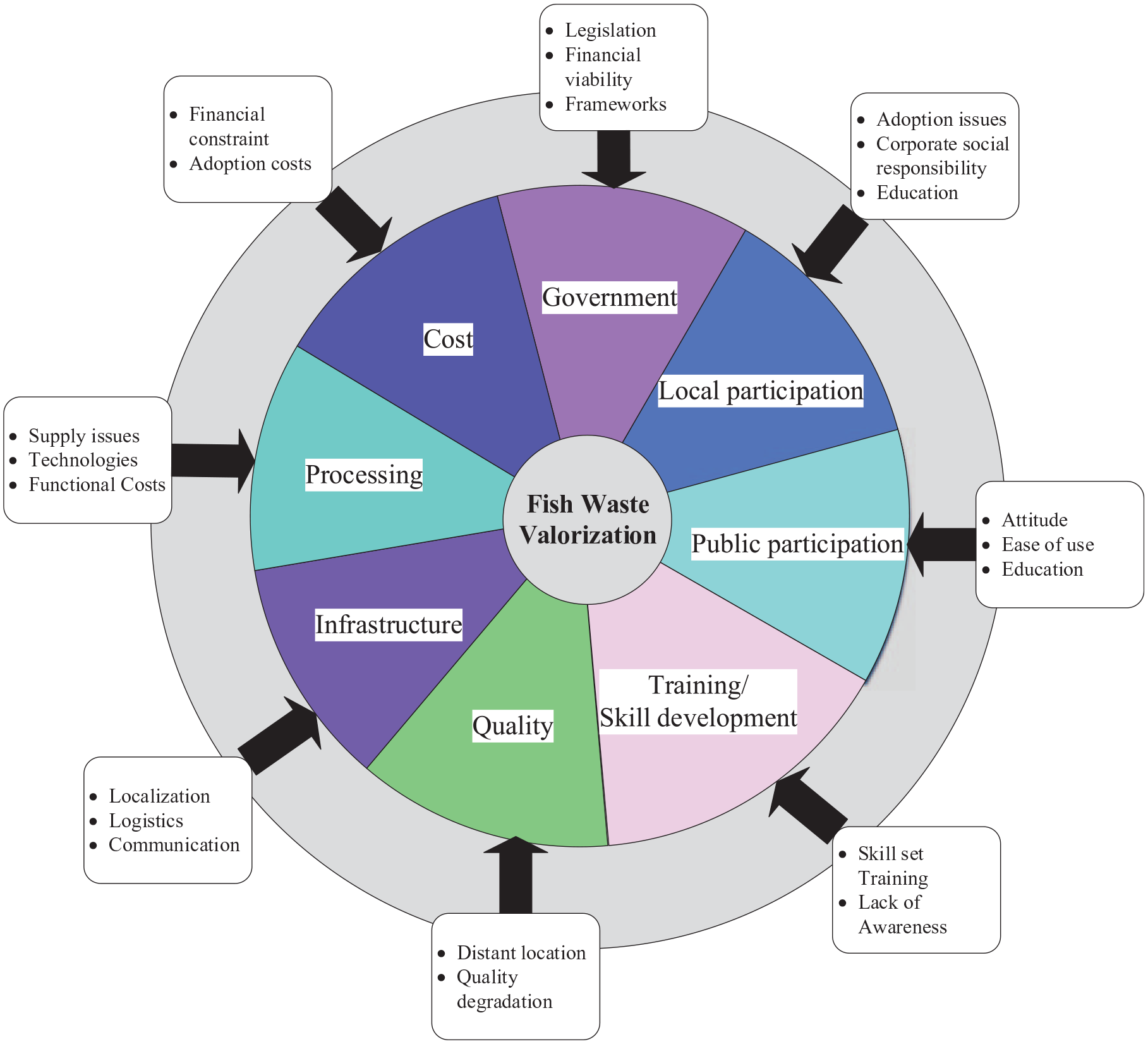
Barriers to fish waste valorization (Indian context).
Barrier wise identification of issues and proposed remedies.
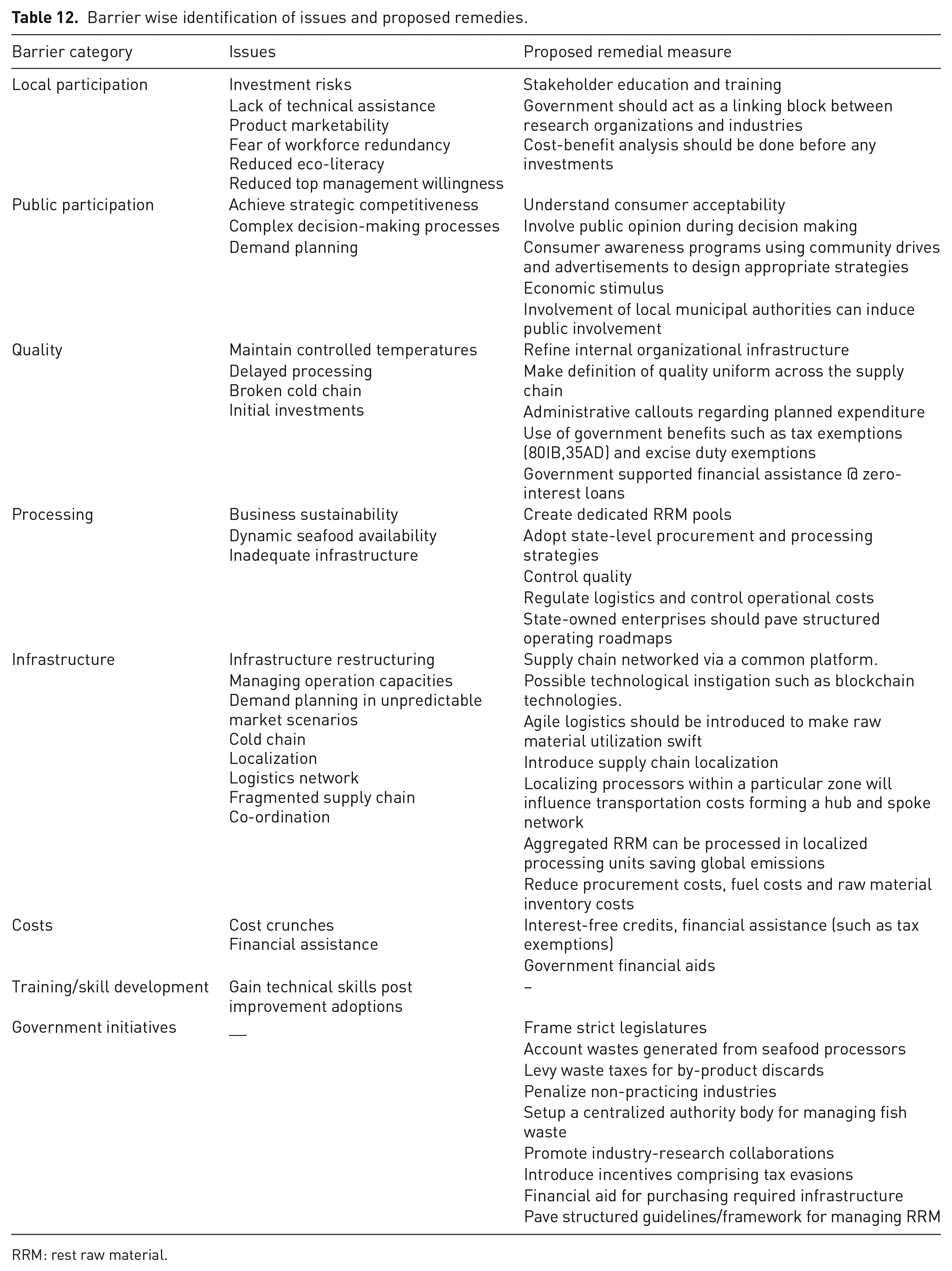
RRM: rest raw material.
The way forward?
Assessments reveal the need for regulatory bodies to play dominant roles involving the immediate need to frame seafood waste management plans requiring extensive contributions from local municipal authorities and NGOs. A significant share of the concerned bodies should focus on educating investors regarding sustainable business opportunities in the domain of by-product valorization in India. Apart from the mere framing of regulations, an active region-level monitoring committee need to be appointed that is centrally controlled by a national-level monitoring committee. Knowledge sharing sessions need to be arranged between NGOs, government institutions, and central and internationally acclaimed seafood research laboratories with a scope of venturing into collaborations. A long-term government-run initiative might not be an alternative to this issue, hence requiring the informal sector to step into the domain to gain substantial market benefits by producing and exporting valorized products to international markets. Focus also need to be laid on training and capacity building on every stakeholder in the seafood supply chain, considering the conglomerated effect in moving towards a sustainable Indian seafood supply chain.
The implications of research derived from this study imply applying sustainable practices in the Indian seafood sector, as mentioned by Sultan et al. (2021). The outcomes derived mainly hold high importance due to the extensive possibilities of exploring viable markets to understand and foresee issues before facilitating breakthrough innovations in India’s valorized seafood by-products.
Conclusion and recommendation
This research aims to record the various developments in managing fish waste. In general, processes include the conversion of fish wastes into low-value products such as fish meals, fish oils, and other high-value products such as fish protein hydrolysate, bio-gas/bio-methane production, collagen extraction, and various other by-products. This research first uses bibliometric analysis to address the current study status, research contexts explored, and research hotspots in the global scenario. Secondly, the explorative research further finds possible reasons and proposes developments for improving fish waste utilization in India by providing localized implication strategy(s). The limited availability of high-value valorized co-stream products as a dominant market substitute among the conventional products in the Indian market instigates the authors to explore the variable causes for the underutilization of fish wastes. The generalized conclusion derived from this research are as follows:
Research in managing fish wastes has improved in the last decade, with a significant share of work carried out on biological, chemical and characteristic aspects of various laboratory-derived by-products.
Geo-local contributions reveal twofold outcomes. Despite dominance in research contributions to be evident from India, favoured research adaptability was found to be among developed countries (80%) denoting preference to research from developed nations (RQ1).
Keyword evaluations considering the last quadrennial (i.e. from 2017 to 2020) reveal prolific studies on hydroxyapatite, bio-methane, waste management, biofuel, transesterification, biomass and RRM in the domain of fish waste(s) (RQ2).
Strong collaboration is visible among clusters with geographical influences playing significant roles in collaborative networks formed between authors, with most authors willing to collaborate within proximate localities (RQ3).
Scandinavian countries significantly contribute to sustainable utilization and consumption of seafood by-products with an excessive amount of research collaborations and a wider acceptance (in citations) in the international academic community.
Market availability of valorized fish by-products is difficult due to expensive commercialization processes, fewer interested investors and better properties shown by existing products.
The supply chain development with a high level of vertical integration and modern technology can be a potential solution for the enhanced utilization of processing derived fish co-streams. With modern technology, countries like Iceland and Norway have a vertically integrated inbound supply chain. However, it is observed that though the supply chain in India is fragmented with comparatively nascent technologies in place, not much research has been reported in the literature for this understudied area.
Government role, local and public participation, training/skill development, quality, costing, processing and infrastructure (cold chain in specific) along the supply chain were the identified barriers hindering India’s effective utilization of fish by-products (RQ4).
The outcomes obtained can bridge the large gap in seafood quality between nations (both product and utilization wise), hence laying the struts for a circular and sustainable supply chain for processed seafood.
Future research can be proceeded by documenting upstream and downstream activities in the supply chain, cost analysis for localization and by-product valorizations to develop a vertically integrated supply chain. Evident work may be carried out on strategy development for RRM consolidation, wash water utilization, productivity improvement and marketability of value-added products.
Supplemental Material
sj-docx-1-wmr-10.1177_0734242X221122556 – Supplemental material for Understanding fish waste management using bibliometric analysis: A supply chain perspective
Supplemental material, sj-docx-1-wmr-10.1177_0734242X221122556 for Understanding fish waste management using bibliometric analysis: A supply chain perspective by Farook Abdullah Sultan, Srikanta Routroy and Maitri Thakur in Waste Management & Research
Footnotes
Appendix
Acronyms table.
| Acronym | Full form |
|---|---|
| DOI | Digital object identifier |
| FW | Food wastage |
| H index | Hirsch index |
| JCR | Journal citation reports |
| RQs | Research questions |
| RRM | Rest raw materials |
| SDG | Sustainable development goal |
| TLS | Total link strength |
| UN | United nations |
| IF | Impact Factor |
Declaration of conflicting interests
The authors declared no potential conflicts of interest with respect to the research, authorship, and/or publication of this article.
Funding
The authors disclosed receipt of the following financial support for the research, authorship, and/or publication of this article: This work is supported by the ReValue project funded through the INNO-Indigo programme under a DBT India grant (BT/IN/INNO-Indigo/12/NK/2017-18 dt. 21/02/18) and the Research Council of Norway project number 281262.

Supplemental material
Supplemental material for this article is available online.
References
Supplementary Material
Please find the following supplemental material available below.
For Open Access articles published under a Creative Commons License, all supplemental material carries the same license as the article it is associated with.
For non-Open Access articles published, all supplemental material carries a non-exclusive license, and permission requests for re-use of supplemental material or any part of supplemental material shall be sent directly to the copyright owner as specified in the copyright notice associated with the article.
