




Abstract
With the continuous advancement of urbanization, a huge amount of construction and demolition waste (CDW) is generated in large-scaled construction activities, which has aggravated the problem of environmental pollution, waste of resources and destruction of city appearance. In the context of waste-free city, the recycling of CDW can reduce environmental pollution and promote the sustainable development of a city. However, only 20–30% of CDW in the world is recycled, showing a low rate of global CDW utilization. In order to improve the utilization rate, this paper selects construction enterprises and construction material manufacturers as main participants, applies evolutionary game theory to construct an evolutionary game model on the two parties’ decision-making behaviors in CDW recycling, and uses MATLAB to make a numerical simulation. The aim of the model is to analyze the influence of various factors on the parties’ decision-making behavior evolution and propose strategies to promote CDW utilization. The study found that the stable state of the CDW resource utilization system mainly depends on the difference between revenue and costs, the initial strategy, and the strength of the external environment; for the government, a supervision strategy is found to be necessary, and the best supervision level is 0.6. In the early stage of resource utilization of CDW, subsidies to construction material manufacturers should be increased to improve their initial participation; public participation can effectively improve the efficiency of government supervision, and its optimal participation level is greater than or equal to 0.4; under weak supervision, government penalty increases alone cannot prevent construction enterprises from illegally disposing of CDW. Therefore, the greater the difference, the positive the initial strategy, and the stronger the external environment, the more the behavior of the two participants tends to be {participation, use}. The results show that the government should establish effective supervision mechanisms and legal systems, improve supervision hotlines and information platforms, encourage the public to participate in CDW management and supervision, set appropriate rewards and punishments, strengthen supervision and management levels, reduce supervision costs, and ensure the effectiveness of construction management to improve the efficiency of cooperation between construction enterprises and construction material manufacturers.
Introduction
As a pillar industry of the national economy, the construction industry should follow sustainable development, which exerts significant impact on the economy, society, and environment (Tetiana I and Savchenko, 2021). Not only does the construction industry provide employment opportunities, but also increase Gross Domestic Product (GDP) (John, 2012). In 2021, the industry accounts for about 6% of GDP globally, the ratio is about 5% for developed countries and about 8% for developing countries (Wang et al., 2021). However, while driving economic and social development, the industry generates huge amounts of CDW. As the largest source of waste in the world, CDW accounts for 30-40% of total solid waste (Ruiz et al., 2020). If not treated with corresponding measures, CDW will undoubtedly waste large areas of valuable land and pose a huge impact on the environment. How to dispose of CDW efficiently and rationally has become an important challenge facing the construction industry.
As an effective way to dispose of CDW, the utilization of CDW can not only improve the environment, but also save resources, bringing huge economic, social and environmental benefits and therefore is highly valued by governments around the world (Jiang et al., 2017). However, only 20-30% of CDW in the world is recycled, showing a low utilization rate (Kim, 2021). Different countries differ in this rate, among which, South Korea reaches the highest rate of 97%, and the rate is respectively 90% in Japan, 80% in UK, 70% in the United States, but lower than 5% in China (Mohammed et al., 2021). Germany, Japan, the United States and other industrialized countries have started their research earlier and achieved more matured results in the field of CDW disposal, with research and practice focusing on resource utilization as well as harmlessness and reduction of CDW (Ghaffar et al, 2019). These countries rely on their economic strength and technological advantages to implement CDW source reduction strategy, i.e., reducing CDW even before its generation by scientific management and effective control; for CDW generated, scientific and technological means are used to make it renewable resource (Tam et al., 2009). Among those countries, Germany is the first in the world to reutilize CDW on a large scale. It divides CDW into five categories: excavation soil, road waste, building waste, construction site waste and gypsum-containing construction waste. Its treatment and disposal methods mainly include direct utilization (e.g., backfilling and waste dump construction) and indirect utilization such as recycling utilization of resources and designated use by the government (Weil et al., 2006). However, the main ways of utilization are in road construction and civil engineering, mostly directly used in mine backfilling and only a small portion of CDW is used as recycled concrete aggregate (Höglmeier et al., 2017). Japan focuses on CDW resource utilization. CDW in Japan is divided into three categories: industrial waste, construction waste and construction mixed waste, all crushed and screened, processed into recycled products, and used in different fields (Wang et al., 2015).
Compared with the above developed countries, the recycling rate of CDW in developing countries such as China, India and Brazil is relatively low (Bao and Lu, 2021). Among them, the continuous advancement of new urbanization is accompanied by new construction, reconstruction, extension and demolition activities, which has generated a large amount of CDW in China. The annual output of urban CDW is more than 2 billion tons in China, which is about 8 times that of domestic waste, and accounts for about 40% of the total urban solid waste. However, only 40% of the CDW is recycled every year in China, and 60% of the CDW is disposed of illegally, such as landfill, incineration or random stacking (Liu et al., 2022). By 2020, the total amount of CDW has reached about 20 billion tons in China (Liu et al., 2022). In order to curb the illegal disposal of CDW, the Chinese government promulgated “the regulation on administration of urban construction waste”, clearly put forward “any unit or individual and optionally, scatters or stack of construction waste, ordered by the competent department of city people’s government of the city’s appearance environment health deadline to correct, given a warning, and the unit to a fine of not more than 5000 yuan and 50000 yuan, 200 yuan for the individual may be fined” (Liu, 2012). However, due to limited government supervision and excessive penalty costs are difficult to achieve, most CDW is privately treated by construction enterprises in illegal ways, resulting in a significantly lower resource recycling rate of CDW in China compared with other developed countries, less than 5% (Huang et al., 2011). Therefore, the CDW recycling and reutilization is an urgent issue facing China.
In CDW utilization, two main participants are involved, construction enterprises and construction material manufacturers (Fan, 2014), both taking the profit maximization as their principal goal. For construction enterprises, economic benefit is the key determinant in the disposal of CDW. In the process of CDW resources, construction enterprises need to sort and transport CDW within a certain period of time and pay the corresponding fee (Duan and Li, 2016). In order to avoid sortation and transportation costs and maximize profits, construction enterprises tend to illegally dispose of CDW (Zhang and Tan, 2020). For construction material manufacturers, economic benefits are the decisive factor that affects the choice of production materials. In the process of recycling CDW, construction material manufacturers need to sort CDW, purchase CDW recycling equipment, and introduce advanced technology equipment and talents (Zhang et al., 2020). In order to maximize profits, construction material manufacturers tend to use natural materials for production. Driven by interest factors, the two key participants tend not to cooperate. How to construct a close interactive relationship between the two main participants and strengthen their cooperation so as to efficiently and rationally dispose of CDW has evolved to be an important and urgent issue.
Evolutionary game, derived from the study of biological evolution process in the theory of evolution, is a theory that combines game theory and dynamic evolution process analysis. It has been widely applied in the study of strategy selection process (Vincent and Brown, 2005). As a method of efficient disposal of CDW, the resource utilization of CDW helps in protecting the environment, saving resources, and promoting the sustainable development of the construction industry. However, the utilization of CDW is complex and involves multiple stakeholders whose interaction mechanism and strategy selection tend to be complicated and volatile (Yuan and Wang, 2017). Consequently, evolutionary game has gradually grown to be a more mature research methodology in this field to cope with such problems. Shen et al. (2018) proposed an evolutionary game model for construction material contractors and manufacturers, and concluded that, under environmental regulation, only when the perceived benefit of one or both parties involved in participation being greater than that in non-participation, the CDW utilization system would finally evolve into a stable state in which both stakeholders choose to participate. Ma et al. (2020) used evolutionary game theory to study the CDW utilization management in China and found that with government participation, construction enterprises and construction material manufacturers tend to cooperate, which increases the rate of CDW utilization. Chen et al. (2019) studied the selection strategies by construction enterprises and government and analyzed the impact of government penalties on the decision-making of construction enterprises. Su et al. (2020) constructed an evolutionary game model on decision-making behaviors among local governments, contractors, and recycling factories in the process of CDW recycling, studied the behavioral strategies of the three participants, and conducted simulations using Shanghai as the research object. This research helps to better understand the behavior and needs of the stakeholders, as well as the synergy effect of their cooperation, and provides valuable reference for decision makers to promote sustainable stakeholder recycling practices.
In summary, most of the above conducted research on applying evolutionary game theory on the recycling and utilization of CDW mainly focus on the specific stakeholders’ recycling behavior among construction enterprises, construction material manufacturers and government. However, very few studies consider the impact of external environment (e.g., government and the public) on the two-stakeholder recycling behavior. The limited resources of the government and insufficient supervision result in the neglect of the construction enterprises’ violation against regulations (Davis et al., 2021). The public, as the direct victim of environmental pollution and the principal stakeholder in environmental conservation, play a significant role in effectively improving the supervision efficiency of the government if they are introduced into the supervision.
Therefore, on the basis of existing research, this paper, by introducing external environment and considering the game between construction enterprises and construction material manufacturers in such environment, constructs an evolutionary game model and formulates more effective supervision strategies. Aiming at improving the cooperation between construction enterprises and construction material manufacturers, the paper uses MATLAB for numerical simulation analysis to explore government and public participation strategies, increase the probability of cooperation between the two participants, and promote the utilization of CDW as resource.
The rest of this paper is organized as follows. In the model formulation section, an evolutionary game model is proposed. Then the simulation results are drawn and model parameters are discussed in the numerical simulation and results section. The conclusion section is given at the end.
Model construction
CDW utilization has two major stakeholders, construction enterprises and construction material manufacturers. The construction enterprises are mainly responsible for waste collection from construction sites, timely sortation and proper disposal of the waste, and the transportation of waste to the construction material manufacturers (Yuan, 2017). Afterwards, construction material manufacturers filter the collected waste and make remanufacturing (Jiao, 2014). Finally, a portion of CDW is processed into recyclable materials and put into the construction for reuse. The CDW disposal process is shown in Figure 1.
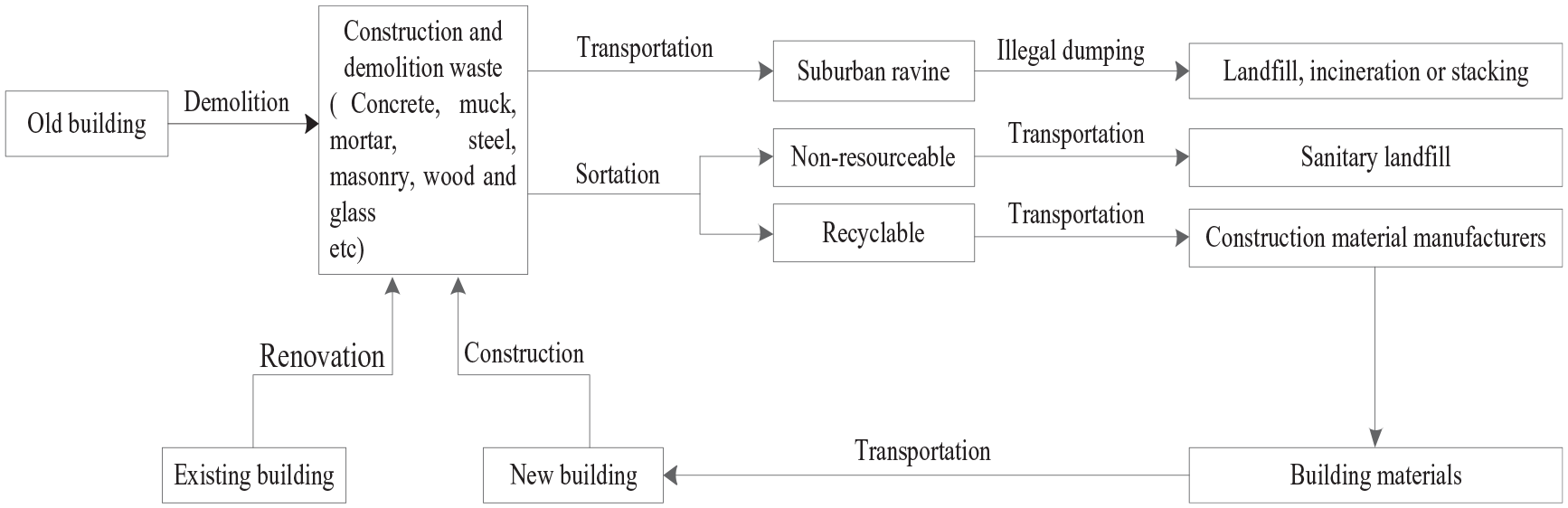
Construction and demolition waste disposal process.
The pure strategy faced by construction enterprises is whether to use CDW as a resource, that is, participate in the resource utilization of CDW, make CDW sortation (referred to as participation) and not participate in the resource utilization of CDW, illegally dump CDW (referred to as non-participation). For construction material manufacturers, the options are use and non-use of CDW in construction material production (referred to as use and non-use respectively). Due to the shortage of natural materials, it cannot meet the normal operation of construction material manufacturers, which seriously affects the profits and reputation of construction material manufacturers (Liu et al., 2020). The resource utilization of CDW not only effectively solves the shortage of natural materials and improves the environment, but also indirectly reduces the production cost of building materials. For construction enterprises, with the goal of maximizing profits, in order to reduce costs, they tend to illegally dispose of CDW rather than recycling. Since the profits of construction enterprises and construction material manufacturers depend to a certain extent on the other’s choice, both bear the risk of losses due to the other’s choice. This paper aims to increase the probability of cooperation between construction enterprises and construction material manufacturers, and uses game theory to study the evolution of stakeholders’ behavior under the external environment. The goal can be achieved when the construction enterprises choose “participation” and the construction material manufacturers choose “use”.
Before constructing a game model between construction enterprises and construction material manufacturers, it is necessary to determine the game relationship between stakeholders in the system, and the influence of the external environment on the game relationship between construction enterprises and construction material manufacturers is shown in Figure 2. In this cycle, the external environment includes the public and the government. The public reports construction enterprises for illegal dumping of CDW, which improves the efficiency of government supervision and reduces environmental pollution (Liu et al., 2022). The government’s goal is to increase the probability of cooperation between construction enterprises and construction material manufacturers, penalize construction enterprises for non-participation in CDW recycling, subsidize construction enterprises participation in CDW recycling, and subsidize construction material manufacturers that choose to use CDW to produce construction materials. These behaviors are helpful in recycling CDW and promoting the sustainable development of the environment.
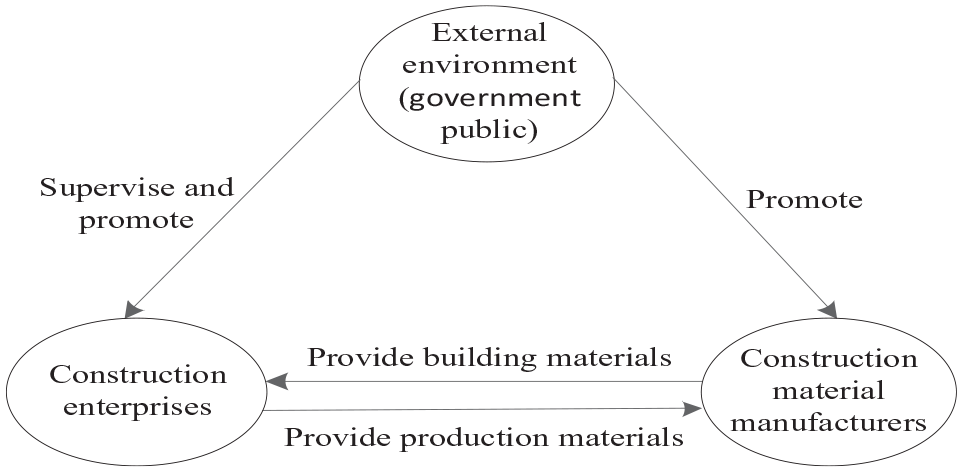
The relationship between construction enterprises and construction material manufacturers.
Model assumptions
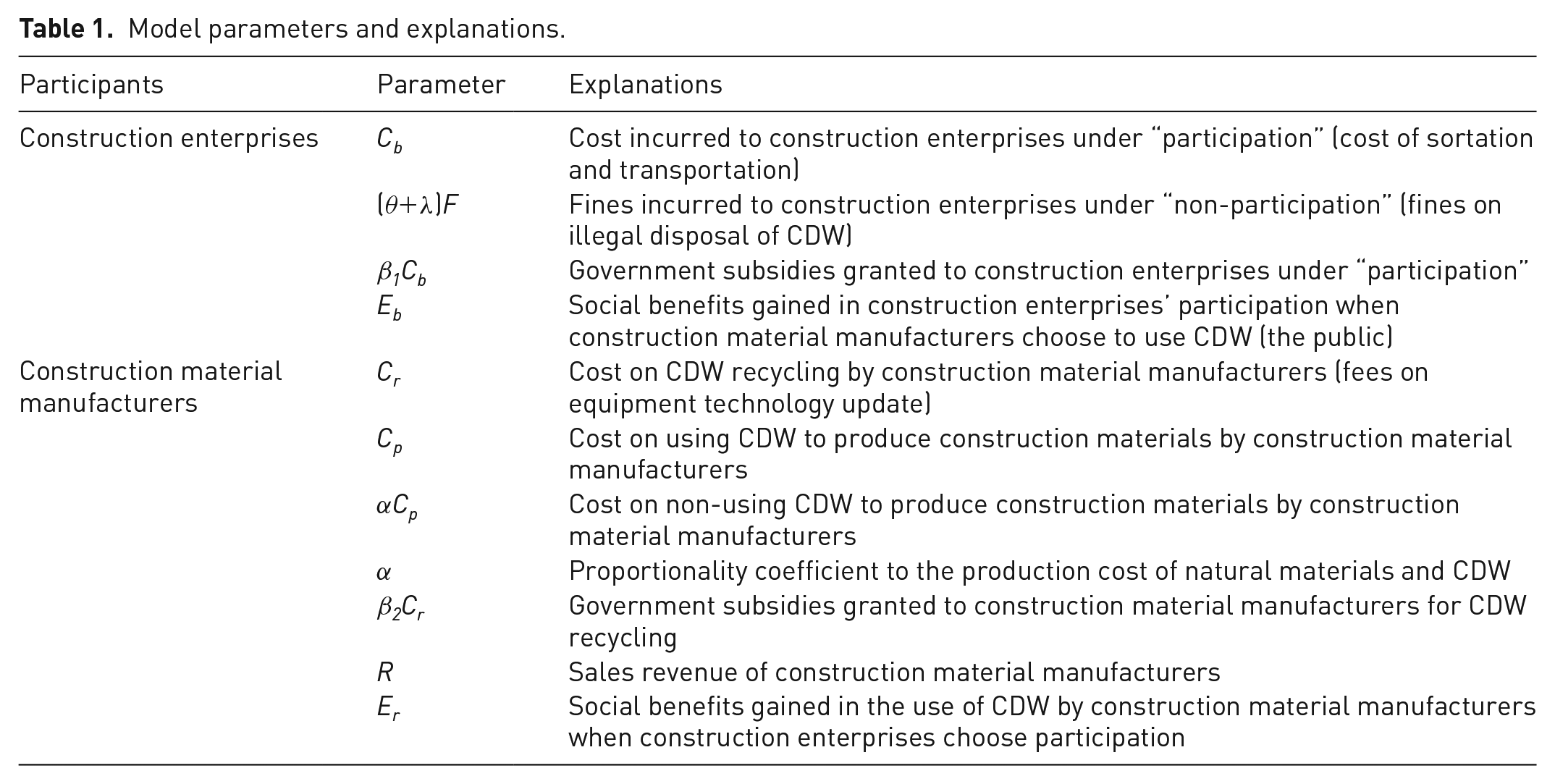
Before the evolutionary game model is constructed, this paper proposes 8 assumptions. Model parameters and explanations, as shown in Table 1.
Model parameters and explanations.
Model analysis
Constructing an Evolutionary Game Revenue Matrix
According to the above assumptions, the evolutionary game payoff matrix between construction enterprises and construction material manufacturers can be established, as shown in Table 2.
The payoff matrix between construction enterprises and construction material manufacturers.

Evolutionary Game Model Analysis
The expectation of construction enterprises to choose “participation” is






According to the evolutionary game theory (Weibull, 1997), the dynamic equation of replication for construction enterprises to choose “participation” strategy is:
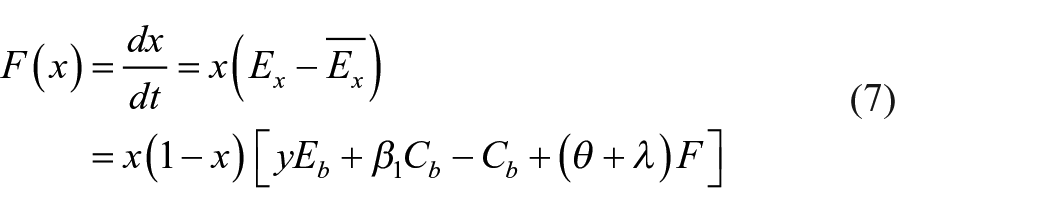
The replication dynamic equation for construction material manufacturers to choose “use” strategy is:
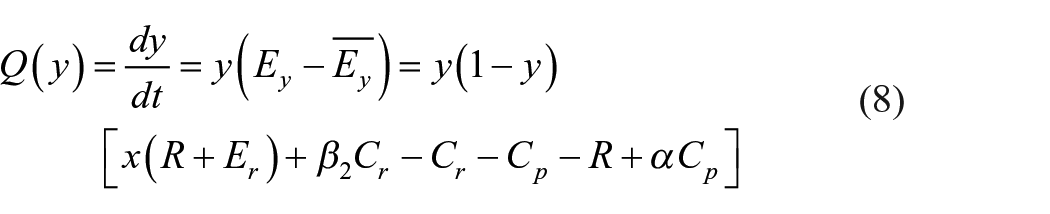
Then the two-dimensional dynamic system of the evolutionary game can be obtained as:

From this, there are 4 dual populations adopting pure strategy equilibrium points in the evolution system, A (0, 0), B (0, 1), C (1, 0), D (1, 1), and 1 possible dual population adopt a mixed strategy equilibrium point, among which

According to Friedman’s (1991) method, the stability of the equilibrium point of the differential system can be obtained by analyzing the local stability of the system Jacobian matrix. The Jacobian matrix of the system is:

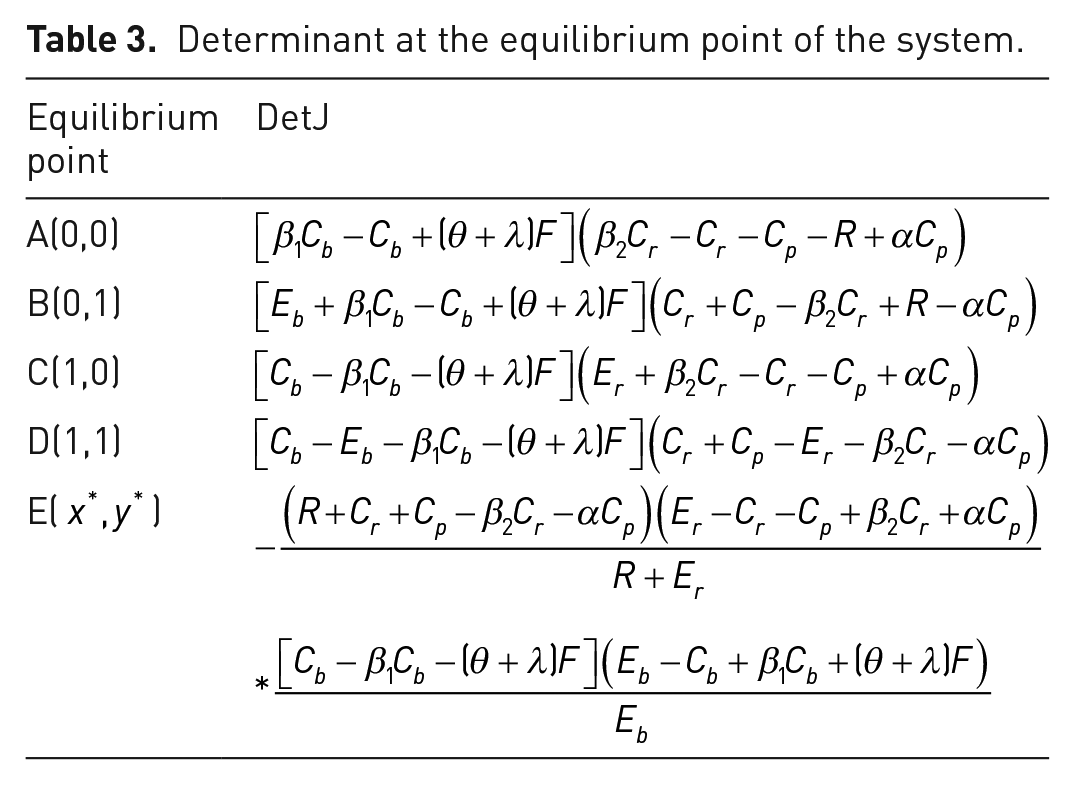
The determinant of the Jacobian matrix is:

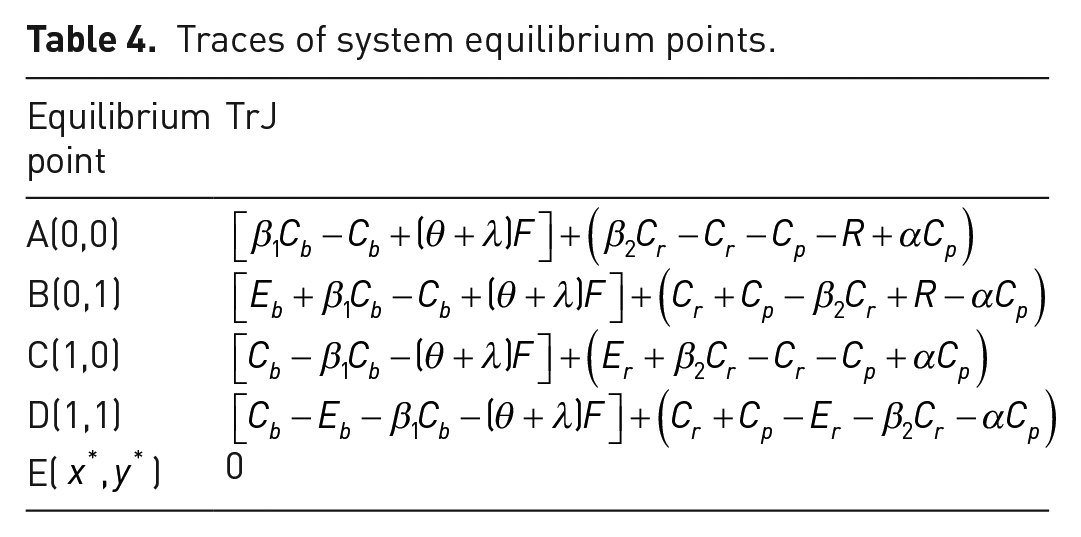
The trace of the Jacobian matrix is:

The determinant and trace of the system at each equilibrium point are shown in Table 3 and Table 4.
Determinant at the equilibrium point of the system.
Traces of system equilibrium points.
Equilibrium analysis of the evolutionary game
The stability analysis of equilibrium strategy
According to the evolutionary game theory, if DetJ>0 and TrJ<0 are satisfied at a certain equilibrium point, the equilibrium point of the replication dynamic equation is the system evolution stable point (ESS). Based on the equilibrium point of the evolution model and the analysis of its stability conditions, the evolution of the system is divided into nine scenarios.
Local stability analysis results of scenario 1.
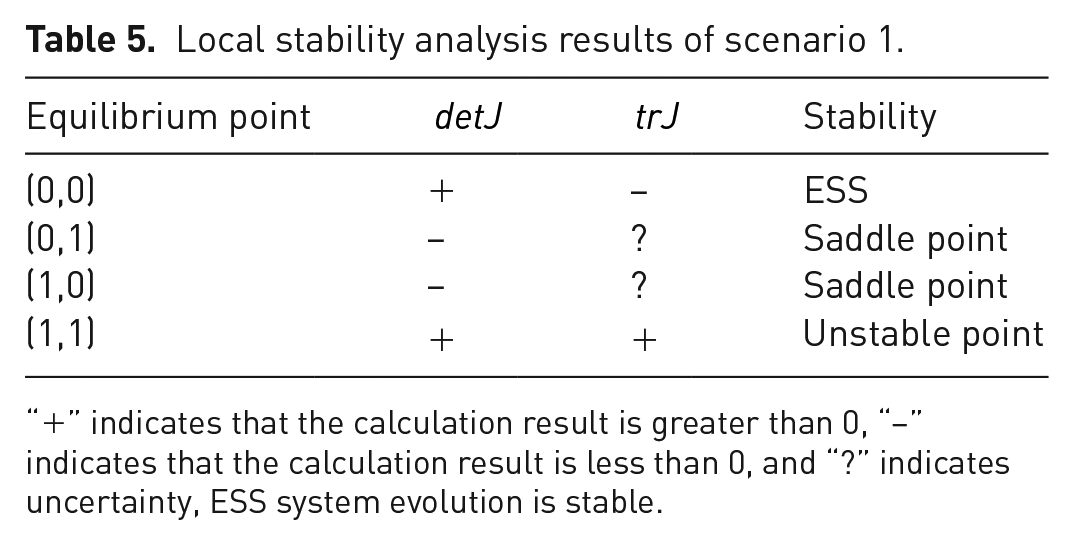
“+” indicates that the calculation result is greater than 0, “−” indicates that the calculation result is less than 0, and “?” indicates uncertainty, ESS system evolution is stable.
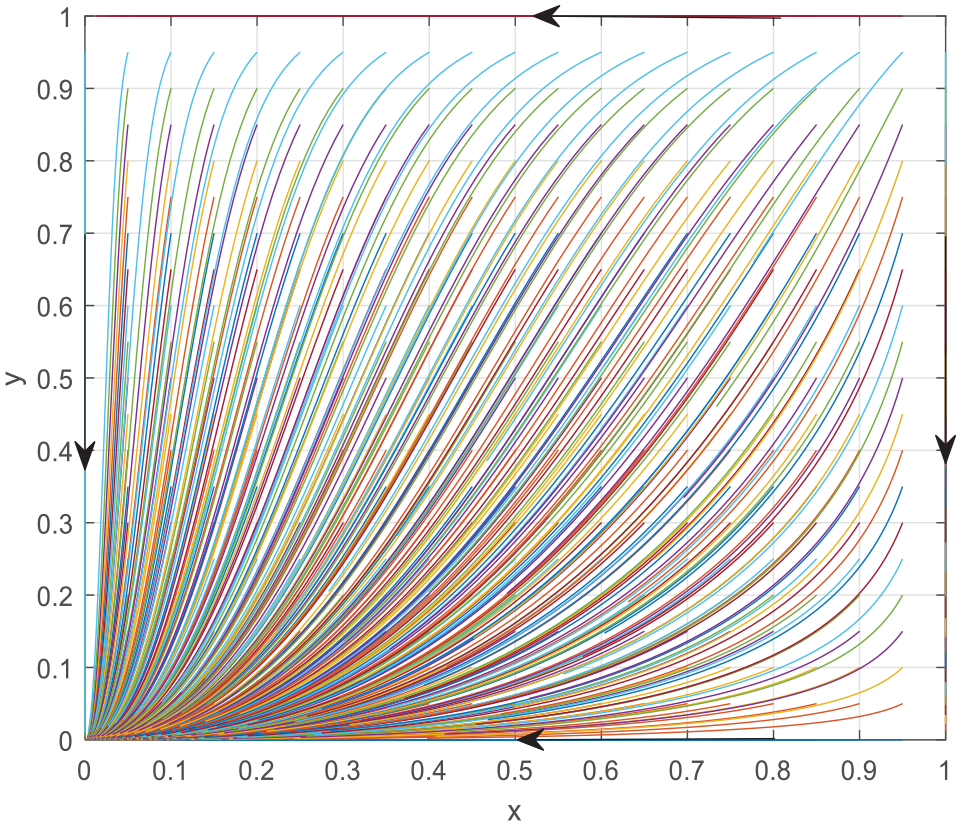
System evolution path of scenario 1.
Local stability analysis results of scenario 2.
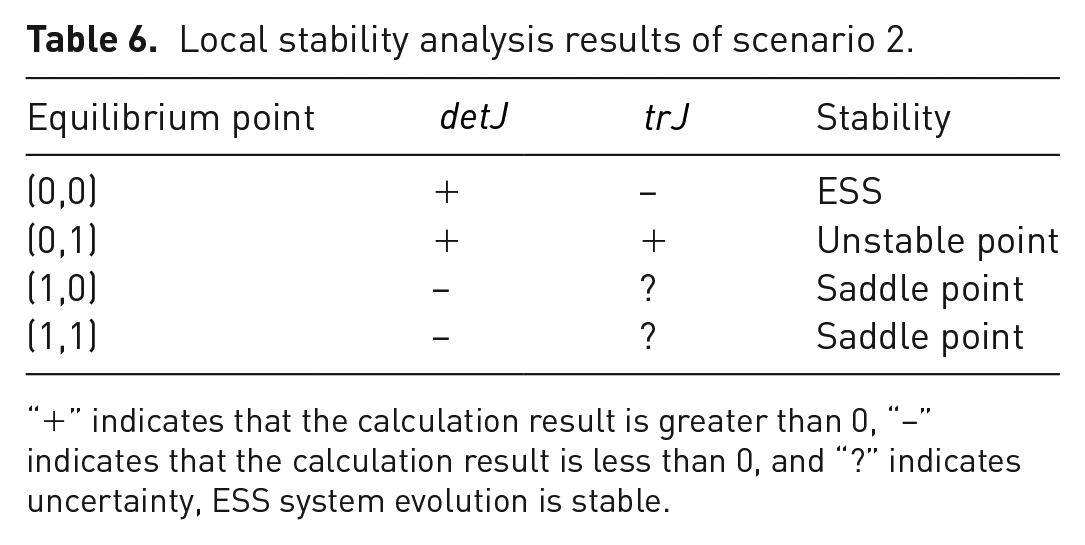
“+” indicates that the calculation result is greater than 0, “−” indicates that the calculation result is less than 0, and “?” indicates uncertainty, ESS system evolution is stable.
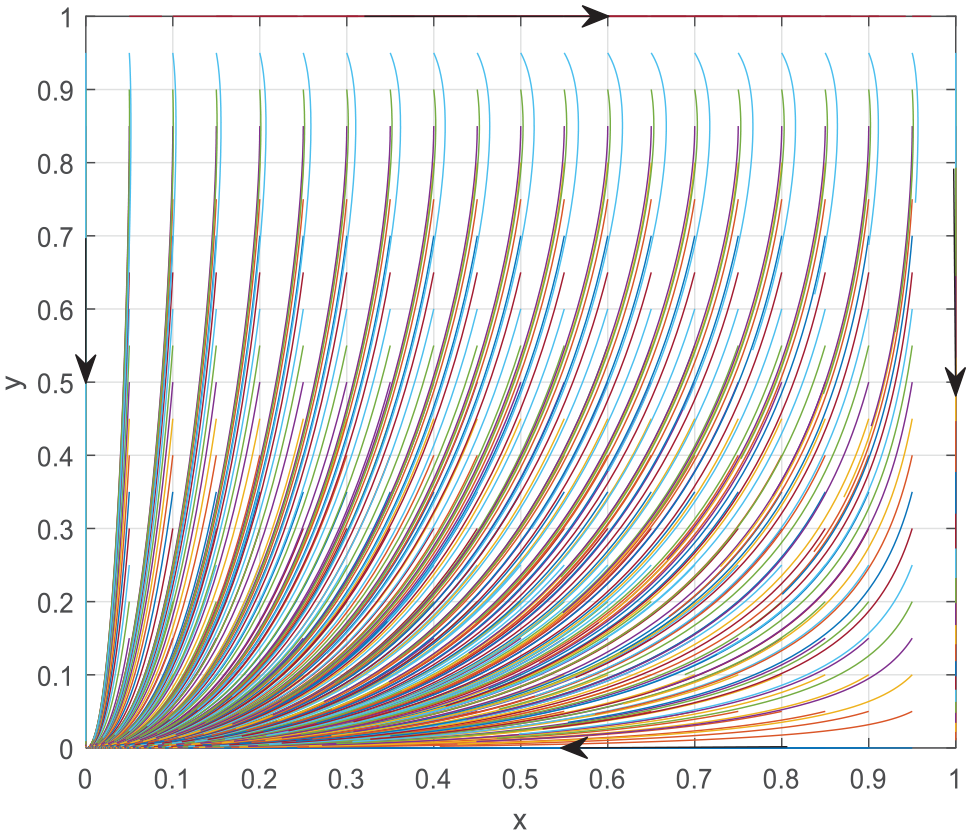
System evolution path of scenario 2.
Local stability analysis results of scenario 3.
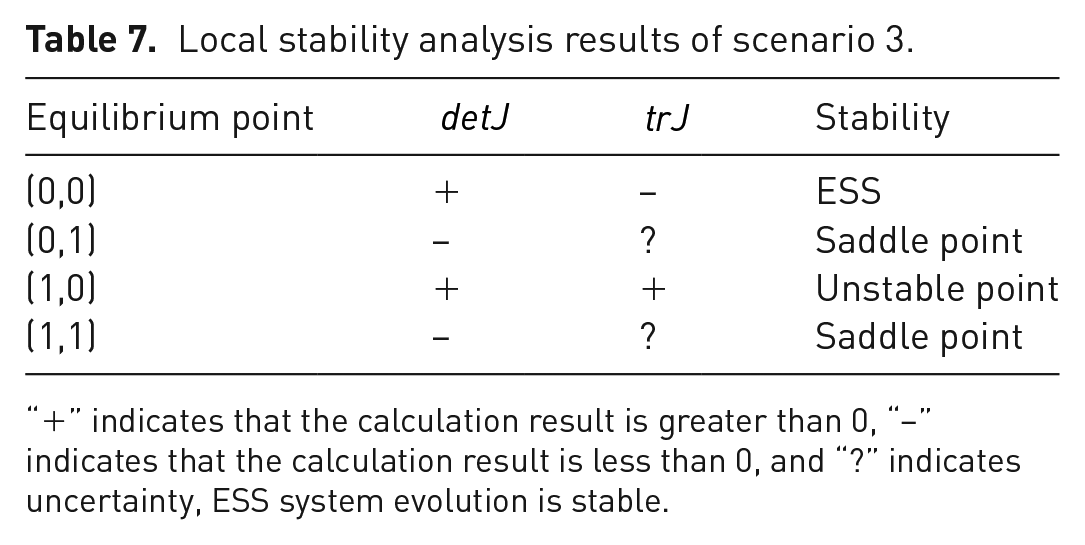
“+” indicates that the calculation result is greater than 0, “−” indicates that the calculation result is less than 0, and “?” indicates uncertainty, ESS system evolution is stable.
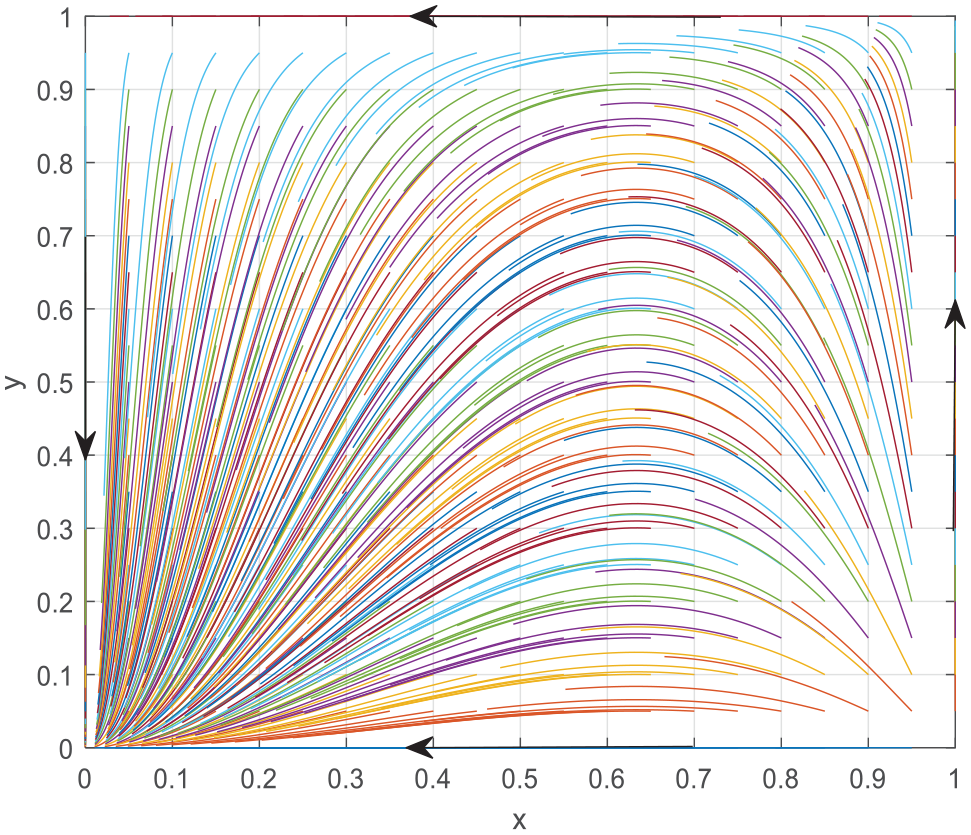
System evolution path of scenario 3.
Local stability analysis results of scenario 4.
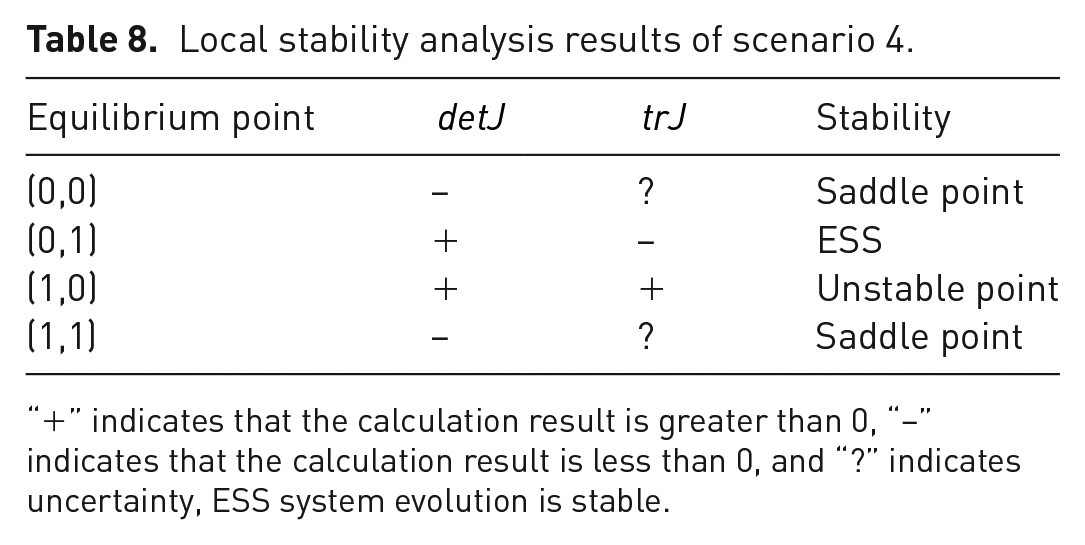
“+” indicates that the calculation result is greater than 0, “−” indicates that the calculation result is less than 0, and “?” indicates uncertainty, ESS system evolution is stable.
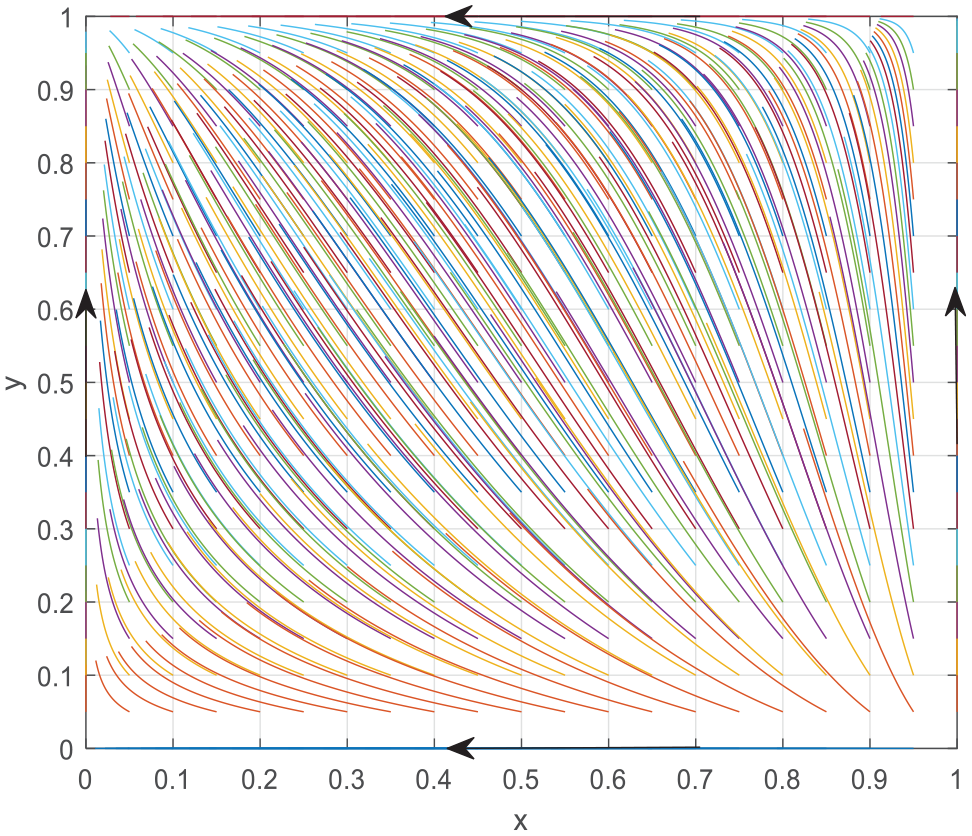
System evolution path of scenario 4.
Local stability analysis results of scenario 5.
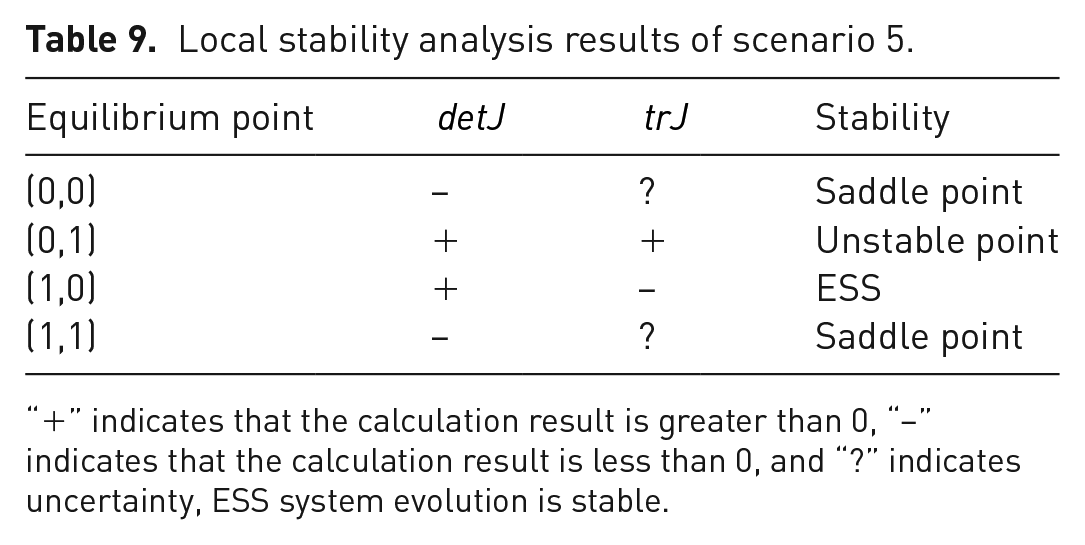
“+” indicates that the calculation result is greater than 0, “−” indicates that the calculation result is less than 0, and “?” indicates uncertainty, ESS system evolution is stable.
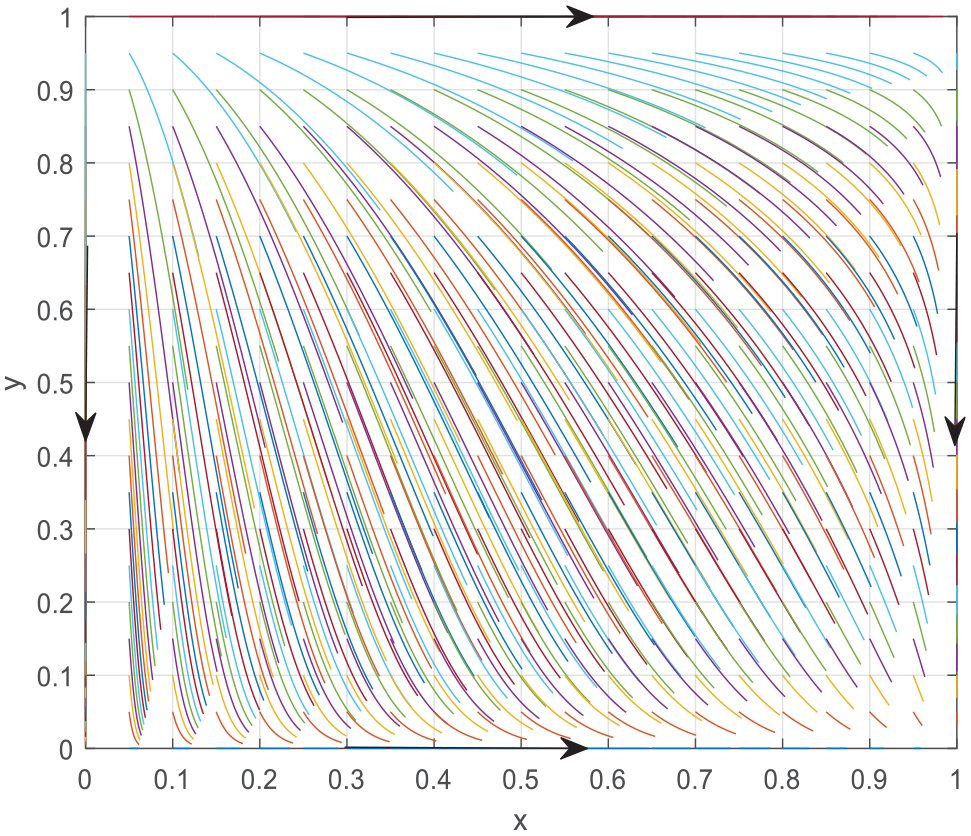
System evolution path of scenario 5.
Local stability analysis results of scenario 6.
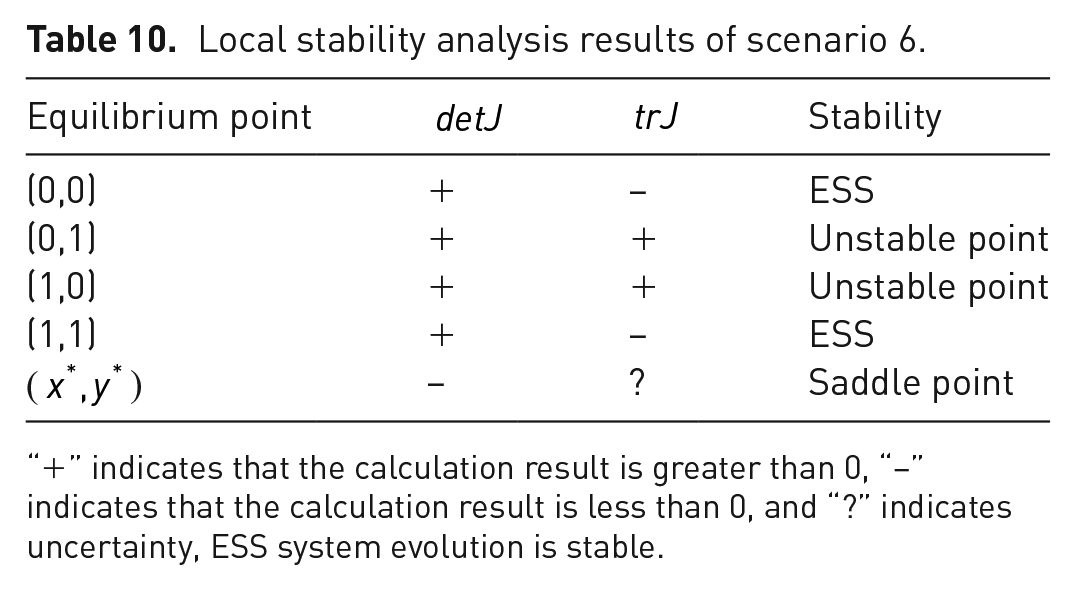
“+” indicates that the calculation result is greater than 0, “−” indicates that the calculation result is less than 0, and “?” indicates uncertainty, ESS system evolution is stable.
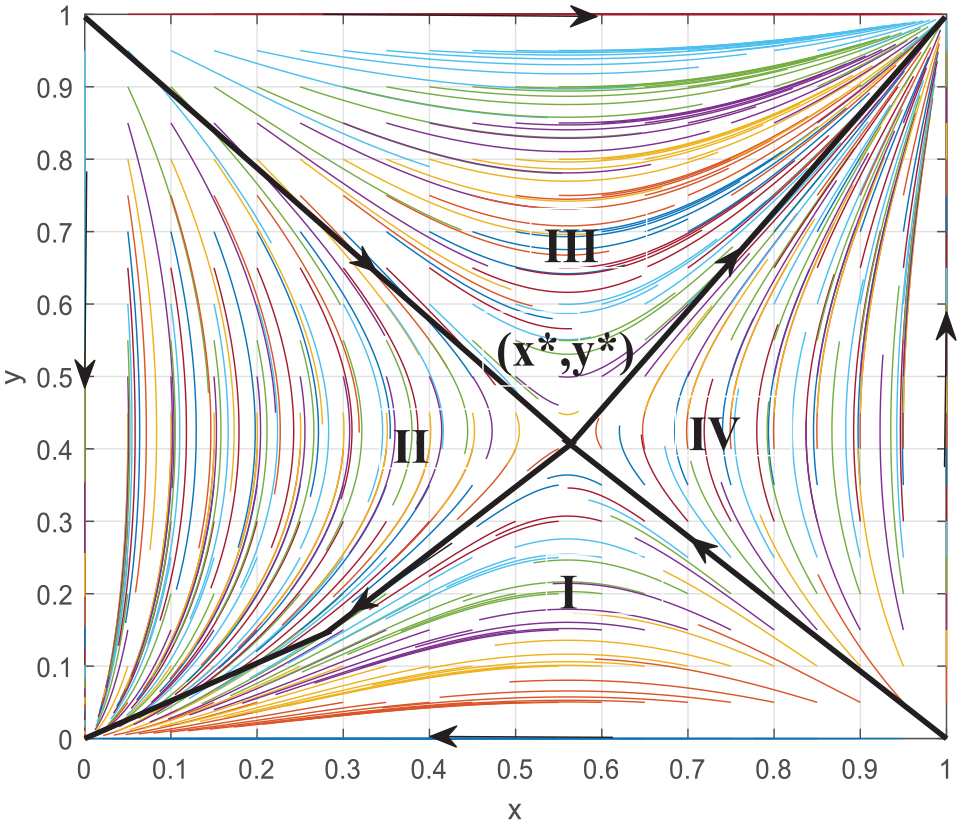
System evolution path of scenario 6.
Local stability analysis results of scenario 7.
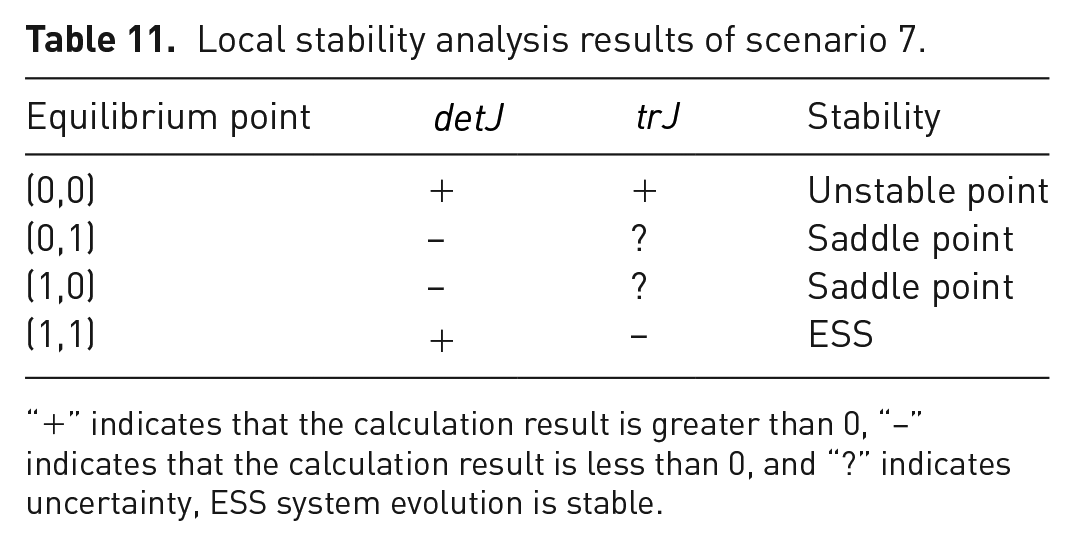
“+” indicates that the calculation result is greater than 0, “−” indicates that the calculation result is less than 0, and “?” indicates uncertainty, ESS system evolution is stable.
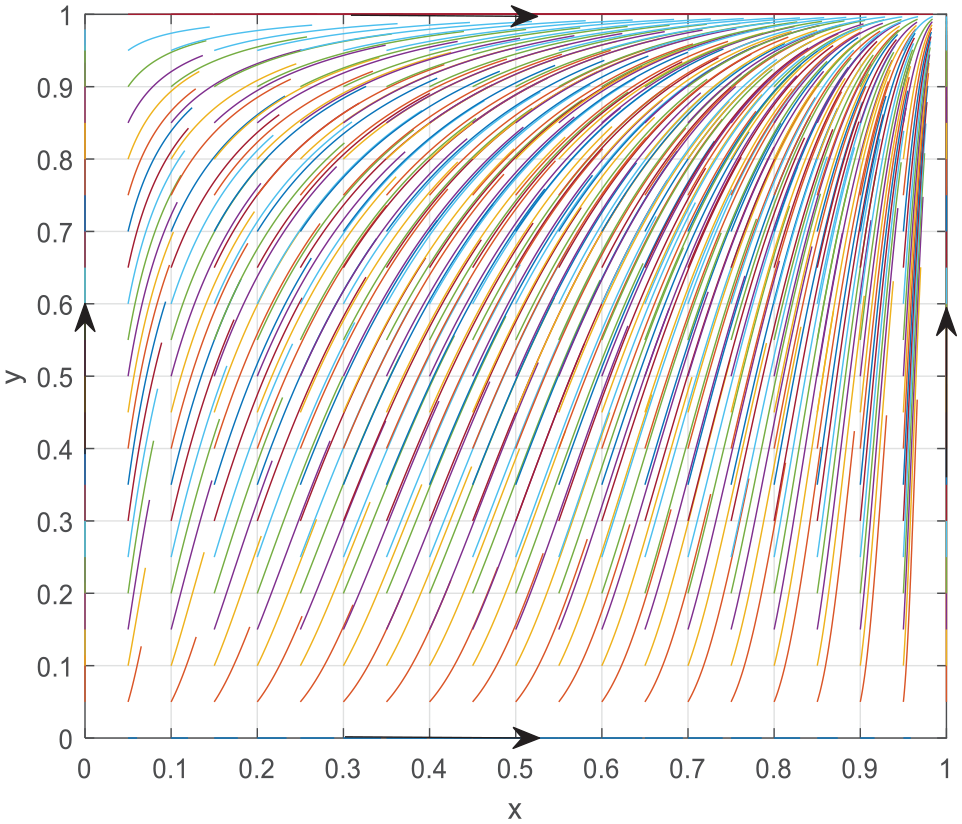
System evolution path of scenario 7.
Local stability analysis results of scenario 8.
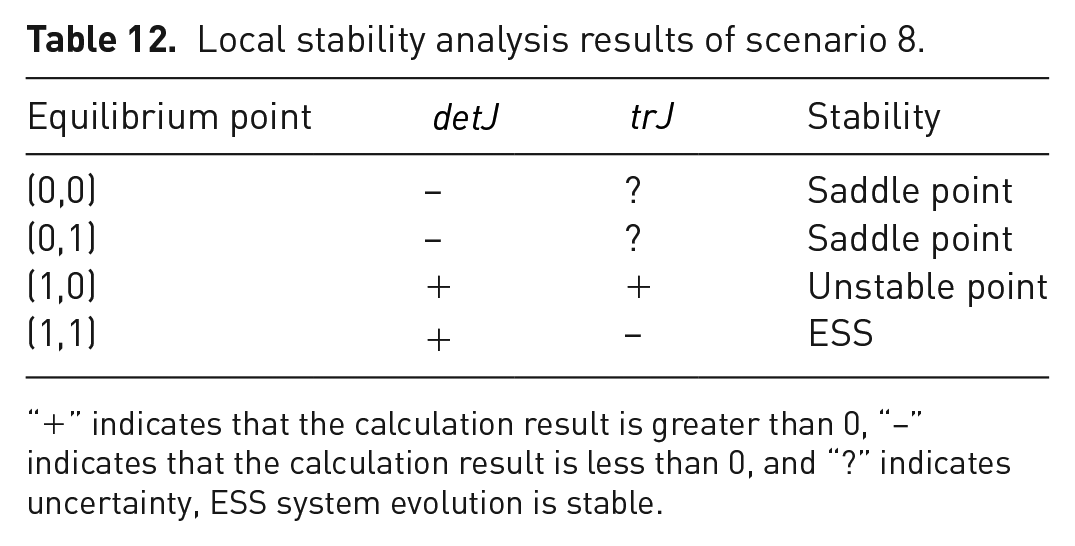
“+” indicates that the calculation result is greater than 0, “−” indicates that the calculation result is less than 0, and “?” indicates uncertainty, ESS system evolution is stable.
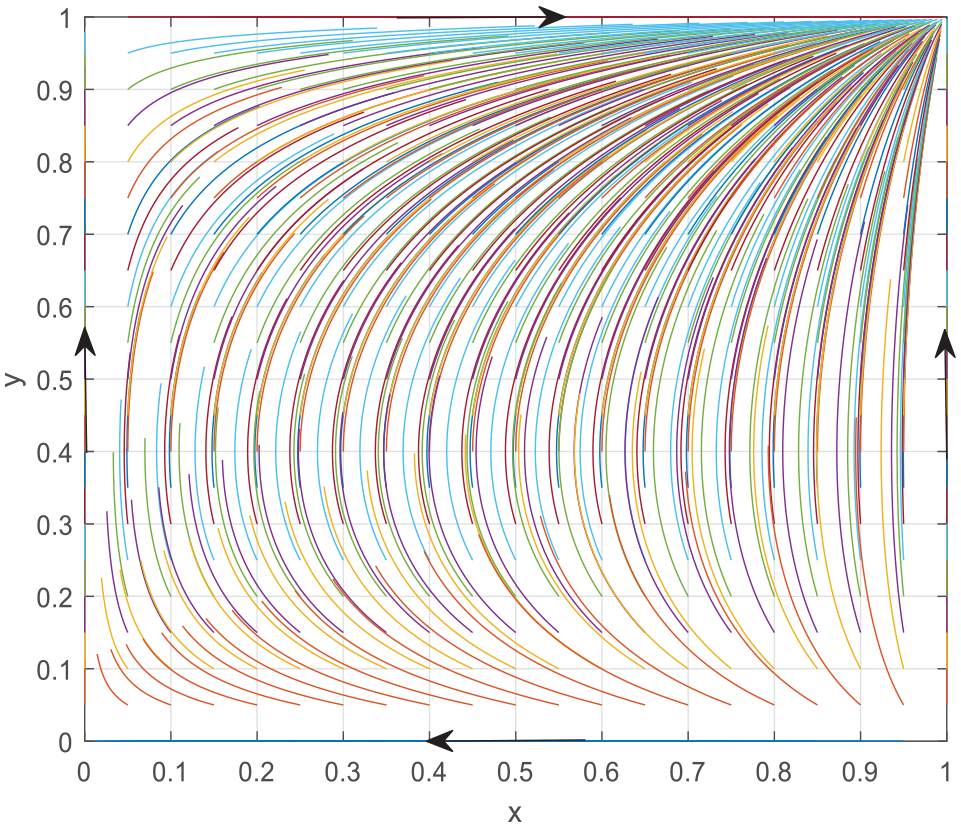
System evolution path of scenario 8.
Local stability analysis results of scenario 9.
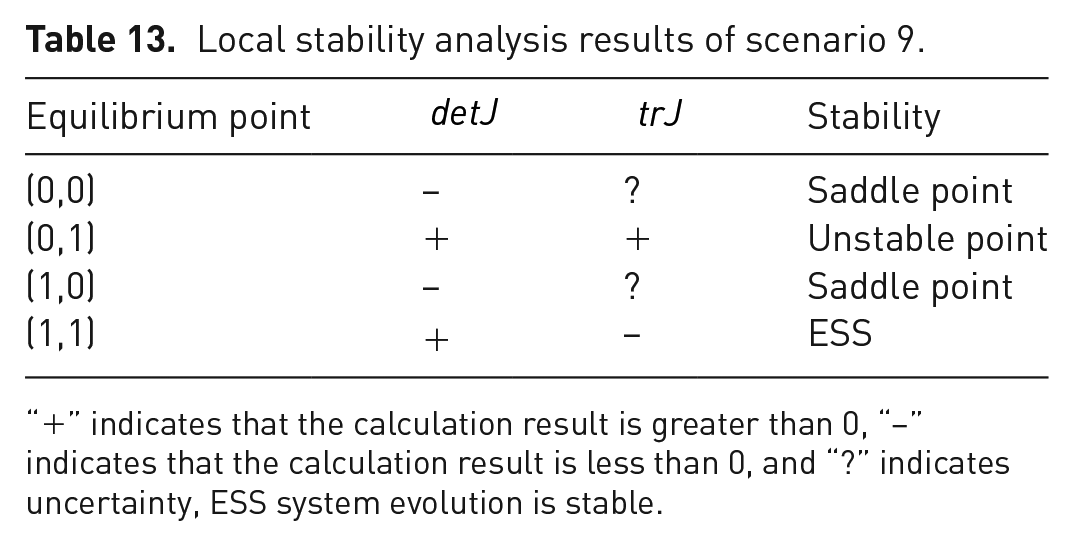
“+” indicates that the calculation result is greater than 0, “−” indicates that the calculation result is less than 0, and “?” indicates uncertainty, ESS system evolution is stable.
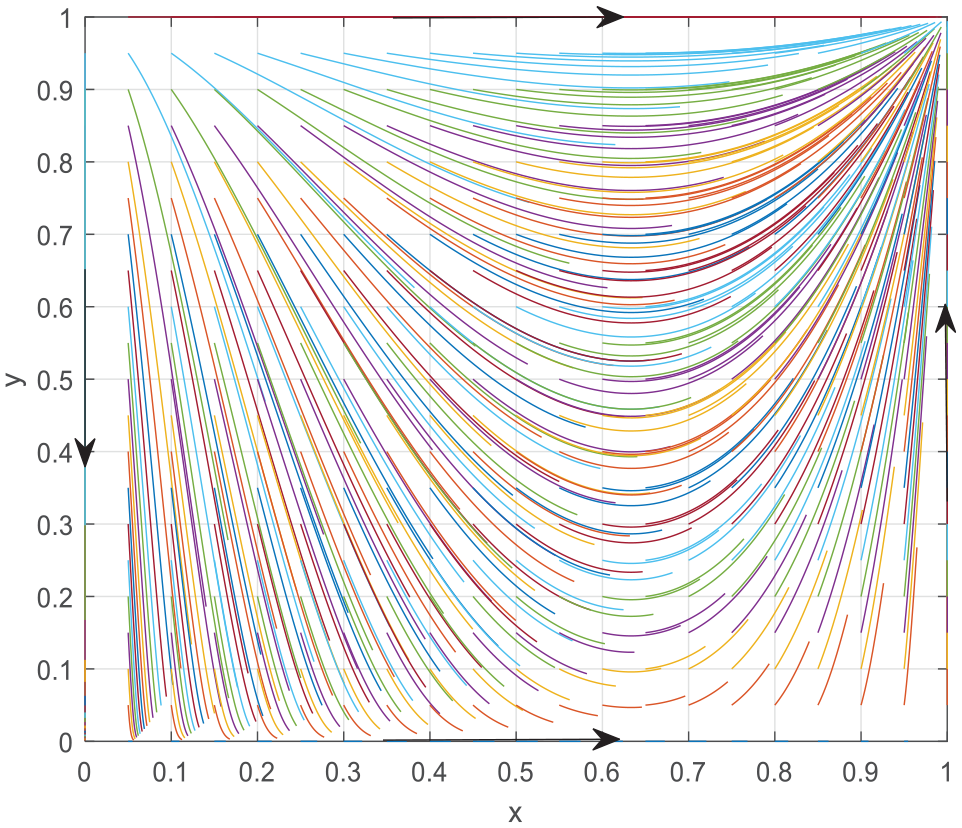
System evolution path of scenario 9.
The analysis of the impact of factors
Seen from the above analysis, there exist two evolutionary stable strategies in scenario 6, namely {participation, use} and {non-participation, non-use} strategies. To improve the probability of {participation, use} by construction enterprises and construction material manufacturers, a detailed analysis is conducted on the complicated evolution of scenario 6. Both being stable strategies, {participation, use} is the optimal one, and the tendency of evolution result is determined by the area of S1=I+II and S2=III+IV. When S1=S2, the probability of choosing these two strategies is the same; when S1>S2, the probability of choosing {non-participation, non-use} strategy is greater than {participation, use} strategy, and the evolution result tends to {non-participation, non-use}; When S1<S2, the possibility of choosing {participation, use} strategy is greater than {non-participation, non-use} strategy, and the evolution result tends to {participation, use}. In order to solve the increasingly prominent environmental problems, effectively respond to energy-saving and efficiency-improving policies, and increase the recycling rate of CDW, this paper should increase S2, reduce S1, and promote the recycling of CDW. Therefore, this paper will analyze the factors affecting S1 and S2, understand the impact of each factor on both, and provide reference value for promoting the resource utilization of CDW.
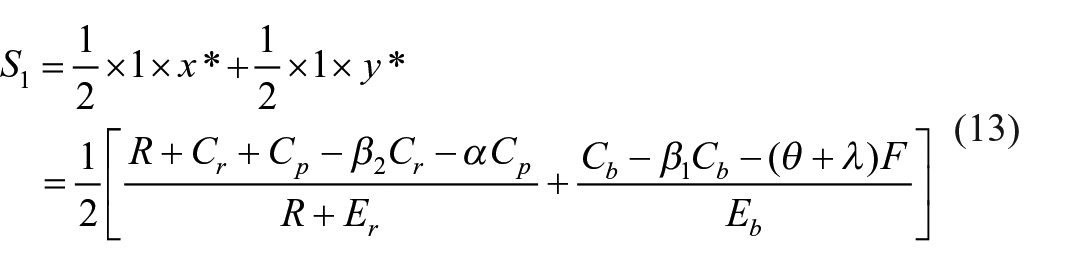
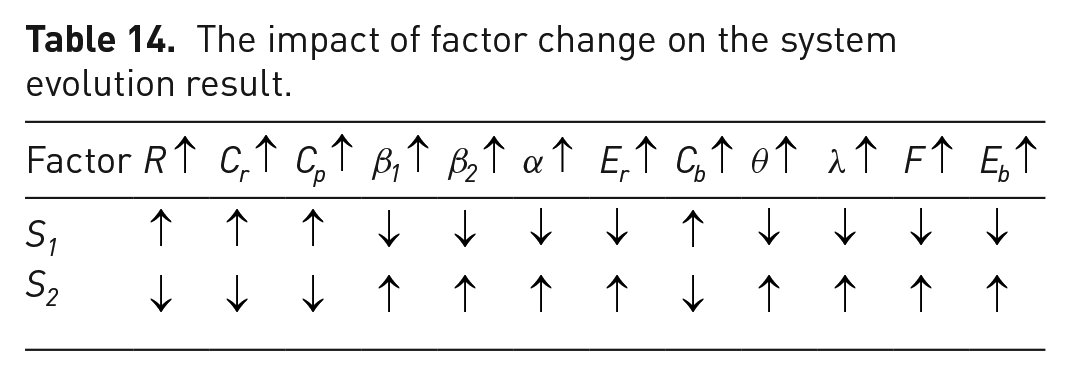
Shown in the area equation (13) that there are 12 influencing factors, and the partial derivative of each factor is calculated. Such as the partial derivative equation (14) solves the partial derivative of S1 with respect to R. The partial derivative is greater than 0, that is, as R increases, S1 gradually increases, the judgment method of other factors is similar. The effect of element changes on the results of system evolution is shown in Table 14.

The impact of factor change on the system evolution result.
Numerical simulation analysis of evolutionary game model
According to the above analysis results, the MATLAB R2018b (Math Works, Natick, MA, USA) software is used for numerical simulation to verify the authenticity of the analysis results and make it more convincing. Therefore, this paper will conduct numerical simulations from the following two aspects in order to find that the evolutionary stable strategies of construction enterprises and construction material manufacturers have jumped out of the {non-participation, non-use} model, and evolve to the path of the symbiosis model {participation, use}.
To make the analysis result applicable to practice and increase its reference value, this paper conducts field investigations on construction sites and in construction material manufacturers in Qingdao and Shanghai, and makes telephone interviews with CDW treatment experts in other cities of China to find out the CDW disposal charges in different regions. Cities with different economic levels differ in their CDW treatment charges. The survey shows that the cost of participation in CDW recycling by construction enterprise is Cb=15~30 yuan/ton; the cost of recycling by construction material manufacturer is Cr=10~20 yuan/ton; and the cost of using CDW to produce construction materials by the manufacturer is Cp=15~25 yuan/ton. At the same time, using existing literature (Chen et al., 2019; Shen et al., 2018) for reference, the paper sets the initial value of the parameters when scenario 6 is satisfied, as shown in Table 15. When analyzing the impact of each parameter on the system evolution result, the paper sets the values of each parameter, with the exception of the analysis object, constant (Tversky and Kahneman, 1992).
Parameter value.

Model parameter analysis under multiple equilibrium
The impact of the proportion of initial strategy on system evolution results
Let
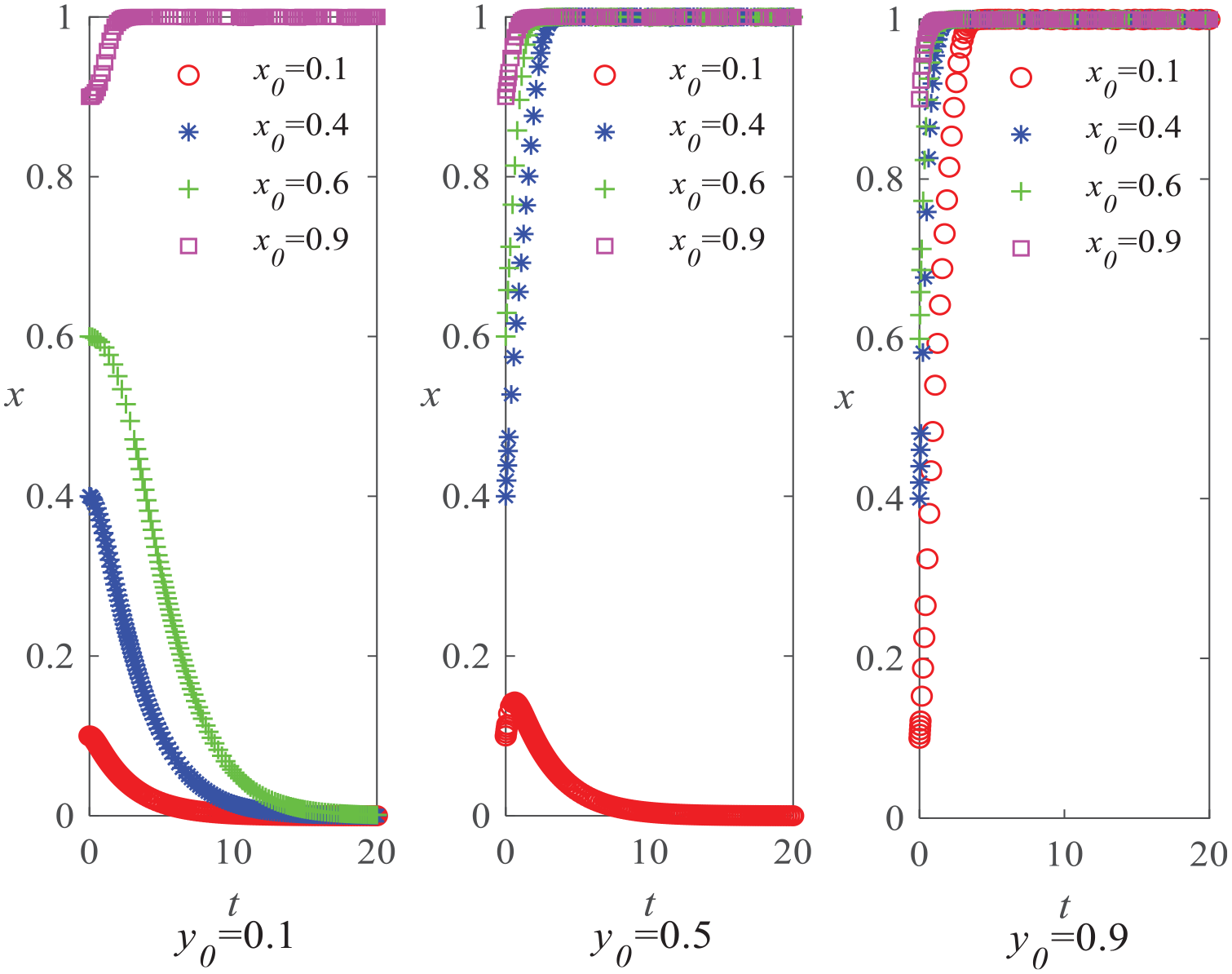
The impact of the proportion of the initial strategy on system evolution results.
The impact of changes in costs and profits on system evolution results
Keeping other parameters unchanged, costs and profits fluctuate 50% up and down based on the initial values, as shown in Figures 13 to 15. It can be seen from Figures 13 and 14 that with the increase of recycling and sortation costs, the strategies of construction enterprises and construction material manufacturers will gradually shift to {non-participation, non-use}. It can be seen from Figure 16 that as R increases, construction material manufacturers will shift from “use” behavior to “non-use” behavior. According to the nature of the evolutionary game, the strategy of construction material manufacturers is adjusted over time under the interaction of subsidies and benefits obtained after recycling. However, when R is high enough, the subsidy obtained by construction material manufacturers who choose to “use” is negligible compared to the income, so construction material manufacturers will choose to use raw materials to produce building materials. Through analysis, it can be seen that the benefits and recovery costs of construction enterprises and construction material manufacturers are important considerations for {participation, use} strategy. Therefore, in the initial stage of CDW recycling, the government should strengthen subsidies to indirectly reduce the cost of {participation, use}; during the rising period of CDW recycling, the government can adjust the subsidy and punishment coefficient according to its own interests; when the CDW recycling is stable, at this time the government can cancel the subsidy policy if the income of the enterprise is “R>1.5”.
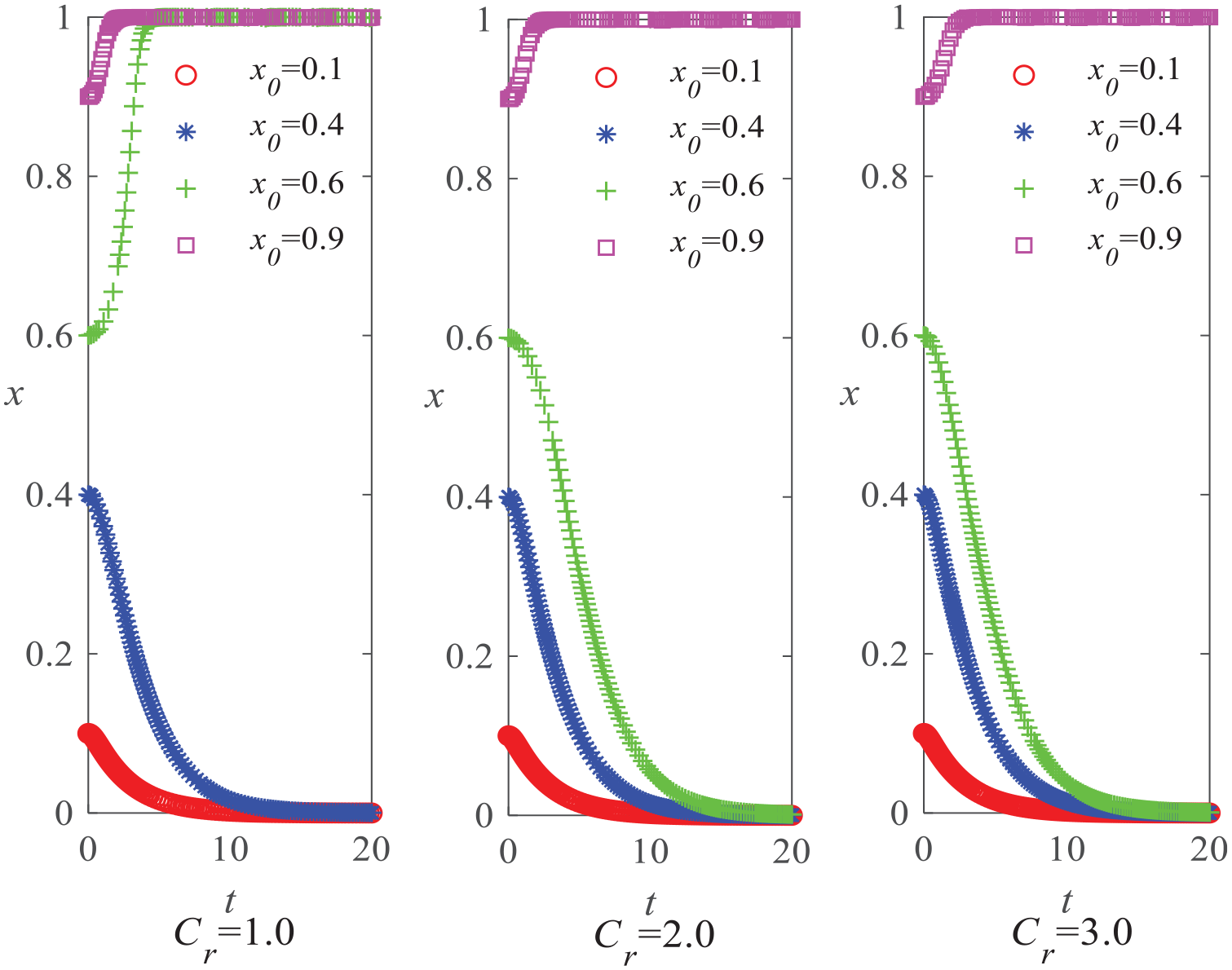
The impact of construction material manufacturers’ recycling cost on system evolution.
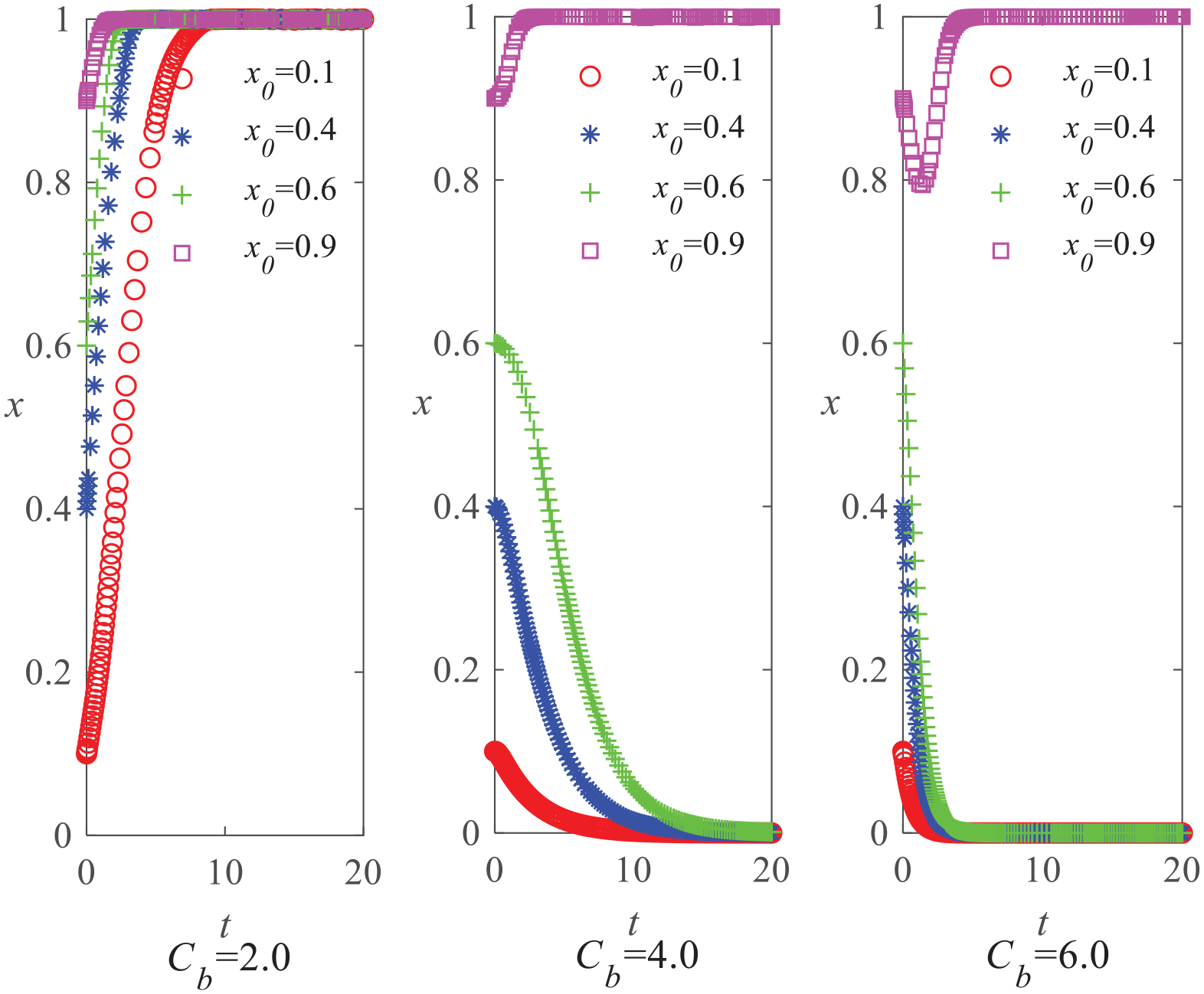
The impact of construction enterprises’ recycling cost on system evolution results.
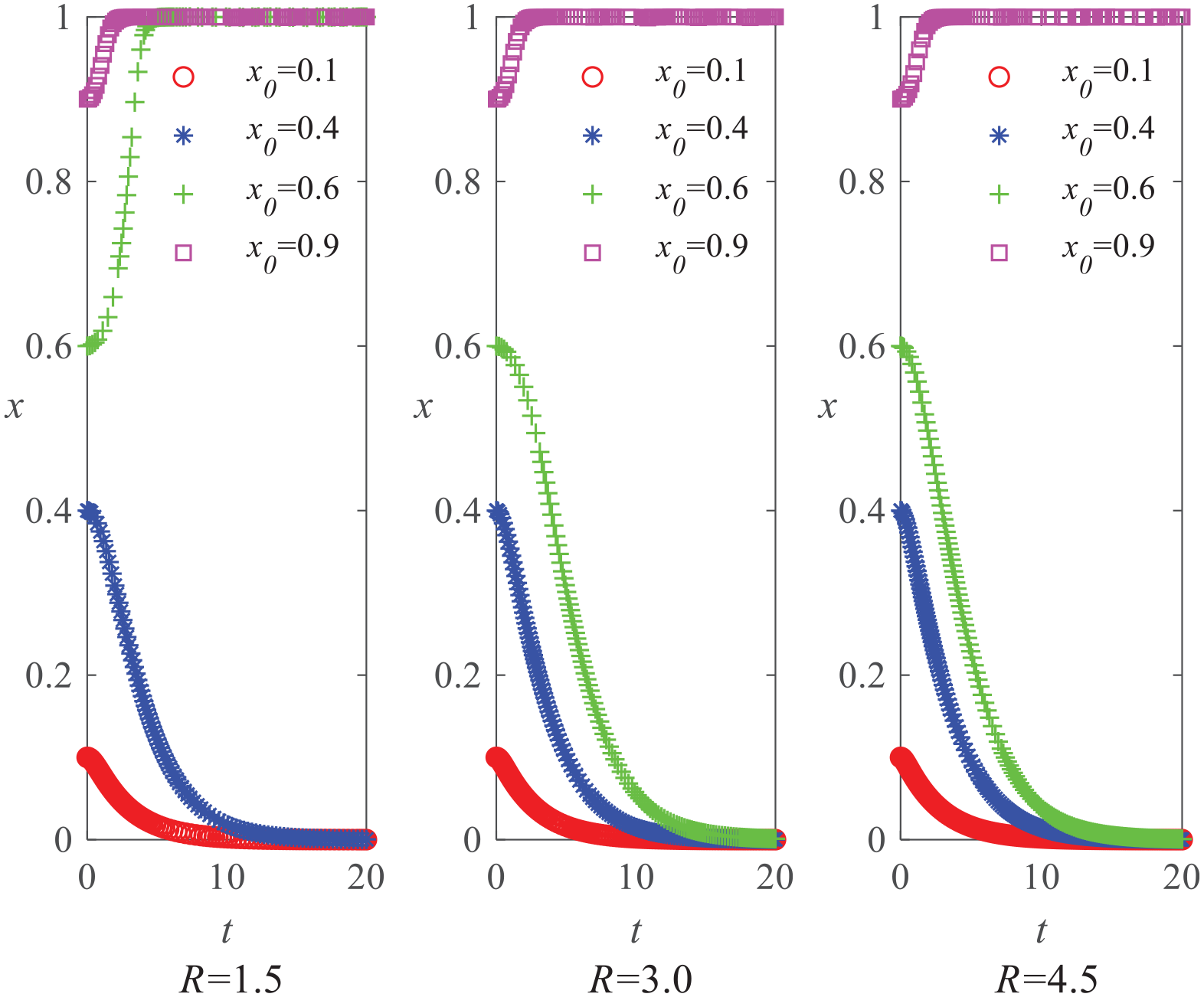
The impact of construction material manufacturers’ revenue on system evolution.
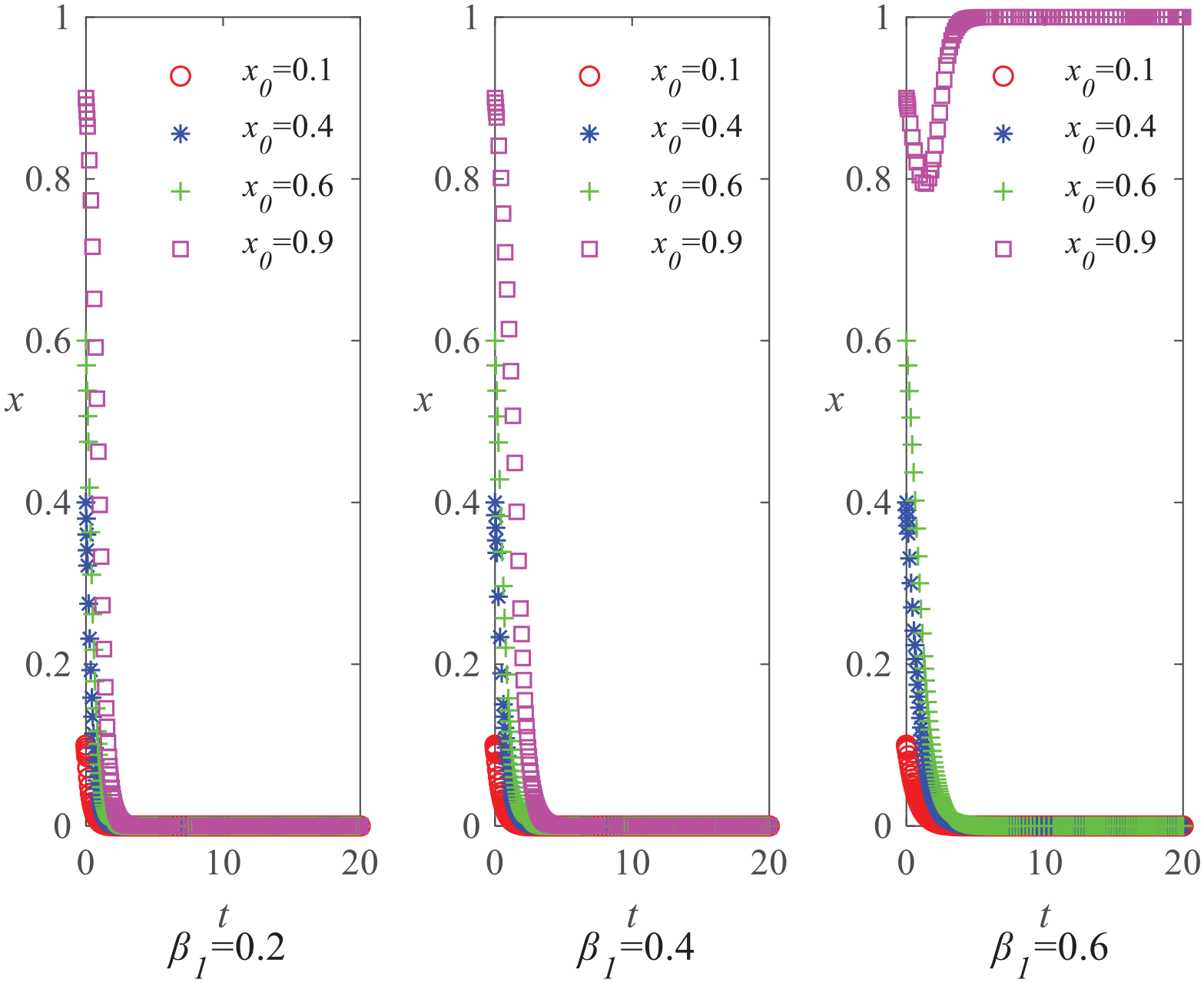
The impact of the government only subsidizing construction enterprises without penalties on system evolution results.
The impact of the evolution of the government reward and punishment system
The impact of 50% fluctuations in government subsidies and penalties on the results of system evolution is shown in Figures 16 to 20. It can be seen from Figure 17 to 20 that with the increase of government subsidies and penalties, construction enterprises and construction material manufacturers have shifted from {non-participation, non-use} to {participation, use} strategies. Therefore, government rewards and punishments play a vital role in promoting the recycling of CDW. From the comparative analysis of Figures 16 and 17, it can be seen that the government only provides subsidies without penalties, and the system tendency to {participation, use} will be greatly reduced. From the comparative analysis of Figures 19 and 20, it can be seen that the government only penalizes and does not subsidize, and the system tendency to {participation, use} will also be greatly reduced. Therefore, in order to promote the system rapidly trend to {participation, use}, the government should implement subsidies and punishments for construction enterprises and construction material manufacturers at the same time to increase the probability of the {participation, use} strategies of both participants. According to the situation that CDW recycling in China is still in its early stages, the government should increase supervision, improve public reporting platforms, increase the environmental protection tax of construction enterprises, and levy carbon taxes. The basic principle of “who generates who is responsible” should be used to prevent illegal disposal, and promote CDW reduction, resource utilization, energy saving and efficiency improvement (Chu et al., 2018). Meanwhile, construction material manufacturers need to strengthen the research and development of recycling equipment, promote the use of new technologies and equipment, improve work efficiency, and reduce sortation costs. Construction enterprises should strengthen self-management and take “reduction, efficiency, and energy saving” as the principle (Long et al., 2020), vigorously promoted to promote prefabricated buildings and reduce the amount of CDW.
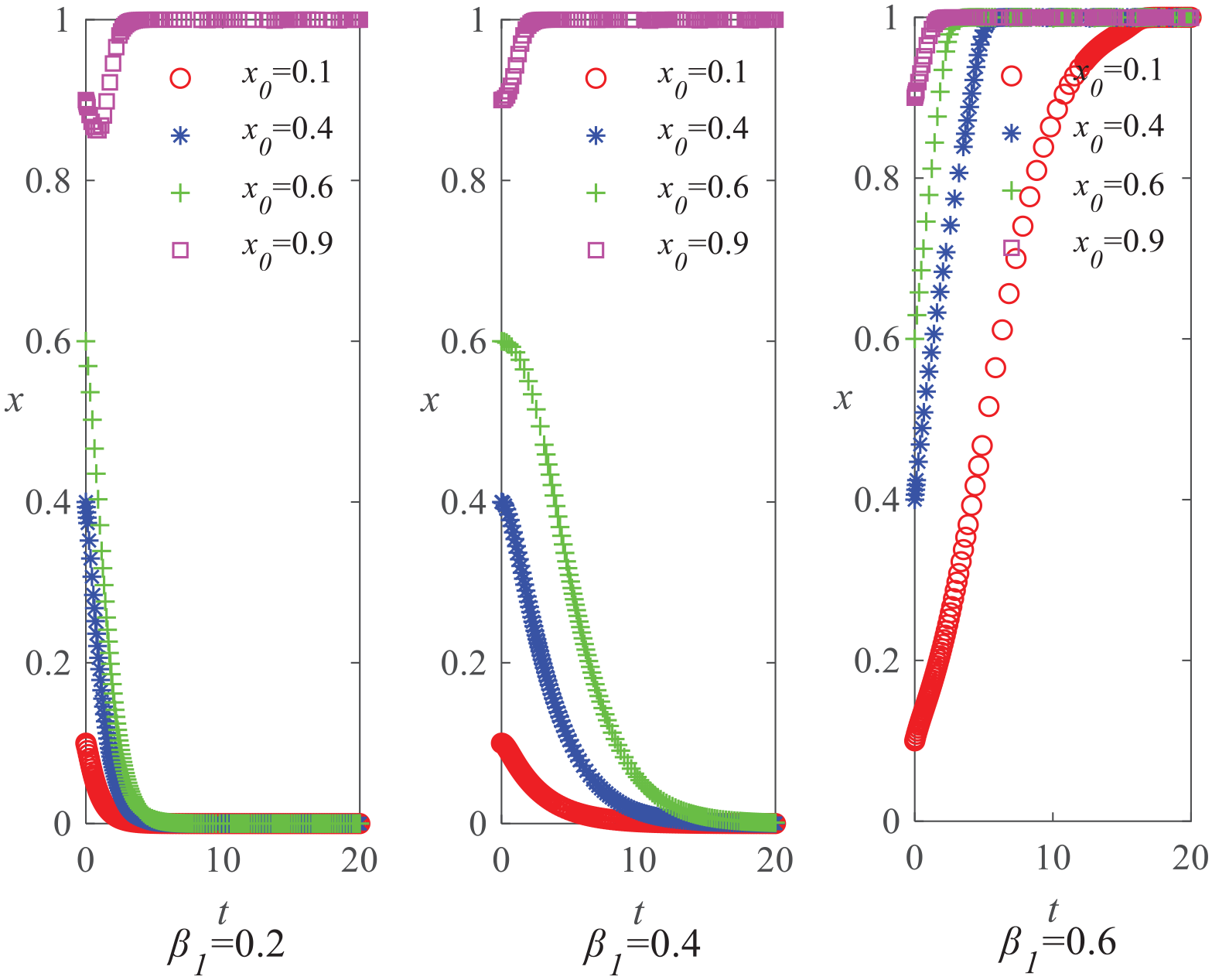
The impact of government subsidies to construction enterprises on system evolution results.
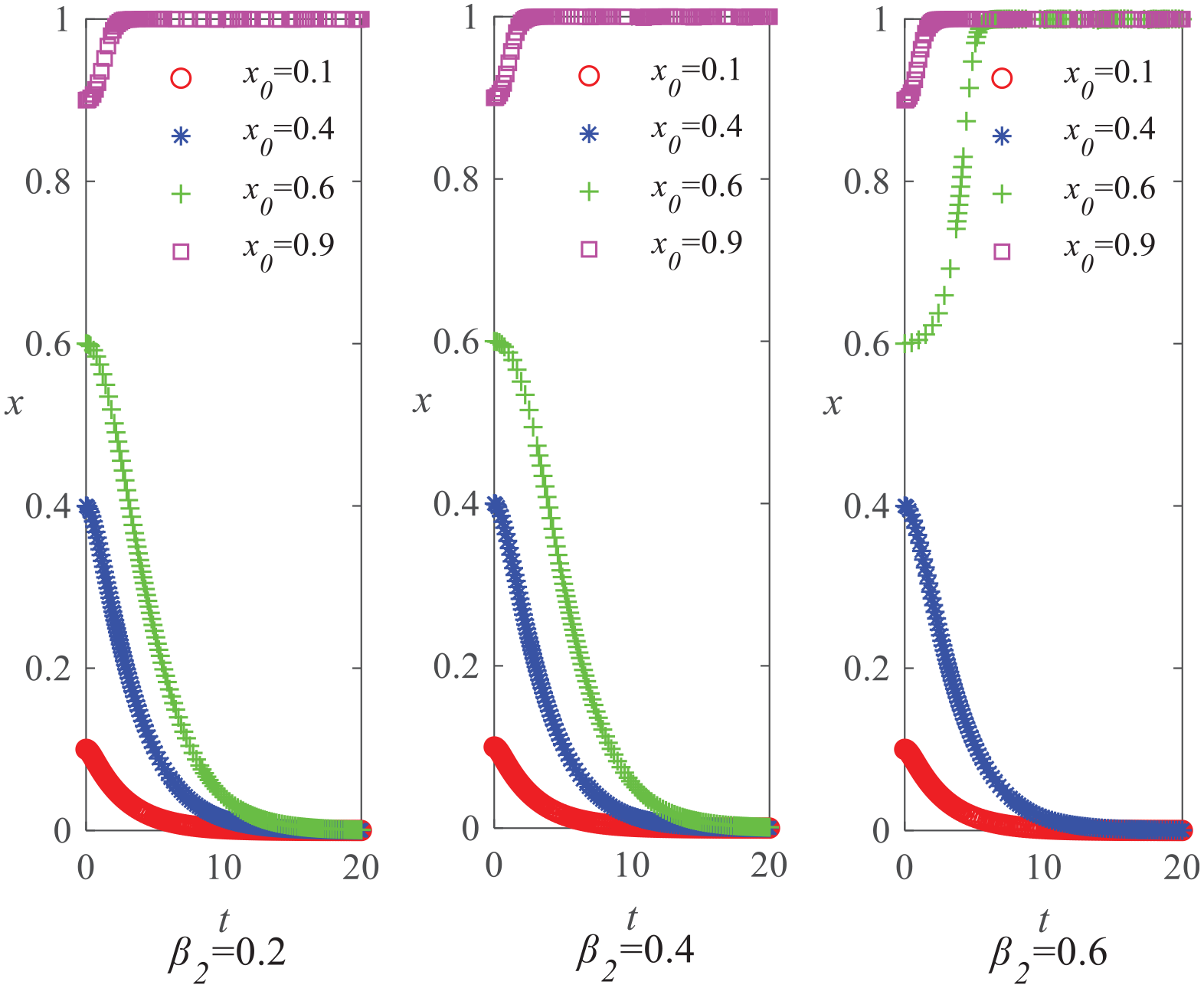
The impact of government subsidies to construction material manufacturers on system evolution results.
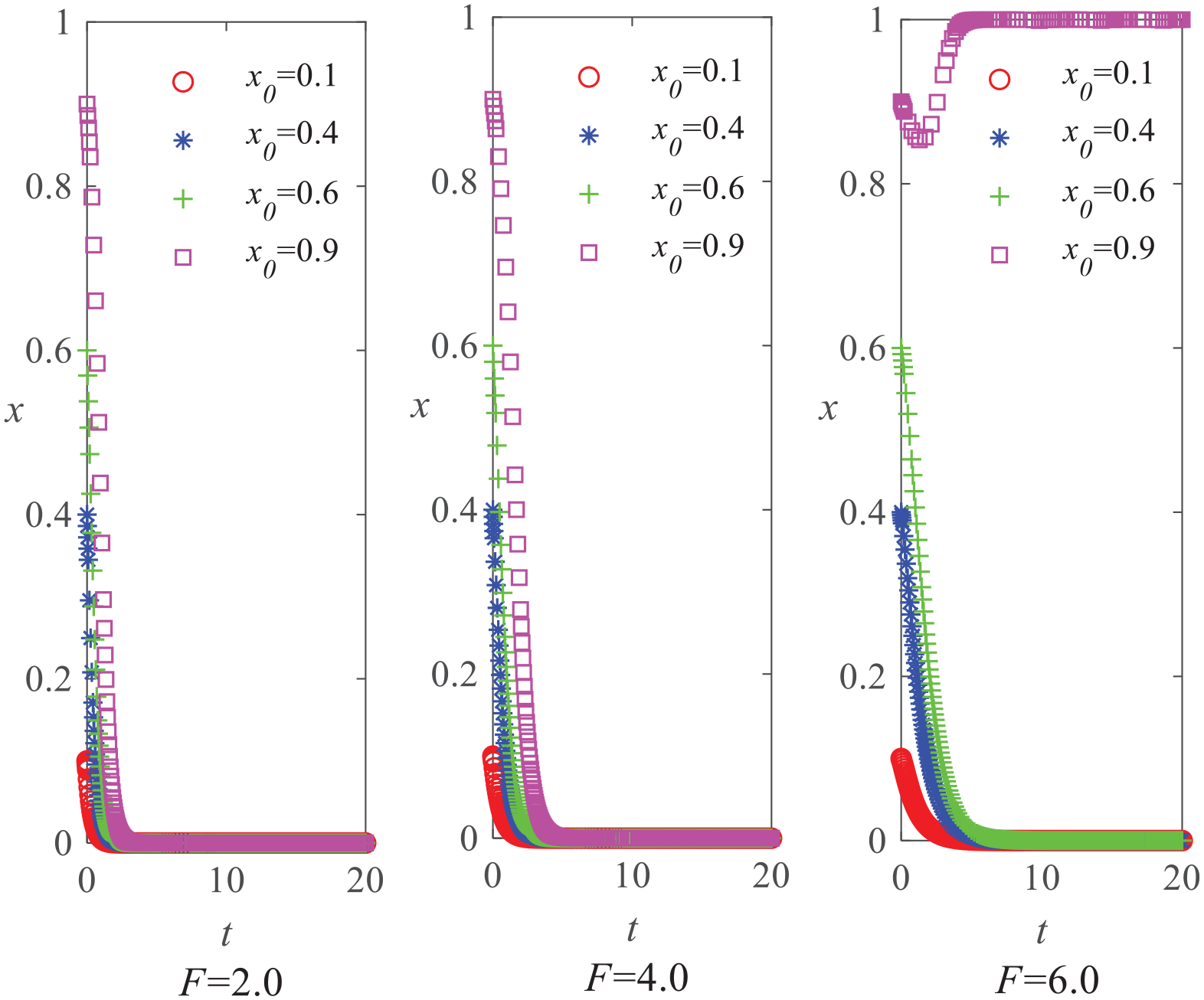
The impact of government penalties on construction enterprises on system evolution results.
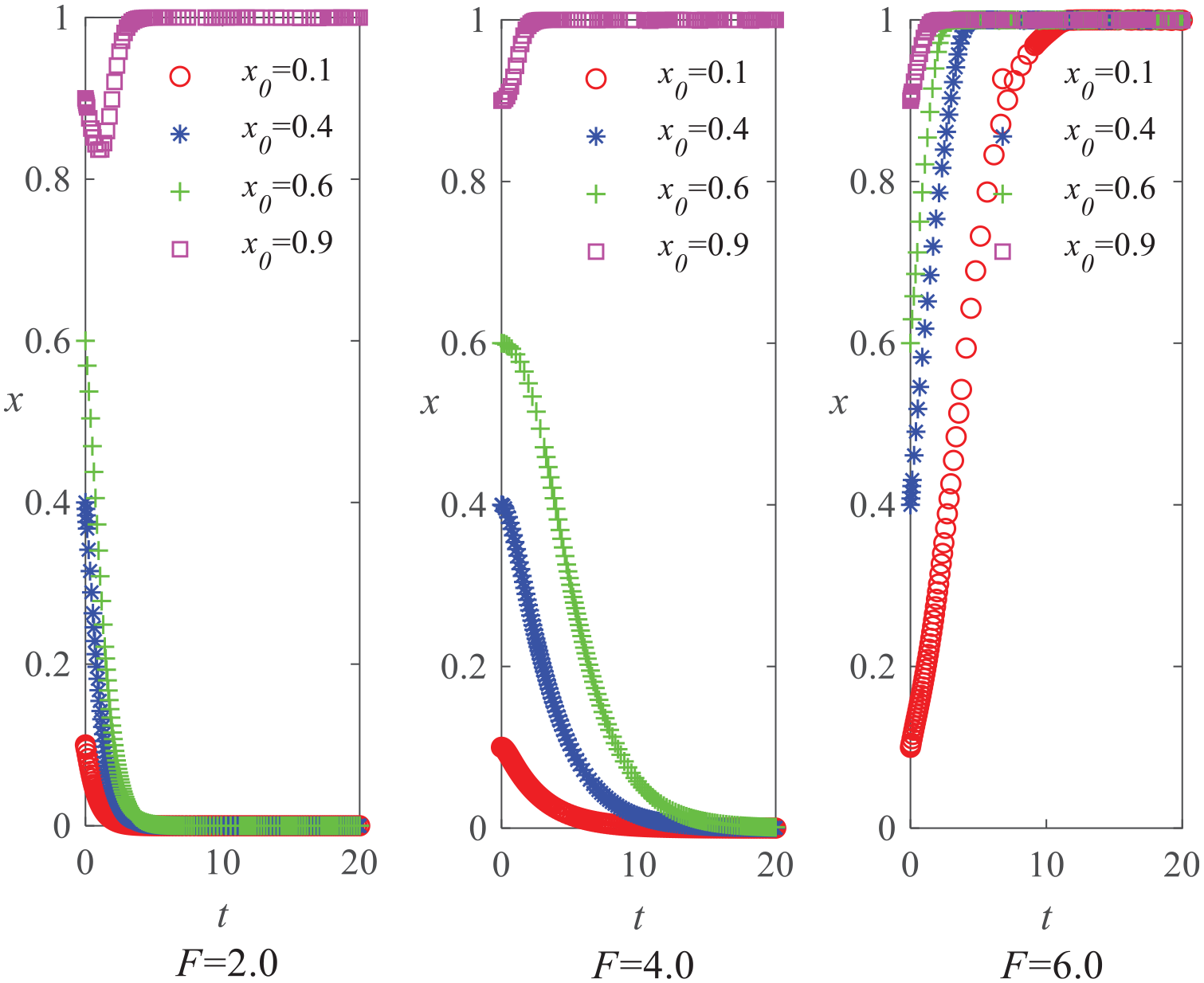
The impact of government penalties on construction enterprises on system evolution results.
Sensitivity analysis of model parameters
Give the lower degree of participation by construction material manufacturers found in the above analysis, a sensitivity analysis of the model parameters is conducted in the context of
Sensitivity analysis of government supervision
When other parameters are set constant and the government supervision is adjusted downward to
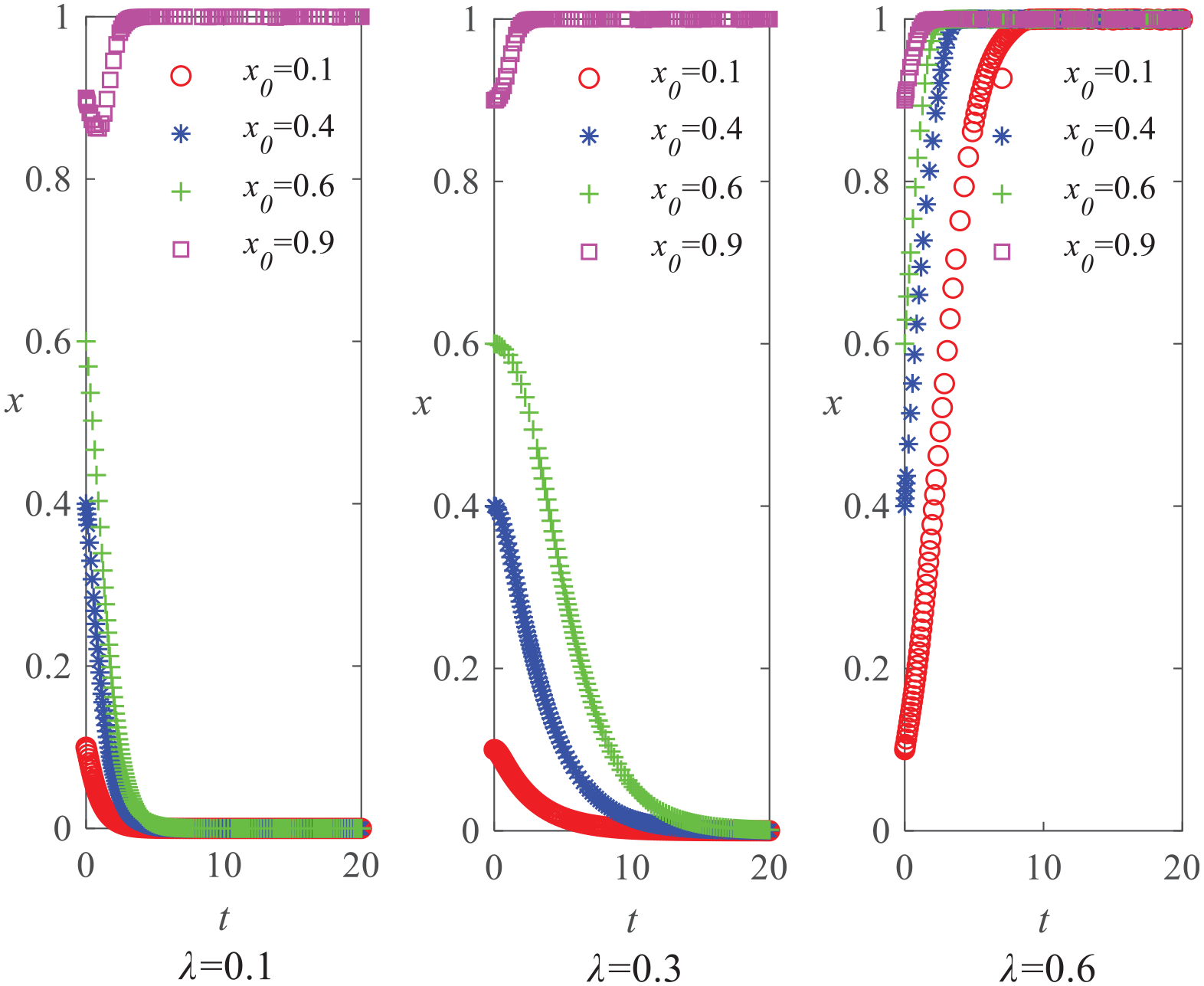
Sensitivity analysis of government supervision.
Sensitivity analysis of public participation
The public is the direct victim of environment pollution and the main stakeholder of clean environment. Figure 22 depicts the simulation results of the sensitivity of public participation, which shows that the tendency to {participation, use} greatly increases with more public participation in CDW supervision. When the value of public participation is 0.4, the system tends to be {participation, use}. To summarize, public participation can effectively supplement the deficiency of government supervision and propel the system to evolve to the strategy of {participation, use}. As such, the government should improve public participation platform to increase the level of participation and make it higher than 0.4.
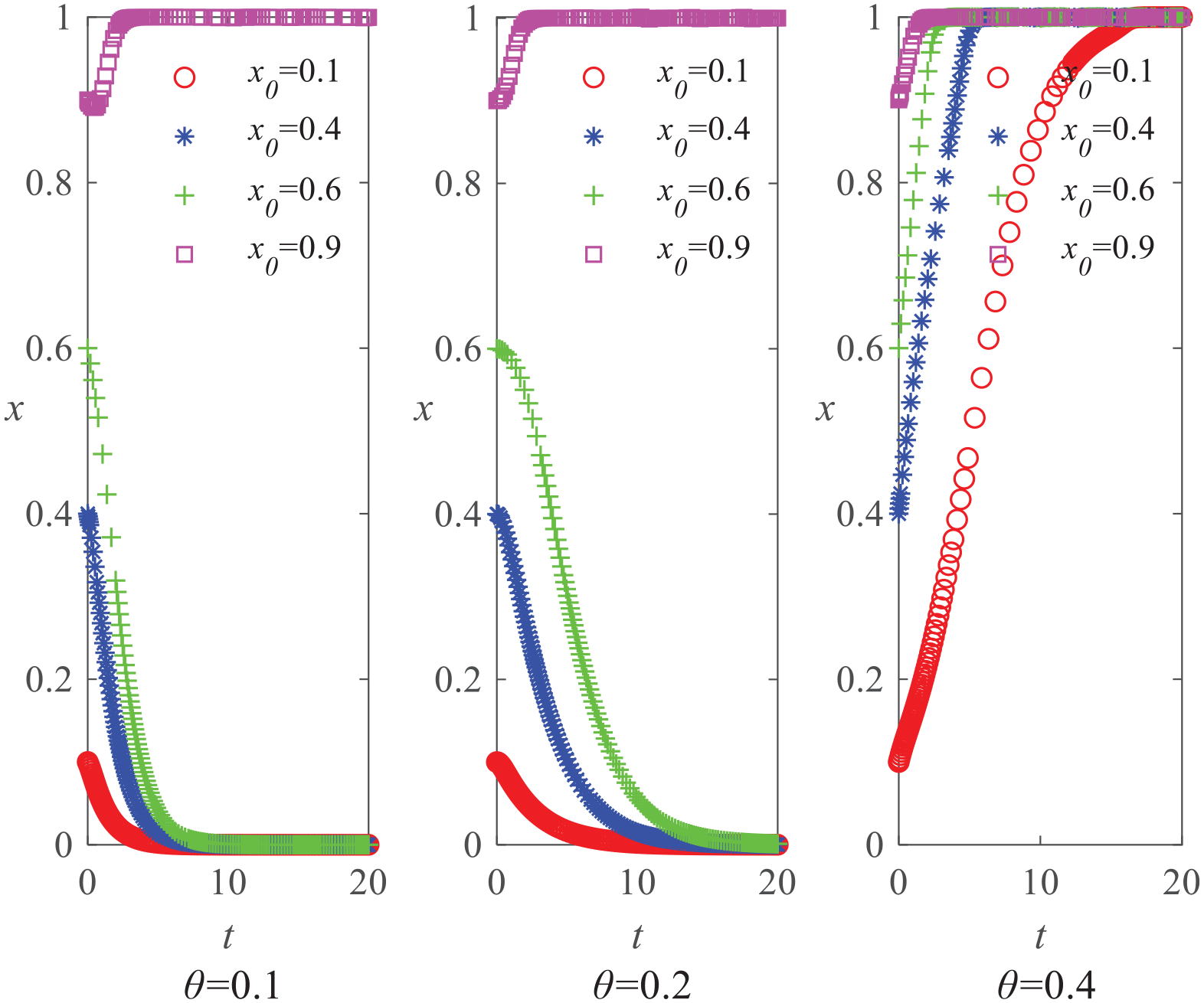
Sensitivity analysis of public participation.
Conclusions
The resource utilization of CDW has the effect of environment improvement and resource saving, bringing in huge economic, social and environmental benefits practically and attracting widespread attention from scholars and society academically. How to improve the resource utilization of CDW is a long-term research topic. In the context of waste-free city, this paper uses evolutionary game theory to discuss the behavior of stakeholders in the process of CDW recycling, and discusses the optimal government supervision and public participation in order to promote the recycling of CDW.
The research results show that the evolutionary game by stakeholders in the process of CDW recycling follows a complex evolution path. The stable state of the system mainly depends on the difference between the revenue and costs of the two participants. The higher the difference, the more the behavior of the two tends to be {participation, use} strategy. Among the factors, the initial strategies taken by construction enterprises and construction material manufacturers, their revenue and costs of recycling, as well as government reward and penalty pose significant impact on the recycling of CDW. In addition, studies have found that penalty rise alone is not enough to control the illegal dumping of CDW. At the same time, the optimal level of government supervision is 0.6 and that of public participation is 0.4. Public participation in the management and supervision of CDW treatment can promote the management by the government, improve supervision, and force construction enterprises into paying attention to green and sustainable production. Therefore, to enhance the recycling of CDW, improve the ecological environment, promote the sustainability of the system, and avoid environmental deterioration and resource waste caused by illegal disposal of CDW, the government should establish an effective supervision mechanism and legal system, improve the supervision hotline and the information platform, encourage the public to participate in the management and supervision of CDW, set appropriate rewards and penalties, strengthen supervision and management levels, reduce supervision costs, ensure the effectiveness of construction management, increase R&D and investment in technical equipment, and improve the effectiveness of cooperation between construction enterprises and construction materials enterprises.
Developed countries started the study on CDW utilization earlier, leading to a higher utilization rate. The governments, by establishing historical data on construction enterprises’ disposal of CDW and a widely distributed geographic information system, are thus able to trace the dynamics of such behavior and effectively reduce supervision costs. Therefore, for developed countries, the parameters of government subsidies and supervision can be set lower. For developing countries however, the value of the same parameters should be increased, because the governments pay more attention to construction than to CDW disposal and have started the research much later, which results in the fact that their CDW utilization rate is obviously lower.
However, there still exist certain limitations in this paper. Firstly, the evolutionary game model established only takes construction enterprises and construction material manufacturers as the main participants but considers the government and public as external environment, lacking in the analysis of the decision-making behavior of the government and the public. Secondly, there might be certain deviation between theory and practice with regard to model assumptions, parameter setting and their relationships. Thirdly, this paper analyzes the main influential factors in CDW utilization but lacks in the analysis on other factors. In addition, based on the proposals of the paper, the reduction and source management of CDW should be top priority to lower the generation of CDW. Therefore, in further studies, more complicated influential factors could be considered, and more complex model constructed, with government and the public set as main participants, to explore their decision-making behaviors and analyze the promotion mechanics these two parties could produce to CDW utilization.
Footnotes
Declaration of conflicting interests
The authors declared no potential conflicts of interest with respect to the research, authorship, and/or publication of this article.
Funding
The authors disclosed receipt of the following financial support for the research, authorship, and/or publication of this article: This research was funded by the National Natural Science Foundation of China, grant number: 71874123; 71974122; 71704162.
