




Abstract
The adoption of the extended producers’ responsibility (EPR) principle as a mitigation strategy for e-waste management has gained impetus over the past few years. However, e-waste management in developing economies through retail electronic firms’ or producer responsibility organization is still inceptive. This study identified and analysed promoting factors of EPR principle adoption through retail electronic firms in the Ghanaian electronic industry. Through extant literature and stakeholders’ perspectives, 15 factors were identified as strategic and operational promoting factors, which were evaluated by experts. Subsequently, the grey Decision-Making Trial and Evaluation Laboratory technique was used to analyse the data obtained. The outcome of the study suggests that operational factors have more influence than strategic factors to determine the adoption of the EPR principle. In addition, most of the important operational factors tend to be enabled by both push and pull measures by supply chain stakeholders. In the short term, adopting an advanced deposit recycling refund scheme tends to be the most effective elementary operational factor, which can push retailers to adopt the EPR principle. The significant pull elementary factors that need short-term attention include the opening up and creation of new market opportunities for e-companies as well as resilient and effective resources management. The study findings suggest that Ghana’s present policy framework is limited for the adoption of the EPR principle by retail electronic firms. The study contributes to identifying promoting factors for adoption of the EPR principle from the perspectives of both the external and internal stakeholders in the electronic industry with emphasis on push and pull strategy.
Keywords
Introduction
The rapid urban development, expansion of industrial activities, the advancement of information and communication technologies, and the human desire for new electrical and electronic products have increased the volumes of electrical and electronic waste (e-waste) generation globally. The industrial revolution and unabated introduction of new electrical and equipment in the last three decades by the electronic industries have heightened the discourse on effective management systems of e-waste, owning to the mass production of obsolete products (Bhatia and Srivastava, 2018; Chandra, 2020). The unceasing generation of e-waste in developed economies has become a major threat to the environment, human health and socio-economic activities (de Souza et al., 2016). One of the prime reasons for this threat is the lack of proper recycling technology for processing the massive volumes of e-waste generated annually (Li et al., 2015; Sasaki, 2020).
The global statistics on e-wastes indicated that e-waste generation reached an unprecedented record of 53.6 million metric tonnes in 2019. The sharp upsurge of 21% was attributed to the consumers’ quest for new electronic products and the advancement of information technology in the developing economies. In 2019, an estimated 53.6 million tonnes of e-waste were generated, which is about 7.3 kg per person (Forti et al., 2020; Tiseo, 2021). Out of 53.6 million tonnes of e-waste generated, 13.1 million tonnes were generated in the USA, Asia produced 24.9 million tonnes, 12 million tonnes were generated by the European Union (EU), African countries generated 2.9 million tonnes and Oceania produced 0.7 million tonnes (Ghimire and Ariya, 2020; Islam et al., 2020). According to the Tiseo (2021), Asia produces a substantial amount of e-waste than other regions; thus, on average, Asia generates 5.6 kg per person. However, in contrast, the volume of e-waste generated per capita in Europe and the Americas is considerably higher, at 16.2 and 13.3 kg, respectively. Existing studies have projected that the global e-waste generation by 2030 is estimated to be around 74.7 million tonnes (Dhir et al., 2021; Rautela et al., 2021; Shaikh et al., 2020). It is noteworthy to indicate that only 20% of e-waste generated worldwide is managed through formal practices, whereas the remaining 80% are managed using conventional techniques (Awasthi et al., 2018; Gollakota et al., 2020).
The millions of e-wastes generated globally have fuelled the discussion among scholars, practitioners, policymakers and governments about effective e-waste recycling and management to curb the ever-growing poor e-waste management menace (Gollakota et al., 2020). Currently, many developed countries have initiated and implemented several laws and policies based on the EU directive, Basel convention and extended producer responsibility (EPR) principle to control and manage e-wastes (Mohammadi et al., 2021). According to the EPR principle, original electronic manufacturers must assume responsibility or take back their electronic products at the end-of-life (EoL) span for recycling and management (Lindhqvist, 2000). The original producers of electronic products assume total responsibility for e-waste collection, transportation, remanufacturing, treatment and disposal. This practice by producers has been hugely and successfully implemented in many developed countries such as Germany, Denmark, Australia, Japan and Canada (Li et al., 2015; Rubio et al., 2019). The effectiveness and the success of implementing the EPR principle in the developed countries has been attributed to the availability or the proximity of original producers (Kaya et al., 2020). The availability of producers makes it relatively easier to achieve the adoption of EPR principle for consumers in the developed countries who are able to return their unwanted and obsolete e-waste products for recycling and management. However, in many developing economies, original electronic producers are rare, unavailable and non-existence to access (Kumar et al., 2020). This is because original electronic producers export their finished electronic products to developing economies through retailers for marketing. Therefore, the adoption of the EPR principle for e-waste recycling and management rests greatly on retail electronic firms (Hilton et al., 2019; Tong and Yan, 2013). Nonetheless, there are limited studies that highlight the commitment of retail electronic firms in the adoption of the EPR principle in addressing e-waste in developing economies.
Ghana faces enormous e-waste management challenges that pose a significant impact on the environment, socio-economic activities and public health concerns (Agyei-Mensah and Oteng-Ababio, 2012; Caravanos et al., 2011). Consumers’ insatiable desire for new electronic products, including the quest of the government to keep pace with global advancement in information and technology and increase technology to under-serve rural communities has resulted in the surge of e-waste generation (Adanu et al., 2020; Oteng-Ababio, 2010b; Sovacool, 2019). The Ghanaian government recognizes the complexities associated with the unregulated and rudimentary practices for managing e-waste, which causes major threats to the environment and human health. Considering these menace, e-waste management policies called ‘Hazardous and Electronic Waste Control and Management Act, 2016 (Act 917)’ and legislative instrument (LI 2250) were developed to underpin addressing e-waste management practices challenges (Amoabeng Nti et al., 2020). The policies and legislative instrument creates the legal framework for effective and sustainable management of e-waste. Notwithstanding, the introduction of the policies and legislative instrument effective e-waste management in Ghana continues to be a major concern to decision-makers (Chen et al., 2020; Quaye et al., 2019). The volume of locally generated and imported e-waste in Ghana has increased informal e-waste management activities, which the government, stakeholders and industry actors are grappling to address (Adanu et al., 2020). Hence, in general, sustainable e-waste management has become increasingly important and gained substantial attention in the electronic industry; however, the role of retail electronic firms for the adoption of EPR principle is under explored in existing literature.
With the increasing number of retail electronic firms in Ghana, including Sollatek Electronics, Somotex Ghana Limited, Nasco electronics and Hisense, the adoption of the EPR principle as a strategy for sustainable e-waste is still nascent. The lack of EPR principle adoption through retail electronic firms has also spurred informal e-waste management practices in places such as the infamous Agbogbloshie e-waste yard (Daso et al., 2016). Poor e-waste recycling and management practices have become a critical challenge that threatens the attainment of Sustainable Development Goals (SDGs), particularly SDG 3 (good health and well-being), SDG 6 (clean water and sanitation) and SDG 11 (sustainable cities and communities) (Arya and Kumar, 2020; van Zanten and van Tulder, 2020). The adoption of the EPR principle via retail electronic firms inure to safe e-waste management that protect the environment and human health (Hilton et al., 2019). Therefore, considering the environmental and health challenges that emanate from informal e-waste, the adoption of the EPR principle through retail electronic firms for e-waste management in Ghana comes in handy. Notwithstanding, environmental and health concerns associated with informal e-waste management, the adoption of the EPR principle provides sustainable employment to several households. Though there are copious research carried out on e-waste management in Ghana (Agyei-Mensah and Oteng-Ababio, 2012; Feldt et al., 2014; Oteng-Ababio, 2010a; Srigboh et al., 2016; Zhao et al., 2016), there is a gap in literature that concentrate on promoting factors for the adoption of EPR principle by retail electronic firms for sustainable e-waste management. To bridge the above gap and the paucity of studies on EPR principle adoption through retail electronic firms, the present study aims to evaluate promoting factors for the adoption of EPR principle through retail electronic firms in developing economies. Ghana’s e-waste context is considered as a potent study due to enormous challenges in addressing informal e-waste management practices. Accordingly, study is guided by the following objectives:
To develop a framework to identify promoting factors based on stakeholders’ perspectives for the adoption of EPR principle for e-waste management through retail electronic firms in Ghana.
To present the interrelationship and sectional diagrams to understand the most influential and elementary promoting factors using grey-Decision Making Trial and Evaluation Laboratory (grey-DEMATEL) approach.
To provide practical and theoretical implications of the study for effective decision-making process by policymakers based on pull and push strategy policy technique.
To pursue the defined objectives of the study, Delphi method together with multi-criteria decision-making (MCDM) technique and DEMATEL were employed to explicitly understand promoting factors that will facilitate EPR principle adoption through retail electronic firms. Existing number of studies have employed a hybrid Delphi method and DEMATEL to address numerous complicated issues in science, management, engineering and environment (Bhatia and Srivastava, 2018; Chandra, 2020; Goulart Coelho et al., 2017; Kumar et al., 2017; Mangla et al., 2018; Sharma et al., 2020). In the present study, the Delphi method is applied to ascertain experts’ opinion on the identified promoting factors through consensus to select relevant factors among numerous and equally other significant factors, whereas the grey-DEMATEL is employed to analyse the promoting factors into cause–effect groups to determine the causal interrelationship diagram (Karuppiah et al., 2020). However, the conventional DEMATEL technique application is often characterized by uncertainties, ambiguity and incomplete information during the decision-making process (Raj and Sah, 2019; Wang et al., 2017). Hence, in this study, grey theory is integrated to address the uncertainties, vagueness and incomplete information (Chandra, 2020; Deepanraj et al., 2017).
The contribution of this study is threefold: firstly, it identifies promoting factors for EPR principle adoption through retail electronic firms guided by stakeholders’ perspectives. Thus, promoting factors that are strongly connected or related to the retail electronic firms are categorized as operational promoting factors, whereas factors that are associated with external stakeholders, such as the government, consumers and non-governmental organizations (NGOs), are considered as strategic promoting factors. The second contribution of the study is the categorization of the promoting factors into pull and push strategy to guide policymakers in formulating punitive and appealing policies for the adoption of EPR principle by retail electronic firms. Thirdly, the study contributes by analysing the causal interrelationship among the identified promoting factors of EPR adoption and their interaction possibilities to facilitate systematic decision-making process by policymakers.
Therefore, the remainder of the study is organized as follows: Section ‘Literature review’ provides a literature review on EPR, e-waste management and identification of promoting factors for EPR principle adoption. Section ‘Research method’ explains the methodology employed and data collection in this study. Section ‘Study results and sensitivity analysis’ presents the study results and sensitivity analysis. Section ‘Discussion of results’ discusses the results, theoretical and practical implications. The conclusions, limitations and scope of future work are provided in section ‘Conclusion and future research’.
Literature review
This section covers previous studies on EPR, e-waste management and promoting factors of EPR principle adoption for e-waste management in developing economies through retail electronic firms. In order to identify the promoting factors from existing studies, a comprehensive literature review was conducted. Keywords such as ‘extended producer responsibility’ and ‘e-waste management’, were explored. The database used includes: Google Scholar, Emerald, Web of Science, Springer, Science Direct, Taylor and Francis and Scopus. In addition, the collected studies were examined using abstract and keywords in the article to focus on the EPR principle in developing economies. Furthermore, refining principles were applied to ensure the articles (a) ‘articles are written in the English language were only selected’ and (b) inclusion of only journal articles that are peer-reviewed and excluding all the conference proceedings. Copious numbers of journals were targeted to select the relevant articles for the study. For example, Journal for a Sustainable Circular Economy, Journal of Production Economics, Journal of Cleaner Production, Journal of Sustainable Production and Consumption, Journal of Sustainability, Journal of Environmental Science and Pollution Research and Journal of Resources, Conservation, and Recycling.
Extended producer responsibility
The world is transitioning from a linear economy to a circular economy to ensure the judicious utilization of scarce resources, create ecological civilization and socio-economic benefits (Murray et al., 2017). Therefore, diverse ways are been explored to ensure effective and sustainable ways of recycling and managing e-waste (Rotter, 2011). These concerns have attracted a growing interest in the adoption and adoption of the EPR principle to overcome informal e-waste management problems, particularly in the developing economies (Amankwaa, 2013; Ikhlayel, 2018; Islam and Huda, 2019). The EPR principle has gained substantial interest among researchers and practitioners (Kim et al., 2013; Nguyen et al., 2017; Niza et al., 2014; Widmer et al., 2005); however, EPR adoption with focus on the commitment of retail in the developing economies have not received the needed research attention (Ikhlayel, 2018).
The EPR principle is aimed at leveraging resources and shifting the burden of improper disposal of EoL products to safeguard the environment and public health (Hou et al., 2020). The EPR principle was first introduced by Thomas Lindhqvist in 1990 in Sweden, it was intended to encourage manufacturers to resume responsibility for the entire life cycle of consumers’ obsolete products for recycling and disposal (Hou et al., 2020; Lindhqvist, 2000). With the intense generation of e-waste products in developed and developing economies, several strategies are being heralded as appropriate means to mitigate and control the ever-growing threat of e-waste (Chandra, 2020). In previous studies, some scholars have carried out numerous theoretical and practical studies premised on deriving measures and perspectives to enhance the adoption and adoption of the EPR principle in the electronic industry. For instance, Ribeiro and Kruglianskas (2020) indicated that the integration of principles of regulatory bodies, government agencies in the decision-making process promote amicable working relationships and collaborations among stakeholders will enhance effective adoptions of EPR policies by producers. They conducted a study of Dutch tyre EPR systems and on how it could be improved and reflect on the systemic approach of integrating the circular economy and EPR principle to properly recycle tyre devoid of environmental and health repercussions. The study highlighted collaboration and multi-stakeholder governance, effective monitoring and continuous improvement of the EPR system as well as improving inclusive social and environmental outcomes beyond EoL electronic products. A study on the adoption of EPR in Colombia revealed that financial, operational responsibility constraints, lack of incentives and tax waivers and collaboration among producers in the product chain are major hurdles obstructing effective adoption EPR practices by manufacturers in Colombia. The study suggests that the effectiveness of the EPR principle adoption in developing economies would require the establishment of comprehensive achievable targets and roadmap, employed interpretive structure modelling (ISM) and analytic network process (ANP) to understand the hierarchical relationship among the promoting factors of EPR practices in the Chinese electronic sector. The study suggested that the EPR-related policies and regulations, the top managerial commitment from industry players and corporate image were the most prominent factors for effective and sustainable adoption of EPR practices in China. From 2001, more than 75% of EPR systems have been implemented globally, after the Organisation for Economic Co-operation and Development (OECD) guidance manual was introduced (Park et al., 2018). In order to ensure effective and smooth adoption of EPR principle, numerous stakeholders inputs are essential, these include: manufacturers, retail firms, local authorities, developmental agencies, NGOs and consumers (Gui et al., 2013; Kunz et al., 2018).
Overview of e-waste management in Ghana
Informal e-waste management has become a lucrative source of livelihood for many unemployed youths in developing economies, especially in Africa and Asia (Loukil and Rouached, 2020). In Ghana, an estimated 200,000 people nationwide are involved in informal e-waste management practices that annually generate US$105–268 million income, especially for unemployed youths (Kwarteng et al., 2020). Nonetheless, informal e-waste management devastates the environment, human health and socio-economic activities (Asante et al., 2012; Prakash et al., 2010). The informal e-waste managing sites in Ghana are considered as the most toxic and unhealthy zones for humans and habitats (Feldt et al., 2014). The application of inappropriate techniques, such as opening burning, the use of hazardous substances and the uncontrolled dumping of e-waste, are common (Chen et al., 2020). Prior studies indicate the use of improper techniques to manage e-waste in Ghana is a major contributor to the spread of disease, water pollution, air pollution and floods due to the chokes of gutters by unwanted e-waste components (Feldt et al., 2014; Kaifie et al., 2020). Ghana’s e-waste sector has attracted significant global attention stemming from a documentary by Greenpeace, which highlighted environmental, health and socio-economic effects by informal e-waste management practices (Adanu et al., 2020). Therefore, to address this challenge, the adoption of EPR principle is gaining substantial attraction from scholars, practitioners and stakeholders in the electronics sector.
Concerning EPR principle adoption and adoption, several studies have been carried with varied assessment techniques to derive effective approach to ensure its adoption in developing economies. Gupt and Sahay (2015) combined exploratory factor analysis and comparative analysis to ascertain the most important aspect of EPR in the developed and developing economies with and without informal recycling. The findings of the study identified regulatory provisions, take-back responsibility and financial flow as the most prominent aspects of implementing EPR used a stylized economic model to evaluate the efficiency of European EPR systems. The model reveals that the introduction of static collection targets creates a gap between theory and adoption. The study indicated that static targets lead to inefficient market outcomes and weak incentives for prevention and green product design by producers. Various countries have adopted different models in addressing e-waste management challenges to safeguard the environment, social-economic and health risk of communities (Zheng et al., 2017). Table 1 highlights some of the models been adopted by some countries to ensure effective e-waste management.
Models adopted by some countries for e-waste management.
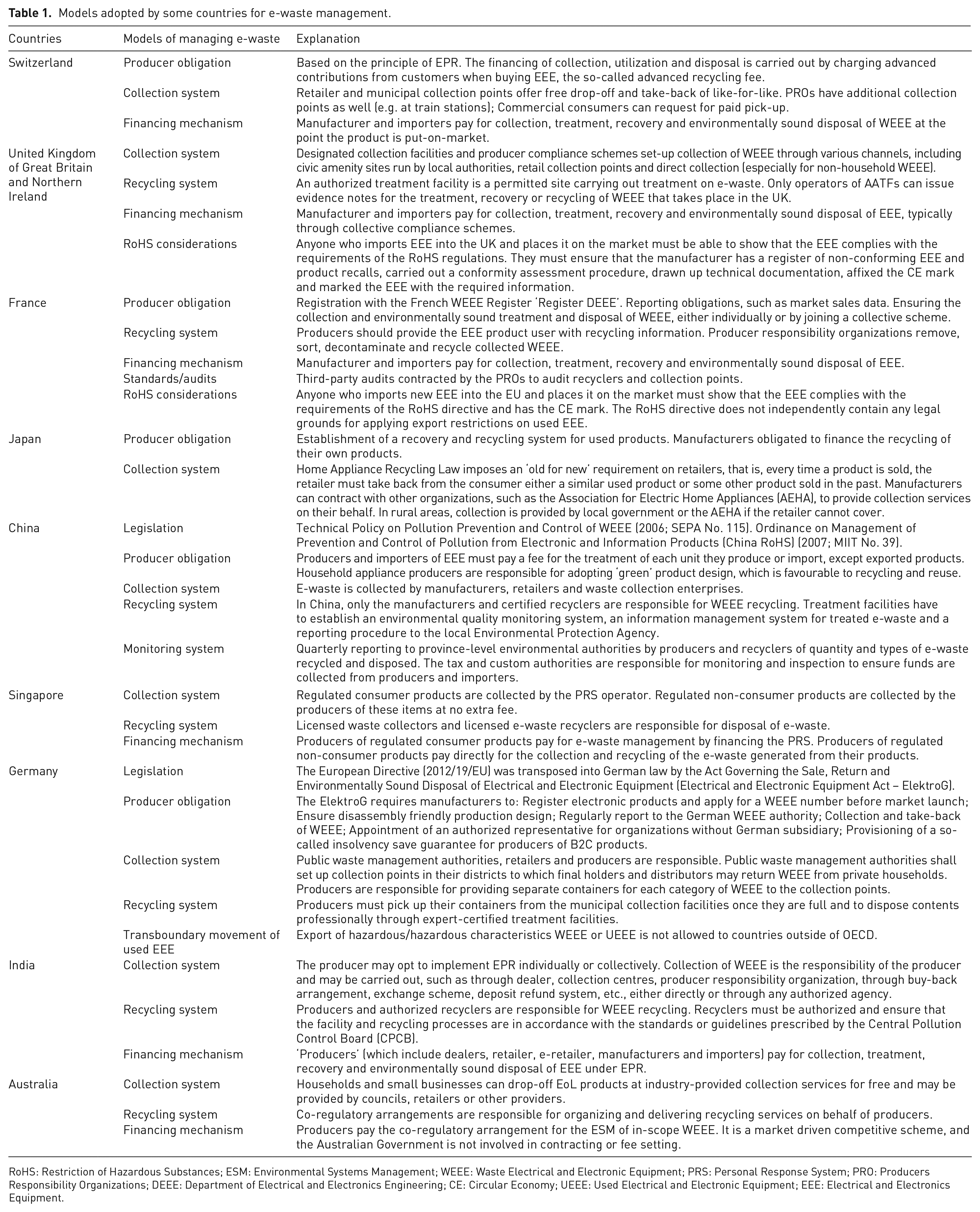
RoHS: Restriction of Hazardous Substances; ESM: Environmental Systems Management; WEEE: Waste Electrical and Electronic Equipment; PRS: Personal Response System; PRO: Producers Responsibility Organizations; DEEE: Department of Electrical and Electronics Engineering; CE: Circular Economy; UEEE: Used Electrical and Electronic Equipment; EEE: Electrical and Electronics Equipment.
Considering the significance of evaluating the efficiency and effectiveness of the adoption of EPR for sustainable e-waste management, various actors in the supply chain are considered to collaborate and disseminate relevant information that will inure in achieving and adopting EPR principle for e-waste management in the developing economies (Esenduran et al., 2019; Hou et al., 2020). It is imperative to indicate that significant number of electronic producers are not stationed in the developing economies, the availability of technology and sophisticated equipment for recycling obsolete e-waste to facilitate EPR adoption becomes challenging (Niza et al., 2014). An entrusted recycling pattern (third-party) is often introduced in the electronics sector in developing economies in which e-waste is managed by these special enterprises (Shan and Yang, 2020). In these instances, the EPR principle is applied by producers through a third party (from recyclers to producers). Therefore, collaboration among the various industry actors and stakeholders becomes crucial to ensure the signing of an agreement that will enforce the producers to bear the cost and responsibilities of the activities of recyclers in the developing economies (Shan and Yang, 2020).
There are other studies that discuses EPR holistically in the developed countries (Agamuthu and Victor, 2011; Gottberg et al., 2006; Rotter, 2011; Scheijgrond, 2011; Taghipour et al., 2012), but there is a lack of studies that examine promoting factors that will facilitate smooth adoption and adoption of EPR principle for sustainable e-waste management in using Delphi and grey-DEMATEL approach in the Ghanaian context. Furthermore, most identified studies adopted a theoretical and case study approach with none specifically focusing on prioritization of the promoting factors in causal a diagram for strategic decision-making process by policymakers.
Promoting factors for EPR principle adoption
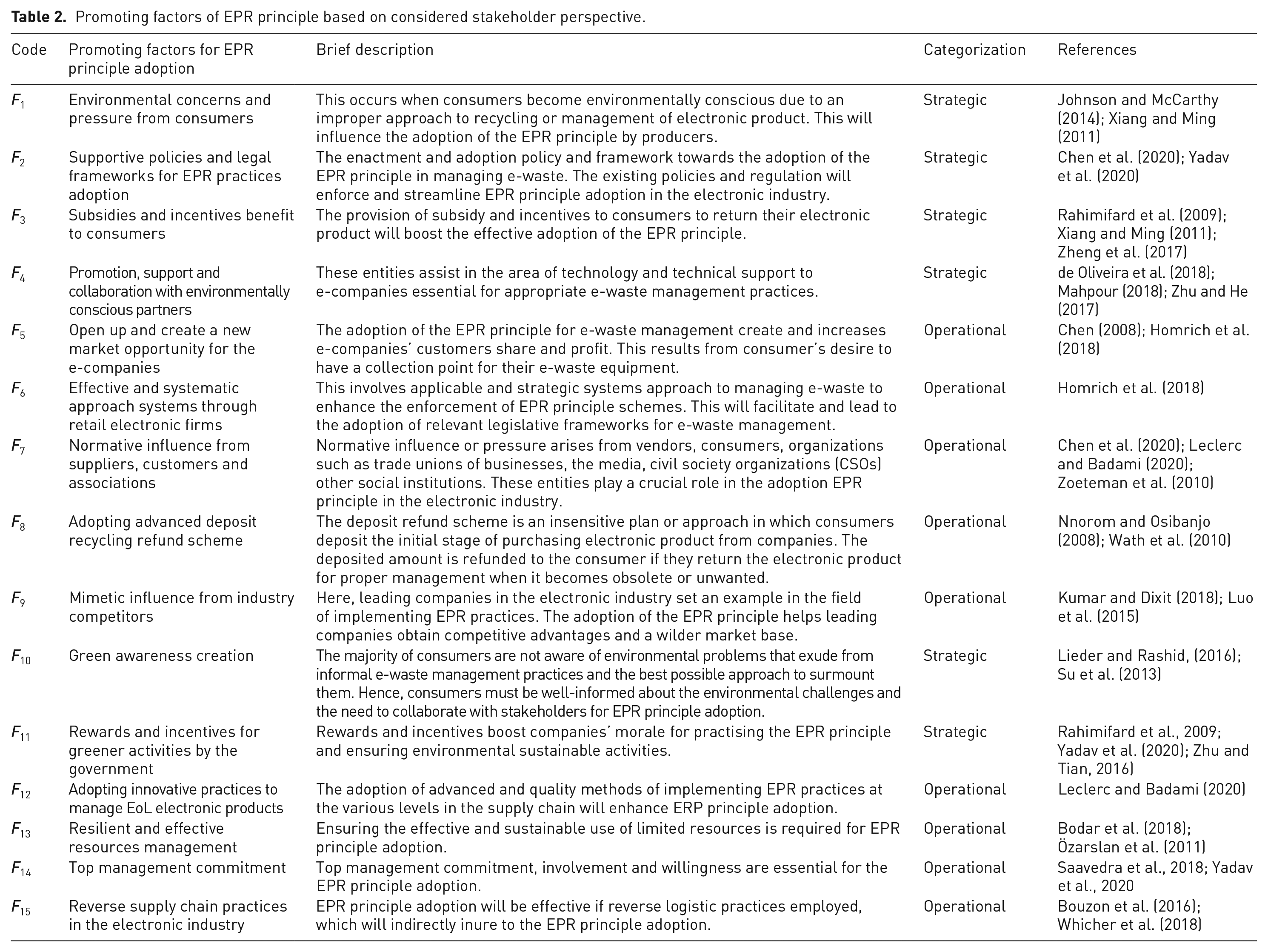
The study identifies promoting factors of EPR principle adoption for e-waste management through retail electronic firms based on stakeholders’ perspectives. In the present study, promoting factors associated with government, consumers, NGOs, development agencies and other external actors are considered as strategic promoting factors. In addition, factors related to the producers/retail electronic firms are categorized as operational promoting factors. Thus, after comprehensive literature and thorough consultation with the stakeholders, 15 strategic and operational promoting factors were identified and accepted for the study as highlighted in Table 2.
Promoting factors of EPR principle based on considered stakeholder perspective.
Research method
In this article, several steps were followed to achieve the objectives of the study. Firstly, the promoting factors for EPR principle adoption by retail electronic firms for e-waste management were identified from an extensive literature review and subsequently approved by a team of 18 evaluators through the Delphi method. Then, grey-DEMATEL technique was employed to determine the causal and effect factors, interdependency relationship as well as to construct causal relationship diagram to give a pictorial understanding of the influential factors to enhance systematic adoption of push and pull measures by policymakers. Figure 1 illustrates the research methodology of the study.
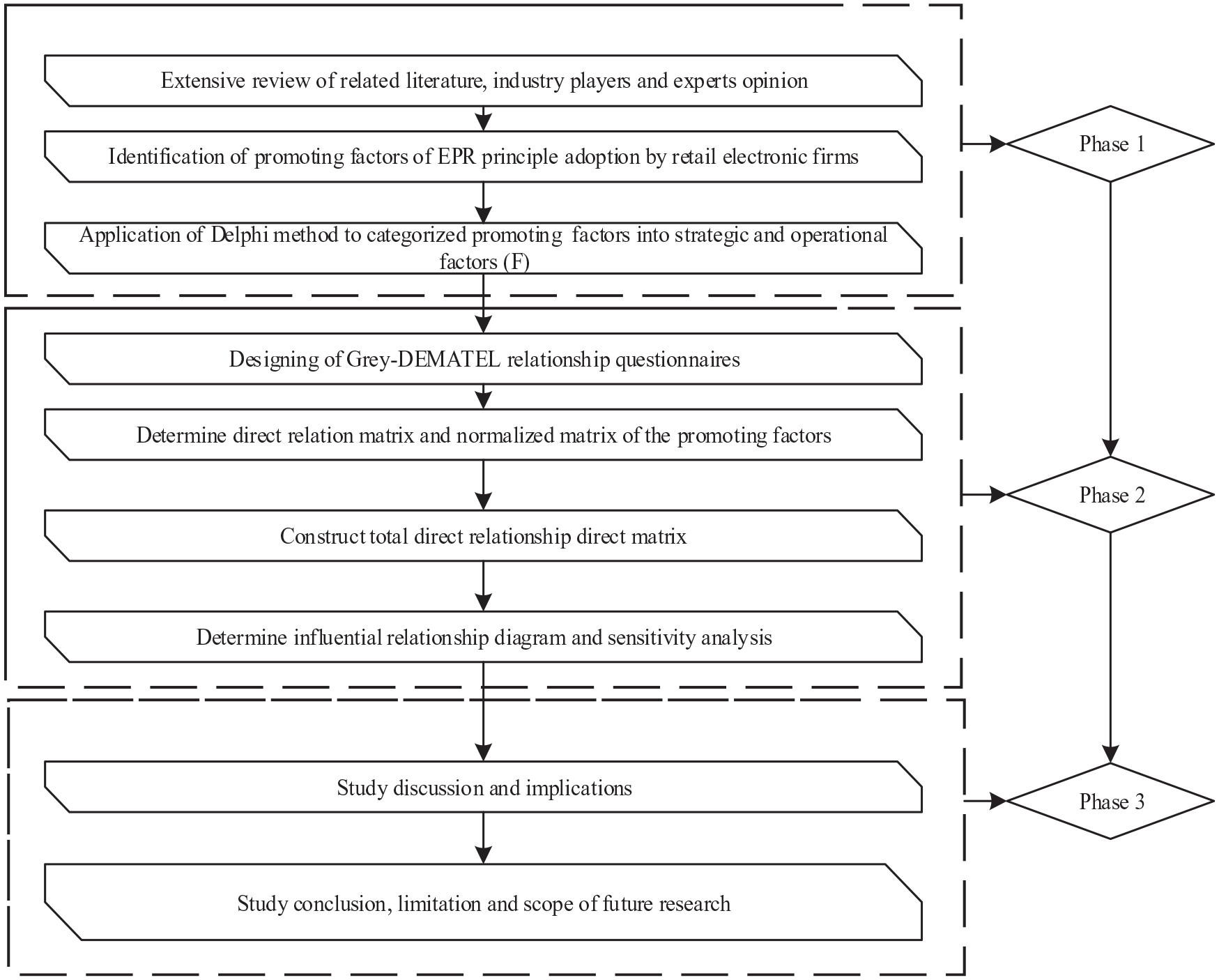
The proposed framework of the study.
The application of the Delphi method
The Delphi method has been applied in several studies due to its ability to address complicated issues to its simplest form (Fernandez-Brana et al., 2019; Kauko and Palmroos, 2014). The Delphi method is an empirical technique utilized to generate and established experts’ candid opinions on a specific subject based on their experience and understanding (Asante et al., 2022; Gardas et al., 2018b; Kauko and Palmroos, 2014; Zeh and Christalle, 2019). In addition, the Delphi method has been applied extensively in several studies to obtain expert opinions until there is a well-grounded and comprehensive consensus on selecting criteria, projects, attributes, solutions and policy directions (Delbecq et al., 1975; Kim et al., 2013). However, it is interesting to note that there is no specific rule that determines the sample size in the application of the Delphi method for a study (Hsu and Sandford, 2007). Hence, in the application of the Delphi method, authors/researchers determine the sampling technique and criteria for the selection of evaluators for a study. Then, the identified attributes or variables are presented to the evaluators for scrutiny, recommendation and approval (Bouzon et al., 2016; Bui et al., 2020; Ocampo et al., 2018). For insistence, Chen et al. (2020) employed six evaluators to evaluate barriers and pathways to the adoption of e-waste formalization management systems in Ghana and used seven evaluators to analyse barriers to municipal solid waste management policy planning in Maputo city, Mozambique; Kim et al. (2013) employed 10 experts’ views to assess the priorities of e-waste for recycling in a waste management decision-making tool in Korea. Furthermore, many studies have also employed less than five experts’ views for a study (Giunipero et al., 2012; Hsu and Sandford, 2007; Kusi-Sarpong et al., 2016). These indicate that the sample size of evaluators for a Delphi method varies. However, according to Kauko and Palmroos (2014), between 5 and 10 evaluators are considered as an acceptable sample size when evaluators are homogeneous (in the same industry). Therefore, this study employed the Delphi technique to obtain experts’ views on the identified promoting factors for EPR principle adoption for e-waste management in Ghana as applied in existing studies (Bux et al., 2020; Mohammadfam et al., 2019). The Delphi method was utilized because it saves time and is cost-effective; it is not limited to geographical location and provides room for evaluators to thoroughly examine the factors and provide relevant solutions (Hsu and Sandford, 2007; Karuppiah et al., 2020).
The grey-DEMATEL
The DEMATEL method is one of the most used MCDM techniques to establish the relationship among criteria into cause–effect groups and prominence aimed at assisting policymakers to avoid discrepancies in the decision-making process (Jeong and Ramírez-Gómez, 2018; Sahu et al., 2018). DEMATEL was developed by the Battelle Memorial Institute of Geneva in 1976 to address intricate issues in various fields (Fontela and Gabus, 1976). DEMATEL technique has been widely applied to address numerous multi-criteria and complex issues across different sectors such as management (Kumar and Dixit, 2018), supply chain (Kusi-Sarpong et al., 2016; Sufiyan et al., 2019), agriculture (Gardas et al., 2018a) and engineering (Xia et al., 2015). As a result, many scholars and researchers discerned on applying DEMATEL technique over other well-known MCDM models such as best–worst method (BWM), ANP, analytical hierarchy process and ISM (Bai and Sarkis, 2013; Beikkhakhian et al., 2015; Bouzon et al., 2016). This is because DEMATEL provides a better relationship diagram among factors by considering the strength of relationship than ISM (Raj and Sah, 2019), it is straightforward and easy to compute (Wang et al., 2017), it provides a wide range of assessment options through linguistic numbers (Bacudio et al., 2016), DEMATEL technique categorizes factors into cause–effect sets, which further helps decision-makers to formulate effective and systematic strategies to address complex issues (Govindan et al., 2015).
The application of conventional DEMATEL is usually associated with inadequacies related to incomplete information, imprecision and subjective evaluation (Bai et al., 2017). Subjective judgements are usually vague and difficult for decision-makers to explain by specific number values (Li et al., 2014). Hence, in this study, grey theory is integrated with DEMATEL to address subjective evaluation, incomplete information and imprecision during the decision-making process (Cui et al., 2019; Govindan et al., 2015). For example, Agyemang et al. (2018) used the grey-DEMATEL technique to evaluate barriers to green supply chain redesign and adoption of related practices in the West Africa cashew industry and also used grey-DEMATEL-modelled enablers of green innovation in manufacturing organizations. Furthermore, analysed critical success factors for adoption of drones in the logistics sector using grey-DEMATEL technique. Many studies have successfully applied this method to address complex issues; however, none has applied this approach in the context of EPR principle adoption for e-waste management in the Ghanaian context. Therefore, the step-by-step application of grey-DEMATEL as indicated in previous studies (Luthra et al., 2017) are as follows:
Linguistic scale and corresponding grey values.
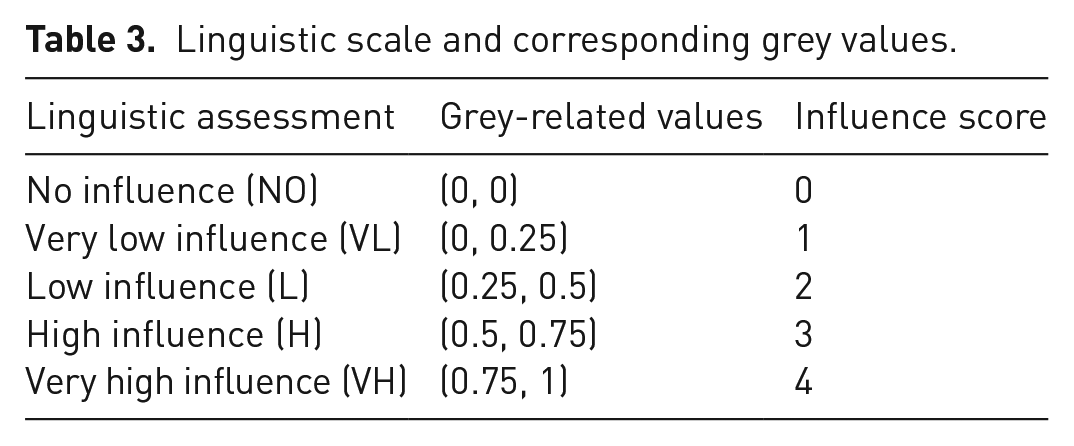
In this step, a five-level pairwise influence comparison scale to construct a direct-relationship matrix is carried out using the grey linguistic scale. Here, we asked each expert to pairwise compare the promoting factors of the EPR principle to obtain the direct matrix of D using the scale ranging from 0 to 4. They are 0 = no influence (N), 1 = very low influence (VL), 2 = low influence (L), 3 = high influence (H) and 4 = very high influence (VH) as shown in Table 3. Since the defined scale in the questionnaire is uncertain, we follow prior studies (Chandra, 2020; Xia et al., 2015).
Here, we employed Converting Fuzzy data into Crisp Scores (CFCS) (Wu and Lee, 2007) to change the grey numbers into crisp values using equations (1)–(3) as:

where
In this step, the average grey relation matrix D is given as:


The crisp values of the grey number
a. Normalization of the grey values on the lower bound using equations 4 and 5, where k is the number of experts.


In this case,

b. Evaluation of total normalized crisp value using equation (7) is given as:
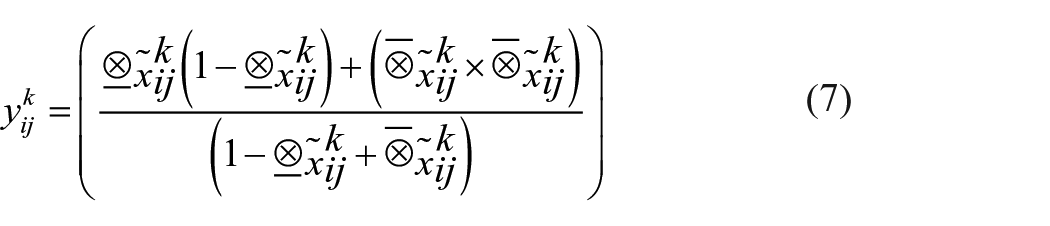
c. Then, we determine the final crisp values by equation (8) as:




where K is a normalization factor and T is a crisp relation matrix.

where I represents the identity matrix.
Here, the sum of the rows and the sum of the columns represent as vectors R and C, by using equations (13)–(15). In this step, i, j ∈ { 1,2,…, n } and



where Di and Ri denote the sum of rows and the sum of columns based on the total-influence matrix
Data collection and evaluators selection
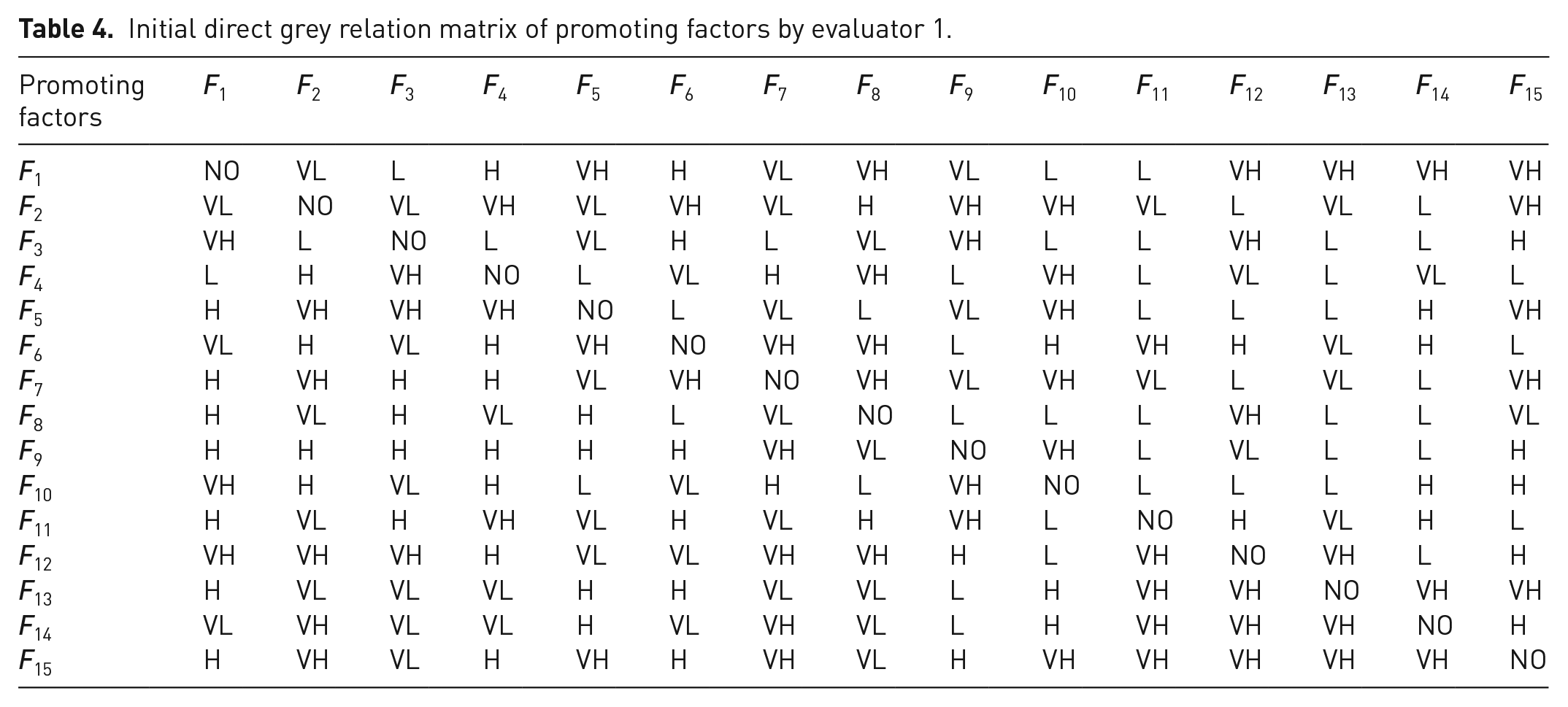
To achieve the objectives of the study and to analyse the promoting factors of EPR principle adoption for sustainable e-waste management in Ghana, 18 evaluators were purposively selected for the study. They were selected based on their extensive understanding of the study objectives, experience (10 years and above), and their ability to fill and pairwise comparison of the identified promoting factors using a grey-DEAMTEL analytical technique. The reason for selecting 18 evaluators to include is to achieve reliable and consistent study findings (Raj and Sah, 2019). Furthermore, several studies have employed fewer sample sizes such as three, four and five for studies; hence, the selection of eighteen evaluators for the study is permissible (Munny et al., 2019; Sharma et al., 2020). Figure 2 simplifies the categorization of the promoting factors into strategic and operational factors based on stakeholders’ perspective for the study. The evaluators were assembled from different industry background, including managers of retail electronic firms, developmental agencies, consumers and government agencies in-charge of the environment. The evaluators were first briefed about the study objectives, methodological approach and how to complete the grey-DEMATEL-structured questionnaires using the linguistic values as shown in Table 3. Subsequently, the identified promoting factors were presented to the evaluators for evaluation and pairwise comparison to construct the initial grey direct relation matrix as shown in Table 4. Then, all the relation matrices by each evaluator were converted into crisp values as shown in Appendices A1–A6. In the present study, 16 of the evaluators were directly interviewed in a face-to-face interaction, whereas two were engaged through Skype due to busy schedules and location. A total of 10 initial grey direct relation matrices were obtained, which were computed and analysed employing the grey-DEMATEL model.
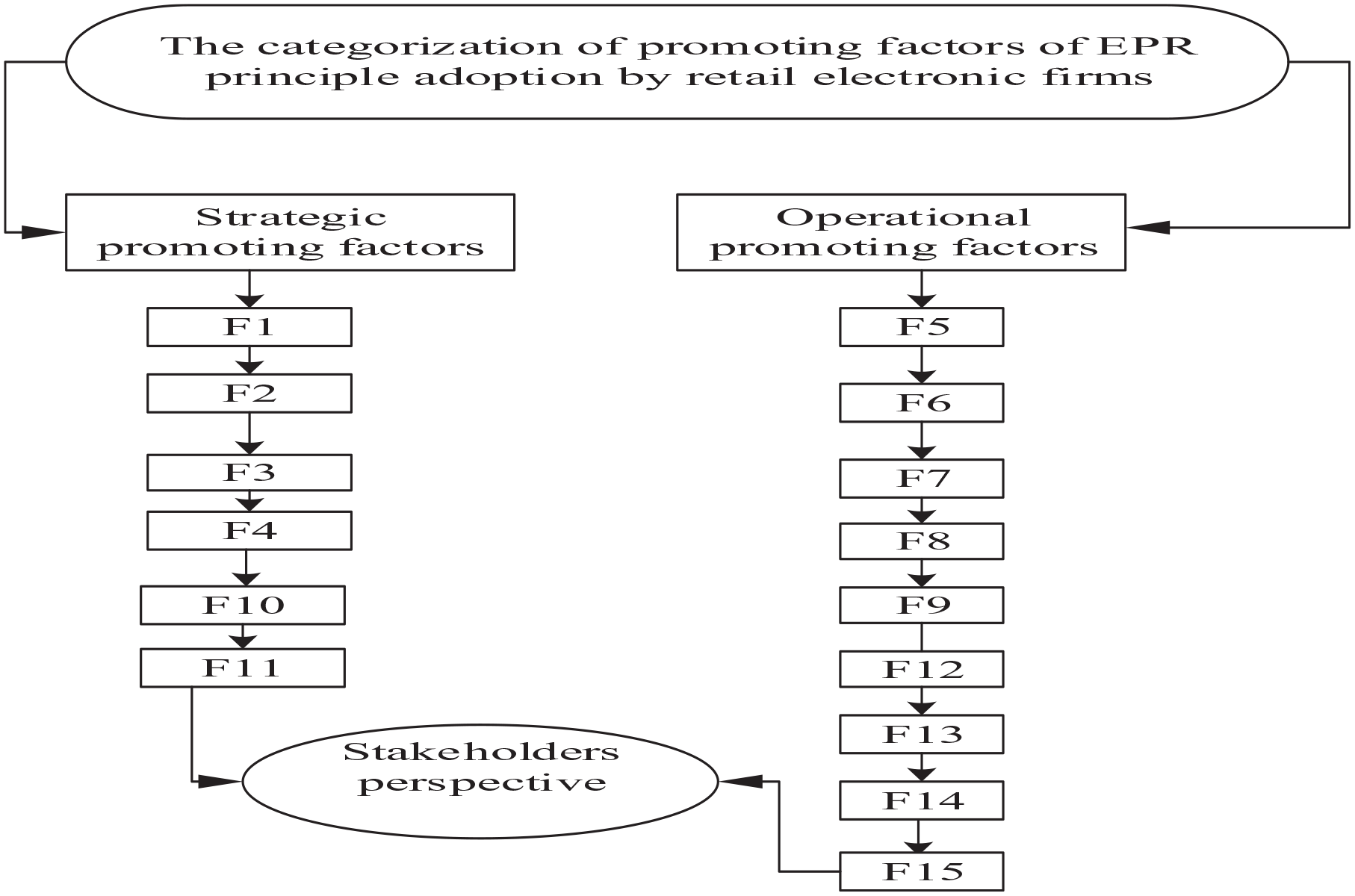
The categorization of promoting factors based on stakeholders’ perspectives.
Initial direct grey relation matrix of promoting factors by evaluator 1.
Study results and sensitivity analysis
This section discusses the steps involved in the proposed methodology (grey-DEMATEL) and the sensitivity analysis carried out to check the robustness and the consistency of the study findings. The initial step involved in the grey-DEMATEL application is to construct a direct relation matrix through the data generated from each of the experts. Hence, one direct relation matrix was set up by each of the experts. The initial grey relation matrix for the evaluator 1 is presented in Table 4.
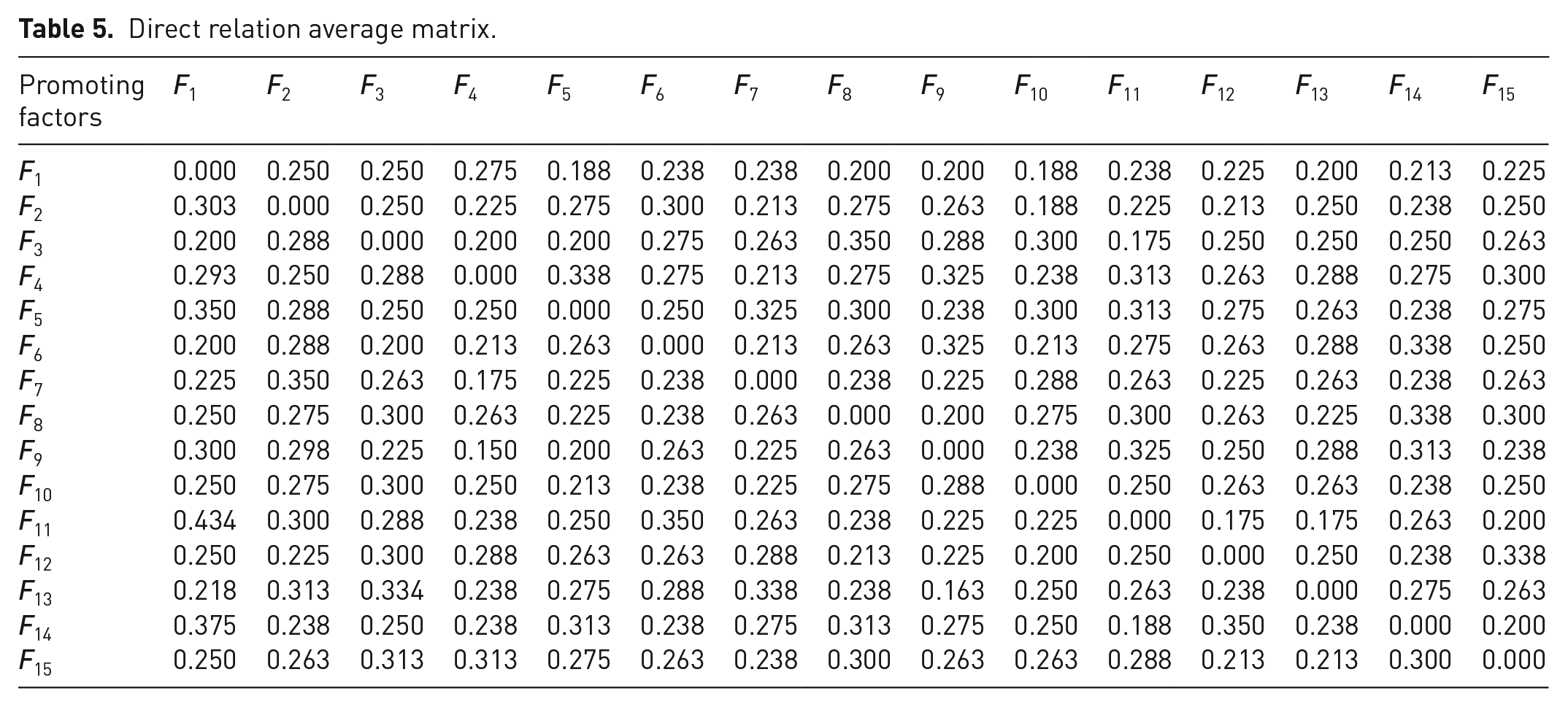
The average grey relation matrix
Direct relation average matrix.
Total relation matrix for promoting factors.
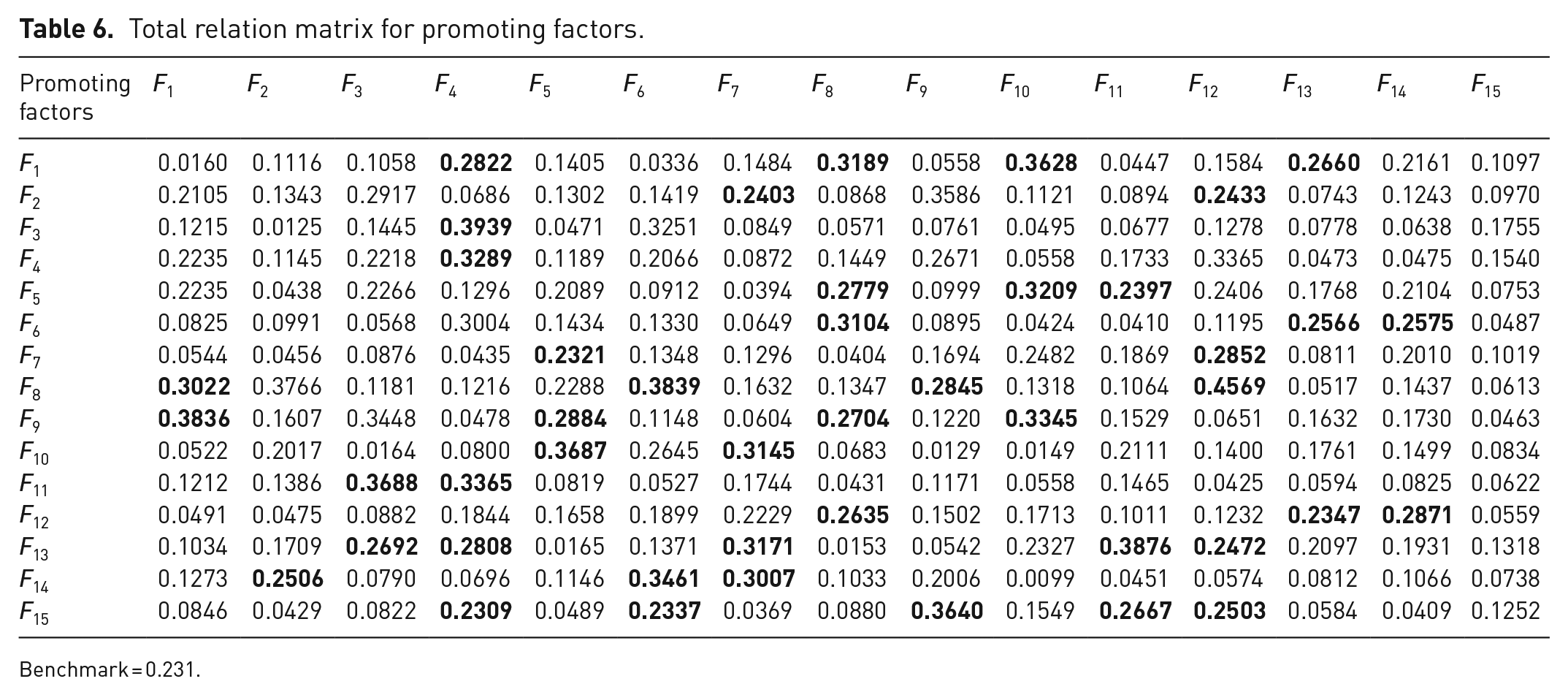
Benchmark = 0.231.
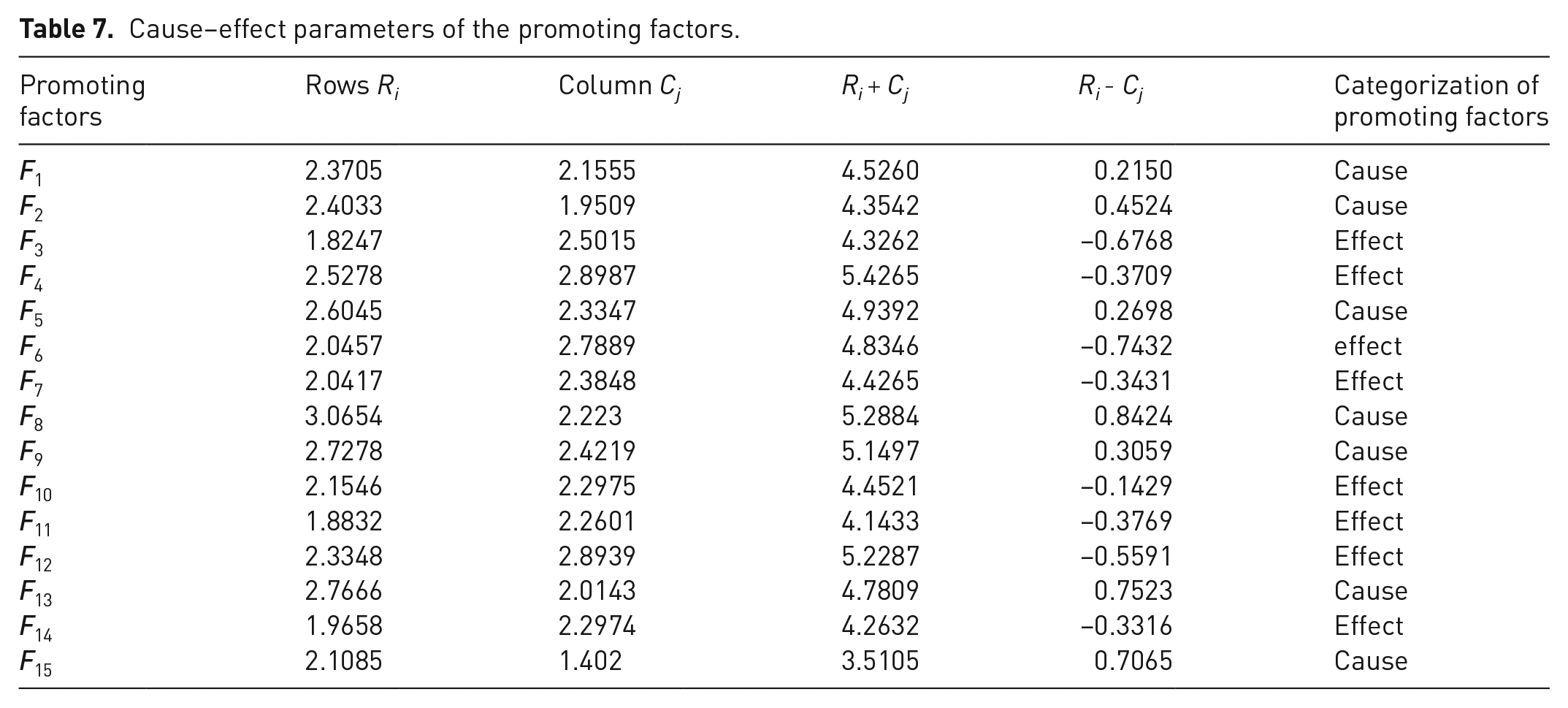
Cause–effect parameters of the promoting factors.
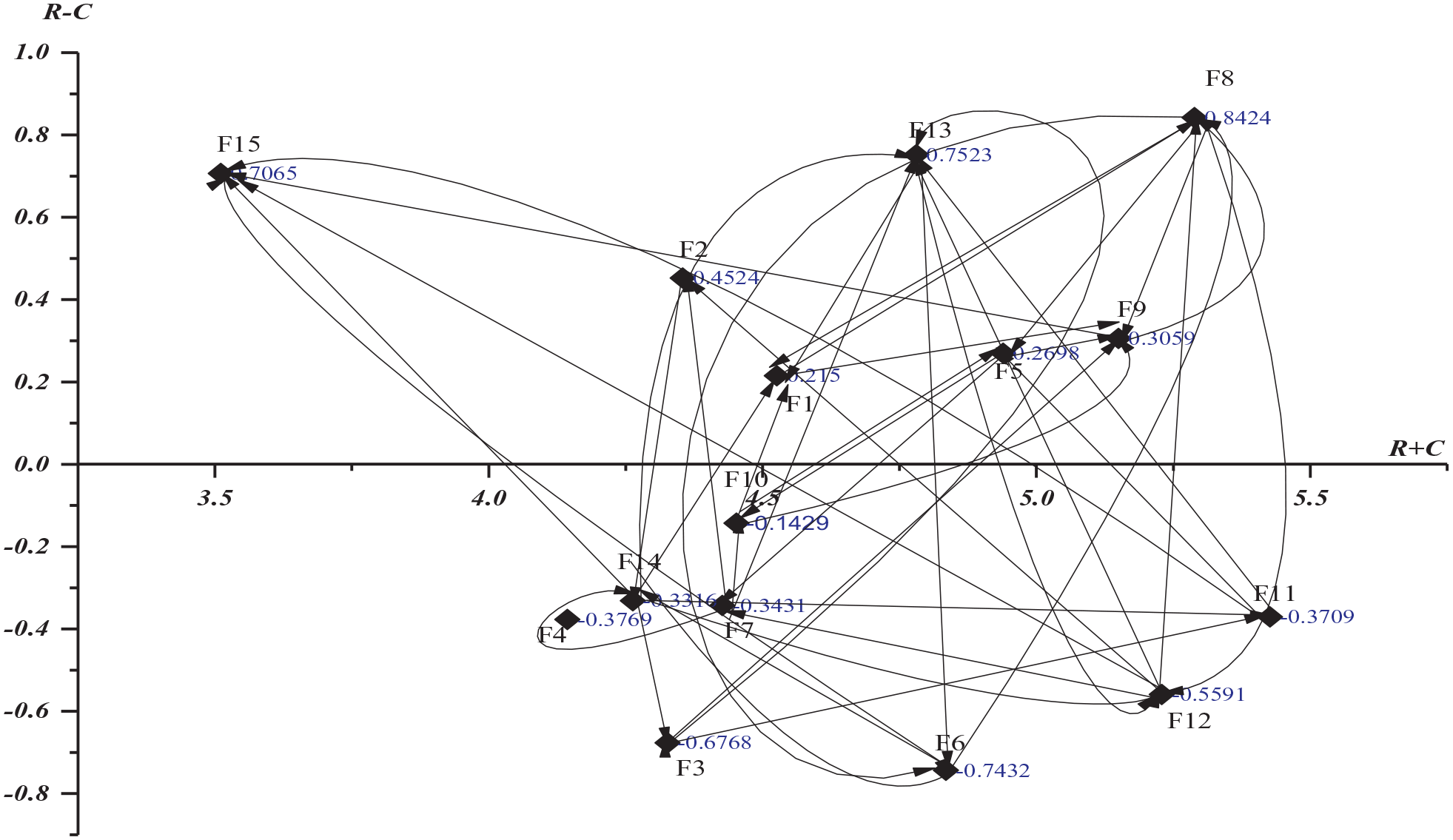
Causal dependency diagram among the promoting factors.
Sensitivity analysis
To avoid any bias and validate the framework and the study findings to underpin effective decision-making, a sensitivity analysis was conducted as indicated in existing studies (Faibil et al., 2021; Xia et al., 2015). Sensitivity analysis is a process to test the robustness and consistency of a methodology. Several approaches can be applied to conduct sensitivity analysis such as altering weights assigned to criteria and varying the weights assigned to a particular evaluator to authenticate its effect on the ranking of the criteria/attributes or the system (Jeong and Ramírez-Gómez, 2018; Xia et al., 2015). Therefore, different weights were assigned to evaluators in four different cases as follows: For case A, the weights assigned to the evaluators were 0.15, 0.15 and 0.20, Case B (0. 25, 0.25 and 0.30), Case C (0.35, 0.35 and 0.40) and for Case D (0.45, 0.45 and 0.50), respectively. For each case, the evaluators conducted separate pairwise comparisons, which were later analysed using the grey-DEMATEL technique. Then, we determined the new relationship matrix using the new Ri + cj and Ri – cj values and constructed causal sensitivity analysis diagrams to indicate the variations of the factors as shown in Appendices D1–D3. The findings of the sensitivity analysis show insignificant deviations in the rankings of the factors through four different scenarios as promoting factor F8 (adopting advanced deposit recycling refund scheme) and F13 (resilient and effective resources management) were ranked as the first and second causal and strategic promoting factors. Similarly, promoting factor F10 (green awareness creation) and F14 (top management commitment) were ranked as the first and second effect and operational promoting factors in the system.
Discussion of results
This section discusses the results obtained after analysing the data generated for the study. In the study, an integrated grey-DEMATEL technique was applied to analyse and understand how the promoting factors for EPR principle adoption for e-waste management influence each other in the electronic industry. The grey-DEMATEL technique facilitated in distinguishing among the cause–effect factors and their interdependencies through a causal interrelationship diagram as shown in Figure 3. A benchmark value of 0.231 was derived from the mean total relation matrix to eliminate relatively low-intensity effect factors. All the weights exceeding the benchmark value are in bold font in Table 6. The degree of prominence and the cause–effect values of the operational and strategic factors are indicated in Appendices C1–C2. The factors with the highest prominence values were ranked as follows: F4 (promotion, support and collaboration with environmentally conscious partners), F8 (adopting advanced deposit recycling refund scheme), F12 (adopting innovative practices to manage EoL electronic products), F5 (open up and create a new market opportunity for the e-companies) and F9 (normative influence from suppliers, customers and associations). The outcome indicates that promoting factors for EPR principle adoption is not very much concentrated on a specific stakeholder in the electronic industry. In addition, it shows that many of the factors were spread across both the internal and external stakeholders in the supply chain. Therefore, retail electronic firms need innovative and appropriate policy initiatives from both internal and external stakeholders to enhance effective EPR principle adoption.
The study again ranked and categorized promoting factors into cause–effect based on their values as follows: F8 (adopting advanced deposit recycling refund scheme), F13 (resilient and effective resources management), F15 (reverse supply chain practices in the electronic industry), F2 (supportive policies and legal frameworks EPR principle adoption), F9 (mimetic influence from industry competitors), F5 (open up and create a new market opportunity for the e-companies) and F1 (environmental concerns and pressure from consumers) as shown in Table 7. Furthermore, the promoting factors with high cause–effect values are spread across both internal and external stakeholders in the supply chain, which affirms the significance of pull and push strategy policies to enhance EPR principle adoption for sustainable e-waste management in developing economies. The cause–effect factors were mapped against other factors to certain their degree of interdependencies and interrelationship as shown in Figure 3. The cause–effect factors would play an essential role in the decision-making process; hence, they become decisive factors, addressing elementary cause factors will lead to the elimination of their influence and interdependency on other effect factors.
In the study, F8 (adopting advanced deposit recycling refund scheme), F2 (supportive policies and legal frameworks EPR principle adoption) and F15 (reverse supply chain practices in the electronic industry) were three operational promoting factors with high net cause–effect values. In addition, these operational factors are related to push strategy; hence, to ensure the adoption of the EPR principle for e-waste management, there is the need for the government to introduce punitive measures to facilitate sustainable e-waste management practices by retail electronic firms. The outcome suggests that to adopt the EPR principle, these operational factors need to be addressed by both policymakers and retail electronic firms in the short term.
The study finding indicated that the most elementary factor is F8 (adopting advanced deposit recycling refund scheme) had the high net cause–effect and high prominent values. Therefore, the EPR principle can be effectively adopted when consumers make advanced recycling deposits at the retail electronic firms, this will enforce consumers to return their obsolete e-waste products to the retail electronic firms for proper recycling and disposal (Chandra, 2020). It is important to note that the success in implementing the EPR principle for e-waste management in developed countries such as the USA and Japan are attributed to the formulation and adoption of laws and policies for focal electronic firms to implement advanced deposit initiatives (Kannan et al., 2016; Dasgupta et al., 2002). In the study, F13 (resilient and effective resources management) is the first ranked strategic promoting factor with high-prominent net cause -effect values but low impact on the promoting factors. According to the evaluators, most retail electronic firms should ensure their resources are effective management, particularly the dynamic capabilities of their firms to equip their workforce with innovative and relevant skills to enhance the adoption of the EPR principle to manage e-waste. However, the resilience of dynamic capabilities is uncommon, among retail electronic firms. Furthermore, F13 (resilient and effective resources management) was categorized under the pull strategy policy, which shows that appealing policies that will enhance retail electronic firms to ensure resiliency and effectiveness for resources management to facilitate the adoption of the EPR principle should be formulated. Considering the significance of this factor, it is the only key elementary strategic promoting factor, as such, policymakers must address this factor in the medium-to-long term. The identified highly cause–effect factors for EPR principle adoption in the Ghanaian electronic industry suggest the need for push and pull strategy policies prioritization by policymakers. Therefore, the Act 917 of 2016, which provides legal backing for the establishment of a national e-waste plant to address e-waste management in Ghana (Quaye et al., 2019), can potentially be enhanced, if these cause–effect factors are strategically integrated. For example, under the Act (917), a manufacturer or importer of electronic equipment is required to register with the Environmental Protection Agency of Ghana and pay an electronic waste levy. The levy covers the costs for collection, treatment, recovery and environmentally sound disposal and recycling of e-waste.
In this study, the stakeholders-based identified promoting factors were categorized in pull and push strategy factors that impact retail electronic firms to ensure EPR adoption for sustainable e-waste management systems as shown in Table C3. Thus, the pull strategy factors are appealing policies that stimulate the interest of retail electronic firms for the effective adoption of EPR practices. The pull strategy policies are the more deliberate and proactive approach that will stimulate retail electronic firms to actively participate in the adoption of EPR practices e-waste management. Similarly, with the application pull strategy for e-waste management, retail electronic firms are actively motivated to participate in e-waste management due to the introduction of appealing policies and measures. Therefore, considering the significance of implementing EPR practices by retail electronic firms for e-waste management, the evaluators through the application of the Delphi method prioritized and ranked the pull strategy factors as follows: open up and create a new market opportunity for the e-companies F5, effective and systematic approach systems through retail electronic firms F6, rewards and incentives for greener activities by the government F11, resilient and effective resources management F13 and top management commitment F14 are critical pull strategy factors imperative for EPR principle adoption in the Ghanaian context. On the other hand, push strategy factors are policies or factors that seek to bring on board and attract retail electronic firms to actively get involved in the adoption of the EPR practices. The push strategy factors are punitive policies formulated to guide and encourage the adoption of EPR practices by retail electronic firms.
As result, the evaluators discern on categorizing the push strategy factors for the adoption of EPR practices as following: environmental concerns and pressure from consumers F1, supportive policies and legal frameworks for EPR practices adoption F2, subsidies and incentives benefit to consumers F3, promotion, support and collaboration with environmentally conscious partners F4, normative influence from suppliers, customers and associations F7, adopting advanced deposit recycling refund scheme F8, mimetic influence from industry competitors F9, green awareness creation F10, adopting innovative practices to manage EoL electronic products F12 and reverse supply chain practices in the electronic industry F15. The formulation and adoption of a suitable policy framework are critical for the realization of EPR practices in developing economies; hence, policies could be carrot and stick approach. Therefore, the categorization of the factors into pull and push strategy factors has a significant correlation with the existing policy framework developed by the Ghanaian government to ensure sustainable e-waste management in Ghana.
The existing policy framework for driving the EPR principle in Ghana is anchored by the Act 917. From the perspective of the carrot-and-stick policy approach, the existing policy sheds light on the establishment of e-waste management funds by the government and stakeholders to address informal e-waste management practices (Akon-Yamga et al., 2021). It further requires a manufacturer or importer of electronic equipment to register with the Environmental Protection Agency and pay an electronic waste levy in respect of electronic equipment that is imported into the country or manufactured in the country (Amankwaa et al., 2017). The levy caters for the costs of the collection, treatment, recovery, and environmentally sound disposal and recycling of electronic waste as well as the construction and maintenance of electronic waste recycling or treatment plants, education of the public on the safe disposal of electronic waste and the negative effects of electronic waste offer incentives for collection and disposal of electronic waste. Moreover, a manufacturer, distributor or wholesaler of electronic equipment is required to take back used or discarded electronic equipment manufactured or sold by it for recycling purposes. To facilitate the adoption of these normative provisions, local authorities are obligated to designate points at which electronic waste shall be deposited by importers, manufacturers, wholesalers, distributors, retailers, refurbishers or repairers as per recycling classifications determined by the Environmental Protection Agency. The authorities are also to ensure the compliance of importers, manufacturers, wholesalers, distributors, retailers, refurbishers or repairers of electronic equipment with the procedures for the disposal of electronic waste by delivering collected electronic waste to the designated assembly points.
In terms of management, there is a multi-stakeholder Technical Committee on E-Waste Management coordinated by the Ministry of Environment to synchronize the various initiatives aimed at improving e-waste control and management in Ghana. Despite the progressive nature of the e-waste policy, there remain opportunities for learning in the e-waste management system. According to Akon-Yamga et al. (2021), a business-as-usual approach through implementing policy-based interventions is insufficient as there are questions on coordination, outcomes and the impact that require thorough interrogation centring on the socio-technical systems around e-waste management in Ghana. There is also a shred of emerging evidence (Amankwaa et al., 2017; Sovacool, 2019) that the policymaking processes would follow business as usual in that policies are formulated by ‘experts’ with a focus on economic factors to the detriment of the marginalized and informal actors in the innovation space. The participation of all relevant actors in decision-making and stimulating bottom-up approaches hold promise in Ghana’s e-waste socio-technical system to ensure inclusivity (Daniels and Ting, 2019). To effectively implement regulations and bye-laws in e-waste management and education and awareness creation on e-waste segregation, health and environmental risk factors remain critical.
Theoretical contribution
In the present study, a key theoretical contribution is the identification of factors to promote the adoption of the EPR principle for sustainable e-waste management through retail electronic firms, based on the role and function of both internal and external stakeholders in the electronic industry. For retail electronic firms to adoption of EPR principle as an appropriate e-waste management mitigation instrument for sustainable e-waste management, the roles and views of various key stakeholders in collaboration are essential in the electronic industry. Therefore, the perspectives of these stakeholders with emphasis on push and pull strategy will greatly influence, shape and transform informal e-waste management practices in developing economies. In addition, the study findings show that the framework of the promoting factors to EPR principle implementation through retail electronic firms in the developing economies could be assessed and categorized into push and pull strategy, where punitive and appealing policies could be formulated guide and streamline e-waste management by retail electronic firms. The outcome of the study suggests that successful adoption of the EPR principle through retail electronic firms needs increasing collaboration, joint participation of various parties and strategic support between consumers, government, NGOs and electronic firms. Existing studies have highlighted the significance of push and pull strategy policies as collaboration among the various stakeholders in the adoption of EPR practices (Campbell-Johnston et al., 2020; Diggle and Walker, 2020). Considering resource-based view perspective for EPR adoption, Corsini et al. (2015) highlighted the need for tangible and intangible resource dynamics in retail electronic firms to support the designing of long-term sustainability strategies for e-waste management. Both internal and external stakeholders possess unique tangible and intangible resources, which when harnessed and integrated will aid in achieving resource efficiency that could scale up firms to gain a competitive advantage in the long run. The outcome resonates with a study by Shan and Yang (2020), recent study on promoting the adoption of EPR systems in China. In addition, strategic support from industry actors, government, civil society organizations (CSOs) and NGOs will enhance in formulating policies that bring on board innovative perspectives on effective strategies to implement EPR practices through retail electronic firms.
Managerial implications of the study
The EPR principle originally emerged from the framework of management sciences as a tool for improving resource efficiency and addressing the challenges of effective waste management. Consequently, the EPR policy sought to transfer from local authorities and taxpayers (public budget) to producers and retail electronic firms the burden of taking responsibility for collecting EoL products (Pouikli, 2020). The economic justification underpinning the adoption of sound EPR policy is to have producers internalize treatment and disposal costs so that they have an incentive to design products that last longer and are more easily treated after use. These underscore the significance of the findings of the study in informing the Government, other policymakers, industry actors and focal electronic firm managers about the promoting factors, which can potentially enhance the adoption and adoption of the EPR principle for e-waste management. This will promote environmental sustainability, improve societal well-being and public health, and socio-economic activities for inclusive economic growth in Ghana. This study identifies 15 promoting factors for the adoption of the EPR principle for e-waste management, and grouped them into cause dataset and effect dataset factors.
The outcome of the study as shown in Figure 3 suggests that to implement the EPR principle in Ghana for e-waste management, the following elementary operational factors F8 (adopting advanced deposit recycling refund scheme), F13 (resilient and effective resources management) and F15 (reverse supply chain practices in the electronic industry) that also push factors should be addressed through the formulation and adoption of punitive measures by policymakers in the short term. Furthermore, the findings suggest that effective support from the government and stakeholders in collaborating for a push and pull strategy will contribute significantly to the adoption of the EPR principle by retail electronic firms. Furthermore, developmental agencies, CSOs and NGOs should adopt proactive strategies to stimulate the interest of consumers to comply with laws and policies and also desist from informal e-waste management activities. In addition, focal electronic firm managers should focus on developing and investing in green human resource capabilities, innovation, technical and technology in their organizations. By having the necessary resources, the industry can easily and effectively implement the EPR principle in Ghana and other developing economies.
The adoption of the EPR principle requires extensive support and commitment as well as capital intensive, top management should invest much in resources to practice take-back and return policies. Therefore, to ensure sustainable and effective management of e-waste through the EPR principle, these strategic promoting factors may be helpful to key stakeholders in the electronic industry. The approach employed to evaluate the factors into prominence, causal and effect groups will provide decision support and essential guidelines to the Ghanaian government and electronic industry to introduce the EPR principle to manage e-waste. As discussed, sustainable approaches to e-waste management come in different dimensions such as developing strong policies, building capacity and application of efficient technologies to dismantle and recycle e-waste. The EPR policy, for example, ensures that administrative, financial and physical e-waste management responsibilities are shifted from the government to companies producing and selling electronic products (Esenduran et al., 2019). In the case of Ghana, the EPR policy will ensure producers and importers of electronics manage e-waste products (Widmer et al., 2005). As a developing country, shifting the cost of e-waste management to producers and importers will enable the government to focus on building the capacity of the informal sector to collect and recycle e-waste using safe technologies to prevent health and environmental consequences through sustainable e-waste management. This study has highlighted the EPR as a potentially powerful tool for regulating the division of responsibilities for e-waste management among stakeholders and to influence the decision-making of producers.
The outcome of the present study was compared with an existing scholarship to understand the similarity and the behaviour of the identified factors in other jurisdictions and other studies (Esenduran et al., 2019). For instance, in the Indian context, Sharma et al. (2020) identified environmental management system as the most critical and strategic factor for EPR principle adoption whereas this study identifies (deposit and refund scheme) as was identified as the key elementary operational factor for the adoption EPR principle in the Ghanaian electronic industry. In addition, (Kunz et al., 2018), revealed that, the formulation and adoption of EPR-related Laws and Regulations as the most influential factor for EPR adoption in their study findings.
Conclusion and future research
The challenges associated with improper e-waste management in developing economies have attracted significant attention from environmental activists, practitioners, consumers, scholars and stakeholders in the electrical and electronic industry. Due to easy access to original electronic producers, many developed countries have been able to implement the EPR principle as a strategy to enforce original electronic product producers to assume responsibility for taking back electronics at the end of their lifespan.
However, in developing economies, retail electronic firms serve as representatives of electronic producers who are considered to implement the EPR principle. In developing economies such as Ghana, the EPR principle adoption is under-studied in prior studies. +++Presently, the majority of existing studies carried out on e-waste management in Ghana focused on the different facets in the e-waste industry. The EPR principle adoption for e-waste management through retail electronic firms has not garnered the needed attention. Hence, this study endeavours to identify and analyse promoting factors of EPR principle adoption for sustainable e-waste management in Ghana through retail electronic firms grounded on internal and external stakeholders’ perspectives with an emphasis on push and pull strategy. The identified promoting factors were categorized into operational and strategic factors. Thus, through literature review and evaluators’ view, 15 factors were identified and analysed using the Delphi and grey-DEMATEL method. Delphi was used to evaluate the relevance of the promoting factors identified. Then, the grey-DEMATEL technique was employed to analyse the data obtained and to establish a cause–effect interrelationship diagram of the factors of EPR adoption for tactical decision-making by policymakers.
The results reveal that for successful adoption of EPR by retail electronic firms, ‘adopting advanced deposit recycling refund scheme’ is the key elementary factor that needs to be addressed by policymakers and other supply chain stakeholders in the electronic industry. Interestingly, ‘adopting advanced deposit recycling refund scheme’ was identified as a push strategy; thus, the formulation of punitive measures will be critical for the adoption of EPR by retail electronic firms. The study also indicated that for the EPR principle to be adopted and function effectively, there should be stringent laws that control the shipment of electronic products by retail electronic firms. In the study, the promoting factors were categorized in pull and push strategy factors that impact retail electronic firms for the EPR practice adoption for sustainable e-waste management. The pull strategy factors are appealing measures that stimulate the interest of retail electronic firms for effective adoption of EPR practices. The pull strategy factors are the deliberate and proactive approach of alluring retail electronic firms to actively participate in the adoption of EPR practices for managing e-waste. Concerning the application pull strategy, retail electronic firms are actively motivated to be involved in e-waste management due to the introduction of appealing policies and measures.
On the other hand, push strategies are policies or measures that are penalized to encourage, guide and enforce the adoption of EPR practices by retail electronic firms. The push strategies are punitive measures and initiatives formulated to guide the adoption of EPR practices by retail electronic firms, particularly in developing economies. Some key lessons gained from this study include: Ghana can replicate good EPR practices, lessons and initiatives being implemented by developed countries by authorizing retail electronic firms to institute easy and appropriate centres for e-waste collection. In addition, various media platforms should be used effectively to create awareness to educate and strengthen consumers’ understanding and knowledge about the significance of EPR practices. In this study, a sensitivity analysis was conducted to check the robustness and the bias of the findings; thus, the outcome of the sensitivity analysis shows no variation in the study findings.
Similar to other studies, this study has some limitations. The study does not explain the impact of each promoting indicator. Future studies could explore this further. The evaluators approved 15 relevant factors in the Ghanaian context that future studies can explore to expand and increase the factors and compare the results. This study also focused primarily on the retail electronic firms, and thus future studies could expand the scope of the study to two or three countries to validate the results. Lastly, this study used the Delphi method and grey-DEMATEL technique to identify and analyse promoting factors. Future research may adopt other decision-making support methods, such as BWM, ISM, fuzzy cognitive map and structural equation modelling, and compare the results.
Footnotes
Appendix A
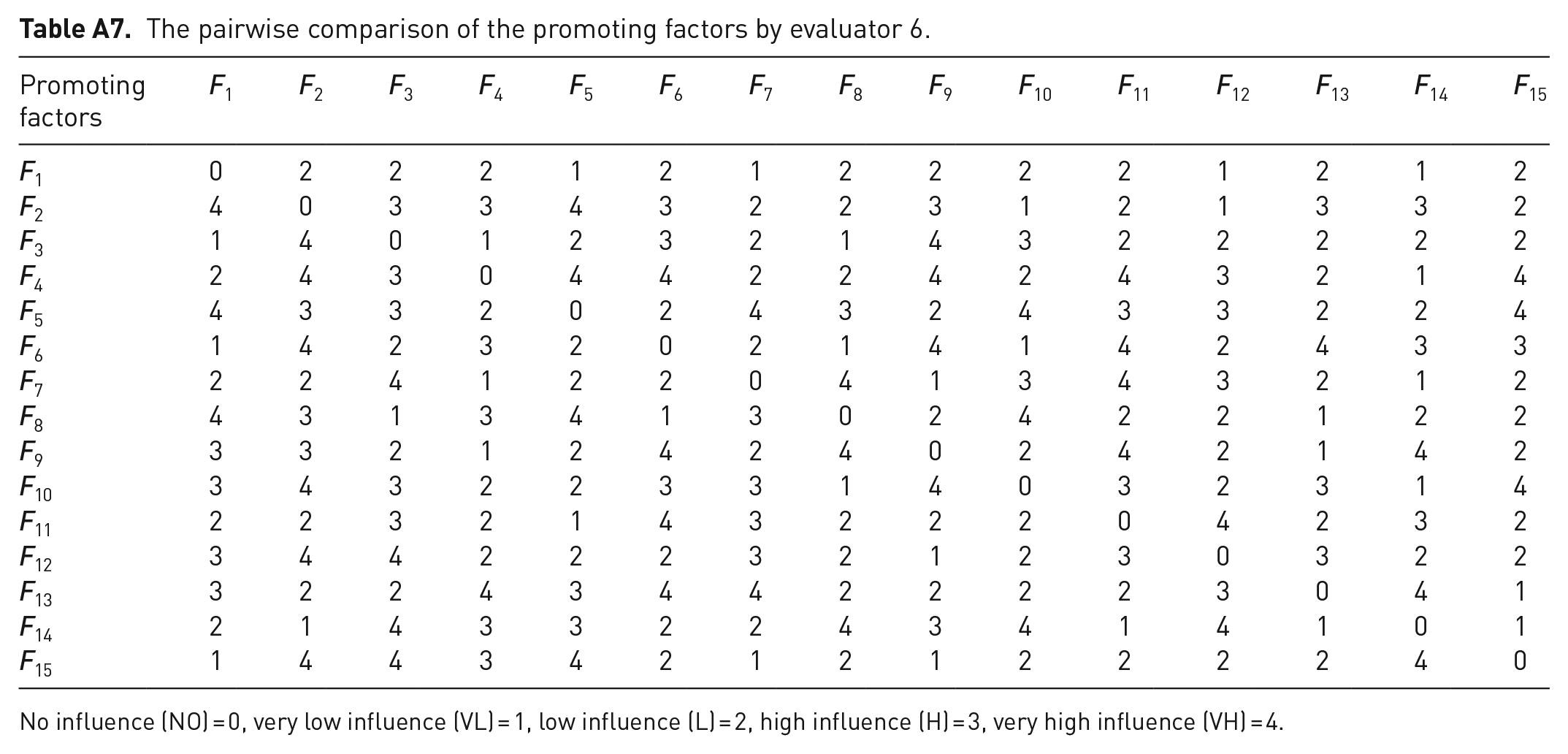
The pairwise comparison of the promoting factors by evaluator 6.
| Promoting factors | F 1 | F 2 | F 3 | F 4 | F 5 | F 6 | F 7 | F 8 | F 9 | F 10 | F 11 | F 12 | F 13 | F 14 | F 15 |
|---|---|---|---|---|---|---|---|---|---|---|---|---|---|---|---|
| F 1 | 0 | 2 | 2 | 2 | 1 | 2 | 1 | 2 | 2 | 2 | 2 | 1 | 2 | 1 | 2 |
| F 2 | 4 | 0 | 3 | 3 | 4 | 3 | 2 | 2 | 3 | 1 | 2 | 1 | 3 | 3 | 2 |
| F 3 | 1 | 4 | 0 | 1 | 2 | 3 | 2 | 1 | 4 | 3 | 2 | 2 | 2 | 2 | 2 |
| F 4 | 2 | 4 | 3 | 0 | 4 | 4 | 2 | 2 | 4 | 2 | 4 | 3 | 2 | 1 | 4 |
| F 5 | 4 | 3 | 3 | 2 | 0 | 2 | 4 | 3 | 2 | 4 | 3 | 3 | 2 | 2 | 4 |
| F 6 | 1 | 4 | 2 | 3 | 2 | 0 | 2 | 1 | 4 | 1 | 4 | 2 | 4 | 3 | 3 |
| F 7 | 2 | 2 | 4 | 1 | 2 | 2 | 0 | 4 | 1 | 3 | 4 | 3 | 2 | 1 | 2 |
| F 8 | 4 | 3 | 1 | 3 | 4 | 1 | 3 | 0 | 2 | 4 | 2 | 2 | 1 | 2 | 2 |
| F 9 | 3 | 3 | 2 | 1 | 2 | 4 | 2 | 4 | 0 | 2 | 4 | 2 | 1 | 4 | 2 |
| F 10 | 3 | 4 | 3 | 2 | 2 | 3 | 3 | 1 | 4 | 0 | 3 | 2 | 3 | 1 | 4 |
| F 11 | 2 | 2 | 3 | 2 | 1 | 4 | 3 | 2 | 2 | 2 | 0 | 4 | 2 | 3 | 2 |
| F 12 | 3 | 4 | 4 | 2 | 2 | 2 | 3 | 2 | 1 | 2 | 3 | 0 | 3 | 2 | 2 |
| F 13 | 3 | 2 | 2 | 4 | 3 | 4 | 4 | 2 | 2 | 2 | 2 | 3 | 0 | 4 | 1 |
| F 14 | 2 | 1 | 4 | 3 | 3 | 2 | 2 | 4 | 3 | 4 | 1 | 4 | 1 | 0 | 1 |
| F 15 | 1 | 4 | 4 | 3 | 4 | 2 | 1 | 2 | 1 | 2 | 2 | 2 | 2 | 4 | 0 |
No influence (NO) = 0, very low influence (VL) = 1, low influence (L) = 2, high influence (H) = 3, very high influence (VH) = 4.
Appendix B
Normalized direct influence matrix.
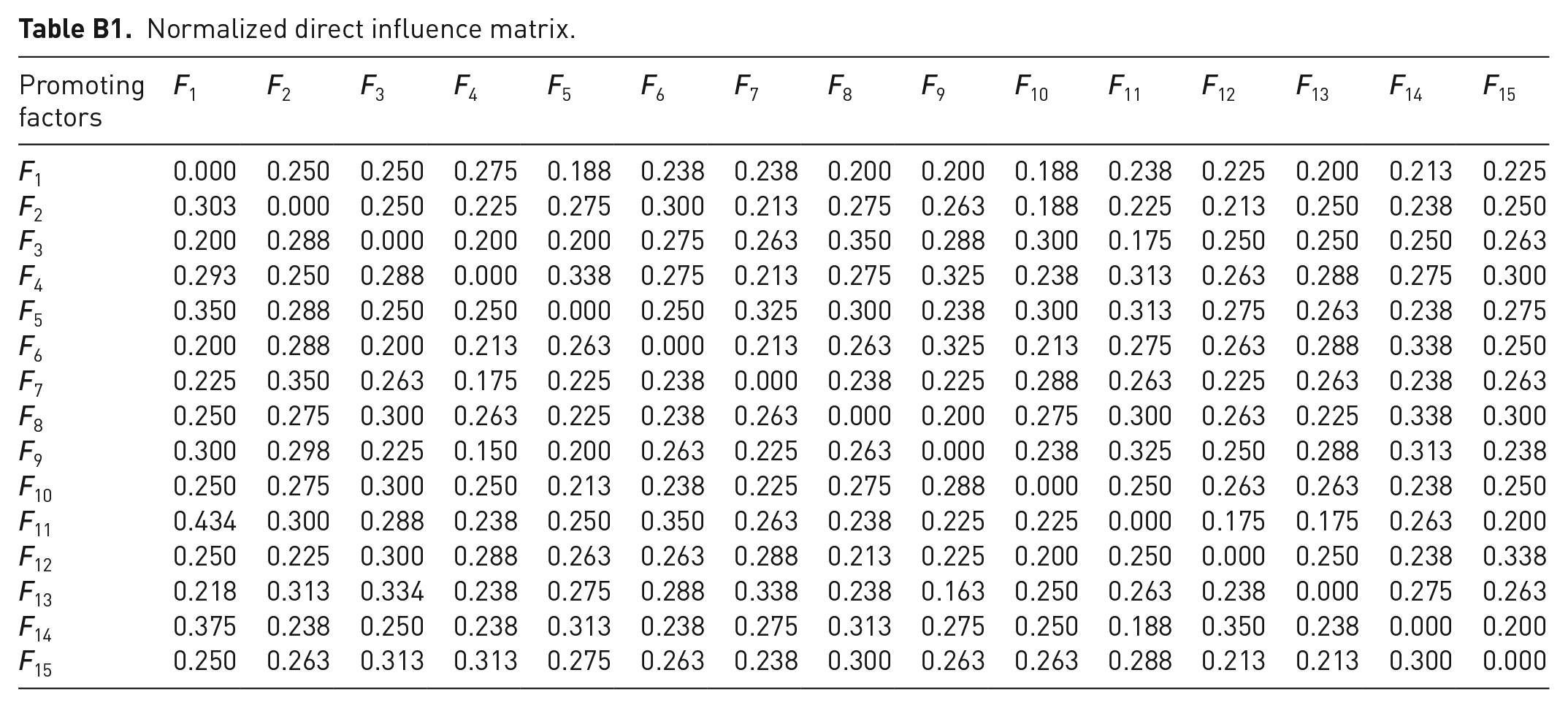
| Promoting factors | F 1 | F 2 | F 3 | F 4 | F 5 | F 6 | F 7 | F 8 | F 9 | F 10 | F 11 | F 12 | F 13 | F 14 | F 15 |
|---|---|---|---|---|---|---|---|---|---|---|---|---|---|---|---|
| F 1 | 0.000 | 0.250 | 0.250 | 0.275 | 0.188 | 0.238 | 0.238 | 0.200 | 0.200 | 0.188 | 0.238 | 0.225 | 0.200 | 0.213 | 0.225 |
| F 2 | 0.303 | 0.000 | 0.250 | 0.225 | 0.275 | 0.300 | 0.213 | 0.275 | 0.263 | 0.188 | 0.225 | 0.213 | 0.250 | 0.238 | 0.250 |
| F 3 | 0.200 | 0.288 | 0.000 | 0.200 | 0.200 | 0.275 | 0.263 | 0.350 | 0.288 | 0.300 | 0.175 | 0.250 | 0.250 | 0.250 | 0.263 |
| F 4 | 0.293 | 0.250 | 0.288 | 0.000 | 0.338 | 0.275 | 0.213 | 0.275 | 0.325 | 0.238 | 0.313 | 0.263 | 0.288 | 0.275 | 0.300 |
| F 5 | 0.350 | 0.288 | 0.250 | 0.250 | 0.000 | 0.250 | 0.325 | 0.300 | 0.238 | 0.300 | 0.313 | 0.275 | 0.263 | 0.238 | 0.275 |
| F 6 | 0.200 | 0.288 | 0.200 | 0.213 | 0.263 | 0.000 | 0.213 | 0.263 | 0.325 | 0.213 | 0.275 | 0.263 | 0.288 | 0.338 | 0.250 |
| F 7 | 0.225 | 0.350 | 0.263 | 0.175 | 0.225 | 0.238 | 0.000 | 0.238 | 0.225 | 0.288 | 0.263 | 0.225 | 0.263 | 0.238 | 0.263 |
| F 8 | 0.250 | 0.275 | 0.300 | 0.263 | 0.225 | 0.238 | 0.263 | 0.000 | 0.200 | 0.275 | 0.300 | 0.263 | 0.225 | 0.338 | 0.300 |
| F 9 | 0.300 | 0.298 | 0.225 | 0.150 | 0.200 | 0.263 | 0.225 | 0.263 | 0.000 | 0.238 | 0.325 | 0.250 | 0.288 | 0.313 | 0.238 |
| F 10 | 0.250 | 0.275 | 0.300 | 0.250 | 0.213 | 0.238 | 0.225 | 0.275 | 0.288 | 0.000 | 0.250 | 0.263 | 0.263 | 0.238 | 0.250 |
| F 11 | 0.434 | 0.300 | 0.288 | 0.238 | 0.250 | 0.350 | 0.263 | 0.238 | 0.225 | 0.225 | 0.000 | 0.175 | 0.175 | 0.263 | 0.200 |
| F 12 | 0.250 | 0.225 | 0.300 | 0.288 | 0.263 | 0.263 | 0.288 | 0.213 | 0.225 | 0.200 | 0.250 | 0.000 | 0.250 | 0.238 | 0.338 |
| F 13 | 0.218 | 0.313 | 0.334 | 0.238 | 0.275 | 0.288 | 0.338 | 0.238 | 0.163 | 0.250 | 0.263 | 0.238 | 0.000 | 0.275 | 0.263 |
| F 14 | 0.375 | 0.238 | 0.250 | 0.238 | 0.313 | 0.238 | 0.275 | 0.313 | 0.275 | 0.250 | 0.188 | 0.350 | 0.238 | 0.000 | 0.200 |
| F 15 | 0.250 | 0.263 | 0.313 | 0.313 | 0.275 | 0.263 | 0.238 | 0.300 | 0.263 | 0.263 | 0.288 | 0.213 | 0.213 | 0.300 | 0.000 |
Appendix C
The categorization of factors into pull and push strategy factors.
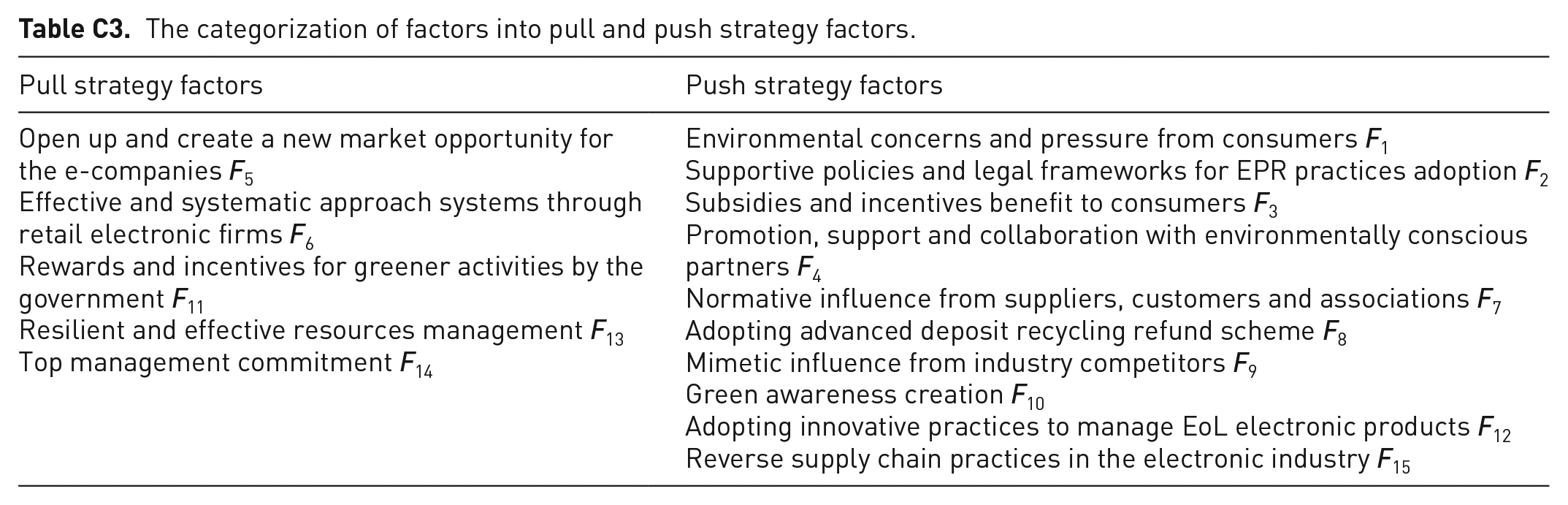
| Pull strategy factors | Push strategy factors |
|---|---|
| Open up and create a new market opportunity for the e-companies F5
Effective and systematic approach systems through retail electronic firms F6 Rewards and incentives for greener activities by the government F11 Resilient and effective resources management F13 Top management commitment F14 |
Environmental concerns and pressure from consumers F1
Supportive policies and legal frameworks for EPR practices adoption F2 Subsidies and incentives benefit to consumers F3 Promotion, support and collaboration with environmentally conscious partners F4 Normative influence from suppliers, customers and associations F7 Adopting advanced deposit recycling refund scheme F8 Mimetic influence from industry competitors F9 Green awareness creation F10 Adopting innovative practices to manage EoL electronic products F12 Reverse supply chain practices in the electronic industry F15 |
Appendix D
Appendix E
Declaration of conflicting interests
The authors declared no potential conflicts of interest with respect to the research, authorship, and/or publication of this article.
Funding
The authors received no financial support for the research, authorship, and/or publication of this article.
