




Abstract
Solar energy has become a leading solution to meet the increasing energy demand of growing populations. Solar photovoltaic technology is an efficient option to generate electricity from solar energy and mitigate climate change. Although the development and growth of solar photovoltaics has had a positive impact on energy system decarbonization, but end-of-life solar panels might become toxic waste if not properly disposed of. Presently in India, approximately 200,000 tonnes of solar photovoltaic waste are expected to be produced by 2030 and 1.8 million tonnes by 2050, by which time solar waste could grow to 60 million tonnes globally. Solar waste has recently been included in the category of waste electrical and electronic equipment to restrict the negative influence of continual development. Recent advancements have been focused only on increasing the efficiency of solar photovoltaic panels without considering the impact of waste solar panels on the environment and the issue of appropriate disposal of waste panels. Effective and ecofriendly methods for recycling end-of-life waste are rarely considered. There is a need to critically investigate and manage the disposal and recycling of solar panels waste. This review article addresses handling and recycling of solar waste, which will be present in large quantities after 25 years. We review multiple adopted technologies to recycle solar waste and technological advancement achieved while recycling photovoltaic waste. Further life cycle assessment of recycling technologies is also discussed.
Keywords
Introduction
Energy demand is rising day by day. At present, the total installed capacity for electricity generation in India has increased to 365.96 GW. Of the total installed capacity, thermal power plants contributed about 63.40% but renewable energy sources (small hydro projects, biomass gasifiers, biomass power, solar energy and wind energy) contribute a share of about 21.9%. The country’s solar installed capacity reached 29 GW as of 31 December 2019 (Lakshmi et al., 2019). Therefore, the major contribution to electricity production is from conventional sources, such as coal and petroleum, which is polluting the environment. In future, renewable energy sources especially solar energy will play an important role in fulfilling energy requirements in all sectors. India is blessed with tremendous solar energy potential. Every year, India receives around 5,000 trillion kWh of solar energy with most parts receiving radiation of 4–7 kWh m-2 every day. Utilizing this abundant and freely available solar energy offers a solution to global climate change and fossil fuel emissions (Rathore et al., 2019a).
Solar power can be generated using solar photovoltaic (PV) technology which is a promising option for mitigating climate change. The PV market is developing quickly and further market expansion is expected all over the world
India is making huge progress in the solar sector: in 2012 only 1 GW of solar power was installed; by 2019, this had increased to 85.9 GW (shown in Figure 1). The Indian government is determined to meet the goal of the Jawaharlal Nehru National Solar Mission and install a total of 100 GW solar power capacity by the end of 2022. This target has already been reached. The levelized cost of energy for solar power was Rs. 17 in 2010, when the Nehru mission was launched, which has now decreased to Rs. 2.44 (Lakshmi et al., 2019; 1 USD = 71.88 INR (2019); 1 USD = 46.21 INR (2010)). Furthermore, the cost of setting up of solar projects declined by 80% between 2010 and 2019. Unfortunately, as the installation of PV panels has increased, so will the amount of waste produced when these panels reach the end of their life span of 25 years. In short, the number of PV panels reaching their EOL stage would increase exponentially with the rise in number of PV installations. When the useful life of these panels is over these become harmful waste which threatens the environment. A report by Suresh et al. (2019) shows that around 200,000 tonnes of solar PV waste will be generated by 2030 which is expected to rise to around 1.8 million tonnes by 2050 (Suresh et al., 2019). Moreover, this renewable waste would grow to about 60 million tonnes globally as reported by IRENA (Bridge to India, 2019). The Waste Electrical and Electronic Equipment (WEEE) standards now include solar waste in the category of electronic waste, in an attempt to mitigate the negative influence of continual development (Suresh et al., 2019). About 75 MT (metric tonnes) of solar waste are generated for every 1 MW of solar PV installed capacity (Weckend et al., 2016).
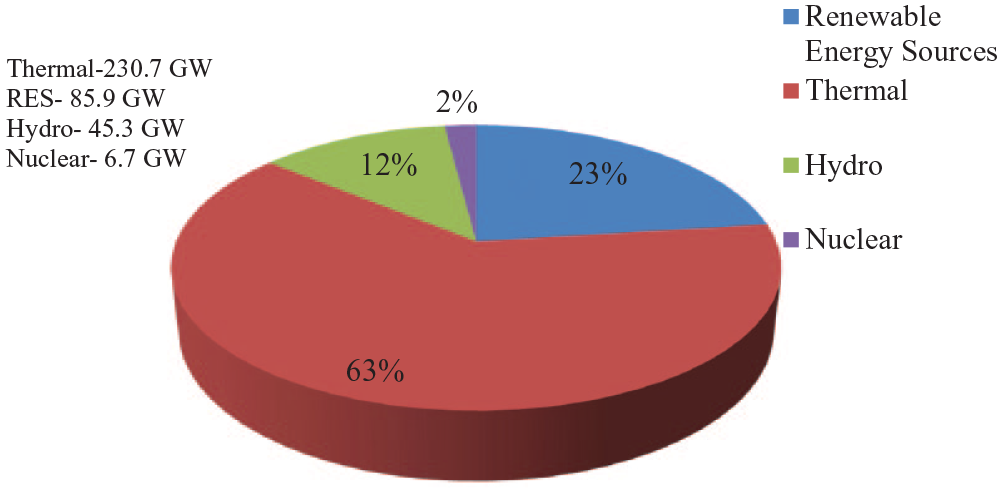
Total installed power capacity in India.
During the first 25 years during which the solar panels were used the recycling of waste was of no concern. However, after 25 years, it is necessary to maintain a policy framework to deal with large amounts of hazardous PV waste. Considering the development and installation of solar panels, appropriate recycling and proper planning of PV infrastructure is required (Fiandra et al., 2019
Although commercialization of solar waste recycling has started already, certain technologies still need to be developed to estimate economics, recycling and recovery rates, and processing efficiency. Much effort is still required to accelerate this recycling technology to meet the present need. Hence, further research and development are needed in the EOL management of solar PV panels. This paper emphasizes the handling and recycling of solar wastes, which will be present in large quantities in roughly 25 years. This review paper aims to present various technologies for recycling this solar waste. Managing EOL PV modules to recover valuable materials that can substitute virgin ones is an important step toward meeting sustainability. Issues related to waste recycling approaches are examined in this study.
PV module technology overview
Due to the lack of policy guidelines, India is not capable of managing and handling huge amounts of solar waste. During the manufacturing process of solar modules, various hazardous materials, such as lead and cadmium compounds, and polymers are used. Suresh et al. (2019) reported that 90% of Indian PV system installations were dominated by crystalline silicon (c-Si) modules, and the remaining 9–10% consisted of thin film solar modules. Among this 10%, copper-indium-gallium-selenide (CIGS) solar cell systems from an emerging technology have a share of only 1%, whereas cadmium telluride (CdTe) has a 6% share in the global market of utility scale PV installations. Figure 2 indicates a considerable increase in the ratio of solar PV waste to new installations. The figure shows that a higher percentage is assumed via an early loss scenario compared to a regular loss scenario. In a regular loss scenario, it is assumed that a panel would have 30 years of life with no early attrition, and an early loss scenario takes into consideration ‘infant’, ‘mid-life’ and ‘ wear-out’ failures before 30 years of panel life. In a regular loss scenario, a dramatic increase of 60 million tonnes by the end of 2050 is expected, while in an early loss scenario, the waste is expected to rise to 80 million tonnes by 2050. Almost all PV waste products consists of pre-consumer waste, which was in a range of 43,000 to 250,000 tonnes globally by the end of 2016.
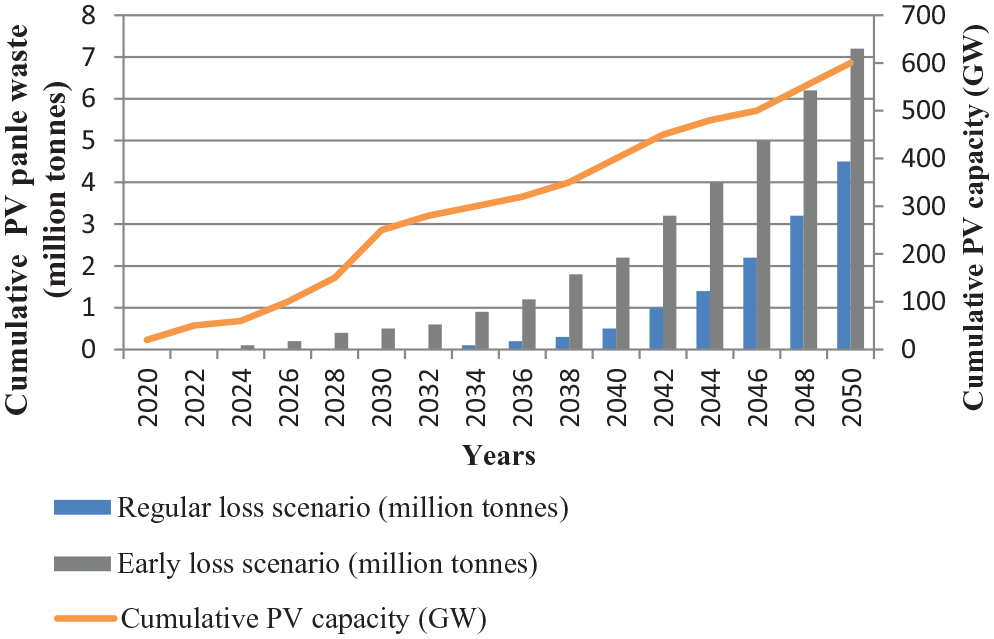
Estimation of cumulative solar PV module waste (million tonnes), 2020–2050.
Composition of the module
The dominant c-Si technology comprises five major components: front covers, electrical circuit interconnecting solar cells, an envelope of two encapsulant layers protecting solar cells and a back cover (back sheet or tempered glass). Furthermore, 80% of the total weight of c-Si technology is shared by glass and aluminium, while the rest is composed of lead, copper and tin. Copper is used in cables and the coating of PV cells. Sica et al. (2018) estimated that the percentage share of the c-Si type of solar panel in the market will reduce from 80% to 44% between 2014 and 2030. Few authors have reported the market share of different types of solar panels (Weckend et al., 2016; Xu et al., 2018). Silicon based c-Si panels were prevalent in 2014, estimated to represent about 90% of the market share. Meanwhile, other categories, such as thin film had a share of only 9% and a further 1% market share was occupied by other varieties (e.g. dye sensitized, organic hybrids).
Aluminium and glass are major constituents of all types of PV panels (Sica et al., 2018). Indium and germanium are rare metals present in amorphous silicon and indium is mainly present in amorphous silicon. Table 1 shows the recyclable materials found in PV panels and their content.
Constituents of crystalline silicon solar panels.

Source: Xu et al., 2018.
Environmental impact of PV materials
It is true that solar-powered generation of electricity does not involve any noise, toxic of greenhouse gas emissions. However, the PV industry is associated with use of harmful and toxic chemical materials. The manufacturing process is responsible for such byproducts as sulfuric acid, hydrogen fluoride, hydrochloride acid and nitric acid. The amount of chemicals used depends on the type of cell manufactured. Traditional silicon PV technology consists of fewer toxic materials than thin film PV technology. The film PV cells are made of materials which include gallium, selenium, telluride and indium. These materials need to be disposed of carefully in order to prevent dangerous environmental and health problems. Thin film technology includes compounds like cadmium sulfide (CdS), copper gallium diselenide (CuSe.GaSe), cadmium telluride (CdTe) and gallium arsenide (GaAs), as well as copper indium diselenide (CuSe.InSe) Table 2 lists various hazardous materials used throughout the PV industry.
Hazardous materials used in PV manufacturing.

Source: Nkuissi et al., 2020.
A few semiconductor materials are required for applying thin film PV technology; however, the component ingredients depend on the type of cell to be manufactured. Only 0.04 g m−2 of cadmium is required in the copper indium diselenide type PV module, while the figure is 5 g m−2 in the CdTe PV module (Nkuissi et al., 2020
Materials like cadmium, lead and polymer are disposed of in an uncontrolled manner. As a result, these chemicals can cause negative environmental impact and health issues. CdTe can cause severe pulmonary inflammation and fibrosis (Ramos-Ruiz et al., 2017). Leaching of lead can cause reduced growth and reproductive rate in plants as well as animals, biodiversity loss and various other health issues like effects on kidney function, as well as the immune and nervous systems (Leccisi et al., 2016). Back sheet and encapsulants of PV panels are manufactured from polymer fractions consisting of fluorinated and cross-linked plastics which cannot be recycled. Further burning of this polymer can cause significant health issues and release of corrosive gases due to uncontrolled burning at the incineration stage. This can cause damage to the ecosystem if this polymer is disposed of improperly. In order to improve stability and improve performance of solar panel glass, manufacturers use antimony. Antimony provides excellent light refracting characteristics. However, at the EOL stage when these PV panels are exposed to wet conditions, this antimony will leach from the glass and can have a negative impact on the environment. This antimony can therefore be considered ‘low-effect’ waste which requires safe handling and disposal (Kempe et al., 2009). Landfilling is considered as a legal disposal method in most regions. But landfill disposal can cause loss of natural resources, and soil and air pollution. Classification of solar modules can also be done based on their recyclability, environmental impact and commercial value. Figure 3 shows solar module composition, waste classification and environmental impact of various compositions.
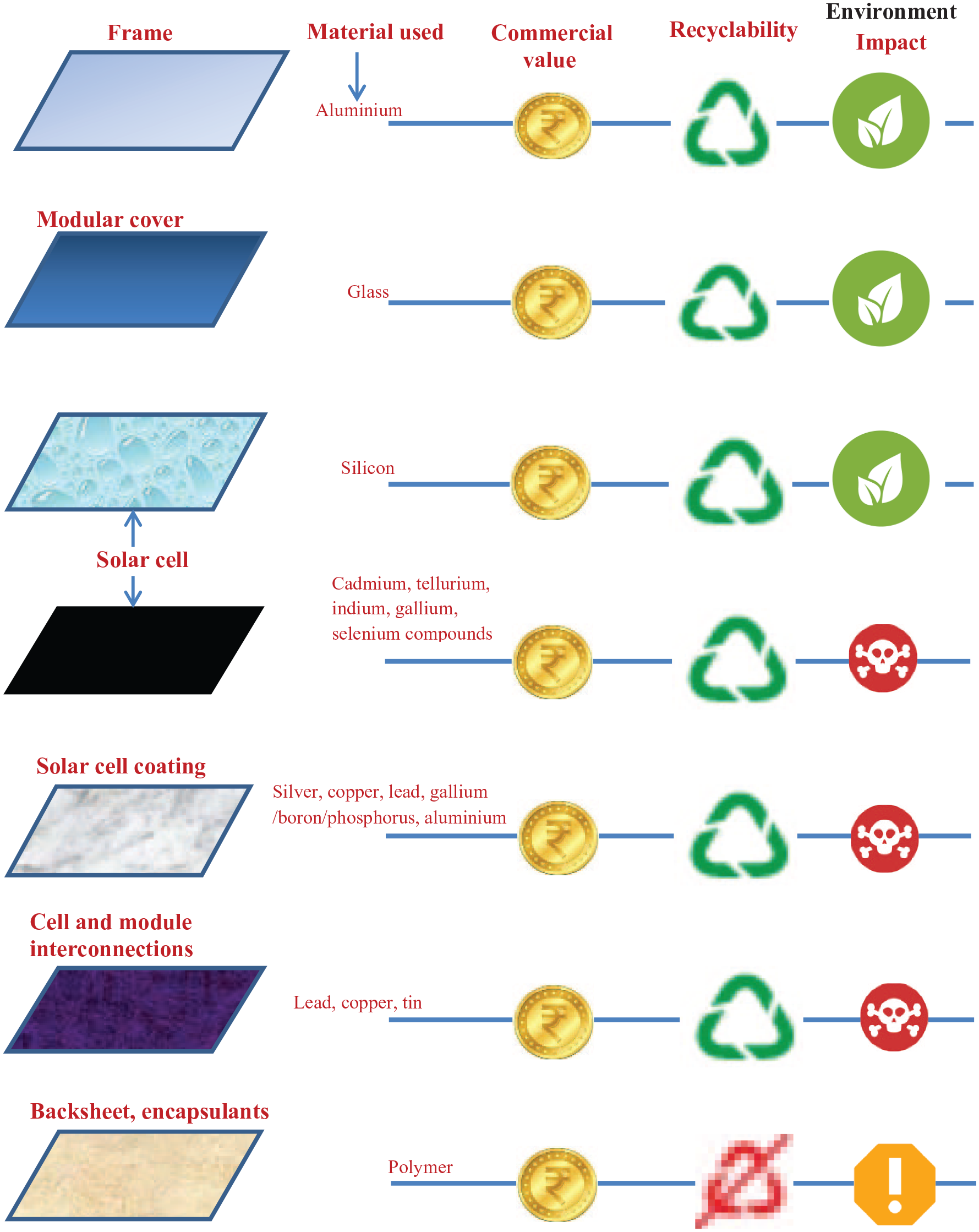
Waste classification of PV modules along with their environmental impact.
Technologies for solar modules recycling
Europe, Japan and the United States are currently all carrying out research into the recycling of solar panels (Chowdhury et al., 2020). One major purpose of recycling technologies is to recover important and valuable components of used solar panels. Although recycling of PV modules is technologically feasible, problems may occur when smaller quantities of solar waste are available. Owing to differences in composition and module structure, different types of PV modules require different recycling technologies. Different types of available recycling processes are physical, thermal and chemical treatment, as shown in Figure 4.
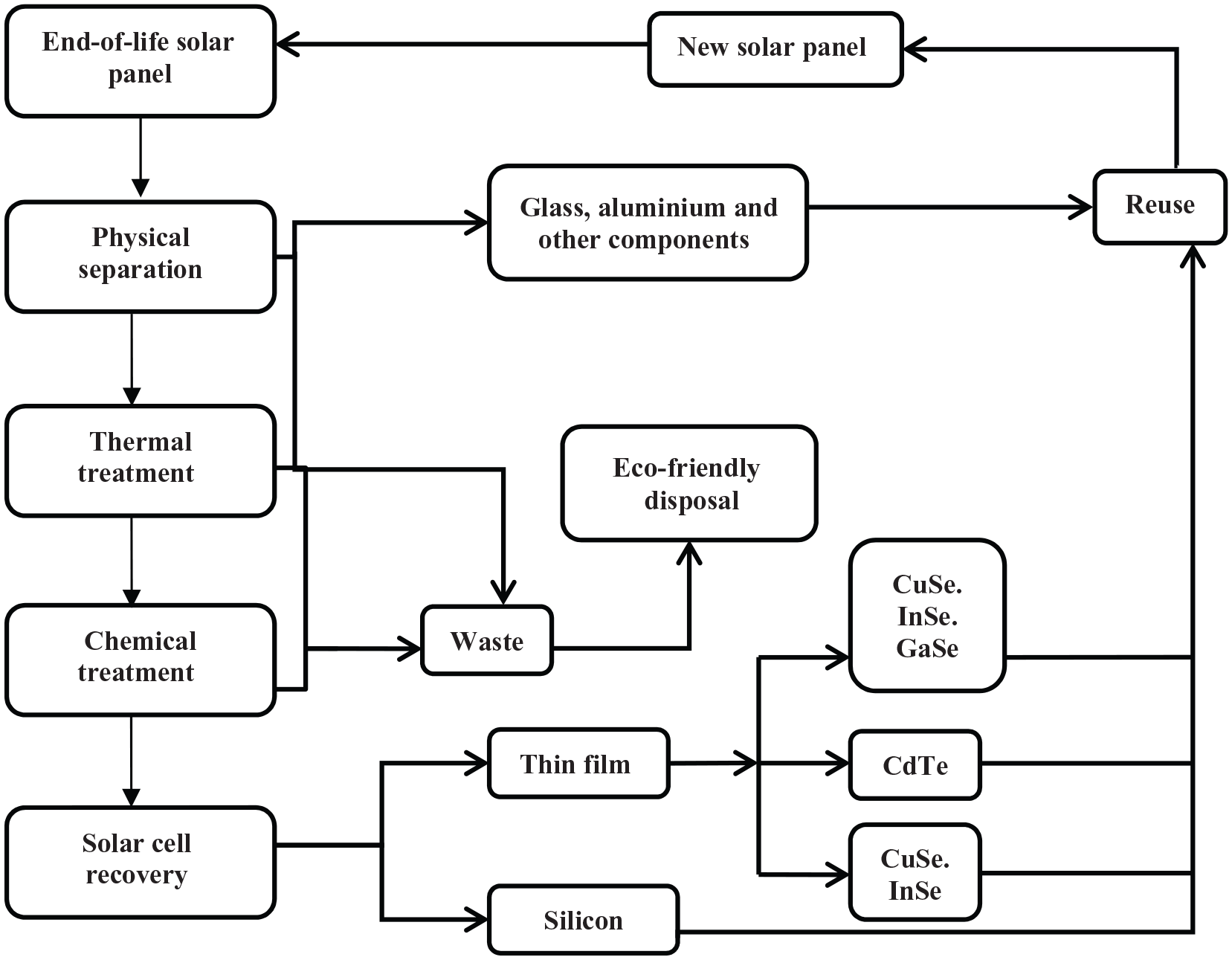
PV recycling methods.
Module and physical separation
This involves separating different broken panels, but it does not involve separating any specific types of materials. Junction boxes, embedded cables and Al frames are removed by dismantling the panels or modules. The individual and total toxicity of various parts (junction boxes, panels and cables) are inspected by crushing and shredding them (Savvilotidou et al., 2017). EVA (ethylene vinyl acetate) is an encapsulant and sealant for solar cells/modules, ensuring their reliability and performance. The frame bonds the components together, and keeps the overall structure light by providing mechanical strength. After they are separated from the modules, frames can be recycled using secondary metallurgy (Dias et al., 2018). PV systems can be repaired if certain electrical components can be replaced but not if it involves material separation or any cell treatments. Silicon cells can also be recovered using an organic solvent method utilizing trichloroethylene solutions (Doi et al., 2001). Various methods for recycling modules are shown in Table 3. Removal of anti-reflective coatings and surface electrodes is done in all of the methods reported in Table 3. But the process is followed by degradation of the PV cell due to diffusion of electrode metals during the high temperature process.
Method for recycling of modules. .

EVA: ethylene vinyl acetate.
Savvilotidou et al. (2017) assessed toxicity and recycling for thin films (amorphous silicon (a-Si) and copper–indium-selenide) by determining the optimal recycling condition using different acid mixtures under different concentration ranges and varying agitation rates. They concluded that a mixture of sulfuric and lactic acids performs the most efficiently, and has low energy requirements. Table 4 shows optimum required conditions for treatment of two different types of panels showing that in the case of CuSe.InSe panels the procedure is more difficult as more time is required but separation achieved is also partial. Zhang and Xu (2016) also used nitrogen pyrolysis and vacuum decomposition methods for separating and recycling plastic, glass and gallium under different conditions. For instance, nitrogen pyrolysis was found to be most effective in decomposing plastics at 500°C and with an N2 flow rate of 0.5 L m−1. High purity silicon could be recovered using hydrofluoric acid solutions which remove anti-reflective features from the surface of polysilicon (Dong, 2009).
Favourable treatment conditions in thin film and CIS panels.

CIS: copper-indium-selenide.
Source: Savvilotidou et al., 2017.
Chemical and thermal treatment for recycling
Thermal treatment involves combustion or burning. The PV modules are heated in a furnace at temperatures between 500 and 600°C. Components containing polymers are burned in a furnace but other materials like glass, Si cells and metals are separated manually. Leftover glass and metals removed can be sent to recycling units. The new wafers can be created using recycled Si wafers. Chemical treatment involves immersing PV modules in solvents where components are separated after chemical reactions. However, this approach is more time consuming than the thermal treatment. The recovery of Si cells is higher in chemical treatment compared with thermal processes. Different kinds of recycling technologies are shown in Figure 5.

Technologies for solar panel recycling.
The recycling process was found to have 99% overall efficiency rate for recovering glass of dimension less than 1 mm along with separation of EVA and was tested using thermal treatment at a temperature of 650°C and a heating rate of 10°C min−1 with an air flux of 30 L h−1 (Pagnanelli et al., 2017). Meanwhile Fiandra et al. (2019) removed and separated polymeric layers from PV module structure using Lenton tubular furnace and thermal treatment by applying different ratios of nitrogen/oxygen mixture using two flow meters; hence separating condensable and non-condensable products. Optimum flow rate of gas was analysed to be 24 L h−1 with a process temperature of 500°C and a heating rate of 450°C h−1 maintained for one hour was sufficient to separate polymers.
Moreover, recycling of silicon wafers of greater than 180 µm (shown in Figure 6) was investigated using acids like nitric acid (HNO3) or alkalis like potassium hydroxide (KOH) followed by etching paste for dissolving silver and aluminium electrodes and separating different layers of solar PV by thermal treatment at 480°C at 15°C min−1 (Shin et al., 2017).
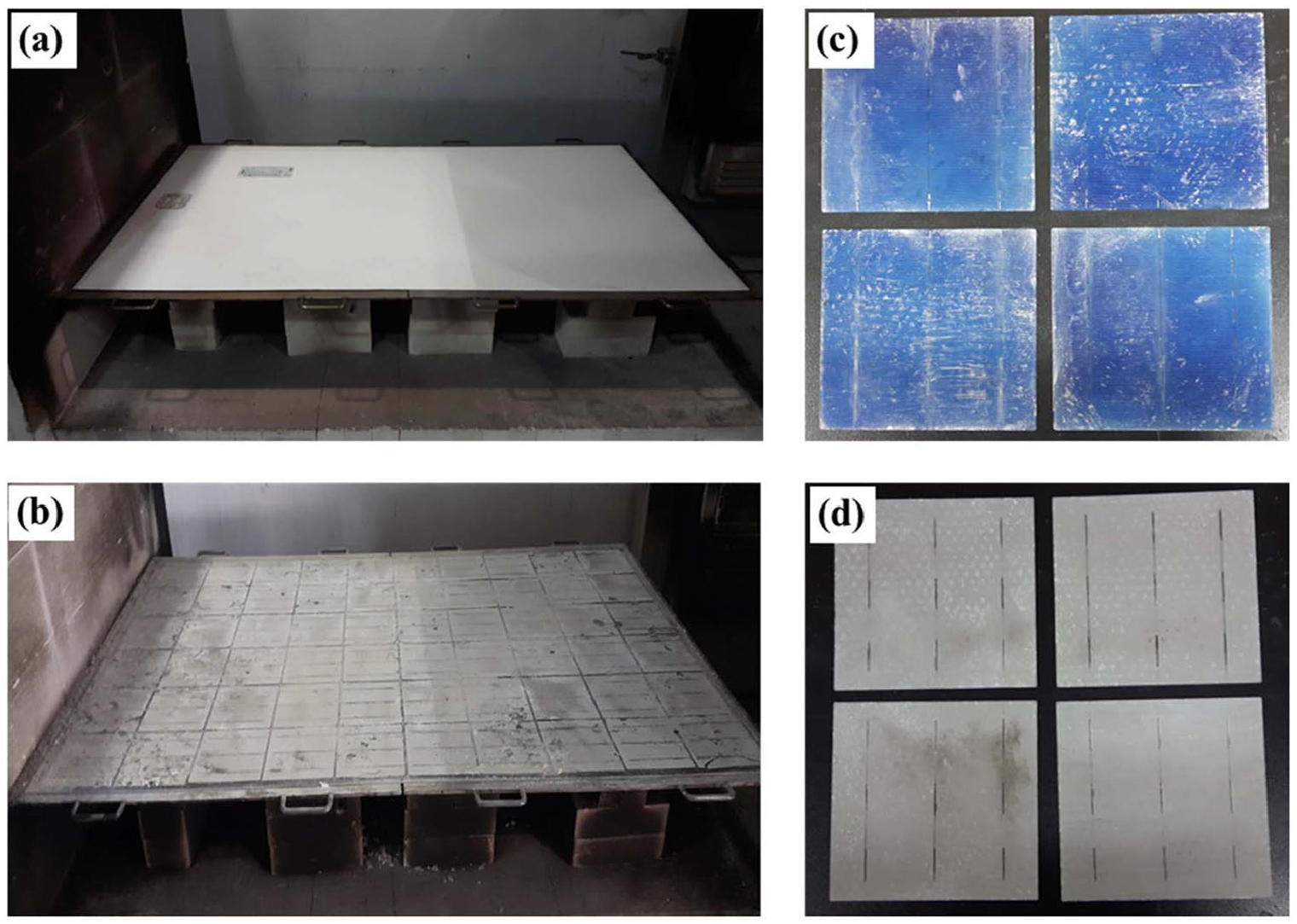
Separation of layers in furnace: (a) before thermal process, (b) after thermal process, (c) the front surface and (d) back surface of solar cells.
Recycling silicon and glass to a purity of 99.99% was also investigated. Organic solvents and thermal decomposition were used by heating a PV cell at 600°C for 1 hour under argon gas with a flow rate of 200 mL min−1 for removal of EVA. Hydrofluoric acid, nitric acid, acetic acid and sulfuric acid were major constituents of the etching solution used along with stirring at room temperature for a duration of 60 min (Kang et al., 2012). Figure 7 shows an image of a PV cell surface after swelling of EVA resin and the remaining cell.
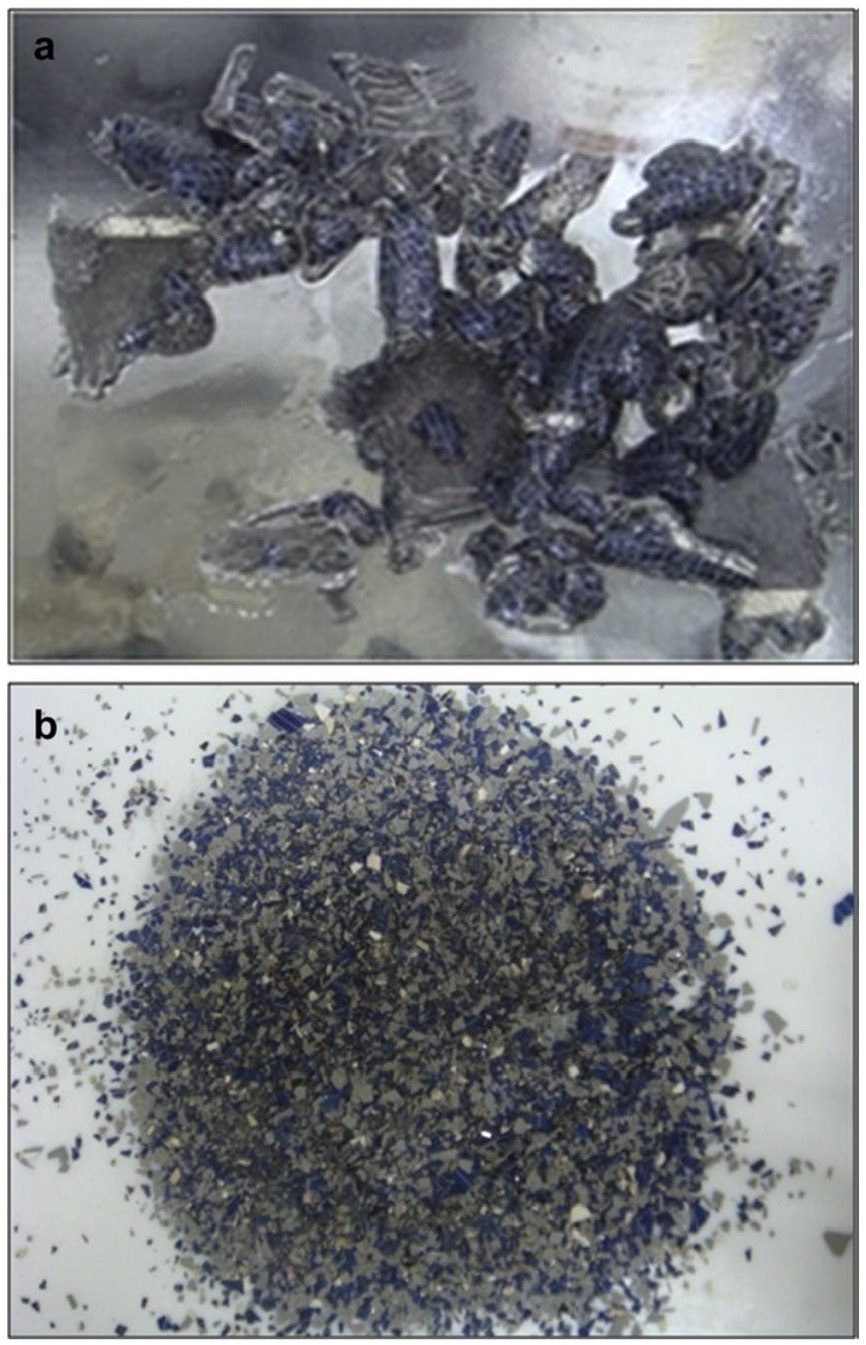
(a) the PV cell surface after the swelling of the EVA resin and (b) the remained PV cell after the EVA resin was removed.
Glass recovery of 90% from solar modules was also investigated, which starts with shredding into small fragments of less than 5 mm as shown in Figure 8 (Lunardi et al., 2018a).
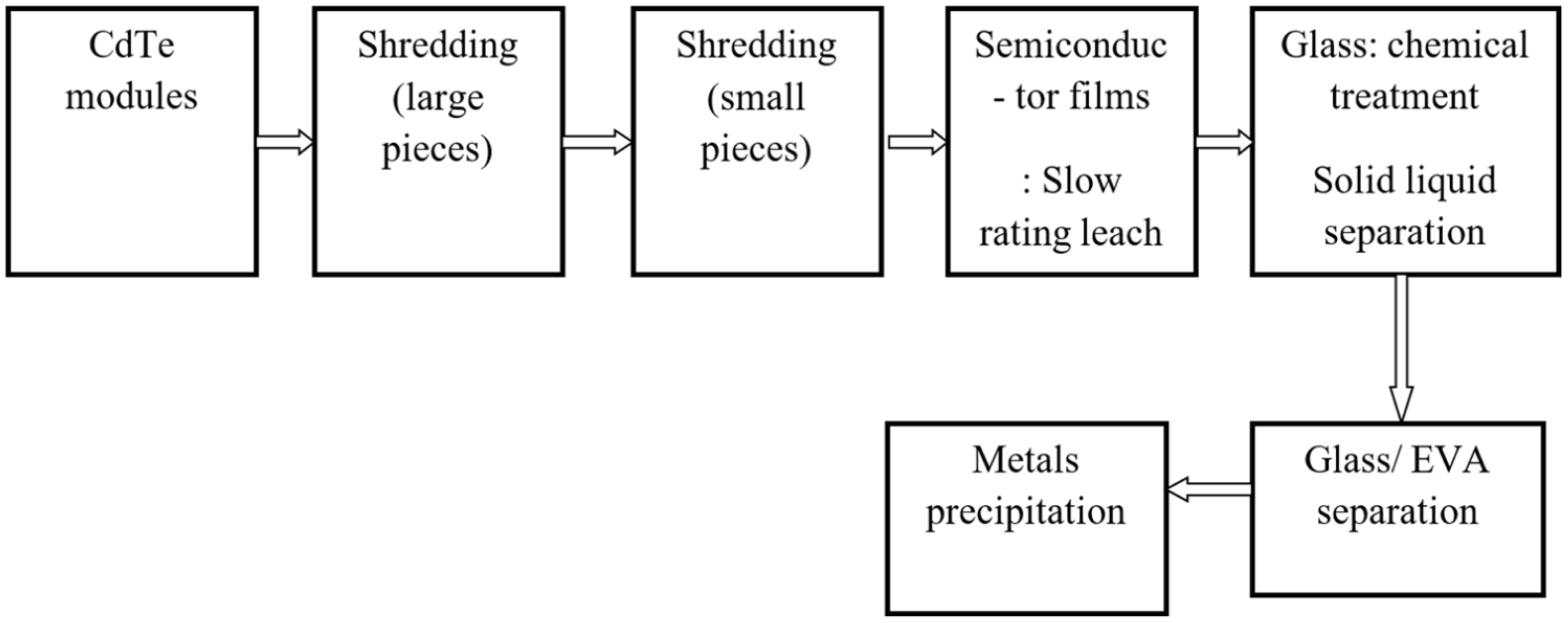
Summary of reported recycling process.
Table 5 summarizes various methods adopted for recycling PV panels on the basis of chemical and physical treatment. It was noticed that removal of the EVA layer is the most challenging step in extracting silicon.
Summary of various recycling processes of crystalline PV panels.

EVA: ethylene vinyl acetate.
Further enhanced recovery rate of the EVA layer is reported by Kim and Lee (2012) using ultrasonic irradiation and solvents like trichloroethylene (TCE), benzene and o-dichloro benzene (o-DCB) at different temperatures, irradiation times and ultrasonic powers. This investigation tested the decrease of dissolution ratio in 3 M TCE through a range of temperature increases from 55 to 70°C either due to pyrolysis of TCE or due to occurrence of various pyrolytic reactions. Further experiments were conducted at 900 W of ultrasonic radiation at 70°C which confirmed the results. Another method is a pyrolysis which is a new and effective technology for resource recovery compared with combustion and solvent leaching. It has a relatively low impact on the environment as it avoids pollution from combustion gases and waste organic solvents (Wang and Xu, 2016). Pyrolysis implementation, however, needs improvement given its importance. Using pyrolysis technology, Wang and Xu (2016) removed 99.77% of organic matter and obtained 98.33% yield of acetic acid during recycling of the polarizing film of waste liquid crystal display panels. Furthermore Zhang and Xu (2016) recycled plastic, glass and gallium (Ga) from solar PV waste using nitrogen pyrolysis and achieved an organic conversion rate of 100%. They also studied the optimum pyrolysis temperature, which should not exceed 500°C otherwise it will form more harmful products like benzene and its derivatives. Another study of separating silicon and the recovery of Tedlar Polyester Tedlar (TPT) backing material was conducted using a two-stage heat treatment based on pyrolysis. The pyrolysis process that operates at a temperature of 500°C removes the EVA binder with the main products being acetic acid and hydrocarbon. At a low temperature, silicon solar panels were heated by electric heating at 150°C for 5 minutes which integrally peeled off EVA and TPT backing material, hence recycling undamaged glass and silicon wafers (Wang et al., 2012). Recycling of PV modules is started by polymer removal which helps in recovering silicon, copper and silver. Hence, Dias et al. (2017) recycled polymer present in PV modules by determining optimum temperature and pyrolysis duration using thermogravimetric analysis (TGA) and statistical analysis; results revealed that removal of more than 99% of polymers is possible if a pyrolysis temperature of 500°C is maintained for a duration of 30 minutes. Furthermore they concluded that temperatures over 500°C will surely degrade solar PV material but will also reduce mass loss rate as well. Therefore, the optimum pyrolysis temperature for recycling of PV panels is up to 500°C.
Optical approach for recycling
This involves separation of glass structure. The used PV module is loaded into optical treatment equipment after removal of the frame and terminal box. Optical treatment, as the name suggests, includes the use of laser or flash lamp annealing. The treatment time is only 1 minute per module. The cover glass and substrate glass are separated after treatment is complete. Further, CdTe and CIGS are treated using an acid like methanesulfonic acid (CH4O3S). Metals present in modules can be recovered, recycled and purified by further processing.
Table 6 summarizes recycling technologies for solar panels. So far, very few are commercially available treatments while others are at the laboratory and research stage. German companies have a good record for recycling c-Si solar panels. As far as China is concerned, there are limited facilities for components repair and panel separation; therefore, it uses the practice of hiring external technology. Recycling technology generates a large amount of dust in the case of physical and mechanical processes which causes pollution. Further separation of EVA may be associated with many health hazards and the release of harmful emissions. Even the dissolution of EVA is time consuming which can be made faster using ultrasound but also generates large amounts of organic melted waste. Hence, many thermal, physical, chemical and mechanical treatments are available for recycling but all have some limitations of requiring large amounts of input energy and producing harmful gases.
Comparison of various recycling processes of silicon module.

EVA: ethylene vinyl acetate.
Regulatory framework of various countries
The EU WEEE directive on the processing of PV components was first approved by the UK, and came into effect on 1 January 2014. It includes requirements to register the number of panels produced or imported from distribution channels. Germany has also recently revised WEEE regulations to make them more stringent for manufacturers and importers, requiring them to register products related to PV and assume accountability for EOL treatment. The European organization WEELABEX offers collection, storage, processing and recycling of electrical and PV waste, and also directs waste processing companies. In the Czech Republic, a joint venture of PV waste processors was started to recover and recycle waste solar panels. It aims to provide a service that complies with legal requirements for the processing of solar waste throughout the world. Outside the European market, very few countries have made any attempt to regulate and recycle PV waste. Therefore, there is an urgent need among manufacturers who take a keen interest in the recycling of waste. The Japanese-owned subsidiary of Shell Oil Company has shown an interest in recycling, and has joined the European PV International organization.
The US state of California has a project to administer and regulate the processing of wastes related to solar equipment. The California Department of Toxic Substances Control (DTSC) promotes recycling in order to reduce the dumping of harmful substances into landfills. The utility scale project developer ‘First Solar’ has authorized various industries in the US and Germany to treat available solar PV waste. Almost 95% of cadmium and about 90% of glass components can be reused using recycling technology. As is well known, China has become the world leader in the installation of PV panels, even in the absence of any policies for recycling and waste treatment. China has very few recycling ventures to deal with the problem of solar PV wastes (Ding et al., 2016). One such entity is Trina Solar Company which is active in recycling waste from solar PV equipment. However, research activities related to recycling are currently hampered by an insufficiency of available waste components as only a small number of panels have reached their end of life.
Indian recycling status
India has no particular rules for the disposal of solar modules waste. But the Ministry of New and Renewable Energy (MNRE) has issued a message for developers in its guidelines to ensure disposal or recycling of all solar PV modules after their EOL stage. Developers are required to follow WEEE waste (management and handling) rules but no specific mechanism is active regarding waste disposal. In 2011, rules were notified regarding waste recycling. New rules were framed in 2016 by the Ministry of Environment, Forests and Climate Change. These rules focus on distributing responsibilities to various manufacturers, distributers and dealers. It should be made mandatory for all consumers to return the product for recycling, only then should consumers be returned their deposit funds. Producers should also create awareness and must ensure that all consumers dispose of e-waste in the right way. Each producer should set a certain collection target on the basis of sales, volumes and lifespan. According to a report, only 4% of wastes were recycled out of available total electronic wastes between 2015 and 2017; 20% of collection goals were fixed which increases to 70% by 2023 (Suresh et al., 2019). India has no recycling infrastructure to deal with available e-waste volumes. Certified e-waste recyclers in India have the capacity to handle only 0.4 million tonnes per annum as reported by CPCB (Central Pollution Control Board). India is under-prepared to manage the increasing e-wastes volumes due to low targets and poor implementation.
Evolution of e-waste rules in India
The county needs to prepare itself for the rapidly rising volume of PV waste. Urgent action is required by the Indian government to manage the PV waste. The provisional initial phase emphasizing the introduction of regulations for PV waste treatment is important. Private stakeholders and policy makers are required to act sincerely for the outgrowth of this sector. The following suggestions can be undertaken to handle this emerging problem (Suresh et al., 2019):
All modules manufacturers should keep in mind the EOL stage for panels while designing various components for PV plants.
Liabilities and responsibilities should be defined for each stakeholder involved in treating these wastes.
Norms for PV waste collection, treatment and disposal are required.
Organizations like PROs (producer responsibility organizations) should be strengthened for handling wastes.
Agreements like mutual recycling between developers, modules manufacturers and purchasers should be encouraged.
Awareness could be created by conducting surveys related to recycling treatment.
Only those PV recycling infrastructures that focus on high value recovery of waste should be promoted.
Life cycle assessment of recycling processes
It is necessary to assess impacts caused during the whole life cycle from extraction, production and manufacturing of material, recycling and disposal. Life cycle assessment (LCA) studies are carried out to support environmental product improvements, strategic planning, benchmarking with competing technologies, or for political decision making. Stolz and Frischknecht (2016) described the environmental life cycle assessment of crystalline silicon (c-Si) and cadmium telluride (CdTe) PV modules for various environmental indicators identified as most relevant for PV electricity: particulate matter, freshwater ecotoxicity, human toxicity non-cancer effects, human toxicity, cancer effects, mineral, fossil and renewable resource depletion and climate change. Two types of modelling approaches were used, that is, the ‘cut off approach’ and ‘end of life approach’. The cut off approach used economic allocation to divide the total efforts of recycling process between treatment of recovered products and the used PV module. While the other process separately considers the recycling process from the potentially avoided burdens due to recovered materials. The whole assessment was carried out on the basis of data obtained from four European recyclers. The environmental impact generated by production of a 3 kWp (kilowatt peak) residential PV system mounted on a slant roof came out to be large as compared to recycling of c-Si PV modules (maximum 1.1%). In the case of CdTe PV module recycling, the treatment of the PV panels has the highest but still rather minor contribution in the indicator for climate change (4.8%) (Stolz and Frischknecht, 2016).
Jungbluth et al. (2007) analysed environmental impacts of different systems based on a valuation with Eco-indicator 99. As shown in Figure 9, the highest contribution of environmental impacts in the life cycle is due to the use of fossil energy resources and respiratory effects caused by air emissions of particulate matter (PM) and nitrogen oxides. Among all other types, for copper-indium-selenide (CIS) thin film the lowest environmental impact was found as it uses more copper for coating and contact purpose in manufacturing. The highest impacts are for CdTe panels due to the large amount of cadmium used in coatings. Thin film systems tend to have lower impacts per kWp of cells, but due to lower efficiencies, they have a larger surface area and thus need more materials for the mounting systems. Other types of technologies are under research and development. Especially for the newer technologies, data are only rarely available and thus the differences are not very relevant compared with the uncertainty of data (Jungbluth et al., 2007).
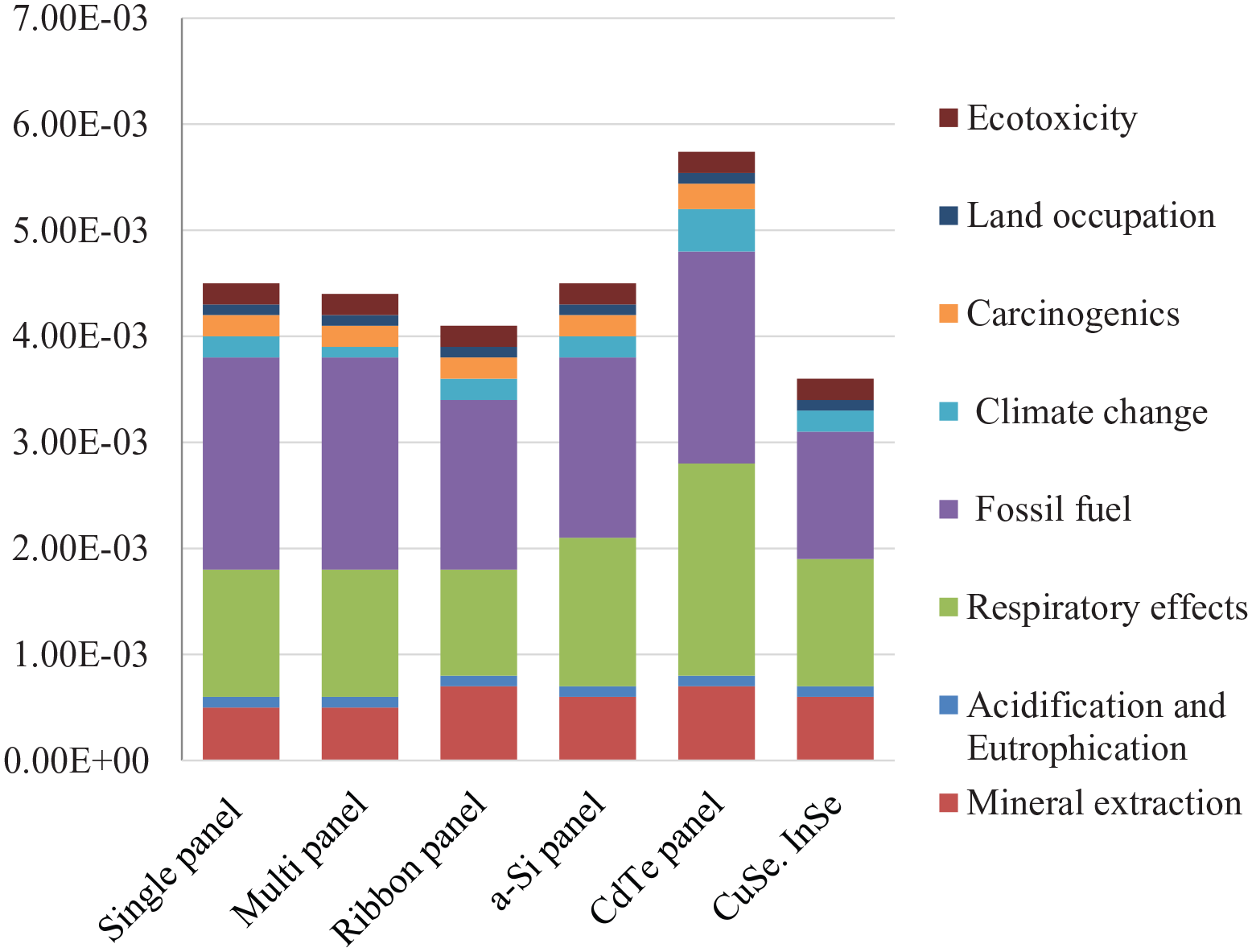
Comparison of different PV technologies by valuation with Eco-indicator 99.
Latunussa et al. (2016) carried out mass and energy flows at various recycling stages for 1000 kg solar PV waste as shown in Table 7. About 73 m2 (with mass of 22 kg and surface area of 1.6 m2) of panels creates 1000 kg of waste.
LCA assessment of 1000 kg of PV waste generated by 73 m2 of panels.

LCA: life cycle assessment.
Source: Latunussa et al., 2016.
Life cycle impact assessment for 1000 kg silicon waste is shown in Figure 10, assuming a distance of 400 km between collections and recycling plant (Latunussa et al., 2016). Credits achieved from energy recovery are separated from that impact which occurs due to the recycling process. The credits for the energy recovery are observed as negative values. These credits can be particularly relevant for impact categories such as: ozone depletion, ionizing radiation in ecosystems and ionizing radiation on human health (around 30%); climate change, particulate matter (PM) and freshwater eutrophication (around 30%). As shown in Figure 10, major impact categories are due to transportation, incineration and metal recovery processes like sieving, electrolysis, neutralization and acid leaching. Percentage contribution of transportation ranges from 10% (for freshwater ecotoxicity) to 80% (abiotic depletion potential). Cancer effects caused by fresh water ecotoxicity are mainly a result of incineration of plastics, cables, PV sandwich and uncontrolled disposal of ash to dumping sites. Although incineration has a large negative effect on the environment, on the other side, it is expected to recover about 250 MJ of electricity and 500 MJ of thermal energy from combustion of polymers. Stages like disassembly, waste unloading and thermal separation have the least impact (below 10%).
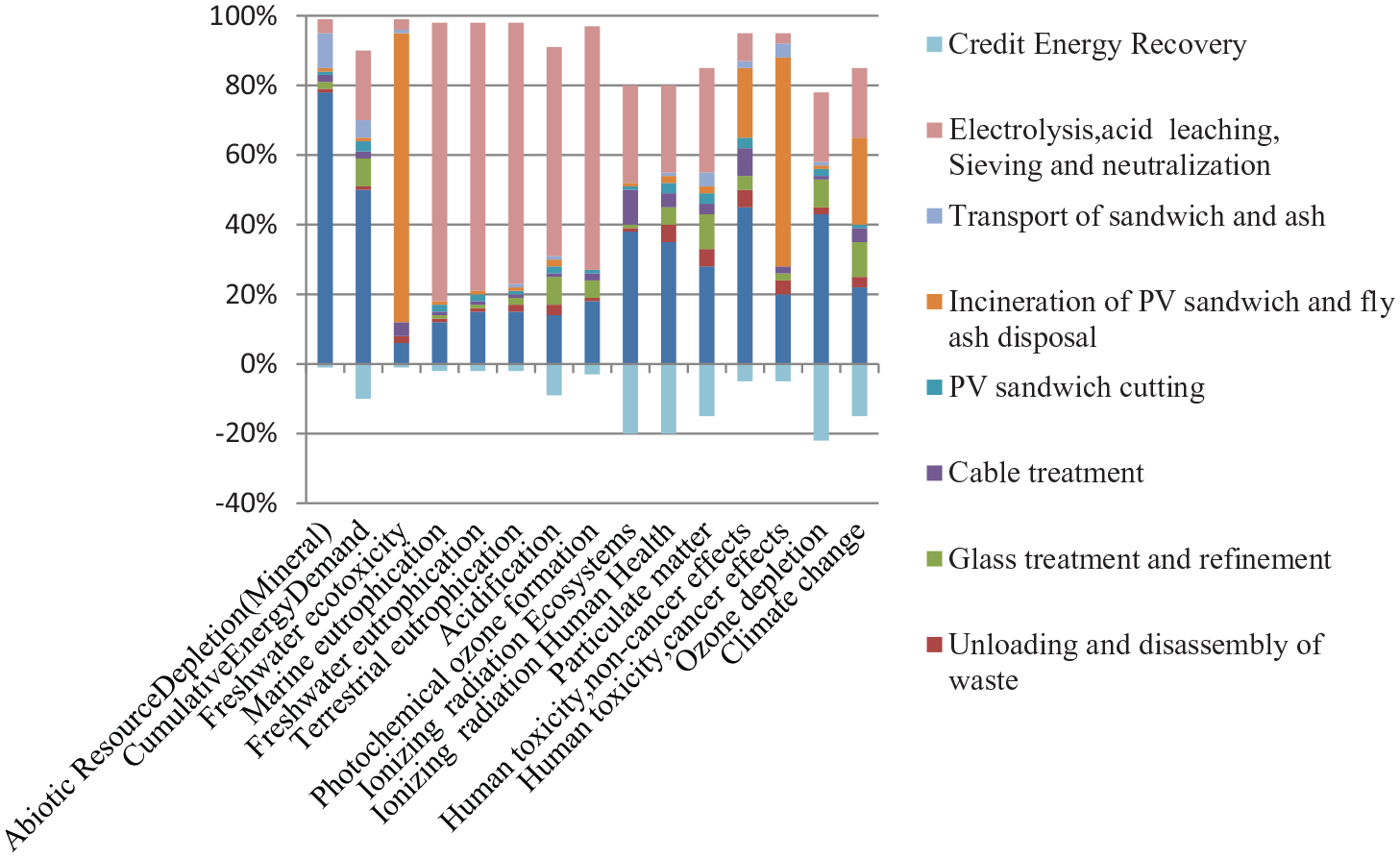
Environmental impact of 1000 kg silicon PV waste recycling.
A novel approach related to recycling of PV panels, that is, Full Recovery End of Life Photovoltaic (FRELP) was investigated by Latunussa et al. (2016), who report a recycling rate of 83%. The baseline process which is the base case used in European WEEE recycling plants is not efficient to separate more than 10% of glass, PV cells and plastics. Ardente et al. (2019) compared the FRELP process and baseline process for climate-change scenario and savings for the recycling process. Table 8 summarizes impacts and savings studied by various authors. However, direct comparison is impossible as some studies presented aggregated results.
Comparison of various studies of recycling for climate change scenario.

GWP: global warming potential.
According to the FRELP process, 1 W of Si panels (with efficiency of 15%–18%) consumes 0.25 MJ of energy and releases 80.11 g of CO2 equivalent (Gönen and Kaplanoğlu, 2019; Latunussa et al., 2016). For the same amount of electricity, the PV module production phase emits 3.3% less than coal-based systems.
Conclusions
This study highlights the rapid evolution of the solar PV sector by the continuous decrease in energy payback time and CO2 emissions. However, it is also true that during the production of PV modules certain hazardous and toxic substances like Cd and Pb are used in small quantities. Hence, it is essential to monitor and manage these substances in solar waste, which will be present at end of life (after 25 years) in order to avoid their detrimental effects on humans and the environment. Due to these pollution issues, two solutions concern the use of less hazardous materials and performing more thorough research and development. In addition, it is pertinent to develop production processes that pose less impact on the environment. Such processes are expected to reduce the risks related to EOL PV systems in line with the improving conversion efficiency and material usage of both CdTe and Si PVs. As the solar sector gains popularity and makes further progress, advancement in technological methods for managing wastes should consider appropriate recycling techniques. Adoption of a closed-loop management system is necessary to directly reduce the harmful environmental impact of manufacturing and recycling of solar panels.
As discussed above, the current recycling methods for solar panels are long and arduous. Although elements like gallium, indium and germanium are used in constructing PV panels, only silicon, which is employed in the panel terminals, can be recycled. Another problem facing recycling processes is the subsequent release of solvent emissions, which can be reduced by using an activated carbon fibre adsorption recycling condensation device.
Various actions are needed to encourage economic growth in the chain involving both production and consumption stakeholders. This mini-review focused on assessment of feasibility of waste management of PV panels which presents various ways for research and development in this PV sector to overcome complex issues existing in developing this field. A combined approach is required among policy makers, institutions and the business community to grasp models that may support systematic change for economic goals. A regulatory framework is suggested involving a number of methods for stakeholders to work appropriately on recycling agreements. Sustainable materials should be used for developing PV modules during production. Module manufacturers should emphasize qualitative models to use sustainable materials during the production stage.
Life-cycle assessment or LCA is a methodology for assessing environmental impacts associated with all the stages of the life-cycle of a commercial product. The LCA also plays an important role in the design of future panels in a way that reduces the impact of recycling, hence maximizing recovery. Besides the rapid development in the solar PV sector, it is proposed to have an appropriate approach for recovery and recycling of the EOL wastes. Presently, there are not enough policies available to manage such wastes, especially in China. Further, Asian countries should develop eco-friendly industries for processing and disposing of such waste to protect the environment. Therefore, it is recommended that recycling is made necessary for all manufacturing companies after their EOL. In summary, such policies must be adopted by government to ensures that all manufacturers consider the impact of their waste on the environment. It is vital to require whole solar manufacturing sectors to act responsibly and recycle, reuse and recover their products. Awareness must be created among users related to PV recycling through mass media and government organization.
Footnotes
Declaration of conflicting interests
The authors declared no potential conflicts of interest with respect to the research, authorship, and/or publication of this article.
Funding
The authors received no financial support for the research, authorship, and/or publication of this article.
