




Abstract
Although sanitary household waste disposal was achieved in China, an efficient source separation system has not been built yet. The Unit Pricing System has been proved effective for household waste sorting by developed countries and regions, while rare developing countries have successfully introduced the system in their local context. The study, taking an interactive perspective of dominant factors of residents’ waste sorting and governments’ intervention, combines theoretical analysis with system simulation to dissect the evolution process of residents’ waste sorting and local governments’ Unit Pricing System policy making, and to provide a Unit Pricing System policy making tool to support policy implementations. The results suggest introducing a Unit Pricing System can significantly push ahead the household waste sorting behaviour for cities with relatively low initial status of environmental awareness, and immediately trigger sorting behaviours for cities with higher initial status of environmental awareness. The study can also benefit other developing countries when imposing waste sorting management instruments.
Keywords
Introduction
Since the new century, Chinese per capita waste generation has increased significantly, from 0.106 tonnes per person to 0.155 tonnes per person (MOHURD, 2002, 2017; National Bureau of Statistics, 2017). Landfills surrounding cities are threatening the expansion of cities (China Association of Renewable Resources Recycling (CARRR), 2018). And, along with income increases, fewer households devote efforts to save up recyclables for redemption, low-value recyclables are increasingly flowing into the stream of mixed wastes (CARRR, 2018; Chung and Lo, 2004). Moreover, due to traditional cooking habits, household wastes of China are characterized by high moisture rate and low thermal value, which calls for source separation especially for kitchen wastes to smooth the incineration process (CARRR, 2018; Liu 2014). In all, household waste sorting (HWS) is an urgent task and efficient systems are badly needed to improve residents’ participation.
Since 2000, the central government has launched the first batch of eight pilot cities for HWS (Ma and Du 2011). The trial promoted the improvement of waste infrastructures but did not motivate HWS behaviours (CARRR, 2018; Han and Zhang 2017; Liu 2014). In 2012, Guangzhou applied a volume-based disposal fee system in some pilot communities and witnessed significant improvements in waste reduction and separation (Ni, 2014; Wu et al., 2015; Xu, 2015). However, the scheme ended after a couple of years due to high administrative costs. By 2014, it was switched to a water bill bundled fee system; the new system was easy to operate but had little incentives for HWS (Xu, 2015). Also, in 2012, Shanghai introduced a Green Account System (Yan and Yan, 2020). The system works well under delicate system designs, like in the Aijian community, but suffered from declining long-term effectiveness (Liu and Li, 2019; Lu and Sidortsov, 2019; Tong et al. 2018). In 2017, the Chinese Government required 46 major cities to do compulsory waste sorting (CWS), and by 2019, called for all-round HWS in all cities at prefecture level and above. Shanghai, as the pioneer responding to the new directive, adopted a CWS programme from 1 July 2019. It supervises residents’ waste dropping process and has witnessed rapid improvement of the sorting rate (Jia, 2020). So far, in most other cities of China, a flat fee system (FFS), normally bundled to other utilities, is applied. The system eases the difficulty of fee collection but has little effects on HWS (Wu et al., 2015).
Developed countries have started solving HWS problems since the second half of the 20th century, mainly by adopting the Unit Pricing System (UPS) (Bueno and Valente, 2019). The system charges households for garbage disposal fees according to waste quantities and categories. Complementary schemes such as recyclables collection plans usually operate simultaneously to reduce undesirable waste diversion (Miranda and Aldy, 1998). Because it is able to promote HWS significantly, it has been steadily working in areas where adopted (Bueno and Valente, 2019). Compared to the Green Account System, UPS does not require external financial support. It takes HWS as residents’ responsibility and adds extra fines for unsorting behaviours. The collected waste fees can finance the waste disposal industry and reduce local governments’ fiscal burden (Miranda et al., 1996; Miranda and Aldy, 1998). Compared to FFS, the UPS imposes an associated charging rule according to HWS behaviours, which encourages sorting (Wu et al., 2015). Hence, the UPS could be the option for China to achieve HWS governance.
Through nearly 20 years’ practice, a sanitary household waste disposal system has been built in China with more than 97% of collected wastes safely treated (China Statistical Year Book, 2017). But the HWS rate remains low generally, regardless of how universal and convenient the facilities became (CARRR, 2018). This is largely attributed to the lack of effective mechanisms or systems that link the government’s expectation to residents’ interests (Mian et al., 2017). According to Hollett and Ramish’s policy tools selection framework, a market-oriented system should fit HWS for city areas because of the high national capacity and complex subsystem (Tian, 2020). And because HWS systems usually have very limited external validity, local solutions that accommodate concrete conditions are needed (Ma and Hipel, 2016).
This article focuses on the conditions that allow an introduction of the UPS in the context of China. To achieve that, we firstly apply evolutionary game theory method to theoretically analyse the equilibrium condition of UPS, then apply system dynamics modelling to simulate the introduction and the effects of UPS. The paper is organized as follows: the next section presents a literature review from behaviour determination and intervention aspects. This is followed by a presentation of the process of theoretical analysis by evolutionary game theory. The article goes on to present a numerical simulation of UPS by system dynamics followed by a conclusion.
Literature review
Studies on HWS consist of two categories: determinants-oriented studies and intervention-oriented studies (Varotto and Spagnolli, 2017). They are reviewed below.
Determinants of residents’ HWS behaviours
This stream of studies is conducted from two primary perspectives based on demographic characteristics and psychological factors (Knickmeyer, 2020; Xu et al., 2017). From the perspective of demographic characteristics, social-demographic factors are of most concern. Becker (2014) reviewed studies on this and concluded that social-demographic factors seem indirectly correlated to recycling behaviours through affecting impact factors of recycling behaviours, such as awareness and responsibility (De Feo and De Gisi, 2010), attitude (Valle et al., 2004), willingness (Martin et al., 2006) and so forth. From the perspective of psychological intentions, the theory of planned behaviour (TPB) and its extensions were most applicable. The TPB assumes that behaviour changes are attributed to the changes of behaviour intention, and the intention depends on three elements: attitude, subjective norm and the perceived behavioural control (Ajzen, 1991). Xiao et al. (2017) took Xiamen as an example, studied key factors influencing citizens’ willingness to participate in waste management and identified citizen knowledge and social motivation as two principal factors. Zhang et al. (2017) studied Beijing college students’ source separation behaviour and proved the validity of the TPB in explaining environmental behaviours. Many other TPB-based articles can be quoted as well, partly listed below (Hage et al., 2009; Klöckner and Oppedal, 2011; Miafodzyeva and Brandt, 2013; Pei, 2019; Rousta et al., 2017; Stoeva and Alriksson, 2017; Wan et al., 2017; Xu et al., 2016, 2018; Zhang et al., 2012).
Interventions of residents’ HWS behaviours
This stream of studies discusses the mechanism and the effects of HWS intervention systems, which mainly consist of two categories dominated by economic incentives and social governance. The most frequently discussed economic measure is UPS. Bueno and Valente (2019) checked the effectiveness of the UPS in Trento by the synthetic control method, and proved the waste reduction and recycling promotion effects of the system. Wright (2018) measured the effectiveness of the UPS in New Hampshire by propensity score matching, and identified 42–54% annual waste reductions per household. Bel and Gradus (2016) did a meta-analysis of 25 studies on UPS and found that the pricing of weight-based systems performs better. Usui and Takeuchi (2014) analysed the long-term impact of the UPS in the Japanese context; they observed a significant waste reduction effect with small rebound and identified that the system is less effective in the high-income groups. Studies on social governance-dominated systems stress the importance of cooperation. Lu and Sidortsov (2019) used a qualitative case study of Shanghai to explore the potential of a community-based co-production strategy for HWS and found that the government-volunteer consortium and the peer-pressure effect can help realize waste-management co-production. Chen et al. (2018) applied evolutionary game theory to analyse the mechanism of achieving HWS cooperation among Chinese residents from the perspective of economics. Sekito et al. (2013) investigated the impact of a community-based waste management system on residents’ HWS behaviours in the context of Indonesia, and identified a significant waste reduction rate of 44% through a material flow analysis.
Overall, there is a lack of ex-ante analysis of UPS, which is badly in need for countries that have not achieved waste governance. Most post-hoc studies mainly work for policy improvements and theoretical perfections, which don’t match the needs of these countries. And there lacks integration of the two streams of studies to deliver results from an interactive perspective and synthetical policy suggestions. The interactions of residents’ behaviour logic and policy intervention is of great importance for new policy introductions. In addition, most studies applied empirical methods which are black boxes. The white box-based analysis is also needed to help build decision making tools.
This study stands at the interactive perspective, theoretically analysing the game process of residents’ HWS behaviour and governments’ UPS policy takings. A numerical simulation using system dynamics modelling based on the results of theoretical analysis is followed. It can serve as a reference for decision-making frameworks. The results and the analysing frame of the study can be referenced especially for other developing countries working on the HWS issue.
Theoretical analysis by evolutionary game theory
The theoretical analysis investigates (a) individuals’ HWS behaviour changing basis from the perspective of economics and sociology; (b) government’s UPS policy taking basis from the perspective of environmental regulation and public management; and (c) the evolutionary paths of both groups’ behaviours under interactive influences. Evolutionary game theory (EGT) method is applied. It requires neither a perfect rationality hypothesis nor a complete information condition, and allows a Nash equilibrium attained simply by accumulating stage back empirical information on adopted pure strategies’ comparative advantages, which fits the reality when new policy instruments are introduced. The UPS building and HWS behaviour changing processes both suffice for the hypotheses needed for the adoption of an EGT model. In particular, the inertia needed could be produced by learning and imitating other individuals, based on the Lamarckian theory. In addition, the EGT method improves the understanding of the evolutionary details of groups’ behaviours and supports the explanation of why and how certain states could be reached.
Game design and description
Our model involves two groups: local governments (GVMT) and residents (RSDT). Local governments are fundamental units of the UPS which could be at the province, city or community levels. Their policy adoptions depend on the utility of policy instruments. ‘(FFS, UPS)’ is governments’ behaviour strategy set. Residents are implementers of HWS, they form households. The reason for applying ‘residents’ is that our behaviour analysis of HWS is on the individual level. Specifically, residents’ behaviour choosing of HWS is based on bounded rationality hypothesis and the TPB. ‘(Household Waste Unsorting (HWU), HWS)’ is residents’ strategy set. In addition, the model assumes a reasonable time-length that allows the evolution and mutation of groups’ behaviour strategies, and applies a deterministic, continuous-time and continuous-state dynamic strategy evolving process. There are four basic hypotheses that build the core logic and frame of the model, presented successively.
Hypothesis 1: Household wastes (Q) are classified into dry refuse, wet refuse, recyclable resources and hazardous substance. Except that recyclables (Q2) could be sold for returns, other wastes’ (Q1) collection is charged by local governments. The hypothesis accords with the local conditions of most Chinese cities in question, where the FFS is adopted, and self-employed collectors hunt recyclables all over the country (Wang et al., 2020a).
Hypothesis 2: The probability that residents respond to governments’ appeal for HWS is x (0 ≤ x ≤ 1), and 1−x for the opposite. Governments may provide garbage removal services at cost weighted by waste units with a probability of y (0 ≤ y ≤ 1), or maintain the FFS which charges households equally with a probability of 1–y.
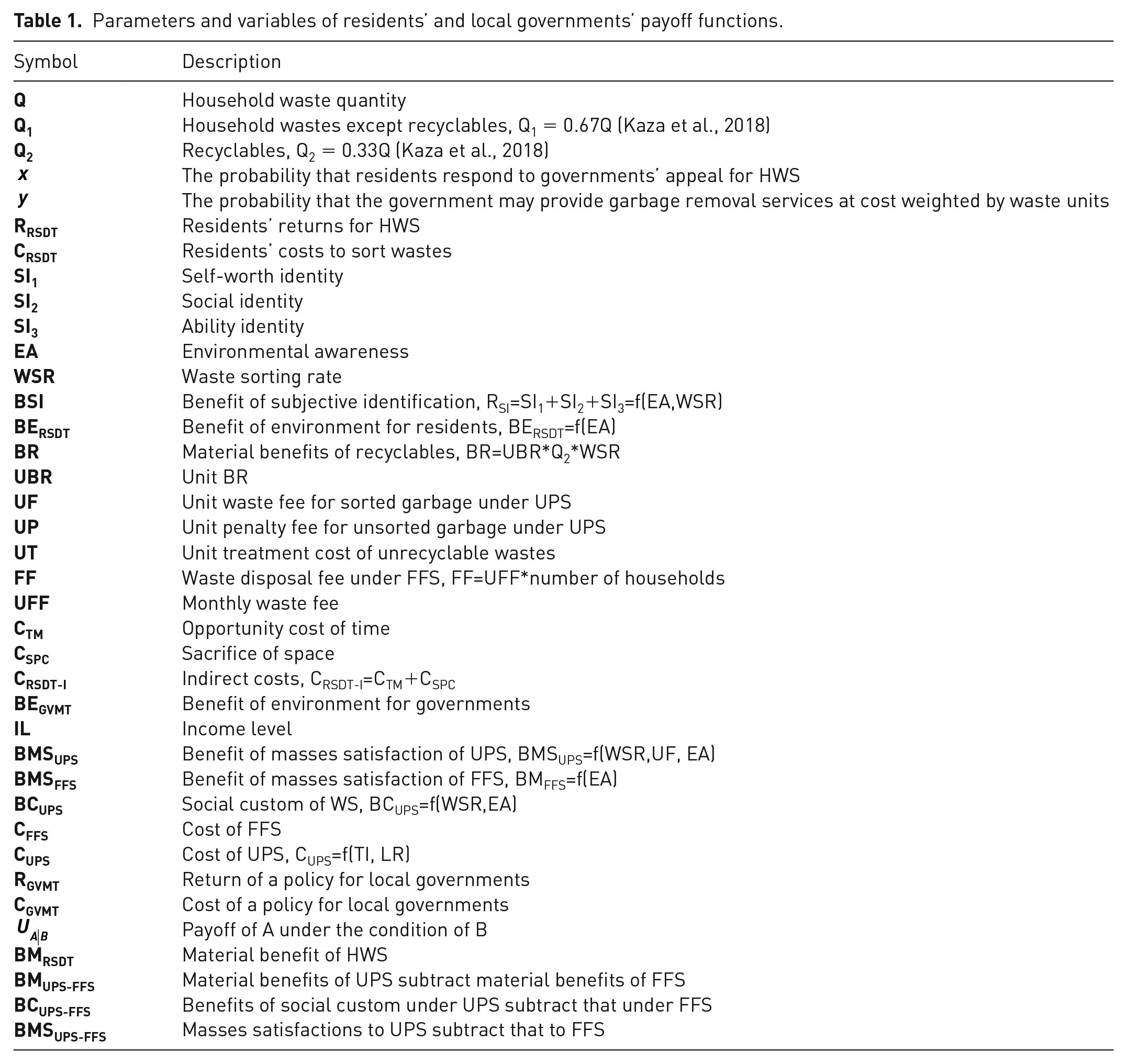
Hypothesis 3: Residents sort wastes only if the returns (RRSDT) cover the costs (CRSDT). Returns are composed of subjective identification, environmental benefits and material benefits of recyclables. Costs consist of waste disposal fees and indirect costs of time and space, presented in Table 1. Wherein, the subjective identification delegates the behaviour intention. Based on the TPB (Ajzen, 1991), the model uses self-worth identity, social identity and ability identity to delegate attitude, subjective norm and perceived behavioural control respectively.
Hypothesis 4: Local governments only impose a policy instrument when its expected benefits (RGVMT) outperform the foreseen costs (CGVMT), seen in Table 1. The benefits are made up of three aspects which are economic (collected waste fee), environmental and social. The costs include spends on design, implementation, supportive facilities, and supervision. Wherein, social benefits are composed of masses satisfaction and social custom. According to foreign experience, the HWS custom can be promoted under UPS (Usui and Takeuchi, 2014).
Parameters and variables of residents’ and local governments’ payoff functions.
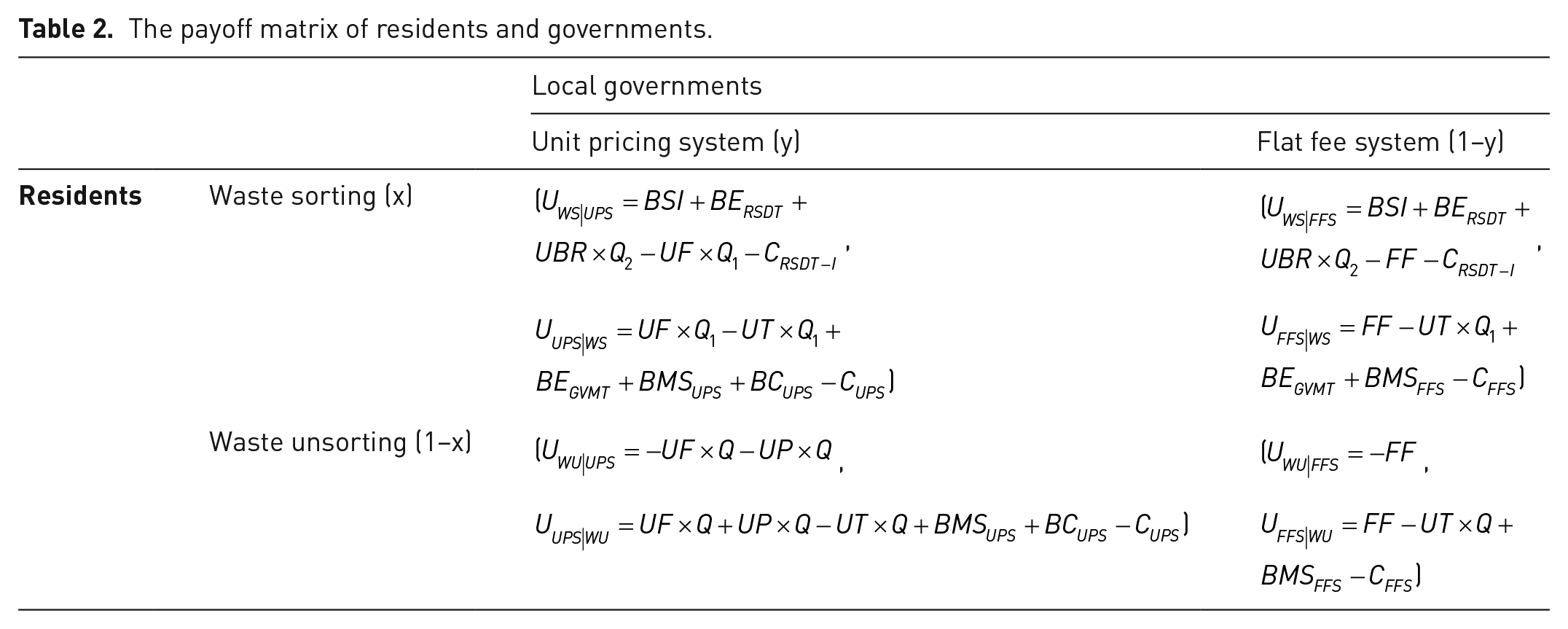
Based on above hypotheses, the payoff matrix can be obtained, shown in Table 2. In the table, we use ‘
The payoff matrix of residents and governments.
Game solution
Let E(x) and E(1−x) denote the expected payoffs of a resident when taking the HWS Strategy and HWU Strategy (equations 1 and 2). And let





where in:

where in:
Let
And the last EE stands only if
Because an evolutionary equilibrium point becomes an evolutionary stable strategy (ESS) only if its Jacobian matrix (J, equation 6) suffices with two constraints:
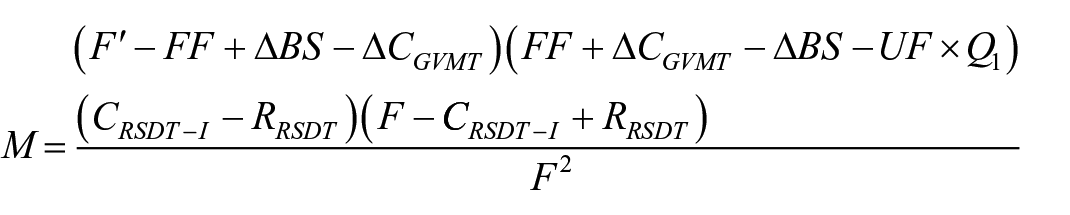
The value and the trace value for all evolutionary equilibriums.
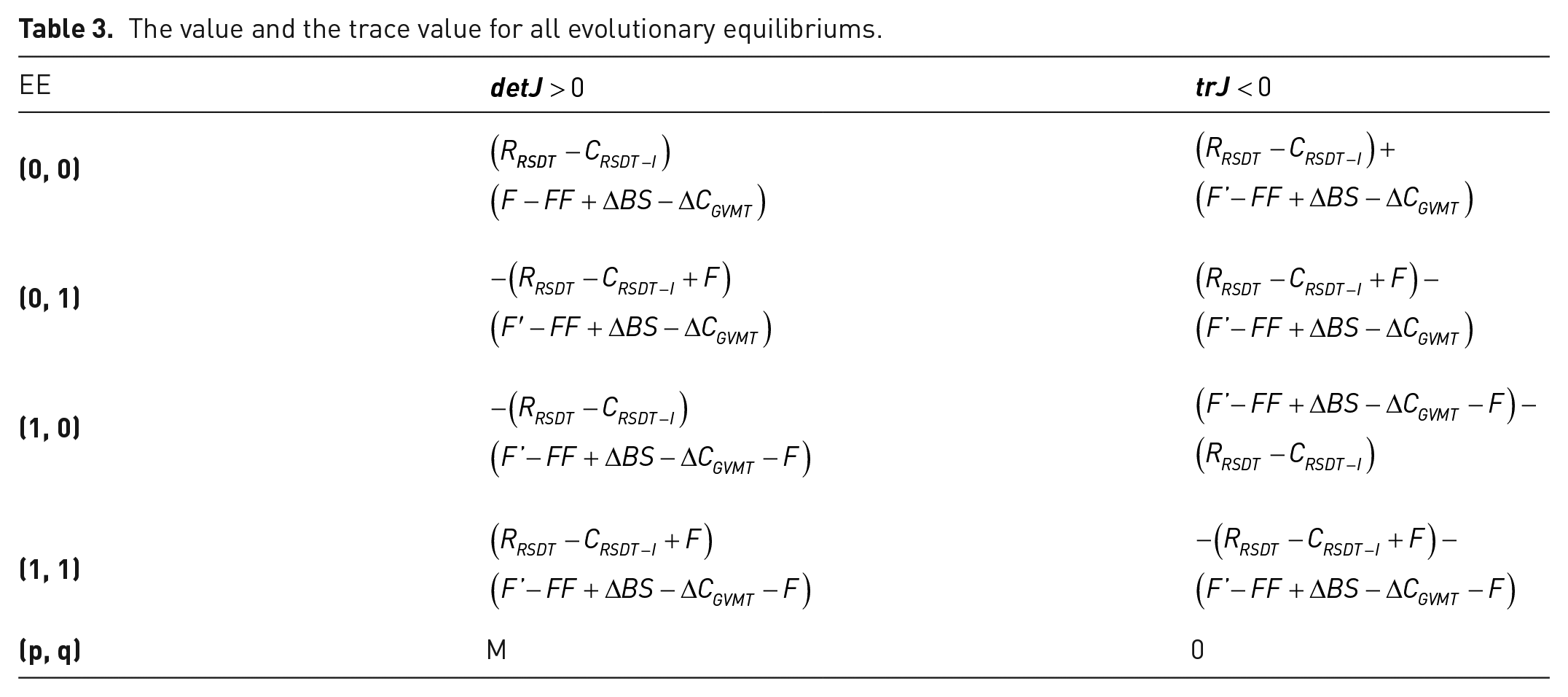
According to the table, conditions for ESS can be obtained, presented in inferences 1–4.

ESS1-4 of the game
Inference 1: Let
Inference 2: Let BSI + BERSDT + BR + UF × Q2 + UP × Q < CTM + CSPC and (UF + UP)Q + BMSUPS + BCUPS – CUPS > FF + BMSFFS – CFFS, ESS2(0,1) can be reached, the system stabilizes at ‘(HWU, UPS)’ status. To interpret this inference, the connotation of the polynomial ‘
Inference 3: Let
Inference 4: Let BSI + BERSDT + BR + UF × Q2 + UP × Q > CTM + CSPC and UF ×Q1 + BMSUPS + BCUPS – CUPS > FF + BMSFFS – CFFS, ESS4(1, 1) can be reached, the system stabilizes at ‘(HWS, UPS)’ status. The inference indicates that if returns of HWS (BSI+BERSDT), recyclables selling (BR) and saving of waste treatment fees by WS under the UPS (UF*Q2+UP*Q) are over the opportunity cost of time (CTM) and sacrifice of spaces (CSPC), simultaneously, net returns of a UPS under WS condition are over the net returns of a FFS, the residents will do WS under the UPS.
Numerical modelling of UPS by system dynamics
Numerical modelling is aimed at (a) analysing the policy effects of UPS in the Chinese context; (b) identifying the sensitive factors that dominate policy effectiveness; and (c) developing an ex-ante UPS policy making model that could be referenced by other developing countries. System dynamics method is applied to simulate the whole process because the decision-making framework of the study is pluralistic and the interactions are complicated (Tian et al., 2014). System dynamics is able to capture the interactions and feedbacks of residents’ WS strategy and governments’ UPS policy taking. Real data of Hefei city is applied in order to deliver policy insights for other major cities under the CWS directive of 2019. Hefei is one of the typical second-tier cities under the directive and updated survey data of the city from 2019 is available from Wang et al. (2020b).
Model building and description
In the model (Figure 1), pro-environmental promotion effort and income growth rate are external variables. Economic fluctuations and dramatic system changes promoted by digital technologies and so on are not considered. The promotion effort follows a standard bass diffusion model and affects environmental awareness (EA) of residents through a norm building Process (Appendix A). EA has a significant influence on the social psychological factors of HWS and UPS policy implementation (Knickmeyer, 2020; Ye et al., 2020). The latest reported three years’ growth rate of disposable income (2016–2018) from Hefei Statistical Yearbook is applied to its income growth rate which influences opportunity cost of HWS (CRSDT-I) and the level of waste fees (UF) under UPS. Residents’ strategy and governments’ strategy are core hubs of the system. They are binary choice variables which depend on the inferences deducted for ESS1-4 above. Specifically, residents’ strategy depends on the payoff of HWS. It is computed by the sum of the benefit of environment for residents (BERSDT), the benefit of subjective identification (BSI), and the material benefit of HWS (BMRSDT) subtracting the indirect cost (CRSDT-I). CRSDT-I inflates along with income growth and is set to a specific interval which means HWS behaviour cannot be triggered only by economic incentives but could occur under joint efforts of optimized BERSDT and BSI (Usui and Takeuchi, 2014). Governments’ strategy depends on the difference of the payoff of UPS and FFS. It is computed by the weighted average of material benefits of UPS over FFS (BMUPS-FFS), benefits of social custom UPS over FFS (BCUPS-FFS), and masses satisfaction to UPS over FFS (BMSUPS-FFS). Wherein, cost of UPS declines with a constant learning rate. An explicit waste fee adjusting mechanism is assumed for governments to adopt UPS with a balanced budget, in which UF grows from the same level as UFF and increases yearly along with income growth, UP makes up the rest of the system cost under constrained conditions. Residents’ and governments’ strategy taking are interacted through waste sorting rate (WSR) and BMRSDT. Governments’ policy taking affects residents material benefits of HWS, and further affects residents’ behaviour. Residents’ waste sorting strategy taking affects governments’ strategy through its influence on WSR. WSR is the core output of the system which is determined by residents’ strategy through a norm building process. It has complicated feedbacks to residents’ and governments’ strategy takings by influencing their dominant variables. Specifically, along with the increasing WSR, EA’s added influence on BSIRSDT and BCUPS-FFS are weakened due to the declining target audience. Accelerated promotion of WSR can lift masses satisfaction to the UPS and thus has positive effect on BMSUPS-FFS. Moreover, WSR is closely related to material benefits for residents (BMRSDT) and governments (BMUPS-FFS) through the waste fee adjusting mechanism which allows the waste penalty level (UP) to positively correlate with WSR. The detailed modelling equations of parameters and variables are presented in Appendix A.
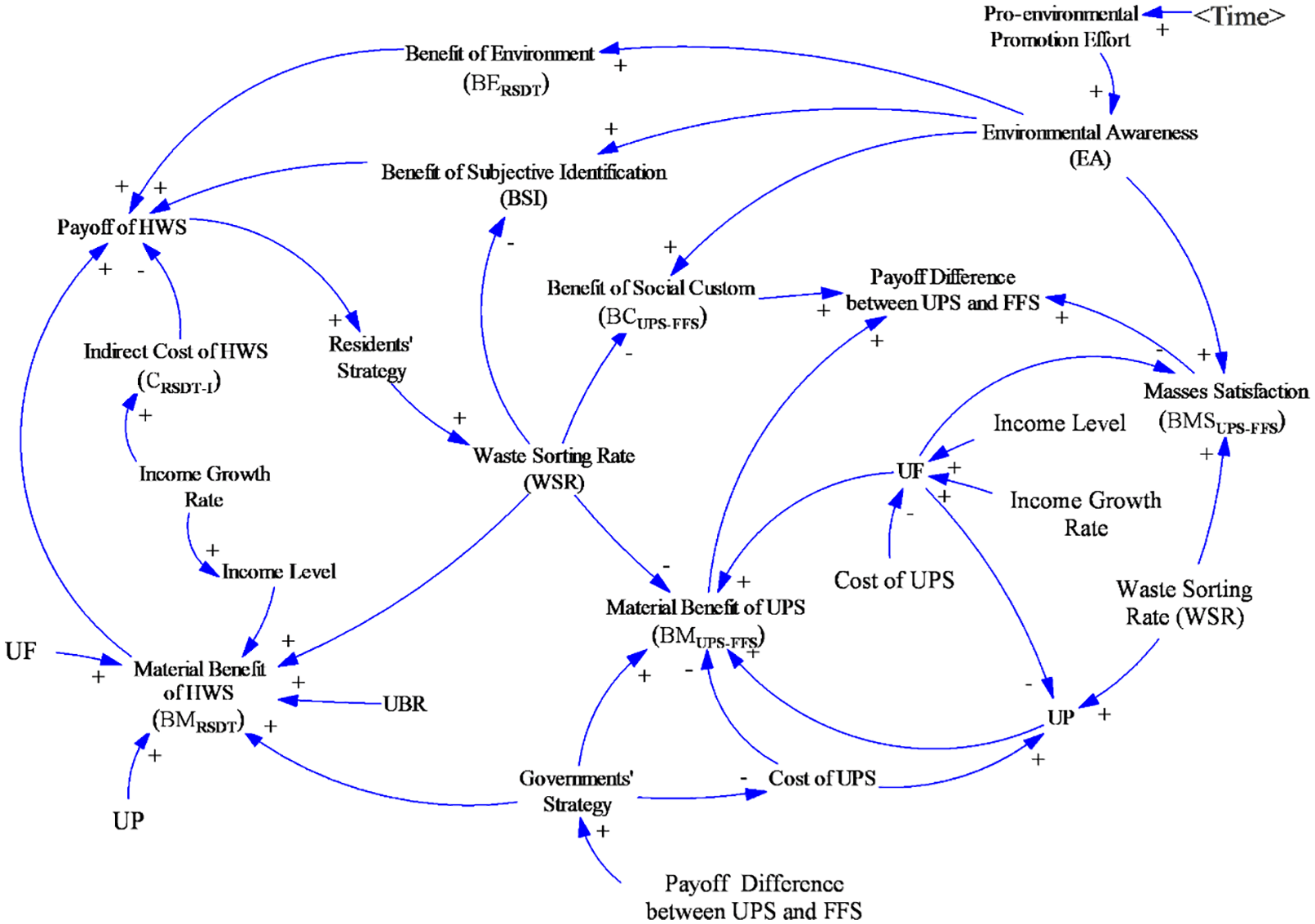
Causal loop diagram of numerical modelling.
Dimensional consistency, extreme condition and integration error tests are applied to verify the model settings (Besiou et al., 2012; Ghisolfi et al., 2016; Sterman, 2000). The dimensional consistency test is conducted by inspecting all of the model equations, which led to some corrections to its initial formulation. This provides the structural validity of the model. The extreme condition test is conducted by checking whether the model behaves realistically under extreme conditions. The extreme conditions tested are: extremely high and low initial values of cost of UPS, extremely ineffective and effective pro-environmental promotion efforts, extremely high and low initial values of indirect cost HWS, among others. The model performed realistically under extreme conditions. Taking cost of UPS as an example, when it increases to 100 times FFS, the UF required will increase substantially and the adoption time of UPS will be delayed; when it decreases to the same level as FFS, HWS behaviour will be delayed because the BMRSDT is low. Integration error test is conducted by cutting the time. The modelling result is found not to be sensitive to time steps.
Simulation results
Four scenarios are simulated under the system (Figure 2). No intervention (S1) represents a scenario without pro-environmental promotion efforts and UPS; dual interventions (S4) represents the opposite. Scenarios of promotion effort (S2) and UPS implementation (S3) represent systems with a single intervention.
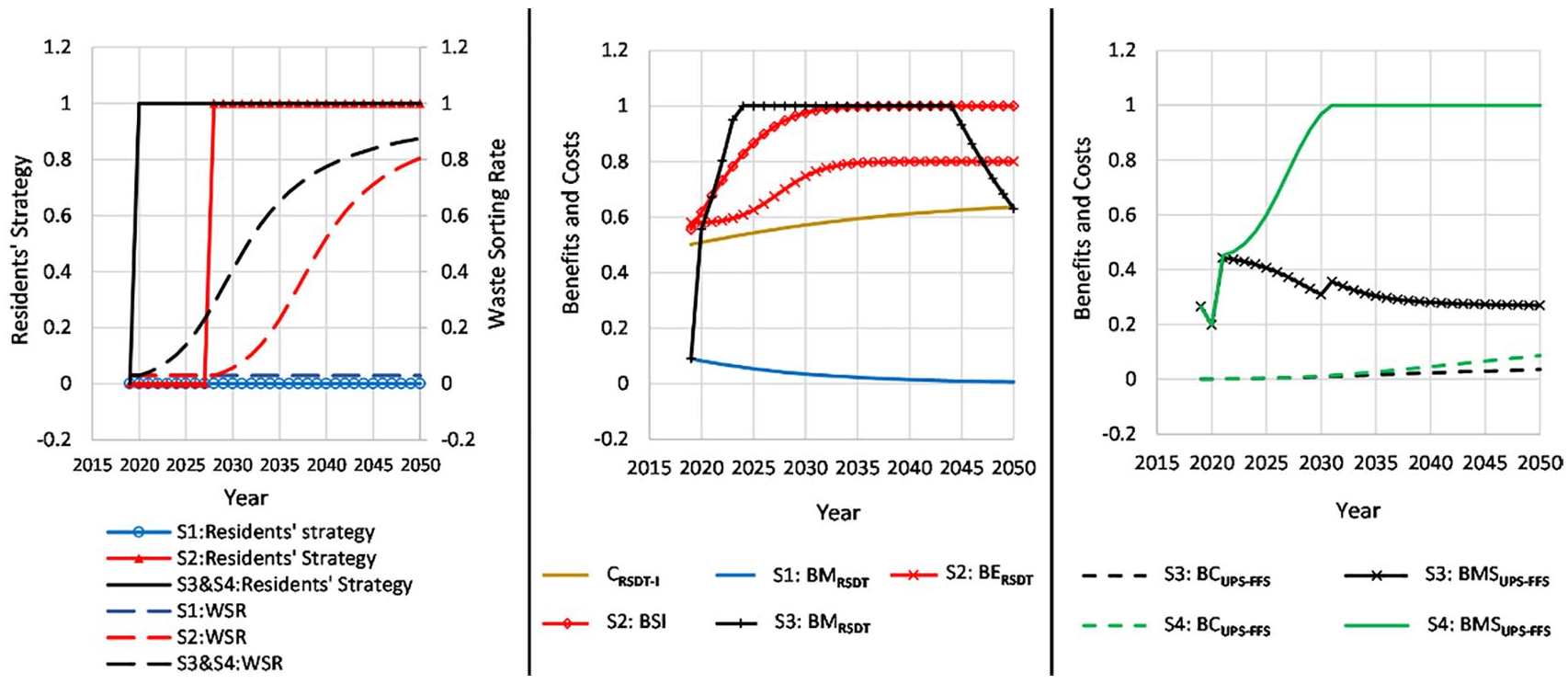
Simulation results under four scenarios.
The result shows that HWS will not occur automatically without intervention (S1) (Figure 2)because CRSDT-I will increase with income growth but BMRSDT is further diminished under FFS along with increased income level. In this scenario (S1), HWS can only happen by environmental mutation. One likely mutation is the price hike of recyclables (BR), which occurred in China during the ‘Old for New’ policy implementing period (Cao et al., 2016). But such mutation only gives residents an incentive to pick out specific recyclable items from the rest, which is far from a HWS called for. Another possible mutation is the implementation of CWS, as applied in Shanghai recently, where the process of waste dropping was watched and further rectified by a supervisor (Ye et al., 2020). In this way, residents have to do HWS complying with the ruling side.
In the scenario of ‘promotion effort’ (S2), HWS is supposed to occur after around a decade under initial settings of the system (Figure 2). This is because the optimized benefits of environment and subjective identification can deliver residents’ inner motivations on waste sorting. As witnessed by the United States and European countries, social psychological motivations and pressures, and environmental awareness are critical for promoting pro-environmental behaviours (Ma and Hipel, 2016; Miranda and Aldy, 1998). Usui and Takeuchi (2014) also identified that Japanese residents, especially those high-income groups are willing to do HWS for social identity regardless of material benefits. Specifically to Hefei, the scenario indicates that consistent promoting activities are needed to finally let HWS happen.
In the scenario of ‘UPS implementation’ (S3), HWS can occur immediately after the system is implemented (Figure 2). It is mainly attributed to the surge of material benefit of HWS and good initial conditions of Hefei in terms of environmental awareness and subjective identification. In the initial setting, the cost of UPS is assumed as 10 times that of FFS. It is an arbitrarily given but reasonable level which allows waste fees (UF, UP) to compensate the system cost and deliver enough incentives to trigger waste sorting behaviours. If the cost of UPS is too high, adopting it could be impossible because it will leave extremely high burdens on residents and produce public resistance to the arrangement. On the contrary, if the cost of UPS is similar to the current cost, the penalty setting (UP) in the system will be inadequate to dissuade unsorting behaviours.
Under the scenario of ‘dual interventions’, HWS behaviours can be immediately triggered (Figure 2). Compared with the scenario of ‘UPS implementation’, it can obtain higher masses satisfaction to UPS, consolidate the social custom of HWS, and improve residents’ inner motivation to sort wastes. Although whether to add ‘promotion effort’ made no difference for Hefei, it does delay the appearance time of HWS if initial environmental awareness of residents or the waste disposal charges (UF, UP) are not high enough.
Sensitivity analysis
To deliver policy implications for cities with various initial conditions, a sensitivity study is carried out. Three local condition featured variables are found significant (Figure 3). Initial value of EA is the most sensitive variable. Above 25% increase in EA can lead HWS to occur even without intervention (S1) because, in the circumstances, inner motivation of HWS is strong enough to make the change of behaviour, as observed in Japan (Usui and Takeuchi, 2014). In the scenario of promotion effort (S2), 30% up and down changes of the initial value of EA can lead to around 10 years change in the appearance of HWS. Under UPS implementation scenario (S3), 25% decrease of the initial value of EA can lead to policy failures within the whole modelling period. This is because the increased BMRSDT could not compensate for the climbing CRSDT-I. In this circumstance, residents prefer to sacrifice a little money for convenience and time. Under dual interventions scenario (S4), 30% decrease of the initial value of EA can cause 6 years’ delay of HWS. Comparing S3 with S2 and S4, it can be found that promotion effort is of great importance to allow HWS to happen in cities with low initial status of EA. Comparing S1 and S2 with S3 and S4, we can find that UPS can largely push ahead the appearance time of HWS. In addition, under S2, HWS is sensitive to income growth rate and BSI. Income growth rate is negatively correlated with the appearance time of HWS, because it increases the climbing rate of CRSDT-I. Increased initial value of BSI can promote HWS for it directly increases the payoff of HWS.
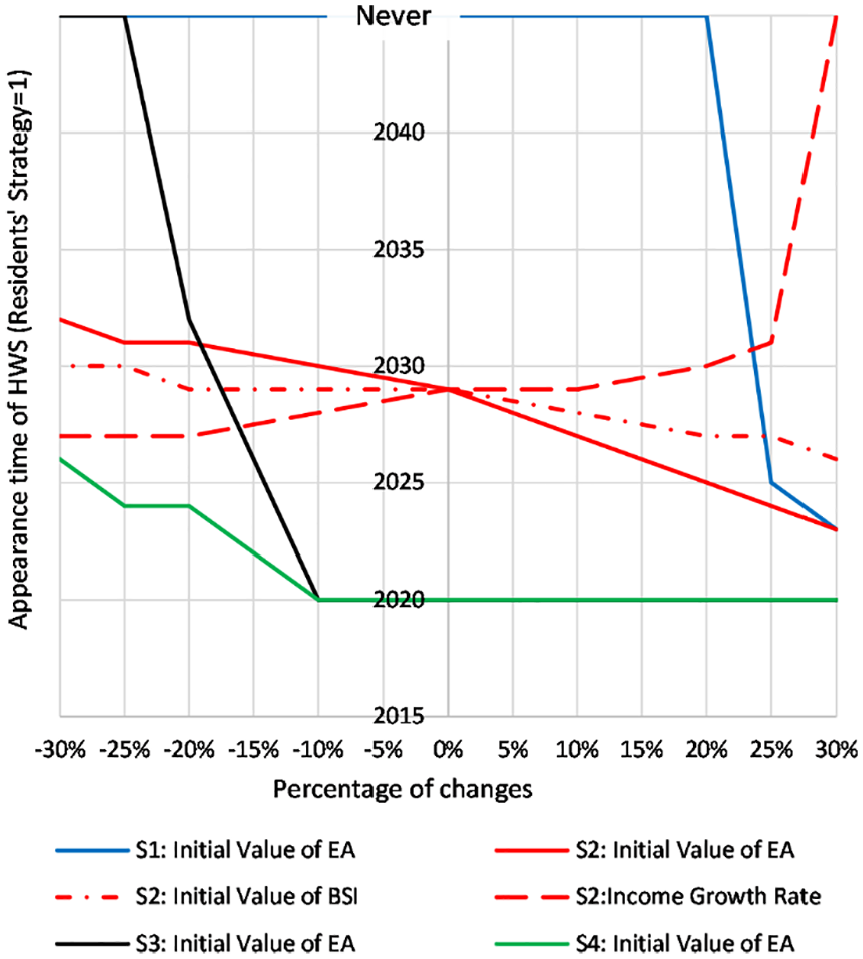
Sensitivity analysis of the numerical model.
Conclusion
The study analysed the evolutionary mechanism of residents’ HWS behaviour and local governments’ UPS policy introduction from an interactive perspective and simulated the UPS policy making framework of Hefei city by system dynamics. Theoretical analysis reveals the game process of residents and governments, and identified the conditions required for evolutionary stable strategies and their transitions. Numerical modelling reveals the effects of UPS on promoting HWS. A sensitivity study identified sensitive factors to HWS behaviour takings. The result shows that initial status of environmental awareness is the most sensitive factor which should be considered when introducing UPS. In terms of China, introducing UPS to the current HWS promotion campaigns can significantly push ahead the HWS behaviour for cities with relatively low EA values, and immediately trigger HWS behaviour for cities with higher EA values. The theorical framework and numerical simulation developed in the paper could be beneficial to other developing countries and regions which have yet to achieve waste governance.
Supplemental Material
sj-pdf-1-wmr-10.1177_0734242X20988783 – Supplemental material for Feasibility study of the unit pricing system for household wastes sorting in the context of China
Supplemental material, sj-pdf-1-wmr-10.1177_0734242X20988783 for Feasibility study of the unit pricing system for household wastes sorting in the context of China by Wenhua Li and Juntao Wang in Waste Management & Research
Footnotes
Declaration of conflicting interests
The authors declared no potential conflicts of interest with respect to the research, authorship, and/or publication of this article.
Funding
The authors disclosed receipt of the following financial support for the research, authorship, and/or publication of this article: The work presented in this paper was supported by grant from the Henan Philosophy and Social Science Planning Office, The People’s Government of Henan Province, China (Project No. 2020CJJ082).

Supplemental material
Supplemental material for this article is available online.
References
Supplementary Material
Please find the following supplemental material available below.
For Open Access articles published under a Creative Commons License, all supplemental material carries the same license as the article it is associated with.
For non-Open Access articles published, all supplemental material carries a non-exclusive license, and permission requests for re-use of supplemental material or any part of supplemental material shall be sent directly to the copyright owner as specified in the copyright notice associated with the article.
