



Abstract
This study gives a detailed overview over the German waste-to-energy sector in 2015. The aim is to quantify the available treatment capacities and the energetic potential of waste in Germany. The work is based on an extensive data collection and evaluation, both from literature sources as well as from a survey among operators of waste treatment plants. The present Part I, gives an overview of all treatment facilities in Germany that convert waste into energy. It was found that in total, almost 320 PJ of end energy are produced in German waste treatment plants: 225 PJ a−1 of heat; and 90 PJ a−1 of electricity. This is a share of about 3.7% of the German end energy consumption.
Introduction
According to the European Waste Framework Directive (European Parliament, 2008), energy recovery from waste is classified as the fourth stage of the hierarchy, after prevention, preparation for re-use and recycling. Nevertheless, a large amount of waste that is no longer suitable for recycling is sent for energy recovery. As a result, waste now accounts for a significant proportion of electricity, heat and process energy supplied in Germany and other countries with developed waste management systems. The importance of waste for energy supply is now also recognized at European Union (EU) level. On the basis of the EU’s action plan for recycling management (European Commission, 2015), which explicitly refers to the importance of waste for energy supply as a supplement to material waste recycling, an initiative on “Energy generation from waste” is to be launched. Against this background, this work was originally carried out for the German Environment Agency and presented in German language in June 2018 (Flamme et al., 2018). The present study is an English summary of the original report, the status of waste-to-energy (WtE) in Germany in 2015. Due to the extent of the work, it was divided into two parts. This first part gives an overview of all WtE facilities in Germany. The status described in this study reflects the situation in Germany in the year 2015. In some cases, updated information from May 2019 was available (e.g. the status of plants that were under construction in the reference year) and added as a footnote to the respective sections.
Methodology
This study presents all facilities in Germany that convert waste into energy. The following waste treatment plants have been taken into account:
- Municipal solid waste incineration plants (MSWI plants),
- Refuse derived fuel power plants (RDF power plants),
- Hazardous waste incineration plants,
- Waste wood incineration plants and biomass power plants,
- Sewage sludge incineration plants,
- Cement works (co-firing of waste),
- Coal-fired power plants (co-firing of waste),
- Industrial power plants,
- Anaerobic digestion plants (AD plants),
- Mechanical-biological treatment (MBT) plants with fermentation stage.
The starting point for the data collection was the quantification of plant capacities and the quantities of waste that were actually treated in these plants. These could be determined with high accuracy, in particular on the basis of an operator survey that was carried out for MSWI plants, RDF power plants and hazardous waste incineration plants. Data collected in this survey included plant specifications, types of waste and heating value, auxiliary fuels and energy produced. The response rate varied between 39% (RDF incineration plant) and 92% (MWSI plant), with the percentage based on the total installed capacity. An estimation for the entire plant park was carried out by extrapolating the available information. In addition to this survey, the power plant list of the Federal Network Agency (Bundesnetzagentur, 2011) offered extensive information on the German power plant park. Plausibility checks and a search for missing information were carried out by comparison with the waste balances of the Länder (provinces), data of the Federal Statistical Office as well as information from respective associations and the literature. In addition to the capacities and mass flows (Mg a−1), the quantities of energy exported by the plants in the form of electricity, heat and steam, the energy supply from waste in the industrial process and the energy content of the treated waste flows in the form of calorific values (MJ Mg−1) were queried or otherwise determined. This enabled a calorific value-related capacity analysis to be carried out for the waste quantities used in each case. The total amount of energy per plant was calculated by multiplying the annual throughput with the average heating value of the waste input and accounting for the plants’ own energy consumption and efficiencies.
For better readability, a more detailed description of the methodology including assumptions made is given in the respective sections.
Waste treatment facilities
MSWI plants
The distinction between MSWI plants and RDF power plants is not always clear. Waste incineration plants were originally built with the purpose to minimize the amount of waste and destroy potential pollutants but have by now also become energy suppliers. RDF power plants on the other hand were originally built with the purpose of generating energy in the immediate vicinity of consumers. RDF is produced by processing household and commercial waste (e.g. shredding and removal of non-combustible materials) (Giugliano and Ranzi, 2016). The combustion technology of RDF power plants and MSWI plants is often identical as grate firing (the common system for MSWI plants) is nowadays also generally used in RDF plants; less than one-third of these plants use fluidized bed combustion systems. Both types of plants incinerate untreated and pretreated municipal waste. RDF power plants usually have a more limited variety of waste types that can be processed. Within this study, incineration plants that were built more recently for the purpose of energy provision and designed for RDF as input are consequently listed as RDF incineration plants.
Table 1 shows the 66 MSWI plants that are currently operated in Germany, all of them equipped with a grate firing system. A total incineration capacity of 20,634,782 Mg a−1 is available. There are currently no concrete plans for new constructions. The MSWI plant in Göppingen has been approved for an expansion of 20,000 Mg a−1.
Waste incineration plants in Germany (Flamme et al., 2018).
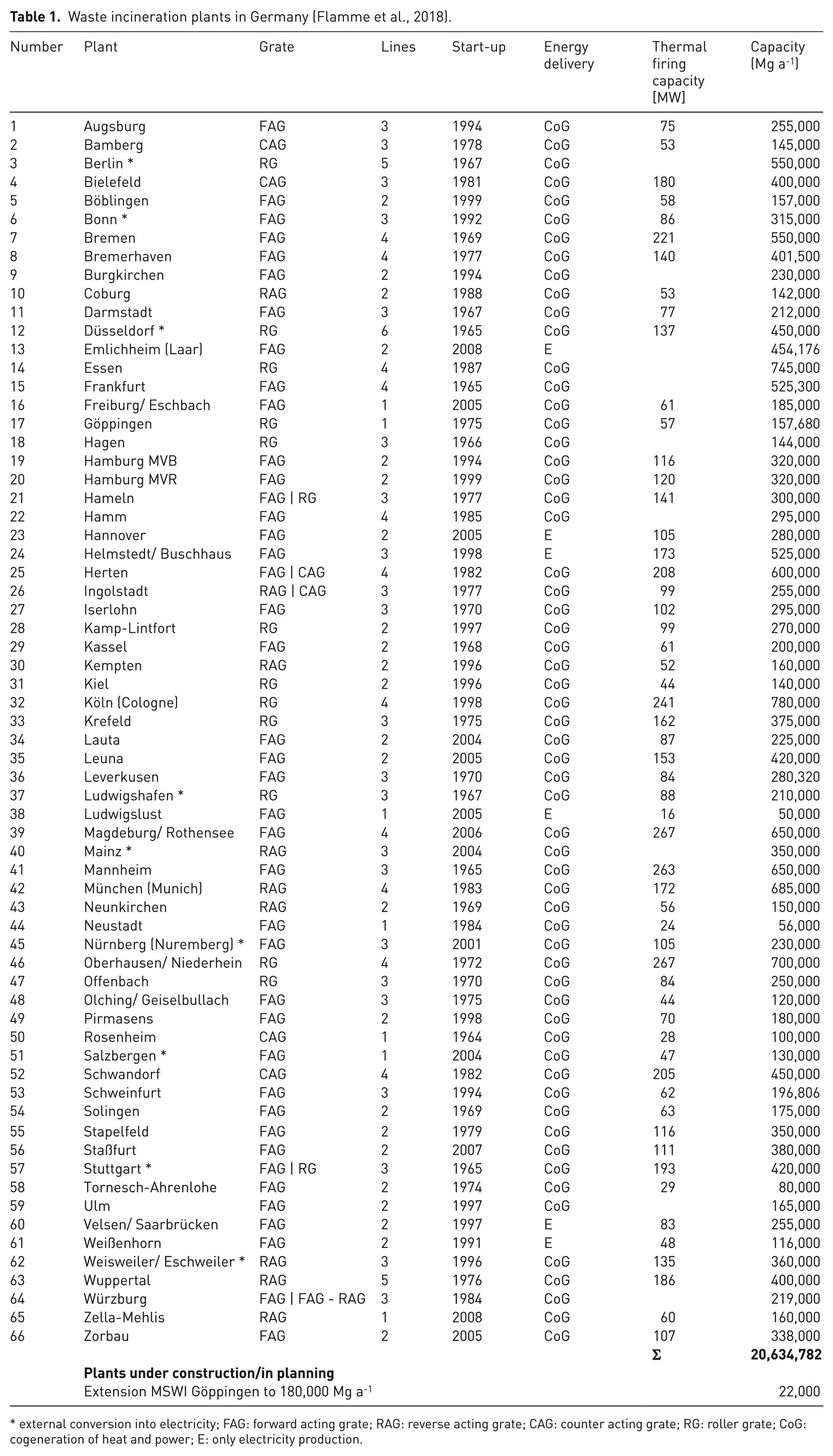
external conversion into electricity; FAG: forward acting grate; RAG: reverse acting grate; CAG: counter acting grate; RG: roller grate; CoG: cogeneration of heat and power; E: only electricity production.
The plant sizes of the German waste incineration plants vary between 50,000 Mg a−1 and 780,000 Mg a−1. Most plants are operated in combined heat and power (CHP) generation, with some transferring the generated process steam to external plants for power generation and heat utilization (each noted as a footnote in Table 1 – CHP operation is shown). Six plants generate electricity only.
An operator survey has been conducted for German MSWI plants. Detailed data on operating parameters, waste use and energy marketing could be collected. The response rate to the questionnaires was 89.4% (of the total number of MSWI plants), covering 92.1% of German waste incineration capacity. With this high proportion, it was possible to extrapolate to the entire plant park with only a minor error.
Figure 1 shows the total annual throughput of all German MSWI plants for the years 2012 to 2016 compared to the available capacity (the values for throughput also include quantities of imported waste, which amounted to about 700,000 Mg a−1 in the last two years). The data clearly reflect the known increase in capacity utilization in recent years. Although a number of plants have been continuously exceeding their design capacity limits for several years (cf., for example, 320grad, 2017), in 2016, the year of the highest capacity utilization to that date, a total capacity of just under half a million Mg was still unused. In the opinion of many experts, however, this is already too little to guarantee safe long-term operation. The downtime of a single larger plant would already consume this capacity reserve.
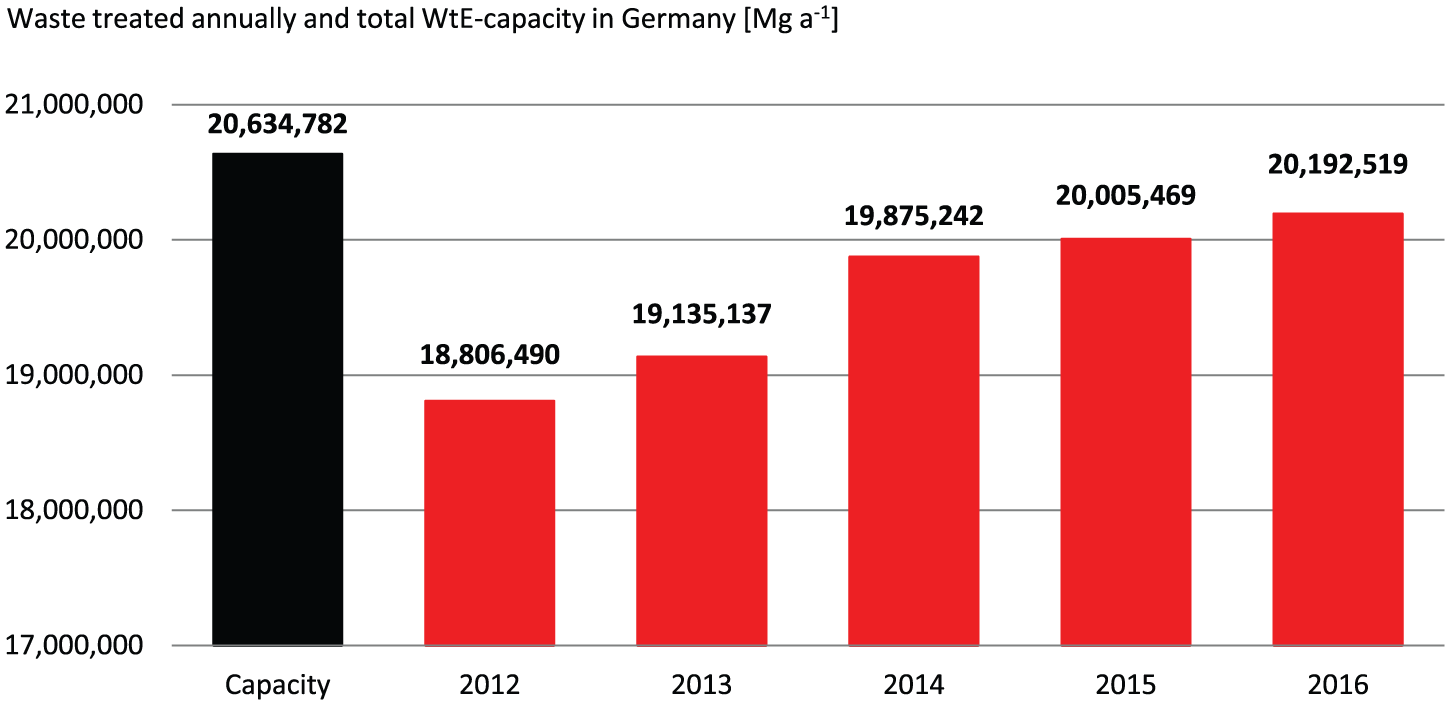
Annual amount of waste incinerated in German municipal solid waste incineration plants between 2012 and 2016 and the total available incineration capacity (extrapolation based on operator survey with a response rate of 92%).
The total amount of energy that enters MSWI plants as waste input is shown in Figure 2. Energy produced in and exported from these facilities is also shown in Figure 2. With 205 PJ a−1, the energy supplied to waste incineration plants corresponds to about 1.5% of the annual primary energy consumption in Germany (Umweltbundesamt, 2017b). About 110 PJ a−1 of this is converted into electricity, heat and steam, corresponding to a gross efficiency of more than 50%. After deduction of own consumption, most of which is spent on emission reduction, around 90 PJ a−1 are supplied to consumers and contribute about 1% to the final energy consumption in Germany. Figure 3 shows the total utilization rates (gross and net). The calculation was based on the total values aggregated from all plants, taking into account the auxiliary energies used.
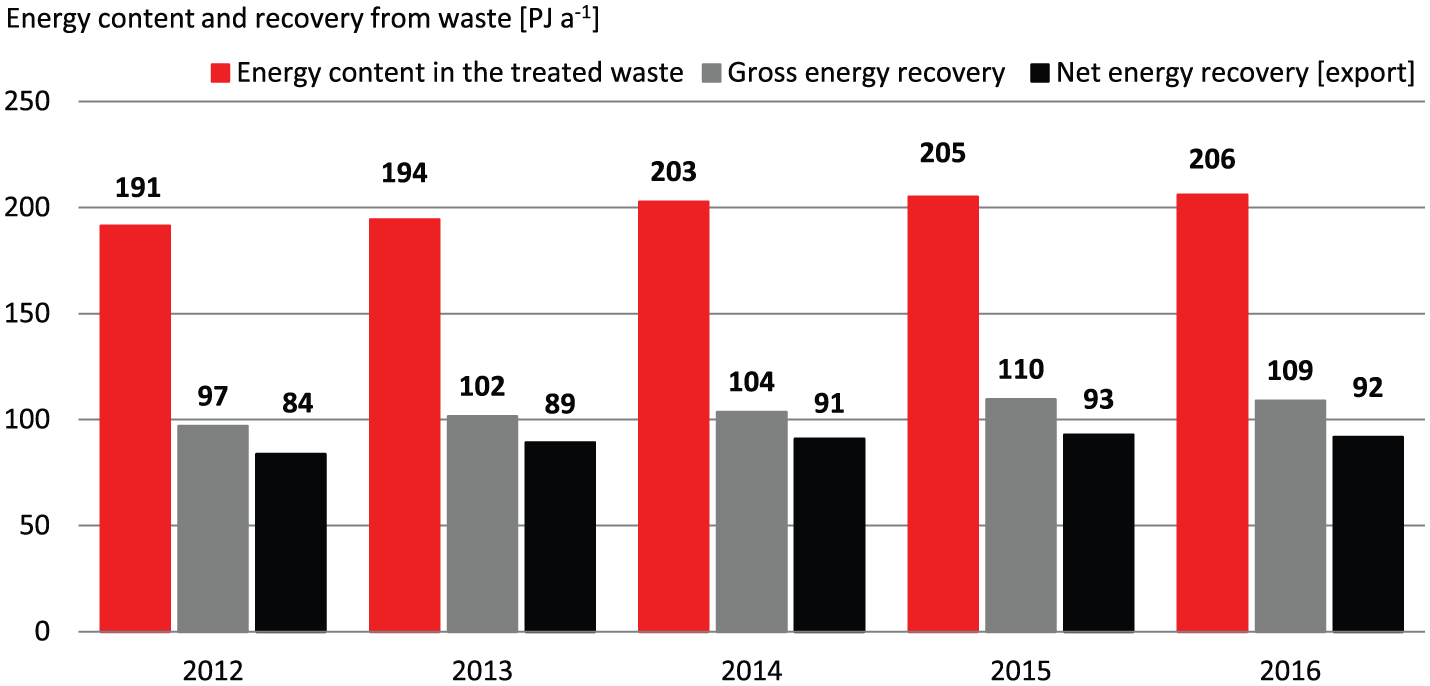
Energy input and generation (sum of electricity, heat and steam) in German waste incineration plants between 2012 and 2016 (extrapolation based on operator survey with a response rate of 92%).
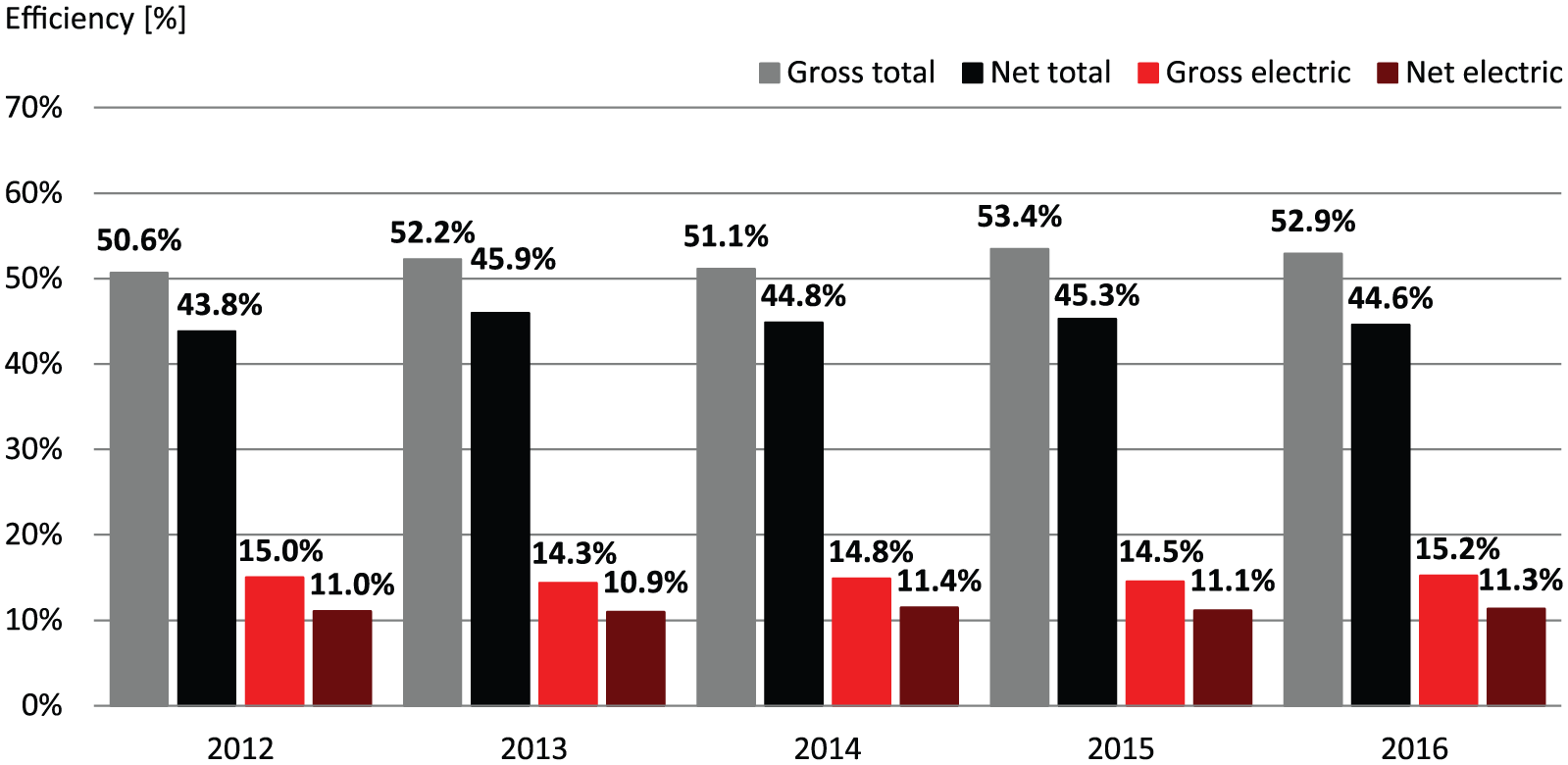
Electrical and overall efficiency of German waste incineration plants between 2012 and 2016 (extrapolation based on operator survey with a response rate of 92%).
RDF power plants
As for MSWI plants, data on RDF power plants were collected by contacting plant operators. As the number of plants organized in an association is smaller than for MSWI plants, the response rate was significantly lower. Nevertheless, 39.4% of the German capacity of RDF power plants could be covered by the survey. Table 2 gives an overview of all German RDF plants.
Refuse derived fuel (RDF) power plants in Germany (Flamme et al., 2018) (shown are the total incineration capacities. In addition to RDF, some plants also use other fuels, such as paper sludge).
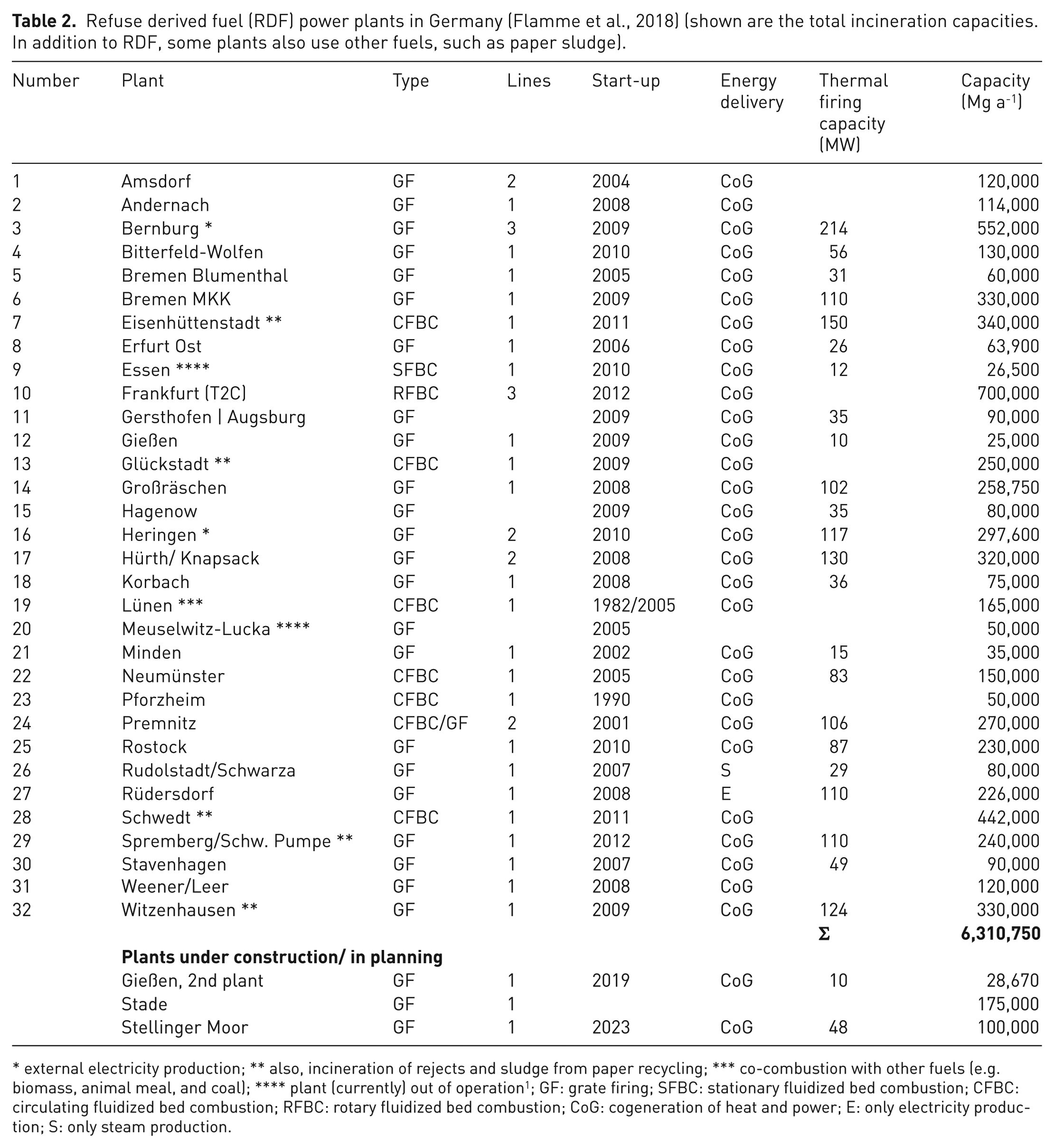
external electricity production; ** also, incineration of rejects and sludge from paper recycling; *** co-combustion with other fuels (e.g. biomass, animal meal, and coal); **** plant (currently) out of operation 1 ; GF: grate firing; SFBC: stationary fluidized bed combustion; CFBC: circulating fluidized bed combustion; RFBC: rotary fluidized bed combustion; CoG: cogeneration of heat and power; E: only electricity production; S: only steam production.
The total capacity of German RDF power plants is 6,310,750 Mg a−1. This number includes plants at paper mills that are used for incinerating residues from the pulp and paper industry. Consequently, not the entire capacity is available for the incineration of RDF. The current market situation has led to plans to expand the RDF power plant park to a moderate extent. For example, efforts are being made to complete a plant in Stade, which has been under construction for years. Concrete plans for a waste utilization center with an RDF power plant at the site of the former Stellinger Moor waste incineration plant in Hamburg exist. In addition, a second plant is under construction in Giessen (TREA II), which was planned to go into operation at the end of 2017. This was later moved to the end of 2018 2 .
As shown in Figure 4, the capacities of German RDF power plants are well used. The amount of waste incinerated given in Figure 4 also includes imported waste, about 200,000 Mg a−1 in 2016. The last years have been characterized by a moderate increase in throughput. As for MSWI plants, there are several RDF power-plants that operate continuously above their design capacity. Nevertheless, there is currently a capacity reserve of about half a million Mg a−1.
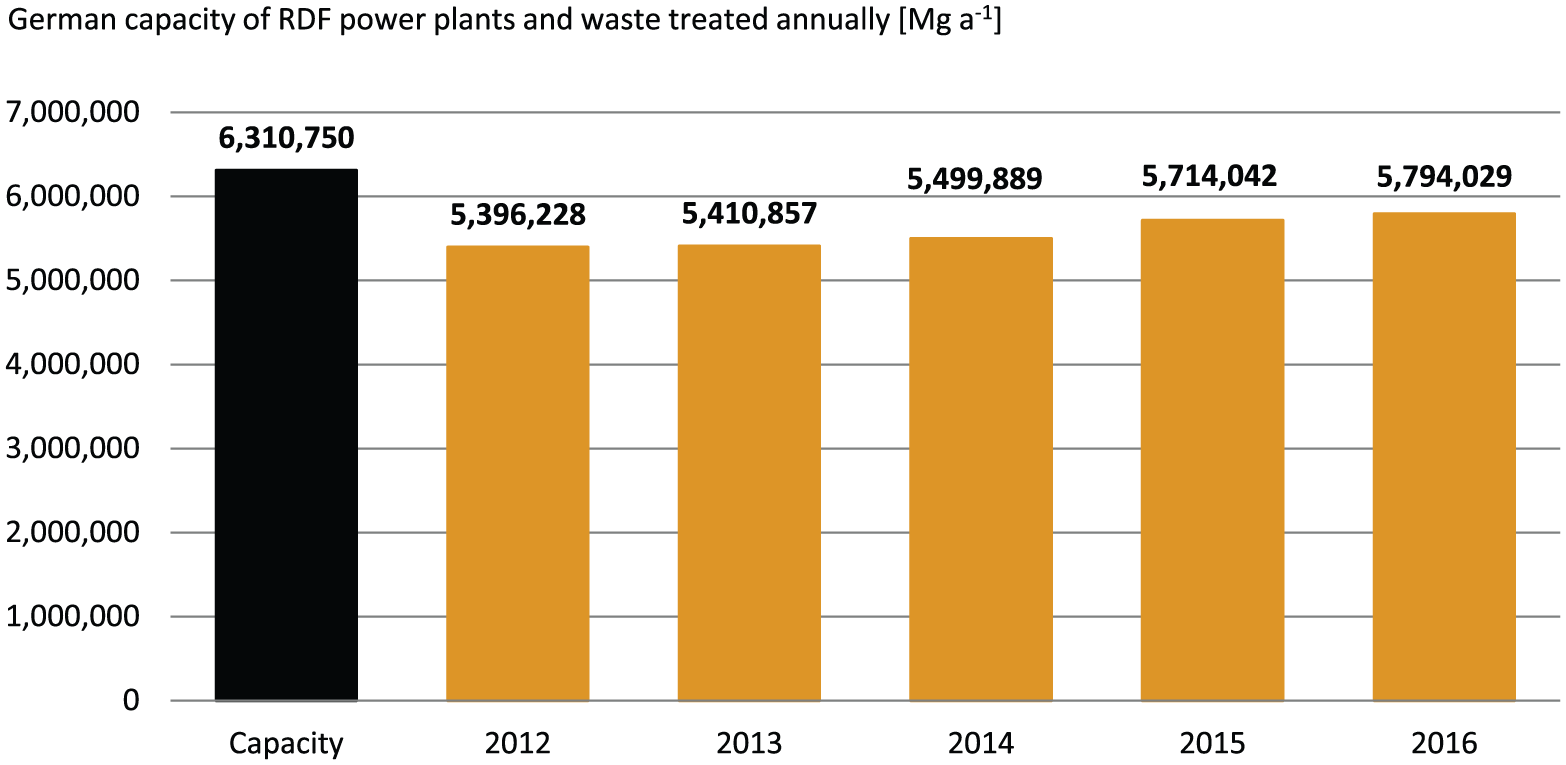
Annual amount of waste incinerated in German refuse derived fuel power plants between 2012 and 2016 and the total available incineration capacity (extrapolation based on operator survey with a response rate of 39%).
Figure 5 shows the (aggregated) values of the energy used and utilized (sum of electricity, heat and steam) from the combusted waste. With around 45 PJ a−1, the amount of energy exported is about half as much as the corresponding value for MSWI plants.
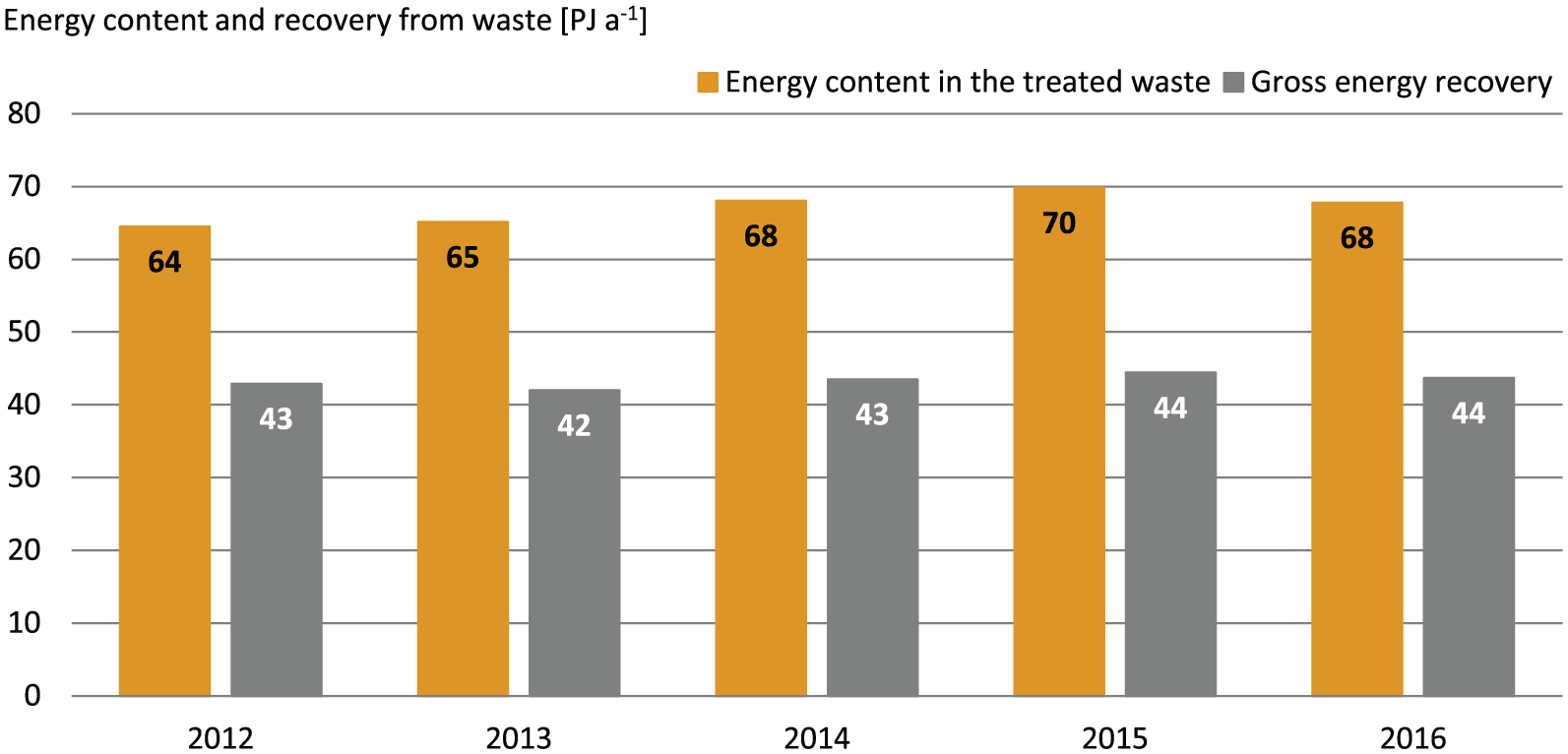
Energy input and generation (sum of electricity, heat and steam) in German refuse derived fuel power plants between 2012 and 2016 (extrapolation based on operator survey with a response rate of 39%).
Figure 6 shows the average and maximum electrical and total efficiencies for the years 2012 to 2016. The overall better performance of RDF plants compared to MSWI plants is mainly due to the optimized location, but also due to the chosen steam parameters (pressure and temperature), favorable for electricity generation. A more detailed analysis was not conducted due to the low response rate of the survey, which does not guarantee good representability.
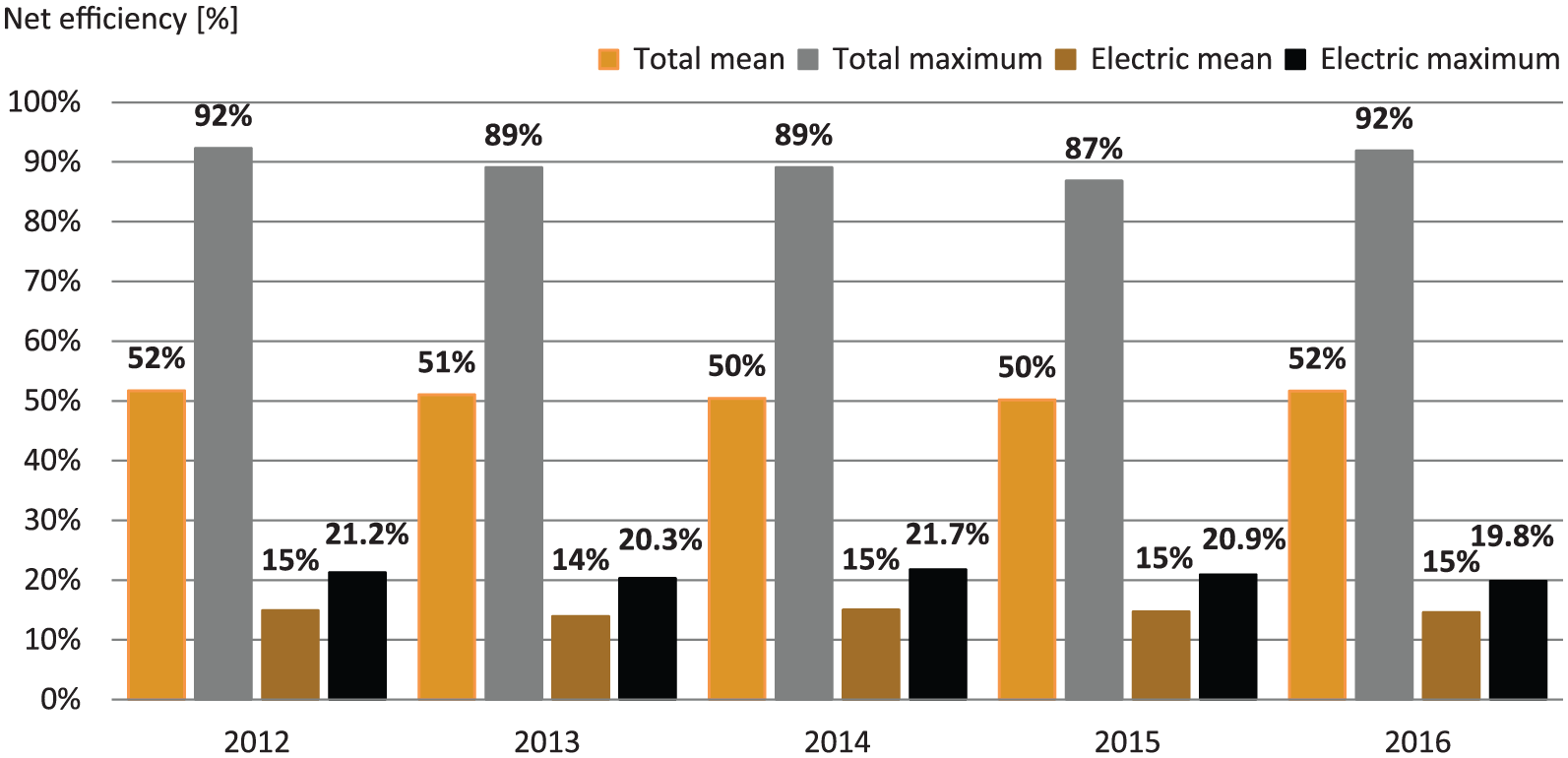
Electrical and overall net efficiencies of German refuse derived fuel power plants between 2012 and 2016 (extrapolation based on operator survey with a response rate of 39%).
Hazardous waste incineration plants
There are 31 facilities for the incineration of hazardous waste in Germany. Most of these plants use rotary kilns, in which solid, liquid, and to some extent gaseous wastes undergo thermal treatment. Liquid and gaseous material may also be combusted in combustion chambers. Table 3 lists all hazardous waste incineration plants with their capacities. The data required for the determination of energy generated by the incineration of hazardous waste were also collected via an operator survey supported by BDSAV e.V. and VCI e.V. (two associations for hazardous waste combustion and chemical industry, respectively (BDSAV, 2019; VCI, 2019)). The response rate was 56.1% of the installed capacity. An extrapolation to the entire plant capacity was done based on these data.
Hazardous waste incineration plants in Germany (Flamme et al., 2018).
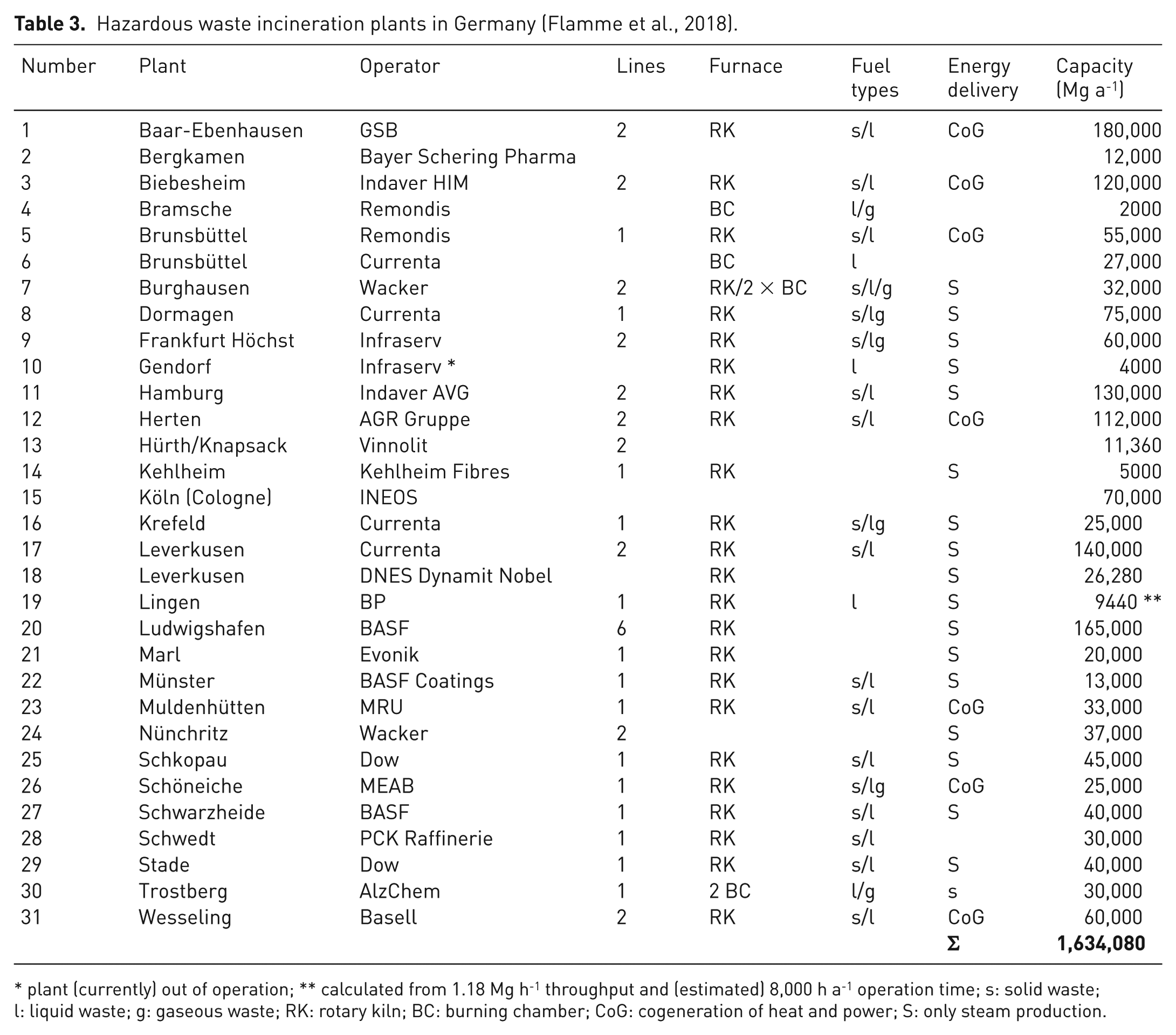
plant (currently) out of operation; ** calculated from 1.18 Mg h−1 throughput and (estimated) 8,000 h a−1 operation time; s: solid waste; l: liquid waste; g: gaseous waste; RK: rotary kiln; BC: burning chamber; CoG: cogeneration of heat and power; S: only steam production.
The total capacity for the incineration of hazardous waste in Germany is 1,634,080 Mg a−1. About 80% of this capacity are currently used (cf. Figure 7). The total amount of incinerated waste in these plants was roughly 1.3 mio. Mg a−1 for the last years. Most of the facilities are situated at integrated locations (waste treatment centers of chemical parks) and the recovered energy is provided as steam, which can be used directly at the location (cf. column “Energy delivery” in Table 3). As a result, comparably high overall efficiencies of about 60% on average can be reached (cf. Figure 8 and Figure 9), with single values ranging between 40% and more than 90%. No electrical efficiencies are given as most facilities do not produce electricity. In 2016, the total amount of 22 PJ contained in 1.3 mio. Mg of hazardous waste was converted into 15 PJ final energy, mostly steam.
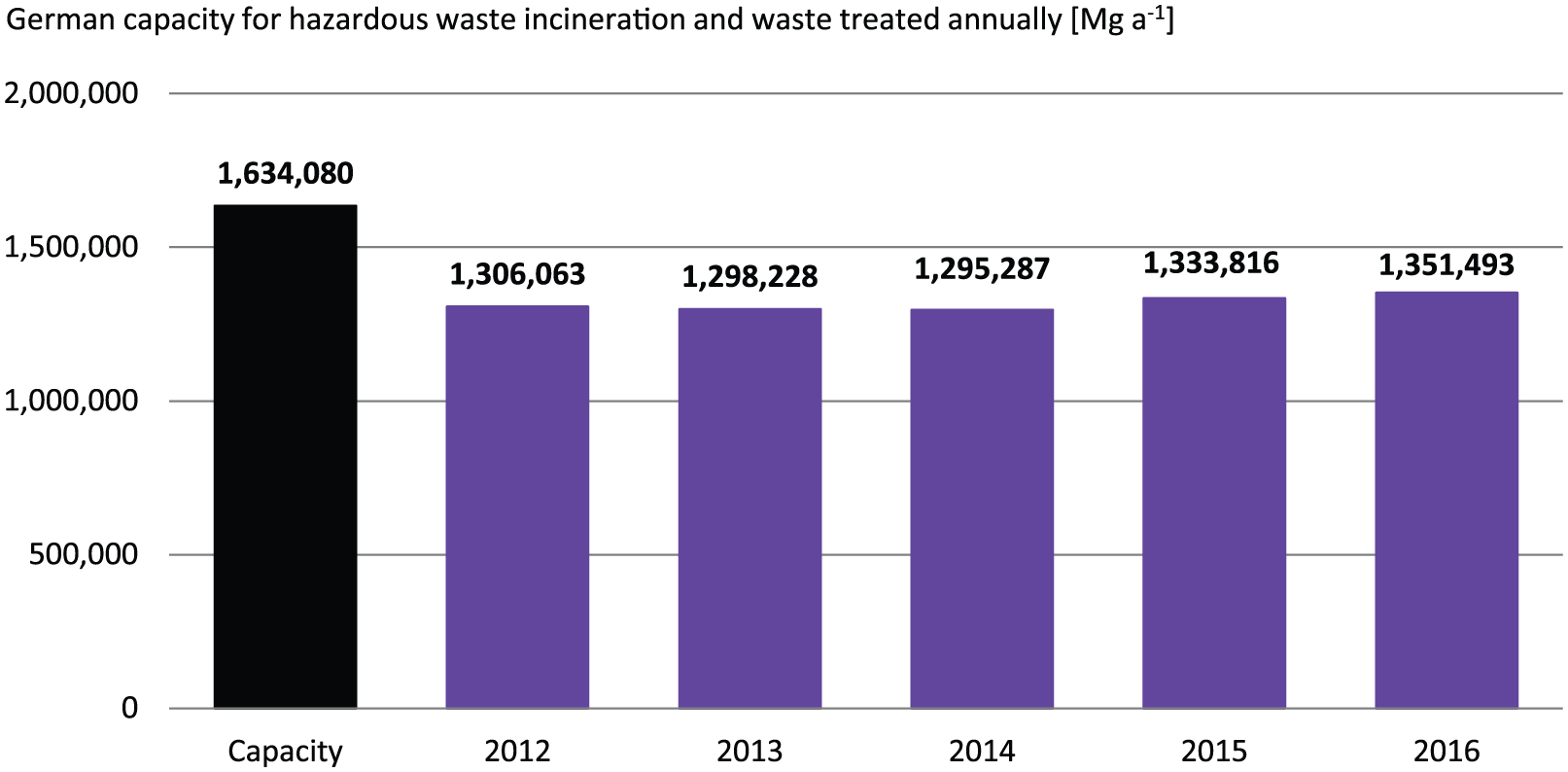
Annual amount of waste incinerated in German hazardous waste incineration plants between 2012 and 2016 and the total available incineration capacity (extrapolation based on operator survey with a response rate of 57%).
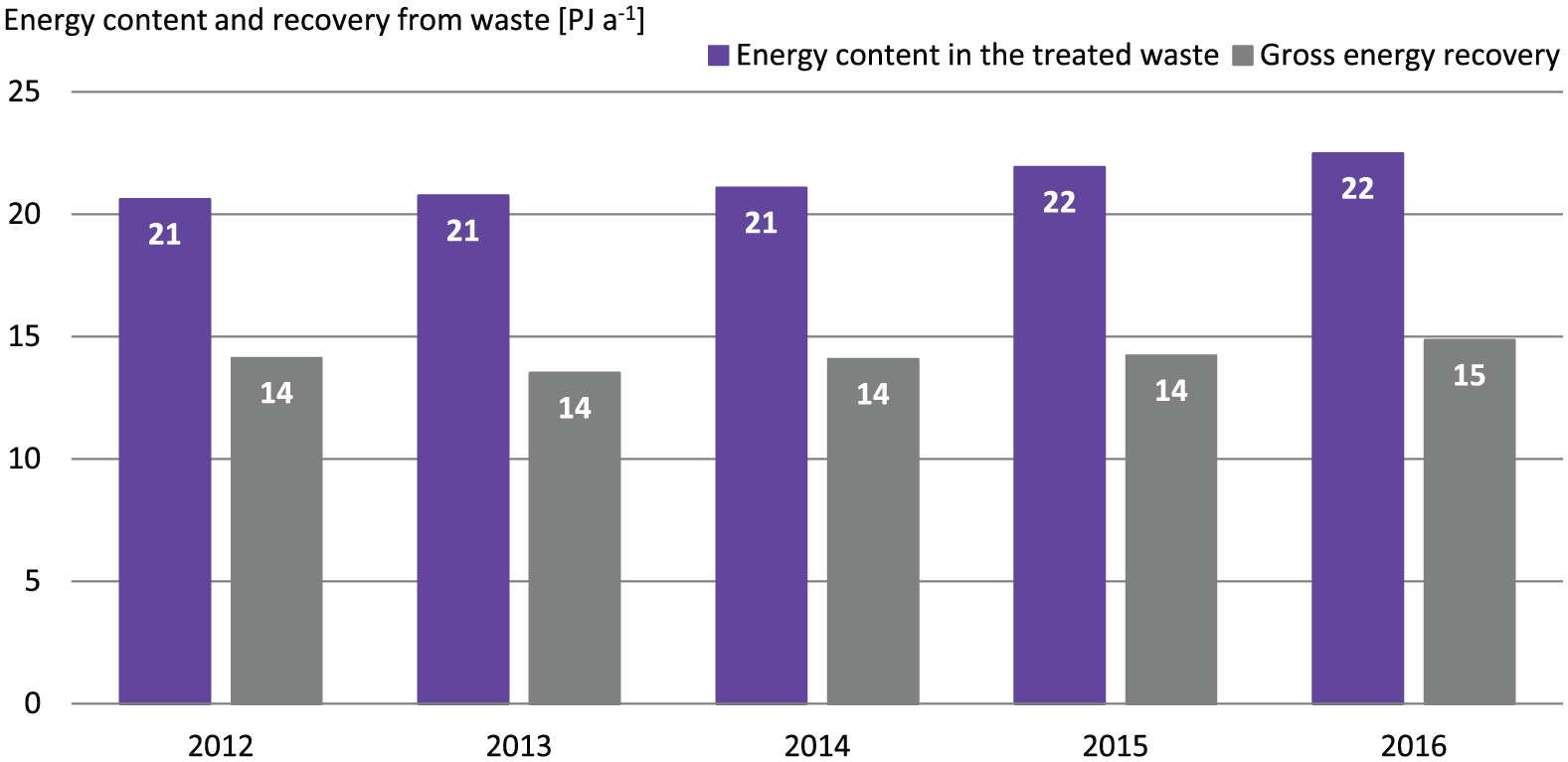
Energy input and gross generation (sum of electricity, heat and steam) in German hazardous waste incineration plants between 2012 and 2016 (extrapolation based on operator survey with a response rate of 57%).
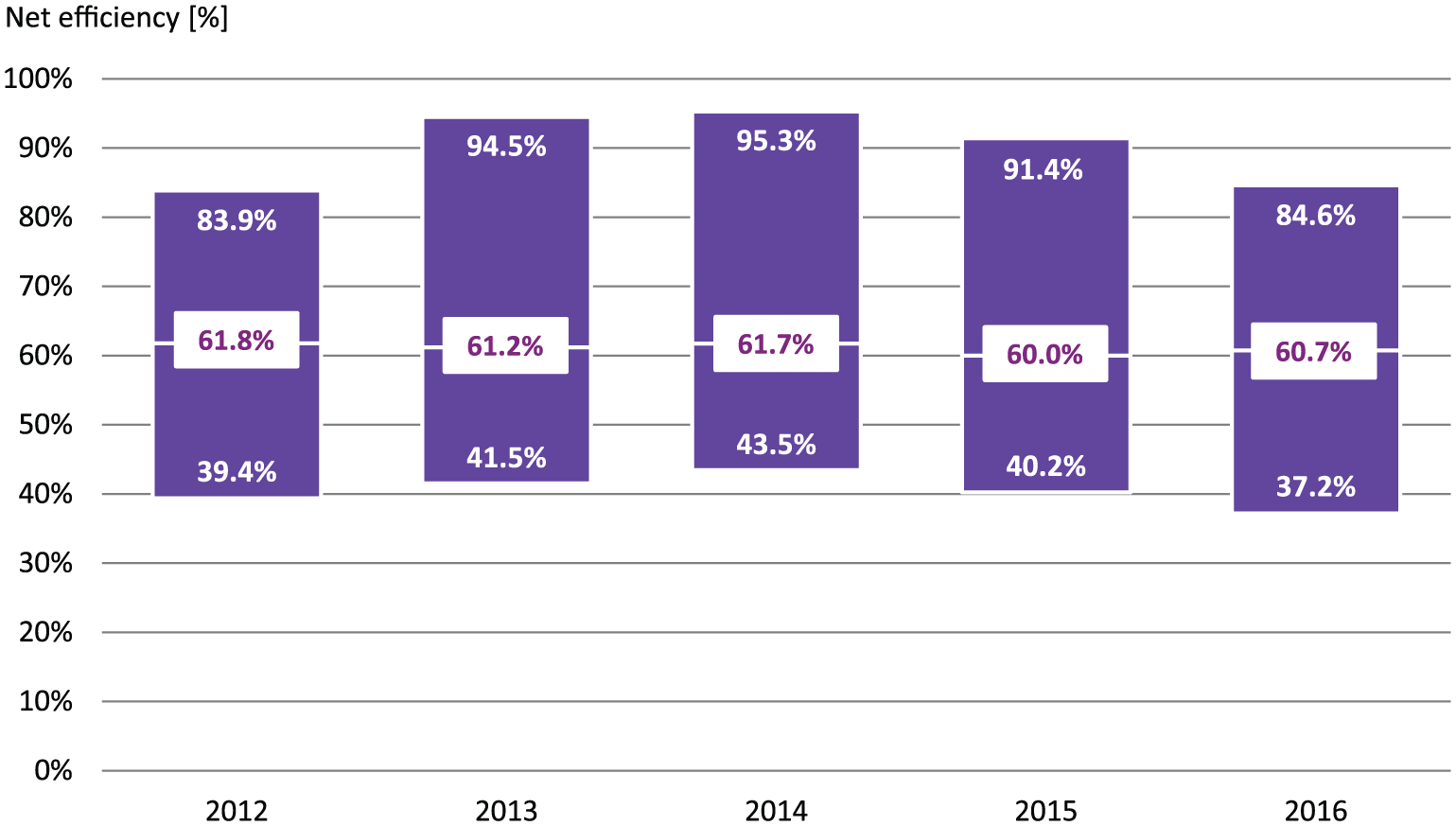
Net efficiencies of German hazardous waste incineration plants between 2012 and 2016 (extrapolation based on operator survey with a response rate of 57%). The maximum, minimum and mean values of all plants are shown.
Waste wood incineration plants and biomass power plants
Biomass (CHP) plants include plants that use waste wood as well as plants in which natural wood (or another natural biomass) is used. This distinction is not always straightforward and therefore also not clearly made in statistical evaluations. The first step was therefore the determination of plants that incinerate waste wood.
A study by Deutsches Biomasseforschungszentrum on biomass (heating and) power plants in Germany showed that the number of plants with an electrical output of more than 5 MWel is small (Deutsches Biomasseforschungszentrum, 2015). It can be assumed that these plants mainly combust waste wood because the emission reduction requirements according to the 17th BImSchV (emission reduction for waste derived fuel combustion) require a certain minimum plant size for an economic operation. Therefore, only plants with an electrical output of more than 5 MW or a thermal capacity of more than 20 MW were considered for this study. From the corresponding lists, plants that burn natural wood were eliminated. The remaining facilities, which can be assumed to burn waste wood, are listed in Table 4. Installations in the wood-based products and paper industries that are not eligible for the Renewable Energy Sources Act (EEG) (BMWi, 2017) are not taken into account, nor are industrial plants that recycle production residues.
Incineration plants for waste wood with a thermal power > 20 MW in Germany (Flamme et al., 2018).
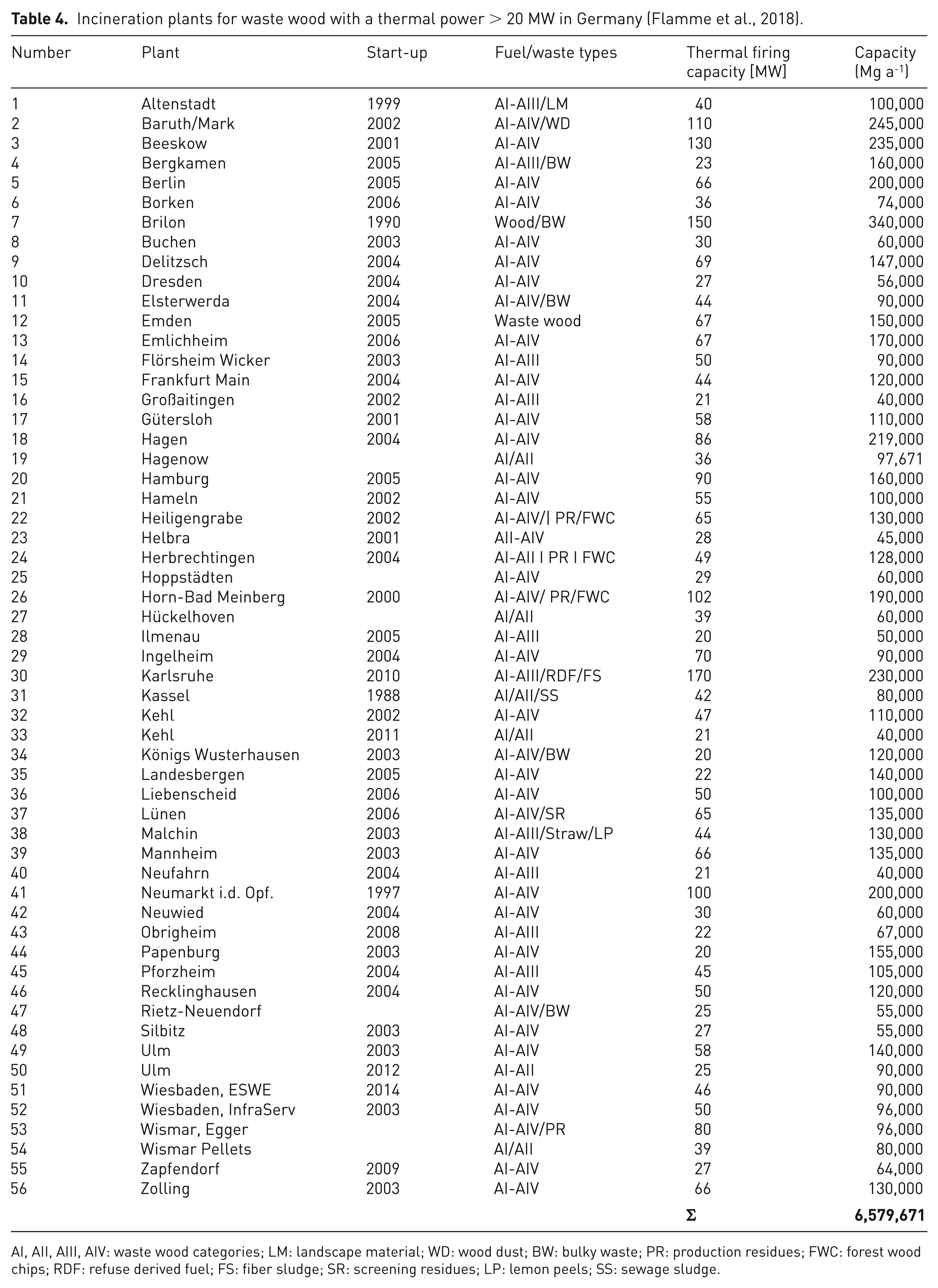
AI, AII, AIII, AIV: waste wood categories; LM: landscape material; WD: wood dust; BW: bulky waste; PR: production residues; FWC: forest wood chips; RDF: refuse derived fuel; FS: fiber sludge; SR: screening residues; LP: lemon peels; SS: sewage sludge.
Finally, a total of 56 waste wood incineration facilities with an annual capacity of 6,579,671 Mg and a thermal capacity of 2979 MW are identified based on this selection process. Assuming an average electrical efficiency of 26.3%, this thermal capacity corresponds to 783 MWel. This is in good agreement with the total capacity of waste wood plants named by Bundesverband der Altholzaufbereiter und -verwerter, that is 821 MWel. This agreement confirms the selection of the plants listed in Table 4 (Bundesverband der Altholzaufbereiter und -verwerter, 2016; Uffmann, 2016).
The total amount of energy utilized in these facilities was calculated by the thermal capacity and the annual operation of 8000 hours. This yields 85.8 PJ a−1, which is used in the subsequent calculations.
The provision of electricity from these facilities was estimated using the installed electrical output (783 MWel) and the annual operation of 8000 hours. For larger biomass plants, the amount of heat provided is also known (Umweltbundesamt, 2017a). The resulting ratio of electricity to heat was used for all plants, thereby estimating the total amount of heat provided. The results are shown in Figure 10 (left). It should be noted that more electricity than heat is generated. This is likely the result of older versions of the Renewable Energy Act (EEG), which led to the construction of numerous biomass incineration plants for electricity generation in the beginning of the 21st century.
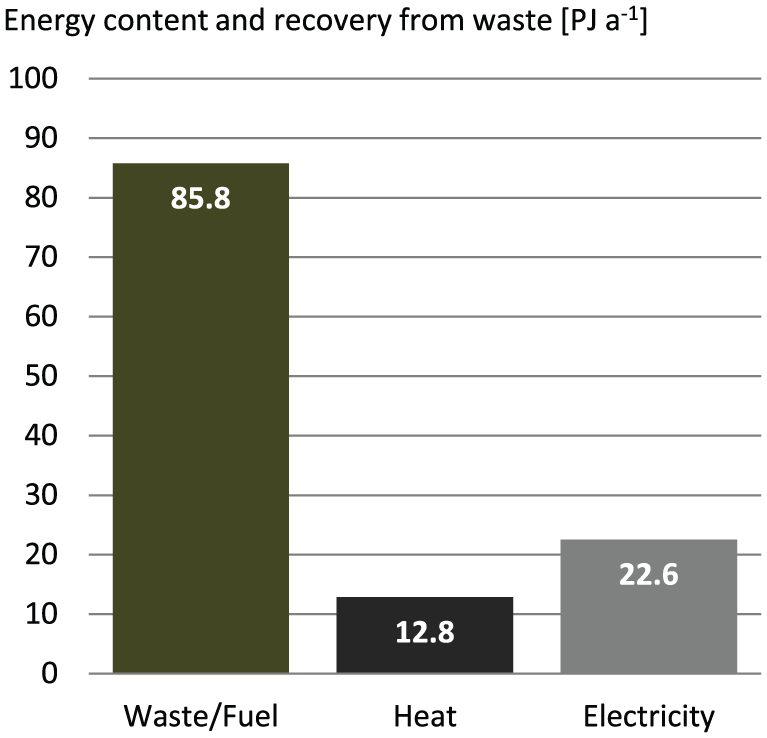
Annual energy input in German waste wood incineration plants and generated electricity and heat in PJ a−1 (Flamme et al., 2018).
Sewage sludge incineration plants
In addition to co-firing in cement works and coal-fired power plants (see below), sewage sludge is combusted in 20 mono-incineration plants in Germany. These mainly treat sludge that arises in municipalities. In addition, there are seven combustion facilities for industrial sludge, located at larger chemical companies or chemical parks. Table 5 lists all facilities including their most important characteristics. In addition to the plants that are already in operation, there are several facilities planned for construction or already under construction.
Facilities for mono-incineration of sewage sludge (Wiechmann et al., 2012).
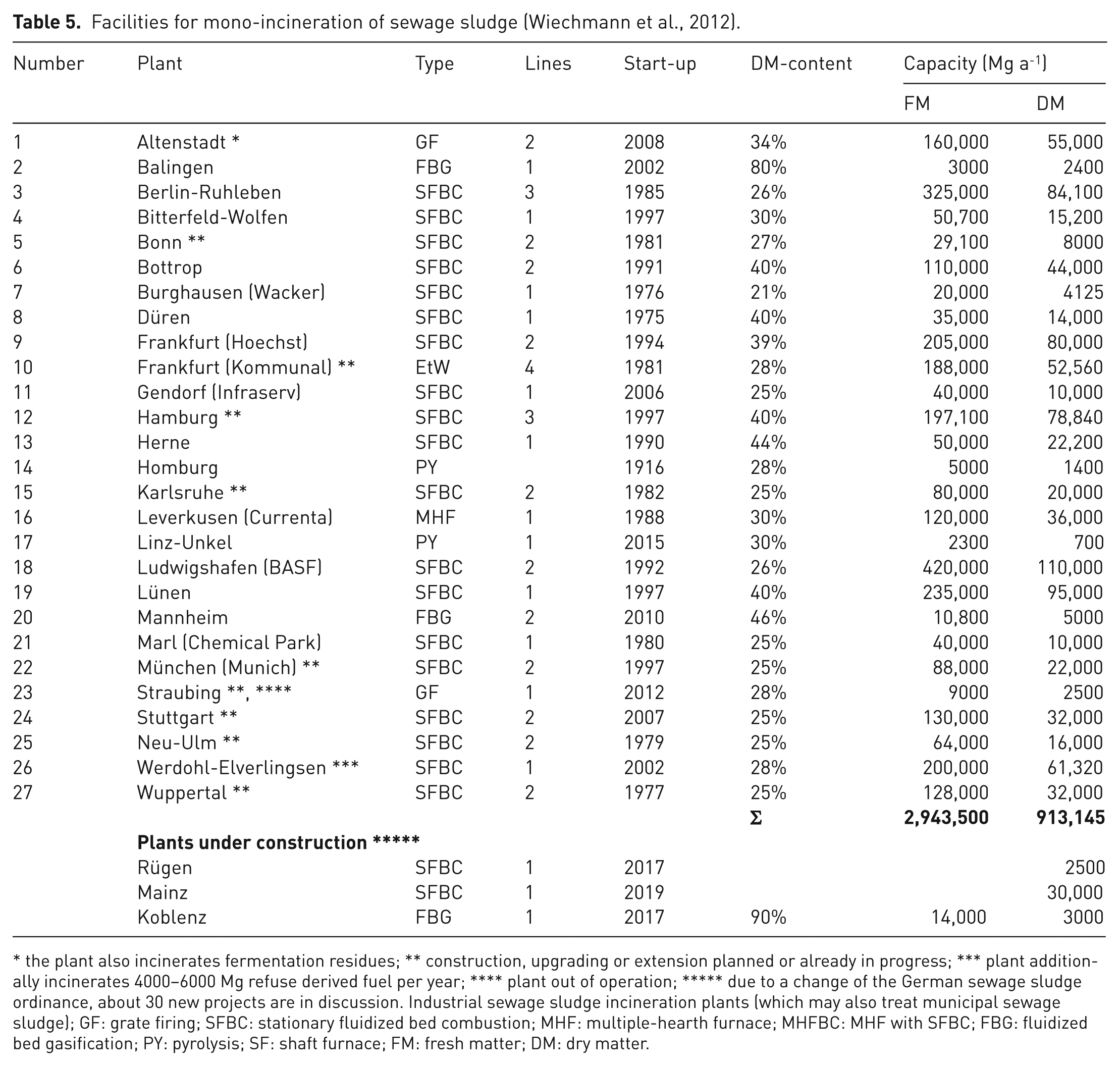
the plant also incinerates fermentation residues; ** construction, upgrading or extension planned or already in progress; *** plant additionally incinerates 4000–6000 Mg refuse derived fuel per year; **** plant out of operation; ***** due to a change of the German sewage sludge ordinance, about 30 new projects are in discussion. Industrial sewage sludge incineration plants (which may also treat municipal sewage sludge); GF: grate firing; SFBC: stationary fluidized bed combustion; MHF: multiple-hearth furnace; MHFBC: MHF with SFBC; FBG: fluidized bed gasification; PY: pyrolysis; SF: shaft furnace; FM: fresh matter; DM: dry matter.
A comparison of the available capacity of 913,145 Mg a−1 with the total amount of incinerated hazardous waste reported by the Federal Statistical Office (432,500 Mg in 2015) suggests a large capacity reserve. However, in addition to about 446,900 Mg a−1 that are co-incinerated in other facilities, the Statistical Office also lists 269,300 Mg that are not allocated to any sort of treatment (Statistisches Bundesamt, 2016, 2017). It may be assumed that at least part of this is also incinerated, so that the total amount of sewage sludge treated at mono-incineration plants is presumably much higher than the reported 432,500 Mg a−1. Due to the poor data situation, more precise information cannot be given.
The average dry matter content of the sludges treated in the facilities listed in Table 5 is 33%. These sludges can only be incinerated after a preceding drying step or by using highly preheated combustion air. Both cases require a significant amount of energy input. From a balancing point of view, exporting a noteworthy amount of thermal or electrical energy from such a facility seems unlikely. In practice, operators aim for an energetically self-sufficient process. In addition to drying, a (small) turbine is sometimes operated for this purpose. Some plants are integrated into an operational supply network, but also in these cases a noteworthy amount of exported energy cannot be realized. This could be influenced if the sludge were pre-dried using otherwise unused low-temperature heat or solar heat. These options strongly depend on the location and a general evaluation is therefore not possible.
In summary, there is no significant energy export from sewage sludge incineration plants. Accordingly, this study does not consider any contribution of sewage sludge to the total energy supply from waste.
Cement works (waste co-firing)
All 34 cement works with clinker production and two lime plants are licensed to use waste-derived fuels. These plants are listed in Table 6. A capacity for the co-incineration of waste in cement works is not specified, because of the interaction between the properties of the raw materials and the clinker. In theory, the use of 100% waste is possible, if the mineral matter content of the fuel meets the requirements of the clinker production. In addition, data on the individual plants are difficult to obtain. For this study, aggregated numbers from Verein Deutscher Zementwerke e.V. (waste types, quantities, and calorific value) are used, as the secondary fuel consumption in German cement works is regularly collected and published (Verein Deutscher Zementwerke e.V., 2012a, 2012b, 2014, 2015, 2016).
German cement and lime works, with permission for energetic utilization of waste fractions (Verein Deutscher Zementwerke (ed.), 2016).
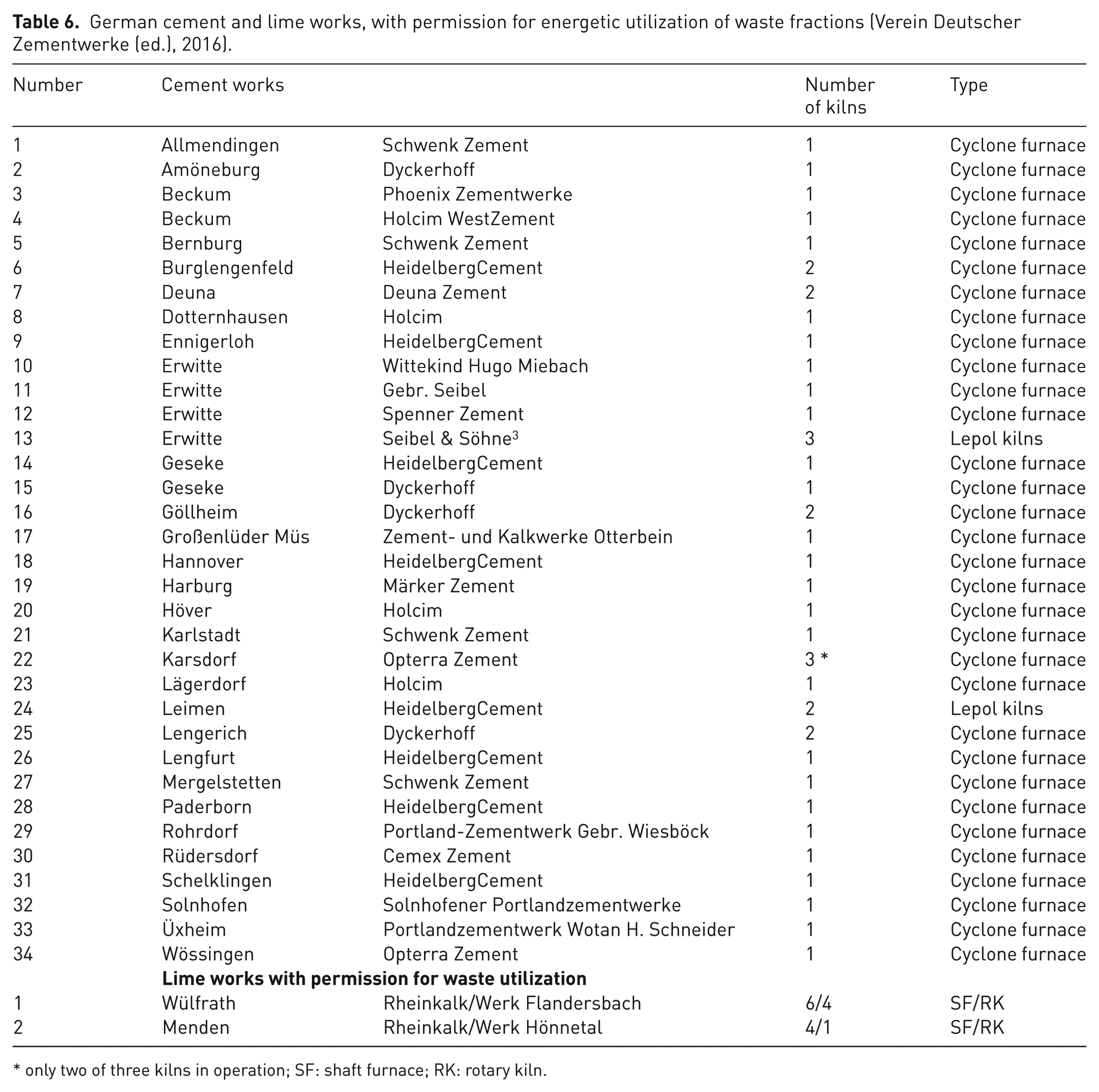
only two of three kilns in operation; SF: shaft furnace; RK: rotary kiln.
Figure 11 shows the use of waste in German cement works between 2011 and 2015. The total amount of waste used was 3.2 mio. Mg in 2015, corresponding to an energy input of just below 60 PJ a−1. Both lime plants combined have an approved capacity of 391,676 Mg a−1 of secondary fuel. No other waste-derived fuels (such as liquid fuels) were taken into account as no information was available.
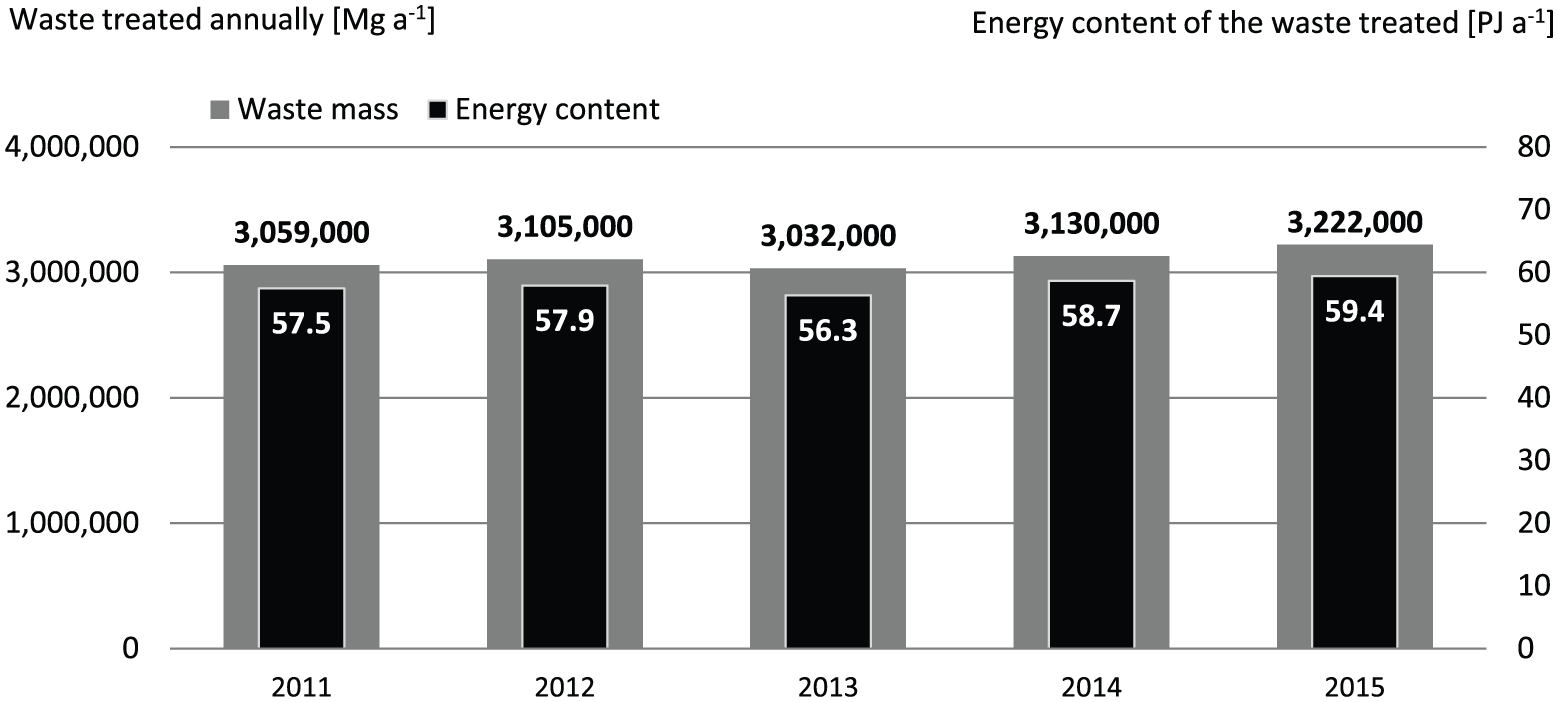
Waste input (mass and energy) in German cement works between 2011 and 2015 (Flamme et al., 2018).
The range of fuels used in German cement works is diverse. In addition to animal meal, sewage sludge or used tires, processed fractions from industrial, commercial and municipal waste, which also include the fractions referred to as “plastics” in Figure 12, are mainly used (Oerter, 2017). Figure 12 shows specifications of the waste types used, including their quantities and the resulting energy input. The fuels used release their energy directly, immediately and completely in the clinker burning process. This leads to a high energy efficiency, which was set to 70% (Vodegel et al., 2018). In addition, the combustion residues are fully integrated into the product.
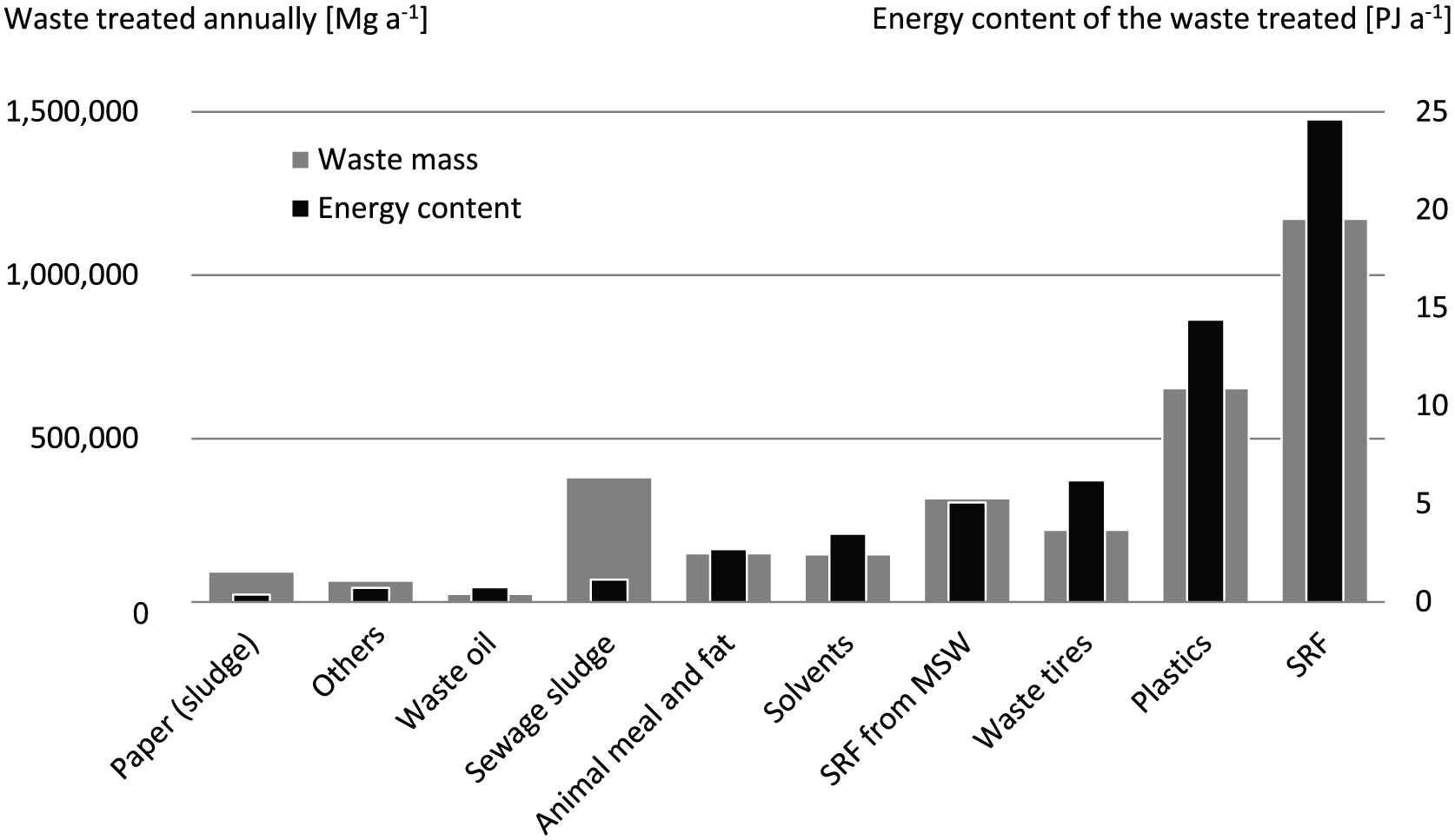
Overview of waste types (mass and energy) used in German cement works (Flamme et al., 2018).
Coal-fired power plants (waste co-firing)
In 2015, 22 power stations in Germany were licensed to co-incinerate waste, of which 11 each are fired with lignite or hard coal as their basic fuel. Table 7 lists these plants, including their permitted and currently co-combusted amounts of waste fuel.
German coal-fired power plants licensed to co-combust waste (Flamme et al., 2018).
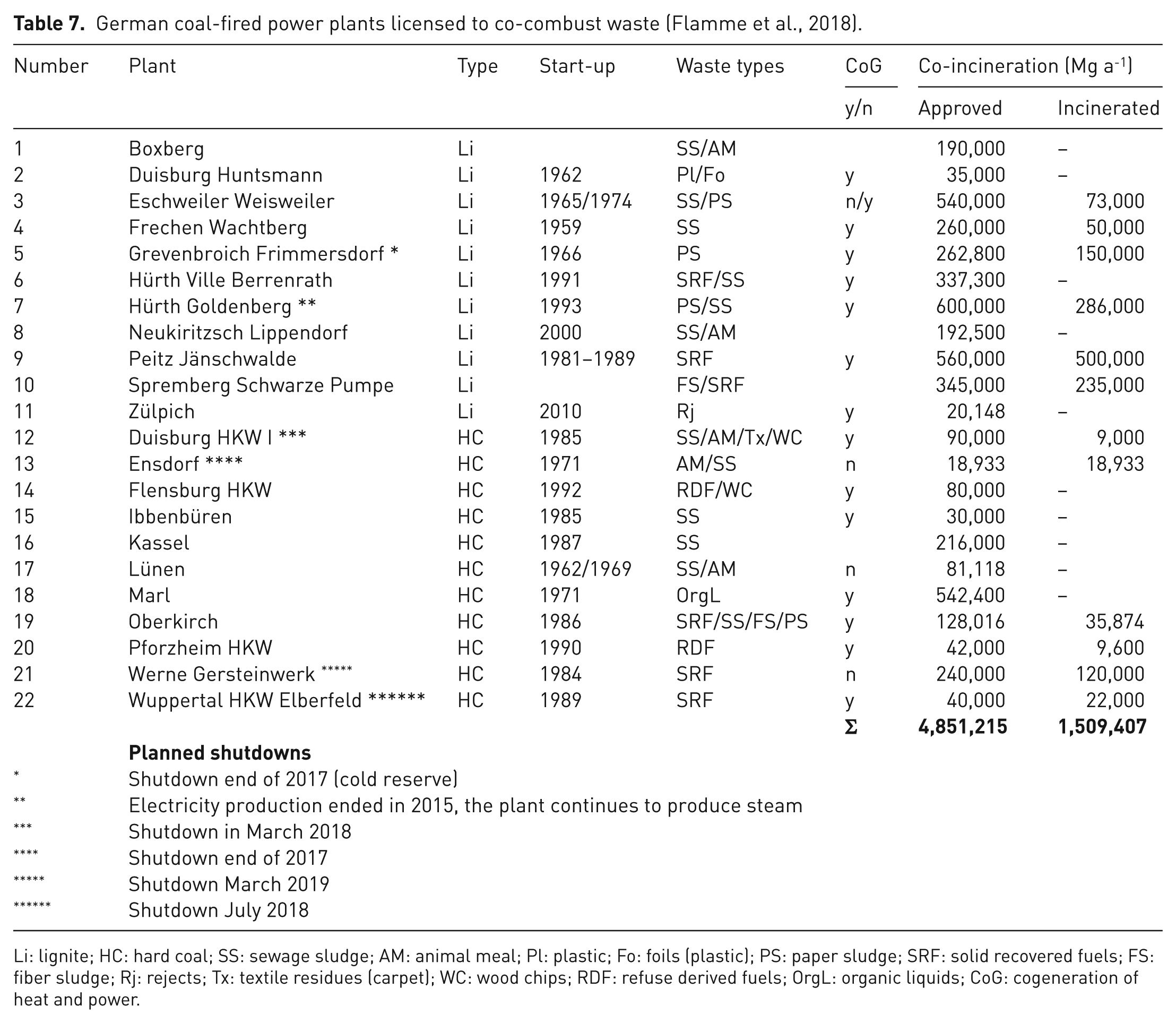
Li: lignite; HC: hard coal; SS: sewage sludge; AM: animal meal; Pl: plastic; Fo: foils (plastic); PS: paper sludge; SRF: solid recovered fuels; FS: fiber sludge; Rj: rejects; Tx: textile residues (carpet); WC: wood chips; RDF: refuse derived fuels; OrgL: organic liquids; CoG: cogeneration of heat and power.
It should be noted that the approved annual capacity of 4.8 mio. Mg a−1 is only used to about one third, with about 1.5 mio. Mg a−1. Of this amount, about 1.3 mio. Mg a−1 are used in lignite-fired power plants and only 200,000 Mg a−1 in hard coal-fired facilities. Overall, almost half of the plants with a co-incineration permit forego the use of waste. Despite the relatively large selection of permitted fuels, only a manageable number of these are used in practice. Secondary fuels from waste (i.e. solid recovered fuels (SRF) and RDF) are also the dominating waste fuels in co-firing applications. In addition, there are noteworthy amounts of paper sludge and sewage sludge (cf. Figure 13) that are utilized.
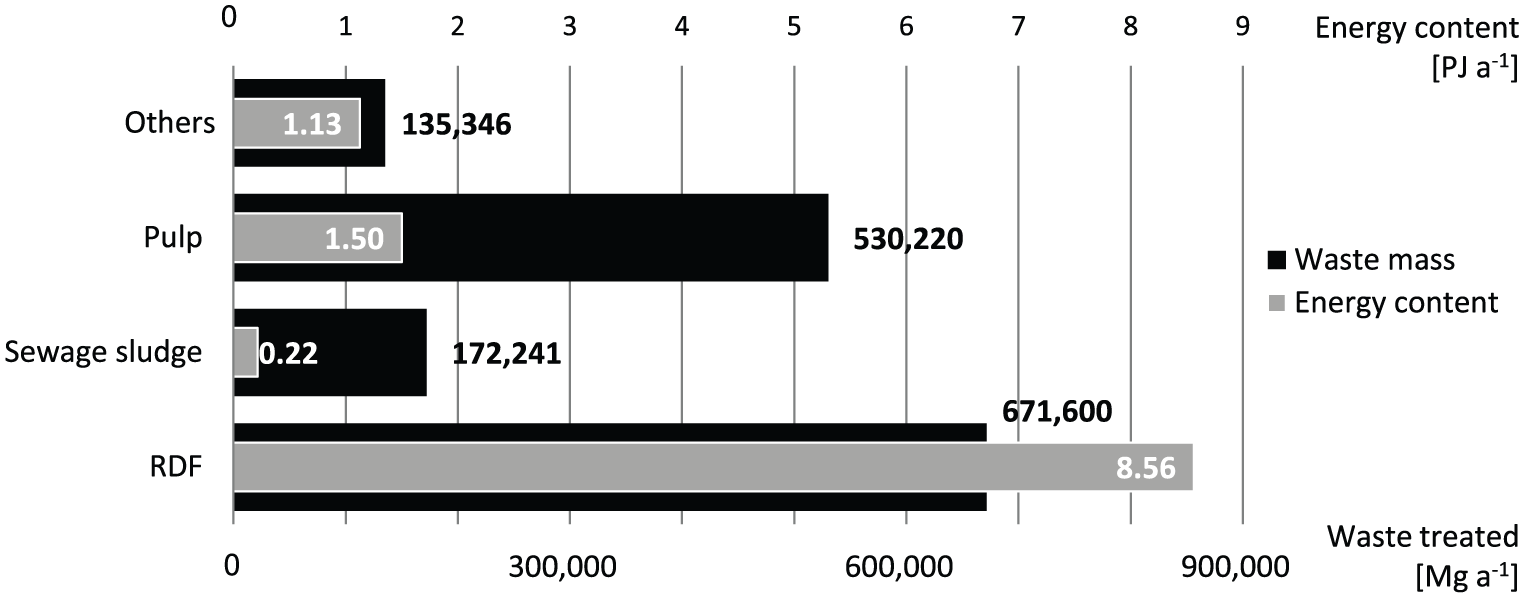
Waste types (mass and energy) combusted in German coal-fired power plants.
Based on these numbers, the annual amount of energy fed into German coal-fired power plants via waste fuel is calculated at 11.4 PJ. Depending on the type of power plant (hard coal/lignite), secondary fuels with properties (i.e. energy content) corresponding to the design fuel are used. Therefore, typical efficiencies for coal-fired power plants are also used for the determination of the energetic contribution of waste in these facilities.
As SRF is preferably used in older power plants, an electrical efficiency of 33% was assumed for the estimation of electricity generation, with a resulting electricity quantity of 3.8 PJ a−1. Compared to electricity, the use of heat from coal-fired power stations is rather low. The reasons for this are the location, size and operational mode of these plants that are optimized for the electricity supply. Therefore, the thermal efficiency was assumed to be 20%. The results are shown in Figure 14.
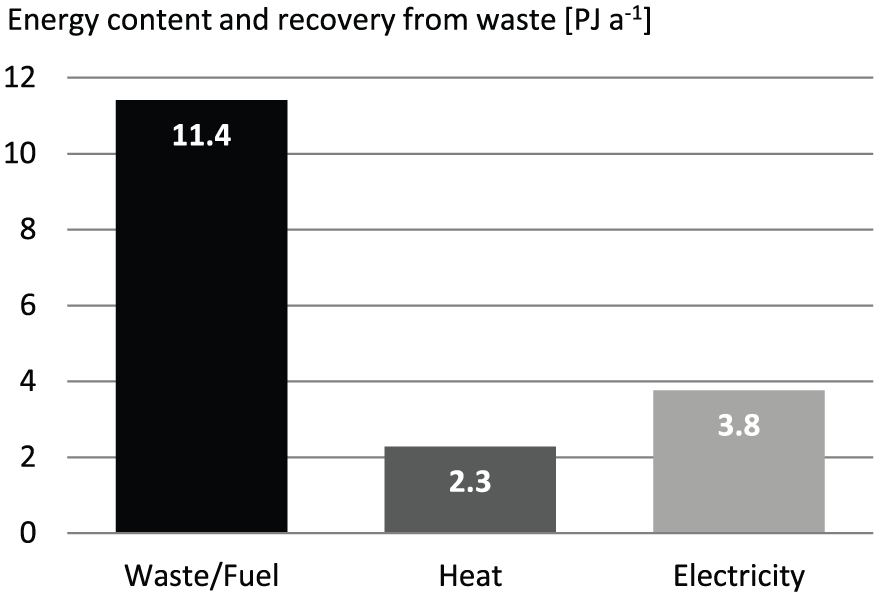
Annual energy input from waste into coal-fired power plants and heat and electricity produced (PJ a−1).
Industrial power plants
Within this study, industrial power plants (utility boilers) are facilities that primarily incinerate production residues and wastes and, at the same time, provide energy to the respective industries. There is generally little information available on these plants, because their operation is not the main focus of the industries and known activities in associations or publications are accordingly few. Plants that incinerate production residues but obtain the larger share of fuel from other sources (such as SRF/RDF or sewage sludge) are listed in the respective other sections. As one of the few reliable information, the thermal firing capacity of 80.6% of all industrial power plants could be identified, which was extrapolated to the total number of plants. An electrical efficiency of 25% and a thermal efficiency of 50% were assumed. This comparably large value stems from the fact that industrial power plants are designed for providing year-round heat to nearby industrial consumers. Table 8 lists all industrial power plants in Germany licensed to incinerate waste.
Industrial power plants licensed to incinerate waste (Flamme et al., 2018).
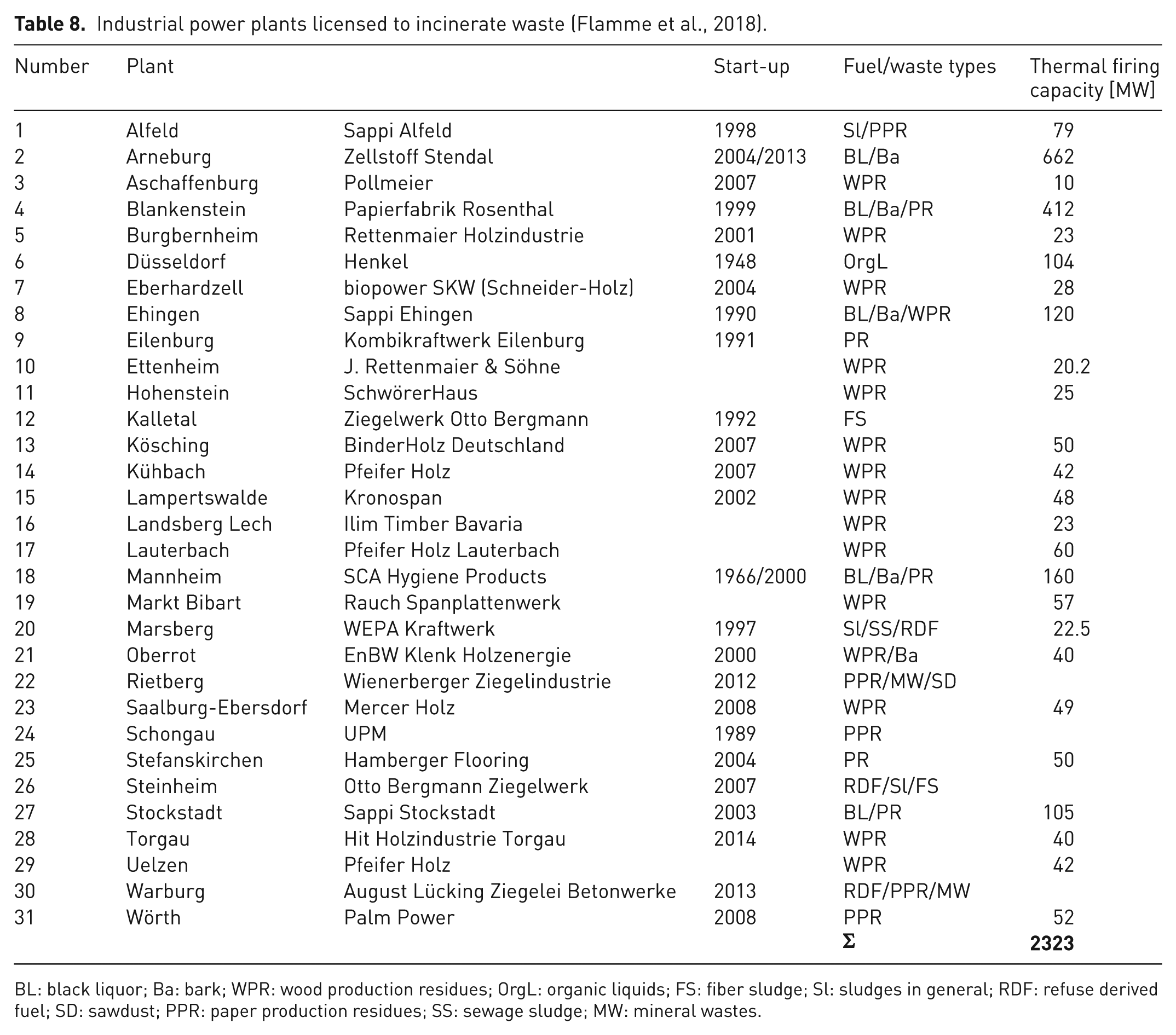
BL: black liquor; Ba: bark; WPR: wood production residues; OrgL: organic liquids; FS: fiber sludge; Sl: sludges in general; RDF: refuse derived fuel; SD: sawdust; PPR: paper production residues; SS: sewage sludge; MW: mineral wastes.
Based on these assumptions, a fuel energy of 82.9 PJ a−1 was estimated to enter industrial power plants. Using the above-mentioned efficiencies, this corresponds to 41.5 PJ a−1 heat and 20.7 PJ a−1 electricity (cf. Figure 15).
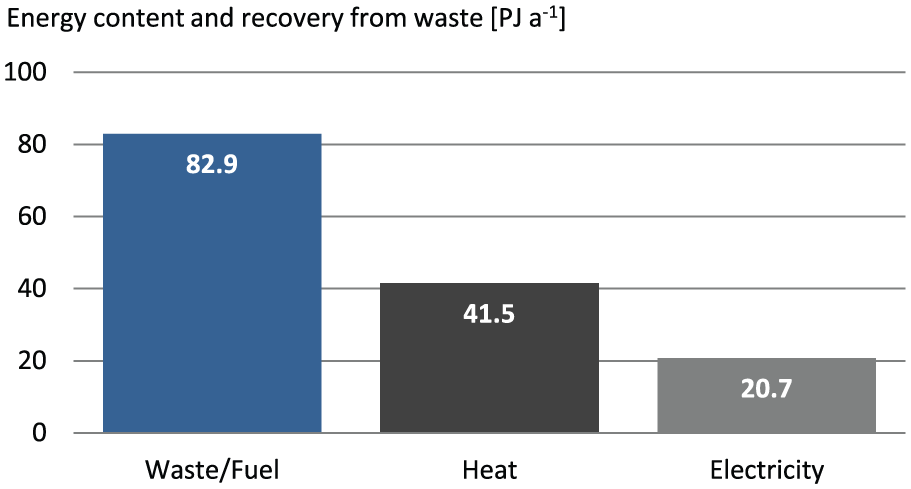
Annual energy input from waste into German industrial power plants and heat and electricity produced.
The fuel mass flow treated in these facilities was calculated from the fuel energy entering the plants and the heating value of the waste. In many facilities, production residues from the wood industry (e.g. bark, wood residues, black liquor, etc.) are incinerated. Therefore, a heating value between 12 and 15 MJ kg−1 seemed realistic. This would result in a fuel mass flow between 5.5 mio. Mg a−1 and 6.9 mio. Mg a−1.
AD plants
The identification of AD plants was not straightforward. As with waste wood incineration facilities, there is an overlap and some confusion with plants processing renewable resources (i.e. biomass that is not considered waste).
According to Kern and Raussen (2014), there are currently 112 biogas plants in Germany existing for the fermentation of biowaste. The total capacity is 4.25 mio. Mg a−1, but 3.15 mio. Mg of which were used in the reference year 2015 (Table 9). The installed electrical output of the plants is about 100 MW.
Facilities for fermentation of biowaste in Germany (Kern and Raussen, 2014).
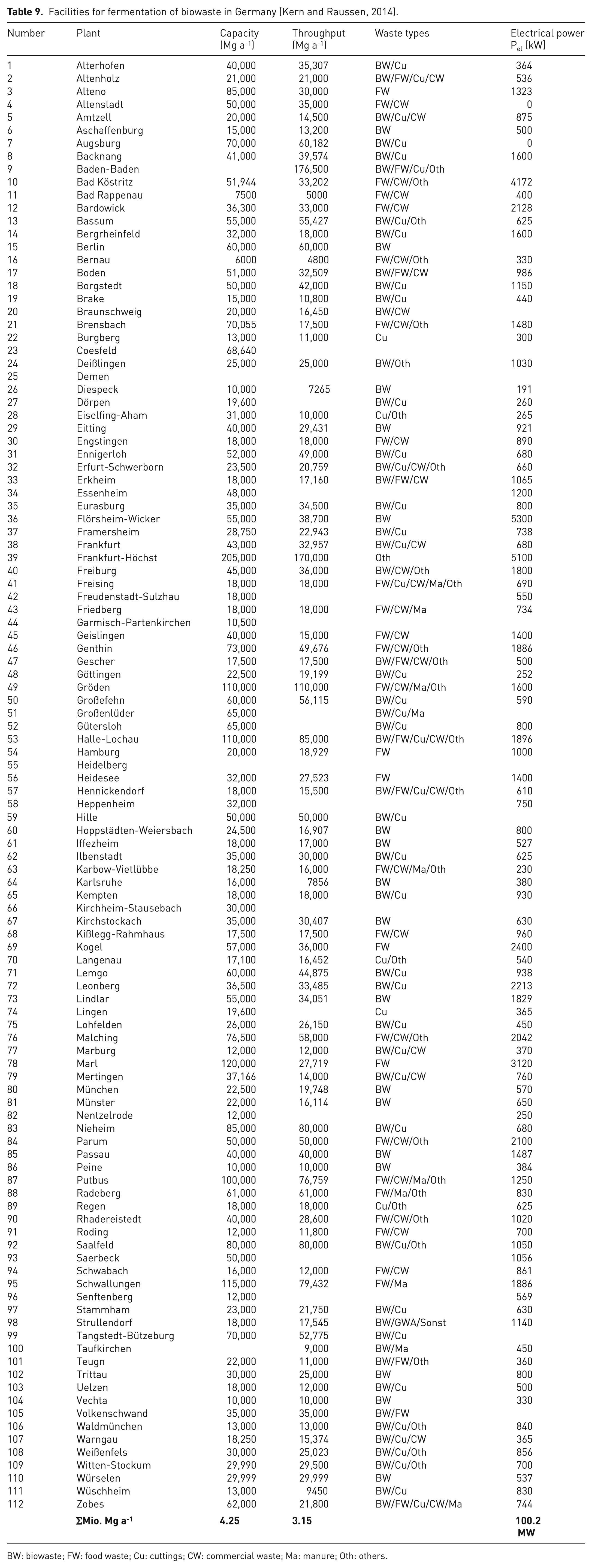
BW: biowaste; FW: food waste; Cu: cuttings; CW: commercial waste; Ma: manure; Oth: others.
The estimation of the energy provided by biogas plants was based on the total installed electrical capacity, standardized to the actual mass throughput. This also accounts for plants feeding the grid with biomethane. A value of 2.29 PJ a−1 was obtained for all facilities. If typical biogas cogeneration (CHP) units are used, heat can be provided to at least the same extent as electricity. The problem with many of these plants is that no consumers are available nearby, because the facilities are often located in rural areas in order to minimize disturbance caused by odors and traffic.
MBT plants with fermentation stage
There are 44 plants for the mechanical-biological treatment of waste. Of these, 12 have a fermentation stage and four only mechanical processing steps (cf. Table 10).
Mechanical–biological treatment (MBT) plants for the mechanical–biological waste treatment (Flamme et al., 2018).
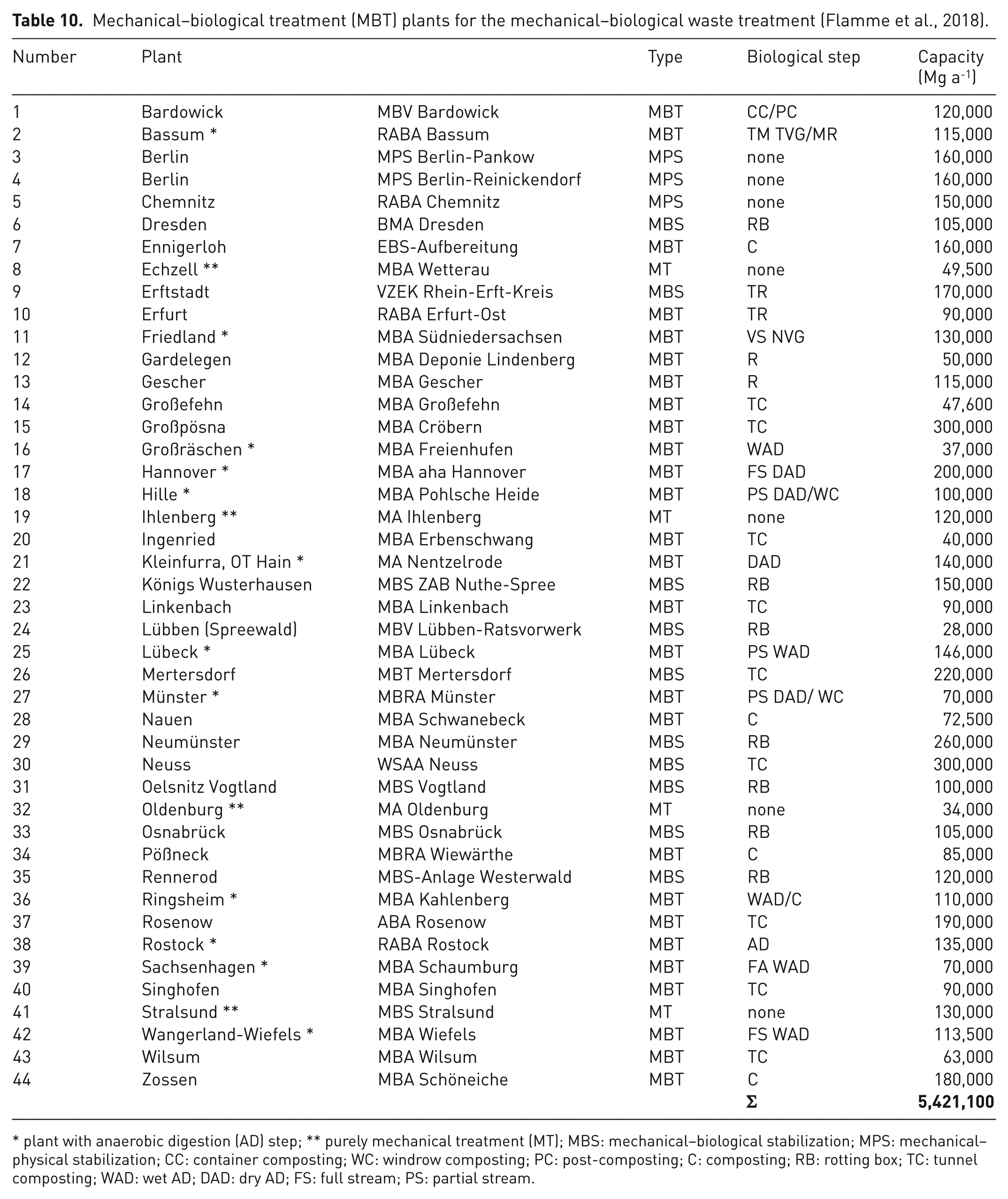
plant with anaerobic digestion (AD) step; ** purely mechanical treatment (MT); MBS: mechanical–biological stabilization; MPS: mechanical–physical stabilization; CC: container composting; WC: windrow composting; PC: post-composting; C: composting; RB: rotting box; TC: tunnel composting; WAD: wet AD; DAD: dry AD; FS: full stream; PS: partial stream.
Related to the total input into German MBT facilities, about 1% of the total mass is converted into biogas. This corresponds to 36.5 mio. m3 biogas with a volumetric methane content of 61%, or a fuel energy content of 0.08 PJ a−1 (Ketelsen and Kanning, 2016). After electricity generation in a typical cogeneration unit with about 40% electrical efficiency, about 0.03 PJ a−1 electricity and about the same amount of heat can be provided.
Summary and conclusions
The total amount of energy (electricity, heat and steam) provided by waste treatment facilities in Germany in 2015 is shown in Table 11 and Figure 16. Figure 16 also shows the waste quantities treated in the respective plant category.
Overview of energy from waste treatment facilities in Germany in 2015.
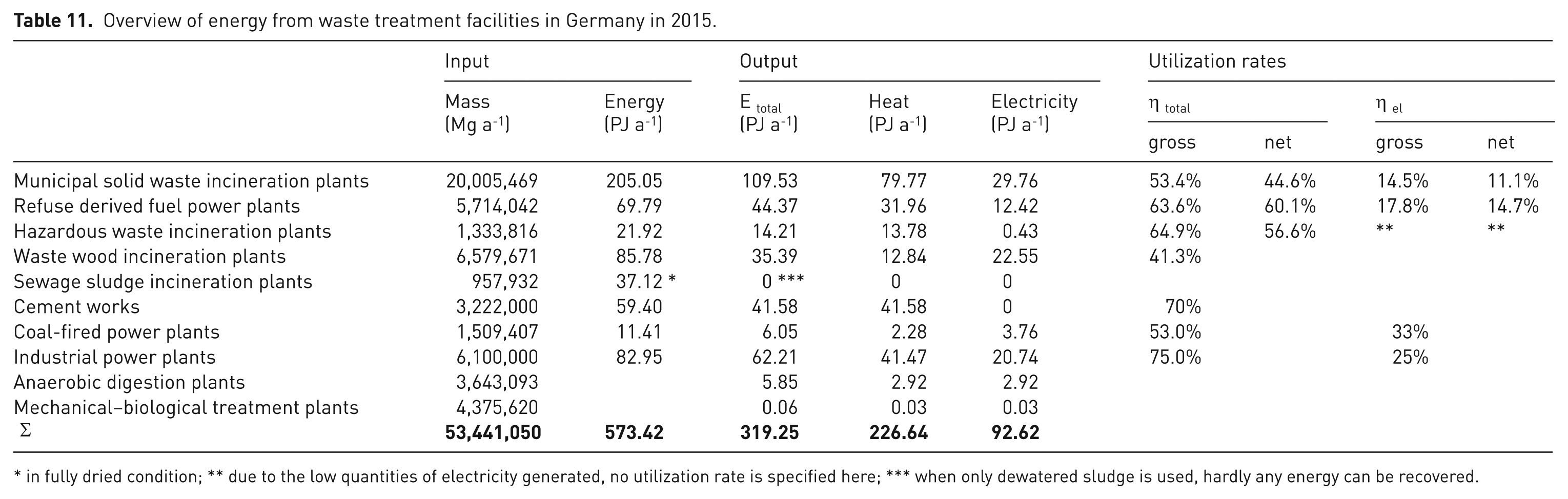
in fully dried condition; ** due to the low quantities of electricity generated, no utilization rate is specified here; *** when only dewatered sludge is used, hardly any energy can be recovered.
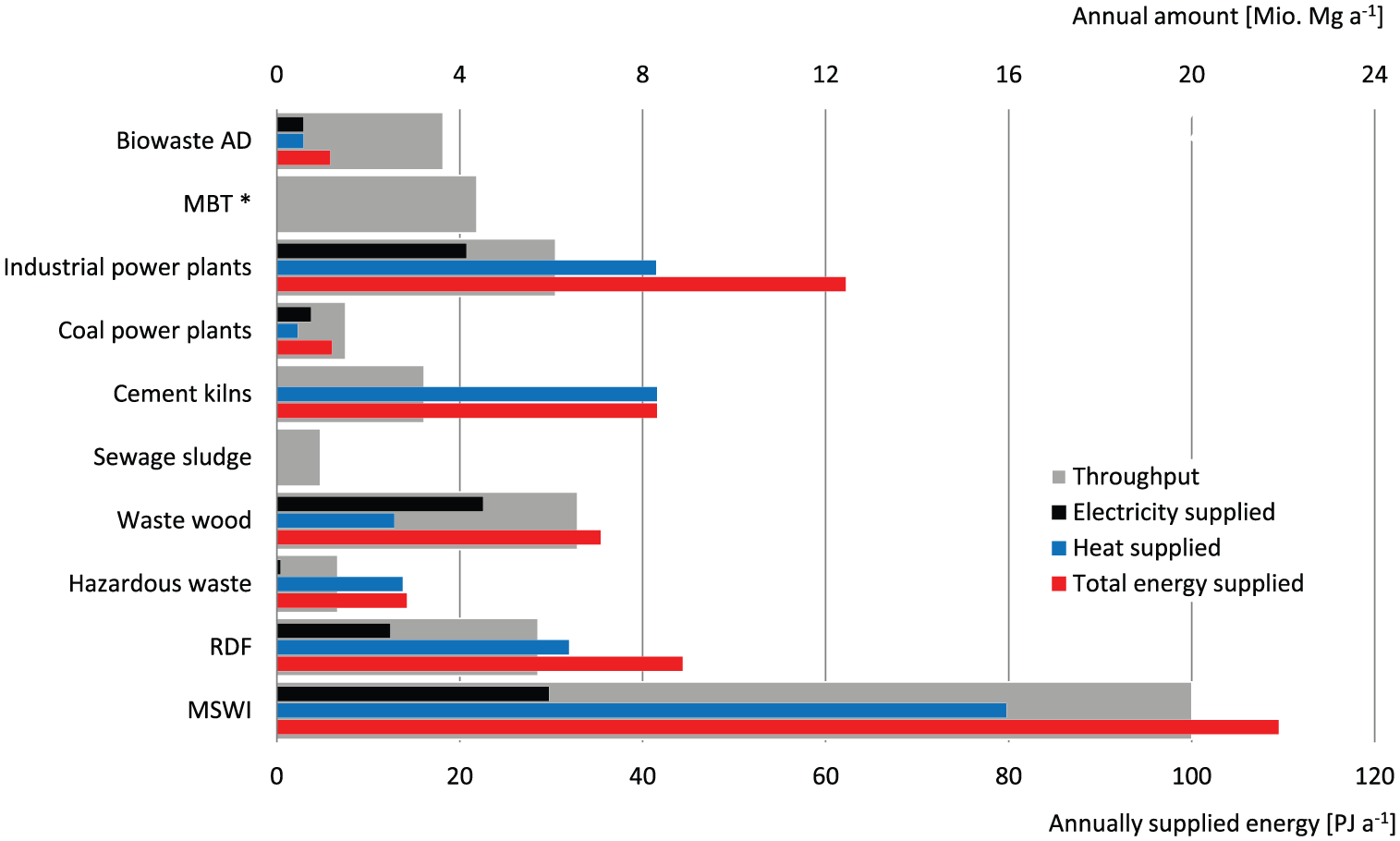
Energy from waste in Germany (2015).
The greatest share of the German energy supply from waste is provided by the incineration plants (MSWI), which deliver about one-third of the total energy from waste. Together with the RDF power plants, this share increases to almost 50%. Industrial power plants also make a major contribution to the energy supply from waste, although the lack of information for this sector must be noted.
The role of cement plants is remarkable. Despite the relatively low input quantities of about 3.2 million Mg a−1 of waste, the plants make a significant contribution to the substitution of fossil fuels. This is due to the fact that the energy content of the fuels can be used to a large extent directly and without any losses in the clinker burning process.
Furthermore, the energy contribution of the incineration of hazardous waste is relatively high, regarding the throughput of only 1.3 million Mg a−1. Most plants export steam to nearby consumers and have therefore only small efficiency losses.
The contribution of biological processes, that is, MBT and biowaste fermentation, is relatively low (< 6 PJ a−1). This applies with 0.06 PJ a−1 in particular to MBT plants with a fermentation stage.
The incineration of sewage sludge was not considered a contributor, as the energy content of dewatered sludge (balancing is based on this state) is not sufficient to realize any energy export, without the use of additional heat for drying.
Each year, more than 570 PJ of fuel energy from around 50 million Mg a−1 of waste are fed into German waste treatment facilities. This corresponds to about 4.3% of the German primary energy demand. In total, almost 320 PJ of end energy are produced, around 225 PJ a−1 of heat and 90 PJ a−1 of electricity (rest: 5 PJ a−1 of steam). This results in a contribution of waste-based energy in Germany of about 3.7% of the end energy consumption.
Footnotes
Acknowledgements
The authors thank all operators, institutions and people that have contributed to this study. We are particularly thankful for the support of the following associations: ASA e.V., BDSAV e.V., BGS e.V., ITAD e.V, VCI e.V., and VDZ e.V; and experts: Michael Bock, Wolfgang Butz, Jörn Franck, Sigrid Hans, Andreas Neuss, Martin Oerter, Christian Pacher, Carsten Spohn, Jürgen Tecker, Martin Treder, and Benjamin Wiechmann.
Abbreviations
DM dry matter
FM fresh matter
RDF refuse derived fuel (a secondary waste fuel produced by pre-treating non-hazardous waste, for example, by drying, sorting and comminution)
MSW municipal solid waste
MSWI municipal solid waste incineration
MBT mechanical–biological treatment
MT mechanical treatment
WtE waste-to-energy
SRF solid recovered fuel (a secondary waste fuel produced by pre-treating non-hazardous waste in compliance with EN 15359)
Declaration of conflicting interests
The authors declared no potential conflicts of interest with respect to the research, authorship, and/or publication of this article.
Funding
The authors disclosed receipt of the following financial support for the research, authorship and/or publication of this article: This work was originally carried out for the German Environment Agency (Umweltbundesamt), project number 75778 and has been published in German language (UBA Texte 51/2018).
