



Abstract
This research project focuses on the problem of organic (or food waste) waste recycling in Flanders, Belgium. Here, the total amount of organic waste produced annually by restaurants is estimated at 166,000 tonnes. Despite being in the evolution towards a circular economy, more than 61% of the restaurants do not collect organic waste separately from residual waste. Within the research, this problem was explored from a human-centred perspective by analysing existing food-waste collection and processing equipment, and by observing the kitchen workflow and interior design of different urban located restaurants. The aim of the research was to identify design opportunities to integrate and optimize the collecting and recycling of food waste in restaurants. In sum, it was possible to distinguish different elements, variables and constraints across the various restaurants related to the disposal and handling of food waste in the kitchen and in the clearing area during the shift. The paper concludes with design requirements for the optimization of food-waste recycling systems, which are related to the cost of the system, the effort that is needed, the lack of space, potential bad odour, hygiene matters, integration in the workflow, organization of the workspace and use of additional resources and energy.
Keywords
Introduction
An estimated 89 million tonnes of food waste is produced along the supply chain every year in the European Union (EU). From this total mass, food services and catering are responsible for 14% or 12.3 million tonnes (Katsarova, 2014; Roels and Van Gijseghem, 2011). The Preparatory Study on Food Waste across EU27 estimates the total amount of food losses (edible and non-edible) in Belgium to be around 3.6 million tonnes per year (primary production not included) (Monier et al., 2010). Of these, food services and catering are responsible for 8% or 0.3 million tonnes of food. To facilitate the transition into a recycling society, the EU2020 strategy concerning ‘steps for efficient resource use in Europe’ state that food loss should be halved by 2020 and that 20% less raw materials must be used in the food chain by 2020 (European Commission, 2015; Roels, 2013). Furthermore, according to the European Commission, European member states should collect their bio-waste separately by 2025 (Braekevelt et al., 2014) as stated in the Action Plan for the Sustainable Management of Biomass streams 2015-2020 (Braekevelt and Schelfhout, 2013), considering the separate collection of residual biomass streams/residual organic waste streams from the agriculture–food-consumer chain. In Flanders, a material decree, VLAREMA (VLAams REglement betreffende Materiaalkringlopen en Afvalstoffen; which can be translated as the Flemish Regulation for Material lifecycles and waste products) (2012), has been enrolled as a plan of action in order to meet these European goals. In concrete terms, VLAREMA aims to reuse 95% of all vegetables and fruit; and 90% of all garden waste and organic–biological waste from industry should be collected by 2020 (Braekevelt et al., 2014).
Food-waste collection is determined by legislation and waste management policies, which are country-specific. Due to the focus of our research, we only considered the waste management policy in Belgium, more specifically in Flanders. Waste coming from food establishments and restaurants is rated as industrial waste by VLAREMA, which means that collection is not organized by government, but should be assigned to a private operator. This industrial waste has to be sorted into 18 different waste fractions, of which organic waste and used oil and grease from animal or plant origin are two fractions (VLAREMA 2012, art. 4.3.2; OVAM, 2012).
According to the statistics for 2015, there were approximately 18,150 restaurants in Flanders (Guidea.incijfers.be, 2015). The segment of traditional or medium-sized restaurants that serve from 50 to a maximum of 200 servings daily comprises circa 6400 restaurants (Van Cuyck and Schelfhout, 2011). Within the different types of restaurants that can be distinguished in Flanders, based upon the volume and type of organic–biological waste (traditional restaurants, fast food and collective restaurants), this research only focuses on traditional Flemish restaurants, as these produce the most organic waste due to the in-house processing of ingredients (Leefmilieu Brussel, 2014; Van Cuyck and Schelfhout, 2011). The authors conclude that the amount of food waste from a restaurant is more than 30–50% of the total waste stream produced (EcoRes sprl et al., 2012; Leefmilieu Brussel, 2014; Van Cuyck and Schelfhout, 2011). According to the Preparatory Study on Food Waste across EU27, the main causes of food waste in the hospitality industry, i.e. hotels, restaurants and non-profit catering services, are portion size, lack of awareness, logistics such as reservations and buffets, attitudes and knowledge (Monier et al., 2010).
The daily amount of food waste being produced in a single traditional restaurant is estimated at 14-30 kg, depending on the size of the restaurant (EcoRes sprl et al., 2012; Van den Heede, 2013), which is comparable to other studies (Adhikari et al., 2008). Considering the nature of the organic waste being collected, it is mostly vegetables that end up in the garbage bin (an average of 27% from waste created during preparation, leftovers from clients and after preparation, and spoiled food) (Roels, 2012). The remainder of the top three consists of meat and fish, sauces, soup and oil. Subsequently, bread, pastry and fruit are added to this list. Greases and oils make about 10% of the total amount of waste being produced by a restaurant (Van Cuyck and Schelfhout, 2011). Different opportunities are available to process separately collected food waste. Next to a small part of food-waste recovery and reuse for other food or feed purposes (which requires dedicated actions and are consequently not considered), the majority of the industrial processing plants available focus on either composting or digesting organic waste (of which food waste is a part) (Braekevelt and Schelfhout, 2013).
In comparison to the legislation, the actual situation is somewhat different. Nowadays most restaurants, approximately two-thirds to three-quarters, do not collect their food waste separately from their general waste fraction, despite encouragements and the availability of a separate conventional circuit for collecting food waste (Van Cuyck and Schelfhout, 2011). Grease and oils are being collected by around 61–93% of food establishments and restaurants (EcoRes sprl et al., 2012; Kenniscentrum InfoMil (n.d.)), as is imposed by VLAREMA (2012, art. 4.3.2.) In contrast, even though it is mandatory for food establishments and restaurants to use a grease trap (Agentschap Ondernemen, 2013, 17-19; (VLaams REglement betreffende de Milieuvergunning) II, 1995 art. 4.2.7.1 and 4.2.7.2.), not every bar or restaurant complies with this (Van Cuyck and Schelfhout, 2011). This might be a consequence of the absence of check-ups and lack of control by the government, as well as ignorance from, or refusal by, restaurant owners due to limited space or the high cost of maintenance. Nevertheless, it creates an overload of grease in wastewater treatment plants and the regular clogging of drainpipes at food establishments and restaurants, as well as the clogging of municipal sewers.
Mapping the background, different actors (internal as well as external) have different influences on the restaurants’ sorting behaviour and waste management. Figure 1 gives an overview of the generic stakeholders who are related to the process of waste management. The external variables, driven by these external actors, that influence the collection of organic waste from restaurants are, related to government (Sarlee et al., 2012; Stimular n.d.; Van den Heede L., 2013): (i) taxes for the collection and treatment of waste; (ii) positive or negative rewards for either sorting or not sorting waste; related to collecting industry: (iii) contract and frequency of waste collection (organized or ‘on call’; (iv) type of collection containers and volume, (v) type of collection, organization and location (picked up inside, collected through door-to-door collection, at collection points) ; related to society: (vi) amount of space available; (vii) the presence of bad odours and hygiene matters; (viii) training, education and communication of waste management.
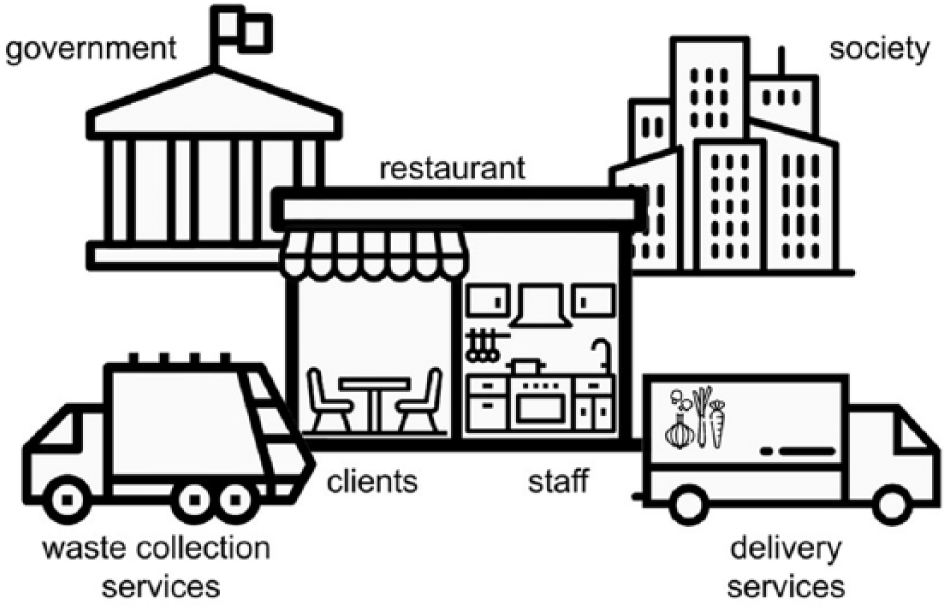
Overview of the internal and external actors related to the waste management of a generic restaurant.
Theory and assumptions towards separate waste collection
The aim of this research is to explore current food-waste collection in different medium-sized restaurants in order to retrieve design opportunities to increase the amount of separate food-waste collection in a human-centred manner. In order to increase the amount of food-waste collection, strategies for all levels of sustainability should be considered. Our hypothesis is that not only ecological, but also economic and social motivators can support the sorting behaviour of restaurants:
– Ecological benefits of separate food-waste collection are the most obvious, as separated collection of food waste is a good choice for the environment, because waste should be considered as a new resource within our world of resource scarcity (Stahel, 2016). Moreover, the processing of food waste results in lower CO2 emissions (Andersen et al., 2011). Unfortunately, only a few restaurants choose ecology over economy (OVAM, 2011).
– Economic benefits for separate food-waste collection mostly focus on time and money savings due to: (i) the money saved from the collection of a significant amount of organic waste with the benefit derived from collecting it separately at cheaper rates; and (ii) time and money saved in restaurant maintenance, for instance because of clogging problems. (Hogg et al., 2016)
– Social, experiential or human-centred benefits for separate food-waste collection: In addition to economic benefits, the staff still have to execute the sorting action and should also perceive the benefits from it; or at least no disadvantages compared to the current behaviour. Environmental responsibility is, however, growing: facilitating and clarifying the sorting process might support the willingness of restaurant owners to sort and to convince their staff to sort. This growing environmental awareness might also influence people’s decision of where they will eat, so that an indication of sorting behaviour might increase an appreciation of the company by the clients (Accenture and Havas Media Group, 2014; Unilever NV, 2017).
As is known, most people are often not fully aware of the impact of their daily consumption behaviour (Bhamra et al., 2011; Tang and Bhamra, 2008), or are unable to improve upon this behaviour unassisted. Furthermore, they are slow to adopt a new or more sustainable behaviour (De Vries, 2006), and the resulting behavioural change is usually short-lived if it requires a substantial effort (Dietz et al., 2009). Using design as a means to influence this (unintended) user behaviour, could lead to an excessive environmental benefit (Coskun et al., 2015). As noted by Thaler and Sunstein (2008, P3): ‘There is no such thing as a neutral design’. All design decisions influence users’ behaviour, whether the designer intends it or not. A designer should always make decisions about a new design, considering all consequences with regard to user behaviour. Consequently, understanding food-waste related factors and the staff’s handling of food waste will provide the necessary insights towards design guidelines to optimizing sustainable food-waste recycling.
Materials and methods
In order to explore the current practice of waste collection in restaurants, identification of the workflow is needed in order to generate the context in which food waste is created and disposed of. Considering the need for a successful way of recycling, a human-centred approach is essential, as it requires full understanding of the context in which a certain action must be performed (Brown, 2009). In order to be able to design for waste sorting, it is crucial to understand people’s daily workflows, through observations of people’s journeys and workflows (Spencer et al., 2015).
The exploration focuses on both functional workflow organization and on physical workflow/architectural organization in order to capture the complete context of food-waste generation. Qualitative research methods, i.e. in-depth interviews and observations, were selected as the most important medium in this study. Each observation was done using the same template. The workflow, the staff and their tasks, the planning and organization of a serving time slot, and the interior design of the kitchen were observed and investigated. The observations and interviews were conducted by one observer, who undertook all observations at every restaurant. The staff available during the restaurant visits were all involved in the interview section of the research, as we would avoid getting comments from the manager alone. During the visit, first, a floor map was made of the kitchen’s interior design to gather information about the workspace. Secondly, information about the workforce and the management of the work day was obtained by interview. To report the observations, notes were made, as well as the use of a camera mounted on a tripod. Moreover, the staff were interviewed during observation in order to receive additional qualitative data to substantiate certain actions that took place, and to discover the underlying reasons and patterns. All data was processed qualitatively afterwards. The digital material was used to reconsider the observations and to formulate accurate findings.
Regarding the flow of food waste, the following sub-research questions were investigated: (i) The identification of moments of waste production; (ii) Waste collectors: who is dealing with the waste? (iii) What is their perception of time/stress level while dealing with it? (iv) What actions do they execute while generating or collecting waste? (v) Where does the waste originate from? (vi) Capture of the waste: how is the food waste collected? (vii) Transportation of the waste; (viii) What types of food-waste storage bins are used? (ix) What is the homogeneity of the waste? (x) What is the distribution of the amount of food waste over time? (xi) What is the chance of the wrong material ending up in the food-waste container? Wrong material is defined as material that is not accepted by the third-party that is collected in the organic waste stream; (xii) How is final food-waste storage being dealt with?
Selection of the restaurants
The research focuses on medium-sized restaurants, which are mainly traditional restaurants or other food establishments that produce a reasonable amount of organic waste. This target group: (i) carries out preparations freshly and on site; (ii) has on average (good running days) around 100-200 meals a day; and (iii) is located in urban areas. According to the abovementioned statistics, they have an average organic biological waste production of about 28–30 kg day−1 (Van Cuyck and Schelfhout, 2011).
Considering the 18,150 restaurants in Belgium, 6400 are considered to be medium-sized restaurants. The study was conducted in the city of Antwerp. The topic of waste sorting seemed to be a sensitive topic, about which restaurant owners were not in general open to discussion. Due to the difficulty of convincing restaurant owners of our discreteness, in order to participate, we identified the participating restaurants by using a snowball sampling strategy (Goodman, 1961). We found 10 restaurants that were willing to cooperate in the study. All 10 restaurants were interviewed: of these, however, only six were open for a full day of observations. Unfortunately, the other four preferred to only discuss the questions. In Table 1, more information is given about the observed and interviewed restaurants.
Overview of the restaurants.
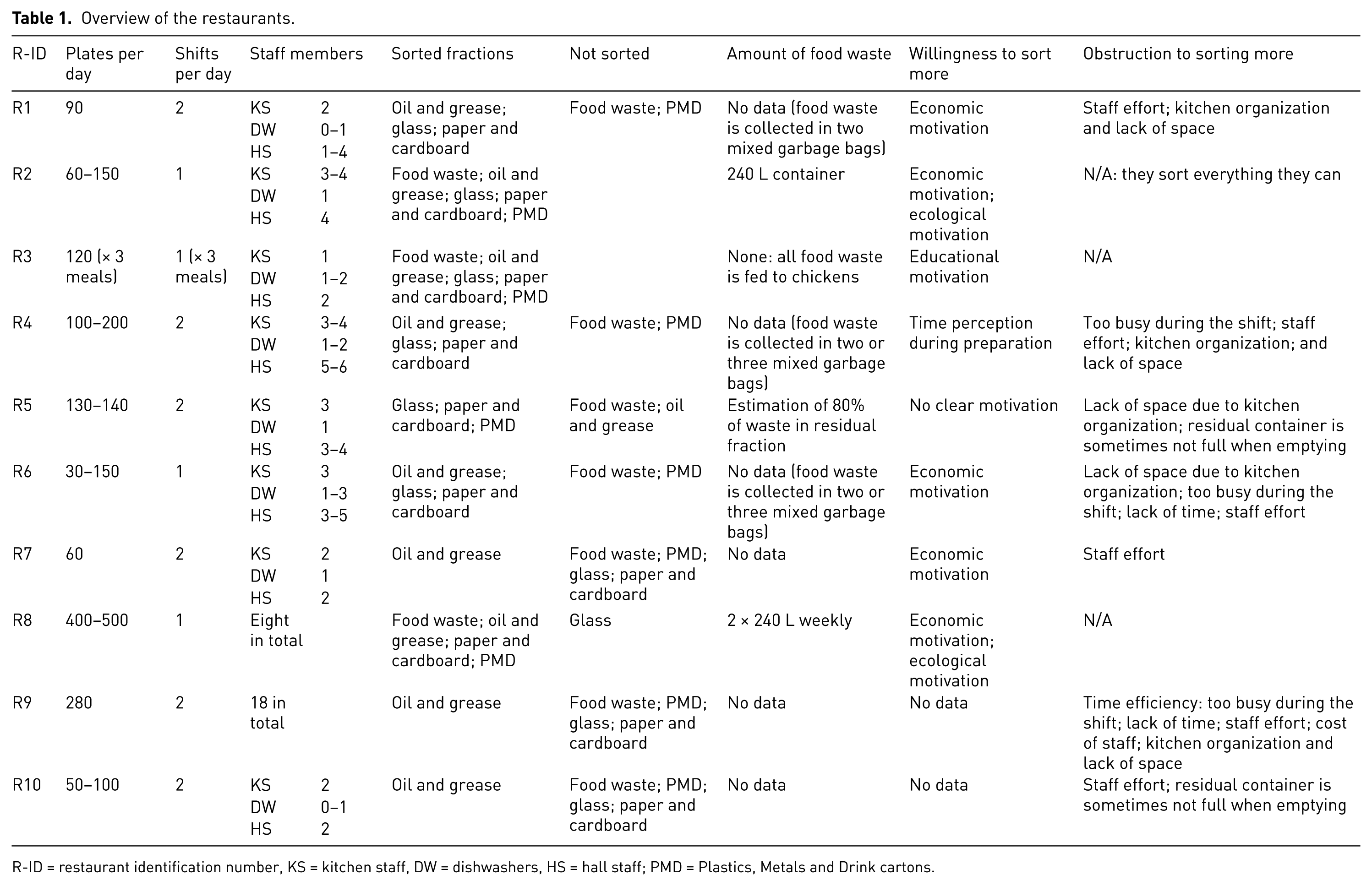
R-ID = restaurant identification number, KS = kitchen staff, DW = dishwashers, HS = hall staff; PMD = Plastics, Metals and Drink cartons.
Results
Food-waste flows within daily organization
In all of the restaurants, multiple staff members were dealing with food waste, at different moments in time and place. Based upon the observations, three distinctive flows could be identified in every restaurant: (i) kitchen waste flow: originates in the kitchen during the preparation of food, mostly before the serving shift starts; (ii) hall waste flow: originates when the served plates return from the hall during the clean-up; and (iii) dishwashing flow: originates during the dishwashing process. The literature shows that the first two waste flows represent approximately 95% of the total waste flow in a restaurant (Van Cuyck and Schelfhout, 2011). In order to get an overview of the typical amount of food waste, Figure 2 visualizes the average amount of food waste per hour. There were no measurements made during the observations and the survey. The figure shows an average visualization based on a study by Van Cuyck and Schelfhout (2011) (how much food waste and the types of waste: kitchen or hall) and our own observations (when and where it originates).
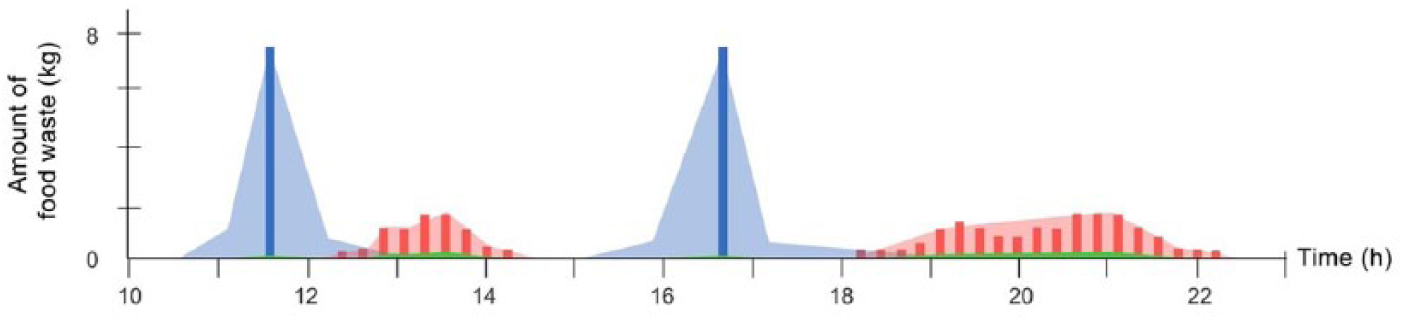
Average food-waste production per hour based on observations and the work of Van Cuyck and Schelfhout (2011), reflecting the total amount of food waste per day (this varies by restaurant and by the number of serving shifts per day). Blue indicates food waste from kitchen preparations; red indicates food waste from the hall; and green indicates the food waste from the cleaning area.
Kitchen waste
Kitchen staff produce most of the food waste during preparation time, whereas the hall staff collect the leftovers as organic waste. Independent of whether a restaurant serves lunch and/or dinner, the chef(s) usually start their preparations in the morning. This way they make preparations for both the lunch and evening sessions. Preparation time is mostly characterized as being calm, meaning that there is time to sort without much stress and distraction. The amounts of food waste are relatively large but homogeneous.
Focusing on how the organic waste is managed in the kitchen, we found the following based upon the observations. In almost all observed kitchen areas, every chef has at least one personal garbage bin, or multiple small containers that are spread around their working space (see Table 2). These containers allow work to be more efficient and keep the working area clean. In addition, a large trash can is nearby, and the waste is thrown directly into it. The garbage is collected in the bins until they are full, after which they are emptied into the trash can. A compromise is made between the size of the container and the number of times the cook has to walk back and forth to empty it, as well as the available space in the kitchen. These operations are important for the support of separate food-waste collection. In addition, the added value of this temporary medium is the opportunity to check the waste before it is transferred to the larger food-waste collection point.
Current practices in kitchens of restaurants to collect waste during preparation.
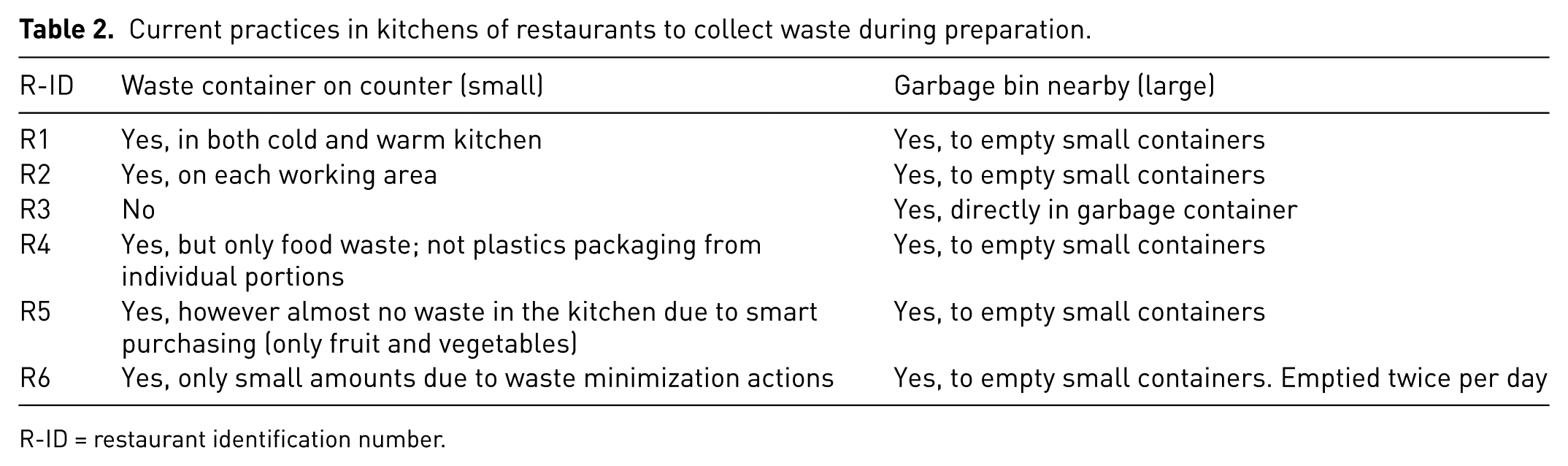
R-ID = restaurant identification number.
The organic waste that originates in the kitchen is mostly free from contamination. Other waste that is generated in this place includes plastics and cardboard packaging, glass and cans, yet they can be easily differentiated and kept separate. Different kitchen staff members noticed that the separated collection of food waste in the kitchen is definitely viable, mostly because kitchen waste is produced during the calmer times of the day. During the busy serving shift, only a very small amount of food waste is produced in the kitchen (as everything is already prepared, and stored in separate portions).
Hall waste
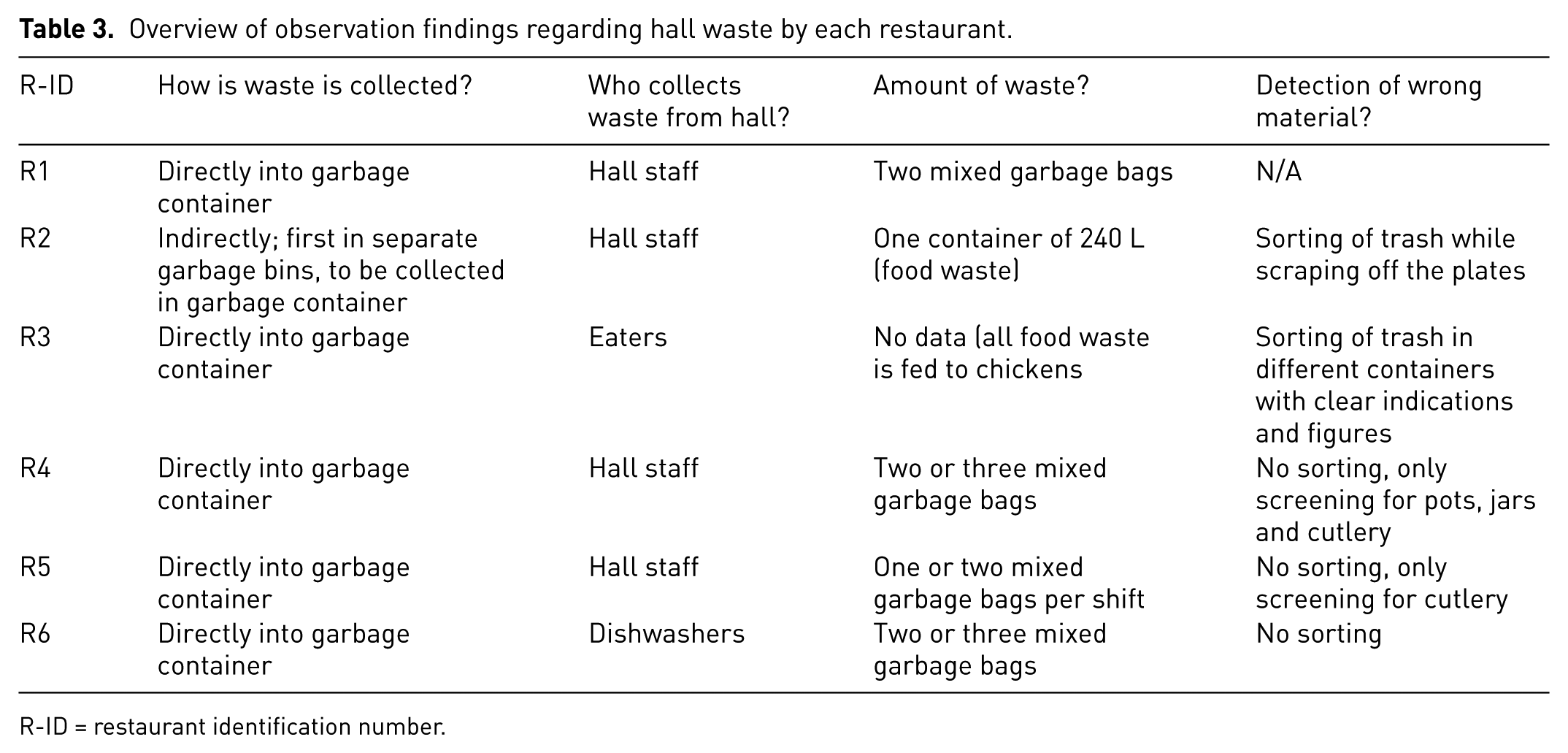
In all of the restaurants observed, the evening shift is usually the busiest. The serving time during lunch and dinner can be characterized as busy and stressful, with many people at the same time only having a limited time to sort while collecting and cleaning the dishes. Typically, food waste at that time consists of many small portions with lots of the wrong materials. This hall waste is collected in a garbage bin near to the cleaning space. As shown in Table 3, only one of the restaurants observed sorts its food waste in addition to grease and sauces.
Overview of observation findings regarding hall waste by each restaurant.
R-ID = restaurant identification number.
We observed that the waste returning from the hall was mostly food waste contaminated with residual waste. These contaminations include paper napkins, paper or fabric placemats, plastics containers (such as butter containers, lemon wipes, milk portions, straws, etc.), skewers, tin foil, etc. Attention should also be given to cutlery. Here, the necessity to implement a control point originates from the collection of food waste separately and reducing the amount of the wrong materials. This demands a greater effort from the staff than during separation of food waste in the kitchen, because the chances of the wrong materials being present are much higher and, additionally, the stress level is higher as well as there being a larger number of people working around the same garbage container. Speed and efficiency are a must in the act of successfully implementing food waste sorting in the daily workflow of a restaurant.
Dishwashing waste
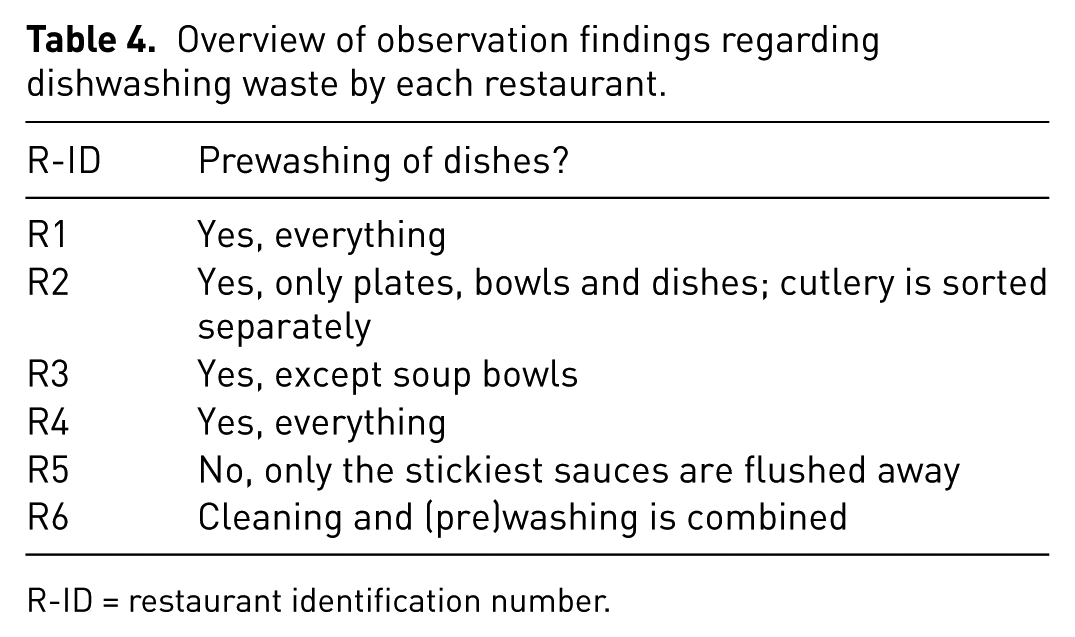
We observed that, in all but one restaurant, the dirty dishes, plates, cutlery, pots and cans are first manually cleaned by the staff before being put into the dishwasher (Table 4). The only restaurant where this was not done occasionally retrieves a plate that is not clean and that requires further manual cleaning. The argument for prewashing and clearing the largest amount of dirt is related to the reuse of water inside professional dishwashers and the possibility that this dirt would obstruct the small nozzles that spray the water. Nevertheless, the process of prewashing requires a large amount of water in addition to that used by the washing machine, which is almost constantly running.
Overview of observation findings regarding dishwashing waste by each restaurant.
R-ID = restaurant identification number.
Interior design of the restaurants
There are no specific rules for the organization of a restaurant’s kitchen. Most often, the ‘visible part’ of the business is most obvious (i.e. hall and dining room), in relation to the turnover of the business. Afterwards, the kitchen will be arranged in the remaining space. Consequently, the space available for the kitchen is always limited (Van Calster, 2016). In a kitchen a difference is made between the cold and warm kitchen. Also, there have to be ‘clean’ and ‘dirty’ sections, according to the established Hazard Analysis Critical Control Point (HACCP) hygiene standard (Passie voor Horeca, n.d.; US Food and Drug Administration, 1997; Van Calster, 2016).
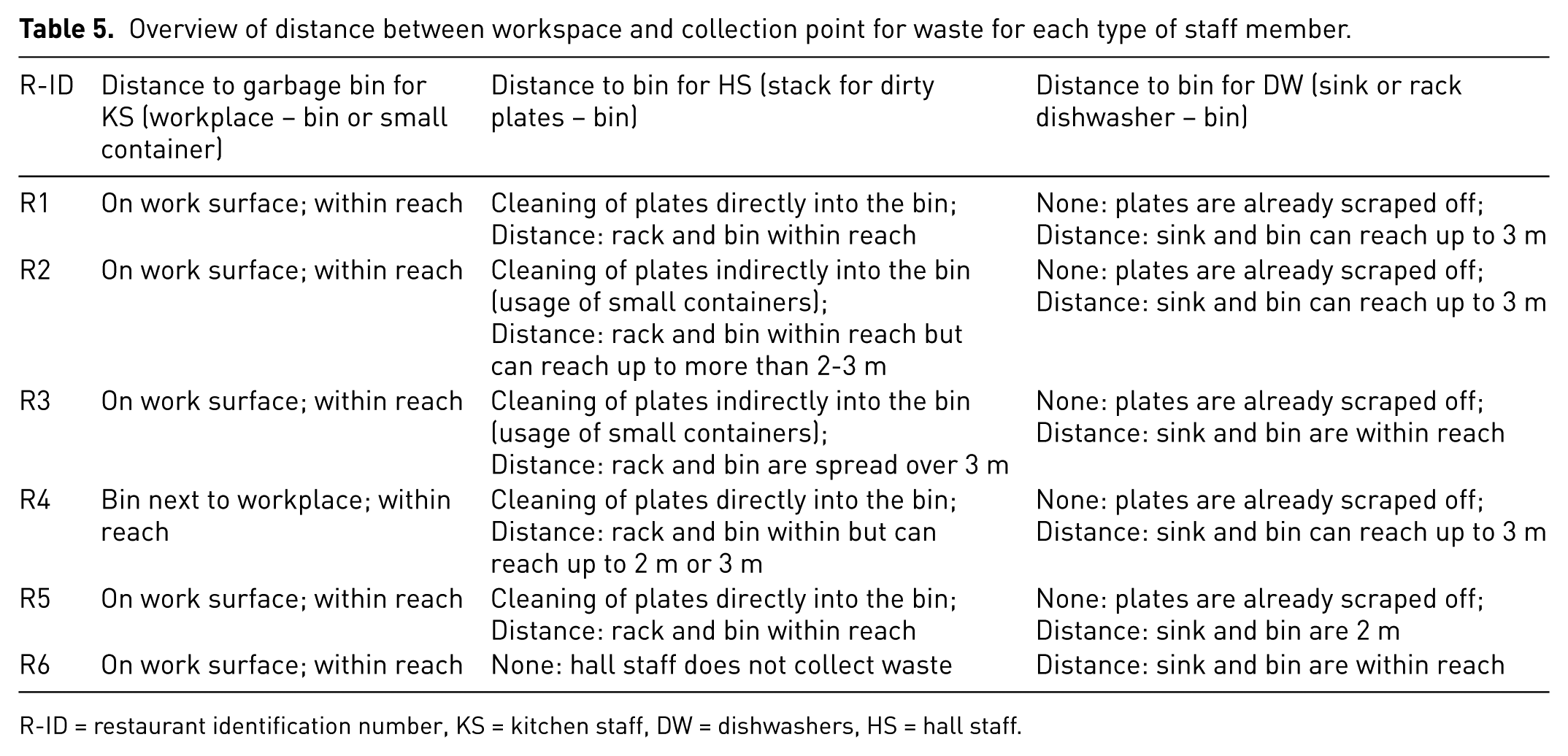
Observing the architectural organization of the restaurant was important considering both food-waste generation and the collection points. Every restaurant has a different kitchen architecture that is the result of geographical location, being urban or non-urban, the embedding of the building, and obviously the arrangement of the establishment itself. The restaurants observed are mapped in Figure 3. Based on these maps, it was also possible to retrieve other information related to the distance between the workspace and the waste collection point for each type of staff member. This information is shown in Table 5.
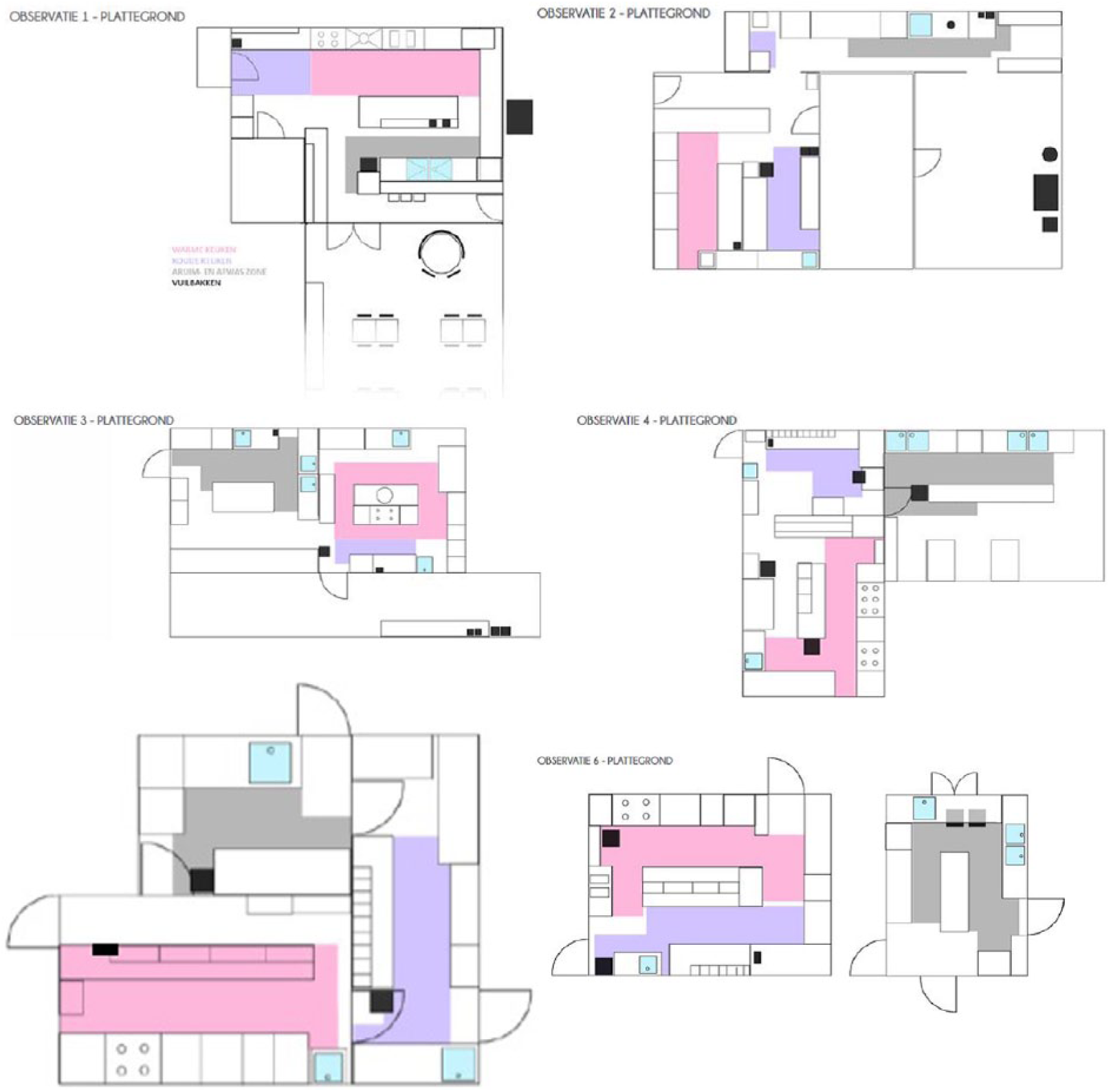
(a)-(f) Floor maps of the observed restaurants (Rx), indicating cold kitchen (purple), warm kitchen (pink), dishwashing and cleaning area (grey), and available garbage bins (black).
Overview of distance between workspace and collection point for waste for each type of staff member.
R-ID = restaurant identification number, KS = kitchen staff, DW = dishwashers, HS = hall staff.
Potential for integrating devices in the workspace
According to the hygiene guidelines, any product or system that collects and processes food waste must be placed in the ‘dirty’ section of the kitchen. This means in the collecting and washing part of the kitchen, though this section is even more tightly arranged in comparison to the warm and cold parts of the kitchen.
Based on observation, we could identify a few possibilities for placing a food-waste collection point or product integrated in the cleaning and washing area. In 50% of the cases, however, there is also enough room for an additional compact, detached device to be placed next to the residual waste bin without blocking passage. In the other 50% of the cases an additional standalone unit cannot be placed due to a lack of space. There is often unused space under the sink, as well as under the table where the dirty dishes are collected and brought from the restaurant. These spaces enclose potential for integrating a device.
Possible free spaces have been mapped in Figure 4 for various observations. Each observation shows a top view and a front view of the cleaning and washing area. The green colouring shows (potential) free space for the device. The observation for restaurant R3 has not been considered here, as it took place in an educational environment. The spatial arrangement and organization allowed the device to be placed anywhere.
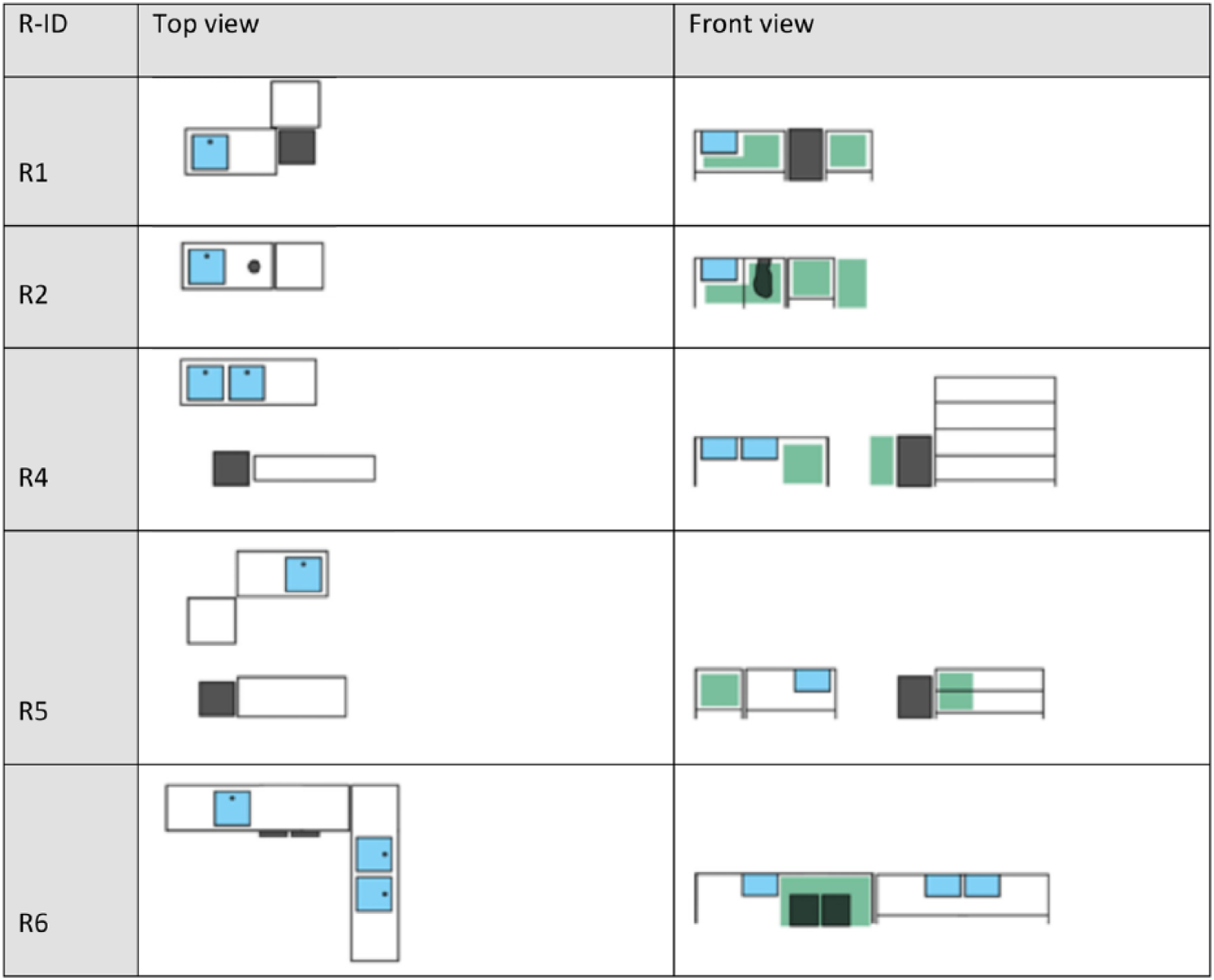
Overview of free space (coloured in green) in the dishwashing and cleaning area.
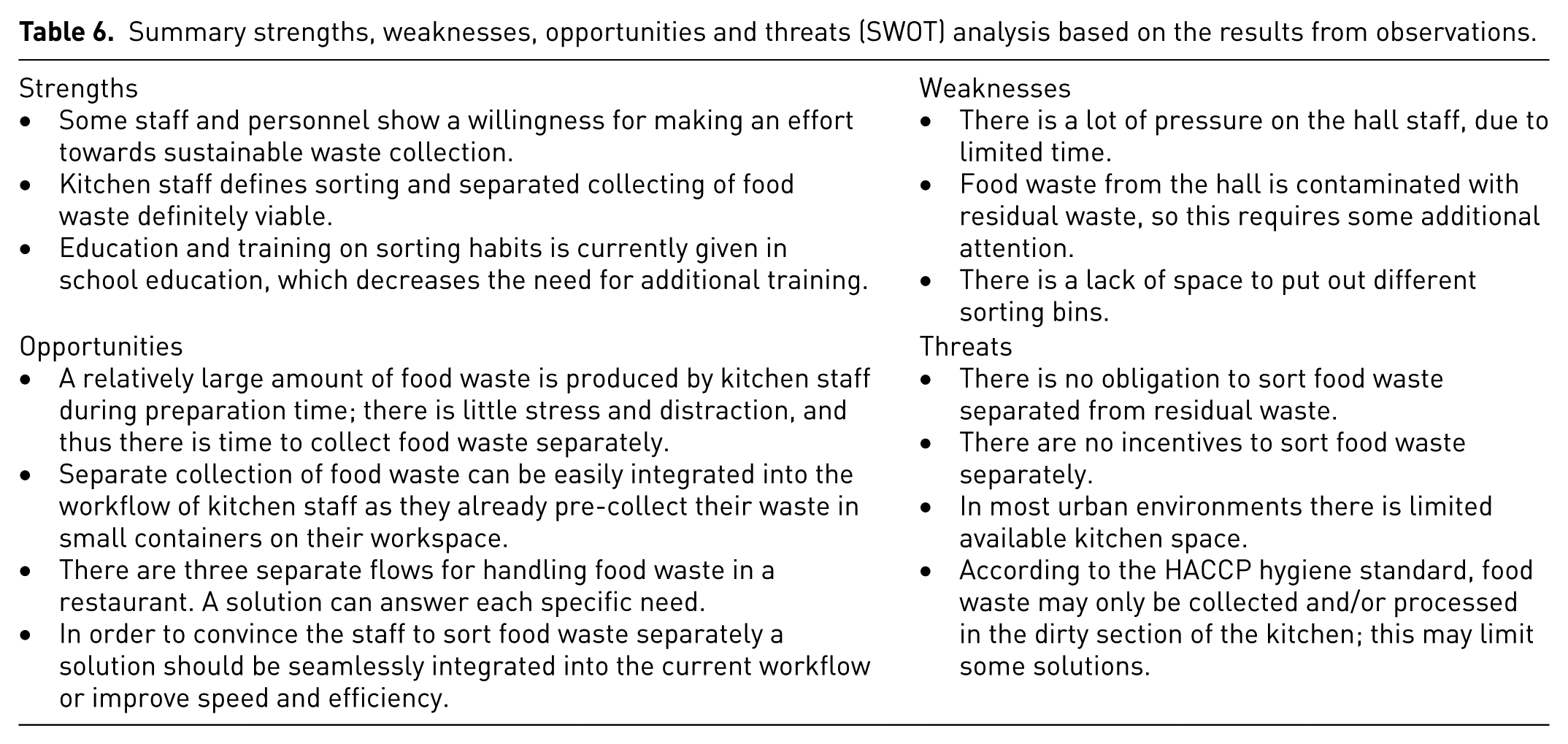
Based on previous analysis through various observations and the strengths, weaknesses, opportunities and threats (SWOT) analysis in Table 6, we could conclude that there is a clear opportunity for a specific solution to facilitate separate food-waste collection. Based on this analysis through various observations, we can conclude that the following four concepts are ideal: a standalone unit for the collection of food waste; a combined and compact unit for the residual waste fraction; a unit incorporated into the work surface; or one hidden underneath the work surface.
Summary strengths, weaknesses, opportunities and threats (SWOT) analysis based on the results from observations.
Conclusions
In this research, we examined how food-waste collection can be optimized in medium-sized restaurants in urban environments. Separate food-waste collection still has a huge potential for economic, social and ecological improvement. By tracking the path of food waste through multiple restaurants using observation and interviews, we were able to identify the current challenges and obstacles related to both workflow and interior design. Based on these observations it was possible to distinguish different factors, variables and constants across the various restaurants related to the disposal and handling of food waste in the kitchen during preparation and during the shift in the clearing area. As a result a general flow could be produced, which creates some design conclusions for the optimization of recycling food waste that is applicable to similar restaurants.
The following propositions could be made related to the design requirements for future appliances that support sorting behaviour in restaurants.
Proposition 1: New designed products are necessary to realize the best possible advantages in economic, ecological and human aspects. Without political and legal pressure, a restaurant will never invest in a product or service as long as there are no economic advantages. The additional cost of personnel will be contrasted with the savings regarding the discarding of waste. A fast return on investment is a must, as well as possible subsidiary or other forms of economic aid. The implications for design are mainly focused on improved integration in the environment and workflow, as well as on specific support for sorting.
Proposition 2: Time efficiency and tidiness are an important factor when separating and sorting waste properly. People believe that sorting waste will prevent them from working time-efficiently. Generally, sorting demands extra time investment, which might be unwanted because of a low sense of responsibility, laziness or time-pressure reasons. New designed systems should be easily integrated into the daily workflow and should stimulate recycling even in a busy workspace. Moreover, the system should be operated without additional knowledge or training.
Proposition 3: There is a clear opportunity to take advantage of the vast majority of homogeneous food wastes that are collected in small containers from the kitchen, if it can be differentiated from those poorly classified in the hall. In addition, the large amount of small portions of hall waste that can be contaminated with different types of waste, such as toothpicks, aluminium foil, plastics butter dishes, etc., and eating tools would give the highest challenge to assure the uniformity of the waste.
Proposition 4: An opportunity (by means of clear communication of waste management) should be offered to the staff to check the food waste and to remove wrong materials in a clean way before continuing their tasks. As noticed through observations, hall waste contains a lot of contamination. At the same time a definition should be made of ‘wrong’ material, as paper napkins and contaminated papers may in some cases also be disposed of in the organic waste fraction. In addition, the choice may be based on material that can be processed without damaging the internal mechanism of the collecting/processing device. (Afterwards, the incorrect waste can be removed in the industrial process. Of course, it is the intention that restaurants will do their best to sort the waste in the best possible way.)
Proposition 5: Due to urban environment or narrow kitchen organization, some restaurants are unable to manage an additional waste stream due to space issues for both the sorting and placing of waste collection containers. Moreover, the amount of waste currently produced is already considered to be too large. Consequently, the system should be integrated into the layout of the working space and located next to the residual waste trash can.
Proposition 6: The potential presence of bad odours and hygiene issues is also an argument against sorting food waste. Hence, pre-processing the food waste might be an interesting option. These techniques also often offer volume reduction and, consequently, a smaller amount of waste to be collected. Pre-processing might also increase the value of the material, although this is still unclear.
Proposition 7: Since food-waste processing machines require water to be added for their working process, it is possible to reuse water from dishwashing (where adequate amounts of water are used to prewash the dishes). Although waste water should not be considered as organic waste, a reduction of clean water usage and the reuse of dishwashing waste water adds to economic and ecological sustainability.
Recommendations for future research
The conclusions and generalization of the research should be done considering the limitations of the applied methodology. Further research should consider the use of video or other devices for contextual immersion to alleviate some of the limitations of a single visit. This would allow the development of a graphical flow diagram associating the generation of waste, staff flow, the relative amounts of food and waste, and the connected spaces. Furthermore, more prolonged research with the participants (including managerial, kitchen, hall and dishwashing staff) during observations and interviews would allow further optimization and detailing of these conclusions.
Footnotes
Declaration of conflicting interests
The authors declared no potential conflicts of interest with respect to the research, authorship, and/or publication of this article.
Funding
The authors received no financial support for the research, authorship, and/or publication of this article.
