




Abstract
For over a century, a small network of scholars, extending from the University of Chicago, shaped community criminology research. Drawing on human ecology, they argued that poor structural factors—poverty, ethnic heterogeneity, population mobility—cause crime. As this network studied crime in neighborhoods, another network changed neighborhoods. This other network also assumed structural factors were important, but its members developed policies and practices to alter them. This other network, also influenced by human ecology, was composed of real estate researchers. Historical records show that the two networks are connected. These connections raise the possibility of a self-fulfilling prophecy. The implications of the prophecy are that the correlations between structural factors and crime may be spurious. We show that real estate practices shaped structural factors. But the structural factors may not drive crime. Instead, real estate practices may have shaped crime opportunities through place management thus driving crime. This has serious implications for community criminology research. This theoretical paper lays out the historical evidence for this conjecture.
Keywords
The self-fulfilling prophecy is, in the beginning, a false definition of the situation evoking a new behavior which makes the originally false conception come true. (Merton, 1948, p. 195)
Introduction
We who study crime in neighborhoods usually begin with the theories of The Chicago School of Sociology. The school's perspective is neatly summarized by two researchers: Since future developments in a neighborhood will be determined to a large degree by the decisions of the people who live there, it is necessary to consider the principal characteristics of these people in the process of analyzing a neighborhood. Such questions as the following should be considered: What are the typical incomes of residents in the area? Are there wide variations of income? What percentage of the people own their own homes? Which occupations are represented? Are the people of one general type or is there a mixture of income groups, races, and nationalities? How frequently do people move into or out of the neighborhood? Does the general social organization and “tone” of the neighborhood make it a place where people like to live for long periods of time?
In this passage from 1948, we see themes central to community criminology today: residents’ decisions; residents’ characteristics—income, race, and mobility; and social organization. The framework for understanding crime variation among neighborhoods has remained relatively constant over many decades.
Two things are absent from the quote. First, the authors do not mention crime. This may not be critical. The Chicago School of Sociology was interested in cities in general, crime being only one feature of cities. And the authors highlight social organization, the flip side of disorganization, a cause of crime. Second, we did not name the authors. This is critical. They were not Chicago School of Sociology researchers, though they express the same ideas.
The authors are Arthur Weimer and Homer Hoyt. The quote comes from their influential Principles of Urban Real Estate textbook (Weimer & Hoyt, 1948, p. 129), used by seventeen universities to train real estate investors and brokers (Helper, 1969). Weimer and Hoyt received their PhDs from the University of Chicago, but in economics (Miller & Markosyan, 2003). In graduate school, they shared a mapping lab in the social sciences building with the sociology department (Bulmer, 1980, 1984; McNeill, 1991). Their interests were in real estate; how to make money buying and selling properties. Though they held academic positions, they also worked in government and consulting (Miller & Markosyan, 2003). Their professional network remade U.S. cities from the 1930s through the 1960s (Beauregard, 2007).
The network containing Hoyt and Weimer held many of the same ideas as Chicago School sociologists; human ecology influenced both groups (Light, 2009). But rather than use human ecology to describe cities, those in the real estate industry used human ecology to shape cities (Eck & Linning, 2019). Members of this network reasoned, like members of the Chicago School, that structural factors—poverty, ethnic heterogeneity, and population mobility—influence order. Venturing further than their Chicago School contemporaries, they posited that order raises neighborhood property values. Building on their conjecture, members of Hoyt and Weimer's network created government and real estate policies that enhanced order in some communities while undercutting order in others (Abrams, 1955; Jackson, 1985). Their network helped create the variation in structural factors across neighborhoods we currently observe as well as crime opportunities. Consequently, the connections between structural factors and crime that descendants of the Chicago School find in their data may be spurious: the result of a self-fulfilling prophecy.
The idea that self-fulfilling prophecies form cities is not new; commentators on urban development have raised this point before us. Jacobs (1961), the famous urbanist and commentator on city economics, claimed that government real estate tools such as “credit-blacklisting maps, like slum-clearance maps, are accurate prophecies because they are self-fulfilling prophecies” (p. 301). Twenty-four years later, Jackson (1985) echoed Jacobs’ thesis in his book about the creation of US suburban neighborhoods. In 1973, the U.S. Commission of Civil Rights illuminated the self-fulfilling prophecy of housing values. Because the real estate industry promoted the myth that race influences housing values, despite evidence to the contrary, White buyers and sellers acted upon the myth, thus creating housing value instability (U.S. Commission of Civil Rights, 1973, pp. 11–12). Self-fulfilling prophecy discussions continue in today's urban history literature (Abbott, 2020; Garcia, 2019; Lewinnek, 2010).
Self-fulfilling prophecy commentators have not explored the importance of their insights. First, they are thin in their reasons for the prophecy and why it is self-fulfilling. A careful reader can sometimes infer answers, but the authors are not explicit. Second, the commentators do not probe the implications of their suggested prophecies. At most, they imply that the prophecies created significant injustices or bad policymaking; the commentaries look back but not forward. Third, these commentators examine urban life and race, but not crime. Given the commentators’ interests this understandable. Nevertheless, the absence of crime discussions does little to inform criminology.
We build on the work of urban historians and show why their work has important implications for studying crime. In our paper, we discuss the uses of human ecology and how human ecology gave rise to a self-fulfilling prophecy. And we link the prophecy and its implications to crime research, particularly community criminology research.
Self-fulfilling prophecies suggest spurious relationships (Merton, 1948). In the case we are examining, the statistical connections between structural factors and crime may be spurious; poverty, ethnic heterogeneity, and population mobility are correlated with crime, but do not cause crime by suppressing informal social control. Instead, they are correlated with crime because the ideas that motivated social researchers to look for correlations also stimulated the real estate industry and its government supporters to alter structural factors. Believing structural factors influence neighborhood order, decision-makers in the real estate industry, with their government allies, manipulated structural factors to enhance order in some areas. In other neighborhoods, these same policies created crime opportunities. In the absence of human ecology-influenced policies, the statistical links we continue to find between neighborhoods’ structural factors and crime would be smaller.
We tell our story using three network charts showing links among important people, many of whom are unknown to most criminologists (see Appendix A in the Supplemental Materials for brief biographies). We were very conservative in creating network links. Most obviously, we could not establish links that documents do not describe, so the links are biased toward connections that interest urban historians. Further, we ignored simple citations by authors in one network to the works of authors in the other network. We ignored plausible, but unverified, connections we inferred from the literature. We ignored connections between non-prominent individuals. We drew connections only when we had documentation that: 1. people worked together; 2. they served on the same committee, in commerce or government; or 3. at least one of a pair explicitly endorsed the other or acknowledges the help or advice of the other. Appendix A and B in the Supplemental Materials provide the sources for the links we identified in all three network charts.
We show that human ecology pervaded the ideas of Chicago School sociologists and real estate researchers. Each group had its own network for the transmission of ideas. Our paper presents the historical documentation that describes these networks. It is concerned with the existence of the networks, not who is most influential within them. Therefore, you will not see statistical analyses or measures of social network characteristics such as density, betweenness, and centrality.
Some of our arguments are not new. Many scholars outside of criminology critique human ecology and the Chicago School: race and real-estate (Feagin & Parker, 1990; Glotzer, 2020; Trounstine, 2018); the Chicago School's fumbling of race and exclusion of certain minority scholars (Baldwin, 2004; Ballis Lal, 1987; Hagedorn, 2006; Korver-Glenn et al., 2021; Morris, 2017; Reed, 2009); the role human ecology in urban sociology (Gottdiener, 1985; Light, 2009); the failure of the Chicago School to address property ownership and certain aspects of history (Reyes, 2019; Snodgrass, 1976); and how the Chicago School sociologists and real-estate economists shared the same human ecology ideology (Lewinnek, 2010; Light, 2009; Owens, 2012). But many of these critiques focus on sociological or urban theory and ignore crime (for exception, see Muhammad, 2019).
Our paper is not a critique of the Chicago School. It is a critique of community criminology. Its current researchers seldom consider, in their analytical models, how the real estate network shaped cities. Community criminologists’ failure to account for this raises the risk that their main findings are spurious.
Our contributions are three-fold. First, most of the critiques of the Chicago School, though valid, do not discuss crime. We do. Second, scholars have noted that real estate policy shapes the urban environment but have not connected real estate policies to urban crime patterns. We do, by drawing on place management theory which provides a tangible evidence-based mechanism of social control (Eck et al., 2023). And third, scholars have not discussed the statistical consequences of omitting race and place management in community criminology models. We do, by discussing how the omission of real estate and race biases findings in a large body of criminological research.
We divide our paper into seven parts. We are coming to the end of the first, the introduction. Part two provides an overview of human ecology and the Chicago School of sociology. As most readers will be familiar with this history, and because it has been described in detail by others (e.g., Wilcox et al., 2018), we will be brief. Instead, we pay close attention to the Chicago School's network of researchers. This network will become important later. At the same time the Chicago School was producing its most famous works, during the first half of the twentieth Century, others were at work. These others are the subject of part three. Here we examine real estate economics and the U.S. Federal government's urban policies. We show the network of prominent individuals who shaped cities and suburbs. Criminologists may be unfamiliar with these individuals, but their influence has been well documented by urban history researchers. In part four we show that the two networks—Chicago School and real estate—are connected; they shared ideas and theories. Part five explains how these personal, professional, and theoretical connections gave rise to a self-fulfilling prophecy. Part six explains the implications of the self-fulfilling prophecy; in particular, the possibility of spuriousness. Part seven concludes with the implications the spurious relationship has for criminology.
Human Ecology and the Chicago School of Sociology Network
Two years after the University of Chicago opened its doors in 1890, Albion Small founded its sociology department, the first in the United States (Bulmer, 1984; Kurtz, 1984). Small, the founding editor of the American Journal of Sociology (Laz, 2000), begins the network we examine in this section (Figure 1 and Appendix B1 in the Supplemental Materials). As department chair, Small mentored and hired sociologist William I. Thomas (Murray, 2013). Thomas's defining work explored the experiences of Polish immigrants in the United States from research he conducted between 1908 and 1913 (Thomas & Znaniecki, 1918/1920). From this he developed the concept of social disorganization, inspiring nearly a century's worth of research in criminology and sociology (Wilcox et al., 2018).
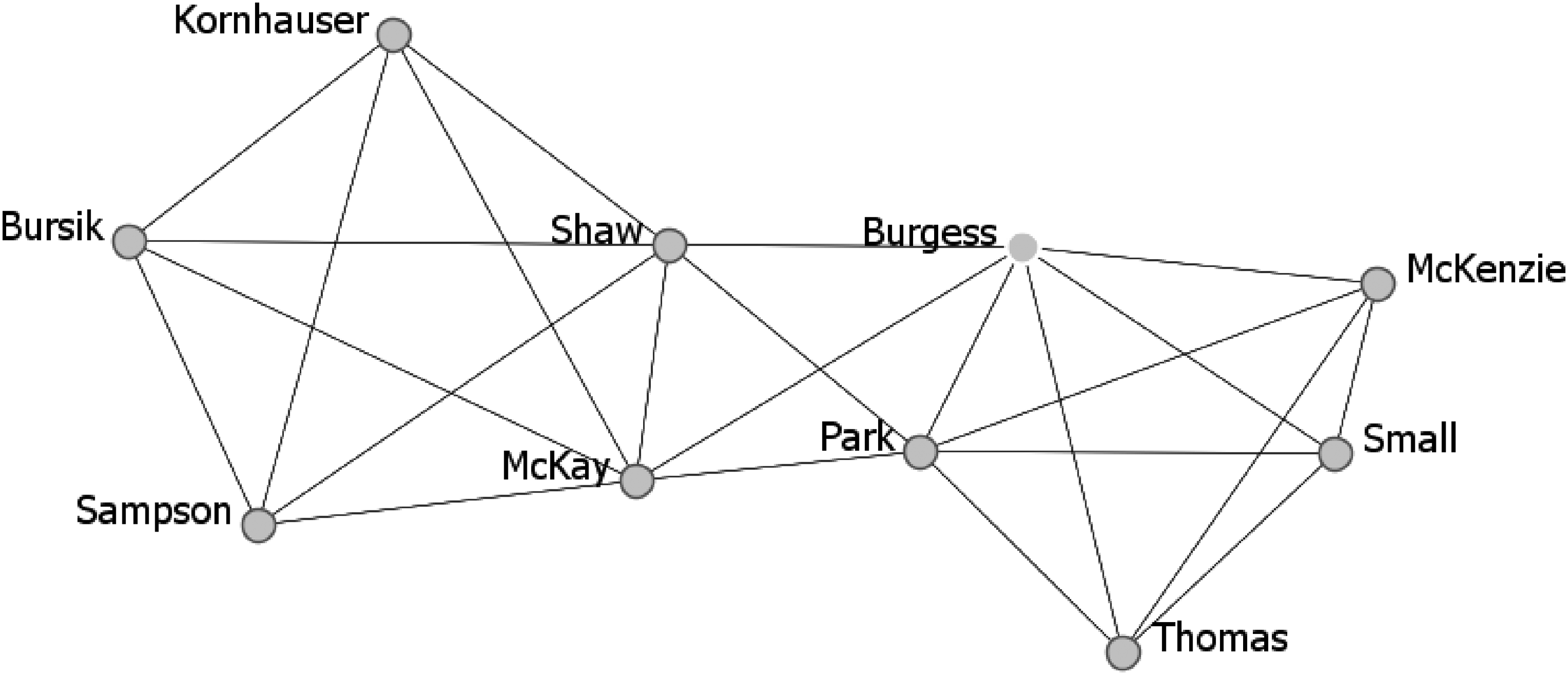
Network of key people in the Chicago School of sociology.
Thomas persuaded the sociology department to hire Robert Park the year after meeting him at a conference in 1912 (Chapoulie, 2020; Diner, 1975). Small and Thomas “exerted considerable intellectual influence on Park” as he began his career in academia (Matthews, 1977, p. 94). In 1913, Ernest Burgess finished his doctorate after studying under Small and Thomas (Diner, 1975; Kurtz, 1984). After teaching at several midwestern universities (Toledo, Kansas, and Ohio State), he returned to Chicago to join the faculty at the University of Chicago (Burgess, 1916; Diner, 1975; Kurtz, 1984). This started a 15-year collaboration between Park and Burgess. They shared an office in the Social Science Research Building and would “inspire a generation of graduate students to comb the city and its institutions, looking for patterns of social organization within natural areas of Chicago, the ‘sociological laboratory’” (Kurtz, 1984, p. 4).
Park and Burgess generated some of the most influential works in American sociology, including the widely used text: The Introduction to the Science of Sociology (1921). Then in 1925, they published another landmark book with Park's former doctoral student Roderick McKenzie, The City (MacDonald, 2011; Park et al., 1925). McKenzie (1925) wrote a chapter applying the metaphor of plant ecologies to study how people use urban areas. He argued that humans compete for space much like plants and animals leading to a natural and predictable organization of areas within cities (Korver-Glenn et al., 2021; Light, 2009). With this analogy, Park et al. (1925) imagined ethnic and racial groups to be separate species. The invading ethnic or racial group pushes into the least desirable areas, around industry, and the established group moves outward, away from industry. This left an industrial core surrounded by a zone in transition containing deteriorated residential properties inhabited by poor recent immigrants. These ecological ideas formed the basis of Burgess’ (1925) concentric zone theory.
Before returning to Chicago, Burgess (1916) studied juvenile delinquency in a small midwestern city. He discovered that delinquents were clustered in areas containing poor housing conditions. He concluded that the cause of delinquency “is the low-grade home environment which tends to the demoralization of the child” (Burgess, 1916, p. 726). In Chicago, Burgess (1925) extended his ideas to a large city, producing his concentric zone theory that “provided a visual representation and accompanying theoretical account for where social disorganization would be located in Chicago: the zone in transition” (Wilcox et al., 2018, pp. 23–4).
But it took two graduate students at the Chicago School, Clifford Shaw and Henry McKay, to sketch a theory of how social disorganization drives delinquency (Kubrin, 2009; Shaw & McKay, 1942/1969; Snodgrass, 1976). Their theory followed the human ecology perspective that cities grow through a process of invasion and succession resulting in “natural areas” (Shaw & McKay, 1942/1969, p. 18). Their book, Juvenile Delinquency in Urban Areas, showed that most offenders lived near one another in the zone in transition (Shaw & McKay, 1942/1969). Their book provided the foundation for the claim that structural factors–especially poverty, residential mobility, and ethnic heterogeneity—impinge on residents’ abilities “to realize common goals and solve chronic problems” (Kubrin & Weitzer, 2003, p. 374). And this disorganization fosters delinquency, disorder, and crime.
For much of the 1950s and 1960s, Shaw and McKay's (1942/1969) work went in and out of favor (Wilcox et al., 2018). But in 1978, Ruth Kornhauser, another PhD graduate of the University of Chicago, published a book on social disorganization theory. She argued that Shaw and McKay had mixed two incompatible ideas: strain and control. Kornhauser (1978) asserted that all people experience strain, but controls on their behavior vary. The structural factors influenced controls community members imposed on each other; communities with low levels of informal social control would have more crime.
Kornhauser's (1978) work revived interest in the control components of social disorganization. Most notably, she inspired Robert Sampson, professor at the University of Illinois (1984–1991) and the University of Chicago (1991–2002), and Robert Bursik, a PhD graduate of the University of Chicago. Sampson, along with Groves (1989), introduced the systemic model to criminology. Their paper showed how scholars could use data from victimization surveys to study causes of neighborhood crime patterns. Now, because survey information included data about peoples’ activities, expectations, and interactions with others, researchers could examine how these structural factors influenced crime. They could look at informal social control, friendship networks, and organizational participation. Sampson and Groves (1989) shifted the dependent variable: from juvenile criminality to serious crime events.
In their book, Neighborhoods and Crime, Bursik and Grasmick (1993) posited that informal social control draws upon three distinct types of social ties. Four years later, Sampson et al. (1997) proposed collective efficacy theory. Once again, the structural factors appeared in their model. But this time, the mediating factor, collective efficacy, included a combination of residents’ perceptions of social cohesion and their neighbors’ willingness to intervene.
We summarize the community criminology framework, inspired by the Chicago School, in Figure 2 (see Wilcox et al., 2018 for a more detailed summary). Neighborhoods are considered natural entities emerging via ecological processes. Detrimental structural factors undercut neighborhood residents’ abilities to work together, establish common values, and control unwanted behavior. Such neighborhoods have higher levels of delinquency, crime, or disorder than other neighborhoods with positive structural factors. Though researchers continue to debate which structural factors matter most, and how structural factors influence crime (the middle box in Figure 2) they use the same set of boxes in the same order as we depict here. They use the same framework regardless of the dependent variable: the propensity of juveniles to misbehave or serious crime events. These ideas continue to dominate research in community criminology (Sampson, 2012; Wilcox et al., 2018), despite challenges to use of these approaches (Feagin & Parker, 1990; Gottdiener, 1985).
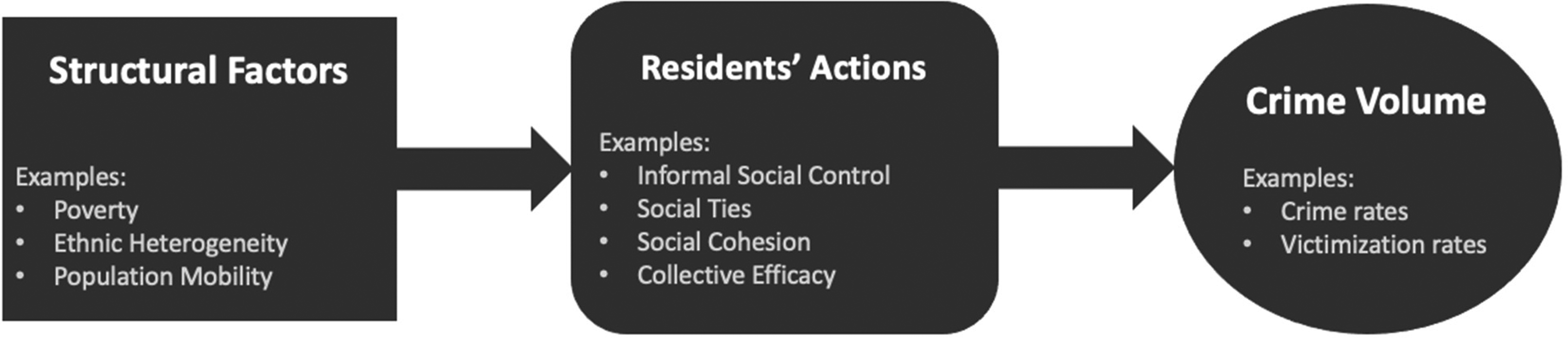
Common components in community criminology models.
Human Ecology and the Real Estate Network
In 1892, the same year Albion Small created the sociology department at the University of Chicago, the University of Wisconsin hired Richard T. Ely to direct its School of Economics, Political Science, and History (Woodbury, 1949). Ely was the founder of the American Economic Association (New York Times, 1943; Winling & Michney, 2021), a principal champion in creating academic tenure (Seligman et al., 1915/1954), and a prominent eugenicist (Cherry, 1976).
At the University of Wisconsin, Ely would spend the better part of 30 years developing a new academic discipline: land economics. This new discipline would help develop the field of real estate (Glotzer, 2020; Hornstein, 2005; Miller & Markosyan, 2003). Ely begins the network we examine in this section (Figure 3 and Appendix B2 in the Supplemental Materials).
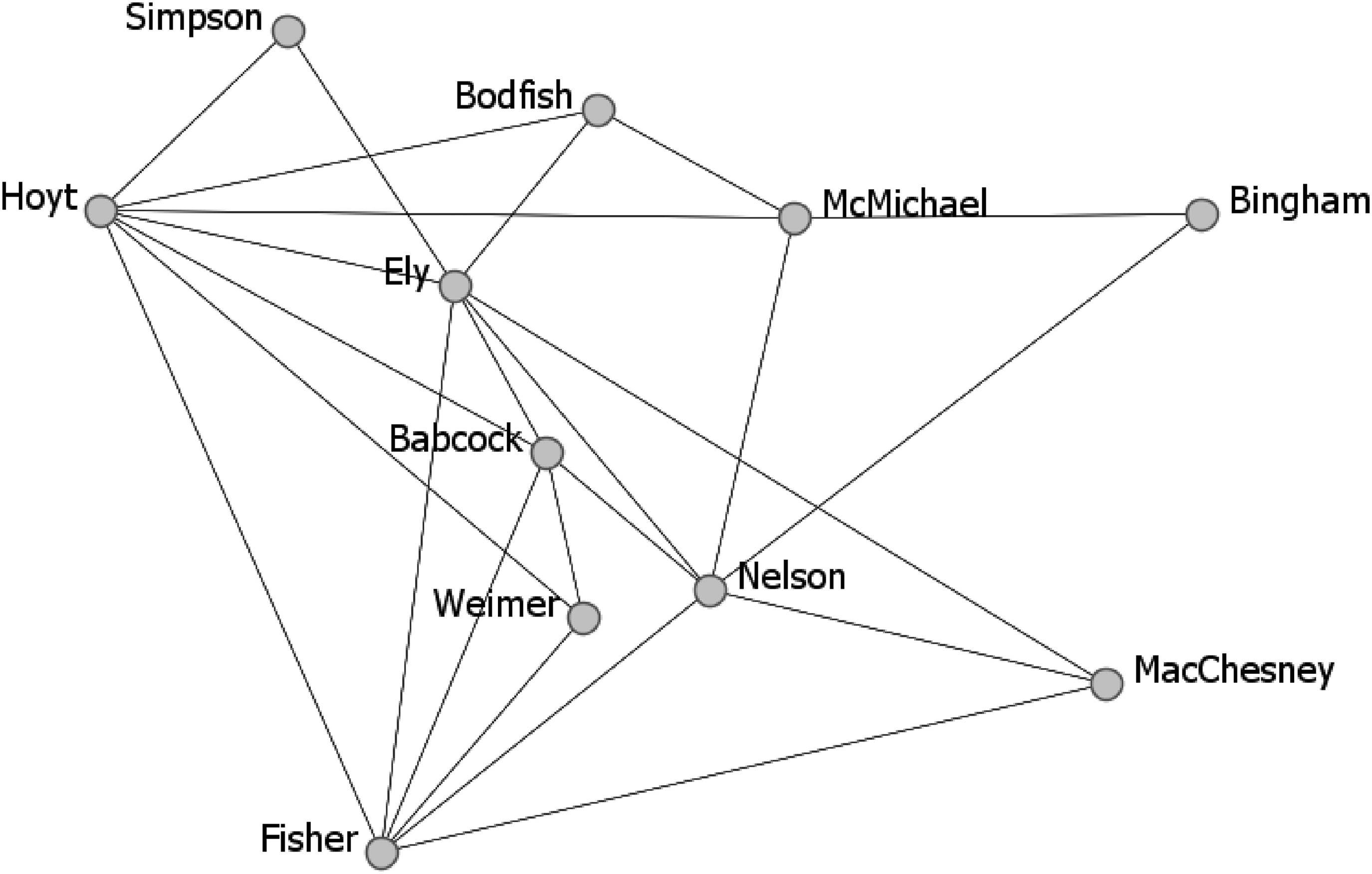
Network of key people in real estate.
In the 1920s, the Ely and University of Wisconsin created the Department of Real Estate and Land Economics; the first real estate department in the United States (Miller & Markosyan, 2003). Ely also founded the Institute for Research in Land Economics and Public Utilities (referred to hereafter as the Institute) and its academic journal, The Journal of Land & Public Utility Economics (now called Land Economics) (Weiss, 1989, 2000). In 1925, Ely moved his Institute to Northwestern University. Although Ely's new university was 20 miles north of the University of Chicago (Weiss, 1989), Northwestern housed their new Institute at its downtown Chicago campus: about eight miles north of the University of Chicago. There, University of Chicago scholars, including Homer Hoyt, exchanged ideas with members of the Institute, such as Herbert Simpson (Hoyt, 1933; Simpson, 1929; Weiss, 2000).
Ely had strong ties to an important trade association, the National Association of Real Estate Boards (NAREB) (Hornstein, 2005): founded to professionalize the real estate industry, to distinguish trustworthy professionals from sleazy operators, and to put land valuation on a scientific footing (Davies, 1958; Glotzer, 2020; Light, 2011). NAREB's executive secretary, Herbert U. Nelson, convinced Ely to create the Standard Course of Real Estate (Abrams, 1955). Ely became the director of education for NAREB and set out to “construct a course specifically to standardize real estate practice, provide uniform training, and professionalize real estate by giving it a curriculum developed through a rigorous scientific process” (Glotzer, 2020, p. 137). Ely's staff taught these courses in over 150 cities (Rader, 1966). He edited a book series, entitled Land Economics, to serve as texts for the course. To write these texts, Ely recruited leading real estate figures: including Fisher (1923), Babcock (1924), Nelson (1925), and MacChesney (1927).
Just as human ecology influenced sociology in the Chicago School, it influenced those in real estate: “Faculty and student at the University of Chicago's departments of Sociology and Geography … applied concepts and methods from plant and animal ecology to explain life in cities, creating the ‘human ecology’ research tradition in the United States. Scholars at Northwestern University's Institute for Research in Land Economics and Public Utilities with close ties to industry and government … borrowed liberally from human ecology as they set the curriculum for the National Association of Real Estate Boards Standard Course in Real Estate and the appraisal practices of federal agencies, including the U.S. Home Owners Loan Corporation and the U.S. Federal Housing Administration” (Light, 2009, p. 4).
Real estate brokers believed that racially homogenous, stable neighborhoods were best for property values; people who could afford to buy homes did not want to live near swarthier neighbors (Glotzer, 2020; Gotham, 2002a; Trounstine, 2018). In short, NAREB members were concerned about the same structural factors that the Chicago School scholars studied. For decades, people in real estate had been creating tools to control structural factors, the first was zoning.
Zoning is the “process in which municipal officials carve the city into areas or ‘zones’ and then [designate] permitted uses and construction guidelines for property in each type of zone” (Glotzer, 2020, p. 110). It can be used for good, such as prohibiting the construction of factories in residential areas. It can also be used for bad, such as segregating people based on race. In Baltimore, from 1910 to 1949, some governments created zoning laws to exclude Blacks from some residential areas (Rabin, 1989; Silver, 1997). Zoning was an early policy tool to address ethnic heterogeneity. But in 1917, the Supreme Court's decision in Buchanan v Warley forbade explicit racial zoning (Winling & Michney, 2021).
But there were other tools to control ethnic homogeneity, such as racial covenants (Freund, 2007; Rose & Brooks, 2016; Trounstine, 2018). In the 1890s, the Roland Park Company pioneered the use of racially restrictive covenants to enhance property values in its new development outside Baltimore (Glotzer, 2020). All properties possess deeds, a description of the real estate and evidence of ownership. Covenants on deeds specify activities owners must or must not take on the property. To control the racial makeup of neighborhoods, real estate brokers wrote racial covenants into deeds (Gotham, 2000b). These covenants restricted the types of people who could reside on the property. For example, for nearly all properties in the Blue Ridge neighborhood of Seattle, Washington, covenants specified that: No residence property shall at any time, directly or indirectly, be sold, conveyed, rented or leased in whole or in part to any person or persons not of the white or Caucasian race (Seattle Civil Rights & Labor History Project, 2022, n.p.).
By 1940, one estimate claimed 80 percent of Chicago and Los Angeles were encumbered with covenants banning Black families (United States Commission on Civil Rights, 1973, p. 4). If a White owner sold a race restricted property to a nonwhite person, the sale would violate the covenant and allow neighbors to sue in court. The new Black owner, therefore, risked forfeiting his property (Rothstein, 2017). These racial covenants were legally enforceable until the U.S. Supreme Court forbade their enforcement in Shelley v. Kraemer (1948).
Between their creation and the Supreme Court's decision to ban their enforcement, NAREB officials helped expand the use of racial covenants (Glotzer, 2020). NAREB wanted to guarantee to White property buyers that Blacks would not be their neighbors. Covenants provided that guarantee. This guarantee increased property values in White neighborhoods relative to Black neighborhoods. In their book, endorsed by NAREB, realtor Stanley McMichael and attorney Bingham (1923) wrote: With the increase in colored people coming to many northern cities they have overrun their old districts and swept into adjoining ones or passed to other sections and formed new ones. This naturally has had a decidedly detrimental effect on land values for few white people, however inclined to be sympathetic with the problem of the colored race, care to live near them. Property values have been sadly depreciated by having a single colored family settle down on a street occupied exclusively by white residents (p. 181)
McMichael and Bingham's solution? Frankly, rigid segregation seems to be the only manner in which the difficulty can be effectively controlled. The colored people certainly have a right to life, liberty and the pursuit of happiness but they must recognize the economic disturbance which their presence in a white neighborhood causes (McMichael & Bingham, 1923, pp. 181–2).
In short, their solution to the perceived disorder Blacks bring to neighborhoods was to control the structural factor of ethnic heterogeneity.
A year after McMichael and Bingham argue for segregation, NAREB codified racial homogeneity in their code of ethics for brokers: a set of rules, that if violated, could result in a broker losing his license (Abrams, 1955). The code was drafted by attorney Nathan MacChesney, a close friend of Ely and Nelson and general legal counsel to NAREB (MacChesney, 1927, p. xviii; Philpott, 1978, p. 190). Article 34 in the code read: A Realtor should never be instrumental in introducing into a neighborhood a character of property or occupancy, members of any race or nationality, or any individuals whose presence will clearly be detrimental to property values in that neighborhood (NAREB, 1924, p. 7).
MacChesney, in his contribution to Ely's Land Economics series, stated, “the restriction against the alienation of lots to persons of the Negro race is valid” (MacChesney, 1927, p. 586). He goes on to justify this by saying: The individual citizen whether he be black or white, may refuse to sell or lease property to any particular individual or class of individuals. The power of the whites to exclude the blacks from purchasing their property implies the power of the blacks to exercise the same prerogative over property which they may own. There is, therefore, no discrimination within the civil rights clause of the Constitution (MacChesney, 1927, p. 587).
MacChesney was also instrumental in drafting the boilerplate language for racial covenants described earlier (Winling & Michney, 2021).
Despite efforts to build a lucrative standardized real estate profession, in 1929 the Great Depression brought the housing market to a standstill. In response, President Roosevelt proposed the New Deal, a series of work projects, reforms, and legislation to revive the economy (Jackson, 1985). Two New Deal federal organizations are of interest to us: the Home Owners Loan Corporation (HOLC) and Federal Housing Administration (FHA) founded in 1933 and 1934, respectively. Both were designed to spur investment in the housing market, and both adopted the point of view of NAREB.
Until the Roosevelt Administration, there was little Federal government intervention in housing markets (Jackson, 1985). Mortgages were difficult to acquire; borrowers needed large down payments and had to repay the remainder of the loan in a few years at high interest rates. Once the Depression hit, many owners defaulted on their loans. The Federal government created the HOLC in 1933 to reinvigorate the housing market. HOLC bought defaulted properties from banks (thus infusing capital into the housing market) and resold the properties using self-amortized mortgages with smaller down payments that could be paid back over more years (Hillier, 2003; Jackson, 1980; Winling & Michney, 2021). This made homeownership accessible to more people, particularly in the middle class.
But buying defaulted loans and refinancing them could be risky. So, the HOLC needed an appraisal method to determine which properties were financially safe—they would not result in another loan default—if the HOLC refinanced them (Jackson, 1980; Massey & Denton, 1993). Lucky for them, real estate economists had been investigating this question, and had answers. Many of these experts were from universities with real estate and economics programs, such as the University of Wisconsin, Northwestern University, the University of Chicago, and the University of Michigan (Miller & Markosyan, 2003). They joined the HOLC and the Federal Housing Administration when Congress established it (Winling & Michney, 2021).
The government real estate economists’ strategy was simple. First, split cities into neighborhoods. Second, assess the loan default risk for each neighborhood's potential risk based on “occupation, income, and ethnicity of the inhabitants and the age, type of construction, price range, sales demand, and general repair of the housing stock” (Jackson, 1985, p. 197). Here we see the application of multiple structural factors in social-economic policy decisions at the neighborhood level.
The HOLC risk assessment process led to the creation of color-coded residential maps. The introduction of these maps made the private policies of real estate brokers government policies enforced by the real estate industry. A-rated neighborhoods were considered “homogenous and in-demand,” whereas D-rated neighborhoods were in decline (Jackson, 1985, p. 198). A key criterion for rating was the presence of poor minorities, particularly Blacks. The presence of Black residents increased the chances a neighborhood would receive a D (Winling & Michney, 2021). D-rated neighborhoods were colored in red giving rise to the term redlining (Bradford, 1979; Rothstein, 2017). Properties in redlined neighborhoods rarely qualified for refinancing. For example, one study of HOLC documents revealed that only “one percent of the applications covered properties in neighborhoods described as ‘Negro’” (Harriss, 1951, p. 53).
But the Federal policy did not stop there. It also needed to ease unemployment. New Deal policies stimulated new home construction by employing construction workers and generating economic activity (Jackson, 1980). This is where the FHA came in. Its purpose was to encourage financial institutions to give out loans and mortgages using as little government spending as possible (Jackson, 1985). Beginning in 1934, the FHA became the largest insurance organization in the United States. Banks would provide loans and the FHA would insure the banks against default (Bradford, 1979). Like the HOLC, the FHA was unwilling to insure loans for all properties. They too needed a risk assessment process to determine which loans were safe to insure. And once again, there was a team of trained real estate professionals available to spearhead this process (Glotzer, 2020; Massey & Denton, 1993; Rothstein, 2017; Trounstine, 2018; Weiss, 1987).
The FHA hired Ely's colleague, Ernest Fisher, to be its director of economics and statistics (Gotham, 2000a; Miller & Markosyan, 2003; New York Times, 1950, 1981). Fisher was the Assistant Executive Secretary for NAREB and Ely's former graduate student (Fisher, 1923; Weiss, 2000). Fisher hired his colleagues, Frederick Babcock, Homer Hoyt, and Arthur Weimer, to develop the FHA's appraisal process (Miller & Markosyan, 2003). Babcock, a research associate in Ely's Institute, became the underwriting director (Babcock, 1924; Miller & Markosyan, 2003). Hoyt became the principal housing economist, and Weimer a housing economist (Miller & Markosyan, 2003). In these roles, they created the FHA's Underwriting Manuals. The manuals were for real estate brokers and appraisers acting on behalf of the FHA while observing housing conditions and residents’ characteristics in city neighborhoods throughout the United States. Brokers and appraisers, using these manuals, created the data that drove property development and investment decisions nation-wide (Abrams, 1955; Beauregard, 2007; Bradford, 1979; Helper, 1969, Hoyt, 1939; Miller & Markosyan, 2003).
“Although Babcock was the chief author of the government's first Underwriting Manual, Hoyt's conclusions appeared in subsequent editions” (Light, 2009, p. 76). We quoted Hoyt and Weimer at the beginning of this article. They used the ideas from their doctoral studies at the University of Chicago to shape cities by creating the FHA's Underwriting Manuals (Beauregard, 2007; Hoyt, 1933; Weimer, 1934). Eugenics-influenced ideas about race played a key role in their work; they emphasized how the presence of different racial groups would have negative impacts on land values (Gotham, 2000a; Light, 2010; Lovett, 2007, 2020; Winling & Michney, 2021). The role of race is illustrated in Hoyt's (1933, pp. 314–6) dissertation where he provides a: … ranking of races and nationalities with respect to their beneficial effect upon land values. Those having the most favorable come first in the list and those exerting the most detrimental effect appear last.
English, Germans, Scotch, Irish, Scandinavians
North Italians
Bohemians or Czechoslovakians
Poles
Lithuanians
Greeks
Russian Jews of the lower class
South Italians
Negroes
Mexicans
It is doubtful Hoyt abandoned these eugenicist ideas when he left academia and joined the federal government. The FHA's Underwriting Manuals contained the same warnings about the “threatening or probable infiltration of inharmonious racial groups” and their impact on property values (FHA Underwriting Manual, 1936, clause 1360). These ideas were also included in textbooks. Weimer and Hoyt's (1948) textbook instructed real estate brokers to use zoning and racial covenants to protect against “blighting influences [such as] unfavorable land uses and inharmonious groups of people” (p. 127). Similarly, in his widely used appraisal manual, McMichael (1951) cites Hoyt's (1933) ranking of races to warn of their impact on property values. Federal policies and real estate practices sorted people into White suburbs and increasingly Black inner cities: the diversity of populations within neighborhoods was not due to natural sorting (Jackson, 1985; Jacobs, 1961; Massey & Denton, 1993).
With much to gain if they followed FHA policies, and much to lose if they did not, financial institutions began approving loans in suburban areas at unprecedented rates (Shlay, 1988). If buyers defaulted, the taxpayer would foot the bill. Financiers, such as Morton Bodfish, a former student of Ely (Weiss, 1989, 2000), and a colleague of Hoyt (e.g., Bodfish & Hoyt, 1949), was instrumental in developing the lending policies of banks to adhere to FHA insurance policies (Gotham, 2000a). Bodfish was the president of the Savings and Loan League, the founder of the Federal Home Loan Bank Board, and later a professor of land economics at Northwestern University with Ely (New York Times, 1966; Weiss, 2000). But because the FHA seldom insured loans in the urban core, few mortgages were approved in those areas (Jackson, 1980; Jacobs, 1961). The lack of investment in deteriorating areas worsened older inner-city neighborhoods.
With a growing population in the suburbs, and jobs within cities, governments needed to address commuting (Jackson, 1985). Building highways in the outskirts of cities was relatively easy as there was a great deal of unbuilt land. But these highways would only be useful if they connected to roadways in the urban core. Extensive multi-lane highway construction began across the U.S. in the 1950s (Weber, 2012). Governments, with powers of eminent domain and federal funding, seized properties, evicted residents, demolished buildings, bulldozed routes, and paved highways (Abrams, 1955). Most properties acquired for highways ran through poor minority-occupied city neighborhoods where residents had no political clout to stop the projects (Mohl, 2004). The new highways also cut many neighborhoods in half, displacing residents, and fracturing social ties (John, 2020). By the early 1950s many inner-city neighborhoods had deteriorated, almost beyond repair. But as architectural journalist Jane Jacobs (1961, p. 306) argued, we have “no one to blame for this but ourselves.” She continues: the immense new suburban sprawls of American cities have not come about by accident … [they were] made practical (and for many families was made mandatory) through the creation of something the United States lacked until the mid-1930s: a national mortgage market specifically calculated to encourage suburban home building (Jacobs, 1961, p. 308).
These changes did not arise naturally. This deterioration occurred because the government incentivized lenders to withhold investment from inner-city neighborhoods (Bradford, 1979). To address the problem, the federal government responded with urban renewal policies in the Housing Acts of 1949 and 1954.
Urban renewal was a process where the government would use its powers of eminent domain to seize properties in blighted areas and redevelop them (Trounstine, 2018). The theory was that this would reinvigorate the areas (Klemek, 2011). But the process was brutal. Governments evicted thousands of residents and offered little assistance with relocation (Abrams, 1955). This created additional population mobility in inner-city areas, and some felt this far worse than others. Governments seldom gave residents assistance in finding new places to live (Abrams, 1955). For displaced Black residents, the consequences were more dire. Racial restrictions prevented them from moving into many neighborhoods, and often African Americans could “only move into neighborhoods where African Americans already lived” (Giglierano et al., 1988, p. 173). Often governments would sell the seized land to private developers who would redevelop the properties, then refuse to rent or sell them to nonwhite persons (e.g., Dorsey v. Stuyvesant Town Corp., 1949). Thus, the renewal mostly benefited the rich and few residents who previously occupied the area ever enjoyed the benefits of the new construction (Gelfand, 1975; Massey & Denton, 1993; Teaford, 1990).
We have said little about crime because our focus in this section was the network that shaped the structural conditions that might lead to crime. In the next section, we tie this network to the Chicago School network. Tied, these networks reveal a self-fulfilling prophecy. Only then do we return to crime; we explain why the self-fulfilling prophecy may have created a spurious relationship for criminology.
Connected Networks
We have presented two networks as if they were independent (Figures 1 & 3). The facts are otherwise; the networks are connected (Figure 4). The connections are easy to draw (see Appendix B3 in the Supplemental Materials), so we begin with these. We found nine links among eight key individuals spanning the two networks (bold lines in Figure 4). Hoyt, Ely, and McKenzie had three or more links to someone in the other network. Only Nelson had a single link to someone outside his real estate network. Let's look at these cross-network connections in greater detail as they suggest considerable cross-fertilization of ideas: more than reading each other's academic publications.
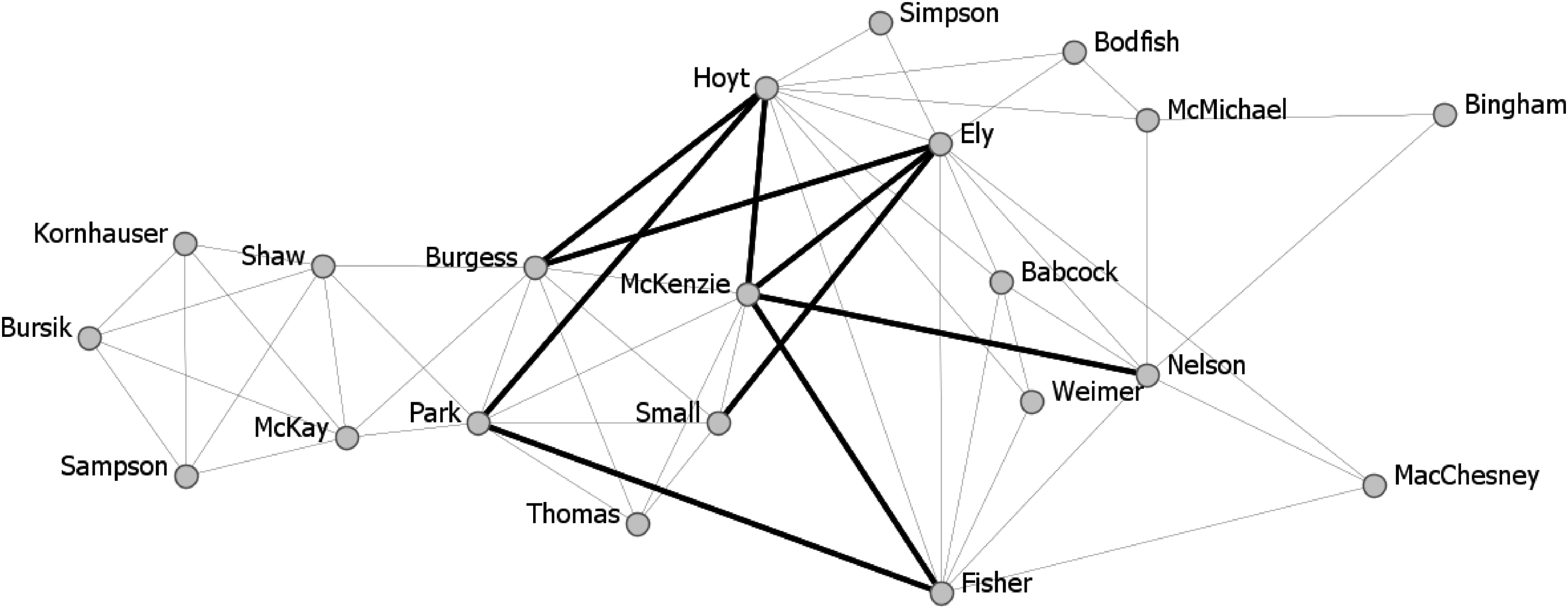
Connections between the Chicago School network and real estate network.
Albion Small was Richard Ely's graduate student at Johns Hopkins University, where Small received his doctorate (Rader, 1966; Raushenbush, 1979). Ely served on the Chicago Housing Commission with Ernest Burgess starting in 1926 (Light, 2009, p. 52; Philpott, 1978). They also served on the 13-member Illinois Housing Commission from 1931 to 1933 (Schaffter, 1942, p. 451). Park and Burgess also included work by Ely in their seminal textbook, The Introduction to the Science of Sociology (1921). Ely, Herbert Nelson, and Roderick McKenzie participated in President Herbert Hoover's Conference on Home Building and Home Ownership “to debate such topics as ‘Negro Housing’ and slum repair” in 1931 (Light, 2009, p. 28). McKenzie, Robert Park, and Ernest Fisher served on President Hoover's Presidential Research Committee on Social Trends “to offer their views on the status of metropolitan areas” in 1933 (Light, 2009, p. 28; McKenzie, 1933).
Arthur Weimer and Homer Hoyt were PhD students in economics at the University of Chicago (Miller & Markosyan, 2003). In his dissertation, the foundation for his appraisal process at the FHA, Hoyt (1933, p. x) wrote: In formulating this study I have been greatly stimulated by the ecological studies made by the Departments of Sociology at the University of Chicago and the University of Michigan, and I desire to express my gratitude for helpful suggestions in the works of Professors Robert E. Park, Roderick D. McKenzie, Ernest W. Burgess, and Louis Wirth.
Hoyt (1939) developed sector theory, an extension of Burgess’ concentric zone theory, to explain the growth of urban cities (Kurtz, 1984). This connection is not surprising given all social science scholars at the University of Chicago were housed in the same building (Bulmer, 1980). As previously mentioned, University of Chicago scholars spent time at Northwestern's downtown campus where Ely's Institute was housed. Weiss (2000, p 336) notes, “Hoyt exchanged research materials and ideas with members of the Institute,” such as Herbert Simpson, whose work Hoyt acknowledges as “suggestive and helpful” to developing his dissertation (Hoyt, 1933, p. x).
These connections explain, in part, why members of the two networks use the same framework. Both discuss structural factors as important for understanding neighborhoods. Both suggest these structural factors influence order in neighborhoods. Indeed, both use the concept of neighborhood, a concept that the real estate industry transformed from a synonym for area to a tool for making decisions (Dahir, 1947; Perry, 1929; Venkatesh, 2001).
Our networks underestimate the sharing of ecological ideas. Light (2009), in her book The Nature of Cities, shows human ecology permeated the thinking of both Chicago School and real estate scholars. This sharing is more than an academic note. It has crucial implications for crime research today. The connections and influence created a self-fulfilling prophecy (Abbott, 2020; Garcia, 2019; Jackson, 1985; Jacobs, 1961). We turn to this next.
Human Ecology and the Self-Fulfilling Prophecy
Recall, that a self-fulfilling prophecy is “a false definition of the situation evoking a new behavior which makes the originally false conception come true” (Merton, 1948, p.195). The self-fulfilling prophecy we have described follows this logic. Chicago School sociologists borrowed metaphors from plant ecology and applied them to cities (Kurtz, 1984; McKenzie, 1925). They articulated the concept of social disorganization and speculated that neighborhood characteristics, created by large scale social processes, created variations in social order among neighborhoods. They warned that neighborhoods characterized by poverty, ethnic heterogeneity, and population mobility, are socially disorganized and will experience adverse outcomes such as crime, delinquency, infant mortality, and disease (Burgess, 1916; Park et al., 1925; Shaw & McKay, 1942/1969). Since then, generations of criminologists have used the ecological perspective to frame their data gathering and analysis. And they discover these neighborhood characteristics are correlated with crime (Wilcox et al., 2018).
People in real estate, finance, planning, and economics shared the same ecological ideas (Bradford, 1979; Jackson, 1985; Light, 2009). But these real estate experts had different goals. As Beauregard (2007, p. 257) notes, “… Burgess had sociological theory as a goal, Hoyt had the practicalities of real estate investment.” Those in real estate believed social organization was good for property values and social disorganization was bad. Seeing as they are in the business of generating profits, they devised ways to avoid social disorganization. Their solution: create socially organized areas. For this purpose, they created legal tools. To reduce ethnic heterogeneity, they used zoning laws and restrictive covenants to create all White neighborhoods (Rothstein, 2017; Silver, 1997; Trounstine, 2018). To encourage affluence, as opposed to poverty, they created property appraisal methods that encouraged lenders to give out loans for new construction of single-family homes in suburban neighborhoods (Jackson, 1985; Massey & Denton, 1993; Shlay, 1988). To create stability, they developed suburban neighborhoods of homeowners rather than renters (Jackson, 1980). These efforts would create orderly neighborhoods that people would demand to live in. This was the positive side of their coin.
The coin had negative side too. Creating homogeneity restricted nonwhites to a small set of older neighborhoods with deteriorating infrastructure (Abrams, 1955). Racial covenants and redlining curtailed wealth accumulation among Blacks and required Blacks to pay higher rents due to housing scarcity (Rothstein, 2017). Creating suburban stability destabilized urban neighborhoods. Stifling investment in redlined areas prevented residents from exiting poverty (Rothstein, 2017). Compounding this was the shift of industry from the urban core to the suburbs; from adjacent Black neighborhoods to near White ones (Jackson, 1985; Massey & Denton, 1993; Wilson, 1987). Over time, inner-city areas deteriorated so much that governments funded urban renewal policies (Klemek, 2011). Governments used their powers of eminent domain to seize properties, evict residents, and demolish buildings. They then empowered others to construct multi-lane highways, middle-class housing, and municipal buildings (Abrams, 1955; Mohl, 2004). The eviction process created a source of population mobility.
As those in real estate enacted these policies and practices, criminologists continued to examine data on structural factors and crime. It should not be surprising that criminologists routinely found structural factors correlate with crime. Real estate, finance, and government officials had made sure of it.
If people in real estate and government had not acted, it is unlikely we would find the correlations between structural factors and crime we observe today (Linning & Eck, 2021). The fact that the worst of these practices occurred decades ago does not eliminate their impacts. Research on redlining shows its impacts decades after the drawing of red lines; they are detectable today (Aaronson et al., 2021; Appel & Nickerson, 2016; Best & Mejia, 2022).
In summary, human ecology created a self-fulfilling prophecy whose effects are still felt today. The ecological ideas were common to intellectuals studying cities in the early part of the twentieth century; human ecology influenced both networks (Light, 2009). Human ecology's prophecy has important implications for research in criminology, both in terms of what we study and how to interpret findings. We turn to this in the next section.
So What? A Possible Spurious Relationship
We have made the case that the characteristics of areas within cities are created by the intentional activities of real estate and government actors. Poverty, residential mobility, and racial heterogeneity do not just happen. They are not the result of natural processes. They do not emerge from unrestricted social interaction. Concrete institutions make decisions that create variation in structural factors across neighborhoods (Linning et al., 2022). And these decisions play out over decades. Historical evidence showing this prophecy suggests that the community criminology explanation presented in Figure 2 is inadequate. But we set out to show more than this.
We stated at the beginning that we would show that connections between real estate interests and the Chicago School imply a self-fulfilling prophecy. Merton (1948) warns that with such prophecies comes spuriousness. We have made some progress toward demonstrating the prophecy and spuriousness, but to complete our argument, we must draw another connection. We need to show a plausible mechanism linking real estate actions to crime without involving structural factors. We need to show that even in the absence of poverty, residential instability, and ethnic heterogeneity (or any other structural factor, such as concentrated disadvantage) that real estate processes help drive crime. We turn to that next.
Property has value for what it can produce. Owners of valuable property will invest more in their properties than owners of less valuable properties. Property value is dependent on the willingness of people to use it: use it as shoppers, renters, employees, clients, patrons. One determinant of the willingness of place users to frequent a property is user safety. Property owners and operators—place managers—can act to promote feelings of safety by imposing social controls (Bichler et al., 2013; Clarke & Bichler-Robertson, 1998; Douglas & Welsh, 2020; Eck & Madensen, 2018; Graham & Homel, 2008). Place managers impose controls by organizing space, regulating conduct, controlling access, and acquiring resources (Eck et al., 2023). Also, place managers lose revenue to crime when their goods and facilities are stolen or damaged. So place managers impose social controls to protect their investments. Most of these controls are situational. When the property is valuable, place managers will have greater incentives to impose controls and will have more resources to exercise control (Eck, 2018, 2019).
Areas of cities have reputations, and reputations last for very long times. In areas of cities where people want to work, play, and reside property values are higher, and financial institutions will face lower risks when lending money to place managers (Eck, 2018, 2019). In areas of cities where large segments of the population do not want to work, play, and reside, property values are lower, and financial institutions face higher risks of loan defaults. Redlining, racial covenants, and related actions signaled reputation, influenced financial decisions, and altered the abilities of place managers to derive value from their properties.
Consequently, in areas of cities where places are valued, place managers exert more control, and there is less crime (Eck et al., 2023). This is never uniform, so crime places will pop up from time to time. But because places have value, owners in the area will take action to suppress high crime spots (Eck, 2018, 2019). They have a set of mechanisms. They can cajole the owners of the bad place. They can try to purchase and rehabilitate bad places. They can demand code and other regulatory actions against deviant places. And they can call the police.
In areas of cities where places are devalued, place managers as a group will struggle to exert control. Their resources are tight, so their abilities are limited (Bloom, 2008; Hunt, 2009; Newman, 2005). They can find ways to live with the crime, particularly if the crime facilitated by their places does not interfere with operations. And in some cases, place managers can profit from crime (Eck & Madensen-Herold, 2018). Though many nearby place managers may find coping and profiting repellent, they will have less ability to employ the control mechanisms their colleagues in other neighborhoods can employ. The result will be more high crime places. These high crime places will have more crime than in other neighborhoods. These high crime places will promote more crime in their immediate surroundings than in other neighborhoods (Bowers, 2014; Sherman et al., 1989). And these high crime places will last longer than high crime places in other neighborhoods.
Burgess’s (1925) notion of the interstitial area, or zone in transition, is compatible with these mechanisms. As Snodgrass (1976) noted, the interstitial area is largely owned by people and institutions speculating on property values. Order is not a concern. The owners of tenements had little incentive to invest in order, so they often did not.
We have now provided a plausible causal chain from real estate decisions to crime without engaging either structural factors or informal social control. It relies on place managers controlling crime. Can place managers control crime? The answer from experiments and quasi-experiments is yes, they can (Bichler et al., 2013; Clarke & Bichler-Robertson, 1998; Eck & Guerette, 2012). Lee et al. (2022) showed that place management can account for at least 25 percent of the variation in crime across places, even accounting for neighborhood characteristics and place types. Their results are conservative, as they only examined crime within places and not crime pushed into the neighborhood from poorly managed places (Eck et al., 2023).
In short, researchers cannot rule out the possibility that real estate action could have an impact on crime completely separated from their influence on structural factors. This creates the threat of spuriousness. Criminologists have not yet tested this possibility, although Bursik (1989) implied spuriousness is a concern.
Figure 5 displays the possible statistical relationships that should be explored given this evidence. Panel A denotes the traditional community criminology model described earlier. Panel B introduces real estate practices by showing the possibility of a mediating relationship. Powell and Porter (2022) recently examined empirical links between historical redlining practices, concentrated disadvantage, and violent crime in Chicago. They found that the relationship between redlining and violent crime was partially mediated by concentrated disadvantage. They did not test how other real estate-related variables—such as zoning, racial covenants, and urban renewal—impacted crime.
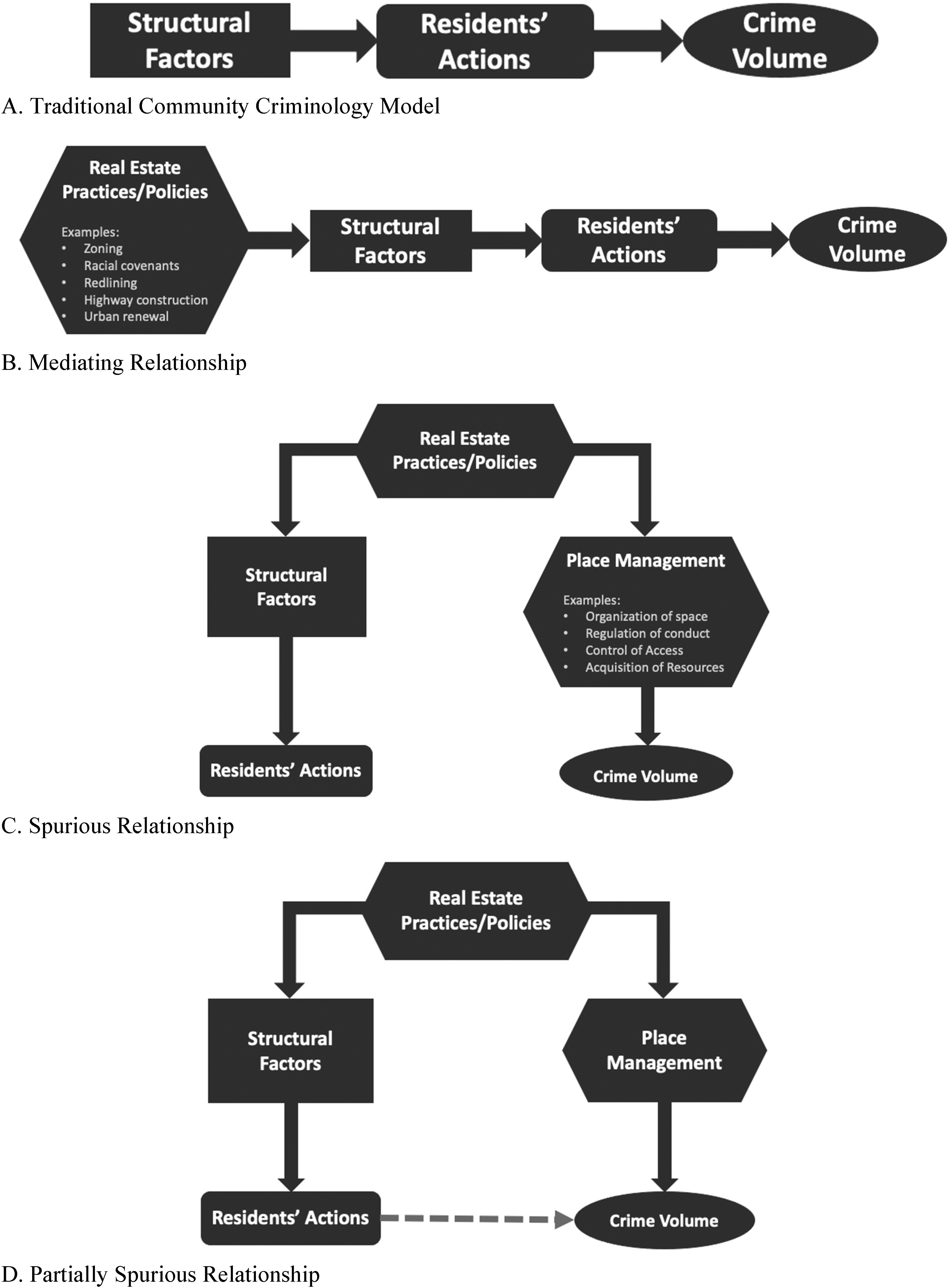
Alternative causal connections in community criminology.
Panels C and D denote the possibility of a spurious relationship between structural variables and crime. The first is full spuriousness; there is no causal relationship between structural factors and crime (Figure 5c). The real estate practices and policies, by influencing place management, drive crime. Real estate practices also drive structural factors which impact residents’ actions. However, residents’ actions have no influence on crime. If true, the correlations sometimes observed between residents’ actions and crime are the result of omitted variable bias created by not including real estate practices.
The second is partial spuriousness (Figure 5d). Here, real estate practices influence both crime and structural factors. Structural factors drive residents’ actions and residents’ actions influence crime. Without controlling for real estate practices or place management, correlations between residents’ actions and crime will be inflated. The relative influence of real estate practices and residents’ actions on crime cannot be determined without further research.
The diagrams in Figure 5 illustrate the simplest arrangements. We have not, for example, shown place management's mediating effect between real estate and crime. We know that place management influences crime (Bichler et al., 2013; Clarke & Bichler-Robertson, 1998; Douglas & Welsh, 2020; Eck & Guerette, 2012; Graham & Homel, 2008; Lee et al., 2022). But it is possible that structural factors influence place management and vice versa. Further, it is possible that place management may influence residents’ actions. However, without addressing real estate practices and place management, the impact of structural factors and residents’ actions on crime is uncertain (Eck et al., 2023; Linning & Eck, 2021; Linning et al., 2022).
Conclusion
In this paper, we drew from the works of historians of race, cities, and urban policy. Historians have documented how the racial segregation we see today came about (Freund, 2007; Glotzer, 2020; Gotham, 2002b; Jackson, 1985; Light, 2011; Massey & Denton, 1993; Rose & Brooks, 2016; Rothstein, 2017; Silver, 1997; Trounstine, 2018). Their research shows how the actions of people outside of neighborhoods shape structural conditions.
Their work has helped drive current public discussion and action. The University of Virginia's (2023) Mapping Inequality website, for example, has shown the prevalence of redlining across the United States. The President of the National Association of Realtors issued a formal apology in 2020 for “the association's past policies that contributed to segregation and racial inequality in America” (Shaw, 2020, n.p.; see also Robison & Buhayar, 2021). The city of Evanston, Illinois approved a reparations program in 2021 recognizing the “discriminatory housing policies and practices and inaction on the city's part” that have contributed to inequities in Black neighborhoods (Treisman, 2021). And when President Biden proposed his infrastructure law, he highlighted the role federal policies played in creating racial and economic disparities across neighborhoods (Norwood, 2021). Despite this recognition, there is evidence that racial discrimination in the housing market persists through mechanisms such as racial steering, and price discrimination in housing markets and mortgages (Galster & Godfrey, 2005; Holland & Squires, 2022; Squires, 2007).
And despite this recognition, we do not see these historical facts incorporated into statistical models within community criminology studies. Most community criminology studies use cross-sectional designs. In studies where longitudinal data are used, there is not more than a decade of data (Wickes & Hipp, 2018). Although crime researchers include area populations’ race as an independent variable, most omit racial policies that molded the area (a notable exception is Powell & Porter, 2022). Researchers include percent Black in their models, but they do not include whether neighborhoods have been subjected to zoning, highway construction, redlining, urban renewal, or racial covenants.
Our paper suggests two lessons that can help bring this history into community criminology. Our first lesson is that the relationship between structural factors and crime may be spurious. There is nothing natural about neighborhoods or how structural factors arise. They are deliberately created by property owners, developers, real estate brokers, and governments (Linning et al., 2022). This means criminologists need to start studying the decisions and practices of those who shape structural factors and crime opportunities (Linning & Eck, 2021). They should also incorporate historical and property data capturing the influence of these policies. Researchers have begun providing examples of how this can be done (Aaronson et al., 2021; Argueta Jr. et al., 2022; Gomory & Desmond, 2023; Hillier, 2003; Powell & Porter, 2022; Tucker & O’Brien, 2023).
Second, when it comes to understanding why neighborhoods have crime, we need to consider those who shape neighborhoods (Linning et al., 2022). Those who shape structural factors and crime opportunities often do not live in the neighborhoods they shape; they are outsiders. The bad news is that many outsiders have historically used their power to exclude some groups of people from some neighborhoods. The good news is we can do something about it. If neighborhoods are deliberately created by outsiders, then polices directed at these decision-makers are in order. Residents, particularly in low-income and high crime neighborhoods, are renters with little power over structural conditions, crime, and disorder. So why do criminologists advocate for programs to organize them? Would criminologists be more effective by focusing on people who can control neighborhood characteristics: real estate brokers, property developers, financial institutions, governments, and the like? Why do criminologists conduct social surveys of residents to examine the causes of crime? Would criminologists gain greater insight by studying outsiders: landlords, business owners, property developers, and regulatory agents?
Those who believe we have overstated our case, and who believe residents can influence these neighborhood processes, should contrast the abilities of residents to control crime with the abilities of outsiders who own and operate land. Criminologists need to control for real estate practices if they want to establish the primacy of structural factors and residents. In fact, the test of our thesis would be to see if structural factors have a strong impact on crime after controlling for real estate and place management practices. If they do, we are wrong. But until such tests are conducted, our conclusions are a threat to the thesis that structural factors drive crime.
Supplemental Material
sj-pdf-1-cjr-10.1177_07340168231175444 - Supplemental material for Race-Based Real Estate Practices and Spuriousness in Community Criminology: Was the Chicago School Part of a Self-Fulfilling Prophecy?
Supplemental material, sj-pdf-1-cjr-10.1177_07340168231175444 for Race-Based Real Estate Practices and Spuriousness in Community Criminology: Was the Chicago School Part of a Self-Fulfilling Prophecy? by Shannon J. Linning and John E. Eck in Criminal Justice Review
Supplemental Material
sj-docx-2-cjr-10.1177_07340168231175444 - Supplemental material for Race-Based Real Estate Practices and Spuriousness in Community Criminology: Was the Chicago School Part of a Self-Fulfilling Prophecy?
Supplemental material, sj-docx-2-cjr-10.1177_07340168231175444 for Race-Based Real Estate Practices and Spuriousness in Community Criminology: Was the Chicago School Part of a Self-Fulfilling Prophecy? by Shannon J. Linning and John E. Eck in Criminal Justice Review
Footnotes
Acknowledgments
We thank J.C. Barnes, Martin Bouchard, Francis Cullen, and John Wright for their helpful comments on earlier drafts of our manuscript. And we thank Sadaf Hashimi for assistance with our network figures. During the early phases of generating the ideas in the paper, Pamela Wilcox was particularly encouraging. We thank her. We also thank two anonymous reviewers for this journal; their perceptive comments were very helpful in improving our paper. Finally, we thank this journal's editor, Timothy Brezina, for creating a useful, timely, and fair review process.
Declaration of Conflicting Interests
The author(s) declared no potential conflicts of interest with respect to the research, authorship, and/or publication of this article.
Funding
The author(s) received no financial support for the research, authorship, and/or publication of this article.

Supplemental Material
Supplemental material for this article is available online.
Author Biographies
References
Supplementary Material
Please find the following supplemental material available below.
For Open Access articles published under a Creative Commons License, all supplemental material carries the same license as the article it is associated with.
For non-Open Access articles published, all supplemental material carries a non-exclusive license, and permission requests for re-use of supplemental material or any part of supplemental material shall be sent directly to the copyright owner as specified in the copyright notice associated with the article.
