




Abstract
COVID-19 may affect police activities (i.e., traffic stops, arrests, and use of force) due to public compliance with COVID-19 restrictions, changes in individuals’ daily activities, and health threats posed by COVID-19. The purpose of this research is to examine the effects of COVID-19 on police activities and the trends in these activities in Burlington, Vermont. The data that measured arrests, traffic stops, and use of force were obtained from the Burlington Police Department website and covered the period from December 10, 2018 through June 14, 2021. Then, the daily time-series data for arrest rate, use of force rate, and traffic stop rate were created (N = 918; 459 days pre-COVID-19 and 459 days during COVID-19). The results showed that COVID-19 statistically significantly decreased traffic stops and arrests, but not use of force on the day immediately following the implementation of the COVID-19 restrictions and then remained stable over time. However, no significant change was detected in the trends of arrests, traffic stops, and use of force before and during the COVID-19 period. COVID-19 had a significant immediate and lasting effect on traffic stops and arrests, but not use of force.
Introduction
The Coronavirus (COVID-19) pandemic has become a serious public health issue worldwide. As of August 2022, about 582,000,000 cases of infection were confirmed, and more than 6,400,000 people died worldwide (WHO, 2022). The pandemic has affected all countries, including the United States. As of August 2022, in the U.S., there were more than 92,000,000 confirmed cases, and more than 1,000,000 people died (CDC, 2022). In the spring of 2020, as a means of mitigating the spread of COVID-19, government officials implemented lockdown measures that included closing schools and nonessential businesses, implementing social distancing, requiring stay-at-home orders, and limiting gathering sizes.
COVID-19 has attracted the attention of scholars, and several have examined the impact of COVID-19 on different outcomes, including different crime types (Campedelli et al., 2021; de la Miyar et al., 2021; Hodgkinson & Andresen, 2020), property crime (Borrion et al., 2020; Felson et al., 2020; Halford et al., 2020), violent crimes (Halford et al., 2020; Payne et al., 2022), gun violence (Kim & Phillips, 2021), traffic stops (Mohler et al., 2020), and arrests (Moise & Piquero, 2021).
The effects of COVID-19 on people are widespread and not limited to crime. COVID-19 may affect traffic stops, arrests, and use of force due to people's compliance with COVID-19 restrictions, changes in individuals’ daily activities, and health threats posed by COVID-19. Citizens’ compliance with COVID-19 restrictions limits police-citizen contacts (see Murphy et al., 2020), and disruption to daily activities reduces the likelihood of occurrence of crime (e.g., Andresen & Hodgkinson, 2020; Campedelli et al., 2021; see also Cohen & Felson, 1979). In turn, police activities, including traffic stops, arrests, and use of force decrease. One study examined the effect of COVID-19 on traffic stops (Mohler et al., 2020), and another study examined the effect of COVID-19 on arrest clusters (Moise & Piquero, 2021). Two studies examined the effect of COVID-19 on arrests for domestic violence (Bullinger et al., 2020; Demir & Park, 2021). As of this writing, there is not a previous study that explored the effect of COVID-19 on use of force. The current study examines the effect of COVID-19 on traffic stops, arrests, and use of force (hereafter police activities) in Burlington, Vermont (VT). The results of the current study may help researchers gain a more in-depth understanding of how the disruption of daily routines and the lockdown affected police activities.
Literature Review
Theoretical Background
The effect of COVID-19 on reducing police activities could be attributed to citizen compliance with COVID-19 restrictions, decrease in crimes, changes in individuals’ daily activities, and the health threat COVID-19 posed to police officers and members of the public.
Citizen compliance with COVID-19 restrictions is more likely to result in fewer contacts between police and citizens. People's compliance with COVID-19 restrictions may be explained using legitimacy theory (see Murphy et al., 2020). Legitimacy theory states that citizens obey laws that are perceived as legitimate (Murphy et al., 2017; Tyler, 1990). Studies have shown that citizen perceptions of law legitimacy are associated with cooperation with authorities (Cherney & Murphy, 2013; Jackson et al., 2012; Murphy & Cherney, 2012; Murphy et al., 2009, 2017; Van Damme & Pauwels, 2016). Legitimacy theory also suggests that people are more likely to comply with COVID-19 restrictions voluntarily because they believe that it is the right thing to do for themselves and others. Legitimacy theory explains why people follow COVID-19 restrictions, therefore limiting citizen contacts with police. As a result, police are less likely to make arrests, conduct traffic stops, and use force.
Citizen compliance with COVID-19 restrictions led to decrease in crime (see Abrams, 2021; Andresen & Hodgkinson, 2020; Campedelli et al., 2021; de la Miyar et al., 2021; Halford et al., 2020; Mohler et al., 2020), which likely led to police officers making fewer arrests and using force less frequently.
Furthermore, with COVID-19 restrictions, people spent more time at home and stayed away from public places, which led to fewer contacts between police officers and citizens (see Mohler et al., 2020 and Nouri & Kochel, 2021). Fewer contacts between police officers and citizens are likely to lead to a decreased use of police force. Additionally, fewer people leaving their homes are expected to result in fewer traffic stops (see Mohler et al., 2020 and Nouri & Kochel, 2021).
Other factors that may have affected police activities include departmental policies that changed police activities, such as making fewer connections with people, issuing citations for people who committed misdemeanors instead of arresting them, and focusing on serious crimes rather than minor infractions (Hermann et al., 2020; Jennings & Perez, 2020). COVID-19 led to an increase in the number of police officers who could not work their shifts due to illness (Brooks & Lopez, 2020). Moreover, asymptomatic officers who tested positive for COVID-19 and officers in close contact with someone who tested positive would have been required to quarantine. The closing of schools and daycares also could have created conditions that would have led to fewer police officers working. The conditions resulting from COVID-19 that led to fewer police officers working could likely reduce police activities.
In addition, research has found that people who feel that COVID-19 poses a significant risk to their health are more likely to adhere to social distancing guidelines (Murphy et al., 2020). It was reported that police officers believed that COVID-19 posed a significant risk to their health and the health of their families (Schutz, 2020). Moreover, police officers throughout the country adhered to social distancing guidelines (Cave & Dahir, 2020). Therefore, it is hypothesized that police officers are more likely to conduct fewer traffic stops, use force less frequently, and make fewer arrests.
Prior Research
Since the widespread implementation of the COVID-19 lockdown measures, a body of literature has examined the relationship between the lockdown measures and crime. Research has found that implementing the lockdown measures is associated with decreased overall crime levels (Andresen & Hodgkinson, 2020; Campedelli et al., 2021). Andresen and Hodgkinson (2020) found that the decrease in crime was held even when accounting for expected seasonal variation in the amount of crime that occurs. Campedelli et al. (2021) explained that in Los Angeles, CA, a lack of people in public spaces led to reduced criminal opportunities. The closure of many physical locations led to increased guardianship, which is considered to be the most likely reason why crime rates decreased after the implementation of the lockdown measures.
Many researchers developed models incorporating different crime categories to enhance the knowledge of the impact of the lockdown measures on crime. Disaggregating violent crime from property crime showed that violent crimes decreased after the lockdown was implemented in 25 of America's largest cities (Abrams, 2021). One of the most researched forms of violence studied in relation to COVID-19 was assault. Overall, there is reasonable agreement that assaults decreased due to the lockdown measures (Andresen & Hodgkinson, 2020; Campedelli et al., 2021; de la Miyar et al., 2021; Payne et al., 2022). Moreover, studies found that after the lockdown measures were implemented, robbery and assault decreased (Andresen & Hodgkinson, 2020; Campedelli et al., 2021; Mohler et al., 2020). What led to the sharp reduction in robberies were fewer social interactions, the avoidance of public places, more time spent at home, and the closure or reduction of capacity of many places such as restaurants and stores (Campedelli et al., 2021). However, Andresen and Hodgkinson (2020) found that in Queensland, Australia, assaults and robberies increased after the implementation of the lockdown measures in a place that experienced very high job loss. Similarly, Kim and Phillips (2021) noted that in Buffalo, New York, an increase in non-fatal and gang-related shootings might be explained by increased unemployment rate after the implementation of the lockdown measures.
Domestic assaults typically happen at home. The implementation of the lockdown measures should have increased the amount of time people spent in their homes. Thus, the expectation is that the lockdown may increase domestic violence. Some studies found this to be the case (Bullinger et al., 2020; Evans et al., 2021; Mohler et al., 2020; Piquero et al., 2021). However, other studies found that domestic violence decreased during COVID-19 (de la Miyar et al., 2021; Halford et al., & Tilley, 2020; Payne et al., 2022). These results are contrary to expectations. Halford et al. (2020) explained that in the UK, the most likely cause of the decline was a reduction in reporting of domestic violence crimes. Moreover, Payne et al. (2022) found that sexual violence decreased to the lowest levels in six years after implementing the lockdown in Queensland, Australia. They attributed this decrease to a reduction in the nighttime economy, such as bars and clubs that serve alcohol, as they were effectively shut down (Payne et al., 2022). In other words, the reduction in sexual violence may have resulted from fewer people getting intoxicated.
Researchers have also found a relationship between non-violent crime and the lockdown. Research showed that levels of theft (Abrams, 2021; Andresen & Hodgkinson, 2020; Campedelli et al., 2021; Halford et al., 2020) and auto theft (Andresen & Hodgkinson, 2020; de la Miyar et al., 2021; Halford et al., 2020) decreased due to the lockdown measures. On the contrary, one study found that some American cities experienced an increase in auto theft (Abrams, 2021). Research also found that the lockdown measures decreased shoplifting (Borrion et al., 2020; Campedelli et al., 2021; Halford et al., 2020). Researchers also investigated the relationship between residential burglary and the lockdown measures and found that residential burglary decreased in response to the lockdown measures (Abrams, 2021; de la Miyar et al., 2021; Halford et al., 2020; Mohler et al., 2020). An explanation for the decrease in residential burglary can be increased home guardianship and surveillance, including neighbors who would not typically be at home (Halford et al., 2020). On the other hand, in Queensland, Australia, Andresen and Hodgkinson (2020) found that residential burglaries increased in a location known for having many vacation homes unoccupied due to travel restrictions. Furthermore, Abrams (2021) found that some of America's largest cities experienced an increase in non-residential burglary.
Two additional areas that some researchers investigated were disorder offenses and drug offenses. The research found that the implementation of lockdown measures was associated with decreased disorder offenses (Andresen & Hodgkinson, 2020; Halford et al., 2020). The reduction in disorder offenses after the lockdown took effect makes sense considering they occur in public places (Andresen & Hodgkinson, 2020), including bars and restaurants closed during the lockdown (Halford et al., 2020). Furthermore, Abrams (2021) found that drug offenses decreased in several large U.S. cities after the implementation of the lockdown. However, Andresen and Hodgkinson (2020) found that in Queensland, Australia, drug use was up in most districts, and they attributed this to people self-medicating during the lockdown.
Four studies were conducted on police activities, including traffic stops (Mohler et al., 2020), violent crime arrests (Moise & Piquero, 2021), assault arrests (Demir & Park, 2021), and domestic violence arrests (Bullinger et al., 2020; Demir & Park, 2021). First, Mohler et al. (2020) investigated how the lockdown measures affected traffic stops. Mohler et al. (2020) reasoned that the disruption to people's routine activities caused by the lockdown measures would affect both crime and law enforcement agencies' response to crime. In other words, they reasoned that the lockdown measures would alter the actions taken by police officers. Specifically, Mohler et al. (2020) examined the effect of COVID-19 on traffic stops as officer-initiated calls in Los Angles and Indianapolis and found that traffic stops were down significantly in Indianapolis and Los Angeles and stayed lower after the shelter-in-place order was implemented. Mohler et al. (2020) explained the reduction in traffic stops as possibly due to the decrease in traffic flow resulting from the shelter-in-place orders. They further stated that in Indianapolis, but not Los Angeles, officials told police officers to use discretion when conducting traffic stops and to limit their social contact.
Two studies examined the effect of COVID-19 on arrests for violent crimes and assaults. Moise and Piquero (2021) compared violent crime arrests during the three months of the 2020 COVID-19 lockdown in Miami-Dade County in Florida with the same three months period in 2018 and 2019. They found a 7.1% reduction in violent crime arrests in 2020 compared to the same three months in 2018 and a 23.7% reduction in the same three months in 2019 (Moise & Piquero, 2021). Demir and Park (2021) examined the effect of COVID-19 on assault arrests in Burlington, VT, and did not find any significant effect of the COVID-19 restrictions on assault arrests.
Finally, two studies examined the effect of the COVID-19 restrictions on domestic violence arrests in Chicago from January 2019 to April 2020 (Bullinger et al., 2020) and Burlington from January 2012 through May 2021 (Demir & Park, 2021) and found that arrests for domestic violence decreased.
Current Study
Previous studies examined the relationship between crime and lockdown measures. The effect of COVID-19 on police use of force, arrests, and traffic stops is significantly under studied. There are only four studies that examined the relationship between COVID-19 and police activities, including traffic stops (Mohler et al., 2020), violent crime arrests (Moise & Piquero, 2021), and domestic violence arrests (Bullinger et al., 2020; Demir & Park, 2021). The current study offers something new by examining the effect of COVID-19 on police use of force and all type of arrests. To fill the gap in the literature, the present study examined the effect of the COVID-19 pandemic on traffic stops, overall arrests, and police use of force in Burlington, VT. In addition, the present study also examined the changes in the trends in use of force, arrests, and traffic stops. It is also essential to examine the effect of COVID-19 on traffic stops and arrests in Burlington, VT, a city where research on COVID-19 and police activities currently did not exist as of this writing, as a means of increasing the cross-population generalizability of the effect of COVID-19 on traffic stops and arrests. Specifically, the study addressed the following research questions:
Between pre-and-during COVID-19, was there any statistically significant difference in police activities, including traffic stops, arrests, and use of force? Before and during COVID-19, was there any statistically significant change in the trends in police activities, including traffic stops, arrests, and use of force?
Method
Research Setting
The study used police data on traffic stops, arrests, and use of force from Burlington Police Department (BPD) in Vermont. BPD had 68 sworn officers as of 2021 (Smith, 2021). Burlington is the largest city in Vermont and is seated in Chittenden County. As of the 2010 census, Burlington had a population of about 42,500, with a poverty rate of 26.4% (Census Bureau, 2021). Most of the residents were White (85.3%), followed by Asian (5.8%), African American (5.7%), and Hispanic (3.1%) (Census Bureau, 2021).
The first case of COVID-19 was confirmed in Vermont on March 7, 2020, and in Chittenden County on March 11, 2020 (Vermont Health Department, 2021b). As of August 2022, Burlington accounted for about 12,000 (32.2%) out of the 36,871 cases in Chittenden County, and 182 (26.3%) out of the 693 COVID-19 related deaths in Vermont occurred in Chittenden County (State of Vermont, 2022).
Data
Five publicly accessible datasets were used for this study. Four contained data on police activities, including calls for service, police use of force, arrests, and traffic stops. These datasets were obtained from the City of Burlington Government's website (The City of Burlington, n.d.). The other dataset containing Burlington's daily temperature was obtained from the “Weather Underground” website (Weather Underground, n.d.).
The calls for service, traffic stops, arrests, and use of force data were recorded at the incident level. Therefore, the data were aggregated into daily counts (N = 918). As such, the unit of analysis was the day. Daily data was used to minimize the volatility, increase the sample size, and increase statistical power (Bernal et al., 2017; Liu et al., 2020; Zhang et al., 2011; see also Bhaskaran et al., 2013). During the study period, the population did not change; therefore, it was not a concern (Census, 2020; see Bhaskaran et al., 2013 and Wagner et al., 2002). The aggregated dataset consisted of daily calls for service, use of force, traffic stops, and arrests from December 10, 2018 through June 14, 2021. The dataset also contained potential confounding variables, including temperature, Black Lives Matter (hereafter BLM) protests, weekend, and policy change (discussed below).
While it is important to specify the intervention starting point in an interrupted time-series analysis (see Bernal et al., 2017), it is also challenging to determine when COVID-19 started affecting arrests, use of force, and traffic stops. This study used 3/13/2020 as the “starting point” (hereafter refers to COVID-19) because, in response to the coronavirus, the governor of Vermont declared a state of emergency on March 13, 2020, which put into effect the COVID-19 restrictions (State of Vermont, n.d.). The Vermont COVID-19 State of Emergency restrictions included a stay-at-home order (Vermont Health Department, 2021a), the closing of schools, the closing of bars, the closing of “close contact” businesses such as gyms, fitness centers, and salons, the limitations on in-person dining, and the suspension of mass gatherings, etc. (State of Vermont, n.d.; The City of Burlington, 2021b). In Vermont, the State of Emergency and the COVID-19-related restrictions were lifted on June 14, 2021 (State of Vermont, n.d.). Thus, the study covered the state of emergency period from March 13, 2020 through June 14, 2021, and included an equal number of days before the state of emergency spanning from December 10, 2018 through March 13, 2020. This resulted in 918 daily data points in total: 459 days (15 months) before COVID-19 and 459 days (15 months) during COVID-19.
The equal distribution of the data points before and during COVID-19 increases statistical power (see Bernal et al., 2017 and Zhang et al., 2011) and allows for a robust comparison of the outcomes before and during COVID-19 (see Madero-Hernandez et al., 2017), which leads to detect small changes in the outcomes and increases the robustness of the results (see Bernal et al., 2017). In addition, the inclusion of pre-COVID-19 days in the analyses served to rule out any historical effects on police use of force, arrests, and traffic stops.
Variables and Measures
The independent variable was the COVID-19 pandemic. COVID-19 was measured as 0 = Pre-COVID-19 period and 1 = during COVID-19 period. The period from December 10, 2018 through March 13, 2020 was considered as the pre-COVID-19 period, and the period from March 13, 2020 through June 14, 2021 was the during the COVID-19 period.
The dependent variables were police activities, including traffic stops, arrests, and use of force incidents. Traffic stops included driving under the influence of alcohol, moving violations, and stops due to deficiency in vehicle equipment. Use of force 1 included pointing a firearm, discharging a firearm, using oleoresin capsicum (OC) spray, taser use, threatening with a weapon, other force, 2 and force that does not involve a weapon. Arrests included any incident that ended with any type of arrest. Unlike the previous studies that used count data to examine the effect of COVID-19 on police activities, including traffic stops (see Mohler et al., 2020) and arrests (see Moise & Piquero, 2021 for violent crime arrests; Bullinger et al., 2020; Demir & Park, 2021 for domestic violence arrests), this study used police activity rates (percentages) to measure the outcomes. Calls for service data were used to calculate the police activity rates. Specifically, the daily rates (percentage) of police use of force, arrests, and traffic stops were measured by dividing the number of each daily police activity by the number of daily calls for service and multiplying by 100. That is, the rates show the percentages of police activities relative to calls for service. The reasons for using the police activity rates to measure the outcomes were as follows: The use of police activity rates is more appropriate to control for the fluctuations in the data and to test the effect of COVID-19 on police activities. The rates take into account possible size differences in the volume of calls for service while count data of police activities does not. This means an increase in counts of police activities might not suggest an increase or decrease in the likelihood of police activities.
Four control variables 3 were included in the analysis to control for their effects on the outcomes. 4 The four control variables were temperature, Black Lives Matter (hereafter BLM) protests, weekend, and policy change.
Burlington experiences long winter seasons with a lot of snow and frigid temperatures (Climate-data, 2021). Long winter seasons and cold temperatures are associated with significant decreases in crimes and other social activities; therefore, a variable called temperature (°F) was used to account for the seasonality effect on crime and social activity (see Kim & Phillips, 2021; Kim et al., 2019). Citizens prefer staying at home and avoid being outside during cold or hot days, which in turn, reduces the likelihood of police-citizen contacts. Temperature was measured as the daily maximum temperature.
Weekend was another control variable, measured as a dummy variable (1 = weekend; 0 = weekday) because people are more likely to spend more time outside during the weekends than during the weekdays.
The BLM protests variable was measured as a dummy variable (1 = yes; 0 = no). The BLM movement resulted in nationwide protests, including in Burlington, after the death of George Floyd in Minneapolis on May 25, 2020. In Burlington, VT, BLM protests started on May 30, 2020 (Vanni, 2020) and continued until October 1, 2020 (Goldstein, 2020). Daily periods that fell between those dates were coded as 1, and those that did not were coded as 0. The BLM protests could impact police use of force, arrests, and traffic stops (see Evans et al., 2021; Kim & Phillips, 2021) and thereby were included in the models as a control variable.
The last control variable was policy change. During COVID-19, BPD made a policy change and prepared a priority response plan to respond to calls for service on May 24, 2021 (The City of Burlington, 2021a). The plan categorized incidents into three priorities (i.e., high, middle, and low) to respond. That is, more serious crimes such as murder, rape, domestic violence, etc. were in the high priority category, while crimes such as disorderly conduct, burglary, etc. were in the middle priority category. Traffic calls were in the low priority category (The City of Burlington, 2021a). The policy change required police officers to respond to calls based on priority, staffing, and incident volume (The City of Burlington, 2021a). That is, police officers were required to respond to calls categorized as high priority first, followed by the calls in the middle priority category. Calls in the low priority category were responded last. The policy change variable was measured as a dummy variable (1 = yes [after May 24, 2021]; 0 = no [before May 24, 2021]).
Analytic Strategy
The analyses were conducted using the Stata version 14.2 statistical software package. The descriptive statistics were computed first. Then, an independent samples t-test was run to compare police activities between pre-and during COVID-19. Then, OLS regression analyses, as the multivariate regression, were estimated to include covariates because the dependent variables were continuous, and the independent/control variables were either dummy or continuous (see Fox, 1991). Finally, using the itsa 5 command in Stata, a daily interrupted time-series analysis (ITSA) was conducted to statistically estimate the immediate and over-time effect of COVID-19 on police activities (see Linden, 2015; Wagner et al., 2002). ITSA has long been regarded as one of the strongest quasi-experimental research designs (see Campbell & Stanley, 1966; Linden, 2015; Shadish et al., 2002). Unlike pre-post test analysis (i.e., independent samples t-test, OLS regression tests), ITSA controls for pre-intervention trends that serve as a counterfactual (Bernal et al., 2017; Cook & Campbell, 1979; Wagner et al., 2002). Using both OLS models and an ITSA is useful because the two methods complement each other and increase the robustness of the results. The OLS models were used to address the first research question (i.e., assessing differences in the outcomes before and during COVID-19), while interrupted time-series analyses addressed the second research question (i.e., assessing the changes in the trends and levels in the outcomes).
In time-series analysis, the methodological issues, including seasonality, time-varying confounders, overdispersion, non-stationarity, and autocorrelation, need to be addressed to improve the robustness of the results (Bernal et al., 2017; Wagner et al., 2002). To address seasonality, this analysis used an equal distribution of data before and during COVID-19 (see Bernal et al., 2017). Additionally, temperature and weekend were included in the models as measures of seasonality (see Wagner et al., 2002). To control for time-varying factors, the variable BLM protests was included in the models. The Prais-Winsten estimator was used to address potential autocorrelation (Prais & Winsten, 1954) and issues of heteroskedasticity (i.e., overdispersion) (Bernal et al., 2017; Linden, 2015), and robust standard errors were also estimated to account for possible heteroskedasticity (see Linden, 2015 for details). In addition, the rho (iteratively generated autoregressive order AR(1) coefficients) values for each model were reported, which indicated that the rho values were fairly small, ranging from −0.02 to 0.13. To detect the presence of autocorrelation at lag 1 and whether the autocorrelation was corrected, the Durbin-Watson statistic 7 was also obtained (Durbin & Watson, 1950; Penfold & Zhang, 2013; Wagner et al., 2002). The value of the Durbin-Watson d statistic was 2 for each model (indicating no serial autocorrelation) (see Linden, 2015; Wagner et al., 2002). Nonstationary was tested using the augmented Dickey-Fuller test for stationarity 8 (Dickey & Fuller, 1979). The results showed that the data for the outcomes were stationary.
Results
Descriptive Statistics
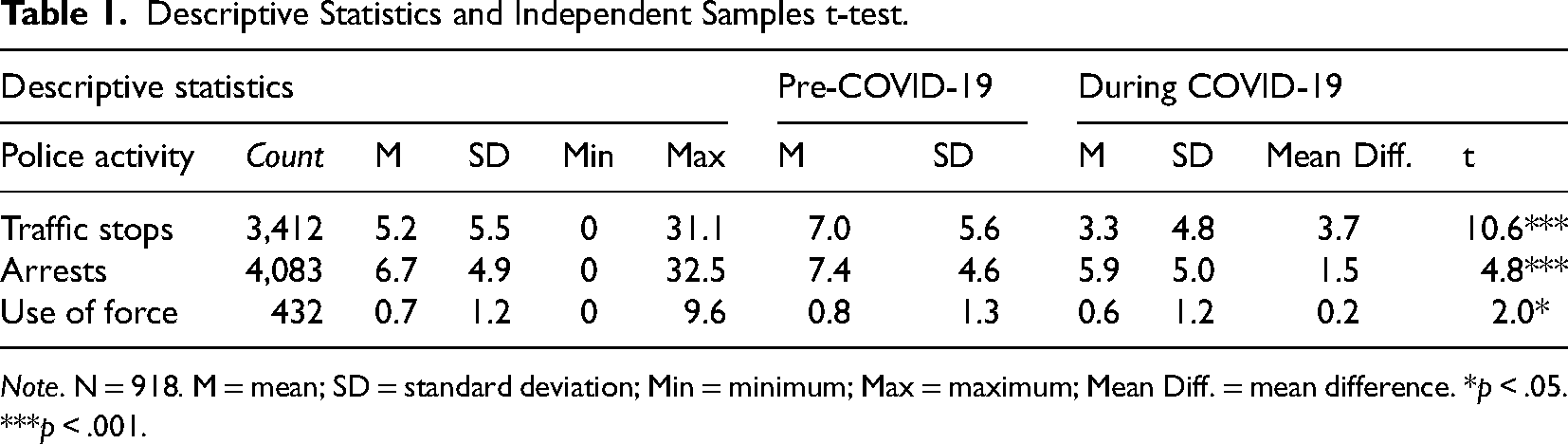
The descriptive statistics are provided in Table 1. From December 10, 2018 through June 14, 2021, the police conducted about 3,400 traffic stops (N = 3,412), made about 4,000 arrests (N = 4,083), and used force more than 400 times (N = 432). On average, the police, on a daily basis, conducted about 5 traffic stops (M = 5.2), made about 7 arrests (M = 6.7), and used force about 0.7 times (M = 0.7) per 100 calls.
Descriptive Statistics and Independent Samples t-test.
Note. N = 918. M = mean; SD = standard deviation; Min = minimum; Max = maximum; Mean Diff. = mean difference. *p < .05. ***p < .001.
The results of the independent samples t-test showed that police use of force, arrests, and traffic stops statistically significantly decreased during the COVID-19 period compared with the pre-COVID-19 period. Specifically, relative to before COVID-19, the police conducted significantly fewer traffic stops (Mean diff. = 3.7), made significantly fewer arrests (Mean diff. = 1.5), and used significantly less force (Mean diff. = 0.2) during the COVID-19 period.
Results of Multivariate Analysis
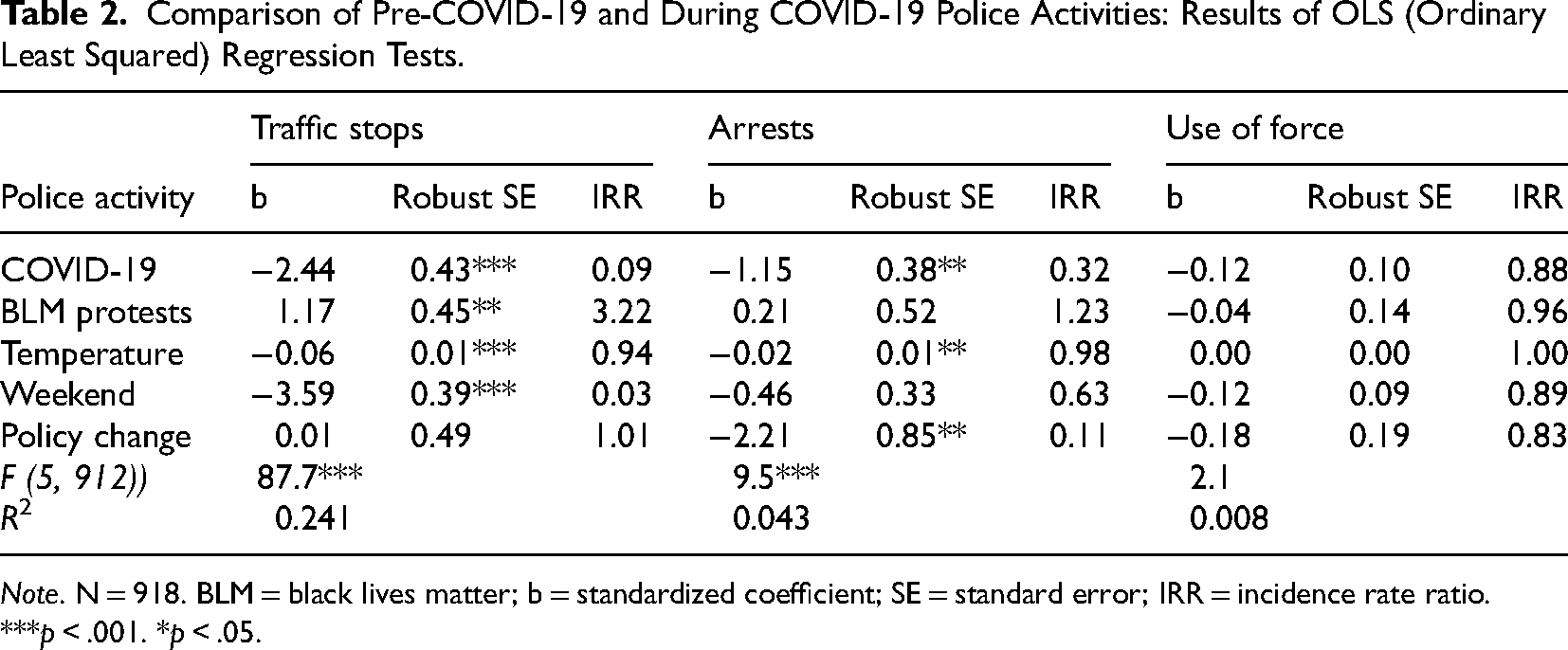
The results of the OLS regression tests are presented in Table 2. The incidence rate ratio (IRR) for the dependent variables were reported for easy interpretation. The results indicated that COVID-19 statistically significantly decreased police arrests and traffic stops all else being equal. However, there were no statistically significant findings for use of force when the control variables were held constant. Specifically, during COVID-19, the police conducted 99.1% fewer traffic stops (IRR = 0.09; ([0.09 − 1] × 100 = −99.1)) and made 68% fewer arrests (IRR = 0.32). The results also suggested that COVID-19 had the strongest effect on the decline in traffic stops, followed by arrests and use of force (though not significant).
Comparison of Pre-COVID-19 and During COVID-19 Police Activities: Results of OLS (Ordinary Least Squared) Regression Tests.
Note. N = 918. BLM = black lives matter; b = standardized coefficient; SE = standard error; IRR = incidence rate ratio.
***p < .001. *p < .05.
All else being equal, the control variables that were statistically significantly associated with the outcomes are as follows: BLM protests and weekend with traffic stops; temperature with traffic stops and arrests; and policy change with arrests. Specifically, traffic stops statistically significantly increased by three times (IRR = 3.22) during BLM protests, while traffic stops statistically significantly decreased by 99.7% (IRR = 0.03) during weekend. An increase in temperature statistically significantly decreased traffic stops by 6% (IRR = 0.94) but statistically significantly increased arrests by 2% (IRR = 0.98). Policy change statistically significantly decreased arrests by 89% (IRR = 0.11). None of the control variables was statistically significantly associated with use of force.
Results of Daily Interrupted Time-Series Analysis
The results of the daily interrupted time-series analysis are shown in Table 3 and Figure 1. Figure 1 shows a slight upward trend in police use of force, arrests, and traffic stops before COVID-19, while there was a sharp drop in traffic stops and arrests, but a slight decrease in use of force just after the COVID-19 restrictions were put in place. Traffic stops, arrests, and use of force remained low during the COVID-19 period. During the COVID-19 period, the trend in police use of force and arrests was slightly downward, but traffic stops had a slightly upward trend.
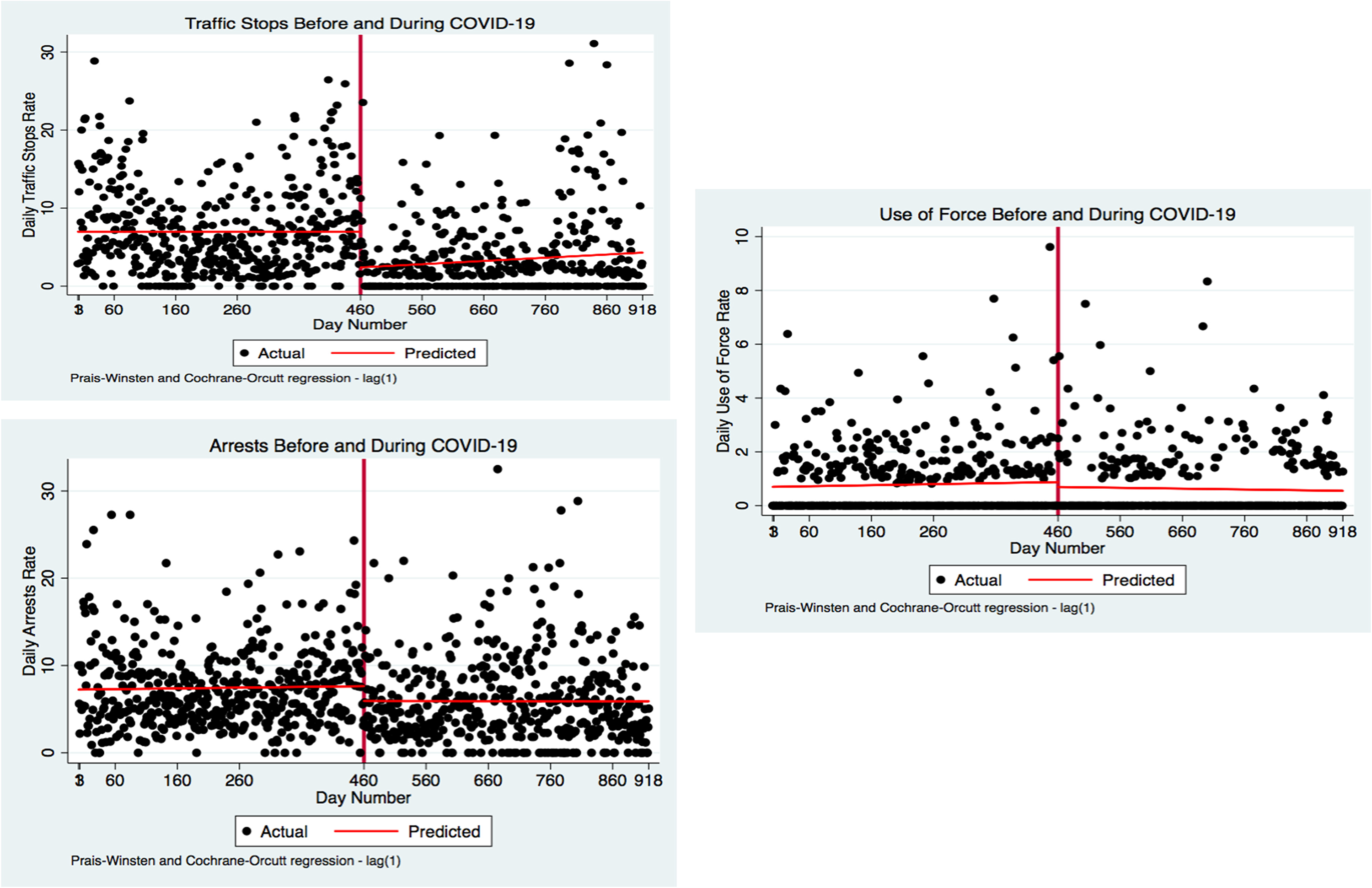
Daily police activity rates before and during COVID-19 (December 10, 2018–June 14, 2021).
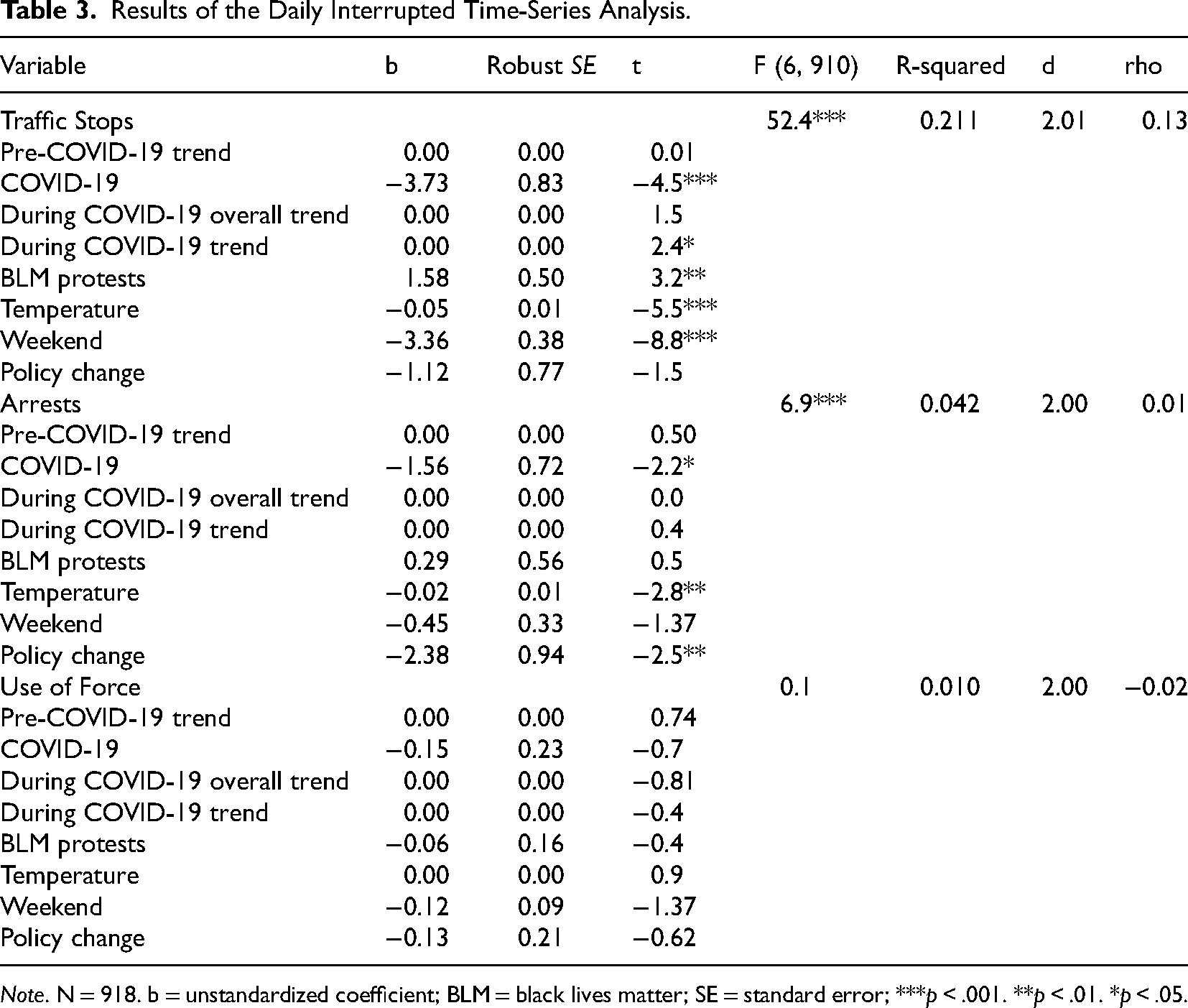
Results of the Daily Interrupted Time-Series Analysis.
Note. N = 918. b = unstandardized coefficient; BLM = black lives matter; SE = standard error; ***p < .001. **p < .01. *p < .05.
The results of the daily interrupted time-series analysis showed that all else being equal, traffic stops statistically significantly decreased on the first day of COVID-19 restrictions (b = −3.73, p < .001), but statistically significantly increased during the COVID-19 period (b = 0.00, p < .05). However, no statistically significant change occurred in traffic stops before COVID-19. Arrests statistically significantly decreased only on the first day of COVID-19 restrictions (b = −1.56, p < .05), while no statistically significant change was observed before COVID-19 and during the COVID-19 period. Use of force showed no statistically significant change on the first day of COVID-19 restrictions, before COVID-19, or during the COVID-19 period. In addition, the overall during COVID-19 trend suggests that relative to the pre-COVID-19 period, the post-COVID-19 period experienced no significant changes in the trends of the outcomes. The results indicated that COVID-19 had an immediate negative effect on traffic stops and arrests but a long-term positive effect only on traffic stops, while it had no effect on use of force.
All else being equal, the control variables that were statistically significantly correlated with the outcomes are as follows: BLM protests (b = 1.58, p < .01) and weekend (b = −3.36, p < .001) with traffic stops; temperature with traffic stops (b = −0.02, p < .01) and arrests (b = −0.02, p < .01); and policy change with arrests (b = −2.38, p < .01). Specifically, police significantly conducted more traffic stops during BLM protests, while police significantly conducted fewer traffic stops during weekends. In addition, as temperature increased, traffic stops, and arrests significantly decreased. After the policy change, police significantly made fewer arrests.
Discussion and Conclusion
The current study investigated the effect of the COVID-19 restrictions on police activities, including traffic stops, arrests, and use of force, and the trends of police activities before and during COVID-19 in Burlington, VT. Unlike the previous studies, the current study also examined the effect of COVID-19 on use of force and overall arrests. The multivariate analyses showed that during COVID-19, the police conducted significantly fewer traffic stops, made fewer arrests, and used less force (though not significant). The results of the ITSA also showed that on the first day the COVID-19 restrictions were implemented, COVID-19 significantly decreased traffic stops and arrests, but not use of force. This decrease remained low for the entire COVID-19 period although traffic stops had a significantly increasing trend. However, no statistically significant change was observed in the trends of the outcomes before COVID-19. The results for traffic stops and arrests are consistent with the three previous studies, which also found that COVID-19 decreased traffic stops (Mohler et al., 2020), violent crime arrests (Moise & Piquero, 2021), domestic violence arrests (Bullinger et al., 2020; Demir & Park, 2021), and assault arrests (Demir & Park, 2021) although the latter two studies focused on arrests for specific crimes.
Legitimacy theory (Tyler, 1990, 2006; see also Murphy et al., 2020) can help put these results in perspective. Legitimacy theory suggests that when people view laws and authorities as legitimate, they are likely to comply with policies (Cherney & Murphy, 2013; Jackson et al., 2012; Murphy & Cherney, 2012; Murphy et al., 2009, 2017; Tyler, 1990, 2006; Van Damme & Pauwels, 2016). Based on this reasoning, people were likely to view COVID-19 restrictions as legitimate, which is why they voluntarily felt obligated to comply. Compliance with COVID-19 restrictions led citizens to stay at their homes and avoid public spaces, resulting in fewer contacts with police officers. As a result, police activities reduced.
The onset of COVID-19 led to the closing of schools, nonessential businesses, and stay-at-home orders. Compliance with these policies suggests that fewer people were going about their daily activities, which reduced the number of cars traveling. The changes in daily activities were also likely to reduce the number of crimes (e.g., Campedelli et al., 2021; de la Miyar et al., 2021; Hodgkinson & Andresen, 2020). In turn, it would make sense that fewer traffic stops and arrests were made, and less force was used.
Furthermore, the reduction in arrests and traffic stops may be due to policies implemented by department administrators, such as reducing the number of officers scheduled per shift or asking officers to reduce their close contact with the public and avoid making arrests under certain circumstances (Jennings & Perez, 2020). It was reported that as police officers around the country became infected with COVID-19, departments changed their policies on interacting with the public to keep officers and the public safe (Cave & Dahir, 2020; Jennings & Perez, 2020). Some departments required officers to maximize their time in their cars and minimize time spent with the public (Jennings & Perez, 2020). As a means of reducing close contact with the public, many police agencies also instructed their officers to issue citations but not to arrest people who committed misdemeanors (Cave & Dahir, 2020; Iannelli, 2020; Jennings & Perez, 2020; Lipscomb, 2020; Poston, 2020; Winton & Tcheckmedyian, 2020). Police officers in Burlington were also likely to have been instructed to reduce contact with citizens and not to make arrests for low-level crimes, which may lead to a reduction in arrests, traffic stops, and use of force (see The City of Burlington, 2021a).
In addition, the reduction in arrests and traffic stops could have resulted from the decrease in the number of police officers due to having COVID-19 or caring for a family member who had COVID-19 or deaths from COVID-19, or retirements/resignations. Any officer who tested positive for COVID-19 or was in close contact with someone who tested positive for COVID-19 would have been quarantined for up to two weeks. Research conducted in April 2020 found that 6% of police officers in the U.S. missed work due to COVID-19 (Brooks & Lopez, 2020). In addition, COVID-19 became the leading cause of death for police officers (National Law Enforcement Officers Memorial Fund, 2020). Police officers also resigned or were retired due to COVID-19, which reduced the number of working police officers. Moreover, during this period, police departments experienced staffing decreases after the death of George Floyd (Bailey, 2020; DeStefano, 2020; Main & Spielman, 2021; Mourtgos et al., 2022; Rantz, 2020). Specifically, Mourtgos et al. (2022) found that the killing of Floyd led to a 279% increase in police officer resignations. In Burlington, VT, the number of police officers decreased from 92 to 68 in 2020 (Smith, 2021). Therefore, BPD identified its priorities to respond to calls, focusing on more serious crimes (The City of Burlington, 2021a), resulting in decrease in traffic stops and arrests.
Police officers’ compliance with COVID-19 restrictions could also reduce arrests and traffic stops. Research by Murphy et al. (2020) showed that people who feel that COVID-19 poses a significant risk to their health are more likely to adhere to social distancing guidelines. As the pandemic surged in the spring of 2020, many police officers voiced concerns for themselves and their families (Schutz, 2020). Furthermore, police officers around the country observed people complying with social distancing guidelines and implemented similar caution by focusing on their health and public health when performing their duties (Cave & Dahir, 2020). This may also explain why police officers engaged in fewer traffic stops and made fewer arrests.
It is important to note that traffic stops increased during BLM protests but decreased during weekends. To maintain order, police may have focused on traffic stops during BLM protests. Police may have been deployed to the places where citizens spent their time outside during weekends. Therefore, traffic stops may have decreased. High temperature decreased traffic stops and arrests because high temperature affects individuals’ activities, and people may be prone to staying home during periods of high temperatures instead of being outside. Additionally, these findings may be framed within the perspective of Burlington's economy. Burlington's economy relies on tourists and tourist dollars (U.S. News and World Report, 2022). Fewer traffic stops may occur during the spring and summer when temperatures are warmer and on weekends because there is increased tourist activity. It may be possible that police officers conduct fewer traffic stops during these times not to place a damper on the experiences of tourists, whose spending is crucial to Burlington's economy.
The study has limitations. First, in terms of internal validity, before and after intervention studies are considered weak compared to more robust experimental studies such as randomized controlled trials (Sherman et al., 1998). Second, it is hard to generalize the findings of the current study to other places. Third, the aggregated data did not allow to control for the effect of individual-level characteristics on the outcomes (see Wagner et al., 2002). Fourth, the aggregation data cannot be interpreted at the individual level. Fifth, the data about the changes in the number of police officers were not available and not accessible. Sixth, the study did not examine what people were being arrested for most frequently and calls for service involving officer use of force were most common. Seventh, the virus infection rate (changes in cases or hospitalizations) was not publicly available at the city level on a daily basis and could not be obtained from the Burlington Health Department. Therefore, it could not be included in the models. The infection rate would affect police behavior, such as keeping themselves safe depending on how high or low the infection rate was, which could reduce police activities. Eight, the state of Vermont removed and reinstated COVID-19 mitigation restrictions based on public health data. Vermont began slowly removing restrictions on May 15, 2020. On this date, businesses, including campgrounds and hotels, could resume limited operations. The COVID-19 restrictions in Vermont ebbed and flowed based on public health data until the state of emergency was fully lifted on June 14, 2021. Moreover, the specific nature of Burlington's reopening was not available. Due to the lack of available reopening data for the present study, the impact of the reopening on police traffic stops, arrests, and use of force could not be investigated. Thus, it is unknown whether VT's reopening affected these police activities. Finally, the present study did not examine the effect of COVID-19 on other police activities such as stops, frisks, searches, etc. Future studies should include more data after the COVID-19 restrictions started and examine the effect of COVID-19 on police use of force, arrests, traffic stops, or other types of police activities in different cities. Future studies should also examine crimes people were being arrested for most frequently, calls for service involving officer use of force were most common, include the virus infection rates in the models, and consider whether the reopening process affects police activities.
Despite these limitations, the current study made a significant contribution to the literature and helped us understand the effect of COVID-19 on police use of force, arrests, and traffic stops. Even though the results of this study are limited to the restrictions implemented during the COVID-19 pandemic, these findings can be extrapolated to other situations. For instance, during the current climate of distrust in the police and the implementation of police reform, authorities have emphasized cutting police budgets and training. However, the results of the present study may suggest that authorities may want to examine how to get the public to view the police as legitimate. To conclude, the present study has shown that COVID-19 has a significant negative effect on arrests and traffic stops.
Footnotes
Declaration of Conflicting Interests
The author(s) declared no potential conflicts of interest with respect to the research, authorship, and/or publication of this article.
Funding
The author(s) received no financial support for the research, authorship, and/or publication of this article.

Notes
CORRECTION (December 2022):
Article updated to correct “The results showed that COVID-19 statistically significantly increased traffic stops and arrests” to “The results showed that COVID-19 statistically significantly decreased traffic stops and arrests” in Abstract section.