




Abstract
Prior scholarship links ontological insecurities, racial tensions, and health issues to public opinion about crime. This project examined these forces in the context of the 2020 pandemic, racial justice demonstrations, and politics using data from the Nebraska 2020 survey (N = 2775). Pandemic-related insecurities and racial animus were associated with avoiding places in the community, worry about crime, and the belief that police in one's community are underfunded. Trusting politicians but distrusting health leaders, and viewing COVID as an economic threat but not a health threat were associated with the belief police are underfunded. Results suggest that the politicization of the pandemic may influence support for criminal justice policies that promise a return to “law and order.”
According to national polls in the spring and summer of 2020, people experienced increased disruption, stress, and mental distress as a result of the COVID-19 pandemic (Brenan, 2020a; Panchal et al., 2021). These feelings can be traced to social isolation and restrictions, financial concerns, strain in family and work life, as well as general concerns about the uncertainty of the situation. Prior research demonstrates the negative effects on well-being of similar large-scale events, including natural disasters, terrorist attacks, and epidemics (Afifi et al., 2012; Arcaya et al., 2020; Dingwall et al., 2013; Garfin et al., 2018). However, the COVID-19 pandemic is remarkable due to the widespread nature of the disease itself, its economic impacts, the extensive intrusion of its containment into people's daily lives, and its politicization (Deane et al., 2021).
As the pandemic spread in the summer of 2020, the murder of George Floyd by Minneapolis police spurred widespread protests across the United States. Although the grand majority of protests for racial justice and police accountability in the wake of Floyd's murder were peaceful, violent clashes were repeatedly highlighted in the news and decried by politicians and media pundits (Mitchell et al., 2020a; Parker et al., 2020a). Some pundits drew contrasts to pandemic-related protests that occurred that summer regarding mask mandates, business closures, and other restrictions. The pandemic itself became increasingly politicized as some politicians and media personalities openly challenged public health experts (Dimock & Gramlich, 2021).
Social institutions—including the media; federal, state, and local government; and health systems—may serve as sources of information, support, reassurance or alarm (Rogers et al., 2007; Sloan et al., 2021). Trust in social institutions may be of particular salience during the pandemic as people were asked or required to make changes to their lifestyles. However, Americans in recent decades have reported declining levels of trust in institutions, and such distrust is linked to social anxieties (Rainie et al., 2019). Prior scholarship connects political and economic uncertainty, racial tensions, and distrust to the public reaction to crime, including fear, punitiveness, and support for police. Using data from a fall 2020 survey of Nebraskans, this project drew these threads together, examining the influence of this array of factors—contextualized by the historical pandemic and racial justice protests—on attitudes about crime and justice.
Literature Review
Instrumental and Expressive Attitudes About Crime
Attitudes about crime and justice may be driven by instrumental concerns for safety (Elchardus et al., 2008). Prior experiences of victimization, perceptions of or true increases in crime, and perceived vulnerability tied to physical health/ability or demographic characteristics (e.g., age, gender) could lead to practical fears of victimization, avoidant actions, and a desire for policies believed to curb crime (Chadee et al., 2017; Lorenc et al., 2012). Attitudes about crime may also be driven by expressive concerns (Elchardus et al., 2008). In moments of social uncertainty, insecurity, and anxiety, “fear of crime” tacitly embodies the less tangible emotions associated with social or moral ambiguities by, for example, clearly distinguishing innocent victims from dangerous offenders (Britto, 2013).
Research on attitudes toward police has commonly focused on instrumental considerations, such as neighborhood characteristics, demographic characteristics, victimization, and interpersonal interactions with the police (Lai & Zhao, 2010; Lim & Lee, 2021). Attitudes toward the police also have a symbolic and political nature (Drakulich et al., 2020). Policing has long been used as a tool of politicians, who position police as props to demonstrate their own competence and courage to face-down crime, or as their own personal means of subduing threats (Kort-Butler, 2020). For the public, confidence in police and in the state of nation are overlapping concerns with moral undertones (Wozniak, 2016). Support for the police may be an expressive response to perceived social decline, reflect racial animus, or represent an allegiance to “law and order.”
Personal health concerns may be integral in shaping people's attitudes, especially in moments of heightened social anxiety (Gray et al., 2011; Lorenc et al., 2012). Amid rising coronavirus cases, lockdowns, partial shutdowns and related economic issues, national polls reflected increasing worry about the pandemic and a decline in mental health by the autumn of 2020 (Brenan, 2020a; Panchal et al., 2021). People concerned about their risk for contracting COVID-19 curtailed their social behaviors and interactions (Crabtree & Berg, 2020). Research indicates that people with health concerns may have lower community participation, fewer social connections, and consequently decreased social trust (Jackson & Stafford, 2009). Impaired health may make people feel more vulnerable to and therefore more worried about criminal victimization (Chadee et al., 2017; Lorenc et al., 2012). Personal health concerns may also engender anxiety, fear, and frustration (Stogner & Gibson, 2010). Under pandemic circumstances such expressive feelings may be exacerbated by worry about avoiding infections and what could happen if the individual or someone in their network became infected (Sloan et al., 2021). Broad concerns for personal health and anxiety about health issues may also manifest as a general sense of fear. Scholars suggest fear could be displaced onto concerns about crime and desire for some sort of corrective action to alleviate these fears (Chadee et al., 2017; Jackson & Stafford, 2009).
Insecurity and Racial Threat
A frequent refrain aired during the pandemic was a desire for return to normalcy, although this attitude varied widely based on demographic characteristics, location, and political factors (Brenan, 2020b; McCarthy, 2020). Farrall et al. (2021) asserted that the expressive nature of attitudes about crime, particularly fear, can be understood not only as dissatisfaction with current situations but also as a nostalgic response. Dramatic social changes spur glossy recollections of “safer” or “better” times. A sense of personal loss, uneasiness, and broad insecurity find expression in fears about crime. Collectively, such subjective perceptions reflect what Valente and Pertegas (2018) describe as ontological insecurity. Subjective feelings of unsafety, a sense of “existential precariousness,” and anxiety about the future—for both self and society—generate a sense of insecurity beyond specific instrumental worries about crime and safety (Valente & Pertegas, 2018, p. 162).
Ontological insecurities may be more than an expressive emotional response to social disruptions. Wozniak (2016) argued that a feeling of social uncertainty and moral decline may shape attitudes toward punitiveness and confidence in the police. On the one hand, uncertainty and moral decline—represented by economic downturns, challenging race relations, and crime—may increase punitiveness as a means to restore social order. On the other hand, insecurity and perceived moral decay may signal a crisis in social control, undercutting confidence in government institutions in general and policing in particular. Testing these ideas, Wozniak (2016) found that people's belief in national moral decline increased their confidence in the police, but their sense of dire economic conditions and troubled race relations decreased their confidence.
Economic insecurities throughout 2020 were evident in political rhetoric and public opinion. The economic impacts of the pandemic, including job losses, business closures, and shifts in work and family care arrangements, were the source of much of the opposition to continued shut-downs and restrictions (Newport, 2020; Parker et al., 2020b; Pew Research Center, 2020a, 2020b). U.S. politicians have historically linked economic issues to crime, channeling those diffuse public insecurities onto marginalized populations and a seemingly controllable issue (Britto, 2013). Gottschalk (2014) cautioned that economic insecurity of the kind exaggerated by the 2007 recession could reignite punitiveness. In contrast, if economic insecurity is expected to continue, it could lead people to lose confidence in the government or distrust the ability of the government to carry out basic functions, including criminal justice functions (Lehmann & Pickett, 2017).
Heightened racial tensions in the late spring and summer of 2020 likely compounded social insecurities. Past research points to a connection between overt racial prejudice against Black people and beliefs about crime and punitiveness (Brown & Socia, 2017). Symbolic forms of racism tap into explicit racial discrimination and dismissal of structural racism (Matsueda & Drakulich, 2009; Unnever & Cullen, 2010). The 2020 U.S. presidential campaign cycle turned in part on questions of race, policing, and the Black Lives Matter movement (Oriola, 2020). In 2016, then-candidate Trump campaigned on a pro-police position tinged with racist dog whistling (Drakulich et al., 2020). Indeed, Trump voters expressed support for the police and high racial resentment (Drakulich et al., 2020). In the 2020 campaign Trump relied on similar campaign tactics, branding the murder of George Floyd and the summer protests with themes of “America under siege,” pro-police stances, and racist dog whistles (Lonsdale, 2021; Merrill & Lartey, 2020). Symbolic racism stokes resentment and this racial animus, particularly anti-Black animus, is a key predictor of punitive sentiments, criminal justice support, and criminal justice spending (Brown & Socia, 2016; Matsueda & Drakulich, 2009; Morris & LeCount, 2020). Perceptions of racial threat also foster increased fear (Lehmann & Pickett, 2016).
Distrust
As pandemic-related and racial justice-related insecurities escalated, so too did political uncertainties tied to both of these issues in the context of a heated presidential campaign (Dimock & Gramlich, 2021; Saad, 2021). While some voices called for solidarity, others stoked distrust. These too were uneven. On the one hand, Trump, his allies, and Nebraska's governor routinely undermined public health experts, encouraging people to distrust and ignore them (Hetherington & Ladd, 2020; Piller, 2020; Rukcer et al., 2020; Stoddard, 2020). These efforts at sowing distrust in public health officials accelerated in late summer and into the fall of 2020 and had particular success among Republicans (Pew Research Center, 2020b; Pollard & Davis, 2021). On the other hand, calls to “back the blue” demanded displays of loyalty to police, social order, and governmental authority (Nawaz, 2020; Peltz & Contreras, 2020; Thomas & Tufts, 2020). Although such demands run counter to the theoretical negative effects of ontological or economic insecurities on confidence in the government, the political wedges of crime and justice can be used to sow seeds of anger or disgust at the “other” and reinforce political clout (Kort-Butler, 2020).
The public's belief that crime is pervasive and personally threatening can exist alongside the belief that the government has failed in its efforts to manage and control crime, placing offenders’ needs above victims’ needs (Unnever & Cullen, 2010). The solution, from this point of view, is to crackdown harder on purported offenders. Research suggests people who distrust the government or find it lacking when it comes to punishment are more punitive (Bader et al., 2010; Kort-Butler & Ray, 2019; Wozniak, 2017; Zimring et al., 2001). Political framing of insecurities and hostilities in the context of American vigilantism—a communal desire to “take care of our own” when threatened—helps the public to nullify their distrust (Zimring, 2003).
Moreover, tapping into distrust of established institutions and anger at the racialized criminal “other” may ferment a kind of “hostile solidarity” (Carvalho & Chamberlen, 2018, p. 228). In social periods characterized by instability or insecurity, people's punitiveness is an expression of both an emotional release and a sense of belonging predicated on fiercely othering criminals. Insecurities may not only increase fear but also a desire to “do something,” including empowering police with additional funding or authority, even extra-legal authority. Indeed, research from the spring of 2020 demonstrated that people who endorsed an authoritarian morality and expressed racial resentment, as well as personal fear of coronavirus, were against policies that would limit police presence and action (Nix et al., 2021).
The Current Study
Research on public opinion about crime and justice must consider the ways in which public opinion is tied to socio-political context (Baranauskas & Drakulich, 2018; Ray & Kort-Butler, 2020). The acceleration of partisan political polarization was evident in 2020 (Dimock & Wike, 2021; Druckman et al., 2021). For example, Republicans and Republican-leaning people who relied the most on President Trump for pandemic information were much more likely to think the pandemic was overblown (Jurkowitz & Mitchell, 2020). Regarding police spending in the wake of the summer's protests, 45% of Republicans and just 19% of Democrats thought police funding should be increased (Pew Research Center, 2020c). National- and state-level policies, economic conditions, and social messaging shape both community factors and individual perceptions of crime, contextualizing the relationship between pandemic-related concerns, social insecurities, and concerns about personal safety and crime (Gray et al., 2011; Lorenc et al., 2012).
Public opinion about crime and justice issues are rooted in instrumental and expressive concerns (Elchardus et al., 2008). Instrumental concerns about personal safety arise from social contexts in which people think they may be vulnerable due to personal factors, perceived increases in crime, and/or risk for contagion. Expressive concerns arise from social contexts in which broad uncertainties and insecurities, racial tensions, and loss of social trust serve to heighten anxiety and increase demands to “do something.” Intangible feelings can be channeled into seemingly more tangible issues: concerns about crime and calls for justice system responses. The current study investigated how a socio-historical context shaped by COVID-19 pandemic and protests against police violence and for racial justice shaped instrumental actions around personal safety, worry about crime, and beliefs about police funding. Based on prior research, I posited that ontological insecurities tied to the pandemic, distrust in leaders and social institutions about COVID, racial animus, and personal health issues would be positively associated with avoidant actions, worry, and the belief that too little is spent on police.
Study context: Nebraska in autumn 2020
COVID pandemic response
After being one of the first states to close all schools in the spring of 2020, the state of Nebraska never instituted statewide restrictions, such as mask-mandates and stay-at-home orders. The state government did for a period close certain types of businesses (e.g., salons, gyms), institute capacity restrictions on social gatherings and occupancy restrictions on places of business, and provide guidelines about distancing (Sperl, 2020; Wade, 2020). The cities of Lincoln and Omaha issued their own mask mandates and social distancing guidelines, which had to work around the governor's rules (e.g., the city of Lincoln—the state capital—could not enforce masks in state-owned buildings). Universities, colleges, and most K-12 schools were open for in-person learning in the fall. For example, Omaha Public Schools started fully remote but moved to a part-time in-person model with a remote option by mid-fall. Lincoln Public Schools were in-person with optional remote learning. School districts around the state had varying rules and guidelines about masking, social distancing, and extracurricular events. In mid-September most of the state's directed health measures were loosened or discontinued, with exceptions carved out for Lincoln and Omaha (World-Herald News Service, 2020). However, modified restrictions were reinstated in mid-October as Nebraska's cases increased dramatically, ranking seventh in the nation (Anderson, 2020; Robb & Anderson, 2020). Despite continuing increases in November the governor announced he would not institute more restrictions (Anderson & Conley, 2020).
COIVD infections, hospitalizations, and deaths were similarly uneven around the state with the more urban counties bearing the brunt in terms of case counts, along with spikes in counties where food-processing plants were located (New York Times, 2021). On September 1, 2020 the 7-day average for newly diagnosed cases was 314. At the November 20 peak, the 7-day average reached 2,415 new cases. On September 1, the 7-day average hospitalization numbers was 21 cases, peaking on November 23 at 1,105. Finally, on September 1 the statewide 7-day average of newly reported deaths was 2.7. On November 25, the average reached 24, peaking on December 8 and 9 at 29.
Protests
Like many communities around the nation, throughout the summer Nebraska's communities saw some level of protests for racial justice in the wake of George Floyd's murder in May 2020. 1 These were most pronounced in Omaha and Lincoln, and involved significant police reaction (e.g., tear gas, rubber bullets, mass arrests that included physical altercations) (Widger, 2020). Protests received significant press coverage (Jamieson, 2020). Smaller communities also staged protests but these typically involved much less or no police presence (Schulte, 2020). One protestor in Omaha was killed in May by another citizen involved in counter-protests, later indicted in September (Treisman, 2020). More protests occurred following the police shooting of Jacob Blake in August. On November 19, Omaha police shot and killed Kenneth Jones, reigniting a series of protests (Wade & McConnell, 2020).
Politics
It is also worth noting prominent political events in the fall of 2020. In particular, then-President Trump was diagnosed and treated for COVID in early October. On October 27 he held a large campaign rally in Omaha (Robb, 2020). The rally received local press coverage, who soon reported that attendees were left with extensive waits on return transportation to their vehicles in subfreezing temperatures (Bennett et al., 2020; KETV, 2020). In early November Governor Ricketts and his wife reported they had been exposed to coronavirus and were quarantining (Funk, 2020). The presidential election and its ongoing contentions occurred throughout November.
Methods
Data
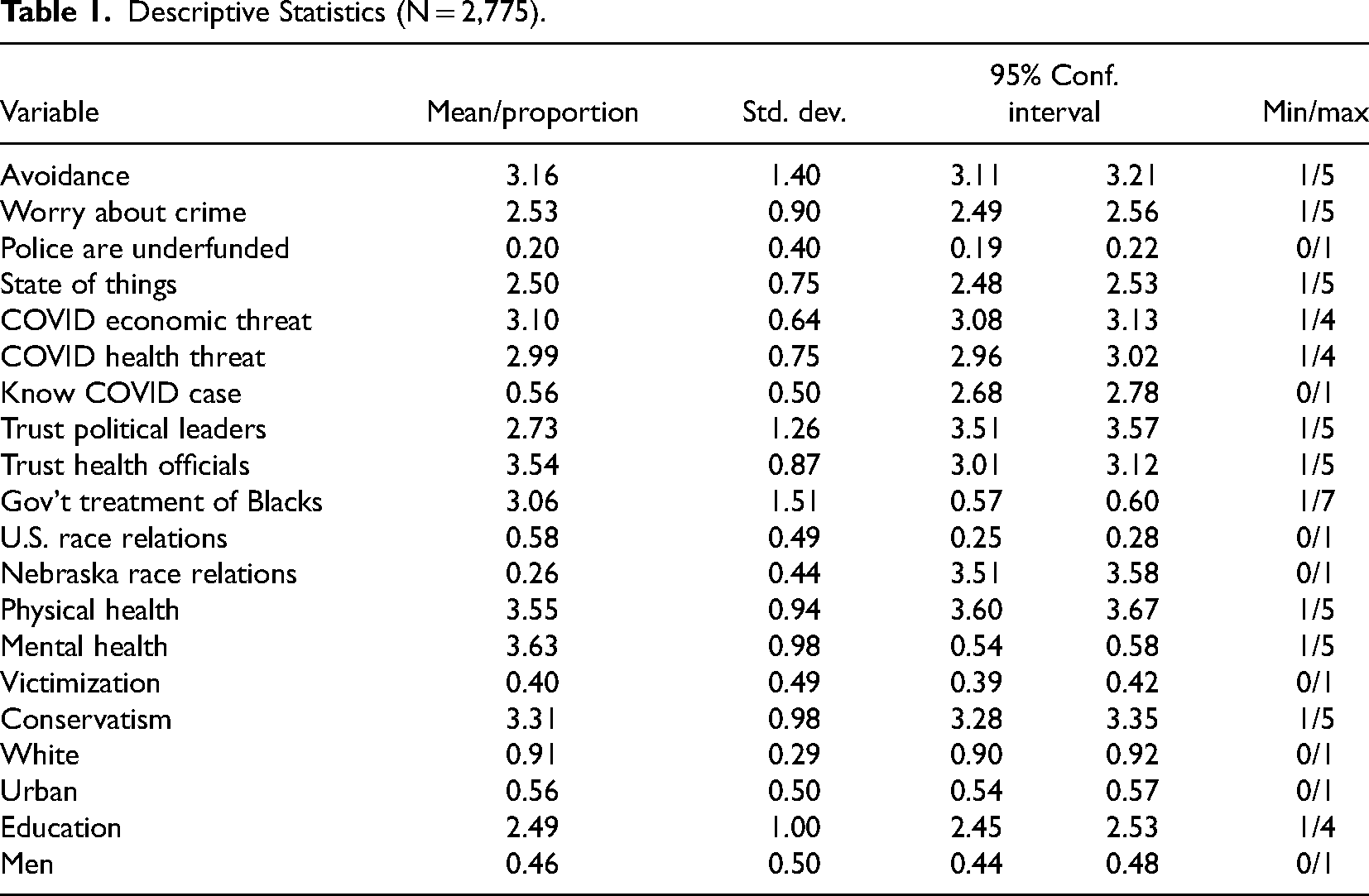
Data for this study came from the cross-sectional population-based omnibus Nebraska 2020 Survey conducted by the Bureau of Sociological Research (BOSR) at the University of Nebraska—Lincoln. The survey used a simple random sample drawn from Nebraska households purchased by BOSR from Dynata. 2 Data were collected between September 14, 2020 and December 14, 2020. Data used the “next birthday” method to maintain a probability sample (Dillman et al., 2014). A total of 2,811 adults returned the survey (1,654 via paper and 1,157 via web). A response rate of 28.1% was calculated using the American Association for Public Opinion Research's standard definition for Response Rate 2. After removing largely incomplete surveys and employing multiple imputation procedures, the analytic sample size was 2,775. The sample was 91% white, 56% urban, 46% men, and the average education was some college/technical degree. The sample was generally reflective of the state population based on 2020 Census data but whites were overrepresented.
Measures
Dependent variables
Instrumental actions about personal safety were operationalized with one ordinal item: “I avoid places in my town where I do not feel safe.” Although often operationalized as safety pertaining to crime/victimization (e.g., Rader, 2004), under pandemic circumstances this item could pertain to perceived risk for COVID-19 infection. Avoidance was coded 1 = never, 2 = rarely, 3 = sometimes, 4 = often, and 5 = always. Using the same response categories, expressive concerns about crime were captured with worry about crime, a mean scale of two items that asked respondents how often they worried about becoming a victim of a crime and how often they worried about someone they care about becoming a victim of crime (e.g., Jackson & Stafford, 2009). The survey asked respondents whether they thought their “community spends too much, about the right amount, or too little” on a variety public services, including the police. The belief that police are underfunded was recoded into a dichotomous variable where 0 = spends too much or about the right amount and 1 = spends too little.
Independent variables
To operationalize insecurities, people's general feeling about the state of things was a mean scale of three items. Respondents were asked, “In general, how do you think things are going in your community today?” Two similarly worded items asked about Nebraska and the country. Response categories were coded 1 = poor to 5 = excellent. Insecurities about the pandemic were assessed with three variables. First, respondents were asked “how much of a threat, if any, is the coronavirus outbreak for the economy of the United States?” Similarly worded items asked about Nebraska, “your community,” and “you personally.” COVID economic threat was a mean scale of these four items, coded 1 = not at threat to 4 = major threat. Second, respondents were asked “how much of threat, if any, is the coronavirus outbreak for the health of people living the United States?” Similarly worded items asked about people “living in Nebraska,” “living in your community,” and “you personally.” COVID health threat was a mean scale of these four items, coded 1 = not at threat to 4 = major threat. Third, respondents were also asked a yes (1) or no (0) question about whether they knew someone diagnosed with coronavirus (know COVID case).
Two variables were created to capture trust of the government and institutions during the pandemic. Respondents were prompted, “How much do you trust each of the following to provide information about the coronavirus outbreak” followed by five separate items, two about political leaders and three about public health officials. Response options were scaled from 1 = none to 5 = completely. Responses about President Trump and Nebraska Governor Ricketts (both Republicans) were averaged to create trust political leaders. Responses regarding leaders of federal public health agencies (e.g., CDC), leaders of the Nebraska Department of Health and Human Services, and leaders of the local health department were averaged to create trust health officials. 3
Three variables addressed racial tensions. The first item, government treatment of Blacks, asked: “In general, does the federal government treat whites better than blacks, treat blacks better than whites, or treat them both the same?” Responses were available on a 7-point scale where 1 = treats whites much better to 7 = treats blacks much better. The second two items asked respondents to indicate whether they thought U.S. race relations and Nebraska race relations were getting worse, staying the same, or getting better. To reflect racial tensions, the items were recoded into dichotomous variables where 0 = getting better and staying the same and 1 = getting worse.
Personal health and control variables
Respondents were asked to rate their general physical health and their general mental health on a 5-point scale ranging from 1 = poor to 5 = excellent. Several other personal and demographic variables were included as statistical controls. Respondents were asked a yes (1) or no (0) question about whether they or someone in their family had been a crime victim in the past twelve months. They were asked to rate their political views on a 5-point scale from 1 = very liberal to 5 = very conservative. To capture urban location, a dichotomous variable was created where 1 represented the three most populous and densely populated counties in Nebraska, corresponding to the Omaha metro area (Douglas and Sarpy Counties) and the city of Lincoln (Lancaster County). The 2020 Census indicated 56% of Nebraskans lived in these three (of 93) counties in the eastern part of the state (www.census.gov/quickfacts/NE). The respondent reported their highest level of education. This item was collapsed into: less than high school and high school diploma (1); technical degree, associate's degree, or some college (2); bachelor's degree (3); and graduate or professional degree (4). The respondent's self-reported race was dichotomized to 0 = non-white and 1 = white. Finally, the respondent's sex was dichotomized to 0 = women and 1 = men. Descriptive statistics for the sample are displayed in Table 1.
Descriptive Statistics (N = 2,775).
Analysis Plan
Multiple imputation was completed in STATA using “ice” methods. About 80% of cases had no missing on any variable in the analysis, 9.7% were missing on only 1 variable, and 6.4% were missing on two to four variables. I removed cases with 15 or more missing on the 20 variables in the analyses (about 1.30% of the sample). ICE performs multivariate imputation by chained equations. Each variable in the analysis is imputed using the most appropriate model (e.g., OLS regression for continuous variables; logit regressions for categorical variables) (Royston & White, 2011). I performed 20 imputations following the guideline that the number of imputations should be comparable to the proportion of incomplete cases in the dataset (White et al., 2011). The mi estimate analytic commands are then utilized to conduct an analysis on each imputed dataset, which then combines the results of analyzing each imputed dataset to obtain an average estimate of the parameters.
A series of regression models examined the effect of ontological insecurities tied to the pandemic, distrust in leaders and social institutions about COVID, racial animus, and personal health concerns on avoidance, worry about crime, and police funding. 4 Ordered logistic regression was performed on avoidance because of its ordinal scale. Ordinary least squares regression models were tested for the scaled variable worry about crime. Finally, logistic regression models were tested for police funding. In addition to the main independent variables, avoidance and worry about crime were included in the models for police funding to determine if those concerns, in the context of the pandemic and elevated racial tensions, also influenced opinions about police funding.
Results
Avoidance
On average, people reported that some of the time they avoid places in their town where they do not feel safe. Table 2—Model 1 shows the ordered logistic regression on avoidance. The variables that specifically refer to COVID were significant. Viewing COVID as an economic threat and particularly as a health threat were associated with respondents’ avoidance of certain places in their communities. In contrast, knowing someone diagnosed with COVID was associated with less avoidance of certain areas. Thinking that the federal government treats Blacks better than whites was associated with greater avoidance. A prior victimization experience was associated with avoidance. People living in urban counties were more likely to avoid areas, as were women, those with less education, and non-white people. Conservatism was also associated with avoidance behaviors. Broad concern about the state of things, trust, and personal health were unrelated to avoidance. Controlling for relevant demographic variables, avoidance appeared to be tied to concerns about the pandemic and to racial animus. 5
Regressions on Avoidance and Worry About Crime.
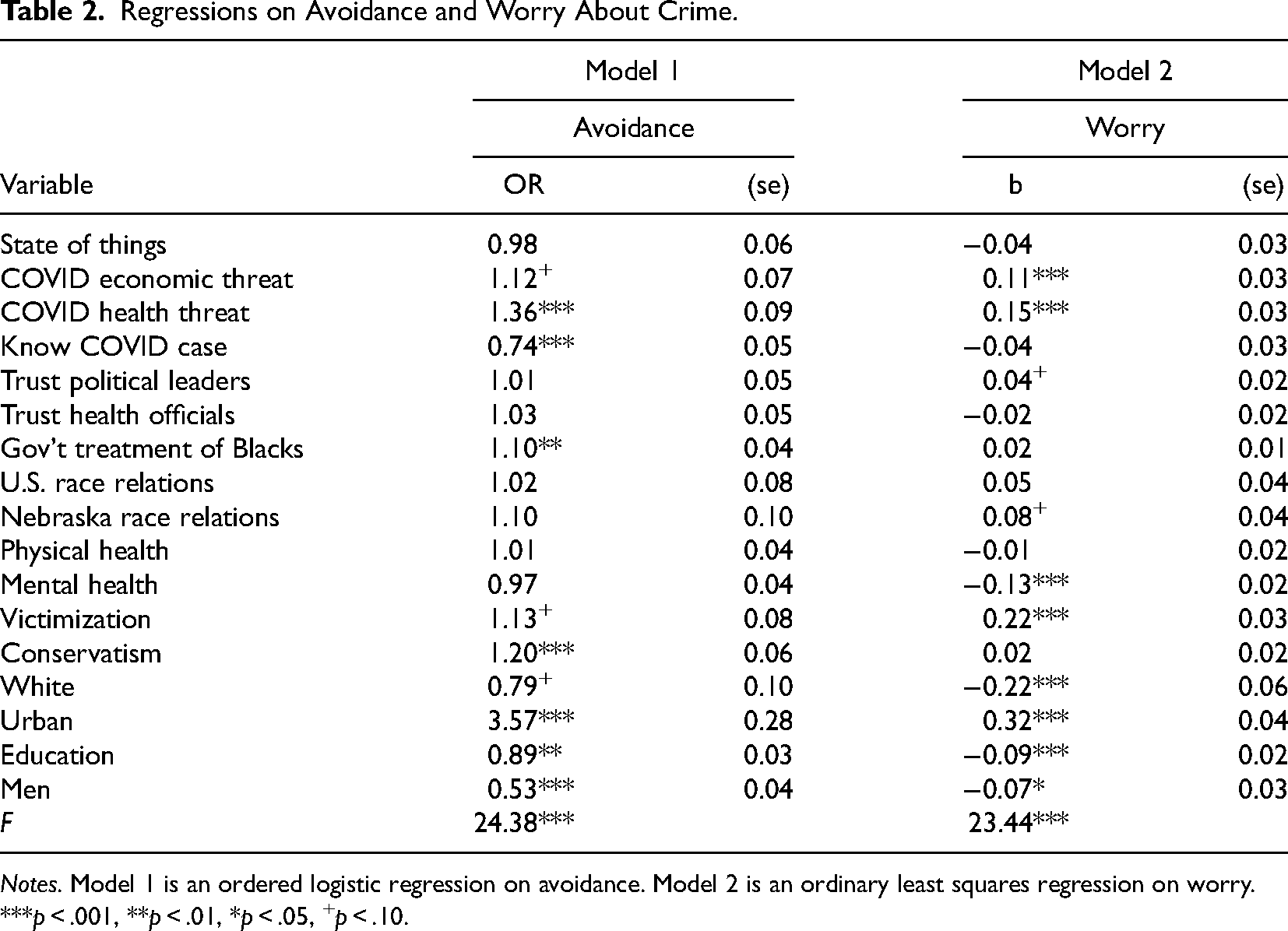
Notes. Model 1 is an ordered logistic regression on avoidance. Model 2 is an ordinary least squares regression on worry.
***p < .001, **p < .01, *p < .05, +p < .10.
Worry About Crime
People on average worried some of the time about themselves or someone they care about becoming a victim of crime. Table 2—Model 2 depicts OLS regressions on worry about crime. Both seeing COVID as an economic threat and a health threat were associated with more worry about crime. Trusting political leaders on COVID was marginally tied to more worry. Perceptions of race relations in Nebraska were marginally associated with worry, such that people who thought race relations were getting worse worried more about crime. Poorer self-reported mental health and victimization experiences were also associated with more worry about crime. Women worried more than men. Urban dwellers expressed more worry than non-urban dwellers. People with less education also expressed more worry. White people expressed less worry than people of color. Overall, worry about crime appeared to be tied to broader anxieties about the pandemic, as well as personal anxieties and to some degree a negative view of race relations in the state of Nebraska.
Police Funding
About 20% of respondents believed too little was spent on police in their community. Table 3 displays logistic regressions on the belief that police are underfunded. Model 1 included the main independent and control variables. Feeling COVID was an economic threat was associated with higher odds respondents thought police are underfunded. Trusting political leaders about coronavirus increased odds respondents believed police are underfunded, whereas trusting health officials about coronavirus decreased those odds. Thinking the federal government treats Blacks better than whites was related to higher odds that respondents thought police are underfunded. Likewise, thinking U.S. race relations are getting worse was also associated with greater odds that people believed police are underfunded. Women, urban dwellers, and conservatives were more likely to think police in their community are underfunded.
Logistic Regression on Belief Police are Underfunded.
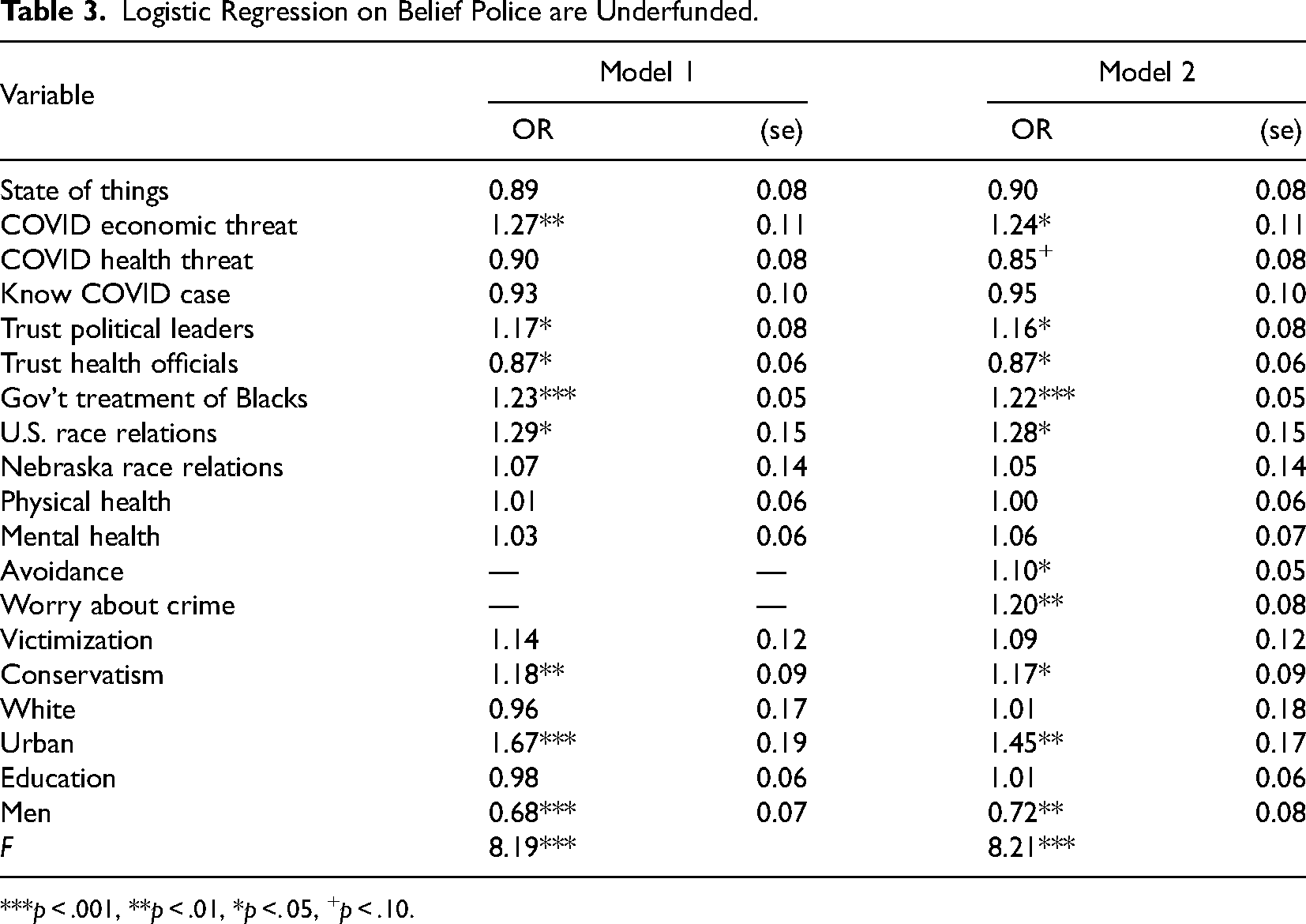
***p < .001, **p < .01, *p <. 05, +p < .10.
Model 2 introduced avoidance and worry about crime to determine if these instrumental and expressive concerns, alongside the effects of COVID threat variables, the trust variables, and racial animus variables, contributed to opinions on police funding. The same independent variables from Model 1 remained statistically significant. In addition, feeling COVID was a health threat was marginally associated with lower odds that respondents thought police are underfunded. Both avoidance and worry about crime directly increased the odds that people believed police in their community are underfunded. Personal health, knowing someone diagnosed with coronavirus, and victimization experiences were not significant. Overall, the attitude that one's community spent too little on police was influenced by perceiving COVID as an economic threat but not as a health threat, trusting political leaders but distrusting health officials on coronavirus information, thinking the government treats Blacks better than whites and that U.S. race relations are getting worse, and instrumental (avoidance) and expressive (worry) concerns about safety and criminal victimization.
Discussion
This study investigated how a social context shaped by the COVID-19 pandemic and protests against police violence and for racial justice affected instrumental actions around personal safety, worry about crime, and the belief that police are underfunded. Based on prior research, I posited that ontological insecurities tied to the pandemic, distrust in leaders and social institutions about COVID, racial animus, and personal health would be associated with attitudes about safety, crime, and police funding. In general, these factors were associated with people's attitudes but in complicated ways.
When it came to instrumental concerns about safety, pandemic-related insecurities and racial tensions were important factors for avoidance behavior but measures of trust were not significant. Typically, an avoidance measure is used to reflect instrumental actions people take because of concerns about criminal victimization (Chadee et al., 2017; Jackson & Stafford, 2009). People's concerns about safety may also be a proxy for racial animus (Brown & Socia, 2016), in which fears about the racialized criminal other may have been further triggered by the summer's visible protests. However, in the particular socio-historical context of this study—as COVID-19 cases, hospitalizations, and deaths increased around the state but restrictions were lifted—people's desire to avoid places in their community for their safety was likely about more than crime. Their valid concerns about health and well-being in the context of a pandemic meant avoidance was indeed practical, especially in the more heavily populated urban areas. Interestingly, knowing someone diagnosed with coronavirus had a counterintuitive effect on avoidance, making people less avoidant. This paradoxical effect was also observed in national polls, which showed that people's perceptions of infection risk were mostly fixed and dependent on factors such as their politics, age, and race (Berg, 2020). Knowing someone diagnosed with COVID-19 and potentially how they were infected may have offered a sense of control over where one decided to go in their own community.
Worry about criminal victimization, as an expressive response, was also linked to pandemic-related economic and health insecurities. These results are consistent with the idea that fear of or worry about crime can be an expression of ontological insecurities (Valente & Pertega, 2018). The perceived economic threat of COVID, the persisting health threats, and the sense that society itself is destabilized can find emotional expression in the more tangible worry about crime (Britto, 2013). In this study people reporting poorer mental health and prior victimization experiences also expressed more worry about crime, a possible extension of personal anxieties. Additionally, the perception that race relations in the state were worsening also influenced worry, consistent with the idea that racial tensions may contribute to feelings of ontological insecurity (Wozniak, 2016). Trust in political leaders regarding COVID was connected to worry about crime; in this case, the “America under siege” campaigning (Lonsdale, 2021; Merrill & Lartey, 2020) may have had its intended effect for those who put trust in former President Trump and Nebraska's Republican Governor Ricketts.
Trust and racial animus also figured prominently in the models for police funding, alongside pandemic-related insecurities about the economy and community health. The results revealed a complex story about insecurities on the one hand, and trust/distrust on the other. Economic insecurities, racial animus, and heightened racial tensions were linked to the belief that police are underfunded, consistent with prior research (Britto, 2013; Brown & Socia, 2016; Drakulich et al., 2020; Wozniak, 2016). People who engaged in avoidance and who worried about crime were also more likely to believe police in their community are underfunded. Although avoidance in this study may be seen as instrumental response to potential contagion, it also appeared to operate alongside worry about crime for the desire to “do something” to address people's insecurities (Chadee et al., 2017; Jackson & Stafford, 2009), such as robustly funding the police (Nix et al., 2021).
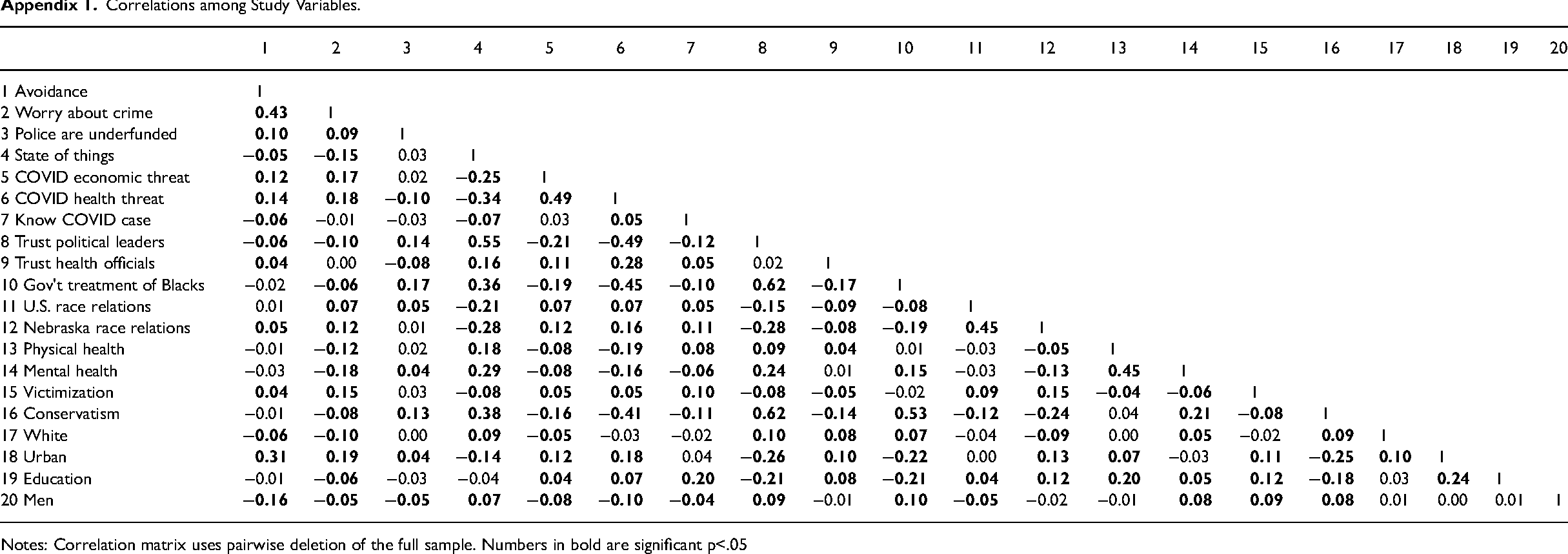
In contrast, perceiving little heath threat from COVID, trusting the president and governor on COVID, and distrusting public health leaders were tied to the belief that police are underfunded. An examination of the correlations between political ideology and these predictors revealed a stark pattern (see Appendix 1). Conservatism was positively correlated with trusting the Republican political leaders (r = 0.62) and negatively associated with trusting public health leaders (r = −0.14), viewing COVID as a health threat (r = −0.41), and viewing COIVD as an economic threat (r = −0.16). This pattern was also reflected in national polling (Pew Research Center, 2020b). In other words, the partisan political polarization around pandemic-related factors seemed to be reflected in Nebraskans’ opinions regarding police funding.
Heightened racial tensions and the politicization of the pandemic, which had become increasingly prominent in the fall of 2020 leading into the election, were associated with opinions about police funding in Nebraska (Deane et al., 2021; Lonsdale, 2021; Nix et al., 2021). The story in this particular socio-historical context is consistent with the theoretical idea that ontological insecurities and related feelings of unsafety and worry can be channeled into a kind of hostile solidarity buttressed by racial animus (Britto, 2013; Carvalho & Chamberlen, 2018; Valente & Pertega, 2018). The powerful political framing of that hostility into a state-directed vigilantism may have further galvanized support for police funding and perhaps a return to a nostalgia-driven punitive form of “law and order” (Farrall et al., 2021; Zimring, 2003).
Limitations and Future Directions
The cross-sectional nature of the survey does not allow for causal inferences. Mail surveys conducted in the modes used here are considered effective in reaching people that phone surveys cannot (Dillman et al., 2014). The data were gathered with mixed administration modes, and the mail-in options (comprising 60% of the sample) generally had a slightly higher response rate than the URL-only option. Among limitations posed by specific measures, a more robust measure of police funding would ask more directly about the respondent's desire to increase spending. The one-item avoidance measure was not specific to safety from either crime or coronavirus infection, nor could it capture the respondent's perception of risk. The measure of distrust was specifically focused on officials’ COVID-19 responses. Although relevant for the context under consideration it is not generalizable to trust/distrust in social institutions more broadly. Finally, the measure about knowing someone diagnosed with coronavirus was not specific to someone in the respondent's social network (e.g., family, friends, co-workers), community, or the state, nor was the item specific to someone they knew personally. Respondents could have also considered celebrities or politicians.
Missing among the measures were specific items asking about people's participation in, awareness of, or thoughts about the summer protests. Perceptions of race relations in Nebraska is a proxy, but specific items might offer a more robust assessment. Perceptions of the crime rate increasing/decreasing and measures of media engagement, which may shape people's sense of safety, insecurity, and support for criminal justice responses (Ray & Kort-Butler, 2020), were also not available. Moreover, news and media consumption shaped people's perceptions of and concerns about the coronavirus outbreak (Mitchell & Oliphant, 2020). Certain media sources (e.g., cable news, social media) may have differentially affected people's assessments of the pandemic, attitudes, and well-being (Jurkowitz & Mitchell, 2020). Although news may serve to inform people, future research should consider how the crafting of stories and the presentation of images about the pandemic—and people's self-selection to access such news—may contribute to increased levels of fear or distress, as well as their sense of insecurity (Shih, Wijaya, & Brossard, 2008).
Additionally, a sense of altruism and social support are generally regarded as protective factors under a range of stressful circumstances (Borgonovi, 2008; Gable & Bedrov, 2022; Thoits, 2011). The social distancing and other health directives during the pandemic posed both opportunities and challenges to connecting with others and community engagement (Rothwell, 2020). For example, technologies like videoconferencing may have helped some people stay in contact, but others did not have ready access to such services (McClain et al., 2021). Research also suggested that people digested more social media during this period, which could have colored their perceptions of unfolding events (Buchanan et al., 2021; Marzouki et al., 2021). It remains an empirical question whether the rapid shift in how people connected with and supported others, in the context of pandemic-driven isolation and mediated information, affected perceptions about personal risk and beliefs about crime.
Nebraska's experience with the COVID pandemic, racial justice protests, and attitudes about crime and justice may not be generalizable to other states, which have unique histories and relationships with the variables under consideration. Additional research within other states may yield similarities as well as distinguishing characteristics (Doob & Webster, 2014). Rather than predicting specific policy outcomes, this study offered a nuanced picture of public opinion about crime and police funding set against a particular socio-historical backdrop.
Conclusion
The legacy of 2020's social upheavals may continue to fuel public fears and support for punitive policy actions in some quarters. For instance the media and politicians quickly turned to reports about fluctuations in official crime rates and narratives around reduced police funding (Kilgore, 2021; King, 2021). Refrains like these historically capitalize on economic and social insecurities, as well as racialized narratives about crime (Drakulich et al., 2020; Kort-Butler, 2020). To the extent that political leaders and media personalities can undermine public health messaging, efforts to frame violence in general and police violence in particular as a public health issues may encounter resistance (American Public Health Association, 2018; DeVylder, 2017). Moreover, the expanding landscape of misinformation and conspiracy affect reporting and editorializing on crime (Kavanagh & Rich, 2018; Mitchell et al., 2020b). This study indicated that racial tensions and social insecurities—particularly when they become politicized as in the case of the COVID-19 pandemic—may shape public attitudes in support of criminal justice practices and policies that promise a vague return to “law and order.”
Footnotes
Acknowledgments
Support for this project was provided by the University of Nebraska-Lincoln Behavioral Health Program of Excellence. The author wishes to acknowledge and thank Dr. Kristen Olson and Dr. Jolene Smyth for access to the Nebraska 2020 Survey on which this study was based.
Declaration of Conflicting Interests
The author(s) declared no potential conflicts of interest with respect to the research, authorship, and/or publication of this article.
Funding
The author(s) received no financial support for the research, authorship, and/or publication of this article.

Notes
Author Biography
Correlations among Study Variables.
| 1 | 2 | 3 | 4 | 5 | 6 | 7 | 8 | 9 | 10 | 11 | 12 | 13 | 14 | 15 | 16 | 17 | 18 | 19 | 20 | |
|---|---|---|---|---|---|---|---|---|---|---|---|---|---|---|---|---|---|---|---|---|
| 1 Avoidance | 1 | |||||||||||||||||||
| 2 Worry about crime |
|
1 | ||||||||||||||||||
| 3 Police are underfunded |
|
|
1 | |||||||||||||||||
| 4 State of things |
|
|
0.03 | 1 | ||||||||||||||||
| 5 COVID economic threat |
|
|
0.02 |
|
1 | |||||||||||||||
| 6 COVID health threat |
|
|
|
|
|
1 | ||||||||||||||
| 7 Know COVID case |
|
−0.01 | −0.03 |
|
0.03 |
|
1 | |||||||||||||
| 8 Trust political leaders |
|
|
|
|
|
|
|
1 | ||||||||||||
| 9 Trust health officials |
|
0.00 |
|
|
|
|
|
0.02 | 1 | |||||||||||
| 10 Gov't treatment of Blacks | −0.02 |
|
|
|
|
|
|
|
|
1 | ||||||||||
| 11 U.S. race relations | 0.01 |
|
|
|
|
|
|
|
|
|
1 | |||||||||
| 12 Nebraska race relations |
|
|
0.01 |
|
|
|
|
|
|
|
|
1 | ||||||||
| 13 Physical health | −0.01 |
|
0.02 |
|
|
|
|
|
|
0.01 | −0.03 |
|
1 | |||||||
| 14 Mental health | −0.03 |
|
|
|
|
|
|
|
0.01 |
|
−0.03 |
|
|
1 | ||||||
| 15 Victimization |
|
|
0.03 |
|
|
|
|
|
|
−0.02 |
|
|
|
|
1 | |||||
| 16 Conservatism | −0.01 |
|
|
|
|
|
|
|
|
|
|
|
0.04 |
|
|
1 | ||||
| 17 White |
|
|
0.00 |
|
|
−0.03 | −0.02 |
|
|
|
−0.04 |
|
0.00 |
|
−0.02 |
|
1 | |||
| 18 Urban |
|
|
|
|
|
|
0.04 |
|
|
|
0.00 |
|
|
−0.03 |
|
|
|
1 | ||
| 19 Education | −0.01 |
|
−0.03 | −0.04 |
|
|
|
|
|
|
|
|
|
|
|
|
0.03 |
|
1 | |
| 20 Men |
|
|
|
|
|
|
|
|
−0.01 |
|
|
−0.02 | −0.01 |
|
|
|
0.01 | 0.00 | 0.01 | 1 |
Notes: Correlation matrix uses pairwise deletion of the full sample. Numbers in bold are significant p<.05