




Abstract
Justice-involved youth may experience unique sexual and mental health risks related to both their gender and sexual orientation. Although previous research has revealed important gender and sexual orientation differences in the sexual and mental health of justice-involved youth, no study has yet examined gender and sexual orientation differences simultaneously within the same sample. The present study addressed this gap in a sample of 347 probation-involved youth, 13–17 years old, recruited as part of a randomized controlled trial of PHAT Life, an HIV/STI, mental health, and substance use prevention program. On the one hand, female and non-heterosexual youth were less likely than male and heterosexual youth to report having ever had sex and to be considered high sexual risk. On the other hand, female youth were more likely than male youth to test positive for STIs and to report certain mental health problems, but non-heterosexual youth showed no difference from heterosexual youth. Finally, female non-heterosexual youth were more likely to report externalizing problems than youth of other gender and sexual orientation combinations. Findings highlight the need for prevention and intervention efforts that specifically target justice-involved youth who identify as female, non-heterosexual, or both.
Justice-involved youth experience elevated rates of sexual and mental health concerns. Compared to their peers, justice-involved youth are more likely to test positive for sexually transmitted infections (STIs) and to report more sexual risk behaviors, such as early sexual debut, multiple sexual partners, and inconsistent condom use (Golzari et al., 2006; Teplin et al., 2003). Furthermore, justice-involved youth report higher rates of internalizing (e.g., anxiety, depression) and externalizing (e.g., aggression, rule breaking) problems (Colins et al., 2010; Fazel et al., 2008; Teplin et al., 2002; Wasserman et al., 2002). Previous research has focused predominantly on heterosexual males, with far less known about females (see e.g., Cauffman et al., 2007 for an exception) and non-heterosexual youth (see e.g., Hirschtritt et al., 2018 for an exception).
Gender Differences in the Sexual and Mental Health of justice-involved Youth 1
The prevalence of females in the juvenile justice system has substantially increased in recent years, although males still represent the majority of justice-involved youth (Snyder & Sickmund, 2006). Gender differences in sexual risk have been inconsistently reported; some studies suggest males engage in more sexual risk-taking than females (Teplin et al., 2003), and others suggest the reverse (Dembo et al., 2010). Teplin et al. (2003) found that justice-involved males were more likely to report ever having oral, vaginal, or anal sex and more than one sexual partner in the past three months compared to females. In contrast, Dembo et al. (2010) found no gender differences in non-condom use. Importantly, methodological differences in measurement across studies make comparisons difficult. Similar to studies of justice-involved youth, studies of community-based youth have shown mixed results with respect to whether females or males engage in more sexual risk-taking (Boyer et al., 2000; Halpern et al., 2007). There is clearly a need for more research in order to resolve these mixed findings with respect to gender differences in sexual risk, which can help inform prevention and intervention efforts specific to justice-involved males or females.
Gender differences in mental health among justice-involved youth differ from community samples. Research on community samples documents more internalizing problems in females than males and more externalizing problems in males than females (Costello et al., 2003; Ormel et al., 2005; Romano et al., 2001). Likewise, research indicates that justice-involved females report higher rates of internalizing problems than males, but no gender differences have emerged in externalizing problems (Cauffman et al., 2007; Loyd et al., 2019; Wasserman et al., 2005, 2010).
One facet of externalizing problems, aggressive behaviors, may be especially important to mental health and represents a major public health concern for justice-involved youth. Aggressive behaviors increase risk for negative mental and physical health outcomes, low educational and vocational achievement, ongoing contact with the justice system, and recidivism of criminal activity (Colins et al., 2009; Haapasalo & Hämäläinen, 1996; Lambie & Randell, 2013). In turn, victims of aggressive behaviors are at increased risk for depression and anxiety, low academic functioning, and aggression or criminal activity themselves (Margolin & Gordis, 2000). Evidence suggests that males engage in aggressive behaviors more than females both in community youth (Lahey et al., 2000; Leadbeater et al., 1999) and juvenile justice samples (Asscher et al., 2015). However, some studies suggest that females in the justice system may display more aggressive behaviors than males (Stickle et al., 2012). More research is needed to clarify gender differences in mental health problems broadly and aggressive behaviors more specifically among justice-involved youth to improve gender-sensitive programming and intervention efforts.
Sexual Orientation Differences in the Sexual and Mental Health of justice-involved Youth
Compared to youth in the general population, those involved in the juvenile justice system disproportionately report a non-heterosexual identity. In a recent study, 11% of youth in a community sample identified as non-heterosexual or sexual minority (Kann et al., 2016), compared to 15% (Irvine, 2010) and 31% (Hirschtritt et al., 2018) of youth in samples from the juvenile justice system. Hirschtritt et al. (2018) found no differences in sexual risk behaviors between heterosexual and non-heterosexual justice-involved youth, except that non-heterosexual youth were more likely to endorse that either they or their sexual partner were intoxicated during sex in the past four months. Other studies indicate that compared with their heterosexual peers, non-heterosexual justice-involved youth tend to be female and to have experienced more internalizing and externalizing problems (Belknap et al., 2014; Hirschtritt et al., 2018; Jonnson et al., 2019; Stein et al., 2015; Wilson et al., 2017).
Research similarly suggests that non-heterosexual youth in community samples are more vulnerable to sexual risk behaviors and internalizing and externalizing problems compared to their heterosexual peers. Non-heterosexual youth tend to report earlier age of sexual debut and more sexual partners, inconsistent condom use, suicidality, and substance use (Dermody et al., 2017; Garofalo et al., 1998; Goodenow et al., 2008; Kann et al., 2016). However, Hirschtritt et al. (2018) was unable to replicate some of the differences in sexual risk behaviors between non-heterosexual and heterosexual youth in a justice-involved sample.
The Present Study
Previous research on the sexual risk and mental health of justice-involved youth has tended to focus on differences associated with gender (e.g., Cauffman et al., 2007) or sexual orientation (e.g., Hirschtritt et al., 2018) alone. This study expands on these data by exploring the intersection of gender and sexual orientation on sexual risk and mental health in justice-involved youth. We were especially interested in whether female non-heterosexual youth, a specific intersection of gender and sexual orientation, experience unique sexual and mental health concerns compared to their male and heterosexual peers. Given some evidence suggesting that female and non-heterosexual youth may experience more sexual risk behaviors and mental health problems than male and heterosexual youth, respectively, it is possible that youth who identify as both female and non-heterosexual are at even greater risk of experiencing such difficulties. A recent study found that 40% of female youth in juvenile justice may be non-heterosexual (Irvine & Canfield, 2016), further highlighting the importance of understanding concerns that might be specific to such intersectional identities.
We advance prior research in at least three ways. First, we focus on youth arrested and released on probation rather than incarcerated or detained youth. The former represent 80% of youth in juvenile justice (Snyder & Sickmund, 2006) and typically return to their communities without mental health or sexual risk reduction services (Tolou-Shams et al., 2010). Findings from this study could inform targeted programs to meet the needs of youth on probation, who comprise the majority of justice-involved youth. Second, we measured sexual risk using two methods, self-reported sexual behavior and an objective indicator (STI). Third, we examined broad mental health problems (internalizing and externalizing problems), as well as a specific facet of externalizing problems with unique relevance to justice involvement: aggressive behaviors (Lambie & Randell, 2013).
We hypothesized that females would report more internalizing problems than males, but we did not hypothesize gender differences in sexual risk or externalizing problems given the inconsistencies in prior research. We expected youth who identified as non-heterosexual to report more sexual risk behaviors and mental health problems (both internalizing and externalizing) and to test positive for STIs compared to youth who identified as heterosexual. Finally, we hypothesized that non-heterosexual females would report more sexual risk behaviors and mental health problems and test positive for STIs compared to heterosexual females, non-heterosexual males, and heterosexual males. Findings will contribute to improved prevention and intervention efforts for specific subgroups (e.g., female non-heterosexual justice-involved youth) with differing needs and risk profiles.
Method
Participants
Participants were probation-involved youth, 13–17 years old, recruited as part of a randomized controlled trial of PHAT Life, an HIV/STI, mental health, and substance use prevention program delivered in juvenile probation (see Donenberg et al., 2018 for details). Participants were recruited from five Chicago Cook County Evening Reporting Centers (ERCs), alternatives to detention following arrest that offered community-based probation programs such as PHAT Life. After presentation of the study to all youth at the ERCs, youth assent and parental consent were obtained for those interested in participating. Given that female youth were less likely than male youth to be remanded to ERCs, a second recruitment strategy specifically targeted female youth. Probation officers distributed study fliers to female youth in their caseload and collected yes or no responses in a sealed envelope regarding potential interest in participating.
Youth were eligible to participate if they: (1) spoke English, because assessments were normed for English speakers; (2) provided assent; (3) had consent from a parent or legal guardian; (4) were remanded to an ERC or recruited through probation officers, and; (5) completed the baseline assessment. For the purposes of this study, which examined differences across gender and sexual orientation, youth were excluded from the analytic sample if they: (1) did not report their gender (options were male or female; n = 4), or; (2) did not report their sexual orientation (n = 8).
This study analyzed the baseline data and included a final analytic sample of 347 probation-involved youth (M age = 16.07 years, SD = 1.08 at baseline). Youth were primarily African American (90%), male (67%), heterosexual (66%), and qualified for free or reduced lunch at school (90%). This study was approved by the University of Illinois at Chicago Institutional Review Board with special attention to vulnerable populations.
Measures
Demographics
Youth reported their age, race/ethnicity (American Indian or Alaska Native; Asian; Black or African American; Native Hawaiian or other Pacific Islander; White; other), gender (male; female), 2 sexual orientation (gay, lesbian, or homosexual; bisexual; straight or heterosexual; undecided; none of the above), and whether they qualified for free or reduced lunch at school (yes; no). Sexual orientation was dichotomized for analyses as heterosexual or non-heterosexual, the latter defined as any option other than “straight or heterosexual.” Non-heterosexual categories were combined because too few youth reported any single non-heterosexual option.
Sexual behavior
Youth reported if they ever had oral, vaginal, or anal sex (yes; no), and the age at which they first had sex (i.e., oral, vaginal, or anal) that was not abuse. Youth also reported their number of sexual partners in the past six months, and their consistency of condom or dental dam use with those partners. We then created a variable combining the number of sexual partners and condom or dental dam use, such that 0 = no partners, 1 = one partner always using condoms or dental dams, 2 = multiple partners always using condoms or dental dams, 3 = one partner inconsistently using condoms or dental dams, and 4 = multiple partners inconsistently using condoms or dental dams. Based on the bimodal distribution of scores, youth were categorized as high risk if they reported multiple partners and inconsistent condom or dental dam use in the past six months (i.e., 4), and low risk if they fell in any of the other categories (i.e., 0 to 3). Furthermore, youth provided urine samples that were tested for three STIs (using nucleic acid amplification technologies): chlamydia, gonorrhea, and trichomoniasis (positive; negative for any STIs).
Mental health
Youth completed the Youth Self-Report (YSR; Achenbach & Rescorla, 2001), a widely used measure of behavioral and emotional problems normed for youth aged 11–18 years old. The YSR consists of 112 statements that youth rated from 0 = not true, 1 = somewhat or sometimes true, and 2 = very true or often true of themselves. The YSR contains two broad band scales: Internalizing Problems (31 items assessing anxious, depressed, and somatic complaints) and Externalizing Problems (32 items assessing rule-breaking and aggressive behaviors). The Externalizing Problems scale is further divided into two narrow band scales: Rule-Breaking Behaviors (15 items) and Aggressive Behaviors (17 items). Each scale generates a total score representing the sum of all items and a T-score based on established norms (Achenbach & Rescorla, 2001). Coefficient alphas (α) in the sample were .89 for both Internalizing and Externalizing Problems, .79 for Rule-Breaking Behaviors, and .86 for Aggressive Behaviors.
Data Analysis
For continuous outcomes such as age and YSR scales, a series of two-way analyses of variance (ANOVAs) were conducted to test differences between female versus male (Gender), non-heterosexual versus heterosexual (Sexual Orientation), and female non-heterosexual versus other (Gender × Sexual Orientation) probation-involved youth. For categorical outcomes such as having ever had sex, a series of multiple logistic regressions were conducted to test those same differences across gender and sexual orientation in probation-involved youth.
Results
Descriptive Statistics
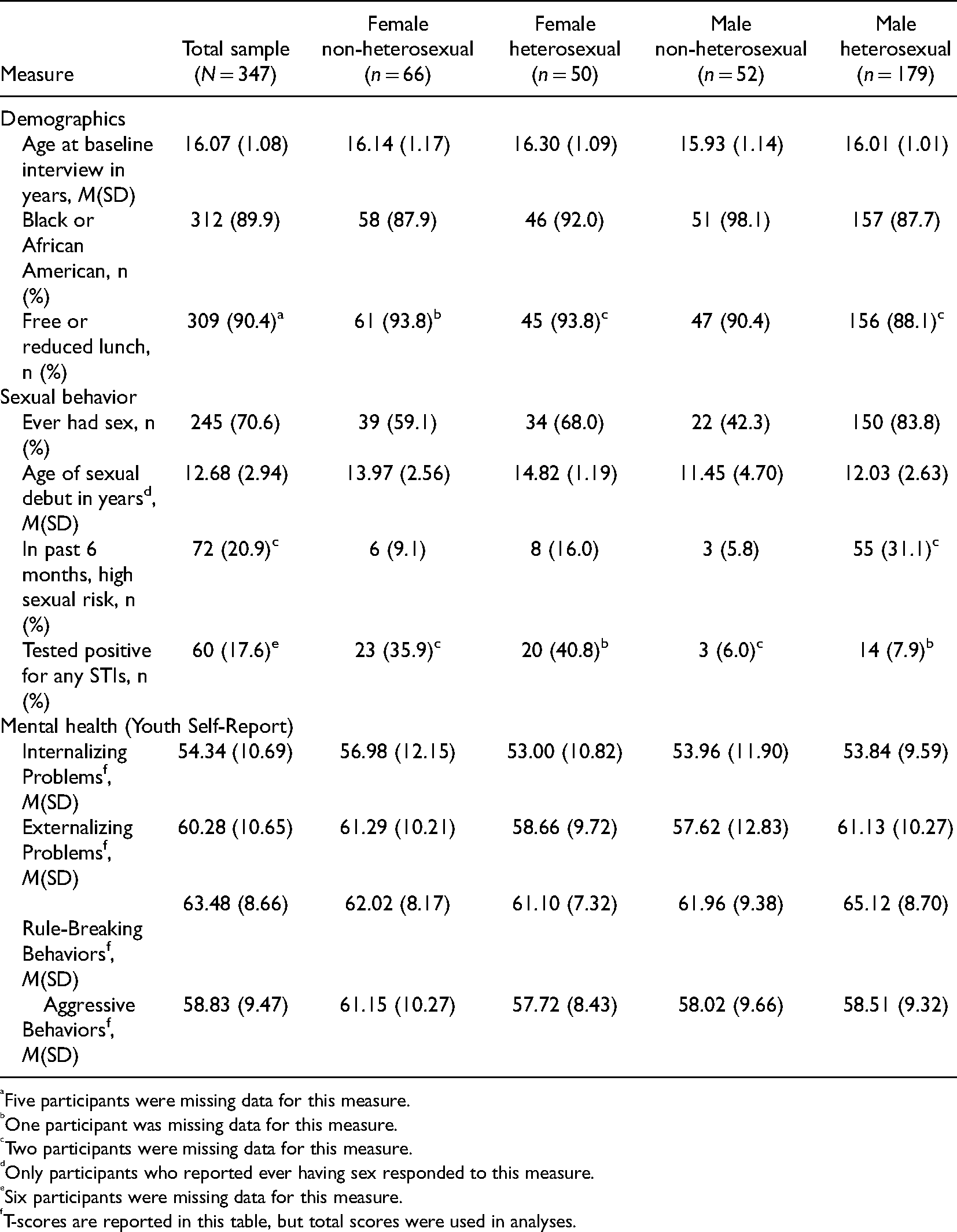
Table 1 presents the descriptive statistics on the demographic, sexual behavior, and mental health measures, for the total sample and separately by gender and sexual orientation. T-scores are reported for the Internalizing and Externalizing Problems broad band scales, and the Rule-Breaking and Aggressive Behaviors narrow band scales.
Descriptive Statistics for Probation-Involved Youth by Gender and Sexual Orientation.
Five participants were missing data for this measure.
One participant was missing data for this measure.
Two participants were missing data for this measure.
Only participants who reported ever having sex responded to this measure.
Six participants were missing data for this measure.
T-scores are reported in this table, but total scores were used in analyses.
Comparisons Across Gender and Sexual Orientation
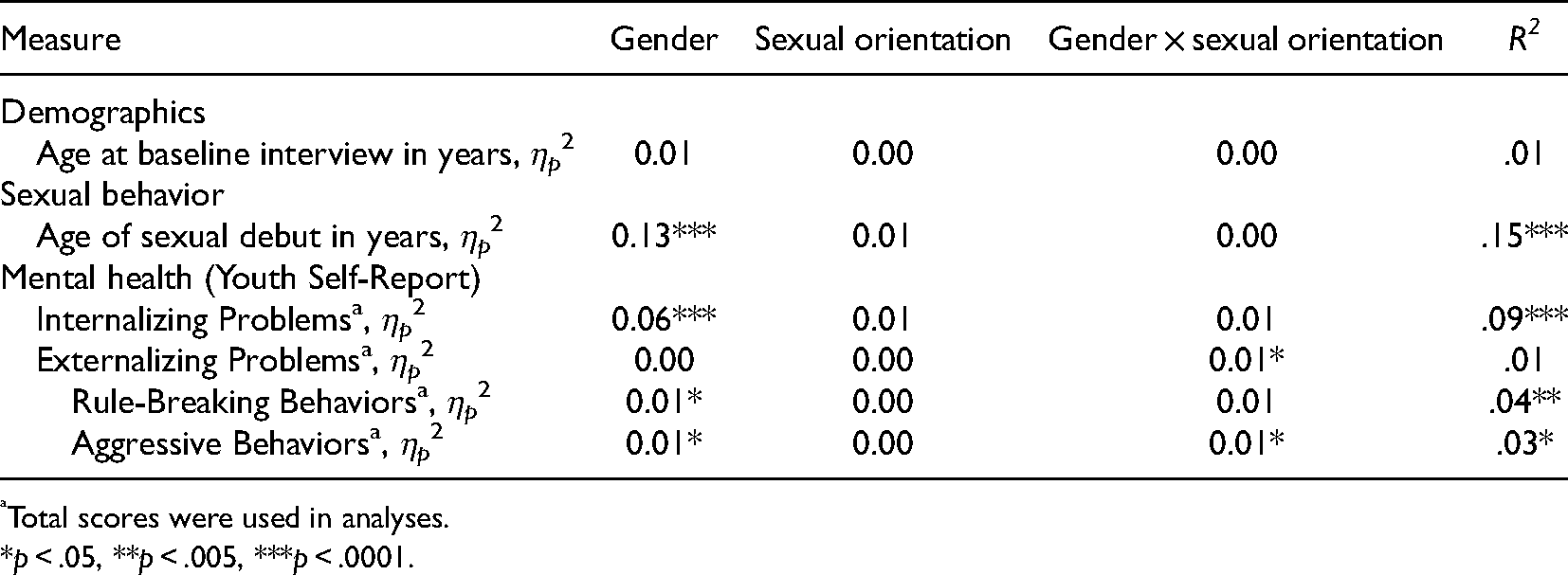
Table 2 presents the results of two-way ANOVAs, and Table 3 presents the results of multiple logistic regressions, comparing the demographic, sexual behavior, and mental health measures across gender and sexual orientation. Significant main effects of gender emerged for all four sexual behavior measures and all mental health measures (except the Externalizing Problems scale). Females reported less sexual activity and sexual risk than males, but were more likely to test positive for STIs and report mental health problems, especially internalizing problems. In contrast, only two measures showed significant main effects of sexual orientation: ever having sex and high sexual risk in the past six months. Non-heterosexual youth reported less sexual activity and sexual risk than heterosexual youth, and no statistically significant differences in mental health. Significant interaction effects of gender and sexual orientation indicated that compared to the other three groups, female non-heterosexual youth reported less sexual activity, more externalizing problems, and more aggressive behaviors. Figure 1 illustrates more clearly the main and interaction effects of gender and sexual orientation for the mental health measures.
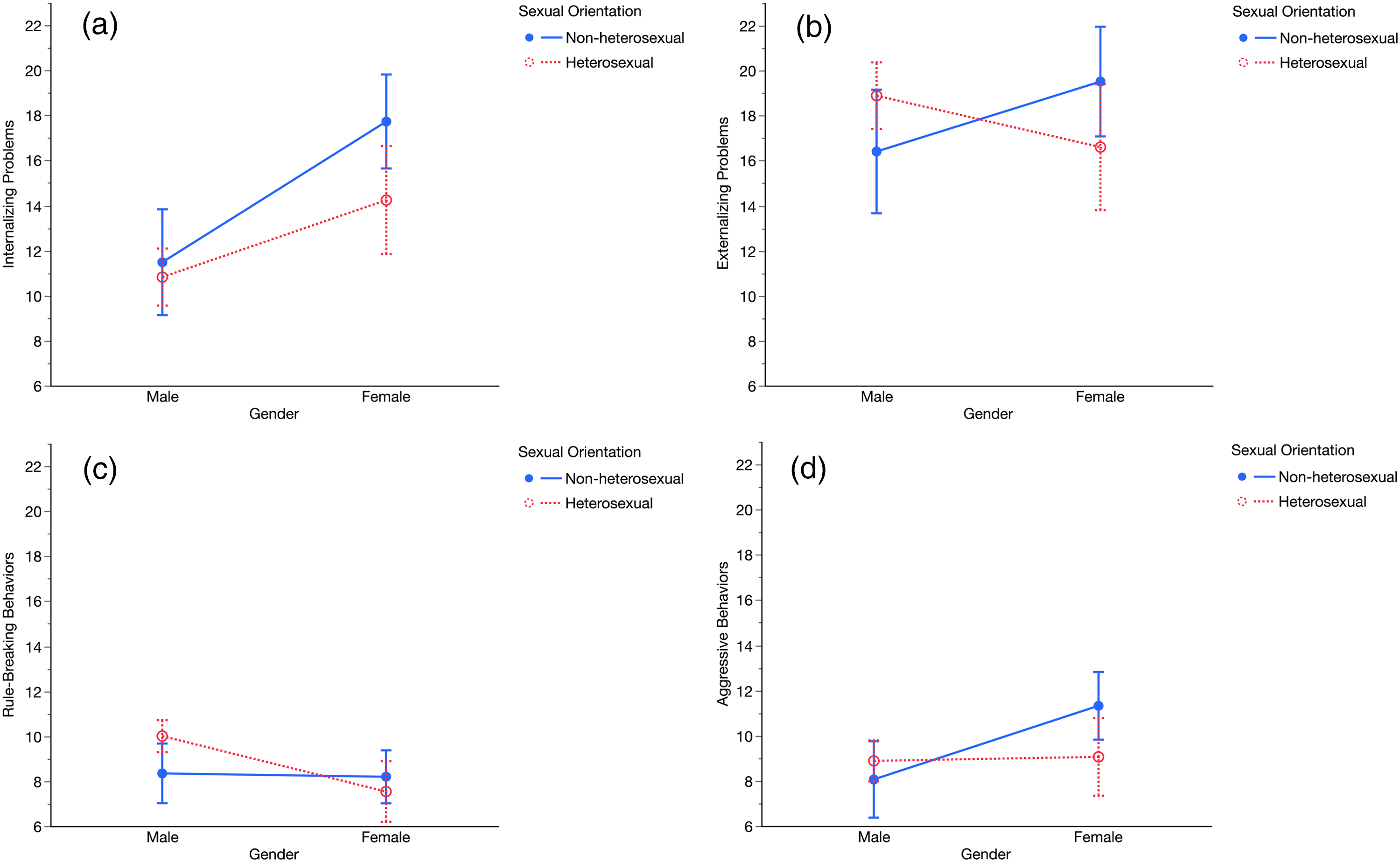
Main effects and interactions of gender and sexual orientation for the mental health measures (Youth Self-Report). Note. Points represent mean total scores for female non-heterosexual (n = 66), female heterosexual (n = 50), male non-heterosexual (n = 52), and male heterosexual (n = 179) probation-involved youth on (a) the Internalizing Problems scale; (b) the Externalizing Problems scale; (c) the Rule-Breaking Behaviors scale; and (d) the Aggressive Behaviors scale from the Youth Self-Report (YSR). Error bars indicate 95% confidence intervals.
Two-Way ANOVA Results Comparing Probation-Involved Youth Across Gender and Sexual Orientation.
Total scores were used in analyses.
*p < .05, **p < .005, ***p < .0001.
Logistic Regression Results Comparing Probation-Involved Youth Across Gender and Sexual Orientation.
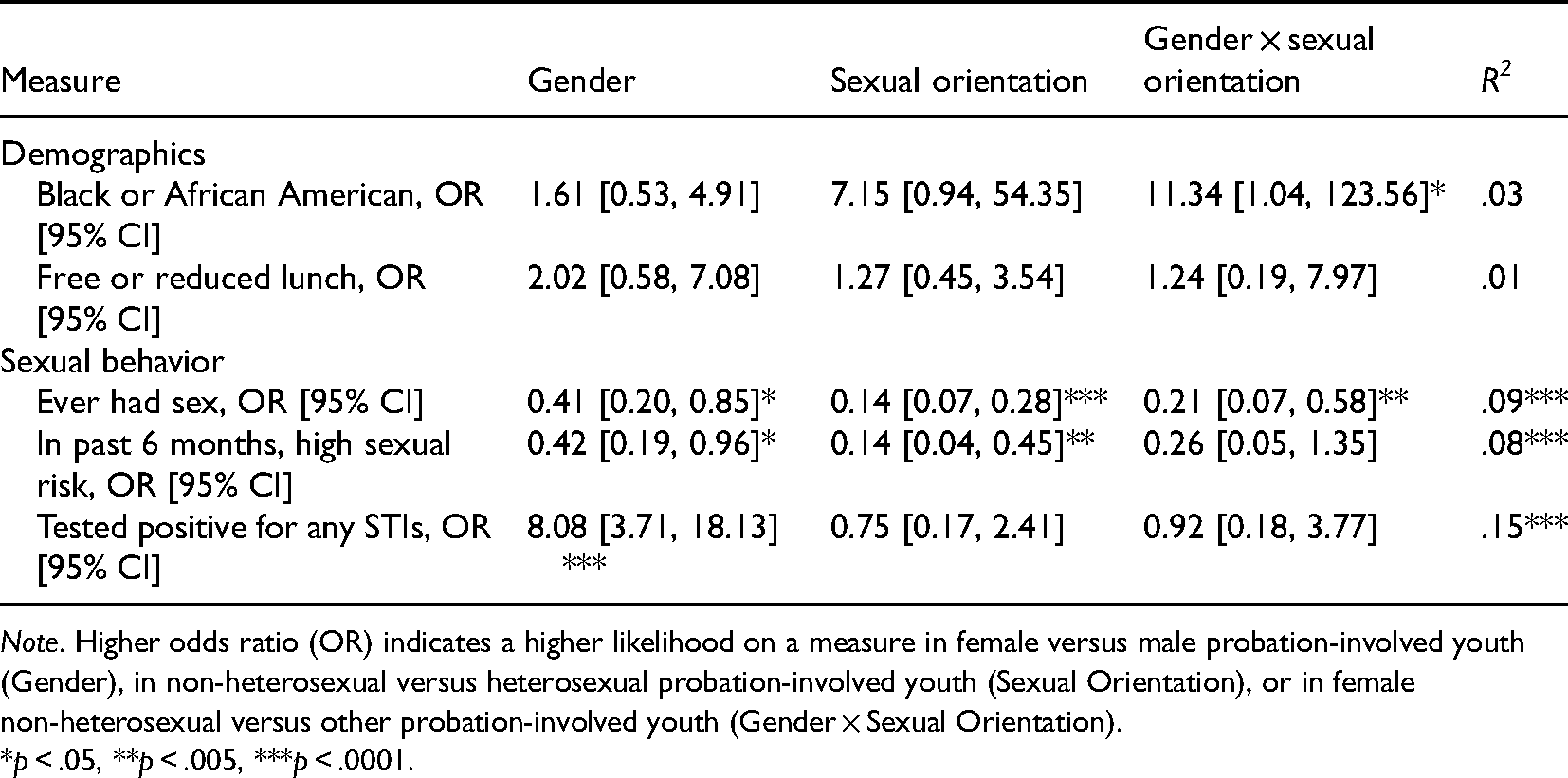
Note. Higher odds ratio (OR) indicates a higher likelihood on a measure in female versus male probation-involved youth (Gender), in non-heterosexual versus heterosexual probation-involved youth (Sexual Orientation), or in female non-heterosexual versus other probation-involved youth (Gender × Sexual Orientation).
*p < .05, **p < .005, ***p < .0001.
Discussion
This study is among the first to explore the intersection of gender and sexual orientation on sexual risk and mental health among justice-involved youth. Findings revealed that female and non-heterosexual youth were less likely than male and heterosexual youth to report ever having sex and engaging in high risk sexual behavior. Females were more likely than males to report internalizing problems, but there were no differences in mental health between non-heterosexual and heterosexual youth. Finally, female non-heterosexual youth were less likely to report ever having sex, but reported more externalizing problems and aggressive behaviors than the other groups.
Consistent with recommendations for conducting STI research (e.g., Brown & DiClemente, 2015; DiClemente et al., 2011), this study collected both biological and self-report data on sexual risk. Notably, females reported less sexual risk, but were more likely than males to test positive for STIs. The discordance between self-reported sexual behaviors and biologically determined STIs in this study is consistent with findings related to STIs among youth samples more broadly (e.g., DiClemente et al., 2011; Donenberg et al., 2020). Indeed, the validity of self-reported sexual behaviors is a challenging issue in STI research with adolescents (DiClemente et al., 2013). The discrepancy between self-reported sexual behaviors and biologically determined STIs has been associated with lower knowledge about STIs and greater sexual norms of abstinence among peers (Brown et al., 2012). This suggests that youth might be underreporting sexual behaviors because they do not recognize the connection to STIs and wish to appear abstinent for socially desirable reasons. Although we did not examine these factors in the current study, our findings implicate the need for more research on the validity of self-reported sexual behaviors among justice-involved youth specifically. Such work will be useful for ensuring that our understanding of sexual health among this population is accurate and consistent across different measures.
Results regarding sexual orientation point to important directions for future investigation. In contrast to those in community-based samples (Dermody et al., 2017; Garofalo et al., 1998; Goodenow et al., 2008; Kann et al., 2016), non-heterosexual youth in this study were less likely than heterosexual youth to report ever having sex or engaging in high-risk sexual behavior. These findings may reveal important differences between non-heterosexual youth from justice-involved and community samples. For example, compared to their heterosexual peers, non-heterosexual youth might get involved in the justice system without engaging in as risky or aggressive behaviors because they have a lower threshold for arrest due to prejudice against their sexual orientation. Alternatively, a number of non-heterosexual youth did not indicate a specific sexual identity label, preferring to describe themselves as “undecided” or “none of the above.” At least one study has shown that feeling less sure of one's sexual preferences is associated with less sexual activity (Ybarra et al., 2016), but future research should explore such nuances as they relate to sexual risk behavior. Future research would also benefit from multiple measures of sexual orientation and sexual attraction (see Cimpian, 2017 for recommendations on improving the validity of classifying youth who are non-heterosexual). Sexual identity labels do not always reflect sexual attractions (Bailey et al., 2016), and questions about sexual identity appear to be more difficult for adolescents to understand than questions about sexual attraction (Austin et al., 2007).
Furthermore, no differences emerged between non-heterosexual and heterosexual youth in internalizing and externalizing problems. These findings contradict previous studies of justice-involved youth (e.g., Hirschtritt et al., 2018), which have generally found that non-heterosexual youth are more likely to experience internalizing and externalizing problems. However, the present sample was predominantly African American, in contrast to those previous studies that included much more racially diverse samples. The different racial composition between this sample and past samples might have contributed to the different findings. For example, non-heterosexual justice-involved youth who are also African American may experience an especially negative impact to their mental health as a result of discrimination against both their sexual orientation and race (Jonnson et al., 2019). Although sexual orientation and racial discrimination together may exacerbate the risk for internalizing and externalizing problems in justice-involved youth, racial discrimination could have a stronger and more salient effect masking that of sexual orientation discrimination. Consistent with this possibility, one study found that sexual orientation and racial discrimination were associated with mental health disorders only in combination with each other, or with gender discrimination (Bostwick et al., 2014). In this case, no differences in mental health would be expected between non-heterosexual and heterosexual justice-involved youth who were mostly African American, because there were not enough youth of a different race for comparison. To be sure, we offer this speculative explanation with the understanding that there are likely other factors contributing to these unexpected findings, such as possibly low statistical power. Future studies should explore the extent to which racial composition and discrimination intersect with sexual orientation to impact sexual and mental health in justice-involved youth.
This study provides new information about sexual risk and mental health at the intersection of gender and sexual orientation among justice-involved youth. Female non-heterosexual youth reported the highest rates of externalizing problems and aggressive behaviors relative to the other three groups. Findings may reflect the high rates of discrimination toward female non-heterosexual youth and others who might be perceived as behaving outside of gender norms (Himmelstein & Brückner, 2011; Mitchell et al., 2014). For example, female non-heterosexual youth face greater sanctions in school compared to their male and heterosexual peers that are not explained by greater engagement in problematic behaviors (Himmelstein & Brückner, 2011). Compared to their male and heterosexual peers, female non-heterosexual youth also report the highest rates of sexual harassment and the most negative or distressing outcomes as a result (Mitchell et al., 2014). Thus, it is possible that elevated externalizing problems and aggressive behaviors among female non-heterosexual justice-involved youth are responses to more challenging experiences in their environment. Because cyber and school bullying have been associated with increased aggressive behaviors in non-heterosexual youth (Duong & Bradshaw, 2014), this may also be true in the subgroup of female non-heterosexual youth in juvenile justice. Future research is needed to confirm these associations. Nevertheless, this study has identified unique mental health concerns that suggest the need to target prevention or intervention efforts related to aggression toward this particular subgroup.
Study limitations require cautious interpretation of our results. First, the sample was primarily African American, and youth were on probation. Findings may not generalize to other populations. Second, most of the sample was male and heterosexual, and thus sample sizes for some group comparisons were small. Third, we did not consider gender differences beyond male versus female, and more nuanced examinations of gender might prove important to these findings. Indeed, this study did not provide youth the option to report their gender as anything other than male or female. Future research should examine differences between gender binary and gender nonbinary justice-involved youth, as well as transgender and cisgender justice-involved youth. Fourth, because we collapsed non-heterosexual youth into a single category to increase sample size and power, findings may have missed important distinctions within non-heterosexual youth. Examining differences within non-heterosexual youth will be an important area for further investigation. Fifth, the sexual risk variable was determined by the number of sexual partners in the past six months and the consistency of condom or dental dam use with those partners. Because female non-heterosexual youth in particular are less likely to report that their most recent sexual partners are male (Ybarra et al., 2016), it might have been more appropriate to ask not only about use of condoms or dental dams, but other barriers (e.g., gloves) and sterilized sex toys. Finally, and perhaps most importantly, this study relied on baseline data that had been previously collected for a randomized controlled trial of PHAT Life. Moving forward, questions should be more inclusive of diversity in gender and sexual orientation, especially transgender and gender nonbinary youth.
Conclusions
This study characterized the unique sexual risk behaviors and mental health concerns at the intersection of gender and sexual orientation in justice-involved youth. Findings that female and non-heterosexual youth report less sexual risk but more mental health problems underscore the unaddressed need for evidence-based interventions specifically for justice-involved girls (Chesney-Lind et al., 2008). Furthermore, justice-involved sexual minority youth have been described as a “hidden population” (Irvine, 2010), because they are overrepresented in the justice system but lack health-related services and interventions that are specific to their needs (Barnert et al., 2016). As we gain a better understanding of how sexual and mental health differ across gender and sexual orientation among justice-involved youth, we will learn how to improve our prevention and intervention efforts, especially those that could specifically target justice-involved youth who identify as female, non-heterosexual, or both.
Author Note
Kevin J. Hsu is now at the Department of Psychological and Social Sciences, Pennsylvania State University, Abington, Abington, PA, USA. Nyssa L. Snow-Hill is now at the Center for Dissemination and Implementation Science, Department of Medicine, University of Illinois at Chicago, Chicago, IL, USA.
Footnotes
Declaration of Conflicting Interests
The author(s) declared no potential conflicts of interest with respect to the research, authorship, and/or publication of this article.
Funding
The author(s) disclosed receipt of the following financial support for the research, authorship, and/or publication of this article: This work was supported by the National Institute on Minority Health and Health Disparities (grant number R01MD005861). Its contents are solely the responsibility of the authors and do not necessarily represent the official views of the NIMHD. We thank all collaborating institutions in the conduct of this study, and the youth and families for their participation. Clinical trial registration information: PHAT Life: Preventing HIV/AIDS Among Teens in Juvenile Justice (PHAT Life);  ; NCT02647710.