




Abstract
Appearance concerns are rarely studied in very old adults. We tested whether directing attention to the self (mirror) versus others (poster) differentially affects appearance self-evaluations among community-dwelling older adults (N = 76; age 62–98, M = 81.41; 62% women). Participants completed questionnaires while seated facing a mirror (self-focus) or a poster depicting younger and older faces (other-focus). A 2 × 2 ANCOVA (Focus × Gender), controlling for age, education, relationship status, and self-rated health, showed a significant interaction. Men rated their appearance more positively in the mirror condition than in the poster condition. In contrast, women did not differ across conditions but rated their appearance lower than men under self-focus and higher than men under other-focus. These gendered patterns suggest that environmental cues in aging-service settings may shape how the oldest-old perceive their appearance and interact with staff. We discuss how to optimize environments to minimize gendered threats to self-image.
In very old adults, attentional focus (mirror vs. poster) interacts with gender to shape state-appearance evaluations. Men rated appearance higher under self-focus and lower under other-focus; women showed the reverse between-gender pattern. Brief, commonplace cues may activate gendered standards consistent with objective self-awareness and social comparison accounts.
For women clients, avoid mirror-centric intake areas; consider neutral or indirect reflective surfaces in clinics and senior centers. Prefer older-only, same-age imagery before mixed-age visuals; emphasize functionality over youth-centric aesthetics in signage and scripts. Evaluate mediators (comparison direction, self-objectification, functionality appreciation) and separate younger-only from older-only targets in future trials.What This Paper Adds
Applications of Study Findings
Introduction
Appearance self-evaluations in later life are scarce and understudied (Peat et al., 2008; Roy & Payette, 2012). They are influenced by a lifetime of gender socialization. Across adulthood, women tend to ascribe greater importance to their appearance than men (Fardouly et al., 2015; Fardouly & Vartanian, 2015) but show gains in appearance evaluation, a stronger emphasis on body functionality in old age (Alleva & Tylka, 2021; Quittkat et al., 2019; Tiggemann & McCourt, 2013), and develop various strategies to counter the effects of aging on their appearance evaluation (Baker & Gringart, 2009). Men, in contrast, tend to prioritize mesomorphic strength and muscularity ideals throughout adulthood (McCabe & Ricciardelli, 2004) and often emphasize appearance by using competence- or capability-linked standards. In this regard, recent studies of late life indicate gender-specific concerns about appearance. Specifically, for women, there is evidence for self-body recognition changes across the life span, such that as women age, their implicit self-recognition abilities may decline in association with more negative body image dispositions (Bellard et al., 2022). Among men, findings indicate that the ways they experience changes in their aging bodies highlight the role that later-life belonging and purpose play in their lives (Bennett et al., 2023).
Two theories explain how situational attentional focus may differentially affect older women’s and men’s evaluations of their appearance. The theory of objective self-awareness (OSA) posits that self-focus (e.g., by using a mirror) aligns attention with salient self-standards; when the perceived self–standard discrepancy is high, evaluations become more negative (Duval & Wicklund, 1972; Silvia & Duval, 2001). Objectification theory further suggests that lifelong socialization aimed at improving appearance renders women particularly vulnerable to negative shifts in self-focus, especially in cultures where stringent, youth-centered beauty standards prevail (Fredrickson & Roberts, 1997; Tiggemann & Lynch, 2001). When attention is directed outward to others, social comparisons and age-related developments specify which standards become apparent. Social comparisons can trigger assimilative or contrastive judgments, depending on the perceived similarity between the self and others, the accessibility of social standards, and the direction (upward or downward) of the comparison (Mussweiler, 2003).
Socioemotional selectivity theory (SST) suggests that in later life, people place a stronger emphasis on emotionally meaningful similar others and demonstrate a preference for positive information, known as the positivity effect (Carstensen et al., 1999; Mather & Carstensen, 2005; but see, Rolison & Lamarche, 2023). In a mixed-age environment, these tendencies can direct older adults' attention toward same-age faces and away from upward (younger, idealized) standards, particularly when older adult stereotypes are internalized in more benevolent or functional terms (Levy, 2009). Indeed, older perceivers exhibit their own age-related attentional bias and often make relatively favorable evaluations of older adult faces compared to younger faces (Wiese et al., 2013; Zebrowitz et al., 2017).
Converging evidence suggests that, in mid- to late life, social comparisons (of the self to others) versus temporal comparisons (of the self-now to the self in the past) have opposite effects on self-evaluation and social comparisons tend to bias people toward feeling younger. In contrast, temporal comparisons tend to bias them toward feeling older (Weiss et al., 2025). Integrating this with gendered body evaluation processes, we expect mirror exposure to evoke temporal benchmarks that accentuate perceived age-related losses for women (lower appearance vs. men). In contrast, other-focused contexts elicit social comparisons that are comparatively benign for women but more threatening for men, who are prone to upward contrast with younger, muscular male standards.
In applied gerontology, the self-evaluations of one’s appearance are not merely aesthetic concerns. Negative self-evaluations of one’s appearance are linked to depressive symptoms, social withdrawal, and feelings of stigma in late life, and they can shape whether older adults feel socially attractive enough to join social activities or access services (Roy & Payette, 2012; Tiggemann & McCourt, 2013). Moreover, across adulthood and into old age, women tend to evaluate themselves and are evaluated against lifelong norms of youthfulness, thinness, and attractiveness, whereas men tend to evaluate themselves and are evaluated against norms of strength, vigor, and competence (Quittkat et al., 2019; Roy & Payette, 2012). It is reasonable to conclude that when older adults feel they cannot comply with these standards, they may avoid social interactions in social places. Thus, understanding how momentary contextual cues in social settings (e.g., being seated in front of a mirror versus directing one’s attention to other older adults) shape appearance self-evaluation in the oldest-old may assist aging services in designing their physical environments, and in supporting respectful self-presentation for women and men in their late life.
Consistent with systematic evidence that interior visual environments (e.g., lighting and interior elements such as reflective surfaces and wall imagery) shape older adults’ affect and mental health, our mirror/poster manipulation isolates two modifiable visual cues commonly encountered in aging-service interiors (Yu & Juan, 2025). Our emphasis on interior visual environmental cues also complies with current studies that link indoor visual/spatial characteristics in residential settings with older adults’ wellbeing (Chen et al., 2025), as well as interpersonal interactions, activity engagement, resident–caregiver relations, and conflicts (Wang et al., 2025).
To summarize, gender-differentiated consequences of attentional focus may differ between older women and men. Under self-focus (facing a mirror), women may experience a greater perceived discrepancy between internalized youthful beauty standards and their actual appearance, leading to less favorable self-evaluations of appearance than men (Fredrickson & Roberts, 1997; Tiggemann & Lynch, 2001). Under other focus (facing a poster with older and younger faces), women may attend more to same-age faces (own age bias) and to positive details (positivity effect). This pattern can normalize or elevate women’s self-evaluations relative to men and is consistent with evidence that women rely more on body functionality than on its beauty and on affiliation goals in later life (Alleva & Tylka, 2021; Carstensen et al., 1999; Zebrowitz et al., 2017). Men, whose appearance ideals remain tied to competence- or capability-linked standards, may be more susceptible to upward contrast when confronted with younger male standards and may use less lateral/downward comparisons to older others (McCabe & Ricciardelli, 2004; Mussweiler, 2003), when facing a poster with older and younger faces.
Grounded in the framework above, while acknowledging the fact that mechanisms were not directly measured in this study, we suggest two hypotheses.
Women would rate their own appearance as significantly worse than men under self-focus (mirror), but significantly better than men under other focus (poster).
Women would rate their appearance as worse under self-focus (mirror) than under other focus (poster), whereas men would rate their appearance as worse under other focus (poster) than under self-focus (mirror).
Methods
Participants
Participants (N = 77) were recruited via community centers in Israel’s central district. Research assistants approached managers of community centers to inquire whether they would be interested in serving as a recruitment center for the study. Three centers agreed to allow targeted recruitment within their centers and provided small office space for running the experiment. Data collection was conducted in three concentrated periods from March to August 2025. Research assistants approached eligible participants while at the community center. Participants were included if they were aged 60 or older and spoke/read Hebrew fluently and excluded if the staff of the day centers reported cognitive impairment.
Experimental Design
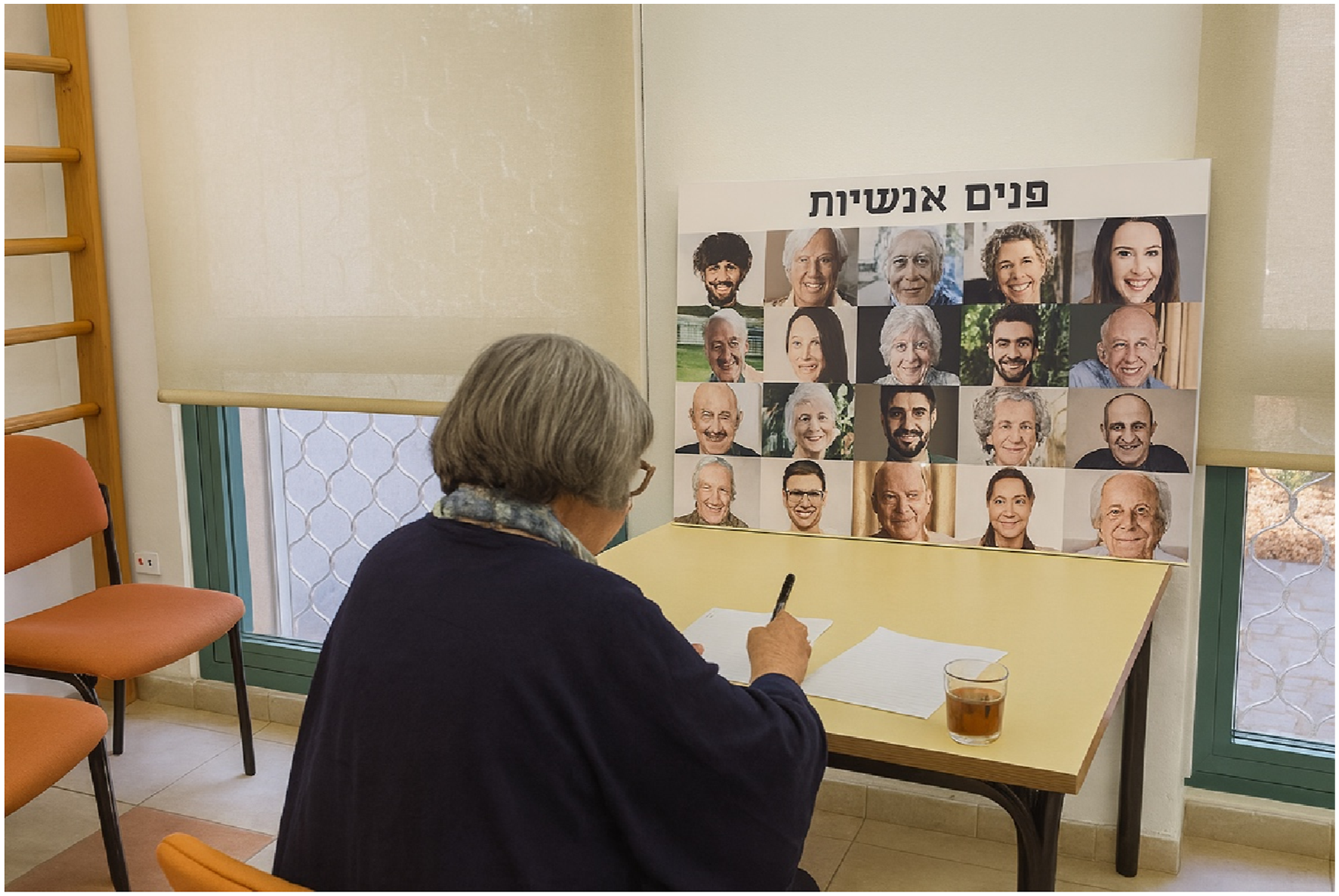
In each community center, research assistants were provided with offices to set up the poster or mirror conditions. Questionnaires were administered in printed form and completed manually. The poster and mirror were identical in size (height: 61 cm; width: 91 cm) and were placed in the same position on a table in front of the participant. The poster displayed 25 pictures (5 × 5) of individuals’ faces, obtained from the internet, comprising nine young adults (five males and four females) and sixteen older adults (eight males and eight females). Above the faces on the poster was the title, “Human Faces” (Figures 1 and 2). Self-focused attention (mirror condition) Other-focused attention (poster condition). The caption above the pictures is “Human Faces” written in Hebrew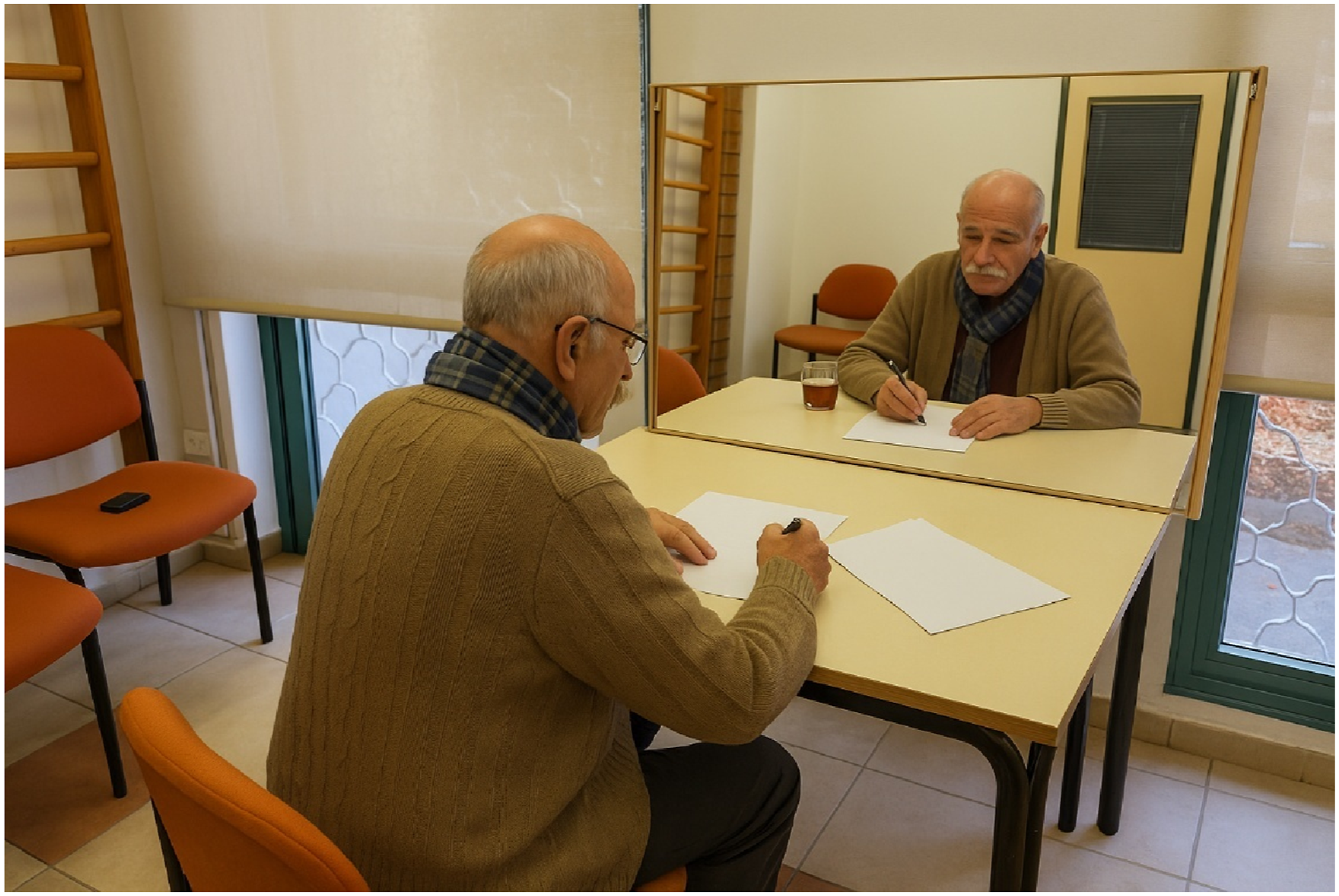
Participants were randomly assigned to either the mirror (self-focus) or poster (other-focus) condition, with conditions counterbalanced. Specifically, within each community center, participants were sequentially assigned to the mirror (self-focus) or poster (other-focus) condition using a pre-generated, center-specific randomization list. The assignment for each participant was activated only after written consent and immediately before allocation to the two conditions. The study was conducted in a quiet, well-lit room; each participant completed the survey independently. Upon entering, participants faced either the mirror or the poster, which sat on the desk where they completed the questionnaires. Participation was voluntary and uncompensated. Ethical approval was obtained from the Institutional Review Board of the first author’s university (approval number: 130225470). All participants provided their informed written consent to participate in the study.
Measures
Appearance
Appearance was measured using the appearance evaluation subscale of the Multidimensional Body-Self Relations Questionnaire (MBSRQ; Cash, 2018). Participants rated their agreement regarding seven appearance-related statements (e.g., “My body is sexually appealing”; “I like the way my clothes fit me”) on a 5-point Likert scale ranging from 1 (never agree) to 5 (always agree). Items six and seven were reverse-scored; item scores were averaged, with higher scores indicating better overall appearance. Internal consistency of the measure in the present sample was adequate (Cronbach’s alpha = 0.70).
Background Characteristics
Participants were asked to indicate their gender as male (0) or female (1). Participants also reported their marital status (1 = in a relationship, 0 = not in a relationship), subjectively rated their health (from 1, poor health, to 5, excellent health), and indicated their highest level of education, measured on a six-point scale (from 1, no formal education, to 6, academic degree).
Data Analyses
Statistical analyses were completed in SPSS version 29. First, bivariate analyses were conducted to examine relationships between study variables. Additionally, the self-focus versus other-focus groups were compared across study measures using independent-sample t-tests or Chi-Square tests of independence. To test study hypotheses, we conducted a two-way ANCOVA with focus group (self vs. other) and gender as between-subject factors, appearance as the dependent variable, and age, education, marital status, and self-rated health as covariates. The model examined the main effects of focus group and gender, as well as their interaction. Follow-up pairwise comparisons of self vs. other groups were conducted separately by gender to examine the significant interaction.
Results
Participant Characteristics and Bivariate Associations
Participant characteristics and bivariate correlations between study variables
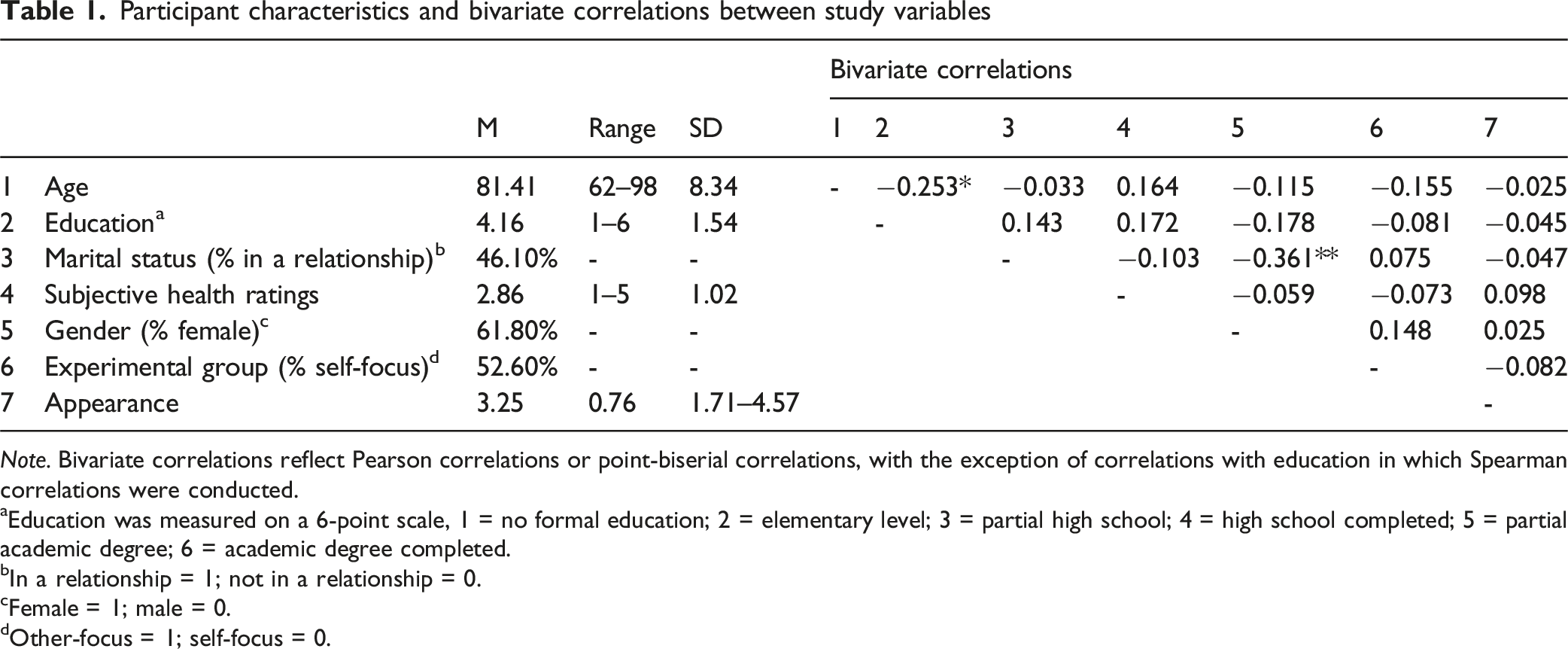
Note. Bivariate correlations reflect Pearson correlations or point-biserial correlations, with the exception of correlations with education in which Spearman correlations were conducted.
aEducation was measured on a 6-point scale, 1 = no formal education; 2 = elementary level; 3 = partial high school; 4 = high school completed; 5 = partial academic degree; 6 = academic degree completed.
bIn a relationship = 1; not in a relationship = 0.
cFemale = 1; male = 0.
dOther-focus = 1; self-focus = 0.
Scores on study variables separately for self-focus and other-focus groups, as well as results of independent samples t-tests or Chi-Square tests of independence comparing the two groups across study variables
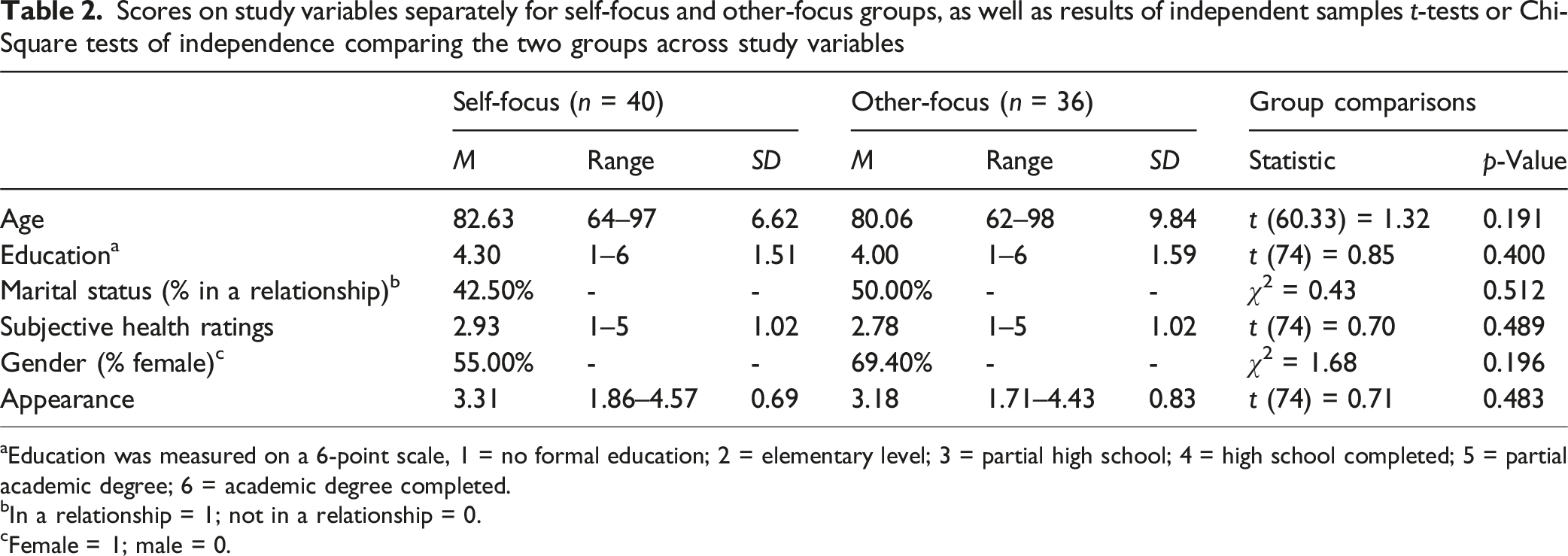
aEducation was measured on a 6-point scale, 1 = no formal education; 2 = elementary level; 3 = partial high school; 4 = high school completed; 5 = partial academic degree; 6 = academic degree completed.
bIn a relationship = 1; not in a relationship = 0.
cFemale = 1; male = 0.
Results of the Two-Way ANCOVA Model
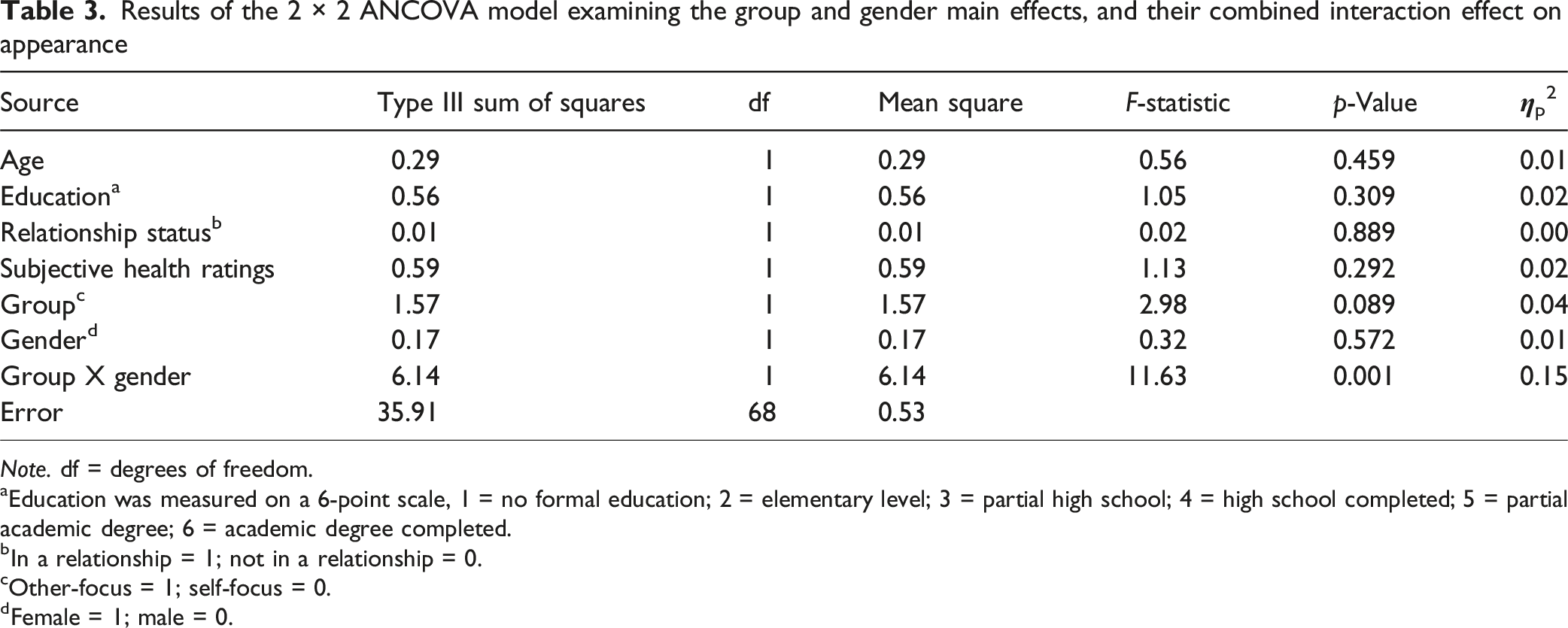
Results of the 2 × 2 ANCOVA model examining the group and gender main effects, and their combined interaction effect on appearance
Note. df = degrees of freedom.
aEducation was measured on a 6-point scale, 1 = no formal education; 2 = elementary level; 3 = partial high school; 4 = high school completed; 5 = partial academic degree; 6 = academic degree completed.
bIn a relationship = 1; not in a relationship = 0.
cOther-focus = 1; self-focus = 0.
dFemale = 1; male = 0.
Pairwise comparisons using the Least Significant Difference (LSD) procedure were conducted to interrogate the interaction effect. Consistent with our first hypothesis, appearance ratings differed between men and women accross experimental conditions. Specifically, in the self-focus group, appearance ratings were higher for men (M = 3.59, SE = 0.18) than for women (M = 3.10, SE = 0.16; p = .048). In the other focus group, the reverse was true: appearance ratings were lower for men (M = 2.68, SE = 0.23) than for women (M = 3.39, SE = 0.15; p = .013). Figures 3 and 4 display the interaction effect. Differences between men and women in appearance ratings for self-focus and other-focus groups. Error bars represent 95% confidence intervals Differences in appearance ratings between participants in the self-focus and other-focus groups, separately for men and women. Error bars represent 95% confidence intervals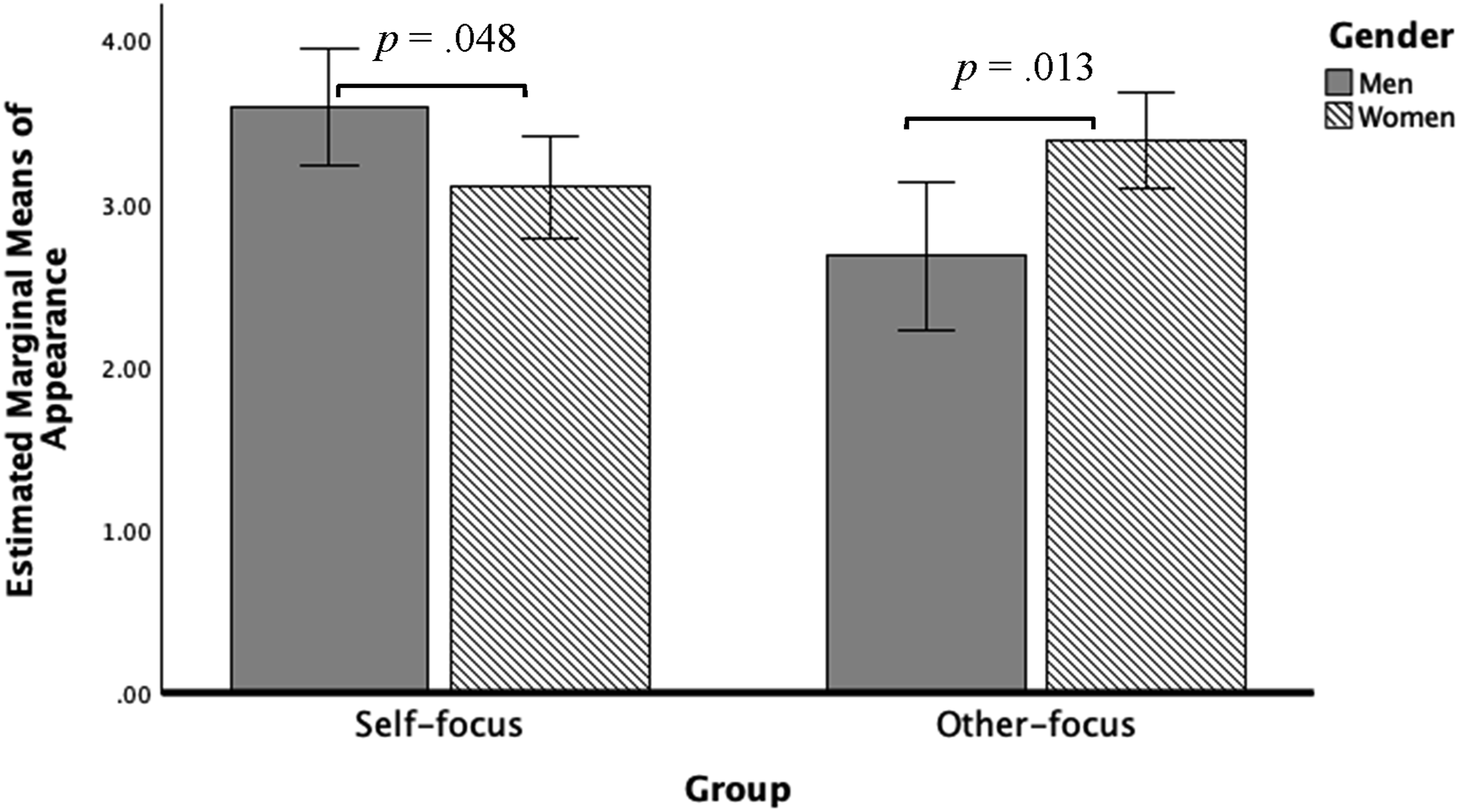
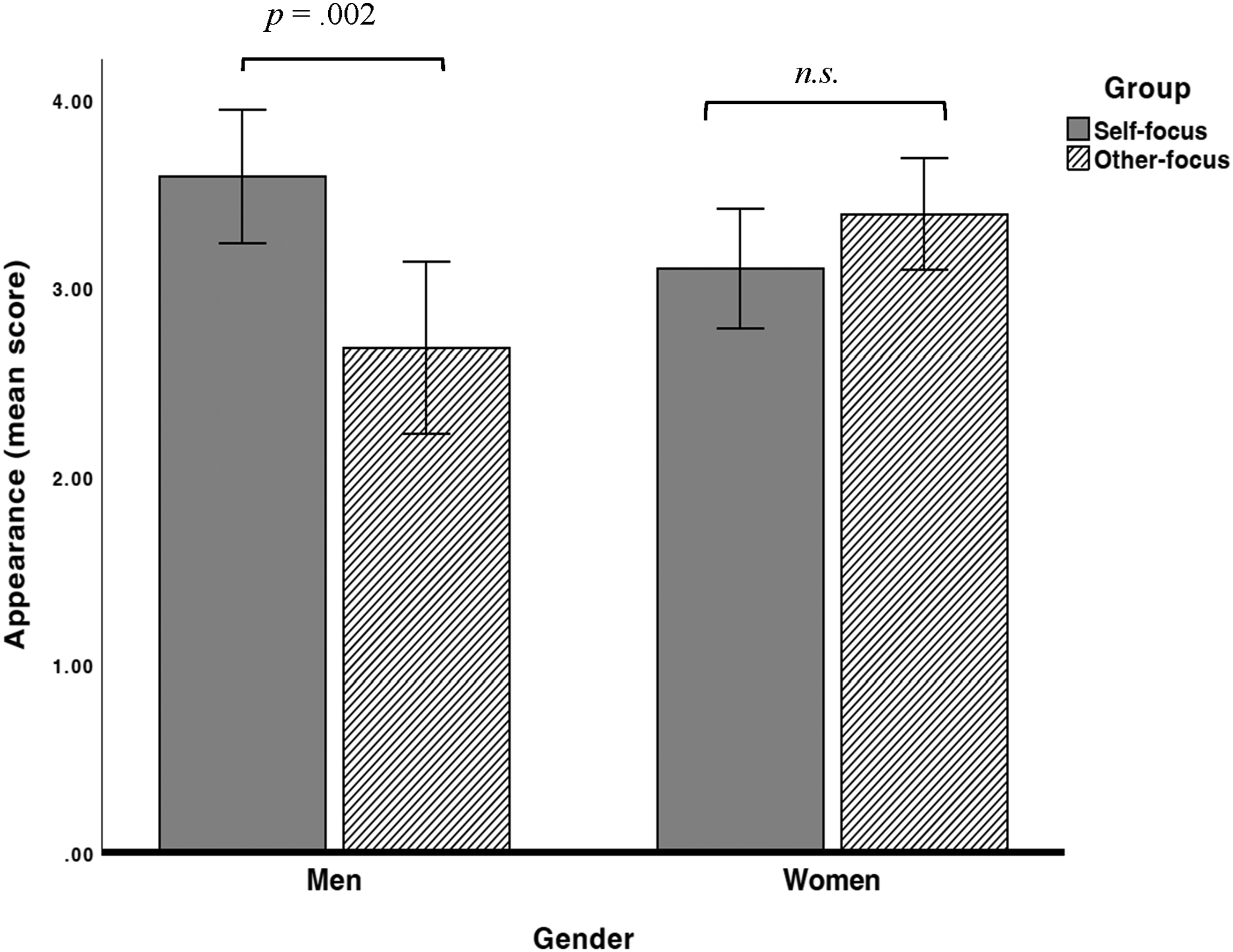
Pairwise comparisons also revealed an effect of group on appearance for men but not for women. Specifically, and consistent with H2, men in the self-focus group (M = 3.59, SE = 1.78) rated their appearance significantly higher than men in the other-focus group (M = 2.68, SE = 0.23; p = 0.002). In contrast to H2, women in the self-focus group (M = 3.10, SE = 0.16) did not differ significantly from women in the other-focus group (M = 3.39, SE = 0.15) in their appearance self-ratings (p = 0.181). Differences in appearance ratings also differed between men and women in each experimental condition.
Exploratory Analyses Examining Age Effects
Given the extensive age range, we examined whether age contributed to the results. First, as reported in the primary analyses, we covaried for age in all models. Second, we examined whether a three-way interaction between group, gender, and age was significant via hierarchical regression. While the three-way interaction was not significant, a two-way interaction between age and gender was. These findings appear in Supplemental File 1.
Discussion
In line with the first hypothesis, older women evaluated their appearance less favorably than older men when self-focused (facing a mirror) and more positively than older men when other-focused (facing a poster with faces of young and older adults). This pattern complies with objective self-awareness and objectification theories, which suggest that mirror-induced self-focus can heighten discrepancies from internal standards, such as feminine beauty standards for older women, that become salient through self-observation (Duval & Wicklund, 1972; Fredrickson & Roberts, 1997; Tiggemann & Lynch, 2001; Weiss et al., 2025). However, it should be noted that this interpretation of the results remains theoretical. Since we did not include any direct measures of attention (e.g., eye-tracking, stimulus recall, or mediational measures), it is not possible to empirically determine which subset of stimuli guided participants’ evaluations. Therefore, our results contribute to theory-based interpretations of mechanisms rather than directly supporting measured mediators.
Moreover, although we did not directly assess attentional targets or comparison direction, the crossover pattern is theoretically consistent with socioemotional and comparison accounts. More specifically, under other-focus, age-similar standards may become more salient, so that later-life positivity bias may favor lateral/downward assimilation, processes that may relate to more favorable appearance evaluations that normalize appearance (Carstensen et al., 1999; Mather & Carstensen, 2005; Wiese et al., 2013; Zebrowitz et al., 2017).
Consistent with Hypothesis 2, men rated their appearance less favorably under other-focus conditions than under self-focus conditions, suggesting upward contrast to younger male standards or a lesser benefit from lateral/downward comparison with older male targets. These patterns align with male appearance ideals, centered on muscularity/strength across adulthood (McCabe & Ricciardelli, 2004), and with contrast effects that emerge when dissimilar, high standards are salient (Mussweiler, 2003).
Nevertheless, contrary to the second part of Hypothesis 2, the less favorable appearance appraisals in the self-focused condition among women did not significantly differ from their appraisals in the other-focused condition. Three non-mutually exclusive explanations consistent with the broader literature may account for this finding. First, prior literature suggests that older women report higher positive body attitudes and direct more attention to what the body can do (to their body functionality) than younger women (Alleva & Tylka, 2021; Tiggemann & McCourt, 2013). In this study, we did not measure functionality appreciation. Nevertheless, we speculate that such age-related changes may have attenuated the negative impact of self-focus through the mirror for the women in our sample. This speculation is also supported by meta-analytic and psychometric work, which indicates that functional appreciation may be moderately independent of dissatisfaction and can coexist, potentially dampening acute state shifts (Alleva et al., 2017; Linardon et al., 2023). However, to support this interpretation, the effect of mirror exposure on measures of body function appreciation should be examined in future studies. Second, the “other-focus” poster included both older and younger faces. Based on comparison theory, we may observe mixed assimilation and contrast effects (Mussweiler, 2003), depending on which age-group subset (i.e., older or younger faces) was more accessible to participants. While we believe that for older women, own-age attentional bias and the positivity bias may have preferentially tuned their attention to older targets, individual differences (e.g., thin ideal internalization, see Kilpela et al., 2015, versus functionality orientation, see Alleva & Tylka, 2021; Quittkat et al., 2019; Tiggemann & McCourt, 2013) could average the tendencies to a non-significant mean difference relative to the mirror condition.
Third, if baseline appearance evaluations among women were moderately positive (due to body-functionality framing, active coping, or sample selection), then the possibility for further improvement under the other-focused condition may have been limited due to this ceiling effect. Relatedly, several surveys suggest that although older women retain concerns, many also report stable or improved appearance evaluations compared with midlife (e.g., Pruis & Janowsky, 2010; Roy & Payette, 2012; Slevec & Tiggemann, 2011).
This preliminary investigation carries several theoretical contributions. When considering gender comparisons in appearance evaluations among participants aged 50 years and older (see Quittkat et al., 2019), our findings may raise the theoretical possibility that the consequences of self-focused appearance appraisals are filtered through gendered standards. It also highlights the possibility of objectification processes, driven by the habitual monitoring and internalization of youth-centric beauty ideals. These processes may make mirror exposure less favorable for women, even in older age (Fredrickson & Roberts, 1997; Tiggemann & Lynch, 2001), whereas for men, mirror exposure may activate standards less tightly bound to appearance (e.g., competence and autonomy), resulting in relatively benign self-evaluations. These differentiated attentional patterns may also be motivated in older women by the social tendency to ascribe more importance to affiliative goal orientations (Carstensen et al., 1999; Zebrowitz et al., 2017), consistent with lateral/downward attention to similar-age others when exposed to such posters. By contrast, men may be driven by social comparison, emphasizing younger, higher standards (e.g., muscularity and vigor), which elicits upward contrast and lower self-ratings (McCabe & Ricciardelli, 2004; Mussweiler, 2003). Thus, our investigation suggests that gendered appearance ideals intersect with age-graded attentional priorities to determine whether self and other-focused attention normalizes or threatens the self.
Before discussing the implications of this study, one should note that the outcome in this study was an appearance evaluation. Hence, the following implications are inferential when mechanisms of global body image, functionality appreciation, or self-objectification are involved and require direct measurement in future studies.
Taking this limitation into account, the current findings align with classic attention-to-standards theories in explaining how they apply to men and women in late life, providing a preliminary account of how attention to self or to others activates gendered standards that affect appearance evaluations. For older women, other-focused evaluations can be benign, whereas mirror-based self-focus may be comparatively degrading. For older men, exposure to others (and possibly to younger male standards) can be evaluatively harmful to appearance evaluations. Our findings may align with the conclusion of Davison and McCabe (2005) that social aspects of body image are important in understanding psychological functioning in later life and with the criticism of Roy and Payette (2012) that several aspects of the literature on body image among older adults need attention to advance the field. Moreover, these insights may clarify why the first hypothesis was fully supported while the second one was confirmed for men but not for women, and they suggest tractable design manipulations for appearance-relevant environments.
The findings may have several applied implications for age-inclusive environments in day centers for older adults. Guided by environmental gerontology’s agency-belonging perspective (Wahl et al., 2012), low-cost cues can be prioritized. For example, designing intake areas that substitute mirrors for neutral reflective surfaces (especially for women), and using visual materials that feature older-only targets (e.g., same-age people engaged in meaningful activities) before introducing mixed-age content. Such environmental cues may support more positive state appearance appraisals in older adults of both genders. Similarly, if future studies support an increase in functionality appreciation under mirror-induced self-focus, the unpleasant effects of mirror-based contexts may be attenuated by manipulations that explicitly cue functionality (e.g., written reminders to attend to functional aspects such as ear-aids, glasses, or a hat) for both older men and women (Alleva et al., 2017; Alleva & Tylka, 2021).
This preliminary investigation has its methodological strengths and limitations. First, while it encompasses a wide range of older adults and a simple, ecologically interpretable manipulation, it lacks a comparison group of young adults. Additionally, although the study was theory-driven, it was not pre-registered and was conducted within a larger study investigating perceptions of aging. Relatedly, since other measures were collected in addition to our primary outcome of interest (appearance), we cannot rule out the possibility that previous questionnaires influenced appearance ratings. Moreover, because the study did not include a baseline condition for appearance evaluations prior to manipulations, we cannot determine whether the differentiated gender effects reflect a decrease or an increase in attentional focus. The study also lacks direct behavioral and self-report measures of attention to specific age poster targets (e.g., eye-tracking or probe-recall confirming own-age targeting), and the absence of self-report measures of mediators that could provide insights into the mechanisms responsible for the observed effects. In this study, the sole outcome was the MBSRQ Appearance Evaluation subscale. This is a validated index of satisfaction with one’s looks, and its Cronbach’s alpha in the current study was adequate. Nevertheless, some of its items refer to sexual attractiveness, which may function differently in the oldest-old (the age-range of the study). Finally, this study was conducted with community-dwelling older Jewish Israelis who live within a largely culturally Westernized context. Mirrors and age-salient posters are ubiquitous cues in our care and community centers and are unlikely to be uniquely culture-bound. Therefore, we interpret the findings as cosistent with broadly Western shared late-life appearance standards, while recognizing that cultural value orientations could modulate them. Cross-cultural replications may explicitly test these boundary conditions.
Future works can also use other and more accurate body image scales (see Kling et al., 2019 for a systematic review of body image measures), such as the Body Appreciation Scale-2 (BAS-2, Tylka & Wood-Barcalow, 2015) which measures acceptance, respect, and care for one’s body (and not only appearance evaluation), and the Functionality Appreciation Scale (FAS, Alleva et al., 2017), that assesses self-perceptions about what the body can do (e.g., physical capacities and communication). Moreover, future work can directly manipulate the age-group comparison direction (upward vs. lateral/downward) by presenting the same vs. mixed-age images. It can also include or exclude brief self-objectification primes (e.g., mirror salience and appearance-focused language), and it can add short prompts that appreciate functionality. Such studies can test causal pathways and examine how simple environmental modifications reliably shift state appearance evaluations in the old-old, helping translate theory into durable, old-age, gender-aware practice.
Supplemental Material
Supplemental Material - Self- vs. Other-Focused Attention and Appearance Self-Evaluation in the Oldest-Old: Gendered Implications for Person-Centered Care
Supplemental Material for Self- vs. Other-Focused Attention and Appearance Self-Evaluation in the Oldest-Old: Gendered Implications for Person-Centered Care by Ehud Bodner, Gali H. Weissberger, and Boaz Ben-David in Journal of Applied Gerontology.
Footnotes
Acknowledgments
We are grateful to Ms. Mariam Ibrahim Mahameed and Ms. Randa Gazawi, our M.A. students, who served as research assistants and carried out data collection at community day centers for older adults with exceptional diligence, care, and consistency.

Ethical Considerations
This study was approved by the first author’s Institutional Review Board (Approval Nos. 130225470 and 13-02-2025).
Consent to Participate
All participants provided written informed consent before participation.
Funding
The authors received no financial support for the research, authorship, and/or publication of this article.
Declaration of conflicting interests
The authors declared no potential conflicts of interest with respect to the research, authorship, and/or publication of this article.
Data Availability Statement
De-identified data and analysis code will be shared upon reasonable request to the corresponding author.
AI/Language Assistance
During the preparation of this work, the authors used ChatGPT (GPT-5) to improve clarity and grammar and Grammarly for proofreading. The authors also used an AI image tool to create a schematic, illustrative figure of the experimental setup; this image does not depict real participants or data. After using these tools, the authors reviewed and edited the content and take full responsibility for the integrity and accuracy of the manuscript. No generative tools were used to create, analyze, or interpret data.
Supplemental Material
Supplemental Material for this article is available online.