




Abstract
Amidst global migration, aging immigrant communities face cultural-language barriers posing significant risks for social isolation, decreased quality of life, and equitable access to care. Language translation apps hold promise in addressing these barriers.
Methods
A scoping review was conducted on cultural-language translation apps in older adult care. We present our findings, while offering methodological insights related to the integration of a critical equity lens.
Results
There is a notable gap in the literature on the use of cultural-language translation apps with older adults. The use of translation apps and devices holds potential for enhanced relationships and communication. There are concerns about the accuracy of translation, limited availability of languages, and appropriateness of use beyond day-to-day conversations.
Conclusion
Technological adoption offers prospects for reducing language barriers and redressing health inequities experienced by racialized immigrant older adults. However, based on this vast gap in research on the topic, future research is indicated.
Keywords
• There is potential for in-person cultural-language translation efforts to be supplemented by technologies such as translation apps and devices. • Research on the use of cultural-language translation apps to reduce language barriers and redress health inequities experienced by older immigrant adults is nascent and highlights a critical gap in current knowledge and innovation. • Scoping review methodology can be strengthened through integrating a reflexive intersectional approach, especially when centered around health equity.
• Future research is needed to explore the acceptability, feasibility, and accessibility of the use of cultural-language apps in older adult care settings where language barriers are encountered. • The voices of older adults, their families and caregivers, and direct service providers must be included in knowledge mobilization and implementation efforts.What this paper adds
Applications
The uptake of digital technologies to enhance translation and communication is rapidly advancing, driven by the widespread digitization of daily life and healthcare delivery. The marketplace has seen a flurry of digital apps and other technological assets such as Microsoft Translator, Google Translate, and ChatGPT. Researchers have posited that the deployment of translation apps could facilitate better care in long-term care (LTC) settings, especially if apps are designed and used in person-centered ways (Wilson et al., 2020). While the use of digital technologies for translation may be of benefit in older adult care, where there are communication challenges related to differences in social identities, attending to concerns about health and digital equity is critical.
Background and Rationale
In Canada, the population is aging. The number of adults 65 years and older are forecasted to rise from 18.5% in 2021 to 25.9% by 2068 (Statistics Canada, 2022). Globalization and immigration, across many countries over several decades, have enriched host nations with the contributions of immigrants to economies and society; as immigrant populations age, there is also a growing need to better support aging immigrant communities. Specifically, in Canada, there is a need to explore innovative solutions to better address the cultural-language barriers experienced by older immigrants living in community and LTC settings. In large metropolitan areas where new immigrants choose to settle in, such as Toronto, the populations consist of a high proportion of immigrants with close to 90% of recent immigrant older adults speaking a language other than English at home (Um & Lightman, 2017). Individuals from communities whose first languages are not the official languages (English or French) experience disparities in their social and health outcomes, including poor mental health (Um & Lightman, 2017). Over 60% of immigrant older adults aged 65 or older who arrived in Canada between 2012 and 2016 were not able to converse in one of the official languages (Immigration, Refugees, and Citizenship Canada, 2017 as cited in Employment and Social Development Canada, 2024). In 2016, over 85% of older adults 75 years of age or older spoke a first language other than English or French (Hou & Ngo, 2021). The rise of population aging presents an urgent and crucial concern, where solutions to improve the health and well-being of older adults must be a priority (The Lancet Digital Health, 2023).
A community-based home care study found that approximately 80% of Korean and Chinese participants versus only 8% of all other home care participants required translation through an interpreter for their home healthcare needs (Chang & Hirdes, 2015). In another study, LTC residents experiencing language discordance had higher risks of being improperly prescribed antipsychotics, leading to adverse health outcomes (Reaume et al., 2024). While older immigrants may have achieved proficiency in Canada’s official languages in their earlier stages of life, it has been well-documented that many revert to their first languages as they age (Flores & Snape, 2021; Tipping & Whiteside, 2014). Cultural-linguistic mismatches in care pose barriers to safe and high-quality older adult care and threatens equitable outcomes (Ménard et al., 2023). Additionally, when older adults cannot communicate and socially engage with others, their experiences of social isolation negatively affect their well-being (Sen et al., 2020). Older adults who are newly immigrated or seeking refuge experience significant risk to social isolation and challenges for social inclusion (Employment and Social Development Canada, 2024).
Moreover, LTC homes are significantly under-resourced, which poses challenges to the provision of high-quality care (Heckman, 2023; Jones, 2024); this includes limited access to staff interpreters, which exacerbates communication barriers between healthcare providers and older adults from diverse linguistic backgrounds (Gerchow et al., 2021). Extensive use of digital language translation in for-profit sectors (such as business and tourism) has been well documented (Olujimi & Ade-Ibijola, 2023; Álvarez-Carmona et al., 2022). Mobile apps to support translation in clinical settings, such as acute care in hospital, primary care, and emergency medical services, have also been explored, showing prospects of effectiveness and acceptability to facilitate communication (Albrecht et al., 2013; Hudelson & Chappuis, 2024; Turner et al., 2019). However, research and evidence on the development and use of cultural-language translation apps in older adult care are scant, resulting in a significant knowledge gap (Yoon et al., 2024).
While ample investments have been made to advance digital health efforts, the exclusion and under-representation of older adults in the development of digital health tools and interventions relying on technology are of concern with perilous implications (Ge et al., 2025; The Lancet Digital Health, 2023). Digital exclusion threatens older adults’ abilities to adapt in a digitized world, particularly as the prevailing digital divide undermines equitable older adult healthcare (Ge et al., 2025; Yang et al., 2024).
Research Aims
This scoping review was undertaken based on needs identified during a community consultation with organizations working with older immigrants living in LTC or in home care settings. The aim of this scoping review was to map out and explore the state of the literature on the use of cultural-language translation apps for older adult care in LTC and community-based settings such as home care. We also examined the extent to which these apps support closing the gap on equitable, acceptable, and accessible care for older adults experiencing language barriers. The scoping review followed our published protocol which aimed to specifically examine the use, accessibility, and acceptability of cross-cultural language translation apps in long-term care or community care for older adults (Yoon et al., 2024). Specific research questions include the following: (1) How does the use of apps for cultural-language translation enhance communication between healthcare providers and older adults experiencing language barriers? (2) What are the various settings in which apps for cultural-language translation are used to support care for older adults? (3) What are key digital health equity considerations in the use of cultural-language translation apps to facilitate care for older adults experiencing language barriers in LTC and community settings? (Yoon et al., 2024, p. 3).
Methods
The scoping review followed the Arksey and O'Malley (2005) framework alongside recommendations by Levac et al. (2010) and Colquhoun et al. (2014). Furthermore, we complied with the PRISMA-ScR Checklist (Tricco et al., 2018) and executed the review as outlined in our registered protocol (Yoon et al., 2024) with some adjustments. To guide the interpretation of findings, we purposefully applied the Framework for Digital Health Equity (Richardson et al., 2022), which builds on the NIMDH Research Framework by incorporating the digital environment and its intersection with individual, interpersonal, community, and societal influences on health. By prioritizing the patient-tech-clinician relationship, this framework underscores the importance of trust and usability in digital health tools to enhance inclusivity. Additionally, it promotes a multi-level, upstream approach that empowers users, supports personalized care, and addresses systemic barriers such as ageism, ableism, and digital literacy and access (Richardson et al., 2022). With the digital divide emerging as a potential impediment to advance older adult care in this increasingly technological healthcare system, the selected framework positions our research to emphasize an equity approach underpinning our research activities.
Search Strategy
To develop the initial search strategy, extensive consultation with subject matter librarians at our academic institution was completed. The expertise and perspectives offered by librarians in health sciences, engineering, and sociology provided multidisciplinary insights into the discipline-specific databases and terminology. Our research team also includes representation with extensive experience in older adult care in community and LTC settings and comprises multidisciplinary professionals from diverse fields, including healthcare, nursing, project management, academia, social sciences, business, and technology. The team engaged in extensive dialogue about the selection of databases and the strategic use of keywords. After a thorough preliminary scan, a comprehensive search strategy was agreed upon and developed. A decision was made not to include grey literature for this scoping review in order for us to first gain an understanding of the state of empirical research published in peer-reviewed journals.
Information Sources
Five bibliographic databases were included in our search strategy: CINAHL (EBSCO), MEDLINE (OVID), HealthSTAR (OVID), Engineering Village (Compendex, INSPEC, GeoBase), and Web of Science (Clarivate). To maximize our potential yield of the literature, we also proceeded with Google Scholar, a manual search of journals with a specific focus on digital health and gerontological care (see Appendix A), and hand-searching reference lists. To ensure a systematic process for the identification of potential articles for the manual hand-searching, we collated a list of articles that were screened out of Level 1 for perusal.
Keywords and Executing the Search
The search was executed between June 18 and July 28, 2024. The search was conducted systematically using a combination of three major concepts of interest: older adult care, digital technology, and language-cultural translation. Appendix B outlines an example of the search conducted in MEDLINE. For CINAHL, MEDLINE, and HealthSTAR databases, keywords were mapped to subject headings and medical subject headings (MeSH). We also used specific keywords alongside the database subject headings. Since Web of Science and Engineering Village databases do not have MeSH terms, relevant discipline-specific keywords were used in the query.
Limiters include the following: English and a date range from 2005 to the present. While the first iPhone was introduced in 2007, we opted to begin our study from 2005 to encompass a broader range of machine translation and computer-based applications predating Apple’s device. This approach allowed us to include pivotal innovations such as Google Translate which was launched in 2006 as a web-based service. 2005 was a turning point for developing modern translation infrastructure as companies like Google and Microsoft began moving away from rule-based machine translation to realize the potential of statistical machine translation by leveraging large data sets and probabilistic models to improve translation accuracy (Wang et al., 2022). By starting with 2005, we ensured a more comprehensive overview of the technological advancements in language processing and mobile computing that paved the way for future communication technologies (Yoon et al., 2024).
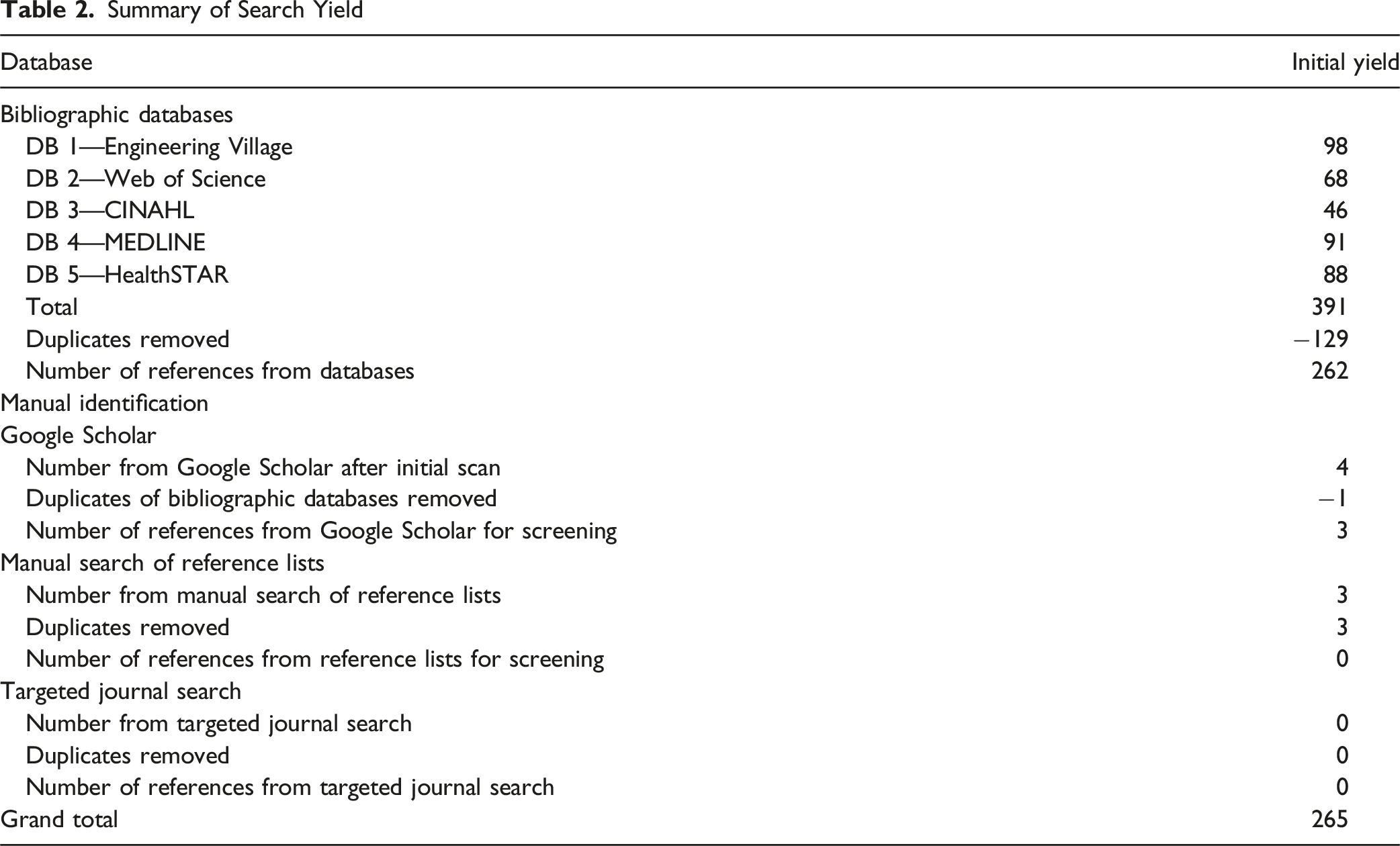
Google Scholar, a crawler-based system, was also used as a supplement to our bibliographic database searches to potentially identify additional empirical studies. For the Google Scholar search, four specific search phrases, derived from the inclusion criteria, were used to encompass all relevant concepts: “Communication apps for translation in long term care,” “Cultural-language communication barriers older adults translation apps,” “Use of language interpretation apps in long term care for older adults,” and “Translation apps on communication in community care for older adults.” Phrases were used as the Google search engine operates differently than bibliographic databases. Each phrase was searched independently. The search phrase yielded a large number of results: 151,000, 1,180, 210,000, and 48,100 for the first, second, third, and fourth phrases, respectively. Each set of results was manually screened by reviewing the titles and abstracts to identify articles that met the inclusion criteria. The manual review stopped after the results consistently displayed irrelevant results, particularly as they failed to denote older adults or translation in the titles. Following the manual screening, eight articles were identified as relevant based on titles meeting Level 1 criteria. These articles were then added to the total yield for deduplication and screening.
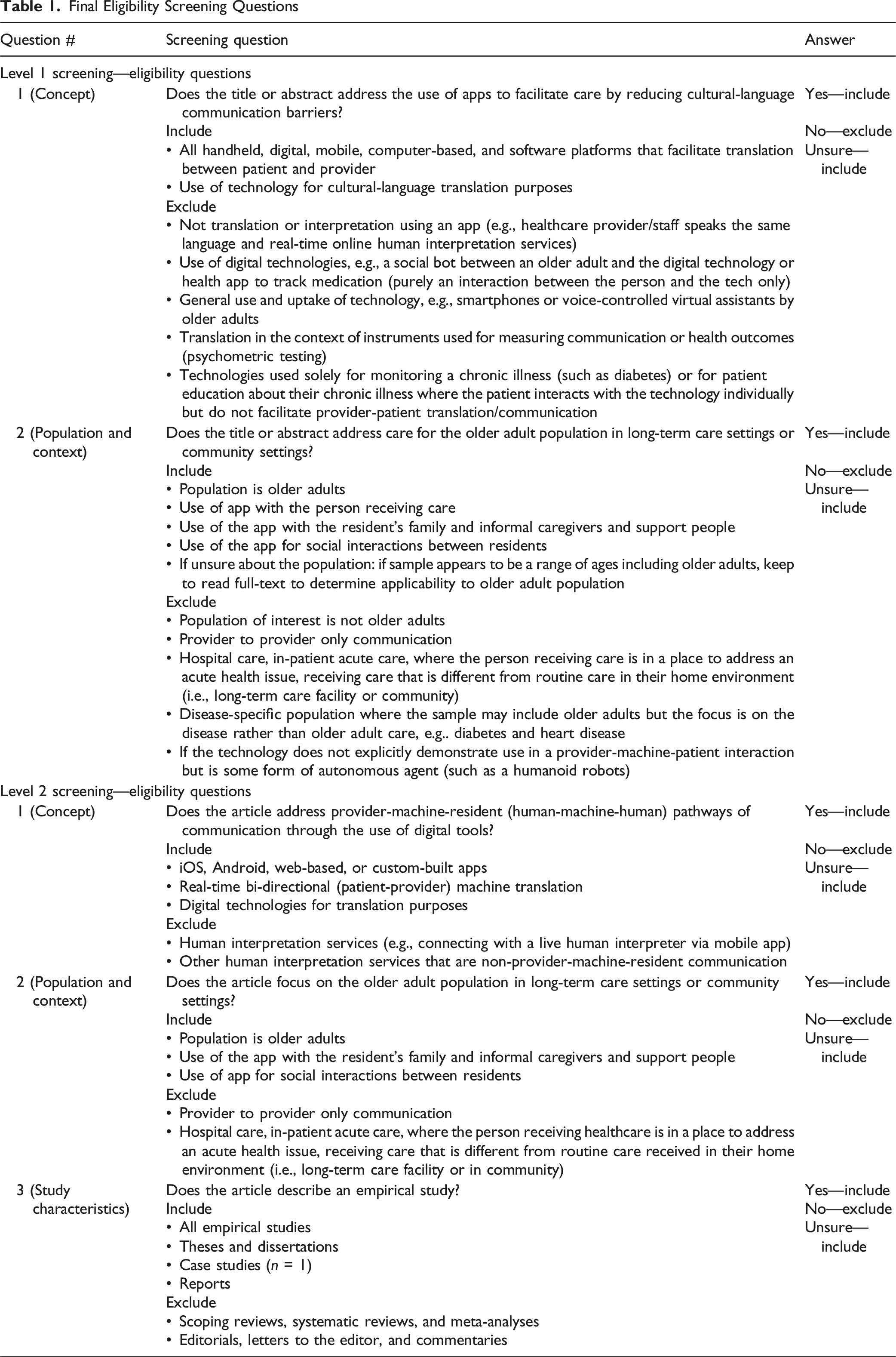
Eligibility Criteria
Final Eligibility Screening Questions
Results
Yield
Summary of Search Yield
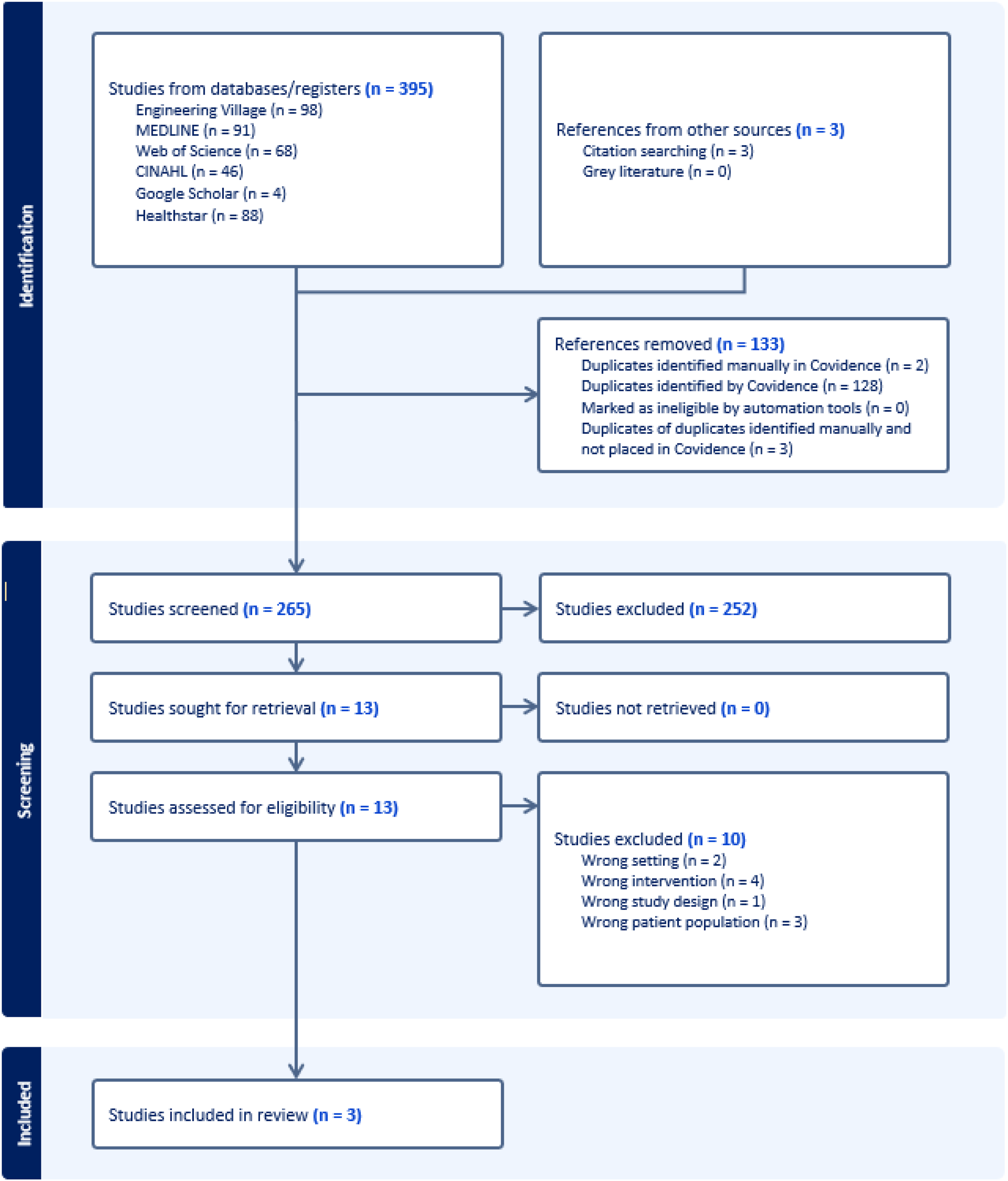
PRISMA flow diagram.
Inter-Rater Reliability
The inter-rater reliability for the first round of screening indicated moderate agreement (Cohen’s kappa 0.59); however, with our purposeful and regular meetings, the inter-rater reliability improved in the second round, resulting in substantial agreement (Cohen’s kappa 0.75) (Covidence, n.d; McHugh, 2012).
Data Extraction and Synthesis
Three team members (LCL, ARA, and An) extracted data for each article independently using the data charting tool that was originally developed for the protocol. The team opted to conduct independent extraction followed by discussion to collate the results. This was an important step. While we used an established methodology in our extraction of data, we also recognized that data extraction and re-presentation are processes of interpretation, influenced by our team members’ social positionalities and discipline-based perspectives (Pascoe, 2022). Thus, the simultaneous independent approach was rooted in our commitment to maximize the extraction of critical data (“what can be seen”) and reflexive practices in conducting reviews. Modifications were made to the tool during the extraction process in response to needs that arose. Appendix C provides a summary of the included articles based on the modified data charting tool.
In total, three studies met the eligibility criteria (Panayiotou et al., 2020; Small et al., 2016; Wilson & Small, 2020). Two were conducted in Canada (Small et al., 2016; Wilson & Small, 2020) and one in Australia (Panayiotou et al., 2020). Both of the Canadian studies were focused on LTC facilities (Small et al., 2016; Wilson & Small, 2020), whereas the Australian study investigated translation apps in the context of community-based older adult care (i.e., older adults not residing in institutions but in the community) (Panayiotou et al., 2020)—these address one of our research questions “what are the settings in which apps for cultural-language translation are used?”. All studies were mixed methods in design, and their samples included either only healthcare providers (Small et al., 2016) or a combination of older adults as well as healthcare providers (Panayiotou et al., 2020; Wilson & Small, 2020). Only one study involved the direct use of the digital apps for clinical encounters with LTC residents (Small et al., 2016). One study offered a demonstration of the apps to study participants (Panayiotou et al., 2020) while Wilson and Small (2020) explored perceptions of mobile technologies of health providers for day-to-day care without deployment of any specific technologies or cultural-language translation apps for the research. Funding for Panayiotou et al. (2020) was provided by The Melbourne Ageing Research Collaboration. Small et al. (2016) were funded by the Canadian Frailty Network (formerly TVN or Technology Evaluation in the Elderly Network). Wilson and Small (2020) received support from a postdoctoral fellowship (University of Washington, National Institute on Disability and Rehabilitation Research, and the Canadian Frailty Network (supported by the Government of Canada through the Networks of Centres of Excellence Health Technology Innovation)).
Apps and Technologies
Studies examined web-based real-time language translation apps requiring stable internet connection, other mobile apps that had auto-programmed phrases which were pre-set in different languages (Panayiotou et al., 2020), as well as apps that included alternative features that comprised music, photo, and other communication functions. Although language translation was a feature, the apps explored in the two Canadian studies were multi-purpose in nature; specifically, these apps were used for language translation, as well as for augmentative and alternative communication purposes (Small et al., 2016; Wilson & Small, 2020). The studies raised concerns about the accuracy of translation, lack of language availability, and appropriateness of use beyond day-to-day conversations (Panayiotou et al., 2020; Wilson & Small, 2020).
Outcomes and Health Equity
The study conducted by Small et al. (2016) was the only one that reported specific care outcomes through the hands-on use of four digital apps between providers and residents. They reported enhanced relationship-building and communication between residents and providers, increased ability for residents to convey their level of pain or mood, improved social encounters, and better mood. Whilst the other two studies did not note specific testing of the apps, they did note the prospect for the cultural-language apps to reduce communication barriers in older adult care, whereby trust and rapport can be built between older adults and providers, and needs can be better communicated to providers with less dependency on family members for translation (Panayiotou et al., 2020; Wilson & Small, 2020). Across all studies, there were positive perceptions, attitudes, and a sense of hope and promise in the use of these apps. For example, Panayiotou et al. (2020) described enthusiasm, not only among healthcare providers but also with older adults in the study. Consistently, participants from all three studies valued the interpersonal benefits of the apps; while noting the enablement of independence (versus a reliance on family members for language interpretation), enhanced mood, and other advantages, both older adults and providers highly regarded the improvement of the relational nature of care that was or could be facilitated by using the cultural-language translation apps (Panayiotou et al., 2020; Small et al., 2016; Wilson & Small, 2020). These results on strengthening trust and relationships through day-to-day communication help address our first research question about how these apps are used for translation with older adults experiencing language barriers.
At the core of this scoping review is a commitment to contribute to equitable, acceptable, and accessible older adult care with first language care needs (Yoon et al., 2024). A vital component was the assessment of the degree to which selected articles addressed health and/or digital equity. We found that none of the included studies explicitly discussed their results in relation to inequities or structural determinants of health. However, they addressed factors related to equity such as confidence speaking English, language barriers, limited availability of languages or dialects offered by the apps (Panayiotou et al., 2020), comfort with technologies (Panayiotou et al., 2020; Small et al., 2016; Wilson & Small, 2020), and limited access to technologies (Wilson & Small, 2020). Factors presented by these studies and the intentional exploration of the prospects of digital apps to improve long-term and community care for racialized immigrant older adults align with the need to challenge the digital divide, ableism, racism, and ageism—which are key digital health equity considerations, answering our third research question.
Discussion
Summary of Key Discussion Points
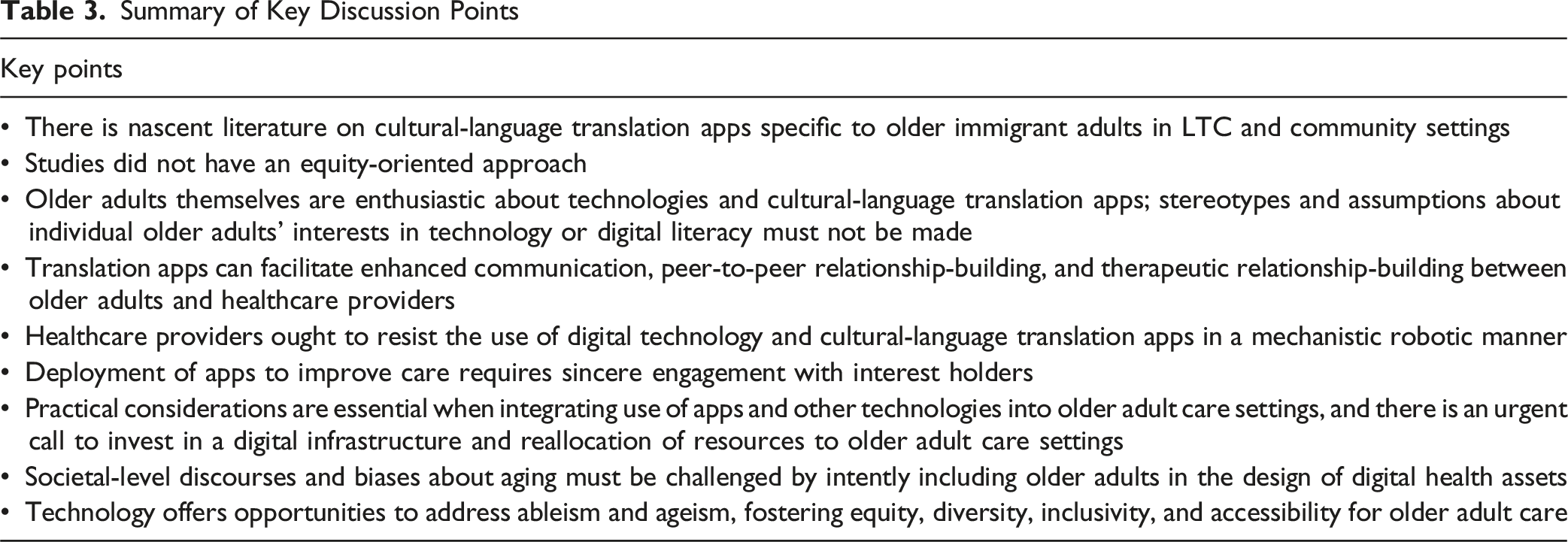
Through a reflexive and critical approach while leveraging the Digital Health Equity Framework (Richardson et al., 2022), we offer interpretation of the included study findings and their implications using the framework’s levels of influence: the intersection of the digital environment at the individual, interpersonal, community, and societal aspects to health.
Individual Level: Perspectives and Attitudes on Apps and Digital Skills
Overall, care providers have positive perspectives on the use of mobile technology to support communication with older adults. Care providers work closely with older adults on a daily basis in community and LTC settings, and they have creative ways to apply these applications to support their communication, such as the use of familiar voices, which could be easier for residents (Small et al., 2016). Contrary to some dominant public discourses, older adults themselves may be enthusiastic about technologies and cultural-language translation apps. For example, studies have found that older adults are motivated to use digital health tools and have positive opinions about technology that supports their daily living and health (Bian et al., 2021; Reyes et al., 2023). It is therefore important not to make assumptions about any individual older adults’ interests in digital technologies nor make assumptions about their digital literacy levels. In Panayiotou et al.’s (2020) study, although limitations in digital skills may be a barrier to using translation apps, older adults were willing and prepared to learn; thus resources and time must be invested in assisting and supporting their learning. More research is needed to further explore racialized older adults’ views and how individuals with unique stories and circumstances may be supported through the use of apps.
Interpersonal Level: Embracing Enhanced Communication and Relationship-Building
There is great prospect for the use of cultural-language apps in older adult care to redress communication barriers and to reverse the effects of social isolation brought on by the lack of first language care or peer-to-peer interactions. This necessitates a strong commitment to protect and ameliorate social isolation and mental health distress that may be experienced by older immigrant adults in long-term care and community settings. The use of cultural-language translation apps may be effective for simple daily conversations (Panayiotou et al., 2020). At a peer-to-peer level, older adults could utilize cultural-language translation apps to strengthen their relationship with one another and form a closely connected community.
For day-to-day simple conversations, healthcare providers and older adults could benefit from the cultural-language apps, yet they may not be fit for use in complex health contexts such as communicating important medical information (Panayiotou et al., 2020). The accuracy of translation in the apps, particularly given the limited availability of languages and dialects, requires further testing and evaluation. Errors in translation or inappropriately translated words could result in serious consequences (Panayiotou et al., 2020). For example, a study by Cornelison et al. (2021) evaluated the accuracy of Google Translate in translating directions for drug use and counseling into Arabic, Chinese (simplified), and Spanish. While the directions for use were generally more accurate, counseling points were less accurate. Alarmingly, 29.1% of the inaccurate translations were claimed to be of clinical significance or pose life-threatening harm. Similarly, a study by Patil and Davies (2014) examined Google Translate’s use in medical communication across 26 languages, which demonstrated over 40% of incorrect translations. Some crucial errors highlighted in this study include phrases such as “Your husband has the opportunity to donate his organs,” which was mistranslated into Polish as “Your husband can donate his tools”, and “Your wife needs to be ventilated” mistranslated into Bengali as “Your wife wind movement needed” (p. 1). Inaccurate translations in medical scenarios are not benign; there could be critical risks for patient safety and health.
Moreover, cultural-language translation apps must not simply be used mechanically to translate words literally. Rather, they ought to be culturally safe and appropriate; as a team speaking various other first languages, we discussed the need to consider honorifics as in the case of languages such as Korean where elders are addressed in more formal language denoting respect and other cultural contexts to language, especially when interacting with racialized immigrant adults. When applied safely and appropriately, these apps could indeed be used to address loneliness, isolation, and more, especially amongst those with language barriers.
Interpersonal Level: Preserving Human-Centeredness and Resisting Mechanical Use of Digital Technology
Parallel to the notion of translating beyond mere words, is the ability to evoke and convey emotion with a breadth and depth in care work. The use of technology to facilitate communication, especially enabled with artificial intelligence, may disrupt the natural flow of conversations that take place between the resident and provider. Technology need not shift human-to-human interactions towards the robotic. We draw on Lanoix’s (2013) caution about “robotic care,” where robots and digital assets are placed in the care of older adults as a solution for the human resource shortage. While robots may be pre-programmed to perform tasks, and even to provide companionship, and even deliver comforting words, these are described as “thinly embodied” care. Similarly, there may be times when human providers act in manners like robots (Lanoix, 2013). Healthcare providers leveraging cultural-language translation apps should therefore strive to achieve a balance to avoid over-digitizing the way we care, paying particular attention that the apps do not overwhelm older adults or compromise the ability to deliver “thickly embodied and relational” care (Lanoix, 2013, p. 92). While digital health assets are an available resource, they must not make the human-to-human touch and care obsolete. We also urge that digital translation cannot render the elimination of human interpreters in healthcare encounters, particularly in complex clinical interactions (Genovese et al., 2024).
Community Level: Building the Infrastructure and Improving Functionalities and Features with Older Adults
Resources are required to facilitate technology adoption with older adults. The coronavirus pandemic brought forth significant exposure to the insidious under-funding and under-resourcing of LTC (Oldenburger et al., 2022), which have prompted calls to re-examine funding and operations in the sector, particularly where there is “bare-bones care” (Molinari & Pratt, 2023). Prevailing forms of oppression and power dynamics within technology-enabled older adult care can be challenged by conscious efforts in resisting “thin” ways of caring (Müller, 2019). Furthermore, the absence of digital infrastructure and investment in long-term care settings raises questions about why there is such under-investment. To enable successful use of these apps, investment must be made into the digital infrastructure in places where older adults call home, whether in LTC or in community-based settings. This may include high-speed access to the internet and reliability of Wi-Fi. Moreover, older adult care organizations must plan and properly allocate devices to each resident and provider to ensure proper and sufficient access.
The literature also points to many technological opportunities when implementing cultural-language apps in the care of older adults in long-term care and community settings. There are significant considerations of functional aspects including hearing and visual impairment, and cognitive decline such as large fonts or pictures to augment the limitations of existing mobile technology from an ableism design perspective; multi-modal input and output options would enhance the manner in which apps can be used (Small et al., 2016). While building interpersonal relationships via use of apps that are not necessarily specific to translation (such as for music or history), taking cues from residents to construct places of cultural familiarity is required.
Societal Level: Engaging Sincerely with Interest Holders in Design and Policies
Finally, 1 we noted a prominent gap in purposefully ensuring the perspectives of older adults are included in the research. Some efforts were made to elicit older adult views on the use of translation apps (Panayiotou et al., 2020), but there was a heavier focus on the perceptions of care providers across the included articles. We argue that both perspectives need to be represented. Future research should seek the voices of older adults and their families and caregivers about what aspects of the apps they prefer and how they could be utilized meaningfully for them—with considerations of the cognitive, social, emotional, and psychosocial aspects of the apps (versus merely translating words). In addition to collecting research data from care providers, stories from the residents and their families are also crucial. This shift in focus from using the technology “on” the older adults to using them “with” them is important (Small et al., 2016).
Furthermore, design standards must be elevated to challenge prevailing biases about older adults. The design of cultural-language translation apps and the prerequisite hardware must be designed with older adult users in mind; their input must be sought on how they may be supported in using the technology (Wilson & Small, 2020). This claim is further reinforced by a recent study by Puebla et al. (2022), which explored the development of a language learning app specifically customized for older adults. The study noted the importance of involving older adults in the design process to ensure that the technology aligns with their unique needs and preferences. The positively received app prototype highlighted the salience of user-centered design in promoting technology adoption among older adults. This approach fosters a more person-centered experience. Voices of the older adults and their family members must be represented in the design process and that together we challenge societal-level assumptions and biases about aging and technology.
Strengths and Limitations
Only three articles met this scoping study’s eligibility criteria, which is a limitation of this scoping review. Without ample literature in this topic area, limited findings could be made with regards to the positive or negative effects of cultural-language translation apps for older adult care. This confirms that the issue and population are under-researched and verifies a vast gap exists in the literature. The team engaged in conversation about the constraints of scoping and mapping of concepts with such a limited number of articles; however, we also immersed ourselves in dialogue about the value of our findings towards methodological advancements for equity-oriented scoping reviews and towards awareness-raising of the gap in research for older adults in dire need of first language high-quality care.
Despite the paucity of literature, we found a collective strength in them beginning to fill a prominent gap, which presents immense opportunities for future research to advance older adult care. Another strength of this scoping review is the infusion of reflexivity into our methodology. We recognized, as a multicultural and multidisciplinary team, that a scoping review is structured systematically, but it is also an exercise of interpretation. Our original plan was to integrate the Framework for Digital Health Equity into the extraction process to enable analysis of the data with the digital health equity lens. Our data charting tool specifically included a column for health equity, where we intended to document each article’s results under the digital environment domain of influence at the individual, interpersonal, community, and societal levels (Richardson et al., 2022). However, the retrieved articles did not include equity-related outcomes. Therefore, we shifted to integrate the framework to structure our discussion. In addition, our scoping review protocol included the optional consultation phase with key interest holders. We are planning a community forum to engage a larger group of community interest holders.
Our team reflexive exercise enabled us to build consensus and also use Richardson et al.’s (2022) digital health equity framework in meaningful ways. We engaged in a deeply reflexive manner, where we sought to synthesize the data through self-examination and self-reflection of our positionalities. Our team reflects rich intersectional sex-race-gender-migration identities inclusive of ethnic diversity with members speaking various first languages, including Mandarin, Cantonese, Korean, Farsi, Serbian, and more. The dialogue enabled the team to engage with research findings critically, while challenging one another to ask critical questions beyond superficial summary of the data. As a result, we believe that our findings reflect a cultural awareness of the potential and perhaps pernicious effects of deploying technology in long-term care and community settings for older adults.
Conclusion
Addressing a very timely and relevant issue—the lack of first language and culturally appropriate older adult care—this scoping review was conducted to examine the state of the literature on the employment of cultural-language translation apps to improve communication and the quality of care for older adults in LTC and community settings. Our scoping review reveals that there is a paucity of literature on this topic, and it is a recommendation for future research to explore the acceptability, feasibility, and accessibility of the use of cultural-language apps in older adult care settings. While the adoption of digital technologies to facilitate communication holds notable promises for reducing language barriers and narrowing the gap of disparate health outcomes experienced by racialized immigrants and older adults, more research is needed to leverage technology in equitable, accessible, and older adult-centered ways.
Supplemental Material
Supplemental Material - Leveraging Cultural-Language Translation Apps to Support and Promote Equitable Older Adult Care: A Scoping Review
Supplemental Material for Leveraging Cultural-Language Translation Apps to Support and Promote Equitable Older Adult Care: A Scoping Review by Leinic Chung-Lee, Abdolreza Akbarian, Rosanra Yoon, Abdul-Fatawu Abdulai, Anoushka Anoushka, Rade Zinaic, Mabel Ho, Vess Stamenova, Rui Hou, and Josephine Pui-Hing Wong in Journal of Applied Gerontology
Supplemental Material
Supplemental Material - Leveraging Cultural-Language Translation Apps to Support and Promote Equitable Older Adult Care: A Scoping Review
Supplemental Material for Leveraging Cultural-Language Translation Apps to Support and Promote Equitable Older Adult Care: A Scoping Review by Leinic Chung-Lee, Abdolreza Akbarian, Rosanra Yoon, Abdul-Fatawu Abdulai, Anoushka Anoushka, Rade Zinaic, Mabel Ho, Vess Stamenova, Rui Hou, and Josephine Pui-Hing Wong in Journal of Applied Gerontology
Supplemental Material
Supplemental Material - Leveraging Cultural-Language Translation Apps to Support and Promote Equitable Older Adult Care: A Scoping Review
Supplemental Material for Leveraging Cultural-Language Translation Apps to Support and Promote Equitable Older Adult Care: A Scoping Review by Leinic Chung-Lee, Abdolreza Akbarian, Rosanra Yoon, Abdul-Fatawu Abdulai, Anoushka Anoushka, Rade Zinaic, Mabel Ho, Vess Stamenova, Rui Hou, and Josephine Pui-Hing Wong in Journal of Applied Gerontology
Footnotes
Acknowledgments
We would like to thank librarians from Toronto Metropolitan University: Don Kinder, Nora Mulvaney, Kevin Manuel, and Ann Ludbrook for their support.

Ethical Considerations
Ethics approval was not required for this scoping review as it did not involve human participants.
Author Contributions
JPW led the conceptualization of the project together with RY, AFA, and MH including supervision of trainees. JPW, RY, AFA, MH, LCL, ARA, RH, and RZ contributed to the development of the methods and overall theoretical and methodological approach. LCL, ARA, and An conducted the review including analysis. RY provided supervision and refinement of the analysis and associated results. LCL led the writing of the manuscript with contributions from RY, An, and ARA who contributed to writing, including revisions and editing. VS, RZ, RH, MH, JPW, and AFA contributed to reviewing, revisions, and editing the manuscript.
Funding
The authors disclosed receipt of the following financial support for the research, authorship, and/or publication of this article: The authors acknowledge financial support for this research by Bridging Divides, funded by the Canada First Research Excellence Fund.
Declaration of Conflicting Interests
The authors declared no potential conflicts of interest with respect to the research, authorship, and/or publication of this article.
Protocol Registration
The scoping review protocol was registered with Open Science Framework DOI 10.17605/OSF.IO/Y45NK.
Disclaimer
The content of this protocol scoping review does not represent the views of the Canada First Research Excellence Fund.
Supplemental Material
Supplemental material for this article is available online.
Note
References
Supplementary Material
Please find the following supplemental material available below.
For Open Access articles published under a Creative Commons License, all supplemental material carries the same license as the article it is associated with.
For non-Open Access articles published, all supplemental material carries a non-exclusive license, and permission requests for re-use of supplemental material or any part of supplemental material shall be sent directly to the copyright owner as specified in the copyright notice associated with the article.
