




Abstract
The aim of the study was to assess the effectiveness of a short educational intervention to reduce ageism and enhance social activism among adolescents. The study involved a 90-min workshop for 318 Israeli adolescents (aged 11 to 15, 73.9% females). Familiarity with the concept “ageism” and attitudes toward older persons were assessed before and after the intervention. The findings indicate an improved familiarity with the concept “ageism,” while adolescents drew upon concepts such as discrimination and racism to define ageism. Following the intervention, a diverse range of age-related stereotypes emerged, signaling a shift toward more positive perceptions, with notable growth in positive age stereotypes, especially among females. Finally, about two-thirds of created memes targeted ageism against older persons, 18.98% promoted an age-inclusive world, and 17.15% addressed ageism toward children and young persons. Implications for reducing ageism in adolescence and for measuring social change in ageism are discussed.
• A 90-min educational workshop can reduce ageism among adolescents, especially among females. • Mixed-measurement tools are useful for exploring positive, negative, or neutral attitudes toward older persons.
• Adolescents can raise ageism awareness through social media activism. • Framing ageism as a form of discrimination similar to racism helps adolescents understand ageism, an unfamiliar concept. • Creative meme crafting can propagate a message for a universally age-inclusive world.What this paper adds
Application of study findings
Introduction
Ageism encompasses stereotypes (perceptions), prejudice (emotions), and discrimination (actions) directed at others or oneself based on age (World Health Organization [WHO], 2021). While ageism can affect any age group, research suggests that older persons are at a heightened risk of experiencing its detrimental effects. Older persons are generally perceived as forgetful, incompetent, sick, and slow (Ayalon & Tesch-Römer, 2018). They face discrimination in their daily life, at the workplace, healthcare, media, and in ordinary moments spent with friends and family (Allen et al., 2022). A growing body of research demonstrates the pervasive nature of ageism targeting older persons in various societies, both Western and non-Western, highlighting the increasingly recognized negative consequences associated with ageism (Ackerman & Chopik, 2020; Burnes et al., 2109; North & Fiske, 2015). Research shows that ageism has harmful effects on one’s health, emotional distress, depressive symptoms, reduced life satisfaction, and cognitive performance, as well as shortened life expectancy (Kang & Kim, 2022; Kornadt & Rothermund, 2015).
What sets ageism apart from other forms of discrimination, such as sexism or racism, is its applicability to all. Unlike gender or socioeconomic status, which can change over a lifetime, age is universal. As long as the individuals are fortunate enough to age, they face the possibility of encountering age-bias due to their older age. The children of today will eventually become older adults who experience ageism. The world’s older population is steadily increasing and the proportion of those aged 60 and older is expected to almost double from 12% to 22% by the year 2050 (WHO, 2021). Considering the substantial growth in the aging population and the pervasiveness of ageism, reducing negative attitudes toward older persons is increasingly recognized as a vital societal objective. The global report on ageism outlines three main strategies for governments, organizations, and individuals to change the way we think, feel and act toward older persons: (a) policy and law, (b) intergenerational contact interventions, and (c) educational interventions (WHO, 2021). Our project aligns with the last strategy, positing that educational activities can transmit knowledge and change attitudes.
Research onto children’s attitudes toward older persons often yields conflicting results (for reviews, see Charlesworth & Banaji, 2022; Gilbert & Ricketts, 2008; Mendonça et al., 2018). Although some researchers have found that children hold positive attitudes toward older persons, these have shown that children endorse the general negative perception of older persons as a group, or a mixture of both positive and negative age attitudes. Nonetheless, negative age attitudes are prevalent among children in various Western countries (Goldman & Goldman, 1981) and were also found in a sample of 120 adolescents (10–18 years old) from Nigeria (Okoye, 2004). Research utilizing a sentence completion task found that sixth to eighth graders associate older persons with negative physical changes like wrinkles and baldness (Lichtenstein et al., 2003). It was also found that children perceive older persons as a group negatively while endorsing more positive attitudes toward individual older persons (Newman et al., 1997). Complex age attitudes of both positive and negative valence were also found in a sample of college students (Hummert, 1990). Attitudes toward older persons, akin to perceptions of all other life stages, are characterized by a complex interplay of positive and negative stereotypes.
According to the stereotype embodiment theory (Levy, 2009), as people grow older, these stereotypes are gradually internalized and integrated into their views of aging and older adults, leading to self-directed ageism (Rothermund & Brandtstädter, 2003). Both general and personal attitudes toward aging transform into self-fulfilling prophecies, shaping older persons’ behavior (Wurm et al., 2013). Hence, by targeting ageism in younger people, one may also prevent self-directed ageism in older age.
Scholars have called out for educational interventions to combat ageism (e.g., Pinquart, 2001), given their proven effectiveness (Chonody, 2015). Two recent meta-analyses reviewed ageism reduction programs and found that interventions that combine either or both education about aging and positive intergenerational contact are efficient in reducing ageist stereotypes (Apriceno & Levy, 2023; Burnes et al., 2019). Burnes and colleagues (2019) noted that interventions had a stronger effect on females as well as adolescents and young adult age groups compared with older age groups. Moreover, interventions that were held in schools or colleges were found to be most efficient when compared to other settings (e.g., online or hospitals). These findings suggest the potential benefits of implementing such interventions earlier in educational settings, such as elementary schools or middle schools.
The PEACE (Positive Education about Aging and Contact Experiences) Model (Lytle & Levy, 2019) highlights positive extended contact and education about aging as key factors in reducing ageism. Negative age stereotypes and misinformation about aging in media and culture are fundamental contributors to ageism (Ayalon & Tesch-Römer, 2018). These culturally embedded stereotypes are consolidated through long-term socialization, which can influence adolescents’ beliefs and behavior both consciously and unconsciously (Levy & Banaji, 2002). Extended contact proposes that even knowing friends have positive relationships with older adults can improve attitudes toward them. Educational interventions can address this issue by providing accurate information about aging, thereby challenge ageism. According to three systematic reviews, pedagogical interventions that promote aging knowledge improve attitudes toward older persons (Apriceno & Levy, 2023; Burnes et al., 2019; Chonody, 2015).
Apriceno and Levy (2023) found that even brief, one-time interventions can yield significant positive effects on age stereotypes, with between-subject designs demonstrating high effect sizes. However, their meta-analysis also highlighted the effectiveness of interventions delivered over multiple weeks, suggesting that a range of intervention durations can be beneficial. Finally, consistent with Burnes and colleagues’ results (2019) interventions are more effective for younger participants.
The Present Study
Like past intervention research (Lytle & Levy, 2019; Ragan & Bowen, 2001), the present intervention study was educational in nature. We expected that following educational workshops, which is specifically geared to provide information about ageism and older persons and aging variability, participants will demonstrate a deeper understanding of ageism (e.g., describing it as age-based discrimination). Moreover, we expected a more positive evaluation of older persons as measured by a significant increase in the mean score on the CATE (Children’s Attitudes Toward Elderly), and by less negative, less neutral, and greater positive (e.g., “wrinkles,” “adult,” and “happy,” respectively) associations of older persons in their open-ended responses.
A unique feature of the present study concerns the fact that it was conducted in Israel. To date, the majority of intervention research was conducted in English speaking countries, with limited attention to possible cultural influences on the etiology and manifestation of ageism. Nonetheless, past research has shown that ageism has a strong cultural component (Cuddy et al., 2005). Specifically, Israel is a multi-cultural young country that was founded 75 years ago. In its first decades, a profound disparity was found between the social concept of “old aged” persons born on the Diaspora, and the prevailing ideal of the young and strong Israeli native-born “Sabra” whose active service for the collective safeguards them against the inevitable effects of aging (Spector-Marzel, 2008). Demographically, in its early days, most of the population was young and only 3.5% were over 65 years of age. Nowadays, according to the Israel Central Bureau of Statistics (2021), there are 1.2 million older persons in Israel. They constitute 12% of the population (14% Jews and 5.5% Arabs). The average lifespan in Israel is one of the highest in the world (83 years). Although the Israeli culture adheres values which foster family bonds, filial piety, and helpfulness, older persons in Israel are subject to negative stereotypical attitudes, in various life domains similar to other Western countries (e.g., Ackerman & Chopik, 2020; Bodner et al., 2012; Gvili & Bodner, 2023; Hertzog & Lev, 2023).
Another unique aspect of the present study concerns the measures used to assess ageism. This study focuses on one facet of ageism: attitudes—the ways in which adolescents cognitively represent older adults and aging. We examined empirically both familiarity with the concept (e.g., what “ageism” is?—examined as an open-ended question) and attitudes (e.g., age stereotypes examined both as an open-ended question and as a closed-ended scale) toward older persons.
The rationale for examining familiarity with the term ageism stems from past research which has found an association between the linguistic representation of ageism and reports of ageism. Specifically, once people become familiar with the term, they are more likely to acknowledge experiencing ageism (Okun & Ayalon, 2022). Hence, it is important to ensure that following an educational intervention to reduce ageism, people indeed are familiar with the term. In considering this, it is important to note that although the term was coined by Butler over 50 years ago (Butler, 1969), and it was translated into Hebrew only eight years ago. Hence, Israelis are likely less familiar with the term (Okun & Ayalon, 2022).
We also examined attitudes toward older persons. To assess age stereotypes, we used an association question (“what are the first words that come to your mind when thinking about an older man or woman?”) allowing for a wealth of responses depicting older adults using nouns, adjectives, and metaphors. Associations between concepts are rooted in various psychological processes, including cognitive connections formed through experiences, neural pathways, and mental schemas. It is expected that an open-ended question will result in less structured responses, which tend to be more idiosyncratic and nuanced. This was supplemented by a bipolar scale, which explicitly measures age stereotypes (Gilbert & Ricketts, 2008; Mendonça et al., 2018). In contrast to the open-ended question, this measure a-priori classifies older versus younger persons on a continuous of positive-versus-negative attributes.
Adolescent activism holds significant promise for enacting social change (Kirshner, 2007). Emerging research on this topic highlights the potential of social activism among adolescents in school-based projects (Torres-Harding et al., 2018) and within virtual platforms (Cortés-Ramos et al., 2021). While establishing knowledge about aging and ageism was a primary objective, a secondary goal of the intervention was to foster social activism so that the students will become agents of change by impacting their own social network. The rationale behind this stems from assumption that adolescents’ peers are fundamental part of their lives (Brown & Larson, 2009). Therefore, adolescents could express and discuss their opinions against discrimination based on age with their peers, and as a result social norms could be disseminated to bring social change. Hence, we examined the contents of memes that were created as part of the intervention.
Hypotheses
Following participation in the educational intervention, we expect: H1. Improved familiarity with the concept “ageism.” H2. Improved attitudes toward older persons. H3. The creation of memes that aim to reduce ageism toward older persons.
Methods
Participants
Overall, 727 students (aged 11–15, 67.2% female) participated in 25 workshops. The study employed a sample of classes ranging in size from 22 to 40 students (M = 29.08). A total of 169 participants filled out only pre-test, 26 participants filled out only post-test, and 214 participants that did not sign a proper consent were excluded from the analysis. Hence, the main analysis focused on 318 Israeli students (grade 6–9) in eight schools (five in central Israel and three in southern Israel). The mean age was 13 (SD = .91, range: 11–15) and 73.9% were females.
Sensitivity Analysis
A χ2 test of independence was conducted to test whether there were differences in participation (those who completed only the pre-tests, those who completed only the post-tests, and those who completed both) based on gender. The analysis yielded a significant result, χ2 (2) = 11.52, p = .003. Specifically, pre-test only, 39.4% of the sample was male, post-test only 7.7% male, and among those completing both waves, 26.6% of the sample was male.
We further conducted a one-way analysis of variance (ANOVA) to examine mean age differences among the above-mentioned groups. The analysis revealed a non-significant effect F (2, 510) = .81, p = .45, η2 = .003, indicating no difference in age between those who completed only the pre-tests (M = 12.93, SD = .96, n = 169), those who completed only the post-tests (M = 12.81, SD = .80, n = 26), and those who completed both waves (M = 13.01, SD = .91, n = 318).
Lastly, two tests were conducted to analyze if there were significant differences in the age stereotypes measured by the CATE questionnaire. The first independent samples t test measured if there were significant differences in the pre-test CATE questionnaire between those who completed only the pre-test and those who completed both pre- and post-test measures. The analysis indicated a significant difference between the groups t (485) = 1.15, p = .038, Cohen’s d = .11, indicating that the mean of the CATE questionnaire in the pre-test condition was significantly different between those who completed only the pre-tests (M = 3.22, SD = .64, n = 169) and those who completed both waves (M = 3.16, SD = .56, n = 318). Pre-test only participants reported more positive attitudes toward older adults compared to the pre/post group. We also examined significant differences in the post-test CATE questionnaire. The results indicated no significant differences between the groups t (338) = .28, p = .28, Cohen’s d = .07; the mean of the CATE questionnaire in the post-test condition was not significantly different between those who completed only the post-tests (M = 3.55, SD = .48, n = 26) and those who completed both (M = 3.50, SD = .64, n = 318).
The Intervention
The innovative educational intervention aimed to combat ageism among adolescents through an active learning and creative advocacy workshop, which fosters social activism among the students. The workshop’s rationale was to provide accurate information about ageism, older persons, and aging, provide counter-stereotypical examples, and encourage integrated conversations with peers (Weiss et al., 2023). The workshop consisted of short didactic informational talks, an educational game, group discussion, and watching a relevant educational video followed by meme creation to possibly produce social change in their larger network (see Appendix A for details). The duration of the workshop was one-and-a-half hours, and it was moderated by university students that were trained and mentored by the study’s researchers (the Impact Center for the Study of Ageism and Old Age). The moderators explained briefly the negative social and psychological effects of ageism. Pedagogically, instructors attempted to foster discussion, as discussion with peers may create new insights concerning older persons. After watching a video of older persons talk about the aging process, and receiving information about social activism, the adolescents were encouraged to act as social media activists. They were supported by the moderators in the process of generating memes to challenge ageism.
Measures
Participants provided their gender (“boy”/“girl”) and age.
Familiarity with the Term Ageism
Participants were asked to write the meaning of the term ageism. Responses were categorized using a three-level knowledge scale.
Answers such as “I do not know” or “I have no idea” were coded 0 [0 = “do not know]. Answers such as “something about discrimination,” defines ageism as discrimination without mentioning its target (i.e., young or older persons) were coded 1 [1 = “partially knows”]. Answers such as “age discrimination” or “prejudice toward older adults” were coded 2 [2 = “knows”].
Additional categorization was based on the specific terms used to define the meaning of “ageism” (1 = “racism,” 2 = “prejudice,” 3 = “discrimination,” and 4 = “other words”).
Attitudes toward Older Persons
Two measures were used. In the first one, we employed a two-step approach.
Memes About Ageism
Toward the end of the session, adolescents used the “meme generator” website (https://www.memeking.co.il/) on their mobile devices to produce online posters, combining images, text, and cultural symbols to express messages concerning ageism.
Procedure
Data were collected from October 2022 to March 2023 by research assistants. Participants answered an online web-based questionnaire in Qualtrics before and immediately after the workshop using the schools’ portable computers or through their private cellphones. Participants’ anonymity was kept since they were not asked to provide identifying details and were identified using a unique registration number. Students and their parents signed a digital informed consent. The intervention included all students in the targeted classes but only students with both personal and parental consent participated in our survey. Approval for the research was granted by the University Research Ethics Committee (no. 82203) as well as by the Chief Scientist at the Israeli Ministry of Education (no. 13103).
Data Analysis
A power analysis for detecting an effect size of .50 with a power of .95 and alpha level of 0.05 yielded a minimum sample size of 44, indicating that our sample was sufficient for the study model. The statistical analyses were performed using SPSS 27 (IBM, 2020). We ran descriptive statistics, followed by Wilcoxon signed-rank test, McNemar test, and t test analysis for dependent samples.
To test H1: whether familiarity with the concept “ageism” improved, we classified each response into its relevant category (e.g., do not know, partially knows, or knows—the meaning of ageism). Then we ran to compare the pre- and post-ranks of each category, and to assess whether the mean ranks differ. Subsequent analysis revealed the emergence of recurrent keywords, suggesting the presence of a distinct pattern within the qualitative data (Fielding & Lee, 1998). Our analysis of participants’ written definitions of ageism revealed that the most frequent terms used were racism, prejudice, and discrimination. These terms are all interconnected concepts within the broader theme of attitudes. To categorize these responses, we assigned a code of 1, 2, and 3 to indicate “racism,” “prejudice,” and “discrimination,” respectively. All other terms were coded as 4. In the absence of a pre-defined hypothesis, the frequency distribution of these linguistic responses was examined. Subsequently, the variable was dichotomized based on the participants’ language when defining ageism. The first category encompassed responses containing the specific terms “racism,” “discrimination,” and “prejudice,” while the second category comprised responses lacking these precise terms. A McNemar test assessed the change in participants’ terminology before and after the intervention.
To test H2: whether attitudes toward older persons improved we first coded each word associated with older man or woman into three-level valance scale classification: 0 = negative, 1 = neutral, and 2 = positive. We used word analysis by Excel and TagCrowd platform (https://tagcrowd.com/) to obtain a quantitative summary score per category. Participants provided five words associated with older man or woman both before and after the intervention. We employed a Wilcoxon signed-rank test to compare the mean scores on the valence of words pre- and post-intervention. To further investigate H2, we conducted a dependent samples t test to compare the pre- and post-intervention scores on the CATE scale.
Finally, to test H3: whether the memes created by the students aimed to reduce ageism, the first two authors analyzed each of the memes. This involved screening and documenting each meme’s visual and textual content and reaching a consensus on the three emerging themes through thematic analysis.
Results
H1 predicted that familiarity with the term “ageism” would improve among adolescents following the intervention. A Wilcoxon signed-rank test indicated that participants’ familiarity with the term “ageism” was significantly higher after the intervention (Mdn = 114.44, n = 297) than before the intervention (Mdn = 13.5, n = 297), W = −14.35, p < .001, with a large effect size, r = .83. Prior to the intervention, 92.9% of participants were unfamiliar with ageism, 3.9% had partial familiarity (e.g., “age-related term”), and 3.2% were fully familiar with it (e.g., “discrimination toward persons because they are too old or too young”). After the intervention, the landscape of familiarity shifted, with 74.4% of participants demonstrating full familiarity, 5.2% indicating partial familiarity, and 20.3% reporting no familiarity with the term ageism. Figure 1 presents the first 50 most frequently occurring words provided by adolescents’ when asked about their familiarity with the term “ageism,” before and after the intervention. Our statistical analysis provided support for H1. Word clouds for adolescents’ pre- and post-intervention responses to an open-ended question: “What does the word ‘ageism’ mean?” Note. The figure presents the first 50 most frequently occurring words, with the frequency of each word indicated in brackets.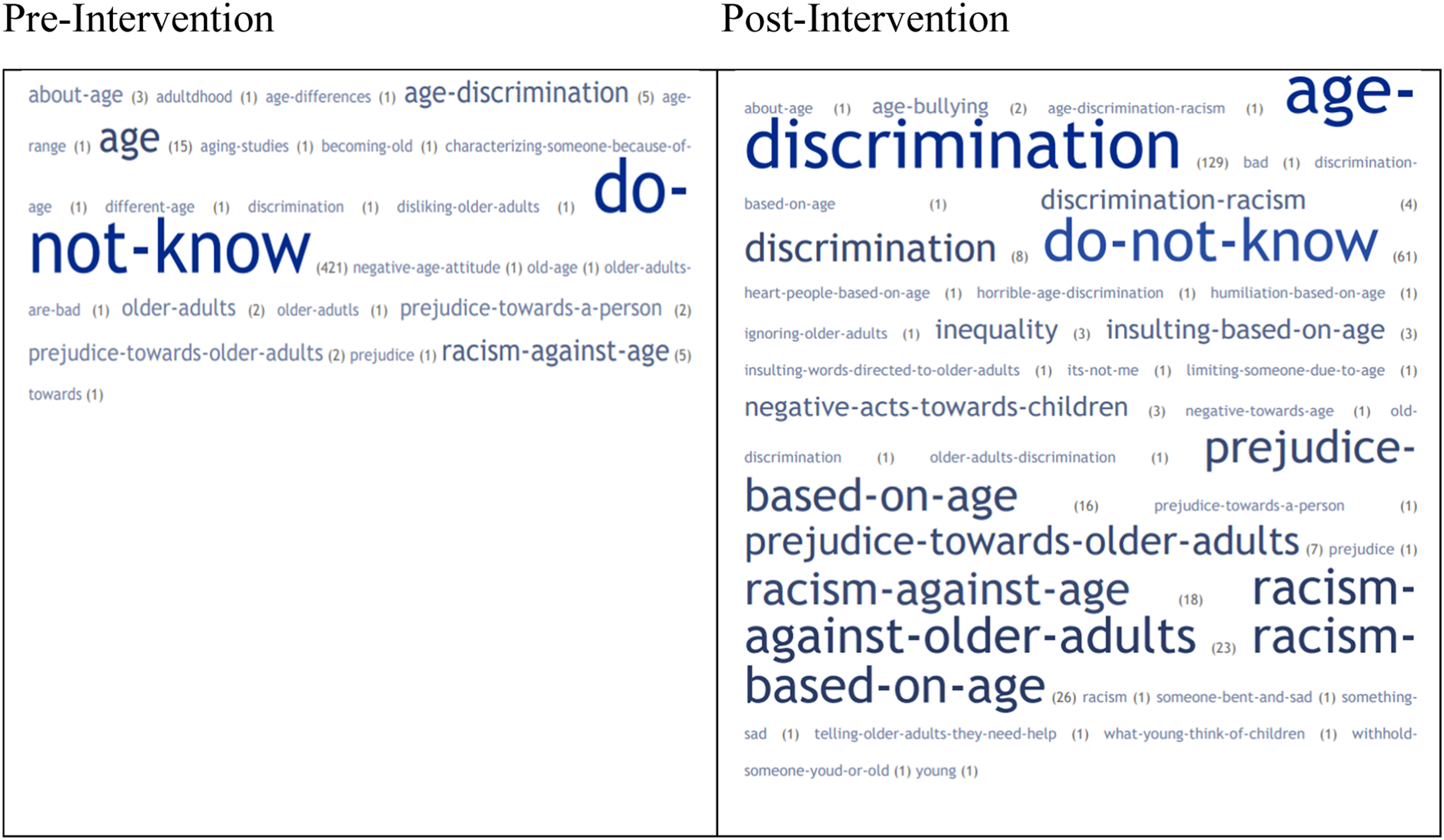
While no specific hypothesis was formulated, we sought to uncover potential patterns. First, we classified participants’ terminology to define ageism into 1 = ”racism,” 2 = ”prejudice,” 3 = ”discrimination,” and 4 = other words. Notably, before the intervention only nine participants referred to “racism,” “prejudice,” and “discrimination” when asked about their familiarity with the concept of ageism. However, a total of 193 observations were recorded after the intervention: 113 participants referred to “discrimination” (e.g., “discrimination based on age”), 78 participants mentioned “racism” (e.g., “racism against older adults” and “racism based on age”), and two participants used the term “prejudice” (e.g., “prejudice toward older adults”). Following the dichotomization of the terminology variable (response include/not include the three terms), a McNemar test was conducted to assess the change in participants’ terminology before and after the intervention. The McNemar test revealed a statistically significant difference in the use of specific terminology before and after the intervention (χ2 = 173.1, p < .001, n = 297). These findings indicate that adolescents used more accurate terms to define ageism after the intervention, reflecting their acquired knowledge.
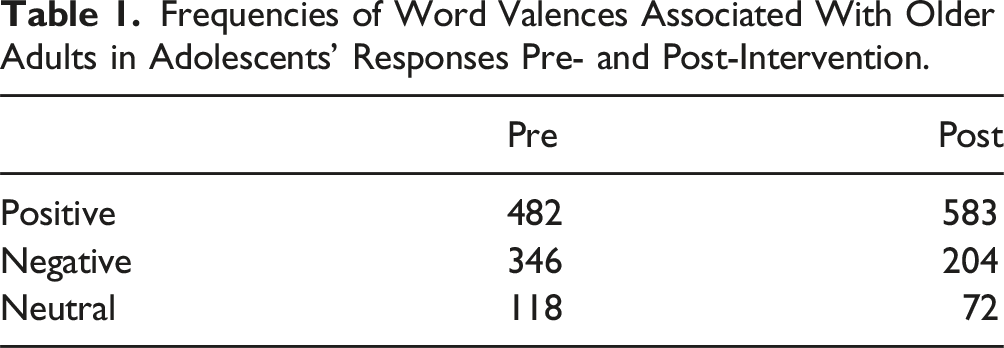
Frequencies of Word Valences Associated With Older Adults in Adolescents’ Responses Pre- and Post-Intervention.
Frequency Table for Adolescents’ Pre- and Post-intervention Valance Word-Association Lists: Words Associated With the Term an Older Man or an Older Woman.
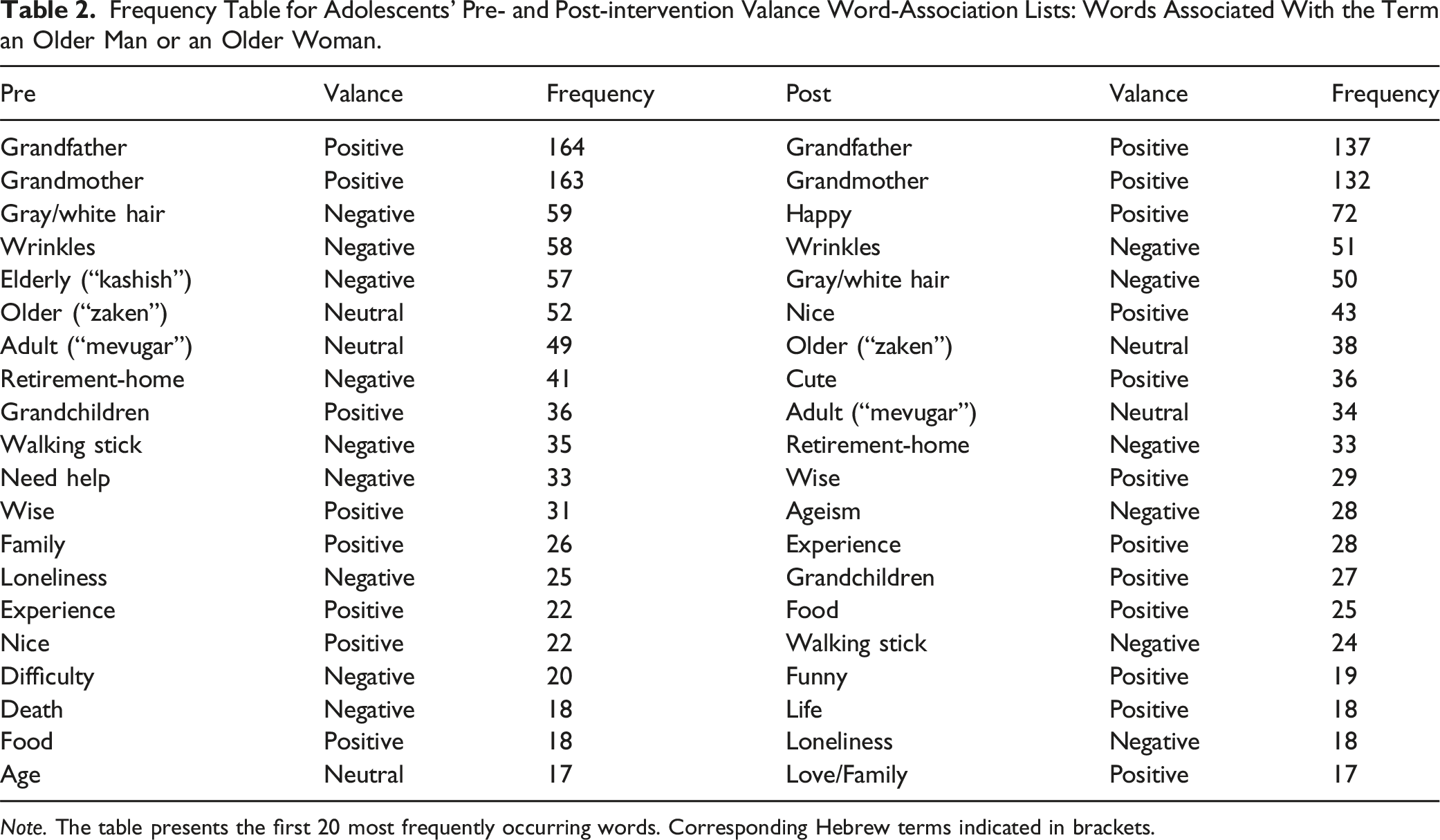
Note. The table presents the first 20 most frequently occurring words. Corresponding Hebrew terms indicated in brackets.
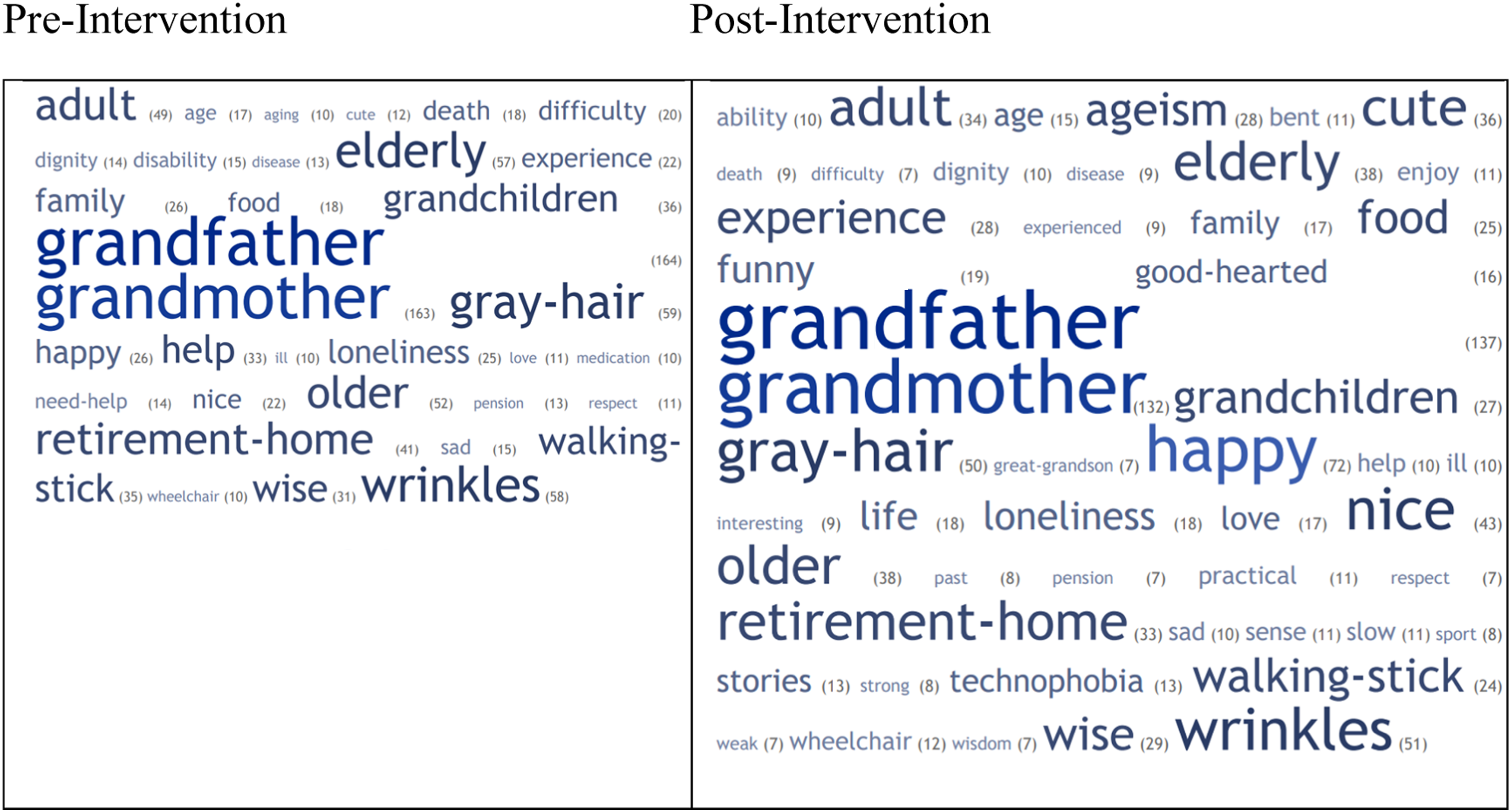
Word clouds for adolescents’ pre- and post-intervention answers to “What are the first words that come to your mind when thinking about an older man or woman?” Note. The figure presents the first 50 most frequently occurring words, with the frequency of each word indicated in brackets.
To test H2, namely, the change in age stereotypes, as measured by the CATE, from pre-intervention to post-intervention conditions, a dependent samples t test was conducted. The test results indicated a significant mean difference in age stereotypes from before to after the intervention within the same participants, with a medium effect size (t (317) = -11.91, p < .001, Cohen’s d = .51). Specifically, the pre-intervention age stereotypes (M = 3.16, SD = .56, n = 318) were significantly more negative than the post-intervention age stereotypes (M = 3.50, SD = .64, n = 318) indicating a significant shift toward more positive stereotypes. See Figure 3 for a graphical representation of the results. Pre- and post-intervention age stereotypes scores. Note. Higher scores reflect positive attitudes toward older persons.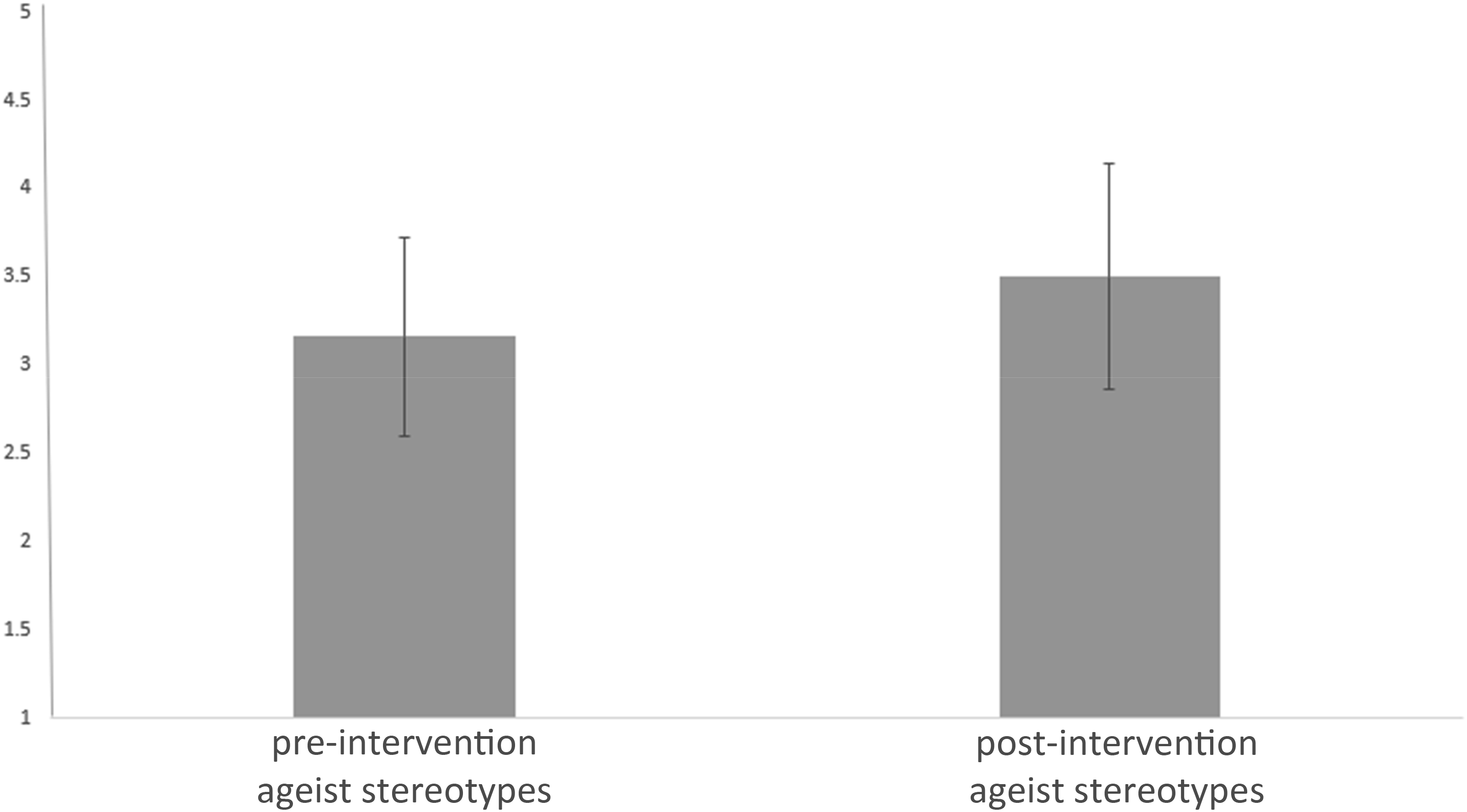
To explore how participant demographics (age and gender) influenced changes in age stereotypes, further analysis was conducted. We employed a mixed-design analysis of variance (Split Plot ANOVA) to investigate the interaction effect between participant age and gender (male vs. female) and time (pre- vs. post-intervention). This analysis aimed to assess the association of participant age and gender with the potential shift in age stereotypes. In this analysis, we treated pre- to post-intervention age stereotypes as repeated measures and considered age and gender as a between-groups factor.
First, we present the interaction effect between participant age and time. A significant statistical change was found for age stereotypes from the pre- to the post-intervention coupled with a medium effect size (F (1, 316) = 6.32, p < .005, η2 = .02). No differences in age stereotypes among participants within the 10, 11, 12, 12.5, 13.5, 14, and 15-year-old age groups were found. The interaction of participant age with age stereotypes indicated no significant differences in the change from pre-intervention to post-intervention for age groups (F (1, 316) = .72, p = .695, η2 = .02).
Second, we present the interaction effect between participant gender and time A significant statistical change was found for age stereotypes from the pre- to the post-intervention coupled with a large effect size (F (1, 316) = 84.46, p < .001, η2 = .21). No difference in age stereotypes was found for gender (F (1,316) = 1.39, p = .24, η2 = .004) indicating that female age stereotypes (M = 3.36, SD = .52, n = 235) were not significantly different from male age stereotypes (M = 3.27, SD = .55, n = 83).
The interaction of gender with age stereotypes indicates larger significant differences in the change from pre-intervention to post-intervention for females than for males (F (1,316) = 8.56, p = .004, η2 = .03). For males, positive stereotypes of older persons increased from pre-intervention (M = 3.17, SD = .63, n = 83) to post-intervention (M = 3.37, SD = .75, n = 83). Meanwhile, for females, there was a more noticeable rise in positive stereotypes from pre- (M = 3.16, SD = .54, n = 235) to post-intervention (M = 3.55, SD = .60, n = 235). Although the difference between males and females in the pre-intervention condition was not significant (p = .87), a significant difference (p = .03) between males and females was found in the post-intervention condition (See Figure 4). Means of pre- and post-intervention age stereotypes for male and female participants. Note. Higher scores reflect positive attitudes toward older persons.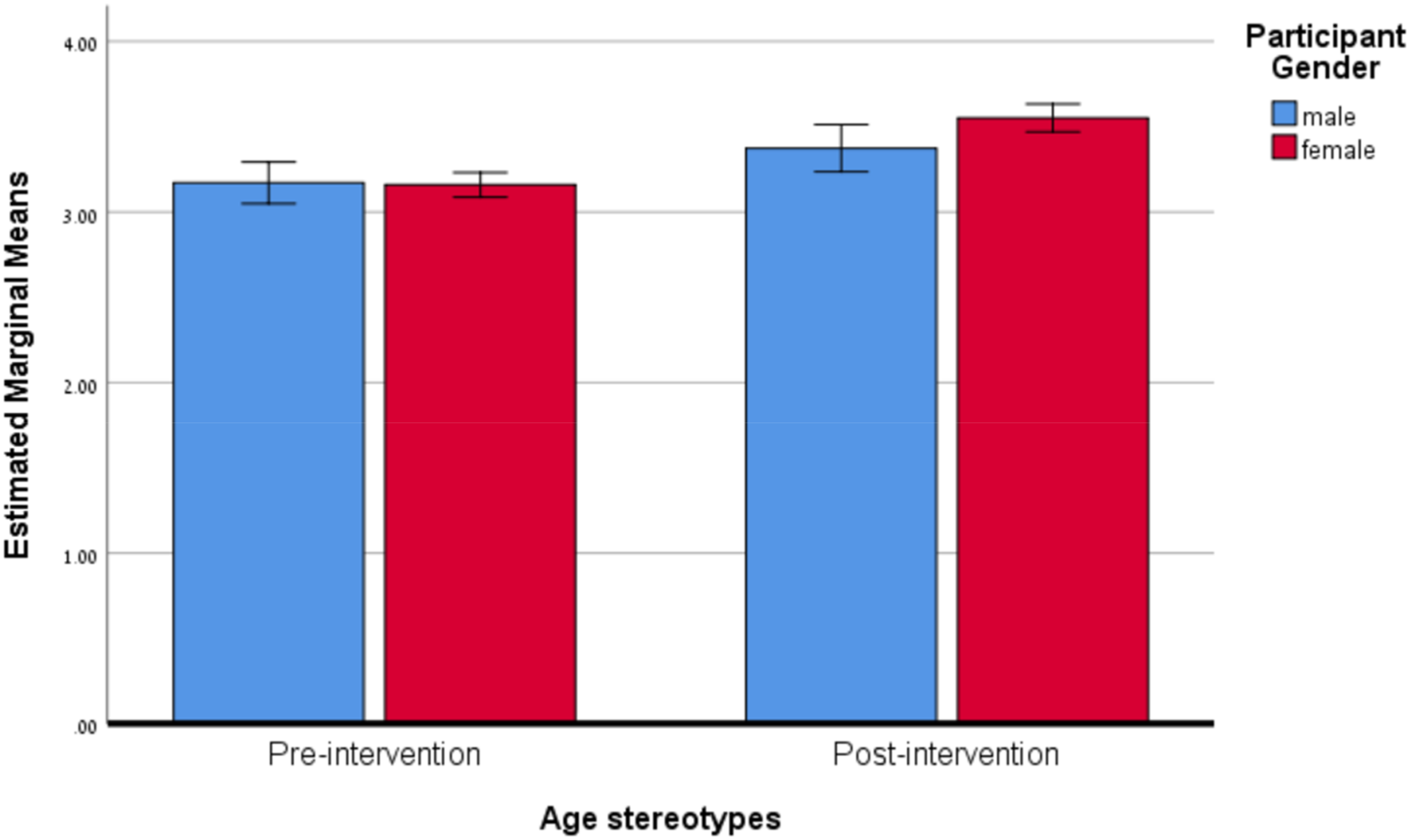
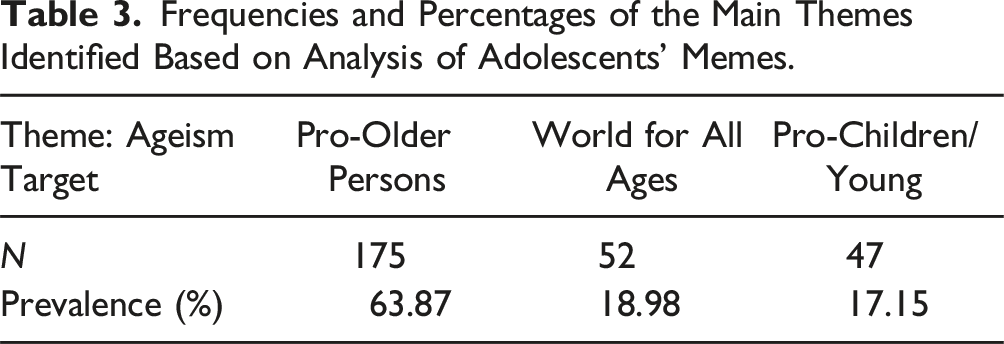
Following H3, we analyzed the textual and visual content of 274 memes created by students to determine their potential to challenge ageist stereotypes toward older persons. The memes, text-picture based creation illustrated the adolescents’ familiarity and identification with the workshop related concepts such as ageism and aging. The memes were subsequently classified into three main themes (for in depth analysis and interpretation see Okun et al., 2024a; 2024b). Hypothesis 3 was confirmed as two-thirds of the memes aimed to address ageism toward older persons. Unexpectedly, 18.98% of the memes conveyed a general message against ageism across all age groups, and 17.15% of the mems addressed ageism toward children and young persons.
Frequencies and Percentages of the Main Themes Identified Based on Analysis of Adolescents’ Memes.
Discussion
The aim of the study was to assess, using varied measures, the effectiveness of a short educational intervention to reduce ageism and enhance social activism among adolescents. Measures have demonstrated a trend which supported the positive effects of the intervention on familiarity with the term ageism, shift toward a more positive connotation when associating words with older person and improved old age stereotypes. Adolescents generated memes challenging ageism toward older persons, children, and young adults, while advocating for a general age-inclusive world.
A total of 318 Israeli adolescents, ranging in age from 11 to 15 and comprising 73.9% females, engaged in an active workshop to reduce ageism and enhance social activism. Familiarity with the term ageism, as well as attitudes toward older persons, was assessed before and after the intervention. We observed an enhanced familiarity with the term ageism as the participants described ageism by drawing upon readily understandable concepts such as discrimination, racism, and prejudice. Furthermore, an associative question about older persons prompted a diverse set of both positive and negative age stereotypes, displaying a shift toward more positive perceptions after the intervention. Moreover, findings indicate a significant growth in adolescents’ positive age stereotypes, with a more pronounced increase observed among females. In addition, adolescents crafted memes targeting various facets of ageism.
Our finding supports the first hypothesis. Nearly all participants did not know the meaning of the term ageism before the intervention. Analysis indicates an improved familiarity with the term following the intervention. Although overt hostility toward older adults may be socially unacceptable, the pervasiveness of negative age stereotypes highlights the potential influence of implicit attitudes and limited age-related knowledge (Levy & Banaji, 2002). Therefore, education about ageism serves a critical role in raising awareness of unconscious ageist biases. In this line, a recent study investigated peoples’ familiarity with the term ageism and its connection to the report of discrimination based on age (Okun & Ayalon, 2022). Initially, 45% of participants were unfamiliar with the term, with only 10% reporting experiences of age-based discrimination. After introducing and explaining the term, 62% of all participants shared instances of ageism, revealing a significant association between linguistic representation and reports of discrimination. Likewise, our workshops improved familiarity with the term ageism, potentially resulting in increased reports of discrimination, not only against older persons but also against children and adolescents
Following the intervention, participants demonstrated their understanding by relating it to familiar concepts such as discrimination, racism, and prejudice. Some participants linked the term ageism with older persons, a connection absent prior to the session. Educational scholars have consistently highlighted the relation between prior knowledge and the process of learning in middle schools (e.g., Beane & Brodhagen, 2001). Establishing relevant background knowledge enables students to actively participate in learning experiences, facilitating their engagement with novel concepts. Therefore, presenting ageism as a type of discrimination similar to racism (a well-known concept) assisted students to grasp the unfamiliar concept of ageism.
The findings also confirm the second hypothesis, demonstrating improved attitudes toward older persons following the intervention. This resonates with previous evidence that found that education about age and aging reduces ageism (Lytle & Levy, 2019). Specifically, it was found that interventions targeting middle school students, particularly females, effectively modify their attitudes toward older persons, thereby combating ageism (Apriceno & Levy, 2023; Burnes et al., 2019). Educational activities play a crucial role in fostering empathy (Alan et al., 2021), correcting misconceptions about various age groups, and mitigating stereotypes and prejudice (WHO, 2021). Our findings indicating a greater effectiveness of the intervention among females may be attributed to their improved empathic abilities in comparison to males (Baron-Cohen et al., 2005), or it could be associated with sample bias, suggesting an uneven distribution with most participants being females in this study as well as in past research. For instance, an examination of 41 studies on educational interventions revealed that in 29 studies, 81%–100% of the participants were females (Chonody, 2015).
The methods employed uncovered a complex mixture of positive and negative attitudes toward older persons. Overall responses referring to older persons included positive terms (e.g., experience and happy) as well as negative descriptors (e.g., wrinkles and loneliness), with a notable increase in positive descriptors following the intervention. Substantial number of participants associate older persons with their grandparents, indicating that adolescents’ perceptions of older persons are partially influenced by their familial connections. Family relationships spanning across generations present a crucial opportunity to mitigate the impact of age segregation in broader society (Hagestad & Uhlenberg, 2005). It is worth noting that our classification of grandparents as positive, based on children’s responses and memes highlighting grandparents’ culinary skills and generosity with sweets and candies, is subject to interpretation, recognizing the possibility of alternative negative or neutral classifications.
Our workshop intended to create a realistic image of old age, which incorporates positive, negative, and neutral stereotypes. Therefore, during the workshop, we stressed the notion of the heterogeneity in older persons’ health condition, economic status, hobbies, social life etc. As expected, adolescents demonstrated a blend of favorable and unfavorable perspectives, encompassing both positive (e.g., wise and funny), negative (e.g., walking stick and loneliness), as well as neutral (e.g., adult and age) perceptions of older persons. This confluence aligns with the notion that aging is a multifaceted experience, encompassing both challenges and advantages.
Adolescent activism has emerged as a promising avenue for promoting social change. Research has documented its effectiveness in fostering engagement within school settings and virtual environments (Cortés-Ramos et al., 2021; Torres-Harding et al., 2018). One particularly impactful manifestation of this activism involves the creation of social advocacy memes. In our study, participants were encouraged to assume the role of social media activists by generating creative visual and textual memes that challenged ageism (Okun et al., 2024a).
Peers engaging in discussions to exchange ideas, effectively communicating, and sharing digital messages against ageism targeting both younger and older persons constitute initial steps in shaping new social norms within their classes, school, families, and communities. Importantly, almost two-thirds of the responses directly addressed ageism against older adults. The remaining responses acknowledged the broader concept of ageism, including its impact on children and young people. A limited number of studies investigated ageism against young people (Francioli & North, 2021, 2024; WHO, 2021) and found both positive (e.g., health and ambition) and negative (e.g., spoiled and disrespectful) attributes, as well as inconsistent terminology (e.g., adultism, youngism, and kiddism).
The present study has several limitations. First, we relied on a pre-post design, rather than a randomized controlled trial (RCT) design. This and the absence of a comparison group hinder the ability to draw definitive causal conclusions. Second, the sample primarily included females, thus, future research should aim for a more gender-balanced representation. The study was also limited by its inclusion of only two gender categories, excluding the option of ‘non-binary’. Third, the predominantly urban sample limits generalizability to non-urban populations, thus, future research should explore geographic variations. Fourth, our study did not assess the lasting impact of the intervention. Future research could explore the effectiveness of a combined approach involving intergenerational contact and education, which has been identified as the most effective strategy in reducing ageism (Apriceno & Levy, 2023) as well as assess the stability of the intervention’s effects over time. Moreover, our study examined adolescents’ attitudes toward older persons, reflecting one facet of the broader construct of ageism (WHO, 2021). However, ageism also manifests in emotional and behavioral components, which future research should explore. Finally, we did not collect data on the students’ frequency or quality of contact with their grandparents. This information could have provided valuable insights into how pre-existing relationships with grandparents might be related to age stereotypes.
To conclude, understanding ageism and its outcomes can influence adolescents’ views encompassing ageism toward children, younger and older persons. The mixed-measurement tools employed in this study proved advantageous for investigating both positive and negative attitudes toward older persons. Crucially, educating adolescents about ageism is an important social endeavor. In the course of instructing adolescents about ageism, it is recommended to draw upon their existing knowledge of related topics such as discrimination based on race or prejudice. Motivating adolescents to engage as social activists, leveraging their creative abilities to articulate insights about ageism through memes, can effectively propagate the message of a world for all ages and contribute to diminishing ageism within their communities and beyond.
Supplemental Material
Supplemental Material - Reducing Ageism and Enhancing Social Activism in Middle School: The Use of Diverse Measures of Ageism
Supplemental Material for Reducing Ageism and Enhancing Social Activism in Middle School: The Use of Diverse Measures of Ageism by Assaf Suberry, Sarit Okun, and Liat Ayalon in Journal of Applied Gerontology
Footnotes
Declaration of Conflicting Interests
The author(s) declared no potential conflicts of interest with respect to the research, authorship, and/or publication of this article.
Funding
The author(s) disclosed receipt of the following financial support for the research, authorship, and/or publication of this article: This work was supported by a grant from the Impact Center for the Study of Ageism and Old Age donated by Mrs. Gabi Weisfeld.
Ethical Statement

Supplemental Material
Supplemental material for this article is available online.
References
Supplementary Material
Please find the following supplemental material available below.
For Open Access articles published under a Creative Commons License, all supplemental material carries the same license as the article it is associated with.
For non-Open Access articles published, all supplemental material carries a non-exclusive license, and permission requests for re-use of supplemental material or any part of supplemental material shall be sent directly to the copyright owner as specified in the copyright notice associated with the article.
