




Abstract
Accessible housing for the aging population is important, but large-scale reliable information on accessibility problems in ordinary housing is lacking. This study aimed to describe the prevalence of environmental barriers and analyze potential accessibility problems in the Swedish housing stock and to evaluate the validity and representativeness of housing data collected in a citizen science project. Data on environmental barriers in 1181 dwellings were collected by members of the public. Prevalence of barriers and potential accessibility problems were analyzed using descriptive statistics and ranking methodology. Validity and representativeness were addressed by comparisons with public statistics and research, and analysis of data properties. It was found there are substantial numbers of environmental barriers in dwellings across Sweden that generate accessibility problems for people with functional limitations. The results suggest that with user-friendly data collection tools and instructions, data validity and representativeness can be achieved in citizen science projects involving older adults.
• Knowledge about involvement of older adults in a citizen science project targeting housing issues • Knowledge about environmental barriers and accessibility problems in the ordinary Swedish housing stock • Understanding of issues of validity and data quality in citizen science projects
• Citizen science projects should be considered as a viable way to involve older adults in data collection on issues of importance to them and society overall • Citizen science projects need to include considerable methodological efforts to achieve data of high quality and validity • Housing accessibility for the aging population should be further addressed both in research and by policymakersWhat this paper adds
Applications of study findings
Introduction
Despite progressive population aging, housing provision meeting the needs of people as they age is lagging (see, e.g., Schekler et al., 2022), and there is an urgent need to better understand and provide for the diversity of housing requirements of older adults (Vespa et al., 2020). For example, even if accessible housing for people with functional limitations is a key issue for active and healthy aging (Jonsson et al., 2021; WHO, 2018), in most countries the ordinary housing stock does not meet even basic accessibility requirements. By accessible housing we mean housing designed or adapted to support activity and participation, despite reduced functional capacity. Earlier research indicates that inaccessible housing may affect autonomy (Haak et al., 2007), independence (Mahler et al., 2014), and participation (Thordardottir et al., 2018) in later life. Moreover, there is evidence that poor housing accessibility may increase the risk of fall accidents (Hu et al., 2015), mental health issues (Howden-Chapman et al., 2011), as well as mortality rates (Rantakokko et al., 2013).
For complex, societal challenges where any potential solution is only temporary and can always be contested, the term wicked problems has been suggested (Rittel & Webber, 1973). Considering that decades of public debate and policy ambitions to deal with providing accessible housing for the aging population have not resulted in any decisive solutions, this issue bears the characteristics of a wicked problem (Jonsson et al., 2021). Wicked problems are characterized by involving different dimensions and multiple critical variables in an intertwined manner, that have to be analyzed and considered from sometimes conflicting perspectives and interests of several actors. A basic dimension in addressing a wicked problem concerns how the issue is measured and quantified. Reflecting on this dimension, there is a lack of systematic information about the state of accessibility in the housing stock, with scarce knowledge on how person-environment interactions in later life affect housing accessibility. In accordance with the Ecological Theory of Aging and the concept of person-environment fit (Lawton & Nahemow, 1973), individuals with reduced functional capacity are more sensitive to the demands of the physical environment. However, a good person-environment fit can still be achieved by lowering the environmental demands. Better knowledge of the impact of specific housing design features on person-environment fit in later life is therefore critical in improving housing accessibility. Dealing with housing provision for the aging populations, there is also an ethical dimension that relates to equality, personal responsibility and freedom of choice that is necessary to consider. Another important dimension is the empathic dimension, which is critical for communication striving to understand and influence attitudes and feelings about housing accessibility. Jonsson et al.’s (2021) findings indicate that empathetic and creative ways to influence attitudes are vital to changing people’s positions and bridging boundaries.
Distribution of the Swedish Ordinary Housing Stock 2021. a
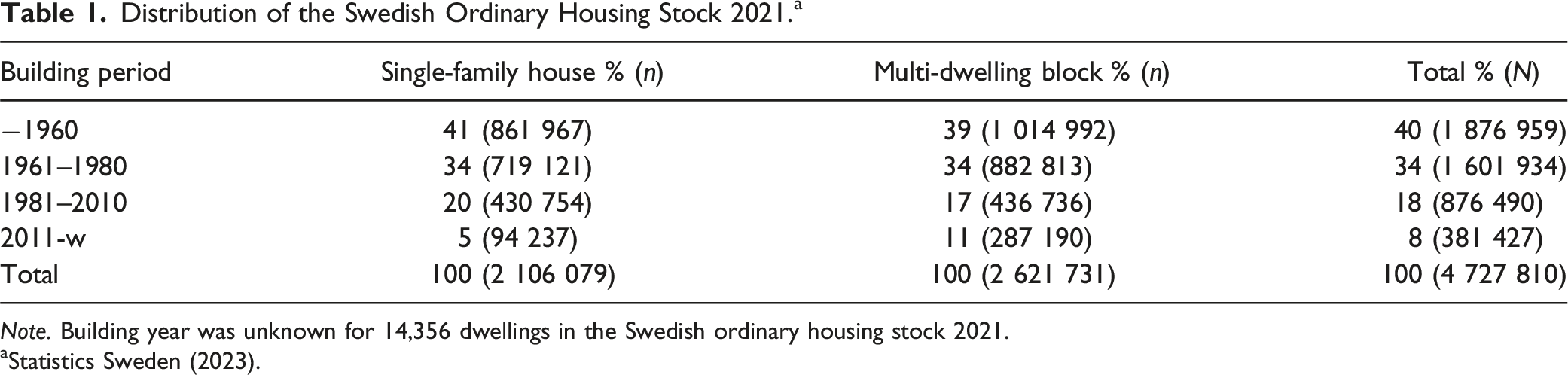
Note. Building year was unknown for 14,356 dwellings in the Swedish ordinary housing stock 2021.
For a long time in Sweden, housing accessibility has been promoted for by senior citizen organizations and advocates for the disability rights movement, though hitherto mainly on the national policy level. Tapping into these efforts to promote housing accessibility, a citizen science project was initiated together with the non-governmental organization Science & Public, with older adults and people with functional limitations as the main target groups—The Housing Experiment 2021. Citizen science means scientific research conducted in whole or in part by members of the public (Heiss & Matthes, 2017; Kasperowski & Brounéus, 2016). It serves the purposes both of gaining scientific insights and knowledge that would be difficult or impossible for professional researchers to gain alone, and to engage the public in scientific activities. With the empathic dimension of the wicked problem of providing accessible housing for the aging population in mind, the ambition of this project was to incentivize members of the public to collect detailed data of environmental barriers in the ordinary housing stock on a large scale, by means of a user-friendly app using research-based questions (Granbom et al., 2023). Underlying ideas of the project were also to engage public citizens in research activities (Wood et al., 2022), and to evaluate their capacity as co-researchers and explore the potential effects on attitudes to housing accessibility (Frögren et al., 2023) as an avenue towards local actioning.
In any research project it is critical to assure the highest possible quality of data, and in academic research there are usually extensive resources invested for that purpose. However, this is not often the case in citizen science, and in a recent study data quality was identified as “the Achilles heel of citizen science projects” (Balazs et al., 2021). This is manifested, for instance, in ambiguous definitions of data quality and unclear procedures of how to achieve it. Data quality issues are also a reason why citizen science projects now and then have been viewed with skepticism and distrust from both researchers and policymakers (Bonney et al., 2014; Kosmala et al., 2016; Nascimento et al., 2018). To gain credibility for citizen science projects it is therefore important to scrutinize data collected by members of the public and to evaluate quality in a transparent manner.
Based on the empirical data collected during the Housing Experiment 2021, the aim of the current study was twofold. First, we aimed to describe the prevalence of environmental barriers in the housing stock in Sweden, and to analyze accessibility problems by relating the data to combinations of functional limitations that are common in the aging population. Second, we aimed to evaluate the validity and representativeness of housing data collected by members of the public.
Material and Methods
The Housing Experiment App
The Housing Enabler (HE), which is a research-based instrument for assessing and analyzing housing accessibility problems in terms of person-environment fit (Carlsson et al., 2009; Iwarsson et al., 2012) constituted the scientific base for the data collection in the Housing Experiment 2021. The HE comprises an environmental (physical barriers) and a personal (functional limitations) component that are combined to quantify potential accessibility problems. The environmental component of the HE consists of 161 potential environmental barriers in and around the home, based on standards and guidelines for housing design as expressed in national legislation and guidelines. For screening purposes, a shortened list of 60 environmental barrier items that are most important to detect housing accessibility problems on population or group level was launched (Carlsson et al., 2009). Using this shortened environmental checklist of the HE as the starting point, 33 items were selected and adapted into a citizen science version of the HE, in a rigorous process (described in detail elsewhere, see Granbom et al., 2023). Focusing on the entrance and indoor environment, items concerning the exterior surroundings (20 items) were not included in the citizen science version, and other items were excluded mainly due to very high prevalence (>95%) confirmed in previous research. Moreover, during this process, some items were split into more than one question, and some were repeated for different locations in the dwelling, resulting in a total of 40 questions in the citizen science version of the HE. However, to make the current study comparable to previous research using the original instrument, the split questions were recombined in the analysis and presentation of results.
For members of the public to collect data, together with the non-profit organization Science & Public we developed a web application (app) for IOS and Android for use on smartphones and tablets. The app was developed in an iterative development process in six phases including participatory activities with researchers, citizen science specialists, tech developers, older adults, and other members of the public. Substantial efforts were made to ensure that the app was easy to use regardless of digital literacy. After usability testing involving older adults that lead to some adjustments and fine-tuning of the interface, the app was evaluated as usable and reliable (Granbom et al., 2023). The app was open to download for free on Google Play and App Store. All instructions needed were embedded in the app. Supporting information was published online in text and video. Although the main efforts were directed at older adults as the target group, the intention was to make it available for all in the public with an interest in participating as data collectors (Figure 1). Conducting measurements to answer questions in the Housing Experiment app. Photo by Kennet Ruona.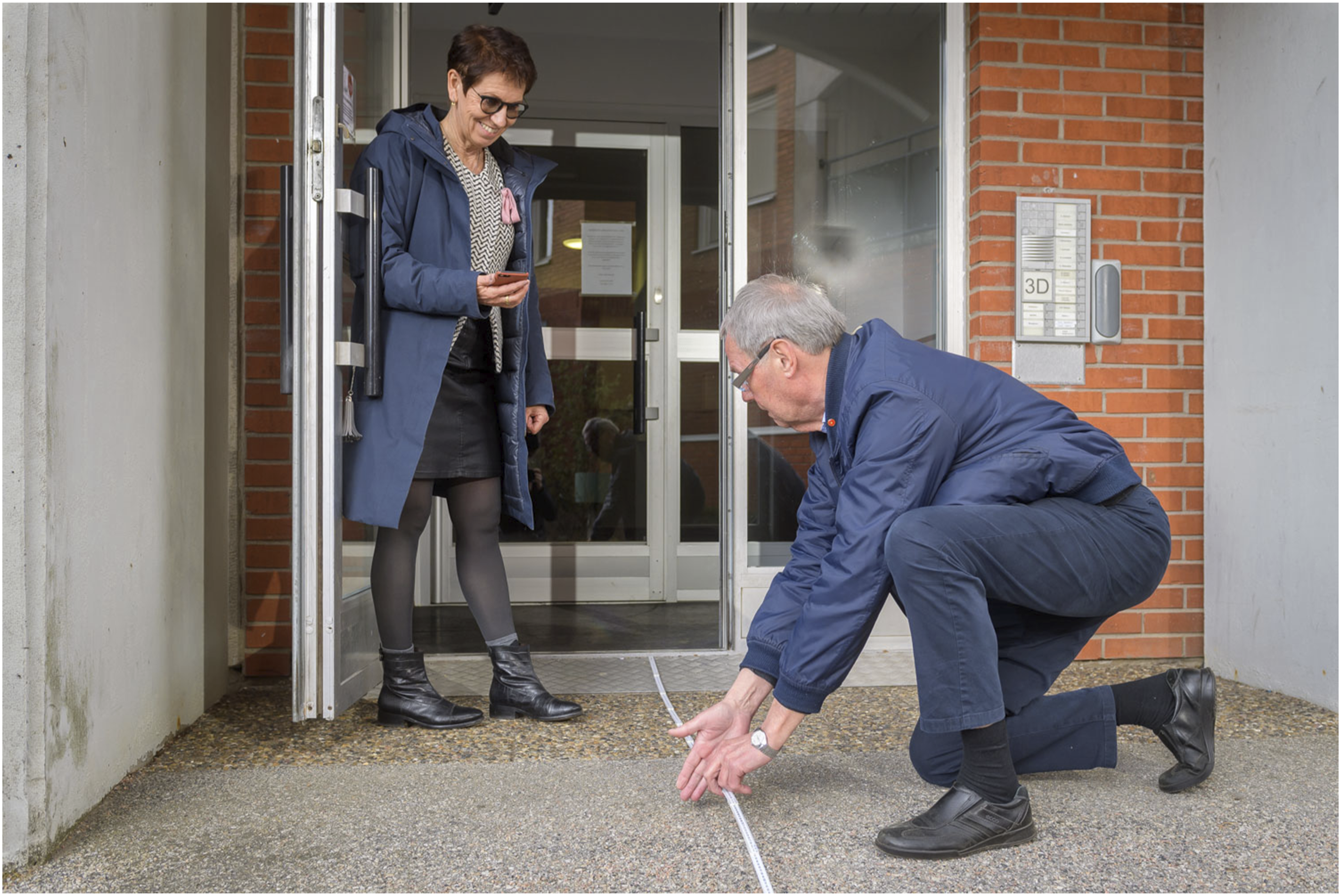
Data and Data Collection
Descriptive questions in the app were used to collect address zip code and information about type of dwelling, building year, and major renovations. Questions about the residents in the dwelling relevant for accessibility issues, that is, if any of them were 65–79 years old; 80 years or older; used a wheeled walker or wheelchair in the dwelling followed. The 40 Yes/No questions derived from the HE addressed the presence of specific design features at the entrance, in the kitchen, bathroom, and in other parts of the dwelling. For example, the user had to respond Yes/No to questions such as “Do all flights of stairs have bannisters on both sides?”, and measure with a ruler to respond Yes/No to questions such as “Are any of the thresholds one needs to pass at the entrance higher than 15 millimeters?” It was possible for the user to skip questions and still register their responses. Upon completion the responses registered in the app were automatically uploaded to a database, which was updated in real-time on a public project website (The Housing Experiment 2021). Data was collected during 2.5 months in fall 2021.
Recruitment of Participants for Data Collection
Information about the citizen science project and recruitment efforts were made by all partners of the Housing Experiment 2021. Various local and national news outlets were contacted, which resulted in about 20 press clippings, two broadcasts on national radio and one on a national TV channel, with a total reach of 8,637,496 persons. Science & Public informed their members by internal advertising, media coverage in member magazines or directly via email to members and noted more than 80 posts on social media with more than 34,000 impressions. Interest associations focusing on issues relating to either older adults, people with disabilities or housing (such as tenants' and housing company associations) were approached and offered written and video material to use for information about the project. In addition, partnering associations used social media to inform about the Housing Experiment 2021 and attract participants. In line with previous citizen science projects involving the Science & Public organization, there was also an effort to reach teachers at public schools and offer their pupils the possibility to engage in data collection. Although special curriculum-adapted material was also provided, there was however little interest in the public schools to engage in this project. In all, 1181 members of the public participated in the data collection (70% aged 65 or older).
Data Analysis
Descriptive statistics (percentages or median and quartiles) were used to present basic characteristics of the dwellings, and to present number of environmental barriers (min–max = 0–33) by dwelling type and building period. For comparisons of prevalence of specific barriers between dwelling type and building periods, chi-square test was used. All calculations were based on valid answers.
To analyze the barriers generating most accessibility problems at group level we used functional profiles defined through previously reported simulations and statistical analyses of large data sets on functional limitations of older adults (Granbom et al., 2016; Slaug et al., 2011). Four functional profiles with increasing complexity were used: Profile I: limitations in movement only; Profile II: limitations in movement and upper extremity; Profile III: limitations in movement, upper extremity and dependence on mobility devices; and Profile IV: limitations in movement, upper extremity, dependence on mobility devices and loss of sight. For each environmental barrier an accessibility problem score based on the HE methodology was calculated (Slaug et al., 2011). The accessibility problem score is calculated by combining the environmental items with the functional profiles, using a scoring matrix with pre-defined severity ratings (0–4) that are summed up to a total score, which represents a quantification of predicted accessibility problems. Next, ranking lists of environmental barriers in descending order according to the magnitude of accessibility problems generated were produced.
To evaluate validity and representativeness of the data the distributions of type of dwelling and building period were compared to publicly available national statistics (Statistics Sweden, 2023). The ranking order of barriers generating the most accessibility problems was compared to previous research results based on existing data collected by trained data collectors at home visits, extrapolated to the national level (Granbom et al., 2016). To further evaluate validity, we calculated the missing ratio for each of the 40 questions concerning the presence of environmental barriers, considering a missing ratio of at most 5% as acceptable We tested internal data consistency based on the assumption that there is pattern in the distribution of barriers and accessibility problems at national level that should be consistent throughout the Housing Experiment dataset. To test this, we applied a type of split-half procedure (Carmines & Zeller, 1979). That is, we first randomly split the data in two equal subsets, and then tested for differences in the accessibility problem scores for the four functional profiles between the two subsets using Kruskal–Wallis test.
The SAS Software, SAS Institute Inc., Cary, NC, Version 9.4 was used for all analyses.
p-values <0.05 were considered statistically significant.
Results
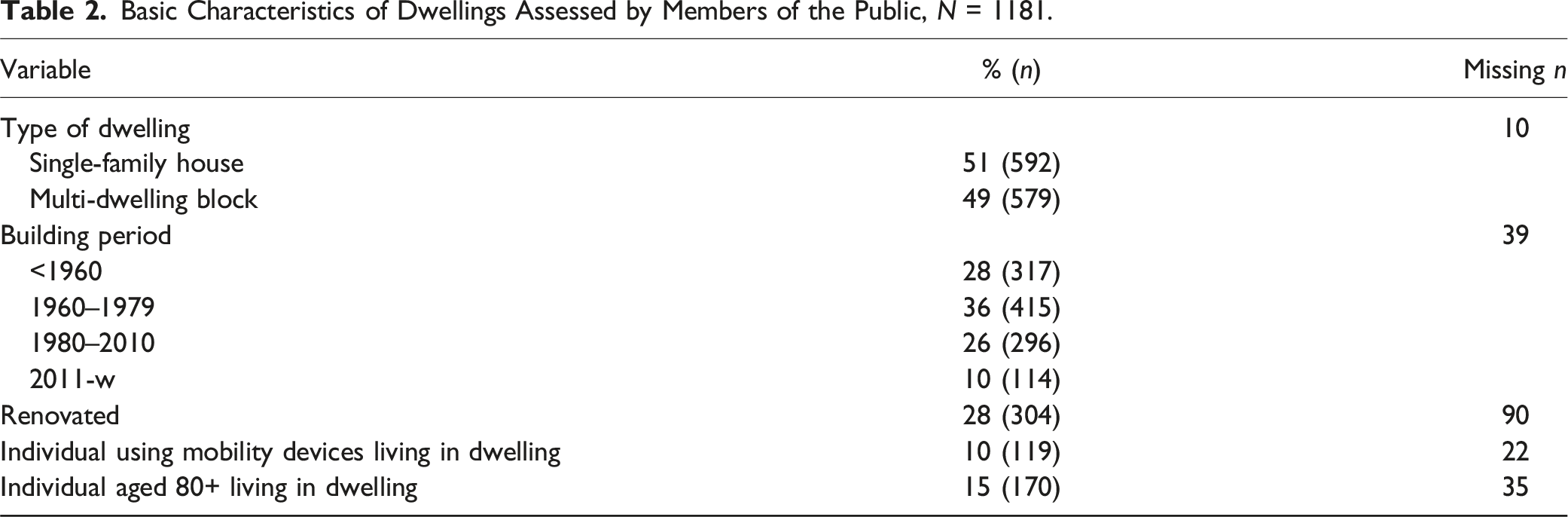
Basic Characteristics of Dwellings Assessed by Members of the Public, N = 1181.
Number of Environmental barriers by Type of Dwelling and by building Period, N = 1181.
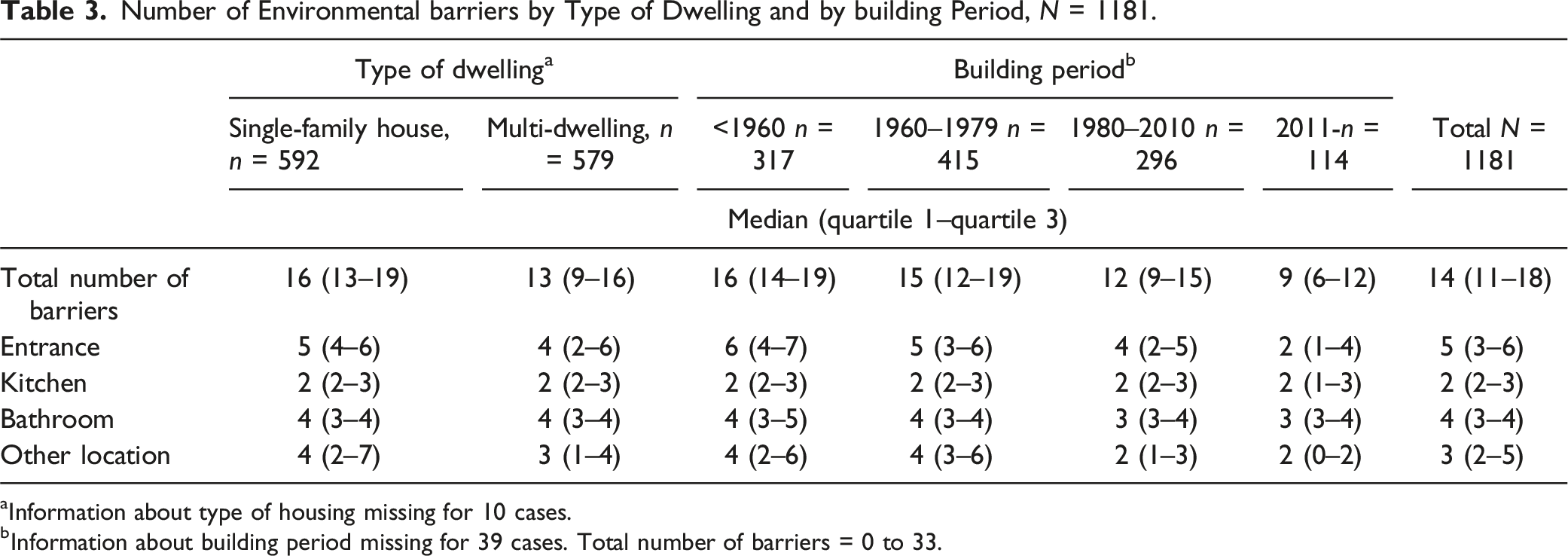
aInformation about type of housing missing for 10 cases.
bInformation about building period missing for 39 cases. Total number of barriers = 0 to 33.
Most Prevalent Environmental barriers by Type of Dwelling, N = 1181.
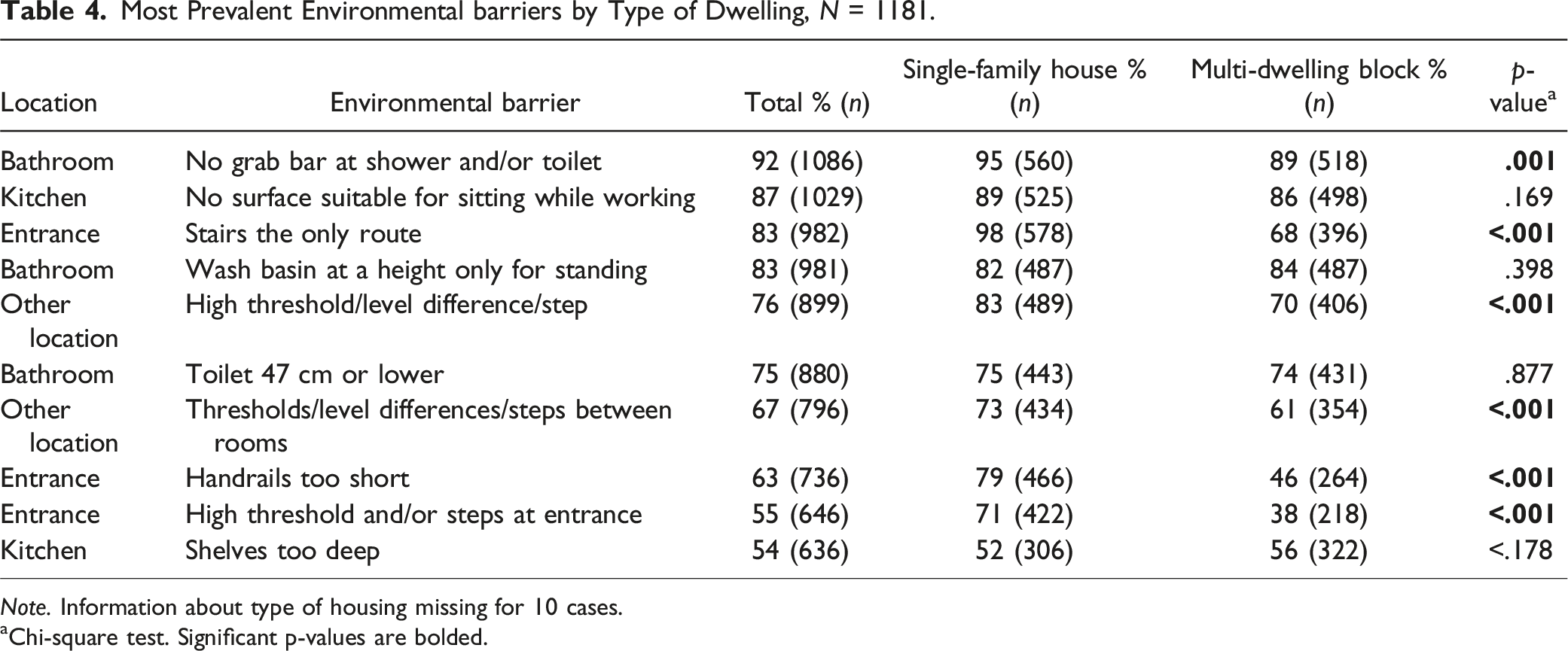
Note. Information about type of housing missing for 10 cases.
aChi-square test. Significant p-values are bolded.
Most Prevalent Environmental barriers by building Period, N = 1181.
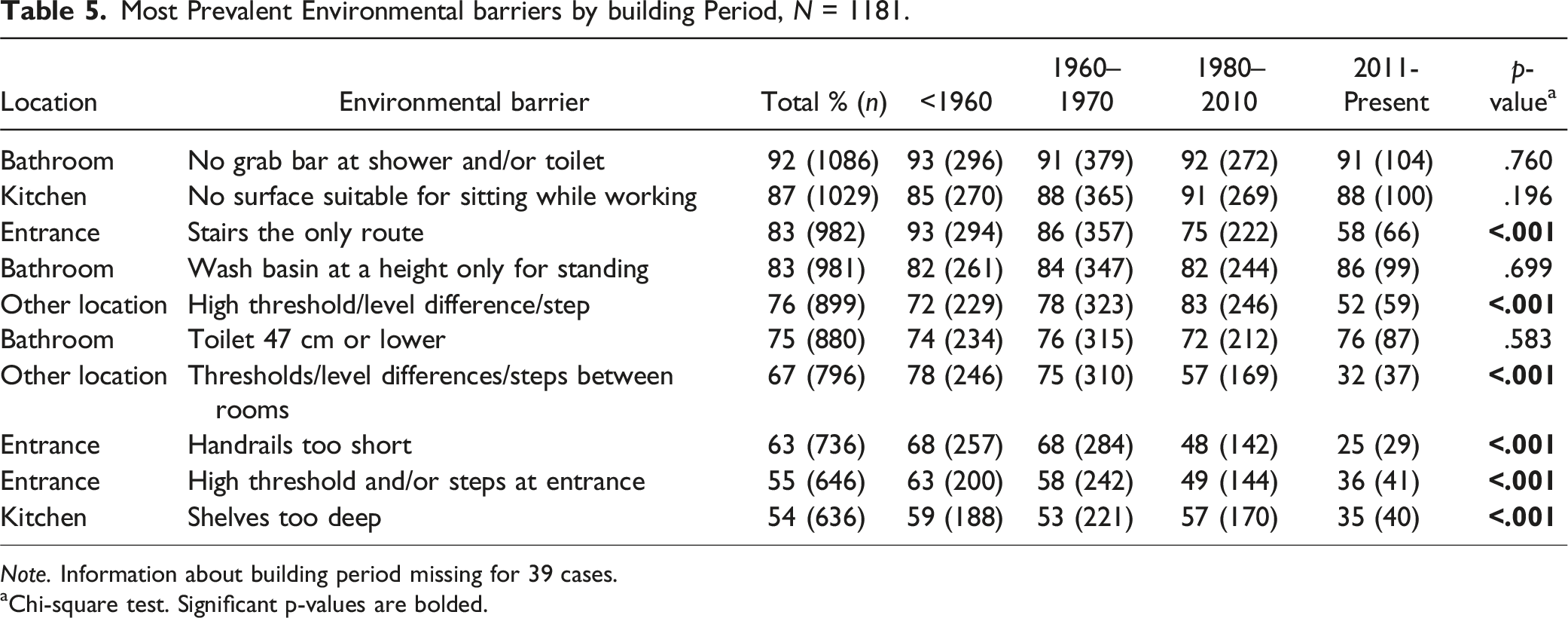
Note. Information about building period missing for 39 cases.
aChi-square test. Significant p-values are bolded.
Rank Order of the Environmental barriers Generating Most Accessibility Problems, by Functional Profile (I–IV) and Housing Type.
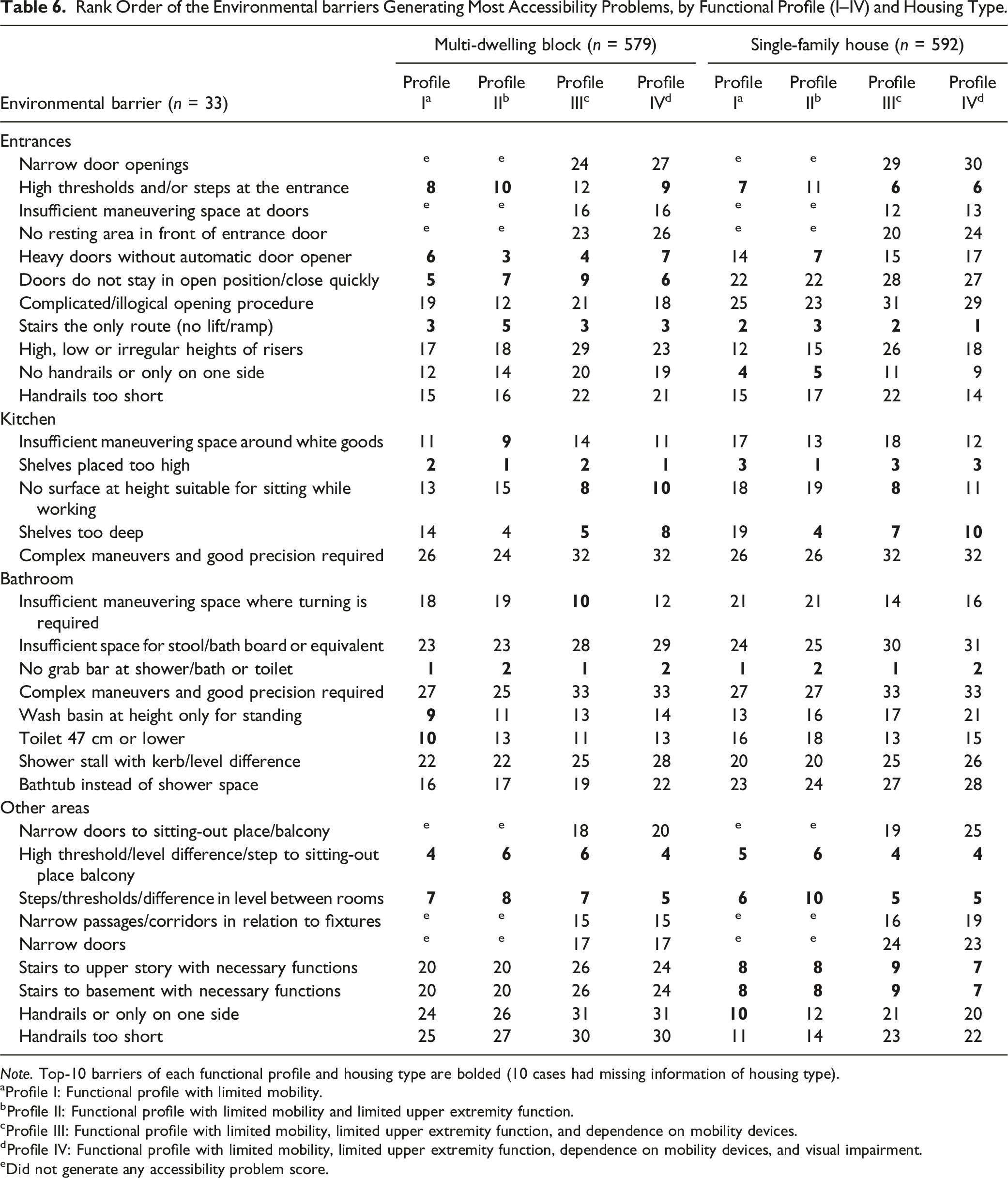
Note. Top-10 barriers of each functional profile and housing type are bolded (10 cases had missing information of housing type).
aProfile I: Functional profile with limited mobility.
bProfile II: Functional profile with limited mobility and limited upper extremity function.
cProfile III: Functional profile with limited mobility, limited upper extremity function, and dependence on mobility devices.
dProfile IV: Functional profile with limited mobility, limited upper extremity function, dependence on mobility devices, and visual impairment.
eDid not generate any accessibility problem score.
Comparing the results with available national statistics, single-family houses were slightly overrepresented in our sample (51% vs. 45%). There were fewer dwellings built before 1960 in our sample (28% vs. 40%), while the proportion of dwellings from the period of the million homes program was similar to the national housing stock (36% vs. 34%). The barriers generating most accessibility problems were very similar to our previous research. That is, lack of grab bars in bathrooms, shelves placed too high in kitchens and stairs the only route at entrances generated most accessibility problems. In apartments in multi-dwelling blocks, heavy doors without automatic opener and door that does not stay in open position/close quickly were equally prominent in our sample as in our previous research, as were stairs to upper story or basement with necessary functions in single-family houses. The ratio of missing values for the 40 questions concerning the presence of environmental barriers ranged from 0.8% to 1.2%. Test of internal data consistency showed no significant difference between the two randomly split subsets (p-value range = 0.228–0.384).
Discussion
The results of the Housing Experiment 2021 largely confirmed what previous research has found, that is, there are substantial numbers of environmental barriers in the ordinary housing stock in Sweden (Granbom et al., 2016; Pettersson et al., 2018), both in single-family houses and apartments in multi-dwelling blocks. These environmental barriers generate accessibility problems for many older adults. Evaluating the data collected by members of the public, the results suggest that high data quality, validity and representativeness can be achieved in a citizen science project with older adults as the main target group.
The high prevalences of environmental barriers (70–90%) such as no grab bar in bathroom, stairs the only route to enter the dwelling, thresholds, steps or level differences between rooms, kitchen shelves too deep and lack of surfaces suitable for sitting while working in the kitchen are serious because such barriers generate accessibility problem for people with functional limitations (see Table 6). For thresholds, steps or level differences between rooms there was a notable decrease in prevalence over time (32% in the newest dwellings), but for lack of surfaces suitable for sitting while working in the kitchen (88% in the newest dwellings) and lack of grab bars in bathroom (91% in the newest dwellings) there was no change over time at all. To take the consequences of the aging population for accessible housing better into account, the functional profiles based on person-environment fit calculations used in this study are important. That is, with the aging population, there is an ongoing increase of older adults with more complex combinations of functional limitations, such as both mobility and sensory limitations. For instance, the results of the present study suggest that for multi-dwelling blocks, problems related to the entrance, such as heavy doors without automatic opener and doors that do not stay open or close quickly, generate serious accessibility problems and should have high priority even though they are not the most prevalent. Concerning single-family houses, accessibility problems related to necessary functions located at upper stories or in the basement stand out in a similar manner. On a note of caution, the comparison with previous research concerning accessibility problems was based on ranking order in terms of severity of problems for different functional profiles and not the accessibility problem scores as such. Still, the ranking order identified in the present study was found to be consistent with previous research (Granbom et al., 2016).
While many accessibility problems could be avoided by more foresighted design when building new housing and more efficient home modification strategies (Kim et al., 2024; Sheth & Cogle, 2023), these results indicate an alarming lack of action in the housing provision sector. Already 30 years ago, considerable accessibility issues for older people in the Swedish ordinary housing stock were highlighted in public health research (Iwarsson & Isacsson, 1993). Moreover, in 2015 there was an investigation from the Swedish government (SOU, 2015) that suggested several measures to upgrade the ordinary housing stock in terms of physical accessibility, against the background of the aging population. Considering the results of the current study there are no indications that those measures have come into effect, which further underlines the urgency for all actors in the housing provision sector to take joint action to address the issue of accessible housing in a constructive manner.
To understand the longstanding lack of action in a matter of such social urgency that has from time to time even been high on the political agenda, the perspective of wicked problems (Rittel & Webber, 1973) is useful. Although many actors in the housing provision sector seemingly agree that housing accessibility for the aging population is important to address (Jonsson et al., 2021), typical for wicked problems there is not a common understanding of how to define the issue, how best to deal with it and how to determine when it has been sufficiently addressed (Rittel & Webber, 1973). This suggests that for joint actions to materialize in concrete efforts, economic incentives for all actors need to be strengthened and building legislation has to be both sharper and more specific in the requirements. Recent studies and reports in the US also highlight that current programs such Medicaid home and community-based care waivers are narrow and entirely insufficient to deal with the rapidly growing issue of providing accessible housing for the aging population (Schekler et al., 2022; Vespa et al., 2020).
The similarities of the results of this study and publicly available statistics and research as well as the low missing ratios and the internal consistency of data suggest that the Housing Experiment 2021 produced results that are valid and fairly representative for the Swedish ordinary housing stock. A key factor behind this achievement is the participatory methods applied during the development process (Granbom et al., 2023). Representatives of the targeted users had a direct impact when developing the appearance and functions of the user interface. In addition, older adults were engaged in usability tests of the app prototype, and their feedback helped to fine-tune the final version. Due to a presumed lower level of digital literacy among older adults (Frögren et al., 2023), we took extra care to ensure acceptance and user-friendliness of the digital data collection tool, adding helpful instructions and guidance how to assess and enter data. Thus, the efforts made to make the app easy to use, and the outreach to a broad audience using a variety of communication channels appear to have paid off. The low missing ratios further indicate that the app was successful in this aspect.
Scrutinizing the underlying prevalence figures for specific barriers (Tables 4 and 5), they appear to be at the higher end of the spectrum compared to other previous studies (see, e.g., Pettersson et al., 2018). This might indicate that the Housing Experiment participants tended to be those who already had some awareness of the presence of environmental barriers in their homes and therefore were more interested in these issues, and thus, to engage in the citizen science project. The results of a recent study support this reasoning (Frögren et al., 2023). It should be kept in mind though, that this does not diminish the validity of the results; the ranking order of environmental barriers generating accessibility problems is valid and highlights the most significant issues. However, some statistical adjustment for overrepresentation of dwellings with common barriers might be necessary to estimate the true prevalences. Building on methodological knowledge from the current project, additional initiatives attracting larger groups of citizens to be engaged in data collection would allow the use of “Big Data” methods from zoological and ecological projects to further account for variability, representativity and data quality (Brown & Williams, 2019; Kelling et al., 2015).
With the citizen science version of the HE, we have developed and used a lay person’s version of an instrument originally developed for research and professional practice purposes. To the best of our knowledge, there are few such examples. Though the HE has been used in several large research projects over the years (Iwarsson et al., 2007; Kylén et al., 2014; Nilsson & Iwarsson, 2013), the level of detail and the complexity of the instrument makes it time-consuming and resource demanding, which has hampered a wider use of the instrument. With a citizen science version that captures the most important aspects of housing accessibility, the possibilities for use are significantly extended. For instance, municipalities can use the app to involve citizens to inventory dwellings to detect areas where accessibility problems require special attention. Citizens can also use it themselves to be better informed of potential future accessibility problems in their own dwellings, or to put pressure on housing companies, and political decision-makers to address these issues on the societal level (Wood et al., 2023). That is, the citizen science version of the HE has the potential to become a tool for empowerment of citizens in housing provision issues.
In conclusion, targeting all members of the public but with older adults as the main target group, the Housing Experiment 2021 produced valid results on environmental barriers and accessibility problems in the ordinary housing stock, contributing to accumulated knowledge in this research field. Further, the results suggest that with user-friendly data collection tools and instructions, data validity and representativeness can be achieved in citizen science projects involving older adults. A lesson learned is that considerable methodological efforts that must be carefully planned and implemented are necessary to achieve high quality data and valid results. Citizen science is an underutilized approach to involve older adults in data collection on issues of importance to them and society overall, and the Housing Experiment 2021 has potential to serve as inspiration for future citizen science projects.
Footnotes
Acknowledgments
We would like to thank the national senior citizen organizations PRO, SPF and SKPF for their valuable efforts to the Housing Experiment 2021, locally as well as nationally. We also thank non-academic partners from the Thematic Collaboration Initiative Social Rights and Housing for the Ageing Population at Lund University. In particular, we thank the non-profit organization Science & Public, sharing invaluable knowledge on how to design citizen science projects, and the software company miThings, Lund, Sweden for developing the Housing Experiment app.
Declaration of conflicting interests
The author(s) declared the following potential conflicts of interest with respect to the research, authorship, and/or publication of this article: The Housing Enabler is a commercial product sold by Veten & Skapen HB and Slaug Enabling Development with Susanne Iwarsson and Björn Slaug as copyright holders and owners. The remaining author has no conflict of interest.
Funding
The Housing Experiment 2021 was conducted within the Centre for Ageing and Supportive Environments (CASE), Lund University, and was financed by the Swedish Research Council for Health, Working Life and Welfare (Forte, 2019-0005) and the Ribbingska Foundation in Lund, Sweden.
IRB Approval
IRB00003322 Lund University, Faculty of Medicine
