




Abstract
The social context plays an important role in very old age. However, little is known about its relationship with internet use, whereas individual characteristics (e.g., sociodemographic variables, and health status) are better studied. Still, representative studies for the oldest old are missing. Therefore, this study analyzes the relationship between social context variables and individual characteristics with internet use in a representative sample of oldest old from North Rhine-Westphalia, Germany (N = 1,862; Mage = 85.43, SDage = 4.15). Descriptive statistics reveal differences between oldest old onliners and offliners regarding their social context and individual characteristics. Logistic regression analyses show that the significant role of the social context (family and living situation, social contacts and activities) diminishes after adding individual characteristics to the model, which appear to be significantly related to internet use. The results indicate an association of social context variables and individual characteristics with internet use in very old age.
This study is one of the first to use representative data from the age group 80+ years to analyze social context and individual differences between oldest old onliners and offliners. The study simultaneously analyses the relationship of internet use with social context variables and individual characteristics in very old age. The results show that social context variables and individual characteristics play an important role regarding internet use in very old age.
• As individual characteristics such as the interest in new technology play a crucial role regarding internet use in very old age, it is important to inform older adults about potential benefits of modern ICT use for their own life in order to awaken their interest and increase their likelihood to use these technologies. • The findings emphasize the importance of providing internet access and training for all older adults and especially the oldest old.What this paper adds
Applications of study findings
Background and Objectives
The internet has taken on an increasingly important role in the last decade. In Germany, nevertheless, only 64% of adults aged 70 years or more used the internet in 2021 (Initiative D21 e.V., 2022) and this number drops to 37% when exclusively looking at the oldest old (age group 80+ years; Reissmann et al., 2022). Analytic models aiming at explaining technology acceptance, such as the prominent technology acceptance model (TAM; Davis et al., 1989), focus on individual cognitive and affective factors as well as on design features and do neither take contextual factors nor age-related aspects into account. However, a growing body of research suggests contextual factors, and in particular the social context, to play an increasingly important role in very old age (Carstensen, 2006; Wahl & Gerstorf, 2018). Regarding internet use in old and very old age, little is known about this association so far, but empirical results consistently show an association of individual characteristics with internet use. Therefore, Friemel (2016) argues that factors influencing internet use in old age can be divided into two categories: social-context factors and individual characteristics.
The Social Context
The socioemotional selectivity theory (Carstensen, 2006) states that the importance of social relationships increases as the remaining lifetime becomes limited, which is the case in very old age. Hence, the social context plays a crucial role for the well-being of the oldest old. Models and frameworks embedded in the field of environmental gerontology such as Wahl and Gerstorf’s (2018) context dynamics in aging (CODA) framework or the conceptual framework of person-environment exchange by Chaudhury and Oswald (2019) also emphasize the social context and other environmental factors regarding outcomes at the individual level in old and very old age. According to Wahl and Gerstorf (2018, p. 158), “the profound neglect of context may lead to false conclusions in attributing effects to individual-level differences that are in effect better explained by context-level difference.” The researchers see CODA as a model which allows considering dynamic aspects of contexts for the development of well-being and health in old age. Similarly, Chaudhury and Oswald (2019) assume environmental factors and individual characteristics to interact and affect outcomes such as identity and autonomy. Especially in very old age, when greater losses of cognitive and physiological functioning are experienced (Baltes & Smith, 2003), on the one hand, people might reach out to their social contacts for technological support and, on the other hand, considering the outcome variables of the before mentioned frameworks, the internet with its diverse functions can help to maintain autonomy and increase well-being. As stated by the socioemotional selectivity theory, a strong interest in rewarding social interactions (Carstensen, 2006) and a higher need for help, social support, and care in very old age emphasize the special role the family and living situation of an individual play in the fourth age. Therefore, although none of the before mentioned frameworks focuses specifically on technology or internet use, it can be assumed that social context factors such as the family and living situation, but also social contacts and activities play a crucial role regarding internet use in very old age.
Technology-specific models such as the senior technology acceptance model STAM (Renaud & van Biljon, 2008) also take the user context into account when attempting to explain technology acceptance among older adults. The social influence is seen as the prevalent external variable within the user context of this model. Other researchers (e.g., Friemel, 2016; Niehaves & Plattfaut, 2014) also mention the importance of the social context regarding technology adaption and internet use by older adults. Recently, an increasing number of studies has focused on integrating aspects regarding the family and living situation, and social contacts and activities in their research.
Regarding the family situation, there are mixed findings for the association of the relationship status and internet use. However, some studies report that being married or in a partnership increases the chances of using the internet (e.g., Gell et al., 2015) others do not (e.g., Quittschalle et al., 2020). The association of children, grand- or great-grandchildren with internet use has not been studied widely, and only slightly or close to significant relationships were reported for children (Schlomann et al., 2020) and grandchildren (Friemel, 2016). Concerning the living situation, again, research findings are inconclusive; some studies report that older adults living alone are more likely to use the internet (e.g., Berner et al., 2019), whereas other studies cannot confirm this finding (e.g., Quittschalle et al., 2020) or indicate the contrary (e.g., Macdonald & Hülür, 2021). Similarly, it remains unclear whether oldest old living in care facilities are less likely to use the internet; Schlomann et al. (2020) report lower odds of ICT use among the oldest old living in care facilities or receiving care at home, whereas Seifert et al. (2017) could not find different rates of internet use for oldest old living in a private home as opposed to living in a care facility.
Social support during the initial setup of a device and the learning of its use has been reported to be crucial for technology adoption among older adults (Tsai et al., 2017). Having a wider (Quittschalle et al., 2020), supportive, and encouraging social network may be seen as a resource for using the internet (Friemel, 2016; König & Seifert, 2020; Quittschalle et al., 2020). However, analyses with regard to social contacts and activities among the oldest old show that neither the frequency of time spent with others nor the frequency of social activities was predictive of ICT use in this group (Schlomann et al., 2020).
Taken together, there is research evidence for the association of the family and living situation, and social contacts with internet use in old age. However, research is scarce, especially regarding the oldest old and aspects such as younger family members or social activities, and the direction of the relationship often remains unclear.
Individual Characteristics
Chaudhury and Oswald (2019) see individual characteristics as one component that interacts with the environmental factors and subsequently affects the outcomes. Although contextual factors are in the center of the CODA model, the authors also mention individual characteristics as playing an important role and interacting with contextual factors. In contrast to the social context, the role of individual characteristics regarding internet use among the oldest old is better studied. Research shows that younger older adults, higher educated older adults, and older adults with better economic resources consistently show higher odds of ICT and internet access and use (e.g., Huxhold et al., 2020; Macdonald & Hülür, 2021; Vorrink et al., 2017). The age-related “grey digital divide” (Morris & Brading, 2007) can be explained by the fact that younger older adults might have become acquainted with the internet during their working life, which is mostly not the case for the oldest old (Rogers, 2003; Sackmann & Winkler, 2013). Research findings regarding the influence of gender on ICT and internet use vary; whereas some studies report that being male increases the probability of having access to or using the internet or other ICT in old age (e.g., Huxhold et al., 2020; Quittschalle et al., 2020), others cannot confirm this relationship (e.g., Macdonald & Hülür, 2021; Schlomann et al., 2020). Especially in old age, physical challenges might prevent older adults from using digital devices due to handling difficulties (Mitzner et al., 2019). Correspondingly, better health (e.g., König & Seifert, 2020; Schlomann et al., 2020) and better cognitive functioning (e.g., Kamin & Lang, 2020; Macdonald & Hülür, 2021) have been found to be related to internet use in older adults. Regarding interest in technology and technology knowledge, research shows that self-assessed abilities and ICT skills predict the adoption of new technologies (Berkowsky et al., 2018), but also the interest in technology seems to play an essential role in ICT and internet use in old and very old age (Friemel, 2016; Schlomann et al., 2020).
The research results clearly show that younger age, a better economic and educational situation, better cognitive and physical health, as well as a higher interest in technology are consistently positively related to internet use in old age. However, little is known about this association for the oldest old and findings regarding the association of gender and internet use also remain inconclusive, not only for the oldest old.
Research Objectives
As study results indicate (e.g., König et al., 2018), factors associated with ICT and internet use may differ between younger older adults and the oldest old. Due to a strong physical and cognitive decline in the fourth age (Baltes & Smith, 2003), especially the oldest old may need technical support and reach out to friends and family members. Therefore, the social context of an oldest old individual may play a particularly important role regarding the use of internet in very old age. However, research results regarding the association of internet use with the family situation, living situation, and social contacts and activities remain inconclusive and research focusing particularly on the oldest old is missing almost completely. In contrast, research evidence shows a clear association for several sociodemographic and health-related variables as well as interest in technology with internet use in old age, although little is known about this association for the oldest old.
Relying on theoretical assumptions (i.e., Carstensen, 2006; Chaudhury & Oswald, 2019; Renaud & van Biljon, 2008; Wahl & Gerstorf, 2018) and previous research, this study aims at gaining a better understanding about the relationship between social context variables regarding the family situation, living situation, and social contacts and activities, as well as individual characteristics and internet use in a mostly unstudied group, the oldest old.
Method
Sample
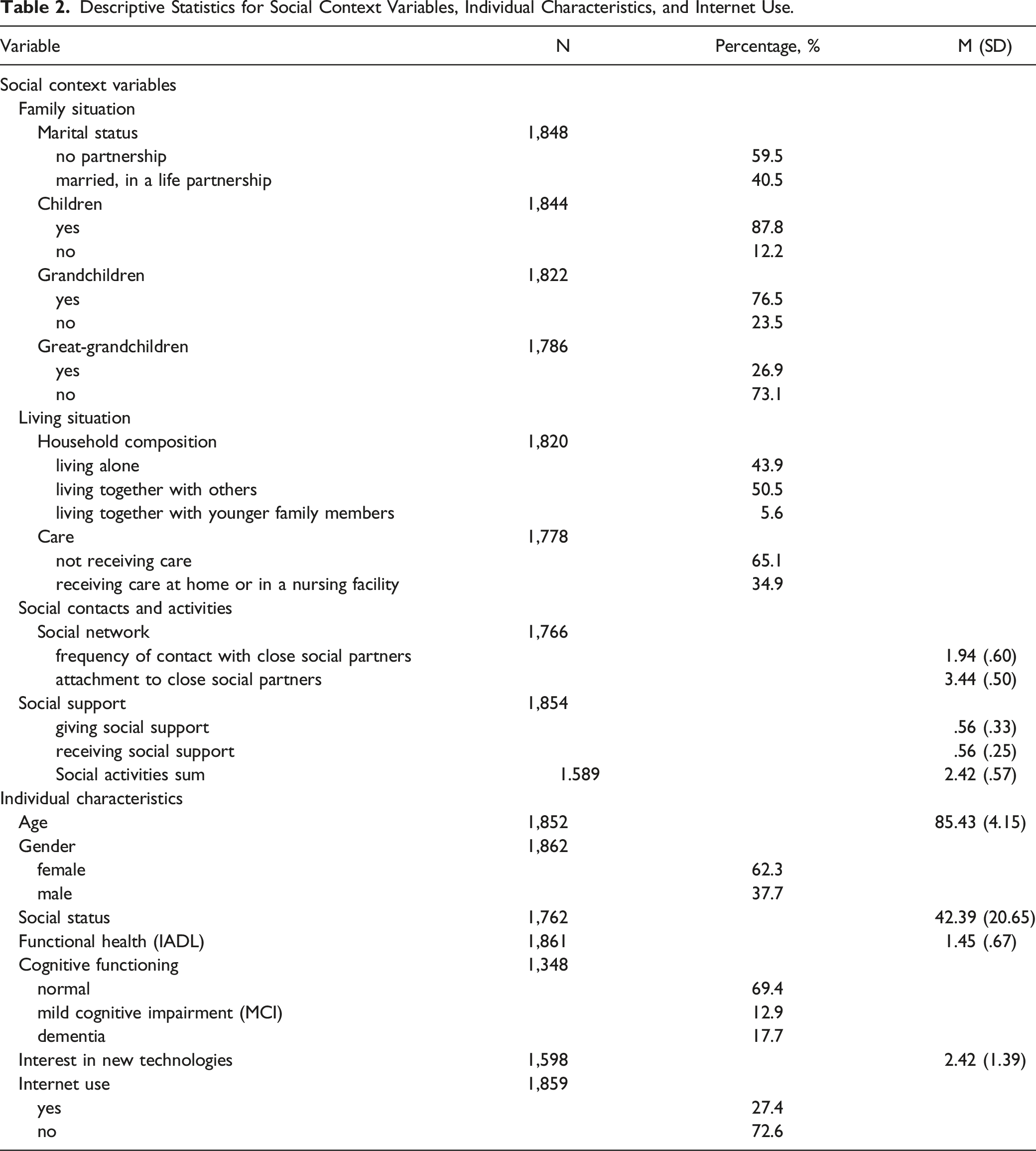
We used data from the second wave (2019/2020) of the German panel survey “Quality of life and subjective well-being of the very old in North Rhine-Westphalia” (NRW80+; Albrecht et al., 2022). The NRW80+ panel contains data on a representative sample of oldest old (80+ years) from North Rhine-Westphalia (NRW), Germany’s most populous federal state. A two-step random selection process was applied for the sampling. The sample is unique in its representativeness as it includes individuals living in private homes and in long-term care facilities (11.3%), as well as interviews with a close proxy (7.2%). Computer-assisted personal interviews (CAPI) were conducted with all participants. The sample consisted of 1,862 oldest old aged 80–104 years (Mage = 85.43, SDage = 4.15; 62.3% female).
The NRW80+ survey “Quality of life and subjective well-being of the very old in North Rhine-Westphalia” (Wagner et al., 2018) was approved by the Ethics Committee of the Medical Faculty of the University of Cologne (No. 17–169). Informed verbal consent was obtained from all of the participants included in the study. Instead of using NRW80+ longitudinal data from wave one (2017/2018) and two (2019/2020) to predict internet use, we only used data from wave two for two reasons. First, as internet use among oldest old is very stable, the longitudinal data do not reveal as much variance as needed for reliable analyses. Second, due to the high dropout in longitudinal studies with very old individuals, the number of individuals who participated in both waves was quite small. Instead, the dataset of the second wave only comprises a higher number of cases as it includes a refreshment sample added to the longitudinal sample.
Measures
The information on the following variables was obtained from the participants’ answers to the interviewers’ questions in the CAPI. In the case of proxy interviews, the close proxy was asked to answer the questions with regard to the person he/she represented.
Independent Variables
Family Situation
Partnership Status
Participants were assigned to one of two categories: (1) single, divorced, separated, widowed, life-partner deceased, or (2) married, in a life partnership.
Children, Grandchildren, and Great-Grandchildren
Having children, grandchildren, or great-grandchildren was assessed each with a yes/no item.
Living Situation
Household Composition
The participants were asked with whom they lived. According to the information provided, the participants were assigned to one of three categories: (1) living alone, (2) living together with younger family members (children, grandchildren, and/or great-grandchildren), or (3) living together with others.
Care
The participants indicated whether they (1) received care at home or in a nursing facility or (2) did not receive care.
Social Contacts and Activities
Social Network
Participants indicated whether they had daily, weekly, monthly, several times per year, or less frequent contact to close social partners. Additionally, participants answered whether they felt not at all close to this person, less close, close, or very close to their social partners. Mean values were used for further analyses.
Social Support
The social support was assessed with six items asking about having received or given financial, instrumental, or emotional support. For the scale having received social support, the mean of the three items related to receiving social support was calculated, whereas two of the items answered on a five-point scale ranging from never (1) to always (5) were recoded into yes/no items. For the scale related to giving social support, the procedure was the same. The mean of the three items of each scale was used for further analyses, with a higher value indicating that the person had given/received more social support.
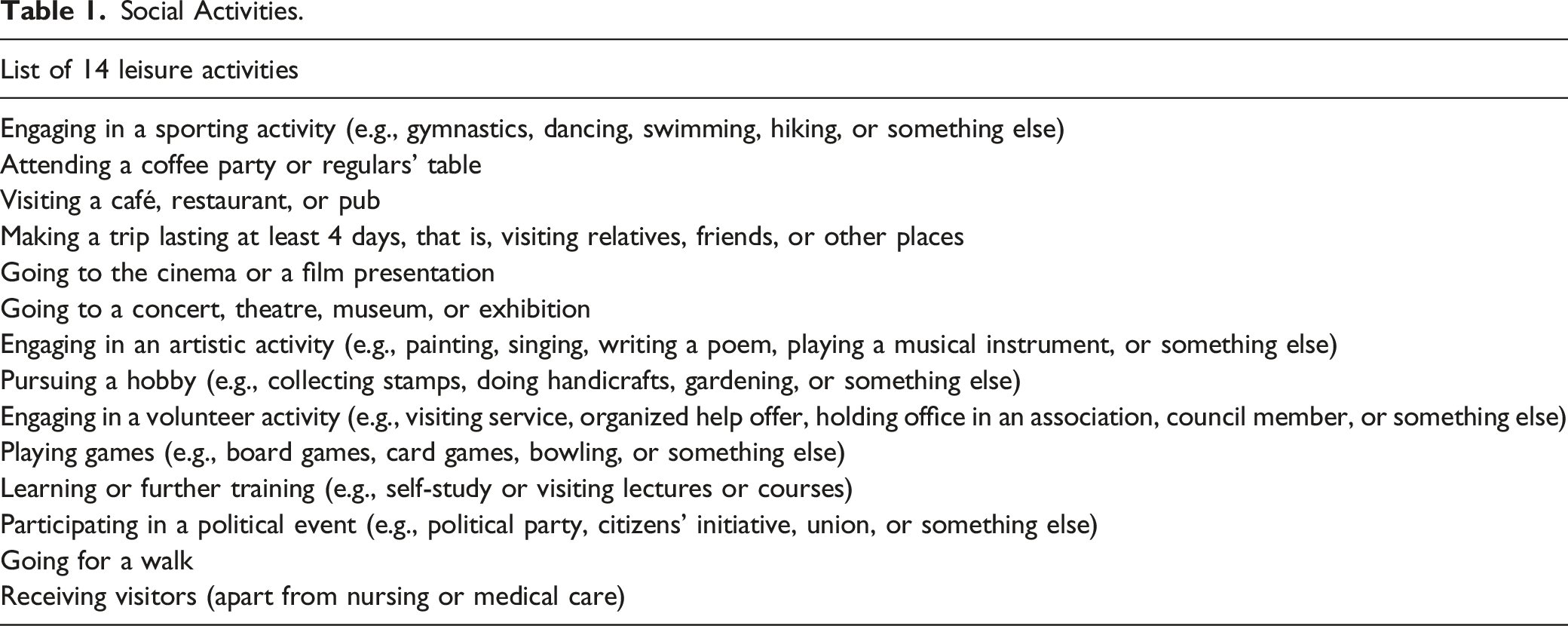
Social Activities
Social Activities.
Individual Characteristics
Sociodemographic Variables
We included age, gender, and social status as per the international socio-economic index of the (in this case: former) occupational status (ISEI-08; Ganzeboom et al., 1992) as sociodemographic individual characteristics in our analyses. In case someone had never worked but had been in a relationship, the social status of the (last) partner was assessed. The ISEI combines income and education to reflect the status of a (former) profession. The lowest value of the index is 16 (e.g., auxiliary or cleaning staff) and the highest value is 90 (e.g., judge). We decided to use social status instead of income and education for two reasons: First, financial situations for participants living in private homes are difficult to compare with those of individuals living in long-term care facilities. Second, in previous generations, it was more common to work one’s way up and reach a higher position and thereby earn a better income without necessarily having a high educational level.
Instrumental Activities of Daily Living
For the assessment of the health status, the IADL score was used. The scale consists of 7 items on instrumental daily activities for each of which the individual has to answer whether he/she can do it with help only (0), with little help (1), or without help (2). The mean score of the seven items was used for the subsequent analyses, with a higher IADL score indicating better functional health.
Cognitive Functioning
The DemTect (Kalbe et al., 2004) was used to assess cognitive abilities. It is a screening tool with cognitive tasks to assess the presence of a Mild Cognitive Impairment (MCI) or early dementia and has been shown to provide an adequate classification for the oldest old (Kessler et al., 2014). With regard to their results, the individuals were assigned to one of three categories: normal cognitive functioning (value of 13–18), MCI (value of 9–12), or dementia (value of 8 or lower). The DemTect could not be applied in proxy interviews. Instead, the proxy was asked to rate the participant’s cognitive functioning on the Global Deterioration Scale (GDS; Reisberg et al., 1988). The GDS allows a rating of the strength of cognitive deficits with seven levels ranging from no cognitive deficits (level 1) to very heavy cognitive deficits (level 7). The answers were then transferred into three categories instead of the DemTect in the following analyses. Normal cognitive functioning was the label for level 1 and 2 ratings, MCI for level 3, and dementia for levels 4 to 7.
Interest in Technology
The participants’ interest in new technologies was assessed via a 5-point scale ranging from no interest at all (1) to very strong interest (5).
Dependent Variable
Internet Use
Internet use was assessed via a yes/no question. Participants who stated they used the Internet were labeled onliners and those who did not use the Internet offliners. Furthermore, onliners were asked about the frequency of their internet use: daily, weekly, monthly, several times per year, or once a year.
Data Analysis
Data were analyzed using IBM SPSS (version 28). Data weights adjusting to the target population of the oldest old in NRW were applied for the analyses. The data weights adjust for the distribution of age, gender, and size group of the town and allow for the extrapolation of the results to the population of NRW. We first conducted descriptive analyses and then used t- or χ2-tests to test for significant group differences between onliners and offliners regarding the social context and individual characteristics. The main purpose of these tests was to identify relevant variables to keep the number of variables in the regression analysis small. Binary logistic regression analyses with the variables that revealed significant group differences in the preceding analysis were then calculated to analyze these findings in more detail. Using a stepwise procedure, we first entered the social context variables and then the individual characteristics. Missing data were excluded listwise.
Results
Descriptive Statistics for Social Context Variables, Individual Characteristics, and Internet Use.
Onliners’ Frequency of Internet Use.
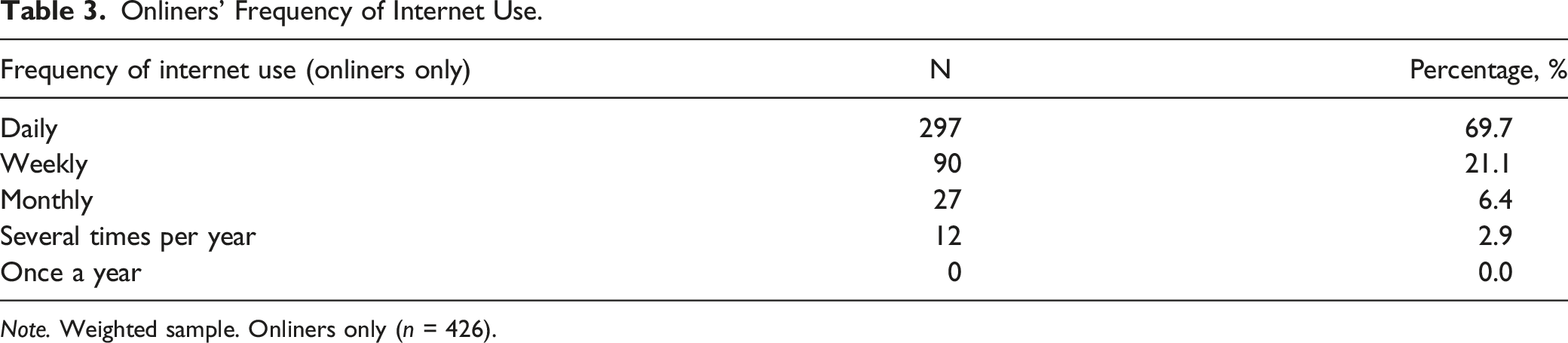
Note. Weighted sample. Onliners only (n = 426).
Internet use by Social Context Variables and Individual Characteristics.
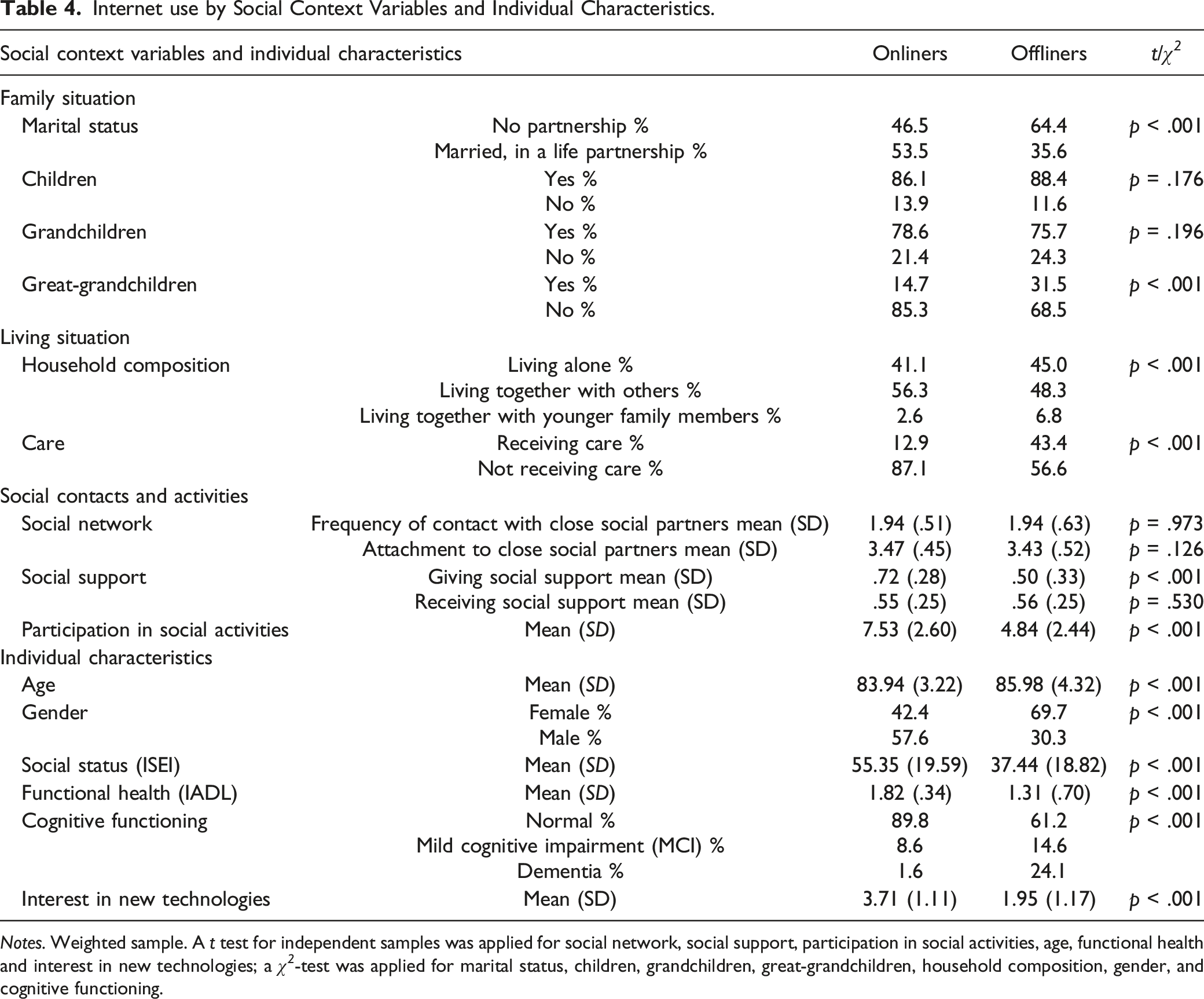
Notes. Weighted sample. A t test for independent samples was applied for social network, social support, participation in social activities, age, functional health and interest in new technologies; a χ 2 -test was applied for marital status, children, grandchildren, great-grandchildren, household composition, gender, and cognitive functioning.
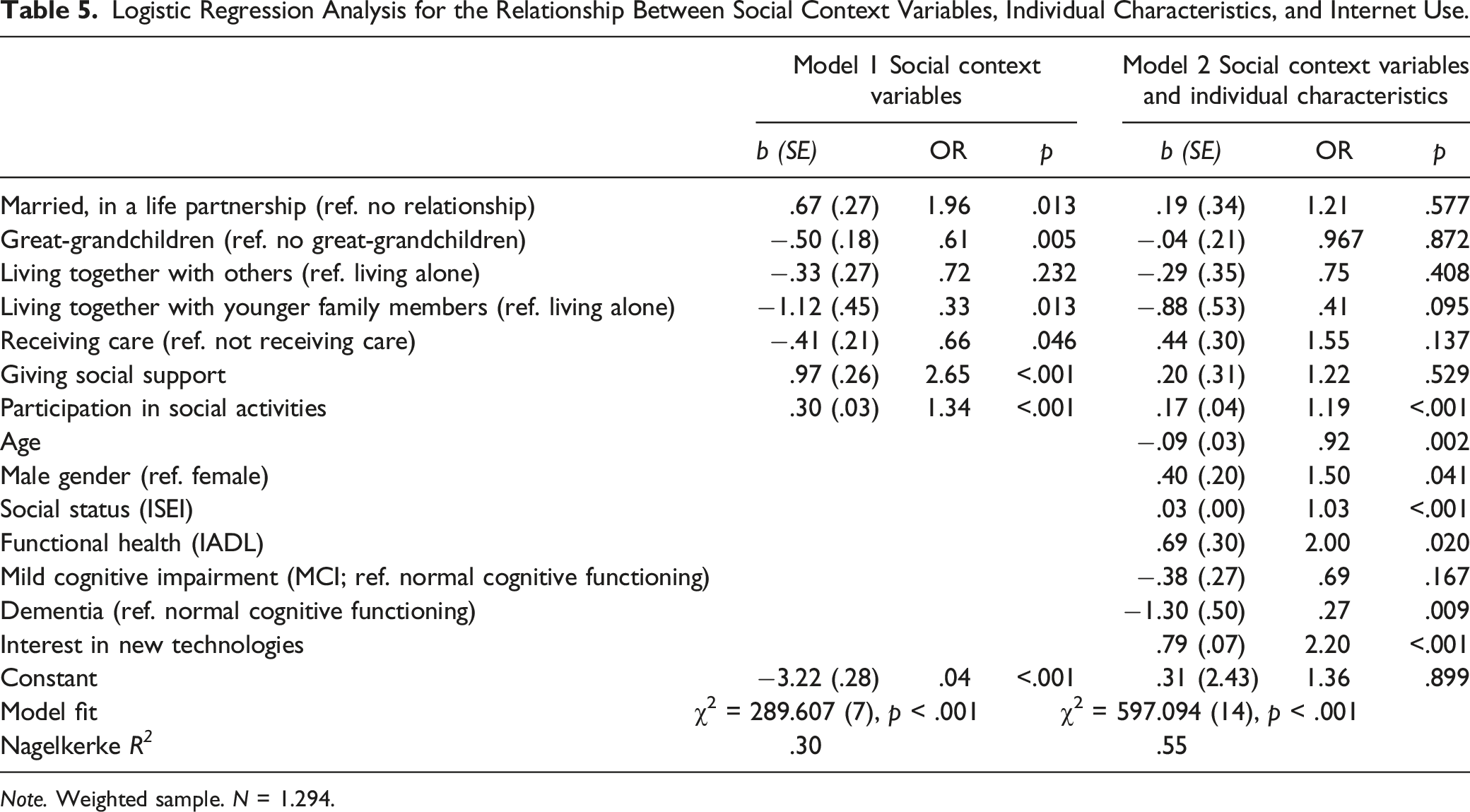
Logistic Regression Analysis for the Relationship Between Social Context Variables, Individual Characteristics, and Internet Use.
Note. Weighted sample. N = 1.294.
The second model, which also included the individual characteristics, was also significant, χ2(14) = 597.094, p < .001, Nagelkerke’s R 2 = .55 (see Table 5). The quota of correct classification in this model was 83.5%. 1 The only social context variable that remained significant in this model was participation in social activities (OR: 1.19, p < .001). Instead, all individual characteristics appeared to be significantly associated with internet use. The results showed that a higher age significantly lowered the odds of internet use (OR: .92, p = .002), whereas being male (OR: 1.50, p = .041), revealing a higher social status (OR: 1.03, p < .001), and better functional health (OR: 2.00, p = .020) significantly increased the odds of internet use. An MCI, as compared to normal cognitive functioning, did not affect the probability of internet use (OR: .69, p = .167), whereas suffering from dementia significantly decreased the odds of internet use (OR: .28, p = .009) Finally, the interest in technology was associated with significantly higher odds of internet use (OR: 2.20, p < .001).
Discussion
The findings show that there are significant group differences between oldest-old onliners and offliners regarding a variety of social context variables and individual characteristics. Almost all of the analyzed social context variables were related to internet use in the first regression analysis, but this effect disappeared when adding individual characteristics, except for the participation in social activities. The results show that the social context as well as individual characteristics such as sociodemographic variables, physical and mental health, and interest in technologies are related to internet use among the oldest old, supporting the assumption of social-context factors and individual characteristics to play a crucial role regarding internet use in old age (Friemel, 2016).
The model with the social context variables only revealed a considerable quota of correct classification which could be raised only marginally by adding individual characteristics. Furthermore, in this first model, the family situation, the living situation, and social contacts and activities appeared to be related to internet use, with the living situation showing the weakest association. Contrasting the assumption of increasing physical and cognitive decline together with a higher need for care in very old age as compared to younger old age, oldest old individuals who received care were only marginally less likely to use the internet. Although they might need more help when using technology, they might profit from continuous availability of technological support through their caregiver, which could have attenuated the strength of the effect. However, regarding the social context, in the second model, which also included individual characteristics only, the participation in social activities remained to be a significant predictor. Hence, revealing a higher level of openness to experience (Schwaba et al., 2017) and having a diverse social network—factors potentially related to the participation in social activities—might be seen as a resource for internet use in very old age. However, in this study, instead, all individual characteristics were significantly related to internet use, replicating previous research results regarding the evident association of sociodemographic factors, cognitive functioning, health, and technology interest with internet use (e.g., Huxhold et al., 2020; Macdonald & Hülür, 2021).
In line with König et al. (2018), our findings stress the importance of individual level factors regarding the person-environment fit. Wahl and Gerstorf (2018) as well as Chaudhury and Oswald (2019) have emphasized the importance of contextual factors for well-being and autonomy in old and especially very old age. Numerous studies also suggest an association between internet use and the (psychological) well-being (e.g., Rennoch et al., 2023; Szabo et al., 2019) or autonomy (e.g., Oswald & Wagner, 2023) in old age. However, our findings regarding internet use do only partially confirm the theoretical assumptions of the frameworks. Hence, it might be that the before mentioned frameworks do not apply perfectly to this study’s scenario. Having lived the longest time of their lives without the internet, many oldest old individuals might not consider the internet as something useful in their daily lives which could help them maintain autonomy and increase their well-being.
The results of our study support basic considerations of STAM showing that individual characteristics are mostly related to internet use in very old age and that social context variables only play a smaller role. However, although the social context variables might have explained a smaller amount of variance than the individual characteristics, they may still have added an incremental amount to the overall variance explanation. Following Chaudhury and Oswald’s (2019) framework of person-environment interaction, we also tested for interaction effects between social context variables and individual characteristics in separate analyses, but the results were not really meaningful, which is why we decided not to report them in detail.
The amount of variance explained by our final regression model was 55%. Friemel (2016) found that the amount of variance increases substantially (to 60%) when including pre-retirement computer use and encouragement by the social network. Nagelkerke’s R 2 in our study is comparable to Friemel’s (2016) analyses without the two variables mentioned before. This also applies to the quota of correct classification, which was 83.5% in our final model.
In the final regression model, interest in new technologies revealed the highest odds for internet use. In contrast to sociodemographic or health-related variables which are impossible or hard to change for this cohort, this finding emphasizes the importance of increasing technology interest in this age group in order to obtain higher rates of internet use (Friemel, 2016). This step is important as research shows that older adults are actually willing and able to use technology applications (Czaja, 2021). Although the correlation between gender and education/income (in this study, social status) is stronger in the oldest old generation and, therefore, gender effects often disappear when controlling for other individual factors like age, education, and income (Friemel, 2016), in this study, not only social status but also gender appeared to be significantly related to internet use. It is possible that this effect would have disappeared if we had added education and income to our analyses instead of social status, which might be slightly different. However, the existing gender gap is in line with other research for the oldest old relying on data from 2020, which also shows that the gender gap for the oldest old in Germany diminished in the last years and finally dissipated in 2021 (Bünning et al., 2023).
Limitations
The cross-sectional nature of our data does not allow us to draw causal conclusions. Although in some sociodemographic variables (i.e., age and gender) the direction of the association might be evident, this is the case neither for most social context variables nor for the other individual characteristics. Cross-lagged panel analyses would be necessary to better understand the direction of the relationship and see whether social context variables and individual characteristics influence the oldest old’s probability to use the internet or whether using the internet might have an effect on the individual and its social context.
We used secondary data for this study and therefore the variables considered in our analyses were limited to those available in the dataset. However, due to the explorative nature of this study, we included a relatively big number of variables in our analyses, even in the regression analyses. This model is probably not the most parsimonious one. Still, we might have left out other variables that could be of importance regarding internet use, for example, whether people in the social network were using the internet or whether someone had used a computer or other modern ICT during their working time. Future research could take this into account.
We considered participation in social activities as a social context variable as most of the activities mentioned under this item imply contact with others. However, one could also focus on variables that do not necessarily imply contact with others (e.g., going for a walk) and argue that interest and participation in these activities are based on personality, health, and cognitive functioning—all individual characteristics.
Conclusion
The simultaneous analysis of individual characteristics and social context variables allowed us to attribute internet use to factors to which the internet is actually related, instead of coming to false conclusions by neglecting one side or the other. The findings of our study show that social context factors as well as individual characteristics play an important role regarding internet use in very old age. Thereby, the findings also highlight the importance of providing more information as well as internet access and training for all older adults to awaken their interest in modern ICT and leave no one behind.
Supplemental Material
Supplemental Material - Internet Use in Very Old Age: The Role of the Social Context and Individual Characteristics
Supplemental Material for Internet Use in Very Old Age: The Role of the Social Context and Individual Characteristics by Gerlind Rennoch, Anna Schlomann, and Susanne Zank in Journal of Applied Gerontology
Footnotes
Acknowledgments
The project “Quality of Life and Well-Being of the Very Old in NRW (NRW80+)” is part of the key research area “Aging and Demographic Change” at the Cologne Center for Ethics, Rights, Economics, and Social Sciences of Health (ceres) at the University of Cologne. The project is directed by Susanne Zank, Christiane Woopen, and Michael Wagner. NRW80+ is funded by the Ministry for Culture and Science of the German State of North Rhine-Westphalia.
Declaration of Conflicting Interests
The author(s) declared no potential conflicts of interest with respect to the research, authorship, and/or publication of this article.
Funding
The author(s) disclosed receipt of the following financial support for the research, authorship, and/or publication of this article: This work was supported by the Ministry for Culture and Science of the State of North Rhine-Westphalia under the funding scheme Forschungskolleg.
Ethical Approval
All processes of the study were in accordance with the ethical standards of the ethics committee of the Medical Faculty of the University of Cologne (No. 17–169) and with the Helsinki Declaration of 1975 (in its most recently amended version). Informed consent was obtained from all of the participants included in the study.

Data Availability Statement
The data and study materials are available via GESIS—Leibniz Institute for the Social Sciences: https://search.gesis.org/research_data/ZA7752 (Albrecht et al., 2022).
Note
References
Supplementary Material
Please find the following supplemental material available below.
For Open Access articles published under a Creative Commons License, all supplemental material carries the same license as the article it is associated with.
For non-Open Access articles published, all supplemental material carries a non-exclusive license, and permission requests for re-use of supplemental material or any part of supplemental material shall be sent directly to the copyright owner as specified in the copyright notice associated with the article.
