




Abstract
The voices of older people living in residential care are often excluded from news articles about residential care, and this exclusion was especially apparent during the COVID-19 pandemic. The aim of this study is to identify and understand the barriers which may be obstructing the news media participation of older residents. Semi-structured interviews were conducted with 7 journalists, 7 administrators, and 12 residents. Interview transcripts were analyzed using a thematic analysis, which resulted in the following themes: (1) residents are physically separated from their communities; (2) journalists do not consider residents to be official sources for news stories; (3) administrators feel they must manage their care home’s reputation and control access to residents; and (4) journalists and administrators are not equipped to handle issues of consent and privacy. The role of ableism and ageism in the news reporting process is discussed.
• Highlights older residents’ perspectives on news media coverage of residential care and participating themselves • Examines potential reasons residents are excluded in the news media • Identifies challenges that both journalists and administrators encounter when working with each other
• Provides insight into the news production process surrounding residential care • Brings attention to (self-)ableism and (self-)ageism which impacts the inclusion and portrayal of residents in the news media and discussions around policymaking in residential care • Emphasizes community integration of care homes for the civic engagement of residents and a de-stigmatized and accurate portrayal of residential careWhat this paper adds
Applications of study findings
Introduction
Older adults living in residential care have historically been positioned on the fringes of their communities (Villar et al., 2021). The news media is one domain where older resident representation and involvement is largely missing. News articles on residential care often do not focus on the resident as a central actor (Miller et al., 2017; Miller et al., 2012), but to our knowledge, no research has been done to understand why residents are excluded in the news production process. Although there was an increase of news coverage of residential care during the COVID-19 pandemic (Miller et al., 2020), a study by Allen and Ayalon (2021) showed that residents were largely excluded from 54 analyzed news articles published in the United States in early 2020. Residents’ perspectives were substituted for family members instead (Allen & Ayalon, 2021). The agenda-setting influence of the news media has the power to sway the audience by centering certain issues over others (Mccombs & Shaw, 1972). In this regard, the sources which a journalist chooses to include and exclude can impact the public’s opinion of residential care and its importance in policy. The lockdown of residential care homes across the US and the difficulties faced by care homes (Kyler-Yano et al., 2022) are potential reasons that residents were rarely interviewed for news stories. The aim of the current study is to identify the barriers that prevent older residents from participating in the news media. The findings bring attention to older residents’ perspectives on participating in news reporting, as well as the challenges that administrators and journalists face in the process.
Literature Review
Civic engagement can be defined as how “an active citizen participates in the life of a community in order to improve conditions for others or to help shape the community’s future” (Adler & Goggin, 2005, p. 241). Older adults are positively impacted in domains of health, wellbeing, and mortality when they participate in volunteering and civic engagement (Gottlieb & Gillespie, 2008; Hinterlong & Williamson, 2007). However, older adults are often denied opportunities to participate civically (Serrat et al., 2021). Barriers to civic participation for older adults may arise from resource and practical issues, such as family commitments; beliefs and attitudes about participation, such as lack of perceived impact; and organizational and contextual challenges (Serrat et al., 2018).
Older people who live in residential care homes face additional barriers that are specific to their living environment. In a study on the civic engagement of nursing home residents (n = 139), less than half (46.8%) reported voting in a recent election (Leedahl et al., 2017). Research on civic engagement of older people living in residential care is limited, and residents have inadequate participation opportunities because of organizational and contextual barriers (Villar et al., 2021). Rowles et al. (1996) suggest that a care home’s integration into its community depends on its permeability, which is “the exchange of people and communication between a nursing home and its community context” (Rowles et al., 1996, p. 195); permeability goes both ways: from the outside-in and from the inside-out. The civic engagement of residents with outside community is impeded by many barriers, such as the building (that is oftentimes locked for safety), as well as lack of transportation and personnel resources (Anderson & Dabelko-Schoeny, 2010).
Anderson and Dabelko-Schoeny (2010) also suggest that ableism and ageism are significant barriers to residents’ civic engagement. Ableism can be defined as, “stereotyping, prejudice, discrimination, and social oppression toward people with disabilities” (Bogart & Dunn, 2019, p. 651). Similarly, ageism includes the stereotyping, prejudice, and discrimination against a person based on their age or the perception that the person is “old” (Iversen et al., 2009). Ableism and ageism may impact permeability of the care home from the “outside-in” where community members believe residents are too old or too frail to have the desire or ability to participate civically (Anderson & Dabelko-Schoeny, 2010). Ableism and ageism may also impact from the “inside-out,” where residents perceive their own age and/or impairments as barriers to socially participating.
Participation in News Media
The media is an integral and dialectical part of our environment (Silverstone, 2007), and the news media helps us make sense of the events around us (Richardson, 2007). Most journalists follow the Society of Professional Journalists (SPJ) Code of Ethics: (1) seek truth and report it, including verifying information; (2) minimize harm, such as showing compassion to those affected by the news coverage; (3) act independently, by avoiding conflicts of interest; and (4) be accountable and transparent (SPJ, 2014). Part of a journalist’s role is to condense many potential messages to a few; this process is accomplished by wading through sources and stories daily (Shoemaker & Reese, 1996). A fundamental tool of contemporary journalism is the interview between journalist and source (Clayman & Heritage, 2002; Schudson, 1995). The interview itself is not merely an interaction between journalist and interviewee; it is influenced by other stakeholders, including editors, a journalist’s colleagues, and the interviewee’s public relations officer (Velthuis, 2015).
Journalists often seek out “official” sources, such as institutional representatives, because they are considered more credible than social sources (see: Kollmeyer, 2004). Social sources are the members of the community which is impacted by the circumstances covered in the story. The exclusion of the social sources can lead to a misrepresentation of the issue. News stories on marginalized groups are often not written with the affected group’s perspective as a driver of the story but rather as an anecdote (Bullock et al., 2001). Maniou et al. (2017) argue that the underestimation of affected social sources is problematic, and “may lead to the manipulation of public opinion” (Maniou et al., 2017, p. 112). Experts and official sources are in a position where they may be giving the interview with their own interests in mind and may speak with an authority that has the power to sway public opinion; focusing on expert sources may not reflect the entire reality of a situation. On the other hand, a community benefits when a journalist is highly engaged with their community (Harte et al., 2017). The news media can drive understanding, perpetuate stigma, and negatively impact non-participants whom the news media is about (Costera Meijer, 2013); interviewed sources play a major role in impacting public perception.
The Reputation of Residential Care
The public image of residential care is overall very poor; the residential care experience is often considered the “last stop” before death (Ayalon, 2015). The social stigma attached to residential care settings can be partly based on a commonplace fear of dependency and abjection in later life (Higgs & Gilleard, 2016), as well as the narrative that care homes are financially corrupt institutions that deliver poor care. Research on the news portrayals of residential care shows mostly negative or neutral tones are used (Miller et al., 2012), with fearing-inducing language (Funk et al., 2020) and a focus on governmental and care home actors rather than residents, families, or the community (Miller et al., 2017). During the COVID-19 pandemic, news coverage of residential care was characterized by themes of death, crisis, vulnerability, deception, and blame of industry leaders, likely leading to shifts in public perception of residential care (Allen & Ayalon, 2021; Dunsmore, 2021). Indeed, a recent report has shown that 47% of adults age 50+ are “very unwilling” to live in residential care, and 57% stated that COVID-19 has impacted their willingness (Pearson & Fields, 2021).
Study Aim
The aim of this study is to identify and understand the barriers that prevent residents of residential care from being heard and included in the news media. The context of the COVID-19 pandemic and its impact on residential care has made this evaluation ever more important. Analyzing the barriers will bring awareness to the exclusion of residents in the news and will allow stakeholders to work towards solutions which may increase their participation and improve our understanding of residents’ everyday experiences.
Methods
We interviewed a total of 26 participants who were journalists, residential care administrators, and residents. As a group that is typically not in research on care in later life, journalists provide a key perspective to capture the barriers they face as well as possible assumptions they may have about older residents. We chose to interview administrators because they oversee care home operations and have the authority to connect a resident with a journalist. An administrator’s contact information is often publicly available, so if a journalist is trying to contact a care home authority, it is usually an administrator rather than a caregiver. Finally, we chose to interview residents to gain insight into their lived experiences and their beliefs about their own representation in the news. We sought to understand residents’ engagement with the news media and to gauge what they think about hypothetically being interviewed by a journalist themselves.
This study underwent ethical review by the Institutional Review Board at the University of Maryland Baltimore County and was approved (no. 537). The interviews were conducted following a semi-structured interview guide tailored to each of the stakeholder groups. The average length of interview was 46 minutes. All interviews were conducted between April and December 2021. The average length of stay in the care home for all interviewed residents was about 4 years 4 months. All residents and administrators were located in the southeast region of the US. Journalists’ locations varied; they worked for either regional or national newsrooms, and most were working remotely at the time. See the appendix for the recruitment process, characteristics of each stakeholder group, and sample interview questions. Supplement Tables 1, 2, and 4 in the appendix provide information about the participants. Supplement Table 3 gives quotes of the journalists explaining their various scopes of reporting in their own words.
Analysis
Data were analyzed using Atlas.ti version 9.1.7. We conducted a thematic analysis (Braun & Clarke, 2012) to group the data into themes which reflect the barriers to resident inclusion in the news reporting process. We began with familiarizing ourselves with the data and initiated an open qualitative coding process that was inductive and iterative (Thomas, 2006). Author LDA coded all interviews, and authors LA and DBB coded 3 interviews each to cross-check the coded segments. All authors met to discuss and finalize a coding scheme list, which author LDA reapplied to the data in a second round of coding. The codes and coded segments were analyzed to ascertain the barriers that are embedded in the news reporting process; some barriers were specific to the stakeholder group, and some arose across stakeholder groups. These barriers were initially grouped into themes. After checking the themes back to the data, the barriers and codes were then reorganized to the current and finalized themes (Braun & Clarke, 2012).
Findings
Theme 1: Residents are Physically Separated from Their Communities
Some residents were aware that they are excluded from news stories on residential care. When asked about their impression of news stories on long-term care, one resident said: Participant 17: “I don't think, I don't think that any of ‘em really got it right.” Interviewer: “Hmm.” Participant 17: “I think they made honest efforts but there was one group of people that they never really asked.” Interviewer: “Who?” Participant 17: “Residents. I never saw any residents of long-term-care facilities being interviewed on any report or TV or wherever. I heard a report about residents, but I never heard, heard them ask residents. That's a glaring omission to me.”
Quotes under Theme 1: Residents are Physically Separated from Their Communities. These are Example Quotes from the Data and do not Constitute an Exhaustive List of Quotes under This Theme.
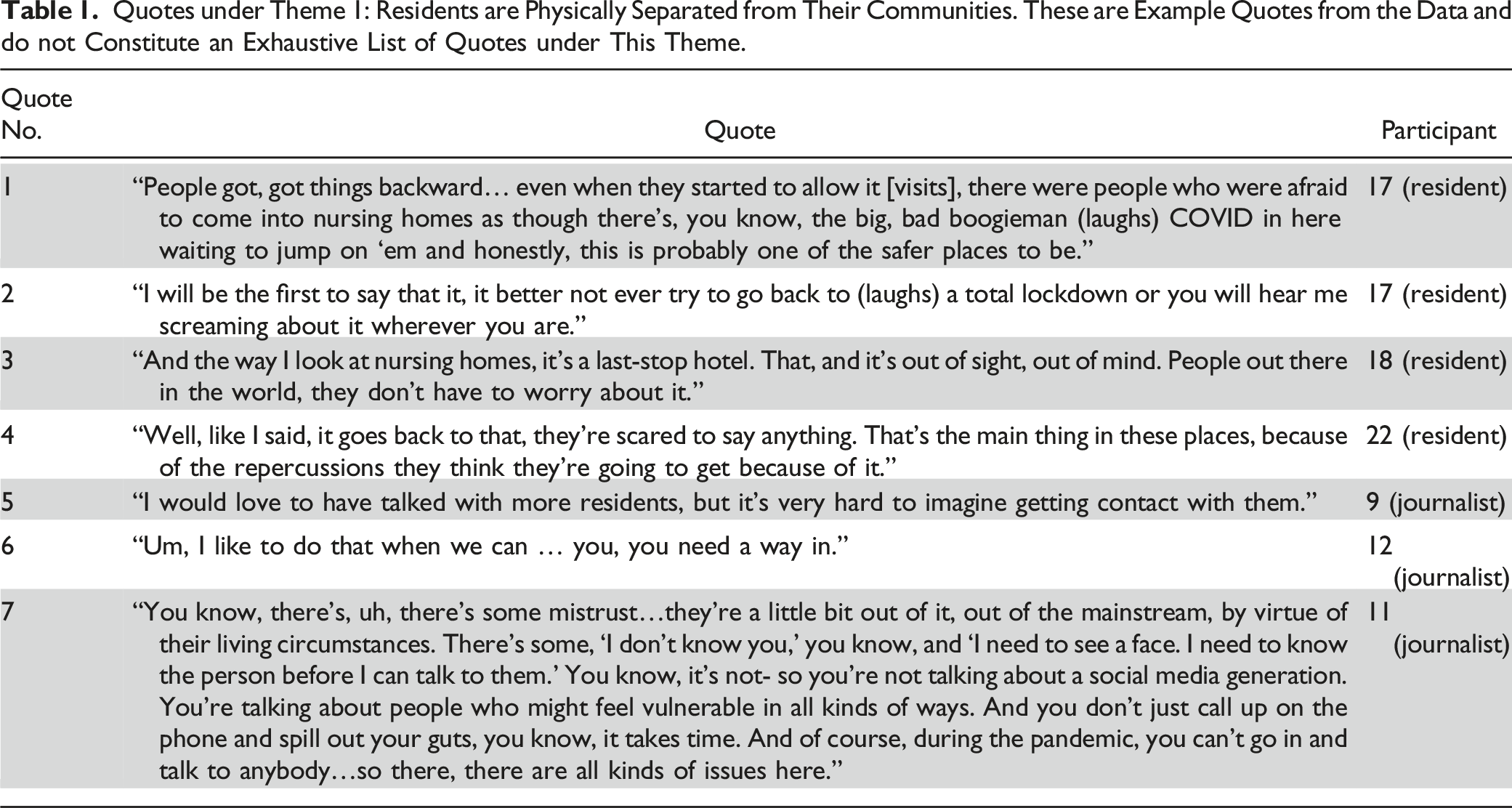
Most of the residents expressed an utter disdain for the COVID-19 lockdown. A few residents felt as if they must shout to be heard outside of the care home (see Table 1, quote 2). One resident felt like a spokesperson for the other residents who are afraid to raise concerns to staff members because of possible fallout with staff. See Table 1, quote 4. This fear of speaking openly goes beyond internal discussions. Many other residents felt as if the public does not care about their experiences within the care home. See Table 1, quote 3. When asked if there were any messages they would like to share with the public about their experiences, most residents said either “no” or “I don’t know.”
Journalists expressed that they need an introduction to a resident, which is through a family member or, rarely, through the care home administration. See Table 1, quotes 5 and 6. A few of the journalists have established relationships with residents they can contact to ask about their experience or get a quote for a story. Most journalists, however, do not have longstanding contacts within care homes.
During the residential care lockdowns, many family members vocalized concerns about care quality on social media or contacted journalists directly, because they usually do not see media coverage as an invasion of privacy, but rather as a route to a solution by gaining attention. The journalist might ask to speak with the resident, but often they interview only the family member. Furthermore, journalists faced similar challenges that loved ones were facing outside of the care homes. Journalists stated that residents usually do not have social media, and they often have limited access to technology such as a phone or an iPad, if any at all; this makes it difficult to get in touch. Some journalists had trouble communicating or expect to have trouble communicating with a resident over the phone because of possible hearing impairment. Journalists also said that it can also be difficult to establish rapport with residents since they are in isolated living conditions (see Table 1, quote 7).
Theme 2: Journalists do not Consider Residents to be Official Sources for News Stories
Quotes under Theme 2: Journalists do not Consider Residents to be Official Sources for News Stories. These are Example Quotes from the Data and do not Constitute an Exhaustive List of Quotes Under This Theme.
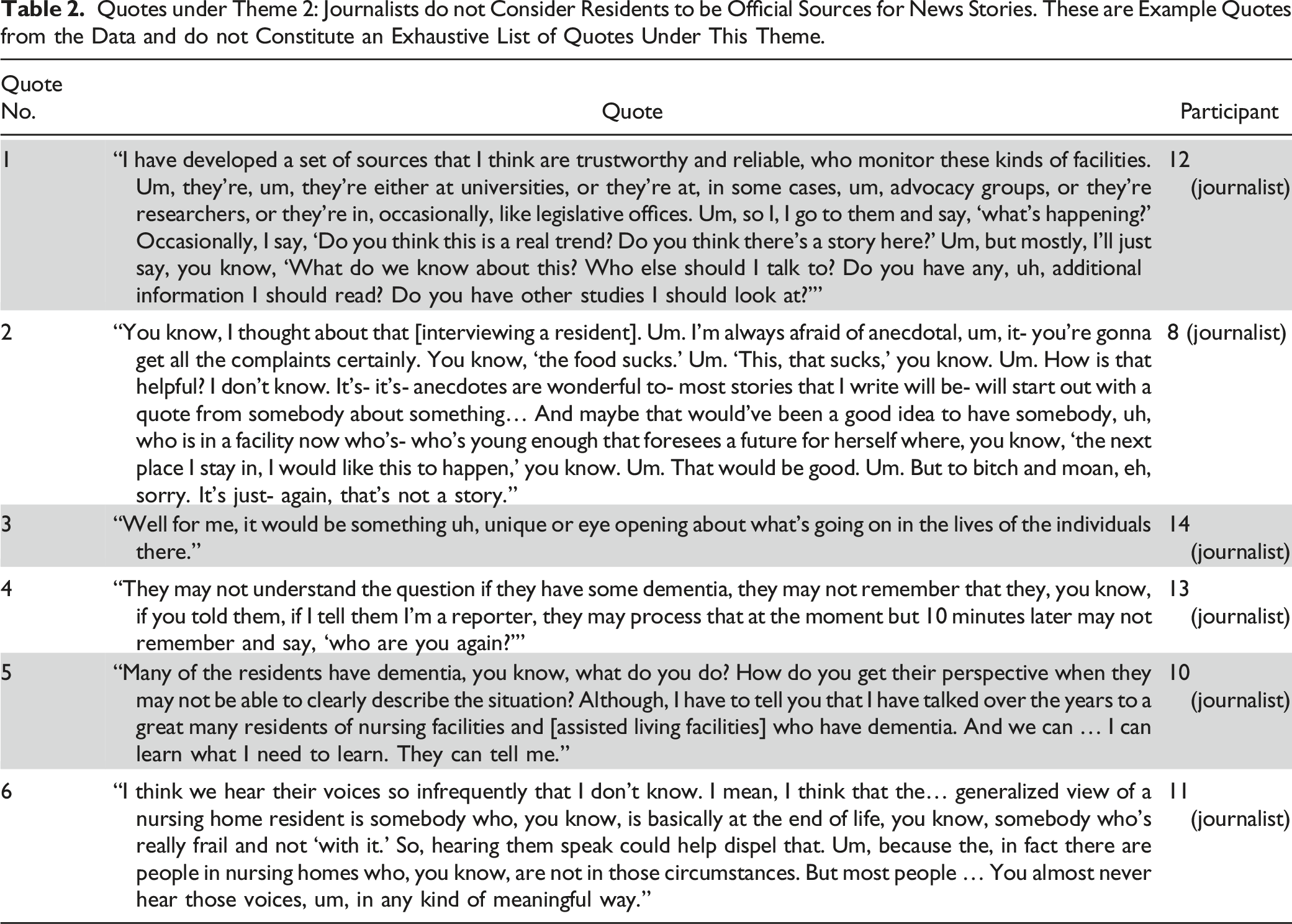
While many journalists viewed residents as sources which are trustworthy, most of the journalists have experienced and anticipate experiencing challenges with residents who have cognitive impairment or dementia; journalists did not view them as accurate sources and did not feel equipped to communicate with them. Journalists were wary of issues with consent (see theme 4), and they rarely spoke directly with residents with dementia; they were unsure if they can trust that the person’s viewpoint is reliable or that they have the cognitive capacity to speak on record. See Table 2, quote 4. Since the administrator does not usually facilitate interviews, journalists must decide for themselves if a person can participate in an interview; most of the journalists opt to speak with a resident’s family member instead.
Some journalists did not entirely dismiss older residents with cognitive impairment; they see that it is a complex scenario. One journalist has had success with interviewing residents with cognitive impairment (see Table 2, quote 5). At one point a journalist questioned out loud if residents with dementia can be reliable narrators, but later in the interview pointed out that their lack of their representation in the news media is an issue (see Table 2, quote 6).
Theme 3: Administrators Feel They Must Manage Their Care Home’s Reputation and Control Access to Residents
Quotes under Theme 3: Administrators Feel They Must Manage Their Facility Reputation and control Access to Residents. These are Example Quotes from the Data and do not Constitute an Exhaustive List of Quotes Under This Theme.
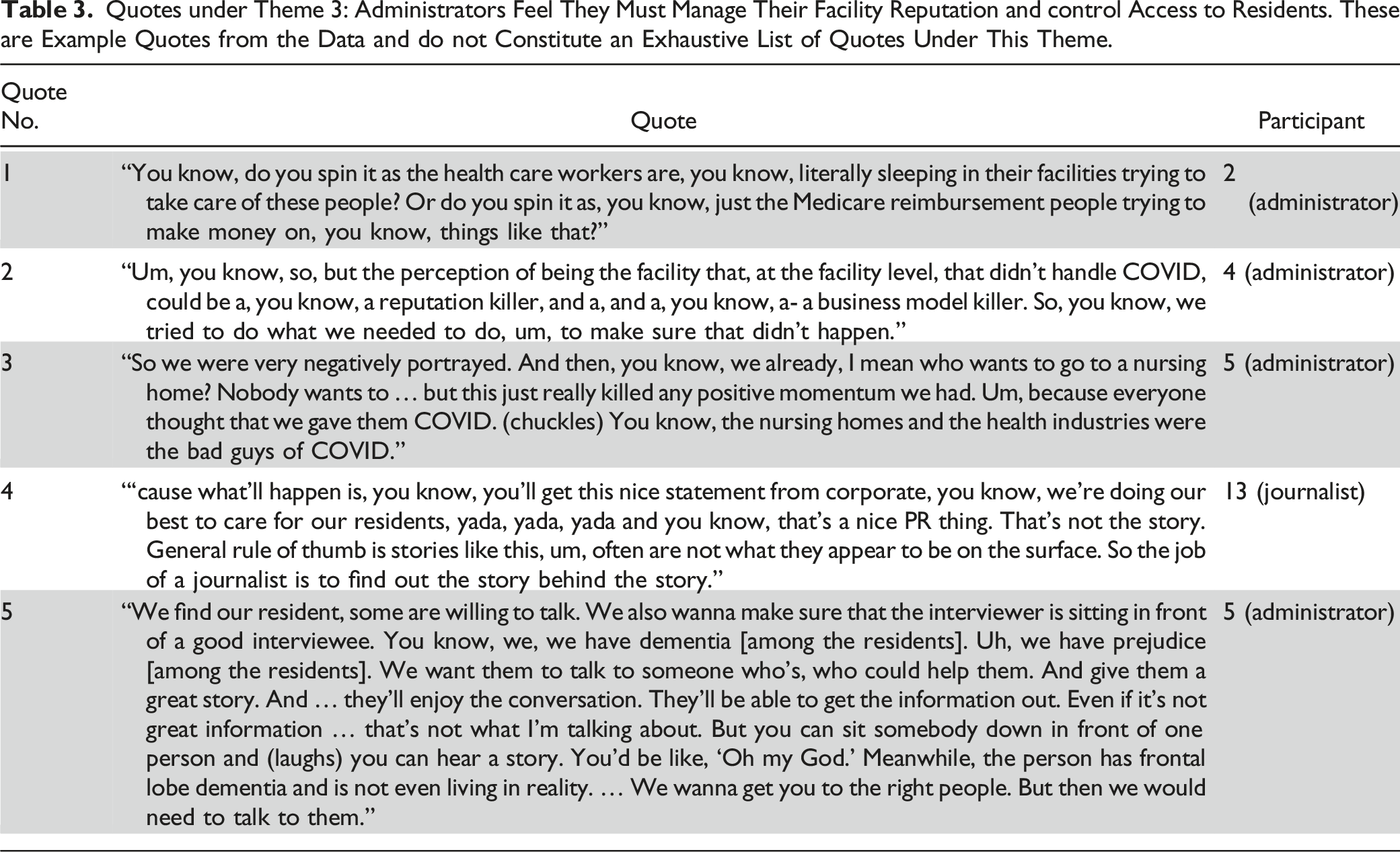
Some administrators sensed the impact of the negative news on their business, while others did not, or chose not to engage with the news at all. A few stated that their census levels had decreased, but they could not attribute it to only the news coverage. They also faced concerns from residents and family members because of the news coverage. Many administrators felt pressure to manage their care home’s reputation because they were fearful for its financial sustainability. See Table 3, quote 2. Administrators were fearful of journalists twisting their words. They believed that the influx of negative news during COVID-19 was misleading and further damaging to their already poor reputation. See Table 3, quote 3.
Five of the 7 administrators said that they would notify the corporate public relations (PR) professional for instruction if they were approached by a journalist. One regional administrator stated that their PR team has a set of statements ready to quickly respond to inquiring journalists. The journalists were aware of this protocol within care organizations and do not contact an administrator to be put in touch with a resident, because administrators either do not reply or they refer the journalist to the corporate PR (see Table 3, quote 4). Another journalist said the increase in national chains of residential care has impacted his ability to get in touch with local administrators; their corporate offices prevent him from speaking with someone at the local care home level.
A few administrators stated that they would put a journalist in touch with a resident, but they would be selective of the resident they choose. They excluded residents with dementia because they cannot trust what they may say about living at that care home. Many administrators also expressed that they would choose a resident who would have a positive conversation (see Table 3, quote 5). They would select a resident that is a “good” or an exemplar resident who does not have a poor experience at the care home and does not have any cognitive impairment. Indeed, our research team experienced this bias in the recruitment of two residents from the same care home (see also appendix). A state ombudsman introduced us to resident participant 22, and when the administrator heard that we would be interviewing him, she suggested we also speak to resident participant 21, the resident council president. These two residents had opposite experiences at the care home. Participant 22 had an overall very negative experience and believed the administration was withholding information from residents. Contrastingly, participant 21, the resident council president, enjoyed life at the care home and felt adequately informed. Journalists were aware of a potential bias from the administrator. If they choose to pursue a resident interview, journalists see administrators as a roadblock to talking with a resident who will speak openly.
Theme 4: Journalists and Administrators are not Equipped to Handle Issues of Consent and Privacy
Quotes under Theme 4: Journalists and Administrators are not Equipped to Handle Issues of Consent and Privacy. These are Example Quotes From the Data and do not Constitute an Exhaustive List of Quotes Under This Theme.
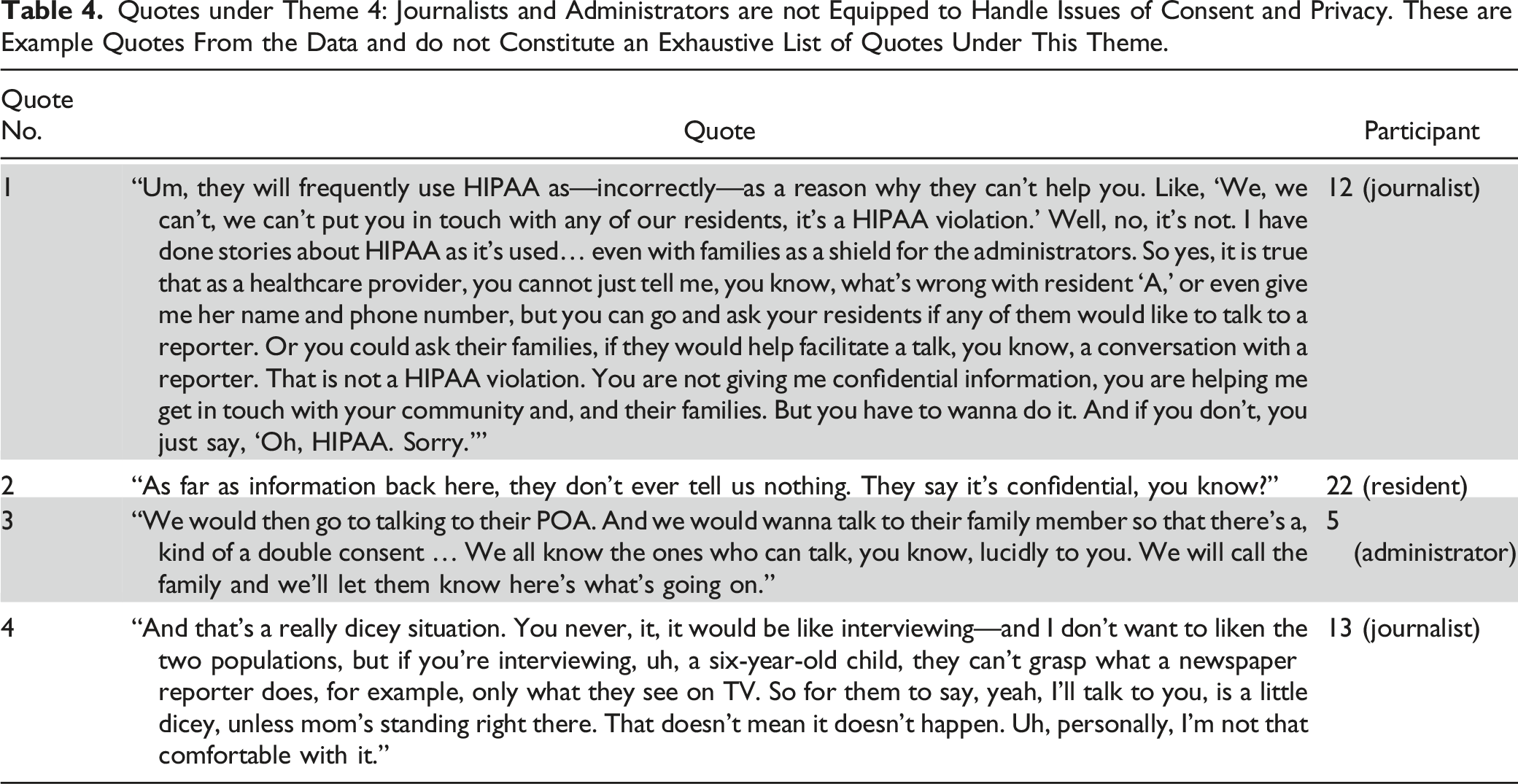
Although none of the administrators in this sample said they would deny a journalist by quoting HIPAA, they did mention consent concerns if they were to facilitate a resident and journalist introduction. They stated that they would seek consent from the resident’s power of attorney (POA) to be legally cautious. One administrator said she would first understand what the story was about, and then select an appropriate resident (see Table 4, quote 3). Most administrators said that they seek out the family or POA consent in all cases and did not distinguish between residents who could and could not decide for themselves.
Journalists stated that they are not equipped to evaluate whether a person is cognitively able to understand and give consent to speak with the journalist on the record. They often felt uncomfortable handling the consent process and were sometimes unsure about the ethics of such a situation (see Table 4, quote 4). In these scenarios, journalists may obtain consent from the resident’s POA or family member, but usually they opt to speak with the POA or family member instead of the resident.
Discussion
In this study, we sought to understand the barriers which prevent older residents from participating in the news media, particularly in the form of being interviewed. We found that residents are physically separated from their communities; journalists typically do not deem residents as official sources; administrators gatekeep their care homes for fear of a bad reputation; and journalists and administrators are not equipped to handle issues of privacy and consent. The findings point to the impact that ableism and ageism have on the permeability of a residential care home when it comes to news media. Because of the power of news media with regard to policy agenda setting (Mccombs & Shaw, 1972), an accurate portrayal of residents’ experiences in care is vital to improving care and tailoring residential care policies that reflect their true needs.
Residents expressed feeling excluded and perceived attitudes from their communities which may be considered ableist and ageist and which impact a care home’s permeability from its outside community (Anderson & Dabelko-Schoeny, 2010). Some residents felt that no one was listening to them, while others expressed a learned passivity about being heard or included in public spaces like the news, as if they would not have anything important to say. This passivity or fear may be due to a desire to be unproblematic within the care home or due to an internalization of negative beliefs about old age and living in residential care (Higgs & Gilleard, 2016; Levy, 2009). Disabilities which may require care, such as frailty and functional impairments have been found to be negatively associated with self-perceptions of aging of residents (Buckinx et al., 2018; Kwak et al., 2014). Negative beliefs about receiving care and old age may impact residents’ beliefs about their own value and ability to participate meaningfully in the news media.
A few journalists also recognize residents’ lack of representation as an issue, but our findings demonstrate that journalists do not consider residents’ perspectives as the main drivers of their stories on residential care. They often interview experts and families instead of residents, and examples of ageism and ableism among journalists were evident in the data. Challenges in their newsrooms, such as staff shortages and deadlines, result in residents being interviewed for an anecdote only or eliminated from the story altogether. Because journalists are not qualified to determine if someone can cognitively give consent, residents, especially those who may have cognitive impairment or dementia, are often passed over. This may be a result of following their journalistic responsibility to “minimize harm” (SPJ, 2014). However, in order to “seek truth” (SPJ, 2014) residents must be considered primary sources; the inclusion of the social sources who are impacted by the events of a story is necessary to report accurately and to decrease stigma (Costera Meijer, 2013; Maniou et al., 2017). Journalists also acknowledged a lack of access to technology for residents. While some older adults living in residential care use information and communication technologies such as smartphones and the internet, it is a much smaller proportion compared to community-dwelling older adults (Seifert & Cotten, 2020; Seifert et al., 2017). Access to and use of smartphones, the internet, and social media may improve the ability of residents and journalists to contact each other.
Administrators act as gatekeepers who determine which outsiders have access to residents. Their ageist and ableist attitudes were apparent in the data as well. They often do not trust residents, especially those with cognitive disability, to speak about the care home accurately or positively. Because residential care homes operate under a business model (Scales, 2014), administrators ust contend with the impact the care home’s image may have on their business, especially those administrators who oversee facilities which are for-profit (n = 3). Carlstedt (2020) examined the strategies that nursing home representatives use to manage their business’s reputation and proposed three methods: (1) competition, through higher quality ratings than competitors; (2) presentation, through internal production of images which caters to their audience; and (3) tending to the audience, by attempting to view themselves as outsiders would and pivoting accordingly (Carlstedt, 2020). According to the findings of the present study, we might add the gatekeeping of residents to the list of reputation management tactics. Residential care is often portrayed very negatively in the news media (Allen & Ayalon, 2021; Miller et al., 2012, 2017), and administrators may be perpetuating skepticism and fear of the industry by restricting access of the public into their care homes. They receive instruction from corporate PR officials. Even in cases where the administrator is willing to introduce a resident to a journalist, they are careful to select a resident who has had a positive experience at the care home, in an attempt to control the care home’s image. These findings align with Velthuis’s (2015) work that suggests that the relationship between journalist and source is often impacted by other stakeholders. The exclusion of residents with a variety of experiences from being heard in the news may impact the public’s understanding of residential care and older residents. Because administrators want to control what is said about their care home, and feel that they must always include the POA, residents are often denied the opportunity to consent themselves and to participate in the news. Our findings show that one resident interview is not sufficient; journalists should interview multiple residents to understand the environment and the nuances of residents’ circumstances. Residential care administrators and staff should consider adopting a rights-based approach to care, where residents’ rights to participation, to social inclusion, and to give and receive information, among other rights, are promoted in everyday care (ENNHRI, 2017).
Limitations
The journalists in our sample are exclusively newspaper and print media journalists. Journalists in other types of media such as TV, radio, or podcast may have different thoughts and experiences with interviewing residential care residents. Additionally, most of the journalists in our sample (6 of 7) are national-level and may be more sensitive to their reputation than local journalists (Lasorsa et al., 2012). “Elite” journalists at national newsrooms are typically less interactive with their audience and tend to focus their attention on official sources like experts and institutional representatives (Lasorsa et al., 2012); their scope may be more on national-level trends, so this may be one reason national journalists do not prioritize residents. “Less-elite” local journalists are more likely to practice participatory journalism with their audience and social sources (Lasorsa et al., 2012), and local journalists’ opinions and experiences may differ from the national news journalists in the current sample. The research team did not ask journalists if they were aware of training resources for journalists writing about residential care and older adults; asking this question might have given us more insight into the extent of journalists’ involvement in educational programs which might address some of the identified barriers.
Ten of the 12 residents in our sample lived in skilled nursing care, while only 2 residents lived in independent living. Older residents living in other types of care and senior housing, such as assisted living, personal care, and independent living, may have a different viewpoint of their roles in the news production process. Additionally, the average length of stay of the residents living in this sample was about 4 years 4 months. In 2019, the average length of stay in long-term care was 1 year and 3 months (Harris-Kojetin et al., 2019), significantly shorter than our sample. Residents with shorter stays within residential care may have different opinions than those with longer stays that we interviewed. Administrators and residents in the sample all resided in one US region (the Southeast), and therefore, the entire US was not represented.
Next Steps
The findings from the current study can be used to develop training and programs specific to the amplification of the voices of older people and older residents living in residential care, such as the HelpAge International toolkit for “Getting Older People’s Voices Heard” (HelpAge, n.d.) and the Gerontological Society of America program for Journalists in Aging (GSA, 2021). Our findings point to the need for training on the barriers to resident participation in the news media, including handling consent and communicating with residents living with cognitive impairment. The findings from our study also align with other studies that have demonstrated the negative impact of COVID-19 isolation measures on residents’ social needs (Kyler-Yano et al., 2022; Noten et al., 2022). The potential for civic and news media exclusion should be acknowledged as policies in residential care are reshaped following the COVID-19 pandemic. Community integration of residential care homes should also be a focus of communities and care home operators (Villar et al., 2021), and policy should ensure that urban planning and architecture are purposely designed so that older residents can access their neighborhood and be included (Andersen et al., 2021). Strategies to include residents in the news media can both increase their civic engagement and create more accurate portrayals of their experiences, which could improve policymaking surrounding residential care.
Supplemental Material
Supplemental Material - What’s Keeping Residents “Out of the Mainstream”: Challenges to Participation in the News Media for Older People Living in Residential Care
Supplemental Material for What’s Keeping Residents “Out of the Mainstream”: Challenges to Participation in the News Media for Older People Living in Residential Care by Laura D. Allen, Dana Burr Bradley, and Liat Ayalon in Journal of Applied Gerontology
Supplemental Material
Supplemental Material - What’s Keeping Residents “Out of the Mainstream”: Challenges to Participation in the News Media for Older People Living in Residential Care
Supplemental Material for What’s Keeping Residents “Out of the Mainstream”: Challenges to Participation in the News Media for Older People Living in Residential Care by Laura D. Allen, Dana Burr Bradley, and Liat Ayalon in Journal of Applied Gerontology
Footnotes
Declaration of Conflicting Interests
The author(s) declared no potential conflicts of interest with respect to the research, authorship, and/or publication of this article.
Funding
The author(s) disclosed receipt of the following financial support for the research, authorship, and/or publication of this article: This work was supported by the Authors L.D. Allen and L. Ayalon are part of the EuroAgeism ITN project, funded under the European Union’s Horizon 2020 research and innovation programme, under the Marie Skłodowska-Curie grant agreement No 764632.
Author’s Note
This article is submitted in partial fulfillment of the doctoral dissertation of the first author, L. D. Allen.
Institutional Review Board Approval
University of Maryland, Baltimore County, IRB approval no. 537.

Supplemental Material
Supplemental material for this article is available online.
References
Supplementary Material
Please find the following supplemental material available below.
For Open Access articles published under a Creative Commons License, all supplemental material carries the same license as the article it is associated with.
For non-Open Access articles published, all supplemental material carries a non-exclusive license, and permission requests for re-use of supplemental material or any part of supplemental material shall be sent directly to the copyright owner as specified in the copyright notice associated with the article.
