




Abstract
Student–teacher relationships are crucial for adolescents’ adjustment in the school context. The aim of the present study was to examine the role of teacher closeness in academic emotions and achievement among adolescents with and without learning difficulties during the first year in lower secondary school. Students’ learning difficulties (LDs) were identified based on tested reading and math skills. In addition, students evaluated their teacher relationships and rated academic emotions in literacy and math domains. The results indicated that higher teacher closeness was related to increasing positive emotions and increasing literacy achievement during seventh grade, whereas lower levels of teacher closeness were associated with increasing learning-related anger and boredom. The results were mostly similar for students with and without LDs, which indicates that students in general benefit from close teacher relationships during the first year in lower secondary school.
Negative changes in motivational, emotional, and academic domains are typical after the transition to lower secondary school (i.e., during Grade 7 in most educational systems) (Eccles & Roeser, 2011; Vierhaus et al., 2016). Specifically, students with learning difficulties (LDs) are at risk of facing severe consequences on the basis of their continual struggles with schoolwork (West et al., 2010). Environmental support in the school context, such as close and warm student–teacher relationships, plays an important role in students’ social, academic, and behavioral outcomes (Hamre & Pianta, 2001; McGrath & van Bergen, 2015; Spilt et al., 2012). Recently, it has been shown that positive student–teacher relationships are even more strongly associated with lower secondary school students’ engagement than with primary school students’ engagement (Roorda et al., 2017).
Student–teacher relationship quality is closely related to students’ emotional experiences in the classroom (Mainhard et al., 2018), and at-risk students tend to report lower closeness in their relationships with teachers than their peers do (Spilt et al., 2012). One aspect that has received less attention in the previous literature regarding student–teacher relationship quality is students’ learning-related emotions. Only a little is known about how teacher–student relationship quality shapes academic emotions and achievement among students with elevated risk factors. Consequently, this study aimed to examine the role of teacher closeness in emotions and achievement among adolescents with and without LDs after the critical transition to lower secondary school.
Teacher Closeness and Adaptation After Educational Transitions
Adolescents’ ability to adapt during educational transitions has long-term positive effects on their academic achievement and mental health (Kiuru et al., 2020; West et al., 2010). The first year in lower secondary school after primary school is crucial in adapting to new learning environments (Eccles & Roeser, 2011; West et al., 2010). It has been suggested that declines in motivation and in school grades after the transition result from a mismatch between students’ developmental needs (i.e., autonomy, competence, and relatedness) and the demands of lower secondary school environment (Eccles & Roeser, 2011).
While adapting to new learning environments, students have an increased need for social support (Roorda et al., 2017). Students who have supportive relationships with teachers may experience more emotional security and, consequently, have more resources for investing effort in their learning (Verschueren, 2015). Warm and supportive student–teacher relationships may also fulfill students’ need for belonging, which, in turn, can foster their adjustment to the new school environment (Martin & Dowson, 2009). Moreover, warm and supportive relationships are related to students’ positive self-perceptions regarding academic competence, which can further promote their school engagement and academic achievement (Roorda et al., 2017; Zee & de Bree, 2017).
Several theoretical models have been used to conceptualize teacher–student relationship quality, such as attachment perspective, motivational theories, and ecological systems theory (Verschueren, 2015). The attachment perspective indicates that a sensitive teacher may act as an ad hoc attachment figure with a safe haven and secure base function at school (Verschueren, 2015). Accordingly, sensitive teachers can help students to feel safe to explore the environment and to cope with the demands of school, thereby impacting students’ learning and engagement (Pianta, 2001; Verschueren, 2015). In a similar vein, self-determination theory (SDT) posits that supportive interpersonal relationships may fulfill students’ basic psychological need for social relatedness (Deci & Ryan, 2000). When this need is met, students feel connected to their teacher, which fosters their academic engagement and enjoyment of learning (Furrer & Skinner, 2003). From a wider perspective, ecological systems theory argues that dyadic interpersonal relationships are the key promoters of developmental changes (Bronfenbrenner & Morris, 2006).
The present study draws on literature based on attachment theory, which uses closeness as an indicator of positive relationship quality and relatedness with a teacher. According to the attachment perspective, teacher closeness refers to the degree of warmth and openness in the relationship (Verschueren, 2015). In the present study, students rated the quality of the relationships with their literacy and math teachers by evaluating warmth, supportiveness, and closeness in these relationships. In addition, the psychological need for social relatedness presented in self-determination theory (Deci & Ryan, 2000) was considered an essential theoretical background of this study, while the secondary school environment typically challenges adolescents’ developmental needs (Eccles & Roeser, 2011). Thus, it was assumed that teacher closeness may have a considerable impact on supporting adolescents’ adaptive academic emotions and achievement (Ahmed et al., 2010; Wang & Eccles, 2012).
Teacher Closeness in Academic Emotions and Achievement
In his control-value theory of achievement emotions, Pekrun (2006, 2017) defines academic emotions as emotions that arise in learning and achievement-related situations (Pekrun et al., 2011). Positive academic emotions (e.g., enjoyment, hope, and pride) typically promote students’ achievement, whereas negative academic emotions (e.g., anger, anxiety, shame, hopelessness, and boredom) may challenge students’ learning (Pekrun et al., 2011; Suárez-Pellicioni et al., 2016). The pivotal individual antecedents of academic emotions are students’ inner experiences of control over learning or achievement (success or failure expectations) and values (subjective interest) regarding current learning or achievement.
According to Pekrun (2006, 2017), academic emotions are also centrally influenced by the social environment. For example, classroom instructions, test procedures, classroom climate, or interaction between students and teachers can influence on students’ academic emotions (Mainhard et al., 2018; Pekrun, 2017). Academic emotions can also be transmitted from teacher to students and vice versa in classroom situations: namely, the teacher’s enjoyment seems to positively enhance students’ enjoyment (Frenzel et al., 2018). Positive student–teacher relationships have an energizing function that activates positive academic-related emotions (Furrer & Skinner, 2003).
A recent meta-analysis by Lei et al. (2018) demonstrated a positive correlation of teacher support with positive emotions (r = .34) and a negative correlation with negative emotions (r = −.22). In addition, Mainhard et al. (2018) showed that the quality of student–teacher relationships partially explained students’ enjoyment and anxiety in classroom situations. It can be assumed that positive emotions arising in a classroom context are related to experiences of higher teacher closeness, which may, in turn, constitute a protective factor in the learning environment by offering emotional support and a sense of relatedness (Al-Yagon, 2012; Goetz et al., 2021).
Student–teacher relationships not only impact students’ academic emotions but also have influence on academic achievement (e.g., Frenzel et al., 2018; Roorda et al., 2017). Many studies have shown that closeness in student–teacher relationships during the first school years has positive impacts on students’ engagement and learning (e.g., McGrath & van Bergen, 2015). Furthermore, teacher closeness is associated with improved academic achievement for older students as well, and students at risk might specifically benefit from closeness in student–teacher relationships (Spilt et al., 2012). However, not all studies have found a predictive link between student–teacher relationships and academic achievement. For example, Hajovsky et al. (2017) found no effect of student–teacher closeness on primary school students’ subsequent math and reading achievement. In turn, Hughes and Cao (2018) found that during the transition to lower secondary school teacher closeness predicted higher math achievement, whereas in the post-transition period, teacher closeness did not predict either math or literacy achievement. Overall, the extant research on lower secondary school students’ teacher relationships and their impact on achievement are limited. More exact knowledge specifically on teacher relationships and the related effects on achievement among students with LDs are also lacking.
Students With LDs
The academic risk perspective proposes that children who are at risk of low achievement and school failure might have more to lose or benefit from through their ability to adapt to the classroom environment (Hamre & Pianta, 2001). LD is an additional individual burden throughout the school years: students with LD need to spend more time on and put more effort into schoolwork than their peers do (e.g., Andersson, 2010; Smart et al., 2001). Reading difficulties (RDs) and math difficulties (MDs), the two groups examined in this study, are the two main categories of the specific learning disorder specified in the Diagnostic and Statistical Manual of Mental Disorders, 5th ed. (DSM-5; American Psychiatric Association, 2013). In the present study, we use the term LDs instead of diagnosed LDs as students’ LDs were defined with rather lenient cut-off score (–1 SD) and group testing instead of individually administered tests (Landerl et al., 2009).
In transparent orthographies (such as Finnish), adolescents’ RDs typically manifest in reading fluency which has been seen as a bottleneck on reading skills (e.g., Eklund et al., 2015; Landerl & Wimmer, 2008). Problems in reading fluency can also result in problems understanding texts, partly due to related language difficulties (Eklund et al., 2018; see also Torppa et al., 2020 for the separate origin of reading fluency and reading comprehension). In turn, math skills have been shown to develop in a hierarchical manner, and adoption of new mathematical concepts is acquired throughout the school years (Aunola et al., 2004; Purpura et al., 2013). Students with MD typically face extensive and long-lasting difficulties in mathematics, as well as problems with math-related motivation (Andersson, 2010; Mazzocco et al., 2013).
As a result of their persistent learning-related problems, school achievement is typically lower for students with LD when compared to their peers without LD (Hakkarainen et al., 2013; Landerl et al., 2009). Repeated failures in schoolwork, in turn, are likely to promote lower self-esteem as a learner, ineffective learning strategies, and lower motivation (Lackaye et al., 2006; Nurmi et al., 2003; Pekrun, 2006). Furthermore, students with LD commonly report more negative and less positive academic emotions (Sainio et al., 2021; Lackaye et al., 2006), as well as lower quality in student–teacher relationships (McGrath & van Bergen, 2015; Spilt et al., 2012) than their peers do. Due to these negative consequences of LD on adolescents’ learning and wellbeing in the school context, it is probable that students with LD are more dependent on teachers’ support and feedback than their peers are. Warm and close teacher relationships in the domain where difficulties are faced could aid students with LD to gain more positive approaches to learning. Previous research has shown that positive relationships with teachers support socioemotional adjustment of at-risk students in the school context (Al-Yagon, 2012; Murray & Greenberg, 2006).
Overall, the present study extends previous research by comparing lower secondary school students with and without LD in terms of teacher closeness and its role as a moderating factor between LD and academic emotions and achievement. Based on previous research (Al-Yagon, 2012; Eccles & Roeser, 2011; Spilt et al., 2012; Verschueren, 2015), we assume that perceived environmental support, such as experienced teacher closeness, may have a protecting role in LDs.
Research Questions and Hypotheses
The study aimed to examine two research questions:
We controlled for the effects of gender, students’ difficulties in the other academic domain, class differences, and depressive symptoms in all the analyses. It is known that MDs show up more often for girls, whereas RDs appear more often for boys (Landerl & Moll, 2010). Furthermore, comorbid RD and MD is somewhat common (e.g., Landerl et al., 2009). Thus, we controlled for gender and students’ difficulties in the other academic domain. We also controlled for class differences, as students’ academic emotions have been shown to differ at the classroom level (Frenzel et al., 2007). Finally, we controlled for depressive symptoms because LDs are known to form a risk factor for mental health problems (Aro et al., 2019).
Method
Participants and Procedure
The present study is part of a broader longitudinal study that follows a community sample of Finnish students across the transition from primary school to lower secondary school. Primary school (Grades 1–6) and lower secondary school (Grades 7–9) form the compulsory school in Finland. As students start school at the age of 7, the transition to lower secondary school takes place at the age of 13. The transition to lower secondary school is one of the major school transitions during students’ educational tracks. The sample of this study consisted of 848 adolescents (457 girls, 54% and 391 boys, 46%) who were examined in the fall and spring of Grade 7. The adolescents were recruited from one large town and one middle-sized town in central Finland. Both towns also included semi-rural areas with smaller schools. A total of 802 (95%) adolescents out of 848 participated in the study in the fall semester of Grade 7, and 793 (94%) adolescents out of 848 participated in the spring semester of Grade 7.
The students were further classified separately into two LD status groups based on their reading fluency skill (0 = without RD, n = 694, 86% and 1 = with RD, n = 116, 14%) and arithmetic fluency skill (0 = without MD, n = 676, 85% and 1 = with MD, n = 116, 15%). Students scoring below the 16th percentile (approximately 1 standard deviation below the mean of the whole sample) were considered to have RD or MD. All other students were considered as not having RD or MD, respectively. The 16th percentile cut-off and the term difficulty instead of disability was chosen because previous research have shown that not only disability of academic skills but also difficulties in them can significantly compromise students’ learning (Smart et al., 2001) and affect their academic emotions (Sainio et al., 2021). The cut-off scores were based on the current sample, because no population-based norm scores were available for the seventh graders.
The participants’ age at the beginning of the study in fall 2015 ranged from 12 to 14 years (M = 13.3 years). The students came from 30 different schools and 57 different classes (mean class size = 21.10; SD = 4.66). The participants’ mother tongue was Finnish in 96% of cases, 2% of the students were bilingual (Finnish and some other language) and 2% of the students had some other language as their mother tongue.
The students’ data were collected during normal school days. The students’ reading and math skills were tested in the spring semester of Grade 7 (2016). In addition, the students filled out questionnaires concerning experienced teacher closeness in the fall semester of Grade 7 (2015) and rated their academic emotions in both the fall semester and the spring semester of Grade 7. Furthermore, the students’ school achievement in literacy and in mathematics was acquired from school registers in the spring semesters of Grades 6 and 7.
Measures
Reading fluency
Reading fluency skill was measured with three tests in the spring semester of Grade 7. Word decoding was assessed by two nationally standardized tests for young adults: word identification and spelling errors (Holopainen et al., 2004; see also Kiuru et al., 2011). The test–retest reliability of the word identification test has been .70–.84, and for the spelling errors test, it has been .83–.86, according to the manual (Holopainen et al., 2004). In addition, the Salzburg reading fluency test (Landerl et al., 1997; translated into Finnish by Sini Huemer) was used to assess sentence-level reading fluency. According to the test manual, the reliability of the original Salzburg reading fluency test has been .95 for second-grade students and .87 for eighth-grade students (Das Salzburger Lese-Screening 2–9).
All three tests were time limited, and the score (correct items within the time limit) represented reading fluency. Next, we standardized the students’ scores in all three reading tests, after which we calculated an arithmetic mean across the students’ standardized scores in the three tests. This was used as the reading fluency measure in the analysis. Cronbach’s alpha reliability for the scale was .89.
Arithmetic calculation fluency
Arithmetic calculation fluency skill was assessed with the nationally standardized basic arithmetic test (Aunola & Räsänen, 2007; see also Zhang et al., 2020) measuring arithmetic fluency in the spring semester of Grade 7. Cronbach’s alpha reliability for the scale was .85 in Grade 7 spring.
Academic emotions (Grade 7 fall and spring)
The Finnish version of the Achievement Emotions Questionnaire (AEQ; for the validity of AEQ, see Pekrun et al., 2011; for the validity of AEQ in the Finnish sample, see Sainio et al, 2021) was used to measure students’ academic emotions separately in literacy and math domains. The questionnaire was adapted for school-age students. The students rated their academic emotions (enjoyment, hope, pride, anger, anxiety, shame, hopelessness, and boredom) regarding learning, attending classes, and test situations on a 5-point Likert-type scale (1 = I disagree; 5 = I agree). The academic emotions of enjoyment, hope, pride, anger, anxiety, shame, and hopelessness were measured with three questions each. As an exception, boredom was measured with two questions, thus the questionnaire constituted of 23 questions (e.g., questions measuring enjoyment: “I enjoy learning new things,” “I enjoy going to the lessons,” “I enjoy challenging tests”). Cronbach’s alpha reliabilities for the emotions in literacy and mathematics at the two points in time ranged as follows: in enjoyment, .75 and .78; in hope, .76 and .80; in pride, .79 and .83; in anger, .65 and .72; in anxiety, .69 and .72; in shame, .75 and .79; in hopelessness, .79 and .84; and in boredom, .77 and .79.
Literacy and math achievement (Grade 6 spring and Grade 7 spring)
Information on the students’ academic achievement in literacy and mathematics was acquired from school registers. In Finnish schools, the grades range from four to 10, with five being the lowest accepted grade and ten the highest.
Teacher closeness (Grade 7 fall)
The adolescents were asked to rate their closeness (five items, e.g., “I have a close and warm relationship with my teacher”; α = .80–.82) with their seventh-grade literacy and math teachers during the 2015 fall semester using the student–teacher relationship scale (STRS; Pianta, 2001). The adolescents answered the questions on a 5-point Likert-type scale (1 = not true at all; 5 = completely true). We calculated the mean scores across these ratings separately for ratings regarding literacy and math teachers to measure the adolescents’ overall perceptions of their closeness with their literacy and math teachers, as previous research has shown that students typically share different kinds of relationships with teachers of different school subjects (Roorda et al., 2019).
Control measures
The students’ gender (1 = girl; 2 = boy), level of depressive symptoms (mean score of 10 questions on the depression scale, DEPS, α = .91; Salokangas et al., 1995), and difficulties in the other school subject (mathematics for the RD students and literacy for the MD students) (0 = without difficulties; 1 = with difficulties) were used as control measures in all the analyses. In addition, school class identification number for used as a random variable in all the analyses to control for classroom differences.
Analysis Strategy
The analyses were conducted by means of the following steps. First, we explored descriptive statistics and differences between students with and without RD/MD in regards to academic emotions and academic achievement in literacy and mathematics. Second, we examined to what extent the changes in domain-specific academic emotions (i.e., enjoyment, hope, pride, anger, anxiety, shame, hopelessness, and boredom) and academic achievement in literacy and mathematics were related to students’ experienced teacher closeness during Grade 7. Our third aim was to examine whether there were differences between students with RD/MD and students without RD/MD in experienced teacher closeness in subject-specific academic emotions and academic achievement.
The descriptive analyses were conducted by exploring means and standard deviations, and by conducting t-tests. The research questions were analyzed using general linear models (GLMs). The analyses were run separately in the literacy and math domains. In the models for literacy, the dependent variables were literacy-related enjoyment, hope, pride, anxiety, anger, hopelessness, shame, and boredom, as well as literacy achievement in the spring of Grade 7. The independent variables were closeness with the literacy teacher and adolescents’ RD in the fall of Grade 7. Aside from the main effects, we were particularly interested in the interaction terms of the RD and literacy teacher closeness variables. In addition, we controlled for the effects of academic emotions/literacy achievement in the fall of Grade 7, gender, depressive symptoms, students’ MD, and classroom differences in the analyses when predicting adolescents’ academic emotions/achievement in the spring of Grade 7. Next, similar analyses were carried out in the math domain. In these analyses, math-related enjoyment, hope, pride, anxiety, anger, hopelessness, shame, and boredom, as well as math achievement in the spring of Grade 7, were the dependent variables. Closeness with the math teacher and adolescents’ MD in the fall of Grade 7 were independent variables, and the control variables were the previous level of academic emotions/math achievement in the fall of Grade 7, gender, depressive symptoms, students’ RD, and classroom differences.
Results
Table 1 shows descriptive statistics separately for students with RD and students without RD in terms of literacy-related academic emotions, literacy achievement, and literacy teacher closeness, as well as independent samples t tests. Table 2, in turn, shows descriptive statistics of math-related variables. The results of the independent samples t tests (Table 1) show differences between students with and without RD in literacy hope, anger, anxiety, shame, and hopelessness, as well as in literacy achievement and experienced literacy teacher closeness in the fall semester of Grade 7. In addition, students with RD had lower literacy achievement in both the fall and spring semesters of Grade 7 when compared to students without RD. In the math domain, in turn, the independent samples t tests (Table 2) show differences between students with and without MD in all math-related emotions except math boredom. Students with MD reported less math-related enjoyment, hope, and pride, and more math-related anger, anxiety, shame, and hopelessness when compared to students without MD. In addition, students with MD had significantly lower math achievement than students without MD, in both the fall and spring semesters of Grade 7. No difference in experienced teacher closeness between MD groups was found.
Descriptive Statistics for the Literacy Domain: Grade 7.
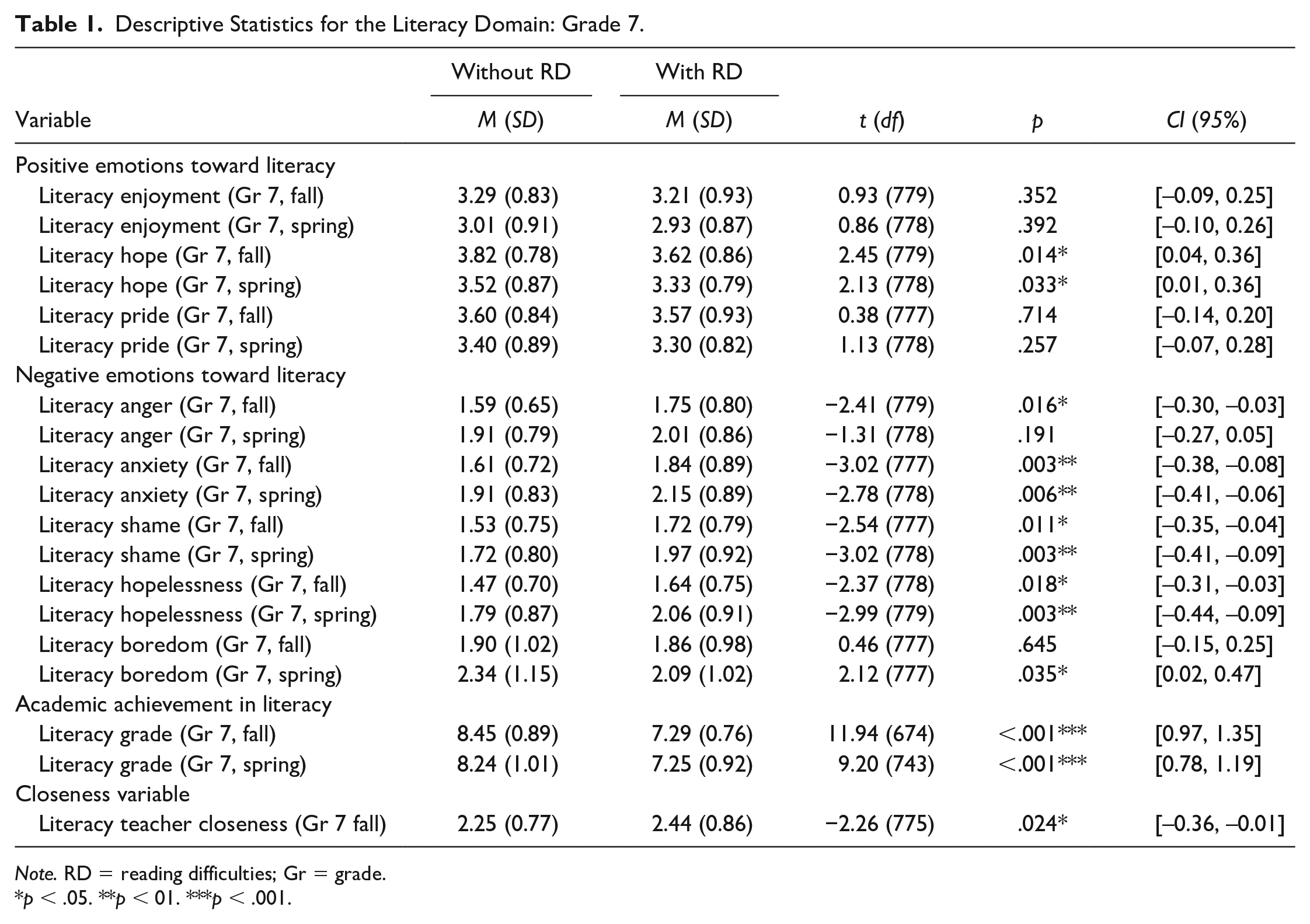
Note. RD = reading difficulties; Gr = grade.
p < .05. **p < 01. ***p < .001.
Descriptive Statistics for the Math Domain: Grade 7.
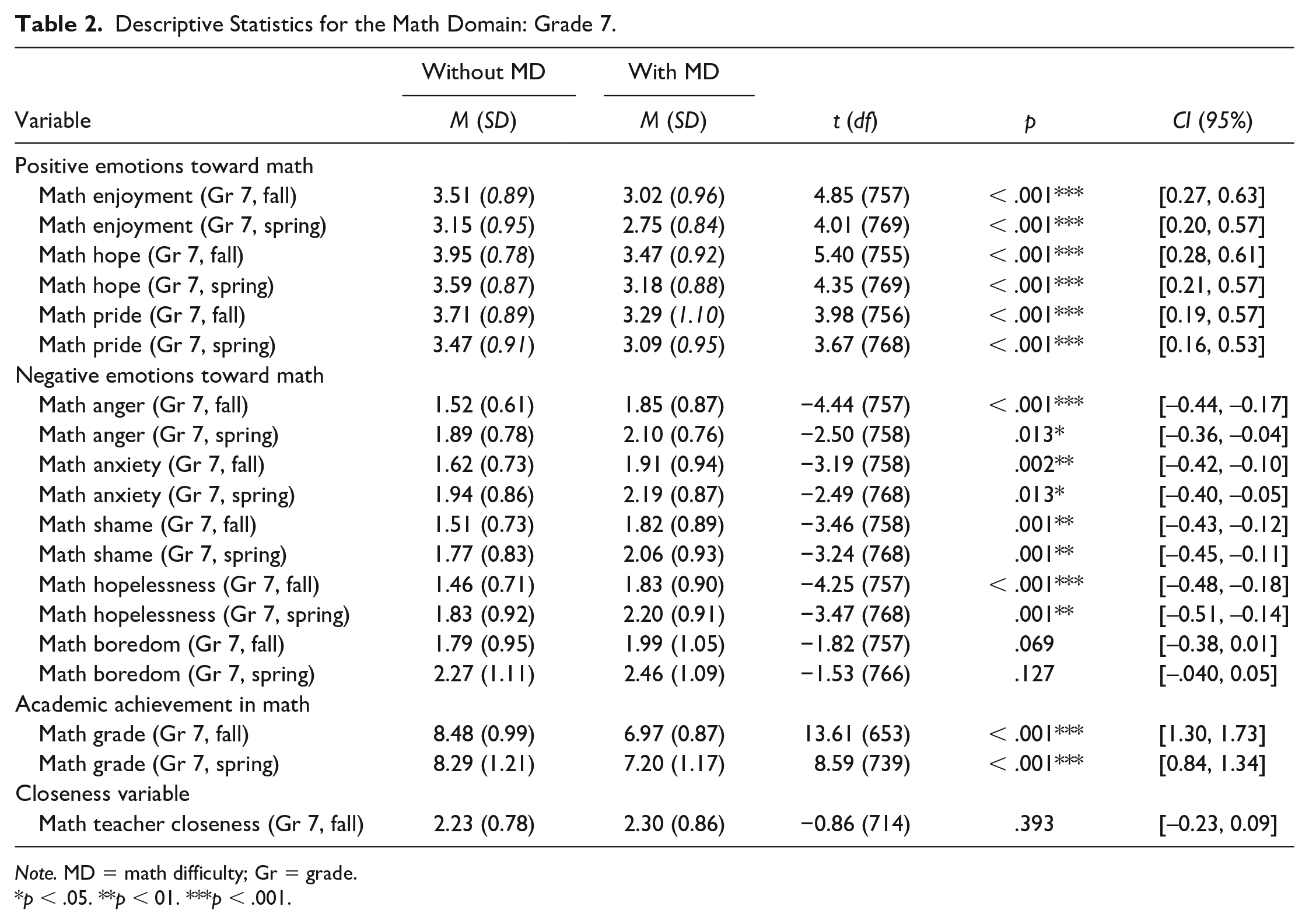
Note. MD = math difficulty; Gr = grade.
p < .05. **p < 01. ***p < .001.
Correlations between the academic emotions in Grade 7 fall and spring are presented separately for the literacy and math domains in Table 3. Moderate to high stabilities were found in all academic emotions between Grade 7 fall and spring. Moreover, high associations were found between positive academic emotions (enjoyment, hope, and pride), and moderate to high associations between negative academic emotions (anger, anxiety, shame, hopelessness, and boredom). Correlations of academic emotions with RD/MD group status, achievement, and teacher closeness are presented in Table 4. Small to moderate positive correlations were found between positive academic emotions and achievement (fall and spring) and teacher closeness. For negative academic emotions the results were more inconsistent. Small but systematically significant negative associations were found between all negative academic emotions and achievement (fall and spring), whereas only boredom had significant negative associations with teacher closeness in both literacy and math domains in Grade 7 fall as well as spring.
Correlations of Academic Emotions in Fall and Spring Semester of Grade 7.
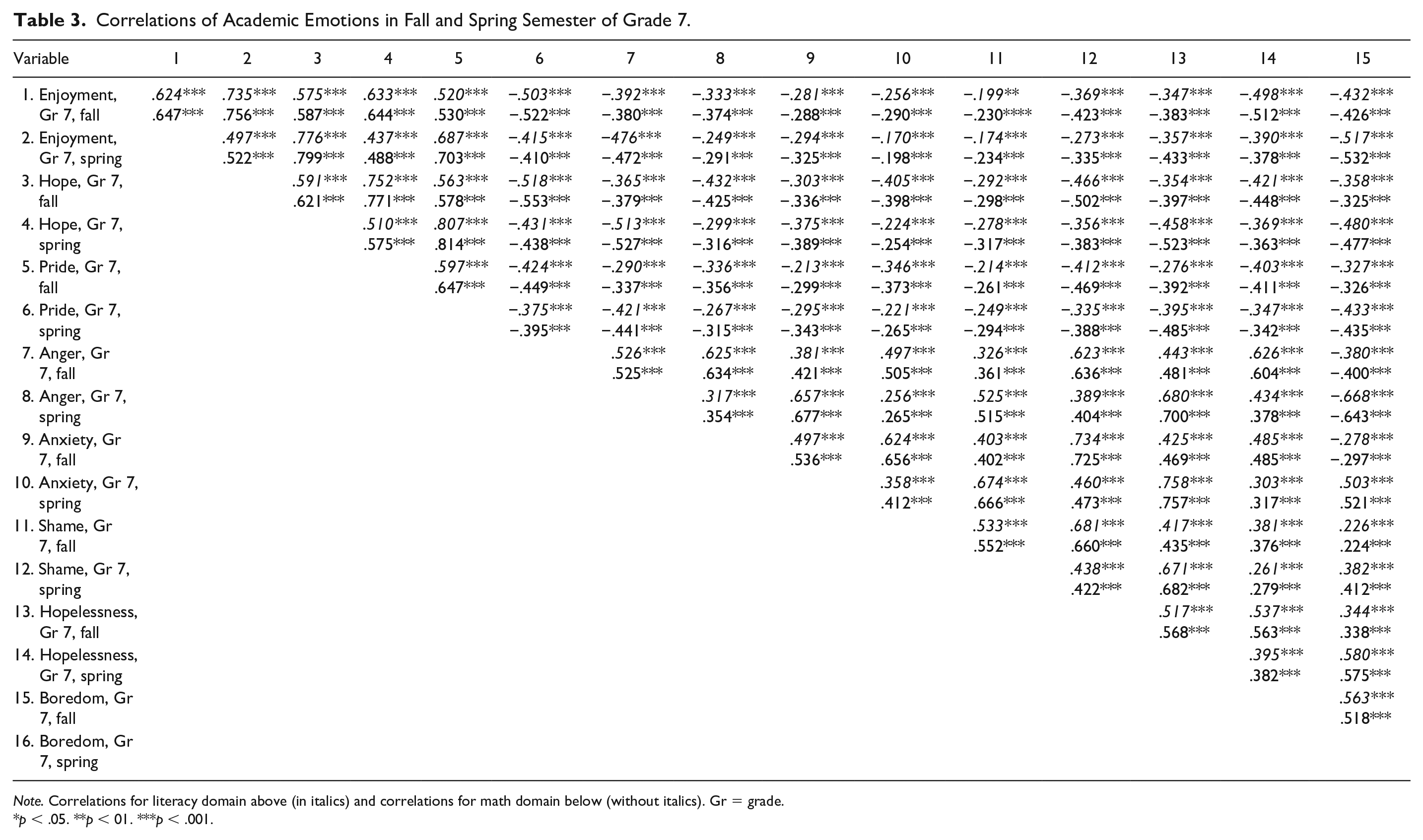
Note. Correlations for literacy domain above (in italics) and correlations for math domain below (without italics). Gr = grade.
p < .05. **p < 01. ***p < .001.
Correlations of Academic Emotions With Learning Difficulty (LD) Group Status, Achievement, and Teacher Closeness in Fall and Spring Semester of Grade 7.
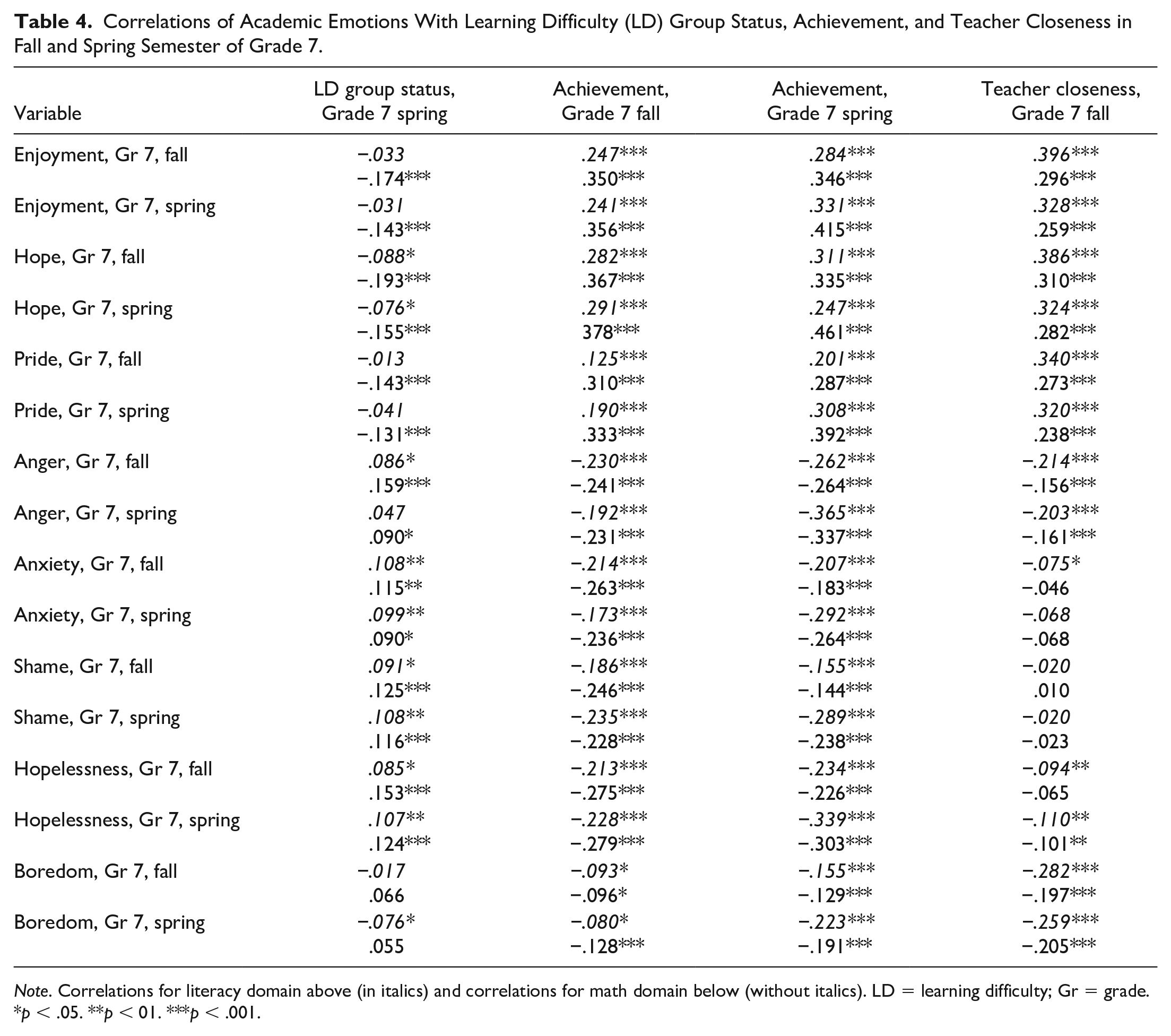
Note. Correlations for literacy domain above (in italics) and correlations for math domain below (without italics). LD = learning difficulty; Gr = grade.
p < .05. **p < 01. ***p < .001.
GLMs for Academic Emotions
We first report the results of the GLM for academic emotions in the literacy domain during Grade 7. Then, we report the results similarly in the math domain. The results of GLM are shown in Table 5. The estimates in Table 5 are adjusted for the effects of the covariates (i.e., gender, depressive symptoms, and difficulties in the other school subject), classroom differences, and the level of emotions/achievement in Grade 7 fall.
The Results of GLM Models.
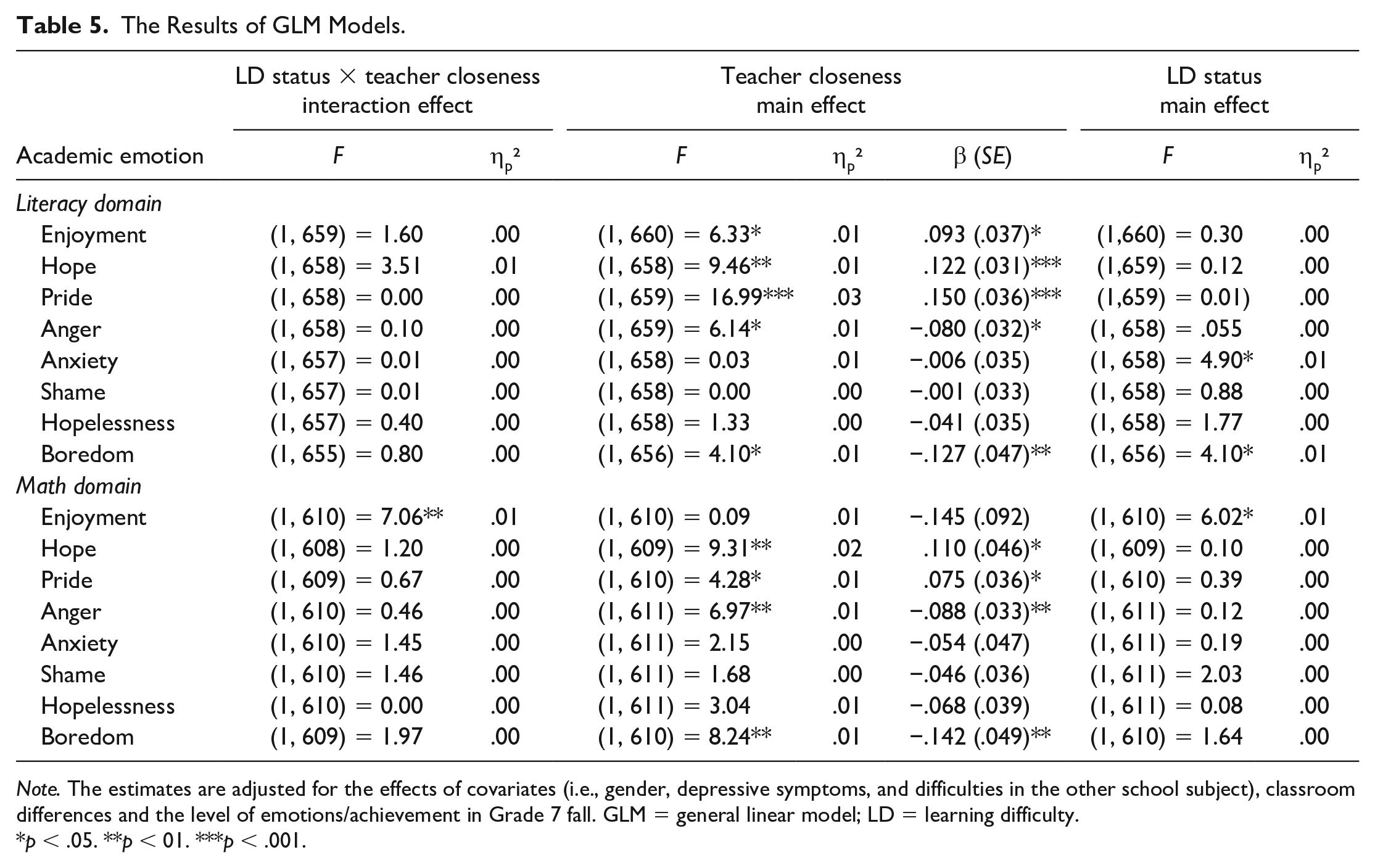
Note. The estimates are adjusted for the effects of covariates (i.e., gender, depressive symptoms, and difficulties in the other school subject), classroom differences and the level of emotions/achievement in Grade 7 fall. GLM = general linear model; LD = learning difficulty.
p < .05. **p < 01. ***p < .001.
Literacy
The results for all positive literacy emotions (enjoyment, hope, and pride) showed no RD × Literacy Teacher Closeness Interactions (Table 5). Consequently, the final GLMs only contained main effects. A significant main effect of teacher closeness on literacy enjoyment, hope, and pride was found. Higher experienced teacher closeness was related to increasing literacy enjoyment, hope, and pride during Grade 7, although the effect sizes were small in all academic emotions. No significant main effect for the RD group on changes in any of the positive literacy emotions was found.
Likewise, the results for all negative literacy emotions (anxiety, anger, boredom, hopelessness, and shame) showed no RD × Literacy Teacher Closeness interactions. Consequently, the final GLMs only contained the main effects. A significant main effect of teacher closeness was found in literacy anger and boredom, but not in anxiety, hopelessness, or shame. Experienced lower teacher closeness was related to increasing literacy anger and boredom during Grade 7. All found effect sizes were small. Moreover, a significant main effect of the RD group on changes in literacy anxiety and boredom was found. Again, effect sizes were small. Students with RD reported higher literacy anxiety than students without RD in the spring semester of Grade 7 after controlling for literacy anxiety in the fall of Grade 7, whereas students without RD reported higher literacy boredom than students with RD in the spring semester of Grade 7 after controlling for literacy boredom in the fall of Grade 7 (for means and standard deviations separately for students with and without RD, see Table 1). No main effect for the RD group on changes in literacy anger, hopelessness, and shame was found.
Mathematics
The results for math enjoyment revealed statistically significant MD Group × Math Teacher Closeness interaction (Table 5). Follow-up analyses showed that experienced higher teacher closeness was related to increasing math enjoyment for students without MD during Grade 7 (β = .113, SE = 0.040, t = 2.823, p = .005, η² = .02), but not for students with MD (β = .007, SE = 0.161, t = 0.476, p = .637, η² = .01). It should be noted that although the result was statistically significant, the effect size was small. No MD Group × Math Teacher Closeness interaction was found in math hope or pride. Furthermore, a main effect of teacher closeness on math hope and pride was found, but not for enjoyment. Reported higher teacher closeness was related to increasing math hope and math pride during Grade 7. Finally, a main effect of the MD group on the changes in math enjoyment was found. Students without MD reported higher math enjoyment than did students with MD in the spring semester of Grade 7 after controlling for math enjoyment in the fall of Grade 7 (for means and standard deviations separately for students with and without MD, see Table 2). All the effect sizes related to positive emotions in the math domain were small. No main effect of the MD group on changes in math hope and pride was found.
The results for all negative math emotions (anxiety, anger, boredom, hopelessness, and shame) showed no MD × Math Teacher Closeness interactions. Consequently, the final GLMs only contained the main effects. A significant main effect of teacher closeness was found on math anger and boredom, but not for math anxiety, hopelessness, and shame. Experienced lower teacher closeness was related to increasing math anger and boredom during Grade 7. All found effect sizes related to negative math emotions were small. No main effect of the MD group on changes in any of the negative math emotions was found.
GLMs for Academic Achievement
The results for literacy achievement showed no Teacher Closeness × RD Group interactions. The final GLM, including only the main effects, showed a significant main effect of literacy teacher closeness on literacy achievement (F [1, 559] = 8.78, p < .003, partial η² = .02). Experienced higher literacy teacher closeness was related to increasing literacy achievement during Grade 7 (β = .114, SE = 0.039, t = 2.964, p = .003, η² = .02). A main effect for the RD group on changes in literacy achievement was not found. The results for math achievement showed no statistically significant MD Group × Math Teacher Closeness interactions, nor main effects of time or MD.
Discussion
The developmental phase of adolescence and the learning environment of lower secondary school form a challenging combination for many students. In this phase, it is common that students experience decreasing motivation, more negative academic emotions, lower achievement, and lower quality in teacher relationships (Eccles & Roeser, 2011; Vierhaus et al., 2016). Specifically, students with LDs suffer from more negative emotional, motivational, social, and academic consequences in a new learning environment (West et al., 2010). The present study adds to previous research by focusing on rarely examined associations between teacher closeness and academic emotions among adolescents with and without LDs. The results indicate that in both literacy and math domains, warm and close teacher relationships are related to increasing positive academic emotions, whereas lower teacher closeness is associated with increased learning-related anger and boredom. The effects of teacher closeness were mostly similar in the RD and MD groups, except that higher teacher closeness was related to increasing achievement only in literacy, not in mathematics. Moreover, a significant main effect of RDs on changes in literacy anxiety was found in the RD group and literacy boredom in the non-RD group.
Teacher Closeness and Students’ Academic Emotions
In line with our hypothesis concerning literacy, we found that higher levels of literacy teacher closeness were related to increasing literacy enjoyment, hope, and pride, whereas lower levels of literacy teacher closeness were associated with increasing literacy anger and boredom. This pattern was found both for students with and without RDs suggesting that all the students equally benefited from literacy teacher closeness. There are at least two explanations for these results. First, high quality in teacher relationships is known to support students’ emotional security and need for belonging at school, which may be specifically important after the critical school transition (see also Martin & Dowson, 2009). Second, from the perspective of self-determination theory, teacher closeness may also strengthen students’ sense of relatedness in the new school environment, and thus fulfill students’ basic psychological needs (see Deci & Ryan, 2000). Furthermore, teacher closeness is likely to build positive spirals in students’ learning. When promoting positive academic emotions, teacher closeness benefits students’ emotion regulation and motivation in learning, as well as their use of flexible learning strategies that, in turn, can have positive effects on learning (Pekrun et al., 2011; Zee & de Bree, 2017).
The results on higher literacy teacher closeness promoting positive literacy-related emotions extend previous studies (building on the attachment theory) that have shown that close and warm student–teacher relationships are associated with higher adaptation and engagement in the school context (Roorda et al., 2017; Verschueren, 2015; Zee & de Bree, 2017). At the same time, it is critical to note that a distant literacy teacher relationship and a lack of closeness was associated with increased literacy anger and boredom (see also Goetz et al., 2021), which are likely to hinder putting effort into learning (Pekrun et al., 2011). These negative emotions as well as related avoidance behavior and failure expectations may even decrease students’ achievement (Nurmi et al., 2003; Pekrun et al., 2011). In addition, higher literacy anxiety was typical in the RD group, which presumably relates to difficulties faced in literacy studies, and thus uncertainty about one’s skills and increased learning-related worrying (Pekrun et al., 2011; Suárez-Pellicioni et al., 2016). Literacy boredom, in turn, was typical in the non-RD group, which may result from literacy studies that do not offer enough challenges and motivating tasks to students with conventional reading skills.
When considering the moderating role of teacher closeness, we did not find support for our hypothesis derived from the academic risk perspective (Murray & Greenberg, 2006; Spilt et al., 2012) that students with RD, in particular, would benefit from literacy teacher closeness in their literacy-related emotions. On the contrary, the results of the present study suggest that the patterns in teacher-relational effects on academic emotions are rather similar for both students with and without RD, indicating that teacher closeness is equally important for students in general in their literacy-related emotions. From the attachment theory perspective (Verschueren, 2015), it is possible that warm and close teacher relationships may help both students with and without LD to cope with school demands.
In the math domain, math teacher closeness was found to be a moderating factor when predicting development of math enjoyment. However, the pattern of the effect on emotional support was the opposite of what was expected: teacher closeness was a protective factor for students without MDs but not for students with MDs. This could be due to the nature of mathematics as a school subject: math skills are built cumulatively. Students who have good math skills probably adopt new mathematical concepts easily, value math as a school subject, and feel confident with their skills, which enhances motivation and math enjoyment (Pekrun, 2017). For these students, it is probably easy to build close and warm math teacher relationships, which in turn reaffirm math enjoyment. In contrast, students with MD typically have rather persistent and long-lasting difficulties in the math domain (e.g., Andersson, 2010; Mazzocco et al., 2013), which may have formed their math-related emotions rather consistent (see also Sainio et al., 2021). As a result, students with MD may not benefit from warm and close teacher relationships in math enjoyment.
When considering other math-related academic emotions, we found that higher levels of math teacher closeness were related to increasing math-related hope and pride for both students with and without MDs during Grade 7. The lack of teacher closeness, in turn, promoted math anger and boredom for students in general, which may complicate student–teacher relationships and thereby further hinder the use of effective learning strategies and task-oriented learning (Ahmed et al., 2010; Frenzel et al., 2007; Pekrun et al., 2011). This may further promote more negative math-related emotions and create negative spirals between teacher relationships, emotions, and learning (Goetz et al., 2021; Mainhard et al., 2018).
However, contrary to our hypothesis, teacher closeness was not related to changes in anxiety, shame, and hopelessness in either academic domain during Grade 7. The lack of teacher closeness did not promote these intense negative academic emotions. It is important to note, however, that our focus was on teacher closeness, not teacher conflict. Our results cannot rule out the possibility that these negative academic emotions could relate to negative aspects of student–teacher relationships, conceptualized as teacher conflict (see, e.g., Hamre & Pianta, 2001; McGrath & van Bergen, 2015). This area remains for future research to investigate.
Teacher Closeness and Academic Achievement
The results on the role of teacher closeness in academic achievement development during Grade 7 differed between the literacy and math domains. Experienced closeness with literacy teacher was related to increasing literacy achievement during Grade 7. The finding concerning the literacy domain is essential. Although it has been shown previously that teacher closeness promotes students’ achievement (Hamre & Pianta, 2001; Spilt et al., 2012), the effects of literacy teacher closeness on literacy achievement have rarely been found (see, e.g., Hajovsky et al., 2017; Hughes & Cao, 2018; Zee & de Bree, 2017). In the math domain, in turn, math teacher closeness was not related to math achievement. This finding is partly in line with previous research, where both positive associations between teacher relationships and math achievement (e.g., Ahmed et al., 2010) and no associations (e.g., Hughes & Cao, 2018) have been found. One explanation for varying results might stem from differences in the study designs (cross-sectional vs longitudinal) and the length of follow-ups. High stability of individual differences in math achievement during the investigated time period might partly explain why math teacher closeness did not relate to the changes in math achievement.
Another explanation for the differential findings between literacy and math domains concerning academic achievement is that students typically form distinct teacher relationships in different school subjects (Roorda et al., 2019). The different nature of literacy and math as school subjects may have an effect on the findings: math is often considered a difficult and laborious school subject (e.g., Suárez-Pellicioni et al., 2016), and math-related negative academic emotions have been found to be rather constant when compared to literacy-related emotions (Sainio et al., 2021). These typically math-related factors may be critical in determining the patterns of how teacher closeness can actually promote achievement. However, more exact knowledge on the role of teacher closeness and its effects on adolescents’ school performance in different school subject domains are needed.
Limitations and Future Directions
The reader should be aware of the limitations of the present study. First, the effect sizes were small, though statistically significant, after controlling for the effects of the covariates (i.e., gender, depressive symptoms, and difficulties in the other school subject), classroom differences, and the level of emotions/achievement in Grade 7 fall. The relatively small effect size may be due to multiple factors besides teacher closeness influencing students’ academic emotions and achievement. Second, although we controlled for the effects of previous levels of emotions/achievement in analyses, our design did not allow us to examine the effects of emotions and achievement on the development of teacher closeness. According to ecological systems theory, dyadic interpersonal relationships are the key promoters of developmental changes (Bronfenbrenner & Morris, 2006). Thus, it can be suggested that the nature of the teacher–student relationship is transactional. Future transactional studies are needed to examine related mechanisms in more depth.
Third, we were interested in environmental support, which was defined as teacher closeness (i.e., a warm and supportive relationship between the student and teacher). Student–teacher relations can also be conceptualized as teacher conflict, which describes negative aspects in student–teacher relations. In the present study, lower levels of teacher closeness were related to increasing anger and boredom, but there were no associations with other negative academic emotions. Future research would do well in examining not only the lack of emotional support but also the aspect of teacher conflict and its effects on academic emotions. Knowledge of experienced teacher closeness and academic emotions was also gathered from the students’ self-reports, which limits the possibilities to compare the results of the present study with previous studies, which typically use teachers’ reports on closeness. Thus, it would be good to combine students and teachers’ reports on teacher closeness to find out how uniform they are. Furthermore, it should be noted that adolescents have several kinds of social networks, both in and outside the school context, where they may perceive support (such as parents and peers). In future studies, these other resources of environmental support should be examined to obtain a more complete view on the meaning of environmental support in adolescents’ academic emotions and achievement.
Finally, LDs were measured using group testing and, therefore, employing a rather lenient cut-off. It is possible that students who have more severe LDs could profit from teacher closeness more than students with only mild difficulties do. However, more research is needed to find out whether the pattern of teacher closeness in academic emotions is different for students with more severe learning disabilities.
The lack of differences with teacher closeness in academic emotions and achievement among students with LD and without LD was somewhat surprising. Many negative consequences—such as continuous struggles in learning (Smart et al., 2001), more negative academic emotions (Sainio et al., 2021), lower motivation, and lower quality in teacher relations (Spilt et al., 2012)—are commonly related to students with LD, in particular. However, the decreasing achievement and motivation (West et al., 2010), as well as less positive and more negative academic emotions (Sainio et al., 2021) are known to be common for all students during the first year of lower secondary school. Student–teacher relationships also undergo fundamental change as students proceed to lower secondary school (several new teachers vs primary school’s single classroom teacher). At the same time, the developmental phase of adolescence takes place, which influences social relationships and tends to increase the distance between students and teachers (Vershueren, 2015). However, it remains for future research to investigate whether these general trends in school transition which are typical for all students make LD and non-LD students more equal in their teacher relationships when considering academic emotions and achievement.
Conclusion and Practical Implications
The teacher’s role in the lower secondary school context is significant in multiple ways in promoting adolescents’ motivational, emotional, and academic adaptation to the new school environment (Eccles & Roeser, 2011; Wang & Eccles, 2012). The present study indicates that close and warm teacher relationships are beneficial for students’ positive academic emotions in the literacy and math domains, and for literacy achievement during the first year of lower secondary school. Student–teacher relationships and related academic emotions can form either positive or negative spirals and either promote or hinder learning (Goetz et al., 2021; Mainhard et al., 2018; Pekrun, 2006; Roorda et al., 2017). From the perspective of self-determination theory (Deci & Ryan, 2000), experienced teacher closeness may offer students a sense of relatedness and thus aid students’ better emotional and motivational adjustment in the new school environment. To help lower secondary schools build learning environments where attention is paid to constructing high-quality student–teacher relationships, it is important to increase knowledge on the associations between academic emotions and teacher relations in adolescents’ learning contexts. These relationships, in turn, can ensure a sufficient amount of emotional support and a sense of relatedness for adolescents, and thereby promote more adaptive academic emotions.
Footnotes
Authors’ Note
This study’s research forms part of the ongoing, overarching study STAIRWAY: From Primary to Secondary School (Ahonen & Kiuru, 2013).
Declaration of Conflicting Interests
The author(s) declared no potential conflicts of interest with respect to the research, authorship, and/or publication of this article.
Funding
The study was funded by a grant from the Academy of Finland (#266851, 294970).
