




Abstract
The present study examines the transformation of the profession of Gassals, dead body bathers in Islamic culture, from a prestigious role to a stigmatized job in modern Türkiye. Through a qualitative research design, this study employs a combination of participant observation and in-depth interviews with Gassals in Istanbul Metropolitan Municipality. In the study conducted with the purposeful convenience sampling technique, in-depth interviews were conducted with 19 participants (3 male,16 female). Ultimately, the study raises three major modernity-related claims: Modernity marginalizes death and excludes it from daily life, primarily functions to secularize the public sphere and excludes religious issues, and presents the dead body as dirty, as it sees the body as a biological mechanism, as a product of standardization and institutionalization. Their job involves physical contamination due to direct contact with deceased bodies, and this solid physical taint overshadows the overall dignity of the profession. The three main findings of the study are important. First, community members perceive it as a “reminder of death.” The second is the modern human tendency to avoid death in the domains of everyday life, primarily through institutions such as hospitals. Lastly, the stigma toward gassals may be explained by them losing their status in the modern era under the influence of institutionalization despite enjoying a prestigious status in the past.
Introduction
Preparing a dead body for the afterlife covers the entire process from the moment of death to burial (Cengiz and Dennis 2016; Cook and Walter 2005; Kerrigan 2007; Mitford 1963; Jones 1997; Thomas 1991; Neumann 2017; Sağır 2017; Slocum and Carlson 2021). In Türkiye, local governments manage this whole process, but there are hardly any private enterprises that provide post-mortem services (Akıllı 2020; Celik 2017; Coskun and Buken 2020; Sağır 2012). Unlike officials participating in this process (e.g., imams and gravediggers), gassals (dead body bathers) appear as the actors with the closest contact with the dead. Gassals’ task begins when the dead body arrives in the gasilhane (ghusl room, a place where the deceased are washed and prepared for burial) and consists of three essential stages: removing the clothes of the dead and bathing and enshrouding the dead upon religious principles. However, despite performing their job within local governments, gassals often suffer from a stigmatized identity and face social exclusion in modern Türkiye. The findings of our interviews demonstrated that gassals have difficulty integrating into society in peace because they confront harsh exclusion upon revealing their profession. Since it involves touching and bathing dead bodies, their profession is considered dirty, leading to social stigma. The situation of funeral workers across the world which is characterized by social invisibility and social taboos developing around death and the manipulation of dead bodies (Batista and Codo 2018; Carden 2001; Laderman 2003; Pinheiro, Fischer, and Cobianchi 2012) shows that gassals are also exposed to a universal stigma. It is known that certain professions carry stigma (Kreiner, Ashforth, and Sluss 2006), with far-reaching implications for individual identity, employee safety and wellbeing, and the broader societal narrative on the function of such professions (Bickmeier, Lopina, and Rogelberg 2015).
Why has the profession of gassals become a source of exclusion for those adopting it today while being respected in traditional societies? Built on Goffman’s stigma theory, this article argues that the structural implications of modernity ruin the traditional sources of its legitimacy and redefine gassals as a reference to stigmatization. Ultimately, the study raises three major modernity-related claims: Modernity marginalizes death and excludes it from daily life, primarily functions to secularize the public sphere and excludes religious issues, and presents the dead body as dirty, as it sees the body as a biological mechanism, as a product of standardization and institutionalization. Showing how three aspects of modernity have turned gassals into a source of stigma, this article analyses the relationship between the profession and the identity of gassals in Türkiye. For that purpose, the term “dirty work” is used to describe the social status of this religious profession. As mentioned before, although gassals enjoy a respectable religious position, they are unfortunately stigmatized in modern Türkiye. The most obvious reactions that gassals face in daily life can be listed as follows: “Go and pick up garbage, but please do not do this job!” or “You are dirty!.” Some even stated that there are those running away when they remind them of death and that many remain hesitant to eat the food they cook. In this study, in-depth interviews were conducted with 19 gassals to explore how people relate to death, the prestige of gassals in society, and the relationship between death and religion.
The present study examines the relationship between modernity and religion-related professions, particularly post-mortem services, through the lens of stigma theory. In the first section, the study engages in methodological debates on the subject and presents a thorough literature review on stigma theory and its relevance to the subject. In the second section, this framework is applied to a case study of the stigmatization of gassals, religious figures associated with postmortem services. Then, three distinct typologies are identified and examined in detail: gassals as a symbol of death (Figure 1), the religious obligation of bathing the dead (Figure 2), and the end moment of human machine (Figure 3). Finally, the study concludes with the main findings and discusses their implications for future research on the relationship between modernity, religion, and stigmatization of postmortem services.
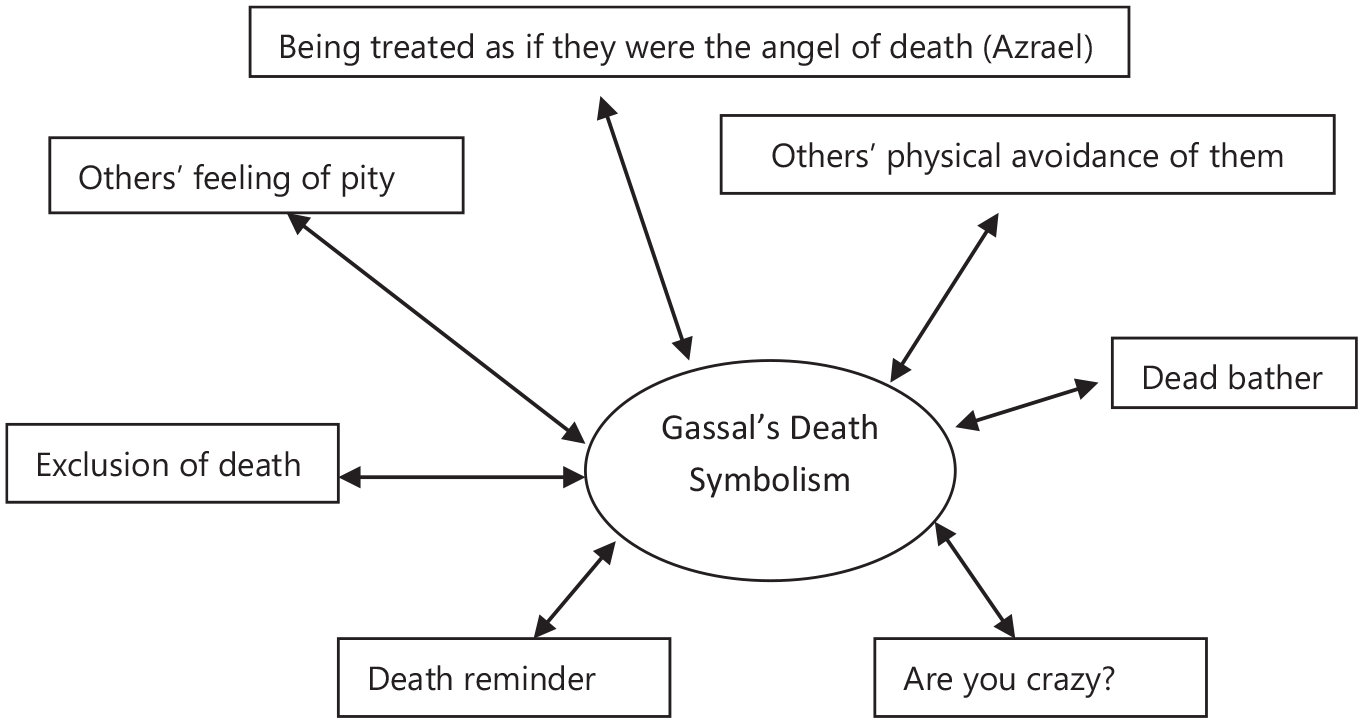
Gassal as a symbol of death.
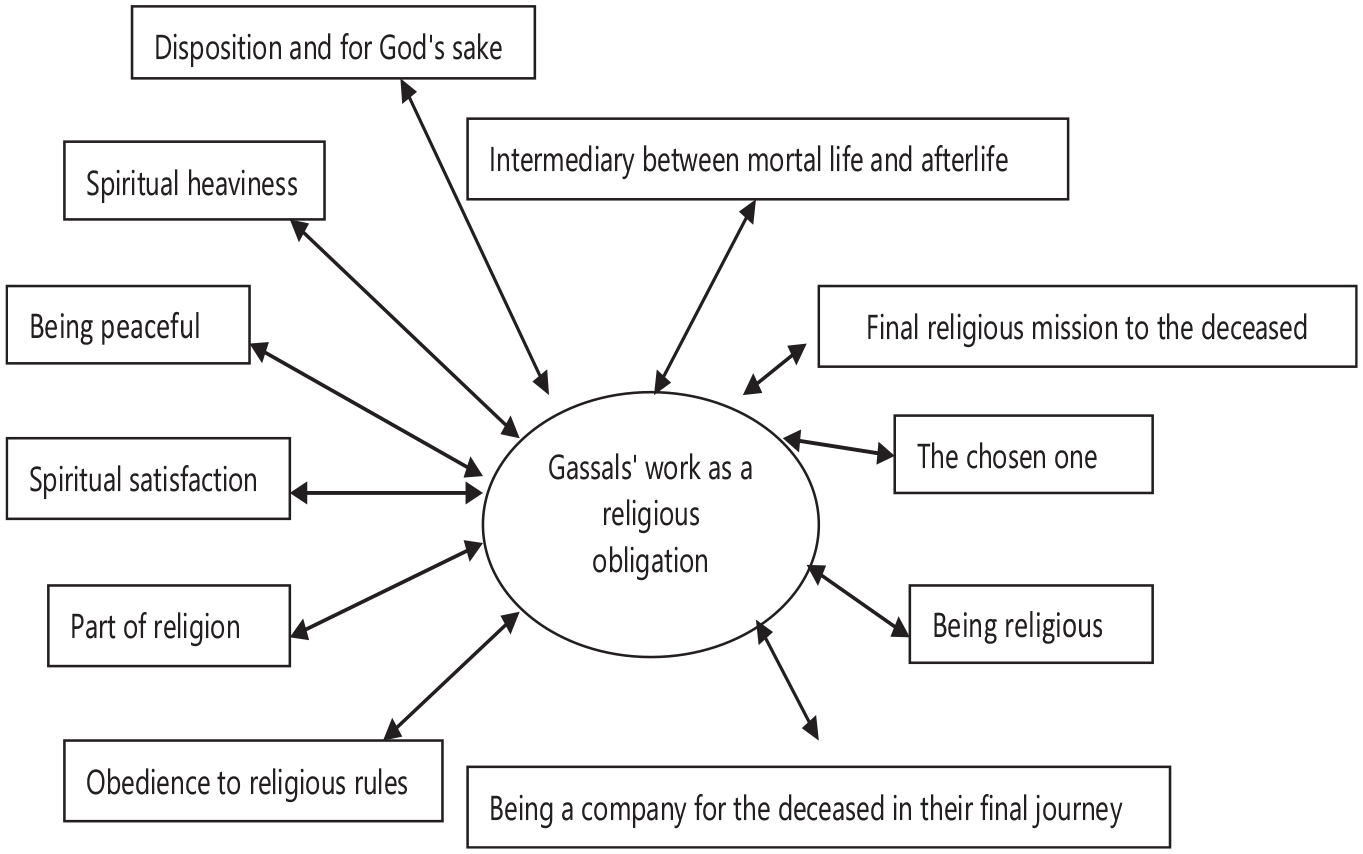
Bathing the dead as a religious obligation.
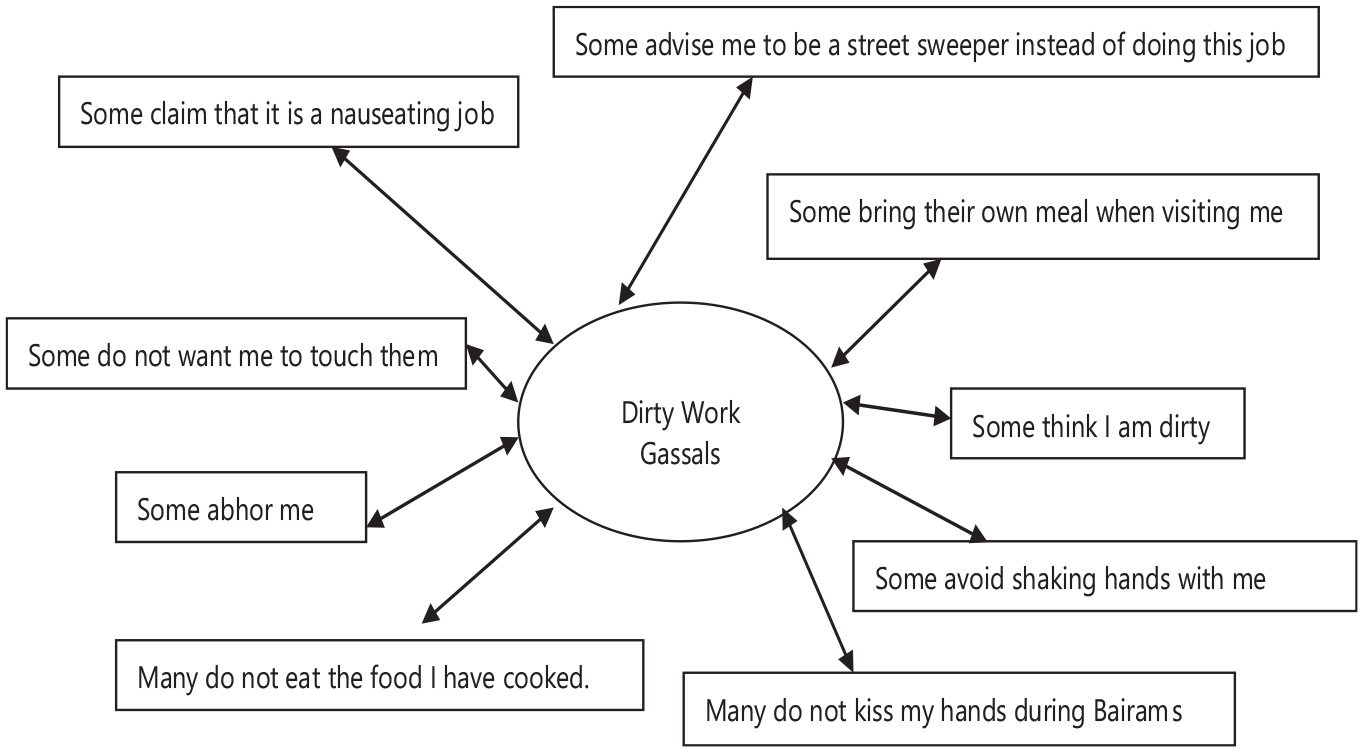
The end moment of the human machine.
Theoretical Background
The social sphere derives from death, or, to put it mildly, death is “the essential condition of cultural creativity” (Bauman 1992:13). Although death is a biological universal, everything human about its meanings, rituals, customs, and institutions consists of social realities defined and made real through thought and action (Charmaz 1980:5). This acknowledgment draws attention to an imminent motive in one’s struggle with nature: escape from death in all vital areas. Previously, scholars focused on the emergence of cultural practices through society-established relations with death that vary by the meaning attributed to death (Baudrillard 1993; Bauman 1992; Canetti 1962; Sağır 2017; Jones 1997; Vernon 1970; Thomas 1991). In traditional societies, death appears as an agenda for order in daily life, and it is often governed by the relationship between religion and similar structures. Yet, the distance that modernism places between religion and death is likely to affect attitudes toward death. In the modern era, all kinds of means and attitudes linked with death have been confined to institutional structures invisible in social relationships (e.g., hospitals; Charmaz 1980:9); thus, death is excluded and stigmatized in modern societies. Stigma indeed applies to all phenomena and typologies excluded by modern society. The roots of contemporary perspectives on stigma can be traced to E. Goffman’s (1990) classic work Stigma: Notes on the Management of a Spoiled Identity. Stigma is an attribute that defines one as socially discredited and disqualified for social acceptance. The literature on occupational stigma is typically framed through social identity theory, offering a valuable framework to examine how perceptions of groups vary for those within and outside the group. While this framework has afforded many insights into stigmatized occupational identities, the existing literature has not yet accounted for the rapid and radical shifts in identity initiated by shared societal events (Mejia et al. 2021:2). According to P. Rozin, J. Haidt, and C. R. McCauley (2010), disgust or avoidance is an innate and universal response to the perception of “dirt,” which is because the symbolic nature of dirt pervades beyond its material boundaries and has social and moral implications (Simpson and Simpson 2018). The societal perception equating clean with good or dirt with bad may lead to the perception of some jobs as “dirty”. This stigma is inherent in the job but cannot be attributed to one’s characteristics or the group engaged in this job (Ashforth and Kreiner 1999). Stigmatization hosts negative attitudes and emotions (e.g., anxiety, irritation), as well as social avoidance of affected individuals (Dijker and Koomen 2003; Menec and Perry 1998; Schwarzer and Weiner 1991). L. M. Coleman (1986:228) considers fear to be among the leading causes of stigmatization. Since dead bodies are often associated with the notions of dirt and contamination (N. Turner and Caswell 2020:5), avoiding death is a way to regulate the fear of dirtiness and pollution associated with dead bodies in Western societies (Douglas 1984). Therefore, funeral and mortuary staff are often the objects of stigmatization (Ashforth and Kreiner 2013:145; Batista and Codo 2018; Flynn et al. 2014; Pinheiro et al. 2012; Simone 2011; Thomson and Grandy 2017), and this may threaten the way people define their own identity and the attitudes of others toward employees in this sector (Guidetti et al. 2021). These groups are at the intersection of opposites, affected by decaying bodies and suffering and transformed by the plight of the self and destiny of the soul. In other words, they are not considered “pure” (Lesy 1987:5). E. C. Hughes (1951:319) argued that dirty jobs or tasks carry a stigma or taint, and consequently, one who performs such jobs is also stigmatized. Stigmatization is a hallmark of dirty work, and workers in dirty jobs confront negative stereotypes about their work and who they are (Deery et al. 2019:632). Previous research has showed that professionals engaged in tasks with the dead (e.g., funeral directors) are often stigmatized and that death is considered taboo in American culture. Therefore, more research is needed to explore and explain the experiences of funeral directors (Batista and Codo 2018; Beard and Burger, 2017; Carden 2001; Goldenhar et al. 2001; Howarth 1996; Thompson 2010; Walter 2017).
Stigma was previously linked to poor mental health, physical illness, academic underachievement, infant mortality, low social status, poverty, and reduced access to proper housing, education, and vacancies (Allison 1998; Braddock and McPartland 1987; Yinger 1994; Sontag 1988). Despite being often produced unconsciously, these image associations robustly influence one’s role expectancies and social valuation as so imaged. Many scholars regard stigma as a social construction—a label attached by society —and point to variability across time and cultures in what attributes, behaviors, or groups are stigmatized (Crocker et al. 1998). Historically, stigma was attached to those responsible for caring for the dead (bathing the dead bodies in Türkiye), and this job was typically assigned to the lower classes (e.g., the Eta of Japan and the Untouchables in India). Even those dealing with the dead were forbidden from touching the living in some cases (Bendann 2007; Kearl 1989; Sontag, 1988; Murray 1964; Thompson 2010).
In this study, the concept of stigma is acknowledged in its original form, adopted by the Greeks, and its contemporary meaning. In this context, stigma is a socially dynamic concept shaped by flows in daily life and refers to the severe shame or fault of an excluded group or person in society (Hinshaw 2007). It also corresponds to labeling one and detaching them from the overall social structure and from “normal” people with whom they constantly interact (Burke 2007; Scambler 1998).
Research Roadmap: Death Ethnography
The rules suspended or postponed during the COVID-19 pandemic in Türkiye did not apply to some forms of employment. For example, gassals did not stop their work of bathing the dead bodies during the pandemic; however, many gassals became ill, quarantined, or died due to the coronavirus. In Türkiye, gassals, who oversee bathing the dead bodies according to Islamic rules regardless of the physical state of the corpse, cannot stop working even in the event of mass deaths due to pandemics or disasters. Except for different religions and beliefs, since most Muslims adopt only one type of funeral and burial ceremony for the deceased in Türkiye, gassals become important and indispensable actors in this process. Thus, the religious obligations shaping the death ritual have not been abandoned even during all kinds of disasters and epidemics in Türkiye (Sağır and Aktaş 2022), which also emphasizes the unique role of gassals in Türkiye.
Ethnography is adopted in this study based on the concern of focusing on the part of the human community and culture (Meriam 2009:27), and thus, this study is grounded on ethnographic field research notes consisting of raw data from a 6-year fieldwork. Ethnography is an approach intending to analyze cultural contexts to understand the attitudes, rituals, and practices in a community, especially regarding death (Boas 1987; Brewer 2000; Fetterman 1998; Frazer 2019; Malinowski 1948). Ethnographic studies often involve participant observations and long-term fieldwork where the researcher engages with the activities of daily living of the group being studied (Creswell 2018). The routine of ethnographic research is often described as spending substantial time in the field by conducting interviews with the people being studied (Silverman 2016). Besides, ethnography is often adopted to analyze working life and employment (Beynon 1973; Burawoy 1979; Pollers 1981; Westwood 1988). The main context for the intersection of ethnography and gassals in this study may be claimed as a journey of discovery. On this journey, the ethnographer acts as an observer, collecting data from the target environment without splitting observations and reality from the social context. In other words, they observe the natural environment without interfering with it and interpret the meaning of human actions (Lambert, Glacken, and McCarron 2011). On the other hand, the distinctive nature of this study also grounds on using a new sub-approach within ethnography: death ethnography.
The concept of death ethnography is used for the first time in the literature in this article. The researcher’s 10 years of experience in death sociology and his previous research in the field (Sağır 2012, 2013a, 2013b, 2016, 2017, 2020, 2021a, 2021b) led to the adoption of death ethnography in the study. Aiming to describe how death appears to humans, death ethnography involves collecting data through participant observations and experiencing rituals in the field while, at the same time, stepping back from social beliefs about death. Therefore, the researcher’s position fortifies both data collection and subsequent analyses. The researcher’s position in the field was instrumental in diversifying the data. When researcher(s) went to the fieldwork monthly, they went to gasilhane for observation only. Observations in the gasilhane lasted an average of 3 hours, excluding in-depth interviews. The 3-hour observations during each visit focused on how the death area around the gassal was constructed. During the visits to the gasilhane, the time spent on observation increased so much that sometimes it was desired to experience the interior as a researcher without doing anything. Many sub-themes, such as how the gassal used his/her hands and body, what items covered the area around him/her, how he/she ensured cleanliness, what kind of equipment he/she wore for cleaning while washing the dead body, and in what ways he/she encountered the dead body, were points recorded during long-term observations. Therefore, “through the interpretative process, previously held meanings may shift and change” (Charmaz 1980:24) in death ethnography. Besides, ethical boundaries in death ethnography outline the scope of the field and define the ethnographer’s actions. In this approach, the dead body is the focus of the research but not a part of the data collection, and the main concern becomes to compose the story of death based on the abstract and concrete relationships with the dead body. In this study, the boundaries of participant observations do not include the private aspects of the gassals’ job inside the ghusl room (indoor place where dead bodies are bathed half-naked). To put it more clearly, death ethnography focuses on the significance of the actions inside the gasilhane rather than the experience of washing and shrouding the deceased body and emphasizes how these actions are interpreted by the bereaved and gassals outside the gasilhane. K. Charmaz’s (1980:24) statement that “one way of approaching the study of meanings of death and dying is to conduct research in a social world where members face it” explains the choice of gasilhane as the site of death ethnography. We, therefore, categorize gassals’ experience as their observations, perceptions, and rituals in this study; in this way, the answers to the nature of the gassals’ job (e.g., what things are done? how are things organized?, and why are specific rituals performed?) could be integrated with the researcher’s position.
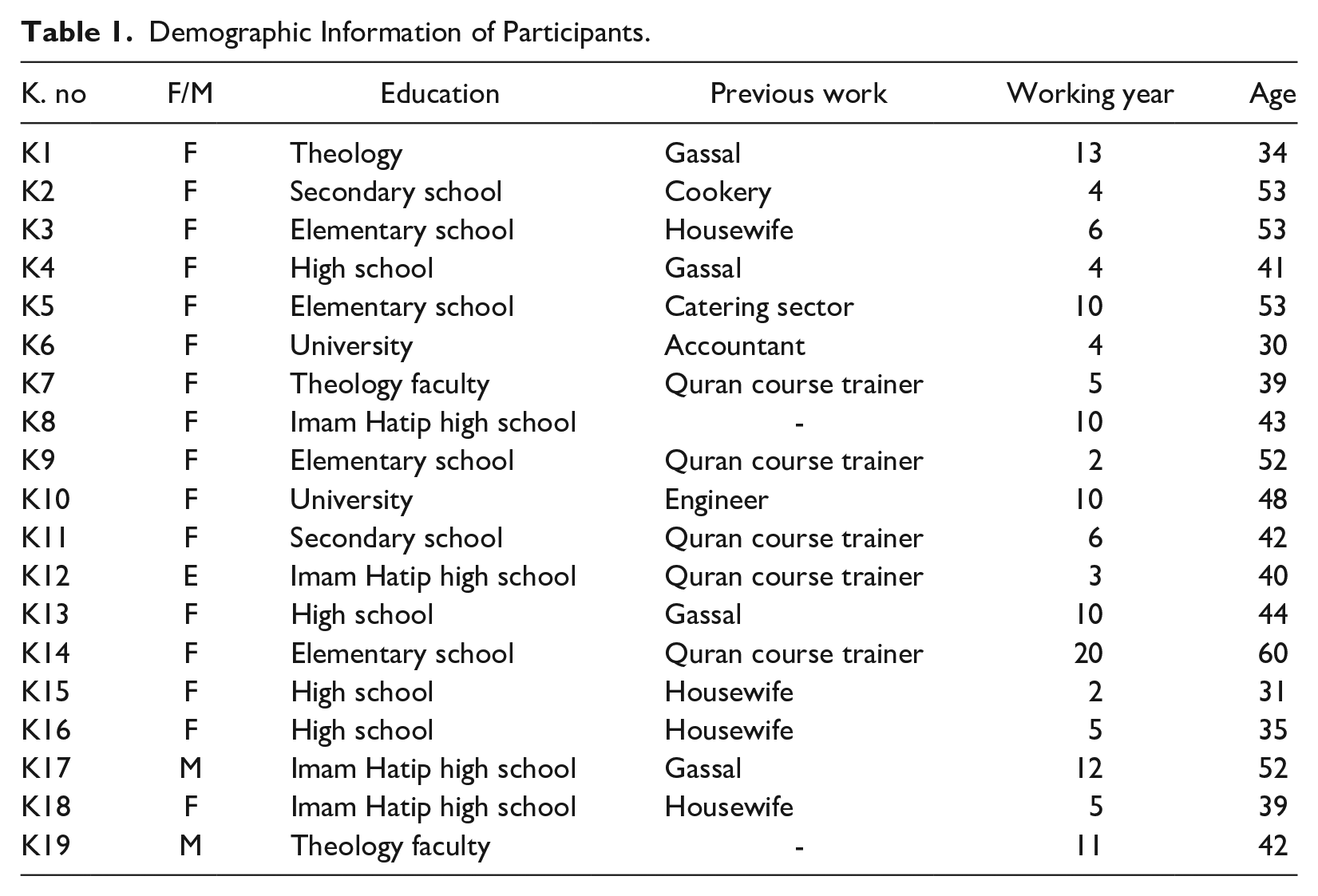
Data were collected through in-depth, face-to-face interviews with 19 conveniently selected participants upon their voluntary consent (Table 1). Convenience sampling is a technique in which the researcher purposively selects individuals or sample units that are thought to best represent the research subject. Despite the lack of a randomness factor in this type of sampling, the researcher chooses participants bearing specific characteristics and generates a representative sample aligned with the research objective (Gentles et al. 2015; Holloway and Wheeler 1996). The participants were selected on the basis of the following inclusion criteria: having substantial professional experience, having experience as a gassal before being employed at the municipality, undergoing a religious education, and residing in Istanbul. Istanbul was purposively chosen because it has higher death rates than other cities, and the municipality’s substantial experience in handling funeral services can serve as an example for other cities, which means that Istanbul-based gassals’ activities in the field are never-ending. The study was conducted with ethical approval from the researcher’s institution and the relevant municipality employing the participating gassals. It was conducted with the consideration of the said ethical boundaries, excluding any written or visual data related to the dead body and its analysis.
Demographic Information of Participants.
Gassal as a Symbol of Death
Death is denied in the modern age. In other words, changes in bereavement practices, cemeteries, funeral rituals, and places of death have rendered death invisible (Seale 1998). Thus, the modern human does not talk about death but digitizes and removes it from daily life (Sağır 2020). Since the eighteenth century, the ceremonies accompanying death have disappeared, and death has become a private and shameful phenomenon (Foucault 2003:253). Modernism has also encapsulated death in hospitals since a hospital can be an excellent place to conceal undesirable feelings of death by featuring only experts to digitize death. For example, dying as a patient under the supervision of physicians became a right of citizenship in the twenteith century (Fenn 2001). As the subject of this study, gassals can be considered to be the mentioned experts in modern bureaucratic organizations and complementary to the system that digitizes, standardizes, and removes death from daily life. In the same sense, gasilhane is often built in the cemetery in the farthest corner of the city. The high walls of the cemetery prevent the view of both graves and gasilhane. Thus, the work performed in gasilhane remains out of daily life, which implies that it appears as a modern organizational structure concealing death-related issues in society in line with the nature of the contemporary relationship with death (Sağır and Aktaş 2022).
Bathing the deceased is a common practice in the Turkish-Islamic tradition. In Islam, the fundamental principle of bathing the dead body is to adhere to gender differentiation, since the state of being a woman or a man also persists after death. Similarly, death-related facilities are separated by gender. Dead body bathers, who used to be known by different names before Islam, started to be called “gassal” following the arrival of the Turks in Anatolia with the influence of Islam (Roux 1999; Tryjarski 2012). Pre-Islamic Turks used to have “Gassal Booklets,” covering the rules of bathing the dead, prayers to be read, and materials to be used during the procedure, as well as other details about bathing the dead in many Turkish communities in Central Asia (Davlatova 2016:249). Having studied gassals in Central Asia, H. Baydemir (2009) presented the following observations: “The city residents do not engage much in shopping with gassals and often avoid neighborly relations with them. Gassals are not invited to weddings or other similar events. They are only needed for washing a dead body. They walk by ringing bells in public places. Gassals do not wear a dress, but in some regions, they travel with a ladle made of poplar wood hung around their waist, which is the occupational symbol of gassals.” Gassals also appear in research on the history of epidemics (Konukçu, Kandilci, and Polat 2022). In a study, it was stated that people dying in the epidemic in Baghdad were not washed by gassals (Tokuş 2018:165), suggesting evidence for the professional existence of gassals in the East. Moreover, bathing the dead was a modern profession in the Ottoman Empire (Terzioğlu 1970; Yalçınkaya 2018). Gassals, employed in hospitals in the Empire, used to be among the mosque officials (Göçer 2016). Even gassals were among the Kaaba (a large cuboid-shaped building inside the mosque known as al-Masjid al-Haram in Makkah, the holiest site for Muslims) officials in the 1600s (Biçer 2018). When it comes to the Republican period, gassals continued to be employed in hospitals in farewell ceremonies for the deceased in cemeteries (Altaş 1999). Today, they take part in funeral services of local governments.
Since gassals’ work is directly linked with the dead body and death, how death is perceived has a substantial direct impact on their social status. Therefore, gassals may be stigmatized and marginalized for different reasons (e.g., perceived dirtiness of their job, the superstition that a gassal will bring death to the person they touch, and overidentification of gassals with death). In-depth interviews in this study revealed that gassals symbolize death in two different ways. While the first is the identification of gassals with death as they assume the act of bathing the dead, the second is related to the social stigma of gassals’ work. The participants aired social stigma in an overlapping discourse in which gassals symbolize death (Figure 1). This symbolism focuses on the object of the gassals’ work: the dead body. It is believed that gassals perform the last duty for the dead body according to the Islamic tradition in Türkiye; therefore, they are those who have the final physical contact with the dead. In Türkiye, the perception of the gassals’ work cannot reach beyond bathing the dead; therefore, encountering a gassal is likely to evoke the fear of death in people. The participants conveyed others’ attitudes toward and reactions to death in social encounters as follows: “When I revealed my desire to get into this job to my husband, I got the response, “Are you crazy? How will you do this?” My father still doesn’t believe I’ve washed the dead because I used to be afraid of everything when I was a child” (P1). “My acquaintances perceive me as an exceptionally courageous individual because of my job” (P4). “Since it is challenging to tell people, I don’t prefer to call myself dead body bather. Instead, I introduce myself as “gassal,” and they don’t understand it. So, it’s easy for me to continue my life like this” (P5). “People think we’re going to bring them death” (P12). “Some gassals conceal their occupation because of the difficulties they confront in daily life” (P2).
As mentioned before, the participants’ responses imply a possible association between their job and death. Indeed, death is undesirable in traditional communities; therefore, they have developed rituals and practices to avoid threats leading to death. Despite the partial persistence of these beliefs, death is completely absent from daily life in modern societies. The discourse in the participants’ responses seems to describe both people’s attitudes toward death and the exclusion of death. In other words, death’s outsiderness in everyday life can be associated with modern humans’ stigmatization of what they see as a threat within death.
Public opinion of funeral workers and approach to gassals’ work often follow a similar trace worldwide, which was also obvious in the participants’ accounts. In her work titled “Career Feelings and Influencing Factors of Young People in Funeral Industry,” Ren Fei (2014) cited the personal experience of an interviewee: “Go back to work at night. When the taxi driver heard about going to the funeral home, he didn’t want to take me.” Similarly, Li Guihong, a funeral front-line worker and undertaker, once said in an interview: “Every day, apart from going to work, I will stay at home and meet my acquaintances, and people are afraid to shake hands with me” (Xian 2007 as cited in Hu 2022:211). In addition, such public opinion on this job causes the alienation of family relations of funeral workers (Jordan et al. 2018). The family members of many funeral workers do not understand their work, which elevates the tension in their family relations. Some families also have problems with their children’s education (Jiawei 2017, as cited in Hu 2022:212). When it comes to the reasons why gassal was stigmatized, we can assume that gassals can attract one’s curiosity because of their job, but community members seem to turn their backs on them in social encounters regardless of their other qualities (Goffman 1990:33).
“While traveling on the bus, people leave me alone when hearing about my job. People are honestly afraid of me” (P11). “My spouse hasn’t wanted me to do this job for years, but I have persisted in it” (P7). “A man immediately left as soon as hearing that I wash dead bodies. When I unleash I wash the dead, people inevitably get scared” (P3). “When hearing about my job for the first time, some people ran away from me. People adopt a perception as if we took death with the angel of death (Azrael) wherever we go” (P13). “Since my wife does the same job, everyone embraces my job, but [our] children cannot disclose it to their peers at school. Some of my friends still say they don’t want to talk to me much since I remind them of death” (P17). “People seem to regard this job as very hard and painful. It’s frightening for them to think of us being with death all the time” (P10).
The discourse of the aforementioned responses may imply that the fear of death appears as a shared reaction uniting traditional communities and modern societies at the same denominator. While this fear used to be associated with natural forces in traditional communities, contemporary civilizations have started to attribute different meanings to it. What creates this difference may lie behind the change in the view of death in modern societies. In the modern world, science has saved death from being unknowable, domesticated it, and attributed it to specific causes. In doing so, death is encapsulated in hospitals and cemeteries and turned into a phenomenon experienced only behind doors. Yet, gassals seem to evoke the fear of death in daily life, and their role becomes a challenge to what P. Ariés (1974:91) asserts: “No one in modern society may speak out about death.” Therefore, it may be necessary to uncover what attitudes gassals adopt toward death and the dead body and their strategies to deal with the fear of death.
“The condition of corpses [dead bodies] often scares me. I have a problem with corpses, especially with those arriving at the Forensic Medicine Institute, because nobody can know what will come out of the black bag. We cannot escape washing such corpses” (P2). “The work we do must be our test in the world. Everyone is afraid of death, and so are we. We must be patient with death because our work is rather sacred. We are accustomed to death and dead bodies now” (P4). “I usually focus on my work while bathing the dead. For example, when cleaning the deceased, I look at their feet, not their faces” (P19). One cannot prepare for death; it suddenly occurs. Whoever visits here thinks that death has taken their beloved one untimely. People losing their children are, of course, angrier. The death of the young increases our suffering compared to old ones” (P10). “Death is a cruel and awful phenomenon. People are there too, and they witness that moment” (P16).
It may be reasonable to locate gassals on the contradictions between death and life. Relatives of the deceased may function as a mirror where gassals glaze at themselves. Gassals’ fear of death may emerge when encountering the relatives of the deceased or witnessing their mourning. For example, they may redefine motherhood through death by washing a dead child or young, which may also deepen their anxiety and pain. Overall, gassals do not attempt to hide their fear of death but take refuge in the sanctity of their work while confessing their fear. The participants’ perception of death as a “worldly test” may be related to their perceived sanctity of the job. In addition, gassals’ avoidance of looking at the face of the dead while bathing them may also be attributed to their fear of death. In this respect, gassals see death from the same window as those stigmatizing them. Besides, the adjectives “cruel” and “awful” aired in interviews concerning death may also carry traces of this stigma. A. Kreinheder (1991) claims that denying the immense grief of death is a deceptive act of courage. Thus, gassals’ denial of death is a kind of numbness as an emotional reflection of the eradication of death from everyday life. It may also be the case in the interviews that the hierarchy of death by age determines the level of gassals’ sadness, which is a show of denial of death that modern man does not ascribe to the young.
Bathing the Dead as a Religious Obligation
The rituals and customs surrounding death hold an undeniable significance for all communities. In Türkiye, the Islamic tradition heavily constructs and shapes all aspects of funeral and postmortem practices, which also includes gassals’ work, a ceremonial preparation of the deceased for their journey to the afterlife. The act of bathing the body, a fundamental element of a gassal’s work, is considered a religious obligation. Indeed, the practices in this job are mainly derived from Islamic teachings and beliefs, with the gassal’s role being to respectfully prepare and accompany the deceased on their journey to the afterlife.
In traditional societies, gassals’ roles and duties were often deeply rooted in religious and cultural traditions. Their acts and responsibilities used to be perceived with some spiritual and emotional significance and treated with reverence and respect within the community. Moreover, their work used to be sacred and meaningful, closely connected to communal religious and cultural practices. In modern societies, however, their roles have undergone institutionalization, involving their transformation into professionals separated from traditional religious practices. Here, institutionalization may refer to the change of an informal or traditional activity into a formal, regulated, and recognized job. In the case of gassals, this process has led to the introduction of specific training and certification programs, as well as the establishment of professional standards and regulations. K. Charmaz (1980:78) says that “professionals in particular neutralize death by using abstract terms that reduce living beings to objects.” Hence, gassals’ work has become more specialized and independent from traditional religious practices. The secularization of the public sphere has also become a key factor in the institutionalization of their roles. In other words, the increasing need for specialization in this job is closely linked to secularization. According to T. Luckmann (1967), increased specialization in a society leads to more secularization. Berger (Tschannen 1991) similarly argues that rationalization in a society leads to greater autonomy and freedom from religious control. Thus, the decline in the importance of religion in modern societies because of secularization has enabled the recognition of gassals’ role as a professional independent from religious institutions. Yet, secularization in Türkiye involves incorporating religion (Islam) into the secular sphere (Ertit 2019), which results in the positioning of religion within the realm of secular institutions (Casanova 1994). The Presidency of Religious Affairs plays an important role in this regard in Türkiye. It is defined as a secular state institution established to control religion in Türkiye (Göle 2017; Kuru 2007, 2019). It outlines all kinds of practices, from the moment of death to how the dead body is prepared, how the ceremony is performed, and the cemetery process. However, while the rules are based on religion, the organization of the funeral work is done by the municipality. In this context, this job falls within the secular field in Türkiye, specifically within the domain of municipal funeral services. When religious institutions establish an alliance with or become subordinate to the state, they contribute to increasing socio-political centralization (Kuru 2020:101). This relationship standardizes the funeral service for everyone and instrumentalizes the voting preferences in election periods.
While gassals’ work used to be considered a devout task adhering to the fundamental principles of religion and used to hold a respected position in traditional communities, it has become institutionalized in the modern era and transformed into a routine job, distancing itself from religion in various forms (Figure 2). The rational aspect of institutionalization that has secured gassals’ work to be distanced from religion can be explained by G. Ritzer’s (2014) theory of McDonaldization. Here, it may be necessary to touch upon Ritzer’s principles of calculability and predictability to express the success of McDonaldization. Ritzer defines calculability as the consideration of all dimensions of the work being done and predictability as the production and service always being carried out to the same standards. These principles, therefore, are reflected in the quantification of bathing the dead considering some factors (e.g., the number of dead bodies washed per day, the time spent in the cabinet, the bathing time, and the number of bathers). In this sense, the number of dead bodies they wash per day and the time they allocate for the work in the cabinet per dead body demonstrate the calculability and predictability resulting from the standardization of the work. Ritzer asserts that the predictability of products and processes arises from the consumption of a specific amount of time and resources in every instance once something is quantified and draws attention to the fact that quantification also brings control (Ritzer 2014:141). In a quantified field, gassals’ work is routine and is under the supervision of institutional power. Besides, gassals represent the distance between religion and society imposed by modernization by performing their work only within specifically allocated areas.
“A gassal washes an average of 4-5 corpses per day and completes their work in 10-30 minutes, depending on the physical condition of the corpses” (P18). “A gassal completes their work in about 20 minutes if the corpse is in a complete state. Since everything is ready for us, we do our job within a settled system” (K19). “While I can wash around 5 or 6 corpses in a day in winter, it becomes around 8 or 9 in summer” (P18). “On average, one can finish a washing in 20-25 minutes here” (P1).
Yet, standardization leads to the alienation of gassals, which signifies the distance between gassals and religion. Estrangement, as referred to by Marx, is the degradation of the human body, the bankruptcy of the mind, and discomfort and unhappiness while working. Bathing a dead body is no longer a religious responsibility yet has become an ordinary but professional task. It is also important to consider the contradiction generated by the alienation of this job. Gassals seem to be trapped between religious oppression and questioning their religious identity. Due to the solid religious attributions to their work, they are likely to have a fear of losing their religious identity.
“There are 30 corpses down below. Now, I swear I cannot show you which one I have bathed. We do not pay much attention to their faces anymore, as we have started to consider it a routine work” (P9). “Upon leaving the dead body, I have realized that I am losing something in my spiritual world in the face of death” (P18).
G. Ritzer (2014:97) discusses how standardization and homogeneous products have become the norm in McDonaldized regulations of work, overlapping with “disenchantment of the world” by Weber. Weber views rational systems as those that have been stripped of magic. The equivalent of this situation would be the tendency to reduce the enchanted quality of an experience through mass production or repetition of that experience (Ritzer 2014:245; Wax, 1967). The phenomenon of disenchantment is closely associated with the secularization of the public sphere. This process of desacralization transforms how gassals view their job, leading to a sense of alienation from both the community and the religious nature of their work. As they become estranged from their job, they also experience a sense of estrangement from death, in parallel with the way in which modernity has stripped death of meaning. This situation is described as compassion fatigue and burnout among funeral workers worldwide because of their work environment (Cegelka, Wagner-Greene, and Newquist 2020; Kovács, Vaiciunas, and Alves 2014). This experience is followed by a decline in both social and personal prestige, which is accompanied by stigmatization.
“Over time, death has become normal for us” (P14). “I only focus on the feet of corpses and try to think of joyful things. I try to imagine that I am not there” (P6). “We do not share our contradictions with our friends; otherwise, it will only make it worse for us. We relieve each other by sharing our experiences. Otherwise, we would feel worse. Others don’t have a job that they can talk about to their spouse or children” (P7).
Gasilhane is a spatial organization in which gassals perform their work. It is often located in cemeteries, out of the sight of people, reflecting contemporary societies’ attitude toward death. The cemetery defines the surrounding area, thus attributing physical belongingness to death. In this regard, the status of modern people in the gasilhane, religion, and death trilogy may be explained by mental distance, as conceptualized by Simmel (1969). This concept advocates maintaining a distance from people to be able to secure oneself in urban life. Then, no matter how and where gasilhane is located, Simmel’s (1950) concept of mental distance reflects the everyday life of the modern man who distances himself from death.
Gassals are often positioned at the bottom of the organizational hierarchy in municipalities. In this respect, institutionalization can be regarded as a decisive tool in gassals losing their social prestige today compared to the past. A municipality generally offers funeral services as cost-free but employs a diverse group of professionals, including drivers, gravediggers, imams, and funeral staff and directors. Besides, these services integrate several market mechanisms, ranging from shuttle service for the bereaved to materials to be used in gasilhanes. Since the historically rooted and religion-integrated professional experience of gassals has turned into a marginalized form of employment, trapped between the pressures of market forces and bureaucracy, municipalities appear to have incorporated bathing the dead into standardization and transformed the job into an organized operation.
“The municipality-supervised provision of funeral services can sometimes lead to a commodification of the services, where the municipality is perceived as a commercial establishment. This situation can undermine the spiritual dimension of funeral ceremonies and underestimate the necessary religious considerations in performing these services. The transformation of grieving family members into customers only exacerbates this situation, further compromising the spiritual and religious aspects of the services” (P14). “During election times, upper management instructs us to not object to any requests from the bereaved. We are ordered to only respond to the requests regardless of their reasonability” (P8).
Religious norms may be suspended in funeral services offered by municipalities for the sake of “customer satisfaction” because service recipients may be considered the objects of election investments if they are duly satisfied; therefore, it is reasonable to think of municipality-offered funeral services as no different from their other satisfaction-seeking services.
The End Moment of the Human Machine
According to E. Becker (1973), the most interesting and revolting aspect of the human body may be its aching, bleeding, and eventual death. Even Descartes considered the human body to be a moving machine; thus, any sounds emitted from the body were like those from the gears of a machine. The meaning attributed to the body during the modern era also contributed to the understanding of the biological body in medicine. In this understanding, the human body was reduced to a machine that could be explained by its internal structure. The changes initiated by modern medicine resulted in the demystification of the human body, making it a tangible entity and receding it from its sacredness and enchantment. Then, death has been conceived of as an irreversible end of biological processes (Spellman 2015:15) or an anatomical-physiological event (Prior 1989:27). When mentioning the causes of death (Bauman 1992), modern medicine uses the term “biological death” instead of the term “natural death” (Foucault 2003). Biological death outside everyday life is significant, as modern medicine views the dead body as a form of waste that must be disposed of as a pollutant. Behind this acceptance is not only the fear of the body’s decay and its contamination but also the desire to eliminate the feelings of discomfort, anxiety, and terror caused by it (Dastur 2012:37).
The traditional belief in the “unfortunate and bad luck brought by the dead” (Kellehear 2007) has been replaced by the notion of “dirtiness” in modern society (Figure 3). Thus, gassals are often considered dirty as they are the final staff to have physical contact with the deceased. It can be asserted that the perception of dirtiness is associated with the biological characteristics of the dead body. Gloves, thick aprons, and long yellow boots then become body apparatuses signifying the dirtiness of gassals’ work. Due to these physically tainting characteristics, such work has also been referred to as “dirty work” since they evoke some sense of rejection and repugnance (Ashforth and Kreiner 1999), often associated with the widespread use of unconscious defense (Testoni et al. 2020).
The strong desire to quickly take off work clothes upon returning home may be another powerful indicator of dirtiness. The frequent use of the verb “take off” among the participants can be interpreted as a symbolic manifestation of the widespread acceptance of dirty work. Gassals also have a kind of discomfort with and want to get rid of any physical apparatus that interacts with the dead body. They perceive that everything used in gasilhane becomes dirty and must be removed immediately. Besides, it is evident that social stigma, labeling gassals as dead washers, as well as dirtiness associated with gassals’ work by the community hold a significant role in such a perception. In her study (Carden 2001), one participant reported feeling unclean after leaving the embalming room and making sure to take a shower upon arriving home prior to allowing his children to hug him.
“At first, I couldn’t even look at the corpses. I still can’t say that I can look at them because various types of corpses come here. Wouldn’t anyone be affected by this? Recently, a dead body arrived in a deplorable condition, decomposed and with skin dehydration, but I had to wash it. I try to start a day at my job by reciting, ‘God knows the best,’ and I focus on my feet and try to think of something else as if I were not there. I try to think of myself as if I were not there doing this work” (P6). “For example, the yellow corpse bag is a typical bag arriving from forensic medicine or another province. If it is black, it is assumed to arrive from a hospital. One can easily assume the type of corpse in the bag based on its color. Moreover, we recognize corpses referred to as ‘bad’ from their odors before entering the ghusl room, so there is no need to look inside the bag” (P15). “We always use gloves, but I would prefer two pairs of gloves when washing a dead body. I only touch the body with my fingertips and cannot look at its face but its feet. When a heavy corpse arrives, I will cover its face with a piece of shroud because I can’t look at it because otherwise” (P12). “Sometimes, we must handle corpses sent to gasilhane in a status that they have started decomposing due to remaining at home for several days. Many such un-washable bodies arrive here. However, we must take such corpses into the ghusl room once regardless of their condition” (P11).
Gassals seem to perceive their body apparatuses as a secure zone in gasilhane or a barrier between them and corpses. Such perception may stem from the “real” physical uncleanliness of deceased bodies, which leads to the perception that gassals engage in “dirty work” even among these professionals.
“Once, a woman wanted to enter the ghusl room to help us wash her dead mother. I was really surprised when she asked if she could have gloves. I thought I might be a stranger to this job because I do it with gloves. The body could have been my mother’s, and what would change in just a few hours?” (P13).
The perceived “dirtiness” of gassals’ work is sometimes confirmed by the relatives of the deceased. As highlighted in the response of the aforementioned participant, gloves become an apparatus for both him and the relative of the deceased to protect themselves from the biological dirtiness of the corpse. The confusion that the participant had in the incident may also be associated with possible witchcraft practices stemming from the perception of the dead body’s impurity. In the modern age, such practices can be considered extensions of traditional community beliefs on the dirtiness of the deceased body. In his research on death in Anatolian folklore, S. V. Örnek (1971) stated that it is forbidden to touch the deceased with bare hands, but one should put cloth like a pouch on their hands to touch it in Anatolian culture. M. Douglas (1984:2), on the other hand, emphasizes the reality of “dirt offends against order; eliminating it is not a negative movement but a positive effort to organize the environment” in her work titled Purity and Danger. The apparatus that Gassal uses on his body become tools to maintain this order.
“Last time, an older adult woman constantly loitered around me and asked me for the soap I recently used to wash a dead body. It turned out she wanted to use it to make witchcraft on someone she disliked” (P9). “There are even those asking for the water used to wash the deceased. It is alleged alcoholics will quit alcohol use after drinking the water. I cannot grab how it could benefit someone because it is rather dirty?” (P11)
Dirty work is often associated with stigma since being considered undesirable or a lower status indicator, and those assuming such work may be subjected to bias and discrimination. Bathing dead bodies, which include potential risks of exposure to bodily fluids, infectious diseases, and hazardous chemicals, may bring physical and emotional burdens for gassals. Exposure to nauseating odors, touching decayed bodies, piecing together fragmented corpses, and the emotional burden of all such tasks constitute the “dirty” aspect of this job. For example, the response, “Some call us corpse washers and try to belittle us” (P8), may be considered a manifestation of the negative societal stigma against the perceived “dirtiness” of this job.
“The very first bathing ritual I was involved in was my exam. The corpse was already decayed and was not supposed to be washed according to religious customs. Even if it was wiped with a sponge, the flesh would fall apart. The relatives of the deceased found out that the body had been left at home for a long time. There was such a strong odor that I couldn’t eat something or wash another body after washing that one” (P18).
Regardless of how a corpse arrives, gassals are forced to piece it together to make it look aesthetically perfect. This task not only becomes another “dirty” aspect of their job but also encompasses the organization of the funeral ceremony with a “one piece” biological body like a machine.
“Some who leave unsatisfied with our services spread misinformation that we wash the corpses with brushes used to wash cars. We use those brushes to clean the cabinet” (P6).
On the other hand, it is interesting that observing the dying body is a widespread social attitude in modern times and has developed in parallel with the notion of the body as a biological machine. The bereaved gather around the dying person and observe “how they die” (Ariés 1974). In seventeenth- and eighteenth-century Europe, a large portion of the population used to watch public executions in town squares (Foucault 2003). The torture is not a spectacle; the focus of the show is “death.” People think that they can describe the most idealized form of what death looks like by observing the changes in a dying person. Then, observations and sensory experiences (e.g., changes in skin color, facial expression of pain, reflexes, changing emotional states, reactions to the surrounding environment, and sounds emitted) become the elements to describe death. In this respect, one influential point in reflecting the fetishization and materialization of death in Türkiye may be sensory and observational descriptions of death through the body. The first question to the person witnessing the death of the deceased is often “How did s/he die?” The expected response should include physical changes and actions of the deceased while dying. For someone familiar with a dying body or has experience observing dying individuals, the discoloration of their feet is a harbinger of death. Death, as a one-way road, turns into a phenomenon that manifests itself through physical changes.
Conclusion
The stigma has grown to new and potentially more threatening proportions for those engaged in death-related jobs in the 1980s, because the twentieth-century modern world has become preoccupied with the denial of death (Becker 1973; Charmaz 1980; Fulton and Owen 1988; Kellehear 1984; Sudnow 1967; Momeyer 1988; Kearl 1989). Charmaz (1980:88–89) describes the denial of death under three subheadings: to indicate disbelief in the possibility of death of self; to describe a negation of death as a part of human existence; and to depict a cultural stance toward death. Today, the COVID-19 pandemic has reintroduced stigma through such professions (Kumari 2021; Lohiniva et al. 2021; Sağır 2021a, 2021b; Stangl et al. 2019; Sotgiu and Dobler 2020; Que et al. 2020). Being trapped in the middle of ill and dead bodies (Misra et al. 2020), no leaves for healthcare personnel to their homes (Bear et al. 2020; Fischer et al. 2019), and strict quarantine measures (Roberto, Johnson, and Rauhaus 2020) during the pandemic may be considered some of the manifestations of modern stigmatization. Therefore, the re-emergence of stigma has functioned as the reintroduction of death into the global agenda (Sağır 2021a, 2021b). The present study scrutinizes stigma and death through gassals’ job in Türkiye. It focuses on the dead body in and out of everyday life and discusses the representation of a career centered around death and embodied by gassals. A gassal devotes a significant portion of their time to their job of bathing dead bodies in a regular and systematic manner. In Türkiye, gassals’ work is an occupational form of last contact with the deceased and preparing dead bodies for the funeral. Practiced per Islamic rules, which mandate the washing, purifying, and preparing of a dead body, gassals are employed as subcontractors within modern institutions (e.g., municipalities or hospitals). During the pandemic, gassals were exempted from the restrictions and continued their routine tasks, although communal ceremonies were suspended. In modern times, the focus in Türkiye has shifted from the form of funerals or rituals at the graveside to how a deceased is washed and prepared. Thus, gassals are both stigmatized and avoided, as they are positioned at the bottom of the hierarchy in dead-related professions. The position of gassal is like the professional hierarchy described by Douglas (1984:124) in the Indian caste system. The lowest castes are the most impure, and it is they whose humble services enable the higher castes to be free of bodily impurities. They wash clothes, cut hair, dress corpses, and so on. The sad wit of pollution as it comments on bodily functions symbolizes descent in the caste structure by contact with feces, blood, and corpses.
In general, the stigmatization of death-related professions can be categorized into four different forms: physical (when the task involves trash, bodily fluids, death, or other dangerous conditions), social (when the task involves contact with stigmatized communities), moral (when the task requires a violation of ethical, social, and religious norms; Ashforth and Kreiner 1999), and emotional taints (where the emotion associated with the work is considered to be dirty; Rivera 2014). Two of these forms can directly be applied to gassals’ work. First, their work involves physical contamination due to direct contact with deceased bodies, and this solid physical taint overshadows the overall dignity of the profession. Second, while the emotional demandingness of their work was previously described as the “hardening of the heart” in the study by Sağır and Aktaş [2022], it was referred to as “compassion fatigue” in other studies (Overmeire et al. 2021).
This study adopts death ethnography for scrutinizing gassals’ work and is unique in being pioneering research in the field. In general, this profession is stigmatized for three reasons. The first is that community members perceive it as a “reminder of death.” This attribution, coined by J. S. Stephenson (1985) for funeral directors, can, therefore, be applied to gassals in Türkiye. The second is the modern human’s tendency to avoid death in the domains of everyday life, primarily through institutions such as hospitals. Lastly, the stigma toward gassals may be explained by them losing their status in the modern era under the influence of institutionalization despite enjoying a prestigious status in the past. Gassal’s position in the relationship between death and modernism corresponds to a point where the meanings attributed to the profession from the past to the present also change the content of stigma. In the traditional period, the social space of the dead washer was flexible. He/She was operating in his own sphere of governance and control. In the modern period, it is seen that governance and control have shifted to institutional structures. According to A. Sağır (2021a), total institutions that cover death have transformed the dead washer into a “gassal” and added a new feature to the stigma. Thus, the profession of gassal was built in an area whose borders were physically drawn. Now dead body bathing is dirty as a job, confined to institutions, and removed from daily life. This situation corresponds to the change that Douglas (1984) explains with the transition from “Ritual Uncleanness” to “Secular Defilement.” When medical materialism imposes the idea of disease contamination, Gassal’s work is also subject to secular defilement.
The common denominator among the three forms of stigma attached to the profession seems to be the fear of death, which is linked to the modern human’s mindset of excluding death from everyday life. It also becomes a source of reactions toward gassals in social interactions. Overall, although the roots of gassals’ work lie deep in history, particularly in the history of Islam, it cannot reach beyond being ordinary now. Yet, this ordinariness and detachment from the religious context result in the alienation of gassals from their job. Ultimately, they internalize the professional perception of community members and have started to face death in the filth of their work.
Footnotes
Declaration of Conflicting Interests
The author(s) declared no potential conflicts of interest with respect to the research, authorship, and/or publication of this article.
Funding
The author(s) received no financial support for the research, authorship, and/or publication of this article.
