




Abstract
In recent decades, social scientists have devoted increased attention to job insecurity, a highly prominent stressor for workers today. Although social movements literature has examined other economic threats as mobilizing agents, the potential for job insecurity to stoke protest participation remains unknown. To investigate this issue, I analyze survey data gathered by the European Social Survey (n = 35,891) via face-to-face interviews. Hierarchical logistic regressions reveal job insecurity is significantly associated with participation in protests and is more important for protest than any other individual economic indicator, such as poor income, unemployment, and negative perceptions of the wider economy. Its effect is modest compared with biographical and political factors, such as education and antigovernment beliefs. The mobilizing effect of job insecurity is more pronounced when combined with contextual factors that exacerbate insecurity, namely, working in unstable service and private sector jobs, or living in countries with poor social safety nets.
Keywords
Introduction
One of the most conspicuous burdens affecting workers’ day-to-day lives in modern developed economies is job insecurity. The prevalence of temporary, contract, and part-time work has gradually been displacing long-term jobs, and workers’ subjective perceptions of job insecurity are rising. Scholars often situate the rise of job insecurity among the broader trend toward neoliberal policies that have resulted in heightened inequality (Piketty, Saez, and Zucman 2018), financial deregulation (Beder 2009), transformed class structures (Babb 2005), lower accountability of elected officials to constituents (Stokes 2003), and labor union decline (Ebbinghaus and Visser 1999). While work-related anxieties have always existed to some extent, increasing dynamism associated with a globalizing economy has incentivized companies to regularly modify, downsize, or outsource their operations and seek short-term commitments from workers. Coupled with the decline of workers bargaining power and diminished social safety nets, these changes have accentuated the insecurity of work life.
Previous research has shown that a sense of chronic employment insecurity not only has ramifications for psychological and somatic health but also plays a role in shaping how people interpret their political world, influencing views on immigration, economic redistribution, and trust in the government (Burgoon and Dekker 2010; Selenko and De Witte 2020; Wroe 2014). Social movement literature has increasingly recognized the usefulness of examining economic adversity as a mobilizing force, but despite its pervasiveness today, job insecurity has been largely unexplored. Insecurity, moreover, may represent a unique grievance: Rather than an objective form of current deprivation, job insecurity is defined by an individual’s subjective uncertainty about their future employment prospects. The threat of loss is known to be a strong motivator for preventative action (Bergstrand 2014; Kahneman and Tversky 1979; Snow, Downey, and Jones 1998), potentially making job insecurity particularly conducive to provoking protest.
To investigate this possibility, this article employs survey data from Rounds 4 (2008–2010) and 8 (2016–2018) of the European Social Survey (ESS) to quantitatively test the relationship between job insecurity and protest participation in 18 countries. Relying on hierarchical logistic regressions, the results suggest job insecurity is significantly associated with protest participation, but the effect is modest compared with other biographical and political factors social movement studies have traditionally emphasized. The findings also show that job insecurity is a more potent mobilizing force when combined with other personal and contextual factors that exacerbate the severity of insecurity. The association between job insecurity and protest is magnified for workers in the private sector and service industry, both of which are known to have high job turnover. The effect of job insecurity is also more pronounced among individuals living in countries with weak public spending that provide lackluster social safety nets for workers. Interestingly, job insecurity is the only form of economic adversity for which the relationship with protest is significant and positive, suggesting scholars who wish to deepen our understanding of the adversity–protest nexus ought to further investigate the role of economic uncertainty in workers’ lives.
The Rise of Insecurity
Considerable research has shown that job insecurity is on the rise (Hacker, Rehm, and Schlesinger 2013; Kalleberg 2018; Mau, Mewes, and Schöneck 2012; Näswall and De Witte 2003; Sverke, Hellgren, and Näswall 2006). Scholars attribute rising insecurity to various causes, including heightened competition in an increasingly globalized economy, welfare state retrenchment, the ascension of neoliberal economic ideology, or a confluence of these factors. In developed countries, these changes have meant downsizing and layoffs are becoming more common in many institutions, and increasing demands for labor “flexibility” has forced many workers to regularly rotate in and out of unfulfilling jobs that provide few benefits (Sverke et al. 2006). Temporary, contract, and other unstable, nonstandard employment has proliferated (Farber 1999; Hollister 2011; Kalleberg 2000) while the concept of a secure “job for life” has become accessible to a shrinking pool of workers (Furlong et al. 2017).
Gøsta Esping-Andersen (1990) famously argued that welfare programs mitigate the harmful effects of market fluctuations by providing social safety nets that cushion individuals from economic externalities, a phenomenon called “decommodification.” The trends described above have triggered a process of re-commodification, whereby the economic standing of families is increasingly subject to the unpredictability of market forces (Frade and Darmon 2005; Greer 2015; Standing 2011). The experience of unemployment for many workers has been exacerbated by the erosion of unemployment benefits (Hamnett 2013).
Surveys demonstrate that workers are keenly attuned to these changes, as their perceptions of job insecurity track with long-term trends in flexibilization of labor (Fullerton and Wallace 2007; Valetta 1999). Subjective assessments of job security have robustly fallen since the 1970s (Fullerton and Wallace 2007), and workers in temporary jobs tend to report lower overall job security (Burgoon and Dekker 2010; Erlinghagen 2008). For those who worry about job loss, that fear is usually at the forefront of their minds (Organisation for Economic Co-operation and Development [OECD] 1997). Feelings of uncertainty can generate stress, and physical and mental illnesses (Ferrie 2001; Hellgren et al. 1999). A job is an individual’s central identity and is often considered “who you are” (Selenko, Makikangas, and Stride 2017), and when that identity is threatened, it generates adverse outcomes such as poor mental and somatic health (De Witte 1999; De Witte, Pienaar, and de Cuyper 2016), increased risk of suicide (Yur’yev et al. 2012), and family problems (Larson, Wilson, and Beley 1994; Rook, Dooley, and Catalano 1991). Job insecurity also damages employees’ attitudes in the workplace and relationship with the organization (Sverke et al. 2006).
Political Consequences of Insecurity
The increasing salience of job insecurity has prompted many scholars to evaluate its effect on sociopolitical views. Brian Burgoon and Fabian Dekker (2010) show that part-time and temporary workers tend to support redistributive policies such as social spending to cushion the unemployed. In Latin America, fear of job loss is associated with the belief that labor laws do not provide adequate protection (Tokman 2007). Andrew Wroe (2014) found robust associations between job insecurity and distrust of political leaders, institutions, and parties, and dissatisfaction with democratic performance. The author proposes that job insecurity violates a “psychological-democratic” trust contract between workers and the state involving the expectation that states should provide its citizens with economic stability. Right-wing populists have seized on the changes spurred by globalization to blame rising job insecurity on influxes of immigrants (Mughan, Bean, and McCallister 2003). Economic insecurity can also heighten antiegalitarian attitudes (Selenko and De Witte 2020) and increase support for welfare policies (Hacker et al. 2013). Economic insecurity influenced rejection of the two major parties in the 1996 U.S. presidential election (Mughan and Lacy 2002).
Within social movement studies, there is a long and contentious discussion about the role of economic difficulties in stoking collective action (Buechler 2004; Useem 1998). However, the past two decades have produced a renewed stream of scholarly work that investigates how economic adversity can influence protest in many contexts (Almeida 2018; Caren, Gaby, and Herrold 2017; della Porta 2015; Dodson 2015; Grasso and Giugni 2016; Kern, Marien, and Hooghe 2015; Quaranta 2016; Shefner, Rowland, and Pasdirtz 2015; Snow, Soule, and Cress 2005). This developing literature has shed light on, but not yet exhaustively assessed, multiple facets of adversity in workers’ lives, including which economic grievances are important in influencing protest, the demographics that are most sensitive to grievance-based mobilization, and under what contexts these linkages are strongest.
The decision to join protests is often contingent on one’s assessment of the possible risks and benefits of participating. It is plausible that enduring anxiety about one’s job, the key factor determining their future economic security, could generate discontent with the existing social and political order, leading individuals to view protest as an appropriate method to bring about social changes.
Is Job Insecurity a Unique Type of Grievance?
Some have speculated about a potential link between rising job insecurity and social unrest, but the link has not been investigated systematically. Guy Standing (2011) proposed that a growing global class of precariously employed and underemployed individuals, termed “the precariat,” has already fueled postrecession movements such as the Occupy and European anti-austerity movements. Occupy protesters were found to have more precarious employment positions than the general population (Milkman, Luce, and Lewis 2013), and participants of Spanish anti-austerity protests were more likely to be unemployed (Anduiza, Cristancho, and Sabucedo 2014). On the national-level, there are some clues to a possible relationship as well. Increases in unemployment rates, which harm job security for all workers (Gallie et al. 1998), provoke greater protest participation from numerous demographics (Rodon and Guinjoan 2018). The surge in unemployment after the 2008 recession had a cross-national impact on noninstitutional political participation (Kern et al. 2015).
Less research has examined the prospect of losing one’s existing economic standing in the future. This difference, though seemingly subtle, could be significant. Prospect theory holds that humans are loss-averse and are more likely to take action to defend themselves from losses than to take risks to achieve gains (Kahneman and Tversky 1979). Drawing upon prospect theory, David A. Snow et al. (1998) argue that unfavorable changes are most likely to produce mobilization when they “disrupt the quotidian” or noticeably disrupt individuals’ day-to-day lives. Notably, Kelly Bergstrand (2014) finds that the threat of loss generates stronger emotions and increased willingness to engage in activism than the potential to win gains. Losing one’s job, usually one’s essential financial lifeline, represents a major disturbance to one’s life circumstances. Being unemployed, financially dissatisfied, homeless, or low-income, though potentially debilitating life circumstances, do not necessarily represent newly introduced “disruptions” or “losses” to one’s daily life because these conditions are often experienced chronically. These conditions, in other words, do not gauge the individual’s perception about their economic future. Some have studied mobilization among the unemployed (Baglioni et al. 2008; Giugni 2008), but this too is different from subjective assessments of future employment.
The present paper will test the extent to which one’s subjective assessment of their job insecurity modulates their decision to participate in protests. Given the wide range of work experiences that differ by employment sector, type of work, hours worked, and so on, it is plausible that job insecurity may not produce a mobilizing effect for all workers to the same degree. Therefore, I will investigate the effects of job insecurity among various demographics, disaggregated according to their employment sector and other economic circumstances. First, however, I will test a general hypothesis that job insecure individuals are more likely to protest among all individuals in the workforce (i.e., all that are working-age). Not all individuals are working at any given time; many are unemployed, students, stay-at-home parents, and so on. Nonetheless, many such individuals are looking for a job or soon will be, and thus may experience varying degrees of job insecurity, making it appropriate to analyze their experiences in addition to those currently working. I hypothesize the following:
For those currently working, the threat of losing a job represents a potential loss and quotidian disruption to daily routines, which can spur individuals to act (Bergstrand 2014; Kahneman and Tversky 1979; Snow et al. 1998). Thus, the next hypothesis narrows to those who are currently working, and therefore have a job to lose.
After these two broader propositions, I will home in on workers in specific employment circumstances. There are numerous intersecting circumstances that can influence how one interprets and reacts to insecurity. These can include an individual’s country, occupation, employment sector, hours worked, and so on. Importantly, these circumstances exist independently of an individual’s perception of their job security. Thus, it is possible one’s subjective sense of insecurity plays a greater role in stoking protest depending on their objective circumstances.
Based on social movements literature, we can identify two approaches to contextual factors. The first suggests adverse objective circumstances, such as being employed in an insecure job situation or living in a country with poor economic conditions, will magnify the salience of feelings of insecurity to increase one’s likelihood to protest. This approach, which draws theoretical roots in classic theories of relative deprivation, is loosely related to the double deprivation theory that suggests two grievances can interact to increase the likelihood of mobilization (Foster and Matheson 1995; Runciman 1966). The next approach would suggest individuals living under favorable economic circumstances will protest when they experience subjective insecurity. This approach aligns closer with resource mobilization theory, which holds that assets such as income and education provide economic and human capital that facilitates participation in social movements (Brady, Verba, and Schlozman 1995). In this approach, personal feelings of deprivation or insecurity may be more likely to produce protest among privileged groups that have the civic skills, money, and other advantages that allow them to dedicate time to protest. Toni Rodon and Marc Guinjoan (2018), for instance, show periods of poor economic performance are associated with particularly high protest turnout among high-income and highly educated individuals. I go about testing these approaches as they relate to job insecurity with several hypotheses.
First, it is well-known that workers in certain sectors of the economy endure greater job insecurity. Service work, for instance, is notoriously subject to high job turnover (Choper, Schneider, and Harknett 2019; Ostry and Spiegel 2004). Second, public sector employees are also known to be more job secure than private sector workers (Kopelman and Rosen 2015). Third, economic restructuring associated with globalization has significantly affected manual industrial workers in developed countries, whose jobs are increasingly automated or outsourced (Chevan and Stokes 2000; Wilson 1996). In the United States, for instance, manufacturing production has more than doubled between 1979 and 2019, but manufacturing jobs, once considered secure, well-paying blue-collar jobs, have declined (Ruggles 2015). The following hypotheses will be proposed regarding workers in precarious occupational sectors, following the double deprivation approach:
Underemployment is recognized as a growing pain in developed economies, leading many to accept part-time, contract, and temporary employment. Both voluntarily and involuntarily part-time workers tend to want more work hours than they are given (Bell and Blanchflower 2021), indicating that part-time work tends to entail substandard job security. Moreover, part-time work may create greater “biographical availability” in one’s life (McAdam 1986) giving them more time to engage in political activities than someone who is busy working full-time.
Paul Mason (2012) noted that during the global wave of postrecession protest movements, a common participant across countries was the “graduate with no future.” Indeed, expansions in education combined with poor labor markets have been linked to social unrest (Campante and Chor 2012, 2014). Early understandings of collective behavior highlighted the level of economic adversity among the college educated as a particularly volatile mix (Huntington 1968). Education affords individuals civic skills that make them much more engaged in politics (Hillygus 2005), and survey research consistently attests to the strong relationship between education and political engagement (Jenkins, Wallace, and Fullerton 2008). College education, moreover, not only confers civic skills but can expose individuals to political ideas and philosophies, potentially making them apt to interpret social phenomena, including their own life circumstances, as political issues. It stands to reason, therefore, that college-educated individuals may be more prone to mobilizing effects of job insecurity than non-college-educated individuals.
While the previous four hypotheses relate to the interaction between job insecurity and other personal work or life circumstances, economic adversity can have a greater effect on protest when they occur under certain contextual conditions (Dodson 2015; Grasso and Giugni 2016). I will examine two national contextual factors that have appeared in previous literature. First, unemployment rates are seen as a factor that broadly tracks with the overall level of job insecurity a population is enduring, including for employed workers (Gallie et al. 1998; Green 2009). The rate of protest among all nearly subgroups of a population tends to expand when unemployment rates increase (Rodon and Guinjoan 2018). A double deprivation approach would say high unemployment in a society can make one individual’s insecurity more severe, thus producing a greater chance that will react in the form of protest. Inversely, a resource-based approach would hold that resource-poor environments, such as those that appear during economic downturns, are not conducive to mobilization and prevent workers from acting upon personal economic grievances.
Next, Esping-Andersen (1990) writes that social spending financially cushions workers, insulating them from the worst effects of market instability. Maria T. Grasso and Marco Giugni (2016) contend that higher social spending creates a political culture where economic grievances are interpreted as collective rather than individual problems, enhancing political mobilization among those who experience them. On the contrary, Anna Kern et al. (2015) show that a lack of social safety nets can exacerbate economic problems that individuals face, making them more likely to protest. In addition to unemployment rates, I will also examine the role of social spending.
Data and Method
Data
To investigate the relationship between individuals’ job insecurity and their inclination to protest, I will employ large-N survey data from the ESS (ESS Round 4: European Social Survey Round 4 Data 2008; ESS Round 8: European Social Survey Round 8 Data 2016). Rounds 4 (2008–2010) and 8 (2016–2018) of the ESS contain information on a respondent’s perception that they will soon be unemployed, making them particularly useful for this article. To acquire a large sample, both rounds of data will be aggregated into one dataset. To maintain sample continuity, the analysis will only include countries that were surveyed in both Rounds 4 and 8. These countries were Belgium, Czech Republic, Finland, France, Germany, Hungary, Ireland, Israel, Netherlands, Norway, Poland, Portugal, Russia, Slovenia, Spain, Sweden, Switzerland, and the United Kingdom. The combined data comprise 35,886 respondents.
The ESS questionnaire asks respondents the main activity they were involved in for the past week. Responses include working, being a student, unemployed, permanently sick or disabled, retired, doing housework or taking care of children, or community service. For the purpose of studying job insecurity, we will focus on respondents who may potentially comprise the workforce. Therefore, I exclude all retirees and permanently disabled respondents from the analysis. On the contrary, focusing only on respondents who reported working in the past week would overlook the experience of individuals who were incidentally not working at the time of the survey. Job insecurity to a great extent is concentrated among chronically underemployed, precarious workers (Standing 2011), so it is natural that many who struggle with job stability will be out of work at a given time point. The present study will therefore keep both those working and not working at the time of the survey, although differences between employed and nonemployed individuals will be considered later in the analysis too.
Dependent Variable
The dependent variable will be a dichotomous variable representing whether the respondent reported having taken part in a lawful public demonstration in the past year. Those who had participated were coded “1,” and those who had not were given a “0.” Eight and a half percent of the respondents had participated in a demonstration.
This variable is suited to identify protesters broadly rather than those who joined movements for specific causes. While it is plausible that protesters motivated by job insecurity may be more likely to join protests over economic issues, economic adversity can also drive participation in contentious actions not explicitly focused on economics (Kawalerowicz and Biggs 2015), making a general participation variable appropriate.
Given that 18 countries are in the sample, it is possible that different types of protest movements were active during the time the interviews were conducted. The nature of the variable does not allow us to identify the type of movement the respondent participated in. The results must be understood with this limitation in mind. Nonetheless, the countries in the sample are almost all from Europe (except Israel), a comparatively democratic and developed region. Protests in countries with these characteristics are routine, happening frequently for a variety of causes (Meyer and Tarrow 1998). While not perfect, the variable provides a reasonable measure of political action. This protest variable, using the same question from the ESS questionnaire, is employed regularly in empirical work (Kern et al. 2015; Muliavka 2020; Rodon and Guinjoan 2018).
Independent Variable
Definitionally, job insecurity is a somewhat loose concept that has been conceptualized in various ways, but all definitions relate to an individuals’ concern over the continuity of their job or ability to find a job (De Witte 2005; Sverke and Hellgren 2002). Early definitions say job insecurity is “the perceived powerlessness to maintain the desired continuity in a threatened job situation” (Greenhalgh and Rosenblatt 1984). Sverke et al. (2002:243) define it as “subjectively experienced anticipation of a fundamental and involuntary event related to job loss.” Hans De Witte (1999:159–60) emphasizes the centrality of unpredictability to job security, as “what will happen in the future is unclear for those concerned.” Most research emphasizes that it is a subjective phenomenon because individuals perceive objective circumstances differently (De Witte 2005; Sverke et al. 2006).
Throughout its nine rounds of fieldwork, the ESS provides two questions that may represent job security. The ESS researchers asked respondents “is your job secure?” in Rounds 3 (2004–2005) and 5 (2010–2012) of fieldwork. However, as Standing (2008) points out, there are many types of work-related security, such as physical safety on the job, assurance of adequate pay, access to advancement opportunities, representation security in the form of a union, and so forth. Qualitative job insecurity, moreover, can refer to the continued existence of adequate income and benefits within the current job (Sverke and Hellgren 2002). Given the range of possible interpretations of this question, asking if one’s job is “secure” is likely insufficient for specifically probing whether one believes they can keep a job.
A question asking about one’s prospect of future unemployment is more appropriate. The ESS questionnaire from Rounds 4 (2008–2010) and 8 (2016–2018) asks respondents “how likely [is it] that during the next 12 months you will be unemployed and looking for work for at least four conservative weeks?” The potential answers were coded on a 4-level scale from 1 to 4: not at all likely, not very likely, likely, and very likely. The question specifically asks about a period of unemployment where the respondent is both looking for work and has been unemployed for four consecutive weeks. In my view, the specificity is beneficial. The question thus excludes unemployment periods where the respondent is financially comfortable and not seeking a job (e.g., in this case unemployment may have been entered willingly), and it excludes short periods of unemployment of less than four weeks where the respondent entered a new job quickly after leaving the old one (e.g., in this case, the respondent may have voluntarily left their old job with the expectation of quickly entering a new one). This question from the ESS has been used as a proxy for job or employment security in other empirical work (Chung 2019; Healy and Riain 2021; van Oorschot and Chung 2014). The average level of job insecurity across countries is displayed in Table 1.
Mean Job Insecurity by Country.
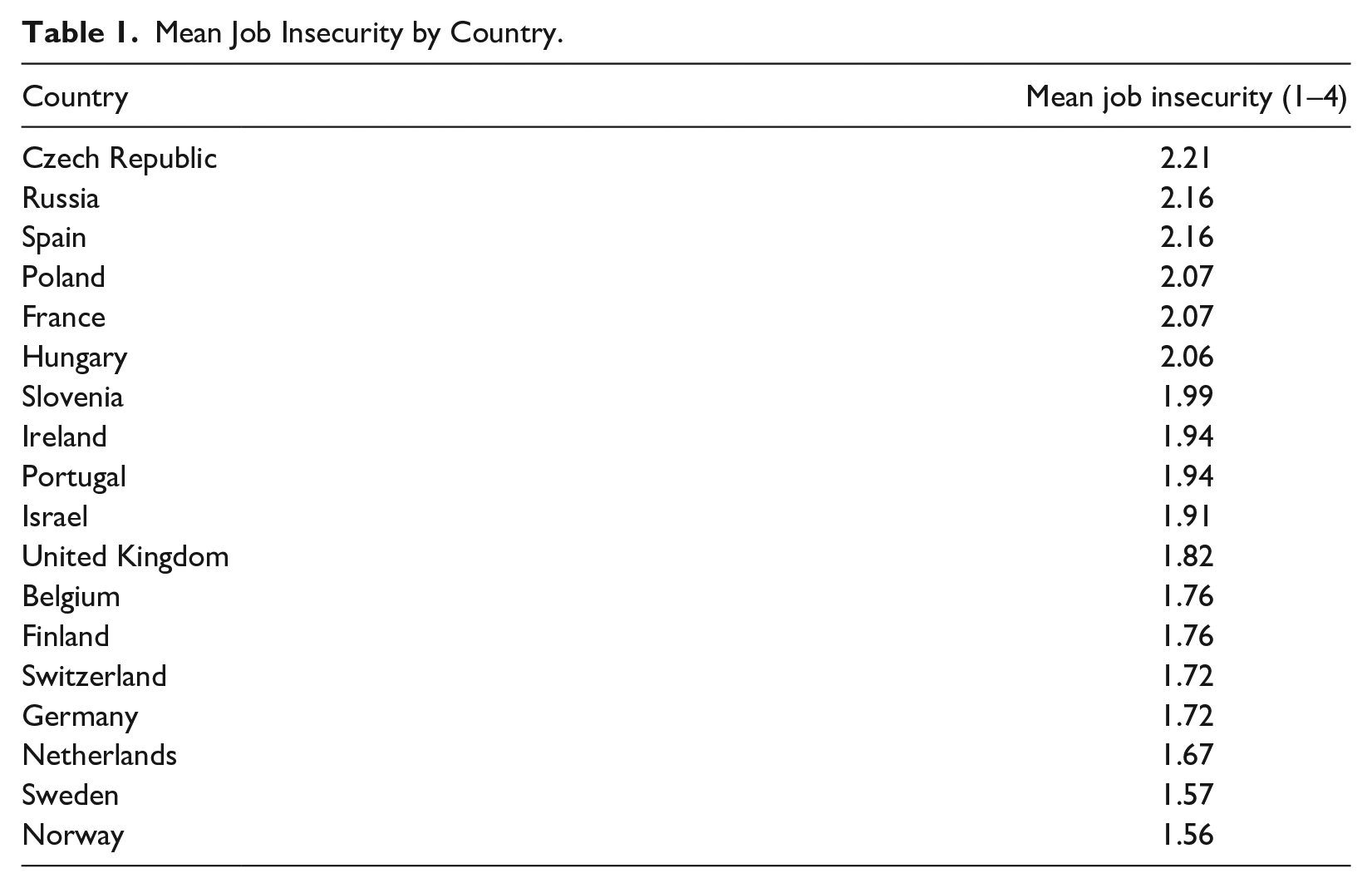
Among the respondents, 8.2 percent said it was very likely they would be unemployed in the next year and looking for work, 13.9 percent said it was likely, 34.6 percent said it was not likely, and 43.3 percent said it was not at all likely. Among those who believed they would be unemployed in the next year, a large majority of 77.5 percent were employed at the time of the survey. Therefore, although there is some overlap, those who report job insecurity are overwhelmingly employed individuals who fear they will lose their job, rather than unemployed persons believing they will remain unemployed. The correlation between unemployment and believing one will be unemployed in the next year was modest (r = .30).
Additional Variables
To test the hypotheses, several interaction terms will be generated to observe the effects of job insecurity among those in part-time, private sector, service sector, or manual industrial jobs, and among college-educated respondents. To appropriately estimate the effects of interactions, the original variables used to create the interaction term must be included in the models. Thus, each of these work or life situations will require their own dichotomous (0–1), or dummy, variables. In addition, I examine the national economic contexts in which workers are nested, focusing on unemployment rates and social spending levels.
Part-time work
A dummy variable for part-time workers will include those that report working less than 30 hours normally, which is a commonly used cut-off point to distinguish part-time from full-time work (Fagan et al. 2014).
Private sector
A private sector dummy variable will correspond to whether the respondent reported working in “a private firm” when asked by ESS interviewers what type of organization they work for or last worked for.
Service sector
The International Labor Organization maintains a nine-category system designed to classify occupations, known as the International Standard Classification of Occupations (ISCO). 1 Within each category, there are further figures that specifically classify each occupation. The fifth category refers to “service and sales” workers, of which the most common jobs are shop, stall, market salespersons (composing 35.5 percent of workers in this category); waiters, waitresses, and bartenders (10.9 percent); institution-based personal care workers (8.7 percent); cooks (7.6 percent); home-based personal care workers (7.2 percent); and hairdresser, barbers, and beauticians (6.4 percent). A dummy service worker variable will correspond to individuals who report working in occupations in this category.
Manual industrial
For the dummy variable representing manual industrial workers, I included all occupations related to manufacturing. These were drawn mostly from the ISCO’s eighth category, “operators and assemblers,” but includes some occupations from the ninth category of “elementary occupations”—namely, those employed as “manufacturing laborers.”
College education
For the college education dummy variable, I include all respondents that report having completed tertiary education or a graduate degree when asked the highest level of education they achieved.
Unemployment rates
Cross-national unemployment rates are gathered from the International Labor Organization via the World Bank’s development indicators (World Bank 2021).
Social spending
To proxy social spending, I retrieve cross-national data on the “social spending” indicator from the OECD (2021). According to the OECD, this comprises “cash benefits, direct in-kind provision of goods and services, and tax breaks with social purposes” aimed at helping “low-income households, the elderly, disabled, sick, unemployed, or young persons.”
Control Variables
Social movement literature details how various biographical, economic, and political factors in one’s life can influence their propensity to demonstrate. To control for the possibility of third variables influencing protest, basic variables such as age (linear), gender (male = 0, female = 1), education (1–5 scale), and ethnicity (ethnic “majority” = 0, ethnic “minority” = 1) will be added. Personal circumstances in one’s life are known to create “biographical availability” that allows one more time to protest (McAdam 1986). Being married and having a family, for instance, can give one less time to protest. Religiosity typically depresses protest participation (Arikan and Ben-Nun Bloom 2019), while union membership can facilitate it (Kerrissey and Schofer 2018). Workers in the public sector, too, are known to be more engaged in civic life (Kerrissey, Wilkerson, and Meyers 2020). Thus, variables for marital status (0 = nonmarried, 1 = married), religiosity (0–10 scale), and public sector workers (0 = non–public sector worker, 1 = public sector worker) are added.
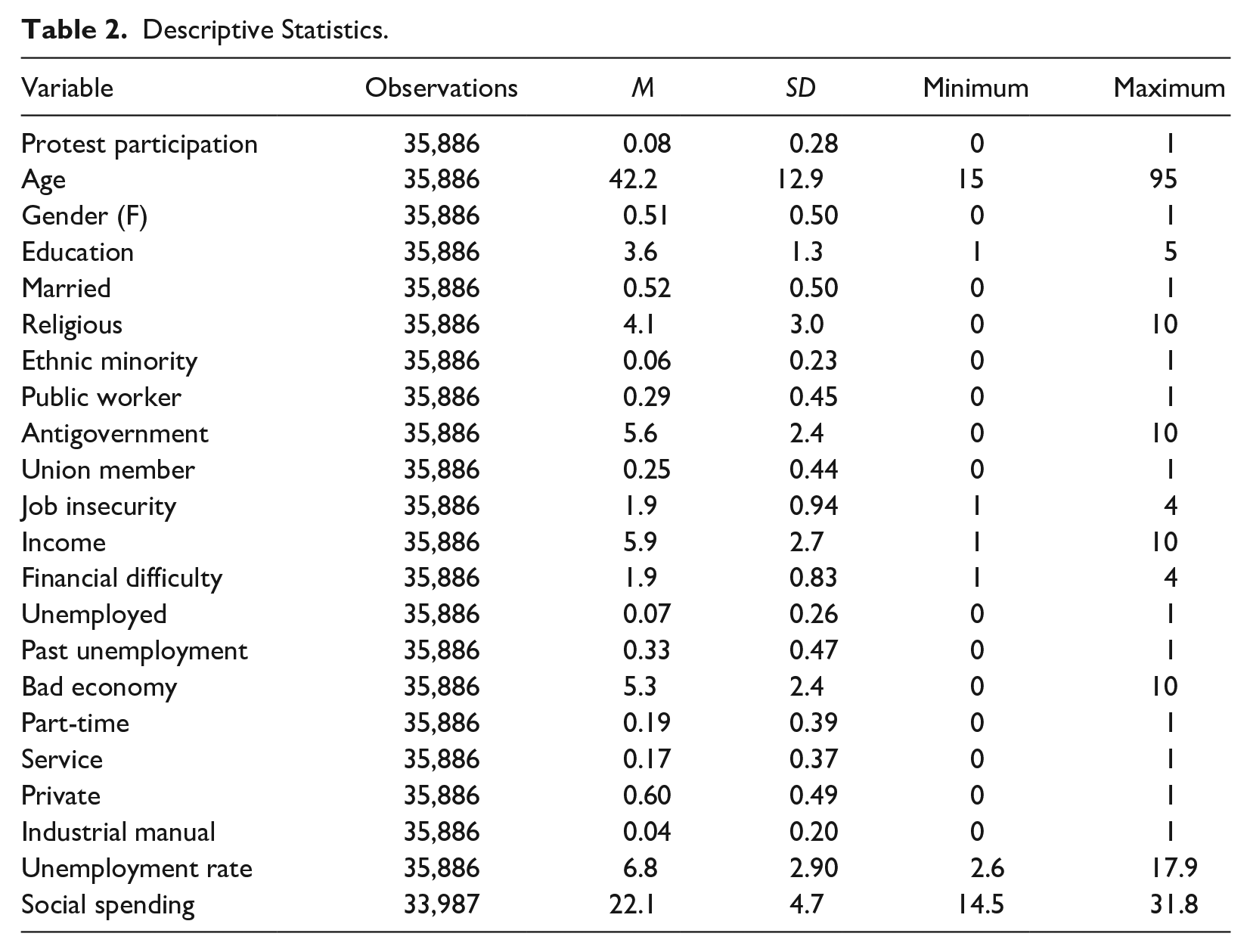
Individuals with job insecurity likely experience other economic grievances as well. In multivariate analyses, it is critical to control for these factors to ensure that any associations are not attributable to other socioeconomic indicators. Economic controls will include the respondent’s income level, subjective financial difficulty, past experience with unemployment, and satisfaction with the state of the national economy. In the ESS data, the respondent’s income level is coded on a 1 to 10 scale based on the income decile they fall into within their country. Subjective financial difficulty was measured by asking how the respondent feels about their household income, and whether they are “living comfortably,” “coping,” “finding it difficult,” or “finding it very difficult” on their present income. I coded responses from 1 to 4 where higher scores indicate greater difficulty. The questionnaire asks respondents if they have “ever been unemployed and seeking work for a period of more than three months.” I used this question to create a dichotomous variable representing previous experience with unemployment where those who said yes (33.4 percent of respondents) were coded as “1.” Last, respondents were asked to rate their satisfaction with the current state of the economy in their country from 1 to 10. I reverse coded this variable so that perceptions of a poor economy were given greater scores, representing a sociotropic grievance. Descriptive statistics for all variables are displayed in Table 2.
Descriptive Statistics.
Method
Protest rates in the ESS vary substantially by country, from as high as 17.2 percent in Spain to 2.2 percent in Slovenia. Hierarchical multilevel modeling is a strategy that accounts for differences among individual cases and among groups in which the individuals are nested. In this case, the most notable group is the respondent’s country, which exposes respondents to different political, cultural, and economic experiences. Each country varies in the rates of protest, education levels, union membership, job insecurity itself, and so on. To control for country-specific influences on protest participation, hierarchical logistic regressions will be employed.
Results
Figure 1 visually displays the rates of protest participation among individuals in different sectors, providing an initial look into differences in protest between job secure and job insecure workers. The overall protest figures are highest for educated and public sector workers, aligning with arguments that resources facilitate mobilization. Nonetheless, in nearly every category, those that report job insecurity protest more than those who do not report job insecurity. The only group for which this is not true is public sector workers, among whom job secure workers protest more. Among all respondents, 9.3 percent of job insecure respondents protested, compared with 7.9 percent of job secure respondents. This gap widens among workers in certain industries and employment situations. While the gap was only 1.4 percent among all respondents, job insecure individuals were 3.1 percent more likely to protest among part-time workers, 2.7 percent greater among service workers, and 2.3 percent greater among private sector workers.
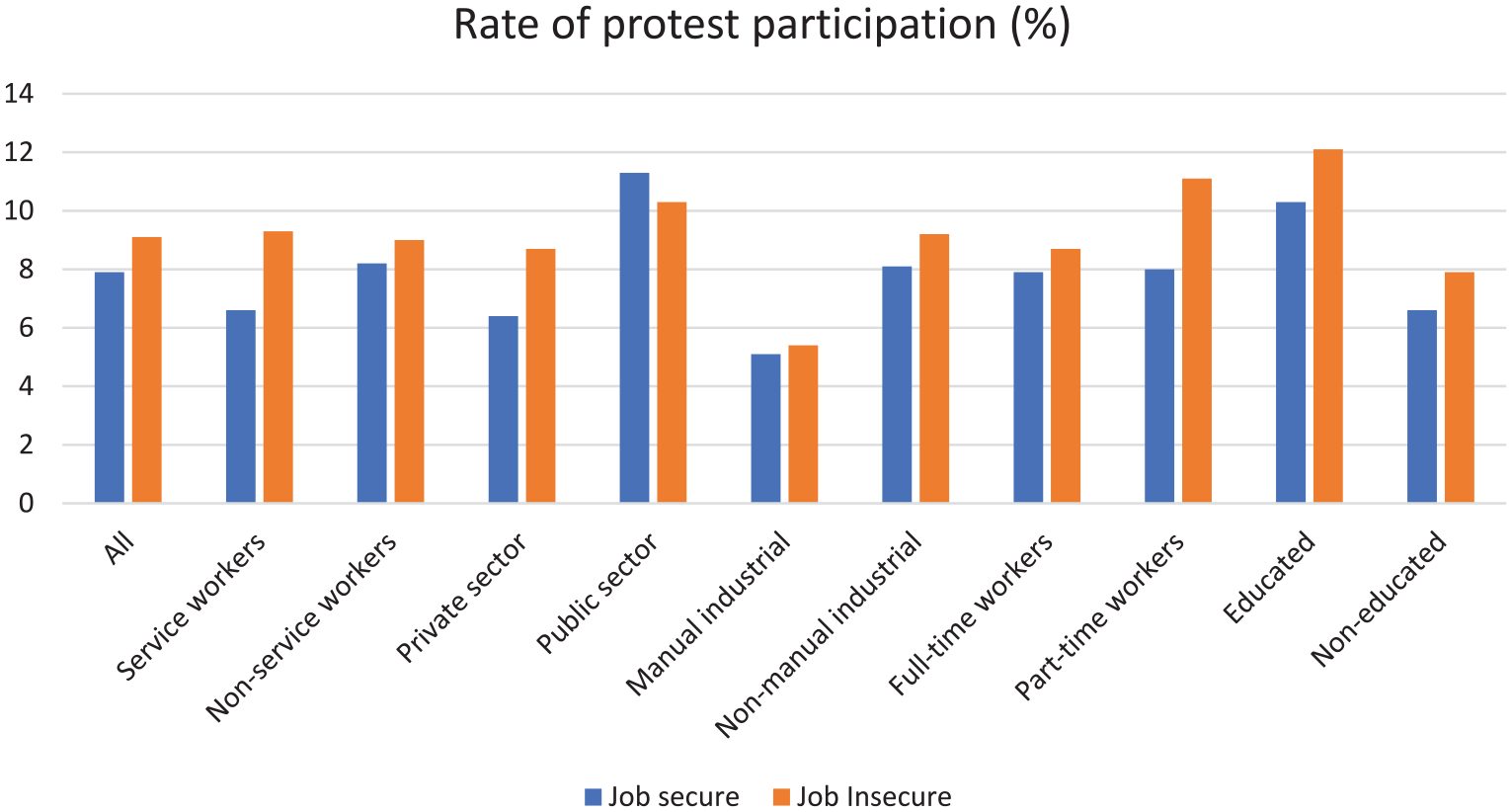
Rate of protest participation by job insecurity, within employment situations.
Although we notice a pattern in Figure 1 where job insecure individuals report greater protest participation, multivariate analyses will clarify whether these differences are better explained by other political, economic, or biographical factors. Table 3 displays the results of hierarchical logistic regressions testing the effect of individual-level factors on protest participation. Model I utilizes only biographical and political variables as controls, while a series of economic controls are introduced in Model II. Model III then narrows the sample to include only respondents who reported doing work in the past week.
Hierarchical Logistic Regressions Testing Effect of Individual Factors on Protest Participation.
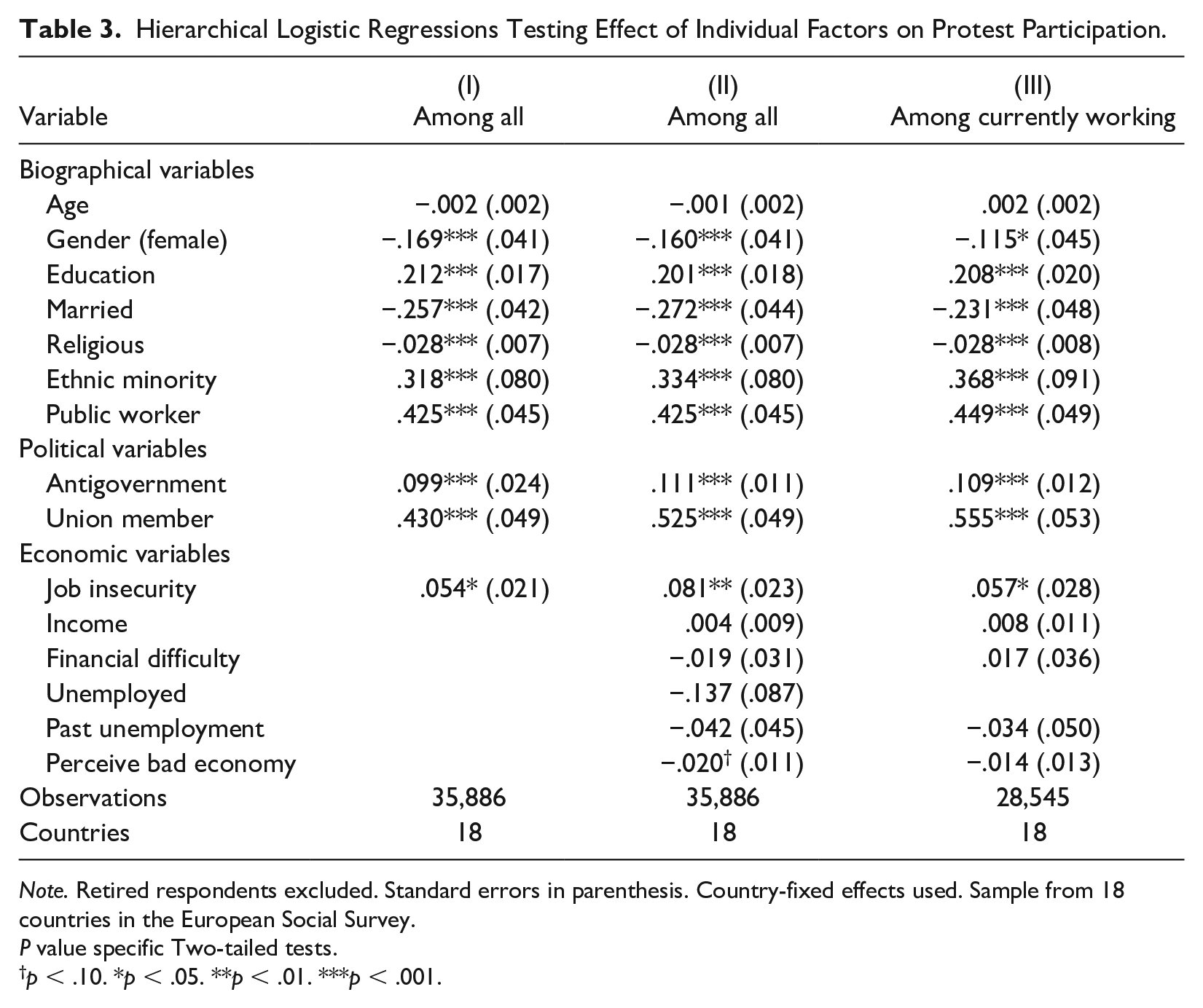
Note. Retired respondents excluded. Standard errors in parenthesis. Country-fixed effects used. Sample from 18 countries in the European Social Survey.
P value specific Two-tailed tests.
p < .10. *p < .05. **p < .01. ***p < .001.
In Model I, the coefficient for job insecurity of .054 is significant and positive at the p < .05 level. When converted to odds ratios, this represents a 5.5 percent increase in the odds of protesting for every unit increase in job insecurity. Compared with the least job insecure workers, the odds of protesting for the most job insecure workers are 15.8 percent greater. In Model II, four other economic variables are introduced: the respondent’s income, subjective satisfaction with their finances, previous experience with unemployment, and perception that the national economy is performing poorly. The job insecurity coefficient expands to .081 and remains significant (p = .001), representing an 8.4 percent increase in the odds of protest per unit increase in job insecurity, and a 27.4 percent difference in the odds of protest between the least and most insecure workers. Notably, the coefficients for income, subjective financial difficulty, and previous unemployment are not significant, and perceptions of the broader economy were only marginally significant (p = .076) and negative.
Among individuals who were working at the time of the surveys (Model III), job insecurity remains positive and significant (B = .057, p = .042). Overall, I interpret the association between job insecurity and protest participation as meaningful, albeit modest. The models lend support to Hypotheses 1 and 2, which predicted that job insecurity would be associated with greater protest participation among all working-age individuals and among those currently working, respectively.
The models also show powerful associations between various other factors and protest participation. Respondents who were highly educated, biographically available (i.e., unmarried), less religious, ethnic minorities, public sector workers, union members, and those with low confidence in the government were far more prone to protest. The coefficients for each of these factors were highly significant across all three models at p < .001. In Model II, the odds of protest were 69.0 percent greater for union members compared with nonunion members, and 11.7 percent greater for each unit increase in antigovernment sentiment, and 22.2 percent greater for each level increase in education. Public sector workers had 52.9 percent greater odds of protest than nonpublic workers. Many of these affirm the importance of factors previous social movements studies have focused on, such as resources (i.e., education) and biographical availability. Others, such as ethnic minorities and public sector workers, are less traditionally examined but were important in these models. Age was not significant in any model, a somewhat surprising result considering the reputation youth have for protesting.
Next, Table 4 displays the results for multilevel logistic regressions using interaction effects between job insecurity and a series of individual-level variables: work in service and sales, work in the private sector, work in industrial manual jobs, part-time work, and college education. The raw statistics from Figure 1 had indicated that the protest gap between job insecure and job secure workers was larger among part-time, private sector, and service workers. In multivariate analyses, the relationship effect only comes up significant for service workers (B = .131, p = .015) and private sector workers (B = .117, p = .005), supporting Hypotheses 3 and 4, respectively. Among industrial manual workers, the coefficient for job insecurity is negative and small, indicating no meaningful relationship and failing to support Hypothesis 5. For part-time workers, the effects are in the expected direction and approaching significance (p = .105), indicating marginal support for Hypothesis 6. College-educated respondents who reported job insecurity were not significantly more likely to protest, indicating no support for Hypothesis 7.
Hierarchical Logistic Regressions Testing Effects of Interaction Terms on Protest Participation.
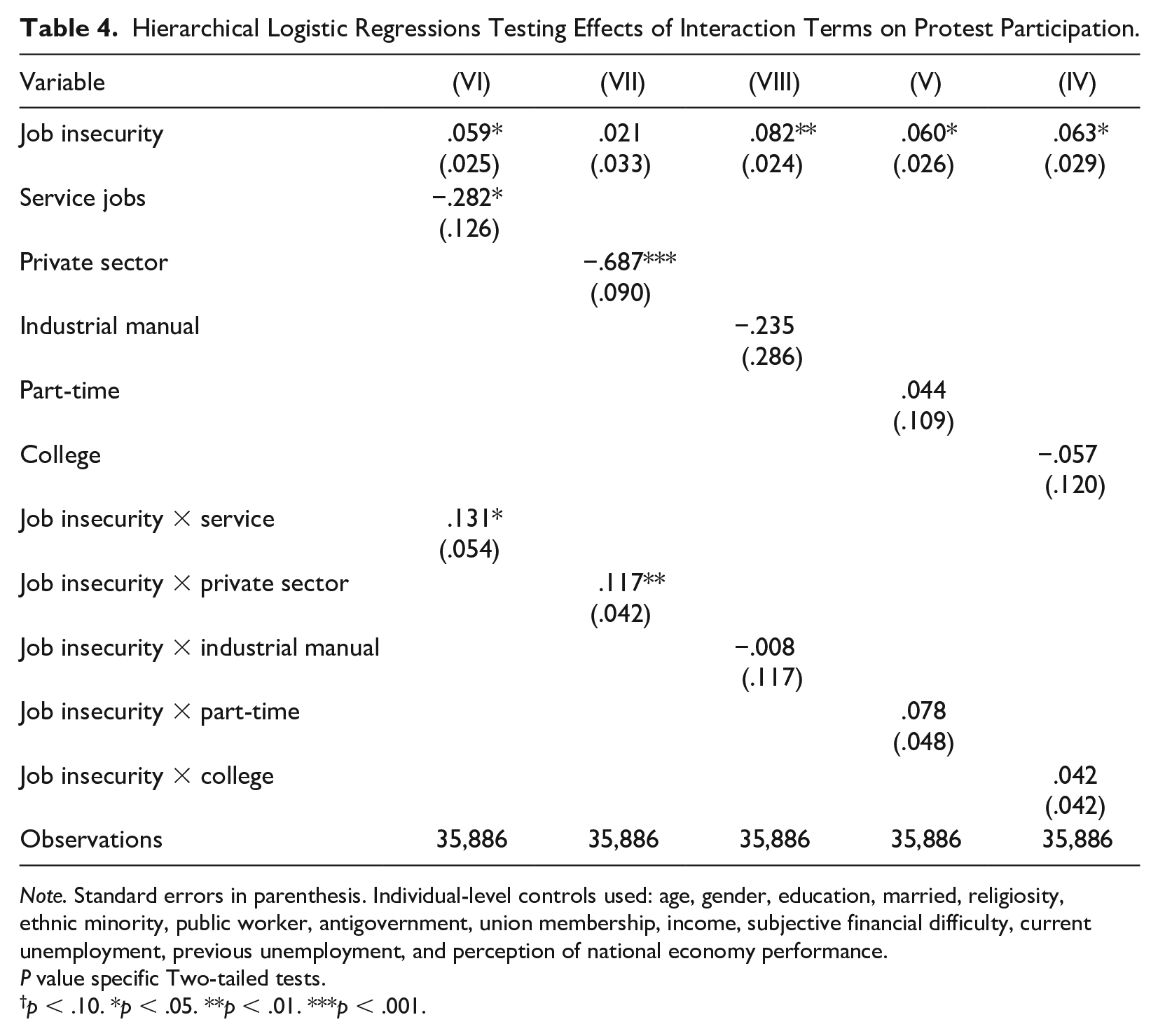
Note. Standard errors in parenthesis. Individual-level controls used: age, gender, education, married, religiosity, ethnic minority, public worker, antigovernment, union membership, income, subjective financial difficulty, current unemployment, previous unemployment, and perception of national economy performance.
P value specific Two-tailed tests.
p < .10. *p < .05. **p < .01. ***p < .001.
Table 5 turns to national contexts of insecurity that can interact with individual-level job insecurity to produce protest. The interaction term between social spending and job insecurity returns negative and significant results (p = .022), indicating that job insecure individuals protest more in countries with lower social spending. The social spending variable itself is negative and significant (p = .000), showing that lower social spending broadly is associated with greater protest. In the next model, the interaction variable between job insecurity and unemployment rates bore a small, nonsignificant effect. This pair of findings does not support Hypothesis 8 but affirms Hypothesis 9.
Hierarchical Logistic Regressions Testing Effects of Interaction Terms on Protest Participation.
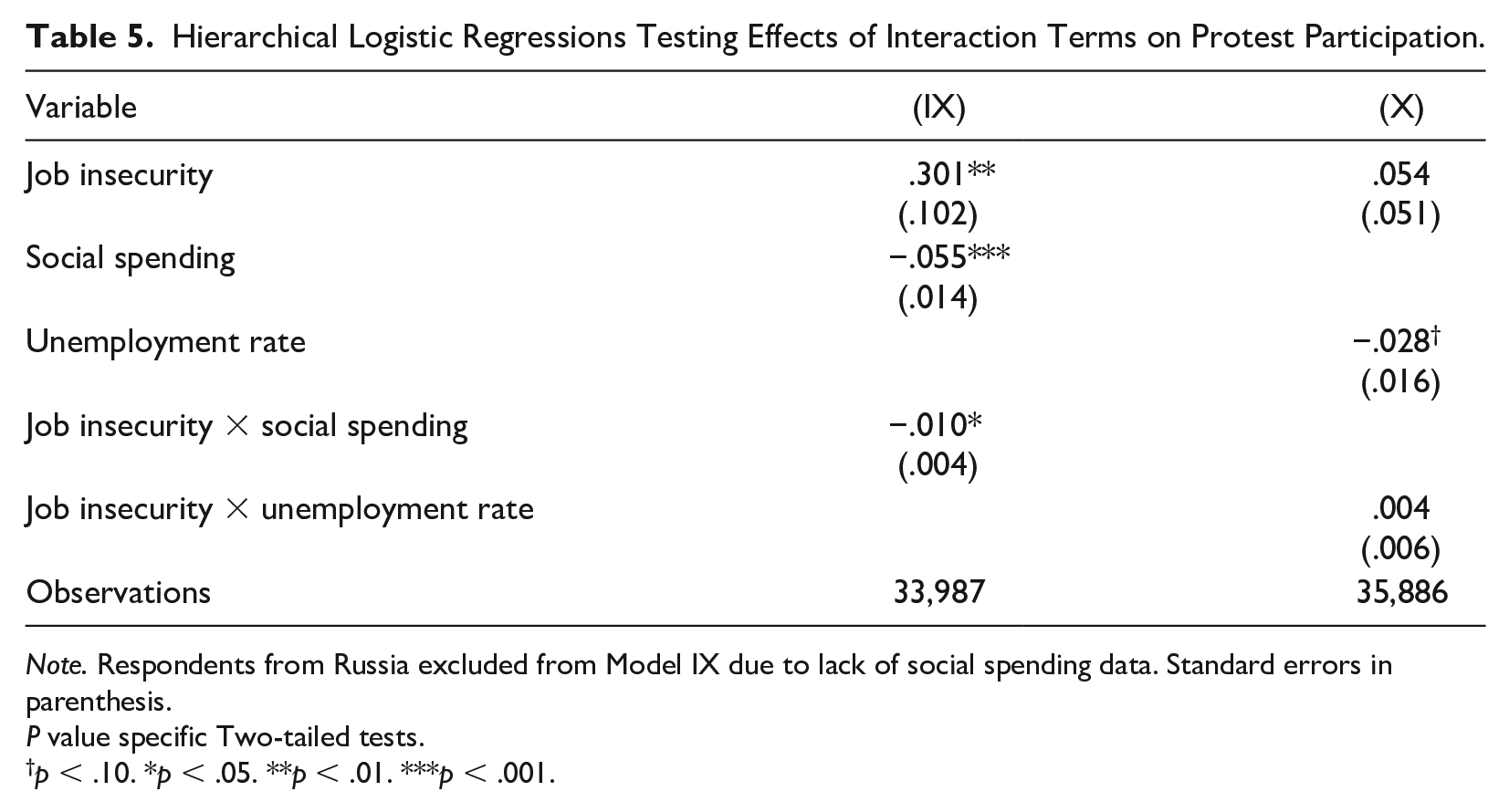
Note. Respondents from Russia excluded from Model IX due to lack of social spending data. Standard errors in parenthesis.
P value specific Two-tailed tests.
p < .10. *p < .05. **p < .01. ***p < .001.
In one model from Table 4 (Model VII) and one model from Table 5 (Model X), the stand-alone job insecurity variable lost statistical significance. Interaction terms introduce multicollinearity to models, and award significance to variables which strongly overpower the two independent variables which were used in the interaction term. For relatively modest effects like those exhibited from the job insecurity variable, it is not entirely surprising that job insecurity loses significance in some models. If the effect were more robust, we would expect job insecurity to remain significant despite the presence of interaction terms. Nonetheless, job insecurity does remain significant in most of the models with interaction terms including in the two models where interaction terms do turn out significant, indicating a noteworthy effect for job insecurity independent of its interaction with other variables.
The two rounds of survey data used (ESS Rounds 4 and 8) occurred in different historical contexts. Round 4 occurred amid the immediate aftermath of a recession (2008–2010), while Round 8 (2016–2018) occurred after Europe had recovered and most countries were experiencing more stable growth rates. As a robustness check, I disaggregate the models by the two rounds of survey data to determine if job insecurity plays different roles for protest in periods of economic downturn and economic growth. In these models, not presented, the pattern of job insecurity having a significant positive effect on protest is remarkably stable across time periods. For Round 4 (2008–2010), the coefficient of .090 was significant (p = .008), as was the coefficient of .088 for Round 8 (p = .007). This strengthens the consistency and generalizability of the findings, as this contextual difference did not appear to alter the mobilizing effect of job insecurity.
Discussion and Conclusion
Job insecurity has become a chronic anxiety for workers contemporarily. Insecurity has, in short, become the new normal (Hacker 2006; Kalleberg 2018; Pugh 2015). This study suggests having a pessimistic sense of one’s job prospects can encourage participation in political protests. By examining job insecurity, this study focuses on an individual-level economic problem that has not been thoroughly considered yet in a reemerging body of literature on economic grievances in social movements. The nature of this grievance, I argue, is unique in that it relates to one’s subjective perception of their economic future, rather than their objective current or past situation. The results suggest an individual’s perception of their job security is more important than their income, general sense of financial difficulty, and sociotropic perceptions of the national economy in influencing their decision to join protests. Given the vast literature on resources and protest, we may have expected income to play a role, but it did not. Nonetheless, the strength of the relationship between job insecurity and protest was notably smaller than other political and biographical factors, suggesting the findings represent a linkage that warrants further attention and confirmation by future research.
The findings suggest individuals who interpret their job to be insecure are more sensitive to protesting if situated among worse objective conditions, and this applied to both the individual and national objective conditions. While the gap in protest participation among job insecure and job secure workers was not large, the divide notably widens when feelings of job insecurity exist among those in particularly insecure employment situations. Job insecurity played a more pronounced role in influencing protest among workers in employment sectors with higher job turnover, such as service sector and private sector. In turn, it appears these objective circumstances and the feelings of insecurity that accompany them are more likely to be interpreted and acted on politically. Among those with more stable, benefit-rich employment, namely, public sector jobs, job insecurity was not associated with greater protest.
Job insecurity also played a greater role for protest in contexts of weaker state spending on public welfare. States with lower spending typically have lower unemployment benefits, smaller social transfers to lower income brackets, and greater worker commodification. Unemployment rates typically have high year-to-year variation that tracks with national economic performance, increasing during recessions and declining during economic booms, while public spending is more stable and often a product of the country’s historical “spending regime” (Esping-Andersen 1990). That public spending and job insecurity were found to interact to produce greater protest participation suggests long-term contexts of insecurity matter more than short-term economic fluctuations.
The role of economic adversity in driving protest has been revisited by a growing body of research. Recent studies have produced notable findings that attest to the importance of economic grievances, many of which show spikes in protest during national economic disruptions (Caren et al. 2017; Ortiz and Béjar 2013; Quaranta 2016). Individual economic insecurities can relate to protest participation, but usually when situated among certain contextual conditions rather than as a broad trend (Dodson 2015; Grasso and Giugni 2016).
Some have asserted that intensifying job precarity has incited working classes in developed countries to become more politically restive. Standing (2011) argues that a growing class of chronically job insecure individuals are fueling modern mass movements, while Arne L. Kalleberg (2018) suggests that “precarious workers’ insecurities and fears have spilled over to forms of protest that call for political responses to address these concerns” (p. 242). Moreover, case studies of postrecession movements in the United States and Europe indicated job insecure individuals showed up at disproportionate rates (Anduiza et al. 2014; Milkman, Luce and Lewis 2013).
This study contributes a number of insights that build on existing literature. First, it affirms existing suspicions that job insecurity is associated with protest participation. Specifically, it indicates that a relationship exists among large nationally representative samples, expanding the scope beyond case studies of movements. Next, by considering multiple economic indicators in the models simultaneously, the study suggests that among various economic concerns workers face, job insecurity may have unique potential to mobilize. Last, the findings contribute to a complex understanding of grievances that acknowledges the varying effects they can have depending on whom the grievance affects and the contextual factors in which they are embedded. Of the nine hypotheses, the results provide evidence for five, indicating a nuanced relationship which is pronounced for workers in certain employment situations and broader economic contexts, and muted for others.
Although most existing research on job insecurity has been done on developed economies, economic insecurity represents a global challenge (Kalleberg 2009), and perceptions of job security are typically worse in developing countries (Green 2009). Future research would contribute to discussion on protest among job insecure citizens by expanding our focus to non-Western contexts.
Footnotes
Declaration of Conflicting Interests
The author(s) declared no potential conflicts of interest with respect to the research, authorship, and/or publication of this article.
Funding
The author(s) received no financial support for the research, authorship, and/or publication of this article.