




Abstract
This article examines the subjective experience of work overload in a supportive workplace characterized by a non-intensive working time culture. Drawing on interviews with employees, we identify a typology of strategies used to cope with unpaid overtime work—embracing, bearing, avoiding, and concealing. These strategies are shaped by how individuals frame overtime and by their compliance with or resistance to the ideal worker image. Our findings show that responses are dynamic, with individuals navigating between strategies over time. By situating these dynamics in a supportive rather than intensive context, we refine understandings of both overtime and the ideal worker image, highlighting how passion and autonomy are mobilized to justify unpaid extra hours. In doing so, the study contributes to broader discussions on time use, temporal norms, and the lived experience of overload.
Keywords
Time issues are central to our experience of work. They have been, and remain, central issues at the heart of strikes and improvements in working conditions over the past century. They are also visible in current social phenomena that speak of people's relationship with work. This was noticeable when new trends emerged in the midst of the pandemic: “quiet quitting” and “the great resignation” both exposed that a number of people seemed to desire to spend less time at work or considered that work occupied too much time in their lives. Longer-lasting issues, like flexibility in working time, the 4-day work week, and work–life balance are all connected to time spent at work. Although it may be premature to speak of a decline in the centrality of work in people's lives, these recent trends are noteworthy. They draw attention to a long-standing tension within organizations: namely, over who controls the use of one's time, and thus the degree of autonomy individuals can exercise in relation to their work.
If this struggle can be seen as recurrent over time, it takes on a specific color in the context of today's work culture, especially among knowledge workers. Indeed, even before the pandemic, the time in one's life devoted to work in contemporary Western life was garnering attention, leading some to speak of a creeping culture of overwork (Waytz, 2023). In this culture, individuals tend to favor work over their personal lives and work long hours, which, in turn, blurs boundaries between work and non-work (Bourne & Forman, 2014). The pandemic has brought even more to the fore issues pertaining to work–life balance, since it has reshaped the where, when, and how work can be accomplished (Moen & Chu, 2024). In this context, a growing number of workers have spoken of the challenges of either containing work to its desired place or limiting its impingement on life (Ng & Stanton, 2023).
Several elements have been identified as contributing to these challenges, like constant connectivity and organizational control (Blagoev et al., 2018). Another of these elements is work overload, defined as the subjective sense that there is too much to do, given the resources. Experiencing overload leads employees to spend more time than expected at work (Kelly & Moen, 2020). The subjective perception of what constitutes overload raises several questions, including how time is used––both in terms of how much time is devoted to work and how that time is distributed over a given period (Evans et al., 2004)––but also about the degree of autonomy individuals have in managing that time.
Although the culture of overwork has been noted across a variety of occupations and industries (e.g., Gepts, 2024; Hochschild, 1997), research suggests it is especially characteristic of white-collar, salaried, and high-status professional workers (Kuhn & Lozano, 2008; Moen et al., 2013). These groups, often exempt from hourly regulation, face strong normative pressures to demonstrate commitment and availability through extended working time. Moreover, even in contexts where organizations signal support through flexible policies, employees may internalize responsibility for managing boundaries and frame overwork as a matter of individual choice, which sustains the very culture such policies aim to alleviate (Wynn & Rao, 2020). Our study speaks to this phenomenon by examining how such pressures are experienced and managed in a context that departs from the high-pressure consultancy settings emphasized in prior research.
In this article, we start by focusing empirically on this subjective experience of work overload. We take a subjective and situated approach to time use and aim to study how people react to work overload, and, more specifically, how they deal with the pressure to work more than expected. More specifically, we zoom in on situations where this pressure to work more may translate into overtime work, a connection that has been assumed but rarely examined in depth. While overtime commonly connotes additional paid hours beyond a standard schedule, in this paper we use the term more broadly to capture situations where employees extend their working time beyond their formally assigned or expected schedule, without additional compensation. This usage aligns with studies documenting unpaid overtime as a widespread form of overwork among professional and white-collar workers (e.g., Aronsson, 1999; Chung & Van Der Horst, 2020; Papagiannaki, 2014).
Positing that individual variation will exist with regards to how overload is experienced and how people react to having to work more hours than expected, our first objective is to document such variation; our second objective is to attend to the reactions and strategies enacted by individuals when facing demands to work more than expected. This allows us to address a gap in existing research: while quantitative studies have established the negative implications of long hours and overload, fewer studies explore qualitatively how overload is experienced as pressure that sometimes prompts overtime, and how individuals interpret and respond to that situation.
We pursue this inquiry in an organization characterized by a non-intensive working time culture and known for its flexibility and work–life balance policies for two main reasons. First, work overload has, up to now, tended to be studied in intensive contexts that imply extreme work hours, defined as patterns of 60 to 120 h of work per week (Blagoev & Schreyögg, 2019), which means that we know little about employees in workplaces with low expectations and rewards for long work hours (Lee et al., 2024). Second, studying a context that is explicitly supportive of work–life balance allows us to examine how experiences of overload and unpaid overtime can nonetheless arise in settings designed to prevent them, thereby providing insight into the ambivalent effects of flexibility and autonomy on employees’ time use. In this paper, we use the term non-intensive workplace not to denote the absence of overload, but the absence of extreme hours or high-performance culture characteristic of traditionally intensive settings such as consulting, investment banking, or IT start-ups. Non-intensive contexts—which correspond to many organizations—have hence been neglected because of the assumption that the very phenomenon of overload may not be as salient when work is deemed less intense. Yet, given its subjective nature, experiencing work overload may be felt by a wide range of workers, warranting an exploration that does not presuppose that it mainly occurs in contexts regarded as intensive.
Our study aims to shed light on how people experience work overload by focusing on unpaid overtime work as a key empirical manifestation. It explores the individual strategies employees develop as they try to grapple with the demands to work more hours. With our study, we make three key contributions: 1) we refine understandings of overtime work by offering a typology of strategies that reveals the diversity of ways employees experience and frame working beyond contractual hours; 2) we contribute to the concept of ideal worker image by showing how it manifests in supportive workplaces and by adding two new dimensions—passion and autonomy—as central to its enactment and 3) we show that responses to overtime are dynamic, with individuals shifting between strategies over time, thereby adding nuance to the autonomy paradox by revealing how autonomy can both sustain and mitigate overwork.
Theoretical Framing
Overload and Overtime Work
Having to work more hours than expected is far from being an uncommon experience for many knowledge workers. As Kelly and Moen (2020) highlight, rising workloads characterize an increasing number of jobs that were previously immune to these matters, resulting in having to spend more time at work than expected. As defined, work overload is a subjective appreciation of one's workload, and one of its consequences is that some workers may feel that they have to spend more hours at work in order to do their work or to meet their deadlines. Work overload has been strongly related to stress (e.g., Brown & Benson, 2005) and dissatisfaction at work (e.g., Nirel et al., 2008). It could also be the strongest indicator of work–life conflict (Skinner & Pocock, 2008) and erodes the well-being of individuals and communities (Williams et al., 2008). Overload has also been studied in assembly lines (e.g., Bautista & Cano, 2008; Yano & Rachamadugu, 1991) and in the context of downsizing, leading to the “survivor syndrome” for the remaining workforce (Fong & Kleiner, 2004). Most of these studies have approached work overload based on large-scale quantitative surveys. However, such studies do not inform us of how people individually and concretely deal with these situations.
Indeed, the feeling of having too much work to do may lead workers to engage in what appears to be voluntary unpaid overtime work, where one works more hours than their contractual hours on their own initiative; to be distinguished from mandatory overtime work, exemplified, for example, in healthcare organizations where nurses can be forced to stay at work for another shift (Golden & Wiens-Tuers, 2005). Unpaid overtime work offers us an entry point to study overload, given the close connection between the two. For Kelly and Moen (2020), who offer one of the few works delving into the subjective experience of overload, long work hours is one of the tangible work situations that can generate this subjective experience. Some quantitative studies on overload have identified overtime work as one of the characteristics of work overload, along with lack of time, pace and intensity of work (Brown & Benson, 2005). Overtime work has also been identified as a way to cope with work overload, which, however, contributes to sustaining work overload (Delisle, 2020).
Surprisingly, given the current context where time spent at work is being explicitly discussed, overtime work has not been the focus of many studies, even less from a qualitative approach that would give a voice to people's own experiences. Recent studies addressing overtime work and its effects (e.g., Luther et al., 2017; Rabenu & Aharoni-Goldenberg, 2017) highlight the connections between overtime and injuries, stress and sleep problems. Overtime work has also been considered for its ambiguous relationship with productivity or work satisfaction (e.g., Beckers et al., 2008; Ko & Choi, 2019).
Looking more specifically at unpaid overtime, studies have found that it is associated with higher levels of stress and burnout (Shahidi et al., 2024) and in more extreme cases, mandatory unpaid overtime has been found to generate negative emotions and undermine subsequent motivation to work (Shen et al., 2025). However, unpaid overtime has also been associated with long-term financial advantages such as higher earnings growth among those engaging in it (Pannenberg, 2005). Other research links unpaid overtime to professional identity and performance norms, portraying it as a behavioral expression of the ideal worker image and a source of tension for work–life balance and gender equality (Chung & Van Der Horst, 2020). Their study shows that flexible work arrangements—initially designed to support work–life balance—can in practice lead to longer unpaid hours, particularly among professional men and women without caregiving responsibilities. This finding reinforces that unpaid overtime is not only shaped by organizational norms but also by gendered expectations and capacities for availability, as men often leverage flexibility to demonstrate commitment, while women's use of flexibility remains constrained by care responsibilities. Despite these insights, we still know little about how workers experience overload as pressure to extend their working time, particularly when overtime is voluntary and unpaid. Our study addresses this gap by examining unpaid overtime as a key empirical manifestation of overload.
Our examination starts from the recognition that not all individuals respond to this pressure in the same way. Indeed, while much research documents the negative consequences of long hours, a smaller body of work suggests that workers’ responses can vary: some frame long hours as a chosen investment or even a source of enjoyment (Eikhof et al., 2007), while others deploy distinct tactics to negotiate boundaries between work and nonwork (Kreiner et al., 2009) or develop temporal strategies in shorter workweek contexts (Mullens & Glorieux, 2023). Importantly, such variation is often shaped by cultural models such as the ideal worker— an internalized image of someone working full-time and often overtime with no career interruptions (Williams, 2001), a person who is fully committed and available to work —which workers may embrace or resist (Reid, 2015). More specifically, Reid (2015) shows how workers negotiate organizational pressures to embrace a professional identity that centers on devotion to work. She identified three responses representing how professionals working in a consultant firm experienced expectations of the ideal worker, which she labelled embracing, passing and revealing. Building on this, we ask how such variation appears in a supportive, non-intensive work setting, where overtime is neither formally required nor highly rewarded.
Time Spent at Work and Time-use
Attending to overload by looking into overtime work is connected to the broader topics of time spent at work and time use, defined as how much time is devoted to work and how that time is allocated over a particular period (Evans et al., 2004; Feldman et al., 2020). This line of inquiry into how time structures operate can be traced back to Thompson's (1967) study of the transition from feudal agriculture to industrial capitalism and how this shift entailed the replacement of task-oriented rhythms with a regimented, clock-based organization of labor. This historical perspective underscores that norms around working time, overtime, and temporal commitment are not natural givens, but socially and historically constructed.
More recent work on time spent at work—and its effects on people—has mainly been treated by two bodies of literature. First, it has been at the heart of studies on overwork and extreme hours (e.g., Blagoev et al., 2018; Blagoev & Schreyögg, 2019; Kärreman & Alvesson, 2009; Li, 2023; Michel, 2011; Peticca-Harris et al., 2015), which have documented extreme dedication to work, the persistence of long hours, and their negative impacts, but in very specific contexts such as consulting, banking and designing video games. Second, and more importantly, the work–life balance literature has addressed the issue of time spent at work, with the assumption that working time should be limited. Voluntary overtime work lengthens the time spent at work and hence has been criticized in a number of studies. For example, Seitz and Rigotti (2018) showed that working overtime hinders the positive effects associated with working time autonomy and is negatively related to job satisfaction and satisfaction with leisure time, a result also hinted at by Brown (2012). Müller et al. (2018) investigated the consequences of long working hours on employee health and found that long hours, work intensity (deadline and performance pressure) and flexibility requirements (permanent availability and changes in working hours) were related to health complaints.
However, other studies nuance these results, revealing individual approaches that illustrate a wider diversity in people's responses to work and home demands. Eikhof et al. (2007) argued that framing long hours at work as bad and to be avoided is simplistic; their study shows that long hours can actually be a deliberate choice for those who enjoy their work. Kreiner et al. (2009) have demonstrated how people can use different tactics (categorized as behavioral, temporal, physical and communicative) to successfully negotiate the demands between work and home life, such as leveraging technology, controlling working time, adapting physical boundaries and setting expectations. Building on Flaherty's (2003) formulation of time work as the agentive effort to shape and manage temporal experience, Moen et al. (2013) apply this concept to professionals, viewing them as actors engaged in time work—that is, strategies to lessen the negative effects of chronic time strain. They identify four such strategies—setting priorities, scaling back, blocking out time, and time shifting—that highlight both traditional and more novel ways of adapting to the blurring of boundaries between work and nonwork. Mullens and Glorieux (2023) have also highlighted that employees find their own temporal strategies in the context of a shorter workweek (for example, working in a more focused way and being more conscious of their time). Yet, beyond these studies and despite the fact that people enact temporal structures in various ways (Orlikowski & Yates, 2002), more work is needed to investigate these experiences of time in relation to work (Feldman et al., 2020), and more specifically, to focus on workers’ strategies and resistance in relation to working time (Li, 2023) in order to better understand time spent at work and time use.
Furthermore, a more critical understanding of time spent at work and of time-use can lead us to question internalized models that may influence people's conception of how they should behave in relation to time. The concept of ideal worker (Acker, 1990; Williams, 2001; Reid, 2015) can help us to reveal how, even in organizations that promote work–life balance, employees may internalize and reproduce cultural ideals of commitment through working overtime. It corresponds to an idealized conception held by individuals, which depicts this ideal worker as someone who associates hard work with displays of temporal commitment and regularly places work ahead of personal life (Feldman et al., 2020).
While Acker (1990) identified the ideal worker norm as rooted in gendered divisions of labor—originally corresponding to a man unencumbered by caregiving responsibilities—subsequent research highlighted how this expectation continues in contemporary workplaces. More specifically, it has evolved to portray individuals highly dedicated to work regardless of gender and personal context (Dumas & Sanchez-Burks, 2015) and remains widespread in the workforce, especially among white collars and knowledge workers (Beckman & Mazmanian, 2020; Williams et al., 2016). While much work–life research frames career and family as competing domains—a trade-off perspective that reinforces the ideal worker norm (Kossek et al., 2021)—recent scholarship shows that cultures of overwork are also reproduced by those who wish to be engaged in family life. De Laat (2023) terms this dynamic “dual devotion,” highlighting how employees can remain attached to the ideal worker standard even while prioritizing family, thereby contributing to its persistence. Although many adjacent concepts — such as norm, behavior, and myth—have been used to account for this ideal worker, in our research we use the term image because it underscores the cultural and symbolic internalized representation against which employees measure themselves. This choice allows us to capture not only structural expectations but also the ways these ideals are subjectively invoked, negotiated, and sometimes resisted in practice. Our usage also aligns with Reid's (2015) conceptualization, where the ideal worker image is treated as an expected professional identity that individuals may embrace, pass, or reveal against.
As defined by Beckman and Mazmanian (2020), the concept of ideal worker image rests on four key characteristics: spending long hours at the office, working additional hours at home, being always accessible and prioritizing work. This conception speaks to a specific work culture, and this conception of the ideal worker can also be understood through Goffman's (1956) notion of idealization—the tendency for individuals to present themselves in ways that exemplify culturally valued role ideals. Importantly, such impression management does not merely serve individual identity or peer recognition; it also sustains work norms that benefit those who own or control the means of production by encouraging discretionary effort without necessarily altering formal work arrangements or compensation.
Hence, in this study, we ask: how do professionals in non-intensive work environments experience work overload, and how do they vary in their responses? Attending to these questions allows us to document the subjective experience of work overload, which is key to exploring people's relationship with work, working time and the forms of agency they can exercise in the face of work demands.
Methods and Empirical Setting
This study is part of a broader research project exploring tensions related to time in organization and relies on a qualitative case study. For this larger project, we were looking for an organization recognized as a “good employer” and a non-intensive workplace (where people work less than 60 h a week). This choice was motivated by the need to inquire into the subjective experience of working time in settings different from those usually chosen to address this topic. Based on a purposeful sampling (Patton, 2014), we selected the organization Equilibrium (pseudonym), a Canadian financial institution with nearly 50 000 employees, which corresponds to these two criteria. Data collection mainly rested on individual interviews, which were chosen because pursuing this project required accessing individual descriptions of their experiences of working at Equilibrium as described in their own words.
We began our inquiry with a general interest in the subjective experience of working time by our respondents. It quickly became clear that many people were responding to overload by working more. Overtime work, a practice that is clearly tied to overload (Kelly & Moen, 2020), then became the empirical focus of this study. Subsequent analysis led us to develop a typology of strategies, as described in the results section.
Empirical Context
Equilibrium is a well-known financial institution in Canada recognized for its work-family conciliation policy. Professional employees working at Equilibrium are provided with flexibility regarding how they set their schedules, which is part of its work–life balance practices but has also been related to increasing hours (Putnam et al., 2014). The majority of employees have a flexible 35-h schedule, meaning that they can work their hours by setting their own schedules. In general, most participants take advantage of their time flexibility, work from home from time to time and appreciate being able to adapt their schedule when they have personal obligations. However, the nature of the work also makes it difficult to be away at times, such as for meetings or technological implementations. Most of them are ready to work more when they have to meet a deadline and will adjust their schedule according to their workload. It is important to note that most of our respondents are professionals who, based on their status, are not being paid for their overtime. However, most of them do work more than the standard week, at least on some occasions.
Importantly for our focus on non-intensive contexts, the respondents did not describe their organization as fast paced or innovative, a description that is aligned with this financial institution's reputation in media and public opinion. In fact, Equilibrium has been described by the respondents of all departments as ‘slow-paced,’ ‘very bureaucratic’ and ‘lagging behind the market.’ This overall characterization is relevant for our study, because much of what we know about overload and long working hours comes from research on fast-paced, innovative organizations, such as consulting, investment banking, or IT start-ups, where cultures of extreme work are well documented (e.g., Michel, 2011; Kärreman & Alvesson, 2009; Peticca-Harris et al., 2015). By contrast, Equilibrium offers a different empirical setting—bureaucratic, slow-paced, and explicitly supportive of work–life balance—allowing us to extend inquiry beyond high-intensity workplaces and to contribute to understanding overload and overtime in contexts where organizational conditions appear more favorable. Yet, in spite of this characterization, most respondents still reported working more than the standard working hours stipulated in their contract in order to fulfill their workload, an amount that varies through participants, and most importantly, through time. Respondents thus confirmed being regularly placed in situations where they felt that they needed to work more than their standard hours, which provided us with an empirical entry point into their experience of overload and how they respond to it.
Research Design, Data Collection and Analysis
We conducted 28 semi-structured interviews with professional workers of Equilibrium before the pandemic, including 20 women (71%) and 8 men (29%). The sample was drawn from three groups participating in a broader case study, complemented by five additional exploratory interviews conducted beforehand to refine our understanding of the organization and work experience as related to time issues. Most interviews were conducted during regular working hours, with only a few taking place outside of work time to accommodate participants’ schedules. We interviewed people from various departments (infrastructure, procurement, wealth management, marketing and innovation), which allowed us to capture diverse perspectives on overtime work within this single organizational context, while acknowledging that the sample was not intended to be representative of all employees. We excluded branch employees and those in direct customer service, whose work conditions differ significantly from those of our target group (e.g., eligible for flexible working). Interviews were held either in person at the company's offices (n = 23) or on the phone (n = 5) in the case of employees working and living in another city (the company has two main locations for professional workers). Each interview lasted from 30 min to 4 h (an average of 67 min), was audio-recorded with consent, and transcribed verbatim for analysis. Individual roles, organization of working time, deadlines and time issues were among the main themes discussed. For example, we asked participants: what do you do when you have too much to do for the time you have? Could you describe a situation where this happened? Interviews were recorded and notes were taken throughout the entire process.
Interviews were analyzed with the help of NVivo and began with a provisional coding list related to our broad interest in the experience of time spent at work. This list was revised and expanded to include new codes that emerged throughout the data collection process and analysis. Through the analysis, it became clear that to deal with overload, many people were working more, either as a strategy, or because they were under pressure to deliver. Our inductive approach brought us to move back and forth between data analysis, literature and emergent findings.
One of these emergent findings was that, despite the fact that the organization is reputed as focused on work–life balance, most of our respondents had to resort to overtime work in order to address their workload and/or meet their deadlines. However, how our participants responded to this need varied greatly, which prompted us to inquire into this variation. We hence paid close attention to and progressively identified the variety of strategies through a second round of pattern coding. All strategies have been labelled with a verb to denote that they correspond to an action done by participants in relation to overtime work: bearing, embracing, concealing and avoiding. In this round, the concept of ideal worker was especially relevant in helping us distinguish the variety of strategies. We came to distinguish between two types of reactions regarding commitment and availability to work (complying with or resisting the ideal worker image) and two types of framing of overtime work (seeing it as unnecessary or as self-chosen), which led us to develop a typology of strategies. Given the prevalence of the ideal worker image in our data, we performed a third round of analysis centered specifically on this theme and used ideal worker image's four key characteristics as proposed by Beckman and Mazmanian (2020) — long hours at the office, working additional hours at home, always accessible and prioritizing work — as coding categories. This allowed us to refine our understanding of our respondents’ experiences of overload. Finally, to better account for the subjective experience of participants, we developed four vignettes, each based on the experience of one actual respondent and illustrating quite vividly one response. Vignettes may be revelatory of concepts and bring them to life by describing events or incidents (Jarzabkowski et al., 2014; Reay et al., 2019), and they serve to enrich the illustration of the four specific responses we uncovered.
We now present our findings, beginning with the proposed typology of strategies toward overtime.
Findings: A Typology of Individual Strategies to Overtime
Although Equilibrium employees are required to work 35 h a week, 22 out of our 28 respondents are working more than that every week at the time of the study. Respondents directly connected this need to work longer hours to experiencing work overload as they explained. While the number of hours worked varies greatly and does not generally correspond to what has been labelled extreme hours (e.g., over 60 or 70 h of work per week; Hewlett & Luce, 2006; Li, 2023), some employees talk about their experience in terms of intense work. Of the 6 remaining participants, 4 may work over 35 h a week when they are ‘in a rush’ to meet a deadline, and only two stated that they never work more than their standard week. Given Equilibrium's emphasis on (and reputation for) work—life balance, overtime work raises questions. Indeed, at Equilibrium, many of the professionals we interviewed reported working overtime despite the absence of a formal requirement to do so. Analyzing the interviews revealed that this experience of working overtime varies greatly between participants, from employees willingly working overtime to others not doing more hours than expected. The way these extra hours were experienced also varied significantly depending on participants, variations that warrant exploration.
First, we found that participants held two different points of view toward overtime: either as unnecessary and brought by factors that could be avoided (e.g., non-important or non-urgent requests from managers or other stakeholders), or as self-chosen to adapt to work demands. Second, based on how they talked about their experience of working time, we also found that participants adhered with varying intensity to the ideal worker image. Some participants mentioned working from home (allowing them to work without distraction), being available all the time, and prioritizing work over personal life or health when the need is there to explain how they engaged voluntarily in overtime work; others talked in a manner that denoted that they were consciously resisting this conception.
Taken together, these two dimensions — the framing of overtime work (as unnecessary or self-chosen) and the relationship to the ideal worker image (compliance or resistance)—form the basis of our typology. More specifically, the first dimension captures how individuals frame overtime work, while the second reflects their stance toward expectations of constant commitment and availability. Crossing these two dimensions yields four distinct strategies—bearing, embracing, concealing, and avoiding—which we develop in the following sections.
These different strategies should be understood as concrete approaches used by our respondents to deal and cope with overtime work. Furthermore, as we detail below, these strategies are not impermeable to one another over time, pointing to the (relative) agency of individuals in how they react to the situation of having to work overtime in a situation of overload. This underlines the fact that the typology deriving from our matrix should not be understood as made of categories to which individuals belong in a fixed manner; as we will discuss, responding to overtime work is a dynamic phenomenon: depending on the circumstances, people can vary their response to overtime work, hence navigating between strategies. This variation is not, per se, a direct response to overtime work, but rather a broader approach toward this situation over time.
Among the participants complying, two different strategies were found, depending on the framing of overtime: bearing or embracing overtime work.
Complying and Framing Overtime as Unnecessary: Bearing
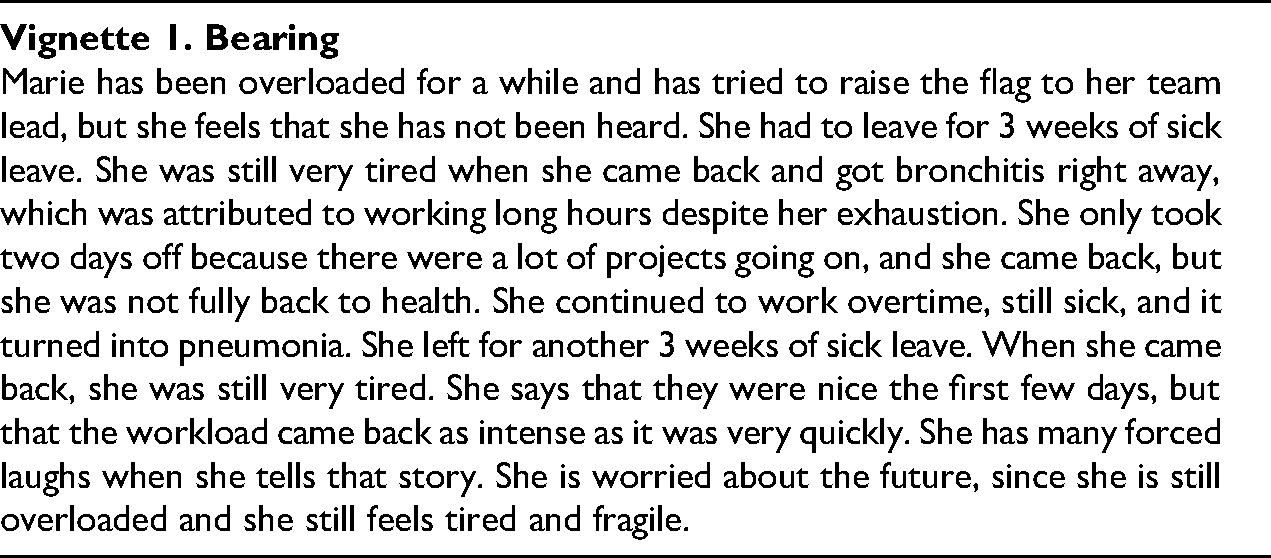
The first strategy corresponds to employees complying with the ideal worker image and framing overtime as unnecessary: bearing. Here, “unnecessary” refers to how participants interpreted the origins of their overtime rather than to its perceived urgency. They viewed these extra hours as resulting from avoidable demands—such as poor coordination, unrealistic expectations, or inadequate staffing—yet still complied with them out of a sense of responsibility or pressure to perform.
As mentioned, most of our respondents were not eligible to be paid overtime. But some of them mentioned the expectation to work more when needed, and some respondents did not seem to be comfortable with the pressure to work more than their hours and to be constantly available. One project manager described what happened the last time she took a day off: We count on the availability of one another. For example, I was on vacation on July 1st. [Imitates a colleague] ‘Well, it's okay, Clara, you’re on vacation, but are you ready for a phone call?’ […] Yeah, but Thursday I’m on vacation. I say OK, we can call each other on Thursday, but in that case at 8:30 a.m., so I can start with that and then enjoy my day off. And then she sends me a message at 8:45 a.m. saying, ‘I will not be available, finally. I’ll call you back later.’ Uh … no, on holiday, I will not wait for you. If I go out, I’ll leave without the phone, and then no way that I wait for you… So I sent a message, I said, ‘Yes, but when? Do I wait for you with my hands in my pockets, or do you call me?’ (Project Manager, Wealth Management)
Hence, this response represents the instances where someone works overtime despite his own preference, hence accepting or putting up with what represents a difficult situation for them.
Complying and Framing Overtime as Self-Chosen to Manage Work Overload: Embracing
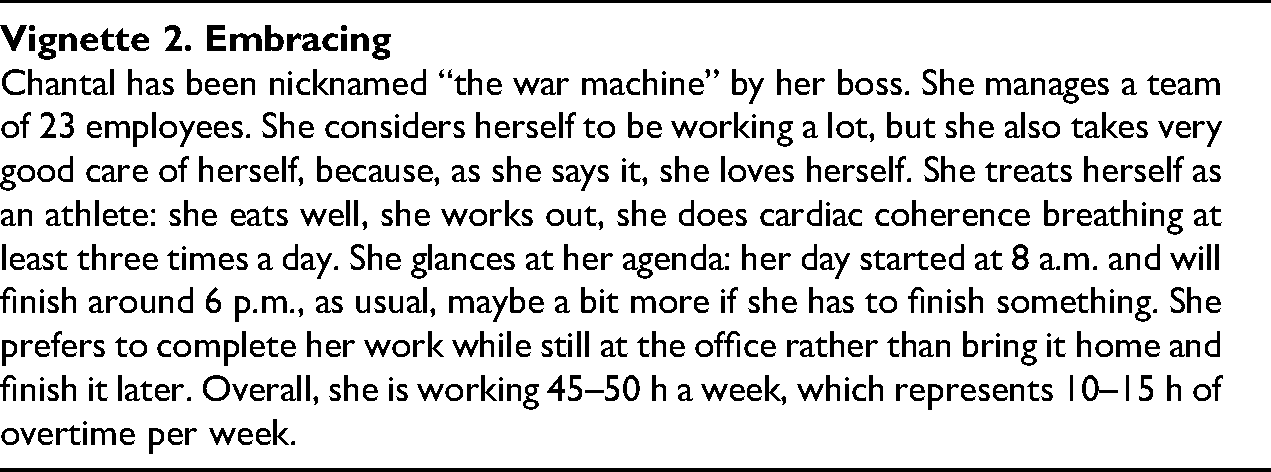
The second strategy corresponds to employees complying with the ideal worker image and framing overtime as self-chosen: embracing. Although participants embracing overtime acknowledged high workloads and time pressure, they framed working beyond regular hours as a self-chosen and meaningful response—an expression of professionalism and engagement rather than an externally imposed demand.
Not everyone has a negative view of the high pressure and the need to work beyond the standard schedule; some even seem to use overtime to help them face their high workload. This manager is one such example: ‘I do not feel overwhelmed. I feel in control of my time; I always make it happen. It's always a matter of choice, so I chose that I would not be stressed by time. But I work a lot of hours, though. I cannot tell you that I work 35 h a week, far from it’ (Manager). Some employees also mentioned, ‘doing it [working a lot of hours] because I want to.’ Many mentioned doing it to catch up on the work they did not have time to do during the day, such as reading papers and other tasks requiring more analytical skills. We met an employee who was in a quieter period and who was missing the challenges of a higher workload. He described himself as passionate, ready to work a lot of hours, and was hoping to be assigned to more projects soon. These participants seemed to be thriving in such an environment.
For these individuals, overtime can be seen as part of the job, like this manager who can be reached at any time to resolve issues: ‘This is a job where you can constantly be interrupted… That's part of the job.’ This manager did not view the fact of always being connected as negative, but framed it as ‘part of the job.’ When talking about it, he did not seem bitter or concerned, but excited about his job. Other participants clearly mentioned working more because they want to and love their work. It's all about passion. I was developing something, and I absolutely wanted to deliver. […] I adapted it in the late evening, to arrive at the workshop and give them something, so that they could take something in hand and work with it. So it's all about passion, I didn’t have to do it. But that's the fun of doing things right and being passionate about your job. (Employee)
The participants embracing correspond to the ideal worker image, as this following quote from this participant illustrates: ‘The best, the ones who are strong in heart, they will work more than 35 h.’ This resonates with Hochschild's (2012) observation that, in many service roles, “seeming to ‘love the job’ becomes part of the job” (p. 6). In our context, participants who embraced overtime framed it as a choice driven by passion or commitment, illustrating how the performance of dedication may also require cultivating genuine enjoyment of the (over)work itself.
Interestingly, many respondents embracing overtime were setting clear boundaries between work and personal life, and preferred to finish work later, than to bring work home and let it spill over into their personal lives. Hence, the embracing response depicts people willingly working overtime and framing it as self-chosen.
Resisting and Framing Overtime as Self-Chosen to Manage Workload: Concealing
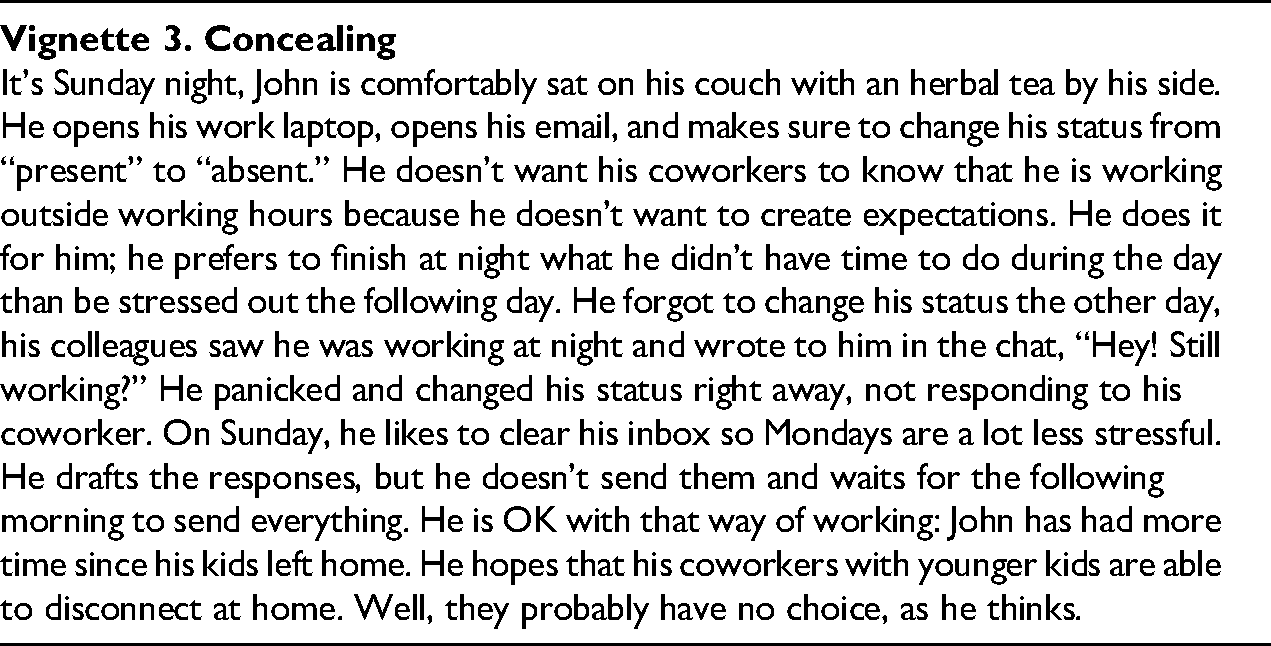
The third strategy corresponds to employees resisting the ideal worker image and framing overtime as self-chosen: concealing. Resisting the ideal worker image, but framing overtime as self-chosen brings people to use a set of reactions we labelled ‘concealing.’ This strategy differs from Reid's (2015) notion of “passing,” which involves hiding non-work in order to appear more committed; in our case, participants concealed their overtime, deliberately making it invisible so as not to create expectations of constant availability. For example, some participants framing overtime as self-chosen were resisting the culture in place by hiding while working more: [While working at night] At first, I was reading the emails but not answering because I did not want people to assume that I worked at night. But I realized that the next day I was losing time, because when I arrived, I was interrupted, and there I rephrased what I already wrote. Sometimes I prepare all the answers to the email, but I do not send it. I saved it. And then in the morning when I arrive, bang bang bang, it all comes out. (Employee)
Resisting and Framing Overtime as Unnecessary: Avoiding
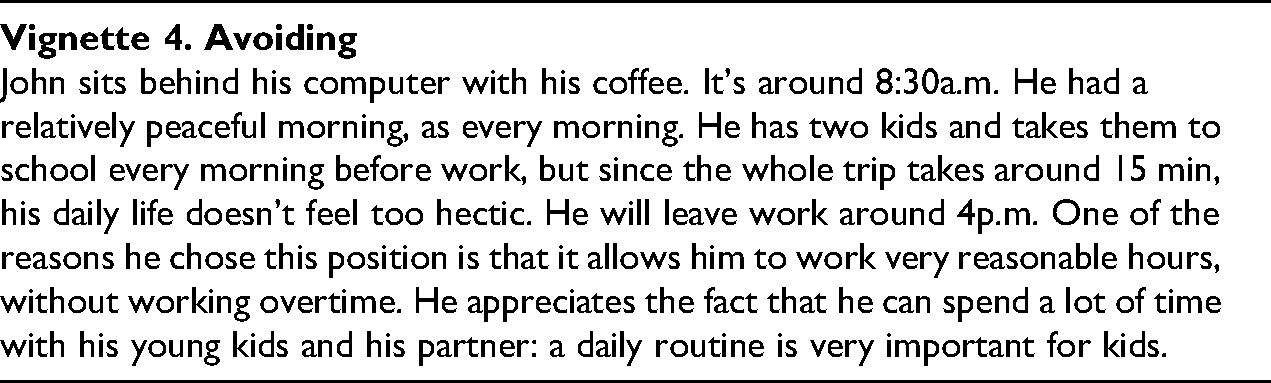
The fourth strategy corresponds to employees resisting the ideal worker image and framing overtime as unnecessary: avoiding. Indeed, some participants were resisting overtime by simply avoiding it or were not subject to overtime because their work did not require it. One participant changed roles in previous years because she was aspiring to a more reasonable workload. Now she felt that the pace was much more sustainable and mentioned that ‘nothing will fall on her head,’ as could have been the case before. Other respondents who could be subject to overtime chose not to undergo it and mentioned making efforts to protect their personal lives by, for example, disconnecting from work and using mobile devices: I try to have some control; like in the evening, I do not want to turn on my phone [or] my laptop. Otherwise our heads are always running. So these are the rules of life that I impose upon myself to be able to disconnect. Because otherwise the schedule will simply engulf us; we will not make it. So it's important to have a healthy lifestyle. (Project manager)
When avoiding, these participants frame overtime as unnecessary, if not detrimental to the self, hence, they’re not falling into the trap of overtime. In short, the avoiding strategy means that someone will not work overtime, regardless of the pressure that their workload puts on them.
Beyond Strategies: Variation in Experience
Our analysis led us to uncover that a number of participants mentioned using different strategies over time depending on the circumstances, thus navigating between the four strategies we identified. For example, some respondents mentioned that working overtime should be followed by a quieter period where one avoids overtime work: Of course, sometimes there are situations that are more critical. We have to make more of an effort, but we must not forget that after that period, we need to rest a little bit and refocus on the things or the leisure we love. (Project manager) I do work overtime sometimes, but it remains an exception. […] So I manage my time well to have enough leeway. But sometimes I need to read something, I’ll read it in the evening or weekend, as long as it's not too closed to my sleep [laugh]. So it happens, but it's not the norm. (Employee)
A recurrent claim found in interviews was the need to be autonomous: employees must get work done whatever it takes, while managing their time and energy. For example, another participant mentioned not being confronted with failure, such as burnout, because he saw the red flag coming and slowed down to avoid it: I’ve slowed down enormously to ask myself questions because, at a given point the body and the head, they can’t keep up. So that's why I’m sensitive with my teams, the human side is stronger because I’ve already seen the little red light in my head, which says be careful, you’ve done enough now, you have to slow down. Some people don’t listen to it, and that's why they get into sick leaves. It's the disease of the twentieth century […], that's exactly it, we want to perform, we don’t want to disappoint, but at a given moment we have as an individual a limited capacity… (Project manager)
Other participants mentioned adjusting the timing of their vacation depending on workload, unlike colleagues with personal obligations such as caring for children. Hence, they were taking time off, as long as it was fitting the needs of their job, alternating avoiding and embracing strategies while being able to prioritize work. That some participants varied their response to overtime work depending on circumstances allows us to suggest that individuals remain at least partially autonomous and can, to a degree, choose between various strategies.
Based on prior research on the ideal worker (e.g., Williams, 2001), one might expect that the response most closely aligned with this concept—embracing—would be disproportionately chosen by men. Our data do not support this expectation. Instead, we found that both women and men embraced the ideal worker stance, while some men also avoided overtime in order to preserve work–life balance. At the same time, bearing and avoiding (as a permanent response) were only found among women, although not all of them had caregiving or family responsibilities that might explain these responses. This suggests that gender dynamics are present, but not in straightforward or predictable ways. Furthermore, no clear patterns emerged with respect to work demand, seniority, or job security, though a few trends stood out: bearing was more common for low-level employees and embracing more common for high-level employees, which does not come as a surprise given that high-level employees may have (or feel having) more agency toward work.
Contrary to what might be expected based on debates around the topic of work–life balance, our analysis revealed that only participants bearing overtime (representing participants complying with demands, but framing overtime as unnecessary) seemed to express a form of dissatisfaction with their situation. This means that the participants working more hours, but framing overtime as self-chosen (either embracing or concealing), did not express such dissatisfaction. This points to the importance of how overtime is framed by individuals, as it emerged as a key element affecting the participants’ experience. As such, this study highlights that longer hours do not necessarily lead to a negative experience, which already points to nuances needed in how overtime work and more largely work–life balance are approached. It also illustrates the subjective nature of work overload: some people may thrive in the face of work overload, while others may experience it in a more negative manner.
Discussion
Concerned with the general issue of time use and autonomy, we began our study with the aim of exploring working time in a supportive organization. We pursued this project by inquiring into the subjective experience of overtime work and the concrete strategies deployed in the face of this situation by the individuals we interviewed. The typology of strategies presented in the previous section leads us to make three main contributions. First, we refine the understanding of overtime work by highlighting the variety in its experience. Second, we contribute to the concept of ideal worker image by identifying additional characteristics and showing how it is displayed in a non-intensive context. Third, we highlight that responding to overtime work is a dynamic phenomenon, as individuals can vary their strategies to working overtime, which in particular leads us to add nuance to the autonomy paradox.
Variety in the Experience of Overtime Work
Studying how people experience overtime work allows us to conceive it as an array of individual experiences, widening how it is understood, which, in turn, nuances its implications. As our study shows, overtime work can be experienced either as negative (e.g., bearing response) or positive (e.g., embracing and concealing strategies). Moreover, although many individuals tended to put more time into work to meet deadlines, not everyone we interviewed experienced this as a loss in terms of autonomy: some of them still felt in control and did it because they wanted to; they enjoyed having a lot of things to do. At the same time, other people actively resist overtime work. Following this variety in experiences, our analysis highlights the connection between individual experience and the strategies in place when faced with overtime work. Beyond this connection, recognizing this variety in experience goes against the premise that extended hours automatically lead to work—life imbalances and lower job satisfaction (as depicted, for example, in Brown, 2012). This insight resonates with Flaherty's (2003) notion of time work as the agentive effort to manage or reconfigure temporal experience, as well as with findings from Moen et al.'s (2013) study, where they apply this concept to professionals, depicting them as active strategizers deploying adaptive responses to chronic time strains. Our study extends this perspective by showing how the subjective framing of overtime (as unnecessary or self-chosen) and compliance with or resistance to the ideal worker image shape the very nature of these strategies and how they are experienced. It also confirms previous findings on the benefits for employees when they have some form of control over their working time (Kelly et al., 2011; Moen et al., 2016; Moen & Chu, 2024).
Although their study focused on workplace interruptions, our findings align with those of Wajcman and Rose (2011), who highlight the sense of freedom employees feel in shaping how they perform their work. Their research shows that employees can determine their level of availability to others, challenging the notion of perpetual accessibility. While in their case the employees’ decision on their availability remains centered around work (hence not necessarily related to a reduction in working hours), Wajcman and Rose illustrate the relative agency of individuals toward their work. This aligns with prior finding that time-work strategies can foster a greater sense of agency, enabling employees to take ownership of how they organize and perform their work (Moen & Chu, 2024). Our results add to these studies by detailing the variety of experiences and, hence, of individual strategies, in a context where employees have flexibility regarding their working time.
The nuances we found with regards to individual strategies to overtime work illustrate the importance of one's framing. Participants bearing overtime criticized having to work on what they considered false emergencies, while those embracing overtime discussed that deadlines were part of the job and that punctual overtime was to be expected, but that they were still appreciative that their job provided them with flexibility and challenges. For the latter, overtime was not considered as a consequence of issues that could have been avoided or irrelevant demands. This echoes Alvesson and Einola's findings, in which “working late does not matter, but working late based on a wrong approach, just because the account executive had not taken the time to plan ahead or explain what the goal was, does” (Alvesson & Einola, 2018, p. 289). Working long hours in a supportive workplace has been related to personality (Lee et al., 2024), which can be related to the embracing strategy in our work. However, other reasons are at play, as internalized pressure and expectations (bearing), even in a non-intensive context, and dedication to one's own interest (concealing). This points to the importance of the ideal worker image in this individual process of framing overtime work.
Ideal Worker Image in a Supportive Workplace
In contrast to previous findings, where professionals typically accommodated work intrusions through strategies generally more work-friendly than family-friendly and largely accepting of time pressures without questioning the growing intrusiveness of work (Moen et al., 2013), our typology brings forward more resistant stances. The avoiding response goes beyond adapting around the edges by representing an explicit refusal to let work spill over into personal time, a novel finding compared to prior studies where employees tended to frame overload as a “private trouble” to be managed individually rather than as an organizational or policy issue. Similarly, while Moen et al.'s (2013) strategy of time shifting resembles Reid's (2015) notion of passing—both involving hiding non-work to avoid straying from the ideal worker—our concealing response reverses this dynamic: employees hid their overtime in order to protect boundaries and avoid normalizing excessive hours. In our non-intensive and supportive context, working long hours was not as deeply ingrained in the culture; employees therefore faced less explicit pressure to conform to this ideal, yet still regulated themselves in line with it, which illustrates the internalized nature of the ideal worker image and the varied ways it manifests in practice. Accordingly, the strategy of “embracing” echoes Reid's findings and extends it by showing how the ideal worker image also operates in non-intensive environments, where it is sustained less by external enforcement and more by self-discipline.
As highlighted by Feldman et al. (2020), social context is key to understanding the choice people may have (or not) in their use of time, its meaning, and its fit (or not) with individual preferences or organizational goals. When Kärreman and Alvesson (2009) studied why workers comply with extreme work conditions, in particular long working hours, they found that they do resist, to a certain degree, in unexpected or interrupted ways. We also found some resistance to overtime work, although that was not our participants’ main reaction. We suggest that, in our case, participants complied because there was no such ground for resistance as seen in other studies. As it might be expected, studying overtime work in a non-intensive and supportive context shows that displaying total dedication to work and hence working overtime may not be as much of a constraint as it has been shown in studies taking place in consulting firms (e.g., Kärreman & Alvesson, 2009; Lupu & Empson, 2015), IT firms (e.g., Li, 2023) or investment banking (e.g., Michel, 2011). Hence, in a non-intensive and supportive context, workers may have more agency in determining how they react to overload.
Yet, this does not mean that the ideal worker image, as a sociocultural construction, is absent from such contexts. Our analysis revealed that the elements that define the ideal worker image, such as long hours at the office, working additional work at home, always being accessible and prioritizing work (Beckman & Mazmanian, 2020) were present in how our respondents described their experience of overtime work, hence influencing it. However, by studying it in a context different from the ones in which it is usually studied, we refine this concept by adding two other elements to it. First, some respondents expressed the idea that the ideal worker is willingly committing to work: they work more because they choose to and are passionate about their work. While Thompson (1967) showed how industrial workers fought to ensure that additional hours translated into wages—reinforcing the Puritan equation “Time is money”—our participants never mentioned monetary compensation when discussing overtime. Instead, unpaid extra hours were justified and normalized through appeals to passion, commitment, and autonomy. Our findings thus resonate with scholarship on passion as a cultural schema in white-collar work, where displays of passion and commitment are mobilized to justify bearing long or precarious working conditions—even in contexts of low pay or instability such as creative industries and nonprofits (Rao & Tobias Neely, 2019). This shift suggests that, although overtime is less directly tied to financial reward, it remains deeply implicated in professional identity and sustained by the ideal worker image, ending up benefitting organizations—more specifically those who own the means of production. In other words, the temporal discipline Thompson described has not disappeared but has been reconfigured: from a monetary calculus of hours to a moralized and identity-based framing of dedication. However, passion can be a double-edged sword, fostering both positive outcomes such as job satisfaction and negative ones such as burnout (Horwood et al., 2021).
Second, our respondents mentioned that the ideal worker should be autonomous, should manage his time, and should get work done, whatever it takes. Furthermore, talking about the ideal worker image in a context where flexibility in terms of time and place of work is offered to workers influence its conceptualization by our respondents. For them, corresponding to the ideal worker image does not imply forgoing flexibility; it rather meant making use of it but never to the detriment of work. This led our respondents to express a more nuanced form of ideal worker image, an image that evoked that ideal workers should know how to take care of themselves in order to be able to sustain their work implication over time. This resonates with prior work highlighting how the responsibility of managing work–life balance made to reside in the hands of workers themselves (e.g., Moen et al., 2013; Wynn & Rao, 2020). This dimension has not been explored in a non-intensive and supportive context so far, which is important to understand dedication to work in a broad social context where wellness and mental health are key concerns for workers and organizations alike.
More generally, given that the ideal worker image is closely tied with individual investment in work, we argue that paying attention to the image people may hold is important to understand more finely their experience of overtime work. The two dimensions we add to this concept can thus help us to pursue this inquiry. This addition is consistent with the idea that the ideal worker is a dynamic concept with changing expectations (Linehan & O’Brien, 2018). As such, we argue that the concept of the ideal worker deserves to be explored in different settings in order to grasp how this concept is at play in modern and changing work situations.
Responding to Overtime Work as a Dynamic Phenomenon
By identifying a variety of strategies to overtime work, our study highlights that responding to overtime work is a dynamic phenomenon, exposing the (relative) agency of individuals. As discussed in the findings, the same individual may opt for different strategies depending on the specific circumstances they face, hence navigating between strategies. The variety of strategies that our analysis surfaced — between individuals, and within a same individual, at different times — derives from this relative agency that individuals possess, when facing overtime work, a result that adds to previous studies situated in a context where overtime can be less a matter of choice and even mandatory (e.g., Alameddine et al., 2018).
If our analysis does attest of this agency, this agency should not be understood as the exercise of complete freedom. One's framing of overtime work and one's attachment to the ideal worker image can indeed be understood as influencing individual experiences and constraining the range of options that will be considered, in situations of overload. Furthermore, while one's internalized image of the ideal worker may influence strategies, we do not suggest that this is the sole or main source of influence, nor that this image influences all individuals. The degree of voluntariness is also shaped by structural constraints, such as workloads that cannot realistically be completed within regular hours, which can make “choosing” to work overtime less a matter of preference than of necessity. This aligns with Wynn and Rao's (2020) insight that workers often sustain a sense of perceived control by framing their actions as self-chosen, even when constrained by structural and cultural demands. This highlights the ambivalent role of autonomy: it provides employees with flexibility and a valued sense of agency, but it also facilitates the internalization of organizational demands that contribute to sustained overtime work. Yet, not all strategies reflected this ambivalence equally. Among the four, avoiding was the only one that consistently led participants to accomplish their work within the allotted time, representing a form of autonomy that effectively protected personal boundaries: avoiding was a deliberate choice to prevent work from spilling into their personal time, even if it meant that work might accumulate. By contrast, embracing and concealing primarily reflected ways of coping with ongoing overload rather than reducing it, illustrating how perceived control can coexist with persistent work demands.
Having recognized that workers can change over time, their responses points to a key feature of the experience of overtime work for white collar/knowledge workers: this experience, like responding to it, are dynamic phenomena. While our matrix (Figure 1) seems to be organized around binary dimensions (overtime work as necessary or self-chosen; complying or resisting the ideal worker image), we suggest that experiencing overtime work is more fluid, as individuals can move, depending partly on their circumstances. We hence suggest that overtime work can elicit different strategies at different times, with individuals navigating among them. But having the possibility of exercising such an agency may also be tied to the flexibility provided by one's organization. Yet, being offered such flexibility is not as straightforward as it could be expected.
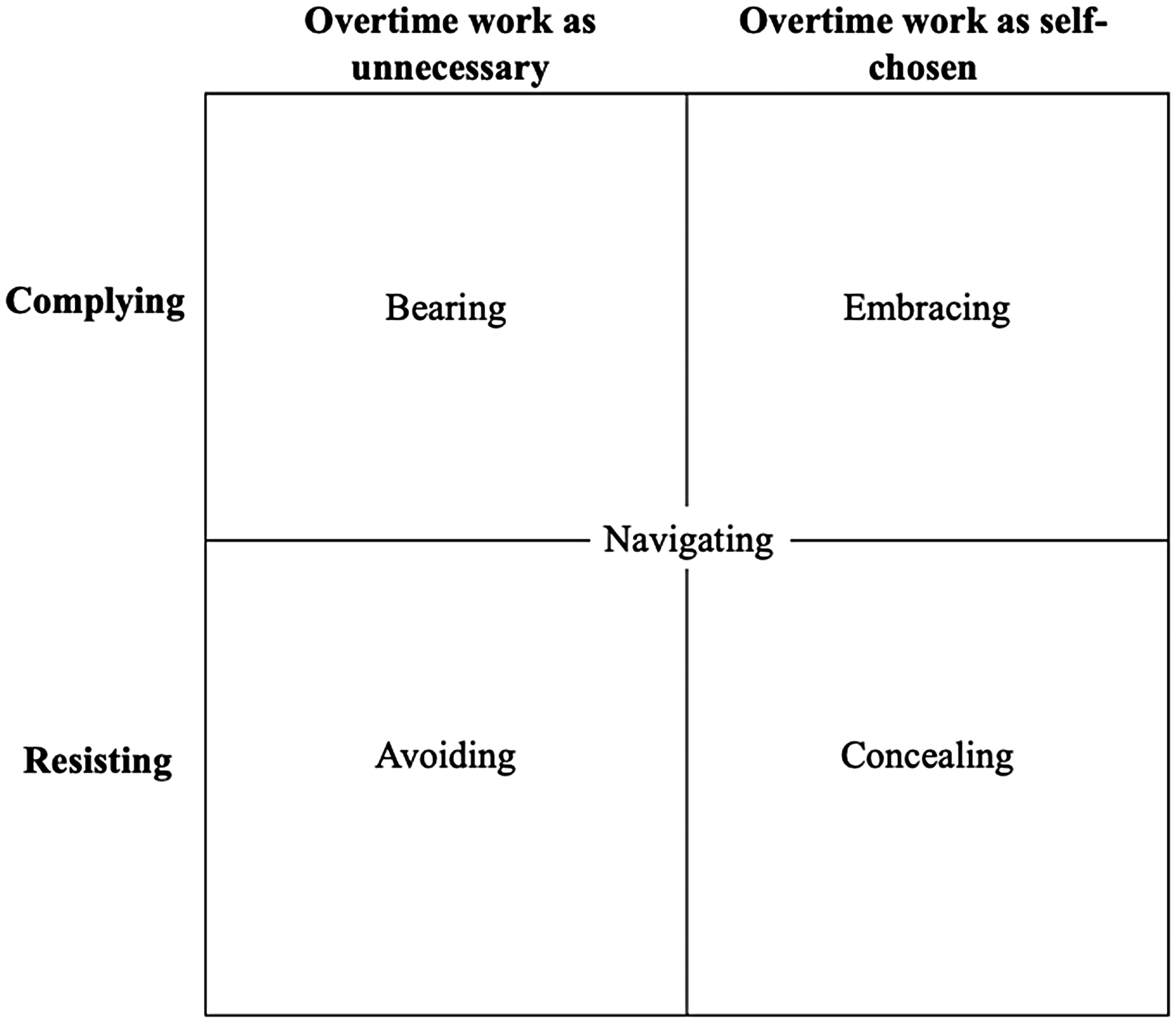
Matrix of Strategies Toward Overtime Work.
Indeed, contradictions have been noted in certain contexts where employees are provided with flexibility — this flexibility being thought of as offering more autonomy to workers to organize their working time. This possibility can give rise to the phenomenon known as the autonomy paradox, where having more flexibility over one's working time does not lead to a better work—life balance in practice, but rather to working more (Putnam et al., 2014). A similar phenomenon is highlighted in Blair-Loy's (2009) study of stockbrokers, which shows that scheduling flexibility can actually increase work–family conflict by exposing employees more directly to client demands, whereas bureaucratic rigidity reduced such conflicts by buffering workers from these pressures. Our study adds to inquiries into this paradoxical situation that can have detrimental effects on people. First, three out of the four of the strategies we identified have a distinct relationship with the autonomy paradox. For the bearing response, despite apparent autonomy in some aspects, workload and expectations hinder autonomy in practice, thus exemplifying the autonomy paradox. Embracing and concealing strategies also exemplify the autonomy paradox in practice, but as positively experienced by respondents displaying both strategies, while secretly experienced for those choosing to conceal. Finally, for the fourth response, we note that the respondents displaying the avoiding response, there was no increase in work hours despite autonomy, hence no autonomy paradox. In this sense, our study refines our understanding of how the autonomy paradox may arise with the choices made by people when provided with the possibility of making decisions on their working time.
Our study shows that being provided with autonomy leads to varied strategies, both between individuals and depending on the moment. Such a recognition calls for further inquiries into how people concretely deal with varying work demands, especially in order to better understand how the autonomy paradox may arise and how individual and organizational aspects may influence it. Hence, having autonomy may only be one part of the solution to experience autonomy in a fuller sense — in other words, in ways that do not backfire and place employees in situations where they end up working more, hence experimenting less flexibility.
Finally, we argue that the individual strategies we found, and what may be at their root, open the door to a broader reflection on working time and time use. All of these strategies, including navigating, can be viewed as a form of extra work that people need to perform on top of their tasks; for example, efforts are required to protect their boundaries. This is akin to meta-work, i.e., work that one needs to perform just to be able to do their work (Aroles et al., 2023). We suggest that the strategies we identified correspond to a form of work needed to negotiate the place and visibility of overtime work, according to one's framing. We also emphasize that this is not just an adjustment to one's preference, but that it requires effort on the part of people, and should therefore be considered and better understood. In line with this discussion of meta-work, Molstad's (1986) observation that some workers purposely choose less demanding or more monotonous roles to retreat from situations where responsibility exceeds control is also relevant. In our case, the participant who changed roles to seek a more reasonable workload can be seen as engaging in a similar avoidance strategy—one that reduces exposure to overload, limits the need for continual meta-work, and mitigates the stress and sense of powerlessness that can arise when demands outstrip one's capacity to influence them.
Conclusion
Our study aimed to explore the subjective experience of work overload and how people deal with it in an organization characterized by a non-intensive working time culture and known for its flexibility and work–life balance. More specifically, we documented the variety of strategies individuals use in response to overtime work. Our typology, which is not exhaustive and could be complemented through other studies, captures this range of possible strategies and highlights the necessity of attending to reactions to overtime work and how it is experienced (or not experienced) in diverse ways. Our study illustrates that individuals may have some control regarding how they cope with overtime, and that there is a variety in how they will react to such working conditions depending on their framing and compliance to the ideal worker image. We also demonstrate that, faced with demands to engage in overtime work, individuals still retain some agency, expressed in the form of the response they choose for themselves. We exposed the variety of individual strategies to overtime work and revealed that responding to overtime work is a dynamic phenomenon.
Finally, our study shows that overload is not specific to settings that are especially prone to overtime work, like consulting firms (Kärreman & Alvesson, 2009; Lupu & Empson, 2015) and that organizations that depict what we could call a non-intensive and supportive work environment (less than 60 h/week), like Equilibrium, are not immune to this phenomenon. However, beyond this general conclusion, our study documented that overtime work is not a straightforward phenomenon, just like the effects of work–life policies developed by organizations. Our study suggests that attending to the variety of individual strategies may represent a relevant starting point to gain a more nuanced understanding of work–life balance and, more broadly, the relationship people have with work.
Limitations and Future Research
Our exploratory study was limited to a single organization and examined participants’ experiences and strategies at one point in time. As such, we invite further studies spanning different organizations and exploring participants’ experiences and strategies over time. Furthermore, given that career consequences associated with using work–life policies vary greatly depending on factors such as the nature of work–life policies, expectations of supervisors and organizational norms, these could be investigated further to better understand which influence is at play (Bourdeau et al., 2019). Our empirical focus was on white-collar salaried employees in a professional services context, not one typically associated with extreme hours or constant availability pressures. We do not claim that such dynamics are universal, but rather that our study offers insight into how these broader cultural currents play out in a workplace explicitly designed to be “supportive.”
A further limitation of our study is that we did not have access to nor sought independent measures of participants’ objective workload; as such, we could only capture employees’ subjective perceptions of overload, leaving open for future research the question of how objective demands and subjective framings interact in shaping responses to overtime. As such, we invite further studies spanning different organizations and exploring participants’ experiences and strategies over time.
Other studies could also be designed with the explicit objective of comparing the experience of different categories of workers (employees vs. managers, for example) or depending on social class (Evans & Wyatt, 2023). For example, it has been recognized that overwork in professional and managerial roles undermines many of the advantages that make these positions more compatible with flexible work policies compared to other occupations (Cha & Grady, 2024), which is worth being explored further.
In addition, given the limits of our study, we are not in the position of making conclusions on the possible gendered dimension of the various responses our analysis surfaced. However, our findings point to potentially important gendered dynamics: although men and women could be found across most of the responses, bearing appeared exclusively among women in our case. Future research explicitly probing the gendered dimensions of these responses would hence be needed to further our understanding of the various responses our analysis identified.
Even when flexible work policies are available, their success depends on how successfully organizations can tackle the overwork norm (Cha & Grady, 2024). This challenge is closely tied to calls to end the ideal worker myth, recognize its ability to undermine gender equity at work, and fight for a more equitable workforce for all (Cobb et al., 2024).
Furthermore, our study opens up to larger questions such as what is working too much? Research on long hours shows contradictory and mixed results (Virtanen et al., 2018), and we need to better understand the individual experience. In this context, a better understanding of how professionals experience overtime work is important and offers contributions not only to theory, but also to practitioners. According to the International Labor Organization, long workweeks are defined as average workweeks of at least 60 h per week (Schulz, 2015). This is also consistent with the definition used by scholars; for example, in the research of Hewlett and Luce (2006), extreme work was defined as working more than 10 h per day (and includes other factors, such as unpredictable flow of work and constant availability to clients). But as mentioned by O’Carroll (2015), long hours do not mean the same thing for different workers: some find that 50 h is abusive, while others find that it is reasonable. The same was true for our participants: some worked moderately beyond the standard hours and felt they were giving a significant contribution to the organization, while others willingly took on substantially more work when needed, appreciating the balanced conditions Equilibrium offered compared to other companies in their field. This reiterates the importance of framing, and of the individual experience, to understand the effects of overtime work, as this is not solely a matter of a specific number of hours worked.
Footnotes

Funding
The authors received no financial support for the research, authorship, and/or publication of this article.
Declaration of Conflicting Interests
The authors declared no potential conflicts of interest with respect to the research, authorship, and/or publication of this article.