




Abstract
We use the National Longitudinal Survey of Youth 1979 to identify group-based trajectories of unemployment risk as workers age in the United States. Our novel methodological approach reveals 73% of full-time workers spend much of their 20, 30, and 40 s with a relatively low risk of unemployment. The remaining sizable minority varies in the timing and relative degree of their unemployment risk. Eighteen percent experience early career unemployment risk into their early thirties, well after the transition to adulthood. Chronic unemployment characterizes the labor market experiences of the remaining 9%. When expanding the sample to all workers, we find two key differences: the overall prevalence of unemployment is greater each year for all groups and the distribution of respondents across groups differs, with fewer workers experiencing Lower unemployment and more workers experiencing Early Career or Higher unemployment. Unemployment risk is shaped by experiences of long-term unemployment in young adulthood and early labor market constraints. Moreover, while men and women appear equally at risk of Early career unemployment, men are particularly at risk of Higher unemployment. Black workers were significantly more likely to be at risk of Higher unemployment, but only slightly more likely to be at risk of Early career unemployment. Since Early career unemployment risk gives way to steadier work for most, this suggests that some men and some Black workers face disproportionately high levels of employment precarity. Our findings point to the importance of a life course approach for understanding the relationship between unemployment and labor market precarity.
Unemployment risk looms over US workers (Brand, 2015; Burgard et al., 2012; Damaske, 2021). Yet the risk of unemployment for workers in the United States across the life course is not yet well understood because scant research has investigated the shape of one's longitudinal unemployment risk. Stratification research consistently identifies unemployment as a critical transition point that generates future employment disadvantages (Brandt & Hank, 2014; DiPrete, 1981; Stevens, 1997). In fact, evidence suggests even one unemployment bout begets future unemployment, while steady employment proves protective against such risks (Brand, 2015; Damaske, 2021; DiPrete, 1981; DiPrete & Eirich, 2006; Stevens, 1997). Thus, there is clear evidence that a singular unemployment experience raises future unemployment risk in both the near and far-term (Brandt & Hank, 2014; Voßemer et al., 2018). Yet there is also substantial evidence that unemployment risk is the highest in young adulthood (Bell & Blanchflower, 2011; Chancer et al., 2018).
These findings suggest multiple competing possibilities of unemployment risk after the transition to adulthood in the United States. To disentangle these possibilities, we take a life course perspective, which suggests transitions (or turning points), such as a singular unemployment experience, are key to understanding how unemployment risk may unfold over time. A life course perspective also suggests that the key to understanding transitions is the timing (when they occur) and relative degree (how likely they are to occur) of such transitions, as well as how transitions are further shaped by a historical context and an individual's socio-demographic characteristics (Alwin et al., 2011; Han & Moen, 1999; Pearlin, 2010). For example, youth unemployment (ages 18–24) may result in repeated experiences of unemployment after the transition to adulthood (25 +) and that continue across the life course. Alternatively, workers may find that after the transition to adulthood, they stabilize in their career and experience a relatively low risk of unemployment. Yet another possibility is that their risk varies over time. Prior research has found substantial variation in the timing of unemployment risk with evidence of heightened unemployment risk at a young age, particularly in the transition from school to work (Bell & Blanchflower, 2011; Chancer et al., 2018; Hout, 2019) and evidence of increased unemployment risk at middle-age (45 or 50 +) as a result of youth unemployment (Chan et al., 2001; Wanberg et al., 2016). There is some research to suggest there is also variation in workers’ relative degree of risk of unemployment, or how often one may expect to be unemployed (Brandt & Hank, 2014). But whether and how this risk may vary for different groups of people under different circumstances across the life course remains unknown.
In this study, we expand on the prior literature by focusing on the period of time after the transition to adulthood, using group-based trajectory models, and asking: what are the group-based trajectories of unemployment across workers’ prime earning years? We use the National Longitudinal Survey of Youth 1979 to estimate group-based trajectories of unemployment risk among full-time workers and to identify their predictors.
A life course perspective suggests that trajectories of unemployment risk may depend on early life experiences and social demographics, as well as the historical context in which the unemployment event took place. These factors may lead unemployment to increase, maintain, or decrease across workers’ prime-age working years in comparison to peers. To that end, we further ask: What human capital and labor market characteristics are associated with group-based trajectories of unemployment?
Group-based trajectory models (Nagin, 2005) can identify whether patterns emerge whereby some experience a stable and lower risk of unemployment over time, while others’ risk varies across age (for example, experiencing a higher risk of unemployment either early or late in their careers), and still others experience a higher risk across their working years. These finite-mixture models use maximum likelihood to identify age-graded patterns or trends across groups of individuals who experience similar life course patterns of a given variable—here, unemployment. Unlike a growth curve model, which predicts individual-level baseline (intercept) and rate of change (slope) estimates for time-varying variables, group-based trajectory models can identify distinct clusters of individuals with similar trends in their timing and relative degree of unemployment risk by showing when groups are most likely to be unemployed (timing), and how their likelihood of unemployment differs from that of other groups (relative degree). After identifying group-based trajectories of unemployment risk across the life course, we next examine what individual-level characteristics elevate the likelihood of experiencing one unemployment trajectory versus another. We identify two key domains during young adulthood—human capital characteristics and labor market constraints—that prior research points to as key to understanding who may be most at risk of unemployment (Brand, 2015; Brunner & Kuhn, 2014; Clark, 2003; Gangl, 2006; Kalleberg, 2019). In doing so, we ask whether, and for whom different group-based trajectories of unemployment are most likely. By identifying the broader patterns of the life course risk of unemployment, this study fills an important gap in our knowledge of how unemployment risk changes as one age and how that risk shapes the stratification process in the United States.
Unemployment Risk Across the Life Course
Life Course Framework & Unemployment
Three life course concepts, transitions, timing, and relative degree, are crucial for our understanding of unemployment risk over time. The first, transitions, refers to the importance of turning points in people's lives, suggesting that some moments in the life course—a first entrance into the labor market, entrance into marriage, or parenthood—are pivotal because of their important implications for the pathway an individual's life will then follow. Unemployment is such a transition, as research consistently finds associations (both in the short and the long-term) between unemployment and long-term earnings losses, declines in overall economic and marital stability, and increases in short-term mortality rates and long-term health strains (Frech & Damaske, 2012, 2019; Gangl, 2006; Gonalons-Pons & Gangl, 2021; Mishel et al., 2007; Sullivan & Von Wachter, 2009). The second, timing, suggests that biographical timing—when transitions occur across the life course—has implications for how one experiences the event and for the future unfolding of one's life chances. Pearlin (2010) notes that when adverse common events happen during non-normative times, they may be particularly challenging (for example, even though most adults will experience the death of a parent, it may have different implications when the child is very young than when the child is middle-age). We anticipate that unemployment is an event where its timing may differentially shape one's future chances; a bout of long-term unemployment early in life may be more critical than unemployment faced later on. The third, relative degree, is a concept Glen Elder (1974) introduced in his study of the Great Depression. While many families experienced hardship during and after the Great Depression, Elder argued that not all hardships were the same (nor had the same consequences), and it was important to understand these hardships in reference to what others had experienced (Elder, 1974). Similarly, we are interested in understanding whether some unemployment trajectories are associated with a higher risk of unemployment than others.
A life course framework suggests that the three concepts must be understood as working in concert (rather than in isolation) across the life course. Transitions have implications for future life chances and some transitions (those faced early in the life course, for example) may play a more important role in shaping future opportunities than others. Advantages or disadvantages in early life cumulate over the life course with a “systematic tendency” to generate intracohort disparities in work (Dannefer, 2003; O’Rand, 2006; Willson et al., 2007). Moreover, as individuals face pivotal transitional periods, those with fewer resources face greater constraints in their choices and the greatest “life course risks,” which suggests that both timing and relative degree are implicated by these concepts, as we will explore in more depth in the next two sections. A life course framework leads us to expect that there will be variation in the life course of unemployment trajectories according to cumulative advantages/disadvantages (Damaske & Frech, 2016; Dannefer, 2003). Early transition periods may lead to polarized early work experiences in which some workers move into jobs with extensive career ladders and opportunities (and little unemployment), but others may move into occupations and industries, such as construction or manufacturing, that have a much higher risk of unemployment (Hout, 2019; Hout et al., 2011; Kalleberg, 2019).
Timing
A life course framework indicates that key transitions shape one's future chances and that these transitions can be particularly crucial depending on when they occur (Elder, 1974; Willson et al., 2007). This suggests that the timing of an unemployment bout may be critical. For example, youth in the United States experience over double the risk of unemployment than those at older ages with the majority of research defining youth unemployment as occurring between ages 18 and 24 (Bell & Blanchflower, 2011; Chancer et al., 2018; Hout, 2019; Kalleberg, 2019). As unemployment rates decrease and employment rates rise with age (Hout, 2019), this suggests that after the transition to adulthood, many workers may experience lower (or no) unemployment risk. Yet there is some evidence to suggest that an unemployment bout does lead to an increased risk of unemployment in the shorter-term (1.5–10 years) (DiPrete, 1981; Strully, 2009). This implies that some workers may face an increased risk of unemployment after the transition to adulthood, but the risk may be tempered over time. Finally, there have also been longitudinal studies that establish a relationship between unemployment bout(s) and short- and long-term employment outcomes, including wages, employment status, and job quality (Brand, 2015; Cockx & Picchio, 2013; Dieckhoff, 2011; Stevens, 1997). Indeed, some workers may not experience a reprieve with age, as studies find some workers may continue to face future-stymied workplace opportunities and a lingering relationship between youth unemployment or non-employment and unemployment/employment later in life (Brandt & Hank, 2014; Cockx & Picchio, 2013; Dieckhoff, 2011; Gregg, 2001; Keys & Danziger, 2008; Luijkx & Wolbers, 2009; Mroz & Savage, 2006). At older ages, unemployment risk may increase or may remain high, as displaced workers at older ages may face a greater risk of hiring discrimination or may find themselves re-employed for only short periods (Chan et al., 2001; Daniel & Heywood, 2007; Wanberg et al., 2016). Thus, prior research suggests timing may be crucial, as there is considerable evidence suggesting that just one bout of unemployment shapes future unemployment risk (Brand, 2015; Hout, 2019; Wanberg et al., 2016), but to date, a life course framework hasn’t been applied to studies of unemployment, leaving unclear the patterns of unemployment risk over the life course.
Relative Degree
This study will also examine group-based differences in the relative degree (Elder, 1974) of unemployment risk, or how groups vary in their risk of unemployment over time. Since many studies compare the employed to the unemployed, it may appear that all unemployment is equally stratifying across the life course. Unemployment has been shown to have short- and long-term effects on wages (Brand, 2015; Cockx & Picchio, 2013; Gangl, 2006) and earnings (Stevens, 1997) as well as on other job-related outcomes, such as job autonomy, job authority, job-quality, and job-provided benefits (Brand, 2006; Dieckhoff, 2011). Since those working in jobs with lower wages and with lower job status (which is often associated with lower job autonomy, job authority, and fewer benefits) are at greater risk of job loss and unemployment (Brand, 2015), workers who ever experienced unemployment could experience a pathway of greater unemployment risk. Yet not everyone experiences the same consequences of unemployment; some studies have shown that close to 30% to 40% of those who lose jobs find new positions at or above their original earnings (Kletzer, 1998; Seitchik, 1991). Evidence of variability in the consequences of any bout of unemployment indicates the need for longitudinal research that can identify the group trends in unemployment risk and distinguish between differences in the relative degree of risk.
The Current Study
Despite this prior research, we are left with an incomplete picture of how unemployment risk unfurls over the life course—whether it steadily increases, whether it ebbs and flows, or whether it is becomes a chronic condition. Building on key findings from past research, the current study's first aim is to identify group-based trajectories of unemployment risk for full-time workers using the National Longitudinal Survey of Youth 1979 (NLSY79). Identifying the life course of unemployment risk is an important first step in describing the contours of inequality in an important and growing trend in employment relations: unemployment.
Predicting Membership in Unemployment Trajectories
A life course framework suggests human capital and labor market contexts early in an adult's career may lead to polarized work experiences in which some workers move into jobs with extensive career ladders and little unemployment, while others move into occupations that have a much higher risk of unemployment (Dannefer, 2003; Frech & Damaske, 2012; Hout et al., 2011; Kalleberg, 2011). Thus, our second aim is to identify individual and contextual-level risk factors—human capital characteristics and labor market constraints—that shape one's membership in a group-based trajectory of unemployment. The NLSY79 cohort under investigation came to adulthood and spent their adult working years during a period of remarkable economic change in the United States, characterized by growing precarious work, as well as by increased labor force participation among women (Goldin, 2021; Kalleberg, 2011). Prior research suggests it was a period in which the majority of both men and women in the NLS79 worked full-time and steadily, although sizable variation in men's and women's longitudinal employment trends has been found in the NLSY79 (Damaske & Frech, 2016; Weisshaar & Cabello-Hutt, 2020). We focus our analyses on full-time workers averaging 35 or more hours a week while employed because labor market attachment and decision-making—and by extension unemployment—are substantially different between full-time and part-time or intermittent workers. Intermittent workers are more likely to experience periods out of the workforce, relative to full-time workers (Hatton, 2011; Kalleberg, 2011). As a result, the risk of unemployment is substantially more varied and different in quality for these workers than for full-time workers. Part-time workers also have considerable differences in their economic, labor market attachment, and life-cycle stage from those who work steadily and full-time (Aisenbrey & Fasang, 2017; Damaske & Frech, 2016; Weisshaar & Cabello-Hutt, 2020). Part-time workers face a considerable wage penalty relative to full-time workers, and this disparity in economic reward from work has the potential to differentially influence labor market choices (Bardasi & Gornick, 2008). Moreover, a 2016 survey reported that just under 30% of workers voluntarily employed in part-time work do so to continue school attendance, while 21% of workers chose part-time work because of family or personal obligations, suggesting that the selection into part-time work is based on their life cycle stage, which may complicate analysis on unemployment trajectories over time (Dunn, 2018). As women are more likely to work part-time during child-rearing years, a focus on full-time working men and women also allows for a comparison of more comparable unemployment and employment experiences across gender (Damaske, 2020; Fuller & Qian, 2021; Hatton, 2011). In sum, a focus on full-time workers allows us to compare the unemployment risk of more similar sets of workers.
Young Adults’ Human Capital
Theories of human capital emphasize its importance for protecting workers both from unemployment and from the potential loss of skills while unemployed, which may prove to be protective from longer unemployment bouts and may moderate future unemployment risk (Gangl, 2006; Hout, 2019). Human capital may be protective of unemployment risk due to several mechanisms. Those with longer tenure at their previous employer may have a larger set of skills, or skills in a specialized area, which may help them find re-employment in jobs that better match their skill sets, therefore reducing future unemployment risk (Brand, 2015; Stevens, 2008). Those with higher levels of education may more readily move up the corporate ladder; education and job tenure may work conjointly here to protect the better educated from unemployment over time (DiPrete, 1981; Kalleberg, 2019). Professional workers face fewer unemployment risks and when they do face risks, professional workers may have more resources with which to respond (Cooper, 2014; Sharone, 2013). One's good health may be a form of human capital; poor health may limit people's ability to work from an early age (Haas, 2006), hampering their early work experience and increasing their risk of unemployment. A life course perspective suggests that these human capital traits likely shape future unemployment risk to relative degrees; very high levels of education may prevent most future risk, while more moderate levels of education may prevent some, but not all future risk. Likewise, professional occupations may be protective of future unemployment risk, but other occupational categories may be protective of most, but not all future risk. Education, too, likely works on a continuum with some levels of education being more protective than none, but not as protective as high levels of education.
Youth unemployment (ages 18–24) may affect unemployment trajectories as well. A longitudinal study of unemployment in Europe found that youth unemployment predicted a greater likelihood of unemployment in later years, but less so in countries with high youth unemployment rates (Brandt & Hank, 2014). This suggests that less common experiences of unemployment during young adulthood may increase later-life unemployment risk, as it may limit job tenure and opportunities for upward mobility early in one's career (Kalleberg, 2019; Sharone & Vasquez, 2017). Youth unemployment in the United States is very common (Bell & Blanchflower, 2011; Chancer et al., 2018), while the more injurious long-term unemployment during young adulthood is less common (Osgood et al., 2005). Therefore, we focus on long-term youth unemployment, anticipating it will curtail workers’ future employment opportunities and increase the risk of future unemployment.
Hypotheses 1a–1c. Those with lower human capital, including lower educational attainment, work-limiting health conditions, shorter job tenure, long-term youth unemployment, or in non-professional occupations will be more likely to experience unemployment trajectories characterized by (a) a greater risk of early-career unemployment (timing), or (b) a chronic high risk (relative degree) of unemployment with age across the life course. In contrast, (c) those with higher human capital, including higher education and longer job tenure, no work-limiting health conditions, professional occupations, and no long-term youth unemployment will be less likely to experience early career unemployment or a chronic high risk of unemployment.
Labor Market Constraints & Unemployment
Local labor market conditions when first entering the job market and during young adulthood can shape employment trajectories across the life course (Brunner & Kuhn, 2014; Clark, 2003; Damaske & Frech, 2016; Frech & Damaske, 2019). This suggests unemployment risk may increase when local labor market conditions constrain job seekers’ options. Those living in rural areas may be at greater risk of unemployment, because of poorer labor market opportunities (Frech & Damaske, 2019; Slack & Jensen, 2002). The relationship between local unionization rates and unemployment is less clear: while higher unionization rates in a local area may reduce the long-term effects of unemployment (Gangl, 2006) and serve as an indication of the presence of better jobs (Brady et al., 2013), in the United States context from the 1970s to the 2000s, a greater unionization presence could also serve as a proxy indicator of manufacturing or other industrial decline (Western & Rosenfeld, 2011), which may actually signal a weaker labor market and greater risk of unemployment. Living in an area with high unemployment rates may decrease the possibility of immediate re-employment, decrease the likelihood of finding a job matching ones’ skills, or decrease wages (Brunner & Kuhn, 2014; Frech & Damaske, 2019). Job-seeking among the unemployed is made more difficult when there are barriers to transportation (Newman, 2009), which may extend the job search and increase the risk of unemployment over time. But it is currently unknown whether and how rurality, county-level unemployment in local labor markets, unionization rates in local labor markets, or transportation barriers during young adulthood shape long-term unemployment risk.
Hypothesis 2a–2c: Local labor constraints in young adulthood will be associated with entry into group-based trajectories of unemployment; living in rural areas, counties with higher unemployment rates, states with fewer employees covered by union contracts, and/or perceiving transportation as a barrier will be associated with a greater likelihood to experience unemployment trajectories characterized by (a) higher risk of early unemployment (timing), or (b) higher risk of chronic unemployment across the life course (relative degree). For those living in (c) non-rural areas, in counties with lower unemployment rates and states with a higher presence of union workers, and who do not have transportation barriers to securing a good job, early unemployment and a high risk of chronic unemployment will be less likely.
Early Life Predictors
A life course framework posits that early disadvantage may hinder high school completion, which could curtail transitions into college and/or the ability to complete college, which may then place individuals into disadvantaged parts of the labor market once their schooling is done (Kalleberg, 2011; Willson et al., 2007). Those with a high school or less than a high school degree, those who are Latino or Black, and men remain most vulnerable to unemployment (Brand, 2006; Hout et al., 2011; Mishel et al., 2009; Sharone, 2013). Our focus on those whose work was full-time may minimize gender differences in search constraints, although there is some evidence that gender differences in job seeking may remain even among those previously employed full-time (Damaske, 2020; Rao, 2021). Even among full-time workers, gender likely further shapes unemployment risks, as occupational segregation likely increases men's risk of unemployment, while barriers to searching for work may shape full-time women's searches and increase the likelihood that they return to lower-paid jobs than men (Cha, 2013, 2014; Fuller & Qian, 2021; Smeeding et al., 2011).
Black men and women face greater barriers to paid work, greater educational requirements than whites for similar employment opportunities, greater risk of discriminatory firing practices, and greater likelihood of being downsized than similarly situated white peers; thus, Black workers are more likely to lose jobs than white workers and likely to spend more time searching for work than white workers (Hout et al., 2011; Kalev, 2014; Keys & Danziger, 2008; Ray, 2019). Immigrant workers may also face a higher risk of unemployment than non-immigrants (Hout et al., 2011). Unemployment risk may be more dramatic among Black and immigrant workers as they age, because they also face greater employment discrimination than do white job seekers (Chavez, 2017; Light et al., 2011; Mong & Roscigno, 2010), so it is likely that they may face greater challenges in re-entering the labor market over time.
Several additional factors known to predict employment pathways may also shape one's likelihood of experiencing unemployment, as the likelihood to experience unemployment is shaped by one's position in the labor market (Smeeding et al., 2011). Experiencing poverty may make it more difficult to find and maintain stable employment later in one's life, as growing up in poverty may constrain early labor market opportunities with implications for employment across the life course (Damaske & Frech, 2016; Edin & Nelson, 2013). Maternal education may be an indicator of family resources during childhood, which likely plays an important role in shaping future resources, including one's own education and workforce entrance (Roksa & Potter, 2011). Work and family are inextricably linked and transitions in one domain, such as marriage or parenthood, have implications for transitions in the other (Elder Jr, 1998; Moen & Han, 2001). Family—including being married and the presence of children—may prove to be a geographic barrier to moving for better job opportunities for some or to searching for better work due to childcare obligations for others (Damaske, 2021; Gangl, 2006; Whitaker, 2016). Living with children at age 25 may increase the risk of poverty during periods of unemployment (Smeeding et al., 2011), which may further increase the risk of unemployment overall.
Hypothesis 3a–3c. Demographic groups that face greater labor market constraints, for example, women, immigrants, or Black workers, and those with early life experiences such as poverty, low maternal education, and early childbearing will be associated with a greater likelihood to experience unemployment trajectories characterized by (a) higher risk of early unemployment (timing), or (b) higher risk of chronic unemployment across the life course (relative degree). For those that face (c) fewer labor market constraints, for example, men and white workers, and those with privileged early life experiences, such as high maternal education, early unemployment, and high risk of chronic unemployment will be less likely.
Methods
Data
Data are from the National Longitudinal Survey of Youth, 1979 cohort (NLSY79). The NLSY79 began surveying 12,686 youth ages 14–21 in 1979, and continued yearly surveys through 1994, after which surveys were conducted every other year. The NLSY79 is ongoing, with the most recently released wave of data including the 2018 interviews (US Bureau of Labor Statistics, 2020). At each interview, respondents report on their employment and income, family status and transitions, occupation and career changes, time spent unemployed or out of the workforce, and other variables related to work, family, health and well-being, and schooling. The retention rate for the NLSY79 is quite high, and 78% of our initial sample is retained in 2014, the most recent wave we use for analyses.
Sample
We first limited our sample to the 9,986 men and women who were not part of oversampled groups that were excluded from the NLSY after 1984 (for the military oversample) or 1991 (for the economically disadvantaged oversample) (Bureau of Labor Statistics, 2021). We included respondents who ever participated in the paid labor force and reported on their employment, unemployment, or weeks out of work during at least one wave between ages 27 and 49 (N = 9,537); who were not serving in the armed forces, as active duty service is not counted in employment or unemployment measures in the NLSY (N = 9,280); and who averaged full-time employment (35 or more hours a week during employed weeks, averaged across all available waves) while employed (N = 6,035). Our final sample includes 6,035 adults, including 3,688 men and 2,347 women. Missing data for all variables were imputed using chained equations in the “mi impute” suite in Stata 16. Analyses and descriptive statistics are estimated using the “mi estimate” and “misum” commands across 20 imputed datasets. Results presented here are similar to those found using listwise deletion (results available upon request).
Measures
Unemployment. At each interview, respondents reported the number of weeks in the last year they spent employed, unemployed, and not in the labor force (NILF). A bout of unemployment occurred each time respondents reported at least one week of involuntary unemployment in the last calendar year at or near ages 27, 29, 31, 33, 35, 37, 39, 41, 43, 45, 47, and 49, reflecting the biennial timing of the NLSY79 after 1993. While this results in an undercount of total unemployment bouts by excluding bouts occurring during odd-numbered calendar years, this undercount is equal across all respondents. We compared the results presented here to those where unemployment was defined as at least two weeks unemployed in the last calendar year (one paycheck), and four weeks (one month), and the results were similar.
Predictors of unemployment trajectories. Human capital, labor market constraints, and early life variables were measured at or prior to the age of 25, to preserve causal order and for these variables to act as predictors of membership in the unemployment trajectories measured between ages 27 and 49. We choose age 25 because youth unemployment is measured prior to this age (Chancer et al., 2018; Hout, 2019; Kalleberg, 2019), because labor force entry (Moen & Roehling, 2005), median age at first birth (23), and first marriage (22) occurred prior to age 25 for Baby-Boomers, and because most in this cohort have completed their educational attainment by this age (Kirmeyer & Hamilton, 2011; Payne, 2019).
Human capital. Human capital predictors assess the resources respondents might draw on to secure stable work and reduce the risk of unemployment. They included educational attainment at age 25 (centered at 12 years), whether the respondent had a health condition that limited the type or amount of work they could do at age 25, their longest job tenure between ages 22 and 25 (measured in years), whether the respondent experienced a six-month or longer bout of unemployment between ages 22 and 25, and current or most recent occupational category (hereafter occupation) at age 25, using the 1980 Occupational Classification System (with Managerial and Professional Specialty Occupations as reference) (National Longitudinal Surveys, n.d.). We considered including a measure of any youth unemployment between ages 22 and 25, but, as anticipated, this experience was so common—fully 66% experience at least one bout of unemployment between 22 and 25 (tabulation available upon request)—that we focus, instead, on long-term unemployment experiences (measured here as 6 months of unemployment or more in a 12-month period), which may be most harmful for future employment.
Labor market constraints. The local geographic and employment context at or near age 25 was measured using the NLSY Geocode data merged with historical data on union participation by state (Hirsch et al., 2001). State union participation at age 25 represents the percent of employees covered by a union contract in the respondent's state. Area unemployment represents the proportion of the population that is unemployed in the respondent's MSA or non-MSA area when the respondent is 25 years old. The NLSY provides data on whether the respondent lived in a rural area at age 25, and whether transportation limited the respondent's ability to find a good job (measured between ages 18 and 25).
Early life variables. Early life control variables that acted as risk factors for unemployment trajectories included gender, race–ethnicity (Black, Latino, and non-Black, non-Latino), US nativity (1 = non-US born), whether the respondent's mother completed high school, and whether the respondent lived below the poverty line at age 25. We also controlled for variables that reflected the respondent's work and family context, including the presence of residential children (1 = yes) and marital status at age 25.
Table 1 includes the descriptive statistics for all predictor variables, and Figure 1 graphs the average percent of respondents unemployed by age. Prevalence of unemployment generally declined with age, peaking at age 27 with 21% of respondents reporting at least one week unemployed, and declining to 7% at ages 43 and 45 before rising again to 10% at age 49. Educational attainment averaged about one year beyond high school, and few respondents reported health conditions that limited their ability to work at age 25. Longest job tenure during young adulthood averaged two and a half years, and 16% experienced a bout of long-term unemployment lasting at least 6 months during this time. The most common occupational category at age 25 was Technical, Sales, and Administrative Support, with 31% of respondents employed in this area. Eighteen percent lived in a rural area, and on average, one in five workers in the respondent's state were covered by union contracts at age 25, and 22% reported that transportation was a barrier to securing a good job. The majority were never-married (53%), and about one-third lived with a child. Finally, the sample is 39% female, 53% non-Black, non-Latino, and 7% were not born in the United States. Already, the sample descriptives suggest that timing may prove critical to understanding the life course of unemployment, as the likelihood of unemployment is age dependent.
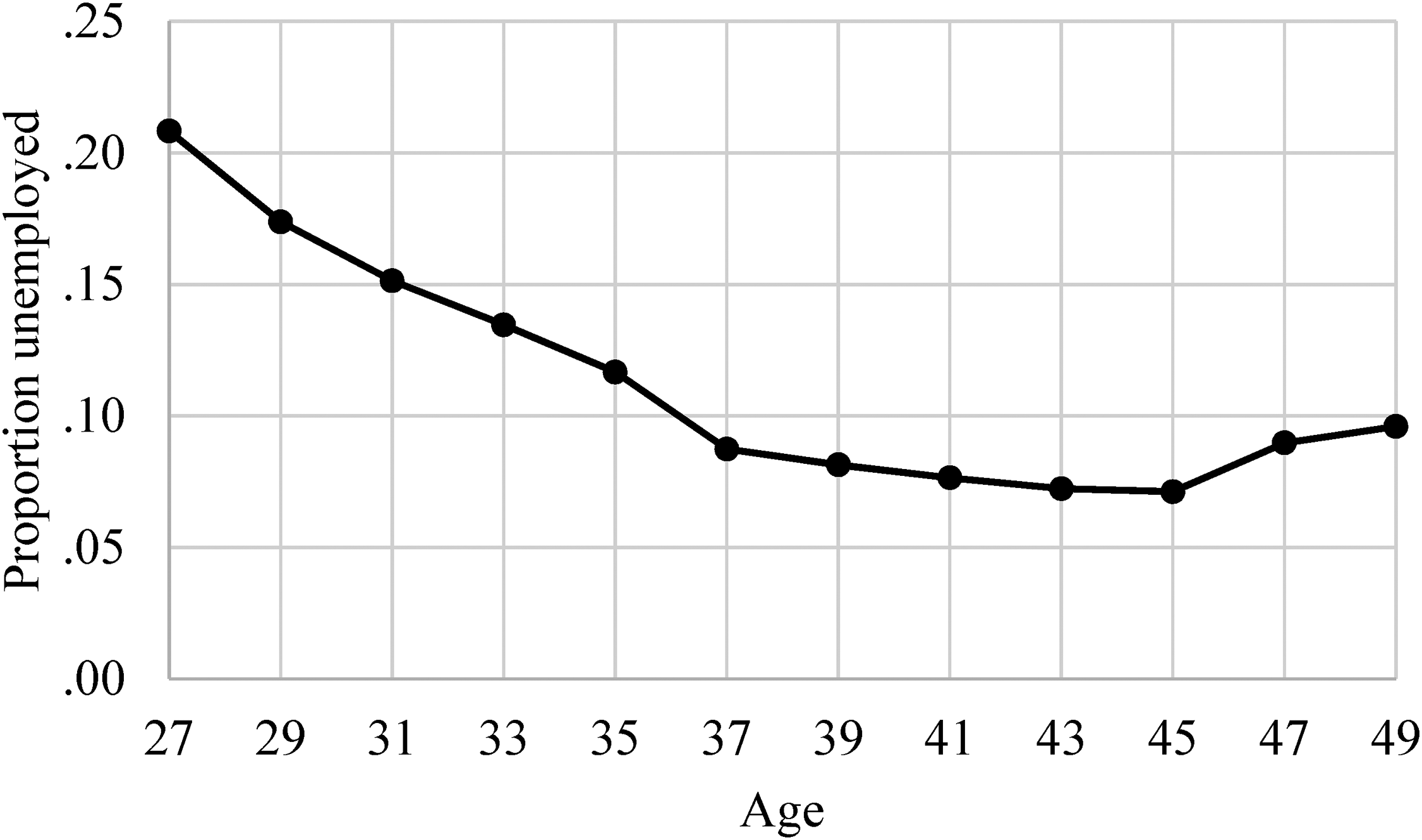
The proportion of full-time workers experiencing any unemployment by age, N = 6,035.
Descriptive Statistics for Predictors of Group-Based Trajectories of Unemployment Among Full-Time Workers, N = 6,035.
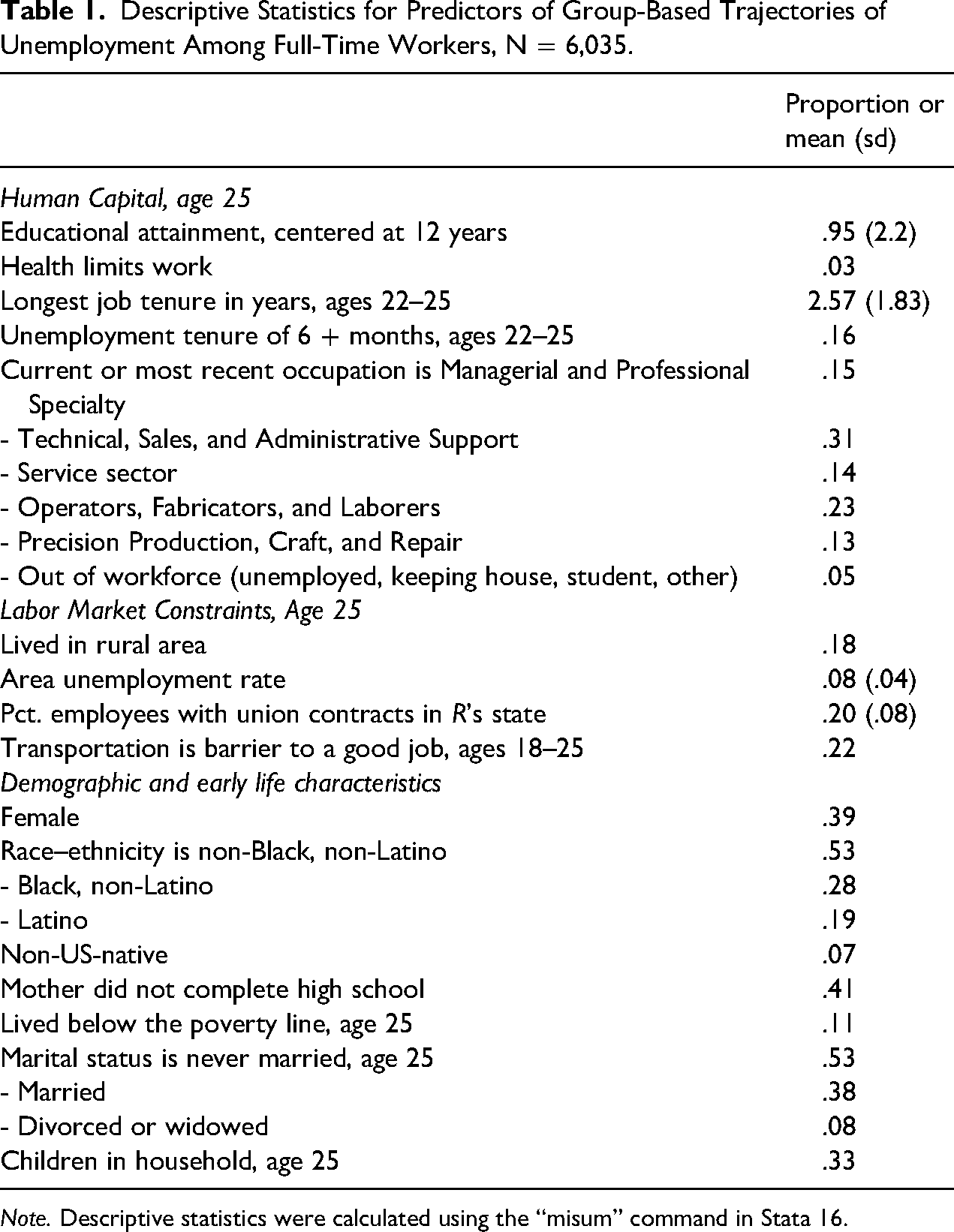
Note. Descriptive statistics were calculated using the “misum” command in Stata 16.
Methods
Group-based developmental trajectories are a type of finite-mixture modeling used to identify clusters of individuals following similar age-graded trajectories of stability or change over time (Nagin, 2005). Unlike sequence analysis or latent class analysis, which identify observed sequences or latent clusters of categorical variables measured over time (Johnston et al., 2020), group-based trajectory analysis identifies latent trajectories of continuous, zero-inflated Poisson, or logistic outcome variables and assigns individuals to one of these trajectories using maximum likelihood. This method has been increasingly used in the employment and life course literature, with recent studies documenting group-based trajectories of men's and women's workforce participation (Weisshaar & Cabello-Hutt, 2020) and women's workforce participation (Damaske & Frech, 2016; García-Manglano, 2015).
Measures of Model Fit for Group-Based Trajectories of Unemployment Among Full-Time Workers, N = 6,035.
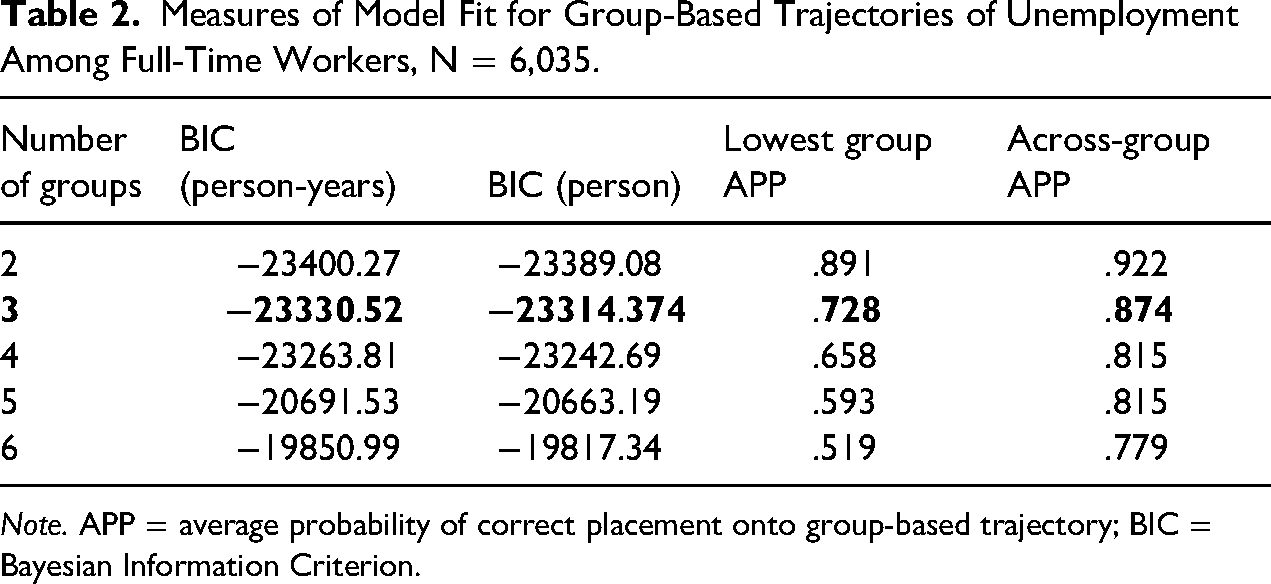
Note. APP = average probability of correct placement onto group-based trajectory; BIC = Bayesian Information Criterion.
We use this method to identify group-based trajectories of unemployment and predict individuals’ membership in these trajectories. Unemployment was treated as a logistic outcome, where each respondent is coded as 1 if they experienced unemployment in the last year at age t, and 0 if they did not experience unemployment at that age. Because groups are not directly observed, users of this method specify the number of groups, the polynomial order of each group-based trajectory, and the distribution of the outcome variable, and select the best-fitting model using previous research and theory, measures of model fit (Bayesian Information Criterion [BIC] and average probability of correct placement [APP] statistics), and practical concerns such as avoiding replicating groups or very small groups. Conditional on assignment to group j, the probability of unemployment for individual i at time t is written as follows:
Results
Group-Based Trajectories of Unemployment
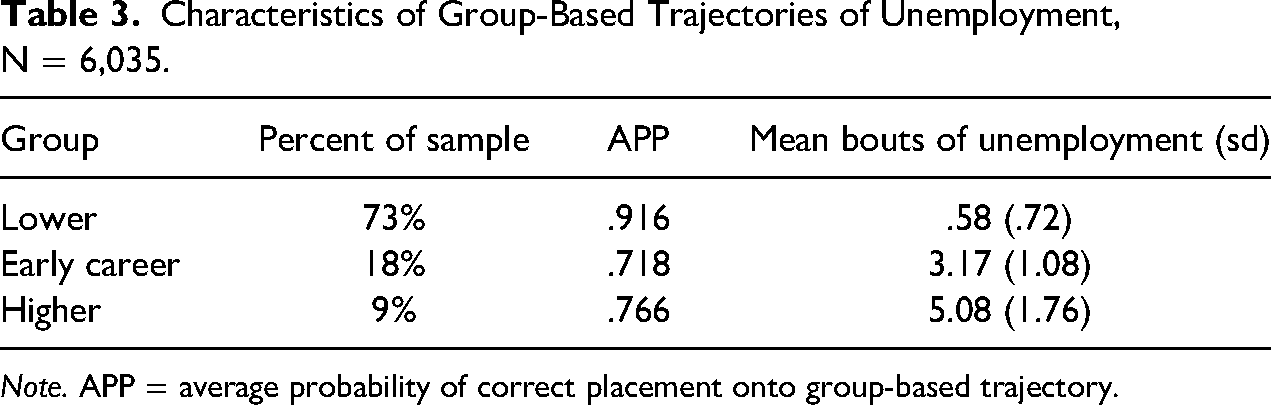
Comparing person and person-year BIC statistics and group-specific APPs, we identified a three-group model as the model of best fit for group-based trajectories of unemployment between ages 27 and 49 (Table 2). BIC statistics at the person and person-year level indicated an improved model fit as the number of groups increased but beginning with the four-group model, we observed two groups with APPs below 0.7, supporting the three-group model as the model of best fit. Figure 2 graphs these three group-based trajectories of unemployment, and Table 3 summarizes the differences across the three groups in prevalence, APP, and mean bouts of unemployment. We provide descriptive statistics across group-based trajectories of unemployment in the Appendix.
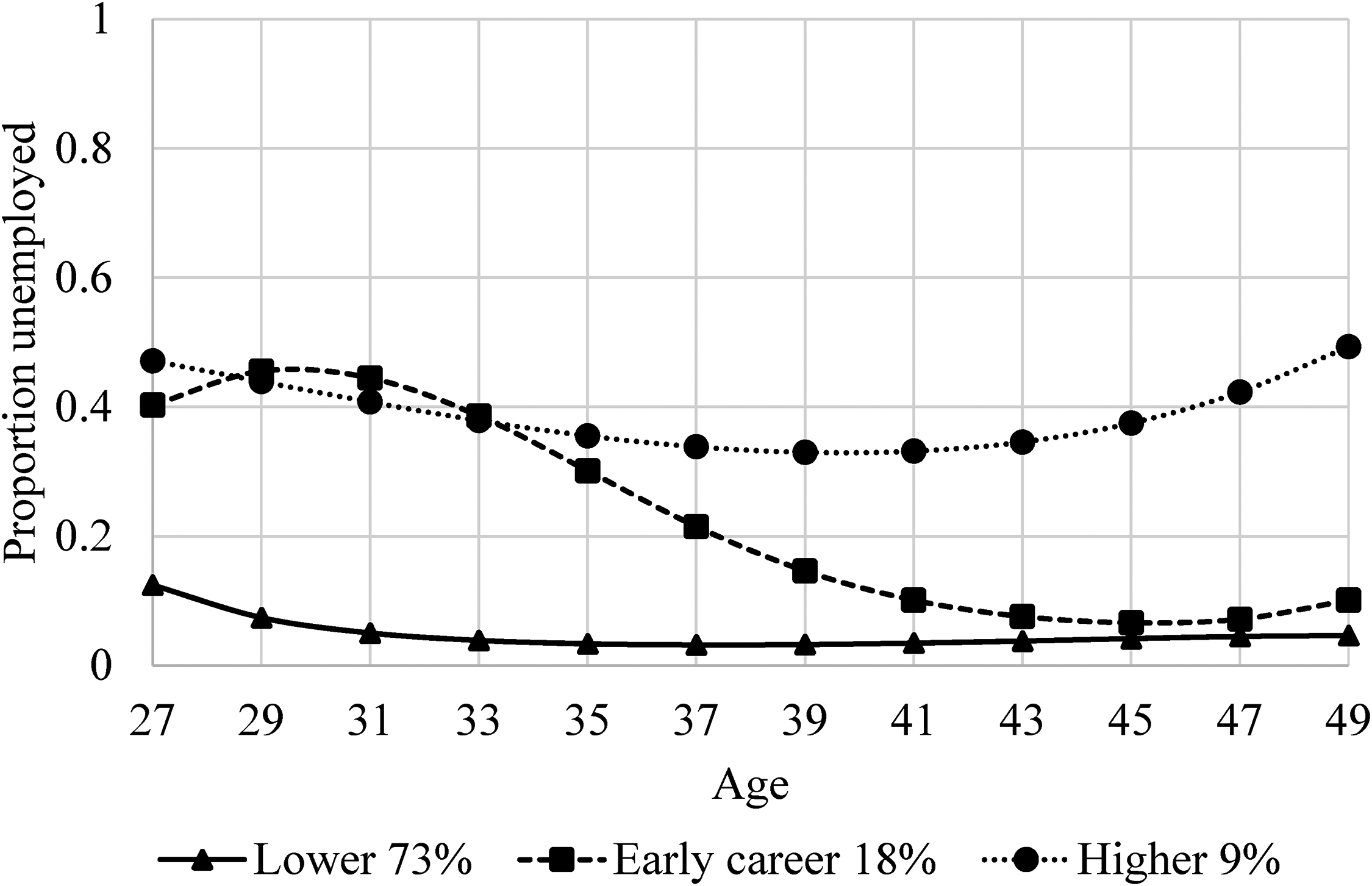
Group-based trajectories of unemployment among full-time workers, N = 6,035.
Characteristics of Group-Based Trajectories of Unemployment, N = 6,035.
Note. APP = average probability of correct placement onto group-based trajectory.
We named trajectories that were stable over time by their relative degree of unemployment risk, indicating a lesser or greater risk of unemployment (Lower or Higher). We named the trajectory that varied in the timing of risk by when they were most likely to be unemployed (Early career). Unexpectedly, among this group of full-time workers, we did not observe a trajectory of later-career unemployment risk, where unemployment was low in one’s 20 and 30 s, and then increasing in one's forties. The modal category was Lower unemployment, with 73% of respondents experiencing low to no unemployment across ages 27–49. For the 18% of full-time workers on an Early career trajectory, unemployment risk peaked around age 31 at 44%, and then dropped to near-Lower levels by age 43, averaging 3.17 total bouts of unemployment. Finally, some full-time workers experienced a Higher trajectory of unemployment. Although a relatively small group—only 9% of all full-time workers—more than one-third of those on a Higher trajectory experienced unemployment each year between ages 27 and 49, with the highest risk of unemployment at ages 27 (47%) and 49 (49%); they averaged 5.08 bouts of unemployment.
Across these three groups, we observed clear variations in the timing and relative degree. of unemployment risk in the group-based trajectories. Higher unemployment risk at a young age (an indication of timing) was predominant in the Early career group. The importance of examining the risk of chronic unemployment was evidenced by the Higher trajectory (relative degree), whose unemployment risk was greater than all other groups at most ages.
Predictors of Unemployment Trajectories
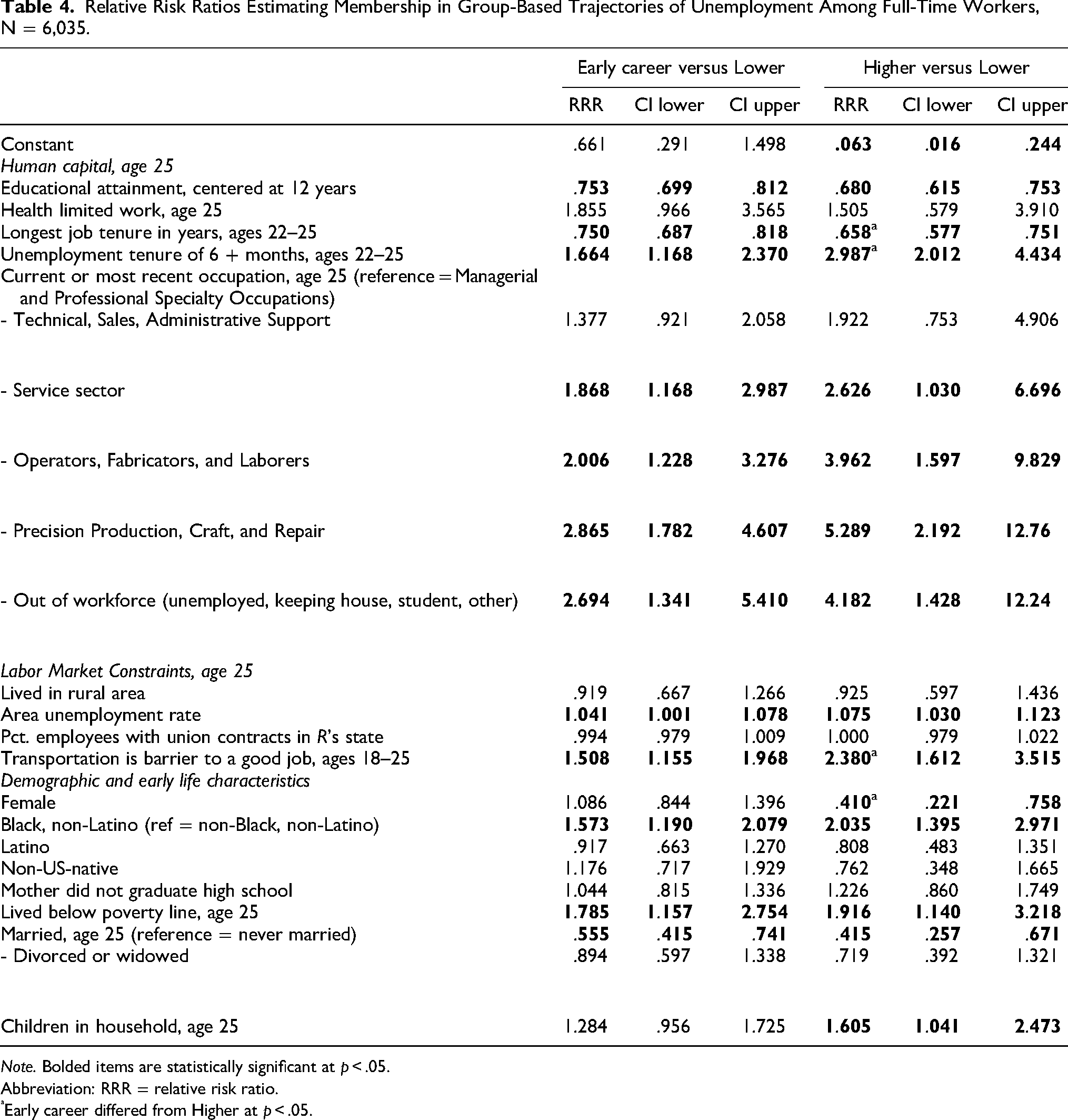
We tested Hypotheses 1–3 by predicting individuals’ membership in group-based trajectories of unemployment. Table 4 includes estimates of the relationships between human capital, labor market, and early life variables and membership in the three group-based trajectories of unemployment. A correlation matrix for all model variables is included in the Appendix. The modal category, Lower unemployment, was treated as a reference, but Table 4 also indicates where the non-reference categories (Early career vs. Higher) also differ significantly from one another. Results are interpreted as relative risk ratios, with statistically significant values above 1 indicating a greater likelihood of membership in the trajectory of interest (relative to Lower), and significant values below 1 indicating a lower likelihood of membership in the trajectory of interest.
Relative Risk Ratios Estimating Membership in Group-Based Trajectories of Unemployment Among Full-Time Workers, N = 6,035.
Note. Bolded items are statistically significant at p < .05.
Abbreviation: RRR = relative risk ratio.
Early career differed from Higher at p < .05.
Hypothesis 1 evaluated the role of human capital variables in predicting membership in unemployment trajectories. We found strong support for this hypothesis, as higher educational attainment and longer job tenure were associated with a lower likelihood of Early career unemployment (H1a) and Higher unemployment trajectories (H1b), relative to a Lower trajectory. Long-term youth unemployment—unemployment spells of six months or more in a year between ages 22 and 25—was associated with an increased risk of experiencing Early career and Higher trajectories, as well as a Higher trajectory versus an Early trajectory, also supporting Hypotheses 1a and 1b. Occupations around age 25 also played a role, with those in the Service, Operator, and Precision Production occupations, as well as those out of the workforce, more likely to report Early career or Higher trajectories relative to those in Professional work.
Hypothesis 2 considered the role of local labor market constraints for group-based unemployment trajectories. Two variables, the prevalence of union work in the respondent's state at age 25 and residence in a rural area at age 25, were not associated with membership in trajectories of unemployment, which did not support Hypothesis 2. County unemployment rates were associated with continued disadvantage, however, as those living in areas with higher unemployment rates at age 25 were more likely to experience Early career (H2a) and Higher unemployment trajectories (H2b). Practical barriers, such as transportation, also mattered, and increased the likelihood of Early career (H2a) and Higher trajectories (H2b), and also made a Higher trajectory more likely than an Early career trajectory.
Finally, Hypothesis 3 considered the role of demographic and early life characteristics with unemployment trajectories. Women were less likely to experience a Higher trajectory characterized by chronic unemployment risk relative to men, and Black, non-Latino workers were more likely to experience Early career and Higher trajectories than their non-Latino, non-Black peers (H3a–3b). The socioeconomic status of the family of origin, measured using maternal education, was not associated with unemployment trajectories (H3c). Living below the poverty line at age 25 was associated with early and continued disadvantage, as this made both Early career and Higher trajectories more likely (H3c). At age 25, marriage, relative to the never married, was protective from long-term unemployment, and was associated with a lower likelihood of Early career and Higher unemployment trajectories relative to Lower (H3a–3b). The divorced or widowed did not differ from the never-married in their unemployment trajectories. Living with children at age 25 increased the likelihood of a Higher trajectory (H3a–3b).
Discouraged Workers and Those NILF
After the identification of group-based trajectories of unemployment and the risk of entering these trajectories, we considered whether our findings were robust to the exclusion of those NILF. At younger ages, and particularly for women, respondents may have reported no unemployment because they were not seeking work due to caregiving. At older ages, discouraged workers may have left the workforce, thereby reporting that they were NILF rather than unemployed.
To address this, we first re-created Figure 2, excluding person-year observations where respondents reported spending about a year (50 or more weeks) NILF. In other words, we re-created our group-based trajectories, excluding those who were not unemployed because they were not working and not seeking employment. The three group-based unemployment trajectories were successfully replicated, including the number and shape of trajectories as well as the percent of respondents in each category, while excluding person-year observations where respondents were NILF for most of the year (results available upon request). This suggests that the trajectories we observed are robust to potential bias related to those NILF. In Figure 3, we also estimated the prevalence of yearlong NILF across group-based trajectories of unemployment by creating time-varying dummy variables indicating whether a respondent spent about a year NILF (1 = 50 or more weeks NILF at age x), and graphed the prevalence of NILF over time and across the three unemployment trajectories.
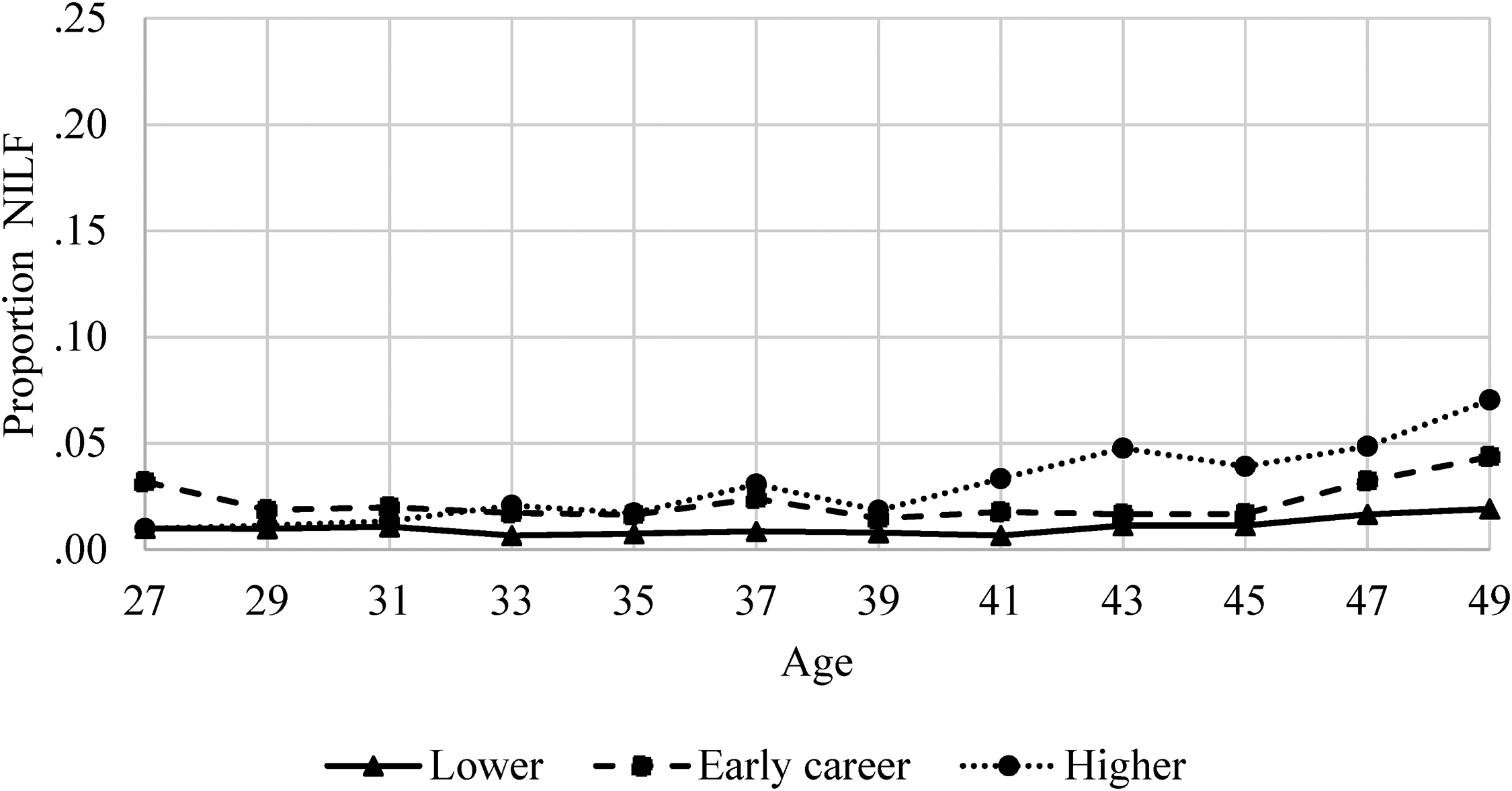
Percent of full-time workers spending 50 + weeks not in the labor force by age and group-based trajectory of unemployment among full-time workers, N = 6,035.
Figure 3 indicates spending a year out of the labor force is uncommon, but the prevalence varies across age and unemployment trajectory. Workers with Lower unemployment trajectories were unlikely to spend a year NILF, with around 2% or less NILF at each age. For those whose unemployment declined with time on an Early career trajectory, the share of workers NILF started at about 3%, then declined before increasing again to reach 4% by age 49. Those with Higher unemployment saw an increase with time in the percent NILF. Although few (only 1%) were NILF at age 27, this number fluctuated and rose with time, reaching 7% at age 49.
Spending a year NILF was most common at the youngest and oldest ages, and for all trajectories, there were some respondents who did not report unemployment that year because they were NILF. For workers on Higher and Early career unemployment trajectories in particular, this indicates that unemployment risk declined with time not only because some respondents found work, but also because some respondents left the workforce and did not seek employment.
Workers Who Do Not Average Full-Time Hours
Because those who experience unemployment most often are also more likely to lack access to full-time work hours (Bardasi & Gornick, 2008; Damaske, 2011; Damaske & Frech, 2016; Dunn, 2018; Hatton, 2011; Kalleberg, 2011; Weisshaar & Cabello-Hutt, 2020), we also estimate group-based trajectories of unemployment among respondents who report any paid work between ages 27 and 49. Figure 4 plots these trajectories, which, as with full-time workers, include three groups: Lower (68%), Early Career (20%), and Higher (12%). The primary differences when expanding the sample to all workers appear to be twofold: (1) the overall prevalence of unemployment is greater each year for all groups—and (2) the distribution of respondents across groups differs, with fewer workers experiencing Lower unemployment and more workers experiencing Early Career or Higher unemployment.
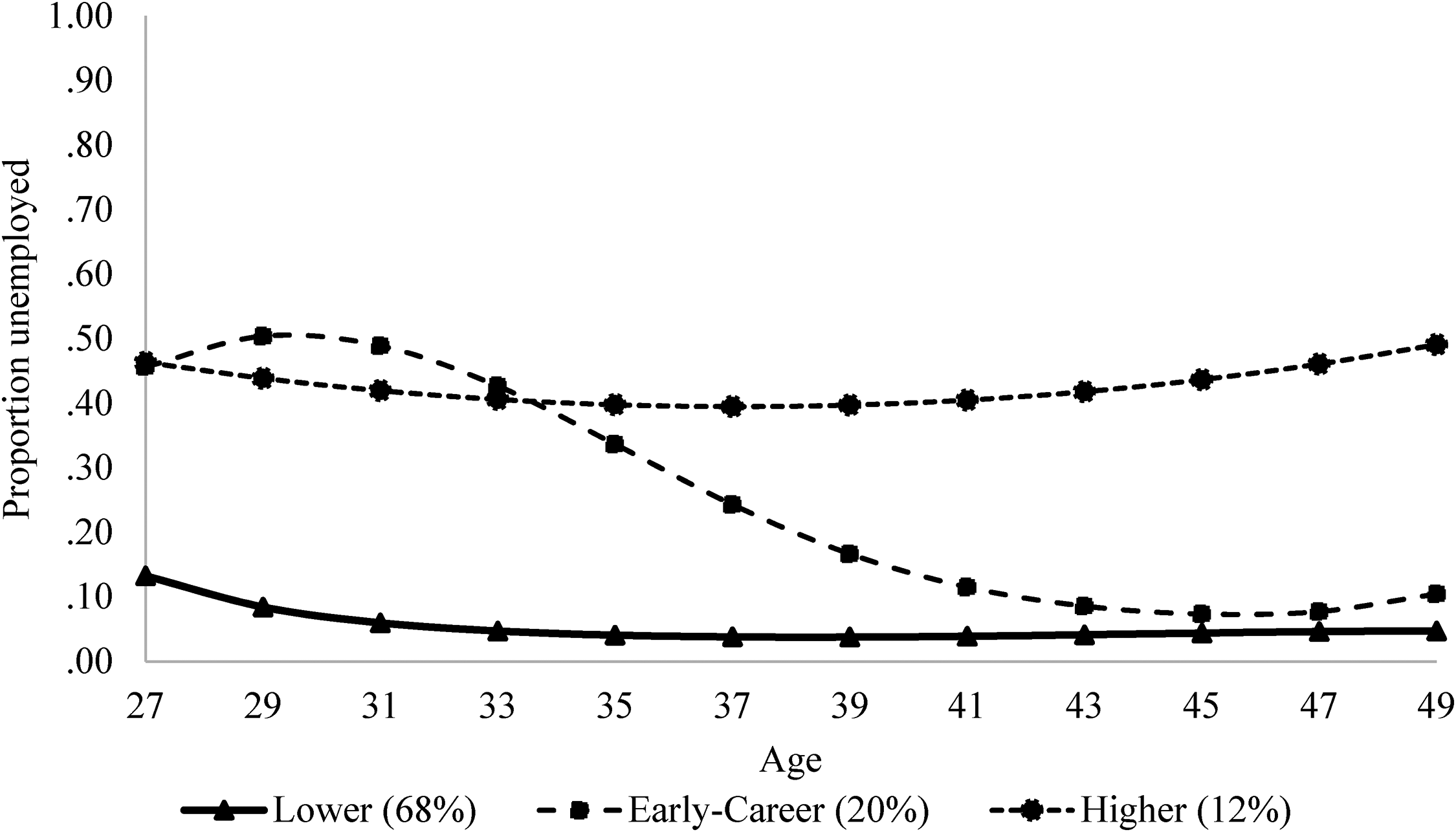
Group-based trajectories of unemployment among all workers, N = 9,092.
Predictors of unemployment trajectories, shown in Table 5, were similar when comparing all workers versus full-time workers with the following exceptions: relative to those on a Lower trajectory, those with health limitations to work at age 25 were more likely to experience Early career unemployment, as were those employed in technical, sales, and administrative support occupations (relative to Managerial or Professional work). Working in the service sector was not associated with an increased risk of experiencing a Higher unemployment trajectory among all workers, nor was the unemployment rate, but these were significant predictors of Higher unemployment among full-time workers, suggesting that those with higher labor market attachment may be more sensitive to changes in labor market health.
Relative Risk Ratios Estimating Membership in Group-Based Trajectories of Unemployment Among All Workers, N = 9,092.
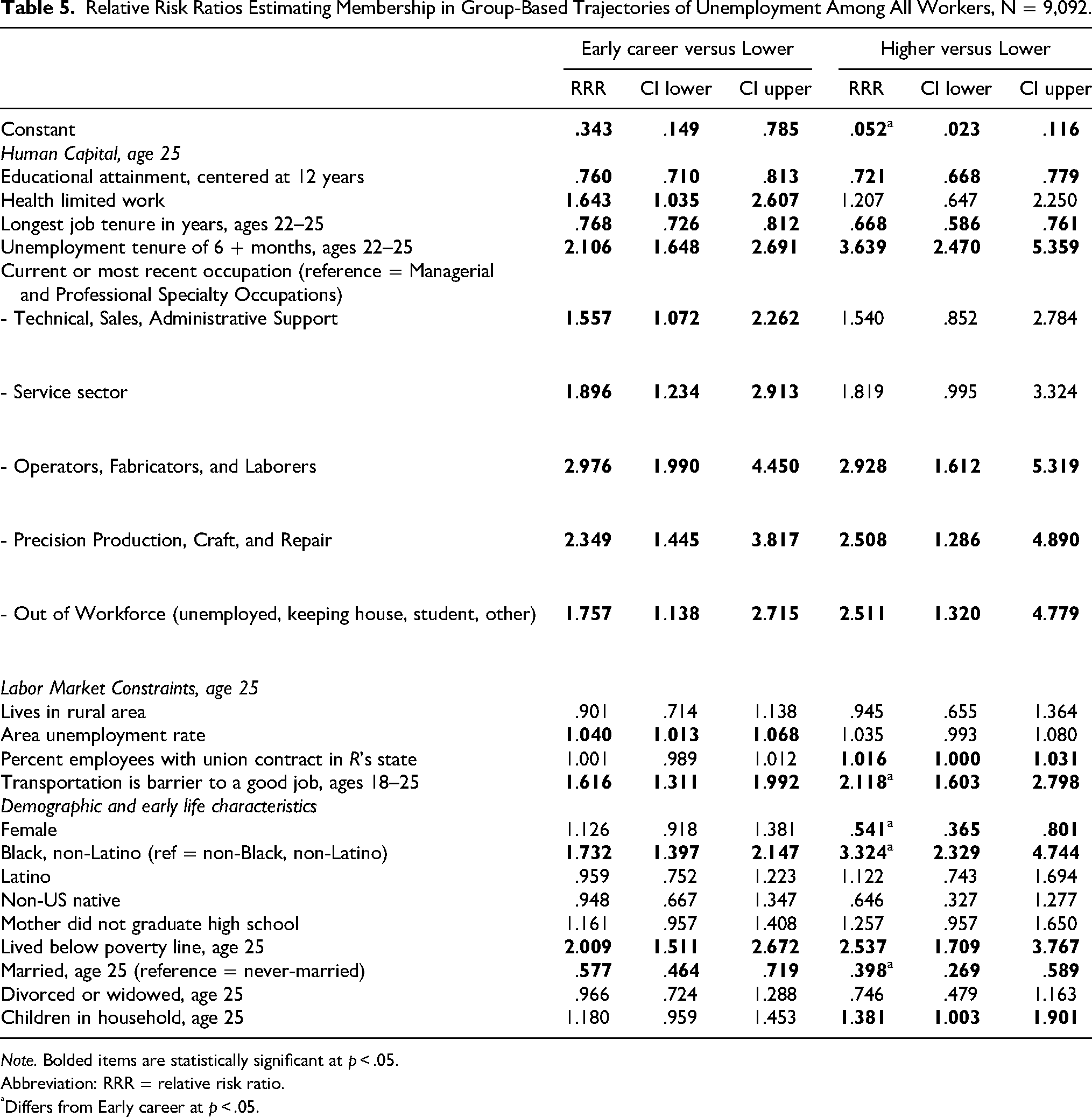
Note. Bolded items are statistically significant at p < .05.
Abbreviation: RRR = relative risk ratio.
Differs from Early career at p < .05.
We urge some caution when interpreting these findings. While Figure 3 shows that full-time workers, on average, report their unemployment experiences while still a part of the labor force, those who average less than full-time hours were much more likely to report low unemployment in part because they were not part of the labor force. At age 27, 8% of those experiencing a Lower trajectory, 9% of those experiencing an Early career trajectory, and 12% of those experiencing a Higher trajectory were out of the labor force for at least 50 weeks at age 27. By age 49 and among all workers, 10% of those on a Lower trajectory, 22% of those on an Early career trajectory, and 15% of those on a Higher trajectory did not report unemployment because they were out of the labor force for at least 50 weeks in the last year (tabulations available upon request). Among FT workers, the Early career group appeared to be comprised of workers who had recovered from their greater unemployment risk during their late twenties and early thirties by midlife, but among all workers, there appears to be a greater likelihood that the Early career group left the labor market. Therefore, while the trajectories and their predictors appear to be quite similar, when examining all workers rather than full-time workers, these trajectories may mask greater precarity related to time spent outside the labor force.
Discussion and Conclusion
Understanding how unemployment disrupts and exacerbates inequality in society remains of significant interest to scholars of employment and inequality (Brand, 2015; Gangl, 2006; Laird, 2017). Our study is the first, to our knowledge, to simultaneously examine the timing and relative degree of risk to identify different groups of risk of unemployment across the life course. We found nearly three-fourths of full-time workers (73%) and over two-thirds of all workers (68%) were at relatively Lower risk of experiencing unemployment for the vast majority of their adulthood. Those in the Lower risk group experienced unemployment risks ranging between 3%–12% (FT workers) and 4%–13% (all workers) unemployed from ages 25 to 49.
Our novel methodological approach further reveals that a sizable minority of workers vary in the timing and relative degree of their risk. A fifth of all workers and 18% of full-time workers (those on the Early career unemployment risk trajectory) continued to experience higher unemployment risk after age 25, seeing their unemployment risk peak at more than 40% for full-time workers (50% for all workers) in their early 30 s, and then experienced lower levels of unemployment as they neared the half-century mark in their lives. While we found evidence that the percent of workers on this trajectory who had stopped searching for work by age 49 reached about 4% (full-time workers) and 22% (all workers), this trajectory remained even once we excluded person-years where respondents were NILF for most of the year. Thus, for a sizable minority, unemployment early in one's career shapes risk well into the thirties but does not lead to lingering risk at middle-age.
In stark contrast, chronic unemployment appears to be persistently part of the labor market experience for a minority of adults. Nine percent of all full-time workers and 12% of all workers experienced a Higher unemployment risk trajectory (over one-third of full-time workers and over 40% of all workers reporting a bout of unemployment biennially for close to a decade) in their twenties and early thirties that declined slightly in their mid-thirties before rising again in their forties (nearly 50% of both full-time and all workers at risk of unemployment by age 49). This group averaged five bouts of unemployment during their prime working years and while few were NILF at a young age, nearly 7% (full-time workers) and 13% (all workers) had stopped working by age 49. While some qualitative work points to chronic unemployment as a trigger for leaving the labor market (Sharone, 2013), this option may not be available to all workers, who may, instead, cycle in and out of employment (Damaske, 2021). This suggests that for a small group of full-time workers and a slightly larger group of all workers, persistent unemployment risk characterized their prime working years.
We further find that many workers do appear to become discouraged in their search for work. As they aged, full-time workers on the Higher unemployment trajectory experienced the greatest increases in the likelihood to be NILF, followed by those in the Early career group. Among all workers, however, we saw a striking increase in the likelihood to be NILF for those on the Early career trajectory and relatively high levels of NILF across ages for those on the Higher trajectory, suggesting part-time and intermittent workers may be more likely to be discouraged from continuing to seek employment regardless. While we cannot precisely tell why people were NILF, we found that the Higher trajectory of full-time workers and the Early career trajectory of all workers were most likely to retreat from the labor market, suggesting they may have stopped searching for work. Recent qualitative work has highlighted the emotional toll that continued searching without success can take on a person (Sharone & Vasquez, 2017). The fact that these patterns are not uniform across the trajectories provides longitudinal support for these qualitative findings, suggesting periods of high unemployment risk decrease people's continued search for work.
We found considerable evidence for the roles of human capital, labor market constraints, and early life predictors in shaping unemployment risk over time—findings that reinforce the importance of a life course perspective. Our research indicates that a full-time worker's likelihood to be at Lower risk of unemployment over their life course is shaped both by their human capital, including years of education, job-tenure before age 25, their own occupational status in their mid-twenties or lack of transportation barriers, and the structural employment barriers they faced as young adults, including whether they lived in a county with high unemployment rates when they were young adults, and their early experiences of poverty. Educational attainment and transportation barriers distinguished between all three trajectories, separating the Lower from the Early career, and the Early career from the Higher. The importance of these experiences during the transition to adulthood suggests that early interventions may be key to preventing chronic unemployment.
Importantly, we found men (both full-time and all workers) were overrepresented in the Higher unemployment trajectory, but not in other groups. While research has noted men are more likely to experience unemployment than women, our unique longitudinal lens suggests that it is one form of unemployment—long-term chronic unemployment—of which men are particularly at risk. This is notable, as it suggests a great disadvantage faced by a relatively small group of men. Men and women appear equally at risk of Early career unemployment. That women's and men's risk of Early career unemployment was relatively similar is a surprise and further research here would be warranted. Research finding that job loss and unemployment may weaken mothers’, but not fathers’ labor force attachment (Damaske, 2011; Fuller & Qian, 2021; Rao, 2020) may help explain men's greater risk of Higher unemployment trajectory, as men may persist in the labor market when facing chronic unemployment, while women may not. Since this cohort is one of the first where the majority of women work full-time across their adult working years (Damaske & Frech, 2016), although still not at rates equal to men's (Moen, 2016), future research should investigate whether more recent cohorts experience this gender disparity in chronic unemployment. While much attention on youth unemployment is typically focused on men, this finding further suggests that more attention should be paid to the unemployment risk that young women may face as they transition to adulthood and full-time employment.
In line with prior research, Black workers (both full-time and all workers) experienced an increased risk of unemployment; we find this risk persisted over the life course. Notably, in comparison to non-Black, non-Latino workers (who in the NLSY79 are primarily, but not exclusively white), Black workers were significantly more likely to be at risk of Higher unemployment across the life course, but only slightly more likely to be at risk of Early career unemployment. Since Early career unemployment risk appears to give way to steadier work for most, this suggests that Black workers may face the highest long-term employment penalties for any unemployment. While prior research has found that Black workers pay wages penalties due to persistent racial discrimination (but pay a muted penalty when unemployed) (Pedulla, 2018), our research suggests that Black workers may pay a different form of penalty for any unemployment: a much higher risk of unemployment across their working years. More research is necessary to further tease out these life course differences, particularly given research that finds Black workers face discriminatory practices in both hiring and firing (Kalev, 2014; Light et al., 2011; Mai, 2022; Mong & Roscigno, 2010), which likely makes them uniquely disadvantaged in the labor market. Latino workers did not experience this higher risk compared to whites.
Finally, while prior research has emphasized the scarring effects of youth unemployment for earnings, occupation, well-being, and future job loss (Brand, 2006; Brandt & Hank, 2014; Cockx & Picchio, 2013; Dieckhoff, 2011; Gangl, 2006; Young, 2012), our longitudinal approach suggests long-term youth unemployment is not uniformly scarring. We find that long-term unemployment in young adulthood (between ages 22 and 25) increased the likelihood of experiencing both Early career and Higher unemployment through age 49 and increased the likelihood of Higher unemployment when compared with Early career unemployment. These findings are similar (results available upon request) when using a less stringent measure of youth unemployment (at least a week of unemployment between ages 22 and 25), but a brief unemployment spell was so common—with nearly two-thirds experiencing at least a week of unemployment in their transition to adulthood—that we instead focus on highlighting the long-term risks of long-term unemployment.
There are some limitations associated with our methods. Group-based developmental trajectories are probabilistic models primarily focused on groups rather than individuals, and individuals are assigned to group-based trajectories with a known probability of correct placement. The APP for each group-based trajectory, should average no < .70 to ensure the correct assignment of individuals onto trajectories, and all three of our trajectories averaged APPs above .70. Nonetheless, there is the possibility that individuals were incorrectly assigned to a given trajectory, or experienced unemployment trajectories that did not align well with any of the identified group-based trajectories. At the same time, our findings are consistent with prior research, which has shown that for most women, unemployment is relatively rare, while for others unemployment happens early in the life course (after which women exit the paid labor force), later in the life course (often following a divorce or entry of the youngest child into school), or persistently, as women experience continually “interrupted” paid work (Damaske & Frech, 2016; Frech & Damaske, 2012).
Some have contended that group-based developmental trajectories may not produce accurate and consistent results regarding the assignment of respondents onto pathways or the number and shape of the pathways themselves (Warren et al., 2015). These analyses avoided many of the drawbacks associated with group-based developmental trajectories, because the waves of the NLSY79 data are at closely spaced intervals and survey attrition is low, which is associated with more precise estimates of who is assigned to a trajectory and whether the analysis accurately captures the best-fitting number of trajectories.
An additional limitation is how we measure time spent unemployed. Length of unemployment (0–52 weeks over the last 12 months) is available for each respondent at each interview. Our analyses evaluated whether respondents spend “any” time (one or more weeks) involuntarily out of work in the last year at each interview, because prior research shows that any job loss comes at a cost to wages and health even upon reemployment (Gangl, 2006). Moreover, after the transition to adulthood, a relatively small proportion of the sample reports unemployment. At age 27, the age at which we observe the highest unemployment, fully 21% of our sample was out of work for a week or more, but at age 49, only 10% reported a week or more unemployed. While our supplemental analyses show that results are the same when considering a threshold of 2 weeks of unemployment (“one paycheck”) or 4 weeks of unemployment (1 month), it remains the case that length of unemployment likely matters for our respondents but was beyond the scope of this study.
Finally, it is likely that incarceration matters for some men's unemployment risk (Western & Pettit, 2005), but the NLSY79 data on incarceration is not included here, as the cell sizes were too small for the models to converge when included, particularly among those with a Lower unemployment trajectory. An additional limitation is that we did not directly measure the potential loss of human capital during the unemployment period, which has been hypothesized to be a source of future unemployment risk. Our findings do point to the importance of early human capital to preventing entry into an unemployment trajectory, particularly education, longest job tenure, and occupational attainment.
Our paper uses a novel approach that emphasizes the importance of timing and the relative degree to shed new light on people's life course risk of unemployment. We find a large majority of our sample experience first youth unemployment and then Lower unemployment risk trajectories after transitioning to adulthood. Black workers were at the greatest risk of Higher levels of chronic unemployment, suggesting that future research must continue to investigate the ways that racial inequality shapes experiences of unemployment. Interestingly, men and women appeared similarly likely to experience Early Career unemployment risk that diminished as they aged. But men were much more likely than women to be at Higher risk of unemployment across the life course. Finally, unemployment risk increased when we expanded our sample beyond full-time workers, suggesting that part-time and intermittent workers may face the steepest unemployment risks. Amidst heightened concerns about unemployment and economic instability in the wake of the 2020 Covid-19 pandemic, these findings point to the importance of a life course lens for understanding how unemployment shapes people's working years.
Footnotes
Declaration of Conflicting Interests
The authors declared no potential conflicts of interest with respect to the research, authorship, and/or publication of this article.
Funding
The authors disclosed receipt of the following financial support for the research, authorship, and/or publication of this article: This work was supported by the Eunice Kennedy Shriver National Institute of Child Health and Human Development, (grant numbers P2CHD041025, R03HD088806). The content is solely the responsibility of the authors and does not necessarily represent the official views of the National Institutes of Health. This research was conducted with restricted access to Bureau of Labor Statistics (BLS) data. The views here do not necessarily reflect the views of the BLS. The authors thank Jessica Halliday Hardie, Carrie Shandra, Daniel Carlson, Steve McClaskie, and Jill Yavorsky for providing valuable comments. Finally, we thank the audience from our 2019 American Sociological Association talk for their valuable feedback.
