




Abstract
Feminist care ethicshas for some time guided contemporary artists and curators in their search for sustaining and sustainable practices in the current neoliberal backwash and climate crisis. With a focus on current Australian art in the context of recent care ethics scholarship, this article considers what contemporary art – in its processes as well as aesthetic outcomes – can offer in imagining and practising care for the human and more-than-human world. The article focuses on a series of exhibitions that comprised a key exploratory methodology of The Care Project: Feminism and art in neoliberal times (La Trobe University, 2019–2022). The exhibitions featured the work of regionally based artists. This accent on creative practices emerging from the experience of living in regional communities that are often on the frontline of climate change and social inequality offers unique perspectives on care ethics in practice.
Introduction
The expression of ‘care’ has become increasingly visible in contemporary visual arts in response to the rising social anxiety so acutely felt by creative practitioners, themselves often in the thrall of economic, social and environmental precarity. Care here denotes not only collaboration and connection, but the desire to change values, to move from the privileging of autonomy and independence to an ethics that vaunts interrelatedness and collective vulnerability. With its emphasis on human and more-than-human interdependence, artists’ take-up of care ethics confronts ‘a dual crisis’: the crisis of social and ecological care pervading global politics, and the increasing commercialisation of visual arts ecologies (Perry and Krasny, 2023). This article considers what contemporary art, in both its processes and aesthetic outcomes, can contribute to imagining and practising bodily, social and environmental care differently, focusing on current Australian practices. In particular, the article discusses a series of exhibitions that comprised a key exploratory methodology of The Care Project: Feminism and art in neoliberal times, a research initiative based in the visual arts programme of La Trobe University (2019–2022). The project used traditional art theory and history research methods, together with roundtables, symposia, workshops and exhibitions to explore how care ethics may offer principles to model and understand creative strategies as critical alternatives to the neoliberal norm. The Care Project exhibitions featured the work of artists based in regional Victoria but were hosted in a dispersed network of regional and metropolitan university, community and commercial galleries in New South Wales, Victoria and the Australian Capital Territory, to grant those artists additional platforms and audiences for their work. Prioritising creative practices that emerge from the experience of those living in regional communities that are often on the frontline of climate change and social inequality was key to uncovering unique perspectives on care ethics in practice.
The Care Project: situating care ethics in contemporary creative practices
A central rationale for scholars and practitioners developing an ethics of care is the desire for an alternative moral language, for a revolution in the values that have dominated Western political and philosophical discourses that view morality through an individual rights-based prism, and that in turn justify capitalist and patriarchal organisations of power. Care ethics suggests that this may not be the best way to assure the wellbeing and security of living beings, that indeed, we cannot understand morality without acknowledging that human beings are not autonomous subjects but are rather embedded in networks and relationships of care. As political theorist Fiona Robinson writes, ‘Care ethics presents responsibilities and practices of care as the substance of morality …[and] seeks solutions to problems related to the giving and receiving of care that are nonexploitative and equitable’ (Robinson, 2014). Care ethics upends normalised hierarchies that unquestioningly accept that the powerful deserve their privilege, that what is publicly recognised as ‘successful’ merits respect and admiration. It challenges the values of neoliberalism by emphasising our shared vulnerability and opening up the possibility of a renewed solidarity among those imagining the world otherwise (Robinson, 2015: 306–8). In this, care ethics reflects and shapes several intersecting feminist activist trajectories, such as Isabell Lorey's positing of the state of precarity as a form of political activism and care as a novel public sphere (Lorey, 2015), Judith Butler's argument for precariousness as a social rather than individual condition ‘from which certain clear political demands and principles emerge’ (Butler, 2009: xxv), and Isabelle Stengers’ proposition that it is more radical to focus on the care and concern demanded by that which is coming into existence rather than on questions of identity (Stengers, 2008).
Care ethics centres care in every human and more-than-human interaction, from the public sphere of politics, to intimate, everyday experiences. Political theorist Joan Tronto argues that true democracies are those where ‘people [are] free to care’: A truly equal society gives people equal chances to be well cared for, and to engage in caring relationships. A truly just society does not use the market to hide current and past injustices. The purpose of economic life is to support care, not the other way around. Production is not an end in itself; it is a means to the end of living as well as we can. And in a democratic society, this means everyone can live well – not just the few (Tronto, 2015: 38).
Care ethics, then, represents an alternative moral language, one grounded in interrelatedness and shared vulnerability; it centres care as the main objective of politics; and creates time and space for care within, not outside, current power arrangements, seeking to gradually transform them. Care ethics, with its foundations in feminist philosophy, strongly foregrounds particularity rather than looking to universals; it grounds things in a contextual and narrative frame rather than seeking to abstract them; it uses a conversational mode for decision-making rather than deferring to absolutist logic. Feminist care ethics understands the world in a state of relationship, where no part is isolated and autonomous, and where small and intimate acts are connected to a broader politics. Not grounded in the protection and assertion of individual rights, the moral imperative of care is based on a responsibility to ‘alleviate the “real and recognizable trouble” of this world’ (Fisher and Tronto, 1991: 40). Rather than guided by duty, what we do should be guided by an exercise of moral imagination, or ‘attentive love’ (Murdoch, 1971). As such, care ethics challenges dominant understandings of power that have for some time underpinned progressive politics, offering potentially novel frames of analysis and strategic action, not least an affirmation of the transformative momentum of collectivism and solidarity.
While care ethics performs this welcome intervention in developing an alternative moral language and springboard for action, as Puig de la Bellacasa reminds us, ‘care remains ambivalent in significance and ontology’ (Puig de la Bellacasa, 2017: 1). Care in practice is not always co-designed and co-managed but can be a site where power is abused (Pratesi, 2018; Silverstein, 2023). Moreover, its ubiquity and diversity has rendered the term ‘care’ liable to being understood in reductive terms, and to being instrumentalised and abstracted, such that practices founded in ‘care’ – including art – are at risk of becoming reified through neoliberal forms of governmentality.
Nonetheless, care ethics with its interdisciplinary perspectives that encompass theory and practice has become a point of coalescence for recognising the fundamental politics of interdependence and shared need for nurture. Care ethics places the cultivation of embodied attunement, listening and imagination at its core, and links these qualities to both a moral sensibility but also to the possibility of a future. And it is these qualities, which can be understood as aesthetic, that make the conjunction of art and care so compelling. Certainly, this link has been convincingly argued in respect of art that addresses the system-wide environmental devastation we currently face. As our increasingly damaged world continues to refashion our senses and perception, we need to recalibrate – through attunement, listening, imagination – to be able to first recognise crisis and then to develop ways to change and act. Art is key to this process, as Heather Davis and Etienne Turpin argue, Attuning ourselves, through poetry, art, and description, to pay attention to other times; developing techniques to begin to think through the limits of our temporal frameworks, and then thinking beyond them – these are crucial practices; in fact, they are matters of survival. (Davis and Turpin, 2015: 2).
Care ethics has also for some time informed feminist curatorial practices, both in terms of the particular artworks that curators champion – where ‘notions of care, self-determination, empowerment and healing were conceptually informing the work’(Abdul Hadi, 2020: 27) – but also as social practice methodologies. Helena Reckitt, Kristen Lloyd and Elke Krasny are key contributors here (Krasny, 2020; Lloyd, 2015; Perry and Krasny 2023; Reckitt, 2016). Krasny, for example, citing Lorey's care ethics-based analysis, is interested in how feminist curating can contribute towards connectedness as lived and practised ‘social relationality’, how it can play a role in building forms of collectivity and solidarity including mutual aid, sustained self-organising and a sense of the commons (Krasny, 2020: 190). Meanwhile, artist and curator Sundus Abdul Hadi makes the compelling case that ‘part of the decolonising work is care work, starting with the self, extending it into the community. Another aspect … is through art practices and curating spaces for these methods to exist’ (Abdul Hadi, 2020: 27).
Both the overall Care Project and the exhibition series, which is the focus of this article, are grounded in these care-informed principles of art-making and feminist curating, and in the conviction that aesthetic responses that might facilitate a transformation of values are vital to addressing the contemporary social and ecological crises we face.
Care: art and ethics: an exhibition series
The Care Project comprised of many methods and practices, but at its core was a network of diverse practitioners. These interdisciplinary scholars, artists, writers, curators, advocates and activists, working not only in the arts but also health, urban design, education and disability contexts, were brought together by a commitment to care as a potential pathway to new forms of solidarity to face down neoliberal harm. Running over several years, the Care Network was first developed through open-call roundtables in metropolitan and regional centres, culminating in a symposium where over 50 participants presented their ideas, through performance, participatory works, seminars, workshops and an exhibition. The Network operated as an inclusive meeting point for all interested artists and theorists, with multiple points of access to the conversation including events, a website, social media and direct communications. It also provided an ongoing platform for collaboration, which resulted in artists convening in small groups and designing/managing their own offshoot work, with the support of the project team and relevant partners. The Network produced an anthology of writings on care ethics and art (Millner and Coombs, 2022), and an exhibition series in which several members of the Network explored care ethics through creative practice.
Care: art and ethics: an exhibition series 1 entailed the development and presentation of new work by 10 regional Victorian artists/groups for a multi-venue project exploring how different approaches to care can effect positive change in local communities. How do we care for the environment in a time of climate emergency? What insights does caring for the aged and persons with disabilities have for broader politics? How do we care for science at a time of rampant disinformation and distrust? How does a recognition of overlooked care practices change our understandings of history? Such questions are particularly urgent in regional areas that are both at the painful frontline of climate change and home to disproportionately disadvantaged communities facing a care crisis. Not unlike the art foregrounded by Bloom in Climate Change and the New Polar Aesthetics, the works in the Care exhibitions are ‘embodied, situated, and earthbound’, often honouring humble materials through imaginative reuse (Bloom, 2022: 11). They too incorporate ‘justice-attentive aesthetic research practices’ to explore the interweaving of ethical and aesthetic concerns, and to imagine what it means to live in ‘an unstable and contingent, finite world’ (Bloom, 2022: 5).
Along with the privileging of regional artists – an inversion of assumptions about the centrality of the metropoles – the Care exhibition also looked to a distributed model that engaged small community galleries, with the 10 artists showing their work over time and space. This allowed for a more intimate experience, in terms of developing the work often in situ with plenty of time and onsite support, but also from a viewer's perspective. Members of the Care Network provided a readymade supportive audience to ease the often-stressful transition from making to public exhibition, while the partner galleries came onboard having embraced the ethics of the project and mostly offered their services in-kind. The exhibition series rolled out over the COVID-affected years in southeast Australia, which required a particularly responsive approach from all parties.
Caring for ecologies, caring for self: Jesse Boylan, Cathy Parry, Pie Rankine, and Jane Polkinghorne
Among several works addressing climate crisis from a care ethics perspective was Jesse Boylan's The Smallest Measure (sound by Linda Dement and Jesse Boylan), 2020, exhibited at Stanley Street Gallery in Sydney. Boylan has for several years engaged with environmental activism and climate-induced anxiety in regional settings in their photo media work, often working collaboratively with performance and sound artists. The work for the Care series extended these ongoing projects. It was first shown in a small Sydney commercial gallery, and subsequently in a more expansive mode at the Castlemaine Goods Shed as part of the Castlemaine State Festival in 2021.
The Smallest Measure is a photomedia installation developed around the idea of caring for the most taken for granted and overlooked part of our environment: air. What would it mean to care for air? One possible answer Boylan offers is, by recognising and honouring the work of climate scientists. Caring for air – not unlike caring for that other essential but overlooked substrate of life, soil, that Puig de la Bellacasa valorises – entails honing our attention beyond what is immediately apparent. It means developing sensibilities based on interconnectedness and a much deeper sense of time than the economy of distraction usually allows. In developing this strand of work, Boylan has looked to the concept of slow emergencies (Image 1).
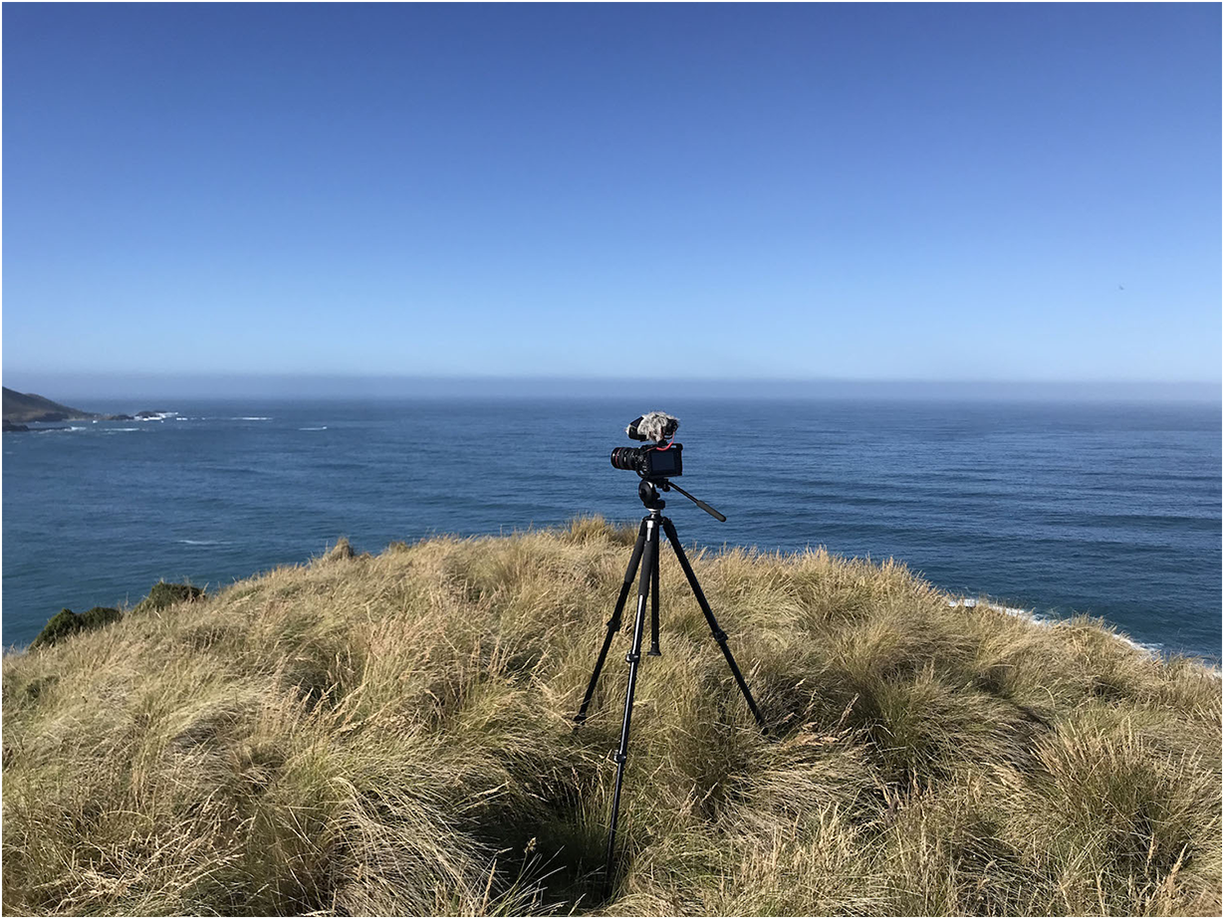
Jesse Boylan, The Smallest Measure, detail of video, sound and photo installation, 2020.
Slow emergencies are forms of harm and damage that are not acute but occur gradually and imperceptibly to most of us – like climate change, environmental pollution and radiation. Despite remaining largely unseen over time, however, the effects of slow emergencies are palpable, their relative invisibility rendering the harm they wreak all the more entrenched and difficult to address. As key theorist of the concept ‘slow violence’, Rob Nixon, argues, ‘slowly unfolding environmental catastrophes present formidable representational obstacles that can hinder our efforts to mobilize and act decisively’ (Nixon, 2011: 2). The challenge becomes ‘how to devise arresting stories, images, and symbols adequate to the pervasive but elusive violence of delayed effects’, ‘to rouse public sentiment and warrant political intervention’ (3).
One way to recognise and respond to the slow emergencies that are threatening life on earth might be to honour that unseen but fundamental element that makes life possible: air. Boylan's approach to representing air's importance is to visualise the work that climate scientists do to take care of air, rigorously studying, capturing, measuring, observing and comparing samples in some of the world's most remote locations. Boylan has trained their attention on Cape Grim in lutruwita/Tasmania, a historical Aboriginal massacre site and the location of an air pollution monitoring station and science programme, jointly managed by the Bureau of Meteorology and the Commonwealth Scientific and Industrial Research Organisation (CSIRO), and CSIRO Oceans and Atmosphere lab at Aspendale, south of Melbourne. Untouched by land, the wind that arrives at Cape Grim after blowing over the Southern Ocean is one of the cleanest in the world and is considered ‘baseline’ air: it represents the background atmosphere and thus grants insights into the driving forces behind anthropogenic climate change (Boylan, 2020).
Using a range of bespoke instruments, the scientists at Cape Grim and Aspendale measure greenhouse gases including carbon dioxide, methane and nitrous oxide; stratospheric ozone depleting chemicals, such as chlorofluorocarbons; concentrations of natural and anthropogenic aerosol particulates; reactive gases; radon and solar radiation; wind speed and direction; rainfall, temperature, humidity and air pressure; and solar radiation, including harmful UV-B radiation (Boylan, 2020). Boylan's photographs, videos and sound works infuse these processes with wonder, connecting us to the caring ethics the scientists bring to every act of research: the smallest measure they take contributes to the possibility of a sustainable future for us all. Boylan's artwork renders visible these relationships between micro-level scientific gestures and macro-level effects, between scientific integrity and care for the planet.
Changes in air quality and changes in the health of human and non-human species are interdependent. Yet the pervasive, slow and violent effects of climate change and global warming are still being perceived as if they are yet to come or may never arrive. Boylan's work seeks to capture how the atmosphere, land, water and science interact in the formation, collection and analysis of the air, and the ways in which global changes in this seemingly invisible matter affects all life forms. It also brings us up close to the rigorous, careful, long-term work done by climate scientists and reminds us that they belong to the broad spectrum of caring practices necessary to respond to this slow emergency to secure future life.
Castlemaine-based artists Cathy Parry and Pie Rankine also engage with ecological crisis and the imperative to care creatively for a sustainable future through object-based and installation practices that often come from community-embedded and manually intensive acts of making. According to Rankine, care can be nurtured through ‘minor tactics’, in holding space, in being open to the unknown and unfamiliar, in being willing to spend time and let go of self, in sharing what you know, and in creating the conditions for joy (Rankine, 2021). These ethics are at the heart of the exhibition The Care Project: Cathy Parry and Pie Rankine (ACU Gallery, Fitzroy, Melbourne, 2021) (Image 2).
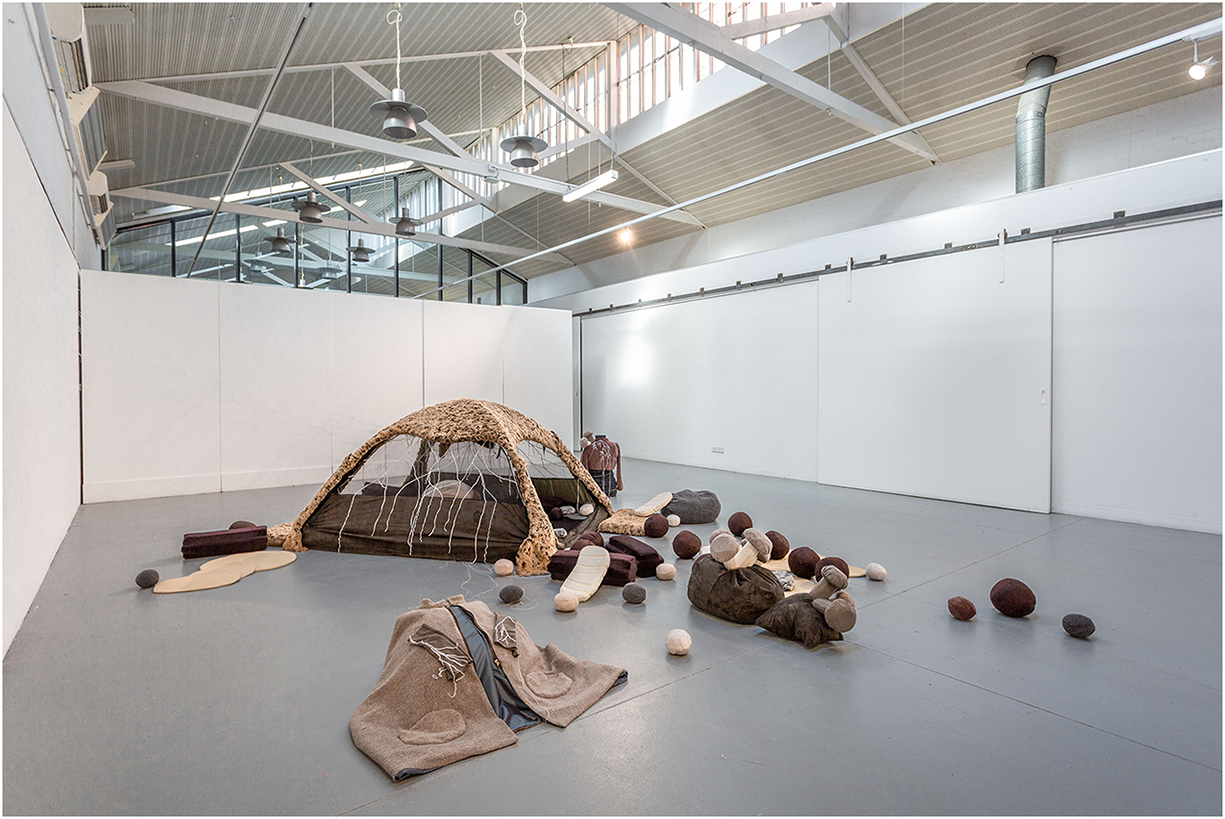
Cathy Parry, Don’t Treat Me Like Dirt, installation view, 2021.
In Don’t treat me like dirt ((2021), Polyester, wool, cotton, foam, tent, clay, mycelium) Cathy Parry designed a scenario that brings us up close to another often overlooked but vital resource in need of our care: soil. A mycelium sprite invites you to enter a soil mound. There, you can hug an enlarged particle of silt or clay rendered in soft fabrics and relate to that unseen world beneath your feet through playful encounter and imaginings. As Puig de la Bellacasa argues, ‘What soil is thought to be affects the ways in which it is cared for, and vice versa, modes of care have effects in what soil becomes’ (Puig de la Bellacasa, 2017: 170). Enhanced noticing, understanding and imagination are vital to changing the value of soil, to take it beyond its status as a mere human resource. Parry's work is expertly crafted, her plush soil objects a world away from the legion of cheap, mass-produced soft toys that end up in land fill. They are made with extraordinary care and over time, qualities that invite respect but also pleasure. This installation is participatory and sensorial – you can climb inside the ‘soil mound’ and burrow deep into its particles, hold them against your body or even throw them around the room to extend their reach. Or you can don a brown velvet jacket, so mushrooms appear to sprout from your shoulders, or the mycelium gloves whose tendrils reach out beyond your own fingers. Don’t treat me like dirt is a delightful, embodied thought experiment, where we might imagine our interconnectedness with soil and activate our desire to care.
Pie Rankine also embeds the ethics of care in her work through slow, labour-intensive processes and an invitation for sensorial connection, although in distinct ways. In her case, the meditative aspect of traditional craft techniques and the collaborative improvising of protest apparel became forms of self-care in response to the grief the artist, along with countless others, experienced in the face of the Black Summer bushfires of 2019–2020. These fires materialised the fears and predictions of climate scientists as Australia became an object lesson to the world that catastrophic climate change was here and now: nearly 12 million acres were scorched, including rainforest that had never burnt before; nearly 3 billion native animals were killed or displaced; over 70% of the country's population was affected by smoke as the largest cities experienced air pollution deemed the worst by international comparisons; and the economic losses were estimated to be upwards of AUD$250 billion. These fires were unchartered territory. In late 2018, inspired by Greta Thunberg, a group of schoolkids in Castlemaine, Rankine's hometown, had already kicked off rolling school strikes for climate that brought nationwide attention to the urgency of meaningful action and faced down the climate policy gridlock among Australian governments. The strikes continued for months, but January 2020 saw a qualitative change in participation as hundreds of thousands took to the streets around Australia, angry and fearful but also hopeful that surely now denial was not an option. This was the context for quick/slow, slow/quick (hook rugs, wool and cotton 2020), objects commemorating lost wildlife that also invite touch, and Shame Job (printed and sewn textiles 2019–2021), items of clothing the artist made during her time with the Extinction Rebellion Spring action in Melbourne in 2019. The title refers to Rankine's perceived dereliction of responsibility for fighting for climate justice, a collective shame at the failure of her generation to agitate effectively for change when the world was not yet on the brink of climate collapse. Rankine suspended from the ceiling overalls, stockings, underpants, and a jacket emblazoned with ‘Tell the truth’, ‘Non-violent’, ‘Extinction Rebellion’ and the ER logo,her own worn clothes forming her artist materials, another practice of care in being mindful of the resources used in everyday life. The installation has an ambiance of loss but maintains a residual energy for hope: we could tear down and put on these clothes to repurpose them for the next action. The flagging clothes evoked both absence and the desperate desire to contribute, a common paradox at the heart of care (Image 3).
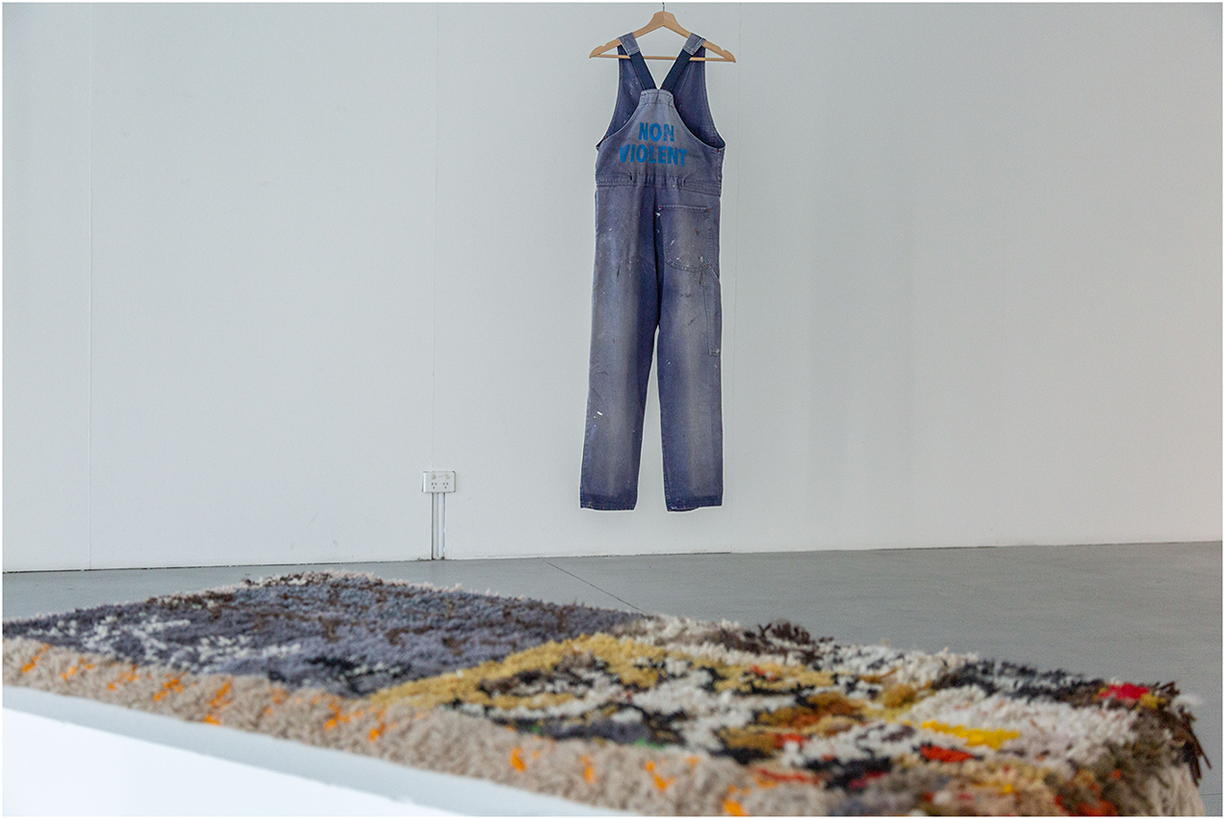
Pie Rankine, Shame Job, installation view, 2021.
This paradox also inhabits Jane Polkinghorne's Treetment (suite #1-4) (Care Project: Lot 19, Castlemaine, 2020). This expanding work is the artist's response to moving to Mildura from Sydney in early 2019, a relocation that acutely focussed her awareness on the deep troubles unfolding in the continuing colonisation of Australia, such that living ‘in various states of denial and ignorance about colonisation and climate change’ was no longer tenable. As she walked along the Murray River as part of her daily ritual, the artist started to notice the many ringbarked red river gum trees in what appeared to be ‘natural’ forest. That these native trees were dying slow and violent deaths was all the more galling given the care and effort local farmers take to maintain their monoculture crops, and the time and water locals expend on the swathes of verdant lawn in front of their premises. Using handheld and drone video footage, Polkinghorne brought the viewer up close to this damaged ecology and its unconscionable cost. Trees hacked and left to die by ringbarking are testament to the violence of colonisation, underlined by the contrast to the sublimeness of ancient trees venerated through commemorative tourist plaques. Treetment is a speculative reflection on the cultural dissonance where some trees and plants are ‘allowed’ to live, venerated even, but most continue to be killed so that land can be put to human use. At the same time, Polkinghorne wished to evoke the wonder that, despite these extractivist practices, entities persist in eking out an existence: ‘In devastation, the world continues and responds, as we must too’ (Polkinghorne, 2020) (Image 4).

Jane Polkinghorne, Treetment, installation view, 2020.
Caring for history, caring for labour, caring for care: Catherine Pilgrim, Kylie Banyard, and Sam Bews
Concern for the ongoing harm of colonialisation, with its inextricable ties to extractivist and instrumentalist approaches to the natural world, is a key driver for a values revolution that would centre care. Many artists in the Care exhibition series, including Polkinghorne and Boylan, make this connection explicit, as does Catherine Pilgrim although her focus is the historical archive and the suppression of care and women's experiences in the official stories integral to colonial apologists. For Sorry My House is Such a Mess (Phyllis Palmer Gallery, La Trobe University Bendigo, August 2021), Pilgrim transposed a historical domestic space into the gallery, to allow the viewer to reflect on the tension between the comforts of home and the constraints of our history-telling, to contemplate presence and absence, care and control. 2
Pilgrim holds that drawing has an ethical dimension, bound up with time and attentiveness, but also with the bodily materiality and personal nature of the process. Drawing may be a way of caring for the subject, of deigning the everyday with a moment of significance, of tending to the overlooked while mobilising the capacity to see things differently. Pilgrim often applies these qualities of drawing to generate new understandings of her surrounding histories, hoping to complicate and unsettle some of the received ideas that rely on official public records and discount private experience, oral testimony and Indigenous knowledges. For Mrs. Larritt in Upside Down Country (2018), the artist based her intervention in Dudley House, one of the earliest and the most intact government buildings surviving in Bendigo from the early gold-rush era and once home to Richard Larritt, colonial surveyor of Bendigo (Pilgrim, 2021).
Sorry My House is Such a Mess extends this earlier work. Pilgrim relies on the ethics of drawing to bring together her many points of inquiry: gendered experience in the city's early days, Indigenous legacies, and the disavowed practices of caring. Through pencil drawings, lithographs, and objects, installed to evoke a domestic space, Pilgrim's images challenge the structured vision of the ‘historically significant’ male householder by reminding us of what his colonial business relied on, but disavowed: Indigenous expropriation and knowledges, and the care of home and body by his wife, Maggie. Pilgrim's images merge the abstract geometry imposed by colonising vision, such as maps and single point perspective, with delicate depictions of local wildflowers that speak of continuity and resilience over deep time (Image 5).
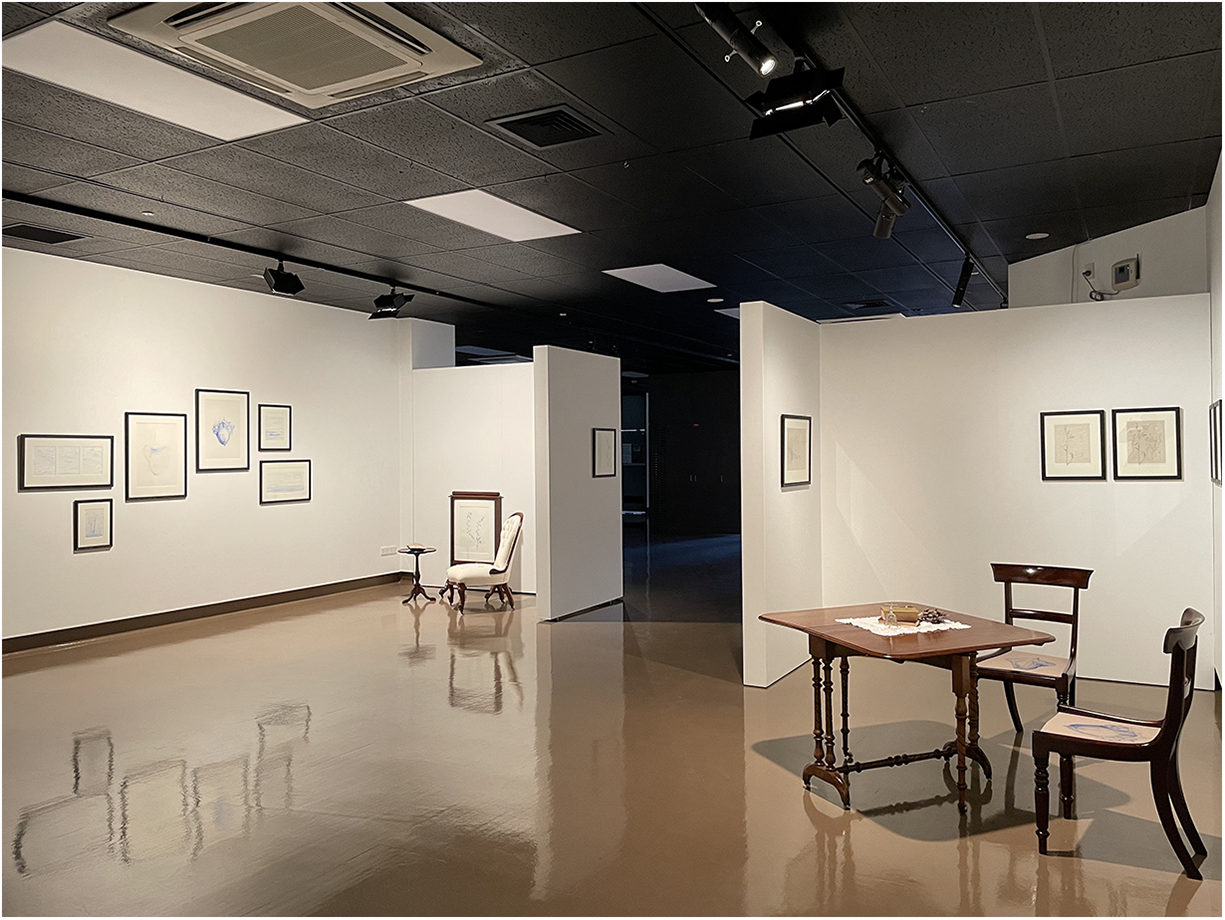
Catherine Pilgrim, Sorry My House is Such a Mess, installation view, 2021.
By foregrounding care – for home and family, for environment and the everyday objects that surround us – Pilgrim complicates polarised views of history that reduce human actors to pawns serving ideological purposes. Her work prompts us to see the relationality of historical actors. It does not only seek to insert the suppressed experiences of Indigenous peoples and women into the historical narrative of her own local environment. Rather it seeks to stimulate our imaginations and material sensations into changing that narrative, to potentially uncover a more complex picture of how history is made, and thereby a much more dynamic relationship between ‘history’ and our contemporary realities.
This link between the disavowal of domestic care work and broader political narratives that normalise individualist thinking was also explored by Kylie Banyard, whose Care exhibition participation was as part of a group of artists curated by Rebecca Mayo into a show at ANCA, an artist-run initiative in Canberra. Present Tending, which also included Sara Lindsay, Ema Shin, Lika White and Katie West, brought together six artists whose practices are site-responsive, textile-based and grounded in care ethics. Hatched pre-COVID-19, the original idea of working alongside on-site was rendered impossible by lockdowns and restrictions on face-to-face encounters. But rather than cancel or try to recreate the former conditions, the curator attempted ‘a resistance to the assumption of individual responsibility and agency’ (Mayo, 2022), transforming Present Tending into an exploration of how to ‘work’ differently by prioritising and valorising care.
The artists in what became Present Tending were not asked to simply replicate at home what they would have done in the (supported) gallery environment, but to respond to a 5-m swatch of cloth that Mayo had dyed and mailed to their homes. They were specifically instructed to ‘use the cloth only in ways useful to their commitments and desires in the home, studio, or elsewhere and to do so without producing unwanted labour’ (Present Tending website). The project sought to ‘trace and record connections and tensions between paid and unpaid labour and contribute to the recognition of unaccounted for care-work as labour’ (Mayo, 2022). The specific material Mayo provided, natural fibres dyed with plant colour sourced from local Ngunnawal/Ngambri land, helped connect the artists, and their subsequent audiences, to place, labour and care. For each artist, interacting with the cloth and the curatorial premise offered opportunities to creatively enmesh their artwork into their everyday. Sara Lindsay, for example, over-dyed the cloth with pigments derived from her own garden, an extension of her daily gardening rituals that helped sustain her. Ema Shin shared part of the cloth with her children to create a ‘playmat for peace of mind’, incorporating activities of family care. Kylie Banyard worked the cloth into paintings already in process, such as Touching silver princess 1, 2022 (oil and acrylic on turmeric dyed canvas), part of her long-term project integrating care of her son with their shared care of local, endemic plants.
As Mayo summarises, For these artists, the textile becomes an object and tool of care, a site of resistance or intermediary between the inevitable tensions and challenges of working from home. The range of approaches explored by the artists is a testament to the creative ways artists managed isolation, home-schooling and ongoing employment and financial pressures (ANCA website, 2023).
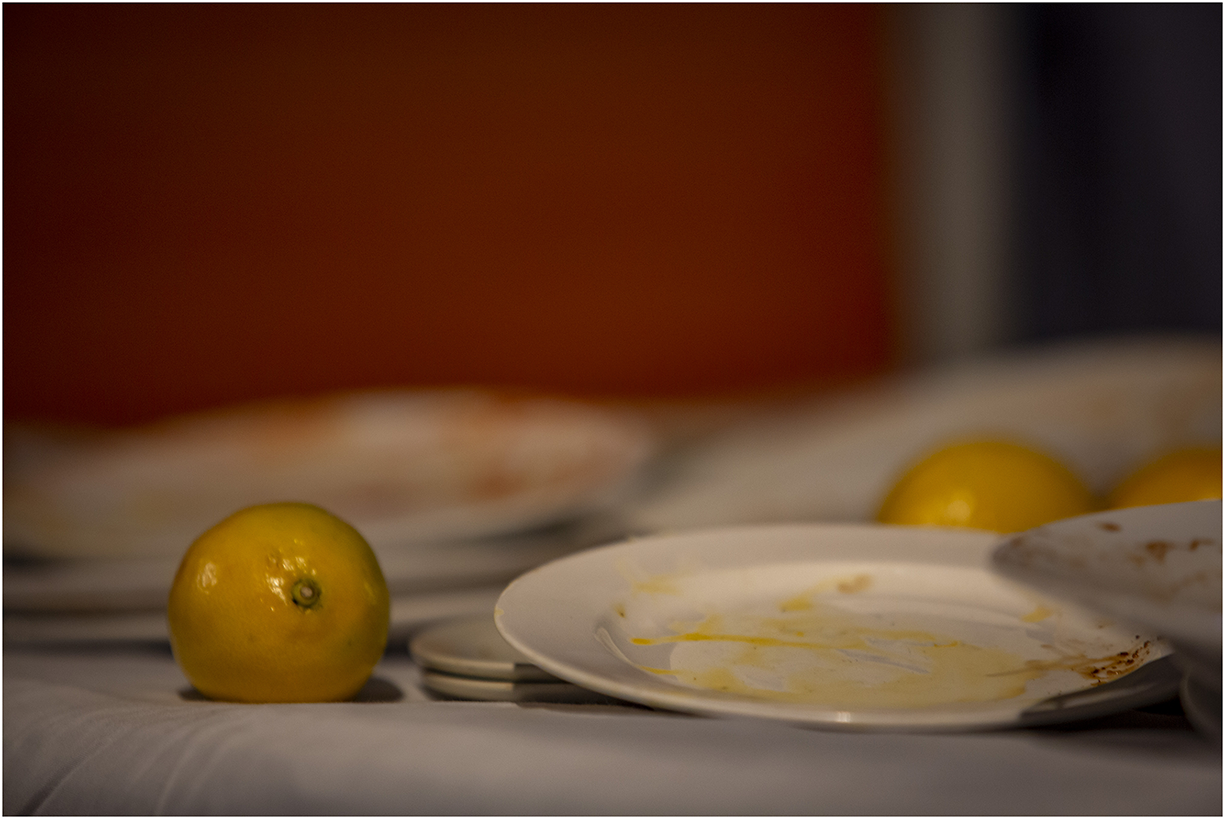
Sam Bews, The Language My Mother Speaks (TLMMS) iteration 2, 2021.
Through TLMMS, Bews sought to capture the ongoing connection and ‘aliveness’ of her mother within a multi-dimensional, inter-connected reality. For the Care exhibition series, Bews collaborated with video artist Denise Martin and special effects producer Neil Harrison to focus on one aspect of this complex universe: the quiet, ever-changing relationship between the person with dementia and the elements (TLMMS: Elements (iteration 2), George Paton Gallery, University of Melbourne, 2021). With video, sound and objects, the installation created a space for sensorially imagining this relationship. Viewers were invited to slow down and listen, to sit on a piece of care-facility furniture while gazing at the tree outside Bews’ mother's window, to hear the mother's vocalisations emanating from surprising nooks in the space, to quietly confront the harrowing symbolism of scores of unwashed pieces of institutional crockery. The installation became the poetic expression of the material, metaphoric and psychic resonance of the mother's relationship with the elements – water, earth, air – a relationship all humans and more than humans share, regardless of their ‘level’ of cerebral function. As Bews writes of her mother, At the simplest level her body continued to speak the language of compounds: blood cells taking nutrients from the gut and oxygen to the lungs; skin drying, flaking and being remade. She spoke the language of tiny things: beetles and ants, microbes and bacteria, vital components of our earthly existence … Her heart continued to beat in time with a lazy lizard on a rock. She took in water like the pale-yellow moss on a tree (Bews, 2021).
Conclusion
Grounded in interconnectedness and shared vulnerability, committed to centring care as the main objective of politics, and to creating time and space for care within current power arrangements, the artists in Care: art and ethics: an exhibition series contribute new understandings of how care can be enacted through creative practices. Their work and processes grant innovative perspectives on care ethics, as powerfully evoked by Fiona Robinson: Care ethics is a critical feminist theory that seeks to reveal the different forms of power that keep the values and activities of care hidden from ‘public’ view, and to demonstrate the devastating effects that ensue when care is consistently devalued, sidelined, and subordinated to the higher values of profit and military power. As an antidote to the values of neoliberalism, care must be recognized as a social responsibility, an attribute of citizenship, and a basis of feminist solidarity. (Robinson, 2015: 308).
Footnotes
Declaration of Conflicting Interests
The author declared no potential conflicts of interest with respect to the research, authorship, and/or publication of this article.
Funding
The author received funding from Regional Arts Victoria to support Care; art and ethics: an exhibition series. The project was also supported by internal research funds from La Trobe University, and was supported in kind by gallery partners.