




Abstract
The gut microbiome as a potential therapeutic target for mental illness is a hot topic in psychiatry. Trillions of bacteria reside in the human gut and have been shown to play a crucial role in gut–brain communication through an influence on neural, immune, and endocrine pathways. Patients with various psychiatric disorders including depression, bipolar disorder, schizophrenia, and autism spectrum disorder have been shown to have significant differences in the composition of their gut microbiome. Enhancing beneficial bacteria in the gut, for example, through the use of probiotics, prebiotics, or dietary change, has the potential to improve mood and reduce anxiety in both healthy people and patient groups. Much attention is being given to this subject in the general media, and patients are becoming increasingly interested in the potential to treat mental illness with microbiome-based therapies. It is imperative that those working with people with mental illness are aware of the rationale and current evidence base for such treatment strategies. In this review, we provide an overview of the gut microbiome, what it is, and what it does in relation to gut–brain communication and psychological function. We describe the fundamental principles and basic techniques used in microbiome–gut–brain axis research in an accessible way for a clinician audience. We summarize the current evidence in relation to microbiome-based strategies for various psychiatric disorders and provide some practical advice that can be given to patients seeking to try a probiotic for mental health benefit.
The Microbiome–Gut–Brain Axis
The human gastrointestinal tract (GIT) harbors an immense collection of microorganisms termed the gut microbiota. This consists predominantly of bacteria but also includes viruses, protozoa, fungi, and archaea. Although more conservative than previously reported, recent estimates place the number of bacteria in the human gut at approximately 3.8 × 10¹³, slightly in excess of the total number of human cells. 1 The collective genome of these bacterial cells, the gut microbiome, vastly exceeds the amount of human DNA present in the body, such that, for every one human gene, we have over 100 bacterial genes. 2 Given the enormous genetic potential of the microbiota, it is unsurprising that it appears to play a role in almost all physiological processes in the human body.
The concept of the “gut–brain axis” is not a new one. Gastrointestinal symptoms are often reported in psychiatric illness. Disturbances in appetite and weight change are key features of major depressive disorder (MDD), 3 while symptoms of diarrhoea and nausea are frequent complaints in patients with anxiety disorders. 4 Gastrointestinal problems commonly coexist with autism spectrum disorder (ASD), 5 schizophrenia, 6 and Parkinson disease. 7 Likewise, gastroenterologists are no strangers to psychopathology. Mood disturbances, anxiety, and stress are well recognized as playing a role in functional gastrointestinal disorders such as irritable bowel syndrome (IBS) along with organic conditions including inflammatory bowel disease 8 and peptic ulceration. 9
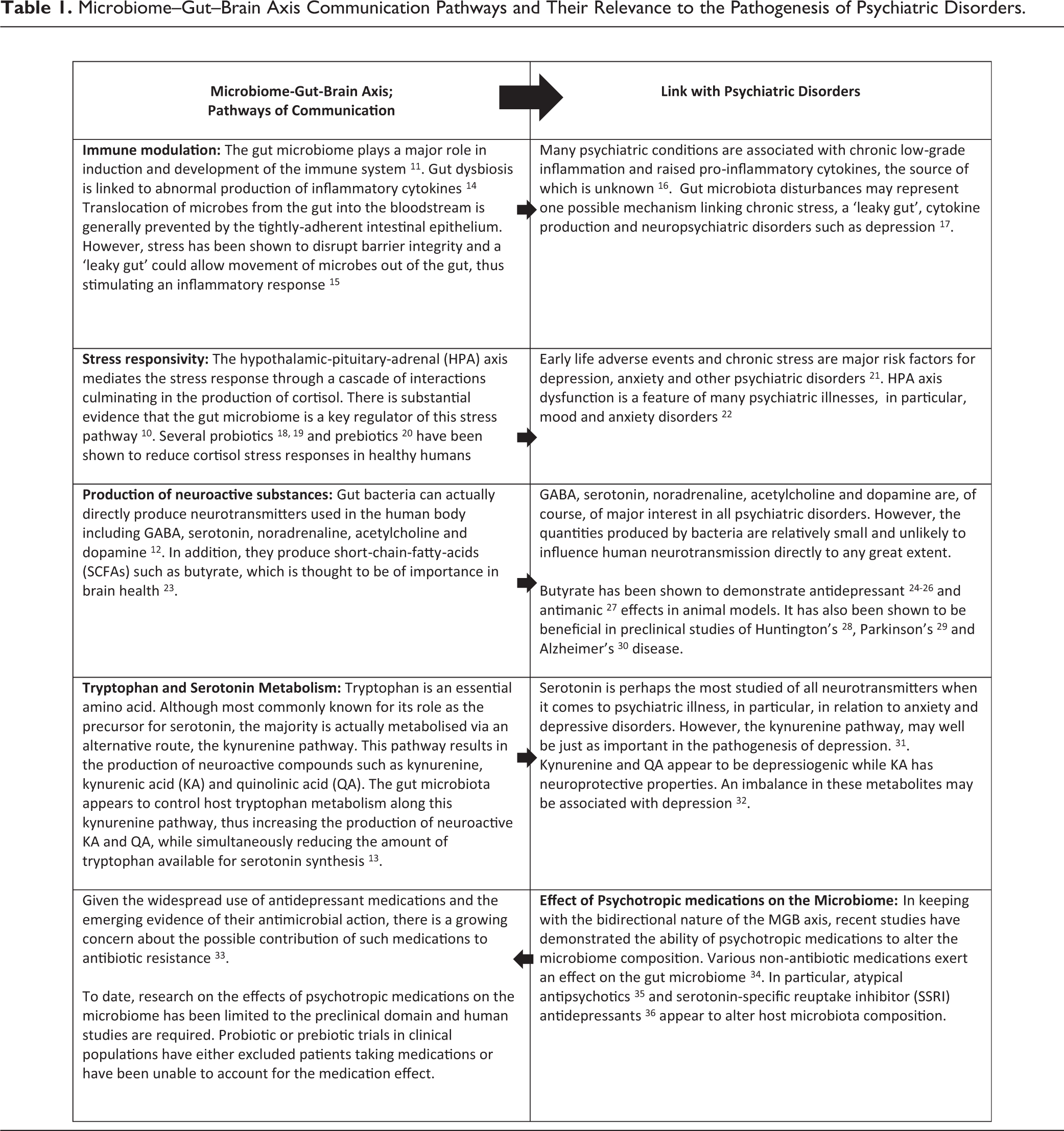
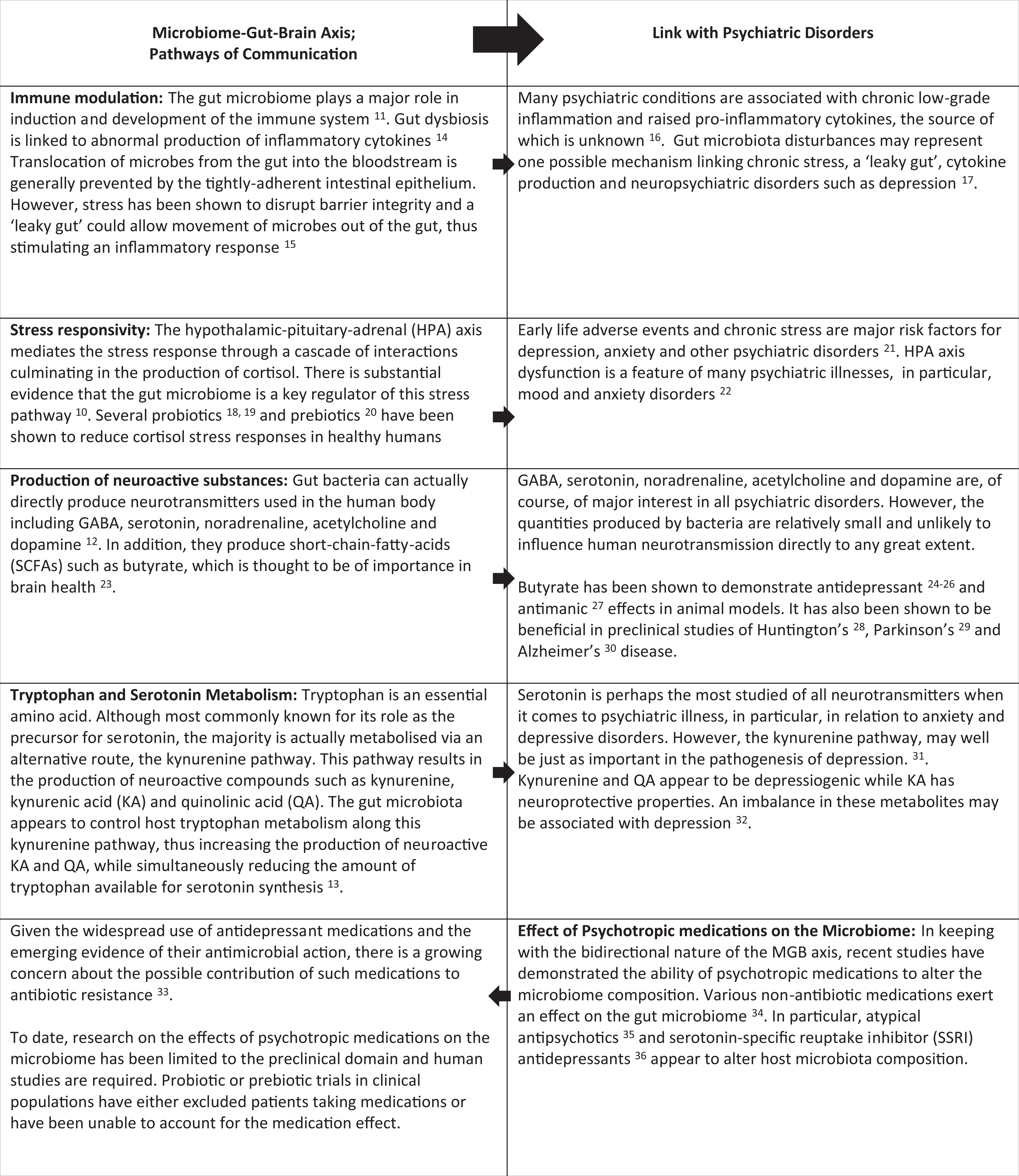
The bidirectional communication between the brain and GIT is a complex and dynamic system, capable of continuously transmitting, interpreting, and responding to information. Within this vast communication matrix lies the gut microbiome, which we now recognize as playing a vital role. The mechanisms by which our gut bacteria communicate with, and influence, the central nervous system are gradually being uncovered and span neural, endocrine, and immune systems. There is a striking overlap between those pathways influenced by the microbiome and those involved in mental illness (see Table 1). The gut microbiome has been shown to play a major role in the development and function of the hypothalamic–pituitary–adrenal (HPA) axis, 10 which mediates the stress response and is of interest in a range of psychiatric disorders, in particular depression and anxiety disorders. Our gut bacteria also significantly influence the immune system 11 and may represent a link with the immune dysfunction that is characteristic of mental illnesses such as depression and schizophrenia. Interestingly, the gut microbiome also impacts neurotransmission. As well as being capable of directly producing various neurotransmitters such as serotonin, noradrenaline, dopamine, and γ-aminobutyric acid, 12 gut bacteria have been shown to modulate tryptophan metabolism and serotonin production. 13 These pathways of communication between the microbiome, gut, and brain and their relevance to psychiatric illness are further explored in Table 1.
Microbiome–Gut–Brain Axis Communication Pathways and Their Relevance to the Pathogenesis of Psychiatric Disorders.
Development of the Human Gut Microbiome
It is generally accepted that the uterus is a sterile environment and that bacterial colonization begins during birth. 37 The neonatal microbiome varies according to mode of delivery, with that of vaginally delivered infants resembling the maternal vaginal microbiome and that of those delivered by cesarean section resembling the maternal skin microbiome. 38 Various other factors influence the developing neonatal microbiome including premature birth, mode of feeding, 39 and of course, the administration of perinatal antibiotics. 40 The simple infant microbiome continues to adapt and diversify, and early disparities resolve quite quickly. Microbiome differences based on delivery mode are no longer evident by the sixth week of life, 41 and by 1 year, the infant has a diverse, differentiated adult-like microbiome. 42 Throughout adulthood, the major determinant of gut microbiome composition seems to be diet. Rapid and dramatic shifts in microbiome composition occur in response to changes in dietary intake with distinct patterns apparent in plant-based versus animal-based diets. 43,44 Nutritional factors continue to be of relevance in the elderly population, and the microbiome appears to be a major determinant of health status and frailty levels as one ages. 45 Interestingly, while environmental proximity to another person does not, in itself, increase the similarity of microbiome composition between individuals, the quality of human relationships does seem to have an impact. A recent study found that married couples who described a close relationship had similar microbiome profiles, while no differences in similarity were found between couples who did not report such a close bond. 46 Although the same study reported no differences in microbiome similarity between sibling pairs and unrelated pairs, another paper described the similarity indices of monozygotic twins to be significantly higher than those of unrelated individuals, suggesting that host genotype does also play a role in shaping the microbiome. 47
Fundamental Principles of Microbiome Research
To understand the current status of microbiome research, it is helpful to become acquainted with some of the basic research methods employed. In this section, we explain the essential laboratory techniques used to identify bacteria within a fecal sample and the various tools applied to investigate the mechanisms of communication between the gut microbiome and brain.
Laboratory Techniques for Microbiome Analysis
Historically, bacteria could only be investigated by culture techniques that involved plating samples on appropriate media and identifying the resultant bacterial growth. 48 The problem with this method was that many microorganisms were not suitable for culture and thus were unable to be identified. The advent of “metagenomics,” a culture-independent system, which allows for direct analysis of the genetic material in a sample, has meant that it has become possible to identify all the microorganisms present. 49
Once a fecal sample has been collected, it undergoes processing to extract the DNA and RNA (see Figure 1). The resulting genetic material can be analyzed in two ways. The first and most commonly employed technique is 16S ribosomal RNA (rRNA) gene analysis. The 16S rRNA gene is a highly conserved gene present in almost all bacteria. The extracted RNA undergoes polymerase chain reaction processing which, using pre-made 16S rRNA primers, identifies and amplifies these genes. The resultant genes are then sequenced allowing identification of the different bacteria present in the sample. 50 The second, more expensive, method is “shotgun metagenomics,” also called “whole genome shotgun sequencing.” This is a technique whereby all the extracted DNA in the sample are sequenced, as opposed to only one target gene. It not only identifies which bacteria are present in a sample but also enables an assessment of their function from analysis of all the genes they contain. It is more expensive than 16S rRNA sequencing but very useful for functional, along with compositional, microbiome analysis. 51
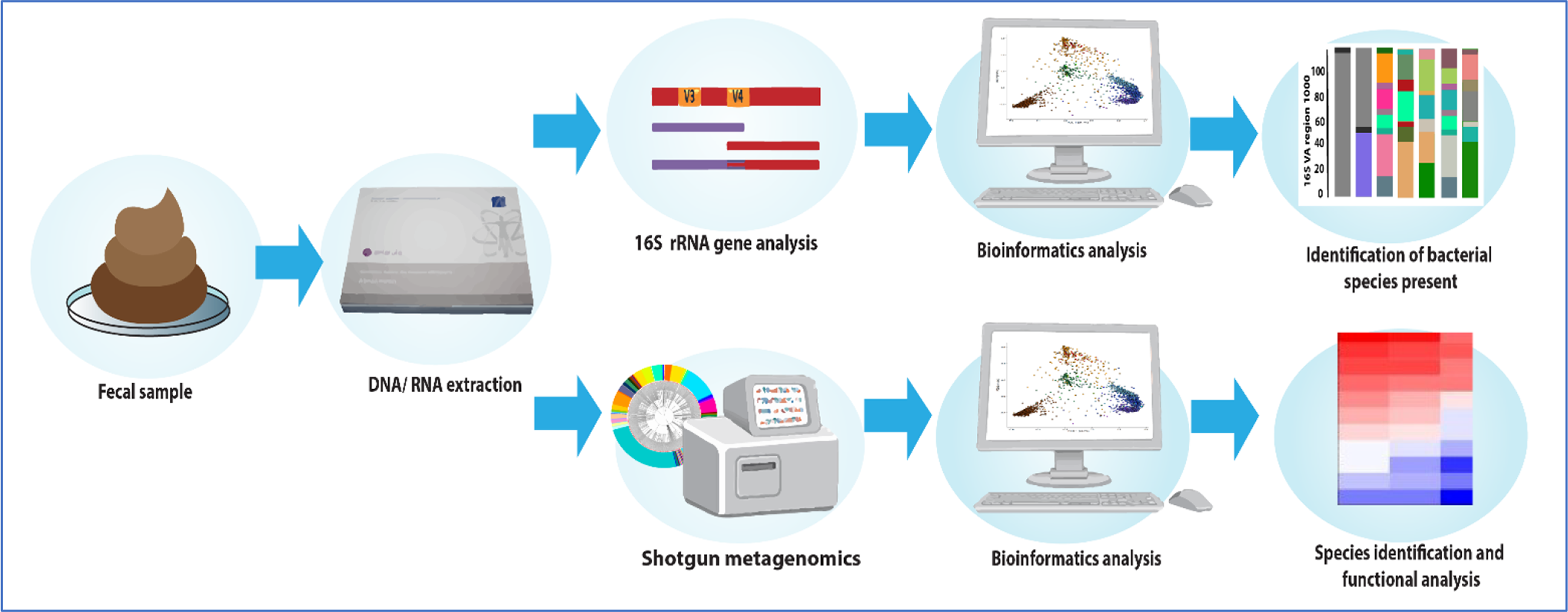
Microbiome analysis: Analysis of the gut microbiome from a fecal sample can be done in two ways. The more basic method is using 16S ribosomal RNA analysis, which identifies all the bacterial genera and species present in the sample. Shotgun metagenomics is a more complex and expensive process but provides information on the functional capacity of the microbiome along with bacterial identification.
While traditional DNA sequencing was an extremely slow and expensive process, high-throughput “next generation sequencing” technology has revolutionized the microbiome field by allowing billions of DNA strands to be sequenced in parallel, making genome analysis faster, cheaper, and more accessible. 52 Following sequencing, huge data sets are generated and can be analyzed using specialized bioinformatics packages. The DNA sequence reads are clustered with similar reads into “operational taxonomic units,” each of which signifies a specific bacterial genera or species.
Manipulating the Microbiome
A key method of investigating the pathways of microbiota–gut–brain (MGB) communication is to alter the microbiota in various ways (see Figure 2) and explore the consequences on the brain and behavior. Rodent models are an invaluable resource in this regard. A state of complete absence of the microbiome can be examined by the use of germ-free (GF) animals (animals born and maintained in a sterile environment) and has been extremely useful in proof-of-principle studies, elucidating a role for the microbiome in stress responsivity, anxiety, social behavior, and cognition. 53 A less extreme and more clinically relevant model is microbiome depletion, whereby various antibiotics are used to modify the microbiome in predictable and reproducible ways. 54
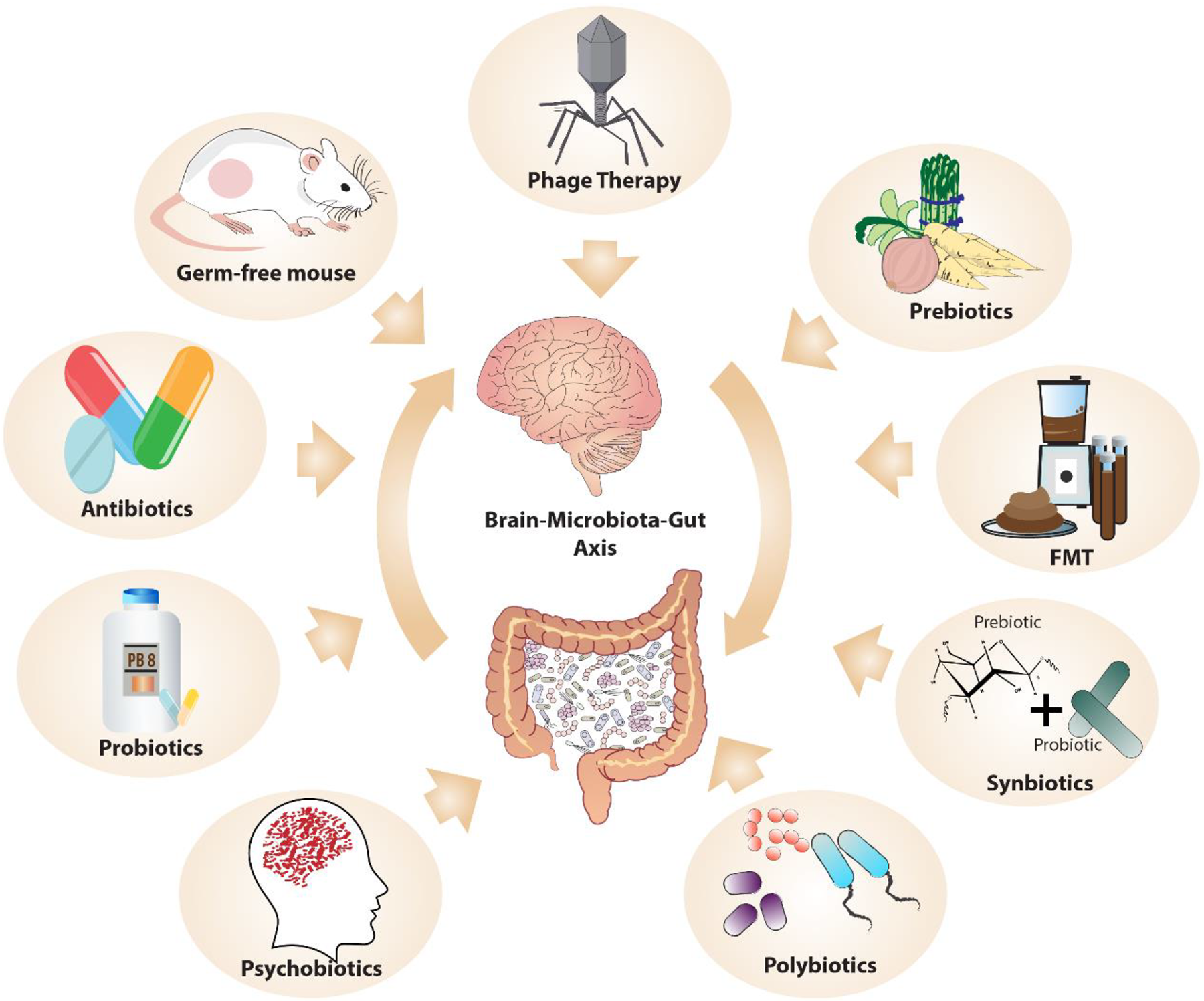
Manipulating the microbiome: The microbiome can be altered in various ways to investigate the impact on the brain and psychological function.
The microbiome can also be altered by the addition or enhancement of specific bacteria. Probiotics, defined as living bacteria that, when administered in adequate amounts, confer a health benefit on the host, 55 are easily administered. They allow investigation of individual species or bacterial combinations, termed polybiotics, on different parameters in both health and disease states. A less specific, but possibly more effective, method of enhancing specific bacteria is through the use of prebiotics, defined as substrates, usually but not necessarily carbohydrates, which selectively enhance the growth of certain bacteria. 56 They can be administered with their preferred bacterial targets for greater efficacy, the combination being referred to as a “synbiotic.” 57 Another term widely used in the microbiome arena is that of the “psychobiotic” which refers specifically to pro-, pre-, or synbiotics that have been shown to confer a mental health benefit. 58
A further means of altering the microbiome is through the use of fecal microbiota transplantation (FMT) that involves the transfer of fecal matter from one individual to another, thereby passing on the donor’s microbiota. It has been used to investigate the ability of the microbiota, from a donor with a specific disorder such as depression, to transfer the disease phenotype to an animal. 59 It has also been shown to be effective therapeutically, predominantly in the treatment of the gastrointestinal infection, Clostridium difficile, 60 but more recently extending into the psychiatric domain. Two small studies investigating FMT in the treatment of IBS reported improvements in mood symptoms, 61,62 and a small open-label trial demonstrated promising results using FMT as a potential therapy for ASD. 63
A new and exciting method of altering the microbiome is through the use of phage therapy. Phages, short for bacteriophages, are viruses that infect specific bacteria. Although they have been around for over a century, interest in their use as a method of eliminating pathogenic bacteria largely subsided with the advent of antibiotics. However, renewed curiosity about their therapeutic potential has developed with the emergence of antibiotic resistance. 64 The success of FMT in treating resistant gastrointestinal infections such as Clostridium difficile is generally attributed to the transfer and colonization of bacteria. However, it has been shown that the viral component from donor FMT can colonize the recipient gut for up to 12 months and may play a much greater role than is currently appreciated. 65 As a modulator of microbiome composition, the use of phage to target the MGB axis is highly plausible, although very much limited to the research domain at present.
“Postbiotics” refer to nonviable bacterial products or bacterial metabolites that have biologic activity in the host. The postbiotics of most interest in relation to the brain are the short-chain fatty acids (SCFAs), namely butyrate, propionate, and acetate, which are produced by colonic bacteria from the fermentation of nondigestible carbohydrates. As such, their production is particularly encouraged by a high-fiber diet, something that has long been associated with better health outcomes. Butyrate, especially, appears to have neuroprotective properties and has been demonstrated to have antidepressant potential in animal models 23 although human studies are lacking.
The Microbiome in Psychiatric Disorders: Current Evidence
There is no doubt that the gut microbiome influences brain function, and the vast array of preclinical studies provide us with insights into the mechanisms by which this may be occurring. However, the major question for psychiatrists is whether the science actually translates to the clinic or remains an academic pursuit. The concept of the MGB axis is an exciting one, but does it actually mean anything in the management of mental illness in our patients? Although the human data are certainly lagging behind the laboratory discoveries, application of microbiome-based hypotheses is gradually being tested in clinical populations. In this section, we will review the current evidence base across the spectrum of psychiatric illness, from the characterization of microbiome composition in patients with various disorders to the potential for treatment using microbiome-based interventions.
MDD
The gut microbiome of patients with depression has significant compositional differences when compared with that of healthy controls. 59,66 –69 Although several case-control studies have confirmed this differential microbiome profile, there does not appear to be an identifiable “depression” signature, and in fact, some findings have been contradictory. This may be partly explained by the fact that microbiome composition shows major interindividual variability, and these MDD studies were small, ranging from only 34 to 60 subjects in patient groups. A Belgian group has attempted to address the issue recently by a large-scale population study that used data from the Flemish Gut Flora Project to investigate the relationships between microbiome composition and quality of life and depression (diagnosed by a general practitioner) in 1,045 people. They found that two bacterial genera, Coprococcus and Dialister, were depleted in patients with depression irrespective of antidepressant treatment and that butyrate-producing Faecalibacterium and Coprococcus bacteria were consistently associated with higher quality of life measures. 70 A role for the microbiome in MDD is further supported by the striking observation that when mice are colonized with the microbiome from a depressed patient, through the process of FMT, they begin to exhibit depressive-like symptoms. 59,67
Numerous trials have investigated the effect of probiotics on mood, in both healthy population and those diagnosed with depression. Recent meta-analyses of the data, for the most part, confirm the beneficial effects of certain probiotics on mood. 71 -75 However, several caveats are worth noting. Probiotics appear to be of limited efficacy in those with normal baseline mood, and a beneficial effect is predominantly seen in those exhibiting depressive symptoms. 73,75 In addition, the antidepressant effects of probiotics seem to be limited to younger adults and not evident in those over the age of 65 years. 74 Another area of concern is the major interstudy discrepancies in relation to probiotic dosing and duration of treatment, which has reduced the comparability of current clinical trials. Likewise, the use of different bacterial species and strains poses a similar challenge. While those probiotics that appear to have antidepressant effects are predominantly of the Bifidobacterium and Lactobacillus genera, there are many different species and strains within these genera, and properties are not generalizable. Prebiotics have also been studied for potential antidepressant properties, but a recent meta-analysis has found no benefit over placebo in relation to mood improvement. 75
Bipolar Affective Disorder (BPAD)
Several studies have investigated the microbiome composition in patients with BPAD. 76 The first, a relatively large study involving 115 patients, reported decreased levels of Faecalibacterium. This finding was replicated in an Austrian study of 32 patients with bipolar disorder 77 and also demonstrated consistency with a study in patients with MDD where similar underrepresentation of the bacterium was reported. 66 However, a Danish study that compared the microbiome of 113 patients with newly diagnosed BPAD with unaffected first-degree relatives and healthy individuals found no differences in Faecalibacterium. They reported that Flavonifractor, a bacterial genus that may induce oxidative stress and inflammation, was associated with bipolar disorder. 78
Interestingly, two recent clinical trials have demonstrated a beneficial effect of adjunctive probiotics in patients with BPAD. One was an uncontrolled pilot study that reported subtle cognitive improvements in 20 euthymic individuals following 3 months consumption of a probiotic containing nine different strains of Lactobacillus or Bifidobacterium. 79 The second was a randomized controlled trial (RCT) involving 66 patients who had recently been hospitalized for mania. 80 After discharge, these patients were randomly assigned to receive 24 weeks of an adjunctive Lactobacillus/Bifidobacterium probiotic or adjunctive placebo. Rehospitalization rates were significantly lower in those individuals who were taking the probiotic. Thus, as seen in MDD, probiotics of the Lactobacillus and Bifidobacterium genera appear to hold therapeutic potential in BPAD.
Anxiety and Related Disorders
There is a wealth of preclinical evidence supporting a role for the gut microbiome in HPA axis development, stress responsivity, and anxiety-related behaviors in animal models. 81 While probiotics have consistently demonstrated an ability to reduce anxiety in rodents, evidence for the similar anxiolytic effects in humans is far from established. 82 Many probiotic trials in healthy human populations have included a stress or anxiety outcome, and although results have been inconsistent, they generate cautious optimism. 71,72 A small cross-sectional study, which would support the potential of microbiome-based treatments for anxiety disorders, found that higher intake of fermented, probiotic-containing foods by healthy students appeared to be protective against developing social anxiety disorder in those who had high baseline levels of neuroticism. 83
There has only been a single publication to date reporting on the microbiome composition in those with a specific anxiety disorder. This small study investigated the microbiome composition in post-traumatic stress disorder (PTSD). Authors analyzed the microbiome profile of 18 individuals suffering from PTSD and compared it to that of 12 subjects who, despite exposure to trauma, did not develop PTSD. Although overall diversity measures were similar, the relative abundances of Actinobacteria, Lentisphaerae, and Verrucomicrobia phyla were decreased in PTSD subjects and able to distinguish PTSD from controls with a high degree of accuracy. 84 Unfortunately, there have been no other compositional or interventional studies in people with clinically relevant anxiety. In addition, PTSD is quite different from other “primary” anxiety disorders, such as social anxiety disorder (social phobia), panic disorder, agoraphobia, and generalized anxiety disorder, which has been reflected by its recent reclassification in the Diagnostic and Statistical Manual of Mental Disorders, Fifth Edition. This is a gaping hole in the microbiome literature, especially given the promising preclinical results.
Schizophrenia and Psychotic Disorders
Several researchers have proposed a link between the gut microbiome and schizophrenia, hypothesizing about a possible etiological role given the enormous genetic potential of the microbiome 85 and its influence on the immune system, a major pathophysiological feature of the illness. 86 The microbiome in patients with first-episode psychosis (FEP) and schizophrenia has been shown to be compositionally distinct form healthy controls. In patients with schizophrenia, the oropharyngeal microbiome displays an increased abundance of lactic acid bacteria 87 along with increased levels of Lactobacillus phage. 88 The fecal microbiome shows increased representation of the phylum, Proteobacteria, accounted for predominantly by increased levels of the genus, Succinivibrio. 89 While a more recent study did not find any major differences at a phylum level, they did report significant separation of several taxa at a family level and demonstrated behavioral and central neurotransmitter changes in mice who received an FMT from schizophrenia patients. 90
There have been two studies investigating the microbiome in patients with FEP. A Finnish group compared the microbiome composition in 28 FEP patients with that of 16 healthy matched controls and explored whether there was an association with symptom response up to 12 months after treatment. They found that, although bacterial numbers showed no statistically significant difference between the two groups, numbers of Lactobacillus group bacteria were elevated in FEP patients and significantly correlated with symptom severity. In addition, a subgroup of FEP patients with the strongest microbiota differences showed poor treatment response at 12-month follow-up. 91 A larger Chinese study aimed to further explore the microbiome–psychosis link by analyzing the fecal microbiome along with magnetic resonance spectroscopy (MRS) brain imaging of patients at high risk (HR) and ultrahigh risk (UHR) of psychosis. They found that the orders Clostridiales, Lactobacillales, and Bacteroidales and genera Lactobacillus and Prevotella were increased in UHRs compared with HR patients and healthy controls. They also found increased choline levels on imaging, a marker of cell membrane dysfunction. They suggested that the microbiome changes could, through alterations in SCFA production, lead to microglia activation and cell membrane dysfunction, 92 a conceivable, but highly speculative, hypothesis.
Neurodegenerative Disorders
Although Parkinson disease (PD) has been the most intensively studied, the microbiome is of interest across a range of neurogenerative disorders including Alzheimer disease (AD), multiple sclerosis, and amyotrophic lateral sclerosis. 93 PD may be of particular relevance, given the high prevalence of gastrointestinal disturbances that often precede the more well-recognized motor symptoms. Although findings have been varied, there are some clear trends evident in the microbiome composition of patients with PD. Several studies showed an increase of Lactobacillus, Bifidobacterium, Akkermansia, and Verrucomicrobiaceae in PD, while Faecalibacterium, Coprococcus, Blautia, and Prevotella appear to be underrepresented. 94 Conversely, Bifidobacterium appears to be decreased in AD. 95 Interestingly, the microbiome composition in PD is strikingly similar to that seen in idiopathic rapid eye movement sleep behavior disorder, a disorder that is considered a prodrome of PD, thus suggesting that the microbiome changes may precede the development of PD symptoms. 96
An RCT investigating the use of a probiotic (Lactobacillus acidophilus, Bifidobacterium bifidum, Lactobacillus reuteri, and Lactobacillus fermentum) in 60 patients with PD reported that probiotic consumption had favorable effects on motor symptoms as well as on various metabolic parameters including C-reactive protein (CRP), glutathione, and insulin metabolism. 97 The same Iranian research group also undertook an RCT in 60 patients with AD using a slightly different multispecies probiotic (Lactobacillus acidophilus, Lactobacillus casei, Bifidobacterium bifidum, and Lactobacillus fermentum). They reported an improvement in mini-mental state examination scores following 12 weeks of the intervention. 98 Although these trials are encouraging, they need to be replicated. Microbiome manipulation in the treatment of neurodegenerative disorders may hold therapeutic promise, but at present, this research is very much in its infancy.
ASD
The relationship between diet and neurodevelopmental disorders such as ASD and attention-deficit hyperactivity disorder (ADHD) has been the focus of much research. Particular attention has been paid to the role of food additives, refined sugar, food allergies, and fatty acid metabolism, but there is no conclusive evidence in relation to the beneficial effects of any dietary interventions. 99 The high prevalence of gastrointestinal symptoms in children with ASD and the potential impact of diet on autism symptoms have led to a keen interest in the role of the microbiome. Differences in the gut microbiome profile of people with autism have been found. While results have been quite variable, replicated findings have included increased abundance of Clostridium species 100 -103 and elevated Sutterella levels. 104,105 In addition, the oral microbiome of autistic children differs from that of neurotypical children in several taxa predominantly related to energy metabolism and lysine degradation pathways. 106 In a similar way to the aforementioned depression, a recent study of FMT demonstrated that transplantation of the gut microbiota from human donors with ASD into GF mice was sufficient to induce hallmark autistic behaviors in the recipient animals. 107
Although several studies have attempted to investigate the effects of various probiotics on autism symptoms, results are greatly limited by small sample sizes and methodological difficulties, and it is difficult to draw any conclusions. 108 A recent small open-label pilot study that involved an FMT from neurotypical donors to ASD children over a period of 8 weeks demonstrated very promising results. Significant improvements in gastrointestinal and behavioral symptoms were seen in patients following up to 8 weeks following microbiome transfer, 63 and notably, many of these improvements were maintained at follow-up 2 years later. 109
Probiotics, Mood, and Anxiety: Practical Advice for Patients
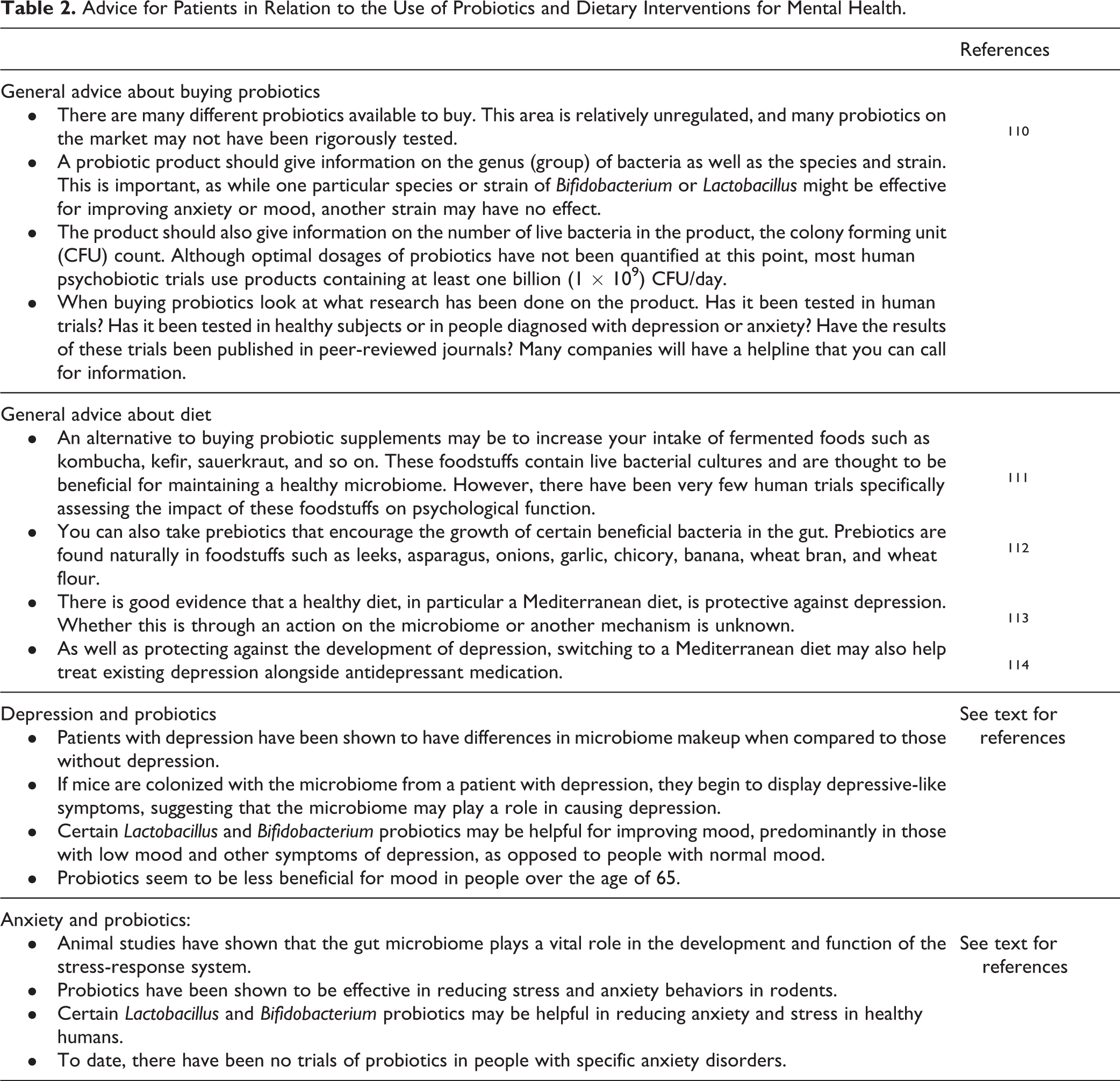
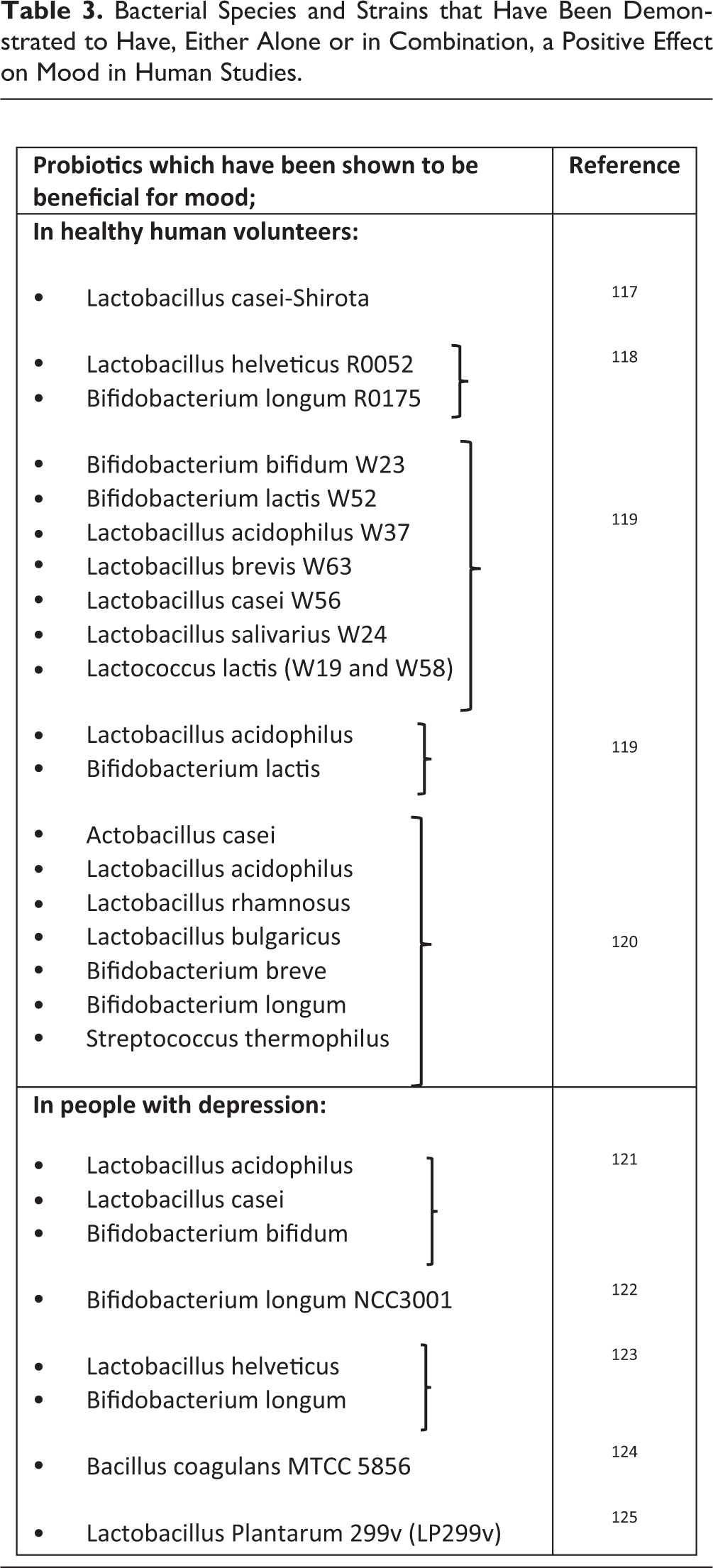
The concept of the MGB axis has gained traction in the mainstream arena in recent years, and it is not uncommon for patients attending the psychiatric clinic to have read about the potential for probiotics to treat depression or anxiety. It is imperative that psychiatrists understand the current status of evidence and can make accurate and informed recommendations to patients about probiotics and microbiome-based interventions (see Table 2). Current trends suggest that the global probiotics market size could reach over US$ 66 billion by 2024, 115 and choosing a probiotic from the ever-expanding selection of commercially available products can be daunting for patients. A consumer guide has been developed by the International Scientific Association for Probiotics and Prebiotics (2016) and can be a helpful resource. Most bacteria that have been shown to have psychobiotic effects hail from two genera, Lactobacillus and Bifidobacterium. However, there are many different species and strains within these two genera, with differential psychological effects. For example, Lactobacillus rhamnosus (strain JB-1) failed to impact mood or anxiety levels in healthy males, 116 while Lactobacillus casei (strain Shirota) demonstrated an ability to improve mood in healthy volunteers with low baseline mood scores. 117 Thus, any claims of efficacy should be species- and strain-specific and have been proven in human trials. In Table 3, we provide a list of probiotics which have been proven to have a positive impact on mood in human subjects.
Advice for Patients in Relation to the Use of Probiotics and Dietary Interventions for Mental Health.
Bacterial Species and Strains that Have Been Demonstrated to Have, Either Alone or in Combination, a Positive Effect on Mood in Human Studies.
Future Directions
The MGB axis has provided psychiatry with a new, and much-needed, paradigm from which to approach mental illness. Even with our comprehensive biopsychosocial approach to the management of psychiatric disease, many patients continue to experience distressing psychological symptoms. A recent large-scale population study confirmed that people with severe mental illnesses, such as schizophrenia, BPAD, and MDD, have higher intakes of obesogenic nutrients and more inflammatory diets than the general population. 126 Notably, the poorest dietary patterns were seen in those with schizophrenia, an unsurprising finding given the particularly high prevalence of metabolic disorders and reduced life expectancy in this group. Although much remains to be discovered about the mechanisms by which the gut microbiome influences the brain and mental functioning, the area of nutrition and gut health are beginning to represent an important component in holistic psychiatric care. As society in the developed world becomes increasingly conscious of dietary intake and food choice, targeting mental health through dietary change and other microbiome-based interventions is likely to become an acceptable and widespread practice. However, it is important to recognize that this field is really only in its infancy. The major challenge for microbiome researchers is moving the exciting preclinical discoveries out of the academic domain and into the psychiatric clinic, a step that is far from straightforward. While a new psychotherapeutic may appear hopeful in preclinical phases of development, this does not always ensure efficacy in humans, a narrative well illustrated in recent years by the translational failure of corticotrophin-releasing factor antagonists in the treatment of addiction. 127 It would be premature to suggest that probiotics or other microbiome interventions could replace evidence-based pharmacological or psychological treatments. Indeed, if probiotics were subject to the same rigor and scrutiny as antidepressant medications, it is uncertain whether they would pass through all phases of development. There is some debate around how best to regulate the development of probiotics and prebiotics, and if one is to promote these substances for the treatment of clinical conditions such as depression, it is reasonable to suggest that they should be subject to the same process as antidepressant medications. Bearing this in mind, the regulatory structure needs to be flexible enough to allow for research on new probiotic products and not discourage progress in the area by excessively prohibitive regulatory controls. 128 It may be that microbiome change can be best achieved through whole diet interventions and by introducing probiotic-rich fermented foods such as kombucha, kefir, or sauerkraut to the diet, although human studies assessing the effect of such interventions on the microbiome are lacking. Despite the challenges, the idea that treatment of psychiatric illness might, in the future, involve a psychobiotic or nutritional prescription alongside a traditional psychotropic medication is certainly plausible. The sentiment that one might consider most appropriate at present, with regard to the field of the gut microbiome and nutritional psychiatry, is a cautious but justifiable optimism.
Footnotes
Declaration of Conflicting Interests
The author(s) declared no potential conflicts of interest with respect to the research, authorship, and/or publication of this article.
Funding
The author(s) received no financial support for the research, authorship, and/or publication of this article.
