




Abstract
Lee J, Takeuchi H, Fervaha G, Sin GL, Foussias G, Agid O, Farooq S, Remington G. Subtyping schizophrenia by treatment response: antipsychotic development and the central role of positive symptoms. Can J Psychiatry. 2015;60(11):515-522. Original DOI: 10.1177/070674371506001107.
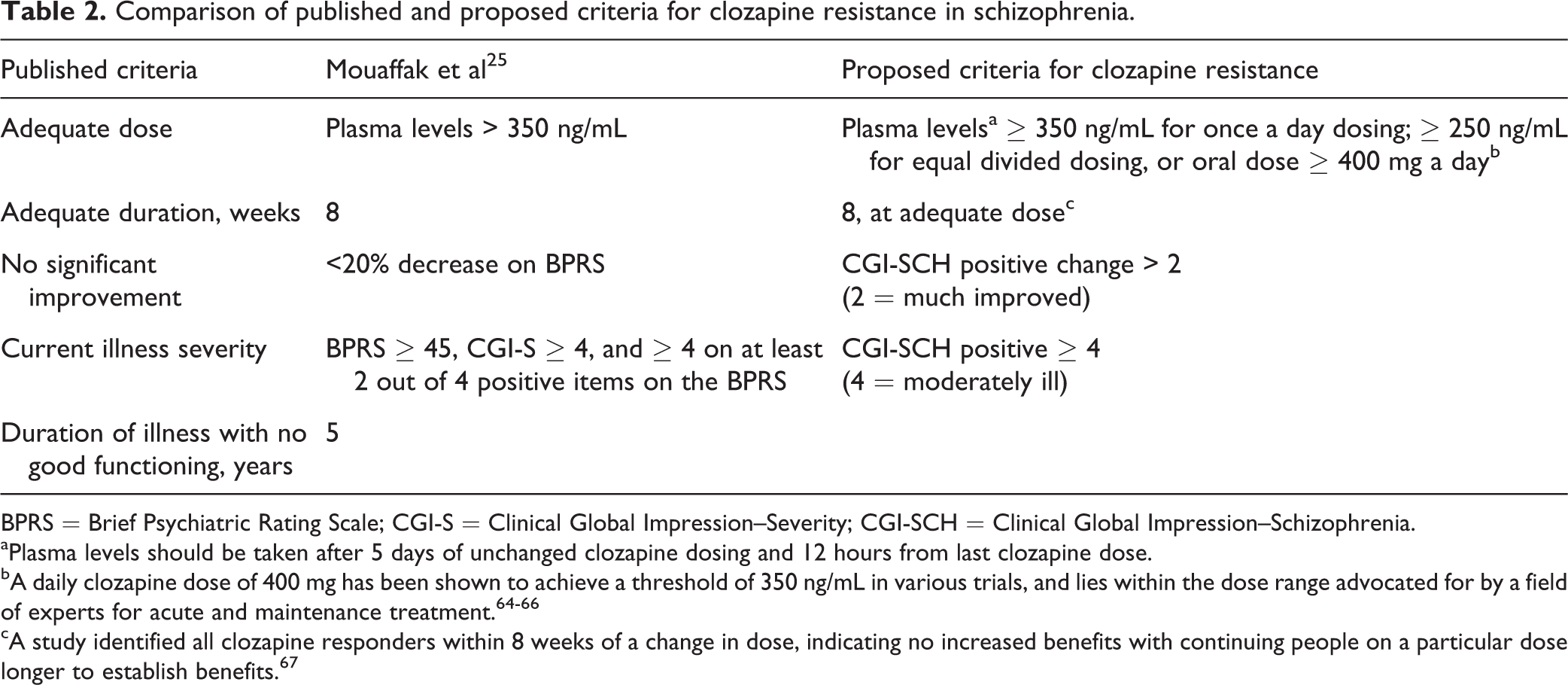
In Table 2 of the above article, in “Proposed criteria for clozapine resistance” for “Current illness severity,” the CGI-SCH positive was stated as “> 4” but it should be “CGI-SCH positive ≥ 4.” The corrected table is below.
Comparison of published and proposed criteria for clozapine resistance in schizophrenia. BPRS = Brief Psychiatric Rating Scale; CGI-S = Clinical Global Impression–Severity; CGI-SCH = Clinical Global Impression–Schizophrenia.
aPlasma levels should be taken after 5 days of unchanged clozapine dosing and 12 hours from last clozapine dose.
bA daily clozapine dose of 400 mg has been shown to achieve a threshold of 350 ng/mL in various trials, and lies within the dose range advocated for by a field of experts for acute and maintenance treatment.64–66
cA study identified all clozapine responders within 8 weeks of a change in dose, indicating no increased benefits with continuing people on a particular dose longer to establish benefits.67
Published criteria
Mouaffak et al25
Proposed criteria for clozapine resistance
Adequate dose
Plasma levels > 350 ng/mL
Plasma levelsa ≥ 350 ng/mL for once a day dosing; ≥ 250 ng/mL for equal divided dosing, or oral dose ≥ 400 mg a dayb
Adequate duration, weeks
8
8, at adequate dosec
No significant improvement
<20% decrease on BPRS
CGI-SCH positive change > 2 (2 = much improved)
Current illness severity
BPRS ≥ 45, CGI-S ≥ 4, and ≥ 4 on at least 2 out of 4 positive items on the BPRS
CGI-SCH positive ≥ 4 (4 = moderately ill)
Duration of illness with no good functioning, years
5