




Abstract

Stefan Bengtson was truly a unique person. He was an outstanding, dedicated scientist, journal editor, a lover of opera and a valued friend to many colleagues and students in palaeontology and geology worldwide. He had a quick mind and a wonderful sense of humour, which was often quite hilarious. Many palaeontologists across the globe got to know him as he travelled everywhere to study small shelly fossils (SSFs) and the earliest evidence of life on Earth. The results of his work changed our knowledge of the diversification of life long before we formerly thought fossils even existed. He persevered in his search, starting with SSF in lower Cambrian rocks, and this work took him farther and farther back in time to between one and two billion years. Stefan was a resolute field palaeontologist who carefully and extensively studied fossils, with excellent papers published in technical literature, full of detailed descriptions and illustrations of his finds. Being in the field with Stefan was always interesting. He could usually be found intensively examining outcrops, sometimes with his body lying across the rocks to get a close look at fossils. He seemed so engaged that I never wanted to intrude on his mental adventures in the field. Later, we could have great but careful discussions about his findings. Sadly, Stefan Bengtson died on 5 October 2024 from a heart attack in Rome, Italy, where he was attending a meeting of the Accademia Nazionale Dei Lincei (Lynx’s Academy). He was 77 years old. But he had accomplished so much in his life that, fortunately, those who knew him were able to share in visits, science meetings and the field.
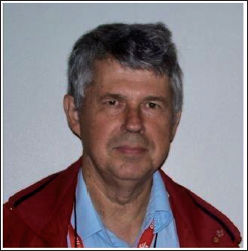
Stefan was born in northern Sweden in the county seat of Gallivare in 1947 near the iron mining town of Malmberget (‘Ore Mountain’), where his family lived. His father, an engineer, worked at the mine, one of the largest in the world, which extracted iron–apatite ore from igneous rocks. This early exposure to rocks might have stirred Stefan’s mind, but, like many of us, he was thrilled by dinosaurs as a young boy. His interest in ancient life continued, and at college in Uppsala, Sweden, he studied palaeontology with Professor Anders Martinsson, an expert on Cambrian fossils. Stefan committed to the study of SSFs, among the oldest of the Cambrian and poorly known. At the time, SSF were considered problematica since they were not assignable to known animal groups. Stefan worked on their morphology, composition and relationships for his PhD. When Stefan finished in 1977, he increased the knowledge of SSF to a level where they were important in understanding the great radiation of life in Cambrian rocks. He was an upcoming leader in the early history of life. Stefan joined the faculty at Uppsala University. There, he hosted meetings and individuals to study with him on early Cambrian and older life. During this time, he published papers and built an outstanding academic record. In 1995, he moved to the Swedish Museum of Natural History (NRM) in Stockholm, where he continued to study the earliest life through field trips and laboratory work.
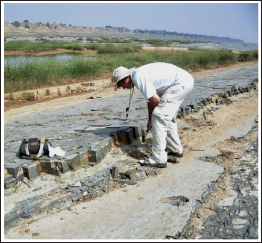
In the spring of 1986, I signed up for a meeting on SSF and other early fossils convened by Stefan at Uppsala. The Chernobyl nuclear meltdown had just occurred and spread radiation into Sweden. We heard that news but decided that nothing could deter us from going to Bengtson’s meeting. Stefan asked me to bring him a bottle of Scotch Single Malt because I would not have to pay duty on it, as he would. Unfortunately, I set the bottle on a table in my room, and when several other meeting-goers came in, it was quickly opened and enjoyed. Stefan, although terribly disappointed, made a joke about us and laughed. Besides that, the meeting was a tremendous success, well organised by Stefan with microscopes set up to examine smaller fossils. Most of the early Cambrian workers from around the world were in attendance—Russians, Indians, Australians, Polish, Iranians, Chinese, Spanish, Americans and others, a real mixture of all kinds of people. It was a great meeting for everyone, and we all went away with lots of new ideas, friends and terrific memories.
Field trips with Stefan were always interesting and enjoyable—around Australia, China, Russia, Spain and Sweden. Most memorable was the 1990 trip to Siberia, sponsored by the Palaeontological Institute in Moscow. We flew from that city to a camp all bedraggled by the substantial change in time zones. From there, we flew by Soviet-era helicopter to sites along the Aldan and Lena Rivers of far eastern Russia. In those places, we examined Cambrian and Precambrian rocks that contained the first abundant fossils. Stefan was excited to see and collect in these locations.
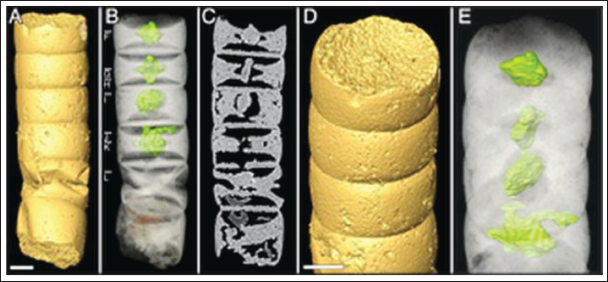
Bengtson had special times in India in 2006 and 2011. When Dr Rafat J. Azmi found SSFs in the Vindhyan rock sequence, about 3,000 m thick, of central India, he concluded from the SSF he found that the entire sequence was Cambrian. Naturally, Stefan was interested and went to India to see and collect the rocks. At Chitrakoot, he found various cyanobacteria and algal fossils in the Lower Vindhyan phosphoritic stromatolitic dolomites (Semri Group, Vindhyan Supergroup). A radiometric date (Pb–Pb) of 1,650 ± 89 (2σ) million years ago confirmed the Palaeoproterozoic age of these rocks, more than a billion years older than the Cambrian. Bengtson named a new genus, Rafatazmia, in honour of Dr Rafat Azmi with one new species, Rafatazmia chitrakootensis Bengtson. These are among the oldest inferred eukaryotic organisms.
We shall miss Stefan and his sharp mind and great humour—truly an outstanding palaeontologist!!
