




Abstract
This article focuses on (inter)disciplinary collaborations through the co-application to research projects funded by the Swiss National Science Foundation, the main provider of research funding in Switzerland. We suggest that interdisciplinarity is a potential mode of distinction and that its frequency and the disciplines involved may be associated with specific configurations of scientific, institutional, international, extra-academic, and network resources. We rely on biographical data on all biology and chemistry professors in Switzerland in 2000 (n = 342), including all their funding from the Swiss National Science Foundation. In a first step, we highlight the role of the resources mentioned previously in structuring the symbolic hierarchy of disciplines using multiple correspondence analysis. In a second step, we look at how interdisciplinarity fits into these structures based on an opposition between international and institutional resources and on the unequal distribution of scientific (and social) capital. We show that these interdisciplinary logics of social distinction differ across the two disciplines. On the one hand, collaborations with biologists seem to help chemists reaching dominant positions in the academic field, while their degree of internationality is associated with interdisciplinary collaborations. On the other hand, the biologists who are the most endowed with symbolic capital are more likely to collaborate with the medical sciences.
Introduction
During the past decades, interdisciplinary collaborations and output-based research have been ever-increasingly valorized and promoted by both academic funding agencies and political authorities (Gorga and Leresche, 2015; Lamy and Shinn, 2006; Larivière and Gingras, 2014). From the 1990s onward, new incentive instruments dedicated to interdisciplinary research (sub-)fields have been adopted. Concomitantly, the period witnesses an unprecedented development of the life sciences, whose recently acquired status as a ‘big science’ often requires large investments resulting in vast collaboration networks (Aggeri et al., 2007; Benninghoff and Leresche, 2003; Bonneuil, 2015; Gingras, 2018). At the end of the 20th century, the rise of molecular biology and biotechnologies has led many scholars in the natural, medical, and technical sciences to reorient themselves toward the field of life sciences (Gugerli et al., 2010; Louvel, 2015), and thus led to reconfigure the symbolic hierarchy of scientific disciplines in the natural sciences, especially between (organic) chemistry and (functional) biology (Benz, 2019; Magner, 2002; Morange, 2020; Strasser, 2006). Although recent research addresses the unavoidable epistemological debate about the resilience of evolutionary biology (Larregue et al., 2020; Meloni, 2016; Peterson, 2017), the second half of the 20th century was definitely marked by the undisputed rise of physicochemical approaches to life, hence the dominance of functional biology (Gros, 2012; Mayr, 1961; Stettler, 2002). Concomitantly, a certain strain of literature argued that the academic field has shifted from a disciplinary-based structure to a more interdisciplinary and outcome-oriented organization (Clark, 1998; Gibbons et al., 1994; Nowotny et al., 2003; critically: Shinn, 2002; Shinn and Ragouet, 2005). Among other main recent transformations in higher education systems, the recent period witnesses an increase in collective research and an expansion of (inter)disciplinary collaborations (Gingras, 2002; Larivière and Gingras, 2010; Morillo et al., 2001; Porter and Rafols, 2009). This context has led scholars to emphasize the permanence of disciplines as institutions (Heilbron and Gingras, 2015) rather than their disappearance.
This article proposes to study the links that biology and chemistry build with each other and with other scientific disciplines through networks of co-application to research projects. While scientific funding and collaborations are intricately related to symbolic capital, the unequal distribution of research funds reveals scientific hierarchies, similarly to the volume of citations and the number of published papers (Larivière et al., 2010; Nielsen and Andersen, 2021). Besides the material and financial resources they provide, research projects are a privileged place for the mobilization of researchers around a common research object and for a defined period in time (Abbott, 2001; Marcovich and Shinn, 2011) and, therefore, are key to analyze interdisciplinary collaborations as modes of distinction. More precisely, we aim to understand how interdisciplinary collaborations relate to specific profiles or configurations of resources, and thus provide professors with certain advantages in terms of scientific credibility, legitimacy, or access to positions of power over the academic field. 1 To do so, we use biographical data on all the professors of biology and chemistry in Switzerland in 2000 (n = 342 full and associate professors) as well as all their research funding by the Swiss National Science Foundation (SNSF; n = 4476 projects).
This article is organized as follows. In a first conceptual part, we present the main modes of distinction among professors, conceptualize interdisciplinary collaborations through research projects as a specific mode of distinction, and stress on the specificities of the Swiss case. Second, we present our research strategy, data, and methodology. In our empirical part, we first run a multiple correspondence analysis (MCA) to identify three main dimensions that structure the space of professors: the importance of international resources as opposed to institutional resources, the global volume of scientific capital which is very strongly associated with the volume of social capital, and the distribution of capitals that opposes ‘established’ highly resourced professors to ‘challengers’. Then, we highlight that interdisciplinary collaborations (frequency and linked disciplines) are embedded in particular configurations of resources. Finally, we discuss our results with respect to the disciplines involved, notably their plasticity and the position they occupy in the symbolic hierarchy of disciplines. Beyond contributing to the study of interdisciplinarity by showing how practices are situated in the social space, our observations also complement the knowledge of the power hierarchies that structure the disciplines of biology and chemistry at the end of the 20th century.
Theory
In a first section of this theoretical part, we conceptualize the modes of distinction among university professors. Based on a rather extensive literature, we identify five types of unequally distributed resources, namely, scientific, institutional, international, extra-academic, and social capitals. In the second section, we elaborate on the relations between (inter)disciplinarity and these power resources. In the last section, we present the particularities of the Swiss higher education system and show how this case is particularly relevant for studying interdisciplinarity through co-applications to research projects.
Modes of distinction among university professors
One fundamental principle of the study of fields lies in the establishment of the ‘objective structure of the relations between the positions occupied by the agents or institutions competing in this field’ (Bourdieu and Wacquant, 1992: 80). Adopting this analytical perspective, that is, defining the academic community as a hierarchized social space, has at least two implications. First, it requires to define a clear measure of the relations between unequally distributed resources, which individuals own through the positions they occupy in the space formed by these hierarchies. Second, it requires the identification of the main resources, which define the different modes of distinction that structure the field and its hierarchies (Bourdieu, 1979, 1984).
The first of these resources is scientific capital (Bourdieu, 1976) as a measure of a professor’s credibility and legitimacy, and that acts both as a capital of knowledge and recognition within the scientific field. The greater this resource, the more recognition the professors get from their peers. This symbolic legitimacy often leads to the occupation of dominant positions in the space.
Institutional resources refer to executive functions within institutional structures of academic and science policy steering organizations. Such functions confer decision-making power, notably in recruitment, in scientific policies, and in the granting of funding for research (Bourdieu, 1988, 1997). Professors in such positions are not necessarily those who pursue an activity that can be measured by scientific capital indicators, and these two kinds of resources therefore may be competing (Bühlmann et al., 2017; Rossier et al., 2017).
International capital relates to the symbolic value attached to the experience acquired abroad, both professionally and linguistically. Not all places are equal as some, like the Anglo-Saxon countries, benefit from a higher symbolic credibility (Bühlmann, 2020; Bühlmann et al., 2013; Rossier and Bühlmann, 2018; Wagner, 2011).
Extra-academic capitals (Benz et al., 2021; Braun, 2001) gather resources and assets coming from professional activity outside academia (the field of politics, of the public administration, of business, etc.). For example, the experience acquired by working in a private laboratory or a museum can be considered as much scientific as practical, but has in any case not been accumulated in academic institutions. As such, this type of resource is different from scientific capital and thus indicates a certain degree of diversification of capital. Extra-academic capitals can also refer to the resources needed to take part in politically mandated expert assessments.
Social capital can be defined as a resource of informational power linked to the strategic positions held within networks, including indirect relations in access to knowledge resources (Godechot and Mariot, 2004; Granovetter, 1983; Mercklé, 2011). The analysis of co-applications to research projects, however, proposes a somewhat hybrid definition of social capital. While the number of projects is linked to scientific recognition, and the total amount of funding obtained indicates financial resources (Gingras, 2012; Larivière et al., 2010), we describe participation in research projects as social capital when considering the number of collaborative relationships maintained and, more importantly, the position occupied by professors in the structure of this network (Borgatti et al., 1998; Burt, 2002; Lin et al., 2001; Rossier and Benz, 2021).
Interdisciplinary collaborations as modes of distinction
Interdisciplinarity has often been addressed through bibliometric and network analysis (Larivière and Gingras, 2014; Leydesdorff, 2007; Porter and Rafols, 2009; Rafols and Meyer, 2009). However, there has been little discussion of how practices differ according to the particularities of the disciplines involved, notably their degree of plasticity (Louvel, 2015). The literature tends to consider chemistry as a science without a ‘territory’ (Bensaude-Vincent and Stengers, 2001). Biology, for its part, is rather identified as a highly fragmented and hierarchical discipline (Stettler, 2002). Therefore, we ask how these epistemological stakes are embedded in logics of distinction based on a struggle for symbolic authority within the scientific field (Bourdieu, 1976, 2001).
We assume that interdisciplinarity may function as a resource aiming at strengthening a dominant position by expanding one’s own network outside their disciplinary expertise (Bourdieu, 2018; Gingras, 2012), and therefore expand their jurisdiction, as it is the case with the collaborations of chemistry with biology (Abbott, 1988; Louvel, 2015). We also assume that less dominant scientists may benefit from the credibility of linked discipline (Strasser, 2006). Interdisciplinarity would therefore function as a resource directly convertible into symbolic capital, especially in the case of a highly stratified discipline like biology. We can assume that this regime of interdisciplinarity is particularly valorized by biochemists and molecular biologists, who have become increasingly integrated into the field of medical sciences along the 20th century (Chen et al., 2015; Gaudillière, 2002).
Furthermore, we assume that interdisciplinarity is differentiated according to the position occupied in the academic space (Bourdieu, 1988), and thus mediated by professional and scientific habitus understood as dispositions to think and do science (Bourdieu, 2001; Gingras, 2012; Lenoir, 2005). Therefore, we consider interdisciplinarity as a resource embedded in social (relational) distinction. Interdisciplinarity can be defined either from the frequency of collaborations or from the disciplines involved. We empirically measure it by comparing the discipline of the applicant with the discipline of the projects he or she is involved in, and with the discipline of the co-applicants. A collaboration is considered as interdisciplinary in the following two cases: first, when a professor is a co-applicant on a project with a submission discipline other than his or her own, and second, when a professor is a co-applicant on a project with at least one professor from a discipline other than his or her own.
Co-applications to research projects in the Swiss context
The Swiss context is very relevant for the study of interdisciplinary collaborations through co-applications to research projects when considering the central role they play in organizing the distribution of the symbolic and material resources of science (Benninghoff and Braun, 2010). Due to the historical decentralization of the national higher education system, academic organizations have a great deal of autonomy in their decision-making regarding the recruitment of academic staff and the funding of scientific research (Baschung et al., 2011; Braun, 2001). Therefore, scholars often must apply for funding outside their home institution to obtain the necessary resources for their research activity (Benninghoff and Braun, 2010). Research projects funded by the SNSF have become increasingly competitive and have incrementally become indicators for the evaluation of scientific activity and careers (Benninghoff and Leresche, 2003; Fleury and Joye, 2003).
At the disciplinary level, the SNSF has since its creation in the 1950s been particularly involved in promoting molecular biology and later genomics and life sciences (Stettler, 2002). Furthermore, the Swiss academic field is one of the first national contexts to see molecular biology develop into a particularly prestigious discipline and is therefore a real laboratory for studying the development of this new biology subfield and its (conflicting) links with chemistry (Benz, 2019; Leresche et al., 2012; Strasser, 2006). Indeed, long ago the Swiss industrial sector institutionalized a close cooperation with academic chemistry, which has been challenged since the 1970s with the rise of biotechnologies, when biologists began to take a predominant place in the industry and compete with chemists in industrial companies (Breiding, 2013; Bürgi and Strasser, 2010; Busset et al., 1997). In summary, Switzerland is a very relevant case study for two main aspects: first, research projects constitute widespread means of financing scientific activity. Second, it makes it possible to draw parallels with the institutional history of the disciplines of chemistry and biology, which have been the subject of much research in articulation with national academic fields.
Research strategy, population, and variables
Our research strategy is based on the use of MCA to link interdisciplinarity collaborations with the distribution of scientific, institutional, international, extra-academic, and social capitals among professors of biology and chemistry. First, we run an MCA to identify and hierarchize the dimensions that structure the space of professors out of the distribution of these five types of resources. After that, we analyze the associations between professors’ endowment in resource and (inter)disciplinarity collaborations they are involved in. To this end, we project the frequency of interdisciplinary collaborations and the disciplines of collaboration as supplementary variables into the cloud and calculate the association between the variables and the main structuring dimensions.
Study population
This empirical study is based on all full and associate professors of biology and chemistry in the ten Swiss universities and the two Swiss federal institutes of technology (Zurich and Lausanne) in 2000 (n = 342). The data stem from two databases. On the one hand, the ‘Swiss elite database’ 2 gathers all information on professors’ profiles and careers. On the other hand, the SNSF ‘P3’ database 3 provides the list of all projects that have been funded since 1976, as well as the list of all participants (main applicant, secondary applicant(s), employed collaborators). Among other information, it also provides the discipline of the projects that we can compare with the discipline of the applicants.
For the analysis we focus on the collaboration links from all professors in 2000, whose socio-biographical characteristics are presented in Table 1.
Socio-demographic characteristics.
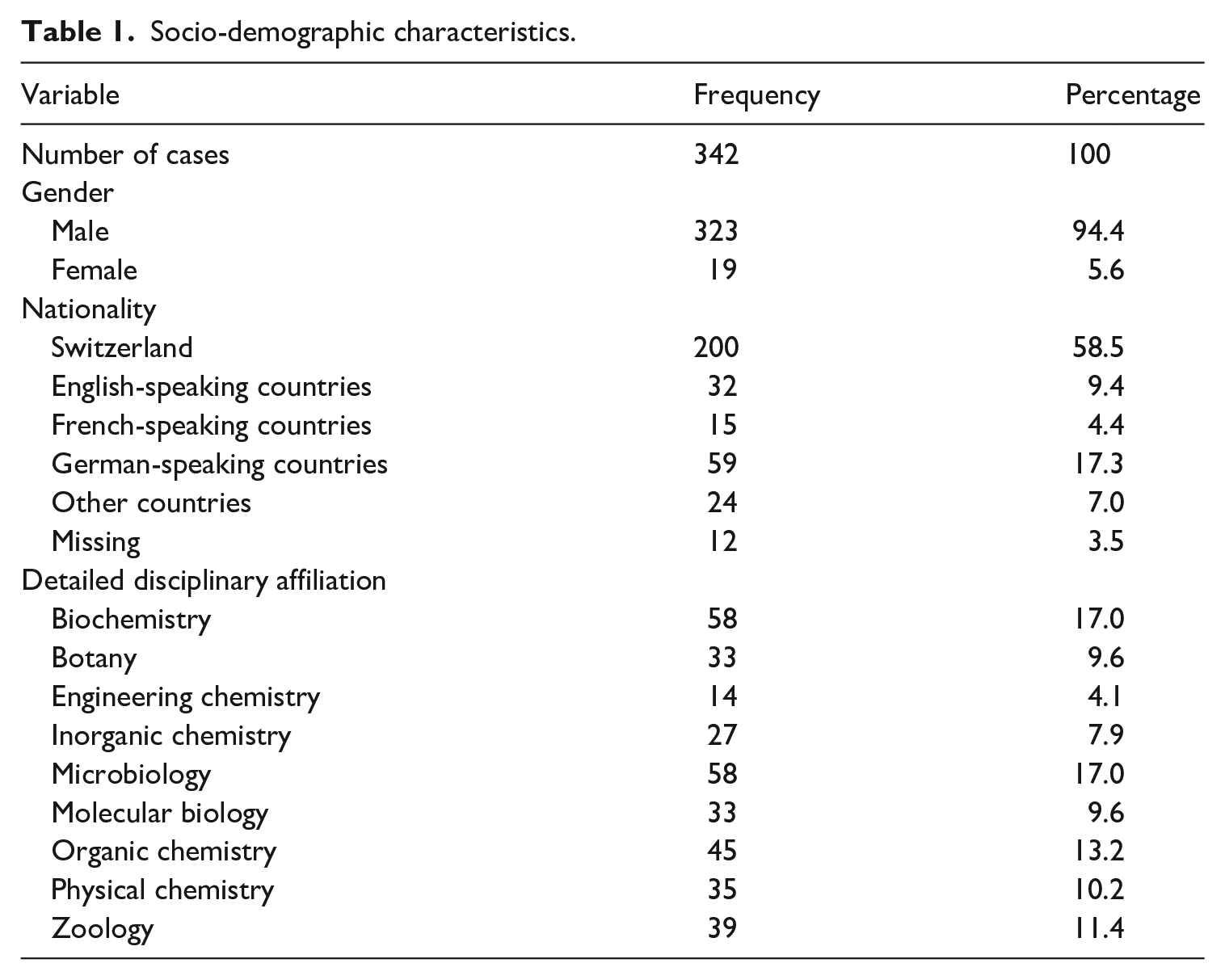
The professors of biology and chemistry in 2000 were very masculine, with only 5.6% of women tenured professors. They were also highly internationalized, with 58.5% of Swiss citizens. In all, 17.3% of professors came from other German-speaking countries, 9.4% from English-speaking countries, 4.4% from other French-speaking countries, and 7% from other countries. Following their disciplinary affiliations, 4 121 chemists were divided into organic chemistry (13.2%), physical chemistry (10.2%), inorganic chemistry (7.9%), and engineering chemistry (4.1%), while 221 biologists were divided into biochemistry (17%), microbiology (17%), zoology (11.4%), botany (9.6%), and molecular biology (9.6%).
By merging the two databases, we can identify all the scientific projects those professors have conducted under an SNSF funding (N = 4476) as well as all their co-applicants and collaborators. Out of these data are built a two-mode network (Everett and Borgatti, 2013) of 16,320 nodes (11,844 individuals and 4476 projects) and 23,651 edges. We then project this network into a one-mode individual-to-individual network, where the edges are the links between all professors, their co-applicants, and employees within their list of projects (Figure 1). The network considers all co-applications of the 334 professors of biology and chemistry in a timeline from 1976 to 2020 (11,844 nodes and 73,751 edges).
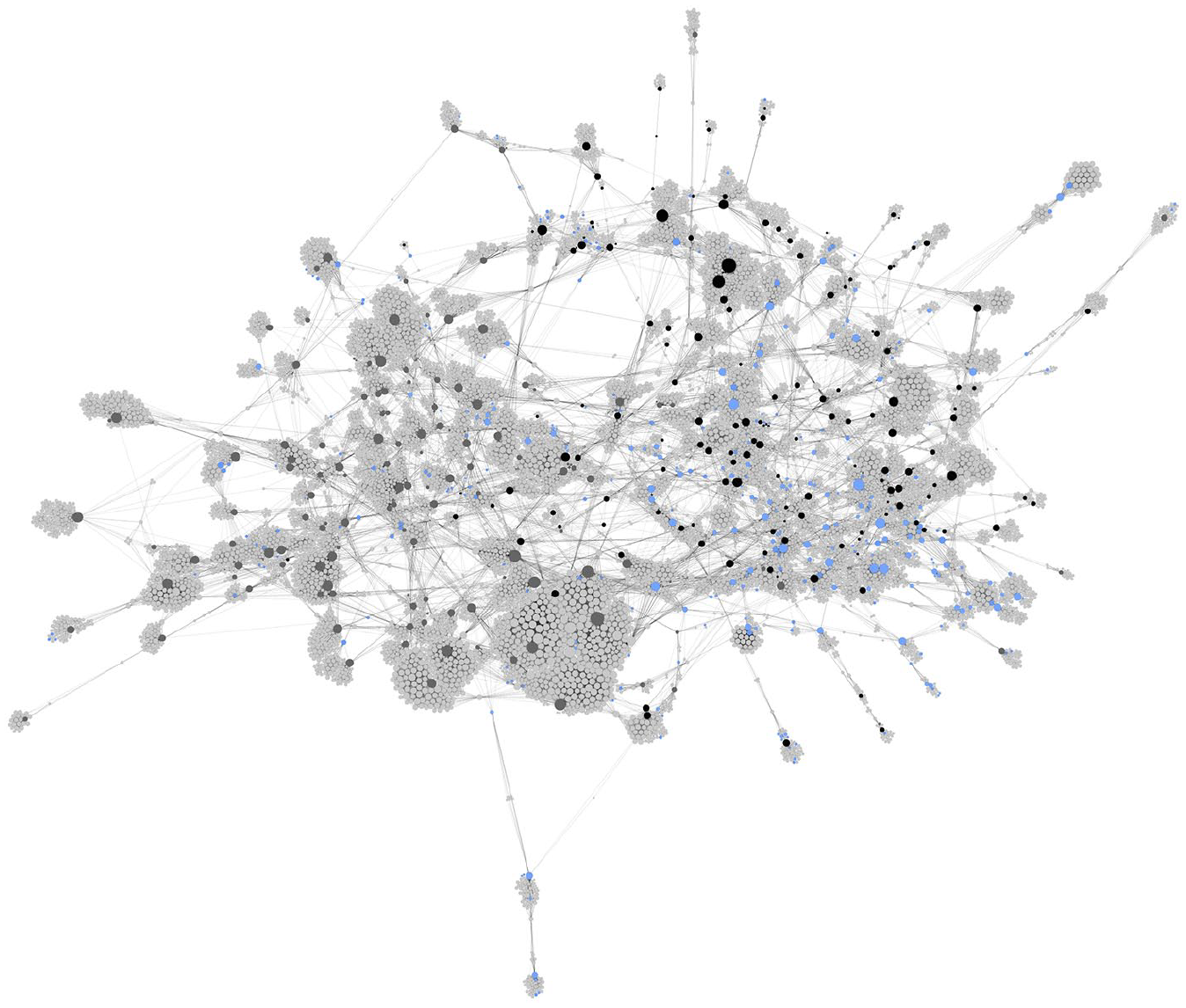
Principal component of the co-application network (94.5% of the nodes and 97.3% of the edges).
Within the network, 334 professors from the study population were identified (7 professors of biology and one professor of chemistry never applied for any project). In addition, 313 other professors were identified through the Swiss elite database. These professors may be from other disciplines, as well as professors of biology or chemistry who were occupying a position before 2000. Each of the 647 professors is assigned to one of the following disciplines: biology (n = 149, 23%, black), chemistry (n = 148, 22.9%, dark gray), biochemistry (n = 67, 10.4%), medical natural sciences 5 (n = 70, 10.8%), clinical medicine (n = 108, 16.7%), and other disciplines 6 (n = 105, 16.2%), all being colored in blue.
Operationalization of the active and supplementary categories of the MCA
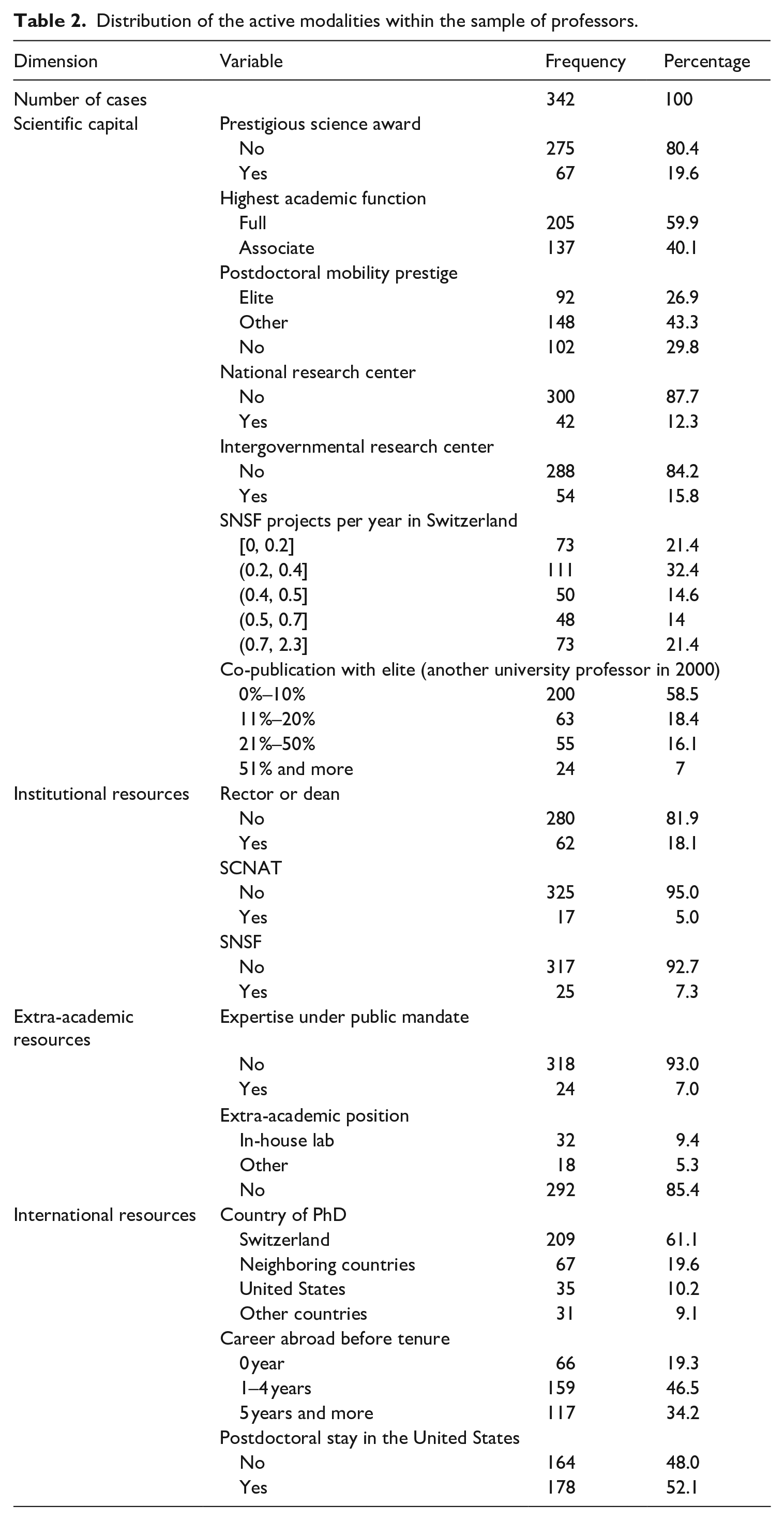
Scientific, institutional, international, and extra-academic resources constitute the active categories of the MCA (Table 2). Social capital is highly associated with scientific capital and therefore is operationalized as supplementary variables to avoid an overvaluation of both these types of resources. The importance of social capital is thereafter assessed by measuring its degree of association to the axis.
The first set of variables is related to scientific capital:
Prestigious science award is a binary variable indicating the achievement of at least one major scientific prize. 7 Apart from the Nobel Prize, all prizes retained are granted at the national level and the variable does not consider prizes awarded by institutions abroad. It is therefore primarily a measure of consecration within the Swiss academic field.
Highest academic function during the career: namely, ordinary (full) professor, which is the highest position in Switzerland, and associate professor.
Postdoctoral mobility prestige is related to the institutions in which professors have spent time within a period of 6 years after obtaining their PhD graduation. It takes three modalities depending on the prestige 8 of the host institution: elite, 9 other institutions, no mobility abroad. These stays abroad imply geographical mobility from the place of the PhD. Having completed a postdoctoral stay in the same country as the doctorate is attributed the modality ‘no’.
National research center is a binary variable based on holding a position in an institution dedicated to research that enjoys a privileged status compared with traditional universities and which confers a particularly high scientific legitimacy to the professors who have held a position there. Examples are the Centre national de la recherche scientifique (CNRS) in France, the Max-Planck Institute in Germany, the National Institutes of Health, Bethesda, Maryland in the United States, or the Paul Scherrer Institute (PSI) in Switzerland.
Intergovernmental research center is a binary variable based on holding a position in specialized research centers and platforms funded by public–private partnerships, foundations, or private institutions. They are considered as part of the academic field, unlike the in-house laboratories of private firms, which are subject to a different variable. Examples are the European Molecular Biology Laboratory (EMBL) in Heidelberg (Germany), the Scripps Clinic and Research Foundation in La Jolla, California (USA), the Cold Spring Harbor Laboratory, MRC Laboratory of Molecular Biology, Cambridge (USA), the Institut Pasteur in France, or the Friedrich Miescher Institute (FMI) in Basel, Switzerland.
SNSF projects per year in Switzerland refer to the number of SNSF projects funded during the career. To integrate the fact that professors can only obtain funding if they practice in Switzerland, the variable displays the total number of projects received divided by the number of years of career in Switzerland (and thus the number of years of eligibility). The variable includes five modalities (quintiles): [0, 0.2], (0.2, 0.4], (0.4, 0.5], (0.5, 0.7], and (0.7, 2.3].
Co-publication with elite (another university professor in 2000) refers to the co-authorship of scientific articles with other elites. It displays the proportion of published scientific articles in the Web of Science database that were co-signed with at least one other professor of the study population. The variable takes the following four modalities: 0%–10%, 11%–20%, 21%–50%, 51%, and more.
The second set of active variables is related to institutional resources:
Rector or dean indicates whether a professor has served as rector of university or dean of department during his or her career. In addition to directly relating to executive power, the two functions serve as an indicator of the degree of belonging to the ‘society’ pole of the academic field (Bourdieu, 1988). Rectors and deans are as much recognized by their peers as by the political authorities and oversee relations with the latter.
SCNAT is a binary variable that informs about the membership in the central committee of the Swiss Academy of Natural Sciences.
SNSF is a binary variable that informs about the membership in the council of the SNSF. These last two indicators propose an alternative to the traditional definition of institutional capital, more related to the evaluation and promotion of scientific activity and, therefore, to scientific capital.
The third set of variables corresponds to international capital:
Country of PhD displays four modalities: PhD obtained in Switzerland, in a neighboring country (France, Germany, Austria, Italy), in the United States, and elsewhere abroad.
Career abroad before tenure measures the number of years between the completion of the PhD and appointment to the first tenured professorship. This period includes the duration of postdoctoral studies but also all positions held for fixed terms, such as lecturer, research fellow, scientific collaborator, or assistant professor with or without tenure-track. This variable has four modalities ranging from the shortest to the longest duration: no stay abroad, a period of 1 to 4 years, and more than 5 years.
Postdoctoral stay in the United States is a binary variable that indicates whether professors have gone for at least 1 year in the United States within a period of 6 years after obtaining their PhD graduation, excluding US natives.
The last group of active variables are tied to extra-academic resources:
Extra-academic position displays three modalities: in-house laboratory (positions held in the private sector as a practitioner, researcher, or director of a private company laboratory), other extra-academic positions (such as museum or botanical garden curator, as well as positions held in federal offices or regional public laboratories), and no extra-academic position.
Expertise under public mandate is a binary variable that is based on the participation to extra-parliamentary committees, in which experts are mandated to respond to public administration and political issues.
Distribution of the active modalities within the sample of professors.
In addition, social capital is addressed through three classical measures of centrality: degree, betweenness, and eigenvector. 10 Once calculated, they are categorized into quartiles (each modality includes about 25% of the professors).
The centrality of degree includes the modalities Q1, Q2, Q3, and Q4.
The betweenness centrality includes the modalities Q1, Q2, Q3, and Q4.
The eigenvector centrality includes the modalities Q1, Q2, Q3, and Q4.
In addition, a second binary variable was built for each indicator, which designates the share of the 10% with the highest degree, betweenness, and eigenvector.
To assess the degree and form of interdisciplinarity and relate it to the space of resources of the natural science professors, we use the following supplementary variables:
The frequency of interdisciplinary collaboration is based on the number of times a professor has been a co-applicant in a project in a discipline other than his or her own and the total number of projects in which he or she has participated. The variable displays four modalities: no (0%), weak (1%–25%), moderate (26%–50%), and strong (51%–100%).
Two sets of binary variables are based on the discipline of the projects and the discipline of the co-applicants. Interdisciplinarity from the projects’ discipline is measured by comparing professors’ discipline with the discipline of the projects they are involved in (biology, chemistry, medicine, or another discipline). Interdisciplinarity from the co-applicants’ discipline is measured by comparing professors’ discipline with the discipline of co-applicant(s) (biochemistry, biology, chemistry, natural medical sciences, medicine, or another discipline).
Finally, gender, nationality, and discipline of the professors are also projected as supplementary variables, following the modalities presented in Table 1.
(Inter)disciplinarity collaborations as modes of distinction within the space of natural science professors
This empirical part is dedicated to measure the association between the distribution of the previously mentioned five types of capitals and resources, on the one hand, and the frequency of interdisciplinarity collaborations and the disciplines involved, on the other. The first part describes the principal dimensions that structure the space of the professors of biology and chemistry. The second part is dedicated to the projection of the frequency and the disciplines involved in (inter)disciplinary collaborations.
Dimensions of internal distinction in chemistry and biology
MCA reduces the variance of the data into dimensions, prioritizes these dimensions according to their contribution to the variance, and represents them in the form of axes along which both individuals and modalities are distributed. In the formed space, individuals close to each other share several modalities in common, while distant individuals share less of them (Hjellbrekke, 2018; Le Roux and Rouanet, 2010; Rossier, 2019). The specific MCA 11 is composed of 15 active categories and 40 modalities, which contribute to the formation of the axes. Table 3 summarizes eigenvalues, variances, and the Benzecri’s modified rates for the first three axes (85.5% of model’s interpretation).
Eigenvalues, variance, and modified rates.
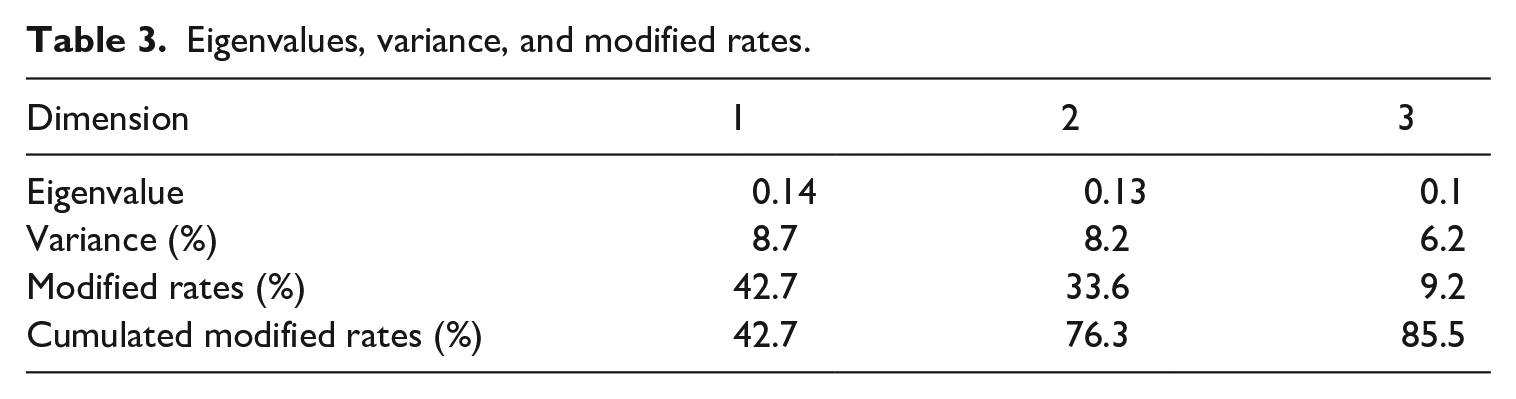
The first axis has a modified rate (or importance rate) of 42.7%, the second has a rate of 33.6%, and the third a rate of 9.2%. Since the cumulative percentage of the modified rates of the first three axes represents more than 80% of the total, we retained these two axes for the interpretation of the results of the MCA (Le Roux and Rouanet, 2010; Lemercier and Zalc, 2008).
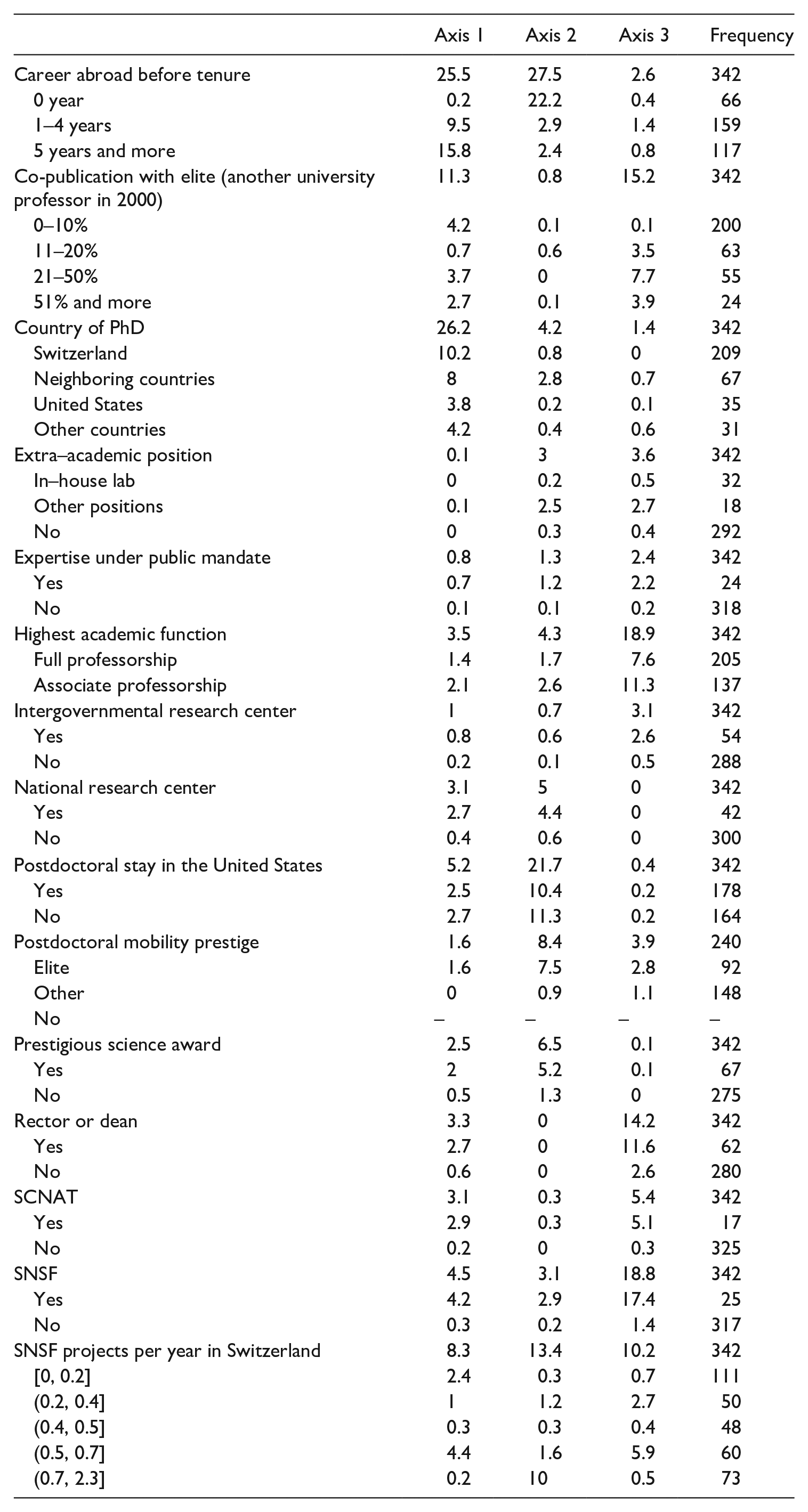
Figure 2 displays the cloud of active modalities for the two first axes. Only modalities which contribute above the average (2.6) to the variance are drawn. The contributions of the 15 active categories and their modalities to the three axes are summarized in Appendix 1.
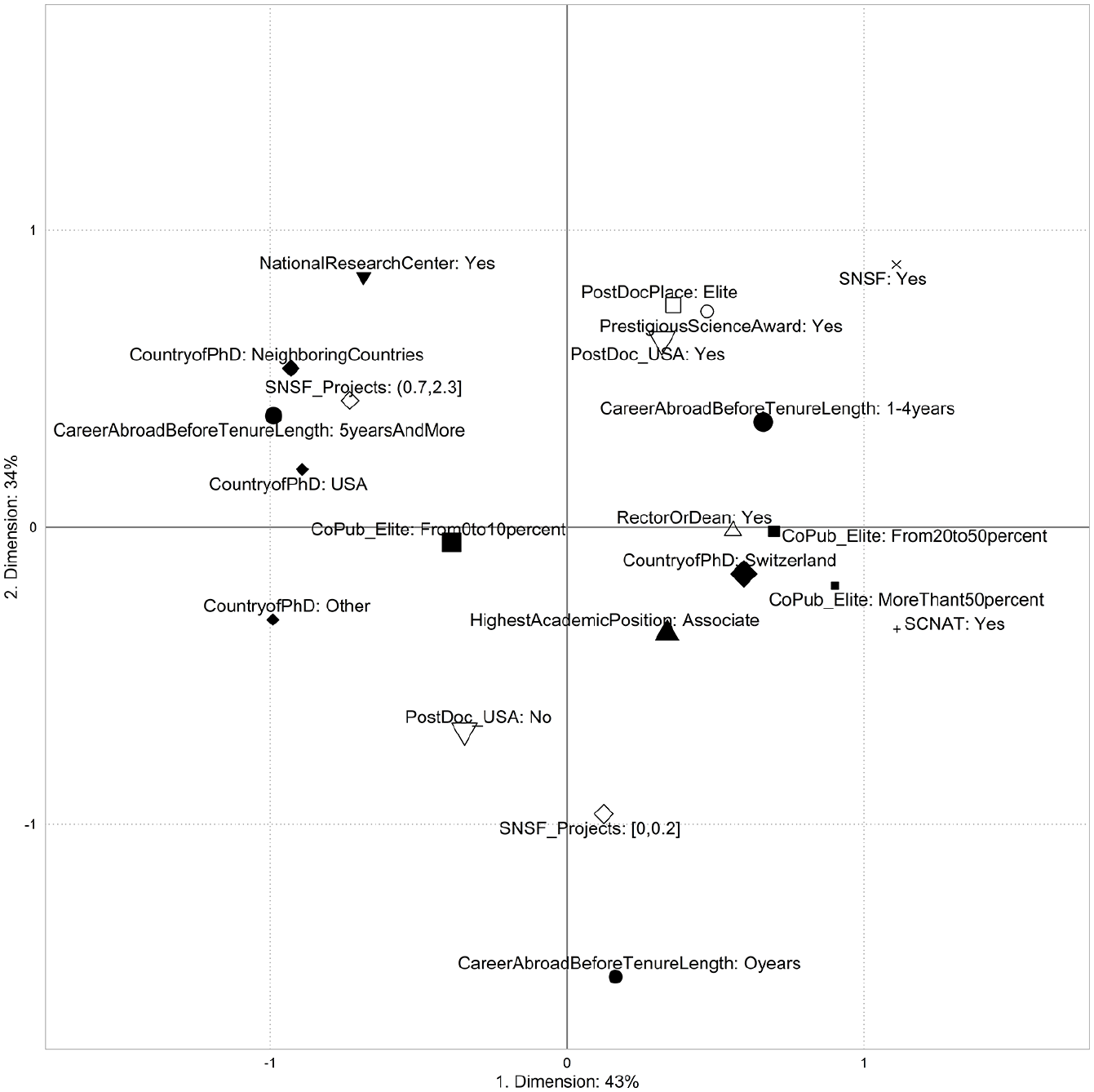
Cloud of active modalities (axes 1 and 2).
Contributions of the modalities to axes.
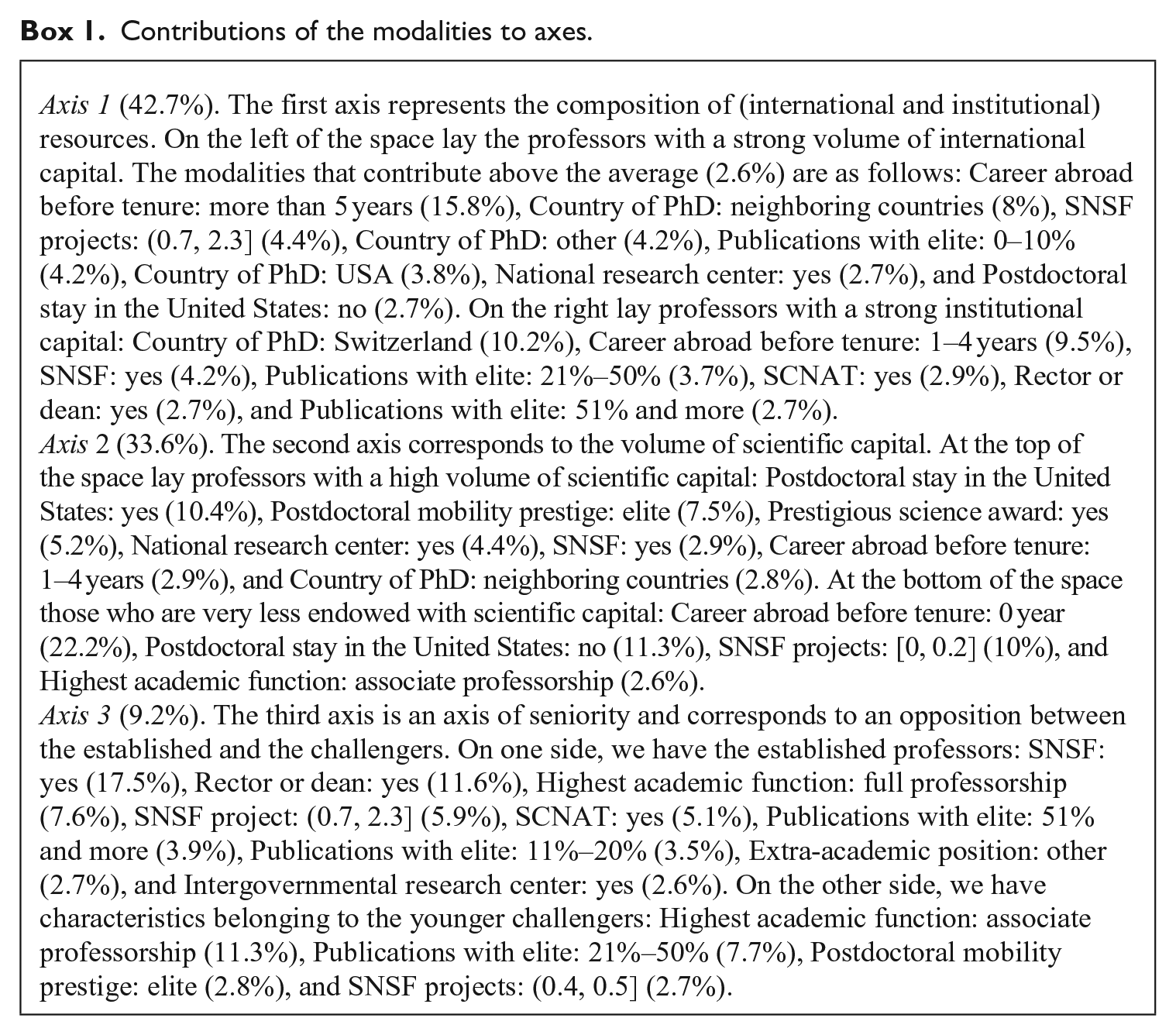
Professors’ positions are distributed in the space according to three principal dimensions (the cloud of individuals is displayed in Appendix 2). The first axis of the MCA explains 42.7% of the variance and illustrates the importance of international capital by the end of the 20th century (Bühlmann, 2020; Rossier et al., 2015). It precisely describes the access to professorships through the recognition of a mechanism of direct conversion of international capital into symbolic capital. Professors with a long career abroad do not need to prove their mobility and oppose to professors who obtained their doctorate in Switzerland, did a short stay abroad before tenure, and own institutional power linked to institutional executive functions in Switzerland (rector, dean, member of the central committees of the SNSF and the Swiss Academy of Natural Sciences), with a high share of co-authored publications with other professors in the Swiss academic field. The symbolic importance attached to experiences acquired abroad seems to have somehow overcome the classical scientific-based hierarchy, or at least seriously challenged the opposition between scientific and academic capitals (Bourdieu, 1988). We can assume that the autonomous pole of the field has progressively given more importance to internationality, rather than to ‘scientific’ logics.
The distinction based on scientific capital comes in a second place (33.6%) and therefore indicates that the possession (or not) of the most autonomous resources does not constitute the main mode of distinction among the professors of biology and chemistry, despite their position in the traditional autonomous fraction of the academic field (Bourdieu, 1988). Yet, this is not surprising given the collaborative tradition between academic chemists and the pharmaceutical industry, as well as the presence of biologists in biotechnology and drug industrial companies from the 1970s onward (Bürgi and Strasser, 2010; Chandler, 2005; Gaudillière et al., 2021; Magner, 2002; Reinhardt, 2002). The symbolic hierarchy of positions clearly appears through the importance given to the postdoctoral period: postdoctoral stays in the United States and/or at prestigious institutions are the most significant, especially when of short duration. Not surprisingly, the volume of scientific capital is very strongly associated both with the amount of funding received (η2: 0.23) and with the total publications registered in the Web of Science up to the year 2000, although to a lesser extent (η2: 0.06). 12
The third dimension is less strong than the first two, but still provides relevant information on the configurations of resources that oppose the ‘established’ professors to their ‘challengers.’ Indeed, established professors concentrating powerful resources differ from new entrants, with a prestigious postdoctoral mobility, a few SNSF projects, and being rather well-inserted within the network of co-publications among university professors.
Considering social capital, the projection of the three indicators of centrality into the space shows that all the modalities are distributed along the y-axis, that is, according to the volume of scientific capital (Figure 3). When measuring the association between these indicators and axis 2, both degree and eigenvector centrality indicators are strongly correlated to the axis (η2: 0.17 and 0.16), while betweenness shows a medium-size association (η2: 0.11).
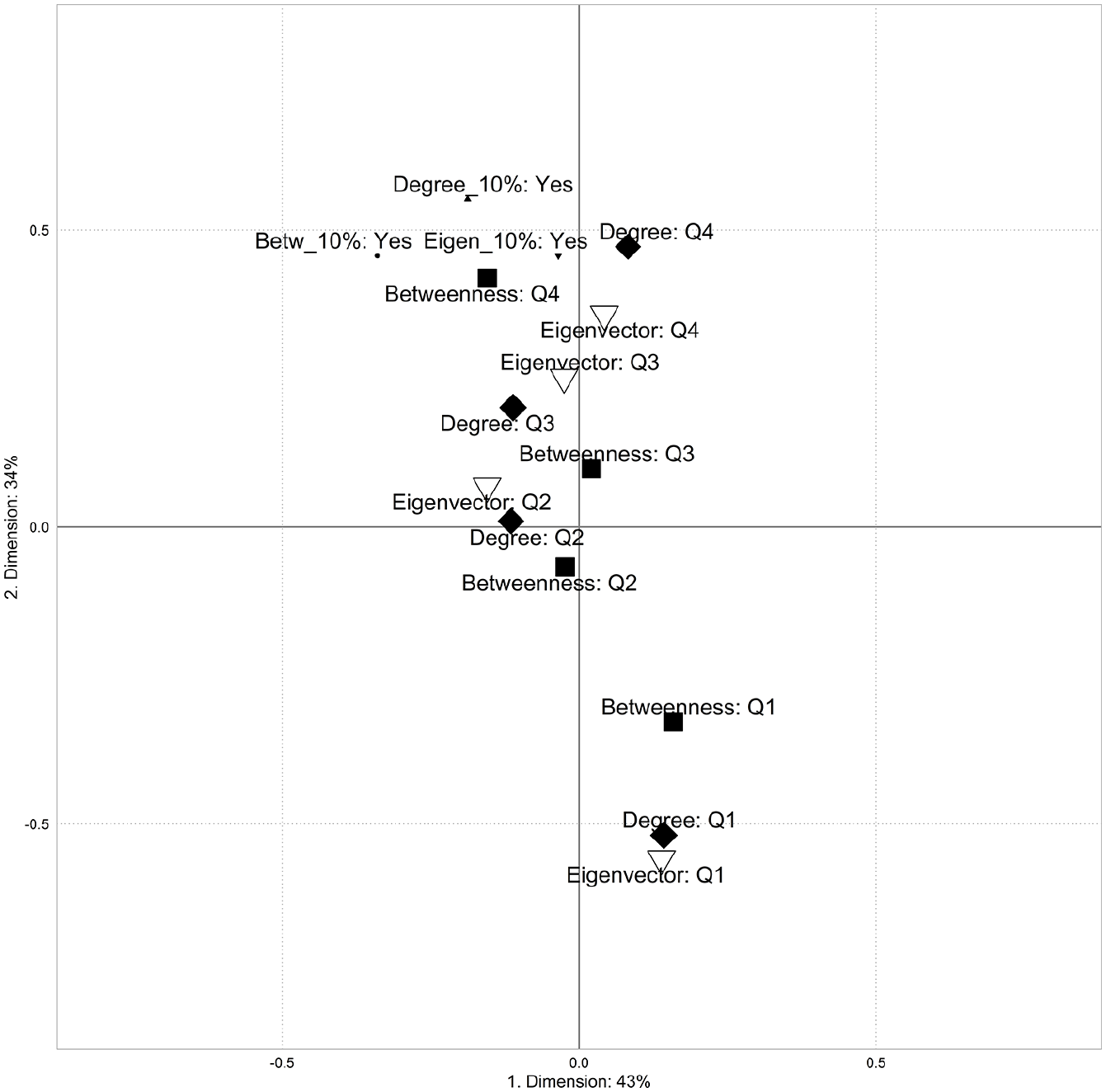
Supplementary modalities: social capital (axes 1 and 2).
Social capital here goes directly to scientific capital. Therefore, it is not possible to have an extensive local network, to be a bridge in the network, or to maintain links with other highly connected professors without a significant amount of scientific capital. This is true regardless of the degree of internationalization of the professors. The interdependence between the material resources that research projects grant for scientific activity and the possession of a high volume of scientific capital echoes a core dimension of scientific elite reproduction, that is, the concentration of material resources in the hands of a minority of researchers (Larivière et al., 2010). The SNSF appears as a formidable reproducer of the reward system of science (Merton, 1973), which implies that those who allocate recognition tend to privilege those who are already dominant. It thus actively participates in delimiting the circle of individuals considered as scientific elites, as well as the criteria for evaluating them (Benninghoff and Braun, 2010).
The distribution of capitals also reflects a stratification of nationalities and disciplines (Figure 4). The nationalities aggregated by speaking regions are not randomly distributed: the professors of Swiss nationality are located on the right-hand side of the space, which is dominated by institutional capital. Professors of non-Swiss nationality are found on the left-hand side, occupying the positions endowed with international capital. In addition to this strong opposition between Swiss and non-Swiss professors along the first axis, the positions are also strongly distinguished between the different linguistic regions, along the three axes. The professors from French-speaking countries are overall less endowed with international capital than all others, and quite surprisingly, German-speaking nationals are notably more endowed with scientific capital than English-speaking and Swiss nationals. 13 According to the third axis, the French nationals appear as the representatives of the challengers against the Swiss and especially the English speakers on the side of the established elites. This is also the case for other nationalities compared with English speakers.
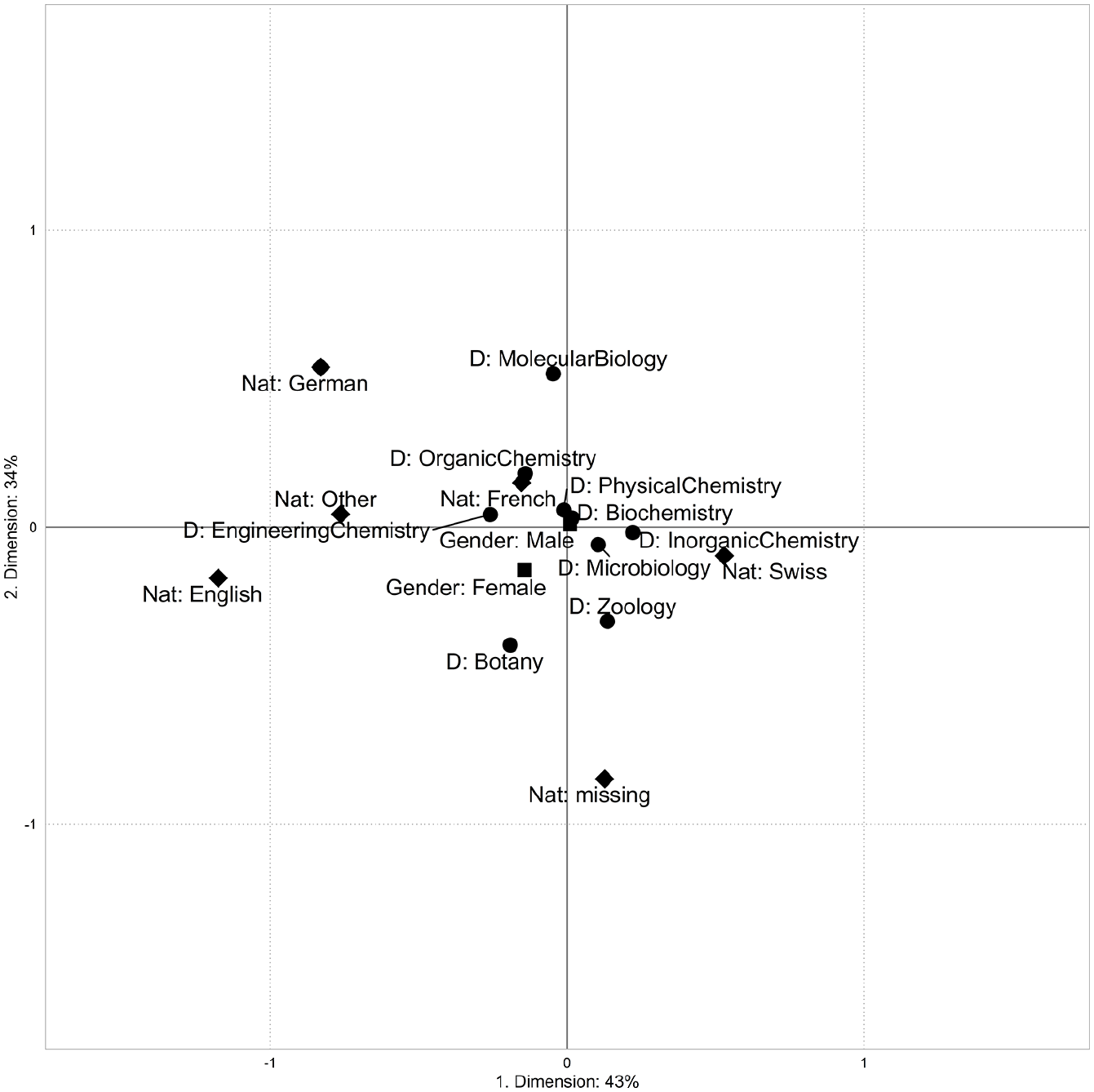
Supplementary modalities: gender, nationality, and discipline (axes 1 and 2).
Finally, these results illustrate the social determinants of the symbolic hierarchy between disciplines. Indeed, molecular biology occupies a position reflecting a scientific capital endowment that is far superior to all other disciplines of biology: botany, zoology, and even microbiology and biochemistry. In chemistry, however, there is no notable distinction between the subdisciplines. This result supports the previously observed plasticity of the discipline (Bensaude-Vincent and Stengers, 2001), while biology is defined by a strong internal differentiation (Mayr, 1961; Stettler, 2002). If the volume of scientific capital participates in building the symbolic hierarchy of the discipline of biology, no subdiscipline is distinguished by a more international or more local dimension (institutional capital). Industrial chemistry is the most internationalized in the space, in contrast to the local anchoring that characterized the discipline in the 1980s (Gugerli et al., 2010). It is even opposed in an almost significant way to inorganic chemistry, which is more fundamental-research-oriented.
Frequency and disciplines of interdisciplinary collaborations in chemistry and biology
Biology and chemistry not only differ regarding their internal hierarchical structure. They also do in the way they associate with other disciplines. Indeed, the projection of interdisciplinary collaborations highlights two different logics: in the case of biologists, we find tendencies for certain subdisciplines to associate with another, and these configurations correspond to notably differentiated positions in the space. In the case of chemistry, we find that interdisciplinary collaborations are largely the work of organic chemists, whatever the associated discipline. We first project the frequency of interdisciplinary collaborations and then the disciplines involved.
For biology professors, conducting interdisciplinary collaborations of any frequency is not associated with any fraction of the space, that is, any resource configuration, and therefore is not a resource per se (Figure 5). The case of chemists shows that interdisciplinarity practiced at a moderate (and somehow high) frequency is the work of internationalized professors. However, there is no difference in the frequency of interdisciplinarity according to the volume of scientific capital – and thus social capital.
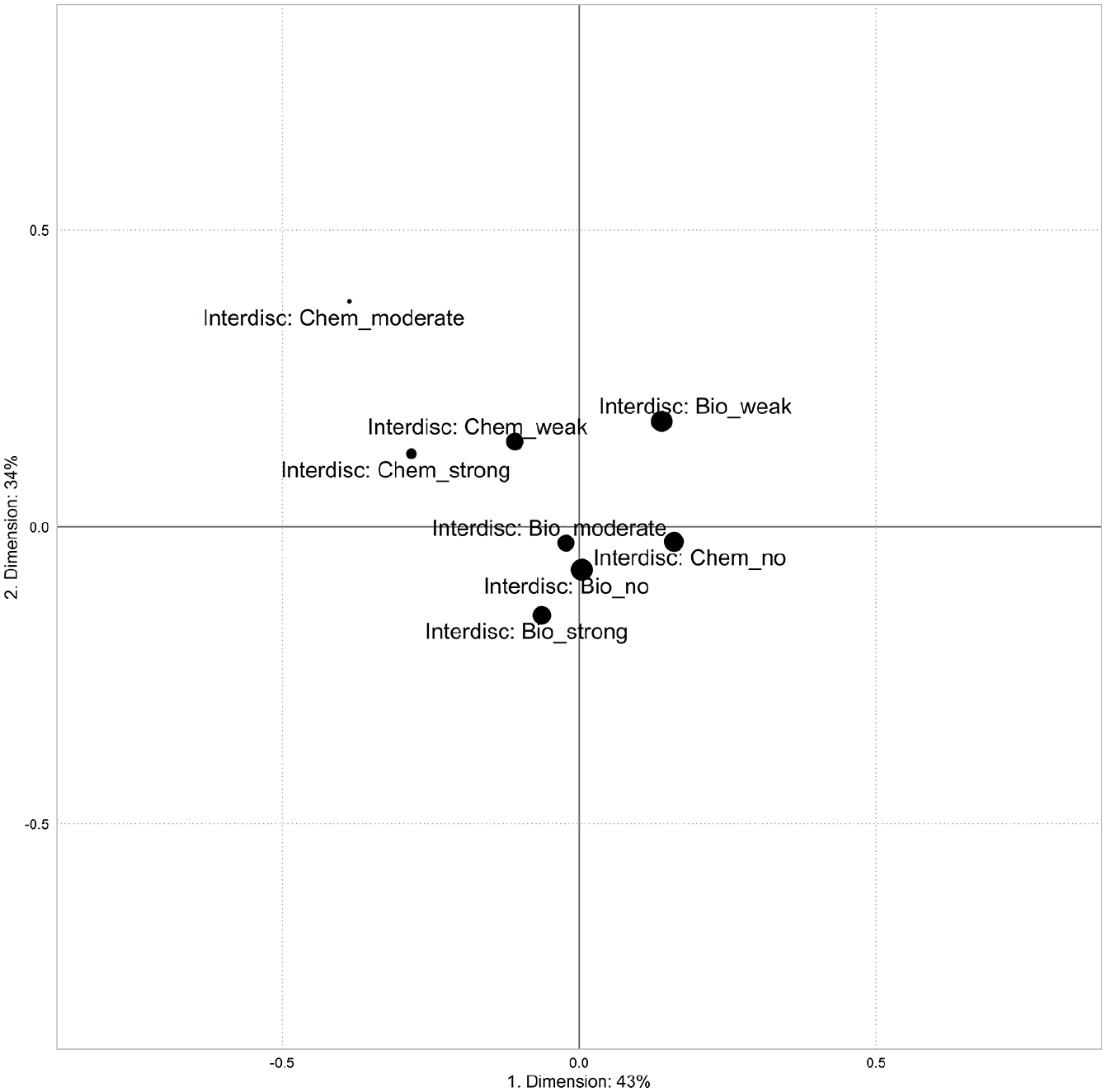
Supplementary modalities: frequency of interdisciplinary collaborations (axes 1 and 2).
What is relevant is that (inter)disciplinary collaborations are located in different places according to the disciplines involved for biologists and for chemists. We first look at the discipline of the projects by comparing the position of professors who have been co-applicants at least once in a project in a discipline other than their own (Figure 6). Once again, there is no clear distinction in biology. However, it appears that chemists who are co-applicants in biology projects differ from chemists who are involved in chemistry projects only, as well as chemists who collaborate with medical sciences. All are related to the main distinction between international capital and institutional power. Indeed, professors who lead projects in biology are much more internationalized than their fully disciplinary colleagues, as well as those who lead projects in medicine.
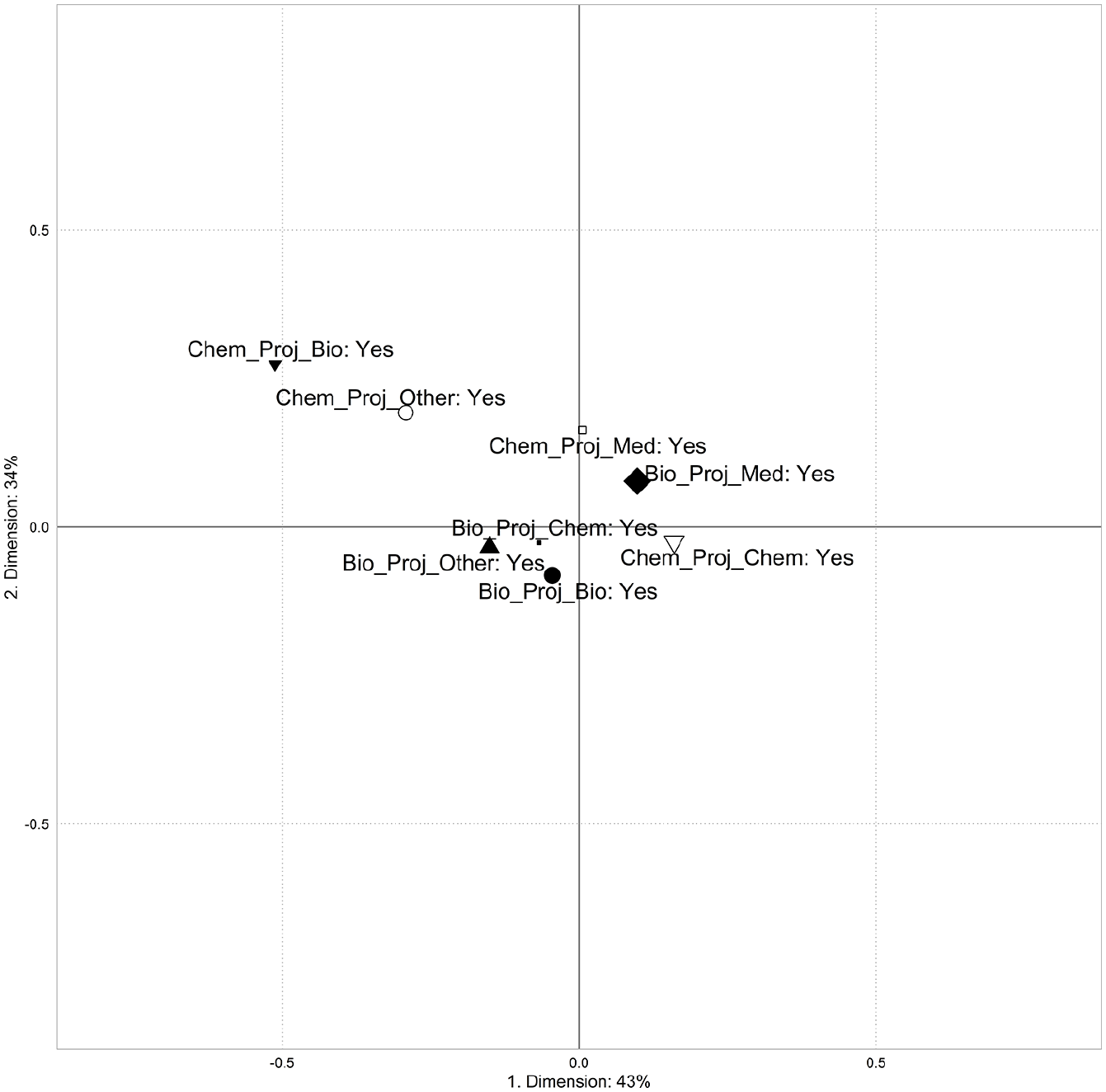
Supplementary modalities: disciplines of the projects (axes 1 and 2).
The observation that medical sciences are close to the institutional powers, and that the association between biology and chemistry is to be found on a more international scale is reinforced with the analysis of the co-applicants’ discipline (Figure 7). Again, the collaborations between chemists and biologists are to be found in the internationalized fraction of the space. Chemistry professors who have been co-applicants with biologists differ from those who have been co-applicants with medical natural sciences and disciplinary professors, both of whom are closer to institutional powers. But that is not all: while there is no distinguishing mechanism linking the discipline of the co-applicants to the volume of scientific capital, there is a clear differentiation of disciplines with respect to the ‘established’ and the ‘challengers’ (Appendix 3 displays the clouds of supplementary modalities according to axes 1 and 3). Indeed, chemists who collaborate with biologists but also with other disciplines such as physics or earth sciences are rather ‘challengers’ and are opposed to the disciplinary chemists or those who collaborate with medicine, who are on the side of the ‘established.’ This underlines the importance of historical collaborations between chemistry and medicine. Although the biotechnology revolution that reversed the focus of pharmaceutical companies from chemical synthesis to biology took place in the 1980s (Bürgi and Strasser, 2010), many professors still have ties with medicine. However, it is mainly biology that serves as a resource for chemists, mobilized by the newcomers, and the internationals.
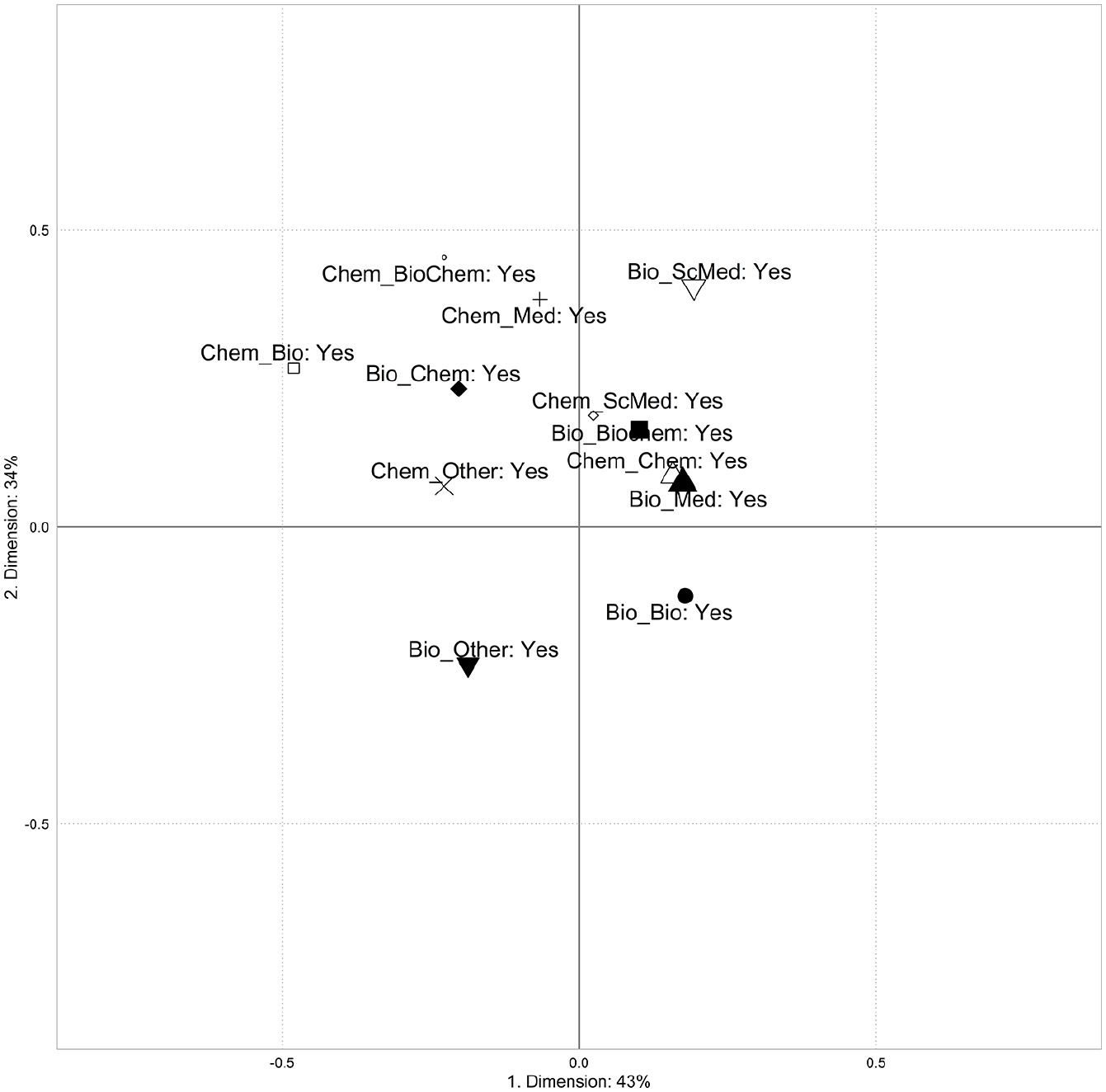
Supplementary modalities: disciplines of co-applicants (axes 1 and 2).
Having a co-applicant in medical natural sciences is correlated to a high volume of scientific capital when compared with disciplinary biologists and with other disciplines such as earth or environmental sciences. Microbiologists and biochemists are particularly involved in such collaborations. Like chemists who collaborate with biologists, biologists who collaborate with biochemists 14 tend to fall into the category of challengers. As we will develop in the discussion part, interdisciplinarity is as much a disciplinary story as it is of a differentiated endowment with different resources. In biology, there is an association between spatial position, discipline, and discipline of collaboration, while in chemistry, interdisciplinarity is also embedded in the social structure, but does not appear to be disciplinarily differentiated: it is mainly organic chemists who carry out interdisciplinary collaborations with other disciplines.
Discussion
In this section, we discuss our findings. We first focus on the associations between interdisciplinarity and the three structuring dimensions of the space. We then develop an interpretation of the results in terms of resources and the concentration of power that defines scientific elites, especially in terms of the differences between biology and chemistry.
Contrary to the French academic field in the 1970s, which was characterized by a main opposition between scientific and institutional capital (Bourdieu, 1988), the space of biology and chemistry professors in Switzerland in 2000 is structured, first, according to international and institutional capitals and, second, to scientific and social capitals. In the case of chemistry, a moderate rate of interdisciplinarity is associated with the international side. These collaborations are resourceful for international chemists, in particular when collaborating with biologists. On the other side, characterized by institutional power, we found primarily fully disciplinary profiles, but also collaborations with medical sciences. Three elements summarized by the MCA are of interest here. First, the analysis attests of an obvious dependency between scientific and social capitals; second, it shows that biologists who collaborate with natural medical sciences are also very well endowed with scientific (and social) capital; and third, it provides empirical evidence of a hierarchy of subdisciplines within biological sciences: molecular biology situates at the top, while traditional botany and zoology lay at the bottom. Moreover, the ‘challengers’ who are rather young associate professors with a background from elite institutions are mostly chemists who collaborate with biologists, as well as biochemists and molecular biologists. The interdisciplinarity in this group is very much directed toward closely related disciplines. Indeed, all four can be considered as pillars of the new life sciences. In contrast, the ‘established’ scientific elites who concentrate most of the resources are rather composed of disciplinary chemists, and chemists who traditionally collaborate with the medical sciences. We also identified professors of botany and engineering chemistry that are primarily oriented toward collaborations with other disciplines, such as earth sciences.
The fact that the first mode of distinction of professors is based on an opposition between international and institutional capital calls for a definition of the scientific elites from their position in the academic field, understood beyond the sole criterion of scientific ‘excellence.’ Indeed, while scientific elites often refer to scholars who concentrate the largest amount of scientific ‘credibility’, defined through prestigious scientific awards (Graf, 2015; Korom, 2020; Zuckermann, 1977), high levels of citations (Parker et al., 2010), or the productivity in a given scientific specialization (Lazega et al., 2006), we assume that such a focus would underestimate powerful resources stemming from institutional positions and international capital (Bourdieu, 2001; Bühlmann, 2020; Mills, 1956).
Beyond these general considerations, our results show empirical evidence of an association between the resources accumulated through networks of scientific collaborations and the mechanisms of internal distinction of professors. Research projects provide financial and relational resources needed for scientific activity that are concentrated in the hands of a few scholars (Larivière et al., 2010). Scientific collaborations are thus interwoven with logics of social distinctions, notably because social interactions tend to generate symbolic capital (Bottero and Crossley, 2011). Furthermore, our findings show no association between the frequency of interdisciplinarity and the structuring dimensions of the space. Therefore, with the exception of young and internationalized chemists, the frequency of interdisciplinary practices is not a reinforcing mechanism of distinction. This observation indicates that even a rather low frequency of collaborations out of one’s main discipline does not provide some recognized assets, with no identifiable threshold (Larivière and Gingras, 2010).
At the disciplinary level, our findings follow the evidence that interdisciplinarity differs according to the plasticity and symbolic hierarchy of disciplines (Abbott, 1988; Louvel, 2015). On the side of chemistry, there is clear evidence of the plasticity of this discipline that favors its extension by the integration of biological issues, which allows chemists to distinguish themselves from competing approaches in life sciences: biology and medical natural sciences. This dynamic is perfectly in line with the recent history of the discipline. Indeed, following a period of struggle for their credibility within the life sciences following the biotech ‘revolution,’ chemists are re-legitimizing themselves in the early 2000s by investing in new issues related to the fields of environment and renewable energies, through their contribution to new technologies aiming at replacing oil and developing solar energy (Nieddu et al., 2014). On the side of biology, our results attest of a hierarchical organization of the discipline between organic and functional biology (Mayr, 1961), the latter being particularly oriented toward collaborations with natural medical sciences (Chen et al., 2015; Gaudillière, 2002). The observation that these professors are strongly endowed with scientific capital resonates with the specific status granted to functional biology (Gingras, 2012; Morange, 2020) and corroborates the evidence that the Swiss case makes no exception (Leresche et al., 2012; Stettler, 2002; Strasser, 2006). However, our results show different logics of association regarding biochemistry and molecular biology, which corroborates the idea that they remain distinct institutional entities, although they share a similar epistemology (Chen et al., 2015; Gros, 2012).
Conclusion
In this contribution, we sought to measure the association between the main modes of distinction among natural science professors and the involvement in (inter)disciplinary collaborations. Based on prosopographical data regarding all biology and chemistry professors in Switzerland in 2000 (n = 342), we identified three dimensions of distinction among professors: (1) a dimension of opposition based on the ability to convert international experiences and resources into full professorship and institutional power, (2) a dimension that reflects the volume of scientific capital, and (3) a distinction between established professors who concentrate almost all the symbolic resources and the challengers, namely, younger associate professors who represent a new scientific elite generation. We then measured the association between these three dimensions and the frequency of (inter)disciplinary collaborations, as well as the disciplines of collaboration. We have shown that a real differentiation emanates not from the frequency but from the discipline of collaborations. In biology, it is distinctive to collaborate with medical sciences, provided that one is endowed with a high volume of scientific (and social) capital. In chemistry, scientific capital does not matter, but it is the degree of internationalization that rather influences the use of interdisciplinarity.
This study theoretically contributed to the literature by showing the underlying social mechanisms that frame (inter)disciplinary collaborations. It highlighted the fact that the symbolic value attributed to the discipline of collaboration varies between biologists and chemists, which clearly illustrates a disciplinary anchoring of interdisciplinarity (Larivière and Gingras, 2014; Porter and Rafols, 2009). In this sense, it underlined the permanence of disciplines as frameworks of scientific activity (Abbott, 2001; Bourdieu, 2001; Gingras, 2012; Marcovich and Shinn, 2011; Prud’homme and Gingras, 2015) and critically assessed the theory of an end of disciplines (Gibbons et al., 1994; Nowotny et al., 2003).
The empirical contribution of this study was twofold. First, it provided evidence that social capital, measured by the position occupied in the structure of the network of collaborations, is inseparable from scientific capital measured through indicators of scientific prestige (scientific recognition, career through prestigious institutions, academic functions). Second, it stressed the distinctive role played by the discipline of collaboration in terms of social hierarchy of positions but disqualified any effect of the frequency of interdisciplinarity. At the beginning of the 2000s, biology had become dominant not only because molecular biology had acquired prestige, but also because it is the discipline chemists want to collaborate with when trying to expand their jurisdiction to the life sciences. Furthermore, it seems that such co-applications help reaching dominant positions within the academic field.
Finally, our methodological contribution lies in the way MCA is used to show how interdisciplinarity is associated with specific configurations of resources. Indeed, with the construction of a relational space based on four types of competing resources, it was possible to identify three dimensions of distinction between university professors. Then, we could calculate the degree of association between these three dimensions and different aspects of social capital and interdisciplinarity. In the end, this analysis showed that the hierarchy of disciplines is identifiable through the diverse scientific, institutional, international, and extra-academic resources as well as social capital, thanks to social network analysis (SNA) techniques. When doing future research on the topic of interdisciplinarity in the natural sciences, two methodologies could help us further our findings identified through MCA. First, an in-depth look at the position of the professors within the collaboration network thanks to an SNA methodology, such as community detection, could help us deepen our understanding of the relation between social capital and interdisciplinarity in science (Leydesdorff, 2007; Rafols and Meyer, 2009). Second, studying interdisciplinarity in a biographical and longitudinal perspective, thanks to sequence analysis techniques (Benz et al., 2021; Rossier, 2020), constitutes a promising research avenue to understand how and when researchers are positioned in the interdisciplinary network and how this biographical path contributes, across their life course, to the acquisition, accumulation, and conversion of distinctive resources related to other dimensions of power in scientific fields.
Footnotes
Appendix 1
Contribution of the active categories
Average contribution per modality: 2.6.
| Axis 1 | Axis 2 | Axis 3 | Frequency | |
|---|---|---|---|---|
| Career abroad before tenure | 25.5 | 27.5 | 2.6 | 342 |
| 0 year | 0.2 | 22.2 | 0.4 | 66 |
| 1–4 years | 9.5 | 2.9 | 1.4 | 159 |
| 5 years and more | 15.8 | 2.4 | 0.8 | 117 |
| Co-publication with elite (another university professor in 2000) | 11.3 | 0.8 | 15.2 | 342 |
| 0–10% | 4.2 | 0.1 | 0.1 | 200 |
| 11–20% | 0.7 | 0.6 | 3.5 | 63 |
| 21–50% | 3.7 | 0 | 7.7 | 55 |
| 51% and more | 2.7 | 0.1 | 3.9 | 24 |
| Country of PhD | 26.2 | 4.2 | 1.4 | 342 |
| Switzerland | 10.2 | 0.8 | 0 | 209 |
| Neighboring countries | 8 | 2.8 | 0.7 | 67 |
| United States | 3.8 | 0.2 | 0.1 | 35 |
| Other countries | 4.2 | 0.4 | 0.6 | 31 |
| Extra–academic position | 0.1 | 3 | 3.6 | 342 |
| In–house lab | 0 | 0.2 | 0.5 | 32 |
| Other positions | 0.1 | 2.5 | 2.7 | 18 |
| No | 0 | 0.3 | 0.4 | 292 |
| Expertise under public mandate | 0.8 | 1.3 | 2.4 | 342 |
| Yes | 0.7 | 1.2 | 2.2 | 24 |
| No | 0.1 | 0.1 | 0.2 | 318 |
| Highest academic function | 3.5 | 4.3 | 18.9 | 342 |
| Full professorship | 1.4 | 1.7 | 7.6 | 205 |
| Associate professorship | 2.1 | 2.6 | 11.3 | 137 |
| Intergovernmental research center | 1 | 0.7 | 3.1 | 342 |
| Yes | 0.8 | 0.6 | 2.6 | 54 |
| No | 0.2 | 0.1 | 0.5 | 288 |
| National research center | 3.1 | 5 | 0 | 342 |
| Yes | 2.7 | 4.4 | 0 | 42 |
| No | 0.4 | 0.6 | 0 | 300 |
| Postdoctoral stay in the United States | 5.2 | 21.7 | 0.4 | 342 |
| Yes | 2.5 | 10.4 | 0.2 | 178 |
| No | 2.7 | 11.3 | 0.2 | 164 |
| Postdoctoral mobility prestige | 1.6 | 8.4 | 3.9 | 240 |
| Elite | 1.6 | 7.5 | 2.8 | 92 |
| Other | 0 | 0.9 | 1.1 | 148 |
| No | – | – | – | – |
| Prestigious science award | 2.5 | 6.5 | 0.1 | 342 |
| Yes | 2 | 5.2 | 0.1 | 67 |
| No | 0.5 | 1.3 | 0 | 275 |
| Rector or dean | 3.3 | 0 | 14.2 | 342 |
| Yes | 2.7 | 0 | 11.6 | 62 |
| No | 0.6 | 0 | 2.6 | 280 |
| SCNAT | 3.1 | 0.3 | 5.4 | 342 |
| Yes | 2.9 | 0.3 | 5.1 | 17 |
| No | 0.2 | 0 | 0.3 | 325 |
| SNSF | 4.5 | 3.1 | 18.8 | 342 |
| Yes | 4.2 | 2.9 | 17.4 | 25 |
| No | 0.3 | 0.2 | 1.4 | 317 |
| SNSF projects per year in Switzerland | 8.3 | 13.4 | 10.2 | 342 |
| [0, 0.2] | 2.4 | 0.3 | 0.7 | 111 |
| (0.2, 0.4] | 1 | 1.2 | 2.7 | 50 |
| (0.4, 0.5] | 0.3 | 0.3 | 0.4 | 48 |
| (0.5, 0.7] | 4.4 | 1.6 | 5.9 | 60 |
| (0.7, 2.3] | 0.2 | 10 | 0.5 | 73 |
Appendix 2
Appendix 3
Acknowledgements
The authors are very grateful to Pierre Mercklé for his theoretical and technical support and to Felix Bühlmann, André Mach, and Steven Piguet at the Swiss Elite Observatory for the development and maintenance of the Swiss Elite database.
Funding
The author(s) received no financial support for the research, authorship, and/or publication of this article.
