




Abstract
The need to rebuild civil society was a prominent theme in dissident writings in East-Central Europe in late socialism, but the revival of this concept deserves close scrutiny and local contextualization. This article identifies two currents in Hungarian debates, one focused on addressing problems of backwardness by opening up paths of material embourgeoisement and the other on abstract liberal notions of associational freedom. It then outlines successive transformations of economic and social life in a small Hungarian town where no industry existed prior to socialism and the dominant political forces were populist in the sense of ‘peasantism’. The agrarian and industrial transformations of the socialist decades were undone in the 1990s. In the 2010s, under governments led by Viktor Orbán, it is argued that norms of civility have been threatened by postpeasant illiberalism. If civil society was the gauntlet laid down to social theorists by East-Central Europe in 1989, the challenge posed by this region nowadays is the theorization of incivility and a new brand of populism. It is suggested that these political processes are driven by the collapse of socialist embourgeoisement and the emergence of a new national bourgeoisie under peripheral capitalism, and that some of the moral responsibility for these developments lies with the unwavering intellectual enthusiasts of abstract liberalism.
Introduction
The concept of civil society, despite its erratic and confusing history in Western political philosophy, enjoyed a remarkable conjuncture during the last years of the Cold War. East-Central Europe was central to this revival (Keane, 1988; Outhwaite & Ray, 2005). Distinguished commentators adopted civil society as the key to theorizing free societies in the wake of Soviet totalitarianism (Gellner, 1994). Its popularity has waxed and waned but thirty years later it remains an influential concept in social theory to grasp the organization of a ‘third sector’ outside of state and market. It continues to feature in discourses of non-governmental organization (NGO) activism all over the world.
In this article I am more interested in the concrete realities behind the discourses. On the basis of my own research in socialist societies in Hungary and Poland in the late socialist era, I was always a skeptic. Three decades after the political transformations of those countries, I look back with smug self-righteousness. The intellectuals, both Western and Eastern, who invested so much creative energy in theorizing civil society, have not done the citizen-members of those societies any favors. There was always ambivalence in the deployment of the concept in the context of Cold War theories of totalitarianism. For some, civil society embraced the entire population other than the tiny groups of the nomenklatura who controlled the state. It was the vehicle of the volonté générale that could restore human liberty and achieve an undifferentiated common good. Others focused on the emancipatory potential of diverse free associations and ventured analogies with the original emergence of individualism and a differentiated public sphere in European bourgeois society. The two senses were often combined, sometimes explicitly and sometimes by sleight of hand. Given the fuzziness and vacuity of so much of the writing on the topic, core meanings are elusive. Free associational life in a space between the individual (or family) and the state is the dominant theme in liberal theorizing. But this freedom is undermined by the fact that, in social practice, rather few associations are genuinely open to all-comers. Long after the 18th century coffee shop has been replaced by the 21st century NGO and social media, the elitist character of civil society continues to be disguised through an implicit binary that opposes it to the state.
In addition to the state-society dichotomy, much of the literature is shot through with a West-East binary that heralds civil society as a specific accomplishment of the former. East-Central Europe is an instructive location to explore this moral geography. More generally, I argue that the fate of liberal civil society, understood as a package that includes freedom of assembly, political pluralism and rule of law, depends crucially on political economy. Many of those who embraced civil society in 1989 and afterwards thought that it was necessary to dismantle state institutions in general (not just those regulating the economy). These neoliberals bear some responsibility for where countries such as Hungary find themselves today. When Outhwaite and Ray were writing, a little more than a decade into the ‘transition’, it was still possible to argue (as Michael Bernhard had in 1996) that setbacks and failure to maintain the emancipatory momentum of the 1980s could be attributed to cyclical processes, or to a temporary hiccup as societies adjusted to be rules of democracy and market economy. The expectation was that a rich autonomous civil society and norms of civility (referring to tolerance and decency – see Hall, 2013) would be advanced through new legislation and financial support for the ‘third sector’. But those hopes have not been fulfilled. At the national level, Hungary and Poland have led the way in challenging the European Union (EU) mainstream with notions of ‘illiberal democracy’. 1
In the 2010s, the term civil remains common in Hungarian, but usually in the form civil szervezetek (civil organizations) rather than civil társadalom (civil society). The civil organizations exemplify the kind of society that populist power holders do not want: the ‘open society’ of George Soros and all the NGOs supported by his network, which emphasize cosmopolitan human rights rather than social cohesion. In the eyes of the populists, this cohesion can be accomplished only by emphasizing the nation. At the level of Europe, they invoke the traditions of Christian civilization rather than aspirations to form a European civil society. The populist focus on the nation resuscitates many cultural forms of the pre-socialist era but it is important to understand this process as a consequence of today’s neoliberal capitalism. Before returning to these macro issues, in the main empirical sections of the article I explore the language and realities of civil society in the setting of a small Hungarian town.
Personal disclosure: Reminiscences of civil life in late socialist societies
I lived in Hungary and Poland for almost five years between 1975 and 1981, dividing my time between cities (Budapest, Cracow and Warsaw) and the countryside (the Danube-Tisza interfluve and the Beskid Hills). This was the era when ‘dissident’ intellectuals such as Václav Havel, Adam Michnik, György Konrád and Rudolf Bahro put forward exciting critiques of what Bahro called ‘actually existing socialism’. I was a student and a foreigner, obviously not immersed in local networks or clubs like a native. I recall being impressed (sometimes overwhelmed) by the intensity of small circles of friends who met frequently, without constituting a formal club or association. In the suburb where I lived after arriving in Budapest in 1975 as a British Council exchange student, I joined the sports association of the Postal Workers trade union. This opened doors to very pleasant company – but since this was organized by a trade union, and the trade unions were not free, for liberal purists it did not qualify as a civil society organization. I can only say that, in spite of the shortcoming, I enjoyed much conviviality and civility in this and other networks with which I became familiar in Hungary in the latter half of the 1970s.
In Poland, where I carried out a second project between 1978 and 1981, things did not go quite so smoothly. The main reason was the dire state of the economy in those years. At the height of ‘goulash socialism’ in Hungary, many citizens had relatively little time to enjoy a satisfying associational life. But this was because they were choosing to work hard in order to accumulate, rather than, as was the case in Poland, spending a lot of time every day in a struggle to find the goods they needed to survive. Despite the chaos of the shortage economy, I was impressed by the intense intimacies of ‘private Poland’ (Wedel, 1986), which contrasted sharply with political turbulence in the public sphere. I was also struck by the ways in which at least some intellectuals were able to socialize in pleasant cafés and obtain access to better material supplies through the astute use of their social and cultural capital. Of course, both in Hungary and in Poland (but especially the latter) the churches were very important institutions that created space for activities that, in other political systems, might have taken place in secular civil society.
In summer 1980, half way through my time in Poland, the political landscape was transformed when Solidarność burst on to the scene. This social movement was heralded by countless Western analysts – as well as by its own intellectual advisers – for bridging the divides that had previously separated intellectuals from the dominant Roman Catholic Church and from the workers. It seemed to be a spectacularly clear case of ‘society versus the state’. But it is often the fate of the anthropologist to cast cold water on such simplifications. Solidarność at its peak claimed 10 million members; but many of those struggling with the problems of everyday life were soon disillusioned by extravagant political activism, and in a population of over 35 million, many opted not to join in the first place. The movement developed a rural offshoot very early on, Solidarność Wiejska. This attracted some followers in a rural population that had been spared Soviet-type collectivization but denied the opportunity to modernize by forming capitalized family-farms and expanding their acreage. But larger numbers of ‘peasants’ (many people preferred the old term chłop to the modern term for farmer, rolnik) were deeply suspicious of both industrial workers who seemed ready to down their tools at any moment and of secular intellectuals brandishing fancy new concepts. One of the reasons why I titled my monograph A Village Without Solidarity (Hann, 1985) was because, when the parish priest urged locals to create a branch of Solidarność, the chłopy of Wisłok Wielki were not interested in doing so. In the section of the Carpathians where I was living the critique was especially strong from members of the Lemko-Ukrainian minority. Rather than see anything liberating in the Solidarność movement, they feared the rise of a clerical nationalism that would render them vulnerable as a non-Roman Catholic minority. In other words, members of this ethno-religious minority preferred the securities and relative freedom they enjoyed under a weak socialist government to a social movement that threatened to impose a hegemonic nationalist agenda. Certain events in this region of Poland after 1990 proved these suspicions to be well founded (Hann, 1998).
In short, I had misgivings concerning the pre-1989 rhetoric of freeing an imaginary civil society from totalitarian oppression. I recall that various interlocutors in Britain made me feel uncomfortable when I cast aspersions on the movement that they lionized. But journalists like Timothy Garton Ash (1983) and Neal Ascherson (1982) did not have any experience of villages such as Wisłok Wielki. I recall the awkwardness when I tried, at a dinner in Corpus Christi College, Cambridge, to describe the internal tensions and prevalent national conservatism within Solidarność to no less a scholar than Edward Palmer Thompson. I explained to the radical historian that I had observed elements in the movement at every level which were very far from promoting social tolerance, and unlikely to serve the long-term interests of the working class. But like almost everyone else in the 1980s, Thompson was not interested in such warnings. He wanted to believe that Solidarność was a unifying force that would somehow rescue the country from the distortions of a particular discredited and inefficient model of socialism. 2
Magic and the consolidation of a church
The foundations for what I term the church of civil society were laid by intellectuals in the 1980s. It is instructive thirty years later to look back at the ideals they voiced. Deploring the lack of freedom in the East, they argued that socialist power holders had destroyed the limited forms of civil society that had emerged in economically backward East-Central Europe prior to the 1940s. The totalitarian society was atomized and the challenge was to restore ‘from below’ earlier forms of articulation. In the case of Hungary, in an article first published in 1990, Ferenc Miszlivetz singled out the Federation of Young Democrats (FIDESZ) as the most promising new initiative, comparable to the independent movements of Poland and Czechoslovakia. FIDESZ, this young dissident thought, was interested not in the exercise of state power but in ‘building a civil society’ and ‘the creation of a new political culture’ based on grassroots communities and civil freedoms (Miszlivetz, 1999: 45).
Initially advanced as a cure for the specific problems of totalitarian socialism, after 1989 civil society was promoted more generally as a philosophy of governance. I stand by the skepticism I voiced at the time (Hann, 1990). At the time of the Round Table Talks, with the return of multi-party democracy imminent, I urged that attention be paid to other forms of freedom beyond the narrowly political. The freedom to join a Rotary Club might open up new avenues to create social capital for a few. But almost immediately, larger numbers of citizens found that some of their freedoms were constrained in new ways. For example, opportunities for recreation and conviviality were diminished when the facilities to which workers had enjoyed access through their trade union were privatized and no longer available for collective use (Scheiring, 2020b).
Numerous anthropologists have documented the material consequences of the proliferation of ‘civil society support’, in which some of them played a part. Private foundations, notably the Open Society network of Soros, were active even before the first free elections of 1990, when they were joined by numerous state aid agencies. The effect of these investments was often to weaken established state institutions in the region, which were usually ineligible for the funding. New elites were educated to speak the language of ‘civil society projects’. But most such interventions were very short-term, leaving the local experts without any chance of building careers when the money ran out. 3
The consolidation of this sort of civil society was increasingly devoid of the moral impulses that had motivated the dissident intellectuals of the 1980s. Some of those individuals and their movements were co-opted into new forms of power. Miszlivetz drew attention to a regrettable metamorphosis whereby promising new organizations, often with funding from abroad, were taken over by established parties and corrupted. Yet the language of civil society continued to provide the common denominator for western donors, the new NGO-elite, and local governments who want to coopt them. It can be a lucrative method to display the ‘right’ liberal democratic values and at the same time avoid the uncomfortable consequences of strong and genuine civil societies. . . A new network of dependent NGOs rather undermines than serves the interests of civil society (Miszlivetz, 1999: 174).
Yet, even after the concept of civil society was exposed as a ‘practical and theoretical deadend’ (Jensen & Miszlivetz, 2006: 144), the magicians of civil society continued to refine their art. The concept enjoyed another renaissance following the turn of the century. It was now postulated that, for all the disappointments in the first postsocialist decade, the future would be bright if only the ideals could be operationalized in supranational publics, for example at the level of Europe. This was intuitively appealing in the years following the establishment of the Euro, when most of the postsocialist states of East-Central Europe were negotiating access to the European Union. Some contributors to cutting-edge theory were already at the global level (Anheier, Glasius & Kaldor, 2001). By this time enthusiasm for the concept of civil society among left-liberal intellectuals in East-Central Europe was waning. FIDESZ adopted the name ‘Hungarian Civic Party’ in 1995, when Viktor Orbán moved his party decisively to the right. During this decade Hungary led the way in terms of profit-oriented direct foreign investment (mainly in the Vienna-Budapest corridor) and also in the funding of non-profit organizations, generally concentrated in the capital city, a high proportion of them ‘fake’ according to Miszlivetz’s criteria for genuine civil society.
I concluded that the Western intellectuals promoting civil society in East-Central Europe had formed a ‘church’, in the sense that it became impossible to question the paradigm (Hann, 2004). The enthusiasts of the ‘open society’ were not open to the idea that these preindustrial ideals and postmodern funding streams might be accentuating the illnesses that they were meant to cure. In the tradition of the blanket Cold War denigration ‘totalitarian’, civil society functioned to reproduce a civilizational divide. Civil society is what we in the West have evolved over liberal centuries. With a few partial exceptions (such as Slovenia), the blighted countries of East-Central Europe, even after formally casting socialism aside, are congenitally unable to realize its enchantment. The great expansion of the EU in the years 2004–2007, far from overcoming these deep-rooted antinomies, has reinforced them, in particular by accelerating economic marginalization. As I shall discuss below, the atomization of families through transnational migration is highly deleterious for associational life.
Two theoretical traditions in Hungary
Having outlined the background in a very personal way, I turn now to a closer consideration of the Hungarian case. The standard Hungarian term is polgári társadalom, which corresponds to the German bürgerliche Gesellschaft. This ‘bourgeois society’ is very much a term of the intelligentsia, used by professional historians and social scientists, but hardly anyone else. In the 1980s it was less prominent in the writings of Hungarian dissidents than it was in neighboring countries. 4 The most interesting academic usage came in an English-language work by sociologist Iván Szelényi, whose analysis of rural ‘socialist entrepreneurs’ contained the term embourgeoisement in its subtitle (Szelényi, 1988). Szelényi argued that the opportunities for household accumulation that became available in the decentralized, market-oriented socialism of the 1970s and 1980s were permitting some families to resume trajectories of embourgeoisement interrupted by Stalinist policies and collectivization in the early years of socialism. Embourgeoisement is a literal rendering of polgárosodás, a concept which had earlier been developed theoretically for the specific conditions of rural Hungary by the sociologist and politician Ferenc Erdei. Szelényi’s analysis paid little attention to socio-cultural dimensions or associational life. He rejected Erdei’s later gravitation to a socialist agenda and his own analysis of the embourgeoisement of the 1970s–1980s was consistent with that of totalitarian theory, which viewed socialist populations as an atomized mass, the antithesis of bourgeois civil society.
Ferenc Erdei (1910–1971) was a problematic figure in the eyes of anti-communist Hungarians. Born into a relatively prosperous peasant family in a small town on the Great Plain, he was politicized as a university student in nearby Szeged. After graduation he worked for an innovative cooperative in his native settlement, which specialized in onions. This was the golden age of the Hungarian populist (népi) movement, which combined subversive political goals with utopian notions of non-Western paths of modernization and many outstanding contributions to literature and the arts (Duczyńska, 1963; Kovács, 2019). Erdei specialized in sociography: meticulous description of the living conditions of ordinary people, such as those struggling to earn a living on the sandy soils of the Danube-Tisza interfluve. He also published seminal analyses of Hungary’s semi-feudal social structure, in which the path of embourgeoisement for Hungarian peasant families such as his own was blocked at a certain point by the dual class oppression of the Magyar gentry and aristocracy, who owned most of the land, and the Jews and German-speakers who dominated the emerging capitalist economy of the cities. The principal opposition crystallized as a dichotomy between népi and urbánus, corresponding roughly to the countryside versus the city. In 1939 Erdei co-founded the National Peasant Party, which after the Second World War cooperated with the Communist Party in the implementation of a major land reform, and later coercive collectivization. For this he is still regarded by many Hungarians with contempt as a ‘crypto-communist’.
After holding high offices in the Stalinist years, Erdei survived the post-1956 recriminations, and continued to cooperate closely with the regime until his early death in 1971. János Kádár’s regime needed him because the communists had very little expertise of their own in rural matters. As the head of an agrarian research institute of the Hungarian Academy of Sciences (and Secretary-General of this august body), Erdei was influential in shaping the reforms that, in combination with general economic decentralization after 1968, made Hungarian collectivization the most successful model for improving rural livelihoods in the Soviet bloc (Swain, 1985; Huszár, 2012).
If Erdei chose the path of socialism and pragmatic compromises that transformed the everyday lives of a stymied peasantry by enabling ‘socialist embourgeoisement’, in the last decades of socialism his reputation was eclipsed, at least among dissident intellectuals, by a polymath lawyer, István Bibó (1911–1979). Close contemporaries, they became good friends as students in Szeged. Both were the descendants of Calvinist Great Plain families, but István Bibó grew up in the capital (and later in Szeged) in a family of urban intellectuals. He reviewed Erdei’s publications very positively, sharing his populist concern with the pathologies of socio-economic backwardness. Their paths diverged after 1945. While Erdei became a full-time politician, Bibó worked as a state official and remained primarily a scholar and a theorist. They collaborated as representatives of the peasant party in the revolutionary events of 1956 – and were fortunate not to lose their lives when it was suppressed. Whereas Erdei was quickly released from jail and devoted himself thereafter to shaping a new political economy that would integrate the rural masses as citizens for the first time, Bibó was imprisoned until 1963. After amnesty he continued to write and emerged as a moral exemplar for the new generation of urban intellectuals. His liberal reflections on how intellectual pluralism and freedom of thought could be sustained in a socialist society were well received by the dissidents who theorized civil society in the last decade of socialism. 5
Although Bibó’s work was historical and theoretical, his influence extended to empirical sociological enquiries into the limitations of actually existing socialism. The best-known exponent of such approaches was Elemér Hankiss, whose popular explorations of ‘social traps’ in the 1980s (see Hankiss, 1990 for his definitive treatise in English) emphasized atomization. He showed that the number of ‘associational non-profit organizations’ rose steadily from the mid-19th century onwards, before the disastrous impact of socialism (see also Miszlivetz, 1999). In the relaxed climate of the 1970s–1980s, Hankiss analyzed the emergence of a ‘second society’ (and also a második nyilvánosság, literally a ‘second public sphere’) as forms of civil resistance to the totalitarian first society. His conviction was that the explosion of associations and social movements in 1987–1988 would give rise to a ‘hypothetical alternative society [. . .] characterized by rich inner articulation and strong social integration’ (1990: 107). Hankiss’s books reached wider audiences than elite samizdat of the kind produced by Budapest intellectuals throughout the 1980s. 6
By now the contrasts in the social science literature of the 1980s should be clear. Ferenc Erdei’s work helps us to theorize the concrete transformation of an antiquated dual society by means of ‘socialist embourgeoisement’, in the terminology of the exiled sociologist Ivan Szelényi. But this work had little appeal to most urban intellectuals, who deplored the crass consumerism of Kádár’s Hungary as much as the continuing constraints on individual and associational freedoms. In their eyes, Erdei was a crypto-communist whose populism had been thoroughly co-opted by the regime. They gravitated instead to István Bibó’s ethical invocation of ‘small circles of freedom’. 7 Whereas the Erdei-Szelényi strands of theory explored how to transcend the problems of a dual society by allowing the excluded to enter an integrated socialist society by enriching themselves, the Bibó-Hankiss strands of theorizing presented a different dualism: atomized totalitarian society versus the authentic alternative of free associations. The latter had a strong affinity with the ‘open society’ slogan of George Soros, which even before 1989 began to have a significant impact on the number and quality of non-profit organizations.
Despite some variation in the preferred terminology, these writers all agreed that the civis traditions of the towns of the Great Hungarian Plain had established promising foundations for rudimentary freedoms in the distant past. During and after the Ottoman Turkish occupation, settlements such as Szeged and Debrecen had maintained a high degree of self-organization. Even after the Ottomans were pushed back by the Habsburgs, the inhabitants of these towns remained less mired in the hierarchies of feudalism than other parts of the country. When intellectuals throughout East-Central Europe began to rediscover the concept of civil society in the 1980s, it was tempting in Hungary to posit a link between the Latin feudal classification civis and the modern Western term civil (pronounced like the newly fashionable zivil in German). Whereas polgári was still the more prominent term in the late 1980s, this word was contaminated by its association with the bourgeois. It was preferable to settle on a term that was not class-specific, with no echoes of the vocabulary of the early Erdei, for whom polgárosodás was the only conceivable path of modernization. Just as in German the concept of Zivilgesellschaft replaced the older notions of bürgerliche Gesellschaft and Bürgergesellschaft, so in Hungarian after 1990 the ambiguities of ‘bourgeois society’ (polgári társadalom) were replaced by the purity of ‘civil society’ (civil társadalom). While these concepts were hardly disseminated outside intellectual circles, the notion of civil szervezet (civil organization) was popularized by the Soros network and came to subsume all manner of associations, foundations and networks.
Civil society in Kiskunhalas
The village of Tázlár, where I carried out my doctoral research in the 1970s, is located about 15 km from the town of Kiskunhalas, but there was no asphalt road at the time and administratively the village belonged to another market town to the north. Halas (it is common to abbreviate the name) is located in the Danube-Tisza interfluve (Figure 1). It is the last urban settlement before the Serbian border. Because Yugoslavia was a problematic neighbor during the old War decades, several barracks were located here, both Hungarian and Soviet. Halas is on the main railway line between Budapest and Belgrade, but this infrastructure has not been significantly upgraded since its construction in the late 19th century. The highways are similarly poor. Residents of the town are optimistic that their railway station will be improved in the near future thanks to a recently signed agreement in the frame of China’s ‘Belt and Road’ program. Their industry collapsed in the early 1990s when numerous large socialist factories were privatized, along with collective farms and the Kiskunhalas State Farm, which had been the largest employer in the region. High unemployment affected all sections of the population, but especially the Roma minority (which numbers some 6 to 8% of the population). The total population has fallen from 32,000 to 27,000 inhabitants in 2019; but the latter figure is an overestimate because many registered residents are in fact working in Western Europe for much of the year. Most inhabitants of Kiskunhalas feel they have experienced several decades of economic decline since the Soviet barracks were closed.
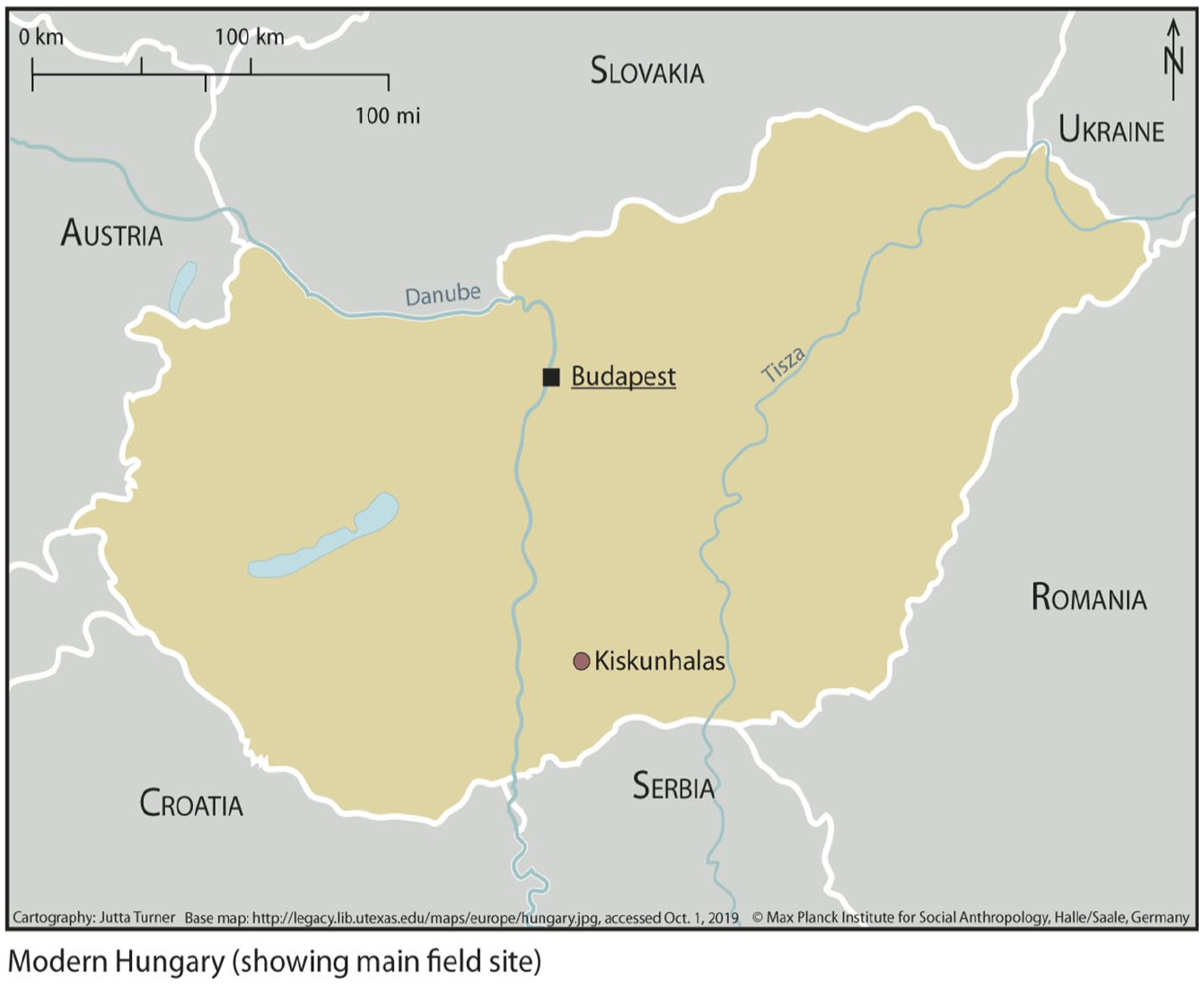
Modern Hungary, showing location of Kiskunhalas on the Danube-Tisza interfluve.
The town has rich civis traditions. Its Calvinist inhabitants in effect purchased their independence in 1745, more than a century before the formal end of serfdom in the Kingdom of Hungary following the revolutions of 1848. Another century later, on the eve of socialist transformation, the town was still overwhelmingly agricultural. By now it boasted many forms of association, formally registered with the authorities according to legislation that dated back to Habsburg days. Many of these were embedded in one or other of the religious denominations (due to the immigration of poor peasants from other regions when the former feudal estates were split up into parcels of private property, Roman Catholics expanded to outnumber all the Protestant denominations combined). Some were integral components of economic life, e.g. consumer cooperatives and interest group associations for particular professions and occupations. The associational life of this era should not be idealized. Almost half of the population of Halas in the pre-socialist era lived outside the urban nucleus in conditions that inhibited all forms of sociality other than kinship and Sunday religious services. The Great Depression was experienced acutely. The atrocious living conditions were documented by Ferenc Erdei in his first major sociographical study (Erdei, 1937). While elite families of ‘peasant burghers’ lived comfortably in the center of town, the suburbs and the scattered farmsteads beyond were home to a rural underclass. Poor families competed to send their barefoot children into service with the minority of burghers who had embarked upon a bourgeois trajectory. 8
Political associations flourished in Halas, despite the constraints set under the authoritarian rule of the regime of the Regent, Admiral Miklós Horthy. The most popular were those of the smallholding peasantry, whose commitment to an ideology of private ownership was the basis of their world view. The Independent Smallholders’ Party was preferred to the communists and social democrats, and also to Erdei’s National Peasant Party, even by those poor peasants whose holdings were inadequate to enable household reproduction. At the macro level this translated into a nationalist rejection of the ‘mutilation’ of the historic Kingdom of Hungary at the Treaty of Trianon in 1920, as a result of which the southern border of the state was now a mere 30 kilometers from Halas. The Independent Smallholders’ Party epitomized the ‘peasantist’ variety of East European populism (Ionescu, 1969). In the parliamentary elections of 1945 it won decisively in Kiskunhalas (63% of the votes on an 89% turnout), where its principles fitted well with civis traditions.
The Smallholders’ Party nonetheless lost the political struggle in the following years as Stalinism was imposed nationwide and all but five of the associations registered in Halas were coercively closed down. 9 When local elections were organized in the brief interlude of the 1956 revolution, the Smallholders triumphed once again. However, the defeat of the revolution led to the imprisonment of its local leader. Mass collectivization a few years later confirmed that the evolved forms of associational life and populist politics were gone for good.
Elsewhere I have documented the transformations wrought in the specific ecology of the Danube-Tisza interfluve by four decades of socialist rule, notably thanks to an institution called the ‘specialist cooperative’ which from the early 1960s onwards allowed villagers to practice new accumulation strategies as autonomous households working in combination with socialist institutions (Hann, 2015). Hajnalka Miheller (2019) has documented how associational life in Halas changed during the decades marked economically by a novel agrarian synthesis. On the basis of archival research and interviews, she shows that notions of an entirely atomized society are wide of the mark, at least from 1960 onwards. Within the constraints of socialist cultural policy, funding was available to support a wide range of activities from sport to folk music and art cinema. Denominational schools were nationalized in 1949; religious associations ceased, but pupils had new opportunities to participate in clubs and summer camps. The state farm, the national railway, and several new industrial enterprises were all endowed with staff and facilities to support cultural programs. These were dominated by recreational activities, often linked to particular days in the socialist ritual calendar. Rising leisure aspirations were also realized through the widespread practice of union-subsidized holidays, at Lake Balaton and other attractive locations. The rapid expansion of socialist industry brought well-educated managers to the town, many of whom contributed to new forms of cultural life. The establishment of the Forrás-Új Tükör Klub at the central culture house in 1973, in addition to its literary programs, set a high standard for critical debate on a wide range of social issues. 10 While this particular club catered to an educated elite, others were patronized by all social strata. This was the case at the new spa-lido complex in the town center, and it applied also to the Dog-Breeders Club (Ebtenyésztők Klub). The latter met monthly on Saturday afternoons in the central culture house to cultivate their ‘sport’. This club is remembered by one of its conveners in the 1960s as a truly ‘democratic’ association in the sense that membership included both blue-collar workers and white-collar officials with college degrees (Miheller, 2019: 385).
For some Halas residents, however, all this was not enough, above all because the activities remained ultimately under state control. Dissatisfaction and a sense of small-town stagnation were highlighted in the work of a Budapest-based team of cultural sociologists who conducted research in Halas at the end of the 1970s (A. Gergely et al., 1986). Inspired by this external intervention, a new generation of local cultural activists (with some support from respected elders) succeeded in October 1988 in registering an association called the Urban Youth Workshop (VIM). This preceded the legislation passed in parliament the following year that guaranteed the right to form such associations and greatly simplified their registration.
From Miheller’s account it becomes clear that, although the 1989 legislation appeared radical, the transition from the Forrás-Új Tükör Klub to the Urban Youth Workshop was gradualist rather than revolutionary. The same culture house officials were involved throughout. The Workshop generated numerous smaller communities and its leadership exploited the new media freedoms to publish newspapers and brochures. In these publications the terms polgári társadalom and civil társadalom were often used synonymously. By the mid-1990s there was more confusion as the imported English terms ‘non-profit szektor’ and NGO were gradually disseminated. 11
The VIM was not the only forum in which ideals of a new civil society were discussed heatedly in Halas in the late 1980s. While its main driving force aligned himself with the Magyar Demokrata Fórum, the conservative party which triumphed in the national elections of May 1990, the strongest party in Halas was the Alliance of Free Democrats (SZDSZ), the liberal party dominated at the national level by the former dissidents. The first postsocialist mayor was a liberal who had been involved in dissident milieus in Budapest as a student. He soon became disenchanted with the SZDSZ when it became clear that its leaders were really not interested in finding practical solutions for the crisis that mass privatization had created in Halas. The mayor resigned from the party, but was re-elected in 1994 and 1998 with the support of a local association called the Urban Civic Circle. 12 In the larger parliamentary constituency the election of 1990 was won by the Independent Smallholders’ Party, which revived peasantist populism and campaigned primarily for the restitution of collectivized property and for the cause of the nation. This remained a lively body in the town until it self-destructed in the mid-1990s. By this point, Viktor Orbán had shifted his party to the right and begun to appropriate the emotions of the old populism in order to develop a new one.
By the end of the first postsocialist decade, associational life in Kiskunhalas had contracted again. The Workshop and other newly established associations that were meant to express postsocialist freedoms struggled to maintain support and folded. There was a new club for entrepreneurs and another for the unemployed. The latter were far more numerous but neither of these initiatives functioned well. The largest association was dedicated to the interests of large families (defined as families with three or more children). It was not so much an interest group as a body that organized summer fetes and other recreational activities. Some associations existed only on paper, in order to be eligible for grants from the municipality. When it came to satisfying cultural aspirations, most inhabitants agree that standards were higher in the socialist decades, when more people went to the town’s architecturally elegant theatre cum cinema, and the quality of the performances and films was higher (Figure 2). Those who were young in the 1990s are more likely to recall a lively disco culture in private clubs and bars than any participation in events organized by the new independent associations. Those who associate civil society with bourgeois habits of earnest debate and cultivation of the arts were obliged to recognize an ironic fact: that these objectives had been better met within the framework of the socialist culture houses, which they had long scorned as the antithesis of civil society.
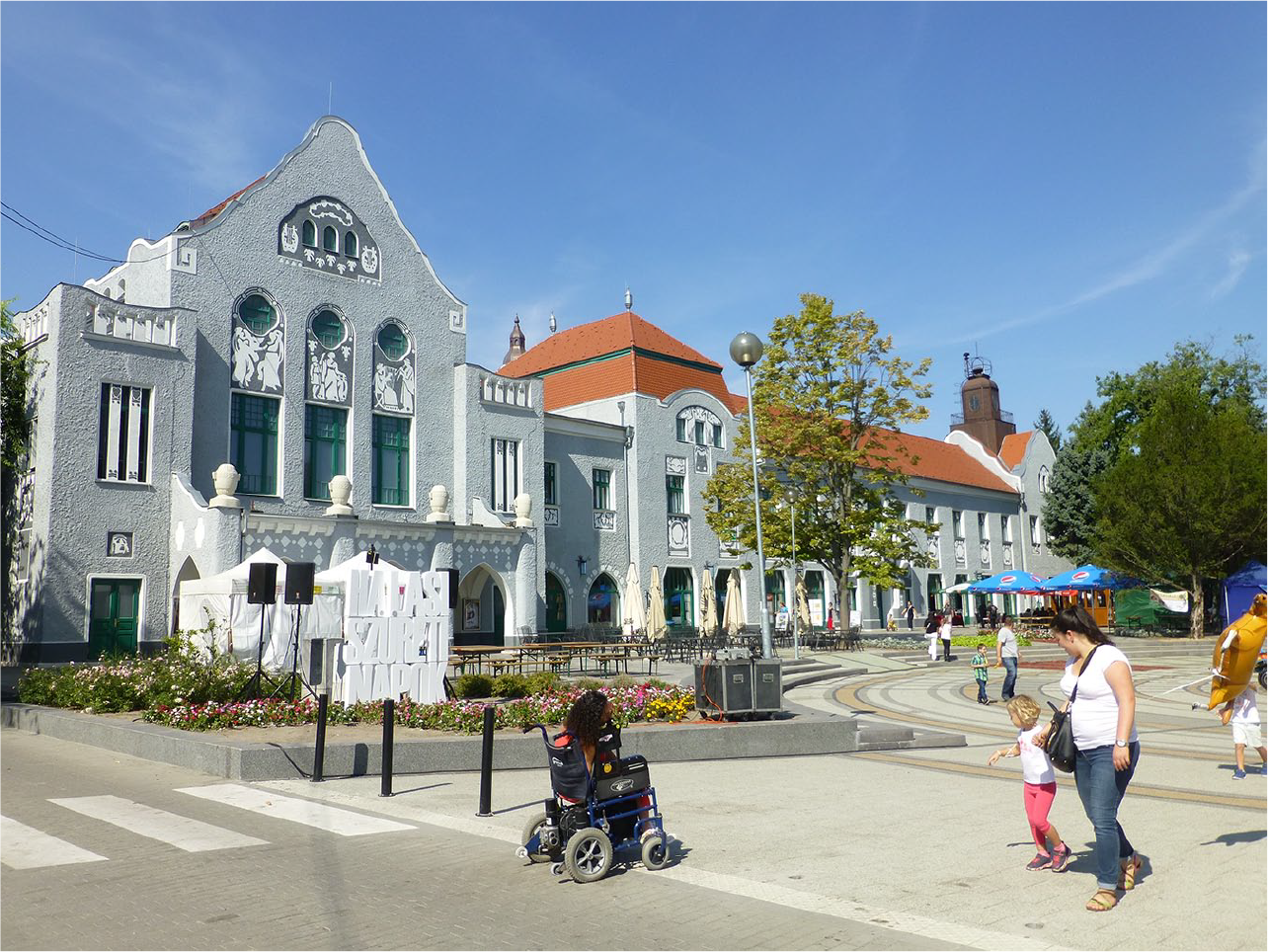
The Kiskunhalas theatre/cinema (left) and town hall complex on the central square (author picture, 2017).
One of the notable achievements of the liberal mayor was the building from scratch of a new gimnázium, which was named after István Bibó (Figure 3). The town’s established gimnázium was named after Áron Szilády, a son of Halas, distinguished 19th century Orientalist, and a member of the Hungarian Academy of Sciences as well as a Calvinist minister. The money to construct the new secular school was mostly provided by the Calvinist Church, which insisted on re-constituting the old one on a religious foundation. Since István Bibó’s ancestors had been Protestant citizens of Halas (Figure 4), it was easy to agree on this name for the new school. Eventually it became possible, despite negative demographic trends, to reform local educational institutions such that all pupils could be educated from kindergarten through to the completion of high school in the faith-school of their choice (Protestant or Catholic), or in the secular alternative. 13
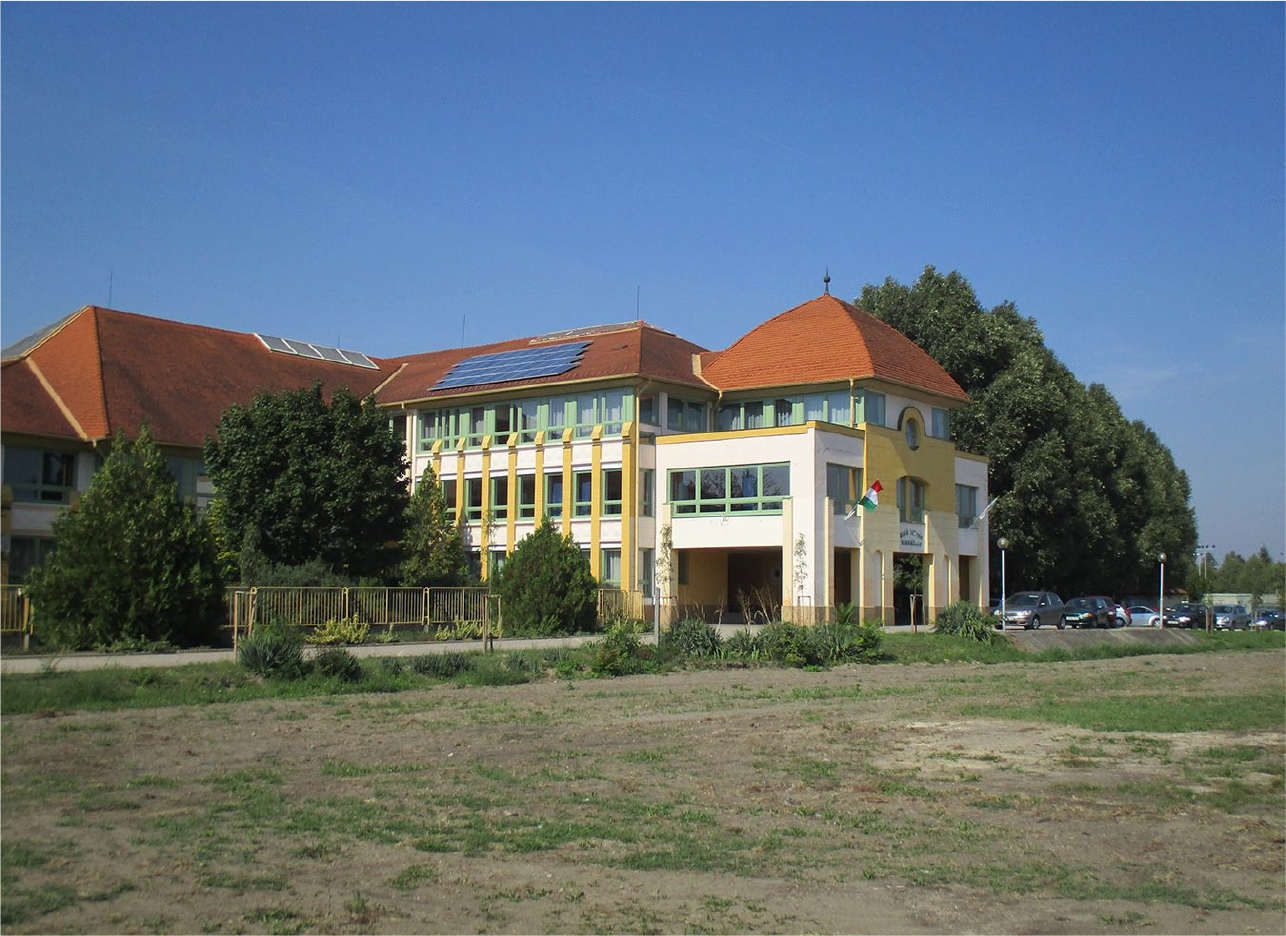
The Bibó István gimnázium, constructed in the 1990s (author picture, 2015).
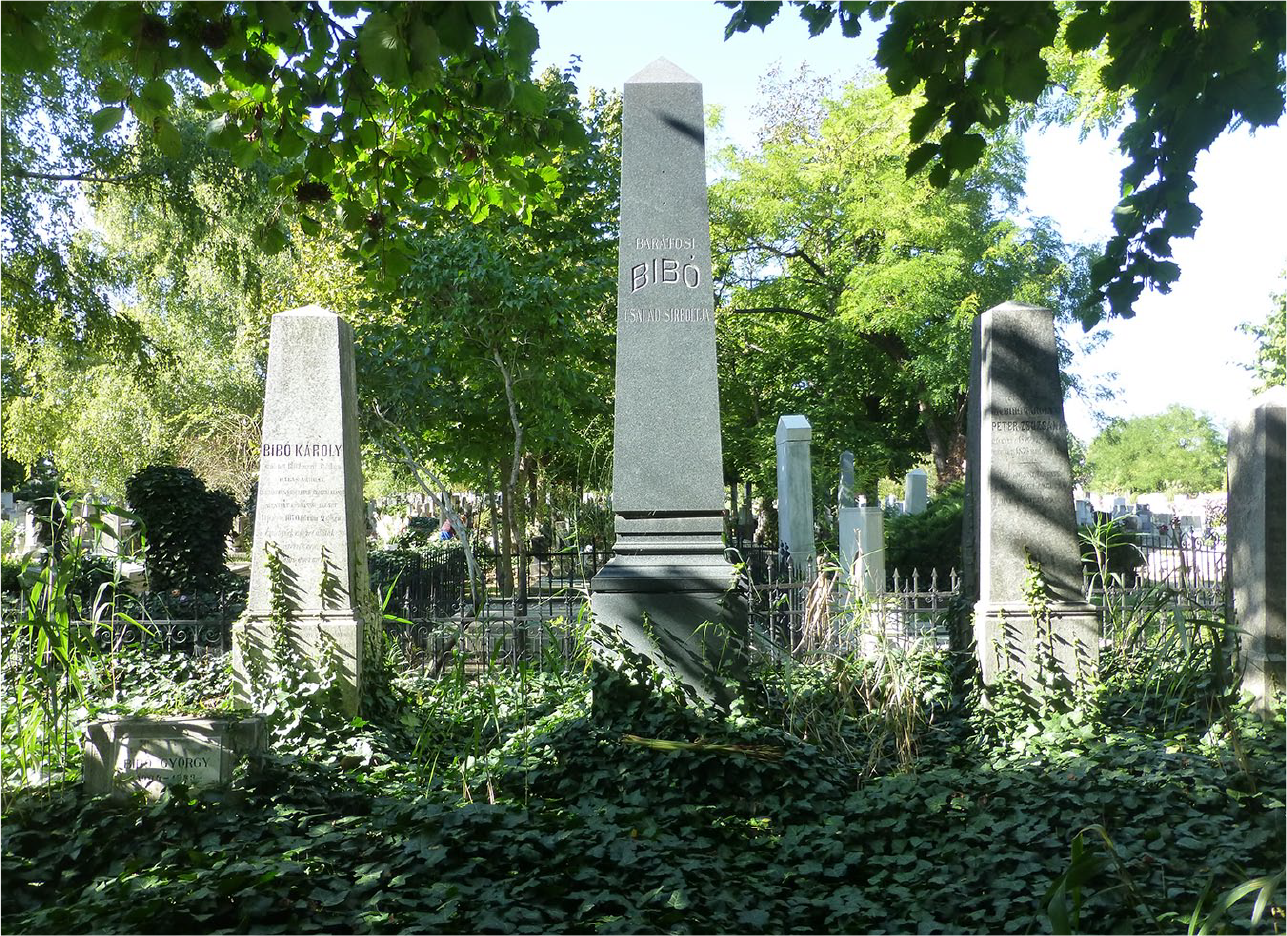
The Bibó family graves in Kiskunhalas (author picture, 2019). (Human remains, coffins and gravestones were moved to this cemetery on the western edge of the town in the late 1960s, when it was decided to route sewage pipes through the old Calvinist cemetery in the town-center; most of the rest of the old cemetery was later appropriated to construct a socialist housing estate.)
Associations in Halas nowadays differ fundamentally from their pre-socialist antecedents, which were maintained entirely by their members. In 2019 the Kiskunhalas council distributed 2,000,000 Hungarian Forints to twenty-six ‘civil organizations’. For example, the Áron Szilády Association received 150,000 Forints as a contribution to the costs of an excursion by coach to neighboring Vojvodina. Only four applications were unsuccessful (one of these, submitted by the Pigeon-Fanciers Association, was redirected to a separate sport budget). Many of the allocations were to support a one-off event.
Some two dozen municipal employees are responsible for local TV, major seasonal festivals and a calendar of events that compares well with civic life in towns of comparable size anywhere in Europe. The most significant venue is the Communities House, formerly the central culture house (Figure 5). But only a tiny fraction of the population is regularly active in the public sphere. Cultural events are patronized by the same bourgeois elite. Some of its members, businessmen as well as officials and local intellectuals, combined informally to establish a Rotary Club in 2007. This is, of course, a highly exclusive association, the antithesis of the socialist dog-breeders’ association noted above. Its members meet regularly to dine in the town’s only surviving hotel and they organize an annual ball. Their philanthropic activity is publicized on local television but such charity also attracts critique from those who deplore the decline in state provision of social security in recent years.
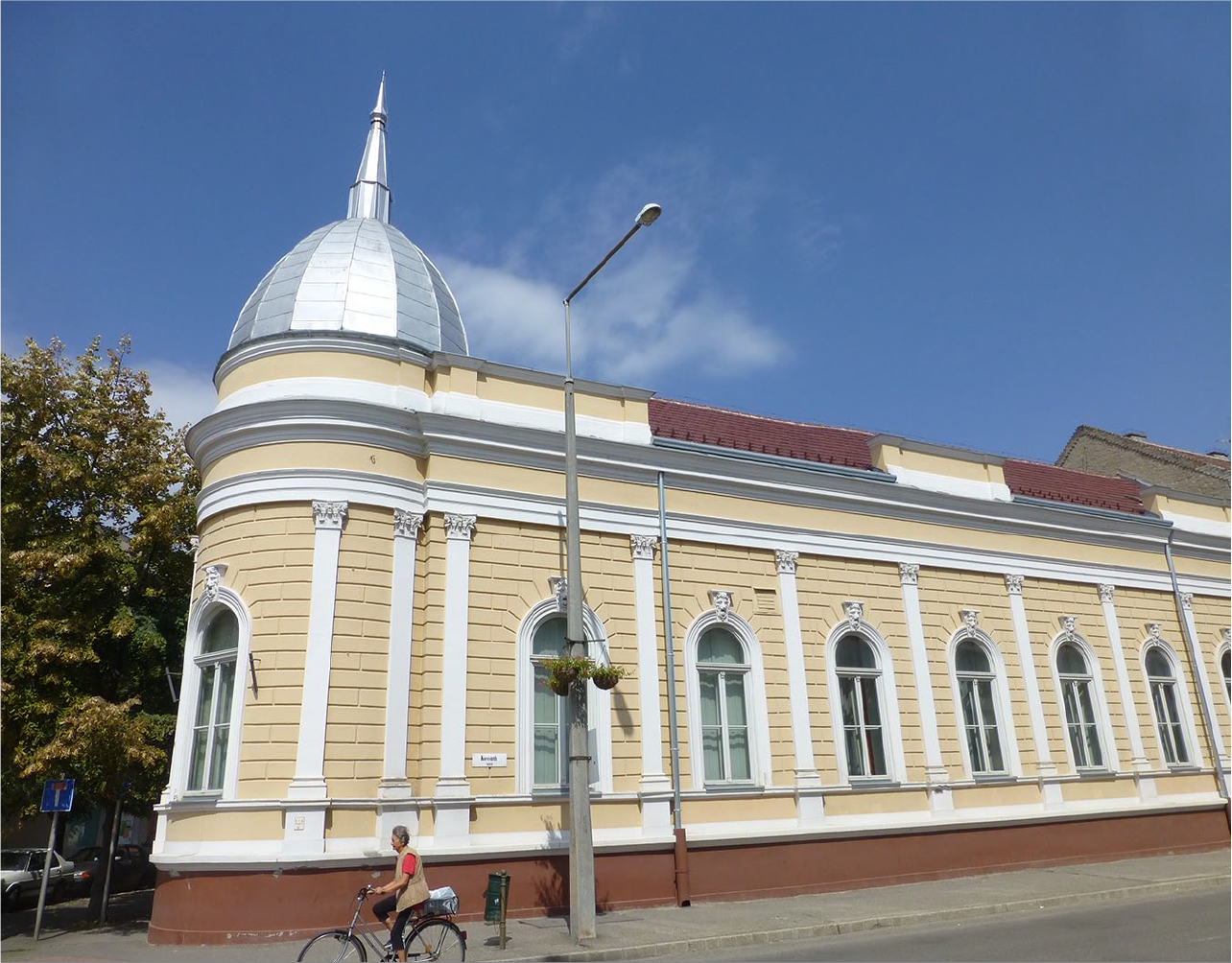
The Communities House (formerly the Culture House, before that the casino) (author picture, 2017).
While the establishment of a Rotary Club symbolizes the successful institutionalization of a new, elitist civil society, the majority of postsocialist citizens struggle to cope with existential priorities. Most of the industrial jobs established in Halas from the 1960s onwards disappeared in the early 1990s. The state farm and a number of smaller collective farms collapsed in the same period. The Smallholders’ Party campaigned for the restitution of land to pre-socialist owners, a policy which, had it been strictly implemented, would have undermined all the impressive accomplishments of the socialist era. The eventual compromises struck under the rubric of ‘compensation’ were flawed by the same dogmatic commitment to private ownership that destroyed so much of the industrial sector. Although Hungary attracted a lot of foreign investment in the postsocialist decades, a small town such as Halas that lacked good communications could not hope to profit from new opportunities – especially when the local political constellation differed from that which formed the government in the capital. Only since 2014 are both the mayor and the member of parliament members of FIDESZ. Small businessmen, well aware of the cronyism that has flourished throughout the country since 2010, insist that nothing trickles down to them. This may not be entirely accurate. But what most family-owned businesses perceive as a ‘ceiling’ above which they cannot expect to win lucrative contracts, is for the dominant party a floor on which to consolidate the national bourgeoisie (Scheiring, 2020a). As Gábor Scheiring shows, this proceeds in tandem with transnational investments. The opening of a large Mercedes-Benz factory in the county capital Kecskemét in 2012 was not much help to residents of Kiskunhalas, since to work in Kecskemét would mean a commute of roughly an hour in each direction. Some of them have found jobs in the course of intensified securitization policies since the ‘migrants’ crisis’ of 2015. For others, the main change of the 2010s has been the mass workfare programs, as a result of which the streets are cleaner and the parks and flowerbeds prettier than anyone can remember.
The political quality of their civil society, which led disgruntled idealists to establish the Urban Youth Workshop in the 1980s, is no longer a concern for today’s young people. Apart from a few sports clubs (the handball team does much better than the local football team), even the offspring of the more prosperous are generally uninterested in joining associations. New media have effectively killed off local newspapers. Given the limited options available locally, many young people agonize over whether or not to migrate to the West for higher wages, especially when this means abandoning the career for which they have earned a qualification.
Those old enough to recall the hard work of the late socialist era that enabled the material embourgeoisement of their parents and grandparents experience the unfamiliar condition of having an abundance of free time; but the postsocialist generations lack the incomes to profit from their leisure time, e.g. by taking holidays. Some have depended for years on soup kitchens. Many citizens in all age groups spend a lot of time searching out the best discounts for basic subsistence goods (Figure 6).
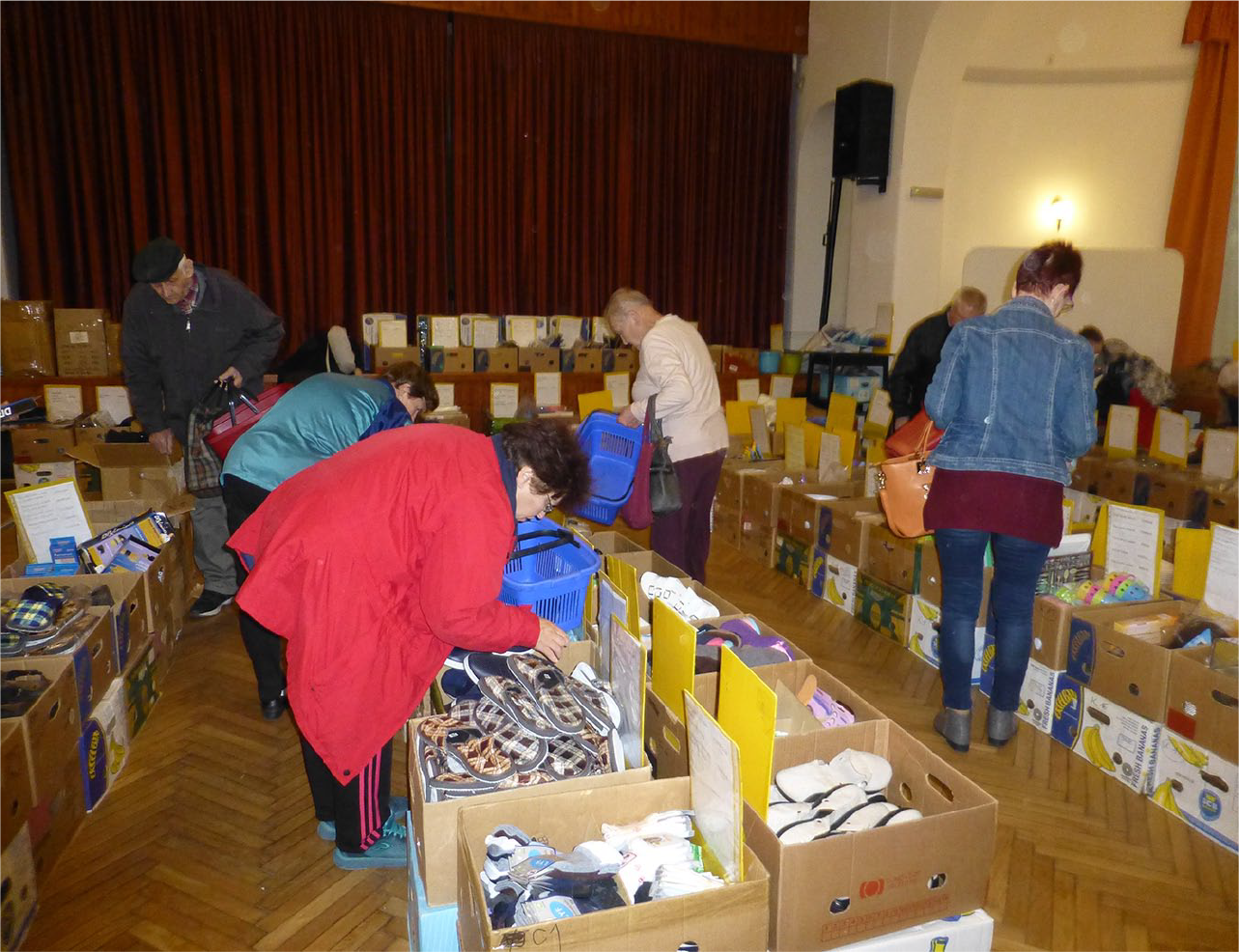
An informal market attracts frugal citizens to the main hall of the Communities House - persons who would not otherwise frequent this building (author picture, 2019).
Incivility and the new populism
Is it possible that the rhetorical promotion of civil society without paying adequate regard to the material preconditions for a cohesive society ends up generating only cynicism and nostalgia for the secure forms of sociality that have vanished? Economic, demographic and cultural decline all have an impact on civility, which is viewed by John Hall (2013) as a precondition for civil society. Hall approaches both as unique occidental inventions that overcome the flaws of communitarianism by building on the liberalism and individualism outlined in the 18th century by Adam Smith and Immanuel Kant. As befitting a sophisticated historical sociologist, Hall defends strong liberal positions with large doses of irony. Recognizing that some controls over social inequality are essential if every citizen is to enjoy the means of free self-expression without which there can be no civility, he believes that this can be assured through consumerism based on continuous growth (a position that ever more scholars are questioning for ecological reasons). Hall also contends that, though the cause of civility is undoubtedly flagging in some parts of the world, there have been tremendous achievements in the postsocialist world, including East-Central Europe (2013: 215). Even if the full extent of Viktor Orbán’s ‘illiberalism’ did not become apparent until after 2014, this is an excessively rosy interpretation of the postsocialist world.
Incivility in Hungary is most obvious in the intensifying conflicts between ethnic Hungarians and members of the Roma minority, who have been excluded and subjected to racialized violence (Szombati, 2018). In Kiskunhalas, inter-ethnic skirmishes and violence at the Szüreti Napok festival (marking the fresh vintage) in the first decade of postsocialism led the liberal mayor to initiate a separate event on the outskirts of town for the Roma minority (Figures 7 and 8). Roma leaders embraced the new rhetoric coming from NGOs in the capital: after all, they were endowed with a separate culture, which deserved recognition in a separate festival. The ethnic Hungarians were happy to agree and thus eliminate the tensions that had marred the town center during the festival weekend. Sadly, most people say, while conceding that socialist attempts to integrate Roma into the labor force and to liquidate their squalid settlements on the edge of the city were by no means completely successful, inter-ethnic relations have deteriorated in the postsocialist era. 14
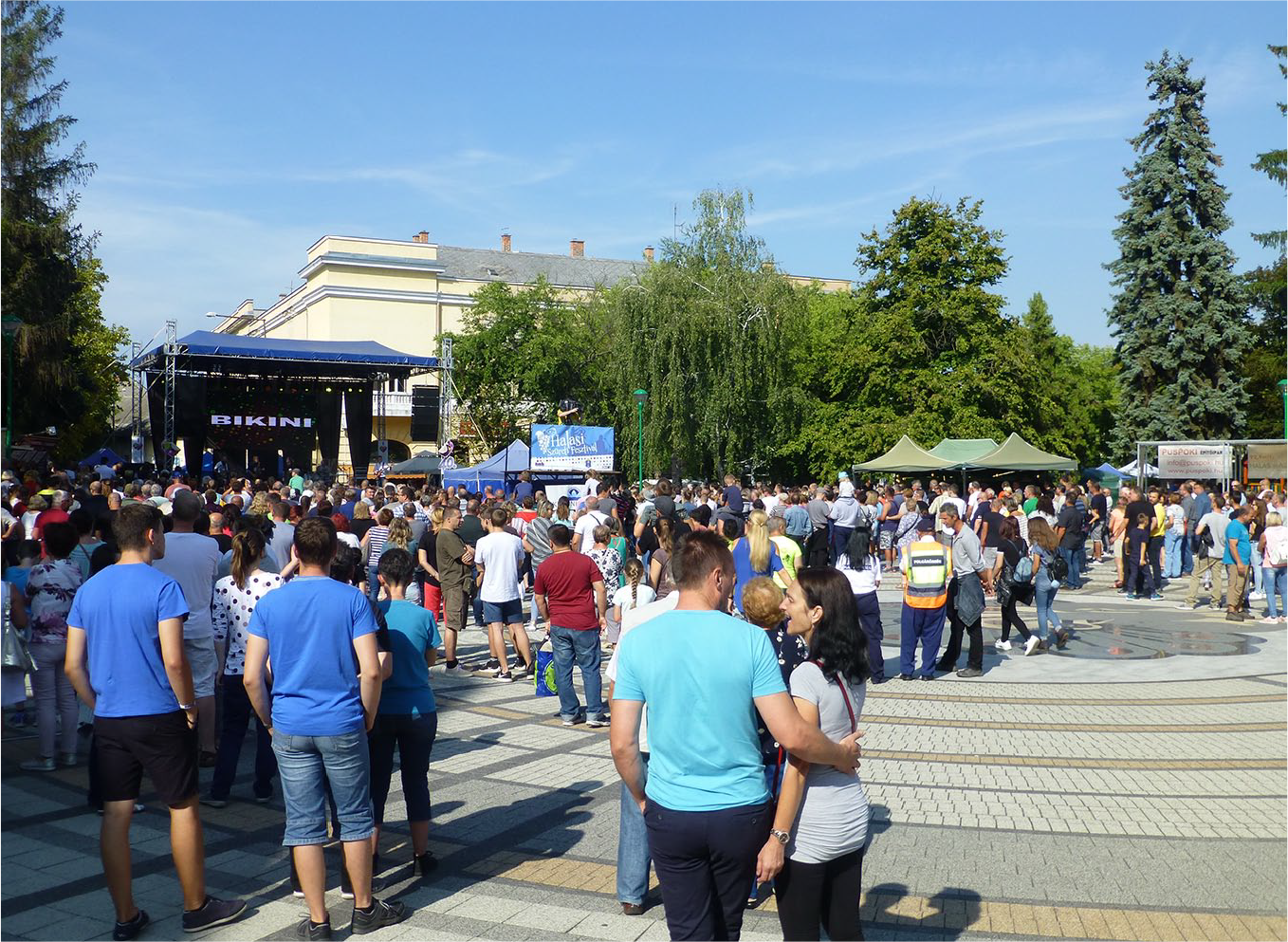
The Wine Festival in the main square (author picture, 2019).
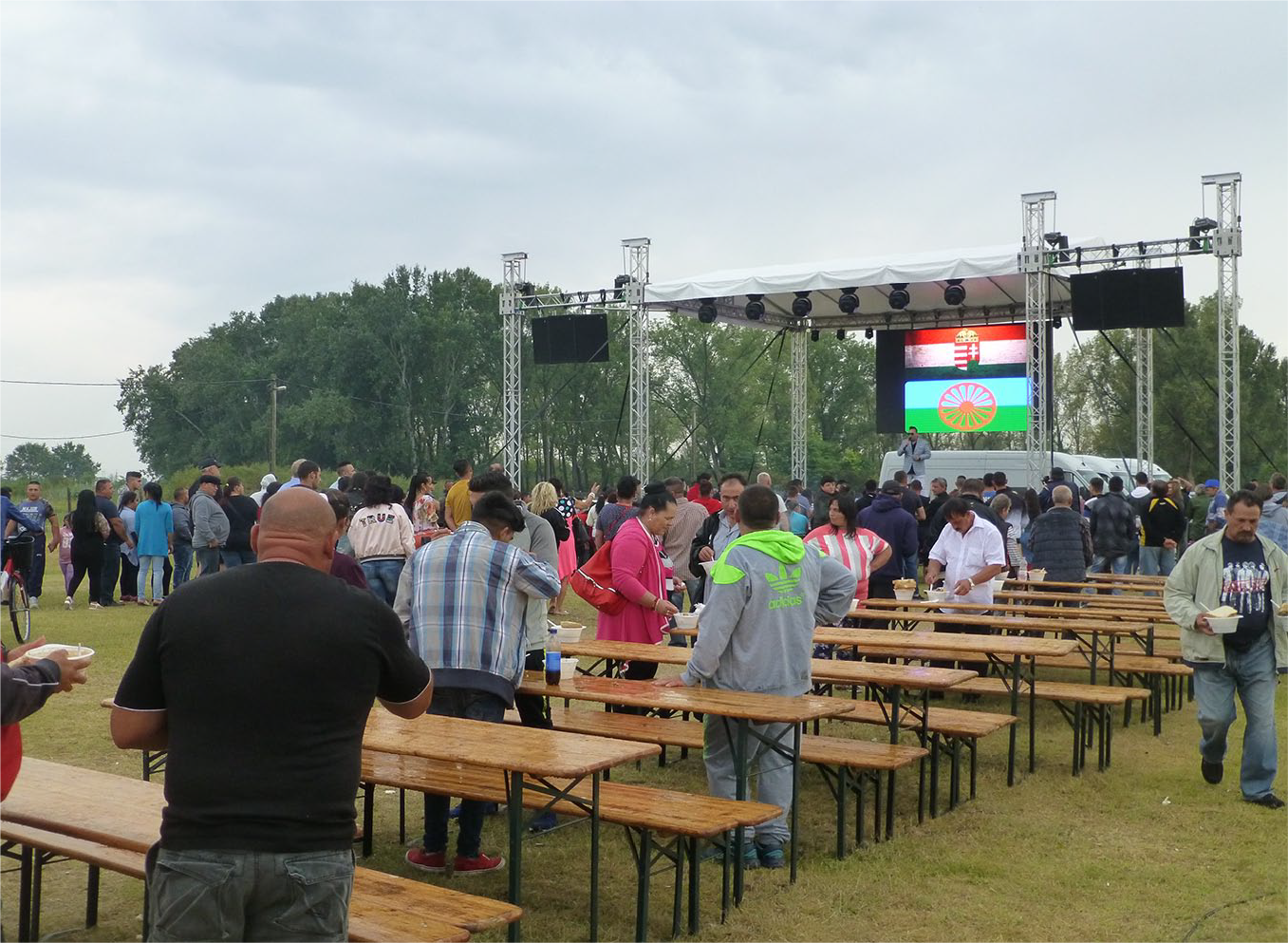
The Minority Festival organized to coincide with the Wine Festival (Figure 7) is located on the outskirts of town (author picture, 2019).
Antisemitism is another popular trope with deep roots in Hungary. Unlike anti-Roma sentiment, it is rarely articulated publicly in contemporary Halas. Nonetheless everyone is aware that George Soros is Jewish and the campaign to vilify his ‘plan’ to flood Christian Europe with foreigners certainly resonates. Halas used to have a Jewish community numbering several hundred families, but most of these perished in the Holocaust. The synagogue and next-door Rabbi-house survived and have been beautifully restored. A Rabbi visits occasionally from Kecskemét, the county town. A cynic might suggest that the exemplary multiculturalism exhibited in annual festivals to celebrate Jewish culture in Halas is only possible because the Jews are very few in number and virtually invisible in municipal life today.
We can formulate incivility in broader ways, beyond exclusionary prejudice towards the two groups traditionally scapegoated in this region. Academic portrayals of Hungary three decades after the ‘system change’ are more likely to note the return of one-party monopoly and to theorize ‘populism’ than they are to engage with civil society. These phenomena are tightly connected. From the point of view of Viktor Orbán, his dominant FIDESZ party is the true representative of the Hungarian people. He famously declared after losing the parliamentary election of 2002 that the people could not be in the opposition. The network of civic circles (polgári körök) that he initiated following this defeat can be understood as a program to capture (civil) society at the grass roots – a strategy that bore fruit from 2010 onwards. By contrast, civil society was a realm in which foreign interests were subverting the national interests of the Hungarians. This diagnosis confirms the prescient insights of Ferenc Miszlivetz twenty years earlier (1999: 171–174). As Orbán himself declared in 2014: … the state must obviously be supervised and lead by someone; by the leaders who have been duly elected and given a mandate to do so. But then at the periphery of state life there always appear non-governmental organisations. Now the non-governmental world in Hungary paints a very peculiar picture. Because, in contrast to professional politicians, a civil activist or community is organised from the ground up, stands on its own feet financially and is of course voluntary. In contrast, if I look at the non-governmental world in Hungary, or at least at those organisations which are regularly in the public gaze – and the recent debate concerning the Norway grants has brought this to the surface – then what I see is that we are dealing with paid political activists. And in addition these paid political activists are political activists who are being paid by foreigners. They are activists who are being paid by specific foreign interest groups, about whom it is difficult to imagine that they view such payments as social investments, and it is much more realistic to believe that they wish to use this system of instruments to apply influence on Hungarian political life with regard to a given issue at a given moment. And so, if we want to organise our national state to replace the liberal state, it is very important that we make it clear that we are not opposing non-governmental organisations here and it is not non-governmental organisations who are moving against us, but paid political activists who are attempting to enforce foreign interests here in Hungary.
15
At the national level, Orbán and his party have attempted to counter left-liberal influence by establishing new organizations to promote their own conservative agendas. The government provides the funding to support its own ‘think tanks’ and research institutes to celebrate Hungarian history, while denigrating everything that happened under socialism and in the first two decades of postsocialism. Dubious figures from the era of Miklós Horthy have been rehabilitated and Horthy himself is well on the way to entering a reconstructed national pantheon. To those who turn to state-controlled mass media for their news, the boundary between state and civil society is hardly less fuzzy than it was when the Communist Party exercised a constitutional monopoly. This is justified by the elected government in part with the argument that alien forms of civil society in the guise of private foundations and NGOs have built up an insidious power that undermines the state and the Hungarian people.
These issues have come to a head since 2015 with the so-called ‘migrants’ crisis’. The great majority of Hungarians support their Prime Minister, notably in rejecting the allocation of quotas of refugees by Brussels. Hungarians consider that the German Chancellor made a decision that contradicted international law, and ever since September 2015 it is totally hypocritical on her part to demand EU solidarity. Viktor Orbán believes that he, rather than Mrs. Merkel, is defending the values of European Christian civilization. Most Hungarian voters agree with him. On state TV and radio they are informed that their real enemy is George Soros in combination with ‘pseudo civil organizations’ (álcivil szervezetek). Smear campaigns against opposition politicians have become ludicrous and the suppression of independent media increasingly blatant. Some observers believe that a tipping point was reached when publicly denigrated critics of the government were elected to mayoral posts in the local elections of October 2019, notably in Budapest itself. But most opponents of the government are pessimistic and pin their hopes on a change of course in Brussels and Strasburg, which they believe should sanction the Orbán government for its egregious transgressions. Meanwhile no civil atmosphere for political debate exists at any level inside the country.
Some of the liberal activists in the booming capital are embarrassed by, even contemptuous of their compatriots in the provinces, in places such as Halas. Their confidence that they have the right solutions is based in part at least on their familiarity with English-language scholarship in the social sciences devoted to topics such as civil society. They are unlikely to be familiar with the work of Ferenc Erdei or to care about the extraordinary developments that took place in regions such as the Danube-Tisza interfluve, when crypto-communist ex-populists transformed the living conditions of a peasantry that had never been properly integrated into the national society. They do not recognize the ways in which those monumental gains have been called into question with the dissolution of the socialist agrarian synthesis. Nowadays, young people whose grandparents pursued the path of embourgeoisement at home have little choice but to work as proletarians in Western Europe. But Western-oriented elites loyal to the Bibó-Hankiss strands of civil society theorizing pay too little attention to the new political economy and resort instead to culturalist explanations for manifest incivility. They link deplorable xenophobia to the historic backwardness of East-Central Europe, and accuse their Prime Minister of wishing to push their country back to the East whenever he cooperates with Russia and China. A similar moral geography inspired the original populists. But whereas the népi movement on the inter-war decades was concerned with the emancipation of the rural masses, the postpeasant populists resort to increasingly authoritarian means to consolidate the class power of a national bourgeoisie. 16
Conclusion
East-Central Europe has come a long way from 1989, when the advocates of civil society claimed to speak up for the people against monolithic regimes. In this article I contrasted those strands of theorizing with an alternative model of polgárosodás, embourgeoisement, theorized originally by Ferenc Erdei, which socialist power holders promoted rather effectively as they integrated all sections of a highly differentiated peasantry into the national society. Those accomplishments can be viewed as the realization of a populist program. But these gains were rapidly dismantled in the 1990s. The fragmentation of rural families in the neoliberal decades is more divisive than the atomization that liberals diagnosed before 1989. Unsurprisingly, this has fuelled new and coarser forms of populism, which since 2010 have given rise to authoritarian one-party domination. Liberal activists today, those who still invoke the term civil society to describe their NGOs, appeal to international bodies and invoke human rights to protest the incivilities of Orbán’s illiberalism. The populist power holders reply that these liberals are the agents of international powers pursuing agendas diametrically opposed to the real interests of the Hungarian people.
In this article I have explored these discourses and empirical referents of civil society at the local level in the town of Kiskunhalas. This settlement on the Danube-Tisza interfluve has long traditions of associational life and agrarian populism, combined with extremes of poverty that peaked in the inter-war decades. Material conditions were transformed for the better under socialism. The old associational life, by contrast, was abruptly repressed in the early socialist era, though some types of sociality persisted in new, more egalitarian forms. The transition out of socialism was much less abrupt. I described how, once an ephemeral wave of enthusiasm had passed, associational life in the 1990s declined substantively. The hopes of civil society theoreticians were not fulfilled. Many of the associations registered in the wake of the ‘system change’ no longer exist, while others do so only on paper. Political parties were very active in the early 1990s but they too have struggled to hold on to members in recent years. Even FIDESZ does not have a lively local association in Halas. The system remains substantively democratic in the sense that the majority of the population endorses the policies pursued by the elected government, which mobilizes support astutely by manipulating sentiments of belonging and blaming misfortune on external Others. The new populism is a response to renewed marginalization under global capitalism. Yet it is not the case that the people of Halas have become rabid nationalists in recent years. They vote for Orbán because no other party has made a comparable effort to speak to their concerns, following a generation of postsocialist insecurity in which they have been systematically marginalized at the expense of a new national bourgeoisie (Scheiring, 2020a).
In Germany, where I have lived for the last two decades, the dominant perception of Hungary is one of abhorrence. It is commonly suggested in the media that this new member of the EU should be grateful for the support it gets from Brussels (and thus German taxpayers), and has no business subverting the edifice with irresponsible populist rhetoric. Some commentators make excuses: it is because of their history, not just the socialist experience but also the preceding centuries of economic backwardness on the margins of Europe, that these poor Magyars are incapable of implementing what enlightened Westerners pioneered in the 18th century. But these explanations in terms of history and culture are unconvincing, if only because similar ‘populist’ agitation is increasingly common in so many other European countries, including some regions of the core.
Civil society aid has done little to compensate citizens for the massive disruption of their livelihoods and security that has taken place since 1990. The extreme nature of the Hungarian case today arises from the fact that the sense of precarity and relative deprivation is greater in a country where so many households, especially in the countryside and small towns, were engaged in dynamic accumulation in the last decades of socialism. 17 The efforts of liberal postsocialist governments, with significant foreign assistance, to promote ‘civil society’ have instead widened social differences, not least the old gulf between urbánus and népi. The resentments spawned by these differences are systematically cultivated by FIDESZ. ‘Talking civil society’ has spawned a plethora of organizations that are nowadays branded by persuasive politicians as ‘pseudo civil’ on the grounds that they undermine collective national interests. The left-liberal elites are easily depicted as pursuing their selfish interests and failing to protect their societies. Of course, despite the scorn expressed towards Brussels, there is no question of withdrawing from the Union that has provided substantial material aid to the region in the last fifteen years. But the transfers received from Brussels through the so-called cohesion policies are smaller than the profits extracted from the Visegrád states by the major German automotive enterprises (Piketty, 2018). Hungarians feel and understand this. They have arrived not in a free civil/bourgeois society but in Karl Polanyi’s ‘market society’ (Hann, 2019).
Footnotes
Acknowledgements
Thank you to Mihály Sárkány and Attila Melegh for continuous guidance from Budapest, Marek Mikuš and Larry Ray, who commented on an early draft, participants at the University of Kent workshop in June 2019 where these arguments were first presented, and finally to an anonymous reviewer (a loyal member of the Cold War church of civil society, who was not persuaded by my arguments but stimulated me to expand them in final revisions).
Funding
The author disclosed receipt of the following financial support for the research, authorship, and/or publication of this article: Field research since 2014 in Kiskunhalas has been supported by the European Research Council through the Advanced Grant ‘Realising Eurasia. Civilization and Moral Economy in the 21st Century’ (Grant n°340854).
