




Abstract
An extensive investigation explores the complex terrain of psoriasis, a persistent inflammatory dermatological disorder that impacts between 1% and 3% of the worldwide populace. Acknowledging the intricate interplay between environmental, genetic, and immunological influences on the etiology of psoriasis, the study utilizes sophisticated bibliometric techniques to investigate patterns, gaps in knowledge, and emergent trends within the field. The study utilizes advanced bibliometric techniques to analyze patterns, gaps in knowledge, and emerging trends in the field while acknowledging the intricate interplay between environmental, genetic, and immune-related influences on the etiology of psoriasis. An examination of 18,765 documents from December 2012 to December 2023 was conducted using machine learning techniques and the Scopus database. The explanation for conducting analysis is rooted in its capacity to provide significant perspectives on the dynamic progression of psoriasis research. The study facilitates the identification of significant subject areas, exposes patterns in publication trends, emphasizes influential authors and journals, and outlines the worldwide contributions to the field. The study demonstrates a steady and progressive increase in publications, with significant contributions from the Journal of the American Academy of Dermatology, the British Journal of Dermatology, and the Journal of the European Academy of Dermatology and Venereology. Prominent scholars in research output, such as the United States, China, and Germany, as well as authors including Feldman, Wu, Griffiths, Puig, and Reich K., are identified. Biochemistry, genetics, and molecular biology come to the forefront as esteemed fields that make substantial contributions to the study of psoriasis alongside medicine. This research highlights the interdisciplinary aspects of psoriasis by uncovering knowledge hubs and international collaborations between authors and organizations. The findings highlight the global reach of research on psoriasis and the importance of international cooperation.
Introduction
The persistent skin condition psoriasis is defined by scaly, silvery-white areas mainly occurring in people between 20 and 60 years old.1,2 Approximately 1%–3% of people worldwide suffer from this inflammatory condition mediated by the immune system.3,4 Its incidence in India ranges from 0.44 to 2.8% and mainly affects individuals in their 30 s and 40 s; the incidence rate in men is double that in females.
5
Different subtypes of psoriasis, including guttate psoriasis,
6
plaque psoriasis,
7
inverse psoriasis,
8
pustular psoriasis,9–11 mucosal psoriasis,
12
scalp psoriasis,
13
nail psoriasis,
14
sebopsoriasis,
15
mutilating psoriasis,
16
erythrodermic psoriasis,
17
and palmoplantar psoriasis,
18
are identified depending on the parts of the body where the condition manifests.
19
Psoriasis symptoms manifest as abnormal differentiation of immune cells and excessive growth of keratinocytes.
20
A pro-inflammatory pathway is established by the interaction between keratinocytes and several immune cells, including neutrophils, macrophages, T cells, plasmacytoid dendritic cells, and myeloid dendritic cells.
21
These cells’ pathogenic and developmental functions are complex.21–23 When intricate genetic and environmental elements are present, these cells collaborate to initiate the pathogenesis and progression of psoriasis.
23
People bear its psychological, financial, and bodily costs.
21
Psoriasis has significant health effects that go beyond the skin 24. The disease can affect the whole body and may be accompanied by other medical conditions.
25
This is supported by the development of words such as “Systemic Psoriasis”
26
and “Psoriasis March”
27
in scientific studies. Therefore, looking at the link between psoriasis and other comorbid medical disorders is also necessary. Roughly three-quarters of people with psoriasis, especially those with severe instances, also have at least one other medical condition.
28
Psoriatic arthritis, metabolic syndrome, cardiovascular disease, inflammatory bowel disease, mental psychiatric disorders, malignant tumors, infections, and additional skin conditions are among the comorbidities associated with this condition.29–41 The depiction of the data is illustrated in Figure 1, which additionally comprises the crucial considerations to be considered. Treatment plans must be modified to address the dermatological and non-dermatological comorbidities that might result from psoriasis.
41
Mapping comorbid landscapes: Arrows unveiling coexisting conditions, triangle-framed essentials for comprehensive consideration.
Psoriasis treatment has revolutionized in recent years, and it includes topical,42–46 phototherapy,47–49 traditional systemic,50–53 biological,54–57 and small-molecule medicines.39,58–61 Significant advancements in understanding the autoimmune systems responsible for psoriasis have enabled the successful development of new targeted biological drugs, including antibodies that help patients by alleviating and managing symptoms by inhibiting TNF-α, IL-23, and IL-17A.62,63 The primary objectives of psoriasis management are symptom reduction, quality of life enhancement, and disease prevention.64–67 Conventional psoriasis therapies cause burning sensations, hyperpigmentation, and inadequate skin penetration. Research may lead to the treatment of colloidal medication delivery systems, which lower doses and systemic toxicity.68–71 Numerous studies offer comparative instances of the characteristics of various colloidal carriers.72–78 Nevertheless, personalized approaches and tailored remedies are imperative due to obstacles such as adverse effects, treatment resistance, safety concerns, and high costs.19,79,80 Understanding coping tactics, psoriasis causes, and therapy efficacy is crucial to managing the condition. 81 Psoriasis severity, progression, and future symptoms may be accurately predicted using mathematical models. Mathematical models may be used to discover treatments for numerous ailments.82,83 A mathematical model of psoriasis, including immune cells, cytokines, keratinocytes, and immune-boosting medications, was created to explain its development and causes. The model predicted psoriasis behaviour and evaluated immune-boosting medications. 84
The importance of bibliometric analysis in psoriasis research cannot be overstated, as it offers a strategic platform for comprehending the evolution and current state of research in this area. The significance of bibliometric study on psoriasis is of utmost importance as it provides a comprehensive review of the research landscape, pointing out trends, knowledge gaps, and influential studies that shape the current understanding of the disease. By examining publication patterns over time, this study can identify new areas of interest, changes in research focus, and the influence of specific interventions or discoveries in the field. Researchers and clinicians can better understand the development of psoriasis research by directing future studies towards underexplored areas and ensuring that research efforts are aligned with clinical needs. Furthermore, bibliometric analysis gives insightful details about the collaboration networks, influential authors, and key institutions in psoriasis research, which can lead to greater collaboration and resource allocation.85,86
Enhancing literature review: Insights from recent studies.

The study aims to conduct a comprehensive bibliometric analysis of psoriasis research from 2012 to December 2023 to assess global publications. The primary aim of this study is to perform an exhaustive bibliometric examination of the worldwide research literature about psoriasis. The skin condition is characterized by an intricate etiology encompassing environmental, genetic, and immunological elements.94–98 The aim is to utilize bibliometric methods to discern trends in psoriasis research, identify knowledge gaps, highlight emerging patterns, and assess the current state of research in this field. The findings reveal key insights and trends, culminating in a conclusion highlighting contributions and consequences.
Literature review
In the last decade, psoriasis progressed from merely investigating genetics and immunology to environmental factors and associated comorbidities, along with tailored therapy. Biologic agents acting on specific inflammatory mediators and small molecule inhibitors have transformed the treatment of moderate to severe psoriasis due to their enhanced efficacy and safety compared to traditional therapies. Earlier investigations have established that various gene products contribute significantly to the development of psoriasis. However, genes alone are not sufficient to initiate the outbreak of psoriasis as well as the reappearance of the disease in genetically vulnerable individuals, this being instigated by factors such as infections, microbiota in the skin and the gut, lipid metabolism abnormalities, sex hormone abnormalities, and mental disorders. Psoriasis can also be caused by other factors that relate to the environment, like skin injury, unhealthy habits, and drugs. 104 The development of psoriasis is quite polymerous and implicates immune pathogenesis, viral physics, and hyperkeratotic and angiogenic changes. It is a polygenic disease, and hence, it is controlled by both genetic and nongenetic factors. Through the wealth of information on the pathophysiology of psoriasis, it became possible to exploit several therapeutic agents, including JAK inhibitors, small molecules, and biologics with the possibility of anti-psoriatic effect. Signalling pathways used in the development of psoriasis, such as NF-κB, JAK-STAT, S1P, PDE-4, and A3AR, as well as animal models that have been used in psoriasis research, have also been discussed in this review. As with any review, the present text also emphasizes technological progress that has improved the knowledge of psoriasis. 105 Furthermore, advances in understanding the relationship between the gut microbiome and skin and the role of the microbiome in psoriasis have provided new insights into the pathophysiology of this disease. A study found that the formation rates of ADA for various biologics used in managing psoriasis and immunogenicity played a role in reduced bioactivity and enhanced ISR. It involves demographic factors, disease nature, other diseases, the sensitivity of detection, and other drugs that may be taken at the same time simultaneously. Hypothesis 3: Frequent treatment may not always effectively reduce ADA production, while intermittent treatment may lead to more ADA production. 106 The last decades of active investigations it revealed a vicious circle of pathogenic interactions between immunocytes and other cell types in the course of psoriasis. Current data suggest that dendritic cells, TH17 cells, and keratinocytes might be the main drivers of psoriasis. DCs secrete pro-inflammatory cytokines TNF-α and IL-23 that stimulate T cells to differentiate into TH17 T cells that produce important psoriatic cytokines: IL-17 and IFN-γ and IL-22. Their activity is related to skin inflammation and activation and hyperproliferation of keratinocytes. However, other cells and signaling pathways are involved in psoriasis, for example, TH9 cells, TH22 cells, CD8+ cytotoxic cells, neutrophils, γδ T cells, and cytokines and chemokines produced by them. 107 Furthermore, the identification of comorbidity in psoriasis as a systemic chronic disease as cardiovascular diseases and mental health disorders serves as a rationale for a more comprehensive approach to treating the skin disease, focusing not only on the symptoms and lesion but also the effects of the disease on the general well-being of the patients. The advancement of precision medicine coupled with artificial intelligence also holds great potential to boost diagnostic precision and as customize therapy per patient characteristics, thus paving a new epoch in psoriasis study and treatment.
Material and methods
The study focused on scientific literature in various sectors, including health and medicine, utilizing the Scopus database as the primary data source. The data was collected from the Scopus database from 2012 to 2023 using keywords related to “psoriasis,” such as “psoriatic disease,” “treatment,” “therapy,” “immunology,” and “biomarkers.” Bibliographic information included authors, publication titles, journals, years of publication, citation counts, and source databases. The identified articles were collected, cleaned, and verified to ensure they met the search criteria. The bibliometric analysis focused on English-language articles specifically explicitly focused on psoriasis and indexed in the Scopus database. Non-English publications, articles without abstracts, and studies unrelated to psoriasis research were excluded. This data was processed and analyzed using the database’s built-in analytic tools, allowing the survey to visualize trends in psoriasis research over time, establish connections between different concepts and research fields, identify frequently occurring keywords and themes, and explore the geographic distribution of publications. The resulting data was then analyzed to pinpoint knowledge gaps, emerging trends, and the current state of psoriasis research. Figure 2 represents the flowchart of the methodology of the bibliometric research of Psoriasis. Unveiling psoriasis: Navigating the bibliometric maze.
Results
This research outlines a thorough analysis of bibliometric trends in academic literature that pertain to immunology, dermatology, and related sciences. The study focuses on several aspects, such as the volume of papers published throughout time, the distribution of papers across journals and sources, authorship patterns, and the affiliation and national distribution of publications. Furthermore, the study analyzes changes in scientific collaboration and output in these fields. The main objective is to discover long-term patterns in publication output while also analyzing significant trends and distributions within the academic literature through a comprehensive, data-driven examination. The findings present a valuable insight into productivity and collaboration trends over time, which have significant implications for research evaluation, literature studies, and scientific policy development. To illuminate future directions and enhance informed decision-making within the scientific and academic communities, the study suggests that ongoing monitoring of these trends is essential.
Figure 3 illustrates a systematic approach to reviewing documents related to psoriasis from the Scopus database. Initially, were 35,852 documents identified, but they were narrowed down to 27,825 based on specific search criteria. To refine the search, the process involved using the NEAR/50 operator and applying specific exclusion criteria, such as excluding articles that discuss the applications of FL and medical images and articles without abstracts. Using inclusion criteria, 23,773 documents were identified as relevant, and 20,731 were examined for further eligibility. The stage saw the exclusion of 4052 articles based on predefined criteria, while an additional 3042 were removed due to irrelevance. In the end, 18,765 documents were deemed suitable for inclusion in the study. The PRISMA diagram highlights the rigorous selection process to ensure only the most relevant studies were included. A PRISMA-Guided stream of scholarly evaluation.
Data published on psoriasis research per year
Beginning with about 2800 papers in 2012, Figure 4 illustrates a consistent rise in the quantity of documents over the previous 11 years. The quantity of papers rose from 2012 to 2017, hitting about 4000 that year. The number of papers decreased to about 3500 in 2018. The quantity of papers increased dramatically between 2019 and 2021, hitting about 5500 that year. The number of documents dropped slightly in 2022 and 2023, although it is still more than 5000. The patterns above can be attributed to several factors, such as the growing digitalization of records, the volume of information produced, modifications to document retention regulations, variations in economic activity, or industry-specific trends. Temporal trends in document production: an annual analysis of scholarly output.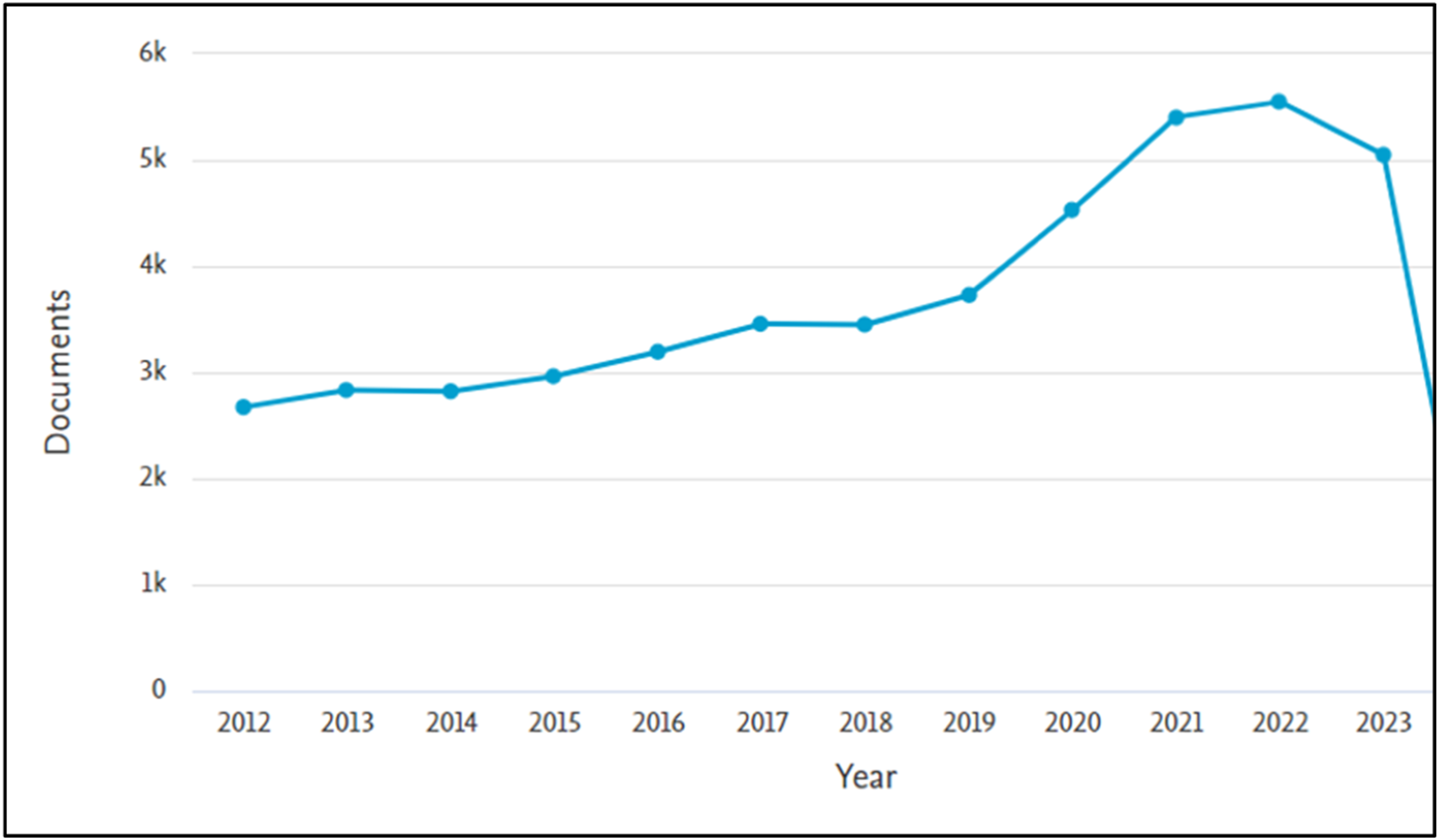
Data published on psoriasis research per year source
The graph in Figure 5 illustrates the publishing history of eight different journals covering various topics related to immunology and dermatology. The dataset covers the period from 2012 to 2023, or 11 years. The Journal of the American Academy of Dermatology, the Journal of the European Academy of Dermatology and Venereology, and the British Journal of Dermatology have the highest number of publications. These three publications consistently publish a significant number of papers each year, suggesting that they are important venues for disseminating dermatological research. Even though the other publications publish less frequently, they contribute significantly to the field. In recent years, there has been a notable increase in the number of publications published in Frontiers in Immunology, a journal that is becoming increasingly important in the field of immunology connected to dermatology. Total Growth: Between 2012 and 2023, publications in every journal show a steady rise, except the Journal of Investigative Dermatology. This might be a sign of the growing dermatology and immunology research fields. While the Journal of the European Academy of Dermatology and Venereology shows a significant increase between 2016 and 2017, Frontiers in Immunology shows a dramatic increase beginning in 2021. Evolution of dermatological literature: A comprehensive analysis of publication trends across leading journals (2012-2023).
Data published on psoriasis research by authors
In psoriasis research, the top 10 prolific authors are shown in the Figure 6. The most influential author in the field is Feldman, S. R., who has written nearly 400 published documents. Wu, J. J. has published almost 300 documents since he started, while **Griffiths, C. E. M. and Puig, L. have both released around 250 publications. About 220 documents have been contributed by Reich, K. Warren, R.B., Gottlieb, A.B., Gladman, D.D., and Skov, L.'s significant involvement in psoriasis research is reflected by the fact that they have each published around 200 papers. The list is completed by Fabrocini, G., with just under 200 publications—these researchers’ significant contributions to the academic discourse on psoriasis. Authorship dynamics in dermatology: A bibliometric exploration of prolific contributors and collaboration patterns.
Data published on psoriasis research globally
Figure 7 shows how many documents from different nations and regions have been published in a particular field. With 11,269 papers, the United States leads the world, followed by China (4567) and Italy (4088). The number of documents declines after the top three nations. The remaining nations have a variety of document counts, ranging from 1991 in France to 3730 in Germany. Psoriasis research is prominent in the US due to its vital healthcare infrastructure, biomedical research investment, and patient advocacy. However, psoriasis is a global issue, and study in various nations and locations helps us comprehend the illness. Global dermatological research landscape: A bibliometric analysis of research output by country.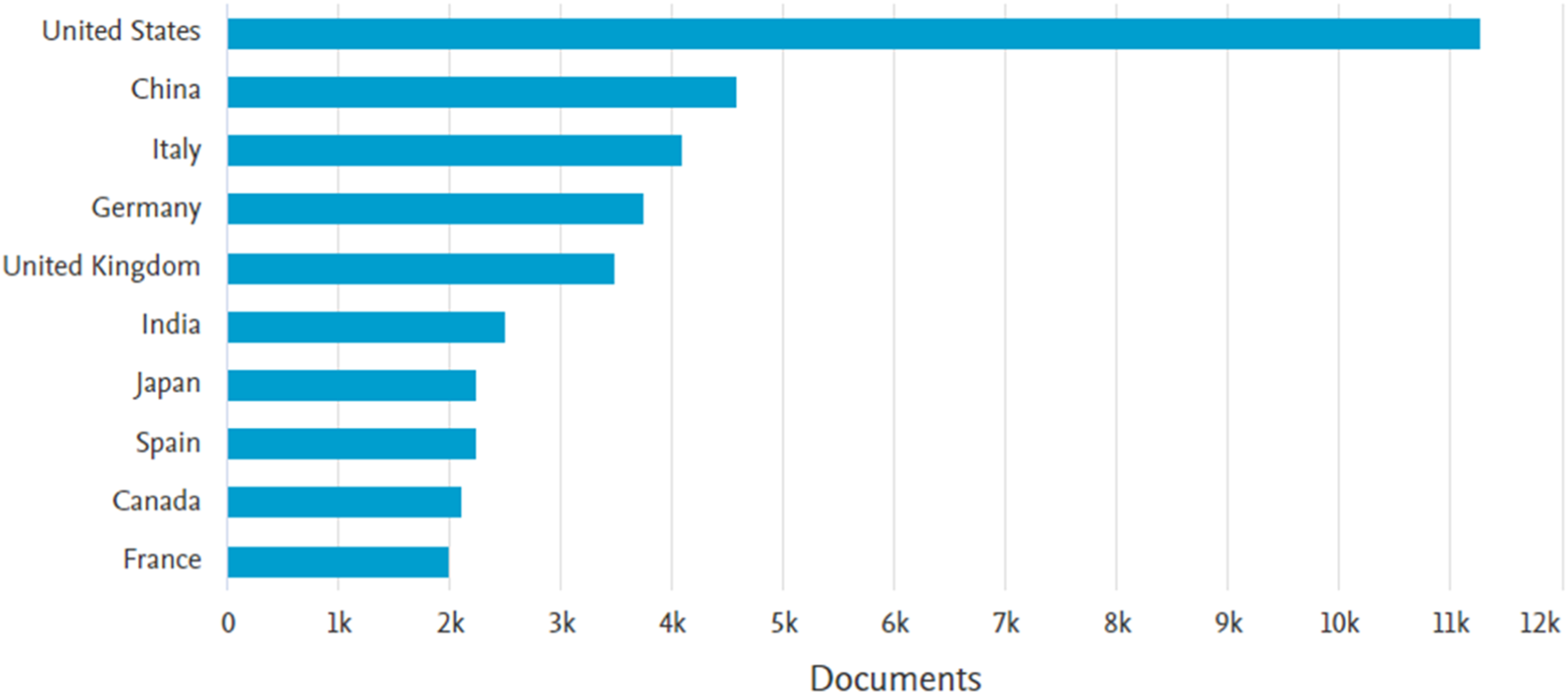
Data on psoriasis research by type
With 27,619 publications or more than 60% of all publications, the Article document type is the most prevalent. Reviews comprise roughly 20% of the collection, following closely behind with 9001 articles. There are other document kinds with much smaller numbers, such as books (57) and letters (4029), as shown in Figure 8. Less than 5% of the total is made up of other document kinds, which include notes, editorials, book chapters, conference papers, short surveys, and errata. The preponderance of articles and reviews indicates that the main formats for academic communication in this discipline are research findings and review papers. The comparatively low numbers for other document kinds may indicate a preference for publishing more condensed or narrowly focused research results. Dermatological literature dynamics: Unveiling trends and preferences in document types.
Data on psoriasis research by subject area
With more than 38,000 papers or about 60% of the total, the medical field dominates and has a sizable advantage. With more than 7400 documents, biochemistry, genetics, and molecular biology are closely behind. The remaining subjects, which range from Mathematics (171) to Immunology and Microbiology (5296), have far smaller numbers, as shown in Figure 9. In the middle are of fields that are closely related to this topic, such as computer science, chemistry, toxicology and pharmaceutics, biology, and chemical engineering. Notable presence is also seen in interdisciplinary subjects like Multidisciplinary and Agricultural and Biological Sciences. Medicine appears to be the primary field of research or application for the papers in this collection, as seen by its pronounced dominance. The existence of adjacent sciences immunology, genetics, and biochemistry highlight the need for immunology, genetics, and biochemistry, which highlights the need for medical research even more. The presence of disciplines like engineering and computer science suggests possible applications or cross-disciplinary partnerships. Analysis of publication trends across Subject Areas.
Most relevant data sources related to psoriasis research
Mapping dermatological knowledge: A comprehensive review of high-impact sources shaping the field.

Local impact of data sources
Assessing the impact factors of leading dermatological journals in global discourse.

These prestigious publications jointly provide the benchmark for exceptional dermatological research, encompassing various subjects such as psoriasis, eczema, and several other skin diseases. The incorporation of more journals in the visualization, each with notable impact factors, highlights the abundance and variety of material accessible, making a substantial contribution to the collective knowledge in the ever-evolving area of dermatology.
Corresponding author’s country
Figure 10 represents the worldwide research landscape, wherein the United States and China emerge as prominent powers, publishing an estimated 3000 documents each. The substantial results they produce establish their authority as the main catalysts of academic discussion in the illustrated field of study, emphasising their crucial functions as pioneering authorities. Italy, in line with its formidable competitors, has amassed a remarkable collection of approximately 1500 documents, highlighting its significant presence in the field of research. India, boasting a substantial collection of over a thousand papers, occupies the fourth position globally and contributes a vibrant element to the tapestry of international research. Prominent European nations, such as Germany, Japan, the United Kingdom, Spain, and France, have made noteworthy contributions contributing to a rich global collaboration fabric. This visual depiction exemplifies the expanding and dynamic nature of research partnerships, reinforcing the collective endeavors of countries spanning continents to propel the boundaries of understanding in this specific domain. Mapping the contributions of corresponding author by country.
Discussion
The study revealed significant trends between 2012 and 2023 in psoriasis. Over the years, there has been a steady increase in the number of published articles, which reached its peak between 2021 and 2023 with over 5000 articles. The increased growth results from the increased research efforts and progress in these industries. During the investigation, it was discovered that well-known journals disseminated cutting-edge discoveries in dermatology and immunology domains. Throughout the 11 years, the most active publishers were the Journal of the American Academy of Dermatology, the Journal of the European Academy of Dermatology and Venereology, and the British Journal of Dermatology. This underscores the significance of their role as the primary platforms for sharing research on immune responses, dermatological problems, and other topics. Frontiers in Immunology has increased in importance over the past few years. Feldman, Wu, Griffiths, Puig, and Reich K. were the most prolific writers in the analysis, producing over 250 articles. These numerous publications have dramatically enhanced the body of scientific knowledge. The study of publications by nation confirms that the United States leads the globe in research output, followed by China and other eminent European countries like Germany and Italy. The contribution of worldwide distribution shows the importance of immunology and dermatology on a global scale. Constant monitoring of global publication trends aids in tracking the changing terrain of international research initiatives. The bibliometric analysis provides an evidence-based perspective on the growth, primary sources, contributions, and geographic characteristics that characterize the current body of scholarly work. Keeping an eye on these metrics will always produce a data-driven understanding of the patterns and developments in these fields of study. This analysis uncovers critical patterns and distributions in the ever-changing worldwide landscape of psoriasis research during the last decade.
Conclusion
In this comprehensive analysis of psoriasis research, analysis of academic publications from 2012 to 2023 was done. The number of yearly publications has tripled over the past 10 years, indicating a strong desire to understand the complexity of psoriasis. Although the United States continues to dominate, there is a welcome diversification indicated by the rise in worldwide research. This study highlights the interdisciplinary aspects of psoriasis by revealing knowledge hubs and international interactions among authors and organisations. The knowledge gained here provides a blueprint for worldwide psoriasis initiatives, paving the way for focused financing and research goals. Continued monitoring and updated analysis to reflect the ever-changing field of immunology and dermatological developments is necessary. Illustrating research endeavours promotes global comprehension and the advancement of psoriasis treatments by highlighting opportunities for cooperative research and multidisciplinary teams. Clinicians can leverage this study for evidence-based practice and improved patient care. Periodic updates are essential to stay abreast of evolving information. In the subsequent research of psoriasis, the gaps in the genetic markers, environmental factors, and immunological studies should be cleared to optimize the concept of the targeted approach. Regarding the research gaps for future endeavors, there is a lack of follow-up data on environmental exposures, more elaborated analyses of immunological processes that affect treatment outcomes, and the amalgamation of machine learning into treatment algorithms. Psoriasis research can also be considered as an international issue that emphasizes the need for international global cooperation and data sharing. At the same time, the lack of such studies from developing countries is a crucial concern. Moreover, there is expected to be more of a focus on interprofessional collaboration to investigate the microbiome and other novel biomarkers, for example. General Utilities Weighted Quality of Life Scores and attention to the rights and wrongs of new treatment courses are needed for comprehensive and fair patient care.
The bibliometric analysis’s scope may have been masked due to the limitation of data to the Scopus database and the requirement for English publications. The study may have been limited to peer-reviewed publications by excluding other databases, which may have left out some publications in the field. The study may be biased because English publications may have excluded some seminal works in other languages. In future bibliometric research, it is suggested that multiple databases searched and those included in otherlanguages to increase the objectivity and generalization of the results.
Future perspectives
The study aimed to provide comprehensive bibliometric insights. However, the analysis was constrained by the characteristics of the underlying dataset. The inclusion of exclusively English-language publications was driven by pragmatics, but it could have resulted in the removal of potentially significant non-English contributions. Furthermore, however academically justified, reliance on the Scopus database alone raises the potential that relevant research indexed elsewhere may have escaped the current investigation. The significant patterns and distributions in the data analysis set are discovered, but the practical scope decisions still have limitations. The presence of publications in other linguistic and bibliographic domains should be widely acknowledged. The insights presented are ultimately limited by the constraints of the dataset rather than having perfect generalizability. In addition, the analysis incorporating several sources might enrich the data and enable more complex interpretations to emerge.
Footnotes
Acknowledgements
The authors acknowledge and extend their appreciation to the Researchers Supporting Project Number (RSPD2024R709), King Saud University, Riyadh, Saudi Arabia, for funding this study. The authors acknowledge and extend their appreciation to Chitkara University, Punjab, India for providing resources for completion of this research article.
Declaration of conflicting interests
The author(s) declared no potential conflicts of interest with respect to the research, authorship, and/or publication of this article.
Funding
The author(s) disclosed receipt of the following financial support for the research, authorship, and/or publication of this article: This research was funded by King Saud University, Riyadh, Saudi Arabia, Project Number (RSPD2024R709).
Author credit statement
Conceptualization: MC, MS and MD; Methodology: SG, AS and VS; Formal analysis: VS, MC; Investigation: SG and MD; Data curation: MC, MS; Writing—original draft preparation: SG, MC; Writing—review and editing: MD, VS and MS. Supervision: MS and VS; Funding acquisition: SFA and SMA. All authors have read and agreed to the published version of the manuscript.

Data availability statement
No data was used for the research described in the article.