



Abstract
Objective:
To assess trends of surgical intervention in adults with upper urinary tract stones in Israel.
Methods:
A retrospective cohort study utilizing administrative databases held at Clalit Health Services, to identify all adults (⩾18 years) who underwent their first surgical treatment for upper tract urolithiasis. Descriptive statistics were employed to summarize baseline patient demographics and surgical trends were analyzed using the Cochrane-Armitage test for trend.
Results:
Between 2003 and 2020, 36,624 adult patients were treated surgically for upper tract urinary stones. Mean age was 53.6 years (SD16.1). During the period investigated, the number of insured by Clalit Health Services increased by 25% and the total number of surgically treated stones increased by 98.7%. By type of procedure: Ureteroscopy (URS) increased by 351%, percutaneous nephrolithotripsy (PCNL) increased by 67%, shockwave lithotripsy (SWL) declined by 79%. The number of procedures per 100,000 population grew from to 37.5 in 2003 to 58.05 in 2022. The percentage increase in total number of surgical procedures was 103% and 90% in males and females, respectively.
Conclusions:
Our findings reveal significant increases in the total number of surgically treated stones over the investigated period. Notably, this increase far outpaced the growth in the number of individuals insured by Clalit Health Services. Further research and interventions are warranted to explore the underlying factors driving these trends and to develop targeted approaches for prevention, early detection, and minimally invasive treatment of upper urinary tract stones in Israel.
Introduction
Urolithiasis affects 10% of the global population worldwide. 1 Studies investigating prevalence of urolithiasis and stone related surgical trends, in different regions of the world, reported on rising numbers over the last decades2,3 In the United States, A study looking at surgical trends at Wahington University between the years 1990 and 1998, reported that URS reported that increased by 53%, PCNL’s remained stable while the number of SWL’s declined by 15%. 4 A Canadian study assessing trends in Ontario between the years 1991 and 2010 reported increased utilization of URS, increasing from 25% to 59%, whereas PCNL remained unchanged and SWL decreased from 69% to 34% of all procedures. 5 A similar study from Ontario, conducted between 2022 and 2018 noted URS increasing by 158%, PCNL utilization by 185%, while SWL declining by 31.4%. 6 In a German study, conducted between the years 2005 and 2016, they reported a 600% increase in the utilization of URS, 83% in the utilization of PCNL, while SWL utilization decreased by 58%. 7 In England, between 2009 and 2015, there was a 103% increase in the number of URS’s, while SWL remained stable. 8
Israel may be considered unique regarding the epidemiology of nephrolithiasis. The Israeli climate during the warmer months results in much of the country experiencing hot and dry desert weather, while the rest of the country along the Mediterranean coast is hot and humid. Moreover, the Israeli population is very diverse, bringing together different ethnicities from different geographical areas.
To best of our knowledge, we are the first to assess stone related surgical trends in Israel. We felt it was important to investigate stone related surgical trends in Israel and to compare them to different areas of the world. The goals of our study were to assess whether the total number of surgical procedures was increasing relative to the number of insured at Clalit Health Services and to analyze trends in the types of surgical modalities utilized to treat stones.
Patients and methods
Following institutional review board approval, we performed a retrospective population-based cohort study, including all adult patients (⩾18 years of age), insured by Clalit Health Services, who underwent surgical treatment for urolithiasis in Israel between January 1st 2003 and December 31st 2020. Eligible patients were categorized by the first surgical procedures they underwent in the years investigated into three groups, based on surgical modality: URS, PCNL and SWL. Patient characteristics were captured and included: age, gender and BMI.
Statistical analysis
The data is presented as means and standard deviations (SD). To assess the linear trend in the overall number of cases per year, a linear regression model was employed. Furthermore, the Cochrane-Armitage test for trend was used to evaluate trends concerning patient sex and surgical intervention over the study period.
Results
In the years investigated, 36,624 adult patients underwent their first stone related surgical procedure. Preoperative data demographics are given in Table 1. The male: female ratio was 3:1. Mean age was 53.6 years (SD16.1). The mean body mass index (BMI) was 28.9 (SD 5.3). The mean BMI of patients undergoing stone related surgery decreased by 12%, from 32 to 28 (Figure 1). The number of insured by Clalit Health Services in the years investigated grew by 28.4%, from 3,723,893 to 4,783,628. The number of surgical procedures in those years grew by 98.7%, from 1397 to 2777 cases per year, resulting in a yearly rise of 4%. The number of procedures per 100,000 population increased from to 37.5 in 2003 to 58.05 in 2022. The percentage increase in total number of surgical procedures was 103% and 90% in males and females, respectively (Figure 2). There was a steady increase in the number of URS’s performed, rising by 351% over the study duration, from 540 to 2440 cases, corresponding to a 9.6% annual increase. PCNL’s increased at an average rate of 4.3%, rising from 111 to 181 cases per year. Conversely, SWL declined at an average yearly rate of 7%, steadily decreasing from 746 to 156 cases per year (Figure 3).
Demographics of patients undergoing surgical treatment for urolithiasis between the years 2003 and 2020.
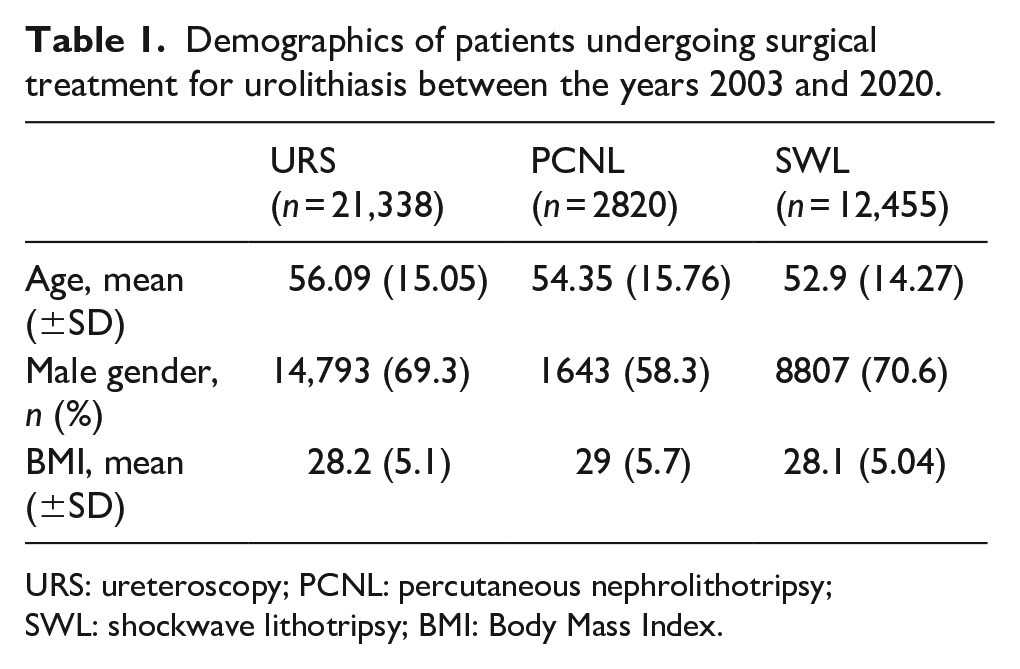
URS: ureteroscopy; PCNL: percutaneous nephrolithotripsy; SWL: shockwave lithotripsy; BMI: Body Mass Index.
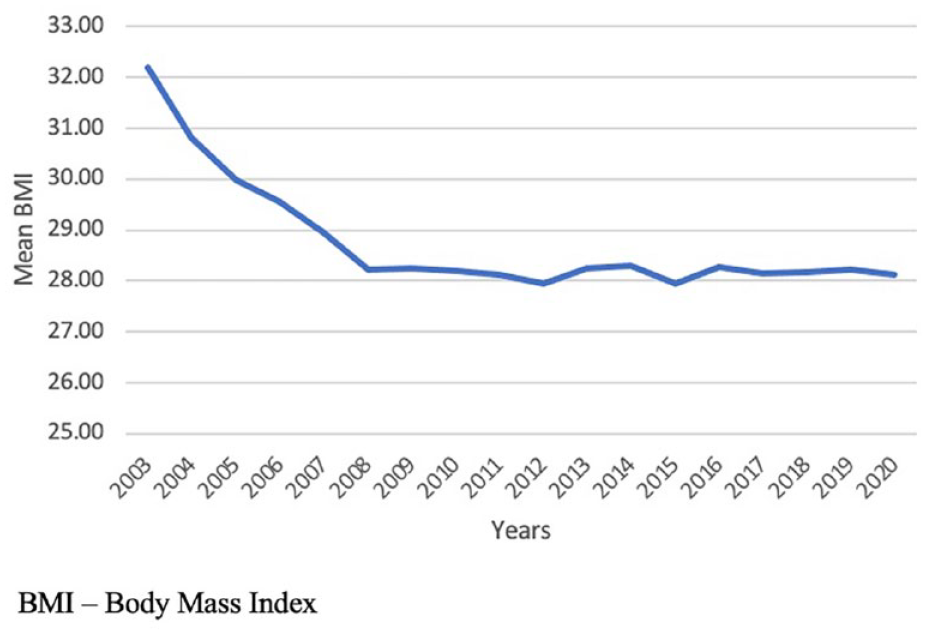
Average BMI in patients undergoing stone related surgical procedures between 2003 and 2020.
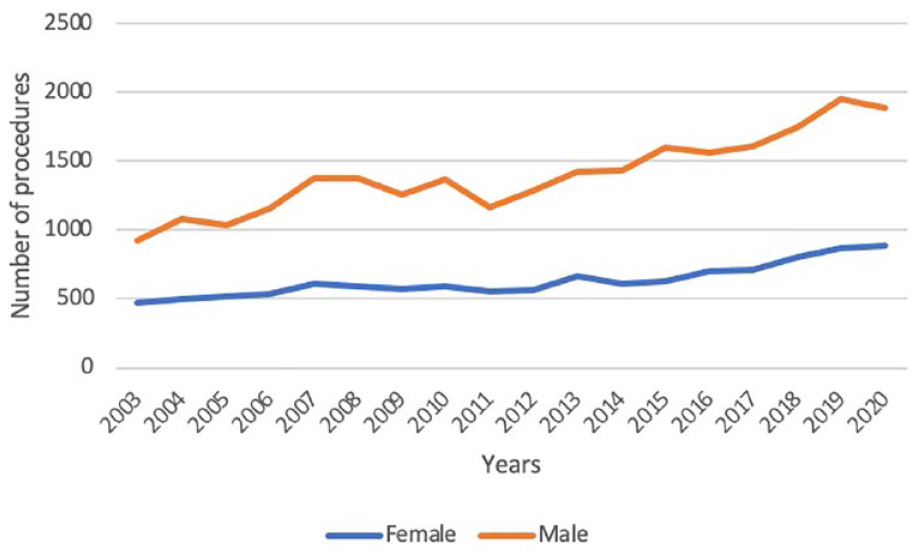
Total number of stone related surgical procedures in both genders between the years 2003 and 2020.
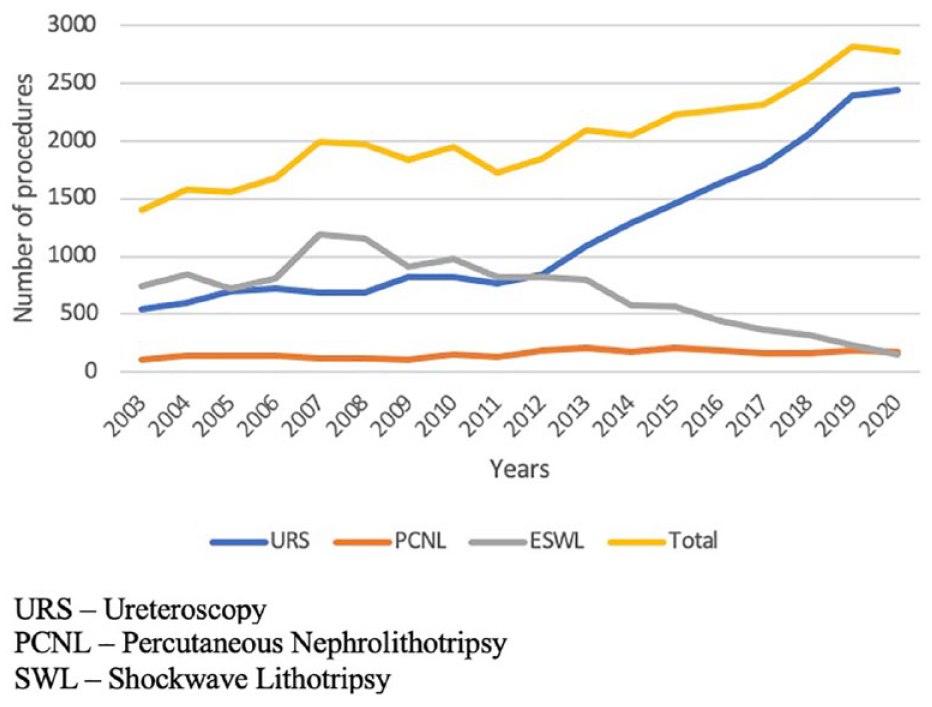
Surgical intervention rate with URS, PCNL, and SWL between 2003 and 2022.
Discussion
The epidemiology of urolithiasis is correlated with geographic, climate and socioeconomic factors. Gender, age, race and diet also have an effect on the incidence and prevalence of the disease. The rising global prevalence of urolithiasis has subsequently resulted in an increased incidence of stone related surgical procedures.9 –11 Multiple studies have analyzed stone related surgical trends in different areas of the world. These studies observed a steady rise in stone related surgery increased utilization of URS, varying utilization of PCNL and declining utilization of SWL. 5 In our study we assessed surgical trends in patients insured by Clalit Health Services, which is the largest Health Maintenance Organization (HMO) in Israel. In our study, we observed a steady rise in stone related surgical procedures, resulting in an average yearly increase of 4%. The increase in surgical was not proportional to the number of adults insured. The types of surgical techniques utilized were similar to reported global trends, with significantly increased utilization of URS, a steady rise in PCNL and a significant decrease in the utilization of SWL.
Globally, stone related surgical procedures have increased over the last three decades.2,3,10 The exact reasons for the rise remain unclear, but may be associated with the growth of the population, improved diagnostics and access to health care, climate change, obesity and diet. 6 In our study, we report that the surgical intervention rate grew from 37.5 per 100,000 population in 2003, up to 58.05 in 2022. The number of stone related surgical procedures grew by 98.7%, while the number of insured during those years grew by only 28.4%.
Historically, male predominance was associated with urolithiasis. However, recent studies have reported a narrowing in the gender gap. 12 In our study we did not find a narrowing of the gender gap, with stability in male predominance in stone related surgery (Figure 2). This finding is in line with previously hypothesized stone protective effect of estrogen in the kidney. 13
There is a growing body of evidence suggesting a significant association between rising BMI and an increased prevalence of urolithiasis, or the formation of urinary tract stones. 14 The rise in BMI levels observed globally in recent years has raised concerns regarding the potential impact on urolithiasis rates. As obesity rates continue to climb, it is expected that the prevalence of urolithiasis will follow suit. In our study, we did find that the majority of patients were overweight, with a mean BMI of 28.9, but were surprised to find a decrease of 12 in the mean BMI of the population undergoing stone related surgery (Figure 1). We hypothesize that this may be related to bariatric surgery, which on the one hand decreases the BMI, but on the other hand is a risk factor for urolithiasis.
The utilization of URS as the gold standard in the management of urolithiasis has been demonstrated in multiple studies. Abedi et al. performed a systemic review of trends in urolithiasis therapeutic interventions over a 20 year period, between the years 2000 and 2020, and reported a 133% increase in the utilization of URS. 15 In the United States (US), URS was reported to increase annually by 15%. 16 In Ontario, Canada, the utilization of URS increased significantly from 25% to 59% of all procedures between the years 1991-2010. 5 In our study, we report a 351% increase in 17-year period. The significant increase in Israel compared to other regions of the world may be explained by the accessibility and free access of the public health care system.
The prevalence of PCNL for the treatment of kidney stones has been steadily increasing in recent years. 5 PCNL has gained popularity due to its effectiveness in managing large, complex, and multiple kidney stones. One of the key advantages of PCNL is its high stone free rate, which are often superior to other treatment modalities, especially with large renal calculi. The procedure has also benefited from advancements in technology, such as the availability of smaller instrumentation and more powerful lasers. In our study, similar to other geographical areas, the utilization of PCNL increased. We report an average annual increase rate of 4.3%, rising from 111 to 181 cases per year.
In recent years, there has been a noticeable decline in the utilization of SWL compared to URS and PCNL for the treatment of urolithiasis. 17 Several factors have contributed to this downfall. Firstly, SWL is limited by stone size and composition, as it is most effective for small and less dense stones. Secondly, SWL is a non-invasive procedure, but it may require multiple sessions for stone clearance, leading to prolonged treatment durations and potential patient discomfort. Furthermore, advancements in technology have improved the safety and outcomes of URS and PCNL, making them increasingly favored by urologists. Similar to other regions of the world, 16 in our study we report a significant decline in the utilization of SWL from the year 2012 onward. SWL usage decreased at an average yearly rate of 7%, from 746 in 2003 to 156 cases per year in 2020.
Our study assessed stone-related surgical trends in Israel and compared them to global patterns. We observed a steady increase in the number of stone-related surgical procedures, with a higher rate of growth than the increase in the insured population. The types of surgical techniques utilized mirrored global trends, with a significant increase in URS, a steady rise in PCNL, and a significant decrease in SWL. These findings highlight the growing burden of upper urinary tract stones and the changing landscape of surgical interventions in Israel. The rise in surgical procedures underscores the increasing demand for surgical management of this condition. Overall, these results emphasize the need for effective strategies to address the rising prevalence of upper urinary tract stones and to optimize the allocation of healthcare resources to meet the growing demand for surgical interventions. There are several limitations to our study. First, the retrospective study design with all its inherent biases. Second, the study focused only on single health care provider, patients insured by Clalit Health Services, which may limit the generalizability of the findings to the entire population of Israel, as healthcare utilization and trends may vary among different healthcare providers. Third, the lack of detailed patient information. The study only captured limited patient baseline characteristics, including age, gender, and BMI. Other important factors such as race, comorbidities, and stone characteristics were not included in the analysis, which could have provided further insights into the trends and outcomes of stone-related surgical procedures. Lastly, the study did not explore or analyze external factors such as socioeconomic status, cultural and dietary factors, which could have influenced the prevalence of urolithiasis and the choice of surgical modalities. These factors may vary among different regions and could have an impact on the observed trends. The advantages of this study include large sample size and long study duration, which allows for the examination of trends over time and provides a broader perspective on the changes in stone-related surgical procedures.
Conclusions
Our study assessed stone-related surgical trends in Israel and compared them to global patterns. We observed a steady increase in the number of stone-related surgical procedures, with a higher rate of growth than the increase in the insured population. The types of surgical techniques utilized mirrored global trends, with a significant increase in URS, a steady rise in PCNL, and a significant decrease in SWL. These findings highlight the shifting landscape of stone management toward more invasive procedures that offer greater efficacy and versatility. Factors such as improved access to healthcare, advancements in technology, and the rising prevalence of urolithiasis likely contribute to these trends. Our study provides valuable insights into the evolving field of stone-related surgery in Israel and emphasizes the need for ongoing monitoring and evaluation to optimize patient outcomes in the management of urolithiasis.
Footnotes
Author contributions
D. Golomb: Conception and design, Data interpretation, Drafting manuscript, Critical revision of manuscript. A. Cooper: Drafting manuscript, Critical revision of manuscript. O. Raz: Drafting manuscript, Critical revision of manuscript.
Declaration of conflicting interests
The author(s) declared no potential conflicts of interest with respect to the research, authorship, and/or publication of this article.
Funding
The author(s) received no financial support for the research, authorship, and/or publication of this article.
