



Abstract
Background:
Decannulation from veno-arterial extracorporeal membrane oxygenation (VA-ECMO) is frequently associated with the clinical onset of systemic inflammatory response syndrome (SIRS). However, the cytokine profile underlying this response remains unclear. This study aimed to determine whether pro-inflammatory cytokine levels change in patients with SIRS following VA-ECMO decannulation.
Methods:
We conducted a prospective observational pre-post study at a single tertiary academic center. Thirty consecutive adult patients who developed clinical SIRS within 24 h of successful VA-ECMO decannulation were included. Plasma concentrations of interleukin (IL)-1α, IL-1β, IL-6, and tumor necrosis factor-alpha (TNF-α) were measured at four time points: 1 h before, and 1, 12, and 24 h after decannulation. Repeated measures analysis of variance (ANOVA) was used to evaluate temporal changes in cytokine levels.
Results:
Of 110 screened VA-ECMO patients, 30 (27.3%) met the inclusion criteria. The mean age was 48.8 ± 10.9 years. Baseline cytokine levels prior to decannulation were as follows: IL-1α 6.68 ± 10.99 pg/mL, IL-1β 0.28 ± 0.21 pg/mL, IL-6 18.21 ± 55.76 pg/mL, and TNF-α 5.62 ± 5.89 pg/mL. No significant changes were observed in IL-1α, IL-1β, or IL-6 levels across all time points. TNF-α showed a statistically significant decline at 24 h post-decannulation (4.15 ± 4.65 pg/mL) compared to baseline (p = 0.044).
Conclusions:
In patients developing SIRS following VA-ECMO decannulation, plasma levels of key pro-inflammatory cytokines remained largely unchanged over a 24-h period. These findings suggest that the clinical manifestations of SIRS in this context may not be directly driven by traditional pro-inflammatory cytokine surges, warranting further investigation into alternative inflammatory mediators or mechanisms.
Registered in clinical trials registry:
NCT04678518, MRC-01-20-155.
Patient characteristics and study outcomes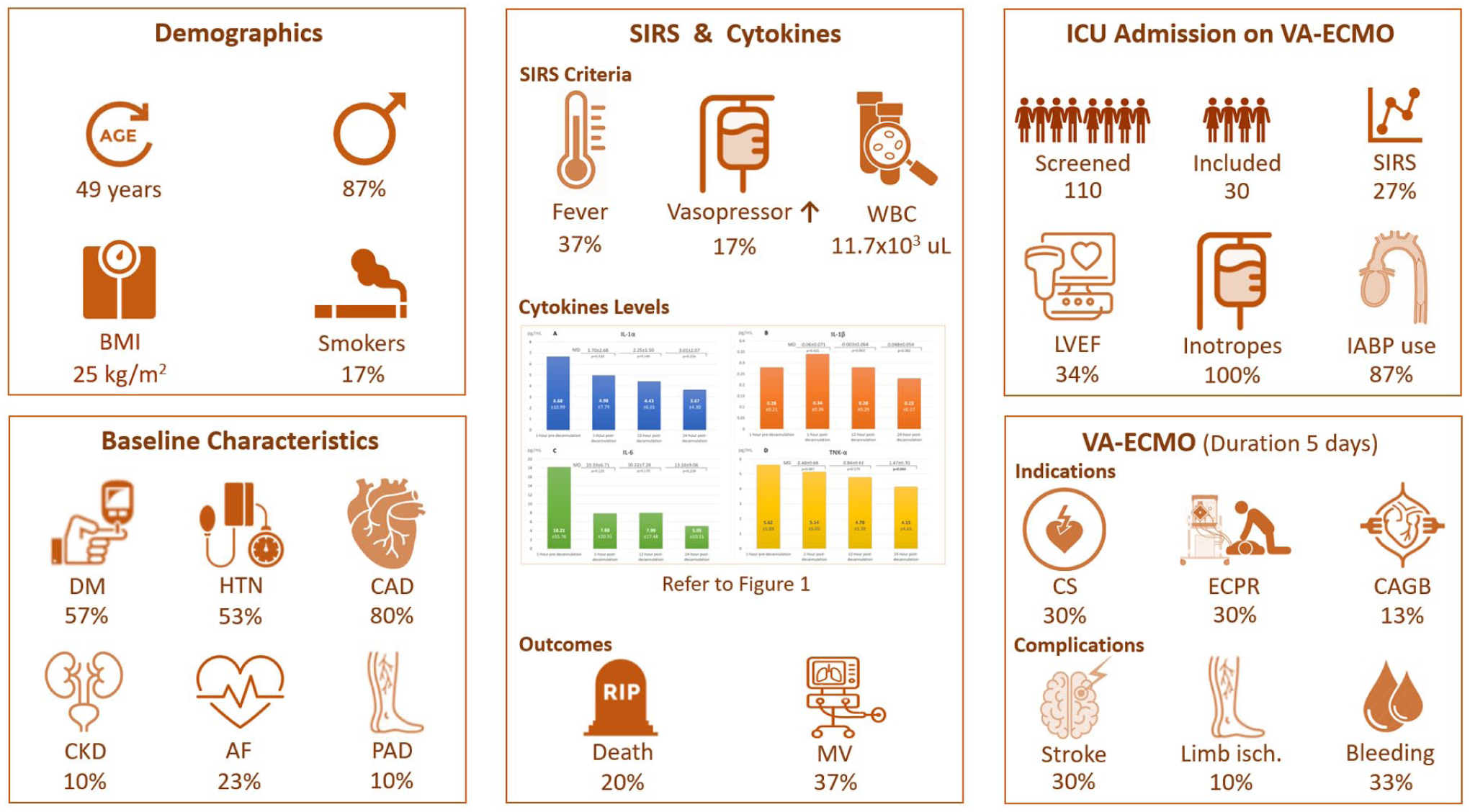
Get full access to this article
View all access options for this article.