



Abstract
Background:
In 2016, a Peace Agreement, explicitly addressing the right to food, was signed, marking the end of more than 50 years of armed conflict and the longest war in the Americas. The expectation was that the years to follow would be marked by rapid social and political change, with the potential to improve food security.
Objectives:
(i) Ascertain changes in the prevalence of food insecurity in Colombia between 2016 and 2019; (ii) examine which population subgroups (eg, urban women, rural women, urban men, and rural men) were most vulnerable; and (iii) determine significant individual-level factors predicting food insecurity in these 2 years.
Methods:
This study used the Gallup World Poll 2016 and 2019 nationally representative samples of Colombian adults aged 15 and older for the analyses (n ≈ 1000 per year). Food insecurity was measured using the Food Insecurity Experience Scale. Descriptive statistics and logistic regression analyses were conducted using IBM SPSS Complex Samples (version 26).
Results:
Food insecurity in Colombia increased by 7 percentage points between 2016 and 2019 (from 33% to 40%); women living in rural areas in 2019 reported the highest prevalence (50%). Results from logistic analysis confirm low income, unemployment, and lack of social support were significant predictors of food insecurity in both years. In 2019, gender, low education, and lack of autonomy were also significant predictors. Further research on the determinants of food insecurity is necessary to inform Colombian policies and programs that address food insecurity. The urgency to act is more apparent than ever, given the country’s worsening food security profile.
Keywords
Introduction
Food security has been in the limelight with regard to international development for decades. The 1996 World Food Summit Plan of Action defined food security as existing “when all people, at all times, have access to sufficient, safe, nutritious food to maintain a healthy and active life.” 1 From 2000 to 2015, the world witnessed a prolonged decline in the overall number of hungry people; however, recent estimates indicate that for the first time in 15 years, this number is on the rise. In 2016, an estimated 815 million people worldwide were chronically undernourished, an increase from 777 million in 2015. 2 Although too premature to quantify the full impact of the COVID-19 pandemic, and the economic recession it has triggered, on food security, it is estimated that in 2020, between 720 and 811 million people in the world faced hunger (up to 161 million more than in 2019) and roughly one-third (2.37 billion) lacked access to adequate food, representing an increase of almost 320 million people from the previous year. 3 Effectively addressing food insecurity through better-targeted and designed policies and interventions requires a comprehensive understanding of diverse causes and consequences of this phenomenon in different context. 4
Within the Colombia context, food insecurity is a longstanding issue. The most recent National Survey of the Nutritional Situation in Colombia (ENSIN for its Spanish acronym) indicates that the prevalence of food insecurity in 2015 was 54%, an increase of 11% since 2010 (43%). When broken down by severity, in 2015, 32% of the population was mildly food insecure, 14% were moderately, and 8% were severely, while in 2010, the distribution was 28%, 12%, and 3%, respectively. 5
In Colombia, armed conflict has contributed to the country’s sustained food insecurity vulnerability. Conflict and food insecurity go hand-in-hand, and the 2017 “State of Food Insecurity and Nutrition in the World” report stated that armed conflict is the primary source of food insecurity in Colombia. 2 Colombians have endured over 50 years of war, the most prolonged armed conflict in the Americas, 6 causing continued social instability, exclusion, and inequalities. More than 220 000 deaths can be attributed to this conflict, and more than 10% of the population, roughly 6 million people, have been displaced. This group is the second largest displaced population in the world, followed only by Syrians. 7 Most of the armed conflict in Colombia has occurred in rural areas, disproportionally affecting women, especially in terms of displacement, with women making up nearly 60% of the internally displaced population. 8 Victims of conflict are at an increased risk of experiencing food insecurity. 8 This armed conflict has impacted rural women’s development and opportunities, influencing where they reside, how they travel, which crops they grow, which foods they eat, their livelihood opportunities, and their perceived security. These constraints have the potential to further impede Colombian women’s food security, reinforcing the importance of understanding gender differences in relation to food security within the Colombian context. 9
Although conflict is deep-rooted in Colombian history, in 2016, the government signed a Peace Agreement with its largest rebel group, the Revolutionary Armed Forces of Colombia, marking not only the end of a 52-year-old war but also promising a new era. The Peace Agreement is unique in that it speaks to uphold the right to food and adequate nutrition. Specifically, the agreement states: In the area of food and nutrition, the Agreement to End the Armed Conflict, the Comprehensive Rural Reform, aims to ensure that the entire rural and urban population in Colombia has sufficient access to and availability of the foodstuffs they need for proper nutrition, in terms of opportunity, quantity, quality and price, especially in the case of boys and girls, pregnant or breast-feeding women, and the elderly, prioritising the production of food and the generation of income.
10
Acknowledging this gap, this study aims to: (i) ascertain changes in the prevalence of food insecurity in Colombia between 2016 and 2019; (ii) examine which population subgroups (eg, urban women, rural women, urban men, and rural men) were most vulnerable; and (iii) determine which individual-level characteristics were associated with food insecurity in these 2 years. The timeliness of the data used in this study offers a novel contribution to the literature on food insecurity in Colombia. By using the Gallup World Poll’s (GWP) national representative samples collected just before the signing of the Peace Agreement (2016) and the most recent public-use data available (2019), this study can serve as a baseline reference point of the status of food security in Colombia at the initial stage of the peace process and allows for the evaluation of progress (or lack thereof) made since the signing of the agreement.
Factors Contributing to Food Insecurity
The factors contributing to food insecurity are extensive, spanning across the 4 main dimensions of food security: accessibility, access, utilization, and stability. Therefore, it is important to assess the overall prevalence of food security, and equally necessary to understand which particular factors are associated with food security among the Colombian population, as these insights are critical for policymakers and practitioners to provide appropriate interventions to overcome food insecurity issues in the country. Within the scope of this study, we focus on the access dimension of food security.
Gender and area of residence
Gender and area of residence are common factors affecting food insecurity. Around the world, men and women experience varying vulnerabilities to food insecurity. 11 Likewise, rural vulnerability to food insecurity is well-known: more than two-thirds of the world’s food insecure population consists of rural subsistence farmers and small-farm wage laborers from low-income countries. 12,13 Women in developing countries, especially rural women, are among the most vulnerable populations 14 -17 ; this trend holds in Latin America 18 and national statistics confirm that vulnerability to food insecurity in Colombia is not equally distributed. Estimates highlight striking disparities across population subgroups, including women and men and urban and rural resident. Specifically, results show female-headed households experienced more food insecurity than male-headed households (47% vs 40%, respectively); and rural areas marked by more prevalent food insecurity than urban areas (58% vs 38%, respectively). 19
Therefore, when it comes to food security analysis, women, particularly those from vulnerable groups, warrant special consideration for several reasons. Firstly, women contribute extensively to food production and preparation. They also tend to bear the societal roles of child-bearers and caregivers. At the same time, they are disproportionately prone to poor social and economic status, and have limited educational attainment, employment opportunities, and bargaining power, making them, in turn, more susceptible to experiencing food insecurity. 11,20 Such trends are witnessed in Colombia, for instance, 42% of rural women-led households live in poverty and, of this population segment, 10% live in extreme poverty; these figures are almost twice the national average. 21
Further, the higher prevalence of food insecurity among women may be partly due to the fact that during food shortages, mothers often sacrifice their own food to protect the food security of their children. 14,22,23 This pattern has been observed in Colombia, particularly in rural areas, where in 58% of households, someone in the family, usually the mother, goes to bed every night without eating (compared to 35% of urban households), 24 in many situations, the intra-household food distribution, especially the allocation of nutrient-dense food such as meat, tends to favor men. 25,26 This pattern, combined with the fact that women have greater micronutrient needs than men, puts women at a heightened risk of micronutrient deficiencies. 26 These negative nutrition outcomes can have far-reaching consequences, placing both themselves and their children at risk of a wide range of detrimental health outcomes. 27 -29 Investing in women has been shown to be an effective strategy for improving food security. In fact, between 1970 and 1995, estimates show that 55% of the improvements in tackling hunger in developing countries were due to the advancement of women’s conditions within society. 30
Other sociodemographic factors
Other sociodemographic factors are associated with food insecurity such as age, education, employment, and marital status. 18 However, income and assets, as proxies for poverty, are perhaps the most prominent determinant of food insecurity. 31 -33 In Colombia, systemic economic inequality and poverty surely contribute to food insecurity vulnerability. Colombia has experienced significant economic growth in recent decades, yet measures of income inequality, such as the Gini index, have continued an upward trend, reaching 52.7 in 2019. 34 This places Colombia as one of the countries with the greatest income inequalities globally, second only to Honduras in the region. 35 Furthermore, Colombia, while classified as an upper-middle-income country, 36 continues to hold relatively high poverty rates, with approximately 28% of the population living in poverty. 37
Psychosocial factors
Beyond the poverty-related aspects of food insecurity, which to-date have been the primary focus of the literature, there is also a psychosocial component to the phenomenon of food security. Growing evidence support the relationship between food security and less tangible psychosocial factors such as autonomy and social support. 18,30,38 -45 Autonomy, broadly defined as one’s ability to control or influence choices, is often considered an essential individual capability that may impact food security through various mechanisms related to decision-making power on food choice, expenditures, and allocation. 46 Moreover, although relatively understudied, social support is associated with improved food security. 38,40,44 Indeed, social support may influence food security through various mechanisms. For example, social support may provide resources (eg, money, food assistance/donations, culinary assistance) which can help buffer against food insecurity, this is often referred to as “instrumental support.” 40,41 Being connected to supportive social network may also influence the ability to acquire an adequate diet (eg, logistic support to acquire food, knowledge sharing, facilitating employment opportunities, and perception of having a social network to count on, which may reduce anxiety and stress about future food shortages). 38 On the other hand, individuals’ efforts to cope with chronic food insecurity and minimize food deprivation may erode and exhaust their social support networks.
This study contextualizes the food insecure population in Colombia, by ascertaining recent trends in the prevalence of food insecurity among adults in Colombia and examining individual-level characteristics predicting food insecurity.
Methods
Data: The GWP
This study used the 2016 and 2019 survey waves of the GWP (note 1). The GWP uses a multistage clustered sample design to draw a probability-based, nationally representative sample of the adult population age 15 and older in Colombia for each survey year (n ≈ 1000/year) (note 2). Observations with missing food insecurity data were omitted from the analyses. The final 2-year pooled sample used for the analyses includes 1975 respondents (2016, n = 988; 2019, n = 987).
Dependent Variables
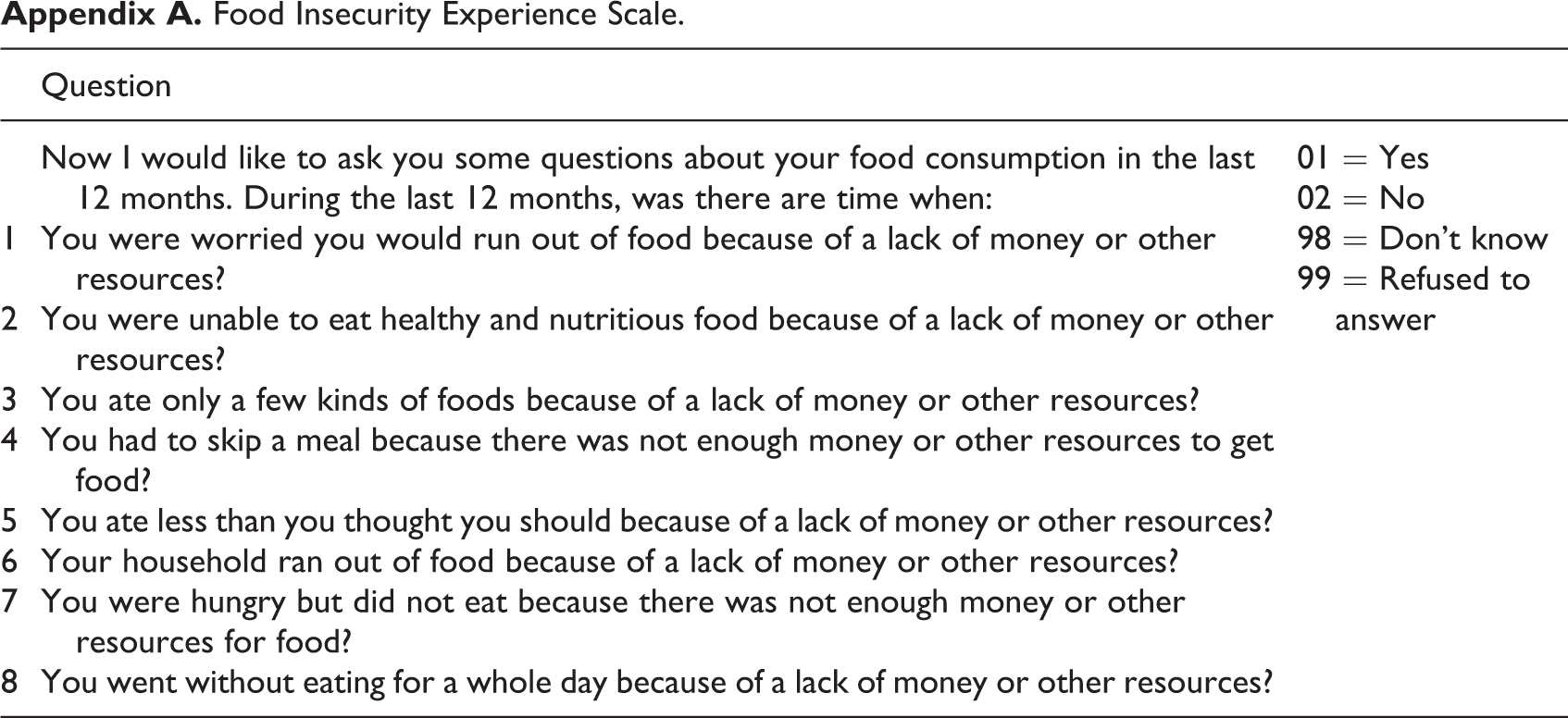
The study’s dependent variable is food insecurity; measured using the validated 8-question Food Insecurity Experience Scale (FIES), which assessed experiences at the individual level in the last 12 months (note 3). The FIES specifically examines the food access dimension of food security, capturing gaps in food access due to lack of money or other resources across a continuum of experience starting from mild food insecurity (uncertainty regarding ability to obtain food, compromising on food quality) to moderate (reducing food quantities, skipping meals) to severe food insecurity (experiencing hunger; see Appendix A for a complete list of questions). Dichotomous responses, where “yes” coded as 1 and “no” coded as 0, were summed to quantify the personal experience of food insecurity. 47 Individuals were classified into levels of food insecurity status, classified as having moderate if FIES raw score equals 4 to 6, or severe food insecurity if FIES score equals 7 to 8 (note 4). In the descriptive analyses, we report the levels of food insecurity status. In the bivariate and logistic regression analyses, for ease of interpretation, we recoded food insecurity into a binary variable so that 1 equals moderate or severe food insecurity and 0 equals food secure. Food secure is used as the reference category in all analyses. In addition to experiencing a lack of access to a diverse and nutritious diets, individuals experiencing moderate and severe food insecurity face situations such as running out of food, skipping meals, and hunger, all due to the lack of money or other resources to access food.
Predictor Variables: Individual-Level Characteristics
The set of predictor variables consisted of individual-level characteristics including respondent’s gender, age, area of residence, education, marital status, employment, household income, autonomy, and social support. These variables were included in this study based on their theoretical and empirical importance in the literature as determinants of food insecurity. All variables were included in the analyses as dichotomous variables, except for age and income, added as continuous variables. Gender was categorized into man (coded as 1) or woman (coded as 0). The age variable measured the age of respondent (in years) at the time of interviewed was included as a continuous variable. Area of residence was categorized into urban (coded as 1) or rural (coded as 0). Education level was assessed using the following question: What is your highest completed level of education? Responses were classified as secondary or higher (coded as 1) for those who had some secondary education or more and primary or lower (coded as 0) for those who had primary education or less. Employment was categorized as employed (coded as 1) if the respondent indicated working full or part-time; while those who responded as unemployed, homemaker, full-time student, retired or disabled were categorized as not part of the labor force (coded as 0). Marital status was classified as married or cohabitating, coded as 1, if respondent indicated being married or living with a partner, while those who reported being single, divorced, or widowed were coded as 0. Income was included in analyses as a continuous variable of the log of the household’s per capita income. Respondents were asked to report their monthly household income before taxes, including income from wages, salaries, remittances from family members, or any other source. Gallup World Poll generated a household income variable by converting the total sum of all income reported in local currency into international dollars, calculated using the World Bank’s individual consumption Purchasing Power Parity conversion factor. According to the World Bank the “purchasing power parity conversion factor is the number of units of a country’s currency required to buy the same amounts of goods and services in the domestic market as U.S. dollar would buy in the United States. This conversion factor is for private consumption (i.e., household final consumption expenditure). 48 The GWP then divides by the total number of individuals living in the household, generating the household per capita income. For the analyses, based on linearity assessments, the log transformed household per capita income variable was used. Autonomy, measured using a proxy variable, was a dichotomous variable created from responses to the question asking whether respondents were satisfied or dissatisfied with their freedom to choose what to do with their lives. Those who answered satisfied were coded as 1 to equal autonomy; while those who were not satisfied were coded as 0 to equal poor autonomy. Social support was similarly measured using a proxy variable that assessed whether respondents had people to count on during times of need. The dichotomous variable was created from responses to the question asking: if you were in trouble, do you have relatives or friends you can count on to help you whenever you need them, or not? Those who answered yes were coded as 1 to equal social support and those who answered no were coded as 0 to equal no social support. For all dichotomous predictor variables, during analyses the reference category was set to 1.
Analytic Strategy
Because the GWP surveys uses a multistage cluster sampling design, we cannot overlook cluster effects as these may render invalid many traditional statistical analysis techniques. For instance, failing to account of the cluster design may lead to underestimating the standard errors of the coefficient, in turn resulting an overestimation of the statistical significance. Further, due to units within the cluster being more homogenous than units selected by a simple random sample, the assumption that observations are independent and identically distributed is violated. 49 Therefore, all analyses were conducted using SPSS Complex Samples to incorporate the GWP complex sample design into our analytic strategy and weighted estimates are presented.
The data were analyzed separately by year: 2016 and 2019. We conducted initial descriptive analyses for all predictor variables; this was done for the complete sample and disaggregated respondents’ food security status. The second analytical step was to conduct an initial designed-based bivariate analysis to assess the potential predictors of food insecurity and determine which should be included in the multivariate logistic models. The significance of bivariate associations between food insecurity and categorical predictor variables were assessed by calculating the design-adjusted Rao–Scott F-test statistic. For continuous predictor variables, unadjusted linear regressions were conducted for the bivariate analyses. Finally, once the final multivariate logistic model was specified, we conducted regression analyses to estimate the predicting effects of individual-level characteristics on the probability of being food insecure.
Results
Sample Characteristics
Table 1 presents the characteristics of sample including food insecurity status by survey year. Descriptive statistics assessing the proportion of women and men experiencing food insecurity show an unequal gender distribution. Both in 2016 and 2019, women reported higher proportion of food insecurity, compared to their male counterparts. Similarity, rural areas had higher prevalence rates of food insecurity compared to urban areas in both survey years. Results also show adults who experienced food insecurity had less years of schooling, were less likely to be part of the labor force, had lower income, were less likely to claim being autonomous, and had less social support compared to food-secure individuals.
Characteristics of the Sample for Each Survey Year by Food Insecurity Status (%).a,b
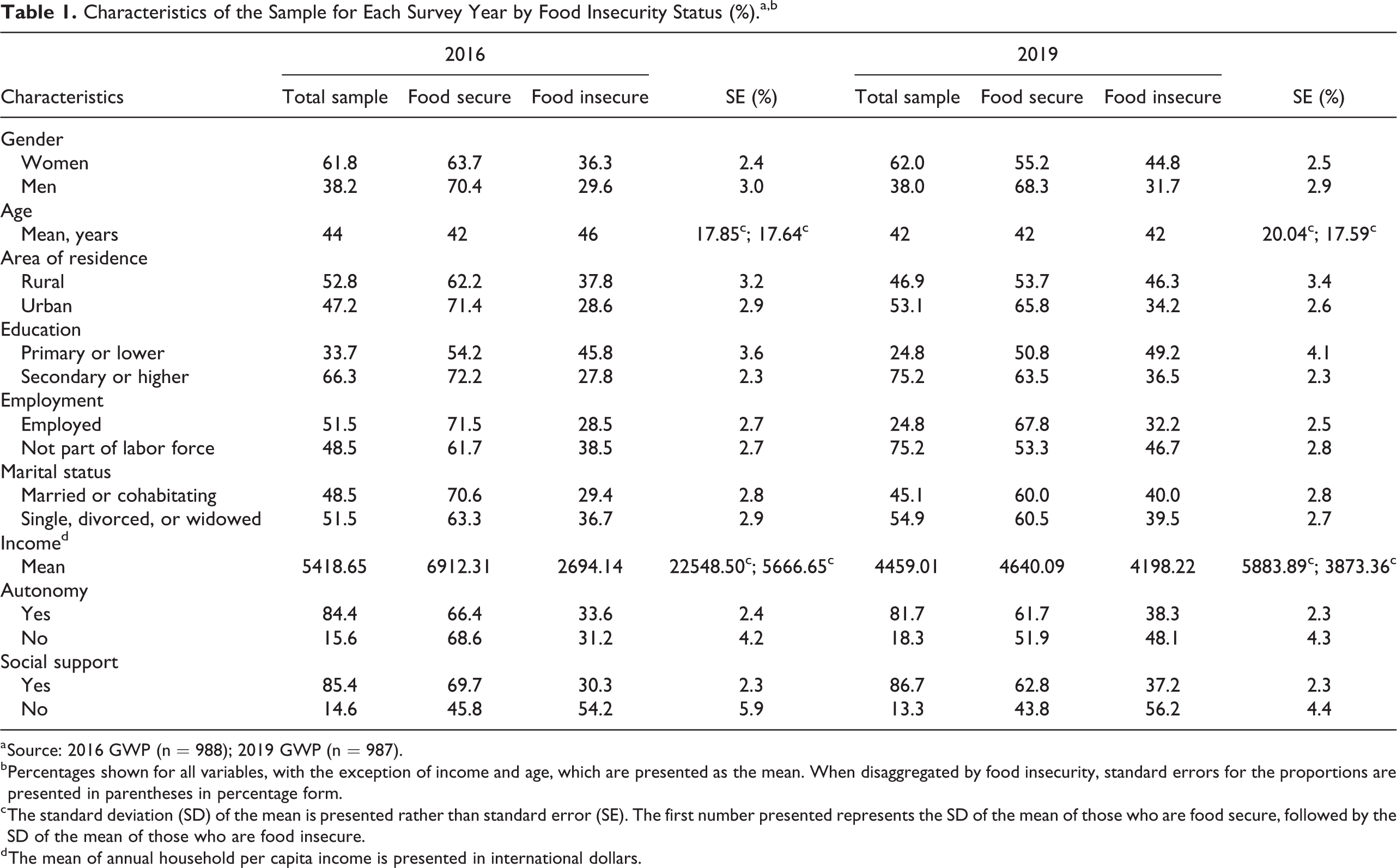
a Source: 2016 GWP (n = 988); 2019 GWP (n = 987).
b Percentages shown for all variables, with the exception of income and age, which are presented as the mean. When disaggregated by food insecurity, standard errors for the proportions are presented in parentheses in percentage form.
c The standard deviation (SD) of the mean is presented rather than standard error (SE). The first number presented represents the SD of the mean of those who are food secure, followed by the SD of the mean of those who are food insecure.
d The mean of annual household per capita income is presented in international dollars.
Prevalence of Food Insecurity in Colombia
Figure 1 illustrates the overall prevalence of food insecurity of Colombian adults in 2016 and 2019; results show food insecurity rose from 33.1% in 2016 to 39.9% in 2019, with higher percentage increase observed among those reporting severe food insecurity (7.9% increase from 2016 (16.8%) to 2019 (24.7%)). Results from a crosstab analysis suggests a statistically significant difference in food insecurity between 2016 and 2019 (X 2 = 7.110, P < .008). Further it presents the estimated prevalence of food insecurity of Colombian adults, disaggregated by gender, for both survey years. From 2016 to 2019, the prevalence of food insecurity increased by 8.4% for women (36.4% in 2016 vs 44.8% in 2019) and men by 2.2% (29.6% in 2016 vs 31.8% in 2019). Notice, however, that food insecurity was higher among women than men in both survey years, with a gender gap—almost doubling—with time (6.8% in 2016 vs 13.0% in 2019). Results from crosstab analyses suggests a statistically significant difference in food insecurity among women between 2016 and 2019 (X 2 = 8.102, P < .004), while no significant difference was found among men (X 2 = 0.381, P < .537).
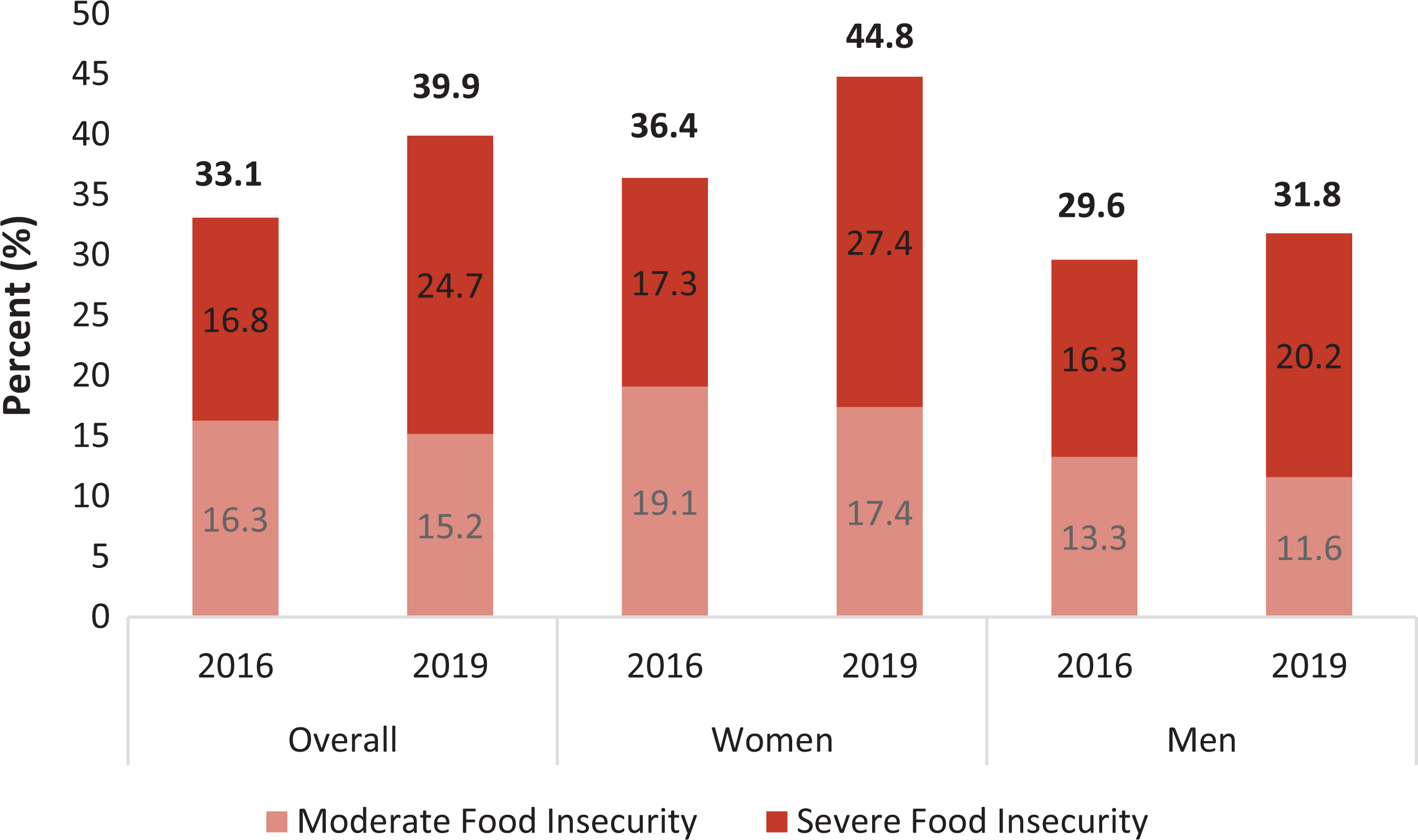
Prevalence of food insecurity of Colombian adults overall and by gender in 2016 and 2019. Source: Microdata analysis of the Gallup World Poll data 2016 and 2019.
Figure 2 presents the estimated prevalence of food insecurity in Colombia in 2016 and 2019; the graphs display differences in food insecurity by the 4 population subgroups—rural women, rural men, urban women, and urban men. As seen, all subgroups reported an increased in the overall prevalence of food insecurity from 2016 to 2019, except urban men. By 2019, the prevalence of severe food insecurity exceeded that of moderate food insecurity across all subgroups, with more than one-quarter of rural women (30%) and men (25.9%) and urban women (25.2%) experiencing severe food insecurity. Increases were highest among rural and urban women at 8% and 12%, respectively. In both years, rural women had the highest prevalence of food insecurity; in 2019, one in two rural women experienced food insecurity, with nearly one-third falling into the severe food insecurity category. Results from crosstab analyses suggests a statistically significant difference in food insecurity among both rural and urban women between 2016 and 2019 (X 2 = 3.567, P < .05 and X 2 = 6.724, P < .010, respectively). No statistically significant difference was found among rural nor urban men (X 2 = 1.314, P < .252 and X 2 = 0.031, P < .861, respectively).
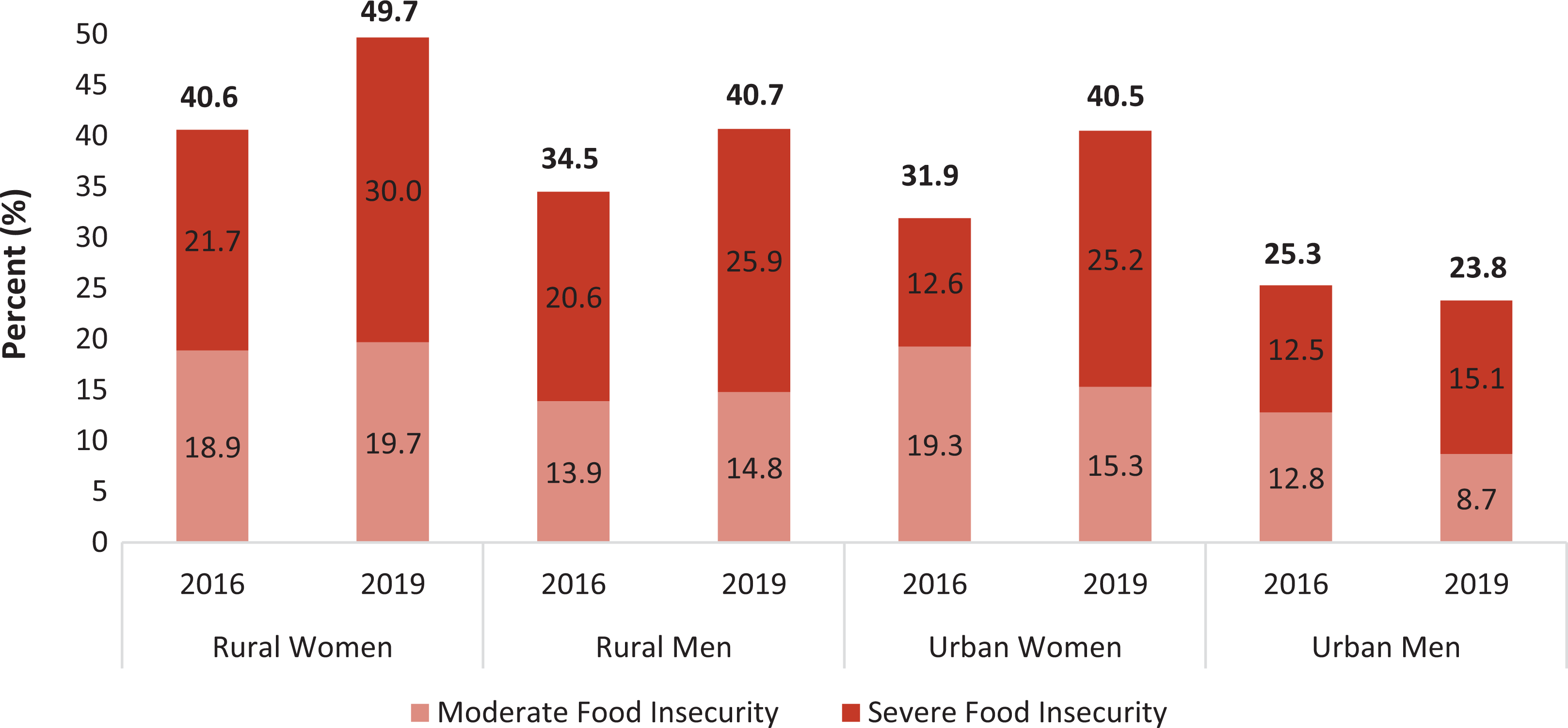
Prevalence of food insecurity of Colombian adults by population subgroups in 2016 and 2019. Source: Microdata analysis of the Gallup World Poll data 2016 and 2019.
Logistic Regression Analyses
To specify the final multivariate logistic model, as an initial analytical step, we examined bivariate associations of food insecurity with each of the potential predictor variables. Table 2 presents the results of these bivariate analyses. Based on these initial association tests, all selected predictor variables appear to have significant bivariate associations with food insecurity (P < .05), except for marital status and autonomy in the 2016 sample. Nonetheless, as both of these predictor variables satisfied the conservative cutoff of P value < .25 they were retained in the subsequent multivariable logistical models. 50
Initial Design-Based Bivariate Analysis Results Assessing Potential Predictors of Food Insecurity for the 2016 and 2019 Gallup World Poll (GWP) Samples of Colombian Adults.a
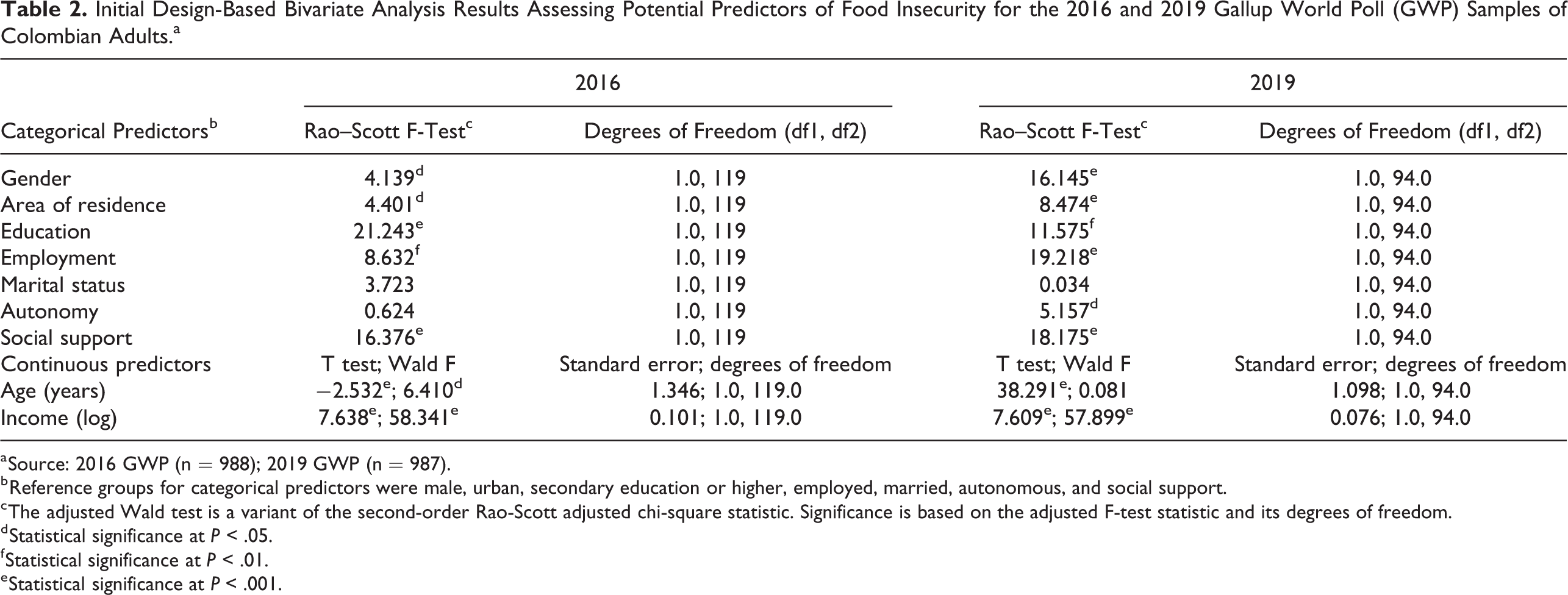
a Source: 2016 GWP (n = 988); 2019 GWP (n = 987).
b Reference groups for categorical predictors were male, urban, secondary education or higher, employed, married, autonomous, and social support.
c The adjusted Wald test is a variant of the second-order Rao-Scott adjusted chi-square statistic. Significance is based on the adjusted F-test statistic and its degrees of freedom.
d Statistical significance at P < .05.
f Statistical significance at P < .01.
e Statistical significance at P < .001.
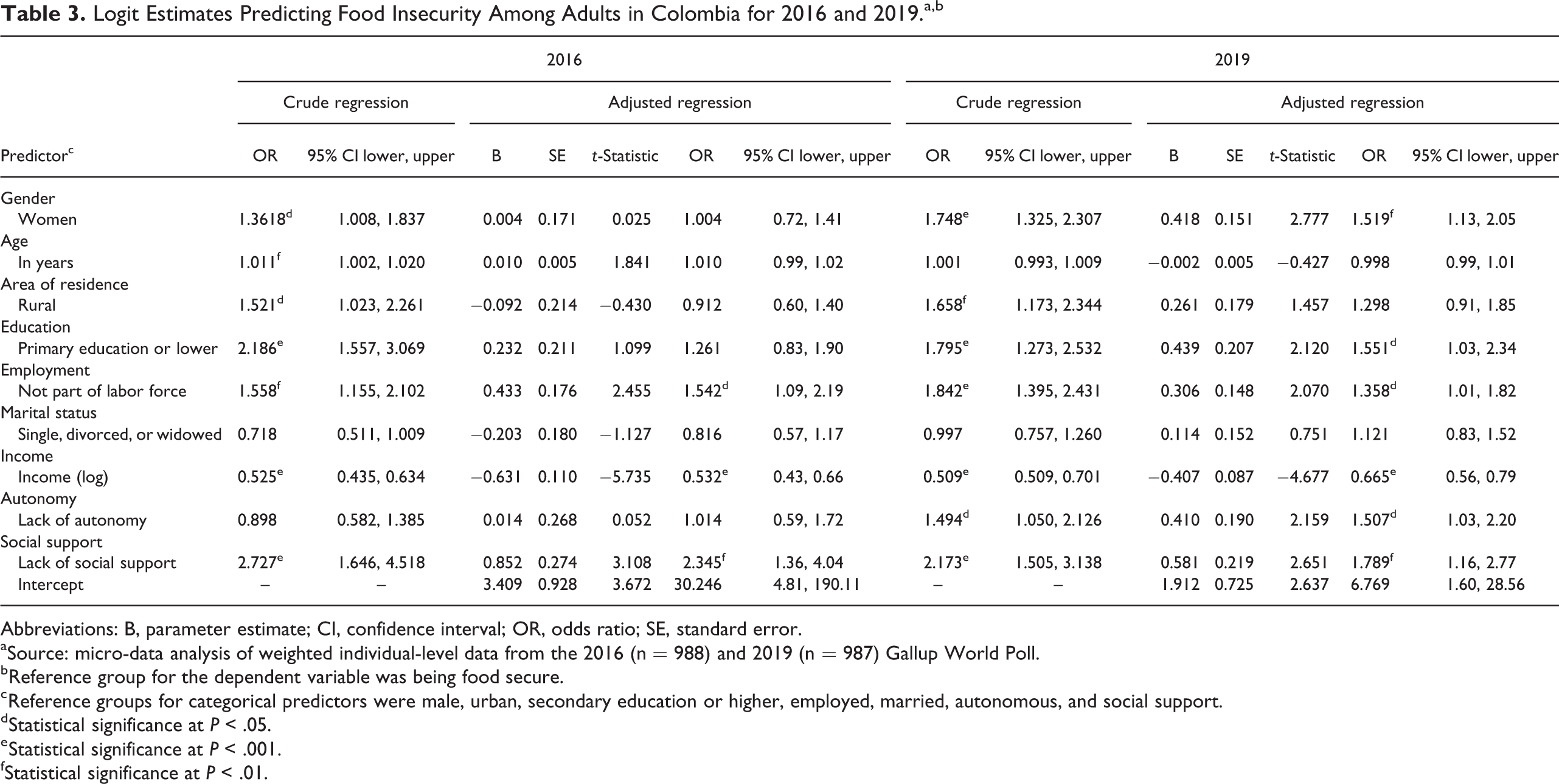
Table 3 shows the pseudo-maximum likelihood estimations for the parameter coefficients for logistic models predicting food insecurity in Colombia for each survey year. Conducting separate logistic models by survey year addressed whether similar predicting variables were associated with food insecurity between the 2-points time. As seen in Table 3, employment, income, and social support were significant predictors of food insecurity (P < .05) in 2016. More specifically, not being part of the labor force increased the odds of being food insecure by 54.2% (odds ratio [OR] = 1.542; 95% confidence interval [CI] = 1.09, 2.19) over those working. In terms of percent change, the odds for those without social support are 134.5% higher than the odds for those with support (OR = 2.345; 95% CI = 1.36, 4.04). Finally, as expected, as income increased the likelihood of experiencing food insecurity decreased. Holding all other variables constant, for each additional unit increase in income, the odds of being food insecure decreases by 53.2% (OR = 0.532; 95% CI = 0.43, 0.66).
Logit Estimates Predicting Food Insecurity Among Adults in Colombia for 2016 and 2019.a,b
Abbreviations: B, parameter estimate; CI, confidence interval; OR, odds ratio; SE, standard error.
a Source: micro-data analysis of weighted individual-level data from the 2016 (n = 988) and 2019 (n = 987) Gallup World Poll.
b Reference group for the dependent variable was being food secure.
c Reference groups for categorical predictors were male, urban, secondary education or higher, employed, married, autonomous, and social support.
d Statistical significance at P < .05.
e Statistical significance at P < .001.
f Statistical significance at P < .01.
In the 2019 sample, the relationship between the selected predictors and food insecurity varies somewhat. Estimates show that gender, education, employment, income, autonomy, and social support were significant predictors of food insecurity (P < .05). Holding all other predicting variables constant, the odds of women experiencing food insecurity is significantly higher (OR = 1.519; 95% CI = 1.13, 2.05), compared to men. Having little education and not being part of the labor force increased the odds of being food insecure by 55.1% (OR = 1.551; 95% CI = 1.03, 2.34) and 35.8% (OR = 1.358; 95% CI = 1.01, 1.82), respectively. Similarly, both a lack of autonomy and social support significantly contributed to an increased likelihood of being food insecure (OR = 1.507; 95% CI = 1.03, 2.20 and OR = 1.789; 95% CI = 1.16, 2.77, respectively). As in 2016, there was a significant negative relationship between income and food insecurity, as income increased, the odds of experiencing food insecurity decreased; holding all other variables constant, a unit increase in income decreased the odds of being food secure by 66.5% (OR = 0.665, 95% CI = 0.56, 0.79). Results highlight heterogeneity in the predictors of food insecurity across both survey years; only employment, social support, and income were associated with food insecurity across time.
Discussion
This study examined significant issues related to food insecurity in Colombia, contributing to knowledge at a critical turning point in Colombia’s history. The analyses addressed several leading questions such as—what is the current food security situation in Colombia? Has progress in terms of food security been made since signing the Peace Agreement? When examining population subgroups—based on gender and area of residence—who are the most vulnerable? Finally, which individual-level’s characteristics may put Colombians at higher risks of experiencing food insecurity?
Food Insecurity Trends in Colombia
Results show that from 2016 to 2019, food insecurity in Colombia increased by roughly 7%. The estimated prevalence of food insecurity in 2019 was 39.9%; this means that over one-third of the adult population in Colombia experienced moderate or severe food insecurity. These findings represent a notable increase in food insecurity over the relatively short-time frame studied, reflecting a continuation of the Colombian food security profile trending in the wrong direction, with stark increases compared to earlier food security assessments in country. 4,5 The increase in severe food insecurity witnessed is particularly worrisome, as it reflects an increase in the number of individuals experiencing hunger. This worsening food insecurity situation has persisted despite the enactment of a well-intentioned Peace Agreement, which explicitly seeks to uphold the right to food, regardless of the economic growth experienced in Colombia during this time frame, 34 and in spite of efforts by governments and international organizations to reduce food insecurity at the national and local levels. This critical national state is perhaps not surprising, given that the implementation of the Peace Agreement has been slow, with an increased resurgence in violence in recent years, 51 and considering that despite economic growth at the national level, the economic prosperity among the Colombian people has been far from equal. 34
Food Insecurity Across Population Subgroups
Our findings have important implications as they underscore the fact that food insecurity is not equally distributed. Results indicate that the state of food insecurity varies across population subgroups, in this case, urban women, rural women, urban men, and rural men. This study, consistent with prior findings, 14,39,52 shows women in general, but especially rural women, to be particularly vulnerable to food insecurity. In the 3-year time frame studied, the gender gap nearly doubled, and by 2019, half of rural women surveyed in Colombia were moderately or severely food insecure. These disparities must be considered in program and policy decisions, especially as resources to support food security become more scarce and require prioritization.
Rural women’s particular susceptibility to food insecurity in Colombia parallels similar global patterns. This is in part due to the fact that rural women make up a large proportion of the agricultural workforce but lack access to important agriculture inputs, thus hindering their livelihood outcomes and making them and their households susceptible to food insecurity. 39,53 For example, one area of concern in Colombia is access to land—only 26% of landholdings are managed by women. 54 The 2014 National Agricultural Census of Colombia indicated that women also have less access to financing, extension services, and machinery than men. 53 The Peace Agreement, which in addition to directly addressing the right to food, contemplates various measures related to gender aimed at addressing such disparities. However, progress continues to lag; there is an acknowledged imbalance for women and a clear need to improve the gender approach in the implementation of the Agreement. For example, with regard to the Land Fund, of the total hectors given only 36% were given to women, while the remaining majority (64%) were allocated to men. 55 This inequitable implementation further perpetuates existing inequalities mentioned previously, with ramification for food security.
Individual-Level Characteristics and Food Insecurity
Regarding the association of individual-level characteristics with food insecurity, our results are largely consistent with other studies. Findings confirm the importance of income, employment status, educational attainment, autonomy, and social support. Income has been consistently identified as a reliable predictor of food security, nutrition, improved health, and opportunities. In contrast, a lack of income can fuel a vicious cycle that traps individuals in a state of food insecurity. 56 Poverty impedes the acquisition of food, even when food is available. 31 -33 The increase in food insecurity seen in this study may be associated with the rise in poverty that occurred in Colombia. In 2016, for the first time in 15 years, monetary poverty increased in Colombia. 57 According to the World Bank, 34 this increasing trend has since continued, “going from 34.7 percent in 2018 based on official poverty rates to 35.7 percent in 2019, resulting in an additional 662 000 thousand people falling into poverty.” One key component of the Peace Agreement is to eradicate extreme poverty, yet, it is clear that progress is nowhere near what was expected, and the situation will only be aggravated as a result of the economic implications of the COVID-19 pandemic.
In our study, we also find that not being part of the labor force was a significant predictor of experiencing food insecurity in both survey years. This finding coincides with the literature; for example, a recent study by Smith et al 18 ( p54) found that in Latin America, unemployment increases the probability of food insecurity by 6.0% and severe food insecurity by 4.0%. With regard to education, our results show that low education attainment was a significant predictor of food insecurity among adults in 2019, supporting prior results. 38,58,59 Education helps build human capital, often leading to an increase in access to opportunities, infrastructure, and assets. The positive association between educational attainment and food security can largely be explained by the strong positive relationship between education and socioeconomic status. 39 In fact, this positive association has been observed to have transgenerational consequences. Prior research, including studies conducted in Colombia, 60 has shown a connection between parent’s education level positively influences the food security status of their children. 61,62
This study also supports the importance of examining psychosocial factors to understand food security. In fact, in both sample years, the lack of social support was the strongest predictor of food insecurity. Social support can be protective against food insecurity through numerous pathways. 40,41 Colombia’s social protection system is already strained; the implications of the COVID-19 pandemic coupled with the increase in the number of natural disasters and migratory processes (note 5) in recent years will place even more stress on the fragile system. As a result, the importance of social support regarding food security will likely continue to grow. Thus, improvements in perceived social support could attenuate experiences of food insecurity in Colombia.
Recommendations
These key findings provide valuable insights, offering inherent recommendations. Results suggest that higher incomes and effective poverty alleviation schemes could contribute to overcoming Colombia’s current food insecurity challenges. The cost of food has been on the rise in Colombia. 63 Increases in the cost of living are particularly problematic for poor households because a large proportion of the household income is spent on food. Any increase in food costs can hinder the acquisition of enough nutritionally adequate food to support a healthy and active life. 5,64 As mentioned previously, as individuals and households begin to experience food insecurity, they tend employ coping strategies: the first often being a reduction in dietary diversity and quality, 64 -68 putting them at risk of micronutrient deficiencies, poor health outcomes, and reduced immunity. 69 -72 Although these consequences of food insecurity concern all individuals, they are more common and acute among women, leading to detrimental outcomes not only for themselves 25,26,71,73 -78 but also for their children. 27 -29,71 Therefore, equitable access to affordable, nutritious foods for vulnerable groups experiencing, or at risk of experiencing, food insecurity should be a priority.
As a critical step toward reducing food insecurity in Colombia, the government welfare policies and social protection systems should act as adequate “safety nets” and “springboards” out of disadvantage situations. The government needs to invest increasing local employment opportunities in regional and rural areas, to increase financial security among families, particularly among those who are “falling through the net” of social security. Findings from this study confirm the relevance of creating just fairly paid jobs and the initiation of efforts to ensure that individuals have the educations, skills, and capacities necessary to enter the job force in the future. Given that the COVID-19 crisis has since exacerbated existing labor market weaknesses, with roughly 2.5 million Colombian jobs lost in 2020, 34 government’s rapid social and economic actions in this area is even more imperative.
While this study does not examine gender differences in employment, recent reports highlight substantial disparities. 34,63,79 According to the World Bank, in 2016, women’s unemployment in Colombia was nearly double that of men. 79 The gender gap has continued to grow, reaching 70% by 2019. 80 A recent study conducted in Colombia identified constraints that affect women’s access to paid employment, including social norms, types of jobs available, domestic care workload, time cost-benefit, violence, and transportation, among others. 81 The employment related impacts of the COVID-19 crisis will disproportionally affect Colombian women. 34 Such disparities should be addressed in mitigation measures and long-term strategies to improve the labor market.
Finally, although the promotion of social support should not, by any means, undermine the importance of devoting increased efforts to strengthening social protection systems to improve access to adequate food, this study reveals the potential of investing in efforts to understand better effective strategies for fostering enhanced social support as a means of alleviating, compensating, or buffering food insecurity. To date, relatively little evidence exists to endorse specific interventions in this area, making it difficult to make specific recommendations beyond the need to further explore.
Strengths and Limitations
This study strengthens the understanding of food insecurity and its complexity in Colombia. It is the first to explore food insecurity at this vital juncture in the country’s history: the signing and enactment of the Peace Agreement. The strengths of GWP data include the fact that GWP samples are nationally representative of the resident, noninstitutionalized population aged 15 years and older in each country as well as the standardized use of validated measures, including the FIES which has been accepted broadly as a valid and reliable measure of food security. Moreover, the strength of an individual-level data analysis permits identifying subpopulation groups at greater risk of food insecurity as well as the study of individual characteristics contributing to this vulnerability, thus providing essential policy insights. Of particular novelty is that this study measures food security at the individual level, unlike most food security assessments in Colombia to date. Most studies use tools to measure food security at the household level (for instance, the Escala Latinoamericana y Caribeña de Seguridad Alimentaria which is included in the ENSIN). As a result, we can identify gender differences when examining population subgroups vulnerability rather than rely on household-level measures which require inference about individual food security based on household food security status, an assumption challenged in the literature. 82
At the same time, we underscore certain limitations when interpreting the results of the current study. First, we can only infer associations, no causality, between the selected predictors and food insecurity, due to the cross-sectional design of the GWP. Additionally, the study could not observe long-term changes in a household’s circumstances, making it difficult to ascertain the drivers which explain changes between the 2 sample years. Similarly, the analysis could not examine the seasonal elements of food security and there is the potential for reverse causality. Further research is needed to better understand the causal relationships between food insecurity and the other factors assessed in this study.
In addition, the analysis is limited to the variables available in the GWP. For instance, concerning gender, the indicator available is simply the self-identification as a woman or a man. This study could not examine broader gender-related dynamics related to food security such as food distribution, consumption patterns, control over resources or decision-making power, nor how these are negotiated between men and women, as GWP collects no such data. On a similar note, we did not examine the effects of race and ethnicity in the current analyses due to the absence of such data in the GWP. However, national statistics from the 2015 ENSIN show that both Afro-Colombians and Indigenous populations are vulnerable to food insecurity (note 6) and malnutrition. 4 If food security is to be realized by all and for all, the barriers faced by those with intersecting social identities must be acknowledged and addressed. These relationships warrant attention in future research.
Lastly, comprehensive measures of psychosocial components of food security are still scarce in the GWP. For example, there is growing literature related to food security and autonomy, 30,39,42,43 with various theoretical trajectories to explain the relationship between autonomy and food security. In the current study, a lack of autonomy was found to be a statistically significant predictor of increased food insecurity in 2019 but not in 2016. However, the variable included in the GWP simply asked about an individual’s perceived control over their lives, further research to explore different aspects of autonomy as well as efforts to unpack the mechanisms linking autonomy to food security are needed.
Conclusions
This study provides a more detailed and comprehensive picture of food insecurity in Colombia by identifying possible factors contributing to food insecurity at 2 points in time: 2016 and 2019. Results confirm that, despite the signing and enactment of the historic Peace Agreement in 2016 and the country’s recent national economic growth, food insecurity in Colombia worsened between 2016 and 2019, with rural women experiencing particular vulnerability. This study demonstrates that the expected improvements in food insecurity resulting from the Peace Agreement have not yet occurred. The continued increase in food insecurity calls into question the effectiveness of current policies and programs intended to address this problem. Serious reflections, as well as enhanced political will, and innovative approaches will be necessary to ensure food security in Colombia in the future. The urgency of such efforts will only continue to become more pronounced that the country’s food security profile continues to trend in the wrong direction, with worrisome levels of food insecurity. The COVID-19 pandemic is expected to push an unprecedent number of people into poverty and exacerbate food insecurity. 11,34 It is estimated that 3 million Colombians have become impoverished due to the pandemic. The incidence of poverty is expected to increase by over 5.5 percentage points, while the impact of food insecurity is not yet fully known. 34
Even though many significant factors found to be contributing to food insecurity in this study, such as income, education, and employment, are well established in the literature, the lack of progress in securing food and diminishing hunger for the larger population, and most important, for the most vulnerable segments, highlighted by our findings call for more effective strategies. Results also convey that psychosocial factors such as autonomy and social support warrant more attention in future research, program, and policy efforts related to food security. Further study of the factors contributing to food insecurity is necessary, especially among different population groups (eg, ethnic groups and departmental and municipal populations), to inform Colombian policies and programs addressing food insecurity. Adequately addressing these social inequalities is imperative for realizing a reduction in food insecurity in Colombia. Monitoring and evaluation systems will be necessary to evaluate programs and policies and measure changes over time. Implementing these systems will ensure that resources are invested appropriately to accelerate progress toward the eradication of food insecurity and hunger. Lastly, a vicious cycle between conflict and food insecurity exists, acutely observed today in Colombia. Therefore, to effectively address food insecurity, there is an urgent call to commit to the realization of peace—because as Colombia’s Minister of Post-Conflict stated 83 : “A population where food security is not assured has no possibilities for peace.”
Footnotes
Appendix
Food Insecurity Experience Scale.
| Question | ||
|---|---|---|
| Now I would like to ask you some questions about your food consumption in the last 12 months. During the last 12 months, was there are time when: | 01 = Yes |
|
| 1 | You were worried you would run out of food because of a lack of money or other resources? | |
| 2 | You were unable to eat healthy and nutritious food because of a lack of money or other resources? | |
| 3 | You ate only a few kinds of foods because of a lack of money or other resources? | |
| 4 | You had to skip a meal because there was not enough money or other resources to get food? | |
| 5 | You ate less than you thought you should because of a lack of money or other resources? | |
| 6 | Your household ran out of food because of a lack of money or other resources? | |
| 7 | You were hungry but did not eat because there was not enough money or other resources for food? | |
| 8 | You went without eating for a whole day because of a lack of money or other resources? |
Authors’ Note
The research data is confidential. We do not have permission to share the data. K. Sinclair: Contributed to the conceptualization of the research questions, data analysis, interpretation of findings, and for writing the manuscript. S. E. Del Castillo Matamoros and E. Olaya: Contributed to the design of the research and reviewed and edited the manuscript. T. Thompson-Colón and H. Melgar-Quiñonez: Contributed to the formulation the research questions, design of the research and reviewed and edited the manuscript.
Declaration of Conflicting Interests
The author(s) declared no potential conflicts of interest with respect to the research, authorship, and/or publication of this article.
Funding
The author(s) received no financial support for the research, authorship, and/or publication of this article.
