




Abstract
Background:
Nutrition literacy is an emerging term which is increasingly used in policy and research. Progression is limited by the lack of an accepted method to measure nutrition literacy in Chinese adults, even as research in this area is growing.
Objective:
The objective of this study is to develop a valid instrument to assess nutrition literacy in Chinese adults.
Methods:
The process involved 2 steps: constructed nutrition literacy conceptual framework, and developed potential items of scale based on literature review; and conducted 2 rounds of Delphi consultation to select items of the preliminary questionnaire.
Results:
In the Delphi survey, the content validity index for each domain, level, and dimension of nutrition literacy was 1.0, coefficient of variation was less than 0.10, and Kendall’s coefficient of concordance was greater than 0.83. All of the 2 domains, 3 levels, and 6 dimensions initially formulated by our research team were reserved in the conceptual framework of nutrition literacy. Furthermore, a 43-item nutrition literacy measurement scale was established. Each item kept in the final scale reaches a high degree of concentration and a high degree of coordination, with the mean of importance ranging from 4.38 to 5.00.
Conclusions:
A nutrition literacy measurement scale with multiple features was established for Chinese adults, providing an operationalized tool to assess comprehensively nutrition literacy for research and practice in the field of nutrition, diet, and health.
Introduction
Poor dietary behavior accounts for nearly 1 in every 5 deaths globally. 1 Nutrition literacy affects dietary choices and food consumption, 2 and it is an important determinant of dietary behavior. Good nutrition literacy may enable individuals to follow dietary guidelines and to make healthy dietary choices. Conversely, poor nutrition literacy may reduce the capacity of individuals to make healthy dietary choices and result in a poor-quality diet. 3,4
Nutrition literacy is defined as the degree to which individuals can obtain, process, and understand nutrition information and services needed for making appropriate nutrition decisions. 4 -6 The concept of nutrition literacy originated from health literacy 7 and is known as “health literacy applied in the field of nutrition.” 8 Nutrition literacy is now attracting increasing attention from researchers in the field of health promotion. According to Nutbeam’s tripartite model of health literacy, 9 nutrition literacy is categorized into 3 levels: functional, interactive, and critical. Functional nutrition literacy is the ability to obtain, understand, and use factual nutrition information or services. Interactive nutrition literacy is the ability to act and interact successfully through various forms of communication to obtain, provide, and apply relevant nutrition information. Critical nutrition literacy is the ability to critically assess nutrition information and to engage in actions that address barriers to a healthy diet.
Nutrition literacy is considered an asset from a public health perspective. Weiss et al 10 exploited a nutrition label from an ice cream container to assess nutrition literacy among primary care patients. Furthermore, some researchers 11 -13 have developed a series of specific items to assess nutrition literacy or food literacy without considering its features. Most studies have reported nutrition literacy measurement tools with different domains (eg, cognition and skill) or dimensions (eg, obtain, understand, analyze, appraise, and apply). 7,14 -22 However, assessment instruments for nutrition literacy mainly focused on functional nutrition literacy 23 and rarely involved interactive or critical nutrition literacy. Guttersrud et al 16 developed a critical nutrition literacy scale and emphasized the need for more skills to communicate and act on nutrition information in a broad social environment to address nutritional barriers.
Generally, nutrition literacy should include multiple features. However, existing nutrition literacy scales often detected a certain feature of nutrition literacy and did not reflect on its multiple features. Furthermore, a universally accepted tool to measure nutrition literacy is unavailable in China. Some studies have assessed the nutrition literacy of Chinese residents by using health literacy questionnaires that included questions on nutritional knowledge and related behaviors. 24 Most studies on nutrition literacy have used self-designed questionnaires focused on assessing nutrition knowledge and related attitudes or behaviors; the ability to identify and evaluate nutrition literacy comprehensively is limited.
This study aimed to develop a conceptual framework with multiple features and further establish a nutrition literacy measurement scale for Chinese adults by using the Delphi method. Such a tool could be used to identify and assess nutrition literacy comprehensively for research and practice in the fields of nutrition, diet, and health in China.
Methods
Study Design
In this study, a modified Delphi method was adopted to develop the survey framework with multiple features and indicators for assessing nutrition literacy. The research process was divided into 2 steps: (1) Review the literature to identify concepts of nutrition literacy and its components and then draft a frame with multiple features for measuring nutrition literacy and further develop the items pool. (2) Apply the Delphi method to gradually agglomerate the opinions of experts on nutrition literacy to form a consensus. Responses from all experts were integrated, and the consensus was evaluated. The Delphi method includes multiple feedback sessions with an effective mode of communication. The study procedures were approved by the ethics committee of Bengbu Medical College, and informed consent was obtained from all participants.
Literature Review
Studies from the PubMed, EMBASE, Science Direct, EBSCO, CNKI, WanFang, and VIP databases were reviewed using the search terms “nutrition literacy” or “nutritional literacy” from the earliest record till March 2020. The full texts of 14 publications were screened for original research on nutrition literacy measurement (Supplemental Table 1).
Framework Development
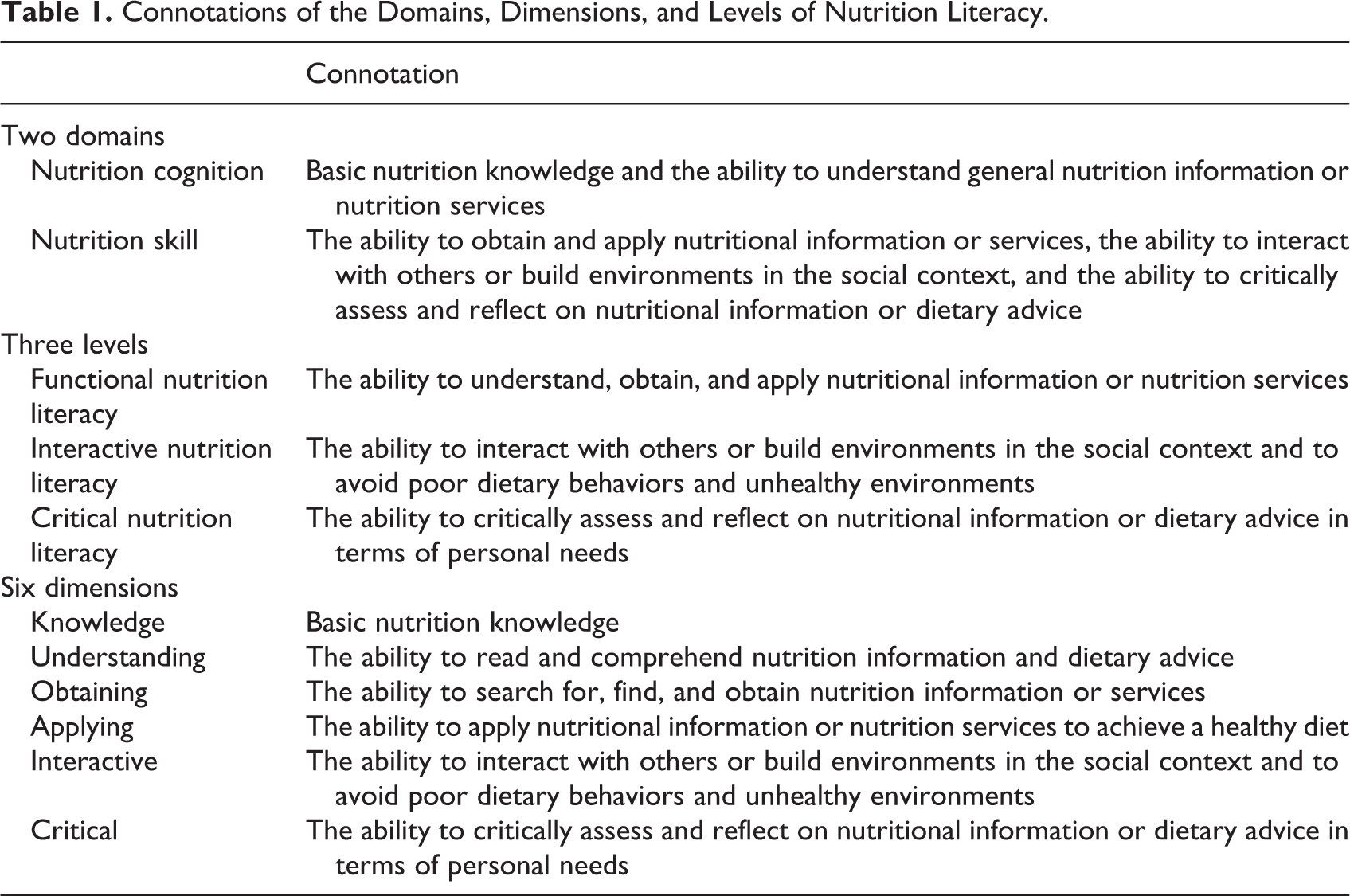
Based on the literature review, the principal features of nutrition literacy were 2 domains (cognition and skill) and 3 levels (functional, interactive, and critical). Two domains and 3 levels of nutrition literacy were specifically embodied in 6 dimensions of knowledge, understanding, obtaining, applying, interactive skills, and critical skills. These dimensions expressed the basic meaning of nutrition literacy. The nutrition literacy scale was conceived based on the degree to which individuals have the capacity to obtain, process, and understand the nutrition information and services they need to make appropriate nutrition decisions. Therefore, understanding nutrition information and services was divided into 2 dimensions (ie, nutrition knowledge and understanding), obtaining nutrition information and services was directly transformed into the dimension of obtaining, and processing nutrition information and services was directly transformed into the dimension of applying. However, to make appropriate nutrition-related decisions in real life, the dimensions of interactive and critical skills are needed. Figure 1 illustrates the structure of nutrition literacy. Connotations of the domains, dimensions, and levels of nutrition literacy are shown in Table 1. The cognitive domain refers to the basic knowledge of nutrition and the ability to understand general nutrition information or services. The skill domain refers to the abilities to obtain and apply nutritional information or services, interact with others, build environments in the social context, and critically assess and reflect on nutritional information or dietary advice. Functional nutrition literacy refers to the ability to understand, obtain, and apply nutritional information or services; this includes the dimensions of knowledge, understanding, obtaining, and applying. Interactive nutrition literacy (ie, the interactive dimension) refers to the ability to interact with others or build environments in the social context successfully to resist incorrect nutrition concepts, poor dietary behaviors, and unhealthy environments and to improve health. Critical nutrition literacy (ie, the critical skills dimension) refers to the ability to critically assess and reflect on nutritional information or dietary advice in terms of personal nutritional needs.
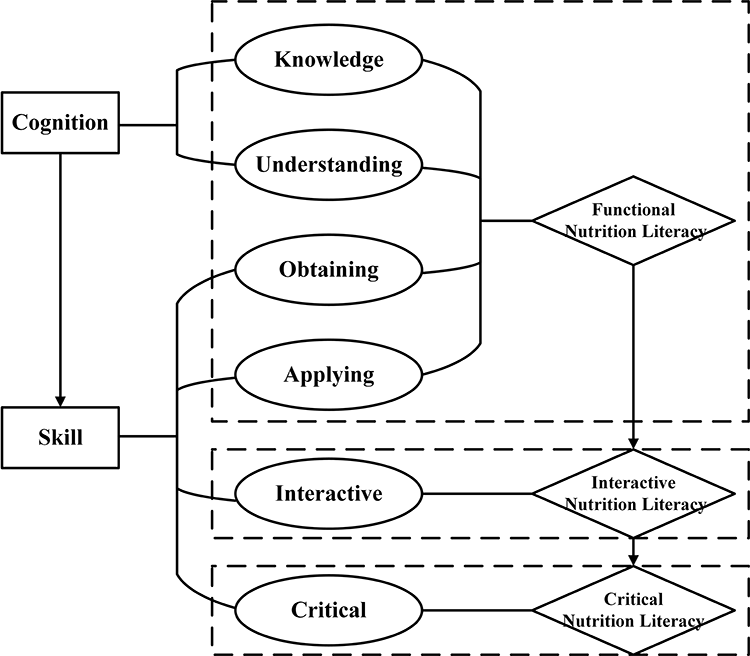
A conceptual framework of nutrition literacy with multiple features.
Connotations of the Domains, Dimensions, and Levels of Nutrition Literacy.
Item Generation
Based on concepts identified during phase one from existing questionnaires, 129 items were pooled to measure nutrition literacy. Furthermore, based on Chinese dietary guidelines and dietary risks, 50 nutrition literacy items were pooled as the content of the initial questionnaires for the first-round Delphi survey through focus group discussions. These items were included in 6 dimensions: 9 items for knowledge, 7 items for understanding, 6 items for obtaining, 12 items for applying, 8 items for interactive skills, and 8 items for critical skills.
Expert Panel Recruitment
The panel of experts was selected via convenience sampling from the eastern, central, western, southern, and northern regions of China based on the following inclusion criteria: (1) working in the field of nutrition, health, education, or health promotion; (2) >10 years of work experience; and (3) professor, associate professor, or equivalent. In total, 15 experts were invited to participate in the Delphi survey. All invited experts participated in the survey with a 100% response rate.
Delphi Surveys
A panel of 15 experts participated in 2-round Delphi survey. Data were collected using an electronic questionnaire sent to experts through email. Anonymity was crucial to the process to facilitate the freedom of participants to express their views on the topic. Questionnaires were sent to each expert separately. To reduce pressure to conform to the group, the answers of other responders were not revealed to the participants; their answers were sent to a workgroup for collation by the researcher. After each round, the results were analyzed by the research team and another questionnaire was administered based on these responses in the next round. The participants were shown only the combined results.
For each domain, level, dimension, and item, experts were asked to rate 3 aspects: degree of importance, degree of measurability, and degree of correlativity. Furthermore, experts were asked to rate the reasons for judgment and their degree of familiarity with each module (domain, level, dimension, or item). The degrees of importance, measurability, and familiarity were measured using 5-point Likert scales (for importance: 1 = strongly unimportant, 2 = unimportant, 3 = neutral, 4 = important, and 5 = strongly important; for measurability: 1 = very bad, 2 = bad, 3 = neutral, 4 = good, and 5 = very good; and for familiarity: 1 = very good, 0.75 = good, 0.5 = neutral, 0.25 = bad, and 0 = very bad). Furthermore, to calculate the coefficient of sense, the degree of correlativity was rated by experts as 1 = no correlation, 2 = slight correlation, 3 = strong correlation, and 4 = very strong correlation. The evidence of experts’ evaluation included theory analysis, work experience, peer perception, and intuition, which were assigned scores of 1, 0.75, 0.5, and 0.25, respectively, to calculate the coefficient of adjudication.
Statistical Analysis
Database was built by using EpiData3.0 software, and data were analyzed using SPSS 22.0 software. Continuous variables were presented as mean and standard deviation. Categorical variables were presented as numbers and frequency. The content validity index (CVI) was determined based on the proportion of experts who rated each item with a 3 or a 4 in all modules. The coefficient of variation (CV) was used to evaluate the concentration of the experts’ opinions. Kendall’s coefficient was calculated to evaluate the coordination of experts’ evaluations in terms of the importance, measurability, and correlativity of all modules. This coefficient ranges from 0 to 1, with values closer to 1 indicating a higher degree of coordination. The coefficient of authority was used to ascertain the authority of experts’ evaluation, which was determined based on the coefficients of sense and adjudication. An authority coefficient >0.7 generally indicates acceptable. After Delphi survey, data were analyzed to calculate the mean and CV of importance for each item. The defined cutoffs for items were mean >3.5 and CV <0.25 for importance, statistical significance reached for Kendall’s coefficient, and CVI >0.8. If an item met the criteria, it was retained. In addition, the deletion or addition of items proposed by >10% of the experts was adopted.
Results
Table 2 described demographic characteristics of experts. The mean age of experts was 45.5 years, and the mean work experience was 22.4 years. Among these experts, 53.3% were professors and 46.7% were associate professors. Experts with a master’s degree or PhD accounted for 80%.
Overview of the Characteristics of Experts Participating in the Delphi Survey (n = 15).
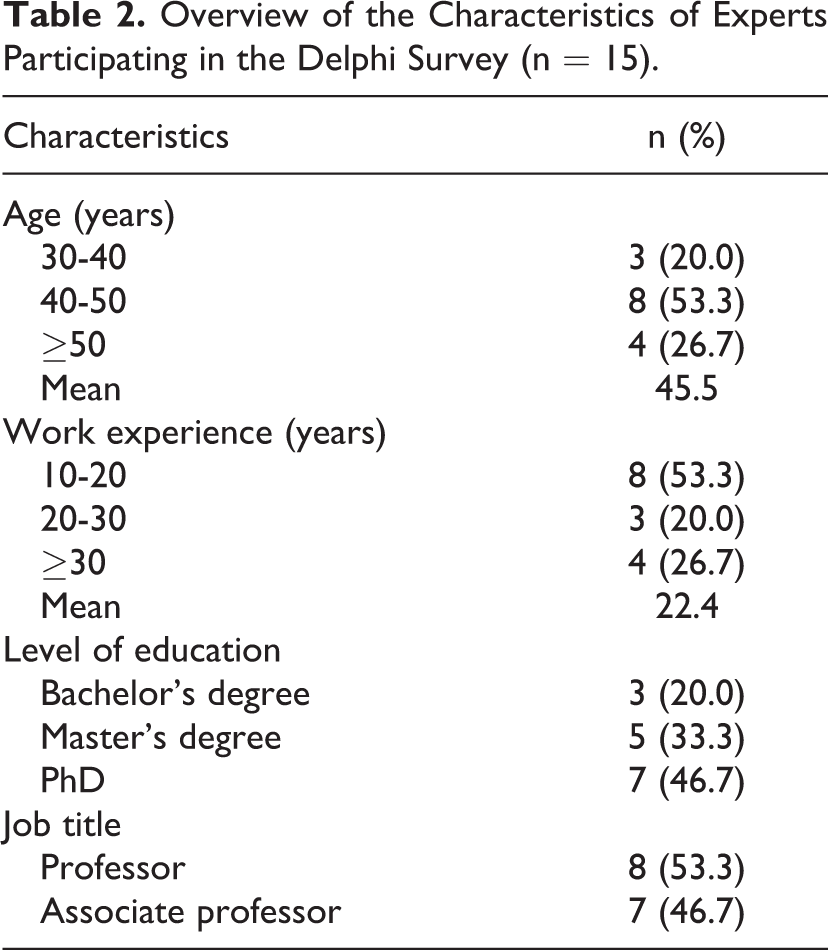
Table 3 showed the results of Delphi survey regarding the conceptual framework for nutrition literacy. All of 2 domains, 3 levels, and 6 dimensions initially formulated by our research team were retained after Delphi consensus. The CVI for each module of nutrition literacy was 1.0, suggesting that each module is good to reflect the connotation of nutrition literacy. The CV was <0.10, suggesting a high degree of concentration. The mean of importance in all of domains, dimensions, and levels was >4.5, and the statements regarding all modules demonstrated 100% agreement, indicating good consensus. Kendall’s coefficient of concordance for Delphi survey was >0.83, suggesting a high degree of coordination. The coefficient of reliability was >0.70, with a mean of 0.90 and standard deviation of 0.06, indicating the authoritativeness of consultation results from these experts.
Results of the Delphi Survey on the Conceptual Framework of Nutrition Literacy.
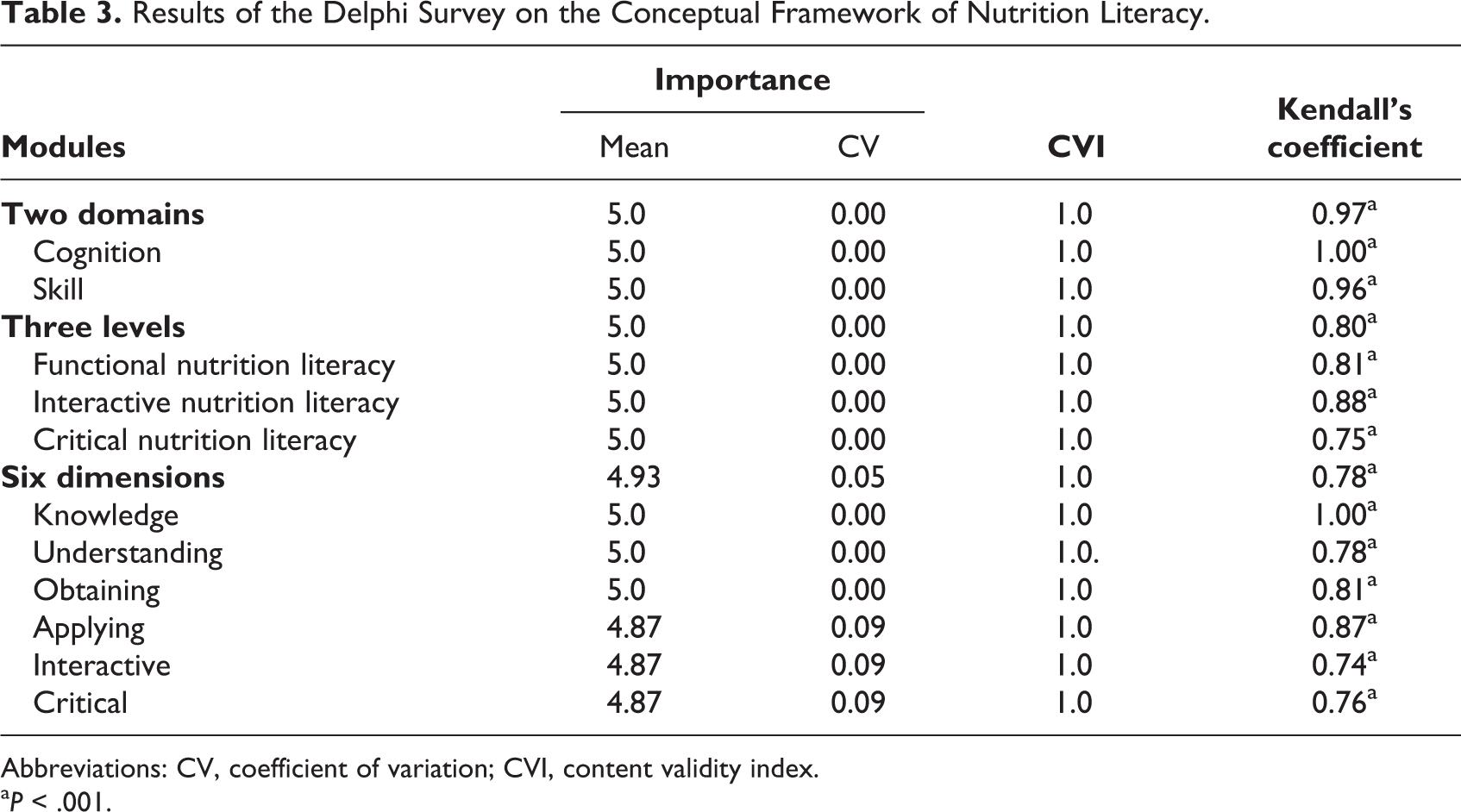
Abbreviations: CV, coefficient of variation; CVI, content validity index.
a P < .001.
In total, 43 entries were finalized across the 6 dimensions after deleting items (Table 4). Kendall’s coefficient of 0.562 in the second-round survey (χ2 = 1315.65, P < .01) was greater than that of 0.421 (χ2 = 1258.86, P < .01) in the first-round survey. The mean of importance ranged from 4.38 to 5.00; it was relatively high in the applying and critical skills dimensions and relatively low in the obtaining dimension.
Items in the Final Nutrition Literacy Measurement Scale for Chinese Adults After the Delphi Survey.
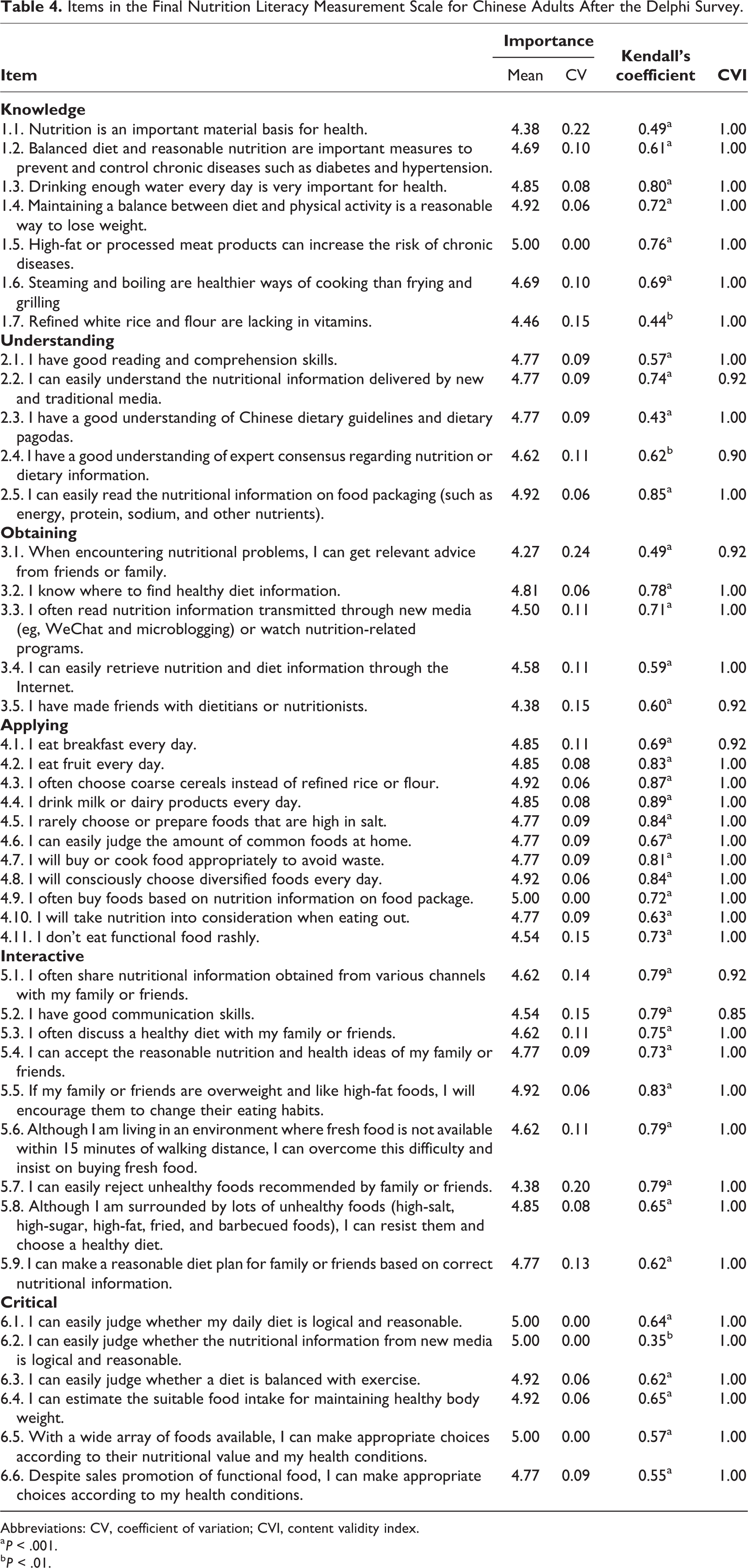
Abbreviations: CV, coefficient of variation; CVI, content validity index.
a P < .001.
b P < .01.
In the knowledge dimension, 7 items were retained after deleting 2 items (“functional food cannot substitute for natural foods” was deleted because its CV was 0.44, and “bland diet can reduce the risk of hypertension” was deleted according to expert advice). For the assessment of the importance of nutrition literacy for Chinese adults, the item with the highest score (mean = 5.0) was “high-fat or processed meat products can increase the risk of chronic diseases.”
In the understanding dimension, 5 items were retained after deleting 1 item (“I can easily understand nutrition information reported in newspapers and magazines” was deleted because its CVI was 0.73), and one item (“I am good at communication with others”) was added to the interactive skills dimension based on expert advice. The item with the highest score for importance (mean = 4.92) was “I can easily understand nutritional information on food package (eg, energy, protein, and sodium).”
In the obtaining dimension, 5 items were retained after deleting 1 item (“I often listen to or watch nutrition-related programs”). The item with the highest importance (mean = 4.82) was “I know where to find healthy diet information.”
In the applying dimension, 11 items were retained after deleting 2 items (“I can resist unhealthy foods” and “I can choose or adjust foods according to dietary guideline”) and adding 1 item (“I don’t eat functional food rashly”) according to expert advice. The item with the highest importance (mean = 5.0) was “I often buy foods via nutrition information on food package.”
In the interactive dimension, 11 items were retained after deleting 2 items (“I will eat unhealthy foods prepared by my family or friends” and “I can choose healthy foods when my friends choose unhealthy foods at restaurant”), and adding 3 items according to expert advice (“although I am living in an environment where fresh food is not available within 15 minutes walking distance, I can overcome this difficulty and insist on buying fresh food,” “although I am surrounded by lots of unhealthy foods [ie, high-salt, high-sugar, high-fat, fried, and barbecued food], I can resist them and choose a healthy diet,” and “I can make a reasonable diet plan for my family or friends based on correct nutritional information”). The item with the highest importance (mean = 4.92) was “if my family or friends are overweight and like high-fat foods, I will encourage them to change their eating habits.”
In the critical skills dimension, 6 items were retained after deleting 2 items (“I can easily judge whether the nutrition services provided by social organizations are scientific and reasonable” and “I often try new foods that I have never eaten”) because Kendall’s coefficient was nonsignificant, and CVI = 0.36, respectively. The items with the highest importance (mean = 5.0) were “with a wide array of foods available, I can make appropriate choices according to their nutritional value and my health conditions,” “I can easily judge whether my daily diet is logical and reasonable,” and “I can easily judge whether the nutrition information from new media is logical and reasonable.”
Discussion
To our knowledge, this study is the first to develop a conceptual framework with multiple features, consisting of 2 domains (nutrition cognition and nutrition skills), 3 levels (functional, interactive, and critical nutrition literacy), and 6 dimensions (knowledge, understanding, obtaining skills, applying skills, interactive skills, and critical skills). Furthermore, a 43-item nutrition literacy measurement scale for Chinese adults was established based on the conceptual framework along with dietary guidelines and dietary risks for Chinese adults.
The 2 domains, 3 levels, and 6 dimensions were retained in the Delphi method, indicating that these modules represent the most important connotations of nutrition literacy. In our study, the conceptual framework of nutrition literacy includes nutrition cognition and nutrition skills, which are in line with cognitive-behavioral theory. 25 -27 Nutrition cognition is the basic nutrition knowledge and the ability to understand nutrition information or services, 21,22 which is the basis for practice. However, in traditional knowledge-based nutrition education, knowledge is typically not converted into practice. 28 Thus, nutrition literacy in our study stresses the reception, translation, and application of nutrition information in real-life situations. To reflect on this competence, we developed the skills from 4 domains (ie, obtaining, applying, interactive, and critical). An interdependent and mutual transformation relationship exists between nutrition cognition and nutrition skills.
As food and nutrition environments become increasingly complex, a concern arises that we are individually and collectively becoming “de-skilled” and no longer possess fundamental food nutrition skills and cognition for healthy eating. 29,30 A comprehensive assessment of nutrition literacy is therefore required. People have to constantly deal with numerous nutrition-related dilemmas in their daily lives. Nutrition literacy should be considered in the context of social, cultural, and environmental factors 31 because it does not operate in a vacuum. Studies have emphasized functional nutrition literacy but have ignored interactive and critical nutrition literacy. 9,32 Therefore, we particularly emphasized interactive and critical nutrition literacy in our framework. People with high functional nutrition literacy could be able to remember nutrition information without applying it if they lack interactive or critical nutrition literacy. Functional nutrition literacy is considered the basic level of nutrition literacy, whereas critical nutrition literacy is considered the highest level. 33 Having all 3 levels of nutrition literacy is considered progressive. An individual with these 3 levels of nutrition literacy could make appropriate nutritional decisions in a real-life environment.
Interactive skills and critical skills were particularly strengthened in our nutrition literacy measurement scale. These were widely recognized by experts in establishing the corresponding items of nutrition literacy. In the interactive skills dimension, the final 9 items were retained after deleting 2 items and adding 3 items to the initial 8 items. Experts agreed that people should learn to interact with unhealthy dietary environments and learn to make reasonable diet plans. The importance scores of the applying and critical skills dimensions were relatively high, whereas that of the obtaining dimension was relatively low. This reflected the experts’ belief that obtaining nutrition information is not difficult for adults and that the focus should instead be on how to apply nutritional information or dietary advice daily to achieve a healthy diet and how to critically assess and reflect on nutritional information or dietary advice in terms of personal nutritional needs.
Crucial problems related to Chinese adults’ dietary behaviors are evident from nutrition skills. In our scale, some items focused on unhealthy diets, such as diets high in sodium, sugar, and processed meat but low in milk, fruit, and whole grains, 1 of which high intake of sodium, low intake of whole grains and fruits are the 3 leading dietary risk factors in China. 34 This indicated that these items could assess the dietary risks related to chronic noncommunicable diseases and burden of disease in China, 1,34 -36 such as obesity, diabetes, and hypertension. Moreover, this reflected experts’ awareness of the impact of nutrition literacy on chronic diseases. Taking understandability into consideration, some items were deleted because they were obscure in description or difficult to measure; some specific dietary risks or food environments were included in the items, such as “living in an environment surrounded by unhealthy food.” The results of the Delphi survey demonstrated experts’ belief that adults should diversify their foods choice, know nutritional labels on a food package, be able to apply this knowledge to make dietary choices, and learn to maintain healthy body weight. The average importance for all items in the second-round Delphi survey was higher than that in the first-round Delphi survey.
Overall, these items developed in the scale were based on Chinese dietary guidelines and dietary risks, and reached high degrees of concentration and coordination. Furthermore, the conceptual framework had multiple features of nutrition literacy, providing a foundation for good content validity in future measurement scales. Unlike our framework, Xu and colleagues 37 recently adopted the frame of health literacy for Chinese people, that is, 3 dimensions composed of knowledge and concepts, lifestyles and dietary behaviors, and basic skills, to establish core items of nutrition literacy for general people in China. Meantime, a serial of core items for different population also were established, such as for pregnant women, 38 lactating women,38(pp1087-1092) preschool children, 39 old people in China. 40 Together, these studies provide assessment tools with distinguishing features for nutrition literacy in research and practice of nutrition, diet, and health in China. Nutrition literacy could be regarded as the result of nutrition education and training that supports greater empowerment in healthy diet decision-making. Nutrition educators can also adjust their approaches to improve nutrition health education according to public levels of nutrition literacy and needs. The present study provided an operationalized tool to comprehensively assess nutrition literacy for research and practice in the fields of nutrition, diet, and health in China.
Supplemental Material
Supplemental Material, sj-pdf-1-fnb-10.1177_03795721211073221 - Nutrition Literacy Measurement Tool With Multiple Features for Chinese Adults
Supplemental Material, sj-pdf-1-fnb-10.1177_03795721211073221 for Nutrition Literacy Measurement Tool With Multiple Features for Chinese Adults by Yunqiu Zhang, Qing Sun, Min Zhang, Guangju Mo and Huaqing Liu in Food and Nutrition Bulletin
Footnotes
Authors’ Note
Yunqiu Zhang and Qing Sun contributed equally to this work. YZ and QS collected data, analyzed data, and wrote and revised the manuscript; MZ and GM collated data, carried out the initial analyses, and reviewed and revised the manuscript; HL conceptualized and designed the study, and critically reviewed the manuscript. All authors reviewed and approved the manuscript. The study procedures were approved by the ethics committee of Bengbu Medical College (No. 2019002), and informed consent was obtained from all participants.
Acknowledgments
This manuscript was edited by Wallace Academic Editing.
Declaration of Conflicting Interests
The author(s) declared no potential conflicts of interest with respect to the research, authorship, and/or publication of this article.
Funding
The author(s) disclosed receipt of the following financial support for the research, authorship, and/or publication of this article: The work was supported by the Natural Science Research Project of Anhui Educational Committee (KJ2019A0302), 512 Talent training Project of Bengbu Medical College (BY51201203).

Supplemental Material
Supplemental material for this article is available online.
References
Supplementary Material
Please find the following supplemental material available below.
For Open Access articles published under a Creative Commons License, all supplemental material carries the same license as the article it is associated with.
For non-Open Access articles published, all supplemental material carries a non-exclusive license, and permission requests for re-use of supplemental material or any part of supplemental material shall be sent directly to the copyright owner as specified in the copyright notice associated with the article.
