



Abstract
Background:
The school canteen has a massive impact on the dietary intake and nutritional status of school-age children and adolescents. This study aimed at assessing the current situation of school canteens in selected areas in Indonesia and relevant knowledge, attitudes, and behaviors of school-going children and adolescents.
Methods:
A qualitative study was implemented in a purposive sample of 18 schools in Klaten and West Lombok districts with 2 comparison schools in Jakarta and Klaten. Focus group discussions and in-depth interviews were conducted with a wide range of stakeholders to collect information on nutrition knowledge, food preferences, related policies and governance, and opinions toward school canteens. Data were analyzed using thematic synthesis and narrative analysis.
Results:
Specific government guidelines on healthy foods and beverages to be sold in canteens are not yet in place. Many canteens had inadequate infrastructure and were managed informally, with limited rules, monitoring, and supervision. Although healthy options including vegetables and fruits were available in most canteens, unhealthy foods and beverages were abundant and cheap. Lack of awareness of the importance of nutrition of school-age children and adolescents was pervasive among all stakeholders. Personal preference and availability were main drivers of the students’ food choices.
Conclusions:
Concerted multisectoral and multistakeholders’ efforts are warranted to improve the quality of school canteens in Indonesia by developing a comprehensive relevant guideline, improving the capacity of related stakeholders and service providers, enhancing the implementation and monitoring, and generating demand for healthy canteens.
Keywords
Introduction
The triple burden of malnutrition—the coexistence of undernutrition, micronutrient deficiencies, and overweight and obesity in the same population, household, or individual—has emerged as a worldwide concern. Indonesia is no exception, with school-age children and adolescents among the hardest hit. 1 In 2018, approximately 9% of children aged 5 to 12 years were thin, 23% stunted, and 20% overweight or obese; while 9% of adolescents aged 13 to 15 years were thin, 26% stunted, and 16% overweight or obese. In addition, more than a quarter of children aged 5 to 14 years were anemic in 2018. 2 Suboptimal nutritional status in children and adolescents poses a significant threat to their health status, academic achievement, and future economic productivity, which is detrimental to national development. 3,4
Evidence suggests that poor dietary habits and sedentary lifestyle are major contributors to the triple burden of malnutrition. 5,6 Prior studies in Indonesia showed that school-age children’s diets were characterized by low consumption of fruits and vegetables 2,7,8 and frequent unhealthy snacking behaviors. 7 In addition, the majority of adolescents were physically inactive by engaging in moderate activity for less than 150 minutes per week, 2 while they watched television at least 2 hours per day. 7,9,10 Individual knowledge on balanced diet, household food security, and socioeconomic status (SES), as well as relevant policy landscape and food system all contribute to the eating and physical activity behaviors of the population.
School enrollment rates are high in Indonesia with nearly all children aged 7 to 12 years (99.2%) and 13 to 15 years (95.5%) as well as 72.4% of adolescents aged 16 to 18 years enrolled in school in 2019. 11 On average, students spend between 4 and 8 hours per day in school where they consume breakfast, lunch, and/or snacks during class breaks. Accordingly, availability, accessibility, and affordability of foods and beverages in school canteens have a strong influence on diets of school children and adolescents. 12 Previous research revealed that school canteens in Indonesia often provided unhealthy foods and drinks, including deep-fried snacks and sugar-sweetened beverages. 13 -15 Given the crucial role school canteens play in the food consumption patterns of school children and adolescents, 16 it is important to understand the school canteens situation and food consumption habits of school children and adolescents at school to promote healthier diets.
While the “school food environment” encompasses not only the canteen but also the food options within and outside the school, such as street vendors, this article focuses particularly on school canteens. We aimed at assessing the current status of school canteens in selected areas in Indonesia, particularly focusing on its design, implementation, monitoring, and policy environments. We also made an attempt to determine the knowledge, attitude, and behaviors of school children and adolescents, their parents, and key stakeholders related to healthy foods and beverages and school canteens in general.
Methods
Study Design and Participants
This article describes a qualitative study implemented in the districts of Klaten and West Lombok. In 2019, Klaten district in Central Java Province and West Lombok district in West Nusa Tenggara Province were home to 211 010 and 135 370 school-going children, respectively. 17,18 In the first quarter of 2020, poverty rates in Klaten (12.9%) and West Lombok (15.2%) exceeded the national average (9.8%). 19 Both districts were the locations of a previous study on adolescent nutrition 7 and were selected in consultation with the national and local governments. The school in Jakarta was included as comparison as explained below.
A total of 4 senior high schools, 7 junior high schools, and 8 elementary schools were purposively sampled from Klaten (9 schools) and West Lombok (10 schools). These schools were selected based on the SES of the communities the schools serve, as obtained from the District Office of Education (DOE) and from the District Office of Religious Affairs (DORA) for Islamic schools. Our hypothesis was that schools for students with higher SES would have better school canteens than those for lower SES students. Schools participating in United Nations International Children’s Emergency Fund (UNICEF)’s adolescent nutrition program (a comprehensive nutrition program currently piloted by UNICEF in cooperation with SEAMEO RECFON and RainBarrel Communications) 20 as well as all international and boarding schools were excluded. The final selection of the schools for this study was done together with DOE and DORA.
In addition to the 2 target districts, we included Jakarta to identify a comparison school to serve as a benchmark of a good canteen. Selection criteria for this school included having a canteen meeting the national standard for school health environment 21 and serving menus conforming to the government’s balanced nutrition guideline, while being equipped with handwashing stations, waste disposal, clean water, sewage drains, and trained staff. 22 Through our network, we identified a state-run vocational high school in East Jakarta that fulfilled these criteria. In addition, one of the participating schools in Klaten turned out to be suitable as a benchmark of a good canteen, as it complied well with the government standard or guideline mentioned above. Therefore, 2 comparison schools, 1 in Jakarta and 1 in Klaten, were included in this study. Table 1 provides details on the participating schools.
Study Schools and Informants by Location, Type, and Socioeconomic Status.
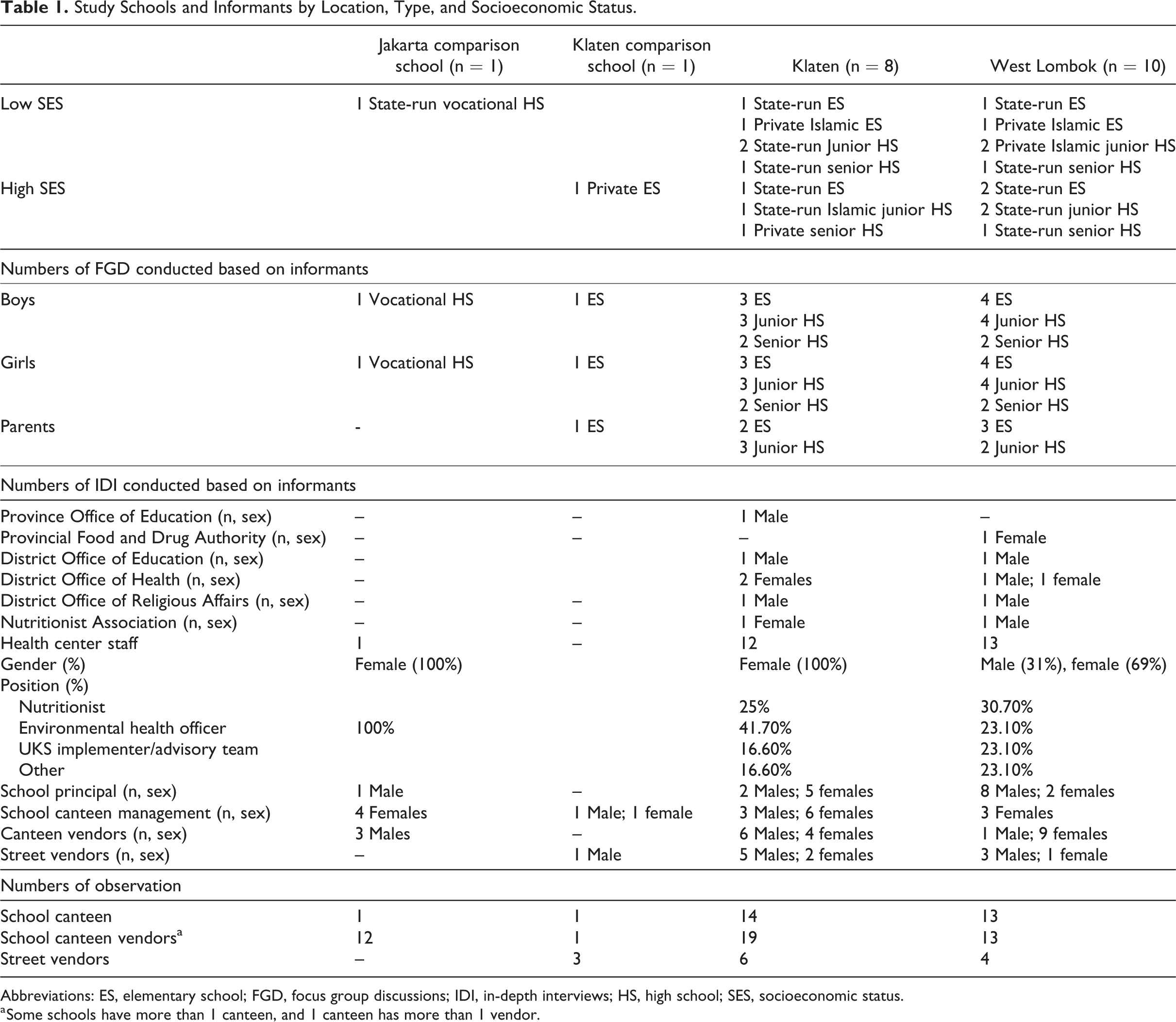
Abbreviations: ES, elementary school; FGD, focus group discussions; IDI, in-depth interviews; HS, high school; SES, socioeconomic status.
a Some schools have more than 1 canteen, and 1 canteen has more than 1 vendor.
School principals, school canteen management, canteen vendors, street vendors, students, parents, health center staff, as well as government stakeholders at district and provincial level were interviewed. These informants were purposively selected based on their involvement in school canteens to gather insights on the full ecosystem of factors that can influence the nutrition choices of school children and adolescents. The school principals and teachers, students, parents, and vendors received a token incentive for participating in this study, while informants from government stakeholders were not.
In elementary schools, only students from grades 4 to 6 (aged 10-12 years) were included, because formal nutrition education is only introduced in grade 4. Moreover, older students are better in conveying their thoughts and feelings and recognizing the importance of social values and understanding. 23
The field research was supplemented by a desk review of existing legislation, policies, strategies, and technical guidelines on healthy school canteens. This was not a systematic desk review, but rather the purpose was to provide a broader contextual information on relevant policy environments in Indonesia. 24
The conceptual framework used for this study was adapted from the World Health Organization framework of interventions and determinants of adolescent nutrition 25 as presented in Figure 1. Drawing on this framework, the study was designed to identify opportunities to improve policy and programs to ensure that school canteens provide nutritious foods and beverages to students in schools in Indonesia.
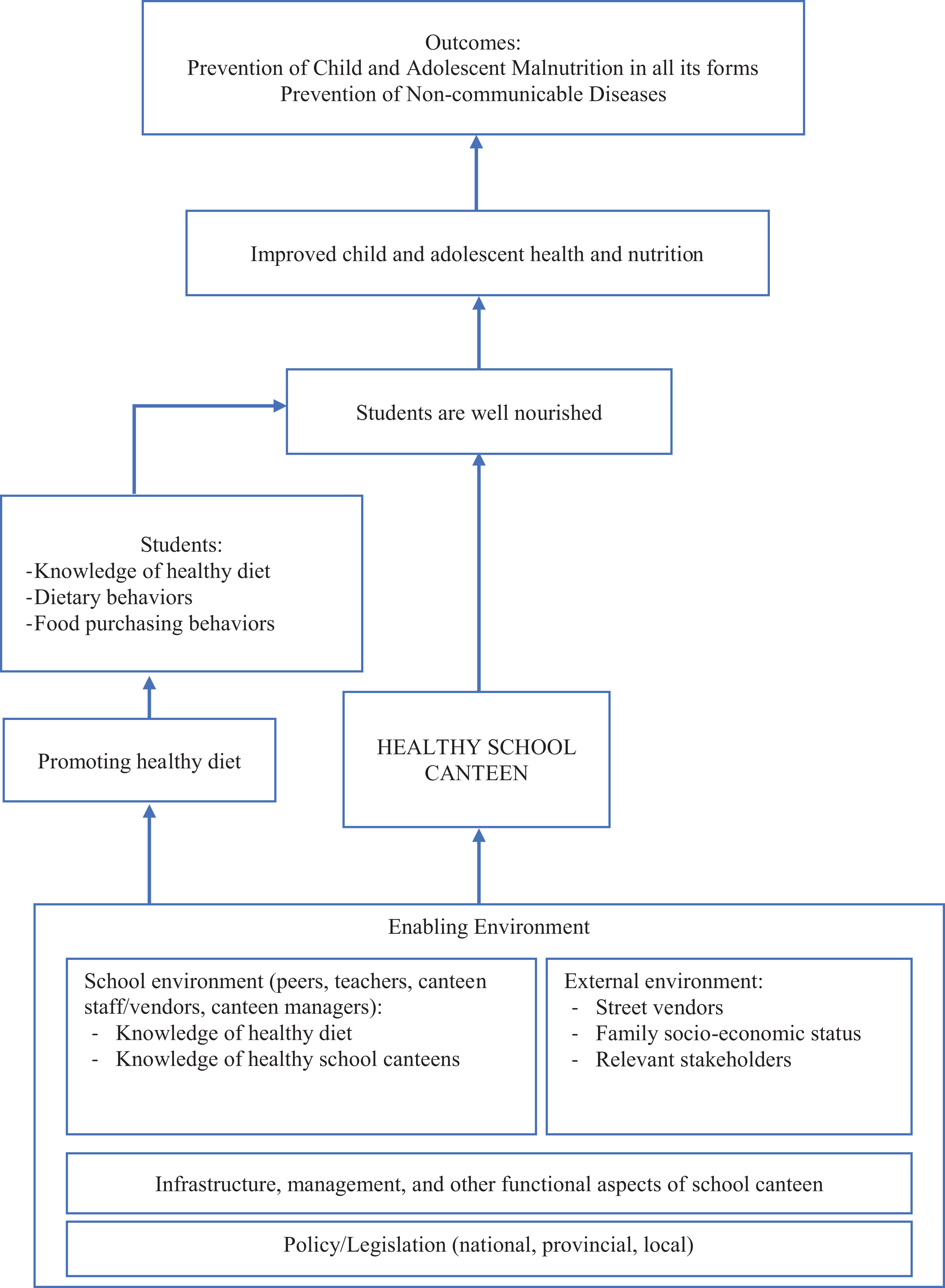
Conceptual framework (adapted from World Health Organization 2018).
Data Collection
Qualitative data were collected through focus group discussions (FGDs), in-depth interviews (IDI), and structured observation (Table 1) in August and September 2019 by 2 qualitative researchers in each location. Research instruments were pretested and revised as needed. Ethical clearance was obtained from the Gadjah Mada University in Yogyakarta (Ref No: KE/FK/0982/EC/2019), and written informed consent was obtained from all informants. School principals or teachers provided written consent for the students, while a verbal assent was obtained from the students prior to the FGD.
Focus group discussions were conducted with 40 groups of 7 to 9 students and 11 groups of 4 to 10 parents to gain insight into their general knowledge and behavior related to food preferences, nutrition, breakfast behavior, and their opinions toward school canteens. 26 The FGDs with students were conducted separately for boys and girls to assess any gender-specific responses and facilitate open candid discussion. 23
A total of 104 IDI using semistructured questionnaires were conducted with school principals, school canteen management, canteen vendors, street vendors, health center staff, as well as local government officials from the health and education sectors at the provincial and district levels to gather their views, experiences, and opinions on topics including district nutrition programs, policies and governance, nutrition of school-age children and adolescents, and school canteens. All interviews and FGDs were held in Indonesian and digitally recorded with permission from the informants. In addition, the infrastructure, sanitation, and products sold in school canteens and by street vendors were observed using standardized checklists and photographically documented.
As part of the quality assurance for this study, a team of 1 study team leader and 6 experienced qualitative researchers was formed, with a background in nutrition and/or anthropology. Prior to the data collection, a 3-day briefing and training was provided. Two researchers each in Klaten, West Lombok, and Jakarta worked closely together during the data collection to reduce potential interviewer bias. In addition, data were verified and corroborated through systematic triangulation by source, method, location, and investigator.
Data Analysis
All interview and FGD recordings were transcribed to strengthen findings from the notes and checked by a second researcher for completeness and clarity. The findings were coded using keywords (such as school canteen infrastructure, school canteen management, food environment, stakeholders’ awareness, students’ behaviors, etc) in a Microsoft Excel spreadsheet. Data were categorized according to predefined categories, patterns, and topics that emerged and were checked by 3 researchers and the study team leader. Daily discussions enabled a continuous and iterative process of concurrent data collection, coding, and analysis, until consensus was reached within the research team.
Results
Policy Environment
We identified a number of food and nutrition-related policies from the health and education sectors both at national and subnational levels highlighting the importance of nutrition of school-age children and adolescents. 20,21,27 -41 Some of these policies provide guidance on “healthy school canteen,” 21,35,39 -41 but the scope mostly focuses on infrastructure, hygiene, food safety, and logistics rather than nutritional content of available foods.
The main foundation for promoting students’ healthy behaviors and a healthy school environment (including the school canteen) in Indonesia is derived from the 2014 Joint Regulation by 4 ministers including education, religion, health, and home affairs on school health efforts (UKS). 42 The minimal requirements for school canteen in the UKS program include the presence of a canteen and supervision of the canteen and street vendors. 21 The presence of handwashing stations, facilities to wash cooking and eating utensils, and clean and healthy canteen staff are criteria for an “Optimal” UKS program.
On the other hand, a “balanced nutrition menu” and “trained canteen staff” are only required to obtain a “Perfect” status of the UKS program, and no further explanation is provided regarding the definition of “balanced nutrition menu,” and the types of foods to be provided in a Perfect UKS school canteen. The availability of healthy foods (but not the absence of unhealthy foods) is a mandatory indicator in the school accreditation process, 33 but it is only one of many indicators, and the consequences for noncompliance are unclear, whereas failure to meet this criterion can be compensated for by good performance on other aspects.
Physical Conditions and Management of School Canteens
Details on the school canteen condition are provided in Table 2. Canteens in many elementary schools, particularly those catering to low socioeconomic families, only had 1 food stall and did not have a dedicated area to eat and sit. Meanwhile, other schools, especially secondary schools, had multiple canteens with more than 1 vendor. In general, canteens in West Lombok paid less attention to hygiene and sanitation compared to those in Klaten. The schools catering to students from higher socioeconomic groups had better canteens, which were larger, better ventilated, located in permanent buildings, and generally cleaner than those in low socioeconomic schools.
School Canteen Conditions by SES and Location, Compared to Government Criteria.
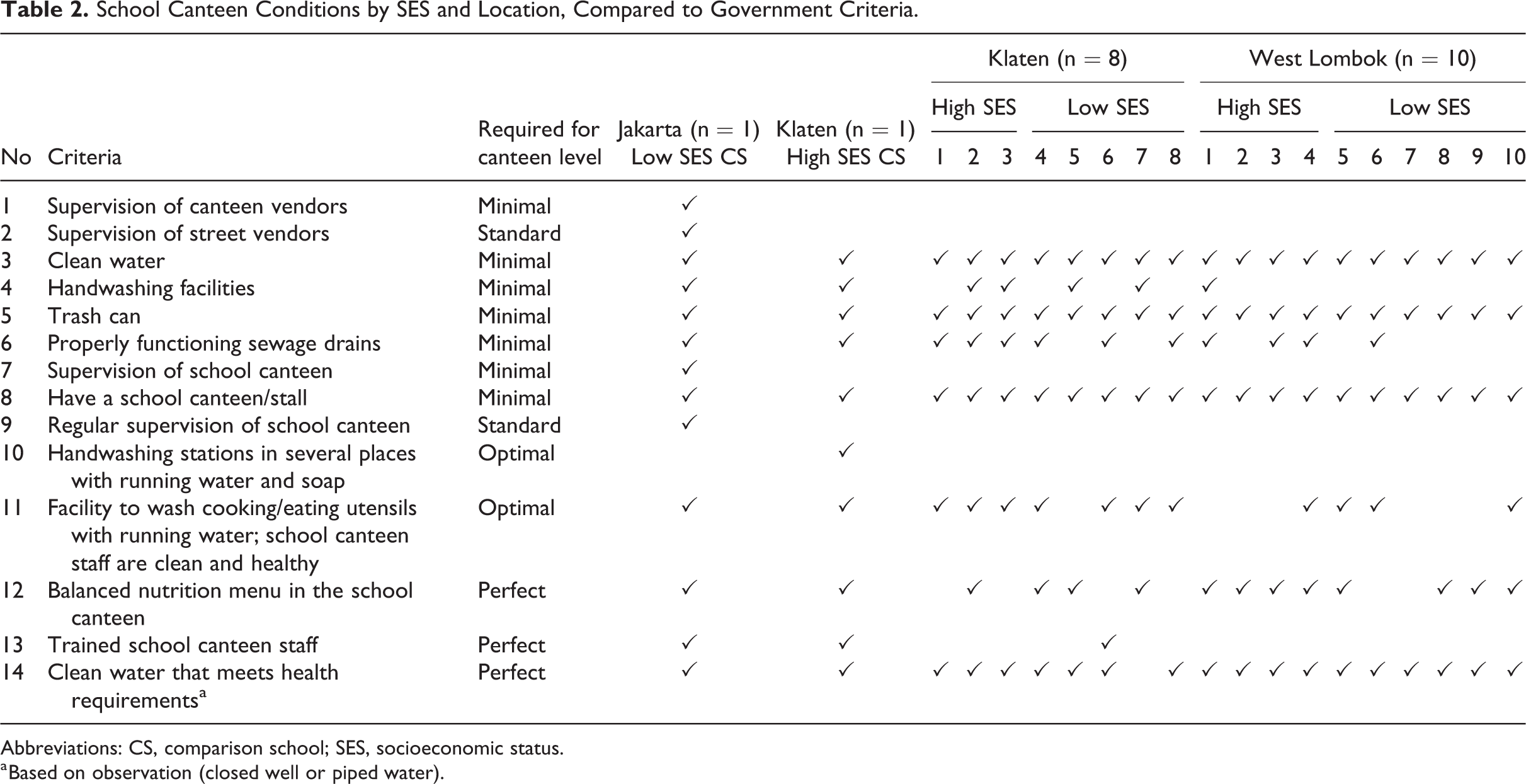
Abbreviations: CS, comparison school; SES, socioeconomic status.
a Based on observation (closed well or piped water).
In principle, school canteen management falls under the responsibility of the principal. In practice, however, direct management of the school canteen is often delegated to a teacher, usually the teacher responsible for the UKS. Table 3 shows how the school canteens in 3 study locations were managed. Limited formal structures or school rules were in place, and often no dedicated canteen supervisor was appointed, especially in West Lombok. Monitoring and supervision of canteens did not seem to happen in a regular and structured manner nor was it properly documented. As an exception, the principal of the comparison school in Jakarta had selected a group of students to monitor the canteen daily.
Management of School Canteens by Study Location.
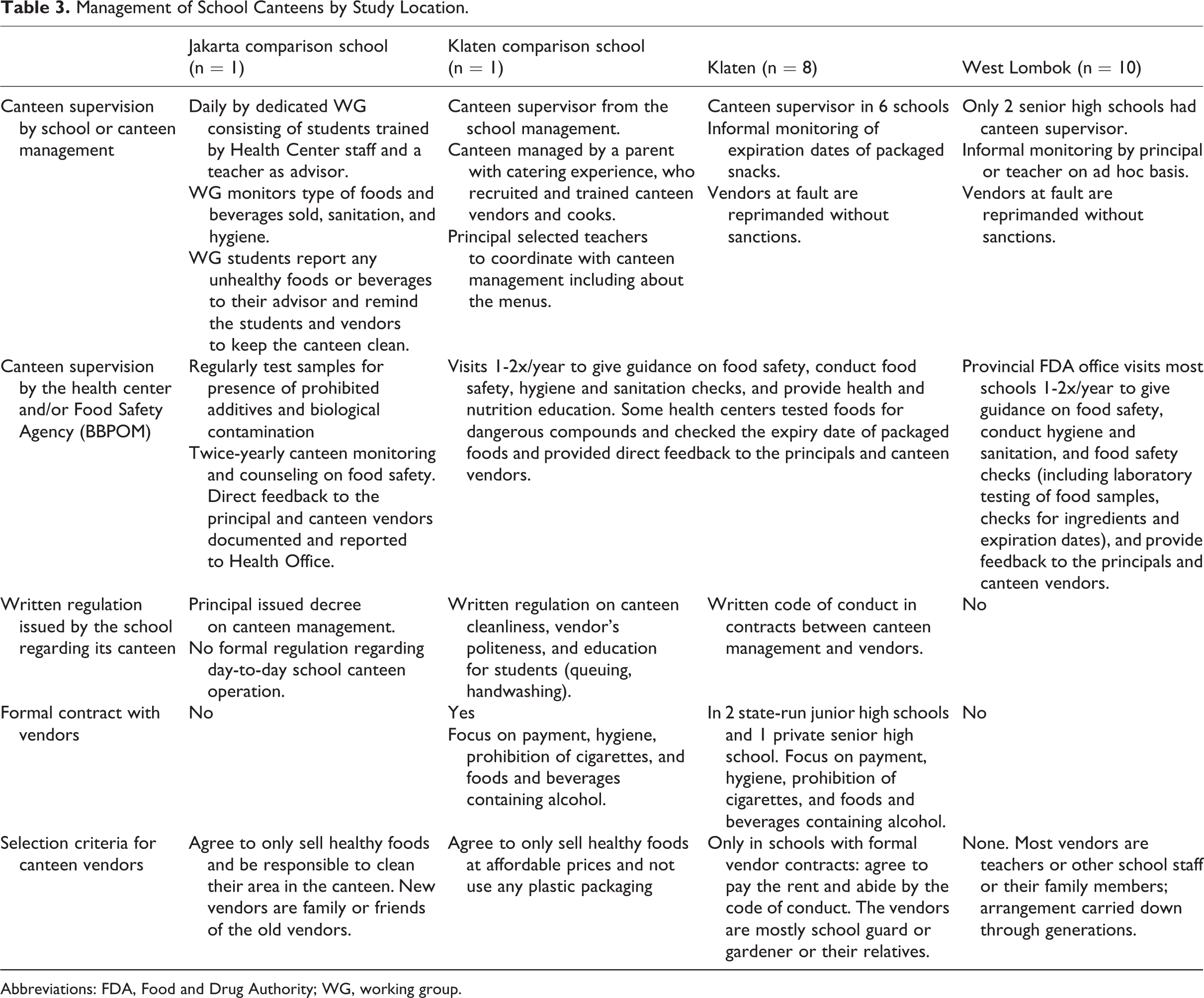
Abbreviations: FDA, Food and Drug Authority; WG, working group.
The health center staff interviewed in all study locations claimed they regularly monitored food safety and hygiene of school canteens in their catchment area and provided counseling on healthy snacks to the canteen vendors. This was confirmed by the school canteen management and canteen vendors in Jakarta and Klaten, but not in West Lombok. In addition, staff from the provincial Food and Drug Authority performed annual inspections related to food safety in all 3 study locations.
Availability of Healthy Food Items
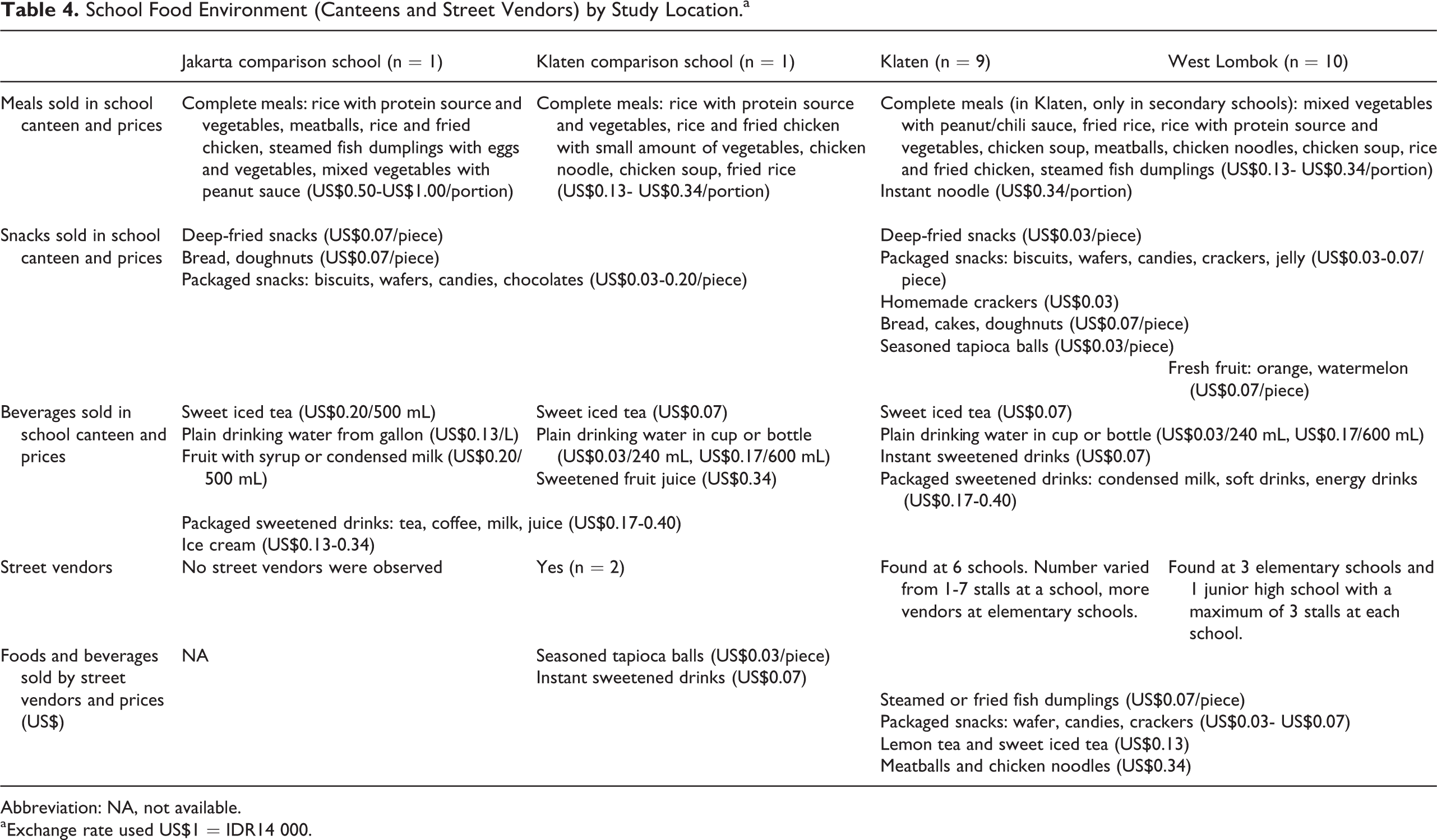
School canteens sold complete meals, snacks, and beverages at prices which were perceived affordable to students considering their pocket money (Table 4). No difference was found in the types and price of foods and beverages sold in school canteens catering to students with low and high SES. The elementary school children had US$0.14 to US$0.71 daily pocket money while their canteens sold snacks and beverages for US$0.03 to US$0.17 per portion. The secondary school children received an average of US$1.26 per day, while the price of foods and beverages sold by the canteen vendors ranged from US$0.03 to US$0.34 per portion.
School Food Environment (Canteens and Street Vendors) by Study Location.a
Abbreviation: NA, not available.
a Exchange rate used US$1 = IDR14 000.
Complete meals were commonly sold by canteen vendors in secondary schools only, except for the comparison elementary school in Klaten where the canteen provided a rotating weekly menu of balanced meals to increase dietary diversity for the students. Snacks sold in all schools mainly comprised deep-fried and packaged snacks containing high levels of sugar, salt, saturated fat, and food additives for preservation, coloring, and/or flavoring. Vegetables as part of a complete meal were sold in almost all secondary school canteens in the study locations, but the amounts and diversity were limited. Fruits were less commonly available, except in West Lombok. Although plain drinking water was sold in many schools, the most common beverages were sweetened iced tea and sugary instant drinks, except for the comparison schools where the latter were banned.
Street vendors in the vicinity of the schools were another source of foods and beverages, albeit of poor nutritional and sanitary quality. Elementary school students were particularly dependent on the street vendors, as their schools lacked a canteen. However, as the street vendors did not sell on school premises, they were beyond the authority of the school management.
Awareness of Stakeholders
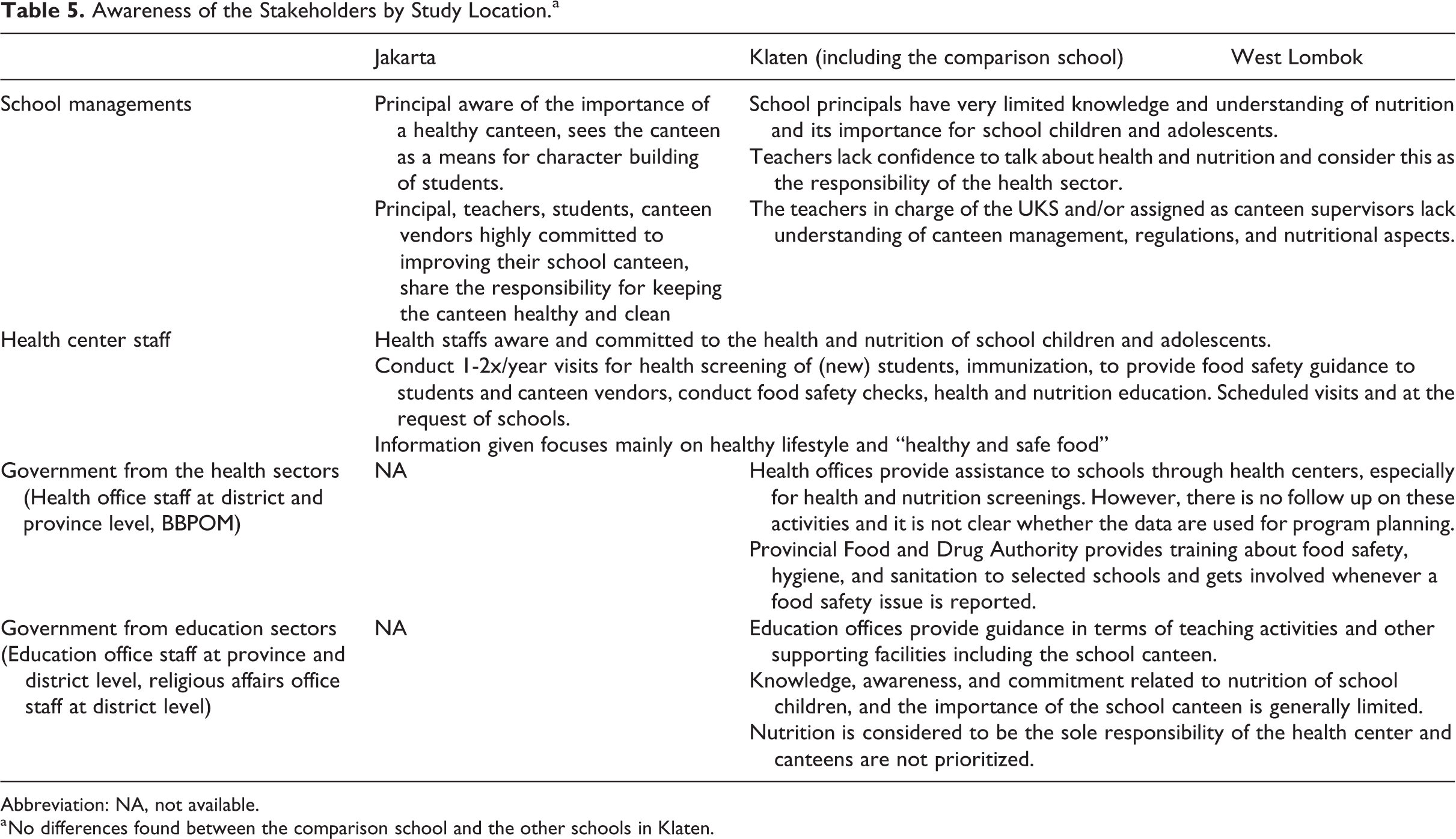
The majority of informants across stakeholder groups in this study considered themselves to have a good understanding of healthy foods. Informants from the health sector were well aware of the importance of healthy canteens for the health of school children and adolescents. However, as for nonhealth sector informants, their actual understanding was limited to food safety and rarely included nutrition considerations, including quality and diversity of diets.
The nonhealth sector informants did not consider school-age children and adolescents to be at-risk groups for nutrition problems. Most informants from the education sector considered school children’s health and nutrition the sole responsibility of the health sector (Table 5). Moreover, while school canteens are generally seen as the full responsibility of the school management, principals in this study expressed insufficient confidence to talk about health and nutrition of school children and adolescents, as none of them had received any specific training on nutrition and school canteen management. Only the principal of the comparison school in Jakarta was highly aware of the importance of a healthy canteen and provision of healthier foods to school children.
Awareness of the Stakeholders by Study Location.a
Abbreviation: NA, not available.
a No differences found between the comparison school and the other schools in Klaten.
Knowledge, Attitude, and Behavior of Students
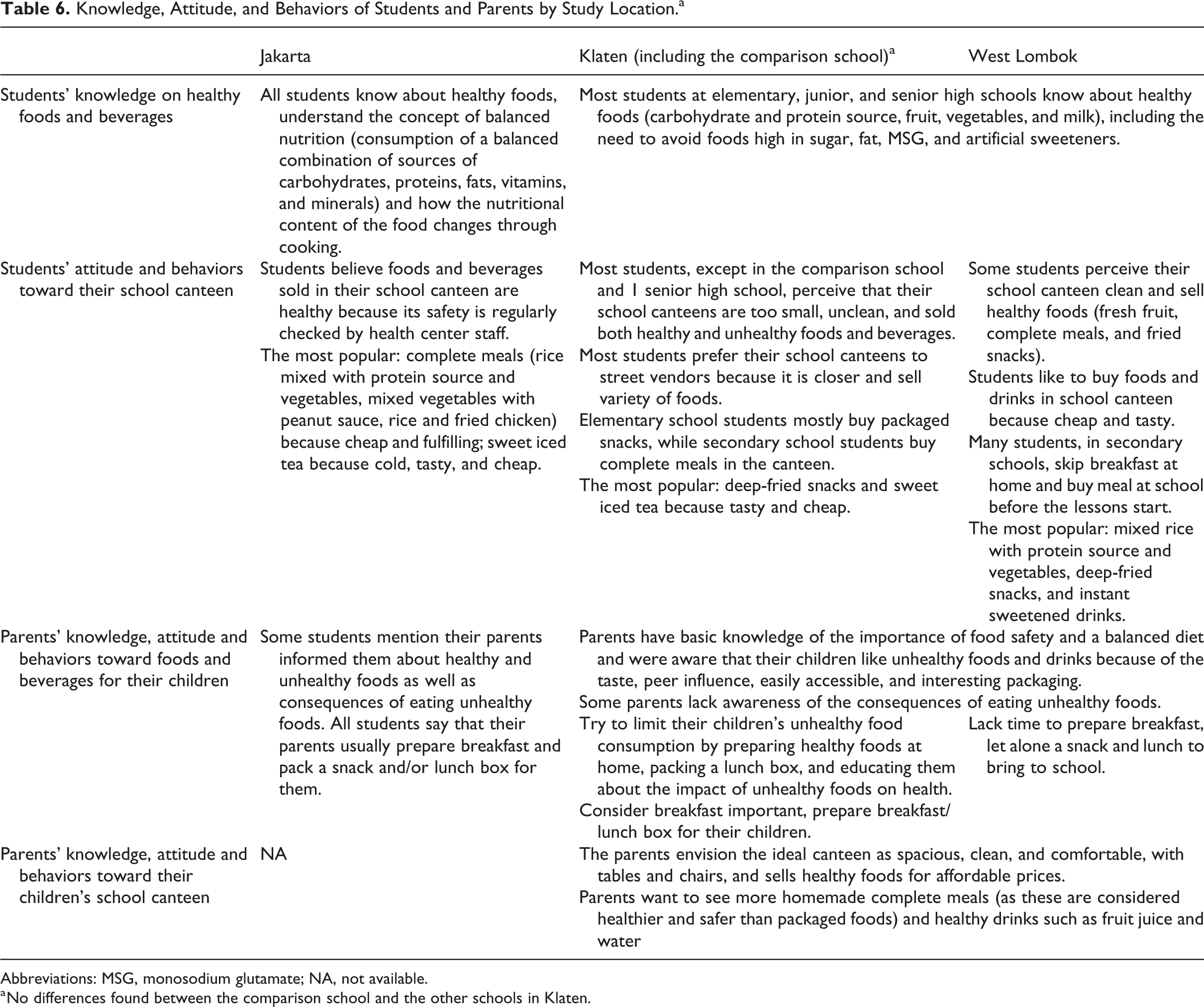
Students’ knowledge, attitude, and behaviors toward healthy foods and beverages as well as their school canteen are presented in Table 6. Most students at all education levels had limited knowledge of unhealthy foods, which they said include foods high in sugar, fat, monosodium glutamate, and artificial sweeteners. On the other hand, the students of the comparison school in Jakarta understood “balanced nutrition” (the official Indonesian food-based dietary guideline) 22 as consumption of a balanced combination of carbohydrates, proteins, fats, vitamins, and minerals. They also mentioned the effect of food preparation on nutritional content. Most elementary students bought snacks and drinks at the school canteen, while secondary school students also bought full meals as they spent longer hours at school.
Knowledge, Attitude, and Behaviors of Students and Parents by Study Location.a
Abbreviations: MSG, monosodium glutamate; NA, not available.
a No differences found between the comparison school and the other schools in Klaten.
All students mentioned taste and availability as the main drivers of their food choices, indicating the importance of access to healthy, tasty, and affordable foods in school canteens. Although students claimed to like vegetables and fruits, they did not like all varieties. Therefore, if the choice of fruits and vegetables in the canteen was not to their liking, they would not buy them. In addition, if there were cheaper alternatives they liked, they generally chose these over fruits, which are often more difficult or messy to eat during their limited break time of 15 to 20 minutes.
Knowledge, Attitude, and Behavior of Parents
Parents had basic knowledge of the importance of food safety and a balanced diet and were aware that their children like unhealthy foods and drinks, but some lacked knowledge of the consequences of eating unhealthy foods. Most parents perceived schools being fully responsible for their children during school hours, including provision of access to foods and drinks. In order to limit their children’s unhealthy food consumption in school, parents in Jakarta and Klaten prepared breakfast, packed a snack and/or lunch box, and educated their children about the impact of unhealthy foods on health (Table 6).
Discussion
A number of health and education sector policies in Indonesia covered food and nutrition issues concerning school-age children and adolescents including the school canteen. However, each policy focuses on different aspects of school canteens with specific guidelines missing on healthy foods and beverages to be sold. The supervision and monitoring of policy implementation also seemed to be weak. Accordingly, school canteens often had inadequate infrastructure and sold many unhealthy foods and beverages high in fat, sugar, and food additives. Awareness of the importance of nutrition for school-age children and adolescents among stakeholders across the board was low. Although students had general knowledge on what constitutes a healthy diet, their food choices were driven by taste and availability.
Global data show that malnutrition is prevalent in school-age children and adolescents. 43 Indonesia is not exempt from these issues, with wasting, stunting, overweight, and anemia being prevalent in the 5 to 15 years age-group. 2 The current policies in Indonesia regarding nutrition of school-age children and adolescents and school canteens are high-level documents providing generic guidance rather than detailed standard and regulation on the management and implementation of healthy school canteens. 20,21,27 -41 Moreover, no specific policy was identified focusing on the nutritional content and quality of foods being sold in school canteens.
Despite the fact that a canteen is a mandatory facility for every school, 44,45 physical conditions and management of the canteens were highly variable among the study schools. Most school canteens in this study had limited infrastructure, suboptimal sanitation and hygiene condition, as well as were managed informally with limited rules, monitoring, and supervision. This corroborates earlier studies conducted in different parts of Indonesia, which found that the majority of school canteens were small in size, with too few seats, lacking handwashing facilities and being unsanitary, while standard operational procedures for the canteen were missing and supervision by the school management and health center was limited. 46 -48,13
Most canteens in this study sold unhealthy foods and beverages, which is common in Indonesia, 13 -15 as well as in other countries such as India, 49 South Africa, 50,51 Malaysia, 52 Australia, 53 -55 the United Kingdom, 56 and the United States. 57 These studies consistently reported energy dense foods and beverages being widely sold in school canteens, with fresh food items such as vegetables and fruits being less commonly available. A study conducted in Australia reported that maintaining profit and students’ preference were the most important considerations for vendors in determining which food items to sell in school canteens. 58 However, we found that the limited knowledge on nutrition and healthy eating among school management, teachers, and canteen vendors played more important role in determining which items to sell in school canteens. Importantly, a previous systematic review also revealed that limited knowledge and understanding of stakeholders on healthy foods and beverages is one of the most frequently reported barriers for their implementation. 59
The importance of awareness and commitment on improving nutrition for school-age children and adolescents of all stakeholders cannot be overemphasized. This was illustrated by the combination of high awareness of the principal of the comparison school in Jakarta of the importance of health and nutrition for his students, committed teachers, students, parents, canteen vendors and local government and the establishment of a healthy school canteen. This confirms Meiyetriani et al who reported an association between commitment at the school management level and performance of a healthy school canteen in their earlier study conducted in Jakarta. 46
Parents in this study were not informed and aware of the condition of the canteen in their children’s school. This is a missed opportunity, as parents can be a powerful partner for schools in promoting students’ health. 60 In Indonesia, parents can be members of a school committee that provides input to school policies and monitor their implementation. 61 For example, the canteen of the comparison school in Klaten, which is managed by a parent member of the school committee with catering experience, has written regulations and training for the vendors, provides healthy foods and beverages, and has incorporated the canteen in the students’ learning process (queuing, handwashing).
Maulida et al in a study conducted in Jakarta found that adolescents from families with higher SES were less likely to base their food choices on health, convenience, and price factors than their peers with lower SES. 62 However, our study found food choices and price levels to be very similar in school canteens irrespective of SES levels. Therefore, personal preference and availability in the canteen were more important drivers for students in our study when choosing foods and beverages than nutritional value. This is in line with many previous studies that found that taste and cost—rather than knowledge—are the main food choice drivers for adolescents. 51,53,56,63 -68 Meanwhile, limited break time and an abundance of attractive and cheap unhealthy foods compared to healthy foods create barriers to healthy eating at school. 69 -72 Thus, our findings support previous research that identified the importance of removing unhealthy options from school canteens. 12,52,53
A healthy school canteen enables and encourages the school community (students, families, school staff, etc) to make food choices that contribute to better diets. 73 Our findings support the urgent need to develop a harmonized guideline and standard for school canteens, integrating nutritional quality of foods and beverages sold in school canteens. These need to define healthy and unhealthy foods and highlight the importance of restricting the availability of unhealthy foods and replacing them with healthier options. The harmonized guideline should also contain clear monitoring, reporting, and coordination mechanisms of the school canteen management. School canteens need to be equipped with adequate infrastructure. Moreover, improving stakeholders’ capacity, attitudes, and perceptions on the importance of nutrition and healthy eating among school children is essential for healthy school canteen implementation.
Numerous studies revealed that Social Behavior Change Communication (SBCC) efforts can be highly effective in improving adolescents’ eating behaviors and nutritional status as well as their academic achievements. 12,57,74 -79 A coordinated SBCC strategy is needed to increase awareness on nutrition and school canteens and to generate demand for healthy foods and beverages in school canteens.
This study has some limitations. The small number of schools and its specific geographic scope should be considered when generalizing the findings within the highly diverse, decentralized context of Indonesia. Moreover, international or boarding schools that could be used as benchmarks were excluded from this study, as they are not representative of the majority of Indonesian schools. When extrapolating the result to other contexts, the high school enrollment rate in Indonesia should be considered in terms of the extent to which school canteens impact the diet of school children. Policy analysis was not the purpose of this study and therefore the policy environment was not systematically reviewed. Local food supply, value chains, and business profits that may potentially play important roles for the school canteens were beyond the scope of this study. A more in-depth and rigorous analysis is recommended to provide a comprehensive understanding of the school food environment in Indonesia.
In conclusion, it is essential for the Government of Indonesia to develop a harmonized guideline which covers school canteen infrastructure, hygiene, food safety, logistics, as well as the nutritional quality of foods and beverages sold in schools. Unhealthy foods should be restricted and replaced by healthier options. Stakeholders’ capacity to supply healthy foods and beverages in school canteens as well as to monitor and supervise healthy school canteen implementation also needs to be improved. A coordinated SBCC strategy, which includes interventions such as advocacy, social mobilization, community engagement, social and mass media, material development, and capacity strengthening involving stakeholders at all levels, should be developed to not only create awareness about shared responsibility for the health and nutrition of school children and adolescents, and the importance of school canteens in particular, but also increase demand for healthy foods and beverages in school canteens.
Footnotes
Authors’ Note
MM and JHR conceptualized the study, provided inputs throughout the research and analysis, and contributed to the manuscript; AR contributed to data collection and analysis and drafted the manuscript; DDS led the research and analysis and drafted the manuscript; BA contributed to tools, data collection and analysis, and provided input to the manuscript. EM critically reviewed the manuscript and provided feedback.
Acknowledgments
The authors gratefully acknowledge Paul Pronyk for his insightful comments on the draft. We would like to express our appreciation to the informants for their willingness to participate, to the data collection team for their hard work: Akim Dharmawan, Arif Sabta Aji, Ilyatun Niswah, Nelty Rosanna, and to the Savica team for their practical support.
Declaration of Conflicting Interests
The author(s) declared no potential conflicts of interest with respect to the research, authorship, and/or publication of this article.
Funding
The author(s) disclosed receipt of the following financial support for the research, authorship, and/or publication of this article: This research was funded by The Government of Norway for the project “Better Diets for Better Growth” implemented by UNICEF Indonesia Country Office.
