




Abstract
The anthropology of linguistics, food, and nutrition sciences has a key role with regard to taking a critical look at the Guatemalan Food Guidelines (GFG). These GFG are communicated to native communities to interpret their eating patterns and the structural cognitive interpretation of these food groups in a cultural context. Our understanding of food is informed by cognitive structure represented by language. Since food is fundamental in human cultural identities, understanding food and food categories from the perspective of Mayan indigenous groups should be a fundamental pillar of health, food, and nutrition. The purpose of this research was to explore the GFG and compare them to K’iche’ understandings of food groups in terms of cognitive structural similarities and differences. The research was carried out in the field by way of semi-structured interviews and participant observation among K’iche’ Mayan families in Nahualá (Western Guatemala) to compare and contrast data collected on K'iche' food groups and corresponding cognitive structure with previously published findings on the GFG. These findings were confirmed through fieldwork, though some of the nuances of subcategories have changed, and significant stress was placed on 2 food groups: wa (corn-based food) and ri’kil (non-corn-based food). The research concludes that the cognitive structure and understanding of food groups and their uses communicated through K’iche’ language differ significantly from the hierarchical, technical description of food groups communicated through the GFG. In order to strengthen public health approaches to food and nutrition, indigenous knowledge must be respected, learned, and integrated into GFG.
Introduction
Guatemala carries the weight of a nutritional double burden and an epidemiologic transition, which directly implies noncommunicable diseases (NCD) in the country are on the rise. 1,2 Noncommunicable diseases are largely a result of inappropriate food consumption, food behaviors, and food availability. 3 -5 Guatemala has experienced issues surrounding food security in the last 40 years, and the Maya population is most vulnerable. 6,7 One of the NCD prevention strategies implemented by the National Ministry of Health are the Guatemalan Food Guidelines (GFG). 8 The GFG aim to promote 7 food groups that are based on the Western biomedical concepts of food composition and “healthy” eating patterns. However, multiethnic and multilingual populations may operate on a food logic that is different from conventional Western food logic. 9,10 The purpose of this research is to examine K’iche’ Mayan food categories and compare them to the GFG in terms of cognitive and language structures, similarities and differences.
The cognitive structural framework refers to basic mental processes that people use to make sense of information; in this case, food groups. 11,12 Whereby mental tools, processes, and thought patterns are used to take in information, use it, store it into short-term memory, and file it for long-term memory storage and retrieval. 13 This will help us to examine the structural cognitive of food groups in an official institutional categorization (GFG) contrasted with the K’iche’ Mayan food groups.
Guatemala is a multiethnic and multilingual country located in Central America. The 2 main population groups are Ladinos and Mayas. According to the Instituto Nacional de Estadistica (National Institute of Statistics) of Guatemala, 40% of the total population is indigenous Mayan, 14 -16 representing 21 linguistic groups, with different languages and cultures. K’iche’ Mayan is the largest group in terms of number of speakers, with about a million in total. 17,18 Most of the K’iche Mayan ethnic group lives in the Western Highlands of Guatemala in the departments of Quiché, Totonicapán, Quetzaltenango, Sololá, and other regions. Most K’iche’ speak their native language and a variable amount of Spanish, 16 but some isolated, rural communities speak only K’iche’ Mayan.
To provide an example of the significance of certain foods in Maya culture, we can look to maize. Maize is not just a staple food providing nutritional substance, but it is also the cornerstone for sustaining the religious and social life rural community. 19,20 The Popol Wuj, a book recorded that knowledge transferred by oral tradition of several generations, describes how humans were created as people of maize. 21,22 Maize is sustenance and forms the basis for cultural, agronomic, and ecological organization of Maya communities. 23 The distinctive cultural elements around maize production, transformation and consumption, are revealed by examining the uses of maize as food, especially food and beverages that have symbolic meaning. 19 Food uses can shed light on fundamental elements that support communal connections with regard to language and culture.
Governmental institutions, such as the Guatemalan Ministry of Health, have made efforts to implement GFG for the Guatemalan population. One of the objectives of the guidelines is to improve the nutrition status at the rural community level. Although it was designed for a Guatemalan population (Maya and non-Maya people), these guidelines are developed purely from a Western nutrition science paradigm, metrics of nutrients, and dietetic knowledge; the cultural aspects of Mayan models regarding experiences of health are rarely, if at all, considered. 22,24 As a result, these cultural barriers have negative implications for preventing and treating nutritional issues. For example, the GFG are found only in written Spanish, whereas the Mayan communities speak local Mayan languages, which are generally not written. Additionally, as a result of poor access to the education systems/schools, a significant proportion of the adult population does not know how to read or write in Spanish. 14 Indigenous women, who are traditionally in charge of preparing meals, are most vulnerable to educational exclusion. This reality represents a significant language barrier to communicating the information contained in the guidelines. In short, the nationally approved food and nutrition guidelines are based on a structure that may lead to an increase in inequalities in access to food and nutrition knowledge, thus access to nutritious food.
The cognitive anthropology approach examines individuals’ and communities’ mental processes in understanding and using information. 25,26 The culture cognitive approach to language focuses on meaning and its realization in classificatory systems. Fundamental elements of language are patterns of cognition, which have the power to revitalize the language structure to understand the use and definition of things. 27,28 Cognitive anthropology studies take into account these elements with regard to indigenous knowledge, reported first-hand and through historical academic studies, food practices as food groups in the K’iche’ Mayan population. 27,28
The cognitive anthropology approach examines how food is perceived and understood. In this sense, the relationship between human language, culture, cognition, and human thinking work together to understand how the world is perceived; in other words, language structure, social factors, and cognition can shape our thoughts. 27,29,30 This basic thesis is that our perception of the world and our ways of thinking about it are deeply influenced by the structure of languages, culture, social factors, and the cognitive structures that this produces. 27,28,31,32 Food groups in K’iche’ culture practices and attitudes could be influenced by K’iche’ Mayan language and cultural behaviors features in a native community. 33,34 The goal of cultural cognitive processes is to discover the cultural rules or organizing principles underlying the cultural behavior of certain people. 27,29,30 The cultural cognitive process could have implications about how native population define, value, and use food that might involve social food issues in the nutritional status.
Background
Description of the GFG and the Linguistic Cognitive Structure of K’iche’ Food Groups
The GFG were first published in 1998 by the National Commission of Dietary Guidelines, with technical support of the Institute of Nutrition of Central America and Panama. The guidelines list food types and frequency of their consumption as a tool to educate the general population about nutrition. 35,36,37 In 2012, the new GFG promoted by the Ministry of Health and Social Assistance 37 (Ministerio de Salud Pública y Asistencia Social) includes food group definitions, recommend portion sizes, and frequency of consumption with the goal to improve general health rates. The GFG aims to ensure that the knowledge for adequate and balanced nutrition is established nationally.
The GFG contains 7 food groups: grains and cereals, leafy plants and vegetables, fruits, meat, dairy products and derivatives, sugar, and fat. The aim is to guide the population to decide what types of food should be brought to the family to complete the nutritional recommendations. Also, the GFG promotes a frequency of consumption of food in a particular form to eat. Each group has a key message and illustration about the kind of food (Figure 1).
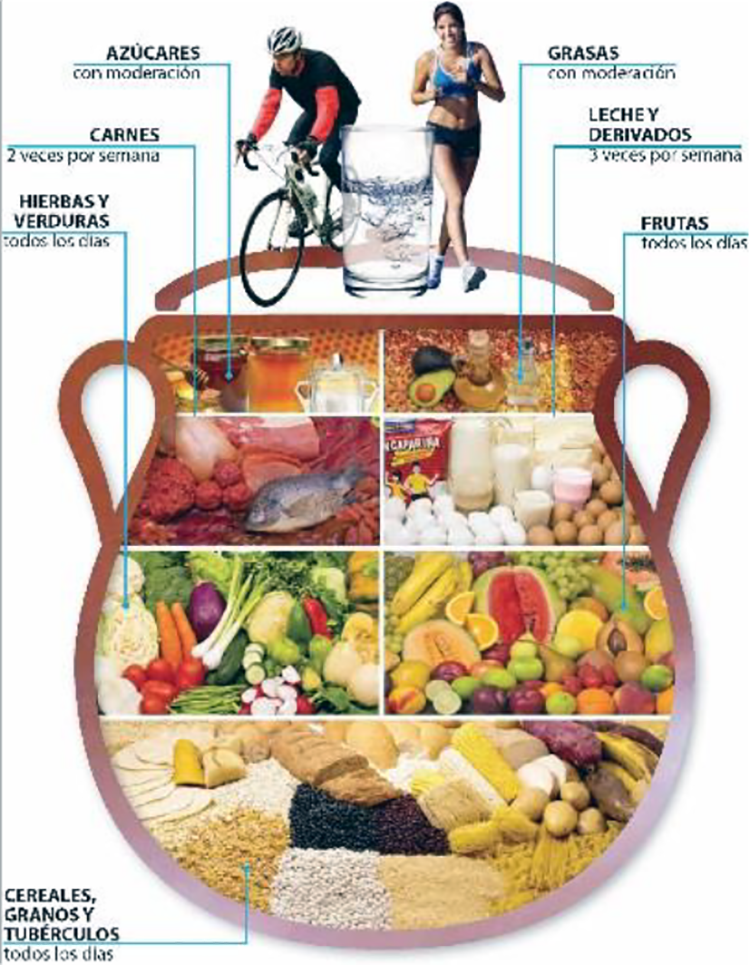
Food pot, national food guideline, Guatemala. For more information: Guías Alimentarias para Guatemala, pp 14. Available http://www.fao.org/3/a-as870s.pdf.
The visual representation of the GFG is similar to the contemporary MyPlate food guidelines, which recently replaced the Food Pyramid. The image displays 3 key elements: food group, key message to promote healthy food, and illustration (see Figure 1 and Table 1). The nutritional-medical concept is based on Western concepts of food and food categories and does not include cultural–linguistic meaning about food groups.
Description of Food Groups: Guatemalan Food Guidelines.
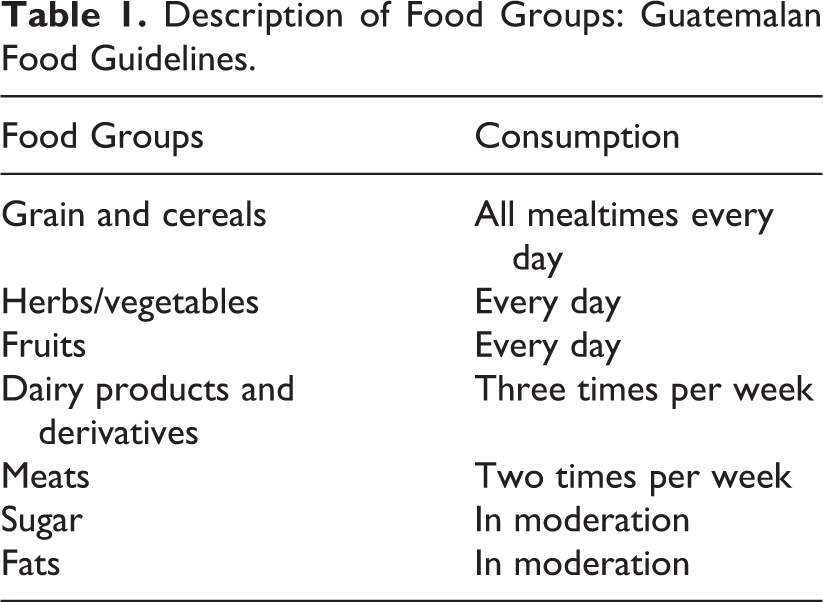
Table 1 shows the list of food groups arranged in a hierarchical level the food from GFG. But, as we will show in this article, linguistic barriers might result in discrepancies in the understanding of food from a K’iche’ perspective and GFG result in miscommunication regarding the approach to food. Anthropology of linguistics, food, and nutrition sciences plays a key role with regard to taking a critical look at the GFG’ flow toward native communities and the structural cognitive interpretation of these food groups in a cultural–linguist context.
Cognitive Structure of K’iche’ Food
In the classic study of food classification, Quiche food: its cognitive structure in Chichicastenango 40 gives a cultural and linguistic account of food groups and their classification among the K’iche’ from Chichicastenango, Western Guatemala. This study shows symbolic structuralism matters regarding the cognitive structure of K’iche’ food groups. The text describes the linguistic classification of food in Mayan language. Representing culturally salient cognitive structures of food groups in K’iche’. The document is important because it shows tables with cognitive structure of food categorization in K’iche’ Mayan culture. Table 2 shows the results.
Structural Levels of K’iche’ Food Groups.a
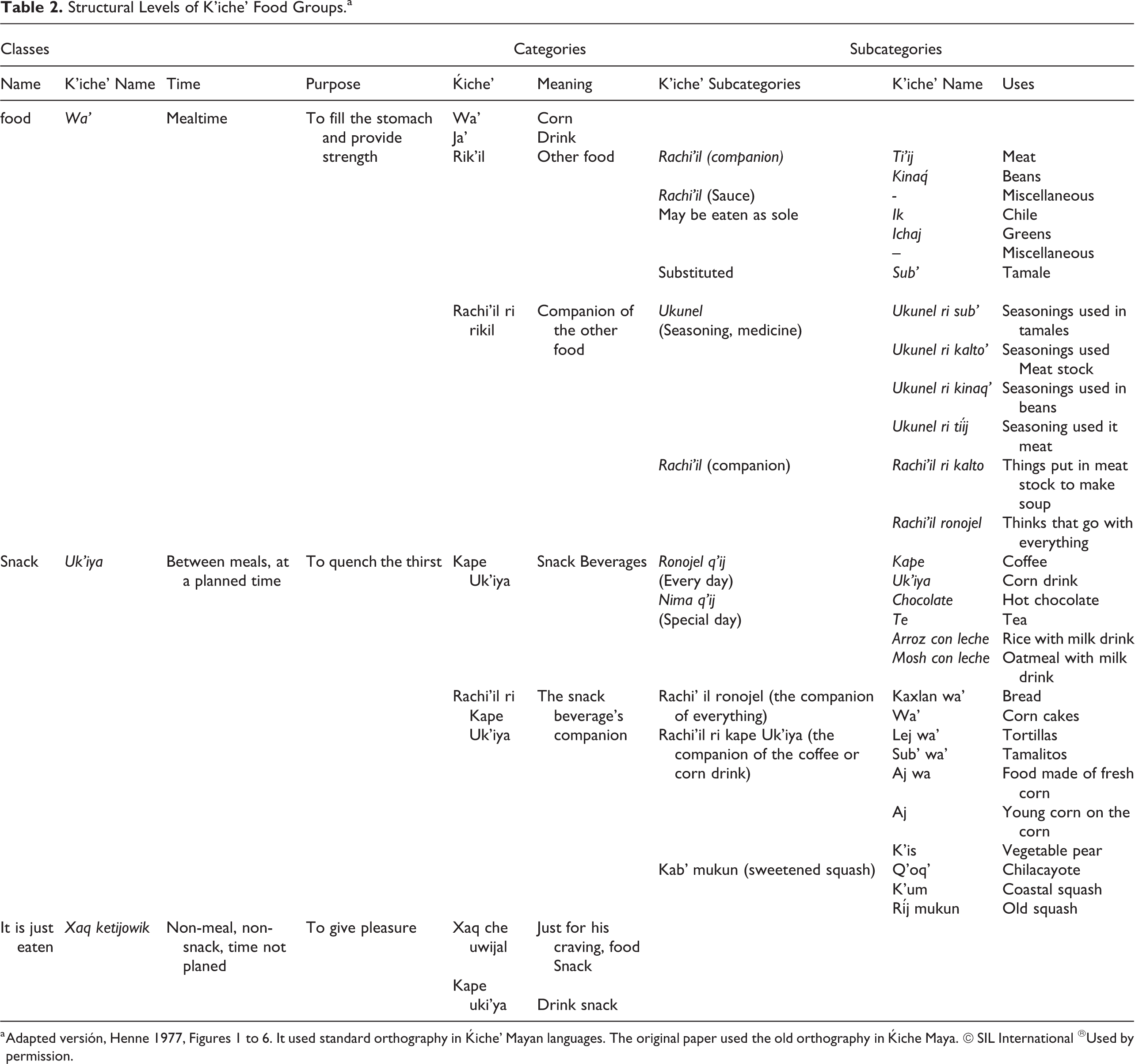
a Adapted versión, Henne 1977, Figures 1 to 6. It used standard orthography in K´iche’ Mayan languages. The original paper used the old orthography in K´iche Maya. © SIL International ®Used by permission.
According to K’iche’ classification, there are 3 main domains: wa’ (food), uk’iya (snack), and xaq ketijowik (food “just eaten” to satisfy cravings, without having any other recognized social significance). There were several categories, subcategories, and examples found for each group. The main factor to include a food item in the wa’ category is when food has corn-based food. The uk’iya domain is a kind of cultural snacks and local homemade drinks, like food between mealtimes. Xaq ketijowik (“just eaten”) domain suggests the existence or a linguistic taxonomy in which certain food items were obviously classifiable as “food” in contrast to things that are “just eaten”. It has resulted in cognitively valid subcategorizations of the domain and categories of K’iche’ food. Thus, this categorization reveals discrepancies between GFG as well as cultural and linguistic differences in K’iche’ Mayan communities with regard to groups and categories of food.
Another study about the food classification among the K’iche’ from Totonicapán is the report Cultura y Practicas Culturales de Totonicapán (Culture and Cultural Practices of Totonicapán), 38 Western Guatemala. Its result show that also in Totonicapán food items are classified in a similar manner to the Chichicastenango study. This study also takes into account seasonal availability of food items, see Table 3.
Totonicapán K’iche’ Food Groups.a
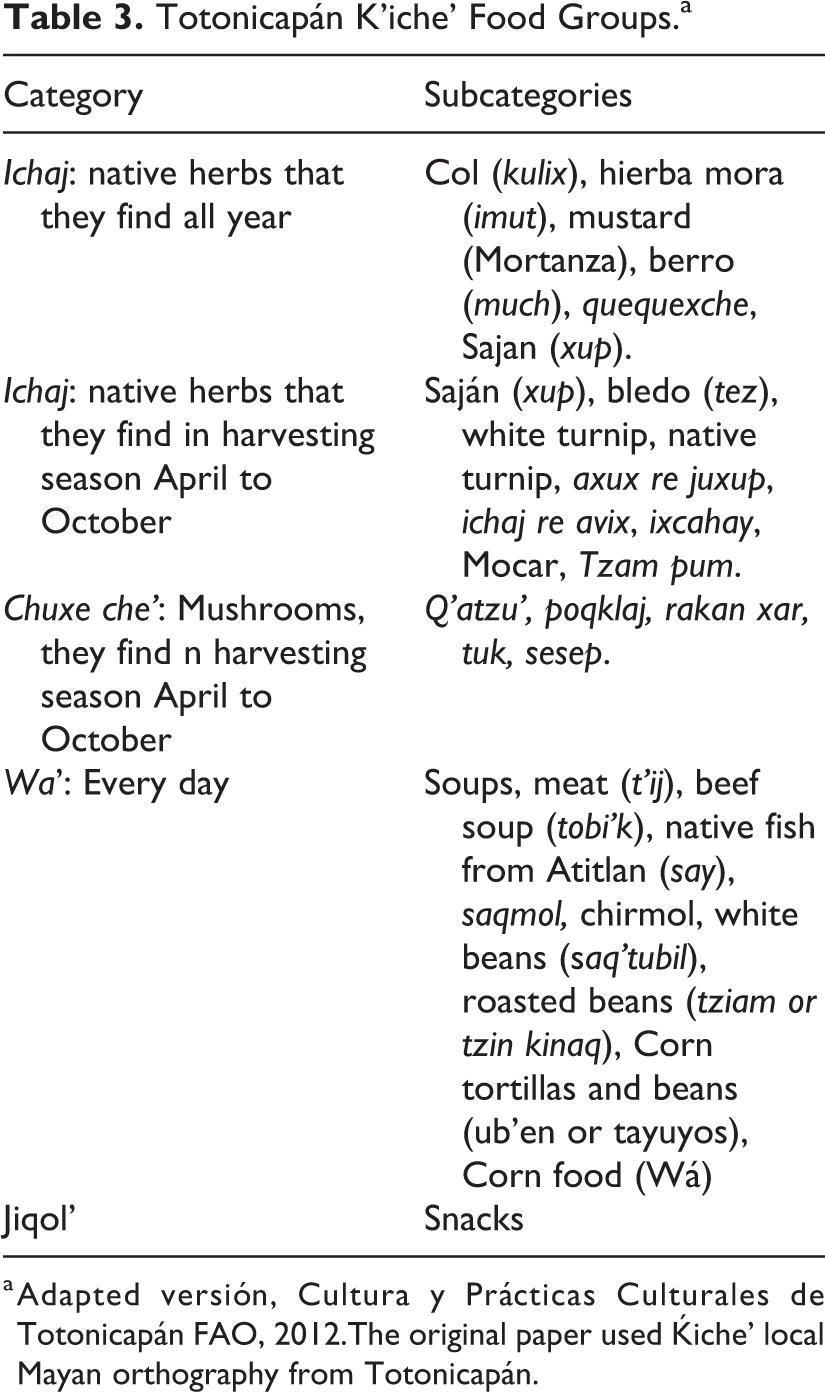
a Adapted versión, Cultura y Prácticas Culturales de Totonicapán FAO, 2012.The original paper used K´iche’ local Mayan orthography from Totonicapán.
Table 3 shows categories of food that provide an interpretation to view and compare both (Chichicastenango and Totonicapán). The relevance of daily food and snacks has similar characteristics with Chichicastenango K’iche’ food groups. Table 3 shows that some categories of food in language are constants in different K’iche’ Mayan communities. However, Totonicapán categories have some contrasts and differences with regard to Chichicastenango. For example, the ichaj categories show the food availability by season (some ichaj found year-round vs find between April to October, the rainy season). Also, the mushroom category adds the factor of availability and could reveal interesting implications regarding the understanding of food groups from a cultural perspective. The availability of food items is a key factor to obtain and access food in Mayan communities. Availability is important because this is a factor to access food at a certain time of the year. This new category adds value to the study from Totonicapán because it describes this category that is absent in the Chichicastenango study.
Methods
This study examines the cognitive structure of food among the K’iche’ Mayan using a linguistic approach and comparing the findings with a survey of existing studies on food classification among the K’iche’. Data were collected during 4 weeks of ethnolinguistic exploration in the small K’iche town of Nahualá (Nahualá, located in Western Highland Guatemala, Municipality of Sololá) in the summer of 2018 in collaboration with students of the K’iche’ Mayan Language Institute, an intensive language immersion program. Students collected linguistic data in the field over the course of 4 weeks. Nahualá has one of the highest proportions of chronic malnutrition in the region and the majority of the population speak K’iche’ Mayan language as first language. 38 The majority of students had at least 1 year of previous K’iche’ classes in their universities; this allowed to connect the food K’iche’ concepts in the local language. Students were trained and randomly assigned to families to collect data on food classification via semi-structured interviews and participant observation. The data were collected exclusively in the K’iche’ language. Students carried out a semi-structured dietary interview with key questions which would help to disclose further meaningful classification in each meal time that student eats with the family. Also, the field researcher took field notes and describes some observations regarding experiences of food meals with each family in a field diary.
To identify the K’iche’ Mayan food groups, the technique was to qualitatively semi-structured dietary interviews of what kind of food they eat in mealtimes through short questions and participatory observation with regard to food meal times. The semi-structured dietary interviews focused on K’iche’ Mayan food linguistic categories and compared them to the GFG in terms of the cognitive structure where food language categories emerged as the main data. These data were used to develop a database of food in the local language. The interviews and records were transcribed and translated by 2 local K’iche speakers under the supervision of the principal investigator. The transcription and translation were cross technique, from K’iche’ to Spanish and Spanish to K’iche’. The same technique used from Spanish to English and English to Spanish. This revealed what kind of food classification K’iche’ Mayan people have.
Given that those involved in the study carried out participant observation fieldwork over 4 weeks with local families, some limits were expected with regard to food groups in the current fast-food transition and green food revolution. Therefore, some concepts with regard to junk food or ultra-processed products have been absent partially in the fieldwork. Also, the exploration of differentiation between culture uses and production as food source requires a methodology and time in fieldwork that 4 weeks were not enough to explore in-depth. For example, the harvesting season in rural areas of Guatemala takes around 4 months of time.
Ethics
The students were living with local families in Nahualá who had previously given their verbal consent for students to live with the families and learn K’iche’ in Nahualá. In order to obtain consent to take linguistic data about the foods in K’iche’ Mayan, verbal consent was obtained. Since the research ethics in social sciences do not follow biomedical logic, especially regarding linguistic data, we followed the basic ethical guidelines for oral consent base to American Anthropological Organization. 39 The research was minimally invasive, as it was focused only on linguistic patterns of community understanding of language use when talking about food.
Results
The previous studies lay the groundwork to know the context of GFG and its implication in K’iche’ Mayan food groups. It was important to carefully lay out how exactly the described methods support these findings. The fieldwork for this study aimed to verify and update the fieldwork developed in Nahualá (Sololá). The local context of Nahualá provided a deep immersion experience in K’iche’ culture, where participation observation was a key element of the research (see Table 4).
Structural Levels of K’iche’ Food Groups in Nahualá.a

a It used standard orthography in K´iche’ Mayan languages of Nahualá.
b Wa, this has double categorization. For example, when sub’ is part of the mealtime, sub’ becomes part of riki´l. But if the sub’ is eaten alone, without another kind of food becomes wa.
c Same example with sub’ to bichi q’or.
Table 4 shows similarities to previous studies in Chichicastenango and Totonicapán. Fieldwork revealed that K’iche’ food groups had adopted modern food items to the traditional linguistic cognitive structure regarding food. This table describes 2 interesting groups focus on a multidimensional concept of food.
The munil group refers to small meals in the morning, afternoon as a snack food. Also, Meq’in refers to a special group of hot beverages that could include coffee or atoles. In Nahualá, food groups are consistent and similar to others structural K’iche’ groups with regard to food. In this sense, the results in Nahualá could describe some interesting matters with regard to K’iche’ food groups. These results are consistent with previous research because it maintains K’iche’ groups as rikil and wa. Also, this exploration matches the idea that K’iche’ food group has structural cognitive components with cultural matters in different regions of K’iche’ speakers in Chichicastenango, Totonicapán, and Nahualá. The last table has cultural and social relevancy. This is a food categorization that has different proportion of food items in each K’iche’ group. It would be that GFG have more similarities to the US mode of thinking than to the indigenous Guatemalan understanding of food with regard to K’iche’ food categories.
Discussion
From Cognitive Structural to Nutrition
The way groups of people perceive food groups has a significant impact on our food choices. There are many ways to categorize and identify food, for example, cultural and ethnic significance, health impact, biochemical components. Food preferences by ethnic groups become a way to identify symbolic cultural elements that translate to cultural value placed on foods. Some cultures have notions of nutritional aspects of valuable food sources because they are ethnic, religious, and class identifications. 38 Additionally, research has continued to refine theories about the cultural and nutritional relationship regarding food groups and their cognitive structure.
In this context, K’iche’ Mayan people have a hierarchy of food consumption and cognitive structures that explain food behavior. This elaborates on how cognitive structure is used to guide food behaviors. For K’iche’ Mayan, consumption of food is based on cognitive cultural structures. 39 The motivation behind the consumption of certain goods is based on cognitive cultural structures. Guidelines may attempt to capture cultural motivations into guidelines that also embody nutritional values in order to achieve acceptance and ensure nutritional balance. However, the element of capturing cultural understands and motivations for food selection and consumption is complex and often oversimplified and ignored. This is why the basic notions of food, nutrition, and diet from a K’iche’ perspective differ significantly from GFG.
Among K’iche’ people, food is categorized into 3 levels; wa (food-mealtime), uk´iya (snack-between meal, at a planned time), and xaq ketijowik (it is just eaten-non-meal, non-snack, time; no planned). In contrast, GFG have 8 group labels based on nutritional components but not on cultural understanding of food order and hierarchy. The fieldwork carried out in Nahualá reflects similarities, and thus consistencies over time, with regard to the structural cognitive pattern of food groups described in Chichicastenango study. Language elements are important to distinguish in terms of the cultural implications of food selection, preparation, and prioritization. These cultural issues are indicative of what K’iche’ Mayan population eat and, as a result, for their health and nutrition status.
In the same way, the data reported from Nahualá exhibit a similar pattern where wa and rikil have significant importance in the food groups. But other groups complement the cognitive structure about these kinds of K’iche’ food groups. Kunel group includes some cooking herbs and spices, for example, Alwawe’n (peppermint) is part of. Without a doubt, biomedical knowledge has a classification of food that differs significantly from the cultural–linguistic approach. Therefore, the understanding of food groups, biomedical versus cultural, is neither parallel nor complementary, rather potentially conflicting, because the bio-specialized knowledge uses biomedical concepts to categorize groups that local rural population cannot access and are not transferrable to their own languages and thus are excluded from local understandings of food. The conflicting nature of these 2 knowledge systems could persist unless public health institutions adopt a truly complementary and integrative approach.
The language used in health care focusing on food and nutrition issues has communicative interactions in biomedical and therapeutic in rural Guatemala. 41,42 Maya structural cognitive understandings of K’iche’ food is influenced by intracultural therapeutic and cross-cultural biomedical interactions. For example, the fact that the fat is in the same category as sugar (see Table 1) could support the idea that a beverage mixed with water and sugar should be consumed every day to support healthy nutrition instead of healthy mushrooms when the harvest season allows it.
The concept of food has health implications; the concept could represent a rigid structure of medical meaning when food takes a technical role as an academic definition. The medical structure could change the meaning of the message between interlocutors especially in food linguistics. 43 In this sense, the medical field uses classifications and taxonomies as an academic expression that is useful because they help to think logically about things. 44 But the perception and judgment of categories depend on the culture and place, for example, K’iche’ food groups. Thus, health culture in terms of food is important. Food is a general term that includes cognitive and social aspects of health and nutrition; the culture affects food regarding health and nutrition status. Culture involves thoughts, feelings, experiences, beliefs, and values toward food that impact the health status.
The nutritional knowledge based on nutrients, recommendations, and diets has reductionist principles in biomedical matters and has strong implications for Guatemalan health system. 45,46 Food groups describe a concept of biomedicine in GFG as a hegemonic global system. This structured definition of GFG connotes an idea of “good” and “bad” foods. Therefore, GFG could have a structured concept in nutrition issues but not in cultural competencies. Also, the main purpose of nutritional guidelines for food is to provide vital information that promotes optimal health status. In this regard, these guidelines focus on calorie, carbohydrate, fat, and protein distribution by food categories and cover the adequate dietary requirements by population. 44 Rural communities, as K’iche’ Mayan, request these guidelines have cultural relevance in cognitive structure for understanding in a better way this kind of intervention.
The synergy between nutrition guidelines that are based on medicine and cognitive structural guidelines in K’iche’ culture is an area of reciprocal action that explains how cultural forms have implications for nutrition status. Also, this synergy has a space of knowledge interchange. 45 The interchange between knowledge is an opportunity to complement each other. The opportunity to incorporate nutrition matters could be of significant benefit to K’iche’ Mayan people. On the other hand, the cultural structural cognitive could strengthen the nutrition guidelines in terms of culture, food, and nutrition.
Cultural Skills and Food Knowledge
The nutrition and food cognitive structures among the K’iche’ Mayan includes local healers, midwives, and native therapist that understand the interaction of food and healing. The native healer, as a native speaker, could play a key role in assisting transitioning nutrition to cultural concepts. Scholars have known that healers play certain classical roles in terms of knowledge, attitudes, and beliefs in their communities. Healers have been deeply embedded in the culture and are able to speak the local language, know certain local needs, and heal disease specific to that area. 10,47 Additionally, they could have healing abilities with native foods and plants, which could relate to therapies needed in a nutritional and cultural context. 10,48 Healers also give food recommendations based on cultural knowledge. As a result, healers are important caregivers to those in their community that need to improve health and nutrition status.
Local interventions in rural Guatemala promote and translate the GFG to local Mayan languages for indigenous communities. 17,18 This is an intervention that allows the cultural relevance of information and could shape local knowledge. A cultural–nutritional intervention of this sort could be an opportunity to make new linguist, cultural, and nutrition materials. For example, interventions, where caregivers receive individual nutrition education and feeding plan in the local Mayan language, have a better diversity and acceptable diet in their families. 15,49 Also, the language approaches provide information with cultural relevance. A great example of this is described in Kaqchikel women of Xejuyu in rural Guatemala, 50 where they give the label to a new food product due to the use of local language to describe the characteristics of this food product. This label could be incorporated into the cultural–nutritional guidelines in local languages to promote food products the correct way. This could adapt cultural relevance and nutrition sciences in a dualistic intervention.
There are similarities between K’iche’ food linguistics and other rural communities in Guatemala. López García argues that Ch’orti’ Mayan, a native eastern Guatemalan ethnic group, is familiar with the local area and the foods produced, particularly during harvesting season. 51 Cho’rti’ Mayan use local foods to attribute and propose meanings to feeding (cognitive structure). Ch’orti’ Mayan people categorized food groups with similarities to those of K’iche’ Mayan people. In this sense, the Ch’orti’ Mayan community has food groups based on symbolic meaning in many cultural aspects, and these features are quite similar to those of the K’iche’ Mayan in Guatemala. Therefore, all cultures may use cognitive structures with social and linguistic elements toward food in their groups.
Biomedicine of Food Groups
Medical and social sciences, as nutrition and linguist, both explain how sociocultural problems have health implications for populations, groups, and people. The World Health Organization describes that issues related to the culture have direct effects on the health status as a social issue. 50 Because culture is part of the interaction of beliefs, social forms, and material traits of a racial, religious, or social group; these may lay conditioning the health status of specific cultural communities. In this sense, food groups have meaning to individuals and communities concerning uses, consumption, and practices. The concept of food groups (wa in K’iche’ Mayan) has been studied in social disciplines and has serious implications toward health and well-being. 41,52,53,54 Nonetheless, the distinction between different kinds of groups at a community level is vital with respect to promote guidelines. Because technical-health institutions are official voices to advocate for definition of food and its consumption. Also, these institutions may not lead to clarify what kind of meaning have the food in a cultural context.
The creation of a system of global governance through technical–nutrition concepts is a structure that promotes concepts that may lead bias. Medical anthropology provides insights into factors and actors that shape the ongoing production of knowledge about technical-health concepts. This production circulates and interacts with different stakeholders in the society that access, circulate, receipt and interpret information available from different sources. 55 The articulation between structural cognitive and biomedicine shows important critique of technical food guidelines that increasingly approaches human populations as political and in particular way health problems work at the level of the collective. To this extent, global governance in health could grow health inequalities that emerge for social construction of technical food guidelines. These guidelines could differ from local culture–linguist meanings of food groups in native communities in rural Guatemala.
Conclusion
It is complicated to provide useful and similar cultural food guidelines to K’iche’ Mayan population in Guatemala. There are variations within groups on Mayan culture, nutrition, and cognitive structure. These variations have common points to improve food guidelines and could have positive benefits to the Mayan communities. But also, these variations have significative differences. Thus, find a proper balance is vital to develop food guidelines in Guatemala that take account the cultural issues.
The categorization of food groups, in terms of linguistic intervention, involves an opportunity to optimize and improve an intervention. These linguistically challenging issues are important to address in order to promote and respect the cognitive structure of food groups for this indigenous population and restructure current GFG to truly embody these understandings. All of these elements could be helpful to health authorities in terms of developing new food guidelines for Guatemalans.
Note that this fieldwork considers the linguistic cognitive structure take only one Mayan language, K’iche’, with regard to food groups. Guatemala has 21 Mayan ethnic groups. There is a significant gap in knowledge of how the other 21 Mayan ethnic groups understand, value, and interact with food. Thus, the labor of creating one Guatemalan Food Guideline that truly embodies the pluricultural of Guatemala is a challenge, but not impossible if the knowledge is valued by public authorities, and resources are allocated for seeking out this invaluable cultural and anthropological knowledge.
A more holistic model that would effectively communicate food guidelines to K’iche’ people of Guatemala would integrate the current GFG and indigenous language categories, where K’iche’ cultural is understood with regard to food groups. The points of intersection of knowledge and understanding of food can help us understand the potential for profound and extensive implications of cognitive understandings, about what people eat, to develop more effective Guatemala Food Guidelines.
Footnotes
Authors’ Note
Sattler has been a K’iche’ Maya language professor at Vanderbilt University for 11 years. She has also coordinated the Maya Summer Institute in Guatemala for over 6 years.
Acknowledgments
Miguel Cuj would like to thank Elizabeth Wood and Manuel Tahay (UT Austin) for their feedback on a draft of this article, for the stimulating discussions on K’iche’ Mayan language, Mayan culture, Mayan food, and cuisine and for their help with regard to Mayan linguistics. As well as to thank Center for Latin American Studies and Anthropology Department at Vanderbilt University. Additionally, Mareike Sattler and Miguel Cuj would like to thank to the students from K’iche’ Maya Summer Institute cohort 2018 and the K’iche’ Mayan families from Nahualá for supporting the research process.
Declaration of Conflicting Interests
The author(s) declared the following potential conflicts of interest with respect to the research, authorship, and/or publication of this article: Sattler is the Senior Adjunct Lecturer in the Anthropology Department and Center of Latin American Studies at Vanderbilt University. She has also coordinated the Maya Summer Institute in Guatemala for over 6 years.
Funding
The author(s) received no financial support for the research, authorship, and/or publication of this article.
