



Abstract
Background:
Maize is the major food staple in East and Southern Africa, where food-processing industries are emerging fast. New low-cost extrusion cookers allow small enterprises to enter the market for processed cereals, including instant, fortified, and flavored products.
Objective:
Assess consumers’ interest and preferences for the new products.
Methods:
Consumers (n = 220) in Eldoret, Kenya, were invited to evaluate 4 new cereal products: (1) sifted maize flour mixed with sorghum, (2) instant sifted mixed flour, (3) instant whole flour, and (4) instant whole flour fortified with natural ingredients and to compare them to conventional sifted maize flour, using 2 preparations: stiff porridge (ugali) and soft porridge (uji). These were followed by economic experiments to estimate consumers’ willingness to pay (WTP) for the new products and traits.
Results:
For ugali, consumers preferred conventional sifted maize flour, while for uji, they appreciated the new products, especially sifted mixed flour (with sorghum) and instant whole mixed flour. Fortification with food-to-food sources was not appreciated, especially for ugali. Comparing WTP for the traits with their production cost showed that mixed, whole, and instant flours were economical, but not fortification. Maize/sorghum mixtures realized a benefit of 24% over conventional maize flour, whole meal 11%, and instant mixtures 5%.
Conclusions:
There is a potential market for improved cereal products in Kenya, but more for uji than for ugali, especially with instant, mixed, and whole flour. Acceptable and affordable products, fortified with other foods that are locally available, however, still need to be developed, especially for ugali.
Introduction
The population of sub-Saharan Africa is growing rapidly, especially in the urban areas, and food consumption patterns are changing fast. Consumption of processed foods, which are typically higher in salt, sugar, and fat, is increasing. This change in diet is causing increases in obesity and related diabetes and heart diseases. The challenge facing the nutrition and development community is to help the emerging food industry to develop and produce high-quality nutrient-dense food at affordable costs. New low-output and low-cost extruders have a potential here. However, before taking their products to the market, they need to be evaluated by consumers and added cost compared to added value, especially nutritional benefits and consumers’ willingness to pay (WTP) for those benefits.
The main objectives of the US Agency for International Development Feed the Future (FtF) Food Processing and Post-Harvest Handling Innovation Lab (FPL) project (https://ag.purdue.edu/ipia/fpl/Pages/default.aspx) are to link farmers to markets, to increase and diversify food-processing markets, and to create a sustainable market-driven model for nutritionally enhanced foods. Research activities include improving existing technologies and products, and developing of new ones, with the goal of improving quality, safety, and nutritional options for consumers, leading to increased market opportunities for food and agricultural producers.
One of the processing technologies used is a high-temperature short time extrusion cooking technology to produce ready-to-eat (RTE) or instant (powder-based) cereal products, fortified with natural as well as synthetic micronutrients. This technology has been used extensively in the production of cereal RTE snacks due to its ease of operation and ability to produce a variety of textures and shapes which appeal to consumers. 1 The technology can also be used to develop products with a higher nutritional quality such as soy-based breakfast cereals. 2 Extrusion, in combination with micronization, has been shown to improve protein and the functional quality of an RTE sorghum-cowpea African porridge for young children. 3
Purdue University has developed a mini single-screw extruder, cheaper than the standard industrial models and now commercially available (US$18 700, by Technochem International, Inc, Boone, Iowa) with a processing capacity of approximately 45.4 kg of grain (100 pounds) per hour, at an energy cost of approximately 3.375 kWh (Dr Sanjeev Agarwal, PhD Technochem International, Inc, Technocheminc.com, Personal Communication, 16 May 2017). The low-cost and small capacity make it suitable for small and medium enterprises (SMEs) in developing countries compared to the high-output and high-cost extruders used in the food industry in developed countries. It is also easier to operate, has lower maintenance costs, and uses less power.
To optimize the use of the new extruders, appropriate products need to be developed. In Kenya, as in most of East and Southern Africa, sorghum was traditionally a major staple, but it has been replaced to a large extent by maize. 4 Focus group discussions conducted by the research team in 2015 with low- and medium-income women in Kenya indicated a strong interest in affordable instant cereal products with improved nutritional qualities. Participants from low-income groups were interested in energy-saving; those from the medium-income groups in time-saving (if they cook themselves) and ease of cooking by domestic helpers. However, only those participants from the medium-income group indicated they would be willing to pay a premium. In South Africa, low-cost (US$1.20 for 1 kg), popular instant sorghum porridge powders are already on the market. 5
Before introducing improved cereal products to the market in low-income countries, their acceptance to consumers need to be assessed. Lately, several consumer studies have been conducted in Africa on nutritionally improved food products, including orange-fleshed sweet potatoes 6 and quality protein maize (QPM). 7 Several studies have combined sensory evaluation with economic experiments, such as choice experiments, with provitamin A (proVA) biofortified maize 8 and orange-fleshed sweet potatoes. 9 Willingness to pay for new products has been estimated using the Becker-DeGroot-Maschak (BDM) mechanism (a simulated auction) with proVA biofortified maize 10 and QPM, 11 a mechanism convenient for work in rural areas. 10,12 Most studies use affective tests, which involve sensory evaluation of the new products by representative consumers, in contrast to trained panels. 13 These studies are often combined with experimental auctions, in which participants are asked, either in a laboratory or in a field setting, to make bids for new products 14 ; if properly conducted, these bids represent the true value of that product to the consumers, or their WTP for that product. The BDM procedure is a simulated auction in which participants bid against a random distribution. The combination of affective tests and the BDM mechanism, in particular on proVA biofortified maize in Ghana 15 and QPM in Tanzania 15 and Ethiopia, 16 was found to be particularly useful in understanding consumer preferences in target markets.
Unlike previous studies, the FPL project is interested in processed cereal products, in particular the maize and mixed cereal flours commonly used for thick porridge, ugali in Kiswahili, and thin porridge, uji. Processed products offer value-added benefits to both consumers and producers 17 ; they can increase product quality, shelf life, and convenience. 18,19 Basic products are commonly found in African markets, but not fortified or instant products. A focus group discussion with participants from the food-processing industry in Nairobi, on April 14, 2015, revealed that SMEs would be very interested in producing instant cereal products with improved nutritional quality should a market be available.
To assess the market, consumers’ acceptance and their WTP must be first be evaluated with target consumer segments. In particular, the premium consumers are willing to pay for instant versus regular cereals, and for fortification with vitamins and minerals, either from premixes or through food-to-food fortification, needs to be estimated and compared to their respective production cost. The objective of this study was, therefore, to (1) assess consumer acceptance of new, instant cereal products through affective tests of both thick and thin porridges; (2) estimate consumers’ WTP for the different traits tested, in particular instant, added flavor, added micronutrients, and added micronutrients from natural sources; and (3) estimate the cost of the products and compare them to consumers’ WTP.
This study is complementary to one conducted in Senegal in April 2016, 13 but with notable differences: It is based on the major cereals of East Africa (maize and sorghum, as opposed to pearl millet), 2 preparations (thin and thick porridge), the consumer segment targeted (medium-income consumers, as these are more likely to pay a premium), and an economic analysis of cost versus WTP. The major innovations in this study are its completeness, as it not only combines sensory evaluation and auctions but also incorporates a cost–benefit analysis, where WTP for new traits are compared to their cost of production. A further innovation is to analyze consumer preferences of different products, in this case maize flours, using different preparations, in particular ugali and uji. As the evaluations are performed at the dish level, the research can be situated under the new framework of “gastronomic systems research” that aims to understand culture-specific consumer food choices. 20
The study has important implications for policymakers, researchers, and the food industry. Policymakers will be informed about the interests of consumers in improved nutrition and the importance of nutritional information, guiding issues such as mandatory fortification and nutritional education. The results will also guide the food industry through a better understanding of which traits consumers prefer and what they are willing to pay for it, consumers’ knowledge of nutritional quality, and the importance of nutritional information in consumers’ purchase behavior. Finally, lessons learned will inform the research community about how to collaborate with the food industry, both by providing technical advice in the efficient manufacturing of high-quality cereal products and also through access to advanced consumer research methodology.
Methods
Overview
This study combines affective tests with experimental auctions. Affective tests involve sensory evaluation of the new products by representative consumers, in contrast to trained panels, 21 while experimental auctions are organized to elicit consumers’ WTP for the products. 12
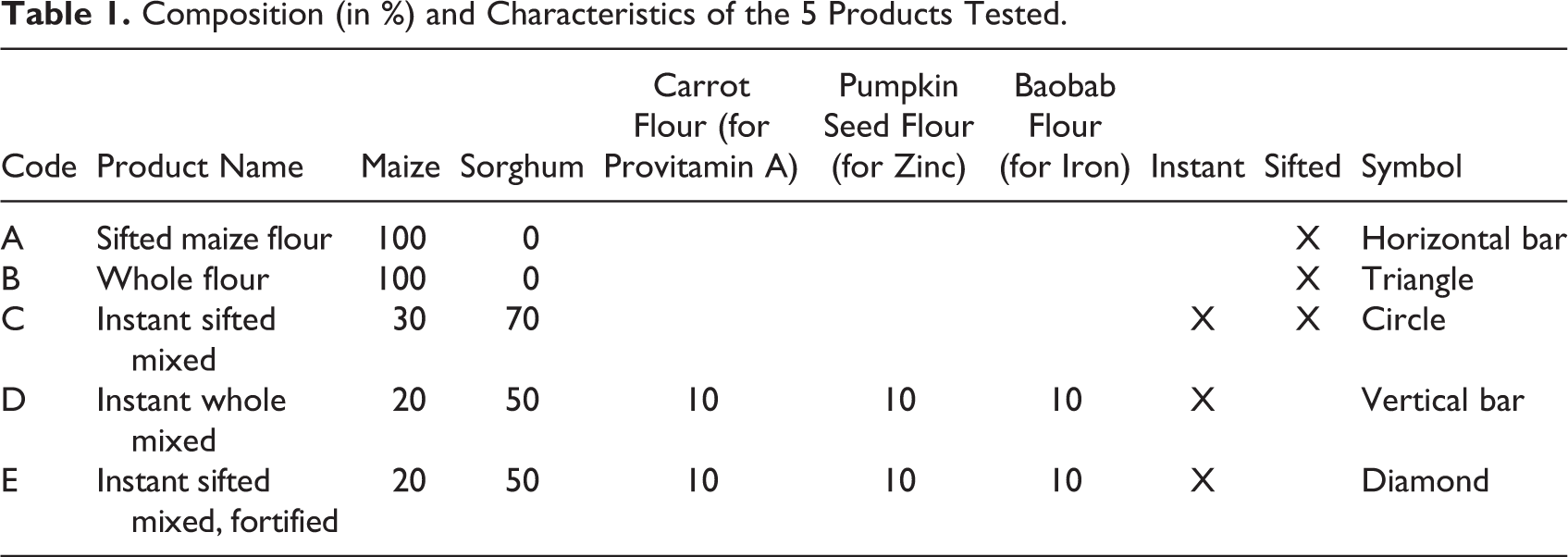
Two hundred and twenty consumers, men and women, from Eldoret, the main town and capital of Uasin Gishu County in Western Kenya, tasted and evaluated thin and thick porridge (uji and ugali) from instant and fortified cereals, produced with a mini-extrusion cooker, for the major sensory characteristics. The major product traits under evaluation were instant versus regular cooking, plain maize versus a maize–sorghum composite, decorticated or whole, and added nutritional supplements from natural sources (Table 1). A preliminary evaluation with a sensory panel of 16 people indicated that mixtures with 60% to 80% sorghum were most accepted.
Composition (in %) and Characteristics of the 5 Products Tested.
Before the exercise, participants received a small show-up fee and were given a short introduction. They were interviewed on their socioeconomic background, followed by affective tests and the BDM exercise to determine their WTP for the packed finished products (flours), conducted either with or without information on the content of the products (Figure 1).
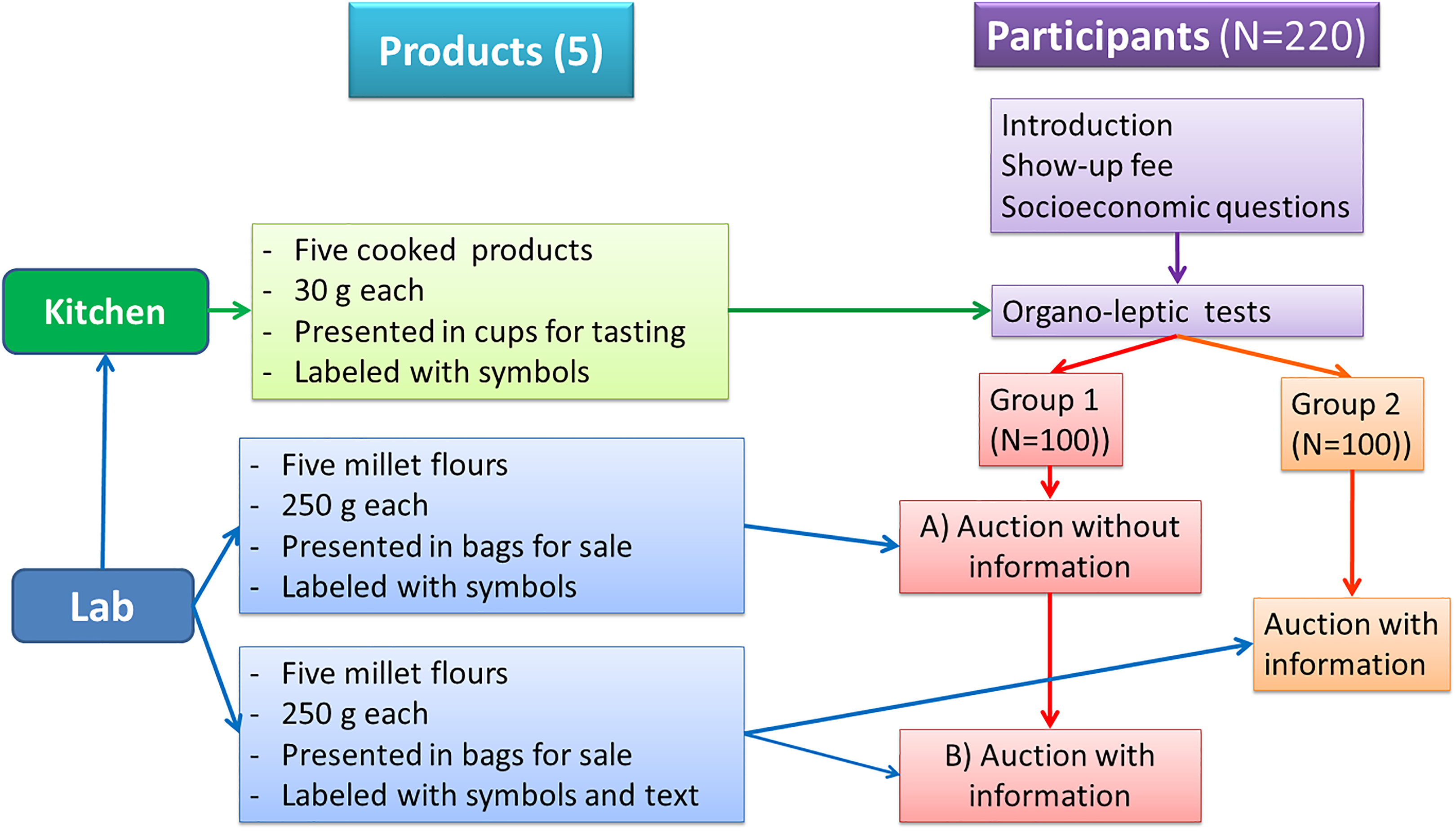
Study design.
Data were collected and immediately entered into electronic tablets (Kindle Fire or Samsung Galaxy Tab 4), using the software CSPro.
Selection of the Study Area
As the goal of the project is to link farmers to consumers through small food processors, the main interest is in consumers close to agricultural producers. Uasin Gishu is one of the most important maize and cereal producers in the country, so Eldoret, as the largest city in Western Kenya, is a good choice. This approach was also used for a recent study of rice consumers. 22 The population of Uasin Gishu is typical for Kenya, with poverty levels at 41% (40% nationwide), women literacy levels similar to national average, and child underweight levels at 11.5% (11% nationwide). 23
The Products
The traits of interest were distributed over 5 products, all containing maize with different ingredients, ground to flour (Table 1): (A) sifted maize flour; (B) sifted maize (30%) and sorghum (70%) flour mix; (C) instant sifted mix; (D) instant whole flour mix; and (E) instant sifted mix (20% maize, 50% sorghum), with 10% each of 3 natural fortificants: carrot (for vitamin A), pumpkin seed (for zinc), and baobab (for iron and vitamin C). The components of the instant flours were individually extruded and then reformulated based on the specifications. The first product, sifted maize flour, is the most common maize product in urban markets, popular for making stiff porridge or ugali, the most common maize preparation, 4 and can therefore be considered the control.
Selection of Site, Participants, and Enumerators
Participants were selected among students and staff of the University of Eldoret, because of convenience, cost, and representativeness. To cover a wide range of participants, they were randomly selected from 4 strata: students and staff from 3 administrative categories: lower level (casuals and uneducated laborers), mid-level (such as administrators, junior lecturers, and tutorial fellows), and high level (lecturers, department and faculty heads, senior administrators). Although the participants were not randomly selected from the maize consumers at large (a nationally representative sample would be prohibitively expensive), our personal interactions with them and their socioeconomic characteristics indicate that they can be considered typical maize consumers of small urban centers. Six enumerators were recruited among graduate students and undergraduates and received a 2-day training.
Show-Up Fee, Informed Consent, and Socioeconomic Survey
Participants were individually welcomed and given a small show-up fee of KSh100 (US$1 = KSh100 at the time of the study) to express our gratitude, help with transport, and to ensure that they had cash to participate in the experiment. An enumerator then explained the procedures, assured them they could stop and leave at any time, asked for their informed consent, and signed the form as a witness. To ensure double blinding, 4 enumerators conducted the affective tests and the experiment without information, as those where possible under double-blind conditions. As it is not possible to conduct the experiment with information double-blind, 2 other enumerators conducted this experiment with information. A short socioeconomic questionnaire was also administered.
Affective Tests
The 5 products were cooked both as stiff and liquid porridge, so each consumer was provided with 10 preparations, each about 30 g, presented in plastic cups on a tray in systematic randomized order (the same order for both types of preparation), with 10 plastic spoons, a cup of water, and a napkin. Consumers were asked to evaluate each product, on a 5-point Likert scale (dislike very much, dislike, neither like nor dislike, like, like very much) for 5 sensory characteristics (appearance, aroma, texture in hand, flavor, texture in mouth, taste) and overall appreciation. The products were identified with a neutral geometric symbol, randomly assigned at the beginning of the exercise and kept constant during the exercise (Figure 2). Respondents were provided with water and a drinking cup to clear their palate between products. The tests were conducted in a double-blind manner Neither the 4 enumerators conducting the affective tests nor the participating consumers knew the content of the different products at this stage.
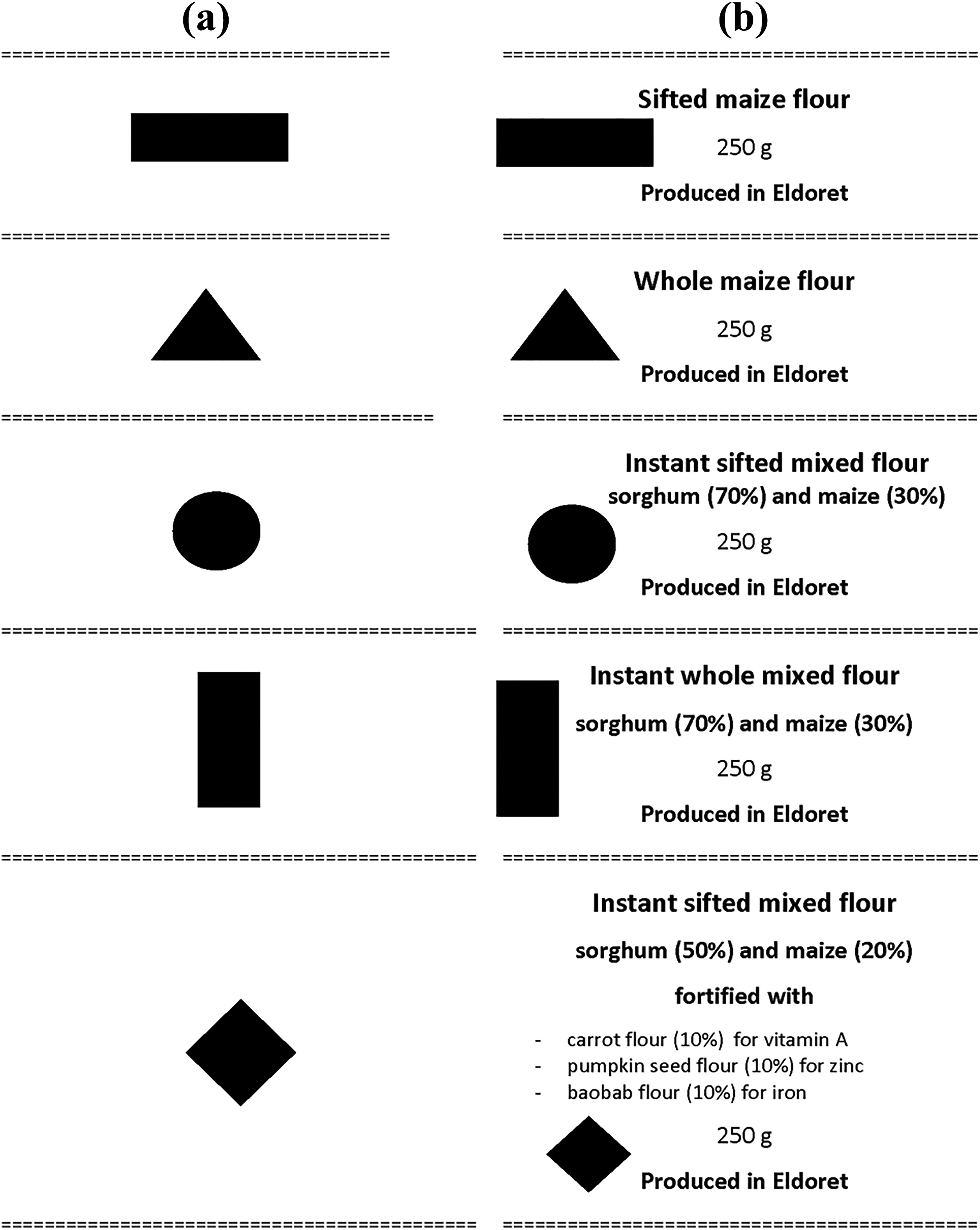
Labels for the 5 products, with symbols and no information (panel a, used on the cups for all sensory evaluations and for the flours during the auctions without information) or with symbols and information on the content (panel b, used only for the flours during the auctions with information).
Economic Experiments to Determine WTP
Next, the WTP of consumers was elicited with experimental auctions. Participants were presented with the same 5 products, but now in dry flour format, packed in clear plastic bags with 250 g of flour each, with a plain white rectangular label inserted, labeled with symbols or symbols plus text printed in black ink, depending on the information treatment.
To distinguish the WTP for the products based on their taste and sensory evaluation from the WTP for the improved nutritional quality, the participants were randomly divided into 2 equal groups. Participants from group 1 first conducted the experiment without any additional information on the content of the products, which were presented in the same order and labeled with the same symbol used in the affective test. They were expected to base their WTP only on their recollection of the sensory evaluation. After the first round of experiments, they were given information on the content of the products, and the experiment was repeated. This information was provided on the labels, together with the same symbols used during the affective test (Figure 2). Because conducting the exercise twice can tire participants and bias the results, participants in group 2 went straight from the affective tests to the auctions with information. The major advantage of the first group, with repeated observations before and after information, is to collect more robust information, but the disadvantage is increased fatigue that might lead to less precise responses, while the advantage of the second group is less fatigue.
The labels were translated into the local language by the enumerators, and some time was provided for the participants to ask questions. The benefits of the instant product in terms of time and energy saved were explained, but not the specific nutritional benefits of the micronutrients beyond the fact that the products included fortification.
During the economic experiment, participants’ WTP for the different products is elicited using the BDM mechanism. 24 This procedure mimics an auction, where the participant bids against a random price, drawn from a random distribution. If the bid is higher than the random price, the participant buys the product at the random price, if the bid is lower, there is no transaction. This mechanism is incentive-compatible and therefore commonly used. 14
The procedure was first described in detail with a numerical example to explain it was in the participants’ interest to reveal their true WTP. Next, a test round, using real money was conducted, as it is known to reduce bias, 12 with 2 small biscuit packets, one of which was randomly selected as binding.
Next, in the main round, the participant was asked to make a bid for each of the 5 products. Again, one product was selected as binding; the participants drew a number from a uniform random distribution (from KSh5, the smallest coin, with increments of KSh5 up to KSh40, twice the average price of the base product, sifted maize) printed on pieces of paper, in an envelope. If the bid of the binding product was higher than the random price, the participant purchased the product at the random price.
Finally, the participants were asked what they would use the product for: ugali or uji.
Analysis
Affective tests used a 5-point Likert scale, so the resulting variables were ordinal in nature,
25
and an ordinal regression is the preferred method of analysis.
26,27
If respondent i is asked to score products on a set of k ordered categories, and let y be the score and νk = P (y ≤ k), or the probability that a score y falls at or below a certain level k, the logarithm of the odds of νk (the logit) can be modeled as a linear function of the products or their attributes. The coefficient β represents the change in the log odds for a unit change in the explanatory variable x, so when x is binary its exponent eβ represents the odds that one product is rated higher than the other, over the odds that the other product is rated higher, also called the odds ratio. The model can be expanded to analyze the scores for different products j, each with a vector of traits

The effects of consumer characteristics

For the analysis of WTP, the dependent variable is WTPij or consumer i’s WTP for product j, a quantitative variable on a ratio scale, and it can be analyzed using a linear model, by replacing Logit() with WTPij in Equations 1 and 2. Because the main interest here was the WTP for specific traits, in this model
The ordinal model was estimated with the xtologit module and the WTP models with the xtreg module, both with random effects, with the software Stata, version 13.1.
Results
Characteristics and Awareness of the Participants
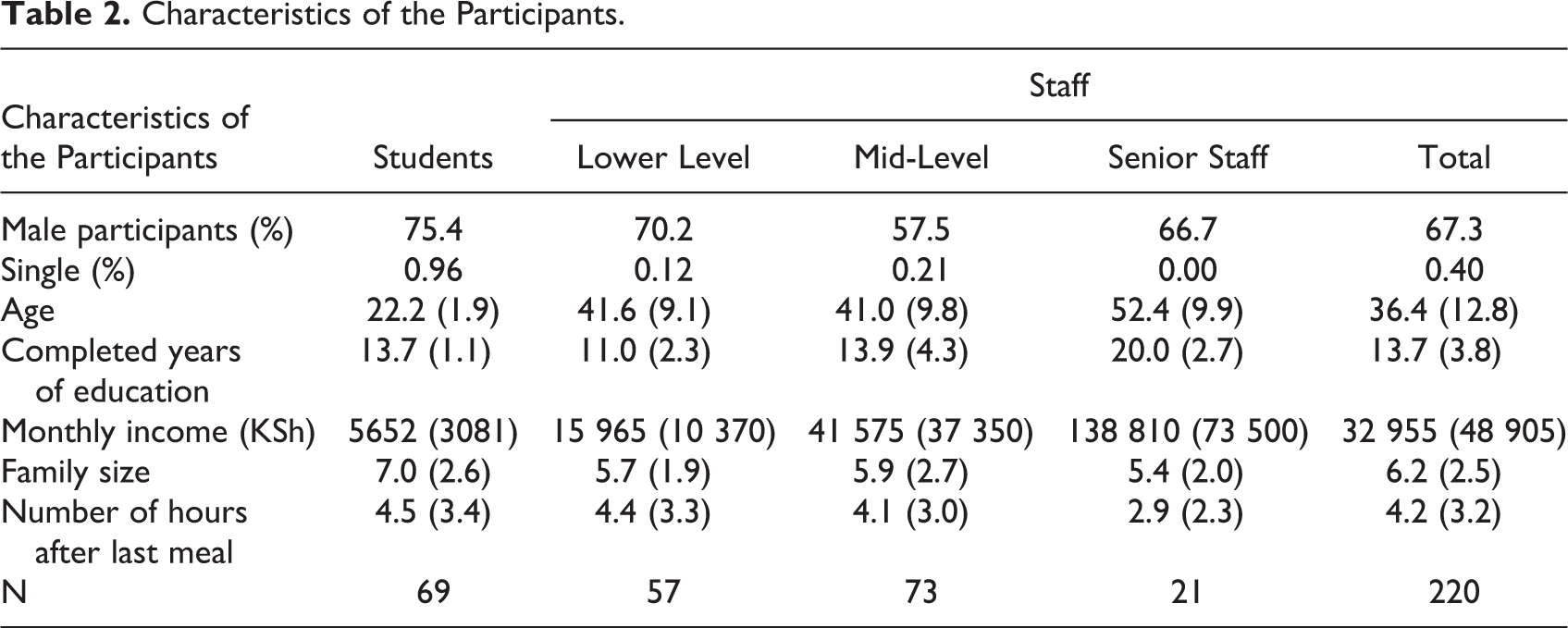
About two-thirds of the participants were male, reflecting the composition of students and staff of the university (Table 2). Slightly less than half (40%) of participants were single. The average age was 36 years. On average, participants had 14 years of formal education. The family size was similar for the low cadre, mid-level and senior staff (5) but much higher (7) for students. The average monthly income increased with the socioeconomic category, from less than KSh6000 (US$60) for students, to almost KSh140 000 (US$1400) for senior staff. Most participants were aware of the important nutrients, in particular vitamins (90%) and proteins (96%), but fewer respondents were aware of minerals (66%; Figure 3). For most categories, the knowledge of the senior staff was the highest, followed by that of the students, mid- and low-level staff. Knowledge of minerals was particularly low; only among senior staff did more than 75% know about iron, zinc, or calcium. Less than half the students had heard of zinc.
Characteristics of the Participants.
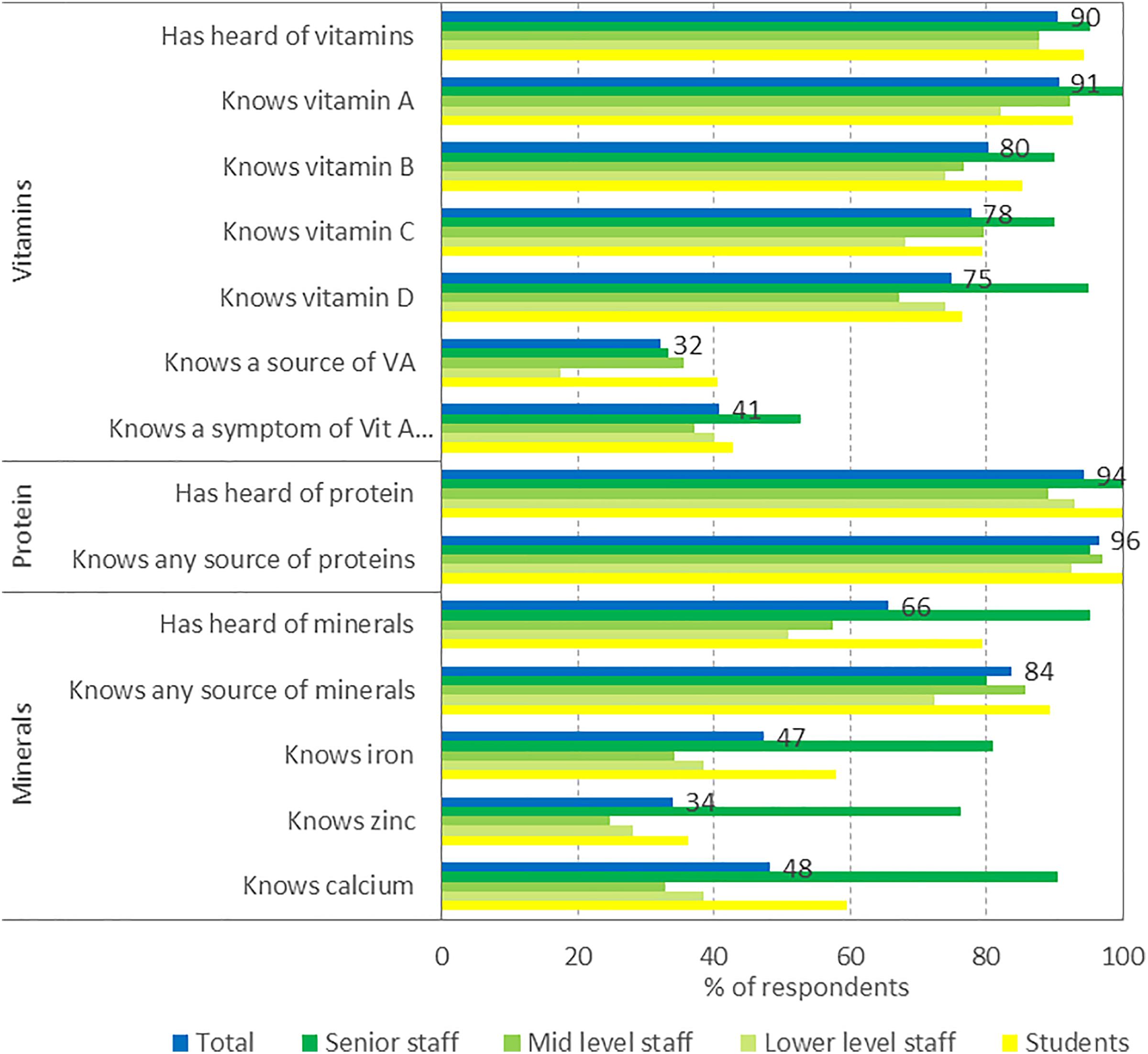
Awareness and knowledge of nutrition among participants.
Affective Tests
The affective tests showed some differences between the evaluation of stiff porridge or ugali and thin porridge or uji (Figure 4). For ugali, the plain, pure, sifted maize flour scored best (86% of participants liked it or liked it very much), followed by the whole flour mix. For uji, on the other hand, the mixed (maize/sorghum) flours scored better (65%-75% liked it or liked it very much) than the pure maize (only 53%). For these mixes, moreover, whole flour was preferred to sifted, and consumers were indifferent between instant and conventional flour. For both preparations, the fortified flour was least appreciated, with 27% of respondents disliking it or disliking it very much.
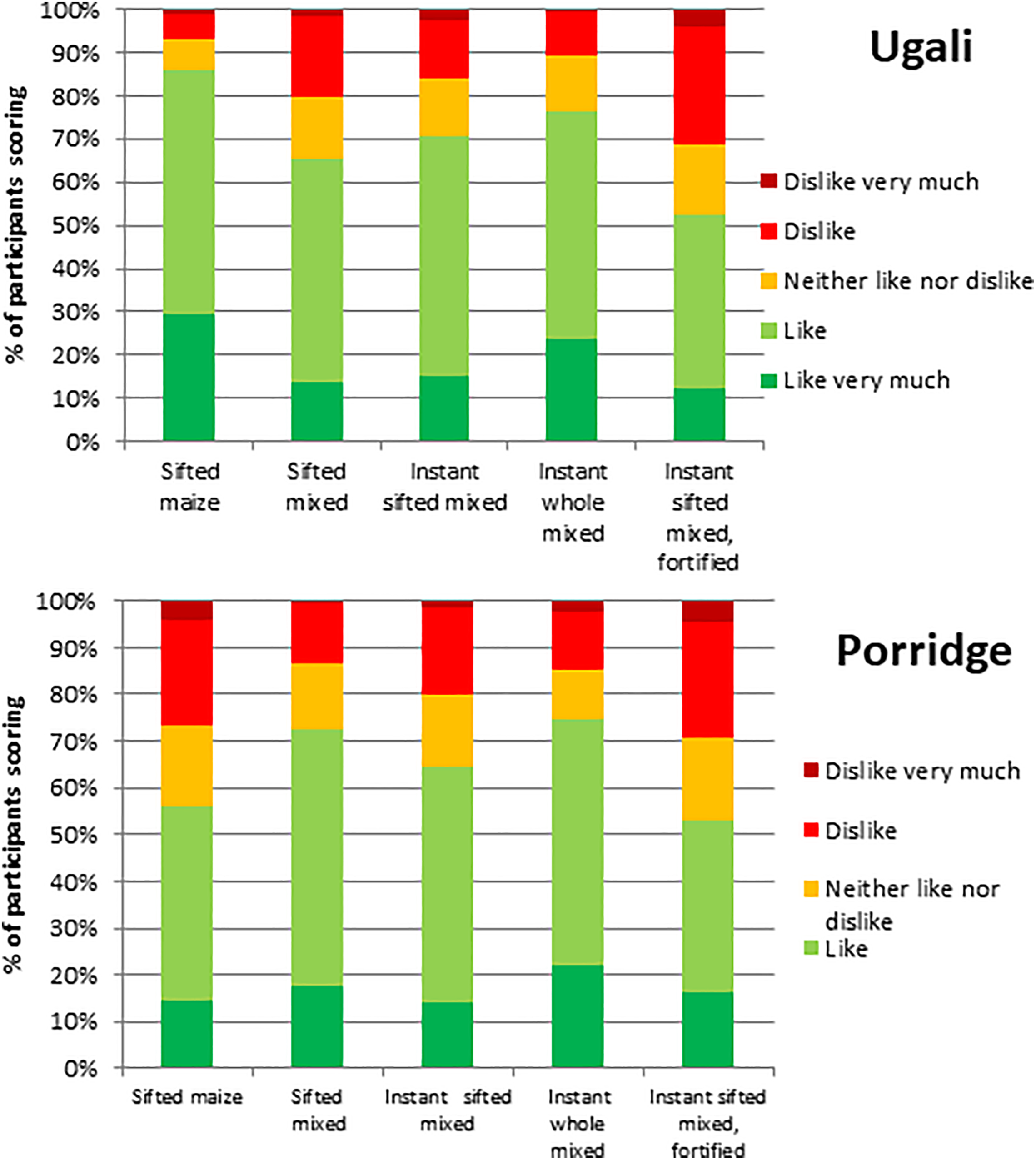
Results of the affective tests (frequencies of scores for overall evaluation).
The scores were analyzed using the basic ordinal regression of Equation 1 and the coefficients assembled in a graph (Figure 5, full regression results given in Appendix S1). The coefficients are log-odds ratios, their exponent is the odds ratio. For ugali, overall, plain sifted maize meal scored the best, on all characteristics, as shown by the negative coefficients for all the other products in the ordinal regression (Figure 5, upper panel). The next product, in order of preference, was instant whole mixed, as indicated by the shortest bars, for all traits, followed by instant whole meal and instant sifted mixed flour. By far the least liked was the fortified flour, as this product scored substantially less than the base product for all traits, and the difference was particularly high for appearance, texture in hand, and taste. The order and relative appreciation of the 4 products in the preparation of ugali, relative to the standard (sifted plain maize flour), was roughly the same for all traits.
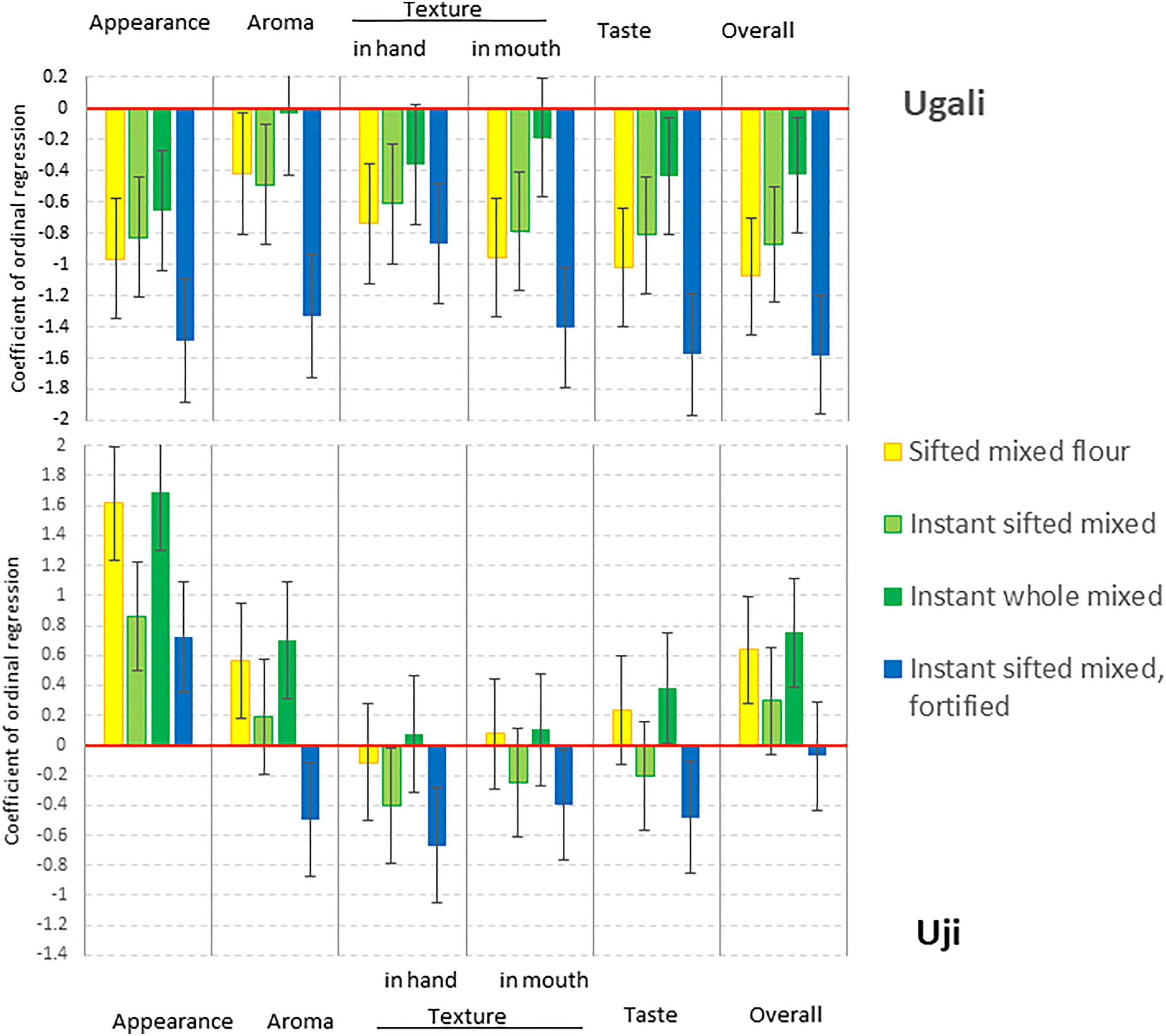
Results of the affective tests for 4 new products relative to the standard (sifted conventional maize), using ordinal regression with random effects; the bars represent coefficients comparing the new products to the standard, sifted maize flour; error bars are 95% confidence intervals.
For uji, on the other hand, the appreciation differed between products as well as between sensory attributes. Overall, the new products received higher scores than the standard, especially sifted mixed and instant whole flour, with the exception of fortified (Figure 5, bottom panel). The order of preference among the 4 products remained the same for all attributes, but the overall appreciation of the group of new products, with the exception of the fortified product, moved up relative to the standard. All new products scored better than the base (sifted maize flour) for appearance, and 3 scored better than the base for aroma and overall appreciation. Two products scored better than the base for taste and texture in the mouth, but only 1 (instant whole mixed) for texture in hand. Texture in hand is not important for uji, which is eaten by spoon or drunk. For 2 products, the scores for overall appreciation and for aroma were significantly different from that of the base product: sifted mixed and instant whole mixed. The fortified product clearly had a problem: its aroma, texture, and taste scored significantly lower than the base.
In the detailed analysis (see Appendix S1), we also added the order as 5 binary categorical variables but did not find a systematic effect, except for a slightly positive trend. Adding the order effects to the analysis, however, did not affect the coefficients or their significance, indicating the order was properly randomized.
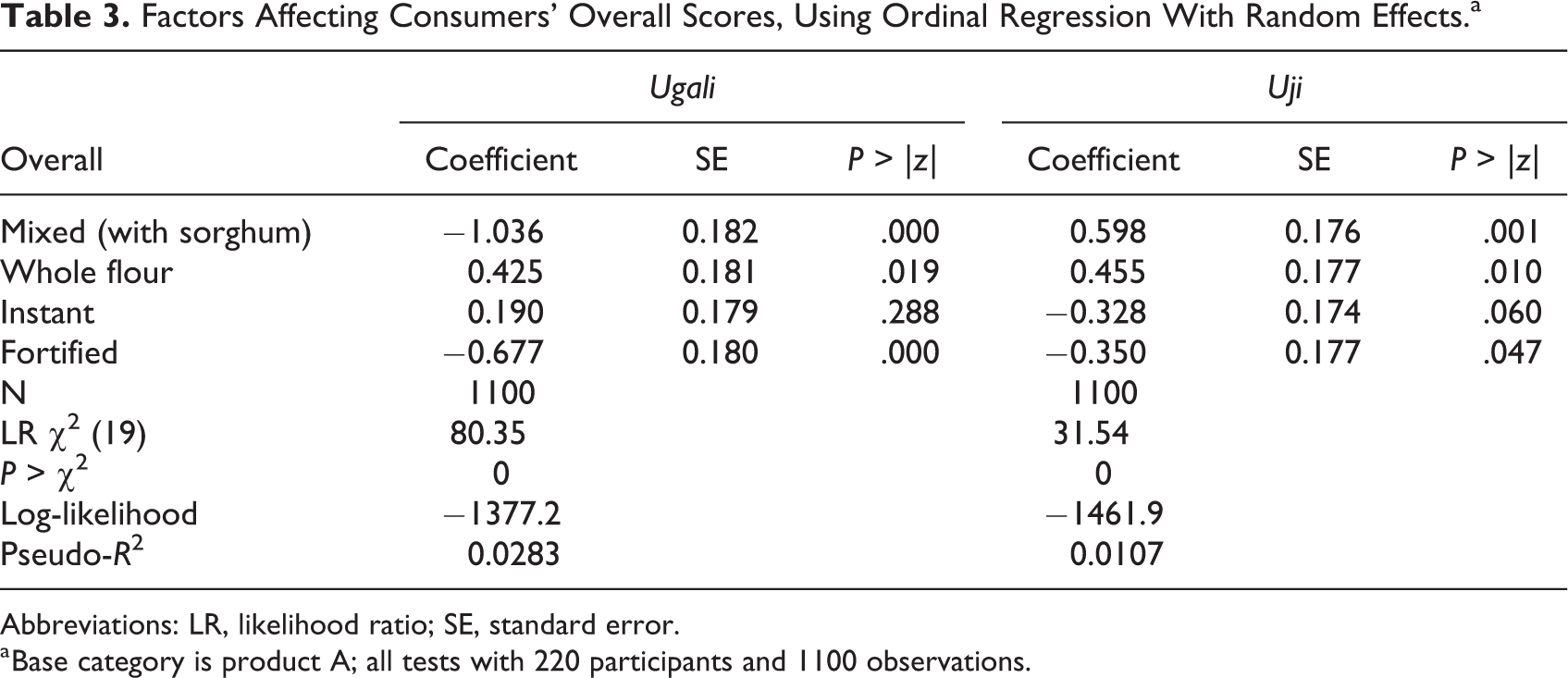
To analyze statistical differences between appreciation of different traits between products, the product codes were recoded into binary variables reflecting the different traits, and their effect on overall evaluation analyzed using ordinal regression, following Equation 1 (Table 3). For ugali, mixing the flour with sorghum was not appreciated, as indicated by the negative and significant coefficient for the trait “mixed.” However, the trait “whole flour” (compared to sifted) was positive and significant, indicating ugali from whole maize meal was more appreciated. The coefficient for instant, on the other hand, was not significant. Fortification, from the sources used here, was clearly not appreciated. For uji, the mix of maize and sorghum was highly appreciated, as was whole flour. The coefficient for instant, on the other hand, was negative, although only marginally significant (P = .06). The coefficient for fortified was negative and significant, although smaller than for ugali. A long model was also estimated, based on Equation 2, to analyze the effect of the socioeconomic characteristics of the consumers. However, only 3 significant cross effects were found in the long model: Women and married participants strongly preferred whole meal, while those with higher income preferred instant (Appendix S2).
Factors Affecting Consumers’ Overall Scores, Using Ordinal Regression With Random Effects.a
Abbreviations: LR, likelihood ratio; SE, standard error.
a Base category is product A; all tests with 220 participants and 1100 observations.
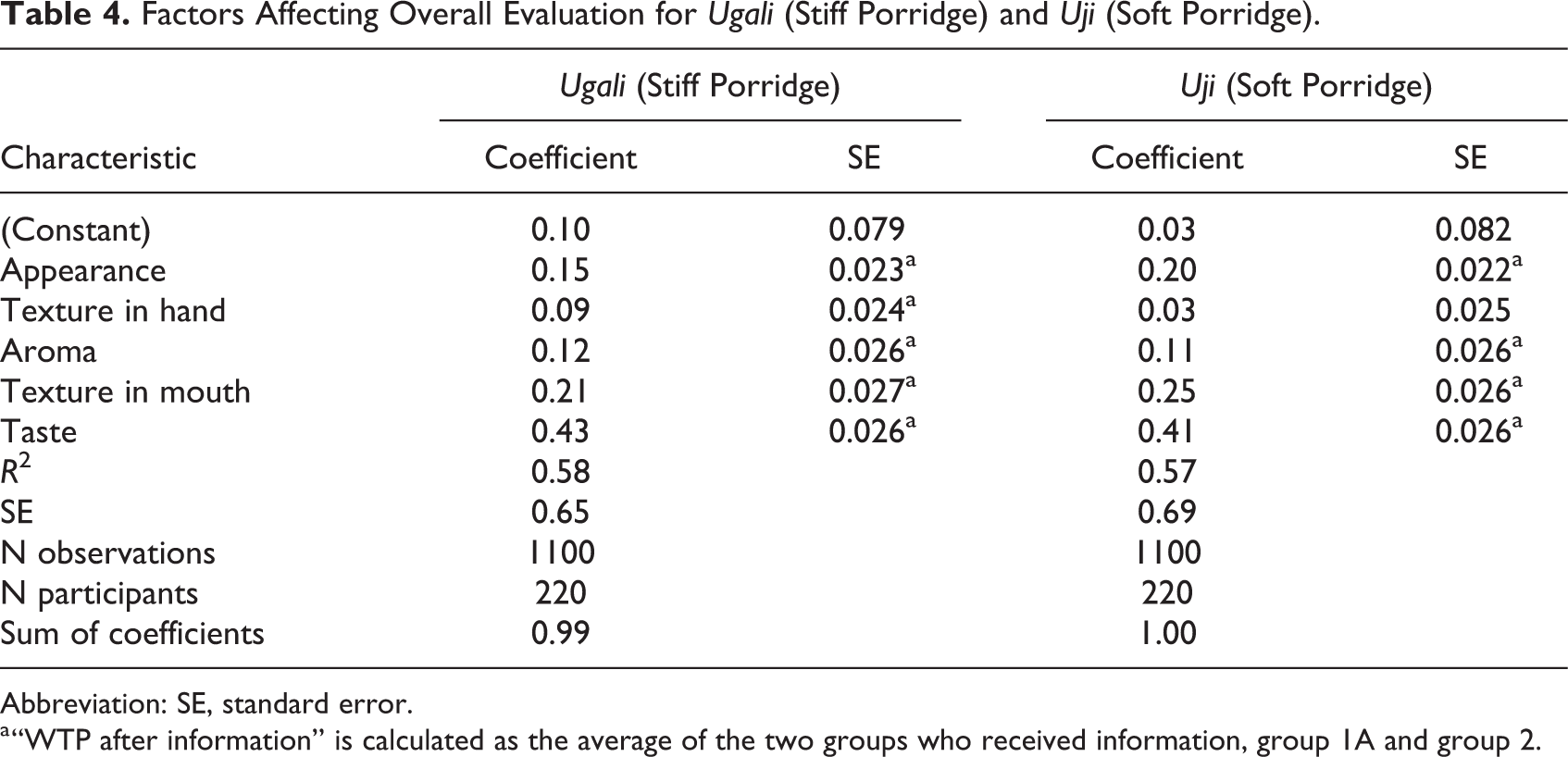
The importance of the different traits in the overall evaluation can be evaluated by regression of the overall score on the scores for the individual traits (Table 4). The sum of the coefficients adds up to 0.99 for ugali and 1.00 for the coefficients of uji, so they can be interpreted as the weights (in %) of the sensory attributes. For ugali, taste was the most important trait (0.43), followed by texture in the mouth (0.21), appearance, aroma, and texture in hand. For uji, the results were similar, except that the coefficient for texture in hand was not significant.
Factors Affecting Overall Evaluation for Ugali (Stiff Porridge) and Uji (Soft Porridge).
Abbreviation: SE, standard error.
a “WTP after information” is calculated as the average of the two groups who received information, group 1A and group 2.
Willingness to Pay
Consumers were generally willing to pay more for the mixed flours than for the pure maize flour, especially after receiving information. However, without information, consumers did not express much difference in WTP between the mixed flours (Figure 6 and Table 5). After participants were provided with information, their WTP for all products except the fortified product dropped, especially WTP for plain sifted maize, the base product. Provision of further information brought more differentiation between the mixed products. However, no premium or discount for whole versus sifted meal was observed, either before or after information was provided, as the difference in WTP for these products is not significantly different.
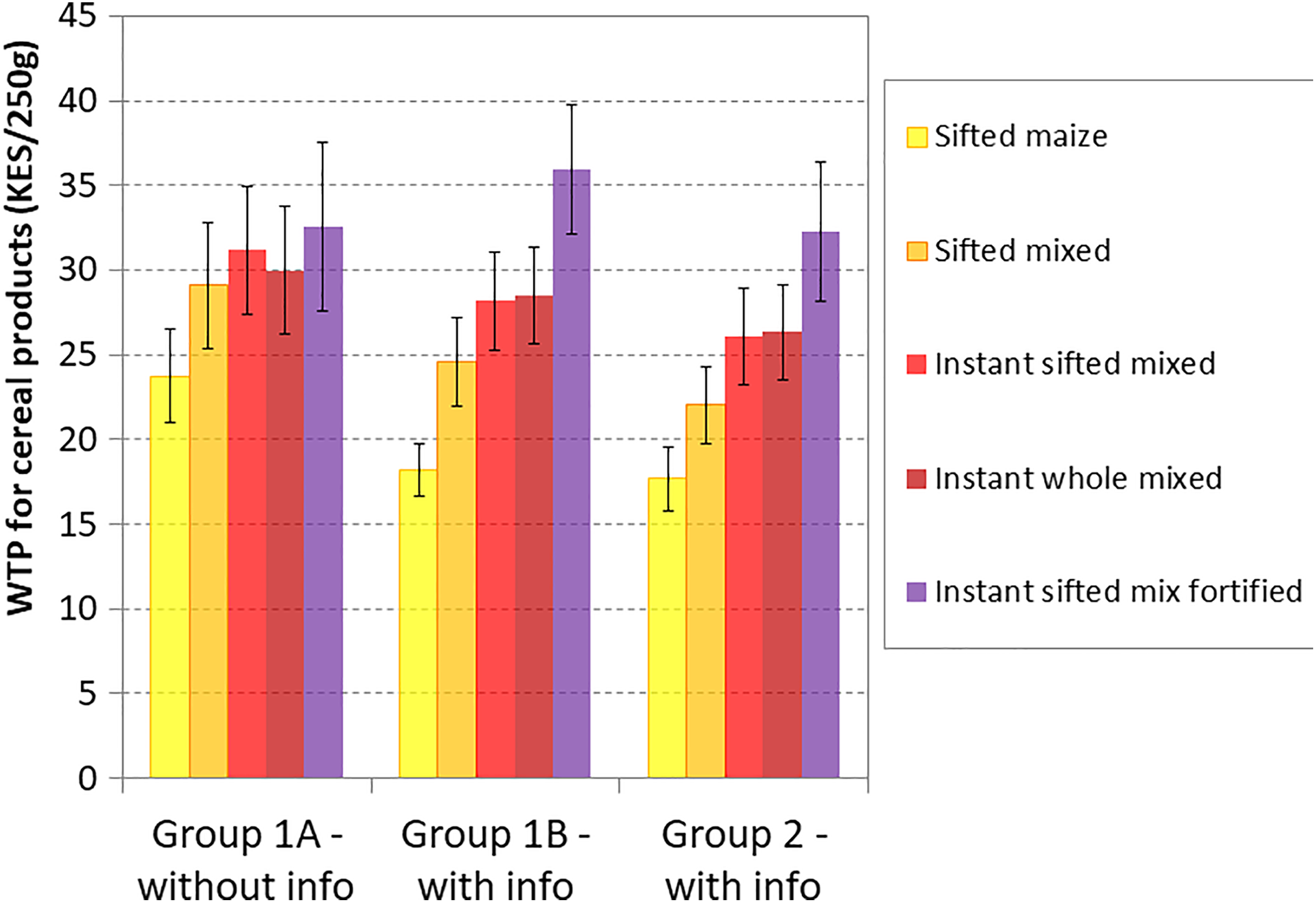
Willingness to pay for different cereal products.
Willingness to Pay for Different Cereal Products, With and Without Information.a
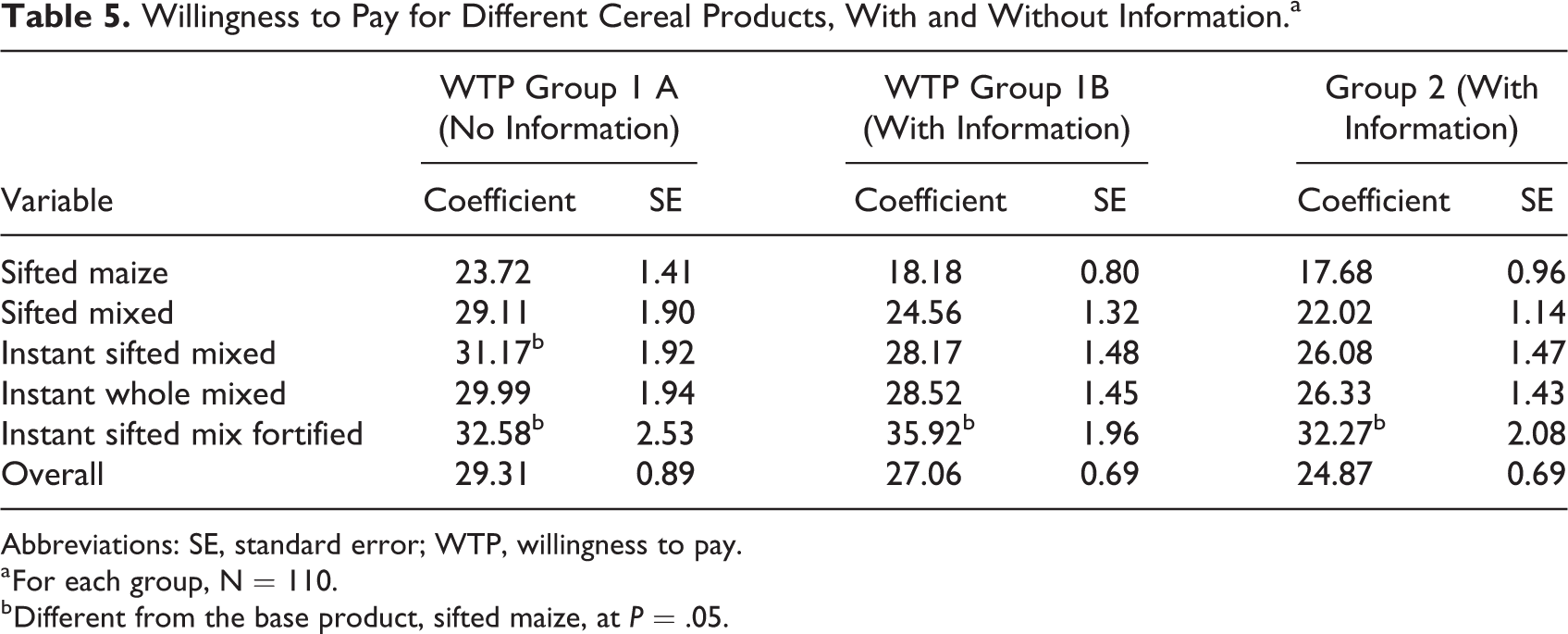
Abbreviations: SE, standard error; WTP, willingness to pay.
a For each group, N = 110.
b Different from the base product, sifted maize, at P = .05.
Only 3 bids were equal to 0, and the histogram of the bids showed the regular bell-shaped curve. We therefore regressed the WTP with a linear model including random effects on the different traits of the products as binary explanatory variables, for the 3 different information groups, and presented the coefficients of the different traits in a graph (Figure 7, regression results in Appendix S3). The traits for the different products are defined in Table 1. The results show how the information provided has a major effect on consumers WTP for quality traits (instant and fortified), but not for mixtures or whole grain.
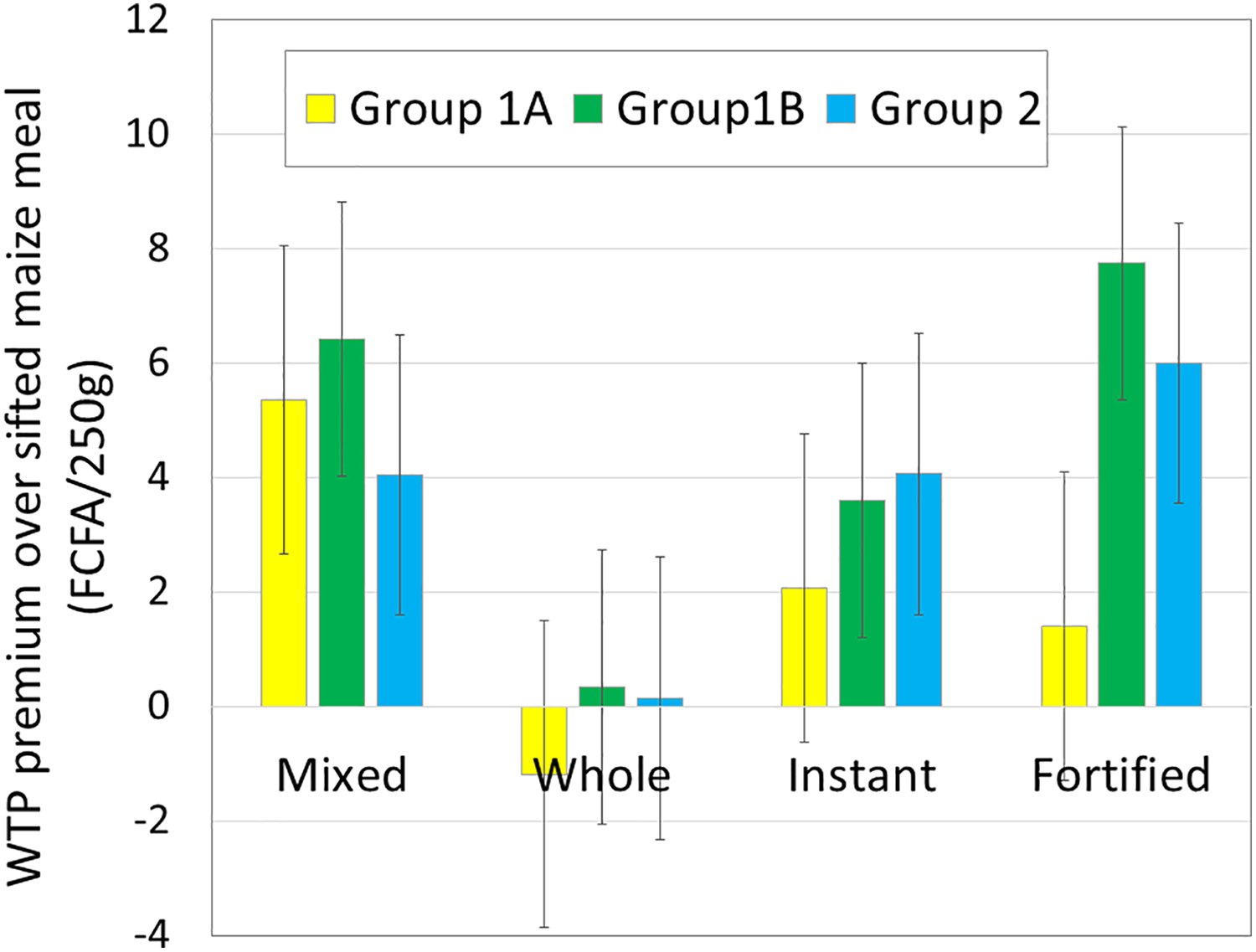
Willingness to pay (WTP) for quality traits in improved cereal products for the different information groups (dependent variable is WTP for 250 g, the base category is conventional sifted maize meal, the columns are coefficients of the random-effects model; each group analysis estimated on 550 observations by 110 participants; the error bars represent 95% confidence intervals).
Participants in all groups, regardless of information, were willing to pay a premium for the mixed, but not for whole grain products. Before being given information, participants of group 1A were willing to pay a premium of KSh5.4 for the mixed cereal products (or 22% over the mean WTP for conventional sifted maize meal), even though they did not know the product contained 70% sorghum. However, consumers of this group were not willing to pay a premium for any of the other traits under study.
After the participants of this group were given information on the content of the products (group 1B), they were willing to pay a substantial premium for instant products (KSh3.6 or 20%) and a high premium for fortified products (KSh7.7 or 43%). Similarly, participants of group 2, who received the information immediately after the affective tests, were willing to pay a premium for both mixed and instant (23% each) and fortified (34%), but not for whole meal.
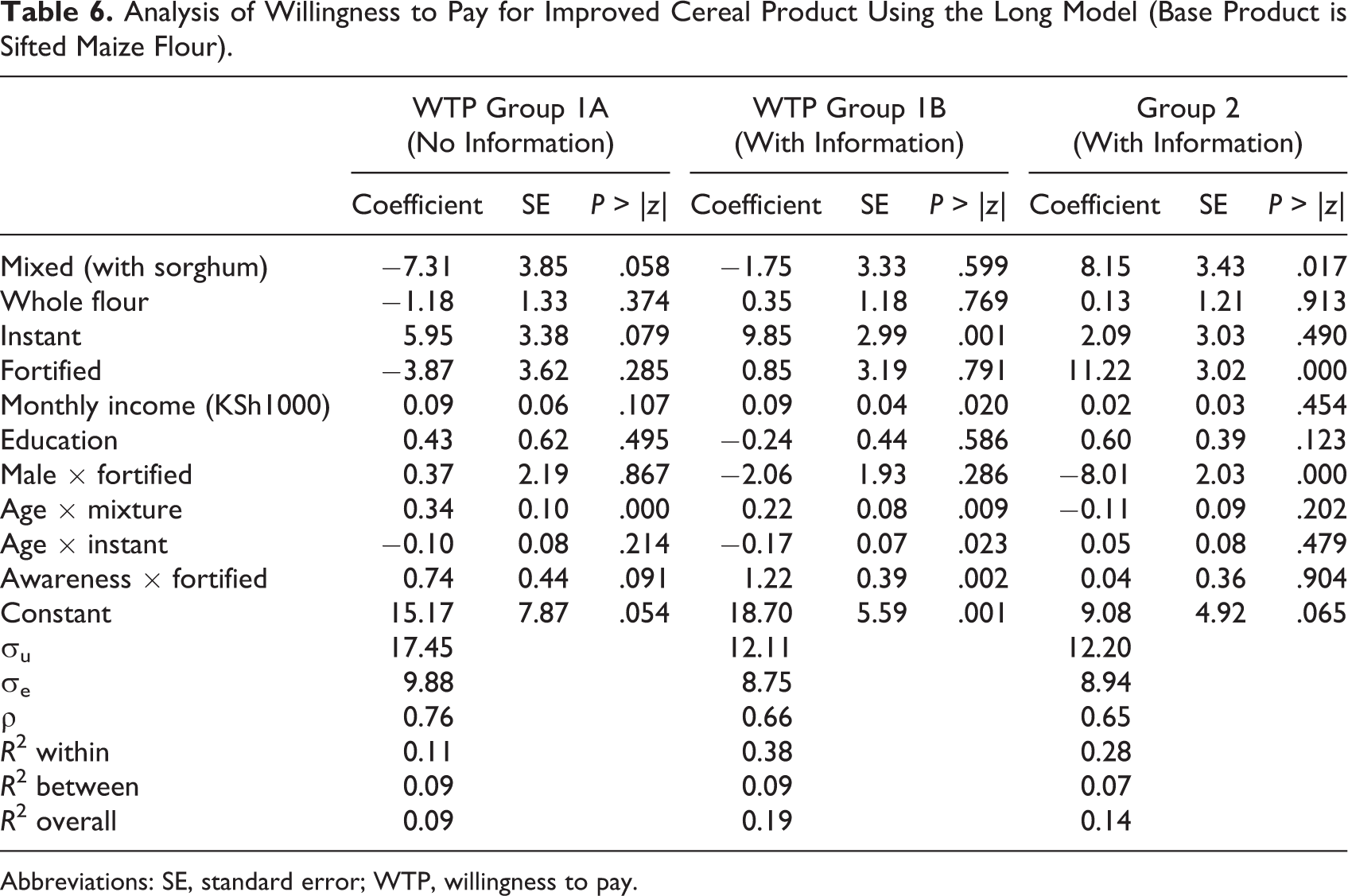
The analysis of the effect of socioeconomic characteristics on consumers’ WTP, estimated with Equation 2, showed that WTP generally increased with income, regardless of products. Although we tested all possible combinations of participants’ characteristics with product traits, for clarity and brevity we only presented the significant results (Table 6). Otherwise, few significant cross effects were observed (Table 6). In group 1, the premium for mixtures increased with age and, after information, the premium for instant decreased with age while that for fortification increased with awareness of micronutrients. In group 2, men’s WTP for fortification was less than women’s.
Analysis of Willingness to Pay for Improved Cereal Product Using the Long Model (Base Product is Sifted Maize Flour).
Abbreviations: SE, standard error; WTP, willingness to pay.
Most respondents, in all groups, indicated they would use the plain sifted maize for ugali (three-quarters), while only a few would use it for uji, and the rest for both (Figure 8). For the other products, only about 10% would use them for ugali, and the rest either for uji only or for both uji and ugali. In the groups with information, more participants would use the instant flours for uji (39%-67%). There was a clear effect of information: Before receiving information, only 40% of respondents would use the fortified product for uji, after information it was more than half.
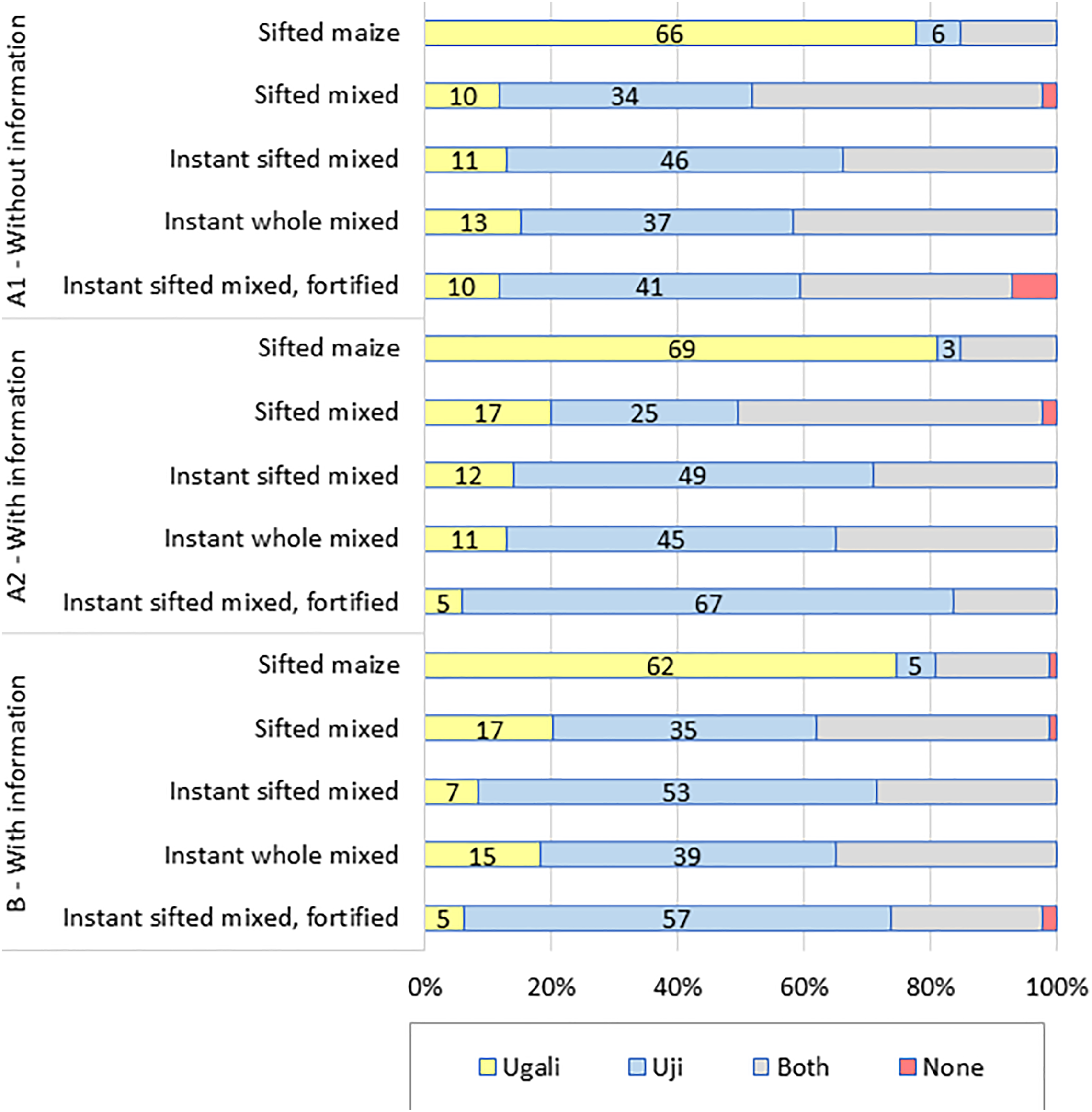
The cooking preparation participants would use the products for (responses to the question asked after the auction).
Cost Analysis
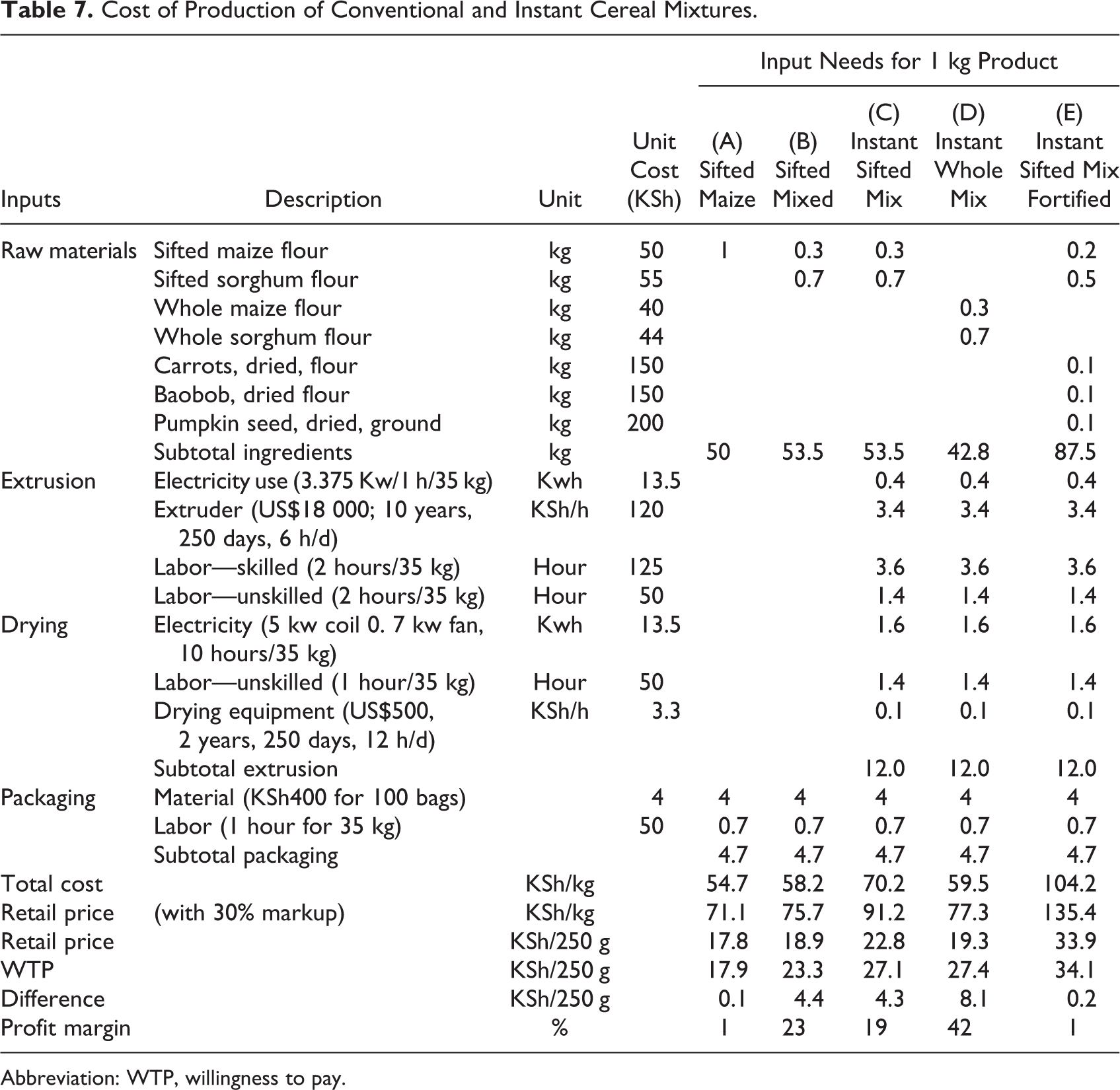
To compare consumers’ WTP for the different traits to their costs, we estimated the manufacturing cost of the products (Table 7). For the basic ingredients, we used wholesale market prices: Sifted meal from sorghum (KSh55/kg) is more expensive than for maize (KSh50/kg), and whole meal (KSh45 for sorghum, KSh40 for maize) is cheaper than sifted. The natural fortificants were expensive (KSh150 for carrots and baobab, and KSh200 for pumpkin seed), adding an extra KSh34/kg. The cost of extrusion, based on skilled and unskilled labor, electricity, and the cost of equipment, was estimated at KSh12/kg. For sifted maize and the fortified product, the cost (with a 30% marketing margin) was very similar to the WTP. For instant and conventional mixed flour, however, the WTP was KSh4 more than the cost (about 20%), and for instant whole mix, the difference was KSh8 (42%).
Cost of Production of Conventional and Instant Cereal Mixtures.
Abbreviation: WTP, willingness to pay.
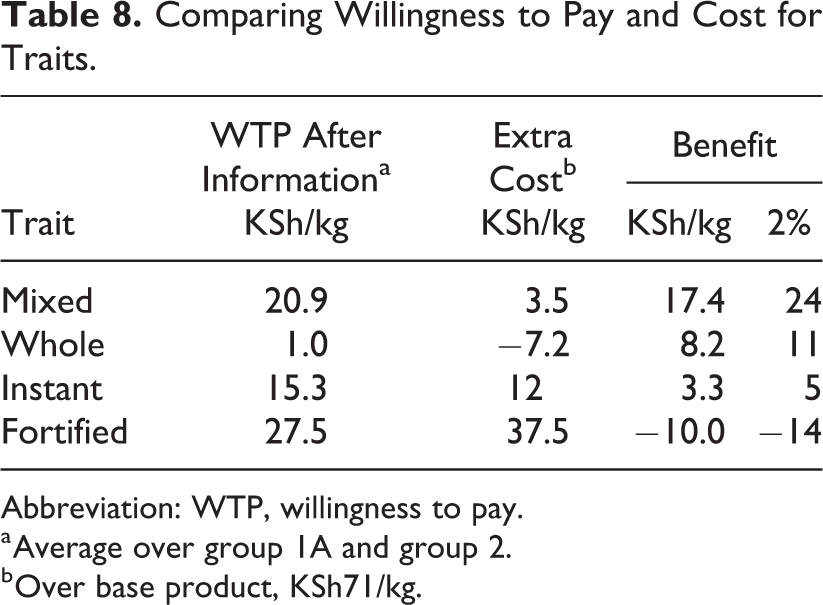
To estimate the premium for each trait, we averaged the regression coefficients for the 2 groups with information, under the assumption of full information (Figure 7), and multiplied them by 4 to obtain the premium per kg (Table 8). Comparing the premium for each trait with their costs shows that mixed, whole, and instant flours were economical, but fortification was not (Table 8). For mixed, the difference was KSh17/kg, or a benefit of 24% over the base product. Although there was no significant premium for whole meal, its cost was much lower, so a benefit of KSh8/kg could be made (11%). For instant, the cost was slightly lower than the WTP, leading to a small benefit of KSh3.3/kg (5%). Fortification, finally, in the formulation tested, was not profitable as the extra cost of the ingredients was KSh37.5/kg (87.5 − 50, see Table 7), while the premium was only KSh27.5/kg.
Comparing Willingness to Pay and Cost for Traits.
Abbreviation: WTP, willingness to pay.
a Average over group 1A and group 2.
b Over base product, KSh71/kg.
Discussion and Conclusions
The results of this study show how consumers’ sensory evaluation differs between the 2 preparations and how the evaluations affect the WTP, especially before information was provided on the product characteristics and formulation, but less so after information was provided. For ugali, participants preferred the conventional, sifted maize meal; whereas for uji, consumers appreciated the new products, especially sifted mixed flour and instant whole mixed flour. Statistical analysis of the individual traits shows that for ugali, whole flour was preferred over sifted, although this trait was combined with other traits in this trial. Therefore, this result needs to be confirmed in a comparison of conventional sifted maize with conventional whole maize.
The economic experiments showed that, before information, participants were willing to pay a premium for the new products without, however, differentiating between them. This indicates that the lower appreciation of the new products for ugali was not as important as the appreciation for uji. Most participants further indicated they would buy the product for uji, not ugali, and the score for ugali did not affect the WTP, unlike the overall score for uji. After receiving information on the products, consumers were willing to pay a premium for the mixed, instant, and fortified products, but not for whole meal. This is likely affected by the lower price of whole maize flour, compared to sifted, in the market. Although consumers did not like the sensory characteristics of the fortified product, they were still willing to pay a premium for it after receiving information. This indicates there is a market for fortified products.
Comparing costs to WTP shows that mixing maize with sorghum was very profitable (a profit margin of 22% over sifted maize), followed by whole meal (11%, mostly because of its lower price), and a small profit for instant meal (5%), while fortification, at least with the ingredients used in this experiment, was not profitable. However, cheaper alternatives, in particular the premixes commonly used in the food industry or combinations of premixes with food-to-food fortification, should be explored.
For policymakers, it is important that consumers are interested in improved cereal products, that information plays an important role, yet information on nutritional quality is limited. This could be improved through formal education as well as specific information campaigns. Researchers can help small food processors to develop appropriate quality products, using their skills in food science and sensory evaluation. Currently, consumer research is limited in Kenya, as is the collaboration between the research community and the food industry. Small-scale producers of extruded products need technical training in the proper use and setting of the extruder.
An interesting result of our study is the trade-off between taste, improved nutritional quality, and WTP for that quality. Although the fortified product clearly did not perform as well in sensory evaluation, consumers were still willing to pay a premium for it. Such trade-offs have been previously reported in Europe, where health benefit belief from functional foods emerged as the strongest positive determinant of willingness to compromise on taste. 29 Further, health claims of new food products were found to be more important than nutrition claims. 30 In Africa, this type of research needs more attention, and combinations of food-to-food fortification and premixes should be explored that compromise less on taste while adding optimal levels of micronutrients.
This study has several limitations. First, the participants were not randomly selected from the target population and included only adults. However, our results show that there are few, if any, effects of socioeconomic characteristics on preferences as well as WTP for specific traits, in line with a similar study in Touba. 13 A study on WTP for African leafy vegetables versus imported vegetables, also in Eldoret, found positive effects of education and number of children, but not of income. 31 For maize consumers, a study in 4 countries in East Africa only found an effect of education on the WTP for improved protein quality. 7 A review paper covering 11 rice markets also found that WTP levels tended to be relatively unaffected by sociodemographic factors with the exception of a few variables. 32 These results are consistent with the literature. 33 In the next phase, the products could be taken to their effective points of sale and tested there. Further, the market for infant and children food, which often offers a premium for high-quality products, should be explored.
As a second limitation, the products were not sufficiently screened for consumer acceptance and cost, in particular the fortified product, so more research is needed to refine products by testing different options. The optimal mixture of maize with sorghum, and possibly other cereals, needs to be established through more detailed consumer testing, for both ugali and uji, in particular for texture, taste, and ease of preparation. Although whole meal was not more appreciated than sifted, its cost was substantially lower, so a healthier product can be provided at lower cost. Still, the different combinations of whole grain with different grain mixtures and instant need to be further explored. Extrusion is likely profitable, but more details on the cost of instant are needed, over a longer period of time, to make sure the extra cost is incorporated in the price. The effect of extrusion on the shelf life of whole meal products and the retention of micronutrients also needs to be explored. Although there is a high premium for fortification, the products tested were still more expensive than the premium, and the ingredients used were not particularly appreciated by consumers. However, the cost of fortification could be brought down substantially by using standard industry mixtures, in combination with low-cost natural sources that target reasonable levels of shortfall nutrients.
As a third limitation, this study considered consumers as individual actors only, while people generally have a drive to evaluate their opinions, and if there are no objective means to do so, they evaluate their opinions by comparison to others, 34 and these social comparisons can effectively be measured. 35 An attempt to analyze the effect of social induction in Senegal on preferences for food quality did, however, not find a significant shift. 36 As a final limitation to this study, the extrusion conditions need to be optimized, in particular moisture levels, to optimize quality and minimize costs.
We conclude that there is a potential market for improved cereal products in Eldoret and likely in the rest of urban Kenya. Such products should focus on the market for uji and use maize/sorghum mixtures, whole grain, and instant, with a low-cost fortification. Therefore, the promotion, in labeling and other advertisement, should clearly mention that target dish. The potential to optimize the cost of natural ingredients and doses for fortification should be considered, including the use of natural ingredients in balance with conventional synthetic fortification for shortfall micronutrients like vitamin A, iron, and zinc that may provide a more economical path to balance nutrition and consumer expectations.
Supplemental Material
Supplemental Material, Cons_accept_and_WTP_for_inst_fort_cereals_in_Eldoret_Appendices - Consumer Acceptance and Willingness to Pay for Instant Cereal Products With Food-to-Food Fortification in Eldoret, Kenya
Supplemental Material, Cons_accept_and_WTP_for_inst_fort_cereals_in_Eldoret_Appendices for Consumer Acceptance and Willingness to Pay for Instant Cereal Products With Food-to-Food Fortification in Eldoret, Kenya by Hugo De Groote, Violet Mugalavai, Mario Ferruzzi, Augustino Onkware, Emmanuel Ayua, Kwaku G. Duodu, Michael Ndegwa and Bruce R. Hamaker in Food and Nutrition Bulletin
Footnotes
Acknowledgments
We thank the FPL Director, Dr Betty Bugusu, and the rest of the staff for their support. We also thank the University of Eldoret for hosting us and its staff for their support and Kathleen Sinclair for editing the manuscript. We are grateful to the enumerators for their work, and the participants for spending their time with us.
Declaration of Conflicting Interests
The author(s) declared no potential conflicts of interest with respect to the research, authorship, and/or publication of this article.
Funding
The author(s) received no financial support for the research, authorship, and/or publication of this article: This research was made possible through support provided by the Office of Agricultural Research and Policy, Bureau for Food Security, US Agency for International Development, under the terms of Cooperative Agreement No. AID-OAA-L-14-00003, through Purdue University’s Food Processing Lab (FPL), and by the CGIAR Research Program (CRP) MAIZE.

Supplemental Material
Supplemental material of this text is available online.
References
Supplementary Material
Please find the following supplemental material available below.
For Open Access articles published under a Creative Commons License, all supplemental material carries the same license as the article it is associated with.
For non-Open Access articles published, all supplemental material carries a non-exclusive license, and permission requests for re-use of supplemental material or any part of supplemental material shall be sent directly to the copyright owner as specified in the copyright notice associated with the article.
