




Abstract
Background:
The war in Syria has left millions struggling to survive amidst violent conflict, pervasive unemployment, and food insecurity. Although international assistance funding is also at an all-time high, it is insufficient to meet the needs of conflict-affected populations, and there is increasing pressure on humanitarian stakeholders to find more efficient, effective ways to provide assistance.
Objective:
To evaluate 3 different assistance programs (in-kind food commodities, food vouchers, and unrestricted vouchers) in Idleb Governorate of Syria from December 2014 and March 2015.
Methods:
The evaluation used repeated survey data from beneficiary households to determine whether assistance was successful in maintaining food security at the household level. Shopkeeper surveys and program monitoring data were used to assess the impact on markets at the district/governorate levels and compare the cost-efficiency and cost-effectiveness of transfer modalities.
Results:
Both in-kind food assistance and voucher programs showed positive effects on household food security and economic measures in Idleb; however, no intervention was successful in improving all outcomes measured. Food transfers were more likely to improve food access and food security than vouchers and unrestricted vouchers. Voucher programs were found to be more cost-efficient than in-kind food assistance, and more cost-effective for increasing household food consumption.
Conclusion:
Continuation of multiple types of transfer programs, including both in-kind assistance and vouchers, will allow humanitarian actors to remain responsive to evolving access and security considerations, local needs, and market dynamics.
Background
Since 2011, the war in Syria has devastated the country’s population, not only as a result of fighting but also because of damage to infrastructure, collapse of services, and economic impacts. More than 4 million of Syria’s 23 million citizens have fled to neighboring countries as refugees, and many more are currently fleeing using dangerous routes to Europe. Less discussed are the more than 11.5 million people in need of humanitarian assistance within Syria, including more than 6.5 million that are internally displaced (IDPs). 1,2 Recent assessments highlight persistent levels of unmet need for food and nonfood assistance, health, shelter, livelihoods opportunities, and education; among households reporting unmet food needs, high prices were cited as the most common barrier to food access, suggesting that there is market availability but that households are unable to access food due to high prices or financial hardship. 3,4
Humanitarian stakeholders have a responsibility to ensure that assistance is provided in a way that minimizes risks and maximizes benefits to populations affected by crisis. However, there are many challenges in designing and implementing programs that effectively address the needs of crisis-affected populations. There are currently more people displaced by conflict than at any time since the end of World War II. 5 Although international humanitarian assistance funding is also at an all-time high, it is insufficient to meet the needs of conflict-affected populations, as well as the millions more affected other types of emergencies. 6,7 In addition, the majority of refugees now live in urban areas and IDPs live dispersed in a variety of urban, rural, and remote settings, not in identifiable camps or settlements as several decades ago. In contexts of armed conflict, access is often difficult and the capacity of humanitarian organizations to reach these individuals with assistance is increasingly challenged. 8,9 Given the scale of displacement and protracted nature of conflicts, there is a need for new approaches to addressing the needs of populations affected by crises in as effective and efficient a manner as possible.
The majority of international humanitarian assistance is provided in-kind, in the form of food commodities, nonfood items, shelter, or education, health, and water/sanitation services. However, over the past decade a transition has occurred and cash-based approaches, including both conditional and unconditional cash transfers and voucher programs have been implemented as an alternative or complement to in-kind assistance. 10 Research has shown that these approaches, if designed well, can be more effective, efficient, and acceptable to beneficiaries than in-kind assistance and are now being used, either on their own or in conjunction with in-kind provision of goods or services. 11 -13 Cash-based assistance accounts for a small proportion of all humanitarian assistance, however, and there have been recent calls for expansion of unconditional cash transfers in large-scale programs, allowing them to become a more central component of all humanitarian crisis response. 14,15
Cash transfer programming can be a more versatile means of addressing needs than in-kind assistance so long as there is reliable supply and markets that can respond to increased demand, resulting from cash infusions, without inflation or other distortions. 13 Although cash-based approaches have been used to provide humanitarian assistance in many sectors, the transition away from in-kind assistance to cash-based approaches is most evident in food security programming. 16,17 Cash-based approaches, particularly vouchers, are now widely used to address food needs in many settings, including countries neighboring Syria where the World Food Program (WFP) provided approximately US$2 billion in food vouchers for refugees since 2012. 18,19 Vouchers are more widely used in food security programs than cash transfers for many reasons. For example, in-kind food assistance is provided when food is not available in local markets, while cash transfers and vouchers are often used when local markets have sufficient food but people cannot afford it. Decisions about the appropriateness of one assistance modality versus another must be based on a multitude of factors, including the outcomes of interest, feasibility of implementation, relative efficiency and effectiveness, and potential market impacts. Cash transfers may be used when rapid response is high priority, while vouchers may be preferable when there are specific security concerns associated with the transfer of cash or there is a need to ensure people receive a specific set of foods. 20 Other reasons may include donor preferences, or mandates and technical expertise of implementing agencies. 17
Cash transfers have the potential to fundamentally change how humanitarian assistance is delivered; however, while donors and aid agencies are expanding cash-based programs the impact this may have on programmatic outcomes is poorly understood. Although there is evidence that cash transfers are more effective and efficient than in-kind assistance for selected outcome measures and can improve local economies, the evidence base is limited in both scope and quality, in particular in acute phases of humanitarian crises. 21,22 The purpose of this study is to examine the effects of emergency food assistance programs on households and on the local economy in northern Syria, in order to inform future humanitarian program and policy decision-making within Syria, and globally. More specifically, the study aims to address the question of which type of transfer modality (in-kind assistance, food vouchers, or unrestricted vouchers) is most effective and cost-efficient for improving food security.
Methods
This evaluation aimed to assess effects of ongoing in-kind and voucher assistance programs in Idleb governorate, both at the household level and more broadly in terms of economic impacts. At the household level, the objective was to determine if assistance was successful in maintaining food security, and at the district and governorate levels, the evaluation aimed to assess impact of humanitarian assistance on markets and also to compare the cost-efficiency and cost-effectiveness of different transfer modalities.
Study Setting
The population of Idleb is coping with combined impacts of rising prices, depleted household resources, and disruption to livelihood activities, which undermines the ability to meet basic needs and threatens well-being. The governorate has been recognized as an area with great severity of need; the IDP population estimated at 724 000. 2 GOAL, an international nongovernmental organization (iNGO), provides widespread food assistance, in addition to support in other sectors, throughout the governorate. In areas where markets are stable and functional, GOAL provides food assistance via vouchers which are redeemable at local shops participating in the assistance programs. In areas where markets are less functional, GOAL provides in-kind food aid. This evaluation compares outcomes of 3 different transfer programs (in-kind food, food vouchers, and unrestricted vouchers) that aimed to improve food security among vulnerable households between December 2014 and March 2015. It focuses on Harem District, which was the only district in Idleb where all 3 interventions provided on a monthly basis. The transfers were part of 3 larger humanitarian assistance programs that were each funded by a different bilateral donor and the same inclusion criteria were used for beneficiary selection (Table 1).
Summary of the Interventions Evaluated and Baseline/Endline Data Collection Activities.
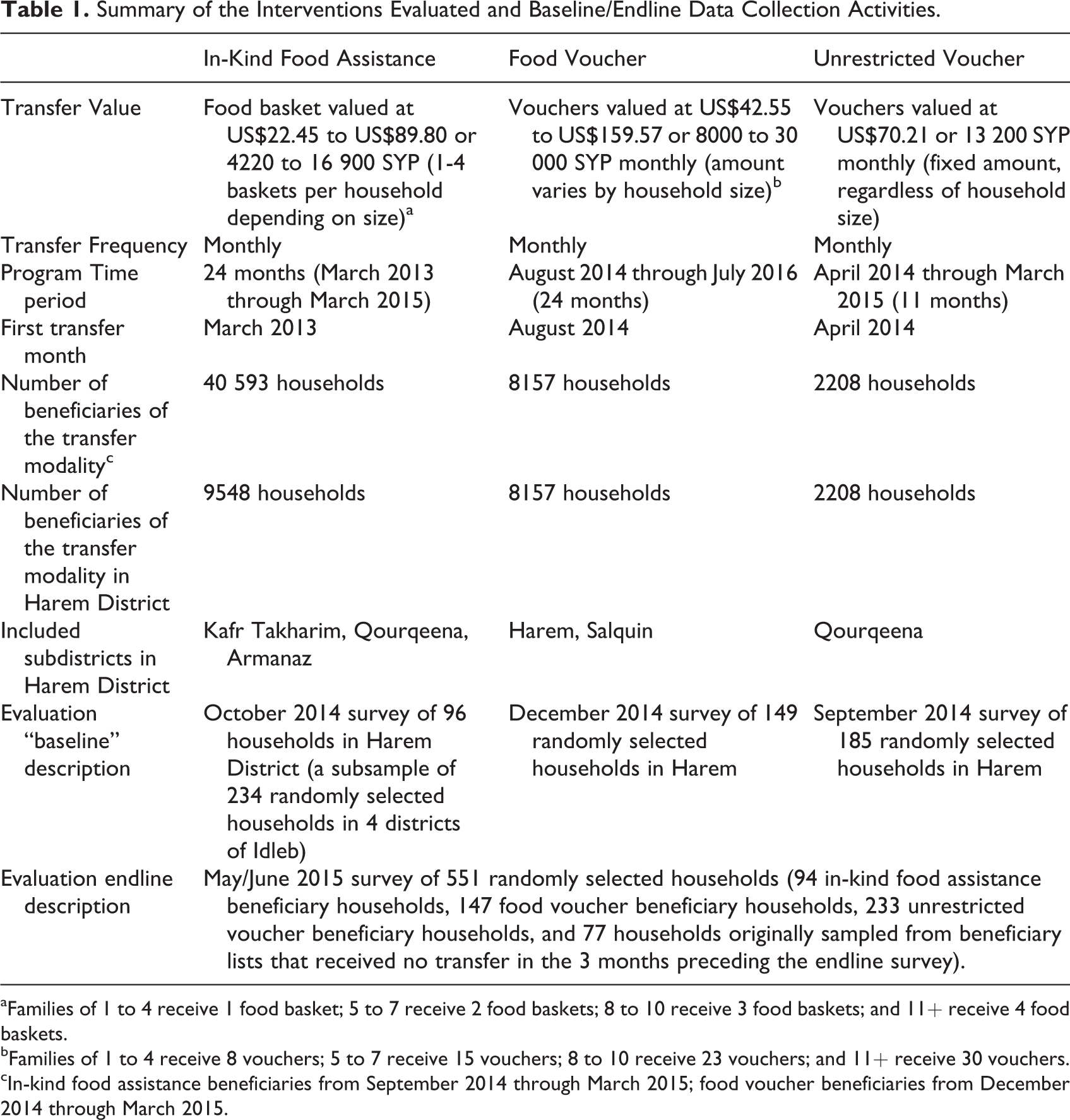
aFamilies of 1 to 4 receive 1 food basket; 5 to 7 receive 2 food baskets; 8 to 10 receive 3 food baskets; and 11+ receive 4 food baskets.
bFamilies of 1 to 4 receive 8 vouchers; 5 to 7 receive 15 vouchers; 8 to 10 receive 23 vouchers; and 11+ receive 30 vouchers.
cIn-kind food assistance beneficiaries from September 2014 through March 2015; food voucher beneficiaries from December 2014 through March 2015.
Data Sources and Indicators
The evaluation used survey data, from both beneficiary households and shopkeepers, and program monitoring data. Exposure to the different interventions over time and key evaluation activities is summarized in Figure 1. A total of 4 separate household surveys were used in the evaluation, including 3 baseline surveys (1 for each transfer modality) conducted over a 4-month period from September 2014 through December 2014 and an endline survey conducted in May/June 2015.
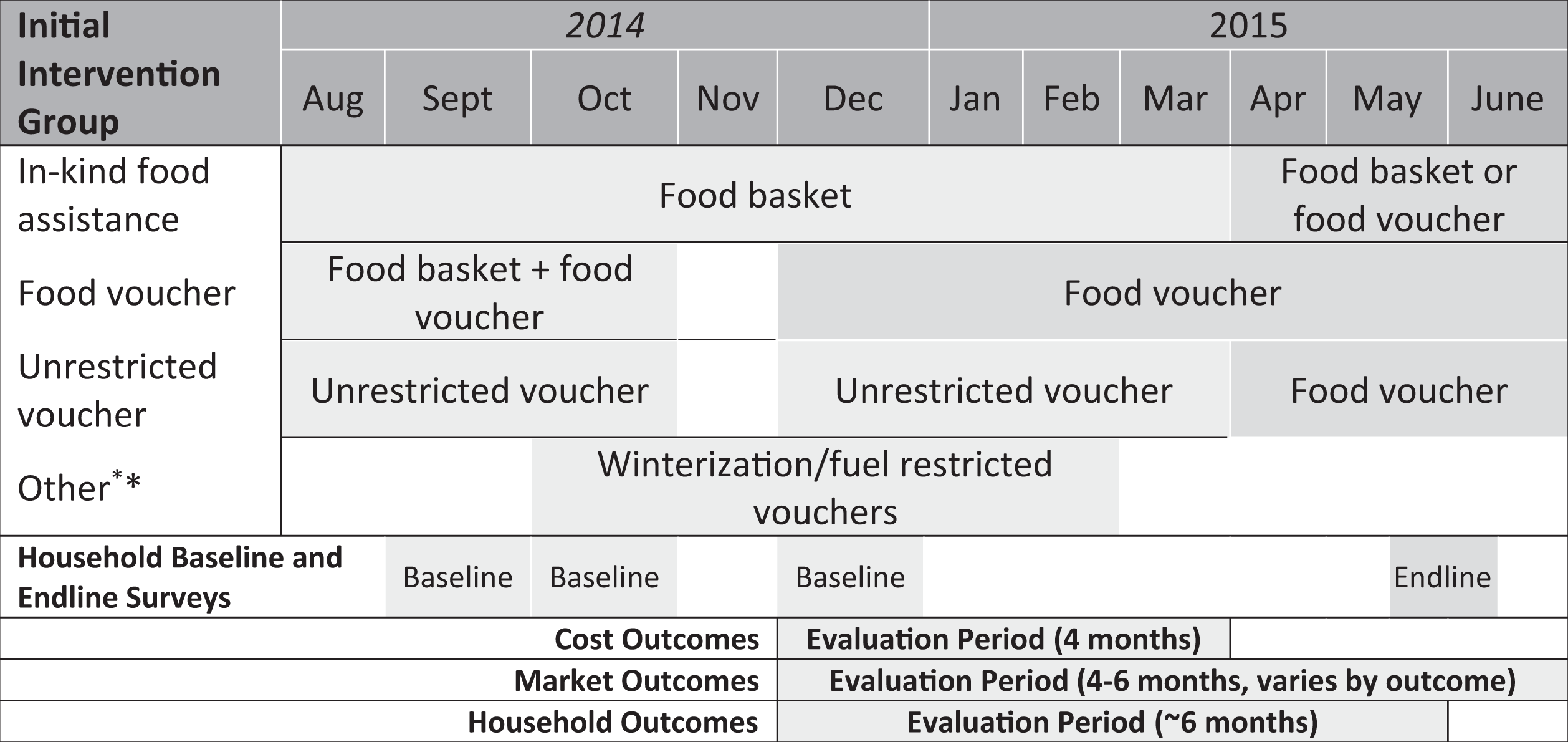
Time periods and types of assistance received in Harem District. *Beneficiaries receiving food baskets and food vouchers were eligible to receive fuel transfers or vouchers for nonfood items (NFI) which were distributed on a one-time basis during the winter months, thus it is possible that NFI assistance was received in addition to food aid.
Participants for the baseline surveys consisted of random samples of beneficiaries of the various types of transfers; similarly, random listed-based sampling was used for the endline survey. Independent samples were used at the 2 time points meaning that most households did not participate in both a baseline and endline survey. The baseline surveys had a combined sample size of 430 households (96 in-kind food assistance beneficiary households, 149 food voucher beneficiary households, and 185 unrestricted voucher beneficiary households) and the endline had a sample of 551 households which allowed to detection of differences of ≥10% to 15% between intervention groups at endline for key food security indicators with power (1 − β) of .80 and α = .05 (Table 1). The sample size is sufficient to detect differences greater than 10% to 15% between comparison groups. This was perceived as an acceptable threshold for program decision-making, where smaller differences would likely not be perceived as a sufficient justification for changing or justifying a particular transfer modality.
At the household level, the primary food security indicators were perceived food access, frequency of meal consumption, food consumption score (FCS), and coping mechanism use. The FCS is an indicator used by the WFP on a widespread basis, including in the Syria regional response, to measure food security (see note 1). The FCS has been found to correlate well with caloric availability at the household level and is reflective of dietary quality in terms of both energy and diversity. 22 Coping strategies are approaches used to by households to address food security, and range commonly adopted strategies such as consumption of less preferred foods to more extreme measures such as going entire days without eating or engaging in illicit activities in order to be able to purchase/access food. The coping strategies index (CSI) was used to collect information on household-level strategy use; the CSI measures frequency and severity of coping behaviors and is widely used in emergency settings. 23 Use of any negative coping strategy was identified as a key indicator because change over time was easier to interpret than a continuous measure, where households could have improvement or deterioration in coping (eg, shifting from one type of coping mechanism to another) without having this be reflected in the scale; use of specific coping strategies was assessed but not used as a key indicators. Household economic indicators included monthly income and expenditures, asset sales and at endline, savings and debt; reporting of expenditures was perceived as more reliable than reporting of income. Both food security indicators and household economy measures were included to ascertain a more comprehensive understanding of the household situation because cash-based transfers were anticipated to impact both food security and household economy. These measures are aligned with existing conceptual models of cash transfer programs which classify changes in household income as output measures and changes in food security measures as outcome-level measures. 23 The shopkeeper survey was conducted in July 2015, using a stratified sample of 20 shops participating in the GOAL voucher program per subdistrict in Harem. Shops were systematically sampled from lists and a matching approach used to identify the nearest nonparticipating shop of a similar type. A 2:1 ratio of GOAL to neighborhood shops was used (ie, 10 neighborhood shops per subdistrict were sampled). All data was collected by GOAL national staff in Syria who had prior assessment and data collection experience; prior to each survey, a pilot test and training on the specific survey instrument was conducted. The CommCare mobile data collection platform, with automated skip patterns and field limits, was used to help ensure data quality. 24 Additional program monitoring data analyzed for this evaluation included the number of beneficiaries per distribution cycle, volume of vouchers redeemed at monthly, prices of staple commodities, and costs associated with each transfer modality.
Analysis
All analyses were conducted using Excel and Stata 13. For survey data, similarities and differences between intervention groups were compared at baseline and endline and pre/postcomparisons were conducted for each group to assess change over time. Standard descriptive statistics including means, medians, standard deviations, ranges, and confidence intervals were determined. Statistical significance was assessed using t tests for comparisons of means and χ2 for categorical variables. Analysis of the shopkeeper survey used a similar approach to that of the household surveys described above.
Market price information was analyzed and trends over time assessed. In addition, the concentration ratio of the top 3 food stores (CR3), that is, the amount of business garnered by the 3 largest GOAL shops within a subdistrict, was calculated as a measure of market concentration. This approach was modeled after a recent economic evaluation of food assistance for Syrian refugees in Lebanon conducted by WFP, which classified a CR3 ratio of 0% to 50% as indicative of low concentration and a healthy degree of competition; a ratio of 50% to 80% as indicative of an oligopoly; and anything above 80% as close to a monopoly; the same cutoffs were applied in the analysis for this evaluation. 25 Broader market impacts were estimated using a Keynesian modeling technique to examine the predictive multiplier effects of voucher program implementation on the local economy. This approach was adapted from the methodology used in a recent evaluation of winterization cash transfers for Syrian refugees in Lebanon. 26 For this evaluation, actual voucher expenditures (“first round” effects) were extracted from GOAL accounting ledgers and extrapolated to estimate effects for the entire implementation period. Indirect effects on the local economy (“higher round” effects), were then calculated using the formula: dY = C / (1 − MPC) where the total amount of additional gross domestic product (dY) generated by a beneficiary household is calculated by dividing the amount the household spends (C) by 1 minus the marginal propensity to consume (MPC) and a conservative MPC of 0.50. 27 Sensitivity analysis was conducted with a range of MPC values, including those available for Syria and other similar regional estimates (an MPC of 0.63 has been identified as the “best estimate” for Syria). 27,28
Cost-efficiency analysis was conducted at a program level whereas cost-effectiveness was estimated for the 4-month evaluation period using outcome measures from the Harem District evaluation area. Because costs were reported at a program level, they were estimated for the evaluation time period for each modality based on the assumptions that program costs are distributed evenly over the implementation period, and intervention delivery in different districts has similar costs. Conversion rates of €0.89 per US$1 and 188.82 SYP per US$1 were used. 29
Ethical Considerations
All data was collected by GOAL national staff in Syria who had prior assessment and data collection experience. Prior to each survey, the data collection team received training from the monitoring and evaluation unit on the specific survey instrument and had the opportunity to ask questions and provide feedback during the finalization process. Permissions to conduct the survey were attained from local authorities and community leaders as needed in Syria by GOAL. The Johns Hopkins School of Public Health (JHSPH) institutional review board determined that JHSPH was not engaged in human research because JHSPH had no interaction with human participants, was not obtaining identifiable data and was not the primary grantee of federal funding.
Results
A major constraint in evaluating the effectiveness of humanitarian interventions is the fluid and unpredictable nature of the settings in which they are implemented. Despite the use of common beneficiary selection criteria across interventions, significant differences in demographic characteristics and living arrangements were observed in the overall beneficiary population between baseline and endline; there were also differences in selected characteristics between the different intervention groups at both baseline and endline (Table 2).
Beneficiary Demographic Characteristics at Baseline and Endline.a
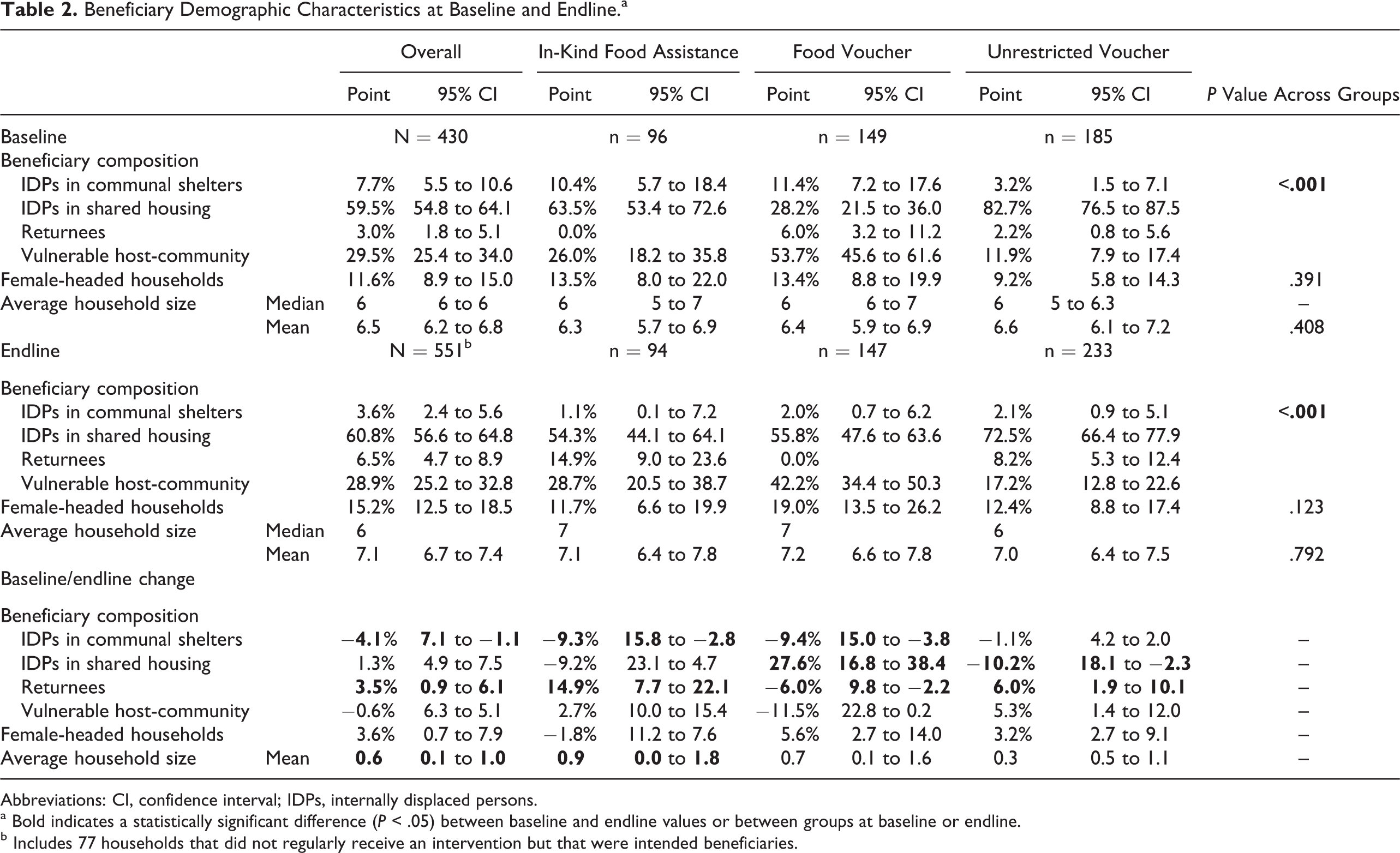
Abbreviations: CI, confidence interval; IDPs, internally displaced persons.
a Bold indicates a statistically significant difference (P < .05) between baseline and endline values or between groups at baseline or endline.
b Includes 77 households that did not regularly receive an intervention but that were intended beneficiaries.
Household Food Security and Coping Strategies
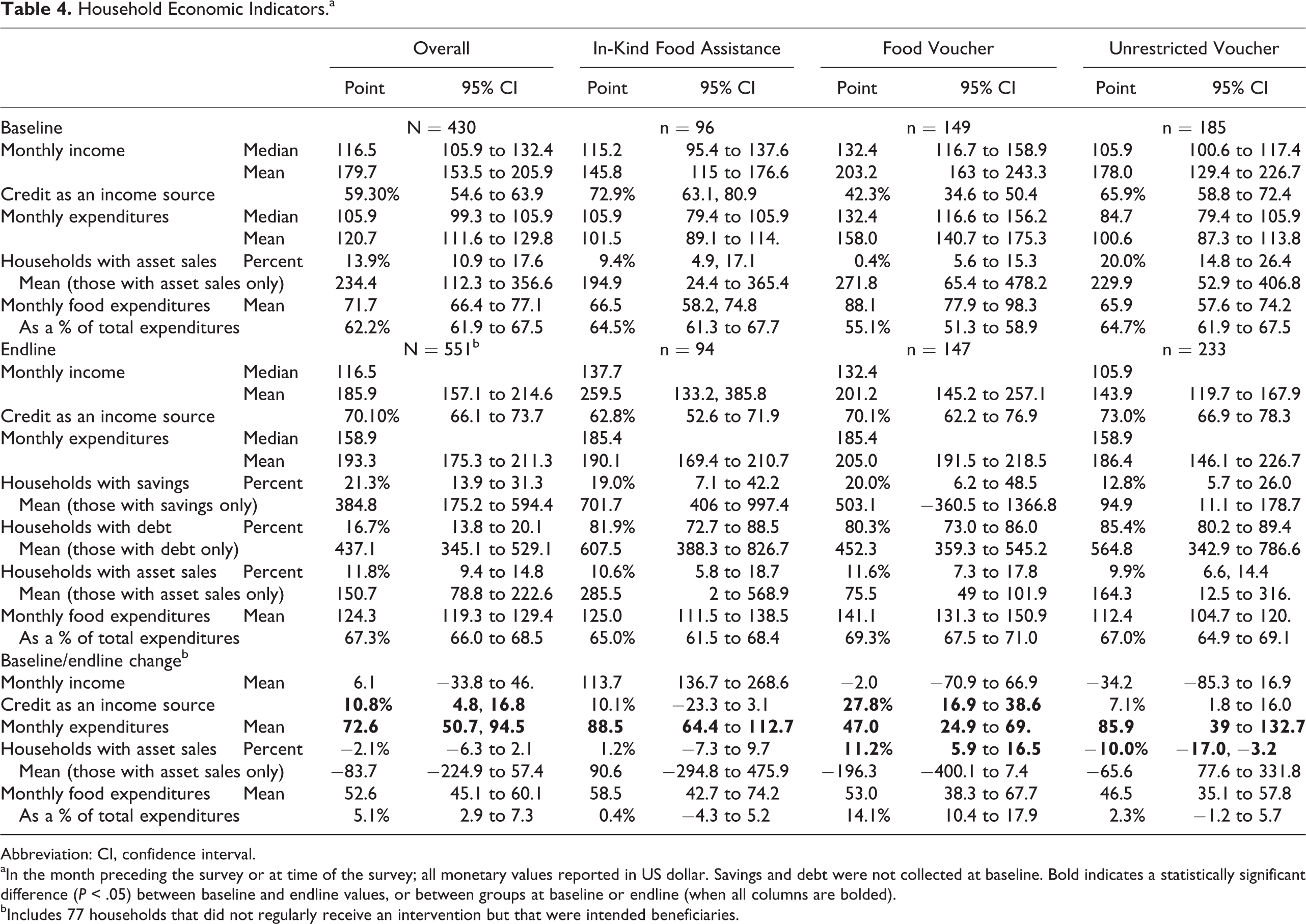
Both in-kind food and voucher assistance had positive effects on household food and economic security; however, no intervention was successful in improving all outcomes measured. Food transfers were more successful in maintaining and improving food security measures than either food vouchers or unrestricted vouchers. When looking more broadly at household well-being, including use of financial and other coping strategies, both in-kind food assistance and unrestricted vouchers were more protective than food vouchers. Baseline and endline measures by group and change over the intervention period are summarized for food security measures in Table 3 and household economic measures in Table 4 and more generally in Figure 2.
Household Food Consumption.a
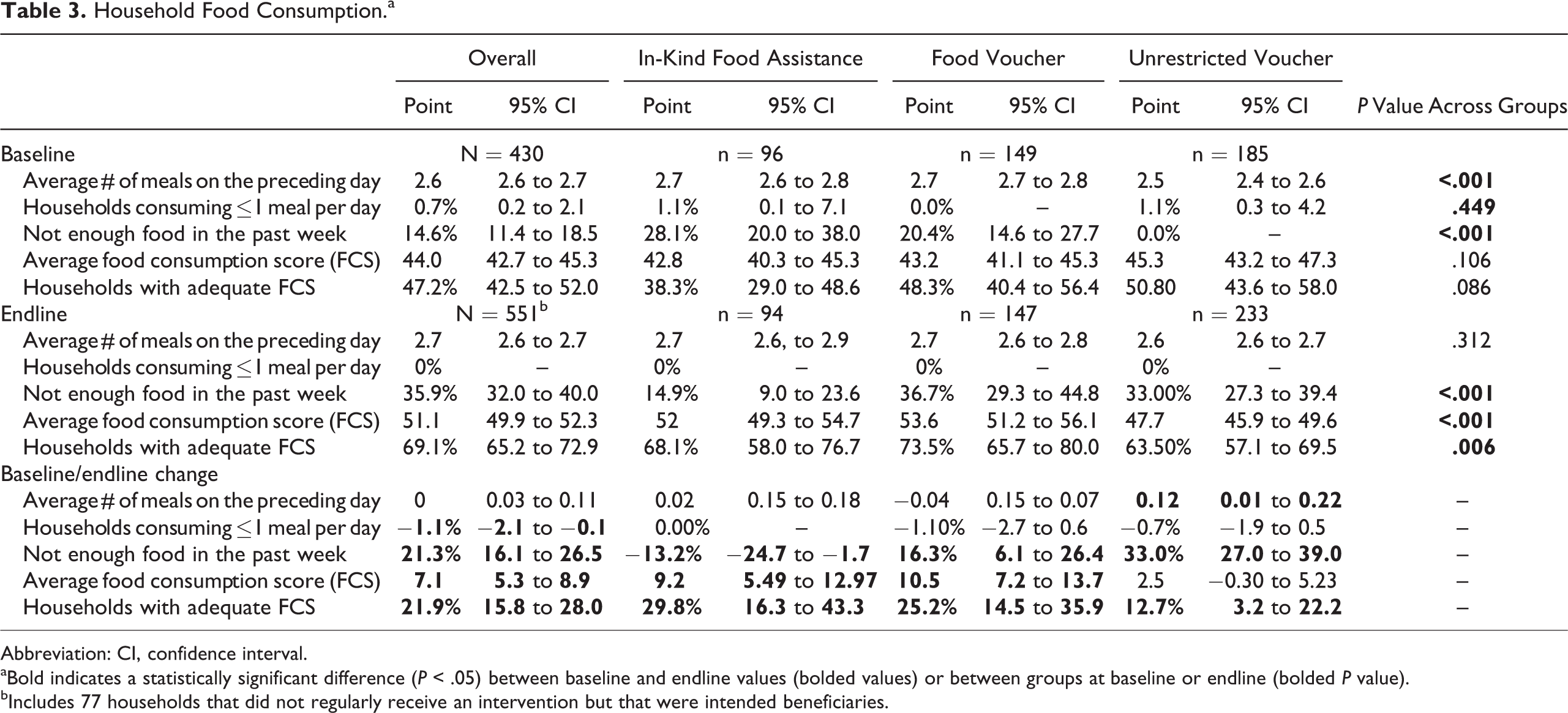
Abbreviation: CI, confidence interval.
aBold indicates a statistically significant difference (P < .05) between baseline and endline values (bolded values) or between groups at baseline or endline (bolded P value).
bIncludes 77 households that did not regularly receive an intervention but that were intended beneficiaries.
Household Economic Indicators.a
Abbreviation: CI, confidence interval.
aIn the month preceding the survey or at time of the survey; all monetary values reported in US dollar. Savings and debt were not collected at baseline. Bold indicates a statistically significant difference (P < .05) between baseline and endline values, or between groups at baseline or endline (when all columns are bolded).
bIncludes 77 households that did not regularly receive an intervention but that were intended beneficiaries.
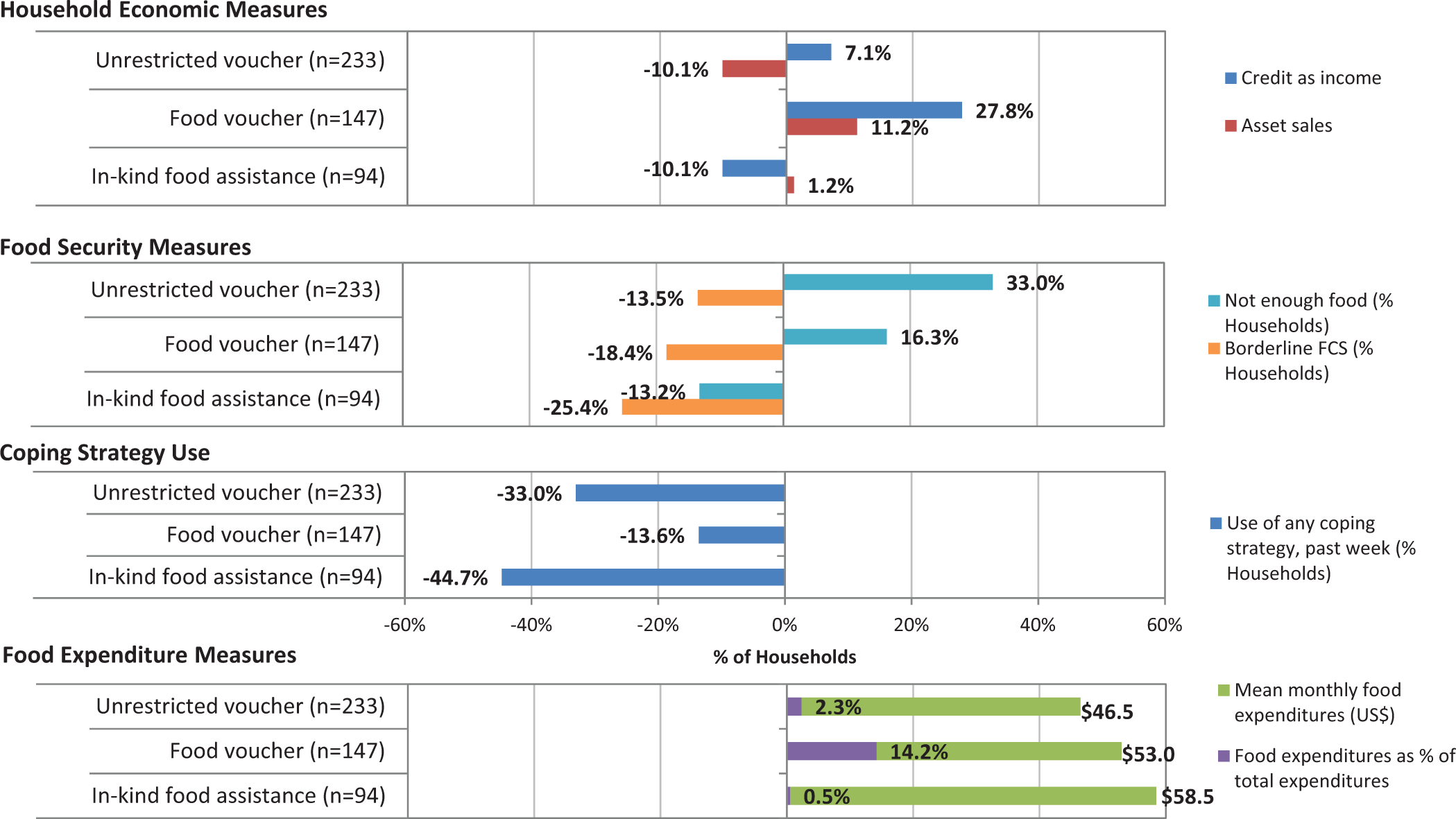
Baseline/endline change in household economy, food security, and coping mechanisms by transfer modality.
Overall, 47.2% of households had an adequate FCS at baseline and there was similar across intervention groups (P = .086). The endline proportion with an adequate FCS was 69.1% which is a statistically significant increase of 21.9% from baseline (P < .001). All intervention groups reported significant increases in the proportion of households with an adequate FCS (unrestricted vouchers 12.7%, food vouchers 25.2%, in-kind food assistance 29.8%; P < .05 for all comparisons). Significant differences in the proportion of households with adequate FCS were observed between groups at endline (unrestricted vouchers 63.5%, in-kind food assistance 68.1%, food vouchers 73.5%; P < .006).
At baseline, 14.6% of respondents reported they did not have enough food to eat in the preceding week; this proportion varied significantly between groups (unrestricted vouchers 0%, food vouchers 20.4%, in-kind food assistance 28.1%; P < .001). At endline, a significantly higher proportion (35.9%) of respondents reported they did not have enough food in the week preceding (P < .001). Again there was significant variation between the intervention groups (in-kind food assistance 14.7%, unrestricted vouchers 33.0%, food vouchers 36.7%; P < .001).
Coping strategies are behaviors adopted when households have inadequate access to food. Respondents were asked about coping strategy use within the preceding week (Figure 3). At baseline, coping strategy use was ubiquitous and reported by 100% of households as compared to 74.4% at endline, a statistically significant decrease of −25.6% (P < .001). At endline, there were significant differences in the proportion of households using 1 or more coping strategies between groups (in-kind food assistance 55.3%, unrestricted voucher 70.0%, food voucher 86.4%; P < .001). It follows that the largest reduction in coping strategy use was observed among in-kind food assistance recipients (−44.7%) followed by unrestricted voucher recipients (−30.0%) and food voucher recipients (−13.6%).
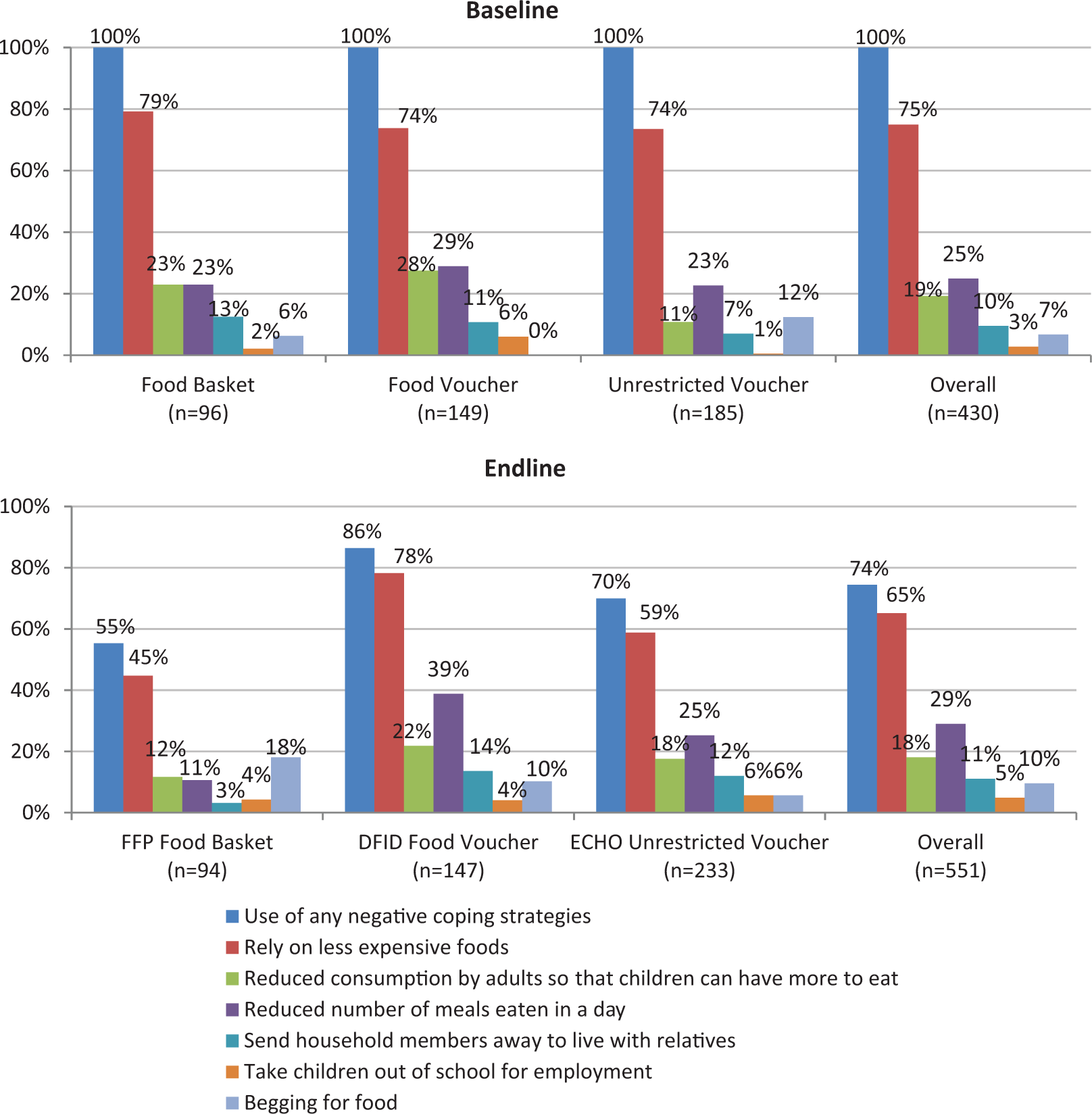
Coping strategies.
With respect to change in coping mechanism use by transfer modality, statistically significant decreases in reliance on less expensive foods were observed for all groups expect food voucher recipients. Statistically significant increases in the use of begging were observed for in-kind food assistance and food voucher beneficiaries, whereas a statistically significant decrease was observed among unrestricted voucher beneficiaries. In contrast, unrestricted voucher beneficiaries were the only group to have a significant increase in the proportion of households that took their children out of school for employment. Among other coping mechanisms (including reduced consumption of food by adults so that children could eat, reduced numbers of meals consumed per day, and sending family members to live with relatives), the only group with statistically significant changes from baseline to endline was in-kind food assistance recipients, which reported a significant decrease in the proportion of households using each of the aforementioned coping strategies.
Household Economy
Mean household income of program participants was statistically similar in the months preceding the baseline and endline surveys at US$179.7 and US$185.9, respectively (P = .643). There were no significant differences between groups at baseline (P = .517); however, at endline there were significant differences in monthly incomes with the highest mean monthly income among in-kind food assistance recipients (US$259.5) and the lowest in the unrestricted voucher group (US$143.9;P = .025).
Asset sales and use of credit as income source are indicators of potential financial distress; an objective of most humanitarian assistance programs is to reduce vulnerability and ensure that households are able to survive without undertaking such measures. When comparing changes in financial distress measures groups, in-kind food assistance and unrestricted vouchers appeared more protective than food vouchers. The only group with a significant change in use of credit from baseline to endline was the food voucher beneficiaries where there was a 27.8% increase was observed. The only group with a significant change in the proportion of households with asset sales over the intervention period was unrestricted voucher beneficiaries where a 10.1% decrease was observed (P < .001).
Mean monthly expenditures were similar between groups at both baseline and endline (P = .225 and P = .583, respectively). Overall, a significant increase of US$72.6 was observed between baseline and endline for all beneficiaries (P < .001) and all groups experienced statistically significant increases in expenditures. At baseline, reported monthly incomes exceed monthly expenditures overall (mean expenditure, US$120.7; mean income, US$179.7) and in each of the intervention groups; the average expenditure was 67.2% of the average income. At endline, the opposite was true and expenditures slightly exceed income with the average overall expenditure at 104% of reported income (mean expenditure, US$193.3; mean income, US$185.9). Expenditures exceed income by 102% and 130% in the food voucher and unrestricted voucher groups, respectively; in contrast, average expenditures in the in-kind food assistance group were 73% of incomes.
There were no significant differences between groups at baseline in the proportion of household expenditures spent on food (62.2%) or in the average expenditure amount (US$71.7, median = US$79.4; P = .494 and P = .415, respectively). At endline, households spent an average of 67.3% of total expenditures on food; this proportion was similar across groups (P = .115); the average expenditure amount differed significantly by group, with the highest expenditures among food voucher recipients (US$141.1) and the lowest among unrestricted voucher recipients (US$112.4; P < .001).
With respect to change in food expenditures, there was a statistically significant increase of 5.1% in the proportion of household expenditures on food between baseline and endline (P < .001). This corresponds to a significant increase in average monthly food expenditures of US$52.6 between baseline and endline (P < .001). When assessed by transfer modality, statistically significant increases in food expenditures were observed for all transfer modalities (P < .001 for all comparisons); however, the only group with a statistically significant change over the intervention period in was those receiving food vouchers, which had a 14.1% increase in the proportion of total expenditures spent on food.
Market Effects
GOAL shop monitoring data was used to examine trends in commodity prices over time, from January 2014 through the end of the intervention period in April 2015; commodities with a less than a 10% change in price were considered stable. Price increases were observed for approximately half of staple commodities with some of the largest increases in vegetable oil (40%) and rice (66%) prices. Price trends of animal origin foods were varied, with increases of 8% to 37% for meats, stable prices for dairy products with the exception of cheese (52% increase), and a 23% decrease in the price of eggs. With the exception of potatoes, the prices of fruits and vegetables all. Smaller price increases, between 16% and 24%, were observed for apples, cucumbers, peppers, and eggplant; larger increases were observed for tomatoes (70%) and onions (154%).
In addition to price monitoring data, information on price trends was also collected from shopkeepers. Prices of goods reportedly increased in the majority of surveyed shops (90.2%) with few shops reporting decreases (4.9%). The main reasons for increased prices reported by shopkeepers were similar in GOAL and non-GOAL shops and are as follows: higher cost of doing business (73.5), unstable supply/security (59.8%), and increased demand or population influx (18.6%; Figure 4). Reduced supply of locally produced goods was not reported by any of the shops; however, “other” reasons for price increases were reported by 62.7% of all surveyed shops. Among the 4 shops reporting reductions in prices, decreases were reported for rice, lentils, and fresh fruits and vegetables. Two of these shops cited humanitarian assistance as the main reason for the decrease and 1 cited increased commercial importation.
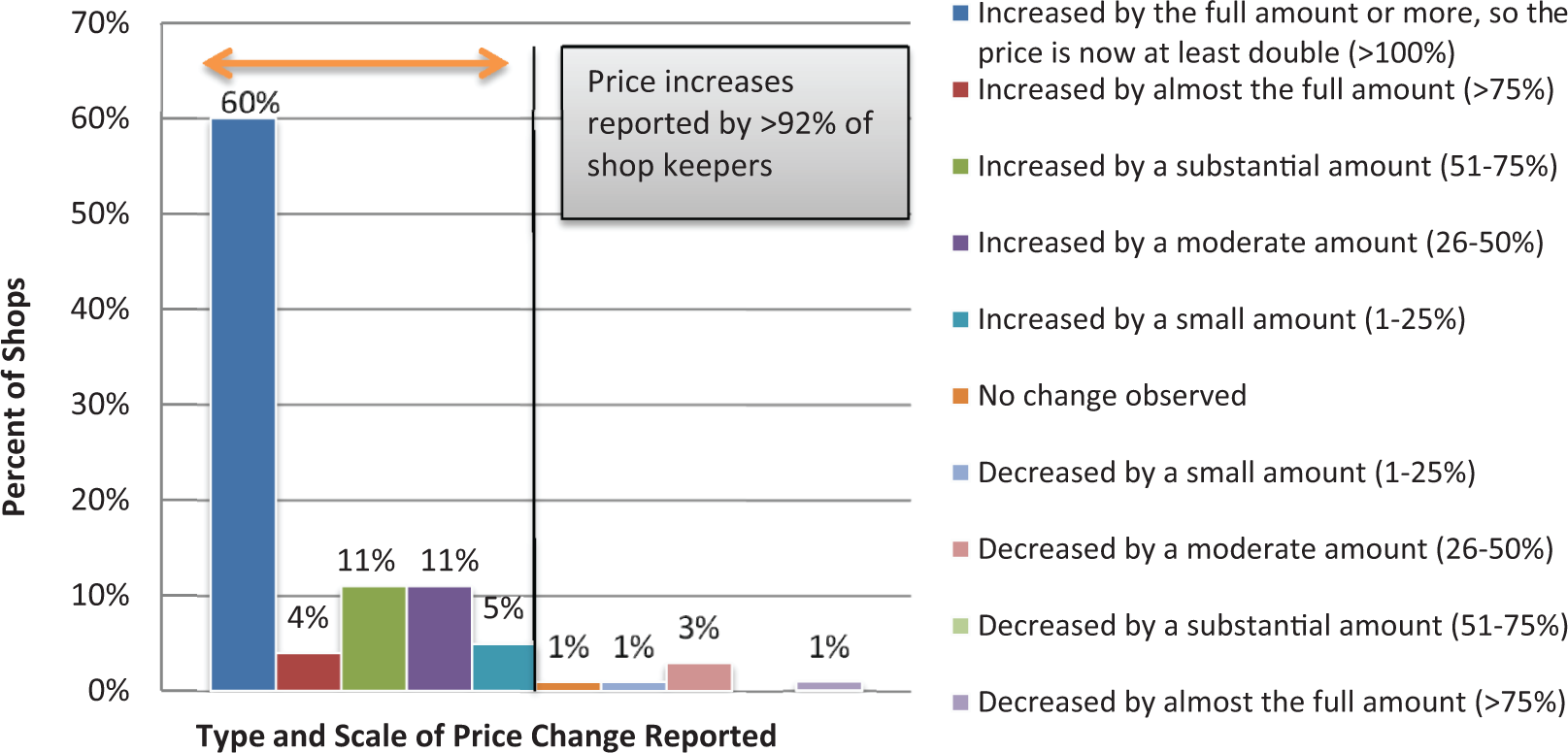
Shopkeeper reported changes in market prices for goods sold in the store since the beginning of conflict.
An average of 1764 vouchers were redeemed in shops participating in the GOAL transfer programs over the period from December 2014 through March 2015. Some variation in the number of active shops and number of vouchers exchanged was observed month to month, with December 2014 and February 2015 showing the most market activity (monthly data not shown). The average concentration ratio of the top 3 food stores in a subdistrict was 31% (range: 18-47), meaning that the top 3 stores in each subdistrict captured 31% of the voucher business. This suggests a healthy level of competition, as indicated by the low concentration of market share, amongst shops participating in GOAL’s voucher programs. Market concentration was highest amongst shops participating in unrestricted voucher program in Quorqeena, where market share bordered on oligopolistic (CR3 ranged from 45% in December 2014 to 53% in March 2015). Shops participating in the food voucher program in the same subdistrict demonstrated more competition, with the top 3 shops accounting for 31% to 32% of food voucher business.
Income generated by voucher program implementation can be classified into first round effects, or income directly generated by exchange of vouchers at participating shops, and higher round effects generated from subsequent rounds of spending (eg, the shopkeeper uses income to buy more goods, pay shop running costs, or expand his business). According to GOAL accounting ledgers, the food voucher and unrestricted voucher programs provided nearly US$2.8 million in direct income for the local economy in Idleb governorate during the 4-month evaluation period. Assuming income generated during the evaluation period is reflective of that generated throughout the life of the transfer programs, the food and unrestricted voucher programs directly provided more than US$15 million in income for the local economy. Using a conservative estimate of 0.5 to represent the marginal propensity to consume, the total amount of GDP generated over the duration of the assistance programs amounts to over US$30 million for the Syrian economy. If marginal propensity to consume in project areas is similar to preconflict levels and/or levels in neighboring countries, each dollar of voucher assistance spent in Syria may actually contribute US$2-4 to the Syrian economy (Table 5).
Multiplier Effects of Voucher Programs in US Dollar.
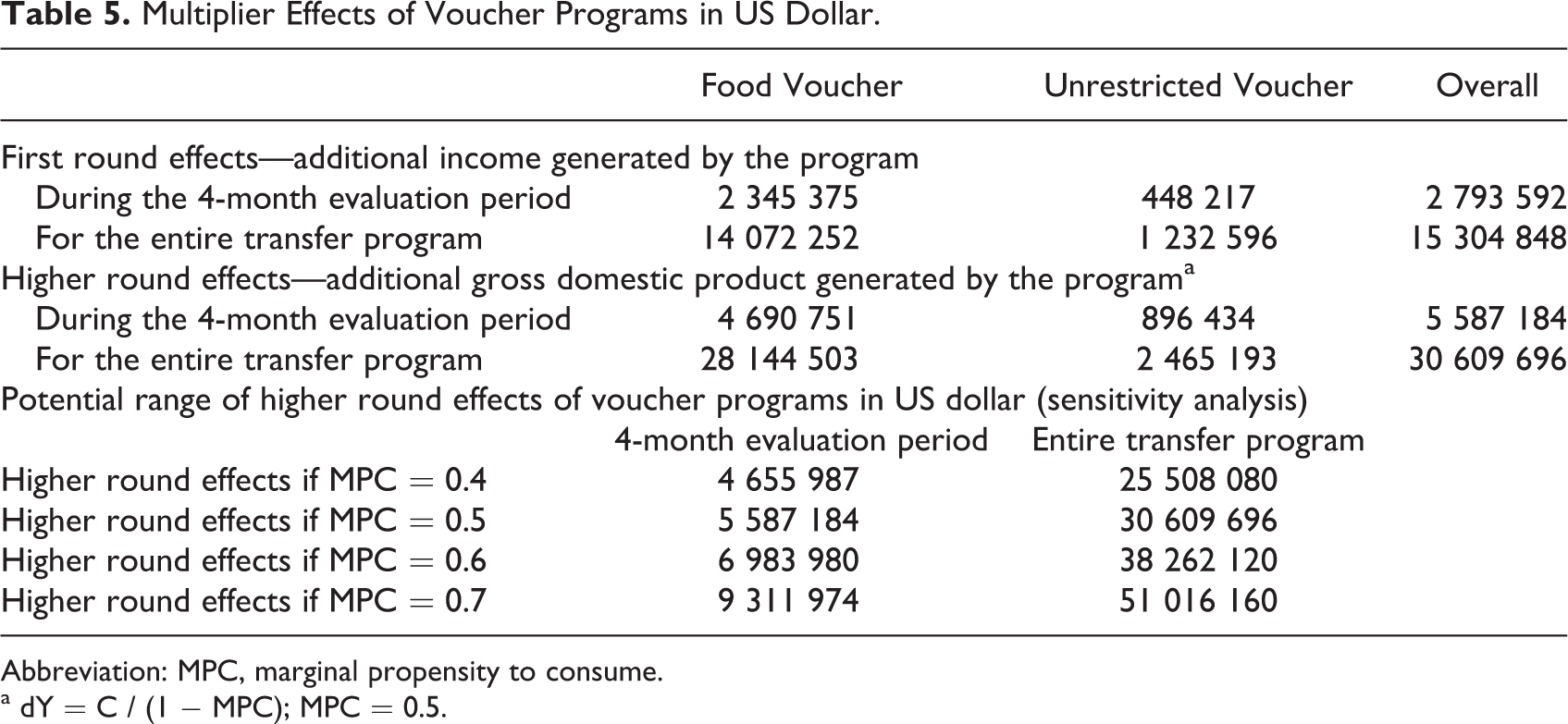
Abbreviation: MPC, marginal propensity to consume.
a dY = C / (1 − MPC); MPC = 0.5.
Cost-Efficiency and Effectiveness of Transfer Modalities
Cost-efficiency analysis was conducted at the program level because it was not possible to differentiate costs for Harem District from those of the larger project. Voucher programs were more cost-efficient than in-kind food assistance; on average, voucher programs required one-third of the activity-specific costs and one-fifth of the total administrative cost per household than in-kind food assistance (Table 6). To a large extent, the difference in in-kind food assistance and voucher program administrative costs can be explained by varying levels of monitoring and management/operations support required for each modality. For increasing food availability, unrestricted vouchers were found to be more cost-effective than food vouchers (US$9.64 vs US$11.69 per 1% increase in food availability). For increasing food consumption, food vouchers appear to be the most cost-effective of the programs evaluated (US$18.31 per 1% increase in food consumption vs US$159.55 for unrestricted vouchers and US$175.49 for in-kind food assistance). However, it is important to note that the endline survey was powered to detect >±10% change in FCS and neither food basket recipient nor unrestricted voucher recipient populations met this threshold.
Program Cost Considerations in US Dollar.
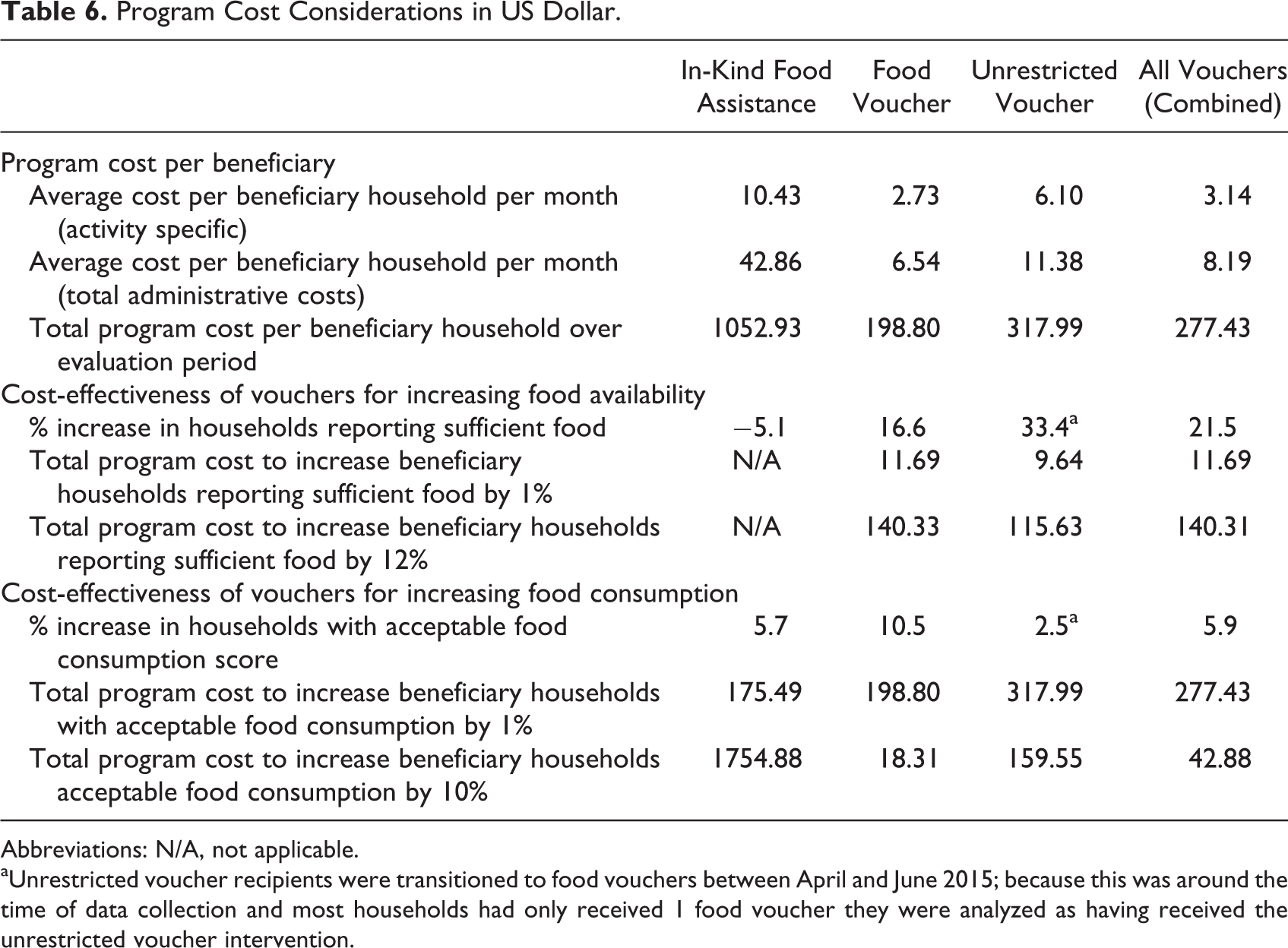
Abbreviations: N/A, not applicable.
aUnrestricted voucher recipients were transitioned to food vouchers between April and June 2015; because this was around the time of data collection and most households had only received 1 food voucher they were analyzed as having received the unrestricted voucher intervention.
Discussion
This study was designed to examine the effects of emergency food assistance programs on households and on the local economy in northern Syria, in order to inform future program and policy decision-making within Syria, and globally. At the household level, both in-kind food assistance and voucher programs appeared to have positive effects on food security and economic well-being in Idleb; however, no intervention was successful in improving all outcomes measured.
When examining household economic measure including measures of distress such as asset sales and use of credit as an income source, both in-kind food assistance and unrestricted vouchers were more protective than food vouchers. One potential explanation for this relates to transfer size—the value of the unrestricted voucher was greater than the value of in-kind food assistance and the maximum value of the food basket provided in-kind also exceeded that of the food voucher which varied by household size. 1 However, it is also possible that in-kind food assistance is a preferable transfer mechanism in this context because inflation of staple food prices may reduce the quantity of food that can be purchased over time as compared the stable quantity that is provided by the food basket. 30 Unrestricted vouchers, as compared to food vouchers, may also be more financially protective because they enable beneficiaries to meet a wider range of needs, and thus may reduce the necessity for borrowing and asset sales. When comparing changes in household food expenditures across the 3 intervention groups, all groups reported relatively similar increases in the absolute value of household spending on food in the month preceding the survey; the proportion of monthly expenditures on food was also similar between the groups at endline. Expenditure changes are likely a reflection of the inflation in staple food prices that is occurring in Syria, which is supported by GOAL monitoring data indicating an average monthly inflation rate of 4%, and is also reported elsewhere. 3
In-kind food assistance was more successful in maintaining and improving household food security measures than either food vouchers or unrestricted vouchers. With respect to food access and consumption, beneficiaries in receiving in-kind food assistance were significantly less likely to report insufficient access to food at endline compared to the food and unrestricted voucher recipients Both in-kind food assistance and food vouchers were more successful means of improving dietary diversity, measured in terms of mean FCS and proportion of households with and adequate FCS, than unrestricted vouchers. Overall, unrestricted vouchers were the least effective transfer modality with respect to food security outcomes. Presumably this is because the additional choice offered by this transfer modality enables beneficiaries to meet a wider range of needs and beneficiaries are electing not to use the entire transfer toward food. There is limited evidence on the effectiveness of different assistance modalities in conflict settings. However, these findings are consistent with findings from evaluations of emergency food security programs in Ecuador which found in-kind food assistance to be more effective at increasing per capita caloric intake than unconditional cash transfers. 31
Vouchers may be the most appropriate assistance modality in some contexts, but restrictions on shops where vouchers can be used and the creation of monopolies can lead to higher prices, and beneficiaries may resort to selling vouchers below their value in order to access cash. 17 While vouchers do have inherent restrictions, this study found no negative market effects associated with food or unrestricted voucher program implementation. Price increases and perceptions of market trends were similar in shops participating in voucher programs and neighboring shops not participating in the program, and a healthy level of competition was observed amongst shops participating in both food voucher and unrestricted voucher programs. Such a large injection of cash into a volatile local economy could have negative consequences; however, this did not appear to be the case.
Potential direct and indirect market effects of voucher program implementation estimated using Keynesian modeling techniques with a conservative MPC measure suggest that the total amount of GDP generated by implementation of the voucher programs amounts to over US$30 million. Incremental changes in the MPC result in substantially greater multiplier effects. If the MPC in project areas is indeed higher than 0.5 (as analysis of household incomes, expenditures and reliance on credit suggest it may be), and all consumption occurs within Syria, it is possible GOAL transfers could have contributed upward of US$40 million to the local economy. These estimates should be interpreted with caution, however, as there is little research on the extent to which Keynesian economic principles can be applied in settings like the Syrian crisis, and insufficient data available for alternative methods of estimating multiplier effects such as the input–output models and social accounting matrices. 26,32 -34 Market effects examined in this study also did not include the direct or indirect effects of procuring in-kind food assistance baskets or comparison of higher round effects of different assistance modalities, as this would require more extensive data on local and macro-level market dynamics than is available or feasible to collect in Syria. 35,36
In terms of value-for-money, voucher programs were found to be more cost-efficient than in-kind food assistance, and more cost-effective with respect to increasing food security (as measured by household food consumption) over the 4- to 6-month evaluation period in Harem district. This is also consistent with economic evaluations of food security programs in other settings, which have found cash-based approaches to be more cost-efficient and cost-effective than in-kind food distribution. 37 It is not possible to draw strong conclusions about the relative efficiency and cost-effectiveness of different voucher modalities, primarily due to variation in the value of the transfer and potential influence of complementary interventions provided as part of GOAL’s multisector assistance programs or through other humanitarian organizations.
Decisions about the appropriateness of one transfer modality versus another must be based on a multitude of factors, including the outcomes of interest, feasibility of implementation, relative efficiency and effectiveness, and potential market impacts. In many areas of Idleb and elsewhere in Syria, in-kind food assistance may be more appropriate because systems to implement and monitor voucher programs are not in place or markets are volatile. However, in more stable areas such as Harem District, voucher programs may be a more cost-efficient and cost-effective means of increasing food security. At the same time, these transfer modalities were preferred by beneficiaries and also had broader effects on the local economy. Where vouchers are possible, food vouchers should be prioritized if the primary aim of assistance is to maintain and improve food security, in particular if other sources of income and humanitarian assistance are sufficient to meet other household needs. In areas where other forms of humanitarian assistance are less available, higher value unrestricted vouchers may be a potential solution to protecting household food security while at the same time meeting other household needs, in particular in the winter months when heating and fuel costs are greater. Where multiple transfer modalities are implemented in the same geographic area, such as Harem District, seeking out opportunities to further maximize efficiency across programs could improve humanitarian assistance programs more broadly.
Continuation of multiple types of transfer programs in Syria, including both in-kind assistance and vouchers, will allow humanitarian actors to remain responsive to evolving access and security considerations, local needs, and market dynamics. It will also enable coverage of larger beneficiary population, where vouchers may be more difficult to implement in some areas, and these are locations are often where unmet needs are the greatest.
Limitations
Both access limitations and limited ability to control humanitarian assistance received by participating households have important implications which must be taken into account when interpreting results. First, inability to conduct surveys as planned due to security and access constraints meant that endline data collection was delayed by several months. In some cases, beneficiaries were dropped from the GOAL program or reassigned to other intervention groups which reduced the planned sample size. Another consequence of the delay was that in some cases, beneficiaries were not surveyed in the month following the final distribution of the modality, which would have been preferable in terms of measuring some outcomes, in particular those related to food security. In cases where baseline surveys covered multiple districts, a subanalysis for Harem District is presented. This represents a design limitation because baseline sample sizes for the different transfer modalities are variable and the precision of some estimates is low because of the relatively small sample sizes. Power to detect statistically significant differences between groups at baseline and in pre/postcomparisons is more limited than if sample sizes were larger.
Conclusion
Cash transfers have the potential to transform the effectiveness of humanitarian assistance, provide more choice and dignity to beneficiaries, and support local economies. However, in conflict-affected settings, expansion of cash-based assistance requires proper market, sectoral and protection assessments to ensure feasibility, and in unstable settings a combination of cash and in-kind transfers may become the norm as humanitarian assistance is increasingly being delivered through cash transfers. Cash-based approaches, particularly vouchers, are widely used to support Syrian refugees in Jordan and Lebanon by the United Nations High Commissioner for Refugees, the WFP, and NGO consortia and efforts to expand cash assistance within Syria are ongoing. Evidence from this study suggests that cash transfers, in particular vouchers, can be both feasible and effective in unstable conflict settings.
Food insecurity remains a critical concern for vulnerable households in northern Syria. Humanitarian assistance strategies are driven by a multitude of factors, and there are trade-offs in effectiveness, efficiency, and acceptability of different assistance modalities in any context. This study suggests that in northern Syria, continuation of multiple types of emergency food assistance programs, including both in kind assistance and vouchers, will allow humanitarian actors to remain responsive to evolving access and security considerations, local needs, and market dynamics. Where possible, food vouchers should be prioritized if the primary aim of assistance is to maintain and improve food security. Improved targeting of both food and cash-based assistance and the expansion of voucher programs could lead to a more effective use of funds and facilitate the implementation of assistance programs that are sustainable in the context of declining funding availability.
Footnotes
Authors’ Note
S.D. designed the study and prepared the manuscript with support from H.T. and E.L.; E.L. led the survey data analysis; H.T. led the market effects, cost-efficiency, and cost-effectiveness data analysis; V.A. participated in study conception and supported data collection; and all authors critically reviewed the manuscript.
Acknowledgments
We would also like to acknowledge the immense efforts of the data collection team in Syria whose dedication to the humanitarian response is unwavering and without whom this evaluation would not have been possible. This evaluation also would not have been possible without the support of Agron Ferati, Ekbal Al Husayan, Mohammed Shareef, Mirheta Okovic, Christopher Boucher, Thomas Byrnes, Maggie Gallagher, and Max Izenburg.
Declaration of Conflicting Interests
The author(s) declared no potential conflicts of interest with respect to the research, authorship, and/or publication of this article.
Funding
The author(s) disclosed receipt of the following financial support for the research, authorship, and/or publication of this article: This study was funded by GOAL.