



Abstract
The United States has a long history of food assistance for humanitarian need. The Food for Peace Act of 1954 established the United States’ permanent food assistance program which has fed over 3 billion people in 150 countries worldwide through thousands of partner organizations. In 60 years, the program has evolved and will continue to do so. Recently, the program has gone from a focus on quantity of food shipped to quality food assistance from improved products, programs, and processes to effectively meet the needs of different vulnerable groups. The current debate focuses on the appropriateness of using fortified blended foods to prevent and treat malnutrition during the first 1000 days of life. Dairy ingredients have been at the center of this debate; they were included initially in fortified blended, removed in the 1980s, and now reincorporated into fortified therapeutic and supplemental foods. Improved quality food baskets and effective nutrition programming to prevent and treat malnutrition were developed through multisectoral collaboration between government and nongovernment organizations. The US Agency for International Development has focused on improving nutrition through development programs often tied to health, education, and agriculture. The years since 2008 have been a particularly intense period for improvement. The Food Aid Quality Review was established to update current food aid programming products, program implementation, cost-effectiveness, and interagency processes. Trials are underway to harmonize the areas of multisectoral nutrition programming and gather more evidence on the effects of dairy ingredients in food aid products.
Keywords
Introduction
Dairy is central for healthy childhood development around the world, including delivering improved nutrition to children in food-insecure countries and at risk of stunting and wasting due to malnutrition. 1 Researchers presented the latest scientific advancements on the role of dairy ingredients in food aid programs at the Dairy for Global Nutrition Symposium: “Protein Quality, Growth and Malnutrition: Latest Scientific Findings and the Role of Dairy in Food Aid” at the Experimental Biology Annual Meeting, 2014. The symposium highlighted the expanding body of scientific research on dairy’s health and nutrition benefits for vulnerable populations as well as new methods to measure protein quality. This article, Delivering Improved Nutrition: Dairy Ingredients in Food Aid Products, provided the food aid context for the symposium.
Prevalence of Undernutrition
Malnutrition is devastating. It perpetuates poverty by contributing to lower cognition and educational achievement for individuals, and decreases overall productivity. 2 Almost 800 million people around the world are undernourished, malnourished, or hungry. 3 One in six children in developing countries is underweight, roughly 100 million children worldwide. 4 In children younger than 5 years of age, nearly half of all deaths are caused by poor nutrition, and 3.1 million children die each year from its effects. 5
Over the last 60 years, there have been a series of improvements in the Food Aid Basket, key fortified blended foods, and special nutrition products to treat and prevent malnutrition, both in the United States and globally. This process has been an evolution; at first dairy ingredients, such as nonfat dry milk (NFDM), were included in food aid products such as corn soy milk (CSM) and wheat soy milk (WSM); then temporarily removed due to cost, availability of NFDM, and other constraints; and most recently added back based on a growing body of evidence of the positive effects of dairy products in growth, development, and prevention or treatment of malnutrition. United States and international agencies have unified their efforts to strengthen and enrich the nutritional quality of food aid products in the last 10 years as well as to improve the cost-effectiveness and administration of nutrition programs with the reestablishment of dairy ingredients in the Food Aid Basket. 6,7
Food Aid Timeline
The first record of US food aid was under President James Madison for Venezuelan earthquake victims in 1812. The Russian Famine Relief Act under Herbert Hoover fed millions in the 1920s. It was the Marshall Plan in 1949 to provide food to alleviate hunger in the aftermath of World War II that set the stage for the Food for Peace Act of 1954, which established the United States’ permanent food assistance program.
Food aid has evolved continuously since its inception in the 1950s when US Public Law PL480 was enacted to initiate the Food Aid Program and the Farm Bill. Food shortages and famine in Asia and Africa in the 1960s spurred new international nutrition and agriculture initiatives to address hunger. These initiatives aimed to increase agricultural productivity to provide enough food to meet dietary energy requirements, incorporating the agriculture sector into food aid efforts. The Green Revolution, which focused on plant breeding and other adoptions of agriculture-specific inputs and technology to improve food crop yields, and the creation of the Office of Food for Peace to export US agriculture commodities to food-insecure areas around the world are examples of these initiatives. The introduction of specialized products with added nonfat dry milk started in 1964 with CSM and WSM. Food Aid programming of these specialized products focused on using CSM and WSM as self-targeting weaning foods for children who were malnourished. These products were used for many years as part of a broader Food Aid Basket that consisted mainly of grains, pulses, and vegetable oil.
Multisectoral nutrition planning and rural development projects began in the 1970s with collaboration between agriculture and nonfood sectors. Food security programming expanded to focus not only on nutrition but also on the greater context in which food aid programs operated, including understanding the underlying causes of malnutrition and the importance of targeting beneficiaries for more effective programming. In the 1980s, nonfat dry milk was removed from CSM and WSM formulations due to cost, availability, and supply reasons. In the 1990s, programming shifted away from the multisectoral programs of the 1970s, deemed to be ineffective, but by 2007/2008, new multisectoral nutrition programs were developed to focus on other factors that affect nutrition: agriculture, gender dynamics, including who eats first in a household and who controls income, health, and economic development. During this time, research emerged on the importance of protein, specifically animal protein, in preventing and treating malnutrition. 7,8 As a way to better improve nutritional status among program beneficiaries, milk powder and whey protein were added back into the Fortified Blended Foods (FBF).
In 2008, the United States Agency for International Development (USAID) started the Food Aid Quality Review (FAQR), a 3-phase project with Tufts University, as part of USAID’s on-going 20-year effort to continuously monitor and improve the Food Aid Basket. The project started with a team of researchers asked to evaluate the quality of FBF and offer recommendations on how to improve their nutritional quality. Recommendations proved difficult to implement because of the necessity to have a wide range of products that fit specific nutrition stages for different populations and because of the research and development and investment required to modify or introduce new products. 6 However, since the outset of the FAQR, USAID has rapidly improved product formulations, introduced upgraded products, and developed new products for Food for Peace programs. In particular, nutrient-dense products specially formulated to meet the nutritional needs of vulnerable groups, especially children 6 to 24 months old, were developed, and experts continue to analyze the benefits of using these nutrient-dense foods over ready-to-use, lipid-based foods. US agencies, implementing partners, and private industries have collaborated and worked independently to address some of the shortcomings of these products. For example, the inclusion of dairy ingredients with more readily bioavailable micronutrients and other components are being tested for nutritional impact. In the first phase of the FAQR study, recommendations were put forth for USAID to research the effectiveness of different products, and effectiveness trials are now ongoing in Burkina Faso and Sierra Leone. The trial in Sierra Leone was stalled because of the 2014 Ebola Outbreak.
Products and Progress
USAID’s Office of Food for Peace, with implementing partners and private industry, funds and supports the efforts to introduce new, nutrient-dense products specially formulated to meet the nutritional needs of vulnerable groups and also studies their effectiveness. USAID, in collaboration with other branches of government, including the United States Department of Agriculture (USDA), has introduced 7 new products in the last 3 years. These products aim to better meet the specific nutritional needs of young children and other vulnerable groups by addressing the shortcomings of FBF. New high-energy biscuits and cereal/pulse blends are in development, along with upgrades in products, such as milled cereals, corn soy blend plus, wheat soy blend plus, and super cereal, a micronutrient-fortified blend of soy, corn, oil, and sugar. These new products are being compared in USAID-supported trials for the treatment of moderate acute malnutrition (MAM) in Malawi and Guatemala. Table 1 presents the current Food Aid Basket available through US government programs.
US Government Food Aid Basket.
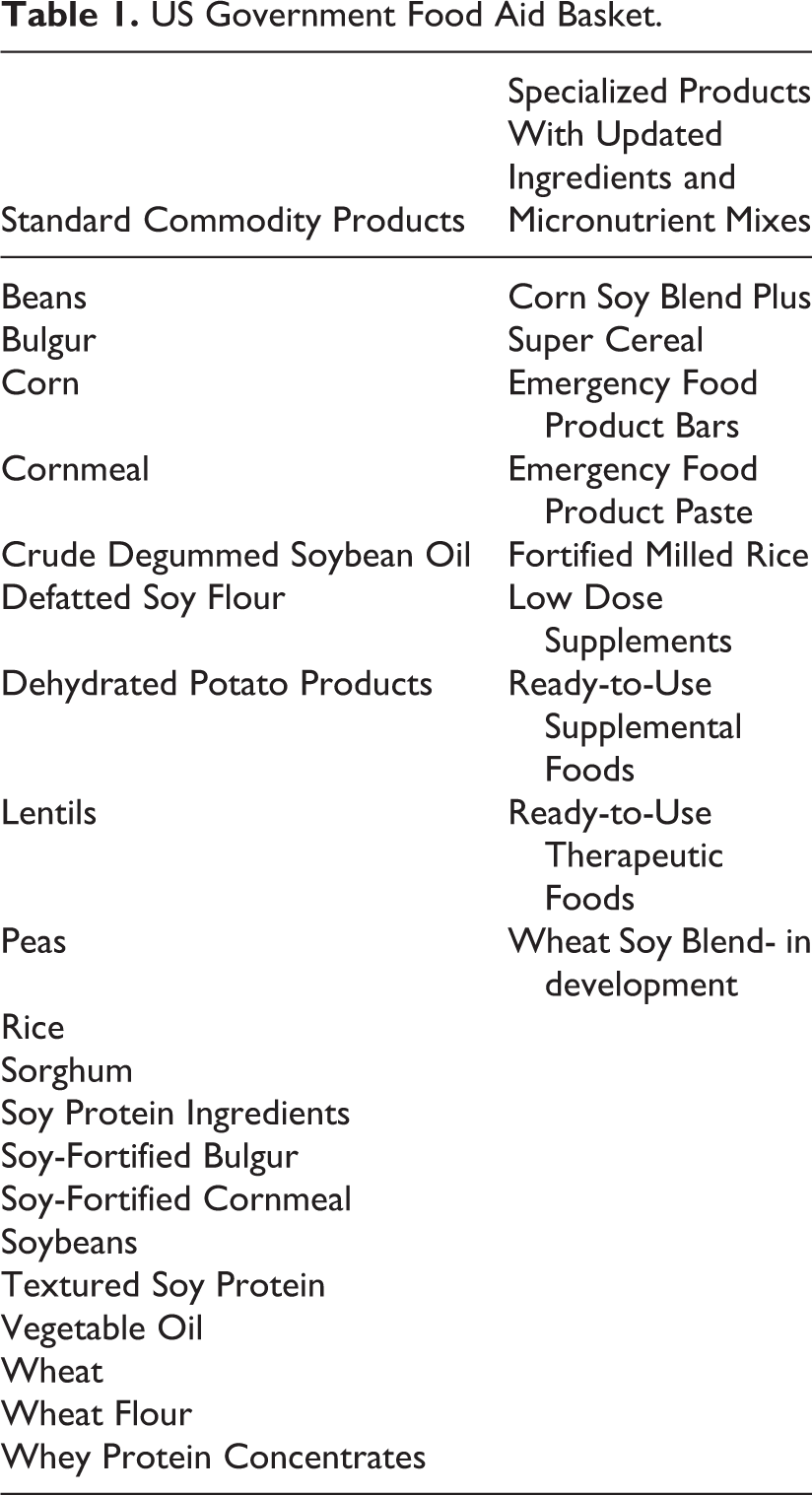
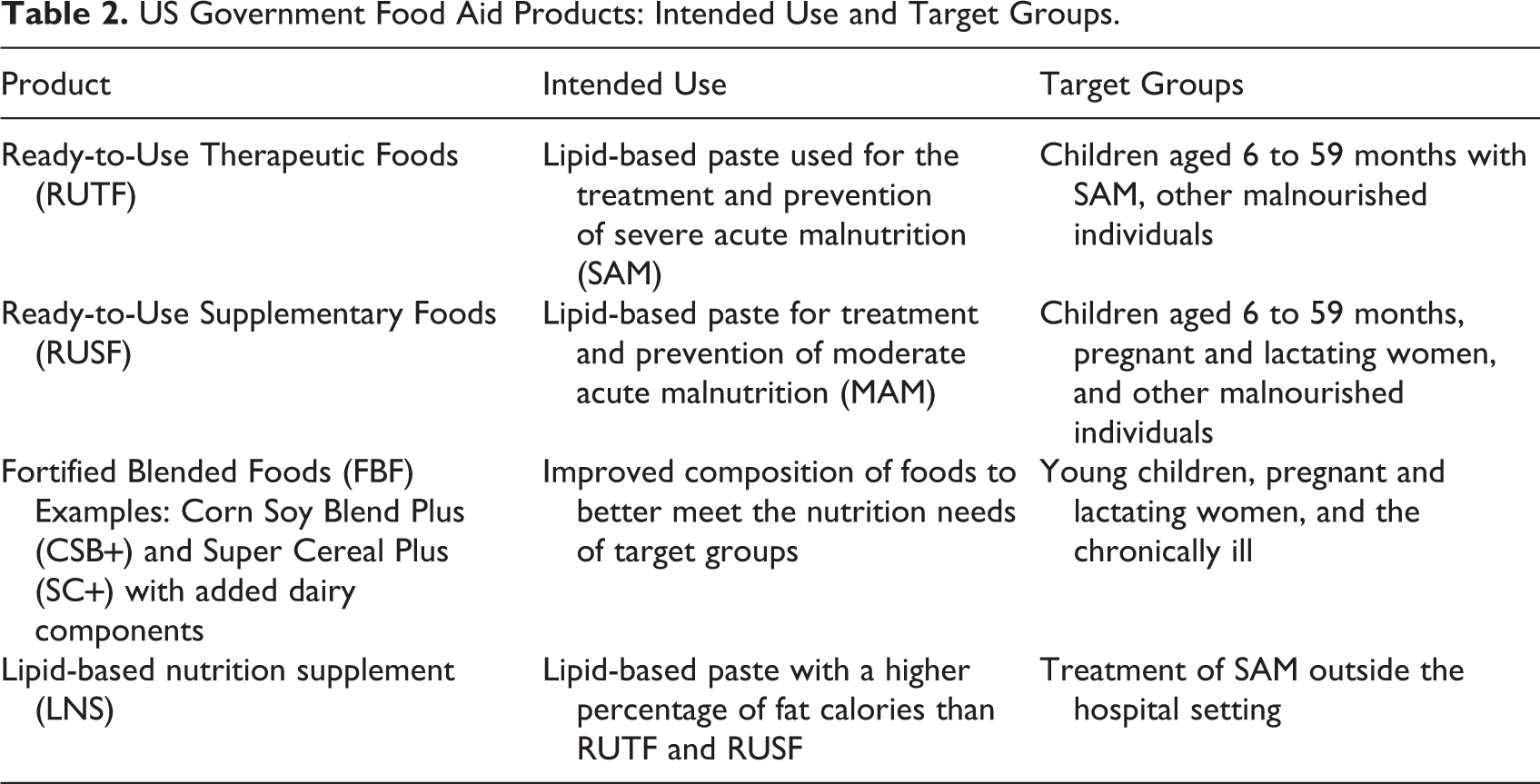
Table 2 summarizes the range of specialized nutritional food products in Food Aid. The target groups for most specialized food products consist of babies in utero up to the first 1000 days of life, young children, especially younger than age of 5, and children at risk of MAM or severe acute malnutrition (SAM). These populations had been treated with formulated special milk, but in the last 10 years, ready-to-use therapeutic foods (RUTF) have been used. As summarized in Table 3, RUTF, ready-to-use Supplemental Foods (RUSF), newer FBF, and lipid-based nutritional supplements (LNS) for a wider range of target groups all contain dairy components. Science-based research has established the desirable composition of RUTF for the treatment of SAM. On the other hand, RUSF are intended to meet a wide range of purposes (such as preventing malnutrition), and they can be used in a high or low dose. It may be preferable to meet the same wide range of goals with FBF that contain dairy components such as whey or milk powder.
US Government Food Aid Products: Intended Use and Target Groups.
Dairy Ingredients in Specialized Food Aid Products.
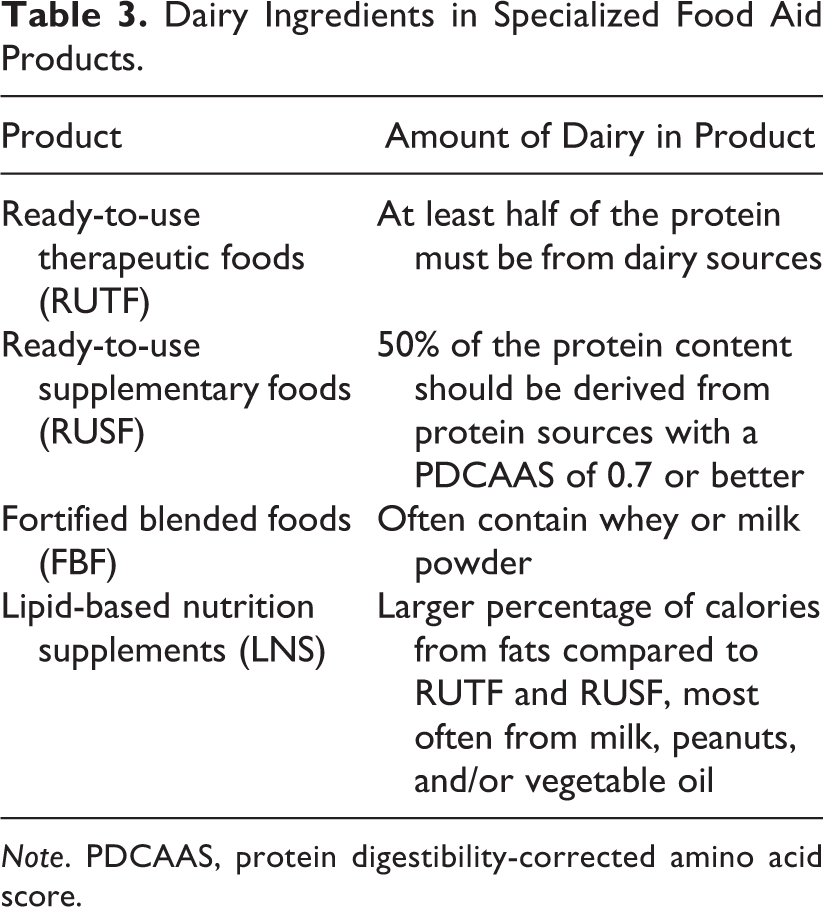
Note. PDCAAS, protein digestibility-corrected amino acid score.
Trends in Dairy Products in Food Aid
Since 1988, the quantities and components of dairy foods utilized in the US Food Aid Basket and in food aid products have been measured. Dairy foods and foods containing dairy components have been used in all contexts including emergencies, programs, and projects. Programs differ from projects in that program food aid is provided on a government-to-government basis, without specific beneficiary groups, and it is sold on the open market and can be provided as a grant or as a loan. Project food aid provides support to various different projects; it is freely distributed, sold on the markets, provided through grants, or channeled bilaterally, multilaterally, or through non-governmental organizations (NGOs).
As seen in Figure 1, the amount of dairy-based food aid products used in food aid programs and projects has dramatically decreased since 1988. Spikes in usage in 1991 to 1992 and 1998 to 2001 were followed by near-identical decreases in usage, with near flat-lining periods from 1993 to 1998 and 2008 to 2012. Since 2008, there has been very little usage of dairy-based food aid products by the United States. This is due to a variety of factors, including the price and available supply of dairy ingredients and the programming of different food aid products. Figure 2 shows the distribution of the usage by program type for dairy-based food aid donated by the United States from 1988 to 2012. During this time period, over 50% of dairy-based food aid has been used for projects to support advances in agriculture, nutrition, and development.
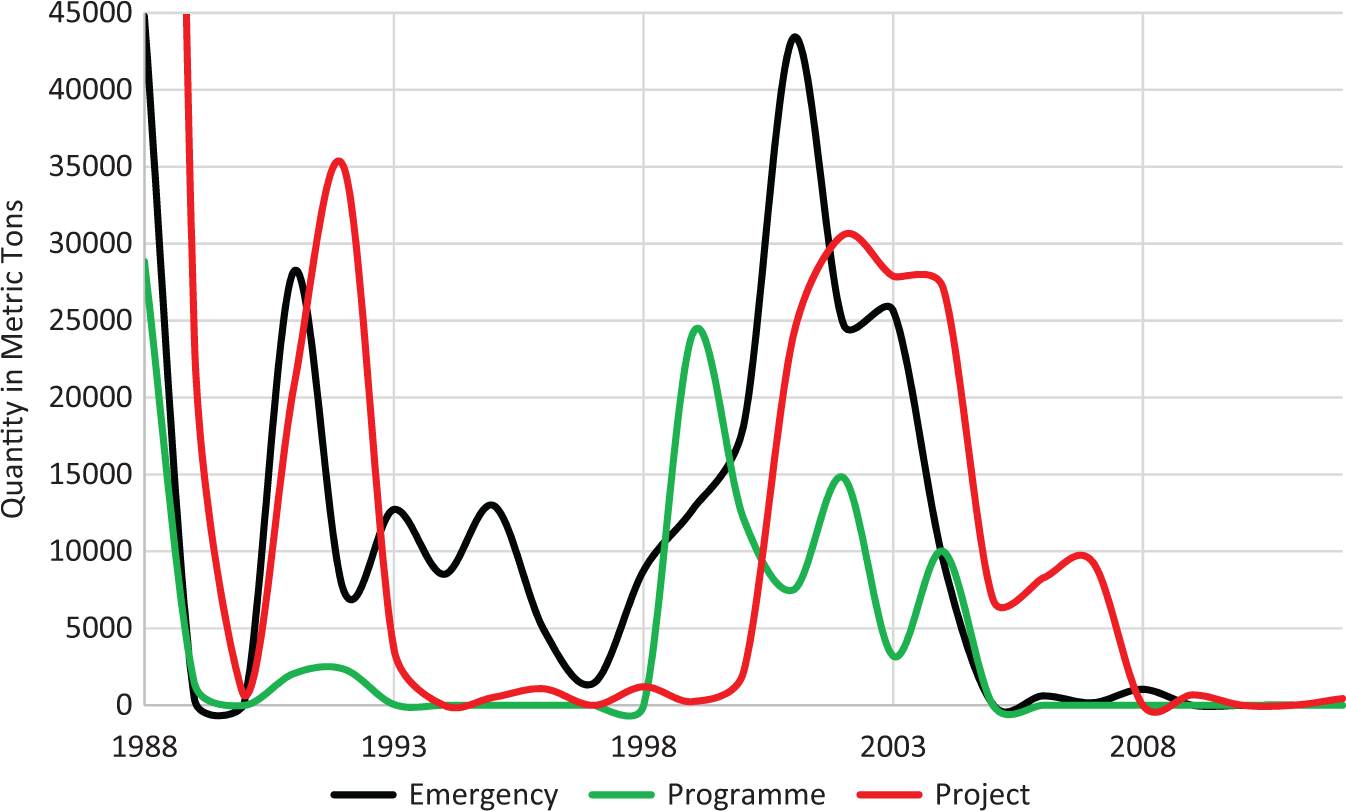
Usage of dairy-based food aid products given by the United States from 1988 to 2013 (in Metric Tons). Adapted from WFP, FAIS (2015). 12
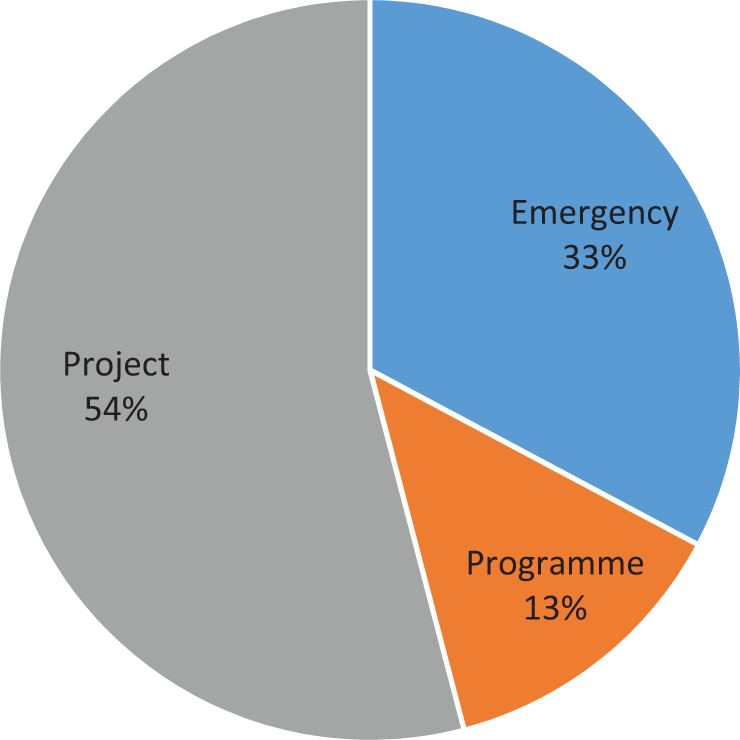
Dairy-based food aid products by intervention type from 1988 to 2012. 12
Next-Generation Products and Implementation
It is important to acknowledge the progress made in the last 10 years in product development, particularly for products targeted for specific beneficiaries or purposes. Ten years ago, there was only 1 product, corn soy blend (CSB), to address all severities of malnutrition and improve diet diversity for all target groups. Now there are over 20 products manufactured in the United States as part of the US food aid basket. All of these products are offered through programs funded by US taxpayers.
To implement food aid effectively, it is essential to have convergence within the broader food aid community, that is, The World Food Programme (WFP), USDA, United Nations International Children’s Emergency Fund, and others. The USDA develops product specifications and procures products for the US Food Aid program, whether for US-based NGOs or WFP, as a participant in the Food for Peace program. Convergence is already occurring in the critical 3 areas of products, programming, and processes.
The development of new, more effective food aid products requires improvements in food technology, processing and packaging, and the use of science-based efficacy trials. The FAQR is continually evaluating cost and programming needs through field trials, including the prevention trial in Burkina Faso and the treatment trial initiated in Sierra Leone, as noted previously. Enhanced program and product guidance are essential for products to be “fit for purpose”; they must be programmed and used the by end user/consumer appropriately. In the past, the focus in food aid had been on delivering increased quantities of food, but now, the challenge is delivering food with quality nutrition to those who need it most. Cooperation among governmental and nongovernmental agencies in research and implementation and through various working groups and forums is crucial to reaching this goal.
Dairy, Food Aid Products, and the Future
Including dairy ingredients as part of specialized food aid products has been controversial. 7,9 The current role and quantity of dairy varies in specialized products. For example, RUTFs must have at least half of the protein from dairy sources. FBFs often contain whey or milk power, but dairy protein sources are not a requirement. Dairy and other animal-sourced foods are more likely to meet the amino acid and other nutritional needs of children recovering from malnutrition. According to WHO, “the inclusion of milk powder as an ingredient improves the amino acid profile…and it is a good contributor of bioavailable calcium and potassium. In addition, it has a specific stimulating effect on linear growth.” 1 (p6) The use of LNSs containing dairy is beneficial for children with MAM and to prevent other forms of childhood malnutrition. Studies conducted in Guinea-Bissau and by Washington University in Haiti of school aged children show the benefits of adapting RUSF to specific age-groups and for mothers and breast-feeding women. 10,11 In Guinea-Bissau, study participants who ate RUSF with 33% compared to 15% of protein from dairy maintained mid–upper arm circumference (MUAC) measurements compared to the MUAC decreases measured in the control and 15% protein from dairy groups. Additionally, the 15% protein from diary group had a greater mean decrease in hemoglobin compared to the 33% protein from dairy group. This research indicates that RUSF or meals with a higher protein from dairy content may prevent wasting and anemia. 10
The field of food aid has evolved from a single product, CSB, to a proliferation of many variations on a theme. While the advantages of newer, nutritionally improved products are obvious, there are many complications in the implementation of nutrition programs, ranging from field staff management to beneficiary compliance as well as properly storing, preparing, and eating foods. For instance, foods distributed from the Food Aid Basket are often shared among all family members in food-insecure countries when program implementers intend for only 1 program beneficiary per household, such as a child with MAM.
In response to some of the challenges associated with specialized products, there is now an effort to create a single harmonized product for both SAM and MAM. There is agreement among experts at USAID and WFP that the product should contain certain forms and amounts of soluble micronutrients and macronutrients; only time will tell whether such a consolidation will have a positive impact.
Many research studies are underway to improve the scientific-based evidence to optimize food aid products. Some investigative questions include: (1) Are dairy components equally effective or better in promoting optimal growth, promoting healthy body composition and preventing long term health problems as nondairy components? (2) What is the optimal intake of dairy protein, and what components are best? and (3) Is the cost of dairy effective for suppliers, implementers, and recipients of products containing dairy?
Conclusion
In its 60 years of existence, the Food for Peace program has provided food to over 3 billion people in 150 countries worldwide through thousands of partner organizations. The program has evolved and will continue to do so. From its start providing food as in-kind assistance to stem hunger in emergencies it has developed to address the causes and effects of famine and starvation, promote development and food security, and increasingly focuses on providing evidence-based nutritious products for preventing and treating severe and moderate acute malnutrition. In recent years, the program has moved from an emphasis on the quantity of food shipped to highlighting the quality of food assistance, with improved products, programs, and processes to provide the right foods at the right place at the right time. New research being conducted will add to the growing body of evidence and provide a better sense of the role of dairy ingredients in food aid products to prevent and treat malnutrition, especially among vulnerable populations such as women and children in the first 1000 days.
Footnotes
Author’s Note
Protein Quality, Growth and Malnutrition: Latest Scientific Findings and the Role of Dairy in Food Aid. Dairy for Global Nutrition Symposium, Experimental Biology 2015, Boston, MA, March 30, 2015.
Declaration of Conflicting Interests
The author(s) declared no potential conflicts of interest with respect to the research, authorship, and/or publication of this article.
Funding
The author(s) received no financial support for the research, authorship, and/or publication of this article.