




Abstract
Background:
Small-quantity lipid-based nutritional supplements (SQ-LNS) may potentially be used for home fortification in poor settings, where low nutrient-dense complementary foods are commonly used for infant feeding. However, they need to be acceptable to succeed.
Objective:
This study assessed the acceptability of 2 novel, SQ-LNS (A and B) for supplementing complementary foods among infants aged 6 to 12 months in a peri-urban South African community.
Methods:
Both supplements were soy-based pastes and contained micronutrients and essential fatty acids. In addition, supplement B contained docosahexaenoic acid, arachidonic acid, phytase and
Results:
In part 1, more than 70% of mothers reported a score ≥4 on sensory attributes for both SQ-LNSs indicating that both supplements were well perceived. In part 2, the mean reported consumption over the 2-week period was 65.3% ± 34.2% and 62.0% ± 31.3% of the 20 g daily portion for supplements A and B, respectively. Focus group discussions confirmed a positive attitude toward the supplements in the study population.
Conclusion:
This study showed acceptance of both SQ-LNSs in terms of sensory characteristics as well as in terms of practicality for home use.
Introduction
Worldwide, undernutrition consisting of stunting, wasting, vitamin A and zinc deficiency as well as suboptimum breast-feeding causes nearly 3.1 (45%) million deaths of children younger than 5 years. 1 One of the 6 global targets for the improvement in infant and young child nutrition by 2025 is a 40% reduction in children younger than 5 years who are stunted. In 2012, 36% of all children with stunting, 29% of all underweight children, and an estimated 28% of all children with severe wasting were living in Africa. 2 South Africa is among the 34 countries with the highest burden of stunting on a global level. 3 The highest percentage of stunting falls in the age category 0 to 3 years at 26.9% and 25.9% for South African boys and girls, respectively. 4
South Africa has the lowest level (8%) of exclusive breast-feeding in sub-Saharan Africa. 5 It has been reported that in some areas 35% to 50% of mothers stop all breast-feeding before 3 months postpartum, that complementary foods are introduced as early as 6 weeks of age, 6,7 and that the nutrient density of the complementary diet is poor. 8,9 These suboptimal feeding practices are of concern, particularly against the background that the prevalence of stunting in the 1 to 3 years age-group increased by 3% from 2005 to 2012. 4 Strategies to improve dietary quality of complementary foods are therefore urgently needed.
Small-quantity lipid-based nutrient supplements (SQ-LNSs), which contribute to energy, protein, and essential fatty acids (EFA) intake, are easy to use and require minimum change in dietary behaviors. 10,11 Presently, many organizations and companies have shown interest in the development of SQ-LNS and its potential use in a variety of cultural and geographical settings. 10 Recently, a study conducted in the Honduras indicated that SQ-LNS improved micronutrient status in nonmalnourished children aged 6 to 18 months. 11 Iannotti et al 12 showed that daily consumption of SQ-LNS resulted in a significant increase in linear growth in healthy infants aged 6 to 11 months in Haiti. To ensure large-scale use of SQ-LNS, these products should be acceptable within a given sociocultural context. Although acceptability trials on SQ-LNS were conducted among children younger than 5 years in some countries such as Malawi, Burkina Faso, Ghana and Guatemala, 13 -16 these did not contain added docosahexaenoic acid (DHA), arachidonic acid (ARA), and phytase.
Two new SQ-LNS were developed for potential use in the South African setting. Both SQ-LNS-A and SQ-LNS-B are made from soy, which is less expensive than peanuts and contain essential fatty acids and micronutrients needed for infant development.
17,18
In addition, SQ-LNS B contains ARA and DHA, which may provide additional benefits in terms of vision, growth, and psychomotor development
19
-21
; phytase to improve iron and zinc bioavailability
17,22
; and
The aim of this study was to determine the acceptability of 2 newly developed SQ-LNS pastes in a peri-urban South African community. The specific objectives of the study presented in this article were (1) to determine the acceptability in terms of sensory characteristics to infants and their primary caregivers, as rated by the primary caregiver on a 5-point hedonic scale, and (2) to obtain information on how the caregivers experienced using the products by conducting a 2-week home-use trial followed by focus group discussions (FGDs).
Materials and Methods
Overview and Design
The 2 SQ-LNSs were produced by 2 European companies, namely DSM and UNILEVER, with a presence and capacity to produce in South Africa. The 2 SQ-LNSs were delivered to the nutrition laboratory at the North-West University, Potchefstroom. Both SQ-LNS were packed in single-dose 20 g plastic tubs with lids. The nutrient composition of the SQ-LNS A and B is presented in Table 1. The study was single blinded, and for the purpose of the study, the 2 products, utensils as well as documentation used were color coded. The products were only referred to in color codes at all times to the field staff facilitators and participants.
Nutrient Content of the 2 SQ-LNS Pastes.
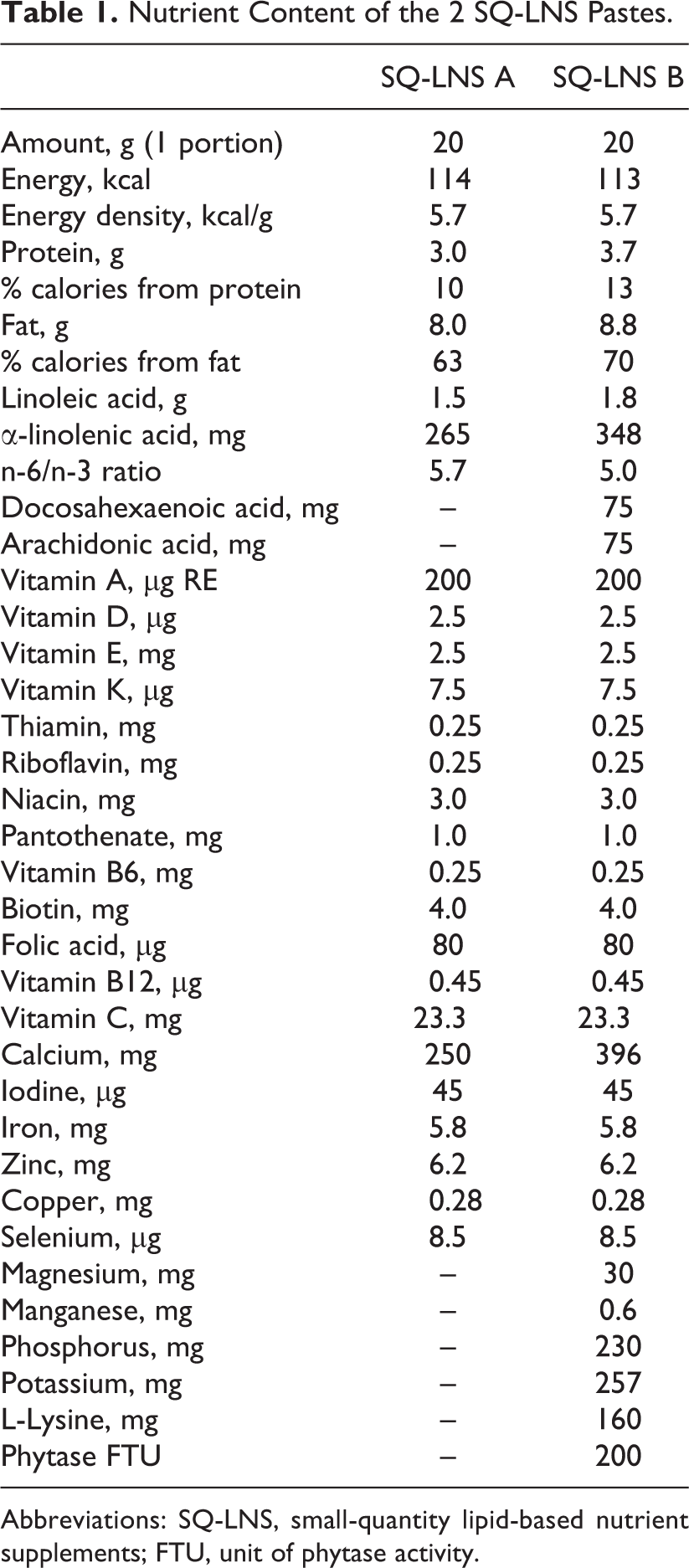
Abbreviations: SQ-LNS, small-quantity lipid-based nutrient supplements; FTU, unit of phytase activity.
Study Setting
The trial was conducted in February to April 2013 in a low socioeconomic peri-urban community in the North–West Province in South Africa. This trial preceded a randomized controlled trial that assessed the effect of SQ-LNS on infant’s growth from 6 to 12 months, therefore this trial recruited infants in the same age category.
Ninety-four percent of the caregivers who participated in the study were the mothers of the infants. For this reason, the term “mother” is used throughout the rest of the article.
Recruitment Process
The mother–infant pairs were recruited at 5 clinics in the community. These clinics allocate specific days for mother–infant pairs, and the recruitment was done on these specific days. Trained fieldworkers explained the study to the mothers using a structured information sheet explaining the meaning and importance of the trial as well as some background of the SQ-LNS. The mothers were also given an information sheet in their local language. If the mother expressed willingness to participate, an eligibility questionnaire was administered to determine whether the infant could be included in the study. To be eligible to participate in the study, the infant had to be 6 to 12 months of age; have consumed some breast milk previously; be apparently healthy with no fever and not suffering from an acute illnesses such as acute respiratory tract infection and diarrhoea; not be severe malnourished (mid-upper arm circumference [MUAC] ≤ 115 mm); and with no known allergy to peanuts, soy, milk/lactose, and fish. Also, the mother–infant pairs should plan to remain in the study area for at least the following 4 weeks to ensure no adverse reactions occurred. Before enrollment, a consent form was signed by the mother. Different infants were recruited for parts 1 and 2 of the acceptability trial to avoid a carryover effect. A different information- and consent form were used for part 2 which included information regarding the FGDs. Eligibility criteria was the same for part 2.
Mid-upper arm circumference was taken in order to determine whether the infant was severely malnourished using a standard MUAC tape following standard procedures. 24 Infants excluded from participation for having failed the MUAC screenin, were to be referred to the nearest clinic.
Research Approach Used
The methodology used in this study was a combination of methodological elements from the acceptability trials that were conducted in Malawi, Ghana, and Guatemala, 13,15,16 which were adapted for our specific setting. This was a single-blind study, as only the researchers were able to distinguish between the SQ-LNS-A and -B. This study was carried out in 2 parts. Part 1 was a sensory evaluation in which the mothers were asked to taste each SQ-LNS product mixed with maize porridge and then score the SQ-LNS mixture on different sensory attributes. The mothers were also asked to feed the SQ-LNS mixture to their infants and then rate their perception of the infant’s liking of the products. The maize meal porridge used was prepared by a fieldworker from the community. Part 2 was a 2-week home-use trial to obtain information on how mothers experienced the use of the SQ-LNS at household level. At the end of part 2, FGDs were conducted to get insight on how the mothers experienced using the SQ-LNS during the home use trial. The number of mother–infant pairs enrolled in parts 1 and 2 of the study were based on similar acceptability trials conducted in Malawi, 13 Burkina Faso, 14 and Guatemala. 16 For FGDs, at least 8 participants per group are needed, therefore the 40 mother–infants pairs enrolled in part 2 were deemed sufficient to be able to have at least 3 focus groups for data saturation. 25
Part 1: sensory evaluation
The sensory evaluation was done within a few days after recruitment using a crossover randomized design in February 2013. The design used was adapted from the method of Matias et al. 16 The envelope method was used for randomization 26 which was done by researchers (MR and CB.). Figure 1 is a representation of the research approach used for part 1.
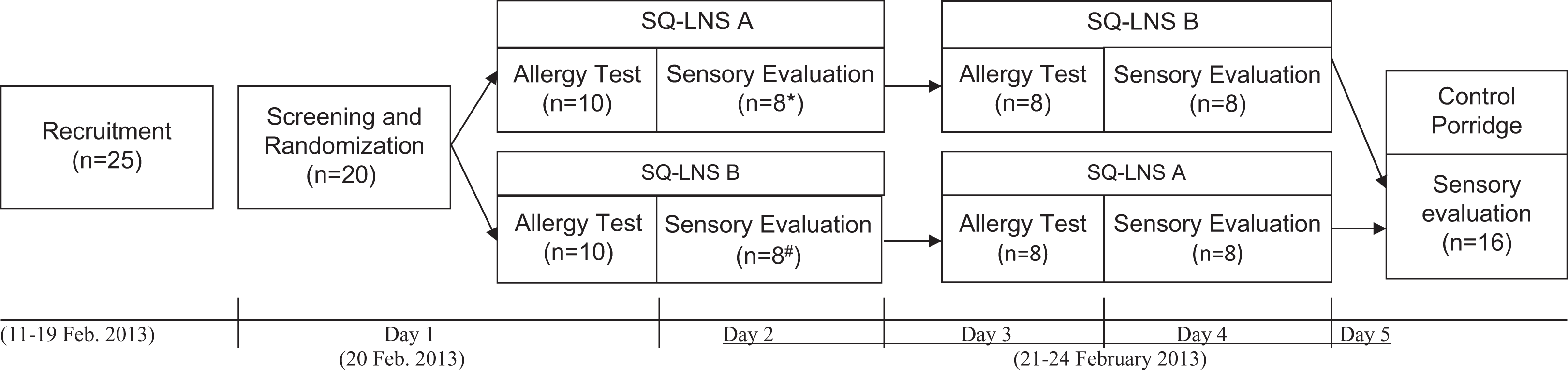
Representation of the research approach used for Part 1. *2 dropouts from day 1: 1 infant developed a rash (not related to product) and 1 mother withdrew from the study for personal reasons. #2 dropouts from day 1: infants refused to eat the product.
Half of the mother–infant pairs started with SQ-LNS-A, whereas the other half started with SQ-LNS-B. The mothers were invited to come to the field station at 08:00
On day 1, recruited infants were first screened for eligibility. All infants were found eligible and were given 5 g of either SQ-LNS-A or SQ-LNS-B and were observed by a study nurse for at least 20 minutes to ensure that no adverse reaction occurred.
On day 2, the sensory evaluation was done only if no adverse reaction was observed by the study nurse. The study nurse measured the infant’s temperature using an electronic ear thermometer and children with aural body temperature >38°C were excluded. Breast-feeding mothers were first asked to breast-feed their child. No other liquids or food were allowed for the next 60 minutes during which a fieldworker interviewed the mother to complete a socioeconomic questionnaire. After the 60 minutes, the sensory evaluation was started. Under the guidance of a fieldworker, the mother mixed 20 g SQ-LNS with 20 g maize porridge and then tasted a spoonful of the SQ-LNS mixture. The rest of the SQ-LNS mixture, together with the standard bowl and spoon used, was weighed before starting to feed the infant. A stopwatch was set at 15 min (maximum time given to consume the paste and porridge mixture) and the countdown started when the mother started feeding her infant the given portion of the SQ-LNS mixture. The mother could stop if the infant refused to eat further and, if so, this was noted by the fieldworker. The mother was kindly asked to stop feeding her infant when 15 minutes was over. The remaining SQ-LNS mixture, together with the bowl and spoon, was weighed again, and the amount of SQ-LNS mixture consumed by the infant was calculated. If there were any leftovers after 15 minutes, the mother could then continue feeding the infant after the weighing had been done, if the infant still wanted to eat. On days 3 and 4, the second SQ-LNS was given, following the same process. On day 5, all infants were provided with 40 g of the control porridge (plain maize porridge) without any added SQ-LNS, following the same sensory evaluation procedure described earlier.
To assess the general liking and acceptance of the SQ-LNS mixes and control porridge, an adapted 5-point hedonic scale was used on which the points were indicated by a drawing of a facial expression depicting 1 = disagree (dislike extremely), 2 = tend to disagree (dislike), 3 = undecided, 4 = tend to agree (like) and 5 = agree (like extremely). 16 The mother used the 5-point hedonic scale to rate the taste, smell, appearance, color, texture, mouth feel, and her overall liking as well as her perception of the infant’s liking of the SQ-LNS mixtures and control porridge.
Part 2: Two-week home-use trial
The home-use trial commenced in April 2013. To avoid a carryover effect from the sensory evaluation, a different group of 40 mother–infant pairs were recruited from the same clinics for the home-use trial. The same informed consent process as for the sensory evaluation was followed. The mother–infant pairs were randomly assigned to 1 of the 2 SQ-LNSs for home use by researchers (MR and CB) using the envelope method. 26 Figure 2 is a representation of the research approach used for Part 2.
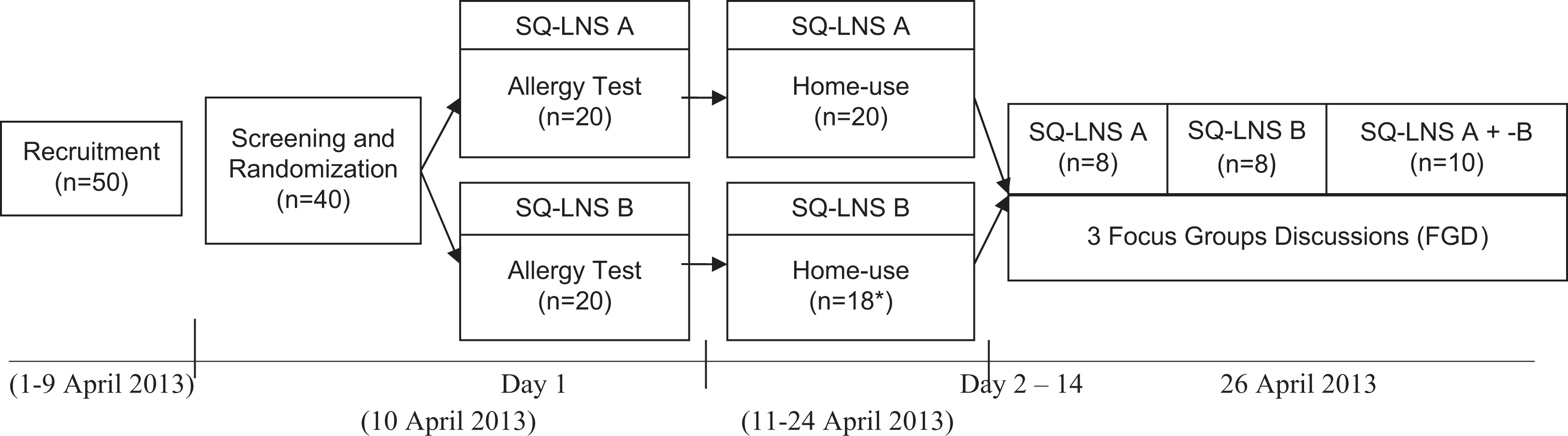
Representation of the research approach used for Part 2. *2 mothers in Small-quantity lipid-based nutrient supplement (SQ-LNS) B group withdrew for personal reasons.
On the first day, recruited infants were first screened for eligibility at the central study site. All infants were found to be eligible. Eligible infants were given 5 g of the SQ-LNS. The home use was continued only if the study nurse did not observe any negative reaction within 20 minutes. The mother was interviewed by a fieldworker to complete a socioeconomic questionnaire and was given a 13-day supply (14 minus 1, as 1 tub was used for day 1 on site) of 20-g tubs of either SQ-LNS-A or -B according to the randomization. The fieldworker demonstrated to the mother how to mix the SQ-LNS with whatever complementary food the mother would be giving for the next 13 days.
Instructions for use were as follows: For the infant’s first meal of the day, the mother was asked to dishout 2 to 3 tablespoons of the complementary food she was going to give to her infant into a standard serving bowl provided and mix into it one complete 20 g tub of SQ-LNS. The mother was required to keep the empty SQ-LNS tubs in a plastic ziplock bag provided for the adherence monitoring. She was trained to record on a pictorial “Daily adherence form” the estimated amount the infant had consumed on the day, and the mother was also asked to record the type of complementary food used to mix with the SQ-LNS.
A fieldworker visited each mother 3 times (days 2, 7, and 14) to make sure that the mother understood the use of the SQ-LNS as well as the completion of the daily adherence form. At each visit, the fieldworker counted and recorded the used and remaining SQ-LNS tubs and also completed a weekly adherence questionnaire which also included information on any illnesses that may have occurred and the types of food the mothers used with the SQ-LNS.
At the end of the 2-week period, a fieldworker conducted an exit interview with the mother to get information on the mother’s perception of the infant’s acceptance of SQ-LNS, the ease of using the SQ-LNS, the possible intrahousehold distribution of the SQ-LNS as well as the complementary foods used with the SQ-LNS.
Two days following the 2-weeks home-use trial, FGDs were conducted at the central field station to obtain additional information on the mothers’ perceptions on the ease of using the 2 SQ-LNSs. The FGDs were facilitated by trained facilitators using a structured field guide adapted from Rabiee. 25 The kind of questions that were asked included: “What was your overall feeling about the product?”; “What was your experience of using the product?” and “Would you recommended the product for the feeding of the baby to other mothers/caregivers?”. The participants were allocated into 3 different discussion groups: group A: mothers who used SQ-LNS A; group B: mothers who used SQ-LNS B; and group C: mixed group. The facilitator was aware of the color codes (for SQ-LNS A or B) but was not aware what the differences were. The same was the case for the participants. Two research assistants took notes, and the discussions were audio-taped. Before starting the focus group, mothers were asked to rate the general acceptance of the SQ-LNS-mixture on a scale from 1 to 10. The facilitator then elicited discussion on the practicality and experience of using the SQ-LNS for feeding the infant as well as general characteristics of the SQ-LNS. The discussions were conducted in the local language, Setswana, and lasted 30 to 45 minutes depending on information saturation, meaning that no new ideas emerged on the specific topics during a specific FGD. 25
Ethics
Ethical approval was obtained from the Ethics Committee of North-West University (NWU-00011-11-A1) and the Ethics Committee of the South African Medical Research Council (EC011-03/2012). Approval and permission to do the study was also given by both the Provincial and the District Department of Health, as well as at community health care facility level where recruitment of mother infant pairs was done. The study has been registered with the North West Provincial Department of Health Directorate for Planning, Research, Monitoring and Evaluation. The actual transport costs were reimbursed for each mother participating in the trial.
Data Analysis
Statistical analyses were done using IBM SPSS Statistics 22 package. Socioeconomic characteristics of participants were analyzed using descriptive statistics. For part 1, the median and interquartile range are reported for consumption time and percentages for the hedonic scales. For part 2, the mean (SD) proportion of the SQ-LNS consumed was calculated. The information on sensory acceptance from the hedonic scales is reported as frequencies.
In part 2, for the calculation of percentage intake of both SQ-LNS, the standard amount of 5 g given on the first day of phase 2 was excluded. Thus, percentage intake over the 2 weeks was calculated only from Day 2 as the first determined day.
A reflective notebook was kept by a research assistant to note all verbal communication expressed by the focus group participants. A quality check of the FGD transcripts was done by a research assistant fluent in both English and Setswana and who was present during the FGDs to ensure that the transcripts were translated without the original meaning being lost in translation. The researcher also compared the transcribed work to the notes taken during the discussions. Direct quotes from participants were included in the description of the findings, in order to give more meaning to the context. 25 The audio tapes were transcribed verbatim and translated to English by Globosonic DFH, a professional company specialized in transcription services before content analysis. Transcripts were analyzed according to guidelines given by Rabiee 25 ; a thematic framework was compiled by identifying themes (key words); tabulating was done by managing, cleaning, and simplifying the data; and interpretation was done by identifying main expressions.
Results
Participant Characteristics
The characteristics of the participants are shown in Table 2. The mean age of the infants was 9.0 ± 2.0 months for part 1 and 9.0 ± 1.8 months for part 2. The mothers’ mean age was 25.0 ± 5.2 years for part 1 and 26.0 ± 8.1 years for part 2. Fifty percent of the mothers (for both Parts) reported attending school for ≤10 years and >60% were single. Electricity was available to >90% of households. All households had access to tap water, either from their own tap outside the house (57%) or from a tap inside their house (43%).
Characteristics of the Participants for Part 1 and Part 2 of the Study.
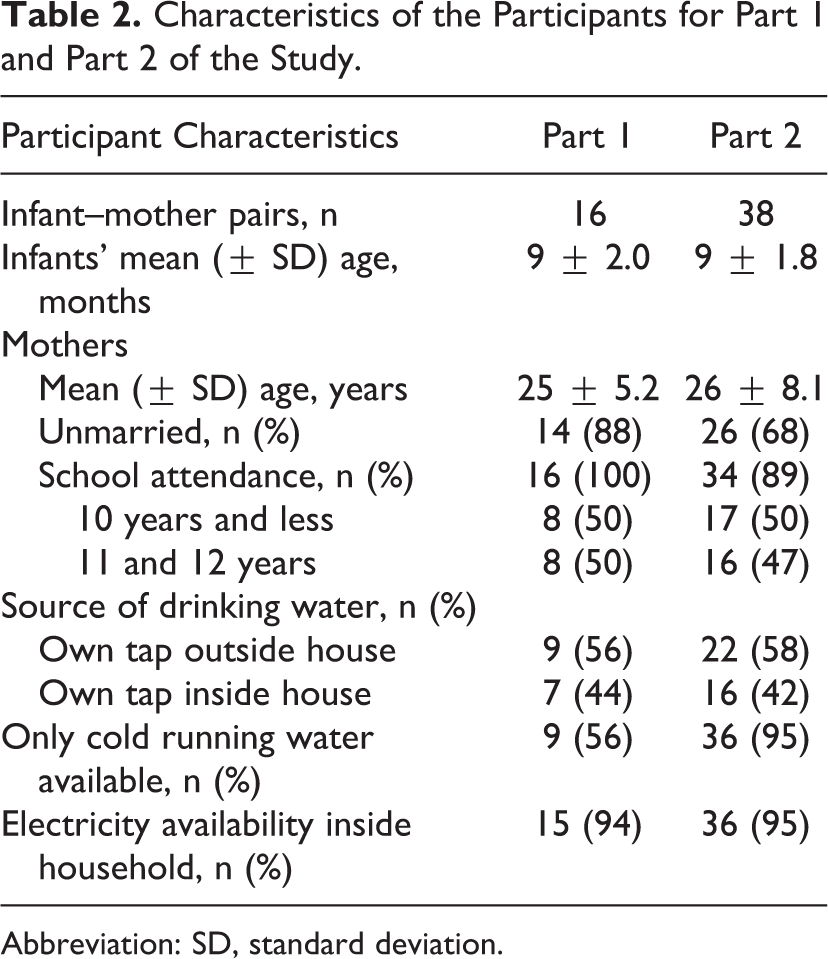
Abbreviation: SD, standard deviation.
Part 1: Sensory Evaluation: Twenty-five mother–infant pairs were recruited, but only 20 mothers came for screening. All of them were found eligible and enrolled in the study. There were 4 dropouts: 1 infant developed a rash (not related to the product), 2 infants refused to eat the SQ-LNS mixture, and 1 was withdrawn by the mother for personal reasons. Thus, 16 infants completed the sensory evaluation.
Part 2: Home-use trial: Fifty infant–mother pairs were recruited of whom 40 showed up for the start of the 2-week home-use trial. Two mothers in the SQ-LNS-B group withdrew their infants from the trial for personal reasons. Thirty-eight infants completed the home-use trial. Twenty-six mothers participated in 3 FGDs.
Part 1: Sensory Evaluation
All the infants ate the entire given portion of SQ-LNS-mixture (20 g SQ-LNS plus 20 g maize porridge) within the 15 minutes provided for (Figure 3). The median (interquartile range) times recorded for consumption for SQ-LNS-A, -B, and the control porridge were 3.2 (1.8-5.3), 4.3 (2.7-6.6), and 2.4 (1.8-2.8), respectively. The frequencies of different time intervals for all 3 groups are shown in Figure 3.
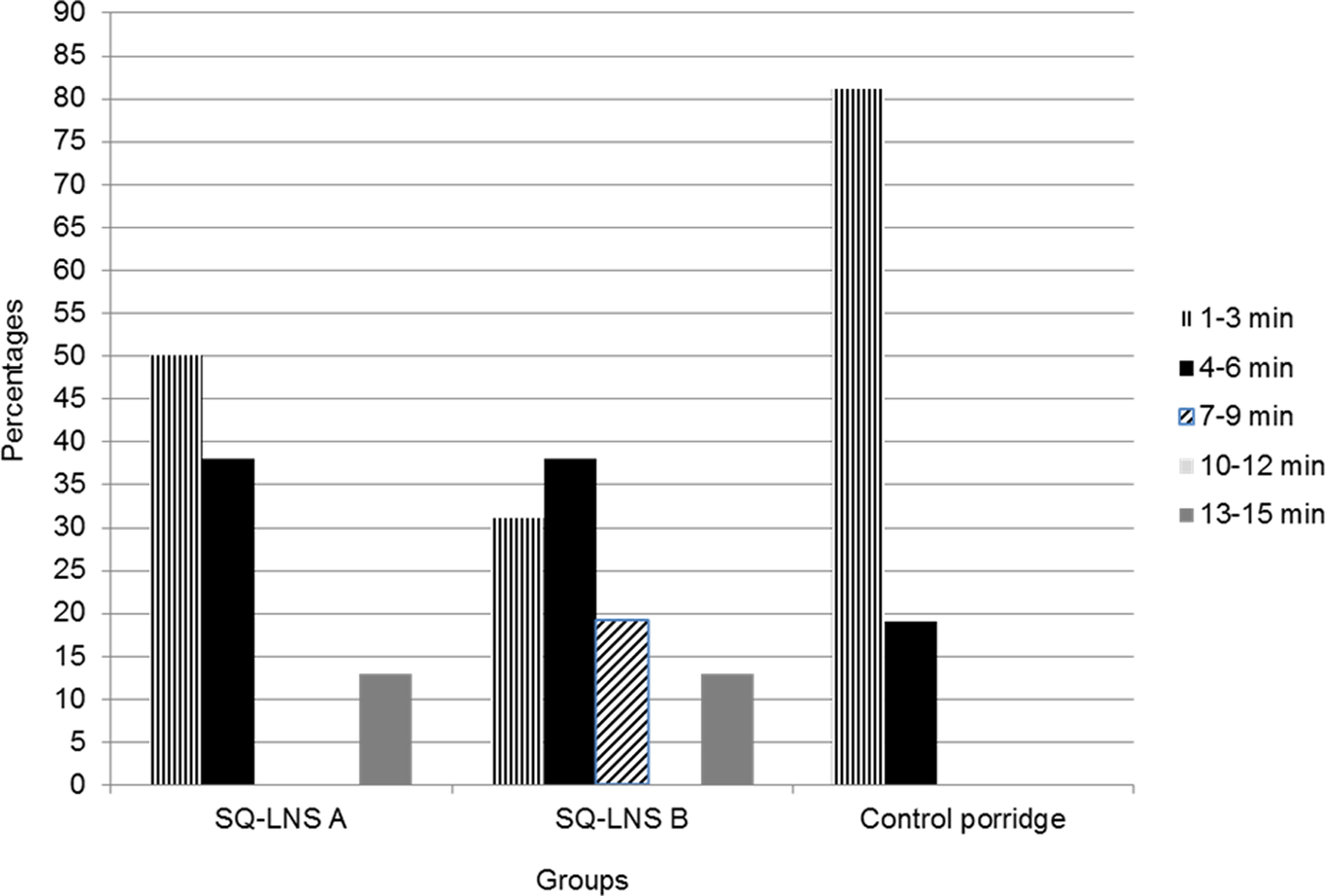
Time used to consume Small-quantity lipid-based nutrient supplements (SQ-LNS) A and B and control porridge, respectively.
Figure 4 shows the mother’s and her child’s liking of the SQ-LNS mixtures and the control porridge. Most (>70%) of the mothers reported liking the sensory attributes, taste, smell, appearance, color, texture, and mouth-feel. Based on the results from the hedonic scale, categories 4 and 5 of “tend to agree” and “agree,” respectively, were combined because most mothers (>60%) reported a score of 5 (agree) with a small percentage (<20%) reporting 4 (tend to agree) for all sensory attributes when considered both mother and infant hedonic scale. Scores 1 (disagree), 2 (tend to disagree), and 3 (undecided) were reported by <10% when considering all sensory attributes for both scales. The overall liking for both pastes was 77.8% and 83.3% for SQ-LNS-A and SQ-LNS-B mixture, respectively. Most (83.3%) of the mothers reported not experiencing any problems when feeding both mixtures to their infants.
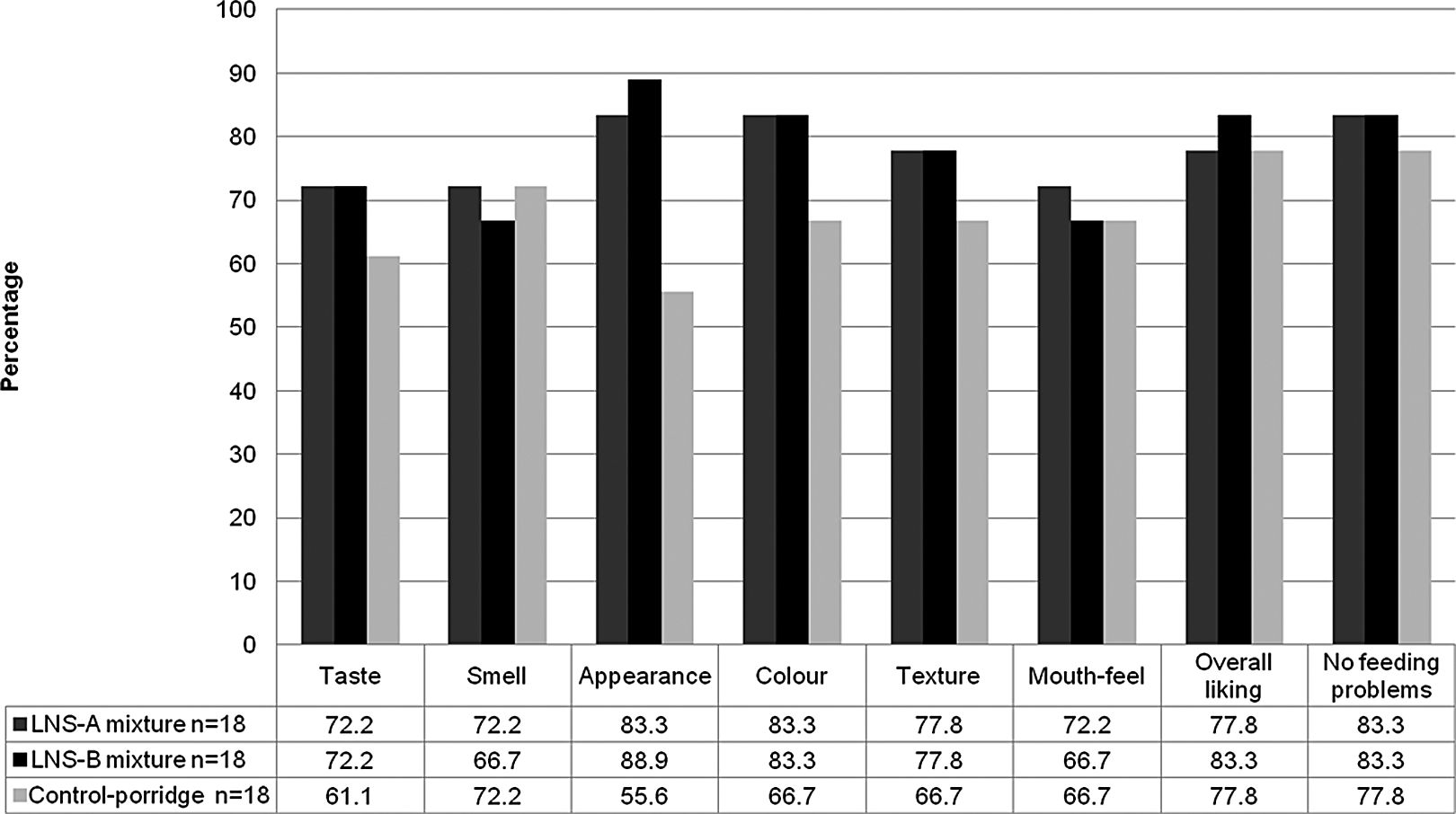
Percentage of mothers who reported “agree” on both her own liking and her perception of the infant’s liking of the 2 porridge Small-quantity lipid-based nutrient supplements (SQ-LNS) mixtures and the control porridge in part 1 of the study. *The term “agree” refers to the combination of “agree” and “tend to agree.”
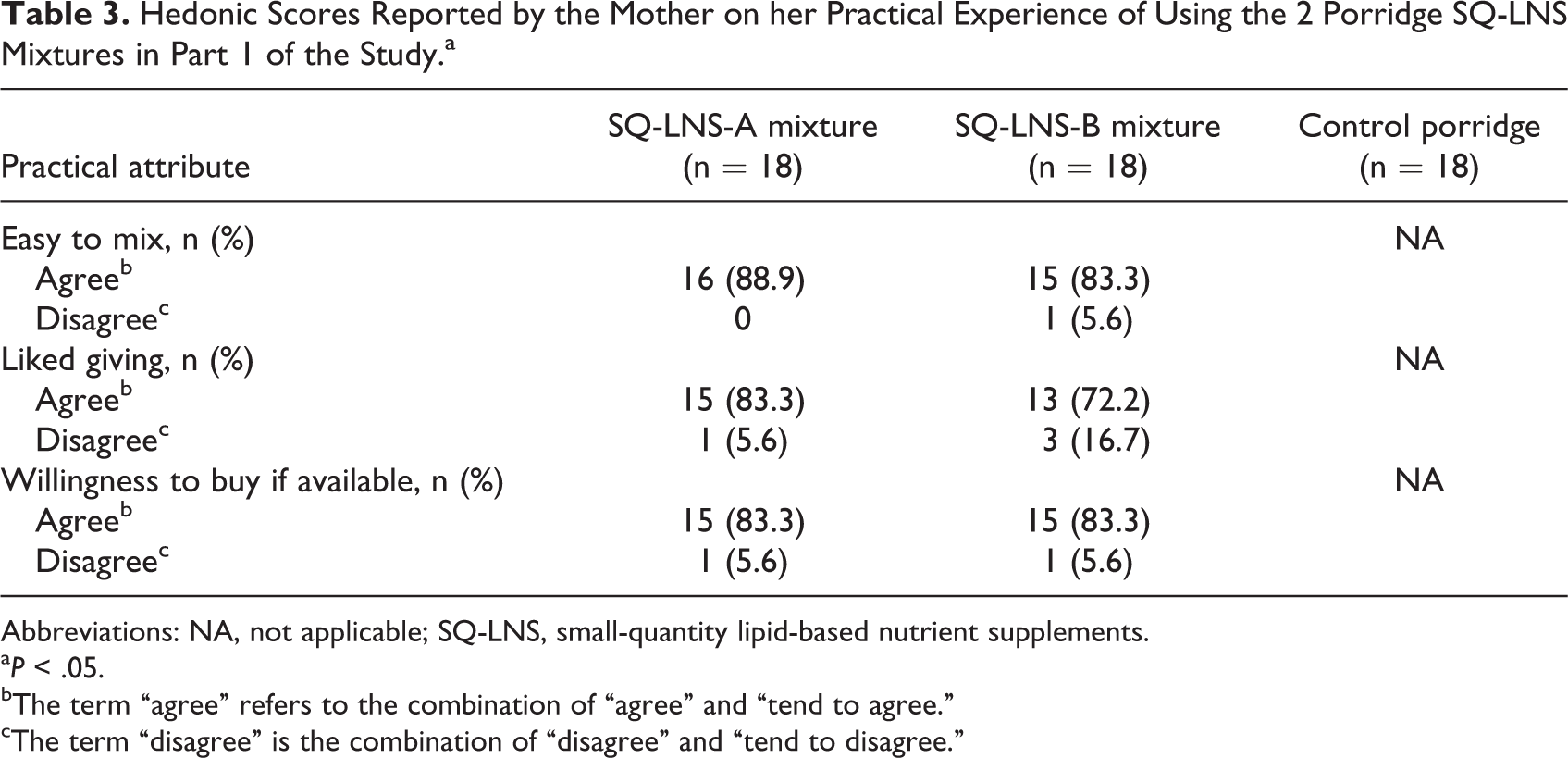
Table 3 shows the mother’s score of her practical experience of using the porridge SQ-LNS mixtures. Most of the mothers reported that both SQ-LNS were easy to mix with porridge (88.9% and 83.3% for SQ-LNS A and SQ-LNS B mixture, respectively). Mothers also reported that they were positive to give both porridge SQ-LNS mixtures to their infants (83.3% and 72.2% for SQ-LNS A and B mixture, respectively). Without providing any specific possible pricing information, most (83.3%) mothers reported that they were willing to buy both SQ-LNS if available on the market.
Hedonic Scores Reported by the Mother on her Practical Experience of Using the 2 Porridge SQ-LNS Mixtures in Part 1 of the Study.a
Abbreviations: NA, not applicable; SQ-LNS, small-quantity lipid-based nutrient supplements.
aP < .05.
bThe term “agree” refers to the combination of “agree” and “tend to agree.”
cThe term “disagree” is the combination of “disagree” and “tend to disagree.”
Part 2: Home-use trial
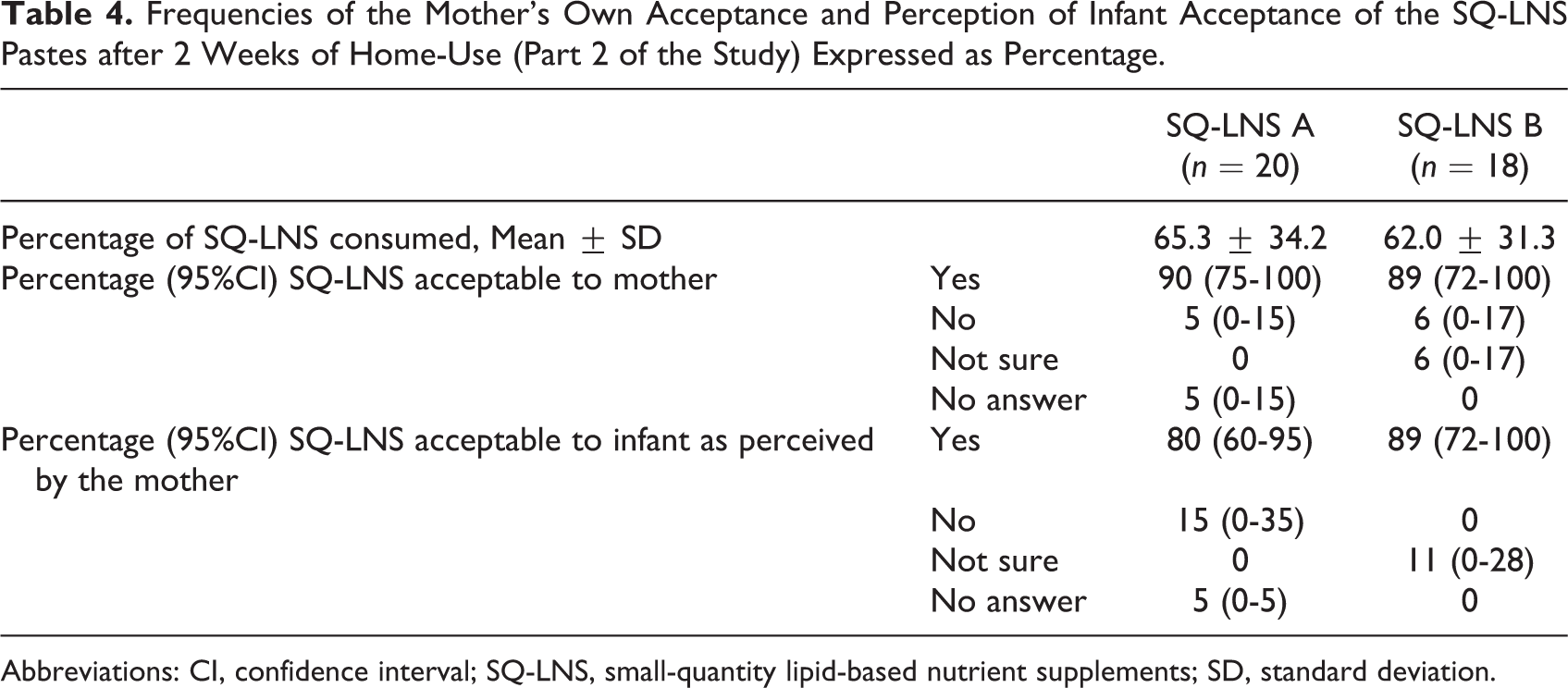
The mothers reported mixing the given SQ-LNS with a variety of foods such as commercial infant cereal (18.4%), bottled pureed infant food (15.8%), breakfast cereals (13.2%), and some food items such as soft maize porridge, mabele porridge, and mashed potatoes were reported by less than 10% of the mothers, respectively. Over the 2-week period, the mean percentage of reported consumption was 65.3 ± 34.2 and 62.0 ± 31.3 of the recommended amount for SQ-LNS-A and -B, respectively (Table 4). The mother’s own acceptance and perception of her infant’s acceptance is reported in Table 4. At the end of the home-use trial, more than 80% of the mothers reported that both SQ-LNS were acceptable to them and their infants.
Frequencies of the Mother’s Own Acceptance and Perception of Infant Acceptance of the SQ-LNS Pastes after 2 Weeks of Home-Use (Part 2 of the Study) Expressed as Percentage.
Abbreviations: CI, confidence interval; SQ-LNS, small-quantity lipid-based nutrient supplements; SD, standard deviation.
Three FGDs were conducted including 8 participants each for the SQ-LNS-A, and -B, and 10 participants for the mixed group. The FGDs reflected that the mothers were happy with their infants liking and eating of the SQ-LNS mixture as reflected in the comment “Baby enjoys it.” Some mothers mentioned that their infants preferred the SQ-LNS mixture over the complementary foods they normally fed their infants (“Baby does not want to eat something else”). Some mothers also reported perceiving their infants showing more positive active behavior after eating the SQ-LNS mixture (“baby has more energy”). Some mothers felt that the SQ-LNS increased their infants’ appetite with quotes like: “I like this product because it gave my baby an appetite, she never ate a lot” and “After giving her this paste she eats more than she used to and I like that.” The overall experience for both SQ-LNS was favorable in terms of ease of mixing and convenience of adding to the different types of complementary foods used. Some mothers spontaneously reported that they were willing to buy the SQ-LNS (A/B) and would encourage other mothers to give the pastes to their infants. No pricing information formed part of the discussion guide.
Discussion
This study indicated that, based on sensory characteristics, both soy-based SQ-LNS, when mixed with maize meal porridge, were acceptable in terms of taste, appearance, color, texture, mouth-feel, and overall liking. The aim of the study was not to determine which SQ-LNS was liked most but rather to assess whether both SQ-LNS were acceptable. The control porridge was included to ensure that the porridge that was used for mixing the SQ-LNS was acceptable and did not negatively affect acceptance of the SQ-LNS mixture. Both SQ-LNS mixed in maize porridge were perceived to have a better taste, texture, color, and appearance than the control maize porridge by the mothers (Fig. 4). When considering the sensory acceptance, Mennella et al 27 assumed that variance in responses to tastes may be affected by the infant’s feeding history in terms of breast milk and/or formula milk consumption. According to Adu-Afarwuah et al 15 either the proportion of offered food consumed or the duration taken to consume the amount offered without force-feeding can be used as a proxy indicator for acceptability. Soy-based products have not previously been reported for complementary feeding in the South African setting, 9 and the infants would not therefore have been expected to be familiar with the sensory characteristics of the 2 given SQ-LNS mixtures. Similar products tested in other countries did not contain added DHA and ARA. 13 -16 Therefore, based on the short time taken to consume both SQ-LNS mixtures, and despite lack of familiarity with such SQ-LNS mixtures, the products tested can be considered to have been acceptable to the infants.
The home-use trial supported the findings from the sensory evaluation in terms of the perceptions toward the novel SQ-LNS. More than 80% of the mothers and their infants (based on mothers’ perceptions) reported both SQ-LNSs to be acceptable at home-use level. As was the case in the study done by Adu-Afarwuah et al, 15 this study presented a challenge in terms of determining the infants’ perceived liking of the SQ-LNS which relied entirely on the mother’s perception. However, the mother’s level of acceptance and perceptions are essential, as she is the person primarily responsible for deciding what the child eats. 28
On average, 62.0% to 65.3% of the recommended amount of both SQ-LNS was consumed over the 2-week home-use period. This lower than recommended amount consumed may have an influence on the intake of the beneficial constituents such as DHA, ARA, phytase, and
During the FGDs following the home-use period, some mothers referred to being pleased with perceived improvements in their infant’s appetite and activity level after consuming the SQ-LNS-mixtures. Pelto et al 29 conducted a focused ethnographic study in urban and rural communities in South Africa and argued that the strongest association South African mothers had with a healthy child was an active child with a healthy appetite and steady weight gain. The mothers’ perceptions in this study that their children’s appetite and activity level improved are also in line with mother’s comments reported in acceptability trials done in Ghana, Malawi, Guatemala, and Burkina Faso. 13 -16 Although pricing did not form part of the FGD guide, mothers’ expressed willingness to buy the products. This further confirmed a positive attitude of the mothers toward the 2 SQ-LNS.
Although the SQ-LNS were shown to be acceptable in our study, for large-scale implementation, good communication and promotion (i.e., development of educational messages accompanying the SQ-LNS distribution) would be needed to ensure that sufficient amounts are eaten by the infant so that the infant can get the full benefit of the SQ-LNS. 29 It is well recognized that communication and nutrition education form an integral part of any sustainable strategy aimed at improving the quality of complementary feeding. 3
A strength of the study is that all participating infants were tested for any allergic reactions which might occur from these novel SQ-LNSs. A study nurse was appointed for the duration of the study, specifically for this purpose. The SQ-LNSs tested are relevant to all areas where undernutrition is prevalent, and the methodology used may provide a template that could be used in a different study population. The fact that, in part 1, the control porridge was always last may be seen as a limitation, as this may have resulted in bias in the reporting of the sensory evaluation. It should however be noted that the aim of the sensory evaluation of the control porridge was to verify that the porridge used for mixing the SQ-LNS was also accepted and did not negatively influence the sensory evaluation of the SQ-LNS mixture.
In conclusion, we found that the sensory characteristics of these 2 novel SQ-LNSs, when mixed into maize porridge and or other complementary foods, were acceptable to the mother–infant pairs and that the mothers experienced the use of these products positively. The results suggest that these newly developed SQ-LNSs may have potential for successful use in food-based interventions aimed at improving the nutritional quality of commonly used complementary foods in resource poor settings.
Footnotes
Acknowledgments
We thank the entire Tswaka team, Sr. Chrissie Lessing for her professional contribution to the study and the infants with their caregivers for their participation in the study.
Authors’ Note
Marinel Rothman: study design; data collection, analysis, and interpretation; and wrote the first draft of the paper. Cristiana Berti: study design; data collection, analysis, and interpretation; and revision of paper. Cornelius M Smuts: Scientific input in data analysis and interpretation and revision of paper. Mieke Faber: Scientific input in data analysis and interpretation and revision of paper. Namukolo Covic: Study design; scientific input in data interpretation; and revision of paper.
All authors read and approved the final version of the paper. The SQ-LNS was supplied by DSM and UNILEVER.
Declaration of Conflicting Interests
The author(s) declared no potential conflicts of interest with respect to the research, authorship, and/or publication of this article.
Funding
The author(s) disclosed receipt of the following financial support for the research, authorship, and/or publication of this article: This study was sponsored by GAIN with cofunders DSM and UNILEVER.